← Free Thinking Through the Fourth Turning with Sasha Stone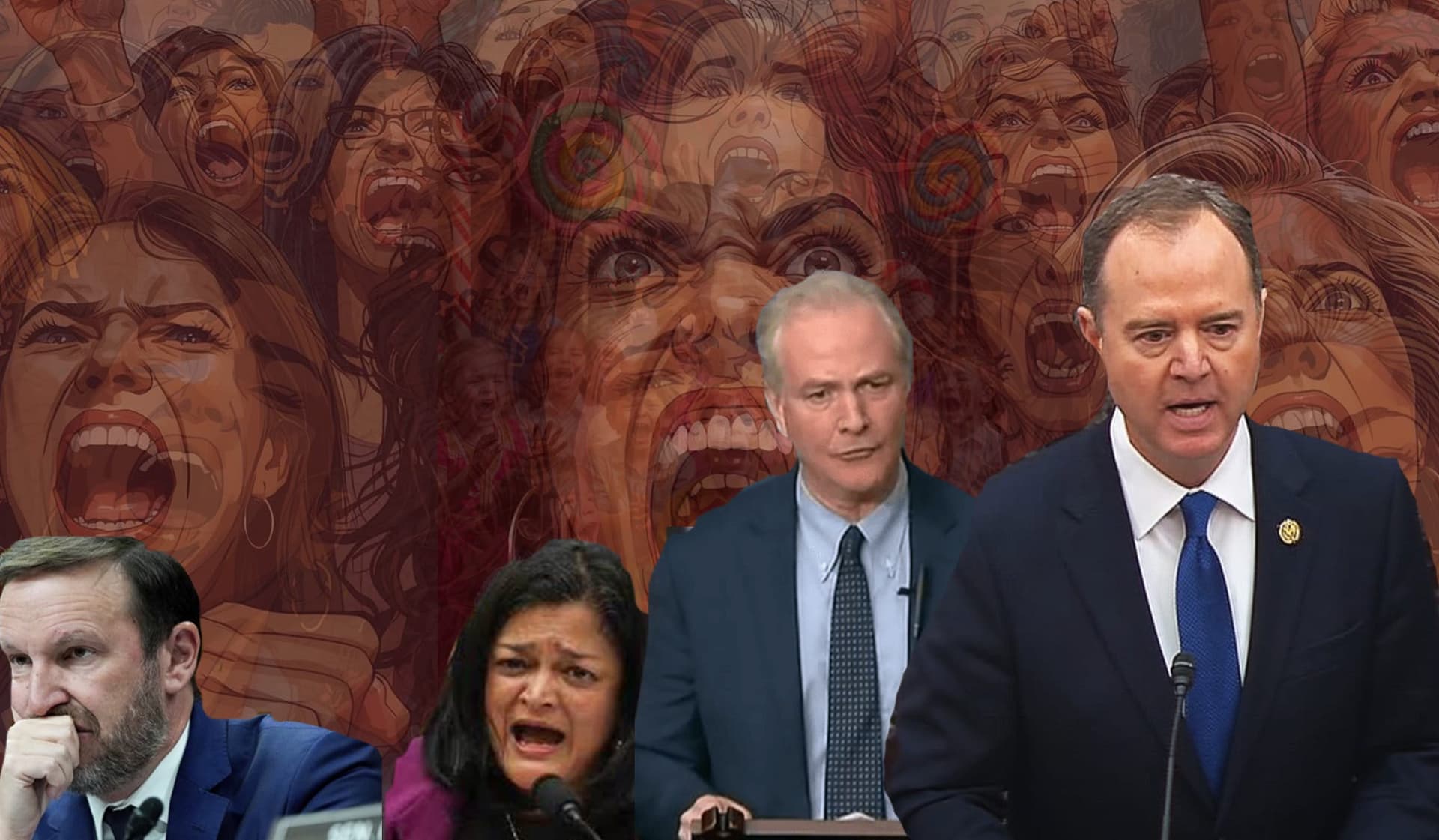
Free Thinking Through the Fourth Turning with Sasha Stone
To Confront Their Failures, Democrats Must Confront Obama
00:31:26
Loading summary
Transcript52 lines
- [00:01]
Sacha Stone
Hi, this is Free Thinking through the fourth turning. My name is Sacha Stone. Dems are behaving like spoiled brats by boycotting the State of the Union. We deserve better than this. For the last five years since I left the Democratic Party, I've been waiting for any sign that they've emerged from the doomsday bunker, at long last regained their perspective, come back to the real world, and are finally prepared to build a future for all of America. Because a house divided against itself cannot stand. The Democrats were booted out not once, but twice. In between, they had the chance to show us all that they were the better side. If Trump was so terrible, what could they offer in return? The problem is that they're still the party of Barack Obama, and to criticize any of it, to change course on anything, is an affront to him and all that he built. To confront their failures, they must confront his. And they won't do that. They failed to protect the border, the children, the workers, the families and businesses. They failed to keep us safe and failed to include us all in the American dream, choosing to focus instead on their wheel of oppression, which has now landed on illegal immigrants. True, no political party has amassed as much power as they still have. It was power they did not want to lose. I know. I was there. I didn't even realize there was another America outside the one we built with the help of the Internet. It was a brand new world that felt like the future. But it was a world that left at least half the country, the working class, half, behind. When we emerged in 2016, shocked that they did not want to live in our utopia, it sent us cascading into mass delusion that Trump was an existential crisis instead of a duly elected leader. For Americans who wanted change rather than understand that rather than work to fix the problem, rather than reach out to those abandoned, discarded masses, it's been petulance, temper tantrums, narcissism, self pity, unending hysteria. Like spoiled children who don't get what they want. On Christmas morning, Senator Adam Schiff has announced he will boycott Trump's State of the Union, joining a growing list of, it must be said, weak and unappealing Democrats no one feels inspired by or wants to vote. For podcast listeners, a tweet. The dam is breaking. Trump could be speaking to a half empty room. And from the Midas Touch Scoop, Senator Adam Schiff will join the boycott of Trump's State of the Union and instead speak at the People's State of the Union, hosted by Midas Touch and Move on. And a tweet by Chris Van Allen. Next week, Trump will deliver his State of the Union address. I won't be there. Trump is marching America toward fascism, and I refuse to normalize his shredding of our Constitution and democracy. This cannot be business as usual. And from Rick Grinnell. The left is encouraging mentally unstable people to act out this behavior, encourages violence. Politicians who can't even be in the same room with people they disagree with or sending a dangerous message. And from Mark Halperin, inbox, Adam Schiff to skip State of the Union. And a form letter from Adam Schiff for Senate. Mark, I wanted you to hear it from me directly. I'm boycotting Trump's State of the Union on Tuesday, and I wanted you to know exactly why. This isn't a decision I made lightly. I've never skipped a State of the Union address before under Democratic or Republican presidents, no matter what they did. But Donald Trump is destroying the very fabric of this country and turning it into something that is not a democracy. This is something I cannot and will not abide. He spent the first year of his term making lives worse for Americans, slashing health care, sending masked ICE agents to murder our neighbors, and passing tax cuts for the rich, all while he corruptly cashes in for himself. According to Newsweek, these are the Democrats who plan on playing hooky. Senators Jeff Merkley of Oregon, Chris Murphy of Connecticut, Tina Smith of Minnesota, Chris Van Hollen of Maryland, and Representatives Yassamine Ansari of Arizona, Becca Balint of Vermont, Craig Cesar of Texas, Veronica Escobar of Texas, Pramila Jayapal of Washington, Delia Ramirez of Illinois, Bonnie Watson Coleman of New Jersey. After mocking Turning Point USA's halftime show, these Democrats are now doing the same thing, planning an alternative rally to boycott the State of the Union. According to Reuters, quote, about a dozen Democrats in the Senate and House of Representatives have announced their participation in a People's State of the Union event on the National Mall near the Capitol to highlight their opposition to the Republican administration's policies. Organizers said on Wednesday. Yeah, it will probably play like Kamala Harris's closing argument to the people on October 29, just before Donald Trump cleaned her clock.
- [05:41]
John Fetterman
Good evening, everyone. Good evening, and thank you for taking the time out of your busy lives.
- [05:56]
Sacha Stone
Thank you.
- [05:57]
Podcast Listener / Commentator
Thank you.
- [05:58]
Sacha Stone
Thank you. Thank you.
- [05:59]
John Fetterman
Thank you, everyone. So listen, one week from today, you will have the chance to make a decision that directly impacts your life, the life of your family, and the future of this country we love. And it will probably be the most important vote you Ever cast. And this election is more than just a choice between two parties and two different candidates. It is a choice about whether we have a country rooted in freedom for every American or ruled by chaos and division. Many of you watching have probably already cast your ballots. But I know many others are still considering who to vote for or whether you'll vote at all. So tonight, tonight, I will speak to everyone about the choice and the stakes in this election. Look, we know who Donald Trump is. He is the person who stood at this very spot nearly four years ago and sent an armed mob to the United States Capitol to overturn the will of. Of the people in a free.
- [07:43]
Sacha Stone
Now it's deja vu all over again. Remember eight years ago when they boycotted the State of the Union? Yeah, good times.
- [07:51]
Narrator / Historian
More than a dozen Democrats are boycotting the President's speech. Many others will protest in a different way. Here's Nancy Cordes.
- [07:59]
News Reporter (Nancy Cordes)
President Trump will look out on a sea of black. Tonight, a nod from House Democrats to the movement against harassment.
- [08:07]
Lionel Shriver
We regard President Trump as offender in chief, sexual assaulter in chief.
- [08:15]
News Reporter (Nancy Cordes)
Gwen Moore represents Milwaukee.
- [08:18]
John Fetterman
He has denied those allegations, of course,
- [08:22]
Sacha Stone
that it is his prerogative to deny them.
- [08:26]
Lionel Shriver
And it's our prerogative to believe the 1920 women who have said otherwise.
- [08:31]
News Reporter (Nancy Cordes)
The guests they've chosen are meant to send a message, too.
- [08:35]
Lionel Shriver
You are the pride of America.
- [08:37]
News Reporter (Nancy Cordes)
And many Democrats are bringing so called dreamers.
- [08:42]
Podcast Listener / Commentator
The State of the Union is better because of the dreamers.
- [08:46]
News Reporter (Nancy Cordes)
Arizona Republican Paul Gosar does not agree. He contacted U.S. capitol Police and the Attorney General today urging them to check ID at tonight's address and arrest any illegal aliens in attendance.
- [09:02]
Sacha Stone
I would say to the congressman, you try it.
- [09:07]
News Reporter (Nancy Cordes)
As for the speech itself, Democrats are already bracing for an economic victory lap.
- [09:13]
John Fetterman (continued)
Two words I don't think you'll hear tonight.
- [09:17]
Sacha Stone
Do you think they had any idea Trump would come back and win in 2024? Nothing ever feels authentic. It always feels performative. They simply swap out whatever the current thing is and then fall in line like obedient robots. Harris was installed after they pushed out Joe Biden, after he pushed out any potential candidates who might defeat Trump. Now, instead of the screeching MeToo fanatics, it will be the screeching no kings ice out fanatics. Sounds charming. They are running in place and getting nowhere because they have nowhere to go. They've never confronted their own failures or the America under Obama that many voters did not want. Kamala Harris, like every Democrat, had nothing to sell but fear. Fear of Trump, fear of the future. Fear of change. Their platform is built on elevating the weak and the marginalized. So they need a constant supply. They need a sick America, not a successful, healthy America. Trump projects exactly the opposite and it drives them insane. So all they're left with are their violent fits, their temper tantrums, their protests and their boycotts. Yes, they have all the cultural power. They have most of the wealth. What they don't have are the people. If they did, they would not have lost to the guy they tried to impeach, throw in jail, remove from ballots and even assassinate. You can't be the side with all that power and still treat the other half of the country like human garbage. They know that. At least some of them do. They just don't know any way out. By now, their party has been hijacked by a cult. All the people have is a vote. And since they voted against the Democrats, they're invisible. No American raped, assaulted, abused or murdered by an illegal immigrant on their watch has any value whatsoever to them. Here is a tick tocker.
- [11:25]
Podcast Listener / Commentator
Okay, so something came to my attention. All right, we all know who she is. 22 year old nursing student, Lincoln Riley. All right, look how much money that has been raised on her behalf. I scrubbed out the person who donated last that I want to point them out, but take a look at that and then check this out. Look at that. See the difference? One point, nearly $8 million. 1.8 million. Look at the difference in that. I'm kind of pissed. As a husband and father of two daughters, it makes me sick on my stomach that women like Lake and Riley who are just minding their own business, going to school, going to work, taking the bus, were violently attacked and murdered by people who don't belong here. While people like Alex Pretty, who granted, did not deserve to die, but he did not prevent himself from doing so, did he? He put himself into harm's way. No one told him to go down to Nicolleton 26. No one told him to kick in tail lights and spit on ice. No one told him to do that. But title. Some of y' all are making him out to be a hero. He's not an American hero. He's a social anarchist. He's. He's caused nothing for nothing because ICE is still here doing their job. Nothing's changed. And it's sad to see that someone like him gets so much attention while people like Lake and Riley get brushed aside. They get thrown away like trash. It's disgusting. And you people out there going to protest and rioting you think you're fighting for democracy, you're not. You're not. You're fighting for your own narcissistic beliefs.
- [13:05]
Sacha Stone
Only John Fetterman seems able to exist in any kind of reality that makes sense to the rest of us. Maybe because he has Trump supporters in his life and doesn't get his reality. Only from Ms. Now and the New York Times, here is John Fetterman. Some of your colleagues want to boycott the State of the Union. Do you plan on doing that and what's your message to them on boycotting?
- [13:30]
John Fetterman (continued)
No, I do plan to attend and I hope that this year they don't put up those, those silly paddles and how that's kinds of weird protests that that's like you don't have to agree or agree with whatever you're going to hear. But, you know, like last year, I mean, it just made us look like, like children and, you know, just. Exactly. Yeah, thank you. I can see you're referencing that. You know, it's just like, show up or not, but just do that kinds of thing and like have some dignity and just, you know, we can agree or disagree and not call people names or behave in such ways like that.
- [14:07]
Sacha Stone
We'd all be a lot better off if we acted in that manner, just like you do, Senator Fetterman. So thank you. In 10 years, they've never figured out that it wasn't about Trump at all. It's always been about them, about freeing America from the clutches of their increasingly insane and out of touch policies. The Democrats gave people like me no other options but to vote against them. Trump is in power now only because he survived and no one else could. In Lionel Shriver's excellent new novel, A Better Review Forthcoming, she points out that the dominant culture on the left isn't raising Americans to fight for their place in this country anymore, but to be among the elite who don't have to work and don't have to leave behind their offspring to build on what they have. That's the spirit America was founded on. Here is Lionel Shriver talking to Winston Marshall.
- [15:14]
Lionel Shriver
If we are not willing to give birth to and raise another generation, then other people are going to take our place and we deserve it. So where Michel Welbeck in his famous book Summicien, ends with the Islamization of France and playing into those conspiracy theories, you're actually playing into the great replacements of conspiracy theories. Ultimately, yes, but that's just being practical. And it also means that part of your responsibility of maintaining your civilization, your nation, is to, is to Maintain your borders. This performative shame that we were talking about, it does have real life consequences. It does mean, you know, oh, we have no right to keep anyone out of the country because we're so unworthy and anyone from outside the country is worth more than we are because we are. We have done terrible things in our history. Now, they may not actively feel the kind of emotions that go with genuine shame and guilt, but the kind of policies that they are advocating do express genuine shame and guilt. That is, and this is intensely the case in the United States nation of immigrants. We have no right, the progressives really think we have no right to keep anyone out. Anyone who wants to come to the United States should be able to come there. Of course, at the same time, they maintain it's a horrible country. But then you led all these deserving, lovely people to come into the horrible country. You would think that you would want to keep them out just in their interest. Apropos of the Billie Eilish quote. They're not giving their houses away. Right. And so it doesn't really apply to them. And I don't think that their emotional experience of, of promoting hatred of their own people and their own country is one of genuine self hatred. They love themselves, they're very proud of themselves. It's a kind of vanity. So to call that self hatred is wrong. It is actually a loathing for your fellow countrymen who don't agree with you. Yeah, it's false humility. Yes. It's a complete, it is a performance, you know, it is acting out. It is acting out guilt rather than feeling it. So why would they loathe their fellow countrymen? Because they don't have these pure moral values and they don't go through the theatrics of caring more about people who are disadvantaged than they do about themselves and their own group. I think the whole thing is emotionally very convoluted because all this talk of shame, these people don't act as if they're experiencing shame. The emotions they exude. If you look at these ice protests, if we're going to be contemporary about it, do you see them like, yeah, sorry, I feel so terrible. Please don't look at me. You get any of that? Actually, if you feel shame, you stay home. Yeah, right.
- [19:12]
Podcast Listener / Commentator
If you feel contrition, you stay quiet, you stay home.
- [19:15]
Lionel Shriver
You're basically going to crawl under the bed, you do not want to be seen and you hide. That's what real guilt feels like. We are constantly talking about white guilt and I think it's Complete rubbish. These people do not feel guilty in the slightest. They do not really think that they are responsible for slavery. They know they didn't kill any Indians, you know, and. And they think that if everyone were like them, then the whole country would be righteous. This, they're, they are big show offs. When I look at the ICE protests, they're angry, but a certain quality of anger, right? A righteous anger. Righteous anger. This is vanity. This is more showing off. And the funny thing is, I mean, you say they're risking their lives. They don't think. They're not consciously risking their lives. They're just f. Idiots.
- [20:17]
Sacha Stone
And that's where Donald Trump comes in. That is what MAGA is about. And it's why he's built a strong movement that demands a secure border. He wants to fight for a better America and to inspire generations to rise up and fill those shoes. Trump is making big moves, generational moves, and the Democrats and their ruling class don't know how to match it or deal with it. Trump was able to do the hard things like ending gender, affirming care, securing the border, and trying to make peace in the Middle east and elsewhere. He set up Trump accounts for young people to start building their finances early. No tax on tips or overtime or Social Security. These are some of the bold ideas he's pushed forth that the Democrats pretend don't exist. And that's why he's the gray champion of the Fourth Turning.
- [21:13]
Narrator / Historian
Could Donald Trump be the gray champion of our era? Let's break it down. The term comes from Nathaniel Hawthorne's short story the Gray Champion, where a mysterious elder emerges in times of crisis to inspire and lead. Generational theorists. Strauss and Howe expanded this idea in their Fourth Turning theory. They describe the gray champion as a transformative figure who appears during periods of upheaval to guide the nation through existential challenges. In American history, Abraham Lincoln is often seen as a gray champion, leading the country through the Civil War. Franklin D. Roosevelt is another, guiding the nation through the Great Depression and World War II. Both figures arose during major fourth turnings, times when society had to completely rebuild itself. Now, some suggest that Donald Trump may fit this archetype and has even become the main character of this period of American history, especially in light of his stunning return to office in 2025. His rise and presidency also coincided with significant political, cultural and economic disruptions. Supporters say he represents rebellion against a status quo that desperately needed challenging, while critics see him as divisive at best and an existential threat to the nation at worst. But love him or hate him. Trump's leadership reflects the transformative energy described in Fourth Turning Theory. So what do you think? Is Trump the next gray champion, following in the footsteps of Lincoln and fdr, or is this moment calling for a different type of leadership?
- [22:48]
Sacha Stone
There is no one of his generation who could or would even try to do what he has done to fight for a strong America, to fight for a better life for all of us. Maybe he fails more than he succeeds, but the point is, he's trying. He wants the fighting spirit that founded this nation back. He's not giving up on those discarded, forgotten Americans that the Democrats seek to jettison and replace. The state of the Democratic Party now seems to be fighting for a sicker, more helpless America that can't leave anything for the next generation. They have found a kind of religion in identity, and that matters more than their identity as Americans. All they have to sell is fear, insisting everyone go along with their mass delusion. Yes, even 10 years later, they should not be surprised if Americans say Fool me once, shame on you. Fool me twice, shame on me.
- [24:11]
Singer / Performer
Foreign.
- [24:19]
Sacha Stone
Thank you for listening to my podcast sashastone.com I hope you're having a great weekend. And if you like my work and you'd like me to keep making more of these podcasts, please consider becoming a paid subscriber. Or you can always leave a tip on the tip jar, which is on the main page. Thank you all so much for your generosity. I really appreciate it. And remember to thine own self be true.
- [25:06]
Singer / Performer
Do I run watching. I can see the ships coming in to the harbor I see, see see the people getting off. I could not see wonder
- [26:08]
John Fetterman (continued)
got on
- [26:09]
Lionel Shriver
board
- [26:13]
Singer / Performer
I cover the waterfront and after
- [26:22]
Sacha Stone
farming
- [26:26]
Singer / Performer
all the ships left the harbor get it for the next
- [26:38]
Lionel Shriver
destination
- [26:42]
Singer / Performer
I cover. I waited all night long in the pouring room I did too Searching for my baby I was drinking black coffee from a paper cup how much D smoking 47. Came up early in the morning I said lord lord lord lord lord lord lord drink my baby bring my baby. I'm still covered. I cover. Watching. After a while I saw a ship coming down the ocean
- [28:31]
Lionel Shriver
out of the
- [28:31]
Podcast Listener / Commentator
fall
- [28:35]
Singer / Performer
Rolling so, so so slow Must be, must be my day. Coming down coming down gangway
- [29:11]
John Fetterman
I said
- [29:13]
Singer / Performer
from the bottom of my heart thank
- [29:18]
Sacha Stone
you
- [29:23]
Singer / Performer
Lord for my baby. I've been so lonely. Welcome back home. Welcome back. After a while a ship pulled in to the harbor I said run, run, run to my own, to my own the journey I've been waiting so long, so long to come down
- [30:34]
Podcast Listener / Commentator
I know,
- [30:35]
Singer / Performer
I know you'd be waiting for me covering this old waterfront. Sa.