← Free Thinking Through the Fourth Turning with Sasha Stone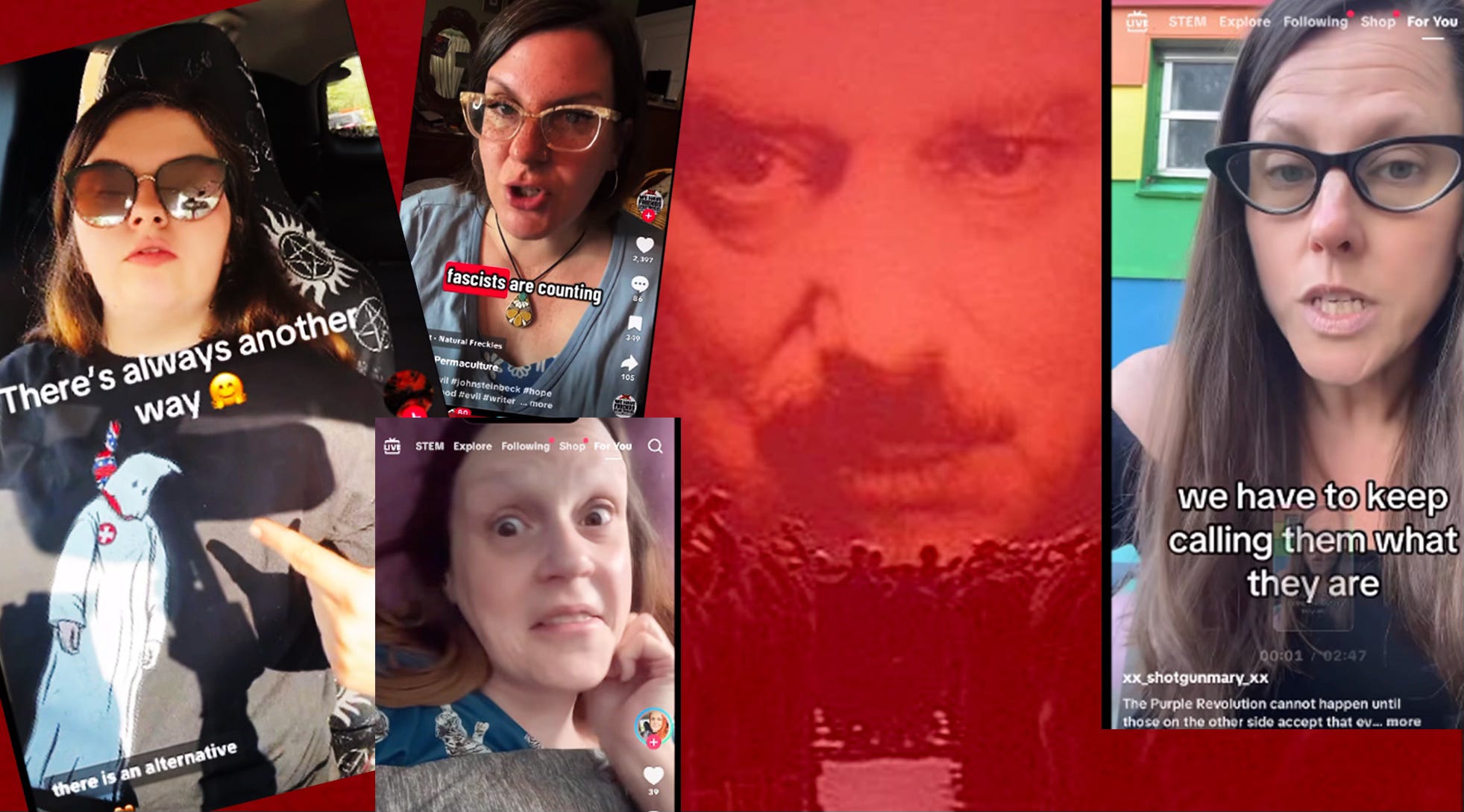
Free Thinking Through the Fourth Turning with Sasha Stone
How the Democrats Became the Party of Hate
00:47:30
Loading summary
Transcript1 lines
- [00:00]
A
Hi, this is Free Thinking through the fourth Turning. My name is Sacha Stone. How the Democrats Became the Party of Hate they changed the meaning of the word and that changed everything. I've been hated by the Party of Hate for five years and counting. Maybe longer. For a while I tricked myself into thinking it was people who didn't really know me. They judged me on my tweets or my opinions. But then after I came out as a Trump voter, I felt hate even from people who did know me. I've seen sons disown their mothers, wives disown their husbands. I felt the hatred from the people in my town who put up alienating lawn signs that seem to come from a good place. Until you think about what they are really saying. Agree with us or we will hate you podcast listeners. A deconstruction of a lawn sign all people are equal unless you are maga in our America, love wins unless hate does. Black lives matter, but only if you vote blue no matter who. Immigrants and refugees are welcome. If you want a secure border, you are a racist. Disabilities are respected unless you're Elon Musk. Women are in charge of their bodies except in private spaces and sports protecting their bodies from harm. People and planet are valued over profit. Depends on the people, depends on the profit. Diversity is celebrated except diversity of opinion. I stand with Ukraine unless a Ukrainian refugee is murdered on a train. When I was a kid, my stepdad forbade us from using the word hate. We were not allowed to say it for any reason. Not I hate Brussels sprouts, I hate doing the dishes, or most especially, I hate you. I felt it bubbling up so many times. What is a better word, I would wonder. There is no better word, I would conclude. Hate is the word we use to describe that all consuming heat that bubbles up inside us that we can't control. There are perfect words for things. Or as Anton Chigurh said, in no country for Old Men, the more people looking that's foolish, you pick the one right tool. What is love? I knew what that was the first time I saw my baby's face. What is hate? What all of us felt in November of 2016 when Donald Trump won the election. From that day forward, for the next 10 years, we would be defined by and consumed by hate. The hate wrapped itself around us. It comforted us. It made us feel morally superior and less alone in our misery and less helpless in our actions. It justified everything we did, whether it was protesting Trump's inauguration or forming the resistance. It justified even worse, beating up, spitting on and knocking the red hats off of Trump supporters, the rulers of the left's aristocracy, the empire that is now in tatters, said nothing. They seemed to delight in watching all of us good soldiers protest, even smash windows and burn buildings to show how angry we were because that made them feel less like the failures they are. Blame Trump. Blame the voters for the crime of voting them out. Blame anyone but themselves. All of culture was now consumed by the hatred that blotted out the sun and kept us trapped in a long, dark winter of misery and rage. It was our obligation as citizens of Utopia to take a side against half of America that had betrayed Barack Obama and Hillary Clinton. Hollywood, universities, corporations, institutions, book publishing, libraries and restaurants all sent the same message to the red hats. You are not welcome here. The directive from on high was not to normalize what was not normal. The people didn't just vote in Trump to represent them. That would be democracy. This was something else. This was an affront to all the better people, the ones with all the power, those who called themselves the good side, the moral side, the side written by Aaron Sorkin and directed by Steven Spielberg. The lawnsign people who say, just be kind were in the grips of an emotion they could not name, let alone control. You do not speak like we do. You do not believe what we believe. You do not accept our version of reality. We don't want you here. We hate you. Hate was what we were feeling, and yet hate was a word we'd given away. It didn't mean this overwhelming sensation that made us use our social media to demonize and dehumanize the working class. It meant people who did not go along with our progressive ideology. It started back in the 1990s with the fight for gay marriage. Love is. Love meant you're with us. Hate meant you were against us. Hate was what all of those bad people over there were. The God people, the conservatives. That's what defined them, not us. For podcast listeners, a collection of lawn signs. Hate won't make us great. Hate has no home here. Love, not hate, makes America great. Just be kind. Hate never made any nation great. Hate has no home here. Love is love. Without the right words to describe what we were feeling, we had to find other words. Nazi, fascist, dictator, bigot, homophobe, racist, rapist, xenophobe, transphobe. When that wasn't enough, we had to go after how he looked, his weight, his hair, his hands, his skin, his relationship with his family, the cars he drove, the food he ate. Trump was the only thing we could see, because hate was the only thing we could feel like this woman on TikTok who embodies so much of what defines the left today. Real question since when is it okay for people to expect me to be tolerant of racists, homophobes, sexist pedophiles, Nazis, genocide, fascists, bigots? Since when is it okay to ask anyone to be tolerant or empathetic of people who are any of those things? Things. Go talk to your therapist about your hateful ideologies. Not me. I'm not the one sick in the head. It wasn't that. Trump didn't troll or provoke us or give as good as he got. He did. Every one of his tweets drove us deeper into our hatred. How could he say that? That's not funny. That's not a joke. That's offensive. Presidents don't talk that way. Who would dare talk that way? Don't laugh. Don't take it seriously. Don't normalize him. Maybe for a while, the hatred was an understandable response to someone who offended everything we stood for. But after years of it, even I couldn't take it anymore. It wasn't just poison. I could feel a poison that began to make me sick. It was poison in our culture. It touched everything, ruined everything, destroyed a once mighty movement and collapsed an empire. The hate we felt that united us meant everything had to be sucked into it like a black hole. Jokes weren't funny. Movies were dystopian and apocalyptic, and still are. Keep the people afraid. We are oppressed, said the wealthy ruling class. Hate became a useful weapon for the empire. They could police thought and speech to aim their weapon at anyone who disagreed with them, defied their rules and thought for themselves. Two minutes of hate sacrificed to barbarians whose only honor is atrocity. But even as we grasp at victory, there is a cancer, an evil tumor, growing, spreading in our midst. Shout, shout, shout out his name. Although they will deny it and wish for it not to be true, what we all built back when Obama won was like 1984. We built an inside that kept everyone else on the outside. If you wanted to be on the inside, you had to follow our strict rules, or out you go. In 1984, Big Brother uses two minutes of hate to keep the people consumed by an emotion that prevents them from ever thinking for themselves. Who would want to be hated like that? And yet that described exactly what it was like to watch everyone I knew every single day on social media. It spilled over into real life because the media drove it. From morning news, on NPR and the networks, through the day with social media feedback loops to cable news and late night comedy. It was two minutes of hate, all day, every day. I didn't want to be part of it. And I had to know what was true and what wasn't. In 1984, we know big Brother is lying about Goldstein. If Goldstein even existed. The version of Trump we thought existed was the same kind of useful illusion. What was the way out of this, I wondered? I'd already felt the wrath of my friends online for asking questions or breaking our strict code of thought and speech. They hated me too. So I decided to reprogram my brain by cutting off all information coming from the media and social media. It wasn't easy. It filled up my head with only news from the right. I wanted to know who they really were. I had to know if any of it was true. What I eventually found out was that no, it wasn't true. And every screeching accusation is a choice to condemn someone on flimsy evidence without giving them the benefit of the doubt. How can we live like this? I thought. We must be able to tolerate one another. But how? The first thing I needed to do was remember what words really meant. News speak. Newspeak is necessary in 1984 for the same reason it's necessary on the left. Like masks, it identifies who is who in a civilization migrating online, where words are sometimes all we have to decide who is who. As the Newspeak committee working overtime plus big wastages and adjectives plus big problem is timing the language to scientific advance. 3%. Poultry 9%. It's a beautiful thing, the destruction of words. Sugar, 2.4%. You won't have seen the dictionary 10th edition yet, Smith. It's that thick. The 11th edition will be that thick. Well, the revolution will be complete when the language is perfect. Secrets to move from translation to direct thought to automatic response. No need for self discipline. Language coming from here, not from here. Excuse me for intruding, but what you're saying is that we should be rid of the last vestiges of Goldsteinism when the language has been cleaned. I couldn't be more in agreement with you, brother. Absolutely. Our manipulation of words like love and hate meant that they became elastic over time. We used them for our own purposes to drive our agenda. Break the rules of language, no matter how crazy and ridiculous they become. And you are hate. The worst offender of news speak is undoubtedly gender affirming care. It's a word game for them. You can't oppose it without opposing the affirmation of their Gender. It is demanded and mandated, which is how we get videos like this. I just had one of the worst misgendering moments of my life here at Athens Airport. Honestly, whenever this happens, I just don't know what to do. So right now, I'm making a video because I just feel like I need to vent. But, yeah, I'm probably gonna cry because it literally just happened, like, 10 minutes ago. I was just going through security, Marlon, and I put my bags up, and I was about to walk through. There was, like, no line either. And this lady who was working at the security was already off the bat, really rude. So I was about to walk through the little scanner thing. I just asked her a simple question. I was like, oh, I. I just forgot to take. Take off my belt. Like, do I need to take it off, or is it fine? And then she goes, it's okay, sir. Fine. I get called sir almost daily. Like, more often than I get called ma'. Am. I get misgendered pretty much every single day. And most of the time, I don't correct people if it's just like, a quick, like, a little interaction. Like, it's totally fine. Like, it is what it is. I know that that's just the life of being a mask. And then I was like, I'm not a sir, but thank you. And I said it very respectfully. I was just like, I'm not a sir, but thanks. And then I walked right through. And then I walked through the thing, and then I turn around, and, like, she was saying something. I don't even know, like. Like, she was, like, looking at me weird, and she's like, well, aren't you a sir? And I'm like, no. I literally just said, I'm not a sir. She was just looking at me weird and basically denying that. And I was. And I told her to her face. I was like, you don't tell me what gender I am. I'm telling you that I'm not a sir, and you're not in any position to correct my gender. Like, who do you even think you are? That's where I was like, you're being so disrespectful right now. Like, how dare you? And then she's like, okay, sorry, sir. And I was just like. That's when I lost it. I was just like, are you kidding me? I just told you I'm not so. That was so disrespectful. Like, I get the first time. And I politely corrected you. And then you continue, and you continue, and you continue she called me sir five times in like the span of 30 seconds after I corrected her the first time she said it. And she just continued. Obviously, other people start getting involved because now I'm crying and now I'm basically yelling at her because she was like, on the other side of the gate thing. And I'm like, I just told you I'm not a sir. That is incredibly disrespectful. How dare you. So then the manager or whatever comes over and checks and is wondering what's going on. And so now I'm crying and I'm telling her that she was calling me sir repetitively, even after I adamantly told her that I'm not a sir. And I told them. I'm like, I understand the confusion. I understand the first one. I understand the first time. I experience this every single day. I get it. But the fact that she continuously called me sir because the thing is, is like, she was like, well, I'm just trying to be respectful by, like, using sir ma'. Am. And I'm like, I get that you're trying to be respectful by using sir ma'. Am. But after the first time, when I'm telling you that I'm not a sir and you continue to use sir, that is extremely disrespectful. How. How dare you. And so they basically made her leave. Good. And the manager was talking to me and just asking me to explain kind of what happened again. And I told her, and she was. She was very sweet and very apologetic, and I was just like one of the most ridiculous situations I've ever experienced. And it was not even, like, bathroom related, which is crazy. Like, all the other. Most of the other times where I've had, like a really horrible experience has been related to a bathroom. But this was like, so goddamn unnecessary. And I was just like, so thrown off. I was just like, are you. Are you. Are you serious right now? Like, why I. Children are conditioned to obey these strict rules because waiting on the other side for them is two minutes of hate or a lifetime of it. Obey our rules or else it's all done with rainbows and unicorns and a smile. Hey. Good morning, class. My name is Teacher Ro. I'm going to do a quick introduction before we get started. Here's my teacher picture. Everyone in here will be able to take a picture this year, so I'm excited to see how those come out. I am non binary. My pronouns are they them. For example, they are a great art teacher. They taught us how to draw a stitch. It is super Important to get our pronouns right. If you do make a mistake, I will politely correct you. No worries. That goes for me too. So if I ever get your name or pronouns wrong, please correct me every single time. Hello. My name is ej. I teach elementary general music students from kindergarten through fifth grade, and my students call me Maestro. But here are all the things. In the last week, the students have called me instead of Maestro. A fifth grader called me Maestro Baddie. There's various fifth grade girls who really love to hype me up, and it made me feel great. I said, I can be Maestro Baddie. Absolutely. In a similar vein, but a little more uncomfortable, we have Pookie Maestro. So that was unique. Now I'm non binary, and like Cher, I just have one name, Maestro, as a teacher. But I have. I do get called Ms. Maestro and Mr. Maestro in the same vein. I don't love it, but I get that they're confused. We have a lot of English language learners at this school. I'm not going to be that mad about Mike and Mr. Maestro. Now look at how Charlie Kirk approached this difficult subject with compassion and grace, but also by edging ever so closely to the truth. Say I'm a transgender male. What age should kids be able to get things like hormone therapy? Because I don't know what's true, what's not. Tell me. Are you comfortable telling me your story? I've known that since, like, third grade, and I'm currently 19, almost 20. I have known basically since then. I didn't start going by, like, a different name until 7th and 8th grade. I just don't know, like, with the Met, like, the whole medical stuff, like, what's true, what's not, what's helpful. Because I've heard so many different opinions. First of all, thank you so much for that. So I'm gonna have an opinion that very few people will ever tell you, which is, I want you to be very cautious putting drugs into your system in the pursuit of. Of changing your body. I instead encourage you to work on what's going on in your brain first. I think what you need first and foremost is just a diagnosis. Just someone that is going to listen to what you've gone through, listen to what else is going on. My prayer for you. And again, very few will say this. I actually want to see you be comfortable in how you were born. Yeah, I know that you might not feel that way, but I think that is something that you can achieve. I think that with the right team and the right people, you don't have to wage war on your body. You can learn to love your body. Is it any wonder they had to silence him by any means necessary. Childlike words are given for extreme procedures that they are in no way ready for. Top surgery is in reality a double mastectomy on a preteen or teenage girl who can't consent. Bottom surgery is either chemical or surgical castration or mutilating your otherwise healthy organs to fake male body parts. The words became ways to define this bizarre new fundamentalism that has overtaken so many young people and why so many of them are fleeing for freer, saner pastures. For podcast listeners, the social justice word cloud. Social justice Ally Multiracial White privilege. Indigenous peoples privilege Cisgender Aboriginal racism. Stereotypes Ally Ableism labor laws Disability privilege Adultism. Did you know there was a word called adultism? It means behaviors and attitudes based on the assumption that adults are better than young people and entitled to act upon young people without their agreement. This mistreatment is reinforced by social institutions, laws, customs and attitudes. Heterosexism. Cisgender. So many words. All it means is that you cannot question any of it and must follow these words to decide the meaning of things rather than what you know in your mind and heart to be true. It's 2:25. Trump's biggest crime was that he stripped away gentle language and spoke the plain truth. None of their weapons of war, the two minutes of hate worked on him. We forgot the lesson from our childhood about the power of words. They are just words. They are not bullets whizzing through the air from rooftops. They are not shooting a CEO on the streets of New York. They are not setting fire to Teslas. I don't have to look far to see what the left has become. I only have to scroll social media and the algorithm gives me what is most popular. Yes, these are just words, but more and more lately, violence is echoing them. Podcast listeners, a tweet from Time magazine. Trump loses Nobel Peace Prize he shamelessly campaigned for. And a tweet from Aaron about Charlie Kirk. Even in hell, he won't shut up. 97,000 likes. And a tweet from Marlene Robinson about Pam Bondi. She watched videos of Trump raping children and she chose to protect him. Just think about that. 55,000 likes and on TikTok. I cannot wait for the f? Cking day when I don't have to wake up and immediately check my phone to scan the headlines with this knot of dread in my stomach to see what fucking shit has happened while I was asleep. Do you Remember that one week, that magical, blissful week where we all genuinely thought he was dead? That was the most joy, the most pure, unadultered relief I had seen in my TikTok feed this entire godforsaken year. The comments were a celebration. People were genuinely happy. There was a sense that this massive dark cloud was about to lift. And then it didn't. And we all had to go back to this, back to waiting, back to watching the daily erosion of everything we're supposed to hold dear. I have just one question. For the universe, for fate, for whoever might be listening, can we please, for all the love that is holy, hurry the up? Because Maga women know and understand that Maga men only value them for youthful appearance and looks like they know that. They understand the reality that if they don't keep up with that, that they will just get tossed aside as refuse. Because Maga men do not value women for anything else. Women are tools for them to uphold the white supremacist patriarchy. And so these women sadly give into it now like they're grown ass adults. So, like they're absolutely responsible for their actions and which side they've decided to be on. So I don't feel that bad for them. But I do feel a little bad that some of them do not understand how quickly they will be tossed out. We are living in a period in history when I think it's hard for a lot of people to feel optimistic about much of anything. But I firmly believe that one of the most effective tools of resistance that we have is fortifying our own minds against the psychological warfare of the regime. They want you to obey in advance. Fascists are counting on you obeying in advance. They can't win if you don't give up. Fascists spend a tremendous amount of energy trying to demoralize you, trying to get you to give up. Their propaganda is all about getting you to willingly accept their horrible vision. Hand over your rights, your liberties, your way of life, all on your own. They want you to lay down all on your own, y'. All. They're cultivating an atmosphere of despair on purpose as a psychological weapon against you, calling them what they are. They're fascists. A fascist is someone who believes the government, the state, should have ultimate control over society and everything. They are wanting to be in charge of what you can say, who you can worship, who you can love, how you can live your life. Good morning, Donald. Thought I would check in again since you didn't win the Nobel Penis Prize. I tried to tell you, Donald the world is not a fan. Norway not a fan. Donald Trump is a disease. And if you disagree with me, I think you're just sick. I will not be elaborating further. For all you racist that don't like the way Charlie Kirk was taken out, there is an alternative. Those bodies lay motionless on the ground. Ice patch facing up at the sky. We're gonna loot your corpses and I can't wait to see those videos. Just do it. Just do it. Do it. Do it. Someone please. I'm begging you. Someone please just do it. Can someone take one for the team? You all know we'd be much better off. Come on, let's be honest. If someone took one for the team, the world would be a much better place. Sticks and stones. Charlie Kirk was silenced because the shooter said he spread too much hate and it could not be negotiated down. An assassin did the dirty work. The end result was the same. That he wasn't immediately silenced. That his voice got louder as people mourned him and defended him, brought the hate back with a white hot fury. For podcast listeners, two images. One that says red hats make easy targets, just like red armbands. And another one. It would be a good day for an orange obituary. I've been waiting five years for those I know on the left to snap out of it, to thaw out, to find their humanity and their tolerance. Yet every day it just seems to get worse because to them, they are becoming hate while combating what they have defined as hate. Podcast listeners, a tweet from Andrew Colvett. Less than a month removed from Charlie's assassination in Utah, the Salt Lake Tribune published this cartoon entitled the Hole in the Head Gang, depicting a wanted poster with elected officials from the state with red around the neck. Absolutely disgusting. Editor's the headline on this cartoon has been updated because the original did not meet our standards for publication. We know words matter. We try to be intentional about the words we use and we regret this error. That's not everyone on the left. I know some brave people who still treat me with kindness and decency. Those who lead their party, however, including their influencers, journalists, celebrities and comedians, are the ones defined by hate that leave no room for any middle ground. Here is Jesse Kelly. Nobody on the right can turn down the temperature. The temperature can only be turned down from the left. And let's be frank about this. Let's just be frank about this. They watched an ambush of Steve Scalise and others and they didn't turn down the temperature. They watched Donald Trump get shot in the ear and another man get his head blown off that day. And they didn't turn down the temperature. Another assassin tried to kill Donald Trump, but they didn't turn down the temperature. Charlie Kirk died out in the open on video for everyone to see. And they didn't turn down the temperature. They're not going to turn down the temperature. They're going to turn it up and someone's going to die. And it sucks. Those who aren't consumed by hate are too afraid to stand up to the party. They can't even stand up against text messages that fantasize about violence and death against Republicans. Here is Abigail Spanberger in a debate with Winsome Sears, refusing to back off her support of J.C. jones. Ms. Spanberger, I understand what you're saying about the voters, but for you yourself, do you still continue to endorse Jay Jones? 15 seconds, yes or no? I. We are all running our individual races. I believe my opponent has said that about her lieutenant governor nominee. And if everybody person to make their own decision, I am running my race to serve Virginia, and that is what I intend to do. Thank you. Ms. Spamberger, we just want to clarify, you know, what you're saying is that as of now, you still endorse Jay Jones as Attorney General. I'm saying as of now, it's up to every voter to make their own individual decision. I am running for governor. I am accountable for the words that I say endorses, for the acts that I take, for the policies that I have put out. Thank you. I am responsible for the policies I put out and the work I will endeavor to do tirelessly for the people. Governor, Virginia. Thank you, Ms. Spamberger. I don't understand why you just can't come forward and say he needs to go. I mean, we're talking about murder. We're talking about someone's life being taken from them. Have you nothing to say about that? Are you not going to address it? Really? You can't go any further. You're a governor. You're supposed to stand up for all the people. Are you saying political murder is all right? But I know that violence on the left in the era of Trump is not new. The issue dates back to 2015 and has been reported on by Tucker Carlson and Liz Wheeler, tracing its origins to Trump's first term. UC Berkeley, February 2017. Violence from liberals who think hate speech is speech they hate, who think political terrorism is justified if somebody else's political opinions hurt their little snowflake feelings, who robbed, looted, burned, punched and pepper sprayed. All to prevent Milo Yiannopoulos from making a speech. Gavin McInnes February 2017. 11 liberals arrested at McInnes speech on a college campus. Ironically, the group claimed they were anti fascist even though they were shutting down his free speech, which is the definition of fascism. But this is how it works in liberal la la land, isn't it? Yeah. If you're a liberal, violence is free speech. If you're a conservative, then free speech is violence. While the violent left is a growing force in American politics and life from here in Washington to Portland, Oregon to the Bay Area and yet even now movements like Antifa remain mostly mysterious to news consumers. You most of the time to see them when they riot. A couple 30 second clips and that's about it. What is it like inside these groups and what motivates their members? Connor Barnes spent years as part of an anarchist community. He later left the movement and has published a pretty remarkable essay about his experiences in Quillette, which is excellent by the way. Connor Barnes joins us tonight. Connor, thanks a lot for coming on. I was really struck by your piece. I don't think I've ever read an account. I know I've never read an account of what it's like to be at the center of something like this. By the way, I have no idea what your politics are now. I'm not even going to ask you, but I was interested that you described this as like a religious community almost. Mm. There is a really strong faith based component. You become absolutely sure that you're right and nothing's going to sway you from it. You've set your course, you've figured it out. So it didn't seem from your description like there were a lot of other inputs coming into the cell. It seemed almost totally self referential. You talk only to people you're in it with. What are the things that you convinced yourself of or were convinced of when you were in this cell? Oh, just gosh, everything you were able to find what was wrong with everything from school to government to police to any interaction people had, you can find what's wrong with it. It's not a very happy way to live. What was your view of violence? So violence, there's a shifty way people talk about it. Direct action and diversity of tactics. Which is a subtle way of saying if somebody wants to be violent, we're going to turn our head and be okay with it. So it's not a non violent movement? No, no, no, no. But the left controls the media narrative. And even if that's changing. It isn't changing fast enough. There aren't enough Democrats willing to stand up against any of it. Here is Pam Bondi and Benny Johnson on the arrest of a man who threatened Johnson's life one month ago. Today, I witnessed my friend of 10 years, someone who I considered a brother, a loving husband, a devoted father, a generational leader, get assassinated on a livestream by a left wing radical. Approximately one year ago, I witnessed the President of the United States get shot in the head by a left wing radical who also took the life of a transporter in front of his daughters and wife. Two months ago, Christian children kneeling and praying in a church were slaughtered by a left wing extremist. And two weeks ago, federal law enforcement was shot at multiple sniper rounds in a federal facility by a left wing extremist. If it's happening every single week, is it that extreme or has the Democrat Party mainstreamed violence as a political tool? The individual who wrote me described why he wanted me dead. I was a white CIS Christian Trump supporter. They described in great detail how I would be killed in an open field, just like Charlie, how much blood would come out of my head and neck when it was blown off. This individual described orphaning my four beautiful children and widowing my wife with great joy. You might want to say another left wing radical, another extremist. And to that I would like to direct your attention to the state of Virginia where Democrats have nominated and are about to vote for the chief law enforcement officer in that state, a man who has done the exact same thing. An individual who's calling for the assassination by bullets of Republicans that he disagrees with, the killing of their children, the slaughtering of, as he says, little fascists are my four innocent, beautiful children little fascists. Violence has been mainstreamed by the Democrat Party. It is not extremist. It is mainstream. And we need a moment of reckoning here. This has to stop. This cycle must end. Is any Democrat courageous enough to disavow violence, to call for individuals that espouse these things, like what happened to my family or what's happening in Virginia, to call for those kind of candidates to step down? Will Democrats vote for that? Because if you're voting for that, then implicitly you're encouraging it, you're endorsing it. This was a coward hiding behind a keyboard who thought he could get away with this. That's why we're standing up here today. You are not going to get away with threatening people in this way. And I'm proud to announce that we have arrested the author of this letter. George Isbell Jr. Was taken into custody this morning and we are charging him federally with mailing threatening communications. It is a crime, and if convicted, he is going to prison. When I found my way over to Trump World, I found exactly the opposite of hate. I found tolerance. I found decency. I found kindness. I found love. It was unusual to find people who are not eternally miserable bearing the weight of the world on their shoulders. Like most progressives, many of them are not driven by politics, but rather a higher power, and that is what prevents them from becoming a people and a movement defined by hate. There is also a lightness in escaping totalitarian oppression that polices every word that comes out of your mouth. It feels good to speak the truth, and it feels good to feel free. The death of Charlie Kirk has shaken moderate Democrats out of their hate stupor because of how so many on the left reacted to his death. Since posting about Charlie Kirk, I have lost followers. I have been unfriended on Facebook and all for sharing that we should be mourning a father, a son, and a husband. In fact, I have seen people who have posted some disgusting things about it on my feed that I didn't unfriend because I'm not hateful, even though I don't agree with it and it's disgusting. I'm like, we're all human. We're allowed to grieve things. Honestly, there's no excuse for it. But I just. I didn't want to act out of pain. I didn't want to act out of anger. I didn't want to act out of despite. And then those same people unfriended me, which is what it is. But I need to set the record straight. I don't care. I do not care. 2020 prepared me for this moment because in 2020, I was speaking out and I got hit in the face with the mob that is the Internet. It shut me up real fast. And I still quietly said things, I still hinted at things, but I wasn't bold in it because I got. I got quieted. And I've gotten to a point now, thanks to what went down now, that I just. I don't care. I love you. Jesus loves you. And we are all sinners. We have all fallen short of the glory of God. So I'm not sitting here saying that I'm better than you, but I am going to tell you right now, I don't care if you like me. I have one person that I answer to, and that is my Lord and Savior Jesus Christ. That's it. That's the only person. So I'm going to treat you with love. I'm going to even pray for you. Literally. The people that in front of me. I've spent pray all morning praying, praying for the people that have been in my messages. I've been praying for this morning, worshiping God, thanking for their life and asking for a revival in their hearts. That's how I'm gonna fight my battle. But I need you to hear me loud and clear. I don't care anymore. I don't unfollow me, unfriend me. There's the door. I will be praying for you on your way out. I voted blue every cycle. And for the last time, Charlie Kirk was not a far right extremist. He wasn't a radical white nationalist. Are you crazy? Have you seen what's actually out there? Charlie was a moderating force and you saw the same five quotes chopped and twisted to make you feel righteous. You are not righteous. You are at best a useful idiot. Rest in peace, Charlie. You deserve better. But some of us were listening. Hey guys. I keep seeing videos of leftists trying to figure out where everything went wrong, why everyone is becoming more conservative and right leaning. I made a list. Alrighty. I hope that lighting is better. The left has micromanaged everyone's words, manipulated and lied about what we have said, ruined lives and doxxed individuals, offered no forgiveness, mercy or understanding. Then you escalated to full censorship, getting social media platforms to censor us because you disagreed with our perspective. You imposed your opinions and beliefs on us, invading our lives, our sports, our bathrooms, and even tried to influence our children and invade their lives. You know, when it comes to things like abortion or the trans situations, there was a lot in that that was for our kids and against us, where they could do things without our consent. That was too far. All of this is too far. The Democrats didn't used to be the party of hate, but powerful people don't like to have things taken away from them. And in their fury and fanaticism, almost nothing of what they built supposedly on inclusion and tolerance remains. All that's left is the thing they can't name the thing they can't extinguish that all consuming hate. I don't know how we end this madness. I don't have any hope that the Democrats will emerge from it anytime soon. I guess that means we must move on without them to shape an America that at the very least understands the meaning of fundamental words like love. And hate. Thank you for listening to my podcast sashastone.com and thank you for your kind letters and your emails and your messages. I know I am backlogged in getting back to you and I apologize for that. But thank you for making me feel seen. As they say. Thank you for making me feel loved and appreciated. And if you like my work, you can support me by going to sashastone.com and you'll find a tip jar on the main page or by becoming a paid subscriber. Have a great weekend and remember to thine own self be true. Well there ain't no use in a sit home and wonder why baby if then you don't know by now and ain't no use in a sit home and wonder why baby it don't matter anyhow when that rooster crows at the break of dawn look out your window and I will be gone yeah, you're the reason that I'm moving on don't think twice, it's all right that ain't no use in a turning on your life babe the light I never know and ain't no use in turning on your light babe I'm on the dark side of the road well I wish there was something you would do or say to try and make me change my mind and state we never did too much talking anyway don't think twice, it's all right all right Jo Sam now there ain't no use in a calling out my name, gal like you never done before and ain't no use in calling out my name gal I can't hear you anymore anymore When I'm thinking and wondering Walking down the road Once loved a woman, a child I've been told Gave her my heart but she wanted my soul don't think twice, it's all right Come on, boys. Well, so long honey babe Where I'm bound I can't tell and good lives too good so I'll just say very well when I say treated be unkind could have one better but I don't mind you just kind of wasted my precious time don't think twice, it's all right it'll be twice all right.