← Free Thinking Through the Fourth Turning with Sasha Stone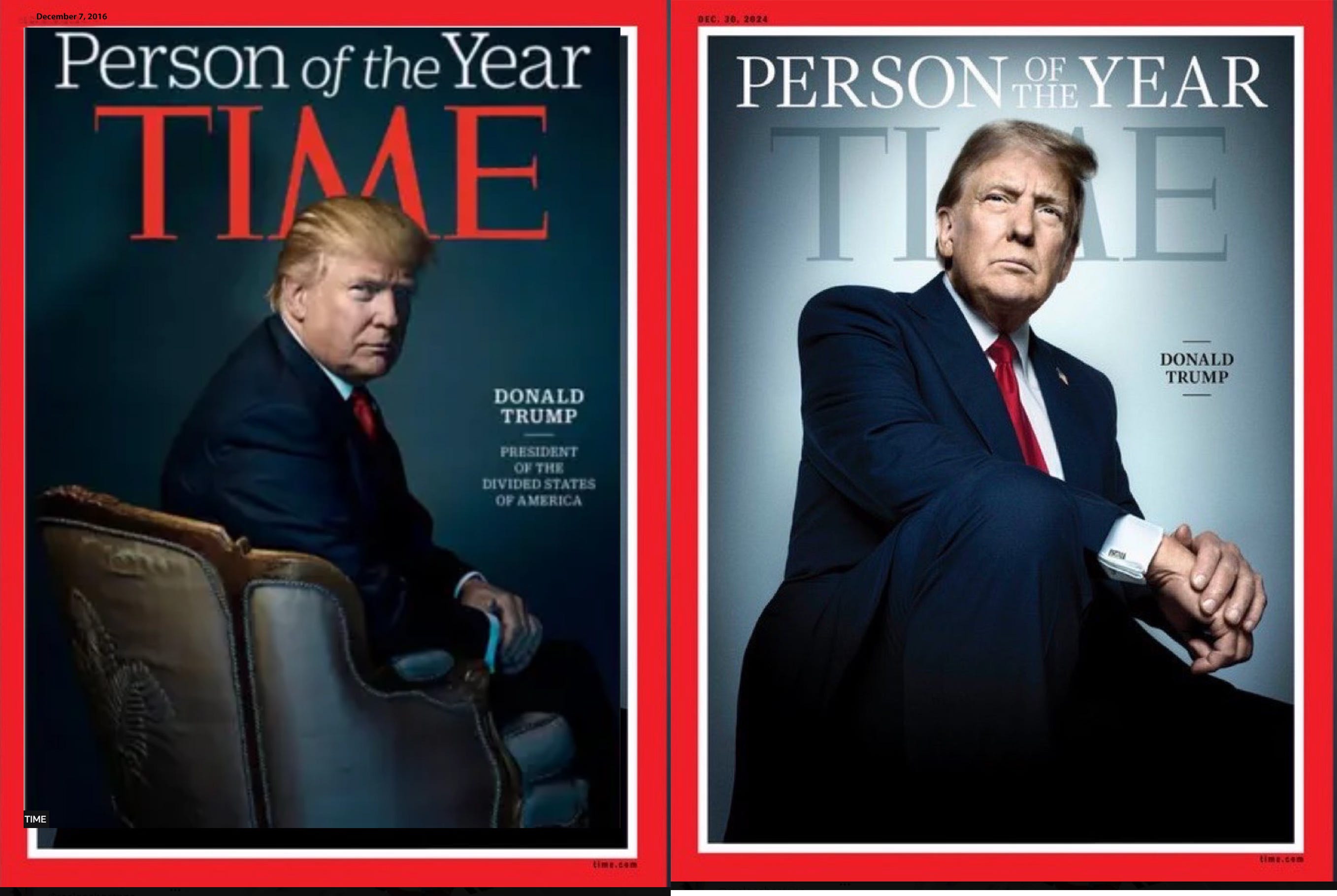
Free Thinking Through the Fourth Turning with Sasha Stone
How Trump's Enemies Manifested His Hero's Journey
00:59:35
Loading summary
Transcript122 lines
- [00:00]
Sasha Stone
Hi, this is Free Thinking through the Fourth Turning. My name is Sasha Stone. This is the audio of a video I made for most of my readers, actually, as an early Christmas or holiday gift. I hope you'll go to the site sashastone substack.com and watch the video, but otherwise, if you'd just like to listen to the audio, here it is. As Ronald Reagan once said, heroes may not be braver than anyone else. They're just braver five minutes longer. Every so often I say out loud, trump won. I repeat it in my head a few times, because even now, I barely believe it. Eight long years of conflict, madness, division, corruption. There'd been convictions, jail time, even suicides among the Jan Sixers, whose lives were destroyed because they were faithful enough to Trump to have his back when the chips were down. What our government and our media and the ruling class wanted was to terrorize Trump's supporters out of their loyalty to him. It's a cult, they continue to insist. But even after all that, Trump won. He won the Electoral College and he won the popular vote. There's never been a story like this one in all of American history, and even the good people of the left know that. But there have been stories like this in all of the most beloved films and books. This story is one we all know. It's called the Hero's Journey. And any honest person knows that. We just watched Trump live out his. By the end of it, he has people like me wandering around saying, Trump won. His victory meant more than just winning an election. It meant the return of reality and normalcy. Somehow, I know it sounds crazy to say that, but it's true. Trump refused to stand down, no matter what they threw at him. He refused to cower in the face of an assassin's bullet. He soldiered on as the best heroes do, passing every test, humiliating his rivals. And even those who hated Trump can't help but be impressed. One only needs to look at the two covers of Time magazine, which feature Trump as Man of the Year, to see how it started and how it's going. Trump didn't write this story. His enemies did. And in so doing, they sealed their fate to become but a footnote in the unforgettable story of the greatest political comeback in American history.
- [02:50]
Steve Bannon
I think he's created the most amazing political comeback in American history. The 16 states that tried to take him off the ballot in the first the two impeachments, the trial as a private citizen, and then, of course, the two assassination attempts. So to be able to overcome all of that, and then wage a campaign in which he was outspent two and a half to one, and yet he overcame all of that.
- [03:16]
Sasha Stone
So how did we get here? What is the hero's journey? And how does Trump's story fit so well?
- [03:22]
Steve Bannon
The hero's journey is an algorithmic pattern of transformation. These patterns are the experiences we must confront when leaving our comfort zone of our perceived reality. A hero desires a want that is left unfulfilled. He will go through a series of transformative steps to discover a deeper, unconscious need for the story to grip us at an emotional level. We must feel empathy with the hero. We relate to people like us who perceive the same world we do. This doesn't mean the hero must be good, but it's mandatory that he is relatable. Heroes are propelled by universal impulses we can all understand. Everybody desires to be loved and understood. Everybody wants to succeed, survive, be free, take revenge, or fix mistakes and injustices from the past. We feel empathy towards relatable people in a position of injustice in which their perception of reality might be the correct one. Yet they are fighting a system that is oppressing them. Most heroes go through an arc of change in which, by the end of the story, they are no longer the same person. They might have started being apathetic, arrogant or indecisive. And by the end of the arc, they become active, humble and decisive. Some heroes don't change. Instead, they have control over their own narrative, so they catalyze the rest of the world to change. The world will test their narrative to know how real it is in the physical world. If it fails to meet with reality, then the hero's arc is a tragedy. If the hero's perception of reality is the truth, then the world is no longer a tragedy.
- [05:16]
Sasha Stone
Part 1 the Ordinary World to massive ratings success. Millions of Americans welcomed Trump into their ordinary world every week. He was already a star. People tuned in to hear him say.
- [05:33]
Steve Bannon
You'Re fired, you're fired, you're fired, you're fired.
- [05:37]
Sasha Stone
But they also tuned in to hear him say what was true but couldn't be said out loud. They knew him and they loved him.
- [05:44]
Steve Bannon
I would like to do it, but I'm not the Lexus customer. I'm white trash. I only eat at restaurants with deep fried appetizers, so I know I'm not the Lexus. What is you mean you're white trash? I just. I'm just joking about that. What does that mean? You don't joke about that. What does that mean? You're white no. You know, I grew up in a small town, and. And does that make you white trash? White trash? Sometimes. That's a pretty stinking statement. But don't you think that's a pretty bad statement about yourself? No, not necessarily. I think people say it doesn't sound flattering. Do you go around calling yourself white trash? Do you think I want to hire somebody that's white trash? No. I say it as a joke sometimes, and I don't like it as a joke. You know what? You know what, Derek? You're fired.
- [06:21]
Sasha Stone
Reality TV was about to become actual reality. In 2016, America could be divided into two groups. Those who watched the Apprentice and those who did not. If you knew Trump from that ordinary world, nothing he said would shock you. But if you were like me, already insulated in a protective cocoon of extreme political correctness, a utopia where offensive language is not to be tolerated, and a class of people who would not be caught dead watching the Apprentice, his words would be paralyzing enough to cause fits of mass hysteria that would last for years. Trump has been a fixture in American culture since the 1980s. He mocked himself and was always in on the joke. Just one year before the left decided he was Hitler, he hosted Saturday Night Live.
- [07:15]
Steve Bannon
Hi, I'm Donald Trump, and I'll be hosting Saturday Night Live this week with musical guest Sia. Hi, I'm Donald Trump and I'll be hosting SNL with Sia. And the ratings are gonna be.
- [07:27]
Sasha Stone
Who's hosting?
- [07:28]
Steve Bannon
Oh, shh. It's a surprise. Sia. I love this hair. Donno. Enrique, I brought you the check for the wall. God, it's so wonderful. This is far too much.
- [07:45]
Sasha Stone
Despite Trump's wealth and the left's attempts to portray him as an out of touch billionaire, he speaks the language of ordinary working class Americans. Somehow, Trump is the guy who eats at McDonald's. He's the guy who talks to the golfer and the caddy als ic. But to make him into Hitler took a village of liars who had no intention of handing over power to Trump or any of the Americans who voted for him.
- [08:10]
Steve Bannon
I guess they want to see whether or not it's my real hair, which it is. So here's what I'm going to do. Miss universe and Ms. USA, I own it. They're here. They're going to really do a number on me. I'm challenging President Obama. My son Donald, my son Eric. Let's go, ladies.
- [08:38]
Sasha Stone
But Trump's ordinary world was not politics. He was an outsider, the perfect hero to be plucked from One world. And thrust into the special world, one he did not fully understand. Part two, the call to adventure. Refusing the call. The hero is always reluctant to answer the call. And Trump was asked again and again if he'd consider getting into politics. The answer was always no. Why wouldn't someone like yourself run for political office?
- [09:09]
Steve Bannon
You have all the money that you possibly need. You've accomplished a great deal, even though you are only 34. I know there's a lot of things.
- [09:16]
Sasha Stone
That you possibly can do in the years ahead.
- [09:19]
Steve Bannon
Why wouldn't you dedicate yourself to public service? Because I think it's a very mean life. I would love and I would dedicate my life to this country, but I see it as being a mean life. And I also see it that somebody with strong views and somebody with the kind of views that are maybe a little bit unpopular, which may be right, but maybe unpopular, wouldn't necessarily have a chance of getting elected against somebody with no great brain but a big smile. There are a lot of things to, you know, a fertile imagination and a good, fertile mind. Mike. It's an amazing. It's really amazing what can be thought of. There are so many things to do, politics, so many. No. You know, there's a certain dishonesty, unfortunately, that you need for running for office. Now, it's an unfortunate thing, but you would know this perhaps better than anybody in the world, right? I've coached a few. I'm a pretty straight guy, and I'm not sure that somebody that really calls it like it is and says, this is what you have to do. I'm not sure that kind of a guy gets presidential. Talk to me, and I know people have talked to you about whether or not you want to run. Would you? Would you ever? Probably not, but I do get tired of seeing the country ripped. Why would you not? I just don't think I really have the inclination to do it. I love what I'm doing. I really like it. Also. It doesn't pay as well. No, it doesn't. But, you know, I just probably wouldn't do it, Oprah. I probably wouldn't.
- [10:34]
Sasha Stone
But I do get tired of running for president. Seemed to be the last thing Trump had left to do. And he knew that he was right in those early days to say that America wasn't ready for people who tell it like it is. Part three Accepting the call. Trump, like so many others born outside of Manhattan, maintained a chip on his shoulder that drove him not just to become one of the Manhattan elites, but to earn their respect. So it stung when Obama called him out and humiliated him in a room full of people who thought they were superior to Trump in every way.
- [11:10]
Steve Bannon
My fellow Americans, no one is happier, no one is prouder to put this birth certificate matter to rest than the Donald. And that's because he can finally get back to focusing on the issues that matter. Like, did we fake the moon landing? What really happened in Roswell? And where are Biggie and Tupac? Back at you, buddy. Episode of Celebrity Apprentice at the steakhouse. The men's cooking team did not impress the judges from Omaha Steaks, and there was a lot of blame to go around. But you, Mr. Trump, recognized that the real problem was a lack of leadership. And so ultimately, you didn't blame Little John or Meatloaf. You fired Gary Busey. And these are the kind of decisions that would keep me up at night.
- [12:24]
Sasha Stone
Obama was hitting back after the birther conspiracy. Mother on the left deemed racist. But really, he was playing his most powerful card, that he was accepted by the ruling class and Trump was not. This set up an epic battle between the two men for the next decade. One Trump would ultimately win. Obama wasn't just accepted by the ruling class. He was a symbol of virtue. As wealth concentrated on the left, what they we needed was absolution from our sins of privilege. Obama provided that. He was the closest thing we had to religion. By contrast, Trump represented our collective sins. If we could blot out the sun, we could somehow deny those bad qualities in ourselves. That guy over there is the bad guy. We're not like that. But by 2015, Trump was finally ready. The hero is always unprepared for what this step actually means. They might start the journey almost as a lark, but once they accept that fateful call, there can be no turning back.
- [13:32]
Steve Bannon
The seeds of Donald Trump's presidency are embedded in his path to power. He redefined what it meant to be a serious presidential candidate, starting with his announcement. I remember watching the announcement and laughing at the entertainment value, the way a.
- [13:56]
Sasha Stone
Lot of people did.
- [13:59]
Steve Bannon
In Washington. You could almost just hear people around town laughing at the idea that this person was going to be a credible threat. He seemed like a cartoon character. He did the exact opposite of what every candidate has done before. It was like extending the middle finger to the political establishment.
- [14:21]
Sasha Stone
Trump famously vanquished his primary opponents, picking them off one by one. As a country already addicted to reality shows watched this one, that's what it looked like anyway. Every great reality show needs a great villain, and there was no more entertaining villain than Donald Trump.
- [14:38]
Steve Bannon
I can bring up something I think. Right. Look, the simple fact is if you think this is tough and you're not being treated. This isn't tough at easy. Imagine what it's going to be like. I wish it was always as easy as president. She. Or dealing with the Islamic terrorism that exists. This is a tough business. Oh, you're a tough guy. And it's. And we need to have a leader that is really tough. You're never going to be president. Salt in your way to the President. I'm at 42 and you're at 3. So far I'm doing better. Doesn't matter. So far I'm doing better.
- [15:05]
Sasha Stone
Who would dare talk to Jeb Bush like that? Who would dare talk to Hillary Clinton.
- [15:10]
Steve Bannon
Like nice things about me? If we got along well, that would be good. Well, that's because he'd rather have a puppet as president of state. No puppet.
- [15:19]
Sasha Stone
It's pretty clear you're the puppet. It's absolute.
- [15:21]
Steve Bannon
She doesn't like Putin because Putin has outsmarted her at every step of the way. Excuse me. She's been proven to be a liar on so many different ways. This is just another lie. Excuse me. My turn. Such a nasty trust fund. He held a number of big rallies where he said that he could not.
- [15:41]
Sasha Stone
Possibly have done those things to those.
- [15:44]
Steve Bannon
Women because they were not attractive enough for. I did not. I did not say that.
- [15:50]
Sasha Stone
In fact, you went on to say.
- [15:52]
Steve Bannon
But did not say that. It's her. Two minutes. I understand. And the specific question went to pay for play. Do you want to tell? But there is no evidence. There is a lot of evidence. Very good work. And it's a criminal enterprise. And so many. It's a criminal enterprise. Let me just explain. Most of her donors have done the same thing as I did. Okay. And you know what she should have done, folks? We heard that. And you know, Hillary, what you should have done. There was even a time when he.
- [16:21]
Sasha Stone
Didn'T get an Emmy for his TV.
- [16:23]
Steve Bannon
Program three years in a row. And he started tweeting that the Emmys were rigged again. Should have gotten it.
- [16:29]
Sasha Stone
Part four, the Mentor and the Talisman. Trump had several key mentors, including Roy Cohn and his father. But the one who matters most in Trump's hero's journey is Steve Bannon, who was busy building a populist movement that needed a tough leader like Trump. Here Bannon talks about their first meeting.
- [16:49]
Steve Bannon
Because I didn't take him very seriously. We sit down. It's a two hour meeting. He doesn't know a lot because he's not supposed to. It's not that he's not. It's all about politics and very specific. And he doesn't know any policy, which he shouldn't. He's a, he's a, you know, he's a real estate guy and a TV guy. He doesn't know any policy. Dave's walking through this, but what struck me, we turned to. I talk about populism and I say, you know, I go, you know, I give him the history of populism when he, you know, Andrew Jackson, William James Bryant, bring him up to date with Ross Perot, everything like that. And he turns to me, he goes, that's what I am. I go, what? He goes, a popularist. I go, no, no, no, no, it's populist. And he goes, yes, yeah, I got it. Popularist. And I go, no, no, it's populist. And after I said it a second time, Bassie gives me the kick under the table. He says, populist. I let it go. And then he turns on, he turns on about China. And we get into this conversation about China and we talk about trade, we talk about non trade barriers, talk about the South China Sea, we talk about currency manipulation. Of a two hour meeting. The China thing is 20 or 30 minutes long. It's the one thing he knows. And I realize he's regurgitating my guy, Lou Dobbs, but I'm telling you, it's the one thing. He's engaged and he's got well formed opinions. So we leave the, we leave the meeting. Bossie says, I'm on the train on the way back, Bossy, what you think? And I'm sitting there going, you know, I've been thinking about it, his thing on popularist. I was wrong and he was right. He goes, what do you mean? He says, you wouldn't let off on that. That's why I kicked you. And I said, yeah, I was trying to give him the standard thing. He thinks of things differently. He is a popularist, he's not a populist. He thinks about things from himself. And I said, that's pretty amazing. He was actually right and I was wrong.
- [18:45]
Sasha Stone
Bannon took the long view then and now. He'd read the Fourth Turning by Neil Howe and William Strauss 10 years after the book was written. He lived through the financial crisis. Bannon made the movie Generation Zero about what was coming next. He has always had an eye on how America must land. After the fourth, turning in the direction of populism, not globalism, it becomes a.
- [19:07]
Steve Bannon
Time of testing, of adversity. And it becomes a time too, when the best qualities of every generation comes to the surface and becomes very important in steering his in a good direction. Each season has a vital function America. Usually during fourth turnings, they solve huge problems. But more importantly, fourth turnings are necessary.
- [19:28]
Sasha Stone
For the evolution of civilization.
- [19:30]
Steve Bannon
There has to be a period when we get rid of what's old, particularly what's old institutionally. We make the ground fresh again for the young. The question of what that new order will be is up to us and to the younger generations, and it always will be. We have to remember that this period.
- [19:50]
Sasha Stone
We'Re going to go through, however dark.
- [19:52]
Steve Bannon
It becomes, however much it tries us and tests us, will be a time.
- [19:57]
Sasha Stone
Hard as that may be to believe.
- [19:58]
Steve Bannon
That younger generations will look back to with fond memories. This was their gate of history. This was the time that they set out and began to create a new world. There have been three huge moments of choosings in American history. The Revolutionary War period up through creating our Constitution, the Civil War period and the Great Depression and World War II. In those three periods of choosing, people had to decide what kind of country we were going to be, where we were going to go as a nation, what our future was all about, and what values we hold. I think we are entering a similar period that will probably last 20 years and be an ongoing, continuous challenge. When this is over, we won't be the country we have been. The choices over the next few years are among the most profound we will have seen in all of American history.
- [20:50]
Sasha Stone
On October 7, 2016, the infamous Access Hollywood tape dropped as an October surprise. As Bannon tells it, the wolves were at the door. Trump had a decision to make a mea culpa with David Muir and ABC News or fight, fight, fight.
- [21:06]
Steve Bannon
So David Muir is like, out in the Hamptons. They're going to helicopter in. ABC gets the whole crew over. 6:00, we take a break and go down to the infamous 25th floor conference room where we've had all the big events in my life with Trump. We're there. Trump is going to take an hour, get sorted, come down, and Christie and Rudy are going to write his preamble that he's going to be able to say on ABC. This is 6:00 on Saturday Night Live to the nation. It'll be the biggest show in history since mash, right? Donald Trump addressing the Billy Bush tape. And I'm sitting at the end of the thing with Stephen Miller and watching this. I'm sitting there Going, it's over. If we do this, it's over. There's just nobody. You can't put. This is not. You can't pull this off. So I'm sitting there thinking, what are we going to do here? And he gets there, and Christie and these guys. It's not even typed. I think it's handwritten by Chrissy. Puts it over, and Trump comes out. And Trump's in a bad mood. The time we left him alone up in the tower had not been quality time. Okay, in what way? I just don't know. But he's not in a good mood. He's in a bad mood. Okay? There are a lot of people in a bad mood up there. Okay? The tape was pretty raw, right? And now we've got. By the way, now we've got a full revolt. You know, Pence is nowhere to be found. He's not out there saying, great. He gives him. We get a letter from him. Paul Ryan's out of the campaign. McConnell's out. I mean, now it's a whole. It's a thing that. And Reince lays up a proposal. You know, he's asked Reince, what do you think? He says, well, you got two choices. You're either going to lose by the biggest landslide in history or you step down today. And we've got a way that we can restructure the ticket, that we only. Only Colorado is out of play because they got to mail in the ballots. Everything else, we can get changed, and we can do this. Gore, are you nuts? Not going to do that. I told Reince later, I said, why did you even bring that up? It's not going to happen, okay? It's not going to happen. We'll fight this through some other way. But that is not going to happen. He's not going to quit. Just even to bring that up is absurd. That was the donors, because they thought they were going to lose the Republican Party. They thought, every woman in America will never vote for a Republican again, Right? Because this guy is a barbarian. In the conference room, Christie gives him this thing with Rudy and he starts reading Donald Trump. He gets like two sentences in. He goes, this is crap. This is baby talk. He goes, am I a baby? I'm not gonna do this. He turns around to him. He goes, it's gotta be better. I'm out. And they go, well, make this change. They turn around to me. He goes, this is ridiculous. I'm not doing it. And Kellyanne goes, well, we gotta do it. They're flying. ABC's loading up. This thing's set up. David Muir's helicoptering in. This thing's a go. And Trump just goes, I'm not doing it. And you hear from. You're all the way up on the 25th floor at Trump Tower. You can hear on the streets. Trump goes, what's that? And you look down, there's got to be 10,000 people on Fifth Avenue. They've blocked. They got the police on the horses. They got riot police. You look down, and there's literally this mob down there. And he goes, look, there's my people. My people. That's what I got to do. I said, we can't get the hilt, and we let it go. He says, I'm just going to go down and talk to my people. And I said, well, you know, I don't think all of those are our people. Of the Mob, it's probably 80% want Trump's head on a punishment. There's 20% of the deplorables. Most of them are sitting there, angry women that are sitting there want to tear Trump apart. I said, I don't know if that's exactly our crowd, but this is what a leader does, blocks. He just says, no, no, no, these are my people. I got to go talk to my people. The Secret Service says, this is not going to happen. You're not going to walk out there. We have no control. And he just goes, I'm going. He takes off. And I. Kellyanne goes. I go with him. And then Christy and I have a sidebar. Tete a tete, off to the side. Trump goes down. That's that famous picture. Trump just walks out there. And if you listen to the crowd, you know, two thirds of the crowd is, we hate you. Right? But he blocks it out. He's waving and everything like that, and turns it into, I think, a seminal moment that was that in that moment, he won the presidency. And I realized all my study of military history and everything like this, campaigns come down to one or two decisions made with imperfect information. In the heat of battle, in the fog of war, one way leads you to victory, and the other way leads you to defeat. There was 90% chance we would have gone the other way that day, from the night before, from the pressure that was on him and everything like that. And that's what a leader does. He's able to reach in and understand something. I think people misjudges on Trump. He's got a natural leadership ability to basically focus and make the right decision. That was the inflection point. The women we got there the next day and everything like that. But it was in that moment when he stood up and said, I'm not doing this. Oh, you can't. ABC's here. Everything like that. He looks down at the crowd, which was a hostile crowd, but in his mind turned it into, those are my people. I've got to go down and address them. When he went down and did that thing, the whole thing kind of reverted, and from there on in, we had to still punch it out. But it was if it would change in that moment, if he had gone on abc, Hillary Clinton would be President of the United States.
- [26:25]
Sasha Stone
Bannon is the Yoda to Trump's Luke Skywalker because he helped sculpt and guide the hero toward his ultimate goal. Though Trump pushed him out in his first term, Bannon remained loyal to Trump and even spent four months in Danbury Prison for Bannon. It has never been about Trump specifically, but about guiding the ship in the right direction. He needed Trump then, and he needs him now. Part 5 Crossing the threshold.
- [27:01]
Steve Bannon
Fears and doubts have been confronted. The guardian at the gate has been appeased, and the hero has reached a demarcated line in the sand. The crossing to the new special world may come in the manifestation of a portal, a door, a bridge, or anything that resembles an entrance. The passage may be solitary or filled with color and invention, intensity. The hero gathers courage, but the bravery is soon extinguished. As soon as the hero comes into contact with the new special world, the hero will most likely fall flat on his face, literally or figuratively. The crossing is a traumatic event, bringing the hero to his knees and making him a beginner once again.
- [27:48]
Sasha Stone
For Trump, the threshold between the ordinary world and the special world was the 2016 election, a win that shocked even him. Winning was supposed to mean that the American people accepted him as their president. He didn't understand why they were protesting in the streets, as they were saying, he was illegitimate and not my president. He won after all. So why weren't they treating him that way? In 2016, those of us on the left decided that this country, its culture, its government and its institutions all belong to us. If we proclaimed Trump a racist, Nazi, fascist and thus rendered him ineligible to serve, we had every right to treat him and his supporters as unwanted invaders in our country.
- [28:35]
Steve Bannon
At times, it seemed like the police had no control of the situation. People were getting beat up right in front of them, and these were not clashes. These were pure attacks. Trump supporters, men, women, even the elderly, left this building last night and walked right into danger.
- [28:52]
Sasha Stone
Part six Tests Allies and enemies.
- [28:55]
Steve Bannon
It's like you've been thrown into a college class and you don't know much about the subject, but they've given you a few chapters to read and some problems to work out and now you're tested. But it's a small test. It's like a pop quiz that just focuses on certain skills and abilities. And so the hero will be put through some kind of challenges that aren't fatal necessarily, but they're a little scary and a little dangerous and they bring attention to the fact I don't know the rules here and I've got to figure it out fast. So I got to figure out who can help me with this and who will be in my way. And that's where the allies and enemies come. And often you will find teams are built at this stage. You think about in Star wars, the cantina sequence where you're on the threshold of this world of space and the hero, Luke Skywalker, finds, you know, the rules are very different here. There's weird creatures and quick moments of violence. So the hero is alerted that he's going to someplace quite exotic and different.
- [30:08]
Sasha Stone
Being a Trump ally is not for the faint of heart. He is no walk in the park, especially not then. He'll insult even those closest to him. And spent much of his time in office antagonizing the press and the swamp creatures. But Trump's role was not to be liked by any of them. It was to represent the people who voted for him as is. Nonetheless, the establishment government ate Trump alive in his first term because he wasn't a lawyer or a politician. He had to hit the ground running and was met with opposition forces who sought to sabotage, discredit and ultimately push him out of power. It was a slow moving coup and Trump was no match for the empire. Nancy Pelosi ripped up the State of the Union. The Democrats took the House and impeached him two years into his first term. Just as Bannon had predicted, Trump's agenda to drain the swamp and close the border had to be pushed aside as he fought for his own reputation and his presidency.
- [31:06]
Steve Bannon
Article 1 is adopted.
- [31:10]
Sasha Stone
Part 7. The approach.
- [31:13]
Steve Bannon
The approach to the Inmost Cave serves several important functions in storytelling. First, it builds tension and anticipation for the coming ordeal. This stage allows for final character development and bonding before the major challenge. Often it reveals the antagonist power or the difficulty of the coming task. Finally, it provides an opportunity for the hero to reflect on their journey so far and steel themselves for what's to come.
- [31:40]
Sasha Stone
For Trump, the approach was the 2020 election, Trump could see what the powerful forces that opposed him were doing to rig the election. Even I could see it as a Biden voter. It was not hard. Nothing made sense. What we would all find out much later is that we didn't imagine it. They bragged about it in Time magazine.
- [32:00]
Steve Bannon
If I told you that a secret cabal of powerful elites engaged in a conspiracy to change election rules, laws, to manipulate information in order to prevent the victory of Donald Trump, well, I'd get banned from YouTube. I mean, they'd probably take this video down. Twitter would probably suspend me for a day, and Facebook has already restricted my page for unknown reasons. So I'm not saying that Time magazine is, and I'm 100% serious. An article titled the Secret History of the Shadow Campaign that saved the 2020 election. Time magazine literally describes it as a cabal of powerful elites across industry and ideology engaging in a conspiracy to manipulate information, to suppress information, to. To change the rules, to ensure the proper outcome is delivered. The proper outcome. Some people have said, wow, I can't believe they're saying the quiet part loud. And I'm just saying, I mean, it's brazen, but they're admitting it. You know, look, before the election, I had been saying that Democrats were rigging the game. And I'm not. I'm not saying anything illegal occurred. What I'm saying is there's rules in an election, and the Democrats changed those rules in many ways that favored them. If we're running in a race and then you make a rule that, you know, imagine a horse race, okay, if you make a rule saying that your horse is allowed to leave the, you know, the stable or whatever, or whatever. It's called the holding pen. They're allowed to start running five seconds before everyone else. I'd say, dude, you're rigging the game so you can win. You're changing the rules. You can't call it breaking the rules when the rules were changed to benefit them. So I'd been saying that they've been rigging this. Well, they're coming out and admitting it.
- [33:56]
Sasha Stone
2020 was one of the hardest years for Trump. He was in over his head, and no one in D.C. or in the media wanted to help him deal with a pandemic. They wanted needed him to fail, just as they needed the protests over the summer to be bad enough to threaten Trump and his family. Trump caught Covid, survived it, and then went out and did five rallies per day in hopes of making up lost ground. He knew the pandemic crashed the economy, his strongest selling point for a second term. But his campaign was starting to move the needle. Why? Because the left had lost its mind.
- [34:49]
Steve Bannon
1776 represented the culmination of thousands of years of Western civilization and the triumph of not only spirit, but of wisdom, philosophy and reason. And yet, as we meet here tonight, there is a growing danger that threatens every blessing our ancestors fought so hard for, struggled they bled to secure. Our nation is witnessing a merciless campaign to wipe out our history, defame our heroes, erase our values, and indoctrinate our children. Angry mobs are trying to tear down statues of our founders to face our most sacred memorials and unleash a wave of violent crime in our cities. Many of these people have no idea why they're doing this. But some know exactly what they are doing. They think the American people are weak and soft and submissive. But no, the American people are strong and proud. And they will not allow our country and all of its values, history and culture to be taken from them to demand that Congress.
- [36:21]
Sasha Stone
The problem was they weren't playing by the rules of the game. They made up their own rules, and Trump was no match for them. All he had was his First Amendment right to have his and his supporters voices heard, which they did on January 6th as part of a mobilization effort by MAGA to protest the election. They called it Stop the Steal. But the riot at the Capitol was checkmate. It was over. His court cases, his attempts to convince Senators Ted Cruz and Josh Hawley to debate the rule changes in court, his MAGA movement, all collapsed in an instant. How convenient that was for the empire. Had they left Trump alone and allowed him to enjoy the rest of his life in Mar A Lago, maybe things would have ended there. Maybe they would have actually won the war. But they weren't quite done with Trump, and he most certainly wasn't done with them. Part 8 the supreme ordeal Biden's incompetence became clear to Americans when the botched exit from Afghanistan woke everyone up to who was now leader of the free world. Someone who, despite a lifetime in government, did not listen to his military brass. 13American soldiers dead, military equipment left behind, the humanitarian crisis left in his wake. It was a disaster. Biden's approval numbers crashed and they never recovered. To cover up for their failures, they leaned into corruption. They raided Mar? A Lago, they indicted Trump four times. They convicted him on bogus felony charges. And all the while, the idiots on MSNBC and the high status voices were cheering them on. All they wanted needed to See was Trump in an orange jumpsuit. Frog marched off to prison.
- [38:23]
Steve Bannon
Good evening. Today, an indictment was unsealed charging Donald J. Trump with conspiracy, conspiring to defraud the United States, conspiring to disenfranchise voters, and conspiring and attempting to obstruct an official proceeding.
- [38:41]
Sasha Stone
My message is simple.
- [38:43]
Steve Bannon
No matter how powerful you are, no matter how much money you think you may have, no one is above the law. A Fulton county grand jury returned a true bill of indictment charging 19 individuals with violations of Georgia law arising from a criminal conspiracy to overturn the results of the 2020 presidential election. In this state today, we have the most important voice of all, and that's the voice of the jurors. They have spoken. Donald J. Trump has been convicted of 34 counts of falsifying business records. Thank you. First thing, Rachel, you and I are.
- [39:26]
Sasha Stone
Going to go shopping.
- [39:28]
Steve Bannon
We're going to get completely new wardrobes, new shoes, motorcycle for Crowley, new fishing rod for Robbie. Rachel, what do you want? Penthouse. It's yours. That was Rachel.
- [39:39]
Sasha Stone
All that did was ignite the hero's journey. The joy with which they are celebrating this absurd verdict is stomach turning.
- [39:50]
Steve Bannon
This is an attack on America, making.
- [39:55]
Sasha Stone
Trump the hero and thus instantly more popular. Everyone was rooting for him from the sidelines. He was a folk hero, a working class hero, a hero of those mistreated by law enforcement. It was only the ruling class that couldn't see it. They'd lost their connection to the reality of everyday American life and thus the ordinary world.
- [40:25]
Steve Bannon
He is wrapped up in the crimes.
- [40:28]
Sasha Stone
He allegedly committed in Mar A Lago and on January 6th.
- [40:31]
Steve Bannon
Yeah. He wants nothing to do with these facts. Yeah. And he's also. He's running on. I'm not a criminal, but I did crimes, but they're not crimes when you're president.
- [40:41]
Sasha Stone
And then came the assassination attempt in Butler, Pennsylvania, on July 13.
- [40:47]
Steve Bannon
If you want to really see something that said, take a look at what happened, watch out.
- [41:26]
Sasha Stone
Just days later, a wounded Trump walked onto the stage at the GOP convention and faced a large crowd for the first time. Please welcome the next President of the United States, Donald J. Trump.
- [42:04]
Steve Bannon
And I see all the real Americans. I think about how Donald Trump, his family was compromised. When I look out there and I see Donald Trump, I think about how his business was compromised. But what happened last week when they took a shot at my hero and they took to kill the next President of the United States? Enough was enough. And I said, let trumpamania run wild, brother. Let trumpamania rule again. Let trumpamania make America great again.
- [42:54]
Sasha Stone
Trump had the wind at his back with his triumphant return to Butler, Pennsylvania, even though Americans had almost seen Trump's head blown off on live television. But for a miraculous turn of his head at just the right time, Trump brought the tragedy full circle by doing what he has always done. He turned it into a way to entertain the crowd.
- [43:20]
Steve Bannon
Lee, thank you very much, really. And thank you. A very big thank you to Pennsylvania. We love Pennsylvania. And as I was saying. Oh, I love that. I love that chart. I love that graph. Isn't it a beautiful thing?
- [43:51]
Sasha Stone
Part 9 the reward.
- [43:54]
Steve Bannon
What will we do with this moment? How will we be remembered? Look at the opportunities before us.
- [44:07]
Sasha Stone
This election really isn't about the left versus the right. It's about we, the people, choosing our government and the choice between freedom versus tyranny.
- [44:21]
Steve Bannon
Nobody has a chronic disease burden like we have. Why are we allowing this to happen to our children? Ultimately, the only thing that will save our country is if we choose to love our kids more than we hate each other. What is going on here is deeper than politics.
- [44:43]
Sasha Stone
It is deeply spiritual.
- [44:45]
Steve Bannon
We are being called to rise above the hatred and the fear and the evil. We need to remember above and beyond that we must love our neighbors, that.
- [44:58]
Sasha Stone
We must treat other people as we hope to be treated.
- [45:01]
Steve Bannon
You want to be a rebel? You want to be a hippie? You want to stick it to the man? Show up on your college campus and try calling yourself a conservative. America is going to reach heights that it has never seen before. The future is going to be amazing.
- [45:20]
Sasha Stone
What had been among the darkest days in American history? Not just Trump's four years in office. The two impeachments, Covid and the lockdowns. The summer of 2020, January 6th. And the weaponization of the DOJ and the cross criminal justice system became a celebration of hope and renewal. I will be a first time Trump voter.
- [45:41]
Steve Bannon
Tonight. The people dreamed this country and it's the people who are making America great again. Never even touch it, huh? Wow. That's pretty cool. And then you're gonna put it right up here, this dryer. Okay, sure. Can I give it to these guys here? Thank you. Want to do another one? Yeah. So get it here. Let's do it.
- [46:46]
Sasha Stone
There you go.
- [46:47]
Steve Bannon
All the way back there. Good. And then you can hang that one right back over there. Thank you. And then we're gonna grab our salt.
- [46:57]
Sasha Stone
And then just one, dump it.
- [46:59]
Steve Bannon
Good. Never touched by a human hand. Nice and clean, man.
- [47:07]
Sasha Stone
Being a Trump supporter supporting Donald Trump is shit. I mean, let me tell you something, bro. Kamala Harris supporters, y'all are never gonna feel like this.
- [47:16]
Steve Bannon
Y'all are never gonna be looking at your candidate and feel the way we do. Our boy Donald Trump is working at shift at McDonald's, bro. We're getting shipped at McDonald's in Springfield. They're eating the dogs, they're eating the cats, they're eating.
- [47:34]
Sasha Stone
People who were consumed by hatred of Trump because they trusted the media, now humanized him and were realizing for the first time how much they'd been lied to.
- [47:43]
Steve Bannon
I wanted to write this article about how I used to kind of despise Trump and how I ended up just.
- [47:49]
Sasha Stone
Seeing him for who he is, being.
- [47:51]
Steve Bannon
Just a flawed individual. And part of that had to do with the good people on both sides.
- [47:56]
Sasha Stone
Lie that was perpetuated by the media for many years.
- [47:59]
Steve Bannon
I was a Democrat. I was someone who would watch the.
- [48:01]
Sasha Stone
Mainstream news and felt like I was being informed. But then I became curious about Donald Trump as I was talking to more.
- [48:09]
Steve Bannon
And more people about him.
- [48:11]
Sasha Stone
And that's when I came across the.
- [48:12]
Steve Bannon
Good people on both sides accusation as being actual lie or misrepresentation of what he stated. And when I watched in full context where he was basically putting down the.
- [48:22]
Sasha Stone
Neo Nazis and the white supremacists who showed up with tiki torches, I realized that the media purposefully misframed what he was stating. And he was actually relatively clear as.
- [48:32]
Steve Bannon
Far as who he was talking about was good, that people who were protesting for and against the statue being up.
- [48:40]
Sasha Stone
Of Robert E. Lee, and he was.
- [48:42]
Steve Bannon
Even more specific as far as the people who weren't violent who were protesting on both sides of the matter.
- [48:50]
Sasha Stone
It was something you could feel, minds and hearts changing gears, people waking up and seeing Trump differently. They were openly endorsing him, supporting him, and ultimately voting for him. He was hitting nothing but green lights. Even if the villains of this story were still paralyzed by their fear and hatred of him, America was moving on.
- [49:12]
Steve Bannon
There's a group called White Dudes for Harris. Have you seen this? White Dudes for Harris. Anybody know? Are some of you here? White Dudes for. Doesn't sound like it, but I'm not worried about them at all because their wives and their wives lovers are all voting for me.
- [49:39]
Sasha Stone
Part 10 the road back. Here is a headline from the Wall Street Journal. Trump is back. This time without disdain, as his domestic critics have gotten in line. So the world has saluted his restoration, if reluctantly, by Gerard Baker. They can keep destroying themselves trying to Destroy him. But Trump's triumphant return was evident when he was invited to be the first president since Ronald Reagan to ring the bell at the nyse. The city that made him now had no choice but to tip their hat. Part 11 Growth and Atonement well, Mr.
- [50:20]
Steve Bannon
President Elect and former President, thank you. Donald, congratulations. Thank you. And looking forward, forward to having a, like we said, smooth transition.
- [50:31]
Sasha Stone
Do everything we can to make sure.
- [50:32]
Steve Bannon
You'Re accommodated, what you need. And we're going to get a chance to talk about some of that today. Welcome. Thank you very much. And thank you very much. And politics is tough and it's in many cases not a very nice world, but it is a nice world today and I appreciate it very much. A transition that's so smooth, it'll be as smooth as it can get and I very much appreciate that, Jim. You're welcome. Thank you all.
- [51:01]
Sasha Stone
What is ultimately moving about this story isn't so much Trump himself, but those standing behind him, sticking by him, his ride or die MAGA family.
- [51:11]
Steve Bannon
Interesting thing is that prior to the shot, if I had not moved my head at that very last instant, the assassin's bullet would have perfectly hit its mark and I would not be here tonight. We would not be together. The most incredible aspect of what took place on that terrible evening in the fading sun was actually seen later in almost all cases, as you probably know, and when even a single bullet is fired, just a single bullet, and we had many bullets that were being fired, crowds run for the exits or stampede, but not in this case. It was very unusual. This massive crowd of tens of thousands of people stood by and didn't move an inch. In fact, many of them bravely but automatically stood up looking for where the sniper would be. They knew immediately it was a sniper and then began pointing at him. You can see that if you look at the group behind me, that was just a small group compared to what was in front. Nobody ran. And by not stampeding, many lives were saved. But that isn't the reason that they didn't move. The reason is that they knew I was in very serious trouble. They saw it. They saw me go down. They saw the blood and thought, actually most did, that I was dead. They knew it was a shot to the head. They saw the blood. And there's an interesting statistic. The ears are the bloodiest part. If something happens with the ears, they bleed more than any other part of the body for whatever reason. The doctors told me that. They said, why is there so much blood? He said, it's the ears they bleed more. So we learned something. But they just. They just. This beautiful crowd. They didn't want to leave me. They knew I was in trouble. They didn't want to leave me. And you can see that love written all over their faces. I'm not supposed to be here tonight. Not supposed to be here. Thank you. But I'm not. And I'll tell you, I stand before you in this arena only by the grace of Almighty God. We are a nation that no longer has a free and fair press. Fake news is all you get. And we are a nation that loves to be rained upon. Let's stay out here. Stay out here, right? I'm not leaving.
- [54:37]
Sasha Stone
Trump has changed. He knows he defeated the most powerful and perhaps corrupt administration in American history. There has to be eternal satisfaction in that. He rescued his legacy, his family's name, the Trump brand, and all of us Americans who were living under the dark cloud of madness and hysteria for much too long. But Trump's true redemption has to be how he showed his gratitude to those who have been thrown away like human garbage by the ruling class, but gave Trump the kind of love and support to carry him through the darkest days. Part 12 the Return. Trump was never Citizen Kane. He was never the guy who wanted to be loved. He was raised to be a fighter and a winner. Maybe that wasn't what the country needed 20 years ago, but it is what the country needs right now. Especially the young. He came along just in time to pull them out of their cocoons of fragility. Not just them. All of us. And that is why we need heroes and why we're so drawn in by the hero's journey. We need to see David go up against Goliath and win.
- [55:55]
Steve Bannon
We can now officially project that Donald Trump become.
- [55:59]
Sasha Stone
We need to see the powerful forces of evil vanquished. We need to believe in them so we can believe in ourselves. And so now those of us cast out of Utopia can't stop saying those two words to remind us of what we just lived through. Trump won.
- [56:45]
Steve Bannon
Up and down, count it out Smiling through the taste of blood in my own mouth I got bruises and broken bones but they don't know I ain't in this ring alone I'm a fighter no one can say that I'm a running hider I was born to be Do a dire a make it rider don't throw that towel just yet don't on cash in that last bet Cuz I hit order when I'm tired I'm a fighter I get back up that's what I do? I didn't soldier on this far just to? So take your shot? Is that all you got? I'm a fighter? No one can say that I'm a running hider? I was born to be into a dieter? I'll make it rider? Don't throw that sound just yet? Don? You cash in that last bet? Cuz I hit harder when I'm tired? Yeah? I'm a fighter? No one can keep me down? They didn't know? But they know now that I'm a fighter? No one could say that I'm a running harder? Don't cash in that last bit? Don't throw that towel just yet? I'm a fighter? Sa.