← Free Thinking Through the Fourth Turning with Sasha Stone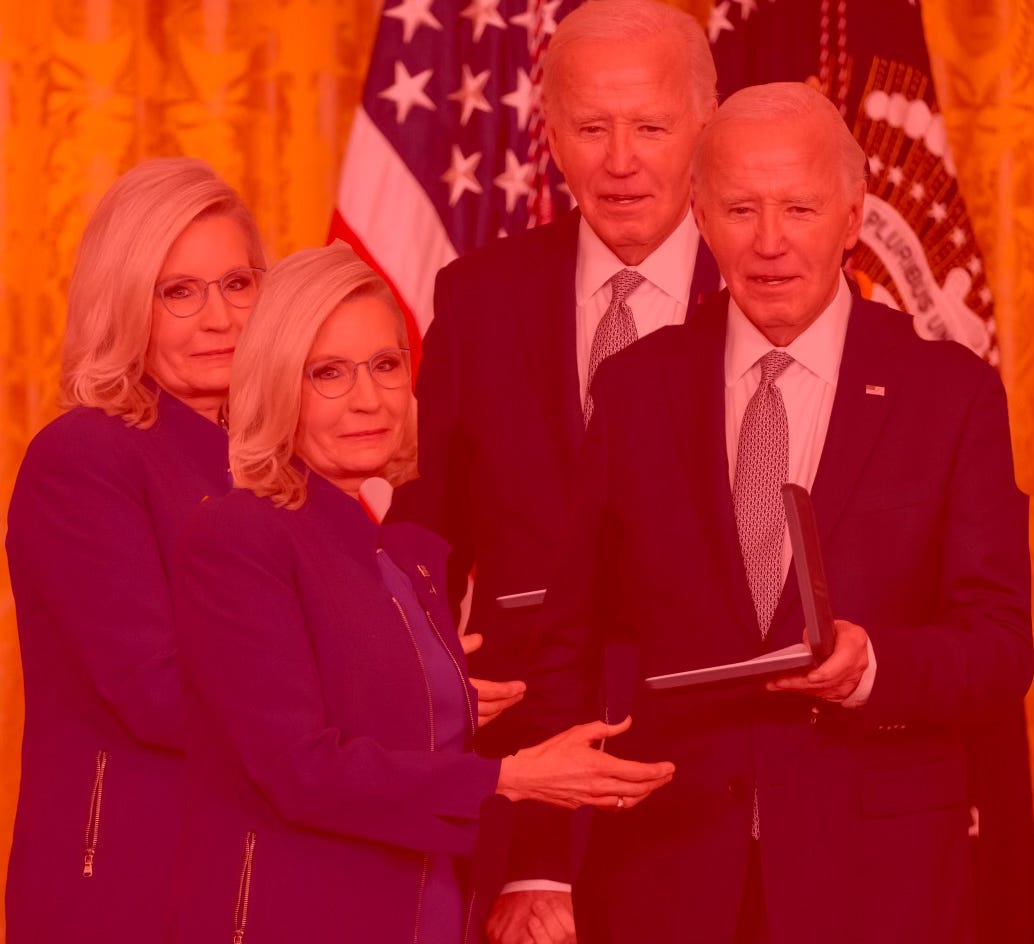
Free Thinking Through the Fourth Turning with Sasha Stone
January 6th and the Obama Unreality Machine
00:32:50
Loading summary
Transcript44 lines
- [00:01]
Sacha Stone
Hi, this is Free thinking through the fourth turning. My name is Sacha Stone. January 6th in the Obama unreality machine in David Samuel's blockbuster piece and tablet, I see my entire life laid out before me. As we approach the four year anniversary of January 6th, I keep hearing Robin Williams words from way back when. Wow. Reality.
- [00:27]
Bob Dylan
What a concept. Reality, what a concept.
- [00:30]
Sacha Stone
It's not reality but unreality that so many on the left live by. Want to know why Joe Biden's age was covered up for so long? Why didn't anyone speak up against puberty blockers before? Why is box office for Hollywood films in near total collapse and ratings for cable news shows in free fall look no further than Obama's Unreality machine. In that unreality, Liz Cheney is not a formerly low level Rep from Wyoming with a famous last name who was voted out in a landslide, but is instead an American hero who put country over party when she turned what was left of her career into a vendetta against Donald Trump. For that she was love bombed by the propaganda press and an instant star in the Democratic Party, the one good Republican. As they saw it, Mitt Romney and Adam Kinzinger would be relegated to supporting players in the Unreality. It makes sense for Joe Biden to bestow upon Liz Cheney the Citizens Medal. To rapturous applause by the left, here is Glenn Greenwald.
- [01:40]
Glenn Greenwald
Listen to how Liz Cheney is received by the Biden staffers, the Democrats, the establishment luminaries who are in the White House for this ceremony. Just, just listen with your own ears to how she's treated Elizabeth L. Cheney.
- [01:56]
Sacha Stone
For putting the American people over party.
- [02:39]
Glenn Greenwald
I mean that was a sustained standing ovation. They were screeching in adoration. It really was like teenage girls in the 1950s reacting to the arrival of Elvis Presley. They were. It was a kind of visceral.
- [02:56]
Unknown Speaker
Just.
- [02:56]
Glenn Greenwald
Deep seated reaction, almost carnal. I don't think there's, I really don't think there's another politician who can invoke that level of passion and excitement in Democratic Party adherence other the way Liz Cheney does. I really think that if she were to suggest that she was going to run for President in 2028 and seek the Democratic Party nomination, she would be a very formidable force. They worship Liz Cheney. They love Liz Cheney.
- [03:31]
Sacha Stone
TV appearances and glowing headlines in high minded outlets like the New York Times reminded me of that line in Robert Redford's film Quiz show when they ponder why Charles Van Doren would have to cheat just to win because he's not going to get on the COVID of Time magazine as Mark Van Doren's son.
- [03:49]
Unknown Speaker
He's got the answers. Why would he admit that? He's only implicating himself.
- [03:55]
Well, maybe it's the truth.
- [03:56]
Yeah, well, I have a hunch it is the truth. Meanwhile, we'll have to have him testify in a straightjacket.
- [04:02]
Van Doren isn't crazy. Maybe you should put him on the stand.
- [04:05]
What's Van Doren got to do with us?
- [04:07]
They gave Stemple the answers. Why would Van Doren be any different?
- [04:10]
Sandra, you have no idea what these people are like. It's all Thurber and Trilling and Bunny Wilson.
- [04:16]
Bob Dylan
Bunny?
- [04:17]
Unknown Speaker
Yeah, Edmund Wilson, that's what they call him.
- [04:19]
Well, that doesn't mean you have to.
- [04:21]
Look, my point is, why would a guy like that jeopardize everything he has?
- [04:25]
Which is what?
- [04:26]
Sandra, the man is on the COVID of Time magazine.
- [04:28]
Well, he's not going to be on the COVID of Time as Marc Van Doren's son, Dick.
- [04:35]
Sacha Stone
And so Liz, with her sensible suits and authoritative tone she got from her father, played an important role in the greatest scam ever perpetrated on the American public. Or at least one of them. That Donald Trump was so evil, so dangerous, so powerful, he could destroy not just the Constitution, but democracy itself. And that his supporters were cult like obedient zombies who picked up their weapons and stormed the Capitol to hang Mike Pence and overthrow the government. Oh, you mean the one protected by the most powerful military force the world has ever known? That government in the unreality. You must accept that or you will suffer severe social consequences. The truth was never going to be enough. They needed star witnesses like Cassidy Hutchinson to toss into the media churn, to keep the story on page one every day of the Biden presidency. They needed a Soviet style primetime show trial wherein the Trump side was not even allowed a proper defense. General Milley and Bennie Thompson made guest appearances to remind everyone of what it was all really about.
- [05:46]
General Mark Milley
White rage on the issue of critical race theory, et cetera. I'll obviously have to get much smarter on whatever the theory is. But I do think it's important actually for those of us in uniform to be open minded and be widely read. It is important that we train and we understand, and I want to understand white rage. And I'm white and I want to understand it. So what is it that caused thousands of people to assault this building and try to overturn the Constitution of the United States of America? What caused that? I want to find that out. I want to maintain an open mind here and I do want to analyze it. It's important that we understand that because our soldiers, sailors, airmen, marines and guardians, they come from the American people. So it is important that the leaders now and in the future do understand it. I've read Miles Tse Tung, I've read Karl Marx, I've read Lenin. That doesn't make me a communist. So what is wrong with understanding, having some situational understanding about the country for which we are here to defend? And I personally find it offensive that we are accusing the United States military, our general officers, our commissioned, non commissioned officers, of being, quote, woke or something else because we're studying some theories that are out there.
- [07:09]
Sacha Stone
They must really think the American people are that stupid. They had lived through months of violent protesting all summer and they were supposed to clutch pearls at a riot at the Capitol. Yes, it was violent, but so were the protests in 2020. Ah, but those protests were mostly peaceful and justified in the unreality.
- [07:32]
Unknown Speaker
Going out with a bang. These were the scenes on the streets of Portland as Donald Trump's federal task force supposedly withdrew after weeks of clashes with locals. For the past two months, a nightly ritual has played out in front of the main courthouse, with protests concentrated in a small area not more than two blocks square. Black Lives Matter. Protesters gathered in a nearby park to demonstrate. More radical elements would move in on the court security fence. But Portland is known as the whitest city in America, and demonstrations reflect that demographic reality.
- [08:14]
Bob Dylan
Black Lives Matter.
- [08:16]
Unknown Speaker
The head of the local branch of the NAACP fears the Portland protest became a white spectacle in contrast to the dignified civil rights marches of the 1960s.
- [08:30]
Sacha Stone
It's the government's job to meet the needs of its people, not the people's job to meet the needs of the government. January 6th was a day our politicians should have recognized that the unreality machine left millions of people out. And it was those unheard voices that should have been heard that day. Yes, some of them got violent and breached the Capitol and they should be punished fairly. But that isn't what our government did. They went to war on their own citizens, something the left had never done, not since the Civil War. This partisan divide is bigger than just politics. We know that. It's a battle for the truth and the right to say it. But nothing gets to the heart of the matter more than January 6th. Biden had to award Liz Cheney and Hillary Clinton because he had to perpetuate the myth of what he chose to believe about his presidency. He was the great savior of democracy, the only Democrat who could beat Trump. And he was fighting the good fight, not a puppet for a massive alignment of totalitarian power. No, it had to be that Joe did a good job and Liz, Cheney and Hillary were his worthy foot soldiers. If they did not receive medals, if there were any consequences for any of them over what they did in the 2020 election, how they censored Americans, how they gaslighted us for an entire year, and even lied outright, Biden would have to answer for the past four years. But in validating their efforts, he validates his own. To understand it all requires big picture knowledge of everything we've lived through in the past 25 years, how we got to the point where our government felt they had the right to subvert the First Amendment, to rig the election essentially, and to persecute and punish American citizens for exercising their right to protest. No one has put it better than David Samuels does in this piece in Tablet Rapid Onset Political How Barack Obama Built an Omnipotent Thought Machine, Samuels writes, During the Trump years, Obama used the tools of the digital age to craft an entirely new type of power center for himself, one that revolved around his unique position as the titular, though pointedly never named, head of the Democratic Party that he succeeded in refashioning in his own image, and which after Hillary's loss, had officially supplanted the centrist Clinton neoliberal machine of the 1990s. The Obama Democratic Party ODP was a kind of balancing mechanism between the power and money of the Silicon Valley oligarchs and their New York bankers, the interests of bureaucratic and professional elites who shuttled between the banks and tech companies, and the work of bureaucrats oversight the ODP's own sectarian constituencies, which were divided into racial and ethnic categories like POC and MENA and Latinx, whose bizarre bureaucratic nomenclature signaled their inherent existence as top down containers for the party's New Age spoils system and the world of billionaire funded NGOs that provided foot soldiers and enforcers for the party's efforts at social transformation. It was the entirety of this apparatus, not just the ability to fashion clever or impactful tweets that constituted the party's new form of power, but control over digital platforms and what appeared on those platforms was a key element in signaling and exercising that power. The Hunter Biden laptop story, in which party operatives shanghaied 51 former U.S. government intelligence and security officials to sign a letter that all but declared the laptop to be a fake and part of a Russian disinformation plot, when most of those officials had very strong reasons to know or believe that the laptop and its contents were real, showed how the system works. The letter was then used as the basis for restricting and banning factual reports about the laptop and its contents from digital platforms, with the implication that allowing readers to access those reports might be the basis for a future accusation of a crime. None of this censorship was official, of course. Trump was in the White House, not Obama or Biden. What that demonstrated was that the real power, including the power to control functions of the state, lay elsewhere. End quote. Readers of this substack know I've been writing about all of this, albeit not as well as Samuel's does, for the last four years. But at least now you know I wasn't crazy. I could not only see what was happening, I also lived it. Barack Obama was more than just a president to all of us. He was something closer to religion. To criticize him or to dare to question his judgment was to commit blasphemy with no checks and balances on his power. What couldn't he do? What favor couldn't he call in? What wouldn't the ruling aristocracy do to please him? We saw it all unfold after 2016. We watched what Hollywood did, what all the institutions did, how they shut out millions of Americans who voted for Trump. Samuels lays it all out in painstaking detail, taking us all the way back to the beginning of the story. I was there for all of it. I wish I could say that I saw it all coming, but I didn't. I helped build it. I was a willing participant, a true believer in all of it. I am an archaeological digit with the last 30 years of my life spent in cyberspace. I got online in 1994, had a baby in 1998. I built a website in 1999. I got on Facebook in 2006 and Twitter in 2007. I was woke. I was a helicopter mom. I chased the therapy and self help crazes of the 1990s. I bought into the child molestation hysteria back then. I watched Oprah every day at three. I believe this country was rooted in white supremacy and that we were oppressed beneath a white male patriarchy. I raised my daughter in the public schools in Los Angeles. I was a true believer in Barack Obama in 2016. I fought for Hillary as a good soldier for the left. I mourned our loss to Trump. And then I became one of the early supporters of Joe Biden. I was plucked from the fevered dreams of algorithms and pussy hats to appear at an early Biden fundraiser in 2019 at a fancy mansion of a Kaiser lobbyist in Los Angeles. Our heels and dress shoes sunk into the lawn's moist grass surrounding the mansion. We were allowed to use the bathroom in the guest house, which beats the usual Andy Gump. I wore a blazer and blow dried my hair. I felt important. I felt chosen. I felt like I belonged. Podcast listener is a picture of me with Joe Biden standing in the background. I'd paid $250 to be there because it was my civic and moral duty to do my part, showcase it on social media and boost his image. When they finally brought Biden out and he was gently squired by one of the donors, I thought, he has no idea where he is. We all knew Biden was too old. But in the unreality machine, it was something we all knew not to talk about publicly. Somewhere in the year 2020, everything in my world changed. It wasn't just that I could see they were covering up the violence over the summer. I could see the complete destruction of our culture, of our sense of ourselves. That was why I started speaking out so loudly that Neera Tanden barked at me in Twitter DMs and told me to shut up until after the election. But I couldn't. I thought the left had lost its mind and Trump would win again. I still believe he would have, were it not for the unreality machine that kicked into high gear. All of the ways they used that power to rig the election in their favor convinced me we'd never have a fair election again. By 2020, the unreality machine the Obama coalition built had become so powerful that it had complete control of our culture, our media, our institutions, even our healthcare and our science. They wanted it all to control our opinions, our speech, our taste, our sex lives, and even how we raised our children, says Samuels. Quote Even more unusual and alarming was what followed Trump's defeat in 2020. With the Democrats back in power, the new messaging apparatus could now formally include not just social institutional pressure, but the enforcement arms of the federal bureaucracy, from the Justice Department to the FBI to the sec. As the machine ramped up, censoring dissenting opinions on everything from COVID to DEI programs to police conduct to the prevalence and effects of hormone therapies and surgeries on youth, large numbers of people began feeling pressured by an external force that they couldn't always name. Even greater numbers of people fell silent. In effect, large scale changes in American mores and behaviors were being legislated outside the familiar institutions and processes of representative democracy through top down social pressure machinery, backed in many cases by the threat of law enforcement or federal action in what soon became known as a whole of society. Effort at every turn. Over the next four years it was like a fever was spreading and no one was immune. Spouses, children, colleagues and supervisors at work began reciting with the force of true believers slogans they had only learned last week and that they were very often powerless to provide the slightest real world evidence for these sudden, sometimes overnight appearances of beliefs, phrases, tics looked a lot like the mass social contagions of the 1950s. One episode after another of rapid onset political enlightenment replacing the appearance of dance crazes or hula hoobs. Technology's Impact I was an early adopter of Internet life. It suited me. I didn't much like the real world. It had chewed me up and spit me out. I wasn't good at life, it seemed. I could not overcome my shyness. My relationships were disasters. I had no focus, no job, no stable income. I dropped out of graduate film school to chase some needy loser who would eventually return to his wife after I'd given up my life for him. That's the story I tell myself anyway. Deep down I knew it was my fault for being stupid. The Internet was a safe haven for people like me. We could hide in the shadows and invent things online. We could be anyone without our physical selves being involved. Nerds could be elevated to the top of the food chain like Bill Gates and Steve Jobs, not to mention Mark Zuckerberg and Jack Dorsey. Like so many other women of my generation, I was more than ready for Barack Obama to become the leader we didn't know we needed. Everything fell into place around 2008 because Obama used social media to build his coalition, his army, and eventually his unreality. I am still one of the 300,000 or so people Barack Obama follows on Twitter. Last I checked. Anyway, it all felt so new we could almost reach out and touch him because he was right there with us, building a movement alongside us, sending us communications and shaping the media narrative. But I had no idea it would lead to a conformist movement where all they had to do was give us our marching orders for the day and we would follow them, says Samuels. Quote Just as in those commercially fed crazes, there was nothing accidental, mystical, or organic about these new thought viruses. Catchphrases like defund the police, structural racism, white privilege, children don't belong in cages, assign gender or stop the genocide in Gaza would emerge and marinate in meme generating pools like the Academy or activist organizations, and then jump the fence or be fed into niche groups and threads on Twitter or Reddit. If they gain traction in those spaces, they would be adopted by constituencies and players higher up in the Democratic Party hierarchy who use their control of larger messaging verticals on social media platforms to advance or suppress stories around these topics and phrases, and who would then treat these formerly fringe positions as public markers for what all decent people must universally believe. Those who objected or stood in the way were portrayed as troglodytes and bigots from their causes could be messaged into reality by state and federal bureaucrats, NGOs and large corporations who flew banners, put signs in their bathrooms, gave new days off from work, and brought in freshly minted consultants to provide trainings for workers, all without any kind of formal legislative process or vote or backing by any significant number of voters. End quote as early as 2012, I knew I was participating in a deception, a Ponzi like scheme to push false narratives to help Obama defeat Mitt Romney. We discovered that we could use our collective voice to drive the media narratives that would shape public opinion, but I didn't know we were being manipulated until Neera Tanden wrote me on Twitter. I had no idea they even knew who I was. But of course they did. They knew that the minute one of their good soldiers stepped out of line, it was time to step in. They also knew I was a key influencer to send to the Biden fundraiser and spread it online. But it could only take them so far. What I know from being an early Internet adopter is that information like truth, thought and speech wants to be free. If you try to contain it, you will lose. Where this analysis went wrong is the same place that the Obama team's analysis of Trump went wrong. The wizards of the permission structure machine had become captives of the machinery that they built. Bullying large numbers of people into faddish hyper conformity by controlling the machinery of social approval may require both money and technique, but it is not art or thought. In fact, it is something like the opposite of thought. Lost in the hypercharged mirror world that they had created, they decided that having made themselves cool also made them right, and that evidence to the contrary could be safely dismissed as a right wing talking point. Obama's operatives shared the same character flaw as their master, a kind of brittle Ivy League know it allness that demanded that they always be the smartest person in the room. End quote. And this is why so many of us are grateful for Elon Musk and Donald Trump, these men refused to stand down, refuse to comply and refuse to be destroyed. I remain forever grateful to them and I won't stand for this new insurgency rising on X to divide and conquer the MAGA movement. Been there, done that. It's not over yet. Those with all the power need January 6th to confirm everything they've been warning the public about. It was so perfect, almost too perfect. I might be among those cheering on Liz Cheney had I never escaped the unreality of the left, but I did escape and I got to know Trump world well enough to see that what happened on January 6 was not in the plan, certainly not by Trump. And it was out of character for maga. Liz Cheney did not deserve a medal for her disgraceful behavior around January 6th. Rather, the people still deserve the whole truth about everything that happened that day. For podcast listeners, a tweet by Rep. Loudermilk Four years has passed since the pipe bombs were placed at the RNC and dnc. Now the FBI decides to re engage in the investigation on the day our report is released. There is still so much more to be uncovered. We must continue to hold these agencies accountable in the 119th Congress. And then Capitol Police Chief Stephen Sund says, as I said before, I believe this was a diversionary tactic to pull resources away from the Hill. The identity of the person who placed the pipe bombs is a key to unraveling this puzzle. Thank you for the continued investigation by Rep. Loudermilk, Cha and the team. I know what happened on January 6 was not typical for Maga. They don't break windows. They don't beat up cops. Whatever happened on the steps of the Capitol was used to wage war on American citizens and we should not rest until we know why and how. So many were convinced that this was the only way to be heard by our government. It was never up to them to decide whom we should vote for. That's always been up to us. And now the American people have spoken and said we'll take Trump January 6th and all. As for me, I learned I am built of much stronger stuff than I previously thought. I learned that I care more about the truth than my own reputation. I learned that standing against corruption and mass conformity is not easy. I wish I could say nothing bad has happened to me, but of course I live with the consequences of being an outsider and a pariah every day. But it is still better than the alternative. And anyway, as Bob Dylan once said, when you ain't got nothing, you got nothing to lose. Thank you for listening to my podcast, sashastone.substack.com and remember to thine own self be true.
- [29:00]
Bob Dylan
Once upon a time you dress so fine through the bums of diamond you frame didn't you even call save you wear dull you bound to fall you thought they were all killing.
- [29:15]
Unknown Speaker
You.
- [29:20]
Bob Dylan
Used to let me bow everybody that was hanging out now you know talk so loud now you don't seem so proud while having to be scrounging around for you next to me.
- [29:46]
Unknown Speaker
How does that feel? How does it feel to be without it.
- [30:20]
Bob Dylan
Only used to get used to nobody's ever taught you how to live out on the street and you find out now you're going to have to get used to it you said you never compromised with the mystery trap and now got realize he's not Solomon the Al let's just stare into the vacuum of his eyes and say would you like to make a deal.
- [31:07]
Unknown Speaker
Father let that be you without a hope.
- [31:15]
Sacha Stone
With.
- [31:15]
Unknown Speaker
No direction I plead our door.
- [31:33]
Bob Dylan
Never turn around to see the frowns on the jugglers and the clowns when they all came down to do tricks for.
- [31:38]
Unknown Speaker
You.
- [31:42]
Bob Dylan
I never understood that it ain't no good you should let other people get your kicks for you.
- [31:52]
Unknown Speaker
He used.
- [31:52]
Bob Dylan
To ride the coma horse with you diplomat who carried on his shoulder ass and he's a cat ain't it hard when you discover that he really wasn't well sad after he's taken everything he can see.
- [32:23]
Unknown Speaker
How does that feel.