← Free Thinking Through the Fourth Turning with Sasha Stone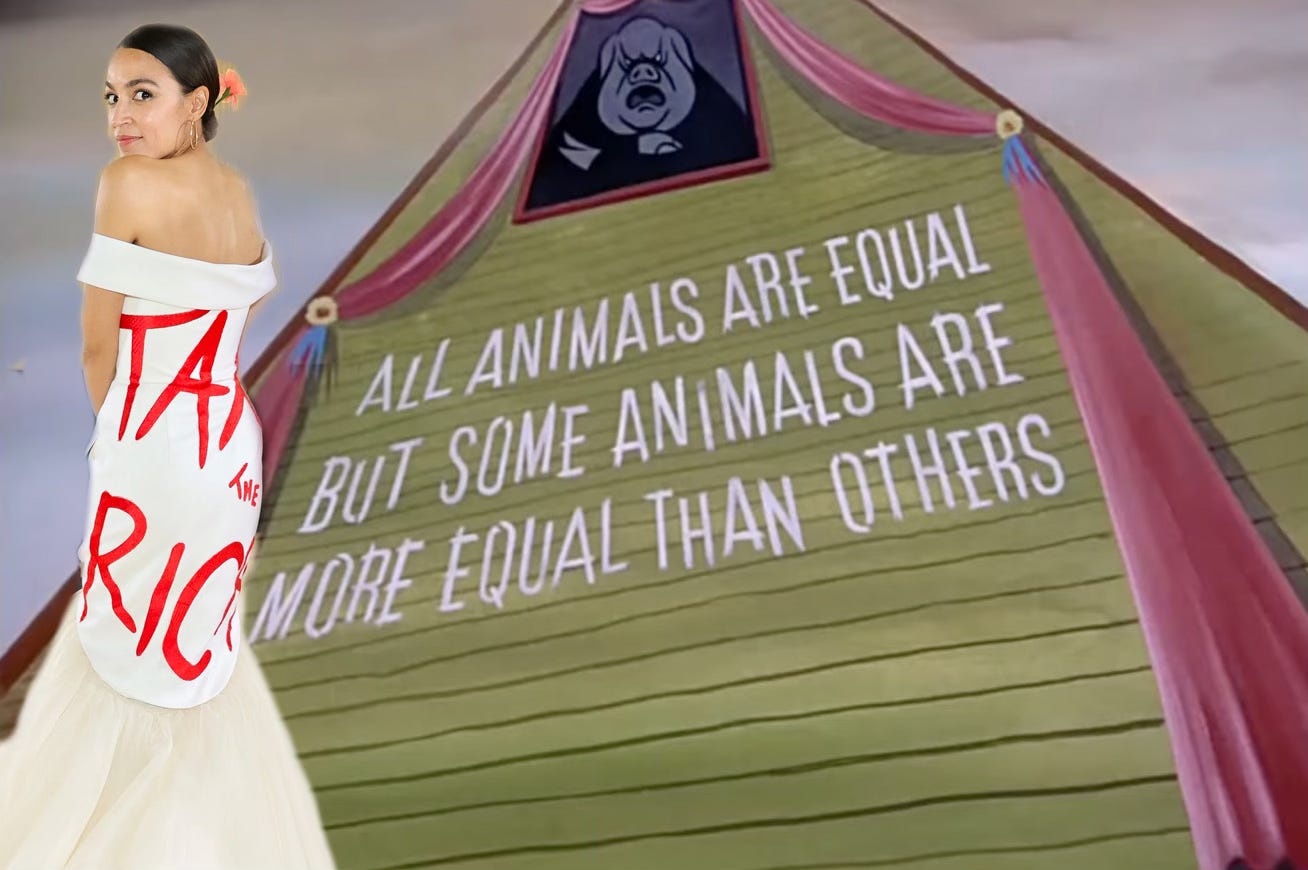
Loading summary
Transcript34 lines
- [00:00]
A
Hi, this is Free Thinking through the fourth Turning. My name is Sacha Stone. Meet the socialist socialites. As Democrats prepare to kiss Mamdani's ring, I imagine right about now, the group chats between Hillary Clinton, Neera Tanden and Huma Abedin are lit. Democratic socialism is at the gates. Once upon a time, you that was their worst nightmare. Now it's their inevitable reality. Here is Hakeem Jeffries talking to Al Sharpton, leader, why are you backing a.
- [00:37]
B
Man, Danny, in the mayor's race? And lastly, in terms of the existential moment that we confront relative to Donald Trump and this extremism that he's unleashing on the people that I serve in Brooklyn, but people all across the country. The assault on the economy, the ripping away of healthcare from everyday Americans, the unleashing of masked ICE agents on law abiding immigrant families throughout the country, and just the undermining of the rule of law, the targeting of Tish James, our Attorney general. All of these things, I think, requiring all hands on deck as part of an effort to push back.
- [01:25]
A
If Andrew Cuomo does somehow pull off a miraculous last minute one in a million win in New York, he will do so without any help from the establishment Democrats. But even a weak endorsement from Hakeem Jeffries for Zorhan Mamdani is enough. They know their goose is cooked. Even if they're not happy about it, they have no choice to go along with it. I'm old enough to remember how those of us in the I'm With her army fought viciously with Bernie Bros throughout the 2016 primary, calling them racists and misogynists, saying they were useful idiots for Trump. We wanted to smash the patriarchy. They wanted to smash the oligarchy. Most of us Hillarycrats were terrified that democratic socialism would pull the party too far to the left and we'd never win an election again. It was the word socialism. And no matter how many times they put democratic in front of it, the song remained the same. Maybe we were the last generation forced to read Animal Farm in high school, but we seem to remember what so many in the Bernie movement had suddenly forgotten. Not only doesn't communism sell, but it doesn't work. That message never got through. And socialism, democratic or otherwise, would be like those dinosaur eggs that magically appeared in Jurassic Park. Socialism, like life, finds a way, podcast listeners, a tweet from Liz Smith. A funny thing happened on my way down 7th Avenue. So excited to call him Mayor elect in just eight days with Zorhan Mamdani look at the Democrats now. They're all in. Even if they weren't, they know better than to say so out loud. They also know they're out of moves. They've had their shot, and all it meant was Trump beating them again. But I still wonder what's going on on those group chats. Does Hillary know that this potentially means the Republicans will rule for much longer? Or does she, like all the fanatics on the left, still believe they are just one election away from taking back the country? We'd better hope they aren't Socialist Socialites for podcast listeners, a tweet from House of A Socialist Socialite voting for Zorhan Mamdani. You've heard of Vivek Ramaswamy's Woke Capitalism now meet Woke Socialism, the hybrid of AOC and Bernie in their Green New Deal manifesto, merging the two ideologies into one complete organism. Zorhan Mamdani is their love child, so perfect for today's left that he almost seems like he was created in a lab. Podcast listeners, a tweet from Peter Savodnik that so many Zorhan voters expect and seek social credit for their Zorhan vote tells you a great deal. This is the opposite of the so called invisible majority. This is the poser class, the character logically vapid, the faux progressive base. And a tweet by Sarah Hinckley early vote for Zorhan and an old lady called me pretty. You see them everywhere, these socialist socialites. Somehow it's become the ultimate pretty girl cred, like Free Palestine and this baby is not yet human. They like socialism for the same reason they like fat acceptance. As long as homely and otherwise rejected women are allowed in. That gives the pretty girls the freedom to display their beauty without being hated for it. Here are hot girls from Mom Donny. Today is election day. Hot girls don't let other hot girls rank sexual predators. Polls are open till 9pm so tell your friends, loved ones, situationships exes. Find your poll site at zoronfornyc.com vote.
- [05:46]
C
Hot boys who are running for office.
- [05:47]
A
And are not sexual predators. Polls close at 9. Hey, you know what makes a New Yorker so hot?
- [05:59]
D
If they have a voting plan. Mamdani was winning Democratic nominee the second his wedding photos started circulating and they were undeniably cool.
- [06:06]
A
Like, are you kidding me? The consensus says that your wife is dope.
- [06:10]
C
Dude, you're I have never had to resign in disgrace. I have never cut Medicaid. I have never stolen hundreds of millions of dollars from the MTA I have never had the name is Mom. Dani M a n D a n I s the name is Mom. Danny.
- [06:31]
A
We saw this on display at a recent Vogue Hollywood fashion show. Populist enough for Gavin Newsom to attend. Podcast listeners, A headline from Vogue. California Governor Gavin Newsom made Vogue World 2025 a family affair. An array of all designated marginalized and their allies, the Virtue Signalers, all in one place. It was one big mix of the new Gilded Age and the high society Woketopians in their finest. Here were two famous transgender models greeted with euphoric cheers. How to reflect social justice while luxuriating in extreme wealth. Just chant Tax the rich. Tax the rich. Tax the rich. That was all AOC needed to abandon her working class cred to join the high status Woketopians at the Met Gala. Podcast listeners, A picture of AOC in her Tax the rich dress. It's kind of its own evangelical grift, but it is the workaround necessary in the totalitarian America promised if the Democrats return to power. We've seen what it looks like. We already know. Obey the rules or you're banished forever. AOC's gleaming face in that photo has been replaced by an angry one. Her speech at the Momdani rally was very much an us versus Them anthem. And by them she means you, the majority in America that voted for Trump. Here is aoc.
- [08:07]
E
And it is especially great to to be gathering with you all tonight in Queens, New York, the world's borough, the jewel of America. Just in this slice of New York City alone, we represent over 100 languages and cultures. We welcome people of all religions, faiths and creeds. We honor all genders, races, orientations and status. And here we defend immigrants. We are a working people's borough in a working people's city. And all of that makes us us, a fascist worst nightmare. And it is going to take all of us. But to be honest, it always has. That we are all here in this moment, during this time is not a coincidence. And it is also not a coincidence that the very forces that Zohran is up against in this race mirrors what we are up against nationally. Both an authoritarian criminal presidency fueled by corruption and bigotry and an ascendant right wing extremist movement. But we must remember in a time such as this, we are not the crazy ones. New York said city. We are not the outlandish ones. New York City. They want us to think we are crazy. We are sane. And we will send a loud message to President Donald Trump that his authoritarianism is no good. For we will send a message that to ICE that secret police do not belong here. And we will demonstrate the heroism that exists in the everyday people throughout our city. Our future will be determined not in a house built by slaves, but in a city built by freemen. In a city built by unionists and immigrants and suffragists. The bricks laid by working people past, present and future. The seamstresses and the unionists who paid for our rights in blood. This city was built by the Irish escaping famine, Italians fleeing fascism, Jews escaping Holocaust, Black Americans fleeing slavery and Jewish Jim Crow. Latinos seeking a better life. Native people standing for themselves. Asian Americans coming together in Queens, in Brooklyn, in the Bronx, in Manhattan, in Staten island, in this country in a vision to build the freest, toughest and greatest city on earth. And we will not stop now.
- [11:48]
A
There is no escaping the fact that the party about to embrace socialism is the party of wealth and the ruling class. It's an inconvenient detail they all mostly gloss over. Here is Walter Kern and Matt Taibbi on America this week.
- [12:04]
B
The reason why this campaign has generated so much interest around the world and so much excitement is that people want to know the answer to one very simple question. And that is in the year 2025, when the people on top have never ever had so much economic and political power, is it possible, is it possible for ordinary people, for working class people to come together and defeat those oligarchs? You're damn right we can.
- [12:59]
A
Okay.
- [12:59]
B
They're acting like it's the 1930s. This is like a Clifford Odettes play. This is like Waiting for lefty strike strike trick, dude. They have been so solidly the party of affluence and professionalism and lawyers and doctors and academia and the upper middle class for so long that I can't, I, I can't believe what I'm seeing. You know, it's, well, it's like a little bit of a psychotic break where, you know, a dad thinks that he's a, you know, I don't know, Casanova or something and starts coming around his wife like that. You know, it's role playing. Back in 1972, when there was a, you know, another sort of quasi leftist in McGovern running, that was much more of a working class expression, don't you think? I mean, the Democratic Party was not the, the party of the wealth wealthy back then. So, you know, I grew up in Minnesota. The Democratic Farmer Labor Party, Hubert Humphrey, Eugene McCarthy, Etc. So I, I saw the, I saw the real version of what these people are, you know, alluding to what, what, what they're trying to, you know, play, act. But it was a very different group of people with very different sensibilities. They'd come up through union movements. They, you know, they really represented, like in Minnesota, the iron range and the farmer and the so on. But this is now the party of the managerial class. Any honest sociological demographic analysis of the Democratic party's nature right now is that this is the managerial class pretending to be the revolutionary class.
- [14:54]
A
It is no longer Bernie's dream of smashing the oligarchy. They are the oligarchy. The workaround is to make it no longer about class, but about race and gender. Then there are no limits on wealth. The lawnsign people desperately crave the status that comes with being deemed an oppressed group. The highest status attained. Inside Woketopia, you can borrow oppression by, say, making illegal immigration your most important cause. You can be out there chattering about racists accused lest ye be accused. And best of all, wealthy and powerful high status figures like Michelle Obama or Oprah Winfrey can still be oppressed and maintain their status while helping to fund the revolution. Meanwhile, some working class white man in Wisconsin, unemployed and strung out on fentanyl is forever the oppressor because they need a constant supply of them. White men, Christian Jews and billionaires. Here is Barstool Sports Dave Portnoy.
- [16:01]
B
Who are these kids who are voting for him? He's 33 years old. He's never had a real job. The people voting for him have never heard a real job. By the way, Stuart, I have no problem with like, I want affordable housing, affordable health care, affordable groceries. But you want to tax billionaires and rich people. And then you basically in the same breath will say, we don't like you, we want you gone. We don't think you're the right people. Well, why would you want to give this money to him to run? He's openly saying he hates America in the capitalist way and wants to change the whole thing. It is, yeah, obviously I'm passionate about it. I can't believe that this guy, maybe the mayor of New York City. I think you have to believe it, Dave, because I think he's going to win. That's the way it looks to me at this moment. Dave, I've got to leave you because I've got some stuff happening in the.
- [16:46]
A
Mamdani must rely on his identity to make wealthy elites feel the same sense of inner purpose we all felt the first time we heard Barack Obama speak. He made us feel worthy because our support of him, just because of his identity, made the country better. We mattered. We were important. We were changing the world. And what else does Mamdani have to sell? Sure, he's charming and charismatic. He has a great social media game. He's offering a vision for the future rather than only Trump hate. But I also wonder, could his pitch have worked if he were a normie white dude selling barely worked for Bernie. Here is Zorhan Mamdani.
- [17:30]
C
Six years ago, shortly after I had announced I was running for assembly, a well meaning Muslim uncle pulled me aside. He smiled softly and looked at me with care. In a quiet voice he told me I did not have to tell people I was Muslim. His eyes kind, his beard proud and his face heavy with the implication of the unsaid. I had not learned the lesson that he had been taught time and again. It is the lesson that safety could only be found in the shadows of our city. That it is in those shadows alone where Muslims could embrace the fullness of our own identities, and that if we are to emerge from them, then it is in those shadows where we must leave our faith. These are lessons that so many Muslim New Yorkers have been taught again and again and over these last few days. These are the lessons that have become the closing message of Andrew Cuomo, Curtis Sliwa and Eric Adams. Yesterday Andrew Cuomo laughed and agreed when a radio show host said that I would cheer another 9 11. Yesterday Eric Adams said that we can't let our city become Europe. He compared me to violent extremists and he lied when he said that our movement seeks to burn churches and destroy communities. The day before that, Curtis Lewis slandered me from a debate stage when he claimed that I supported global jihad and every day super PAC ads imply that I am a terrorist or mock the way I eat, push polls that ask New Yorkers questions like whether they support invented proposals to make halal mandatory or political cartoons that represent my candidacy as an airplane hurtling towards the World Trade Center. But I do not want to use this moment to speak to them any further. I want to use this moment to speak to the Muslims of the city. I want to speak to the memory of my aunt who stopped taking the subway after September 11th because she did not feel safe in her hijab. I want to speak to the Muslim city worker, whether they teach in our schools or walk the beat for the NYPD New Yorkers who all make daily sacrifices on behalf of the city only to see their leaders spit in their face. I want to speak to every child who grows up in New York marked as the other, who is randomly selected in a way that rarely feels random, who feels that they carry a stain that can never quite be cleaned. Growing up in the shadow of 9 11, I have known what it means to live with an undercurrent of suspicion. I will always remember the disdain I faced, the way my name could immediately become Muhammad, and how I could return to my city only to be asked in a double mirrored room at the airport if I had any plan of attacking it. And since I was very young, I have known that I was spared the worst of it. I was never pressured to be an informant like a classmate of mine. I have never had the word terrorist spray painted on my garage as one of my staff had to endure. My mosque has never been set on fire. To be Muslim in New York is to expect indignity. But indignity does not make us distinct. There are many New Yorkers who face it. It is the tolerance of that indignity that does.
- [20:32]
A
How many will heed this warning?
- [20:33]
D
You know what gets me? The fact that nobody seems to know what Mamdani actually said. And so he gets away with saying stuff like this.
- [20:40]
C
I have never, not once, spoken in support of global jihad.
- [20:45]
D
He has actually plainly confessed his support for global jihad. In the 2008 landmark case US vs the Holy Land 5. Five people were convicted of providing material support to Hamas by way of millions and millions and millions of dollars in violation of federal law while disguising it behind charity. Those five people were sentenced to 65 years in a federal correctional facility. They were called the Holy Land 5. In 2017, under the pseudonym Mr. Cardamom mum, Dani himself drops a rap song in which he states, my love to the Holy Land 5. Okay. My love to the people who funneled millions to Hamas. You better look them up. Now, I know you're thinking maybe his views have changed. It's been several years. His views have not changed. When he was recently asked, do you think that Hamas should lay down its weapons? That's it. His answer was that he had no opinion. When you have openly supported the funneling of millions of dollars to Hamas and since then they have committed a massacre that killed 1200 Israelis and have shot and killed Palestinians at point blank range, and you now have no opinion on whether they should disarm, that's another way of saying, I support the terrorists. And that couldn't be clearer. And you know what worries me as an Iranian? The fact that this is the exact path that led to the revolution in Iran. It was this exact marriage of socialism and Islamism that we are now seeing people fall for again here. That also started by dividing society into oppressed and oppressor. Mustaq, Biril and Mustafin. And the oppressor was. Guess who? The elite, the wealthy, the ruling class that had to be eliminated for justice and utopia to prevail. Guess what were all of the promises made by Khomeini? Free transportation, free electricity, free water. Nobody should go unhoused. The same utopian false promises that have led to death, destruction, devastation, gulags, labor camps, everywhere that it's touched. How do we know that this is identical to every other iteration in human history? Because what ends in totalitarianism starts at its core. And what is at the core of totalitarianism? It's absolutism. What is absolutism? It is a binary. What is a binary? Oppressed and oppressor. What does that lead to? It leads to dehumanizing everybody on the wrong side of the binary. What does that lead to? Calling for the elimination of the oppressor. What have we been celebrating for the past few years in the United States? The elimination of the oppressor. That is how we are walking the path to totalitarianism. And we literally cannot see it. Do you know why we can't see it? Because do you think totalitarianism introduces itself as such? Of course it doesn't. When it knocks on your door, it calls itself liberation or this Zor Mamdemi.
- [23:59]
A
I still cannot believe it. Like, this is like surreal. A socialist running for a government spot in New York City. I really wish I had pictures from my childhood in socialist country where we had grocery stores owned and operated by government. My core childhood memory was going after school and standing in a long line, saving the spot for my mom so she would come after work and stand in this line with me to get so we could get groceries. Of course, it only could happen in Soviet Union. It's never going to happen in anywhere else. But because Soviet Union was doing socialism wrong, I'm sure Zohar is going to do it so much better. What Mamdani has, like every other designated marginalized group, is protective status inside Woketopia. No one can ever criticize you once you are deemed oppressed. Because then you get to call them racists, homophobes, true transphobes, more phobes, more ists, and even ignite a mob to chase, condemn and purge the offender. When I hear Mamdani speak, or any democrat besides John Fetterman. I hear them always choosing to see the worst, to see all the complaints against policies the majority of Americans care about, like crime and the border. The answer is always that they are bad people. People for caring about their own lives. They are racist or Islamophobe or transphobe. Here is the great white hope, Gavin Newsom, doing just that. On a podcast, 60s world.
- [25:48]
B
You got the Supreme Court talking about getting rid of the Voting Rights act and that's very real. Yeah, that may likely happen in just a matter of months. I mean, they're rewriting history, censoring historical facts. It's a unbelievable moment. All this anti woke stuff is just anti black, period, full stop. All the crt, esg, DEI stuff, that's all this is. It's this Great Purge and it's happening in real time. And I'm just, I'm sitting here and I feel like, you know, luckily I'm governor, but like we're not doing enough. We're not calling this out. We're not drawing a line here. And again, it's not about Democrats or Republicans. It's about who we've. Right and wrong, man. Yeah, right and goddamn wrong. Daylight and darkness. I feel like.
- [26:35]
A
Their inability to see beyond that or for voters to snap out of it and return to the real world has put them in their most precarious position since the Civil War. Gone with the wind. If you're wondering how the Left was lost or why they're in hell of their own making, or why they can't snap out of it, or why they seem like every day is the end of the world, look no further than the south during the last Civil War. They did not want to give up their way of life or their utopia either. They were happy and they did not realize the rest of the country wanted to move on. When the north decided slavery would not expand to the states, the south was willing to fight and die, to hold onto what once was instead of evolving into what must now be. The Left is so desperate to hold onto their way of life, they're willing to fight to preserve crime in the cities, to open the border and allow all the migrants to flow freely into America, and for Medicare for all and universal education to pay for them too. It was a fixed hierarchy in the American south, just as there is a fixed hierarchy among today's Left. Just as the south was a contradiction to America's foundational principles that all men are created equal, so too are today's Democrats a contradiction to America's promise that class no longer decides success. Certainly not gender or skin color, but hard work, merit and talent do. Obviously, that hasn't always been true for everyone, but it is the whole point of an America at all. Mamdani insists he wants all New Yorkers to live a dignified life. Sounds great, doesn't it? But once you start digging into exactly what he means by that, you realize he's not just talking about economics. He's also talking about thought and speech. Woke Socialism is for the left, the best of all possible worlds. As long as the marginalized living in poverty are lifted up and elevated, the wealthy ruling class, the socialist socialites can justify their absurdly comfortable lives in a country that has afforded them more wealth and privilege than most will see in their lifetimes. They're hoping that if they keep the government shut down, if they make Americans suffer, then we will have no choice but to abandon the American experiment and lean into the same failed policies that have so many fleeing from all over the world just for the chance to live here and be free. Here's Matt Taibbi and Walter Kern as they discuss George Orwell's Animal Farm on America this week.
- [29:43]
B
This book is an inevitable tragedy and an inevitable unwinding of an initial error. But I think it is in following that original fairy tale, like when everything goes wrong before you even know it. When you follow a fairy tale after that, all you're going to do is take reality's revenge on the chops over and over and over. And, and it's the fairytale nature of these campaigns that we're seeing. I mean, Donald Trump, yeah, he has his fairy tale. America was great. And we're going to get back to it and da, da, da, da. You know how much.
- [30:27]
C
Go ahead. I'm sorry. It just.
- [30:29]
B
But, but, but it's. He's not earnest about. Yeah, exactly. He's not earnest about it. That's the funny thing about Donald Trump. He's like a Mark Twain character. He's like a riverboat character. You know, we know the salesman. We know the salesman is somebody who's trying to get us to sell ourselves. And, you know, we know the difference between whether the bass O matic can really do all the dicing and slicing it claims, but it can do some. And it's good to be hyped about it. Whatever these other people, this is real, like aoc, especially there. This is revolutionary fervor. This is crazy stuff. This is lying about history. This is not even knowing about history or thinking. It's important to know. And, and Madani Is is just cynical. I mean, I mean the Sinhua non is fakery is fake crying.
- [31:32]
A
As Orwell warned in Animal Farm, it is human nature that ultimately upends utopia. Sooner or later the powerful take control anyway. Because all animals might be equal, but some animals are more equal than others. Thank you for listening to my podcast sashastone.com if you like my work, please consider becoming a paid subscriber or or leaving a tip. You can find the link to the tip jar on the main page sashastone.com and remember to thine own self be true.
- [32:38]
F
All right. You can't hide behind social graces so don't try to be all touchy feely cause you lie in my face of all places. But I got no problem with that really. What bugs me is that you believe what you're saying. What bothers me is that you don't know how you feel. What scares me is that while you're telling me stories you actually believe that they are real. And I got no illusions about you. And guess what? I never dare. Now when I say, when I say I'll take it I mean I always mean as is baby as is baby as is is baby.
- [34:22]
B
As is.
- [34:27]
D
Baby.
- [34:28]
F
As is. Called it as is so slick it's blinding. Just give up and admit you're an you would be in some good company and I think you'd find that your friends would forgive you. Or maybe I, maybe I'm just speaking for me Cause when I look around I think this, this is good enough and I try to laugh, laugh at whatever life brings Cause when I look down I just miss all the good stuff. And when I look up I just trip over things and I got no illusions about you. And guess what? I, I never did. Now when I say, when I say I'll take it I mean I always mean as is baby as is baby as is baby as is show me what it is.
- [36:30]
B
It.