← Free Thinking Through the Fourth Turning with Sasha Stone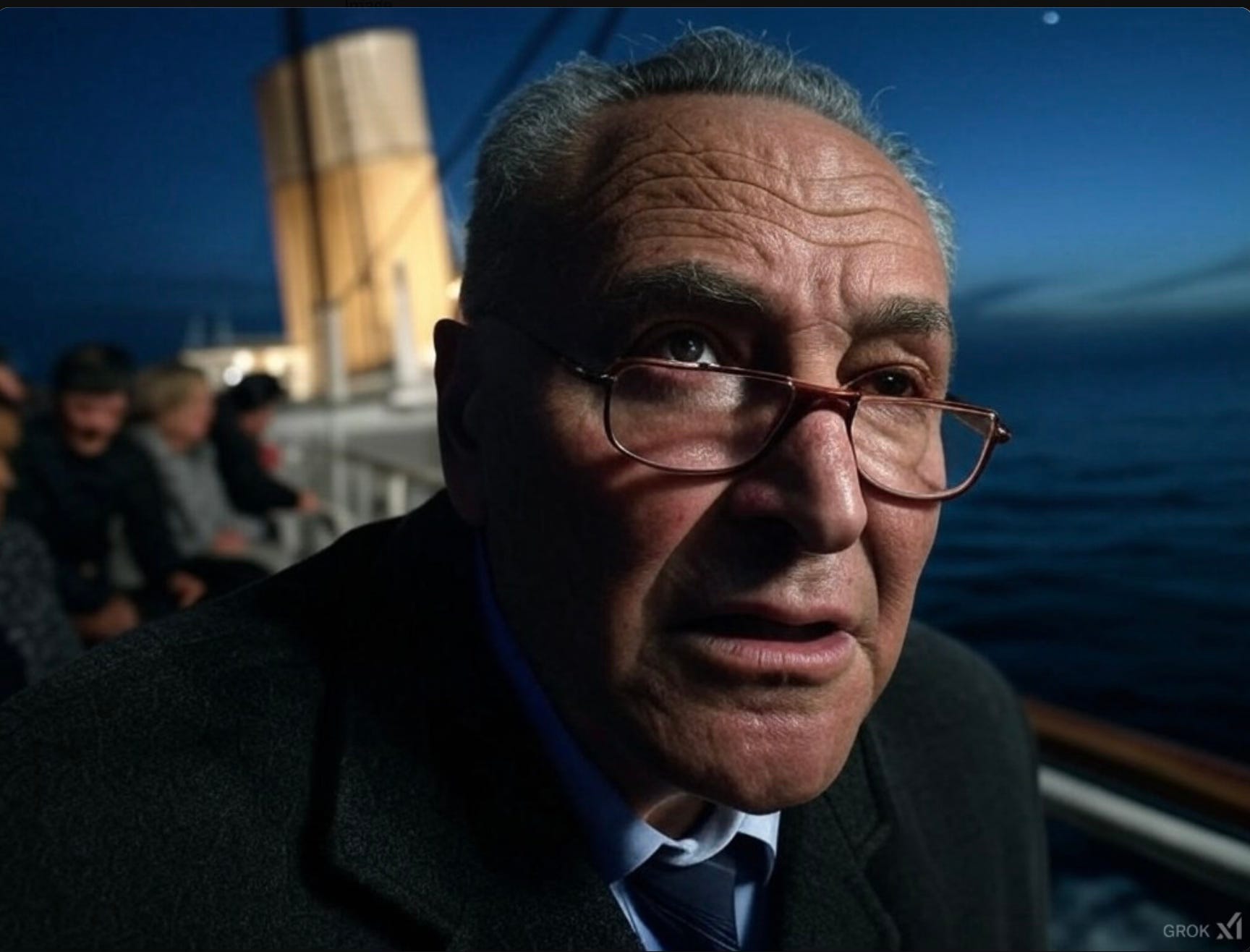
Free Thinking Through the Fourth Turning with Sasha Stone
Please, Democrats, Keep Losing Elections
00:37:33
Loading summary
Transcript60 lines
- [00:01]
Sacha Stone
Hi, this is Free Thinking through the Fourth Turning. My name is Sacha Stone. Please. Democrats keep losing elections. Everywhere I look, I see the telltale hysteria that gripped my former party back in 2016. I was a good soldier for the left, fighting for what I believed was the right side. The hysteria spread, infecting every corner of the left, and at some point, we lost touch with reality. What was this that had happened to us, I wondered? Why had we abandoned our humanity? Why did the side that used to be the good guys, at least to me, feel so comfortable sliding into dehumanization and degrading half the country? As I began asking questions, sooner or later I would get the same one back again. What happened to you? But the right question was never, what happened to me? The Democrats have had almost 10 years to figure out that the problem was never Trump. It was always us and the pristine utopian world we built for ourselves using the Internet, social media, and a charismatic leader like Barack Obama. It was a new America where everyone got a seat at the table. The left always says the first black president rousted the racists out of hiding and they lost their minds. But the truth is, it was those of us on the left who lost our minds with the first black president. It became an addiction for us, this euphoric feeling of changing the world, of making history, of being good. Trump's win kicked all of us into a level of mass hysteria we couldn't control then or now. As you can see by the headlines, every day is the end of the world. It's a threat to democracy, a constitutional crisis, a Nazi salute, a fascist in the White House. Everyone is to be feared. Every decision they make is bad and dangerous. For podcast listeners, a story from the New Yorker. What does it mean that Donald Trump is a fascist? The Democrats did learn the lesson in 2016, that Trump represented a large portion of this country that had been abandoned and forgotten by us. We not only decided we were the chosen people to bring our new world to the promised land, but we also decided that they were the bad people, the racists who must be kept out of our government, our culture, our institutions, our corporations, even our restaurants, our movie theaters and our award shows. As with most utopias gone wrong, there was no due process or presumption of innocence. It was accused lest ye be accused. It was apologize or else. It was guilty until proven innocent. We all lived in fear of a tyrannical mob on social media with the power to decide who gets to stay and who must go. What was all of this madness? This Hysteria we were experiencing, it was a combination of algorithms on our brains we were not ready for, and how we'd cut ourselves off from the everyday lives of ordinary Americans. They at least still had one foot in normal. But us? We were crippled by delusion, ruled by hysteria. Trump threatened everything. He knocked down our carefully constructed Utopian diorama with glee, and his supporters loved him for it. We just weren't prepared for how hysteria takes hold and scares so many of us all at once. It was pure madness, and we were helpless against it. The hysteria spread to the corporate press, who got most of their information from Twitter, which was a mass hysteria delivery device. And that hysteria trickled down into the homes of anyone watching mainstream cable news. It was at the gym, airports and the laundromat. It was white noise in the background, selling our delusions as our new normal, quietly scaring Americans every day of the week. The hysteria brought down the empire as we attacked every potential threat to our utopia. Movies, books, history, statues, buildings, words, jokes, poetry, science, marriage, men the color of our skin, the words that came out of our mouths, what we could say online and what we couldn't. Obey the rules or else be quiet or else. Sooner or later, it was bound to get to the kids. And when it did, not enough of us stood up and said, enough. This would be when the FBI busts in and breaks it all up. But we controlled the FBI, so they would do nothing. I was one of the lucky ones. I got out in 2020 after the mob turned on me one too many times. If it wasn't true about me, everything they accused me of, there was a good chance it wasn't true about MAGA either. And it wasn't. If you wanted to tell my story. As a former good liberal who was radicalized online, you can think of it like I was radicalized by kindness, decency, and a desire to be free. All the Democrats on the left ever had to do was snap out of it, see Trump and his supporters as actual human beings and not separate us and categorize us by the color of our skin and insist that the bloodshed of history still lives inside all of us. They could reach out and show some decency, let the rest of the country back inside the castle walls. But even that was too much of a risk for an empire in collapse. But be that as it may, until the Democrats get a grip, they must be kept out of power. So herewith are guidelines for the Democrats on how to keep losing elections. And I really think they should listen to me. Don't you keep virtue signaling. I had to laugh when this video of Jane Fonda landed on my for your page. In it, Jane Fonda explains to a crowd of clapping people how they should be open hearted to those poor, sad Trump voters. I understand why I do, why people voted that way. I know they're angry, they're afraid the rug has been pulled out from under them and they're going to be really hurt in ways they can't even imagine now. And you're going to be, some of you will be among them with what's happening. They're going to be hurt. And we have to we who might not have voted that way. We have to open our hearts and not judge. But we have to invite them in. We have to understand and we have to identify. We cannot be divided like this. We have to get over this division. She might talk a good game, but the pro woman group she co founded, Women's Media center, dropped me like a bad habit this year to write their annual report on the Oscars and gender, which I'd been writing for nearly a decade. I was good at it. I knew a lot about it. Yet one story about me and the Hollywood Reporter was all it took for Jane's Women's Group to punish this woman for thought crimes. Podcast Listener is a picture of Jane Fonda and Women's Media Center Co founder, Women's Media center author, activist. It's just as well the report was getting weird. It wasn't just about women. It had to represent every marginalized group. Women of color, trans and non binary women. You know the drill. But still, if they were truly open hearted, they would have sent me an email to tell me instead of just letting me twist in the wind. I don't think that's very open hearted of you, Jane Disavow family members who voted for Trump. That makes you super unappealing to normies and it will help you continue to lose. So by all means, keep at it. Podcast listeners, a tweet Protect Kamala Harris Kerry Kennedy, sister of RFK Jr. And daughter of Robert Kennedy on her brother. I am disgusted by my brother's obscene embrace of Donald Trump and I completely disavow and disassociate myself From Robert Kennedy Jr. And his flagrant efforts to desecrate my father's memory. Very open hearted of the Kennedy family. How kind all of them are. That makes me want to run screaming as fast and as far away as I can get from horrible monsters like that. Stay nasty. Stay mean. It's funny to see the losing side so committed to spewing hatred on social media, casually dehumanizing Trump supporters as though they won the election and still have all the power. What part of they got their asses handed to them is not coming through?
- [09:33]
Patrick
And now some terrible people from Tik Tok.
- [09:36]
Suzanne Lambert
Hey Patrick, I know a lot of liberals have been hesitant to define what a woman is cuz they're like too woke or whatever, but I'm not. So I'm happy to do that for you now. So women are the people who when they see you coming, they cross the street either because you make them feel uncomfortable because your spirit is unsettling, or they just know you're going to strike up a conversation with them that they're counting down in their head to be over. Women are the people who can never remember your name because there's nothing unique or special or memorable about you and that really gets to you. So instead amongst their friend group they give you code names like Pit Stain guy because all of your undershirts are stained like a putrid yellow brown color. Women are the people who have had their eyes shellac shut anytime they've had an intimate physical encounter with you, however far and few between those have been for you. Women are the people you blame for all your problems while you sit on your couch with appealing arms because you went for bonded leather instead of genuine as nacho cheese drips from your fingers.
- [10:26]
Patrick
Oh, save me Donald Trump.
- [10:29]
Sacha Stone
Save me.
- [10:31]
Patrick
Save me Elon Musk. Save me Mr. Billionaire. Please fix my nation. Come in and dismantle my government. Please stop asking us to come together.
- [10:45]
Sacha Stone
And unite with Trump supporters.
- [10:47]
Suzanne Lambert
It's never gonna happen.
- [10:49]
Patrick
It's never going to happen. And I'll explain why. Listen, we don't trust you and we can never trust you because the way y'all have justified voting for a felon, sexual abuser, fraudster, it's like at that point, like, how can we trust you.
- [11:14]
Suzanne Lambert
To be so abundantly clear? I would and do make fun of their looks as well. You want me to give a shit about your feelings when you, like, don't want my friends to exist or live in this country? No, I'll absolutely make fun of your looks. I just haven't done that on here because I didn't want to get banned.
- [11:34]
Walter Kern
Quick reminder to every single member of the United States military, you took an oath to defend the Constitution. Elon Musk, Donald Trump and J.D. vance are actively dismantling the Constitution. It is your obligation to act upon this. Have a good night.
- [11:58]
Sacha Stone
Perspective is Christian Maga you would spit on her face while Jesus washes her feet. So I don't know what to do.
- [12:16]
Suzanne Lambert
I really badly want to leave the United States. I would be gone tomorrow if I.
- [12:20]
Sacha Stone
Could make it happen.
- [12:22]
Suzanne Lambert
I want better for us.
- [12:23]
Sacha Stone
I want better for our kids.
- [12:25]
Suzanne Lambert
I want them to have a worldly, cultured childhood, and I want them to grow up in a better place. Do this quick so I can get back to praying. Yeah, there's too much vibrance to it. I do feel hatred rising.
- [12:42]
Sacha Stone
My blush being gone.
- [12:44]
Suzanne Lambert
Who stole it? Must be an immigrant. I'm not embarrassed about anything in my whole family. Freaking life because I'm a child of God. Yeah, Jesus loves me. A gay person must have hexed me. My eyelashes are too small for this because I had breast cancer and they didn't grow back. You know, I got breast cancer. I thought trans people were cool, living their life peacefully, beautifully. And guess what? God gave me breast cancer. So you want to talk about science? If you can't hate yourself, how the hell are you gonna hate everyone else? Go big or go home. And I'm not going home, because that's where my husband watches a lot of pornography. Found this in my craft drawer.
- [13:22]
Sacha Stone
Uh.
- [13:23]
Suzanne Lambert
Oh, I think maybe I keep the headband on. Oh, I forgot to do my eyebrows. I was made to make babies till my ovaries fall out. How about that? Okay. And I'm.
- [13:31]
Sacha Stone
I think they must think this is a good look for the losing side, to keep reminding all of us how much we can't stand them. But what's good for the goose is good for the gander. Keep it up, Democrats. I beg of you. The last thing you should ever do is be kind, nice, normal, and decent. Then you might actually start building a movement again. The plan, Democrats, is to keep amplifying awful people like Suzanne Lambert, who calls herself the Regina George of the left. Nothing will alienate voters more than these kinds of women. White saviors who have thrown themselves under the bus to be good allies for the cause. Using trans people to justify the thing they really want to do. Dehumanize Trump supporters. Here is Suzanne Lambert.
- [14:19]
Suzanne Lambert
We are seeing some improvements from the last press conference. It's good to see that she brought her cross necklace back to its rightful home at the National Cathedral. It's good that she straightened out her part instead of giving Lizzie McGuire. It's giving Lizzie McGuire's mom. Of course, the antique Clinique eyeshadow, the white concealer, the smudgy eyebrows is here to stay. So you do not have to Match your lip to your nails to your outfit, but you do have to match your face to your hands. Fix it also on the lip. Hilarious. Earlier in the day, she posted this photo of Caroline where you can literally see texture and it's not even zoomed in. If I were Caroline, I would genuinely be so pissed. And then she adds this comment clarifying that the lighting is why the edges of the lip are all messed up. First of all, that's not how lighting works. And what it actually looks like to me is that Caroline recently got lip filler and the makeup artist is trying to cover the bruising with concealer. On that side of the mouth, there's a certain kind of lip filler that when you get it, it's really bumpy.
- [15:12]
Sacha Stone
To normal people, though, Crazy ladies like Suzanne are off putting and unwelcoming.
- [15:17]
Unknown TikToker
I can't tell you how many times I've gotten on this app and saw some emotional liberal going off about Trump going off about the Republican Party going off about Elon. And you know what? I keep scrolling because I don't agree with them. I don't have time for the emotions yet. Some of y'all live rent free in my comment section to tell me the same old tired things. Don't you know that Trump is racist? Don't you know that Trump is a bigot? Don't you know that Trump is a misogynist? Don't you know that Trump is a white supremacist? Don't you know that Trump is endorsed by the kkk? Don't you know that Trump is a Nazi? Don't you know that Trump is a convicted felon? Don't you know that Trump literally wants to take women's rights away? Don't you know that after Trump deports all the immigrants, he's going to start deporting black people? Don't you know that Trump is literally going to bring back slavery? Do you realize that if Trump deports all the immigrants, who's going to pick our crops? Who's going to be our gardener? Who's going to pick up my Starbucks? Like I get it.
- [16:20]
Sacha Stone
I keep denying reality. According to Dave Weigel and Khadiaba, the resistance is actually winning. Yes, it is. I predict a landslide for the Democrats in 2028. And while we're at it, please keep calling yourselves the Resistance. As if you ever were. You had all the power, all the blue pieces on the Monopoly board. You had it all. And guess what? You'll never believe what happened next. For podcast listeners, an article from SEMAPHORE actually, the resistance is working. Their protests, their law fair. Who exactly does it attract? They look like fools. And worse, they keep reminding people what the face of the Democratic Party actually looks like. It looks a lot like the past. It's not what the people want, especially not young people. Here is a tiktoker.
- [17:12]
Unknown TikToker
Let's start with this embarrassing protest where a whole bunch of angry old Democrats give us the most tone deaf ear screeching protest song we've ever heard.
- [17:24]
Sacha Stone
Watch which side are you on? Which side are you on? Tell me which side are you on? Which side are you on? We'll fight against Jo. We'll fight Elon Musk no, we lands scab within our walls. We'll fight from dawn to dusk.
- [17:52]
Unknown TikToker
So the Democrats have already admitted there is absolutely nothing that they can do to fight the agenda. So they've decided to go down the self flagellation route instead of bulldozing their entire party and rebuilding from the ground up, which is what they should be doing. They're too afraid of fading into obscurity and they're so desperate to stay relevant that they keep engaging in these performative public acts and don't even realize it's causing even more damage to their already destroyed brand. They act like they're marching in Selma for civil rights when all they're doing is protesting in favor of politicians continuing to enrich themselves on the backs of our tax dollars and bankrupting the country in the process. Instead of proposing a better strategy or a different strategy than the Republicans on how to clean up this waste, they're just choosing to fight for the waste to continue.
- [18:42]
Sacha Stone
A recent focus group in Axios praised both Trump and Musk podcast listeners. A study focus group Arizona Swing Voters to Trump Musk Keep it coming. Every Arizona swing voter in our latest engagiest SAGO focus group said they approve of President Trump's actions since taking office, and most also support Elon Musk's efforts to slash government. Why it Matters Public opinion can constrain presidents when Congress does not, but these 11 voters, all of whom backed Joe Biden in 2020 but switched to Trump last November, said they're good with Trump aggressively testing disruptive, expansionist expressions of presidential power that are piling up in court challenges. It's needed to get America back on track, one participant said. But to be fair, those of us who left the party aren't all that concerned with what Trump is doing. Most of us aren't Republicans or conservatives, but we know what waits on the other side. Here are Walter Kern and Matt Taibbi helping to explain why Trump met the moment and the Democrats did not and could not.
- [19:49]
Walter Kern
You know, there's not just a science to planting ideas in people's heads and hypnotizing them. There's also a science to disruption. It's been studied. You know, a lot of these big billionaires now are billionaires because they disrupted a settled industry, okay? And Trump is a political disruptor in the politics industry, and he knows that sometimes it's better just to liberate trapped energy through disruption than it is to play the game, especially if it's not your game. And when, at the 2016 convention, when I saw Donald Trump for the first time give a major political speech, his acceptance speech, and I've told you before that I was chemically altered during the speech. I don't want to. I don't want to distract from the seriousness of this morning, but I had given myself a little clarity dose from the 1960s of the sort that Timothy Leary might use to see, you know, the patterns of reality. And when Trump came out like a casino host in his suit shooting his cuffs after having cast a big shadow on the scrim, and then they opened it, and he came out and he gave a speech about how fucking shitty America was, how dangerous it was, how lousy it was for people, how sad, angry, and pissed off people were. And he used all this kind of language, and it was called dystopian. The next day, chills went through my body because of my accelerated and chemically intensified ability to feel vibes. And I went, oh, my God, this is punk rock coming to St. Paul after we only had Judas Priest, Nazareth.
- [21:39]
Matt Taibbi
And Aerosmith, you know, nothing wrong with little Judas Priest.
- [21:44]
Walter Kern
But not in retrospect. But when I went down to the St. Paul Civic center in 1979 and saw Elvis Costello after having seen the hair bands, I just went, oh, no. Something just changed, and they can't put it back. That's how I felt in 2016.
- [22:01]
Matt Taibbi
Right, right. Well, look, in retrospect, politically, it was very. It was way ahead of its time. And, you know, whatever else you can say about Donald Trump, that's the reason why his thing works, is because people perceive that they. They see the commons that he does. They're open about it. Right?
- [22:26]
Walter Kern
But you see, the. The first. The difference between the first and the second terms, to me, is that he did it linguistically and stylistically and tonally the first time. But he was kind of trapped politically and in terms of, you know, actual practical effectiveness as a Leader by, you know, the various ops they ran and other things. Russiagate and so on. This time, he's not just playing this game, this disruptive game linguistically. He's doing it in policy wise, in terms of governance and policy and behavior. And that is something they really weren't prepared for. Because now he's not just saying weird stuff, he's doing weird stuff.
- [23:10]
Matt Taibbi
Right. Trump, I think, wanted to get into power and then be a traditional president on some level. And of course, that was never going to work.
- [23:18]
Walter Kern
They should have let him. They should have let him.
- [23:20]
Matt Taibbi
They should have.
- [23:21]
Walter Kern
If they, if they had profiled him in the bowels of the intel community properly, they would have said, this guy responds unusually well to pats from the establishment. You know, he likes to be liked. So we'll set up some establishment figures who will train him with pats on the back.
- [23:43]
Matt Taibbi
Yeah, a little bit. Throw a little bit of fish like a. Like a seal.
- [23:48]
Walter Kern
Right, right. Instead, we acted like, you know, a bat had gotten into the House and, you know, we had to kill it.
- [23:55]
Sacha Stone
And whatever you do, Democrats, don't remind people of who you used to be. This report tells us how to cut waste, cut red tape, streamline the bureaucracy, change procurement rules, change the personnel rules, and create a government that works better and costs less.
- [24:15]
Unknown Speaker
I've read it, and where it says.
- [24:16]
Sacha Stone
The President should, the President will.
- [24:19]
Walter Kern
Among the 800 recommendations, eliminating 12% of the federal workforce. Merging some government agencies like the FBI, the dea, and the Bureau of Alcohol, Tobacco and Firearms. Closing hundreds of government offices outside Wall Street.
- [24:33]
Unknown Speaker
From the day I took office, one of the commitments that I made to the American people was that we would do a better job here in Washington in rooting out wasteful spending. We thought that it was entirely appropriate for our governments and our agencies to try to root out waste large and small in a systematic way. It means cutting some programs that I think are worthy, but we may not be able to afford. Right now, a lot of the action is in Congress and legislative, but in the meantime, we don't need to wait for Congress in order to do something about wasteful spending that's out there. We haven't seen as much action out of Congress as we'd like. And that's why we launched on our own initiative, the Campaign to Cut Waste. And we're going to keep on finding every possible way that we can do that, even if Congress is not active. There you go.
- [25:29]
Sacha Stone
Amplify the crazy. The Democrats hope to go viral on Blue sky or Facebook, and they use every minute inside Committee hearings to get that hit. They do it on the right, too. But the Democrats somehow only expose how out of touch they have become with the country's mood. The more we see of them, the less we like them. Adam Schiff, Elizabeth Warren, Eric Swalwell, AOC and of course, the most entertaining person, the one they think is the key to attracting young people. Jasmine Crockett. In a clip from America this week, she was ranting and raving at Matt Taibbi and Michael Shallenberger, purely for the benefit of social media. I've added music for dramatic effect.
- [26:10]
Matt Taibbi
Was at the very end that there's a Texas congresswoman named Jasmine, Jasmine Crockett, who gave an address. It was just yelling at us. That was so freaky that, that I had to, had to kind of like pinch myself to make sure that I was at the right hearing. But just, you can just hear what.
- [26:34]
Patrick
She says, the Second Amendment, and say that it is limitless. Nor do we pick out the First Amendment and say that it is limitless. The thing about the Constitution is that it has always been a balancing test. There are limits to this. And right now, what we continue to hear from a certain side of the aisle is that there are no limits to this lawlessness. In fact, there are limits. And I can tell you that one of those limits typically is around hate crimes. You may or may not know that when it comes down to it, if somebody decides that they want to send something hateful in, say, the U.S. mail, they can actually go to prison for that. Up to five years in prison. So, yes, there are always going to be limits. So when we start to talk about Trump and him being pulled down on any platform, this just happened to be after he incited an insurrection. This just happened to be after, in a bipartisan way, this particular chamber decided that they were going to impeach him. So there was something a little different about what he did because as we know, it led to people actually dying. But let's talk about who's doing the nefarious things with the tech gun.
- [27:48]
Matt Taibbi
Here we go. Here comes the placard.
- [27:50]
Patrick
Because I don't think that one side of the aisle is promoting truth, but sometimes it may seem a little treasonous. All right, so we've got this article right here about this guy. Meta says it will end its fact checking program. She doesn't know who marks her post. I'll talk about that a little bit later. Then we have Washington Post says it will not endorse a candidate for president. We also know that actually they absolutely intended to endorse Kamala Harris.
- [28:19]
Matt Taibbi
What does this have to do with this one?
- [28:21]
Patrick
Google Maps now show Gulf of America instead of Gulf of Mexico for app users in the United States, which is a complete farce because it's the Gulf of Mexico. It always has been. And we know that the AP got kicked out yesterday because they refused to buy into this lie. Because that's all y'all really want to promote is lie.
- [28:42]
Matt Taibbi
She's looking right at me while she's thinking all of all y'all want to.
- [28:44]
Patrick
Elon Musk boosted false USA conspiracy theories to shut down global aid. Now, while he was boosting about US Aid and he was stopping money going for, say, things such as Head Start, somehow the only money that didn't stop with the money to him and his organization. Now, I don't know how you can have him be the watchdog as well as the guy that is literally living off of the government. If we want to talk about government welfare, it looks like Elon Musk. Because it's my understanding that just on yesterday, a new car contract was approved for approximately $300 million for Elon Musk. So, listen, I just want y'all to be honest. You want to sit here, you want to lie? Because so often we hear, well, you know, yeah, we did lie. In fact, he admitted that he lied when he was in the Oval Office yesterday. But if it's a lie that will get you into office, such as saying, I know Nothing about Project 2025 yet on D Day 1, you literally do everything that you can to implement it, including making sure that you put, say, one of the main architects of Project 2025 over the OMB. It's okay so long as you get the power that you seek. The problem is that the game is going to be on the American people. And when I say the American people, I mean all of us. Unfortunately, I am also stuck in the Twilight Zone because of the lies that were allowed to be propagated. Just like when you're talking about vaccines and all this nonsense, right now in my state of Texas, there is an outbreak of measles. And what they are finding is that because there's been so much disinformation about vaccines that kids are sick right now with measles that they did not have to have if they just trusted doctors and experts instead of randoms online.
- [30:46]
Sacha Stone
Never learn the lesson. Trump was never the Titanic. He was always the Carpathia. Maybe that wasn't the ride some people wanted. Maybe it isn't perfect. All I know is That I texted my daughter to say how sorry I was that she's had to grow up among such insufferable bores and puritanical scolds. She answered me back to say, it's slowly changing. I can feel it. So you see, Democrats, it's better for all of us if you're kept out of government and preferably every other major institution until such time as you can get a grip. Enjoy the rest of us out here in the real world. Thank you for listening to my podcast, sashastone, substance act.com. and remember to thine own self be true.
- [32:13]
Unknown Speaker
And a soul comes a day at the reception A glass of wine in her hand and I knew she was gonna meet her connection at her feet was a footloose man. Now you can't always get what you want. All right. And now you can't that's right. And now you can't and it will try sometime oh, yeah. Just by fire you can march oh, yeah. True love And I went down to the demonstration, yeah to get my fair shares get my fair shares of abuse and say where gonna fit the infestation and they were told we gonna blow we gonna blow up at the abuse yeah, y'all going to sing a now come on, y'all. I'll tell you when I'm out. You can't always get a what you want, yeah, man, you can't always get what you want, yeah, now you can't always get what you want and if you try sometime yeah, just by buying yeah, you can watch your day True love. And I went down to the Chancellor drugstore to get your prescription fee off I was standing line with Mr. Jimmy get a fast to the luck pretty ill, yeah we decided to have a soda. What's your favorite flavor? Cherry red. And I saw my song so my song to my friend Juma and it said one word back to me back to me and I was dead and.
- [35:08]
Patrick
I said, come on.
- [35:10]
Unknown Speaker
And you said always get what you want. Are you okay? Always get what you want Are you okay? Always get what you want. I even try sometime just my minor. You get what you need. True love good. All right. Sa Always get what you want. You can't always get what you want. Yeah, you can always get what you want and if it's my own time which is my fire you got what you. Yes, oh, yes, oh, yeah.
- [37:19]
Patrick
Oh, yes.