← Fresh Air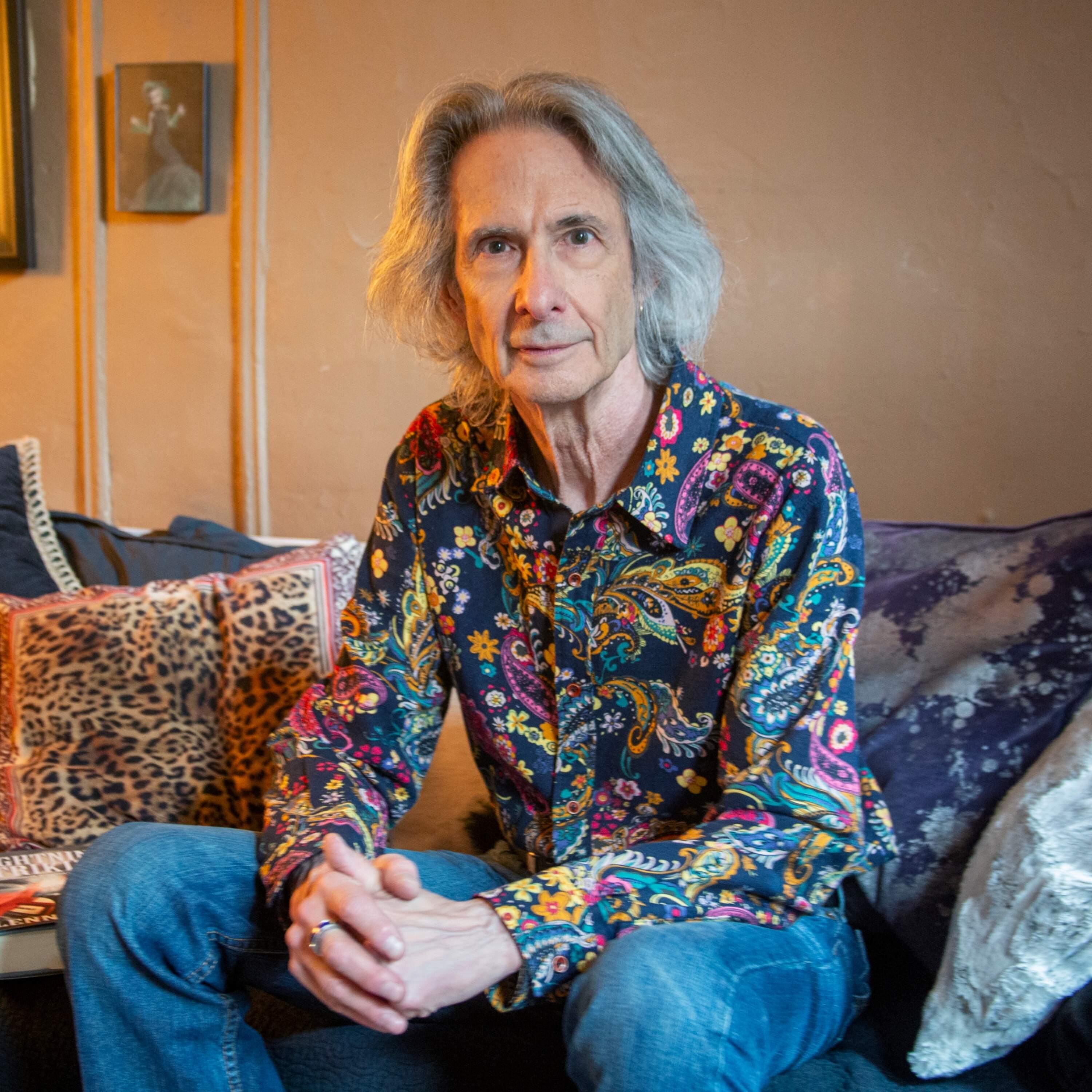
Loading summary
Transcript126 lines
- [00:01]
Sponsor/Advertisement Voice
This message comes from Capella University. That spark you feel, that's your drive. For more. Capella University's Flexpath learning format lets you earn your degree at your pace without putting life on pause. Learn more at capella. Edu.
- [00:15]
Terry Gross
This is FRESH air. I'm Terry Gross. My guest Lenny Kaye has been Patti Smith's guitarist since the early days when he was a rock critic and she was doing poetry readings. In 1971, when Smith decided she wanted guitar accompaniment for her next reading, it was Kay she asked to join her. With the exception of her long breaks from performing, their partnership continues to this day. Lenny Kaye has played with other bands, but finally, at the age of 79, he has a new solo album of his own songs. It's called Going Local and it will be released July 17. It shows off his versatility as a guitar player and songwriter. I also love his singing. There's some scorching guitar, tender ballads and songs that made me smile and laugh. Lenny Kay is one of those people who seems to know everything there is to know about rock and pop music. He's written several books related to rock and roll history, including his latest, lightning striking, about 10 transformative periods in rock history and the cities they originated in his record anthology Nuggets, Original Artifacts of the first psychedelic era, 1965-68, inspired many first generation punk rockers. Next year will be its 55th anniversary and it's still considered a classic. As proof of his open mind, musical curiosity and wide ranging taste, he wrote a book about the crooners, the singers from the early days of the microphone, which allowed them to sing in more intimate voices like Bing Crosby, Rudy Valli and Russ Colombo. Lenny Kay, welcome back to FRESH air. It is always great to have you on the show and I love the new album.
- [01:52]
Lenny Kaye
Oh, thank you so much, Terry. It's great to be fresh aired.
- [01:58]
Terry Gross
Your guitar playing is so good in so many different styles. And I want to start with a song going local because this is like the real high energy song on there and I love your guitar playing on it. So can you talk about writing it at all?
- [02:16]
Lenny Kaye
Well, a lot of these songs come from my personal experience as a living being on the Lower east side. I like to stay out late sometimes. You can often find me at 3:30 in the morning dancing to White Wedding at a local bar. But you know, it's just a song about hanging out in your neighborhood. And it's probably the most rock oriented song on the record because a lot of the songs on there started with me on the couch with an acoustic guitar. Musing about a situation or thinking about a relationship or just kind of, you know, growing from a more acoustic thing. A lot of the songs are personal and actually somewhat vulnerable.
- [03:08]
Terry Gross
Yes, to all of that. And we'll hear some of those a little bit later. So here's Going Local.
- [03:28]
Song Vocals
I didn't mean it I didn't even try to conceal it I didn't think that you would treat me this way how could I know it?
- [03:36]
Lenny Kaye
You're not the type to.
- [03:37]
Narrator/Promotional Voice
Talent show.
- [03:38]
Song Vocals
It looks like we got the devil today. I still remember the nights we used to spend together. You know I hated when it moved me alone it's not one thing it's
- [03:50]
Lenny Kaye
one thing or another, baby My price
- [03:53]
Song Vocals
had turned skin to bone we're getting out of control can't keep our hands up from the local and the water in hope we got a spot on the dial but it'll hide away inside Away a place so we can do it inside.
- [04:12]
Terry Gross
That's Lenny Kaye from his new solo album. We heard the title track, Going Local. It's about time you made your own album. Why did you never do it before and why did you do it now?
- [04:22]
Lenny Kaye
Well, Terry, I've been slightly busy. I can only really deal with one thing at a time. And also, I didn't quite know how to present myself. This is a different side of what people might expect from me. I felt like these songs kind of had a theme, which is who I am at this very moment in time. And I like the fact that there's a progression of my musical consciousness that's reflected in this album. I do a lot of things, and a lot of times I kind of duck into somebody else's soundscape. But I thought it was time for me to really understand who I am as an artist. And I wanted artistic closure for some of these songs that I've come up with over the last, you know, at this point, 10 or 15 years.
- [05:21]
Terry Gross
How do you think you've changed musically in what you want to say and what you want to hear? And I'm thinking, like, is it in part age experience?
- [05:35]
Lenny Kaye
I think it's less age and more experience. I've been through so many musical genres in my time. I've sung to you. Some of the great crooners. I love country music. I'm a passable pedal steel guitar player. I love heavy music. I have a band called Adrift, my side project, which is kind of a power trio that accesses the darker side of my personality. But I thought that, in a sense, these songs Show a personal thing. When I played them for Patti, she said something to me which I thought was good. She says, I've never heard you sound like this. And I'm all about the future, Terry. I mean, I have to say I have a long list of things I've done in the past, but to me, that's the past. I really like the fact that I've given myself a new Persona that I can pursue and understand who I am at this point in my life.
- [06:42]
Terry Gross
Well, I want to play a song that I've never heard, a song like it. I've never heard lyrics about this subject before. And it's a really reflective song. It's called the Things yous Leave behind. And it seems very autobiographical because it's in part about. As you're getting to the end of the line, what do you do with all your stuff? What do you do with all your records? What do you do with the stuff in the storage lockers? Does anybody want to inherit it? Should you be selling it, like, donating it?
- [07:13]
Lenny Kaye
My daughter always says to me, she says, dad, what are you going to do with it? It's all going in the dumpster. Well, I don't.
- [07:18]
Terry Gross
Not the Dumpster, please. Not the Dumpster.
- [07:22]
Lenny Kaye
No, no. I mean, you know, I call my accumulation the museum of Me. Because, you know, I look at all the books, some of which I'll never read, but I like seeing their spines on the shelf. Of course, you know, the accumulation of records, which is a curation of a sort. And anytime I get rid of a record, I want to hear it a week later. And the song was birthed when someone I knew passed on, and I was given the honorary. An honorable job of moving their stuff out. And I thought, man, this is, you know, it's a great responsibility to make sure that somebody's sense of curation is honored.
- [08:12]
Terry Gross
Yeah. Well, let's hear it. This is the things you leave behind, written and performed by my guest, Lenny Kaye, on his new album, Going Local.
- [08:20]
Song Vocals
Sooner or later, we're all going to find that we've made it to the end of
- [08:29]
Lenny Kaye
it.
- [08:29]
Song Vocals
Gets heavier Every mountain you climb
- [08:35]
Terry Gross
it's
- [08:36]
Song Vocals
the things you leave behind
- [08:41]
Lenny Kaye
it's been
- [08:42]
Song Vocals
one of those years when people keep passing into the past and you're still here Gonna pick up the pieces of your life and theirs who gets what
- [08:55]
and
- [08:59]
around a whole lot of baggage that would better be left by the side of the road Books and records old clothes and photos Harry, A hempy
- [09:12]
Lenny Kaye
load
- [09:16]
Terry Gross
that's the things you leave behind From Lenny K's new album, Going Local, which will be released next week. What's your plan for the things you leave behind for the records and books? Do you want to, like, donate it to an archive? Do you want to sell it? Do you want to bequeath it to somebody?
- [09:35]
Lenny Kaye
I mean, actually, I'm amused by the fact that Tom Verlaine's book and record collection have been kind of put out into the world. Discogs just sold a thousand of Tom's records. They had an event where you could go and buy a Tom Verlaine book. I'm not that, you know, I mean, who knows that that's kind of a prideful thing that anybody would want a record that I personally scratched after listening to it for 100 times. And to be honest, you know, I probably, you know, when the time comes and it gets dispersed, I won't know anything about it. I'll be up there with the great, you know, file cabinet in the sky thinking, oh, man, I want to hear this record.
- [10:21]
Terry Gross
So my husband decided before he died that he wanted, you know, most of his collection, thousands and thousands and thousands of albums and CDs sold, so that record buyers could experience the pleasure he got from buying the records, from searching for them, finding them, buying them, listening to them. And I thought there was something really wonderful about that sentiment.
- [10:48]
Lenny Kaye
They will return to the great flea market in the sky.
- [10:54]
Terry Gross
You worked at Village Oldies, which was famous record store in Greenwich Village. Yeah. So what did you get out of working in a record store since you're so obsessed with music and with recordings and with making them?
- [11:09]
Lenny Kaye
I got a lot of records, I'll tell you. I like to joke that I. Well, you know, I like to say that I worked for $10 a day and all the records I could slide out the door. You know, you get a sense of the expanse of recorded music, which is a beautiful thing. I mean, in my crooner book, I got to investigate a world that I didn't personally experience, you know, to understand how in these 78 grooves, an entirely new music was being invented. My lightning striking book is more my personal journey through the many transformative moments of rock and roll.
- [11:57]
Terry Gross
You know, it's funny because I think at the same time you were working at Village Altis, which was a stop for, you know, like serious record buyers and also just like, you know, people in the neighborhood, tourists. But it was a very, you know, alternative kind of culture. But you also had a band and I think at the same time were playing for fraternities, which seems like a really different culture than village oldies culture. Do you feel like you lived in different worlds at the same time?
- [12:28]
Lenny Kaye
Well, I believe that it's all the same culture. When you're playing in a band that's playing in a fraternity party, as the Zoo did, that's the name of your band? Yeah, yeah, the Zoo. Bringing down, you know, for your very own horror show, I think was our thing. We had dancing girls called the Zulus. I know. What can I say?
- [12:50]
Terry Gross
You can apologize.
- [12:53]
Lenny Kaye
Thank you. But, you know, you'd play shout for 20 minutes, and the fraternity brothers would be swimming in beer on the floor. And that's a great response. You know, music releases us, music elevates us, music illuminates us, you know, and no matter the different styles, this is what I've really found, given all my many, you know, you know, investigations into different genres, is that it's all kind of accessorizing, because the basic reasons for a song stay the same. I want love. I don't have love. I'm sad, I've lost love. Who am I? I'm peeved at the world. All of these things are universal. And no matter the decoration or the genre or how it's presented, these are the elements of why we sing. And I'm, of course, quite blessed to be part of those who sing and see it come back to them in the response of the audience.
- [14:02]
Terry Gross
Let's go back to the beginning. Your first instrument, as far as I know, was accordion, which seems like an unusual choice. If it was a choice, I don't know whether somebody chose it for you. What's the story behind accordion?
- [14:15]
Lenny Kaye
My dad played the accordion and the piano. I almost wish he would have started me on piano because when I was growing up and rock and roll was getting going, the accordion was not. Not the most mobile of instruments. But, you know, after, when I was about 10, I stopped playing it. And then I picked up the guitar when I was getting out of high school.
- [14:40]
Terry Gross
And that one you knew that was the one for you?
- [14:43]
Lenny Kaye
Well, you know, folk music was happening. I originally wanted to be a lonely folk singer in the backyard. But In February of 64, the Beatles came on the Ed Sullivan Show. And in that seismic moment, that's when I bought my first electric guitar.
- [15:01]
Terry Gross
I want to talk about your first brush with professional recording. Your uncle Larry Cusick was a lyricist. Your family name was Cusicoff. If I'm pronouncing that right, yes. Your father changed it to Kay. Your uncle changed it to Cusick, and he was a lyricist. And among the things he wrote the lyrics for was the love theme from the Godfather, which was a hit for andy Williams in 1972. So let's just hear a little bit of that.
- [15:33]
Song Vocals
Speak softly, love and hold me warm against your heart. I feel your words. The tender trembling moments start. We're in a world our very own Sharing a love that only few have ever known. Wine colored days Warmed by the sun. Deep velvet nights when we are one.
- [16:13]
Lenny Kaye
I love that line. Wine colored days Kissed by the sun. Warm colored nights. My uncle was. My uncle wrote a lot of, you know, 60, 70. I have 45s, you know, that nobody ever heard. He was a journeyman songwriter. And when I was 18, he knew I was in a band and he called me up and he wanted to jump on the Eve of Destruction bandwagon and write a folk protest song. And so he had me sing it over the phone. And next thing I knew, I was in a recording studio. First time ever in Times Square. Being Link Cromwell.
- [16:52]
Terry Gross
Yeah. Your pseudonym for the recording was Link Cromwell. Is that Link as in Link Ray?
- [16:58]
Lenny Kaye
I was just, you know, they had, you know, 25 first names, 25 second names. I might have been Link Saunders at one time. I like Link.
- [17:08]
Terry Gross
Choose one from column A and one from column B.
- [17:10]
Lenny Kaye
But, yeah, I like Link because it's kind of like Lenny Kay. I mean, you know, it's got the same. And the L and the K in there.
- [17:17]
Terry Gross
Well, let's hear the recording that you made for your uncle. And this was, you know, professionally released. And it's called Crazy Like a Fox. So this is my guest, Lenny Kaye, under the name Link Cromwell.
- [17:38]
Song Vocals
They call me neurotic and say I'm psychotic Because I let my hair grow long. They say that I'm crazy and they call me lazy. Cause I don't like to work all day long. Well, I'm crazy A f. Oh, I'm crazy like a foxy. Cause while they're working on the inside, I'm having fun on the outside.
- [18:14]
Oh, yeah,
- [18:17]
I'm crazy like a
- [18:21]
Lenny Kaye
foxy.
- [18:22]
Terry Gross
They call me neurotic and say I'm psychotic because I let my hair grow long. Your hair is still pretty long.
- [18:29]
Lenny Kaye
Yeah, you know. Thank you, DNA. I mean, I remember when growing your hair long could get you in really big trouble.
- [18:37]
Terry Gross
I remember that, too. Why did you keep it that way? Why is it still long?
- [18:42]
Lenny Kaye
I don't know. I just like it, you know, it's getting good in the back, as they say. I cut it every once in a while when I feel like my hair is wearing me. I, you know, I cut it back so I get the proportion right. But I don't know, I just like it. It's who I am.
- [19:00]
Terry Gross
What did that recording do for you in terms of your sense of identity as a possible, like real professional recording artist?
- [19:11]
Lenny Kaye
Well, it gave me a sense of who I could be, even though I didn't dare think about it, you know, it gave me a sense of purpose, one might say. But thank God it wasn't a hit because if it was a hit, my life would have really had a different arc, you know, I would have had that million seller, you know, gotten the drug habit been found on the streets of San Francisco
- [19:37]
Terry Gross
or playing at oldies festival.
- [19:39]
Lenny Kaye
Yeah, I might be on PBS's Folk Protest Singers of the 1960s, but I believe the musical gods had different ideas for who I might become.
- [19:52]
Terry Gross
Well, let me reintroduce you here. If you're just joining us, my guest is Lenny K. His new solo album, which is his first album on his own, is called Going Local. It will be released next week. We'll be right back after a short break. I'm Terry Gross and this is FRESH air.
- [20:07]
Sponsor/Advertisement Voice
This message comes from netsuite. They say that every day your business is late to AI, you fall two days behind. Fortunately, there's NetSuite NEXT. NetSuite NEXT is where your business meets AI. Because AI is built into everything you do, it automatically surfaces custom insights. Throughout your day, AI agents work alongside you to solve problems. It's just like you're having a conversation with a colleague. If your revenues are at least in the seven figures, try NetSuite next for free. Go to NetSuite Aistory support for this NPR podcast and the following message come from Carvana. SELLING YOUR car. Carvana has offers so good they're almost inexplicable. Sell your car 100% online in minutes. Visit Carvana.com today.
- [20:55]
This message comes from Lisa. Beautifully crafted mattresses from LEESA are tailored for how you sleep and designed with specific preferences in mind. Go to Leesa.com for 30% off mattresses, plus get an extra $50 off with promo code.
- [21:10]
This American Life Host
NPR this is Hour Glass of this American Life. Do you know our show? Okay, well, either way, I'm gonna tell you about it. We make stories that hopefully pull you in at the beginning with funny moments and feelings and people in surprising situations. And then you just wanna find out what is gonna happen and cannot stop listening. That's right. I'm talking about stories that make you miss appointments. This is American life. Wherever you get your podcasts.
- [21:36]
Terry Gross
This is FRESH air. I'm Terry Gross. Let's get back to my interview with Lenny Kaye. He's Patti Smith's longtime guitarist. His first solo album, called Going Local, will be released next week. It features his own songs. He's also known for curating the anthology Nuggets, Original artifacts of the first psychedelic era, 1965-68. It's credited with inspiring many performers from the first generation of punk rockers. Next year marks its 55th anniversary, and it's still considered a classic. Early in his career, Kay was a rock critic. He's continued to write about music through liner notes and several books. His latest book, lightning striking, is about 10 transformative periods in rock and roll history and the cities they originated in. Earlier, we were talking about Kay's uncle, Larry Cusick, who was a lyricist. He wrote the lyrics to the theme from the Godfather, speak Softly Love, and for the love theme from Romeo and Juliet, A Time for Us. He even wrote lyrics for a quasi protest song that Lenny Kaye recorded under a pseudonym after his uncle auditioned him by having him sing the hit protest song Eve of Destruction. I've been thinking what it might have been like for your late uncle to want to like, you know, ride the crest of this, like, folk protest music movement and ask you, his nephew, to sing Eve of Destruction, which was an anti war protest song, because it wasn't his generation. His generation was more Andy Williams and not, you know, not the music of young people. Do you think about that a lot? Like the dilemma he was in wanting to write popular songs but not being a part of that generation.
- [23:23]
Lenny Kaye
I don't think he cared. You know, he was a journeyman songwriter. How he got Speak Softly Love was that probably the publisher had this track by Nino Rota and they asked him to write English lyrics. You know, he wrote the Bell that Couldn't Jingle with Burt Bacharach. He wrote the love theme from Romeo and Juliet A Time for Us. He was just a writer. And the nicest thing about my record is that I asked him toward the end of his days if he had any lyrics. I said, q, I'm a musician. Do you got any lyrics? And he gave me a sheaf of them. And toward the end of his life when he was in the hospital for quite a while, and I kept asking his I said, I'd like to see my Uncle Q. And she said, oh, wait till he gets better. And I knew he wasn't getting better. And then one day I just took these lyrics and I put the ones called Yes, I Will, the most simple of lyrics on the music stand. And I started playing it. The chords fell to hand. And at the end of it, when it starts repeating the Yes, I will, yes, I will, I just burst into te. And I said, I have to see my Uncle Q. And I went up to the hospital and he was there and he was very frail. And I sang it to him and he said, thank you very much. And the next morning I got a call that he'd passed on. So I got to show him a little love and respect very much at the end.
- [25:05]
Terry Gross
This is also one of my favorite tracks on the album, and it's a tender, beautiful song and sung with such tenderness. And also it's a song that I think you can sing to someone you're in love with, a romantic partner or to a child.
- [25:24]
Lenny Kaye
Absolutely. I mean, it's a song that is so simple and yet conveys so much emotion, I actually marvel at it. And it's probably, for me, a true expression of my uncle's gift for making a lyric that touches goes directly to your heart. Just no, you know, just no stopping right, right there. Start it beating.
- [25:52]
Terry Gross
So let's hear it. This is Yes, I Will from Lenny K's new album, Going Local.
- [26:01]
Song Vocals
If there's anything I can do for you, I'll always come through for you. I'll make your dreams come true for you. Yes, I will, yes, I will, yes, I will. And when things go wrong for you, I'll always hang on strong for you. I'll write a happy song for you.
- [26:38]
Lenny Kaye
Yes, I will, yes, I will, yes, I will.
- [26:44]
Song Vocals
I'll be there when you need me to help you work it out.
- [26:51]
Terry Gross
That was Yes, I Will with music by my guest Lenny Kay, and the lyric by his late uncle. And it's on Lenny Kay's new album called Going Local. We'll be right back. This is FRESH air.
- [27:04]
Sponsor/Advertisement Voice
This message comes from Capital One, presenting sponsor of the 2026 Tiny Desk Contest. NPR Music's annual Tiny Desk Contest called on musicians from all corners of the country to submit an original song performed behind a desk. The lucky winner will play a Tiny Desk concert and headline a tour with NPR Music this summer. While the judges are busy reviewing the entries, you can follow along and choose your favorites. Explore a variety of original talent with videos performed everywhere from bedrooms to staircases to rooftops. See where this year's entries will take you@npr.org tinydeskcontest and travel even further with the Capital One Venture X card, offering premium benefits like a $300 annual Capital One travel credit, plus earn unlimited double miles on every purchase. What's in your wallet? Terms apply. See capitalone.com for details. This message comes from NPR sponsor Carvana. Carvana makes car buying easy 100% online prices down to the penny, delivered to your door. Why make car buying hard when it could be easy? Visit Carvana.com today. Terms may apply.
- [28:15]
Terry Gross
This is FRESH AIR. Let's get back to my interview with Lenny Kay. He has his first solo album, and it features his own songs. It's called Going Local, and it will be released next week. So you started off as a rock critic. You were still playing, you know, in a band, but you were a rock critic. You were reviewing records. You wrote for all the pop magazines, but you also wrote for men's magazines. It's through an article that Patti Smith first got in touch with you. This was, I think, in 1971 or two, and you'd written about a cappella music or doo wop. What did you love about the music and what did she love about the article?
- [28:56]
Lenny Kaye
It touched Patti very much because it was the kind of music that she listened to growing up in South Jersey and Philadelphia. We both enjoyed Jerry Blavitt, the Gita with the heater, the Boss with the hot sauce, playing beautiful, beautiful group harmony. And when I was growing up in Brooklyn, I would see the older kids on the corner hitting notes, as it were. And that was the first music that touched my soul. I once had hopes to be a high tenor in a doo wop group. Of course, I've completely lost that part of my vocal range, so I'll never achieve that one. But when Patti called me up about this article I'd written for jazz and pop, which was about a very niche thing. A cappella music was doo wop music without, of course, musical instruments, but it was specialized from oldies stores. And this is like 1963, 1962, which meant that the music was already past dated. And of course, it would be knocked off the charts by the English invasion. But I wrote this, and that's when Patty first called me up and she said she was moved by it. And that's when she started visiting me at Village Oldies. And I put on our favorite records, my Hero by the Blue Notes. Today's the day Maureen Gray, Bristol Stomp. And we just became friendly. And that's where she asked me to join her at St. Mark's Church for her first poetry reading because she wanted to shake things up a little bit.
- [30:41]
Terry Gross
Can you describe what that night was like, your first time Playing with her. And not that many people were doing, like, music behind poetry.
- [30:53]
Lenny Kaye
Patti didn't want to do a standard poetry reading. We were opening, quote, unquote, Gerard Malanga. So there were a lot of Warhol people there. There were a lot of music people. It was kind of a cross section of downtown. But Patti felt that if she just did a standard poetry reading, Gregory Corso would be up in the balcony, you know, saying, come on, liven it up. And so she wanted to, you know, have a little action. I went over to the loft where she was living with Robert Mapplethorpe, and she read me her poems. And I just kind of put some rhythmic energy behind the poems. And we went there and did it. It was not meant to be anything. We didn't even perform again together for another two and a half years. It was more like an art event. But it was very well received. Again, it was so casual. New York at that time was just a hotbed of artistic creativity, theater,
- [32:02]
Song Vocals
film,
- [32:04]
Lenny Kaye
you name it. In that little 10 block circuit of the East Village, so much was happening, and this was just another night of going out and, you know, putting on a performance. I always marvel at the fact that we didn't think of it as, oh, hey, let's have a band. I mean, we didn't have a band for another three years. We developed organically, and that, to me, is what made us so special. We sounded like ourselves by the time we had all the pieces of a real band.
- [32:38]
Terry Gross
On your first album together, you do Gloria, and it reminds me of Charlie Parker's early recordings in the sense that, wow, thank you. And here's why. I mean, both Gloria and Charlie Parker, they start a movement. I mean, Gloria is so punk and it inspired so many punk rockers. And Charlie Parker inspired, like, every jazz musician. And so you'd think when you listen to them that it would sound like everything else, since so many musicians pattern themselves on it. But both those early Parker recordings and Gloria, every time I listen to either end of those, it just sounds so radical and so fresh and new and energized. Can you talk about, like, recording it together? What it was like for you to be doing something that was, like, so different and so exciting?
- [33:35]
Lenny Kaye
It didn't seem that different to us. I mean, here we are, we were basically. We started out as a trio, myself, Patti and the pianist Richard Soule. And what we would do, especially as we were beginning with would. Patty would do a poem, we connect it with a song, and then she would improvise and you could do that. In the structure of this little trio, Richard Soule was such an accomplished pianist, except, you know, he could play Rachmaninoff any want that. Sure, he was used to accompanying cabaret singers, but he could also not show off and just hit those chords and keep things propelling. And I'm pretty much of a rhythm guitarist at that point. And so we would just explore these fields, as we call it. Gloria happened because Richard Hell had sold us his bass guitar for $40, and Patty strapped it on and whacked the E note. And then she said, christ died for somebody's sins but not mine, which was a poem of hers called Oath. And, you know, and then I connected it with the most glorious of songs. Glory, of course, is not only the great Van Morrison song done by every garage band, but it was also a classic doo wop song done by the Cadillacs, Esther Navarro. It seems to be a word that replicates and understands each other. And by the time we got in the studio, it had been sculpted into a kind of quasi arrangement. But launching it in the studio was kind of, you know, made us aware that we were writing ourselves into history, which is kind of daunting in a certain way and somewhat presumptuous.
- [35:35]
Terry Gross
Well, let's hear Gloria from Patti Smith's first album, Horses, with my guest, Lenny Kay on guitar.
- [35:47]
Song Vocals
Jesus died for somebody's sins but not mine. Milden pot of thieves Wild cord up my sleeve Thick heart stone My sins my own they belong to me me People say beware but I don't care the words are just rules and regulation impressions to me
- [36:33]
me
- [36:36]
I walk in a room, you know I look so
- [36:42]
proud
- [36:44]
I'm wearing this mafia where anything's allowed I'll go this here party ah, just get bored Until I look at the wizard Hopping on the pop of me leaning on the poplar meeting.
- [37:12]
Terry Gross
That's Patti Smith, Lenny Kay, my guest on guitar from Patti Smith's first album, Horses. What did she bring out in you?
- [37:24]
Lenny Kaye
She brought out in me a sense of trust in my own musical abilities. I'm not a virtuoso guitarist by any means, but she stayed with me and let me express my musicality. She helped me understand who I am as a musician and how it helped her understand herself as a singer. Because Patti learned how to sing on the stage with the band, she also sensed a positive energy in me that I could go anywhere. I'm not hidebound by genre or how things should be done. And Patti, of course, is a creative force that continues to move ever forward. She's not one to rest on her laurels. She wants to see what happens next. And she encourages that in me. And I think, to be honest, that I have a solo album at this point in my life shows that. I also understand that, that you have to keep evolving. You have to keep moving forward. You have to be true to your art. You can't be blinded by fame or money. I'm a worker. That's really what she encouraged in me. She's a worker, too. No matter what we did yesterday or five years ago or 10 years ago or at this point, 55 years ago, it's all about the future. She has an expression, progress isn't the future, it's keeping up with the present. And so I try to incorporate that in my life. Whatever I've done in the past, great. But what I'm really interested in is getting up and seeing who I am today and as it moves into tomorrow.
- [39:36]
Terry Gross
Well, it's time for me to reintroduce you again, so we could take a short break. If you're just joining us, my guest is Lenny Kaye. He's Patti Smith's longtime guitarist, has performed with other bands and now has his first solo album. It's called Going Local, and it will be released July 17th. We'll be right back. This is FRESH AIR.
- [39:55]
Sponsor/Advertisement Voice
This message comes from Capital One, presenting sponsor of the 2026 Tiny Desk Contest. NPR Music's annual Tiny Desk Contest called on musicians from all corners of the country to submit an original song performed behind a desk. The lucky winner will play a Tiny Desk concert and headline a tour with NPR Music this summer. While the judges are busy reviewing the entries and you can follow along and choose your favorites, Explore a variety of original talent with videos performed everywhere from bedrooms to staircases to rooftops. See where this year's entries will take you@npr.org tinydeskcontest and travel even further with the Capital One Venturex card, offering premium benefits like a $300 annual Capital One travel credit, plus earn unlimited double miles on every purchase. What's in your wallet? Terms apply. See capital1.com for details.
- [40:50]
Terry Gross
This is FRESH AIR. Let's get back to my interview with Lenny Kaye. He has his first solo album, and it features his own songs. It's called Going Local, and it will be released next week. So you're such a New York City guy, I think you were born in Manhattan and you lived in Brooklyn, Queens in New Jersey. Do I have that right?
- [41:12]
Lenny Kaye
Yep. Yep.
- [41:14]
Terry Gross
You're living in East Stroudsburg now.
- [41:16]
Lenny Kaye
Yes, I am. I've Wound up in Pennsylvania in the Pocono Mountains. Yeah, yeah. It's not that far from New York. It's an hour and a half drive when there's no traffic.
- [41:27]
Terry Gross
But there's a bunch of musicians who live there for that reason. You can get to New York to play gigs. But it's, you know, it's beautiful country up there.
- [41:36]
Lenny Kaye
It's really nice. And it has, of course, the Delaware river, which is one of the great rivers of our time, was just swimming in it two days ago when it was so hot.
- [41:48]
Terry Gross
Among the musicians who used to live there was Bob Durow, the singer and songwriter.
- [41:54]
Lenny Kaye
Right nearby is the Delaware Water Gap. They have the Deer Head Inn and Phil woods lived there. Bob Durow. They have quite a little underground jazz scene and it's just a nice place to be. I grew up in New York City, but when I first moved to Pennsylvania, there was a sign as you got over the border from New Jersey. It said, america starts here. And I believe that, you know, all of a sudden you're outside of the ring of one of the world capitals, New York City, and also in a certain way, outside of the ring of another world capital, Philadelphia. And you can see the expanse of the country and it gives you a perspective on your life in New York. Things that seem so important are and also what the rest of the country might be feeling and thinking.
- [42:46]
Terry Gross
On your song, let's Make a Memory, There's a line in the lyric that says, I don't know if I could live in this part of the country, but you make me want to try. Did you move there because your wife wanted to?
- [43:00]
Lenny Kaye
Yes, yes. I was a little shocked, but we had a three year old daughter and the East Village in the late 80s was not as gentrified or even habitable as it is now. When you have a three year old, you want them to go out and play and not have to watch for shards of glass. So we went out there and it took me a while to understand my place there, but I've come to love it.
- [43:30]
Terry Gross
When your daughter was young, did you sing lullabies to her?
- [43:35]
Lenny Kaye
Yeah, I actually sang the Beatles if I Fell. And when she got married, for our dance, as it was, she. We played that song. Yeah, I would always sing to her little lullabies.
- [43:51]
Terry Gross
Did you try to shape her taste?
- [43:53]
Lenny Kaye
Impossible. My daughter, when she got old enough to get into the radio, we'd be driving along and she'd hear a song with a guitar in it and she'd immediately change the station to a hip hop Station.
- [44:06]
Terry Gross
Oh, right.
- [44:08]
Lenny Kaye
Which is great.
- [44:09]
Terry Gross
Did you expect that there was going to be a generation gap musically? Because there was such a big one when you were growing up? Because rock and roll was new, parents were listening to Perry Como. And now, I mean, there is a generation gap with hip hop.
- [44:26]
Lenny Kaye
I always hoped that there is a generation gap. I don't believe that music was, quote, better then music belongs to the moment. I would not want people to venerate the music that I grew up with or even that I make now. I believe that music exists as the soundtrack of our present time. And often when I'm in the car, I listen to hit radio. I might not make music like that. I might not even understand how to make music. But I can certainly appreciate the cleverness and the skill that goes into making the hits of the day. And so I would hope that when her kids grow up, you know, they're not going to be listening to what she did. They're going to be listening to the music of their generation.
- [45:18]
Terry Gross
Well, I want to close with another song from your new album and I want to play A Friend like youe.
- [45:23]
Lenny Kaye
Would you talk about the song A Friend like youe? I heard the original French version by Stephan Ischer when I was in Paris in the 90s and I just loved the song. I bought it and I brought it at home and I always thought I would like to write English lyrics to this. And so I did. I recorded it. It's actually one of my favorite songs on the record. And when I finished it, I sent it to Stefan and he loved it. So, you know, I. I guess I kind of did what my uncle did with Nino Rota's music. I took Stephan Eicher's music and, and. And spun it into English.
- [46:08]
Terry Gross
But is it a translation or a brand new lyric?
- [46:11]
Lenny Kaye
It's a brand new lyric. I think the chorus is kind of like the translation because I had to figure out what that is, but I just wrote a new lyric to it.
- [46:22]
Terry Gross
So this is A Friend like you from Lenny Kay's new album, Going Local. Lenny Kay, it has been such a pleasure to have you back on the show.
- [46:29]
Song Vocals
Thank you. If you forget about me far away, you know I will return. Of all the places I've been. Or we'll see. It's you that my heart yearns. And in the darkest night You're a light, A glow that never goes. You reach out to me tenderly. And so our story goes. Because a friend like you. No, no, no. Don't have a friend like you don't have a friend like you no, no, no don't have a friend like you like you.
- [47:42]
Terry Gross
Lenny Kaye's new album, Going Local, will be released next week. If you'd like to catch up on interviews you missed, like this week's conversations with Peter Asher from the British Invasion duo Peter and Gordon, who also produced James Taylor and Linda Ronstadt, or journalist Iri Berman on the latest developments in voting rights, or Rachel Aviv on tensions in mother daughter relationships, check out our podcast. You'll find lots of Fresh Air interviews and to find out what's happening behind the scenes of our show and get our producers recommendations for what to watch, read and listen to. Subscribe to our free newsletter@whyy.org Fresh Air. Fresh Air's executive producer is Sam Brigger. Our technical director and engineer is Audrey Bentham. Our engineer today is Adam Stanischewski. Our interviews and reviews are produced and edited by Phyllis Myers, Roberto Shorrock, Anne Marie Boldonato, Lauren Krenzel, Teresa Madden, Monique Nazareth, Susan Yakundi, Anna Bauman and Nico Gonzalez Whistler. Our digital media producer is Molly CV Nesper. Thea Chaloner directed today's show. Our co host is Tanya Mosley. I'm Terry Gross. The knockout phase of the World cup is underway.
- [49:09]
Lenny Kaye
At every stage, the excitement level goes up and up and up, creating core memories with strangers in a foreign land.
- [49:16]
Terry Gross
This is what it's really about. Coverage of the highs and lows from the NPR Network continues. Find the World cup tab in the NPR app for more.
- [49:30]
Narrator/Promotional Voice
You know that moment in an interview when someone says something that just blows you away? On NPR's Wildcard podcast, we've got a deck of questions that offers a shortcut to those moments. What do you admire about your teenage self? What's a lesson you keep learning again and again? When has selfishness served you well? I'm Rachel Martin. Listen to the Wild Card podcast only from npr.
- [49:55]
Sponsor/Advertisement Voice
This message comes from the John D. And Catherine T. MacArthur foundation, recognizing extraordinarily creative individuals whose ideas, solutions and discoveries expand people's expectations of what's possible. Macfound. Org.