Loading summary
Transcript55 lines
- [00:01]
Tonya Mosley
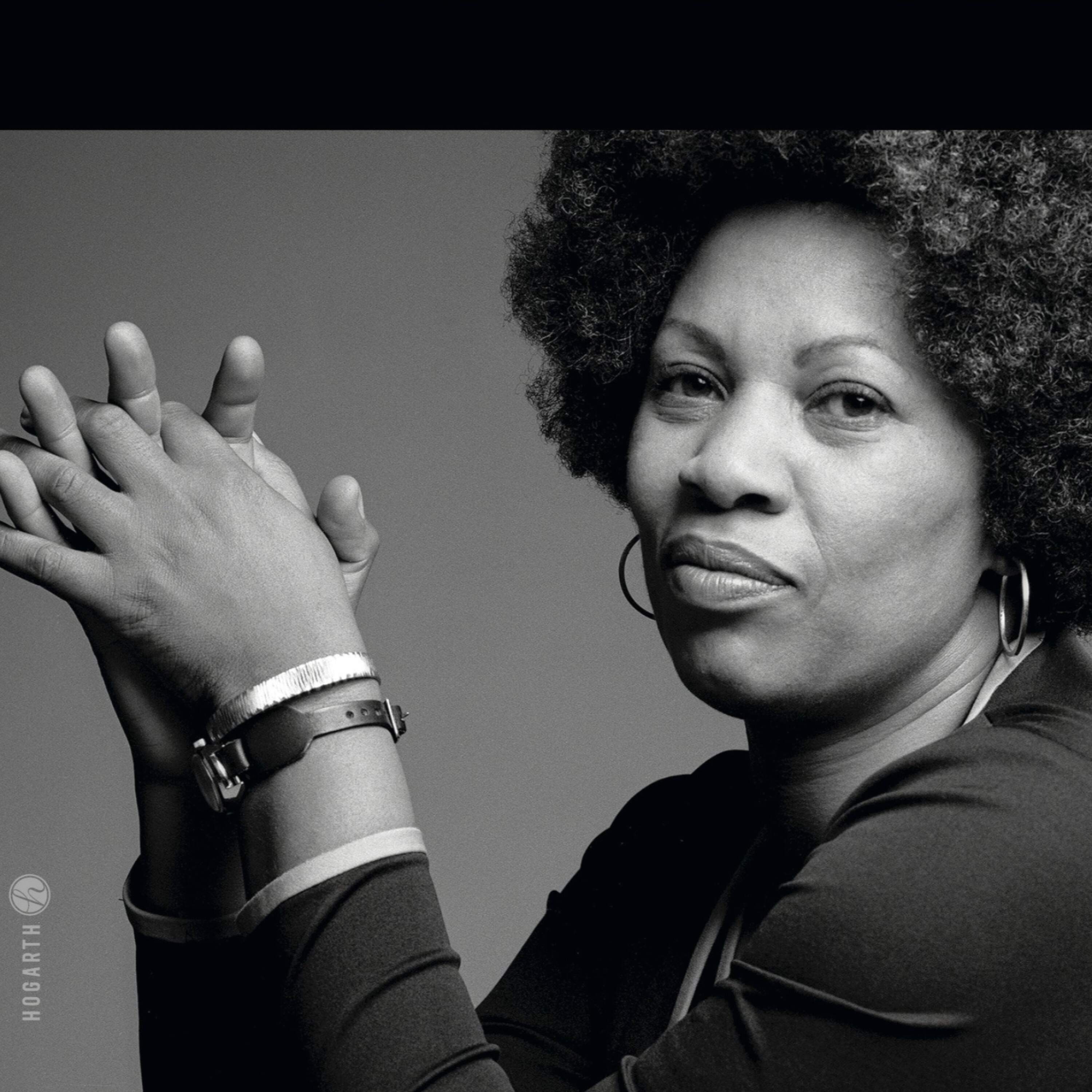
This is FRESH AIR. I'm Tonya Mosley. Writer Toni Morrison died in 2019, and something interesting has happened since. The tributes haven't slowed down. They've actually accelerated. Publishers have reissued her novels. I come across her quotes on social media almost every day, and there's a real conversation happening right now about her legacy, what it means, whether the reverence around her has gotten so massive the that it's actually getting in the way of the work itself. My guest today, author and Harvard professor Namwali Serpell, has been reading Morrison since she was a teenager and teaching her for nearly two decades. She's watched the critical conversation circle the same territory, Morrison's identity, her biography, her iconic status, while the genius of what Morrison was actually doing on the page hasn't really been examined. That gap is what has become her new book on Morrison, which moves through all 11 of her novels, from the Bluest Eye to God Help the Child, as well as Morrison's criticism, plays and poetry. Nawwali Serpell is a professor of English at Harvard University, and her own novels, the Old Drift and the Furrows, have won the Clark Award and been finalists for the National Book Critics Circle. I'mwale welcome to FRESH air.
- [01:22]
Namwali Serpell
Thank you so much.
- [01:24]
Tonya Mosley
Namwali, the word difficult, it has been used to describe both Morrison as a person and as a writer. And you write early in this book that, quote, I have been called difficult more times in my life than I can count, but I only began to understand, to discover the meanings and uses of my own difficulty because of Toni Morrison. What did Morrison show you?
- [01:50]
Namwali Serpell
It's very interesting to look back at the way that an author was received at their time from the perspective of the 21st century, when we are surrounded by this kind of sense of Toni Morrison, Nobel Laureate when you look at the earlier articles and interviews and reviews of her work, you find this notion of her difficulty appearing in all kinds of ways. It's sort of cropping up often in personal ways, describing her as a difficult personality. She's someone who is impatient with others. And it's actually come back into the contemporary discourse recently with some social media posts about her supposed meanness, quote, unquote. And I really was very curious about this because I felt I also have experienced this double personal, political and literary difficulty as a kind of accusation. And what I found is that Morrison had a similar kind of surprise, that there were moments in her career where she would be described as difficult or be kind of confronted with the difficulty of her works. And she sort of felt like she had been misread or misunderstood because what was really happening was a refusal of the reader to be open to what she was presenting. It's almost as though her personality or her Persona or the projections that we put on a black woman writer, a black woman genius, were getting in the way of people actually thinking about the work. So there's this wonderful moment in a Vogue profile where someone complains about the difficulty of understanding her work because he's just not familiar with African American culture. And she remembers saying, well, you must have had a hell of a time with Beowulf then. Right, Right. And there's a sense like, well, you know, difficulty in art is supposed to be there. So why does it keep being translated as this personality flaw?
- [04:11]
Tonya Mosley
Well, I wanted to interrogate that a little bit more because, I mean, we know that Morrison was fully credentialed. She was a Random House editor, a Princeton professor. I mean, she's a Nobel laureate. But she also talks about how African writers freed her because in reading them, they didn't have to explain anything to white people in their writing. And so when you talk about this difficulty that people have with her writing, it made me think, what does it mean to write from that place where blackness is assumed as the center? And what does a reader have to bring to access that.
- [04:53]
Namwali Serpell
That's exactly right. I think there's an assumption of what needs to be explained or what needs to be translated, Even what sorts of ideas or messages are comforting to an audience that is very particular to being a black writer. To being an African writer. To being an African American writer. When she first starts working at Random House, one of her first projects was an anthology of contemporary African literature. And she's reading a lot of African literature, really for the first time, which is interesting, given the fact that one of her credentials is that she went to Howard University, but she went to Howard in the late 40s, early 50s. Right. So the syllabus then was still being decolonized, as we like to say now. And she really wasn't encountering African literature until she was living in New York, working in publishing. And she said that reading someone like Chinua Achebe, reading Bessie Head, reading Kamar Lai, she encountered writing by Africans that did not assume that you needed to explain your culture to. To the white audience that you were writing for. And this was something that felt very different to her from African American literature, which, if you think about just the birth of the tradition and the slave narrative, was pitched to white audiences. And because literacy had been denied to Black readers. There weren't really black readers to read those slave narratives. So the tradition starts in a very different place. And she felt that reading African literature and seeing this new frame work, it kind of gave her this sense of freedom. I don't actually have to explain. I don't actually have to translate all the elements of my culture.
- [06:48]
Tonya Mosley
I want to ask you a little bit more about this misreading, though, from Maybe just from the larger. From larger literary circles or media. So sometimes it just felt like the misreading felt like resentment. You Write about a 1979 New York Times profile. And Morrison had just won the National Book Critics Circle Award for Song of Solomon. And I want to read directly from that article. They described her as a big, handsome woman, often breathless, often late. She will often put on an act, suddenly get down and be very chicken and ribs. Sucking her teeth, poking a finger into her scalp and scratching. A strange, primitive gesture. What do you take from that?
- [07:37]
Namwali Serpell
Oh, goodness. I mean, it's like a punch in the stomach. Whenever I read that, the first time I read it, my jaw dropped. I just. Or my mouth fell open. I just thought, how could you possibly talk about anyone in terms like that? A black woman in terms like that, and a black woman of Toni Morrison's stature and genius. It just felt. I mean, it just feels. I don't know how to put it, except just incredibly racist, I think. Racism, however, as you note, often comes out of a kind of insecurity and a kind of resentment. And Morrison is one of the incredible thinkers and theorists of racism as a pathology. And when she describes what it is to be racist, she's very insistent that this is a problem of the racist. This isn't actually a problem of the black person. This isn't something that we have to take up and push back against and defend ourself on. As she says, you can spend all your time trying to prove that we are humans, that we had a civilization, that we have art, that we have culture. But it's a distraction because there's always going to be one more thing. And actually, the problem is not us. The problem is the racist who has no other way of feeling full, no other way of having integrity other than putting someone else down. When I read that sort of thing and I show it to my students, because I think there is an assumption that for Morrison to win the Nobel Prize, to be this widely acclaimed, canonized author, means that she would have escaped this kind of racist rhetoric. And I think it's very important for people to understand what she actually had to confront what she actually had to deal with and how much more difficult it would have been for her to achieve what she did, given those obstacles, Given that this is the voice of the New York Times, the liberal minded New York Times, doing this big profile of this black woman writer who's just won a major award is on her third novel. And this is the kind of rhetoric that's being used, right? It's kind of remarkable.
- [10:22]
Tonya Mosley
Well, I mean, almost 40 years later or more, a British magazine comes to you and they ask you for a heart nose critical piece on Morrison, specifically from the perspective of a black writer. Were they asking you to write kind of a takedown or how did you interpret what they wanted from you?
- [10:42]
Namwali Serpell
That's how I felt. I felt that there was a desire to take her down a couple of notches. There was this assumption that she couldn't possibly have been that good. And the thing about it is, you know, as I started writing the book, as I started researching the book, I was seeing all of this haunting Morrison as she's coming up in her career. And there are all these moments in the archives where she feels that she's being mistreated by publishers, by people who've invited her to travel to other countries, that there's a kind of constant dog nipping at her ankle, which is just this, you know, this racist assumption about what she is worth and what is worthy of her. What I found really, frankly, startling was that as I was writing the book and researching the book, I was still encountering people's commentary along these lines and a kind of dismissal. And this is what I described this as a kind of. It's a double edged sword when it comes to Morrison, because there are the people who secretly, you know, behind their hands say, well, she couldn't have been that good. And then there are the people who say, well, obviously she was incredible and she is this icon of black excellence. And in between those two competing views is the work itself, which gets. Which just falls out of the picture, right? Because what we're doing is we're battling about reputation, we're battling about race again and gender again. What we're not actually talking about are the words on the page. And I found that very frustrating. And part of my aim is to just redirect our attention to the miracle of what she's able to do with language and with the novel form.
- [12:56]
Tonya Mosley
I want to focus in on Song of Solomon, which was one of Morrison's most celebrated novels, and it was published in 1977. It was her breakthrough novel cited by the Swedish Academy when they awarded her the Nobel Prize. You open this chapter by noting that despite all the gravitas, Toni Morrison was funny and that humor isn't incidental. It has a name and a very
- [13:23]
Interviewer/Producer
specific function in black culture.
- [13:26]
Tonya Mosley
It's called signifying. Can you define what that is for us?
- [13:31]
Namwali Serpell
So there's a lot of attempts by lexicographers of black English to define what it is. They are seeing, something that's happening in their families, on the streets between black boys. And it's a kind of back and forth art of insults that.
- [13:57]
Tonya Mosley
Like shade. Like shade or the dozens. Yeah, yeah.
- [14:02]
Namwali Serpell
And so you're going back and forth. Rap battles do this as well, right? You're going back and forth. We just saw a really, I think, clear elaboration of signifying in the Kendrick Lamar versus Drake battle that happened over the course of several months and culminated at the Super Bowl. Right. Where you have, you know, people are making fun of each other, they're ridiculing each other. You're signifying something when you are ironically taking someone to task or, you know, giving. Giving somebody a rundown of all of their flaws.
- [14:42]
Tonya Mosley
Where does signifying originate from? I think you sort of allude to it in the book where you talk about, you know, as a means of survival. It's almost a way to toughen one up. I've been to many funerals where the funeral will end up being a roast. You know, it's a way to turn. Turn what is some. Something that is unbelievably tragic or hard into a moment of levity and connection. Yes.
- [15:07]
Namwali Serpell
I mean, I think this is. This is one of the theories of why signifying emerged as such an important cultural form that I find really compelling, which is that it's a way of kind of releasing the burden of the oppression or the violence that you're facing. And it's almost like you're domesticating it. Right. You're bringing it home. It's a way of, like, training yourself to withstand the much more consequential insults that society is going to throw at you. But it's a way of doing it that allows for pleasure, it allows for bonding, it allows for community.
- [15:50]
Tonya Mosley
Okay, I want to get to an example now in Morrison's writing. And I have this passage that I want you to read and to set it up. We're talking about the Song of Solomon. And the hero of Song of Solomon is a young black man nicknamed Milkman. His real name is Macon Dead iii. And Dead is actually the family surname, and it came from a clerical error at the Freedmen's Bureau after the Civil War. So the name is both a comedy and a prophecy. And Guitar is Milkman's best friend. The person who knows him better than anyone there also. As the novel unfolds on a collision course together. And I want you to read this exchange. And a little bit of your explanation of it from the book.
- [16:38]
Namwali Serpell
Morrison offers her own definition of the dozens in an offhand description of how Milkman and Guitar speak to each other as young black men. Quote. When in conversation, they came to the battleground of difference. Their verbal sparring was full of good humor. Their repartee over the course of the novel is indeed all jabs and feints. Marked by extremes of humor and violence. But the threatening tone is really directed toward each other. You gonna do me in? My name is Macon. Remember, I'm already dead. Guitar didn't smile at the familiar joke. But there was enough recognition of it in his face to soften the glare in his eyes. Somebody ought to tell your murderer. That said, Guitar, Morrison emphasizes the joke for us by capitalizing the D in I'm already dead. This wouldn't be audible in a spoken exchange. But he's talking here about his own name.
- [17:36]
Tonya Mosley
This is pretty remarkable to me. Because there's something happening also with a level of language through the names themselves. There is the joke there. The joke is, he's all, you know, his last name is Dead. And they're talking about death and murder. But the names of these characters, Milkman, Guitar, Pilate, Magdalene, Hagar. Each one carries the weight of the story in really interesting ways. What did her choice of names tell us about how deliberate she was in her writing?
- [18:07]
Namwali Serpell
Morrison felt that naming and the way black Americans name each other was a particular form of language. It was very she. When she's listing off various things, we do call and response, the blues form. And Tiffany, back and forth, she'll say. And naming. And it's because the specific way that people named each other. Often has a kind of pun in it, right? Or kind of irony to it. So you have, for example, Milkman is named Milkman because he breastfed too long, right? This is. So it's punning on Macon Milkman. They sound a little bit similar. But this is. In his name is built in an insult that he received for breastfeeding too long, Right. And Pilate is a wonderful example. Because it's said very specifically that Pilate, whose name comes from Pontius Pilate in the Bible. That that in fact anything about Pontius Pilate, the figure, the character, the person that inspired the naming of this young girl. It was the look of the letters that her father liked, the look of the letters her father couldn't read, so he just liked what the letters looked like. But for Morrison, there's another pun available here, which is that pilot sounds like pilot, like an airplane pilot. And this novel is all about flying. Right. So you have Morrison kind of taking advantage of the irony of punning names to do her own thing aesthetically.
- [19:50]
Tonya Mosley
Hmm. Our guest today is author and Harvard professor Namwali Serpell. We're talking about her new book on Morrison. We'll be right back. I'm Tanya Moseley, and this is FRESH air.
- [20:03]
Grammarly Announcer
This message comes from Grammarly. From emails and reports to proposals, work today demands clear thinking and confident communication. 90% of professionals say Grammarly has saved them time writing and editing their work. It helps simplify complex ideas so your message lands clearly and quickly. This is AI that works with you, not over you. In a world of generic, AI don't sound like everyone else with Grammarly, you never will. Download Grammarly for free@Grammarly.com this is Ira
- [20:35]
Ira Glass
Glass on this American Life. We tell stories about when things change. Like for this guy David, whose entire life took a sharp, unexpected and very unpleasant turn. And it did take me a while to realize it's basically because the monkey pressed the button. That's right, because the monkey pressed the button. Surprising stories every week wherever you get your podcasts.
- [20:59]
Tonya Mosley
Morrison seem to have a complicated relationship with history, specifically with the idea that fiction owes history accuracy. So in the Song of Solomon, she includes Emmett Till's murder, but she changes the details. She spells his name wrong, she changes how he died, she changes the year. Why would she deliberately alter the facts of one of the most documented murders in American history?
- [21:27]
Namwali Serpell
It's so interesting because that specific historical incident, the killing of Emmett Till, also became the basis for Morrison's play Dreaming Emmet. And when you look at the drafts of Dreaming Emmet, which you can now do in Morrison's archives at Princeton, what you find is this movement toward greater and greater distortion of the history. And it's a way that she is emphasizing how we interpret the past. And it's inevitably going to misconstrue the past. It's always going to mistranslate the past. Right. But I think she's also trying to preserve the sanctity of the real history. It's a way of respecting the past and by not trying to depict it or appropriate. It really almost extract from it. So it's this kind of double vision, in a way. When she's writing about the story of Margaret Garner in Beloved, she says, when I was writing that novel, I didn't do too much research. I didn't want to get too much into what actually happened because I wanted to invent. I had been inspired by this historical incident, but I wanted to invent. But also, there's this way that she wanted to respect the real history. And you find her then turning to that real history in the libretto that she wrote for the opera, Margaret Garner. So there's this way that these are these double stories, right? The stories we tell about the past, and then there's the past itself. And I think she's really keen on respecting that past.
- [23:16]
Tonya Mosley
You mentioned the play Dreaming Emmett, and it's about Emmett Till's ghost coming back to stage a play about his own death. And in the final version, the ghost actually isn't Emmett Till at all. It's a different black boy who invented himself as Emmett. And reading about that play, Namwali, made me think about the visceral pain that black folks feel when we see racist, brutal acts of violence against us. It actually hurts so bad, it might as well be us.
- [23:49]
Namwali Serpell
Yes. I mean, I think what's really. It's so moving, this moment in the play where you realize that it's a different black boy. He got shot while he was trying to steal a kite from a store in Chicago, and he's decided to. To pretend to be Emmett because there's this sense that he was more famous. People actually cared about him.
- [24:14]
Tonya Mosley
Wow.
- [24:14]
Namwali Serpell
It's so. Yeah, it's heartbreaking. I think one of the incidents that had happened more recently, you know, police brutality, happens all the time. But the playbill of Dreaming Emmett had as a kind of little piece of. It's just a little piece of information. It points out that the play was partly inspired by the death of Michael Stewart, who was a young black man who was arrested for writing graffiti at the First Avenue subway station. And he had been arrested by New York City Transit Police. He was beaten. He was unconscious. His wrists were bound to his ankles, and there were signs that he had been strangled and he died. And this had just happened. Morrison was living in Albany while she was teaching there, but it happened in New York, where she was living most of the time. And so there's this recent thing that had just happened that made her think about Emmett Till again, because she had already been thinking about Emmett Till in writing Song of Solomon. So it came back to her. It haunted her. The other thing that inspired her was she was in an airport and she saw two little black boys just walking through the airport, but just like playfully, like, playing with each other. And immediately what flashed through her head was, what if one of them got shot right now? And I found that very eerie because I had not read that interview with Morrison about Dreaming Emmett before I wrote my novel the Furrows. But I have an incident in which a young black man gets tased in an airport in that novel. And I just thought this is the fact that I feel compelled to go back to this, that Morrison feels compelled to go back to this. This is something that just keeps haunting us and haunting the pages of the novels that we're trying to write. But there's also this kind of really, as you say, painful sense that this just keeps happening and that it's this kind of endless series of young black boys being killed, you know, and there's something very spooky about feeling like this is this is a haunting that we're we're just not really able to exorcise.
- [26:46]
Interviewer/Producer
Let's take a short break. If you're just joining us, my guest is author Namwali Serpell.
- [26:52]
Tonya Mosley
We've been talking about her new book on Morrison and about what Toni Morrison was actually doing on the page that the critical conversation about her work has largely missed. This is FRESH air.
- [27:04]
Grainger Announcer
This message comes from Granger. This is the story of the one As a maintenance supervisor at a manufacturing facility, he knows keeping the line up and running is a top priority. That's why he chooses Granger, because when a drive belt gets damaged, Granger makes it easy to find the exact specs for the replacement product he needs. And next day delivery helps ensure he'll have everything in place and running like clockwork. Call 1-800-GRAINGER click granger.com or just stop by Grainger for the ones who get it done.
- [27:37]
Tonya Mosley
I want to talk about you a little bit as a writer and what brought you to this work. You describe yourself in this book as mixed race, born in Zambia, African American in the most hyphenated sense. And you note that you and Morrison share something, what you call the strange privilege of zooming out from or boomeranging around race. What does that mean and how do you think it's kind of shaped the way you read her?
- [28:07]
Namwali Serpell
So when I was thinking about why I feel so drawn to to Morrison in terms of the way she talks about racial politics, I was struck by the fact that we have very, very different upbringings. And my blackness as Zambian, my blackness as an American, we very different from hers. Growing up in Lorain, Ohio, and being someone who, as it turns out, never actually went to Africa, even though Africa is invoked a lot in her work. And what I realized is that as she perceived in the work of someone like Chinua Achebe, blackness is so central to the way that I conceive of the world, that there is a kind of. It's my default position, because growing up in Zambia, you know, this is a majority black country. I'm surrounded by black people. I have a kind of awareness that black and brown people are the majority of the world. And so the sense that we are somehow a minority, which is very much the rhetoric in the United States, was really strange to me. And Morrison somehow managed to have that same powerful sense of centrality and black centrality and black as the default. She says, when I say people, I mean black people. And some people, when they hear that, feel rejected or that she's marginalizing non black people. But it's just. I think it's just like that's her default mode. That's just the way she thought about things. And I realized, oh, wow. I think somehow we both managed to luck into that perspective about blackness from a very early age for very different reasons. But I do think it's a privilege. It allows for a kind of groundedness in that double consciousness that we all experience growing up in the west, where the default position is that black culture is central.
- [30:19]
Tonya Mosley
She returns to this again and again in her writing. But what is distinctive is that it's not the border between black and white, but the differences within blackness itself. There's a moment in Song of Solomon where the character Pilates, as you think dark is just one color, but it ain't. There are five or six kinds of black. So Morrison seemed to be very interested in those distinctions within blackness. Which brings us to Sula, which was published in 1973. And so for listeners who haven't read it, can you tell us what this novel is about briefly? And then how Sula herself kind of embodies that insider outsider idea?
- [31:01]
Namwali Serpell
Mm, yes. So Pilate says black may as well be a rainbow, which is a beautiful way of talking about the many internal varieties and differences within blackness, not just the color, but also the culture. Sula is a beautiful story of friendship. It's really about the relationship between Nell Wright and Sula Mae Peace, who meet as young girls. Girls and fallen friends is the phrase I like to use. About it. And as they grow up in this fictional community, the bottom in the fictional town of Medallion, Ohio, you find them negotiating their relationships with the community, but also their relationship with each other as very different kinds of people. Right. Nell Wright is very. She comes from a very orderly household, a very respectable. Whereas Sula comes from a kind of wayward, ramshackle environment, all women, run by her grandmother and her mother. A lot of violence happens in that family, some of it accidental, some of it intentional. And Sula becomes this kind of wayward woman. She leaves town and goes to college, and she comes back, and she has a kind of status in the community where people respect her, but they also fear her. She's a bit of a pariah because she's happily willing to sleep with anybody's husband. But she doesn't seem to be particularly pressed about being in real romantic relationships with them. So she has the quality, I think, of glamour that Morrison really conjures for us in the way she dresses, in the way she talks, in the way that she thinks. But she also has this. There's this sense about her that she's an. As Morrison puts it, she's an artist without an art form. Right. She doesn't have the painting or the sculpture or the musical instrument that would allow her to express her gifts. And so her life becomes her art. And that is both a beautiful thing and a bit of a dangerous thing.
- [33:40]
Tonya Mosley
This novel ends in one of the most devastating lines Morrison has ever written. I mean, I guess it depends on your perspective, but from my perspective, Nell finally understands, decades later as an old woman, that what she has been mourning all of this time was not her late husband, it was her friendship with Sula. And I actually want you to read from your book a revelation that you had about this.
- [34:16]
Namwali Serpell
There's this kind of incredible building in the last chapter of the novel toward this moment of revelation where Nell finally realizes, as she says, we was girls together. Oh, Lord, Sula. Girl, girl, girl, girl, girl. And the cry that she releases rises up in these circles of sorrow. And when that sentence comes into my life, whether I'm reading it to teach, whether I'm rereading it to write, whether I'm reading it out loud, even just now, tears always spring to my eyes. It's just such an incredible evocation of what it feels like to lose the love of your life, which is your friend
- [35:13]
Tonya Mosley
Nawwali. Around the time that your book has come out, there's just been lots of discourse and discussion about Toni Morrison and her work, the New York Times produced a podcast and a piece called Don't Make a Saint out of Toni Morrison, Wesley Morris. Their argument was that sanctification puts her too far away to touch, too far away to actually read, which is also what you are saying, that she's being misread. But at the same time, does a book called Unmorrison risk becoming part of that problem?
- [35:54]
Namwali Serpell
That's a really good question. I, in my book, make a similar argument to the discussion that was on the New York Times podcast. But rather than thinking about her as a saint, I am thinking about her and the way she's been turned into a monument. And and I find it helpful to think about Morrison's relationship to monuments as a way of reframing how we think about her, because she was very skeptical of monuments in certain kinds of ways. And there's for example, I visited Ohio and I had the wonderful opportunity to go to Lorraine, where Morrison was born and grew up. And in Lorraine, the public library has a room dedicated to her. This was how Morrison wanted to be honored, by a room in a library filled with books where people could come and read, which isn't the same as having a statue or having, you know, a plaque attached to a building they renamed a building at Princeton Morrison Hall. And she sort of very wryly said that there's a kind of inevitability to that. She really liked the fact of this. But at the same time, I think it's very clear to me that what Morrison wanted most of all was for people to read and to read her, that that's actually what was so important.
- [37:34]
Tonya Mosley
Namwali Serpell, thank you so much for this conversation and thank you for this book.
- [37:40]
Namwali Serpell
Thank you so much for having me and thank you for these wonderful questions.
- [37:43]
Interviewer/Producer
Author and Harvard professor Namwali Serpell. Her new book is called On Morrison. Coming up, jazz historian Kevin Whitehead reviews two new biographies of composers and pianists
- [37:55]
Tonya Mosley
born 43 years apart.
- [37:58]
Interviewer/Producer
James P. Johnson and Alice Coltrane.
- [38:01]
Tonya Mosley
This is FRESH air.
- [38:02]
Grainger Announcer
This message comes from Granger. This is the story of the one As a maintenance supervisor at a manufacturing facility, he knows keeping the line up and running is a top priority. That's why he chooses Granger, because when a drive belt gets damaged, Granger makes it easy to find the exact specs for the replacement product he needs. And next day delivery helps ensure he'll have everything in place and running like clockwork. Call 1-800-GRAINGER click granger.com or just stop by Grainger for the ones who get it done.
- [38:35]
Interviewer/Producer
There are two fat new biographies of composers and pianists born 43 years apart. Their music transcended jazz, but recognition for their work was slow. James P. Johnson, born in 1894, and Alice Coltrane, born in 1937. Jazz historian Kevin Whitehead reviews both books.
- [39:25]
Kevin Whitehead
James P. Johnson on Rosetta, 1939 in the 1920s, Johnson was the foremost proponent of stride piano, the style that transformed rag times, oompa beats and tidy single incapations into more flexibly propulsive jazz piano. His buoyant touch and phrasing influenced Fats Waller, Duke Ellington, Earl Hines, Art Tatum, Count Basie, Thelonious Monk and many of their admirers. Johnson wrote songs for black Broadway, was king of Harlem's legendary rent party piano gladiators was blues singer Bessie Smith's best accompanist and composer of 1920s signature tune the Charleston. This is from a player piano roll James P. Johnson cut he never bothered to record his biggest hit, Scott Brown's very good new biography, Speakeasies to Symphonies. The jazz genius of James P. Johnson answers the question. Given all Johnson had accomplished, why isn't he as well known as his disciples? In hindsight, we know it's recordings that cement a musician's reputation. But making records paid poorly in the 20s, and Johnson didn't take them so seriously. He wasn't a natural showman like his protege. Fats Waller had no interest in leading a working band to promote his tunes and didn't always feature his virtuoso piano enough. He did have a comeback in the 1940s working in traditional jazz bands, but that made him seem like a relic of an earlier era. Starting in the 1920s, James P. Johnson also composed blues rhapsodies for orchestra that symphonic gatekeepers ignored. But in recent decades, his African American classical music has brought him renewed attention. Revivals include a new, modernized revamp of Johnson's Sweet Yamikraw by pianist Marcus Roberts. The world may finally be catching up. Today's other biographical subject also gets more respect now that she's gone. Alice MacLeod started out playing piano in church as a girl in Detroit but became famous as harpest. Alice Coltrane, wife and widow of saxophonist John from the first there could be something oddly harp like about Alice's swirly, sweeping piano moves, a tendency that grew more pronounced when she joined her husband's band in 1960. John Coltrane was fascinated by the shimmering, angelic sound of the harp and had ordered one built for Alice, which arrived only after his untimely death in 1967. As if harp was his bequest a directive on how to proceed. Alice Coltrane took to it right away, pursuing orchestral ideas she and John had discussed back then. She took a lot of criticism, especially after overdubbing a string section onto a couple of John's unreleased recordings when her music resembled his. Folks said it fell short when she then went her own way. They didn't know what to think. This is from 1971's Universal Consciousness. Andy Beta is great Good New Bio Cosmic the Life, Art and Transcendence of Alice Coltrane traces her musical life from early Detroit days through her years with John coltrane and her wild 70s recordings featuring harp, strings and her dynamic work on electric organ, where she might hold notes like a saxophonist. Then came her long last act. By the late 1970s, Alice Coltrane withdrew from public music making, having become a Hindu mystic. In the 80s, she founded a California ashram where she was known as Swamini Teriya Sangeetananda. Her musical focus was now on devotional chants. After she died in 2007, a familiar story played out. Her records, once dismissed as crazy, got rediscovered and reappraised. I was asleep on her jaw dropping 70s stuff myself. For better or worse, she helped inspire a recent spiritual jazz revival with two Coltranes as patron saints. Alice Coltrane came out of her husband's shadow by shining her own bright light, her music still out there in every sense.
- [45:51]
Interviewer/Producer
Jazz historian Kevin Whitehead reviewed speakeasies to symphonies, the Jazz Genius of James P. Johnson by Scott E. Brown and Cosmic the Life, Art and Transcendence of Alice Coltrane by Andy Betta. On tomorrow's show, we talk about the state of the conflict with Iran and prospects for peace with Aaron David Miller, a veteran of the State Department who advised Republican and Democratic presidents on Middle east policy. He's the author of five books and is currently a senior fellow at the Carnegie Endowment for International Peace.
- [46:26]
Tonya Mosley
I hope you can join us.
- [46:27]
Interviewer/Producer
Fresh Air's executive producer is Sam Brigger. Our technical director and engineer is Audrey Bentham. Our interviews and reviews are produced and edited by Phyllis Myers, Ann Marie Baldonado, Lauren Krenzel, Teresa Madden, Monique Nazareth, Thea Chaloner, Susan Yakundi, Anna Bauman and Nico Gonzalez Whistler. Our digital media producer is Molly CV Nesper.
- [46:50]
Tonya Mosley
Roberta Shorrock directs the show with Terry Gross. I'm Tanya Mosley.