Loading summary
Transcript170 lines
- [00:01]
Announcer
This message comes from National Geographic's Pompeii out of Time with Tom Hiddleston. A new series from the executive producers of Loki, Pompeii out of Time with Tom Hiddleston is now streaming on Disney and Hulu.
- [00:14]
David Biancolli
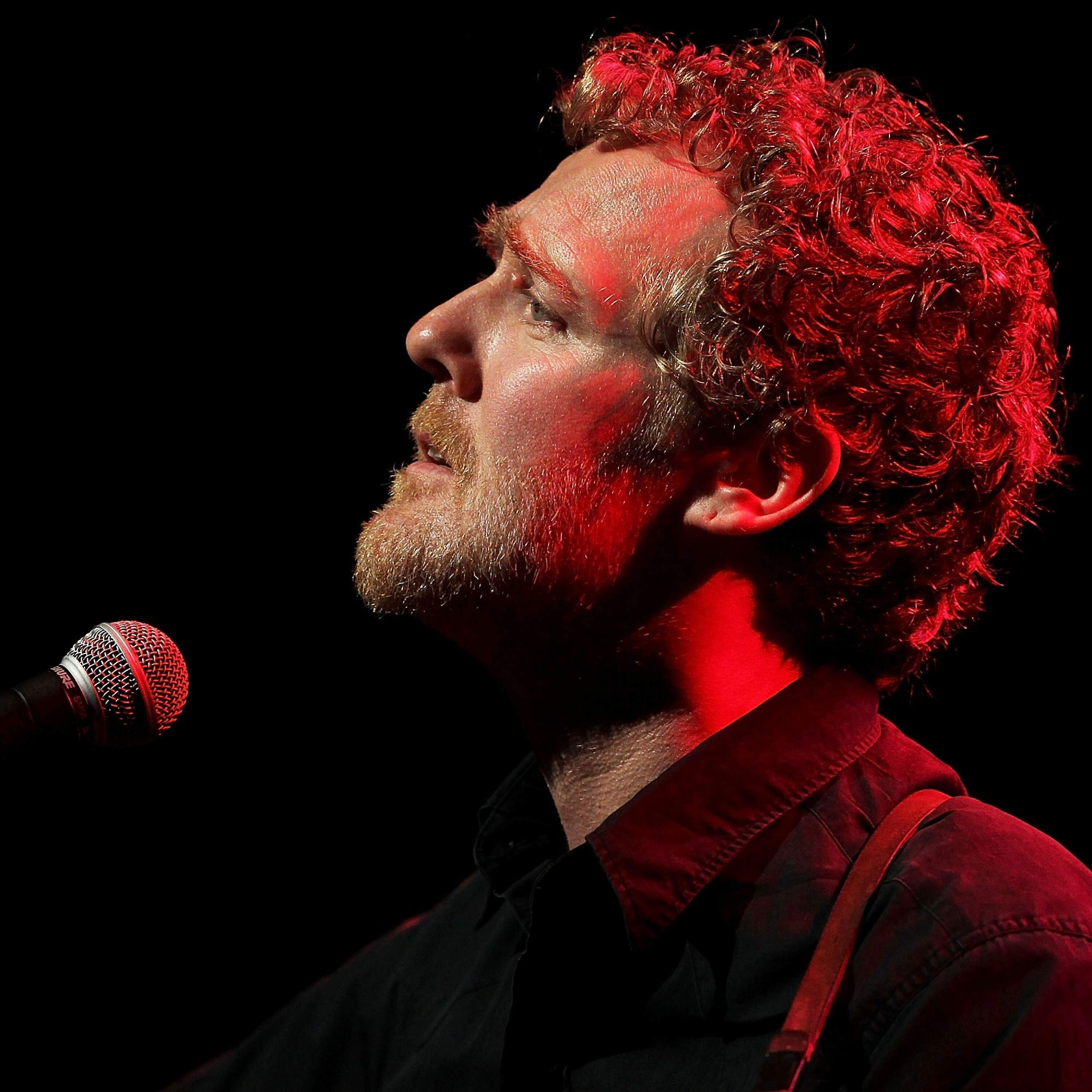
This is FRESH air. I'm David Biancooley. Glenn Hansard, the Irish singer songwriter who got his start busking on the streets of Dublin and later became famous for playing a Dublin street musician in the Irish film Once, died Wednesday from a motorcycle crash. He was 56. Irish President Catherine Connolly said Hansard would be remembered as one of Ireland's great singer songwriters. Bruce Springsteen, who invited Hansard in 2013 to join him on stage during a show in Kilkenny, said, here on E Street we are heartbroken. We met in Ireland many years ago and he was nothing but a great musician, a good friend and a generous and gracious man. Glenn Hansard formed the rock band the frames in the 1990s, made his film debut in the Commitments playing guitarist outspanned Foster and won an Oscar for co writing the song Falling Slowly for the film Once, in which he starred as a struggling musician. The movie was later adapted into a Tony Award winning musical. Hansard went on to release a number of albums as a solo artist and he was an advocate for the homeless producer performing at an annual Dublin Christmas Eve busk to raise money for people at risk of homelessness. The low budget indie Irish film that became an international success titled Once, was written and directed by John Carney, who previously had been in Hansard's band the Frames. Hansard wrote the music for the movie. In 2008, Terry Gross spoke with Glenn Hansard and with Czech singer Marketa Erglova who co starred in the film. Lets begin with the Oscar winning song Falling Slowly, which they co wrote.
- [02:12]
Glenn Hansard (singing)
I don't know you but I want you all the more for that. And words fall through me and always fool me and I can't react and games that never amount to more than
- [02:46]
Glenn Hansard (speaking)
they're meant will play themselves and out.
- [02:57]
Glenn Hansard (singing)
Take this sink Kimble and pour it home. We still got time. Raise your hopeful voice. You have a choice, you make it now. Falling slowly.
- [03:31]
Terry Gross
Glenn Hansard, Marketa Erglova, welcome to FRESH air. Congratulations on the Oscar and all the success you've had with Once you co wrote Falling Slowly. Had you ever written a song together before writing for the film?
- [03:47]
Glenn Hansard (speaking)
No, that was actually the first song we wrote together and it was one of those things where I'd been working on the song and I wasn't really sure Where I was going with it. All I had was, you know, was the verse, and I had an idea for the chorus. And it was only when I sat down with Mar and I played her the idea because I was talking about a harmony in the chorus. And she says, well, what if you take the lower one or you take the higher one and I'll take the lower one, and, you know, on the moment where it goes, we've still got time. And it was. For me, that was like the key of what made the song suddenly work. And then so I wrote the chorus with Mar, and then I really felt like we had a solid song in our hand, and it was something that I could give to John and feel
- [04:28]
Terry Gross
confident with Glenn, you pointed out that the movie was not written with you in mind as the performer or with Marketa in mind. Cillian Murphy was supposed to be the star of the film, but he had to back out at the last minute. So I guess that's how you ended up being cast yourself.
- [04:50]
Glenn Hansard (speaking)
Yeah, I mean, what happened was that Cillian was involved in the project all along, and Cillian likes the frames, and so he was happy to sing my songs. But I think some of the songs that turned in, I think Cillian probably felt a little bit. Cillian's a great singer, but I think he felt a bit unprepared for some of the. Cause John. The songs that John chose were some of the more dynamically, like, vocally challenging songs. Because I just gave John a bunch of songs and he chose which ones he liked, which ones he didn't. And I think Cillian got a little bit sensitive about maybe, possibly about the idea of singing a few of these songs and being able to sort of do them justice. And I remember making the suggestion that I was like, I'll change the keys. You know, I'll make it work. Because for me, getting the, you know, having the job of writing the songs, I just wanted to keep my gig. And so I was like, I'll change the keys. I'll do whatever Cillian needs to in order to make these songs work. And I think possibly what happened was that Cillian just got offered another job and then maybe took it. But once Killian pulled out, John was left in a very. I guess he was kind of stranded because the producers pulled out once Cillian pulled out. And then suddenly this project, which was about to. Was which was about to film in a month or two, suddenly had no money. And this is kind of where things got exciting for Us, because John had already cast Mar, Cillian had backed out on him, the producers had backed out on him, but he still had a crew booked and he still had a shoot day. And so he had to sort of figure out, do I drop this project and move on to another idea I had or do I try to make this work somehow? And we all sat down together. Because I was involved in the project as a songwriter, we all sat down together and we sort of. I guess we all tried to figure out what to do. And I got really excited about the idea of making it. Making the film as cheaply as possible. And it also meant that we could, you know, we figured out how to do it. So we wouldn't use lights, we'd shoot instead of shooting. You know, there was talk of originally shooting the film on film. Let's shoot it on dv. And let's. Instead of, you know, instead of, you know, hiring the cameras, let's just buy two cameras. Let's just do it all handheld. Let's just bring our own clothes. Let's do this. Let's just do this thing super, super minimalist.
- [06:50]
Terry Gross
And let's hire someone real cheap like Glenn Hansard. Yeah.
- [06:55]
Glenn Hansard (speaking)
Oh, yeah, I forgot about that element. Yeah. And let's just get me to do it. Let's just get me mate to do it. And when John approached me to do it, I was kind of nervous, I must admit. I wasn't. I didn't really like the idea because I just didn't feel like I could pull it off. But then John kind of put to me, he said, look, no one's gonna sing these songs like you do because you wrote them. He says, I'm forced into the choice of having two actors who can probably half sing or two musicians who can half act. And he says, I'd rather. If it's a musical film, I'd rather have two musicians who can half act. And I'll get a performance out of you. And he says, as long as the music's convincing, I think people are gonna believe it. So that was kind of his gamble.
- [07:32]
Terry Gross
Let's hear another song that you co wrote together for once. And this is if youf Want Me. And Glenn, why don't you describe how this song is. Is used in the film?
- [07:44]
Glenn Hansard (speaking)
Well, there was one. John wanted to have one song in the film that was. That was basically a throwback or a salute to the classic musical. We decided a couple of things. In the beginning, we said, whenever there's a song in this film, let's have the Entire song. And also, whenever there's a song in this film, let's have it be absolutely live in the moment. You're playing the song in front of them. So that there isn't this whole idea of playback. And, you know, they need mime. So the idea was that Mar's character, the batteries would go in her CD player and that she would basically sing over music that I would have supposedly written. And it was gonna be a. You know, John wanted basically just to do a singin in the rain moment, where it was a real musical moment. And so we hired a crane and basically we just walked up the street with Mar that whole evening. And I think it really does work in the film. But that is the one moment where we're miming.
- [08:34]
Marketa Erglova
Yeah, but it's also a moment where you get to actually know something about the girl. Because I think through the songs that the male character plays, you get to know something about his personality. You know, something that you probably wouldn't get to know about a person in one and a half hour. And so you get. You get that little chance with that song that the girl sings as well, which works very well, I think.
- [08:54]
Terry Gross
So let's hear it. If you want me. And this will give us a chance to hear Marketa's voice. This is Glenn Hansard and Marketa Erglova from the soundtrack of their film Once.
- [09:03]
Marketa Erglova
Are you really here or am I dreaming? I can't tell dreams from truth for it's been so long since I have seen you I can hardly remember your
- [09:25]
Glenn Hansard (singing)
face anymore When I get really lonely Distance causes only silence I think of
- [09:43]
Marketa Erglova
you smiling with pride in your eyes
- [09:49]
Glenn Hansard (singing)
A love that sigh if you only sigh this far. If you want me Salisbury.
- [10:19]
Terry Gross
That's if youf Want Me from the soundtrack of the film Once, my guest co wrote the song and also starred in the film. Glenn Hansard and Marketa Erglova are my guests. Since neither of you were really actors when you started making Once, although, Glenn, you had a part in the Commitments as a member of the band, did you go seeking advice from people about how to act or how to behave in front of a camera? Did you just learn from doing it? And if you got advice like, what's the best thing that you were each told that actually helped you?
- [10:52]
Glenn Hansard (speaking)
Well, the thing that I was told, and I can't remember who told me right now, somebody said to me, just remember that Marlon Brando was always Marlon Brando. He wasn't like, the reason people hired him to be in films is because he was Marlon Brando. And, you know, and I kind of like the idea that no matter what you're. No matter what character you're playing, no matter whether you embody it or not. And there are many different styles of acting. Of course, there are many different styles. But this was the thing that I always. That resonated with me most, was the fact that just be yourself and embody the character. And I think that, for me, that meant that my. I guess my range as an actor was probably quite limited. And let's face it, I was pretty much playing myself in this film. I. I, you know, I am a street musician. I was a street musician. I, you know, I did. I fixed bicycles and not Hoovers. John changed that detail, I guess. But when I went to the bank to get my first loan with, for the frames, the bank manager took out his guitar and. And played me a song. So there are many details in this guy's life that are very similar to my own. So I guess for myself, it wasn't so difficult to embody this guy. I think if I was given a more challenging role, I might find it a lot more difficult. But. And as well, we were making this film. I was making this film with Mar, who was a good friend of mine, and also with John Carney, he was in my band, who was a very close friend of mine. So. So I felt very, very comfortable with these people. It felt like. It felt like a bunch of friends making a film over the weekend more than it felt like being involved in a big artistic challenge.
- [12:20]
Terry Gross
I want to play a scene from the beginning of Once. And this is a scene where, Glenn, you're playing on the street for money, but no one's paying any attention to you at all. And until Marchetta, you walk over and start asking him questions about himself and the music. Here's the scene.
- [12:41]
Marketa Erglova
This song you just played. You wrote it?
- [12:42]
Glenn Hansard (speaking)
Working on it.
- [12:44]
Marketa Erglova
It's not an established song.
- [12:47]
Glenn Hansard (speaking)
No, it's not an established song.
- [12:49]
Marketa Erglova
How come you don't play during daytime? I see you every day.
- [12:52]
Glenn Hansard (speaking)
You know, during the day, people want to hear songs they know, just songs that they recognize. I mean, otherwise I wouldn't make any money. I play these songs at night. They wouldn't listen.
- [13:01]
Marketa Erglova
I listen.
- [13:02]
Glenn Hansard (speaking)
Yeah, but you give me 10 cent.
- [13:05]
Marketa Erglova
What, you do it for money? Then why don't you get a job in a shop?
- [13:10]
Glenn Hansard (speaking)
I have a job in a shop. Listen, I'm gonna get back to this. Yeah, Nice to meet you.
- [13:17]
Marketa Erglova
Who do you write this song for, please?
- [13:19]
Kevin Whitehead
No one.
- [13:25]
Marketa Erglova
Where is she?
- [13:27]
Glenn Hansard (speaking)
She's gone.
- [13:30]
Marketa Erglova
She's dead.
- [13:32]
Glenn Hansard (speaking)
No, she's not dead. She's gone.
- [13:35]
Marketa Erglova
You love her still?
- [13:37]
Glenn Hansard (speaking)
Jesus, man,
- [13:44]
Marketa Erglova
You're over rubbish. No one wrote this song is over her. I'm telling you, you play this marvelous song to her, you get her back.
- [13:54]
Glenn Hansard (speaking)
I don't want her back.
- [13:56]
Terry Gross
Glenn, you started off as a street musician. When you were in your teens. You dropped out of high school to play on the streets. Where did you choose to play? Like, what was a good street for you in Dublin?
- [14:08]
Glenn Hansard (speaking)
Well, for me, Grafton street was the. It was a bit like in Dublin, if you can imagine. If you know the microcosm of your life. I suppose for me, I lived on the north side of the city. So Grafton street was on the south side of the city. And that, for me, made more sense. Because it meant that I wouldn't bump into anybody from school. And that I wouldn't bump into any of my mother's friends or my mother, indeed, because my mother was a fruit seller on Moore street, which is on the north side of the city. And I wanted to get as far away from anybody I knew as possible. So I went over to Grafton Street. And also Grafton street was kind of the more posh part of Dublin. So the chances of me having a career. Or having. Getting beyond just being a street musician. I had better chances, if you like, on the south side of the city. Because that's kind of where all the artists lived. And, you know, so I went over there and it was a great. For me, it was the beginning of a whole new education. I mean, I left school at 13. I went over there. The day I left school, I went busking. And what started was a. I met a man who saw old magazines on the street. His name was Pete. And Pete was a. You know, he was. He prided himself on the fact that he was a Dylanologist. You know, he loved Dylan and loved everything about. And because I was such a Dylan fan, this guy took me seriously. Because I was playing Dylan songs that weren't necessarily the ones from the greatest hits record. And so this guy was. Took an interest in me. And I guess took me under his wing. And I remember going and living with him for a while. And he took me around to, like, poetry readings and pretty much that from there on. I remember meeting this lady, Philippa Garner, who was a kind of a famous painter in Ireland. And she took me out to her house in which was in the countryside. She lived in an old converted schoolhouse that she had rebuilt. And I went and lived with her for two years. And Really, a whole new education began. I remember staying at Seamus Heaney's house when I was a kid, and getting to hang out with poets and other musicians was really the basis of my artistic beginnings.
- [15:57]
Terry Gross
So what's the best thing that happened to you on the streets?
- [16:02]
Glenn Hansard (speaking)
Well, for me, I guess, overall, it was my education. I learned how to sing on Grafton Street. I learned how to entertain. When you're on the street, you're a still point. You know, you're part of the architecture. You're a still. And if you stand still on any street, in any city, in any country in the world, if you stand still long enough, every single person in that city will pass you by. So, like, you know, I'd be busking, and Van Morrison would walk past as I was singing a Van Morrison song. Or, you know, Bono would go by, or.
- [16:29]
Terry Gross
Is that true?
- [16:29]
Glenn Hansard (speaking)
You know.
- [16:29]
Marketa Erglova
Really?
- [16:30]
Glenn Hansard (speaking)
Oh, absolutely.
- [16:31]
Terry Gross
Okay, so Van Morrison is walking by. What do you do? Do you say, excuse me?
- [16:35]
Glenn Hansard (speaking)
Not at all.
- [16:36]
David Biancolli
No.
- [16:36]
Glenn Hansard (speaking)
But someone like Van, you would just give him his. And actually, ironically, the reason, I guess, he was passing by was because we were. Myself and my friend were busking together, and we were singing because Van songs are amazing to busk. So one day we were busking, playing one of his songs, and he passed by. But actually, the irony was that we were busking enough money to go see him that night. So actually, we ended up busking up enough money to go see him. And the same thing happened to us with you, too. We were busking up the money to go see them one time, and we saw them the same day, which is very interesting.
- [17:06]
Terry Gross
So, Glenn, when you dropped out of school at the age of, what, 14, so that you could perform on the streets, what did your parents think of that?
- [17:14]
Glenn Hansard (speaking)
Well, I'm very lucky in that my mother, again, my mother was very, very liberal. She grew up in a very, very tight household where she had to be home at a certain time, and that, you know, she had 12 brothers and sisters. And I guess if the family had to keep everybody, herd them together, I guess, if you like. So my mother grew up and in the 60s, you know. And so during that time, she wanted. She wanted basically to give her kids the freedom that she never had. So my mother was, like, very, very liberal. She said to me, anytime you need, you know, if you want to, you know, when I came home to her and said, mara, I really want to do music, my mother just said, we'll do it then. And she said, well, do it. And if you're going to do It. Do it properly. So go, you know, go and earn a living from it and do it and getting really involved in it. So I was lucky. And my dad. My dad was, you know, I guess my dad was one of those guys who was. He worked hard, but he was a hard drinking man and supported us in whatever we wanted to do, but didn't really play much of a role in our lives except to say, yeah, fair play to your son. Go for it, you know. So my dad was, I guess, was on board with it, too. I was very, very lucky. I mean, my headmaster in school, my head teacher, he was a great guy. I was in his office so many times and we talked and talked, and I guess he was a smart guy. He figured out that music was the one subject I really enjoyed talking about. And because he was in his part, in his spare time, he was a dj. And so myself and himself would talk about Dylan and Cohen and Neil Young and all the stuff that really impassioned me. And he basically said to me one day, he called me down to the office and he says, glenn, you know what? You're in this school, you're not learning a thing. You're frustrating all of the teachers, and I know you love music. So I have an idea. Why don't you go take your guitar, go over to Grafton street, or go to any street you want, but start your musical career at the very bottom today. He said, you know, go and go and, you know, take your guitar out, and if in a year you're not enjoying it or it's not working out for you, come back to school and I'll figure out a way of getting you back into class and you can continue your education. He says, but I don't think that your education is going anywhere here. You know, he says, you can tell me all the musicians who played on John Wesley Harding, or you can, you know, you can tell me who produced the first two Leonard Cohen records, but you can't tell me the square root of nine. And he says, so, you know, you're not really very good to us here, and I'd like to see you succeed. So he sent me home that day to take my guitar and go to the Grafton Street. And when I went home, I said to my mother, I dropped my school back in the hall. And I said to my mother, ma, I'm gonna. I'm gonna start my career as a musician. And my mother was like, what?
- [19:36]
Justin Chang
Really?
- [19:36]
Glenn Hansard (speaking)
And I was like, yeah. She said, well, we'll go for it, son, and good luck.
- [19:40]
David Biancolli
Glenn. Hansard and Marketa Erglova speaking to Terry Gross in 2008. Glenn Hansard died Wednesday in a motorcycle accident at age 56. We'll hear more after a break. Also, Kevin Whitehead has an appreciation of Tony Bennett. Monday marks the centenary of his birth. I'm David Biancooli and this is FRESH air.
- [20:02]
Glenn Hansard (singing)
Well, I've not been.
- [20:06]
Glenn Hansard (speaking)
Not a starling, no, I've not been straight at all.
- [20:11]
Glenn Hansard (singing)
Well, I beg your pardon.
- [20:14]
Glenn Hansard (speaking)
The night we jumped McCormick's wall I was so happy just to be with you. I'd now I could scheme your name. Try pasta blame, but I know you won't respond. Well, here we are. What's there to do?
- [20:38]
Glenn Hansard (singing)
Light and die,
- [20:42]
Glenn Hansard (speaking)
Light and die and die.
- [20:45]
Glenn Hansard (singing)
Light and die to die.
- [20:48]
Glenn Hansard (speaking)
I'm gonna ride black river.
- [20:56]
Glenn Hansard (singing)
And with the lark in the morning
- [21:02]
Glenn Hansard (speaking)
and the dew upon the dawn.
- [21:05]
Sponsor/Advertisement Voice
This message comes from NPR sponsor Carvana. Carvana makes car buying easy 100% online prices down to the penny, delivered to your door. Why make car buying hard when it could be easy? Visit Carvana.com today. Terms may apply.
- [21:21]
Announcer
This message comes from Capella University. That spark you feel, that's your drive. For more Capella University's Flexpath Learning format lets you earn your degree at your pace without putting life on pause. Learn more at capella. Edu Support for this podcast and the following message come from Strawberry Me. Be honest. Are you happy with your job? Are you stuck in a job you've outgrown or never wanted in the first place? Are your reasons for staying really just excuses for not leaving? Let a career coach from Strawberry Me help you get unstuck. Discover the benefits of having a dedicated career coach in your Corner and get 50% off your first coaching session at Strawberry Menpr this week on sources and methods.
- [22:08]
Terry Gross
Missiles cost money and the Pentagon is
- [22:12]
David Biancolli
running low on both.
- [22:13]
Glenn Hansard (speaking)
One of the concerns for the Middle East, Qatar and Kuwait and other locations,
- [22:19]
Sponsor/Advertisement Voice
maybe Saudi is are there enough Patriot
- [22:21]
Justin Chang
missiles to go around to protect their bases?
- [22:24]
Terry Gross
The state of the US Arsenal? This week on Sources and Methods, the
- [22:27]
David Biancolli
national security podcast from NPR, this is FRESH AIR. I'm David Biancooli. We're listening to Terry's 2008 interview with singer songwriters Glenn Hansard and Marketa Erglova. They co starred in the 2007 Irish film called Once about two street musicians. Hansard wrote the music for it and they both co wrote the film's Oscar winning song falling Slowly. Hansard and her glova went on to perform off screen as the duo swell season and for a time were a Couple Hansard died Wednesday at the age of 56.
- [23:03]
Terry Gross
How did you both meet?
- [23:06]
Marketa Erglova
Me and Glenn?
- [23:07]
Terry Gross
Yeah.
- [23:08]
Marketa Erglova
Well, there was a case of my father helping a man that lives in Ireland get this Irish band over to Czech Republic in Slovakia for a few gigs. And he was the guy that would kind of help out on the Czech side because he obviously speaks Czech and English, so he'll be able to communicate and get venues to be helpful. And so he basically helped organize a few gigs that the Frames had around the area. And because he did do that, when the band came over, they just kind of came to our house and we organized a party for them in our garden. And that was where we met, basically around the fire, playing songs and singing along. And my mother cooked this big feast. So we met in a really lovely way where Glenn would. My family would basically invite the whole bunch, which was about 12 people, over to the house and befriend Glenn and the band. So then Glenn would just keep coming to the house because of my mother's cooking and stuff. So it's a very funny way. But throughout the years we would have become friends.
- [24:13]
Terry Gross
I want to ask you about another scene from Once. There's a great scene in what I think is a pub. It almost looks like a living room, but I think it's actually like a small pub. And everybody's kind of eating dinner and drinking. And the rule of the game here is that you have to be able to sing to be in on this dinner. And people just kind of alternate singing. And there's a kind of middle aged woman and a middle aged man or slightly older man who sing a few bars in this sequence. And they have really interesting voices. And I was wondering, like, who are they? And is this based on a real pub in Dublin?
- [24:46]
Glenn Hansard (speaking)
Well, actually, that room is where Myanmar live. That's our flat. Oh, yeah. And because we didn't have money to hire a venue, we just. We decided to have a party in our flat.
- [24:57]
Announcer
No wonder.
- [24:57]
Terry Gross
It looks like an apartment.
- [24:58]
Announcer
Okay.
- [24:59]
Glenn Hansard (speaking)
Yeah, so that's our place. That's where we live. And also the guy, the guy I was telling you about earlier on, the guy of the first person I met, the Dylanologist in Grafton street, that's Pete, and he's the guy who sings.
- [25:09]
Terry Gross
Oh.
- [25:10]
Glenn Hansard (speaking)
And then the woman who sings is my mother.
- [25:12]
Terry Gross
No.
- [25:13]
Glenn Hansard (speaking)
Yeah, that's my mother, Catherine. So. So. And again, how we did it was instead of trying to hire a room and put lots of extras in it, we just threw a party and invited all our friends over and filmed it.
- [25:24]
Terry Gross
I really liked her voice. You know, there was something vaguely Marian Faithful ish about it. The older Marian Faithful.
- [25:32]
Justin Chang
Yeah.
- [25:33]
Glenn Hansard (speaking)
Interestingly, Marianne Faithful used to live in that flat also, which you might have somehow picked up on. Yeah, we're very lucky in that we live. One of the other people that I met when I was younger was Marina Guinness, who's part of the Guinness family in Ireland. And Ireland doesn't have royalty, but if we did have royalty, it would have to be the Guinness family, because they're such a strong and powerful family in Ireland, in a very nice way. And of course, we all admire them because we drink their product constantly. It's an amazing thing. So I'm really glad you pointed out the guy and the woman, because the guy is the guy I was talking about who took me on board, and I spent a lot of time with him when I was younger. And, of course, my mother.
- [26:07]
Terry Gross
Now we have to play that scene.
- [26:08]
Glenn Hansard (speaking)
Great to see you here. Can you sing? You can't sing your own?
- [26:13]
Glenn Hansard (singing)
There's one request I'll ask of you when your liberty came Remember Mitchell far away A convict bound in shame
- [26:34]
Terry Gross
Mine
- [26:36]
Glenn Hansard (singing)
that once healthy start of mine.
- [26:46]
Terry Gross
That's a scene from Once, which stars my guests, Glenn Hansard and Marketa Erglova. Did your mother sing a lot when you were growing up?
- [26:54]
Glenn Hansard (speaking)
Yeah, my mother sang constantly when we were kids, and my father. My mother used to win, like, she won a bunch of competitions when we were kids, you know, in. In pubs. And, you know, they never. My mother, of course, never took singing as seriously as, say, I did. But, you know, and my father. My grandfather was an opera singer, and my grandfather sang. I remember my great grandfather sang in a. In the same competition as James Joyce and. And beat him, apparently. In an opera. Yeah. Competition. A long, long time ago. So music's definitely been in my family.
- [27:27]
Terry Gross
So. Wow, Your lives have just been so changed by the movie. It's just. I mean, in every way, in terms of your performances, in terms of the fact that you're now a couple and you're living together, I'm sure you just never expected that.
- [27:42]
Glenn Hansard (speaking)
Not at all. I mean, it's been a very, very serendipitous. I suppose it's been a very, very interesting and powerful chapter in my life, for sure. And, you know. Yeah, exactly. It's like, does life imitate art? Does art imitate life? With Wuntz, it definitely. The lines are definitely blurred, and I really like that about it.
- [28:01]
Terry Gross
Since Dylan figures into your story here, Glenn, particularly your story, I think maybe we'll end with you Ain't Going Nowhere from the soundtrack of the Dylan movie. The movie about Dylan. I'm not here. The fictional movie about Dylan. So you recorded you Ain't Going Nowhere for it. Now, I know Dylan was a big influence on you, Glenn. You sang Dylan songs when you were busking as a teenager on the streets. The frames opened for Dylan on some tour or another. So I imagine you got to meet him.
- [28:34]
Glenn Hansard (speaking)
Yeah.
- [28:34]
Terry Gross
Did he have much to say? Is he mutable? I mean, is he accessible as a person?
- [28:40]
Glenn Hansard (speaking)
Well, you know, I'm very, very lucky in that I got to see spend, you know, some time in Bob's company. And he's one of those men. I don't. I don't even feel very comfortable talking about him because he's just so. For me, he's just a great. And, you know, I've been lucky in my life and that I've met all the people that I've really adored, I've somehow managed to meet, and I feel great about that. And so spending a bit of time in a master's company gives one a great sense of humility. And so all I can say is that I definitely wasn't disappointed. I spoke to Bob about Woody Guthrie, and that was, for me, was, you know, what was really great about that was it was two people, two artists, speaking about another artist. And that was the. For me, was the way. The best way the conversation could flow because, you know, what do you say to the man who's heard every different approach? And when I met him, I just. I didn't really know what to say. And I guess I was lucky. And what just fell out of my mouth was I said, meeting you, Bob, is a bit like what it must have been like when you met Woody. And the conversation could have died right there, but it didn't.
- [29:37]
Kevin Whitehead
It went on.
- [29:38]
Glenn Hansard (speaking)
And, you know, Bob talked about Woody and I talked about Wood, knew just enough to keep a conversation going with him, you know, so it was, for me, it's been a wonderful experience being in his company.
- [29:48]
Terry Gross
Well, I want to thank you both so much for talking with us. Thank you.
- [29:51]
Glenn Hansard (speaking)
Thank you very much.
- [29:53]
Glenn Hansard (singing)
Clouds so swift the rain's pouring in we're gonna see a movie called Gon get in. Pack up your money Put up your temple Gwen, you ain't going nowhere high Tomorrow's the day that my bride's gonna come now oh how.
- [30:19]
David Biancolli
Glenn Hansard and Marketa Erglova spoke to Terry Gross in 2008. He died Wednesday in a motorcycle accident at the age of 56. Here's another of Hansard's songs.
- [30:35]
Glenn Hansard (singing)
I'm working on a high hope
- [30:40]
Sponsor/Advertisement Voice
and
- [30:40]
Glenn Hansard (singing)
if it all works out you might just see me hear from me in a while.
- [30:51]
Glenn Hansard (speaking)
I'm gonna make it cross this tight
- [30:54]
Marketa Erglova
road
- [30:57]
Glenn Hansard (singing)
Then I'm coming for my prize no more I'll be waiting round while life just passes by. Maybe when our hearts have real light.
- [31:12]
Glenn Hansard (speaking)
Maybe when we've both had some time. I'm gonna see you there. I'm gonna see you there.
- [31:23]
Sponsor/Advertisement Voice
Then.
- [31:31]
Glenn Hansard (speaking)
We can be natur.
- [31:43]
Glenn Hansard (singing)
Cuz I've been living in a half life.
- [31:46]
David Biancolli
Coming up. Monday marks the 100th anniversary of the birth of Tony Bennett, and our jazz historian Kevin Whitehead has an appreciation. This is FRESH air.
- [31:56]
Sponsor/Advertisement Voice
This message comes from NPR sponsor Carvana. Carvana believes selling your car should be easy. Get a real offer down to the penny picked up from your driveway. You may keep waiting for a catch. There isn't one. Sell today@carvana.com pickup fees may apply. This message comes from Capella University. You know that feeling when there's a spark building inside you that you were meant for more? That's your own drive pushing you towards what's next. Capella University gets that with their Flexpath learning format. You can set the pace and earn your degree without putting life on pause. You've built experience and know what you're capable of. Now this is your time to turn that momentum into more. The only real question is, what can't you do? Learn more@capella.edu.
- [32:47]
Terry Gross
the NPR app cuts through the noise, bringing you local, national and global coverage. No paywalls, no profits, no nonsense. Download it in your App store today.
- [33:03]
David Biancolli
This is FRESH air. Monday marks the centennial of the birth of singer Anthony Benedetto. Early patron Bob Hope suggested he anglicize his stage name to Tony Bennett. A lifelong New Yorker, Bennett had a long series of hits starting in the 1950s. In 1965, Bennett marched on Selma with Martin Luther King Jr. Later, he became a successful painter of portraits, landscapes and cityscapes. He then had a spectacular late career comeback, recording scores of vocal duets. Tony Bennett's hits include Rags to Riches, I Want to Be around and I Left My Heart. In San Francisco, jazz historian Kevin Whitehead offers an appreciation which includes some of Bennett's lesser known songs.
- [34:04]
Glenn Hansard (singing)
You're clear out of this world. When I'm looking at you, I hear out of this world the music that no mortal ever knew.
- [34:24]
Kevin Whitehead
Tony Bennett, 1964 with saxophonist Stan Getz, pianist Herbie Hancock, bassist Ron Carter and drummer Elvin Jones, Fast Company the Song is out of this World by one of Bennett's favorite composers, Harold Arlin. Tony Bennett didn't call himself a jazz singer, but the influence was hard to miss. In his swinging paraphrases of a tune, he had one of the great pop singer voices soaring, confident, big as a billboard. He liked a big finish. Even his vulnerability sounded self assured. But good taste and timing would save him. Still, on early singles, he might battle top heavy orchestrations and gimmicky effects like the tango beat, plus castanets that paint a Latin setting. On Boulevard of Broken Dreams.
- [35:15]
Glenn Hansard (singing)
Here is where you'll always find me Always walking up and down For I left my soul behind me in an old cathedral town the joy that you find here you borrow, you cannot keep it long it's in But Gigolo and Gigolet still sing a song and dance along the boulevard of broken dreams.
- [36:02]
Kevin Whitehead
When Tony Bennett was getting started in the late 1940s, early booster Pearl Bailey warned him learning proper stagecraft takes 10 years. He got there about on schedule. Bennett's favorite jazz composer was Duke Ellington, but his favorite band leader was Count Basie, whose orchestra he recorded with in 1958. Basie's fireworks in that period fit a singer who liked to go big.
- [36:24]
Glenn Hansard (singing)
Things are mending Now I see a rainbow blended out we'll have a happy ending now we're taking. I hear the trumpets blow again and we're taking a time about to take that ride again Take it a time.
- [36:57]
Kevin Whitehead
In the early 60s, Tony Bennett had his signature hit, I Left My Heart in San Francisco and made some good jazzy records. But as rock music took over, he came to stand for a fading breed. Guy in a tux with a loosened tie, singing Cole Porter in a Vegas lounge. Bennett ignored advice to modernize and kept on going. In the 70s, he downsized, had his own small label and recorded some of his most intimate sessions in duo with pianist Bill Evans and with a quartet run by Ruby Braff on cornet and George Barnes on guitar. On ballads, the singer kept his power in reserve.
- [37:38]
Glenn Hansard (singing)
Merely to be young on such a night as this isn't it romantic? Every note that sung is like a lover's kiss Sweet symbols in the moonlight do you mean that I will fall in love? Per chance isn't it romance?
- [38:15]
Kevin Whitehead
In 1980, Tony Bennett's career was in a slump. Things began turning around when his son Danny became his manager, introducing him to younger listeners via MTV and late night television shows. The CD reissue boom helped folks heard Tony's old sides with fresh ears or for the first time. And he made a few records with his working trio where we could hear how expertly his longtime pianist Ralph Sharon, shepherds him along.
- [38:42]
Glenn Hansard (singing)
I took a trip on a train and I thought about you. I passed a shadowy lane and I thought about you. Two or three cars parked under the stars, A winding stream, moon shining down on some little down and with each beam the same old dream.
- [39:21]
Kevin Whitehead
In his last phase, Tony Bennett famously recorded many, many duets with diverse singers. B.B. king, Bonnie Raitt, Barbra Streisand, Bono, Billy Joel, Michael Buble. That's just some of the B's. The series got rolling in the 90s when he paired up with KD Lang, a very good fit. Here they are in 2001 I'll go
- [39:43]
Glenn Hansard (singing)
on, I'll go on, I'll go on, Go on, I'll go on and do my best. I'll go on, I'll go on, I'll go on and never rest. Keep that the faith, Keep the faith I will keep the faith, baby.
- [40:11]
Kevin Whitehead
Oh yeah, that fake little laugh. He used that a lot. Tony Bennett's late duets cast a wide net. Some are quite good, others not so much. The Rock Em Sock Em swingers with Lady Gaga lean hard on the old Vegas glitz, as if to vindicate the 1960s, Tony the hippies ignored at least all the attention the duets brought him. Let Bennett see that in the long run, everybody loved him just as he was. Tony Bennett sang as long as he was able, last performing in 2021. On turning 95. He died less than two years later. He had a voice you can recognize anywhere. A singer can't do much better than that.
- [40:54]
Glenn Hansard (singing)
Dancing in the dark till the tune ends. We're dancing in the dark and it soon ends. We're waltzing in a wonder of why we're here.
- [41:18]
David Biancolli
Jazz historian Kevin Whitehead is the author of the books why Jazz Play the Way youy Feel, the Essential Guide to Jazz Stories on Film and new Dutch swing singer Tony Bennett died in 2023 at the age of 96. Monday is the hundredth anniversary of Bennett's birth. Coming up, Justin Chang Reviews I Want yout Sex, the new comedy film from Olivia Wilde. This is FRESH air.
- [41:44]
Announcer
This message comes from Capella University. That spark you feel, that's your drive. For more. Capella University's Flexpath learning format lets you earn your degree at your pace without putting life on pause. Learn more at Capella. Edu GLP1s are best known as weight loss drugs, but they may also help people cut back on alcohol, cigarettes and
- [42:06]
David Biancolli
opioids they seem to work for many types of addiction. Maybe these effects are much broader than we previously thought.
- [42:14]
Announcer
Ideas about the brain, addiction and empathy that's on the TED Radio Hour podcast. Listen on the NPR app or wherever you get your podcasts.
- [42:23]
Kevin Whitehead
The most compelling global stories straight to your ears. That's what we do at State of the World from NPR developments in Ukraine, Iran with Ebola, but also how British beavers are fighting the effects of climate change.
- [42:37]
Justin Chang
So we said the beavers can do
- [42:39]
Glenn Hansard (speaking)
at probably a fraction of the cost, certainly more sustainably. Listen to State of the World every
- [42:43]
Justin Chang
weekday on the NPR app or wherever
- [42:46]
Kevin Whitehead
you get your podcasts.
- [42:48]
David Biancolli
This is FRESH air. In the new comedy I Want yout Sex, olivia Wilde plays an LA based artist who initiates a dominant submissive relationship with her younger employee, played by Cooper Hoffman. It's the first new feature in 12 years from the queer cinema pioneer Greg Araki, and it's opening in theaters today after premiering to much acclaim in January at the Sundance Film Festival Festival. Our film critic Justin Chang has this review.
- [43:16]
Justin Chang
When Greg Araki brought his new movie I Want yout Sex to this year's Sundance Film Festival, it felt like a long overdue homecoming. In the early 90s, Sundance helped launch Iraqi into the front ranks of queer independent filmmakers with daringly sexy, funny and violent tales of gay identity like the Living End, Nowhere, and one movie whose title I can't say here. His output has been more erratic in the decades since. But in all his work, including the 2019 TV series Now Apocalypse, he's never lost sight of sex as a defining force in the lives of his characters as well as his audiences. Or, as one character in I Want yout Sex puts it, sex is everything. Those are the words of Erica Tracy, a multimedia artist who's known for her provocative work. She's played by a terrific Olivia Wilde. When we first meet Erica, she's floating face down in her own Los Angeles swimming pool while a young man in a pink bra and panties that's Elliot, played by Cooper Hoffman clumsily tries to save her. I was reminded of the beginning of Sunset Boulevard, and indeed, I Want yout Sex is an erotic comedy by way of a noirish mystery. The story flashes back several weeks to around the time Erica hires Elliot as her assistant. Elliot is smart and friendly, but also hopelessly naive, and he has no idea what he's in for when one day Erica calls him into her office.
- [44:52]
Announcer
There is something I need to speak with you about. I wouldn't want you to take this the wrong way, but the way you've been looking at me has been making me feel uncomfortable.
- [45:04]
Marketa Erglova
What?
- [45:06]
Announcer
Don't pretend you haven't been flirting with me, Elliot, and it is entirely inappropriate in the workplace.
- [45:13]
Glenn Hansard (speaking)
Oh my God, I am so sorry.
- [45:17]
Terry Gross
I
- [45:19]
Glenn Hansard (speaking)
I don't even know what I've been doing exactly. But I promise whatever it is, I will stop immediately as long as we're
- [45:25]
Announcer
really on the same page about that.
- [45:27]
Glenn Hansard (speaking)
I would love to be on the same page.
- [45:28]
Justin Chang
Yes, Erica's accusation is of course a come on. Before long, the two have crossed over into entirely inappropriate terrain, with Erica initiating Elliot into a dominant submissive relationship. Most of their encounters take place at Erica's home and are played for easy laughs, but when they're not having sex, Erica and Elliot have some pretty pointed conversations about why so many gen zers like Elliot are, well, not having sex. Elliot blames Covid and overproductive parents, noting that he and his peers were raised to fear any kind of in person socialization, let alone intimacy. Erica calls them all out as a generation of cowards, arguing that the whole point of sex and of life itself is to take risks and push past boundaries. Araki more or less agrees with her. You could think of I want your sex as his state of the physical union address. At 66, he no longer represents the younger generation, but he's still clearly concerned for their well being. That might have seemed condescending coming from another filmmaker, but Araki's style of comedy is warm, genuinely inclusive and thoroughly disarming from moment to moment. The movie is pure pleasure, full of bright colors, delectable sight gags and sharp pop culture savvy one liners, like when Elliot, wearing all black for a hot date, is told that he looks like an assassin in a Netflix Yakuza movie. There are also sharp performances from Mason Gooding as Elliot's snarky gay co worker Zapp, and Chase Swee wonders as Elliot's best friend Apple, who envies his forays into kink. As it turns out, though, there's not much to envy. Erica invites Elliot to take their already wild relationship to another level. But what happens next simply doesn't ring true. It's the movie's most daring scene, and ultimately its most disappointing one. Like some other recent BDSM themed films like Baby Girl and Pillion, I Want yout Sex brings its leads to an emotional crisis point that lays bare the long term limitations of the character's arrangement. Araki is hardly a moralist, but he's mellowed a bit since his more radical early days, and the movie, for all its twists and trysts, follows a fairly conventional arc. And the narrative machinery really starts to splutter in the closing stretch as the pieces of the swimming pool mystery plot snap laboriously into place. Even so, I left I Want yout Sex with real respect for Araki's determination to start a cross generational conversation and his fondness for his characters and his actors. Hoffman, who came to fame a few years ago in Paul Thomas Anderson's licorice pizza, has a wily goofball charisma. He never becomes the butt of the movie's joke. And Wilde is outstanding as Erica, mocking her own art world pretensions one minute, delivering a sex positive monologue the next, and always seeming to keep the truth of what she really wants under wraps. She's a classic Greg Araki creation, a hilarious yet wholly serious reminder of the slippery, unpredictable nature of human desire.
- [48:55]
David Biancolli
Justin Chang is a film critic at the New Yorker. I Want yout Sex, starring Olivia Wilde, opens in theaters today. On Monday's show, the bra burning feminist Protesters of the 1968 Miss America pageant that was just a myth. Bras were never burned. But the pageant did ignite a battle over beauty, race and power that still echoes. Today. We talk with historian Micky McIlgay about her new book, Liberation Summer. Hope you can join us. To keep up with what's on the show and get highlights of our interviews. Follow us on Instagram prfreshair. You can subscribe to our YouTube channel@YouTube.com this is FRESH AIR. Fresh air's executive producer is Sam Brigger. Our senior producer today is Roberta Shorrock. Our technical director and engineer is Audrey Bentham, with additional engineering support from Julian Herzfeld and Adam Stanischewski. Our interviews and reviews are produced and edited by Phyllis Myers, Ann Marie Baldonado, Lauren Krenzel, Teresa Madden, Monique Nazareth, Thea Chaloner, Susan Yakundi, Anna Bauman and Nico Gonzalez Whistler. Our digital media producer is Molly Seavey Nesper. For Terry Gross and Tanya Moseley, I'm David Biancooli.
- [50:24]
Announcer
This message comes from Capella University. That spark you feel? That's your drive for more. Capella University's Flexpath learning format lets you earn your degree at your pace without putting life on pause. Learn more at Capella Eduardo
- [50:40]
Justin Chang
on this
- [50:40]
Glenn Hansard (speaking)
season of Planet Money summer school, we follow the money and not just the dollars. We're following the yuan, the naira, the krona and more. Every Wednesday this summer, we're taking you on a world tour to meet the people, try new solutions to old economic problems. Planet money, summer school, grab some friends, pack your bags, and don't forget the sunscreen. Listen on the NPR app or wherever you get your podcasts.
- [51:03]
Terry Gross
On NPR's Wildcard podcast, Country legend Shania Twain says she wants to live to be 200.
- [51:09]
Glenn Hansard (speaking)
If I only think, oh, well, only going to live to be 80. Yeah, if that's my projection and I'm
- [51:14]
Terry Gross
going to be rushing through it and I don't want to live like life with urgency.
- [51:19]
Glenn Hansard (speaking)
Watch or listen to that Wildcard conversation
- [51:21]
Terry Gross
on the NPR app or on YouTube at NPR Wildcard.