Loading summary
Transcript1 lines
- [00:00]
A
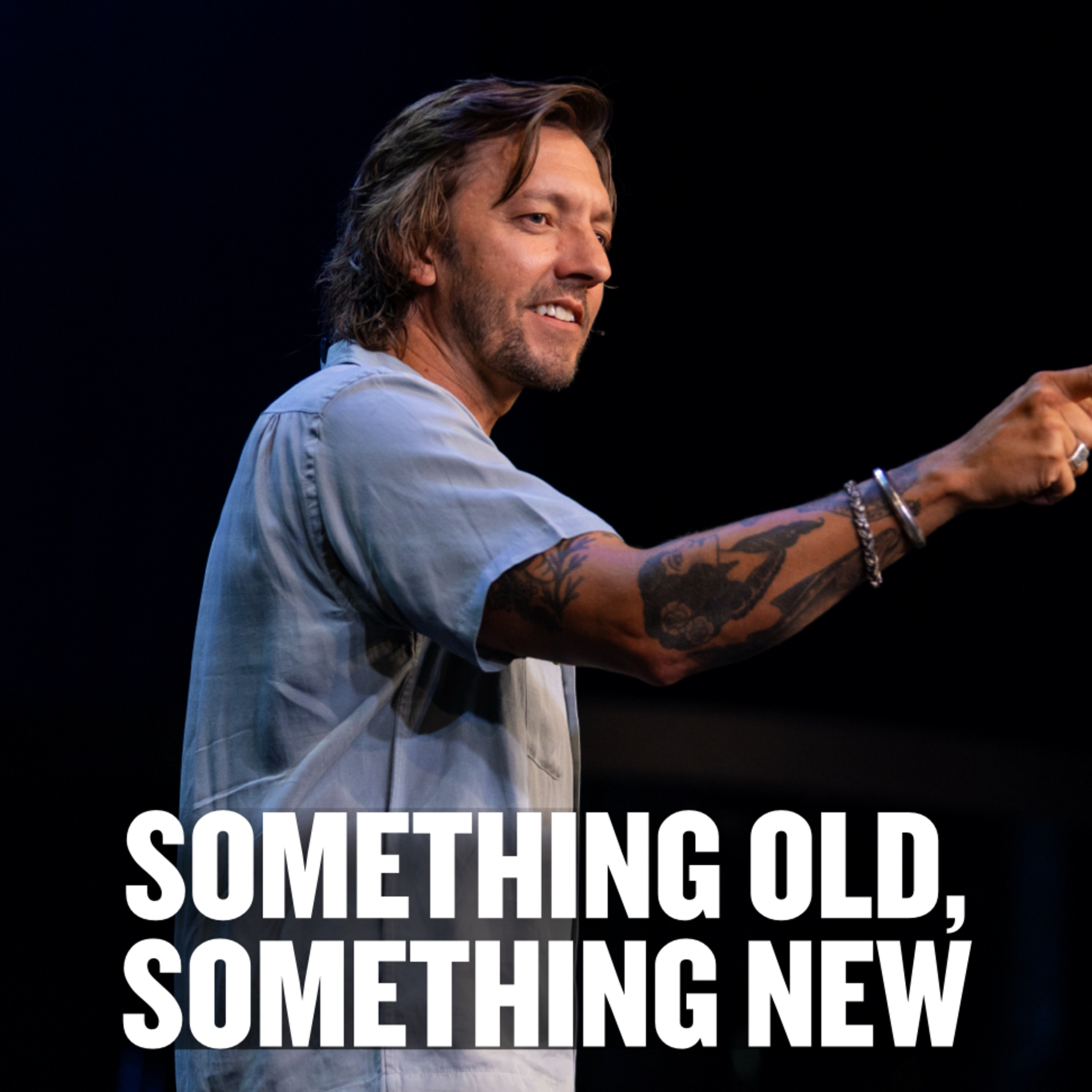
If you have a Bible, we're going to be in first John today. It's in the New Testament just before the end. If you hit Revelation, y', all, you've gone too far. Just back it up a little bit. So there's fiery red dragons and a woman and a beast chasing her, you've gone too far. Just hit left a little bit. But let's begin with a question. And the question being, how can someone know if they're saved? How can you actually know if you've been born again or if you just thought you did, if you just had some sort of emotional encounter, had 14 goosebumps, but you're not really saying, how can you know for sure if you're a Christian? What we're really asking is what does salvation look like? Because healthy things look a certain way. When a baby is born, they have the test, they give it a P, G, A R. Apgar. We once preached through that acronym and tried to use it as a tool diagnostically to find out if we'd been born again. But in case it's been a while since you were at the APGAR series and you only went to the Apgar campground, here's kind of a refresher is what we're getting. We're looking for signs of life, for spiritual life to see if we are actually alive or if we're still dead in our sins and just self deceived, which would be a real train wreck, right? I was meeting with some of our interns this week as they are beginning to head their way out. We do a summer internship every summer and we have these amazing interns come in to serve and they're able to get college credits and it's just, it's fantastic. But one of the questions they asked, because Jenny and I just try and make ourselves available to ask anything you want about anything you want to ask about him. And one of the questions that came up was when Jesus says there are going to be people who thought they were Christians all the way to the end, but then at the end, news flash, you're not. How can someone know? And I think it's a good question, an important question, and it is a question that is emphatically answered in the book of first John, God has not left us without answers. We're not left to just wonder and hope and think, maybe I'm saved. I really hope at the end of the day that I get into heaven and I don't end up in hell. And that is what John gives us. And for these eight Weeks of this book study, we're going to find these answers given to us crystal clear in no unmistakable term, without any ability to mistake it. And we're calling this collection Touch Grass because that's what the kids say when they realize they've had enough of the Internet, right? They say, it's time for me to go and touch grass. Right? You might see that in a Reddit comment, you might see it in a YouTube comment, right? Basically, it's time to quit scrolling. You need to go and interact with the real world. And that's some good advice, right? There's some good for your soul that can come from pulling weeds, from mowing the lawn, from getting some dirt on under your fingernails. And there are benefits to it beyond just the therapeutic calming that can come from anxiety when you've just spent too much time with WI fi going on, right? There's actually, they say, benefits that come from the magnetic field generated from the earth and that if you stand barefoot, not just with rubber shoes, because we know rubber insulates from electricity, that if you stand barefoot on grass first thing in the morning or at any point, I. I mean, if you Google it and go down the rabbit hole, which kind of defeats the purpose of what we're talking about, but I did it for you, so you don't have to. I'll just fill you in. They say it can help you overcome jet lag. They say it can help reset your circadian rhythm when you get to a new place. Just a little bit of time in that area with a magnetic field there, kind of adjust to that time zone. I know friends who swear by it first thing in the morning, first thing when they get off a plane. My daughter Daisy, who's in driver's ed, she was told that if you're ever feeling sleepy while driving, pull over and take your shoes off and stand barefoot. It literally can, like, wake you up a little bit when you're feeling sleepy. It was interesting to hear her say that. But you'll also find it's the cure for inflammation. Autoimmune wound repair turns you into the wolverine. I mean, just the whole deal, right? Which leads to my next point. Part of the reason we need to get outside and touch grass is because more and more, we're not sure when we read or see something if it's real, right? If it was generated by a human or by a robot, right? So it's like, I thought zebras do backflips off of high dives. I thought that sometimes deer helped themselves to the trampoline. And then did a double backflip. I'm like, wait a minute. Wait a minute. That's a little. Now I'm doubting everything. Did he say that? Was there a Coldplay concert? Are you here? Is this all a simulation? What happened to Epstein? I mean, just everything. There is no moon. Everything's just. Maybe you need to go in the backyard for a little bit, Billy. You know what I'm saying? It's just. It all goes down pretty quick. And I think this was emphatically clear to me when some friends of ours came into town. They brought their sons to movement conference. And they had never slept in a tent before. They'd never been in the great outdoors, right? And so they were getting ready for it. And one of the sons. I said, are you nervous? He goes, no, I'm so excited to touch trees. He goes, cause ever since I landed here in Montana, everything I see feels fake to me. It all feels fake. And he said I wasn't gonna believe the trees were even there until I went out and touched him. I go, how many hours of screen time are you getting a day? I turned to my friend, I said, I'm a little concerned. I'm not gonna completely lie to you. And I don't think three days will even be enough for your kids, right? They might need to. They might need to stay longer. First John was written to help us know the difference between real and fake when it comes to truth. Because you have to understand the devil is a liar, and he's been so from the beginning. So when he speaks, he speaks of his own resources. He speaks lies, and his lies are intended to steal and kill and destroy you. Right? To steal from you, to kill you and to destroy you. And when it comes to eternal life, we need to know there's also an eternal death. They're both in the Bible. And God wants the eternal life for you. The devil wants eternal death for you. And so, first, John, we open it up, and there's just power everywhere to help us to know the difference between real and fake, between truth and lie. I mean, you can't go 10ft in this book without bumping into pure gold. We love him because he first loved us. Greater is he that is in you than he that is in the world. Behold what manner of love the Father has given unto us that we could be called sons of God. All that is in the world is the lust of the flesh, lust of the eyes, the pride of life, and the absolute banger that we're going to read today. If you have sin and confess it, he's going to forgive it. How good is that? It's been called the believer's bar of soap. I mean, it is one commentary I read called First John, a masterpiece of edification, an absolute magnum opus when it comes to edifying the church. And I'm calling this first of eight messages that I'm going to preach consecutively by God's grace, something old, something new. There's nothing borrowed, nothing blue. Don't worry, we're not going full down the aisle. Full send down the aisle. But that is really a theme and a flavor to this, not only both in the fact that we as believers, if we are believers, are a part of the bride of Christ and hopefully we will make it to the marriage supper of the Lamb. That there is a homesickness for heaven and we do long for what is promised to us there in God's presence. But also that is a part of John's strategy of helping us to deal with things that are presented to us that are new truths by looking back and referencing back the old ones. Here's a really important phrase. It's been attributed to Charles Spurgeon, but lots of different people have said it over the years. When it comes to theology, if it's true, it's not new, and if it's new, it's not true. I need you to hear that. I need you to let that sink in. So what John's going to do with a church audience that's confused by new truths they're hearing that are different than what they had originally been preached and originally were given from the apostles. Right. God, who in pastime spoke to the fathers through the prophets, has now in these last days spoken to us through his son, Jesus Christ. You could say that at Christmas, God had something to say, the word of God, and it's the last word on it. And so it was given to us then through the apostles, preserved for us by God's spirit in the New Testament. And what we have is an old truth that doesn't need updating, that doesn't need changing. And with an ever changing culture, an ever changing world, we don't need to like go find a new playbook. Because not only does the Bible speak to the days that we're living in, I mean, hello, there's a verse in the Old Testament says that in the last days knowledge will abound and men will run to and fro on the earth. If that's not a well crafted description of this age we're living in, knowledge Supposed is abounding. People are able to run to and fro on the earth. It called out jet travel and AI before they even were a thing. And what we need to deal with our ever changing world is the unchanging truth from God's word. And that's what we find in Scripture to anchor our hearts. Not going to find in one John a new thing. We're going to find an old thing. That is the only thing that can help us with everything we're presented with in this life. Let's read the first 10 verses together. That which was from the beginning, which we have heard, which we have seen with our eyes, which we have looked upon and our hands have handled concerning the capital W, Word of life, the life was manifested and we have seen and bear witness and declare to you that eternal life which was with the Father and was manifested to us. That which we have seen and heard, we declare to you that you also may have fellowship with us. And. And truly our fellowship is with the Father and therefore with His Son, Jesus Christ. And these things we write to you that your joy may be full. This is the message. Someone say this is the message which we have heard from the beginning and declare to you that God is light and in him is no darkness at all. If we say we have fellowship with him and walk in darkness, we lie and do not practice the truth. But if we walk in the light as he is in the light, we have fellowship with one another. And the blood of Jesus Christ, His Son, cleanses us from all sin. If we say that we have no sin, whack. Right. We deceive ourselves and the truth is not in us if we confess our sins. This is that believer's bar of soap I was telling you about. He is faithful and just to forgive us our sins and cleanse us from all unrighteousness. If we say that we have not sinned, we make him a liar and his word is not in us. Thank you God for your word. What? We just read the first chapter. The first ten verses of this book is essentially the book in miniature. Now to understand that, let me back up. Out of all the 66 books of the Bible, first, John is very unique for a number of reasons. One is it is written by the oldest person who at the time they wrote a New Testament book, penned it. The author is pushing as many as 95 years of life, which is amazing. Go John. Right. That's incredible. The year is 95 A.D. give or take a few years in either direction. So it's the end of the first century. So to anchor that in your mind, Jesus Christ died and rose somewhere around 33 AD a few years, give or take, on other side. And now it's only some 60 years later that this book is being written. And it is one of, if not the last book of the New Testament to be written. The one with the pen in his hand is John. The same John, who in his youth was nicknamed a son of Thunder by Jesus and was one of the two who were called Boanerges, him and his brother James. They were not only apostles, but they were two of the inner circle, which was Peter, James and John, who didn't just get to see Jesus's ministry. They had a front row seat, bro. They got to go with him to the stuff that even the other disciples couldn't go to. They were invited in for the raising of Jairus daughter. They were invited up on the Mount of Transfiguration. They were taken, of course, in the depths of the garden while Jesus was in the throes of his grief on the night before the cross. And at this moment, John the beloved. That was his own nickname for himself, by the way he called himself, not John. He called himself the one Jesus loves, right? Which you can hate on him for, or you can realize it's true of you too. You are for him. The most important thing in this world was he loves me. And he ran that up the flagpole. Higher than I got to be an apostle, higher than I'm the one in the inner circle, higher than I'm a Son of thunder trademark, you know what I'm saying? Like he lived his life to the end, just blown away that God would love him. And he had seen a lot in the last 60 years. He is the last, at this moment, living apostle. Think of it. That means over the last 60 years he had to attend or be aware of 12 apostolic funerals, starting in Acts chapter 12 with the death of his brother, killed by Herod, the first apostle to be martyred for his faith. But he had to grieve the loss of Matthew, Thomas, James the Less. Even Peter has died AD 64 or 5 outside of Rome, according to tradition, crucified upside down. I mean, to think about how close John and Peter were. And for him to get the news that Peter, who he John beat to the tomb on Easter morning, beating him home to heaven. Even most recently, he had to deal with the newest 12th apostle's death. Because the old 12th apostle died pretty badly, right around the crucifixion. And the one who God Picked. No one saw it coming. Right. The one who called himself an apostle, born outside of time. Like he can't believe he won the lottery and got to be an apostle because he hated Jesus more than anybody was the Apostle Paul, who we believe died around 67 A.D. under Nero's persecution. Beheaded, not crucified, because he was a Roman citizen outside the city of Rome as well. And it is believed that both Paul and Peter for a time occupied the same jail cell at different points of time. And they'll take you there today. I mean, you can go. It's right by the Forum in Rome. We went there when we took our. Our most recent church history tour, floating through the Mediterranean and teaching the Bible along the way. We stood in that cell and sang worship songs as a family, thinking about the import of what took place inside that dungeon. And John had to weather all of those storms of grief, sorrow upon sorrow. And it's come to the end because for the past 20 or so years, ever since Thomas was martyred in India, he's been the last apostle who could vouch for the resurrection personally and all of the events prior to it. I mean, John is the only apostle that we know of who actually made it to the cross. Others might have come, but we know for a fact he was there. How? Because Jesus spoke to him and said, please take care of my mama. And John did, for the rest of his life, or the rest of Mary's life, we should say he would not let her out of his sight. He took so seriously the last instruction Jesus gave him, half to pause right here and say, church half. How are we doing at taking seriously the last instruction that Jesus gave to us? Because it wasn't take care of my mom. It was go to the whole world and preach the gospel to every creature. Last time I checked, it is the thing the church should be occupied with at this moment. Until Christ returns, there's nothing more important. And John, we are told, brought Mary with him during his stint pastoring in Ephesus, the same city that Paul previously had written his Epistle of the Ephesians to. John was a part of the relay race of faith of amazing pastors who led the church in Ephesus after Paul the Apostle pastored it, planting it, pastored it longer than any other church, and then eventually knew he had to leave it, but not before prophesying acts, chapter 20, that after his departure. Savage wolves. This is verse 29. Will come in among you, not sparing the flock. What was he referring to? He was referring to people coming into the church that had sprouted up and planting lies, confusing the church, sowing tares among the wheat, trying to create goats among the sheep. And John, along with Timothy, along with polycarp. I mean, heck, when you go to Ephesus today, they tell you, we believe. We can't say definitively, we believe Mary died and is buried somewhere here in Ephesus. Well, what a crazy thing to think about. The one entrusted with the task of bringing Jesus into the world buried there in Ephesus. And she. I mean, could you imagine showing up in church and Mary sitting in the third row? I mean, let's put her in the front row at least. I mean, goodness gracious, she's amen, right? The sermon, she's amening him. What a crazy thought. And how wild is it to think that by the time John would be given a letter from Jesus to hand to the church at Ephesus, it was that church that was told you have left your first love with a church started by Paul, a church pastored by Timothy, a church at one point attended by Mary, a church at the helm was John, the disciple that Jesus loves. And yet even they could lose their love. You're crazy if you don't think it could happen to you, if you don't think your love could run cold, run lukewarm. What we know is that Satan, who spends a lot of the Book of Acts attacking the church from the outside, has now gone around to the back door and entered it and is trying to defile it from the inside. Because that's Satan's modus operandi. If he can't get you one way, he'll go another way. So if he can't beat you, he'll try to join you, right? If he can't get you as the big bad wolf that he is, he'll deceive you by dressing up as an angel of light and pretending that he is a pastor with a good word and a good message. And he'll be that wolf in sheep's clothing. And the form that it's taking, we call it today, New Age. There's nothing new about it. It's this mysticism mixed together with Eastern spirituality and a little bit of Christianity. And you'll hear it commonly referred to as Gnosticism, which is a play off of the Greek word gnosco or knowledge. And that's, by the way, not for nothing why John will use the word know or to know or knowledge 30 times in the book of 1 John. He never names it specifically, but it's Very clear to those who are reading it what exactly he's talking about and will be made clear to us as well. Now, it's not just straight up Gnosticism. There's variants as well, Cerinthianism as well as Doism, which we'll talk about these. We'll talk about them as they're specifically brought up and what they posited and how they were remedied by, by John as the weeks go. And you're not going to want to miss a week of this series, but just like it did in Colossi, which is why in large part Paul. Paul wrote the book of Colossians. We know it was a problem in and around Ephesus, around the seven churches in Asia Minor that composed those clusters of churches. And they were spreading confusion with things like, Jesus didn't really come in the flesh. The Incarnation isn't what you think it is. He came, yes, but he came more metaphorically, metaphysically, more spiritually. There was actually no physical body. It denied in large part the deity of Christ, the nature of sin, the church's needed response to sin. They would tell people things like, Jesus didn't have a physical body. You could see him but not touch him. And so whenever he walked in the ground, he didn't leave any footprints. Isn't that interesting, that Christ was a spirit that sort of came upon him at baptism, left him right before the cross, that Jesus didn't actually have to physically die, he didn't actually bleed. This is what was being disseminated in the small groups of the churches. Don't worry about all this stuff. You don't need to believe. Here's the real truth, here's the new knowledge, here's the update. That stuff Peter and Paul preached, that's great for their day back when dinosaurs ruled the earth. And we believe, you know, the JFK died by a lone shooter. But now, let me tell you the real deal. Let me tell you. Let me take you to the grassy knoll and tell you about how it really. The deeper truths of Christianity and John at the age of 95. And we all know you live that long, you are going to shoot straight. You are just going to call. You're not messing around, you're not impressing anybody. He raises his hand and goes, hey. No. Saw him, heard him, handled him, and can confirm when Jesus walked around, his feet touched grass, Right? Which is why as we began this passage, he's like, was with him, ate with him, touched him, can verify, bro. Hugged him all the time, got corrected by him that he gave me a noogie, right? Like in the Chosen, we chicken fight it in the water. Like some of these scenes. This is. This is a Jesus you could touch, a Jesus you could handle. John says, I was at the cross when blood and water ran out of his heart. Don't tell me what I saw and didn't see. It's flashed on me. Ghosts don't have bones. Ghosts don't have skin. Ghosts don't have muscle. I was invited to put my hand into the hole in his side. When he showed up after the resurrection, he got to be there. He got to take care of Jesus, Mom. Now, John doesn't tell us outright that he wrote the book. In fact, as you read it, his name's never in it. And I love that because once again, for John, it wasn't about John. For John, it was about Jesus. So classic John that he's just blown away by Jesus Love doesn't talk about himself using his own name. So question, how do we know he wrote it? Well, it's a great, great question. Three things. Number one, he's the only apostle who could have written it when it was written. He's the only one with that eyewitness, firsthand knowledge to be an apostle. There was verifications that had to take place. That's how. That's why one of the reasons why it was so important that Paul had met Jesus on the road, because you had to have eyewitness account of the resurrection. Paul got to see Jesus on the road to Emmaus. John got to see Jesus. So he's the only living apostle. So that's one. Number two, all of church history, every voice from church history, Eusebius and Tertullian and Origen and Polycarp and all of these church fathers, they all refer back to and quote from first John and reference it as being the source material, all belonging to John. And then thirdly, the content just lines up. The unique words to how he writes his gospel specifically are all words from his palette that he likes to pull from. So it all lines up with him. And really, honestly, John's trademark is that when he goes to write something, it's just different. He's just artsy. That's the only way I can really say it, right? He's artsy. Now, some have said that the four gospels, right, because he wrote one of the four gospels, the one bearing his name, John can all be compared to the creatures who worship God in Revelation 4, because you have an angel who has a face like a lion, a Face like an ox, A face like a man. And the fourth like a. An eagle. Okay, stay with me. Many have said it's interesting that they line up with the four Gospels because each of the four gospels were written with a different purpose. And Matthew wrote to present Jesus as the lion of the tribe of Judah to a Jewish audience. So there's a face like a lion. Mark wrote to present Jesus as the suffering servant who laid down his life for the people like a sacrificial ox. The creature with a face like an ox. Luke presents Jesus as the perfect son of man. Luke, the medical doctor, has a knowledge of the human body. His favorite descriptor of Jesus is son of man. And so the third with a face like a man. But John has been called the soaring gospel who wrote to present Jesus for the whole world to be seen and celebrated as the son of God. And it's been called the Gospel of On Eagle's Wings. Even as there is one representing Jesus in heaven, worshiping Jesus in heaven. The creature who has the face like an eagle. Why? Because they're all praising him for these different parts of him. Each different gospel was focusing on a different aspect of who Jesus is, which is he. He is the Son of man. He is the Son of God. He is the suffering servant. And he does roar like a lion. He is the first and the last. He is the alpha and the Omega. He is the one who was dead and does live evermore. Hello. It's pretty cool. So John writes like an eagle. John's the only one who can fly. John, he's just different. John, as he writes, he's not going to do what Matthew, Mark, and Luke all do, because that's already been done. And they're all pretty similar in their content, similar in their pacing, similar in their structure. That's why they're called the synoptics. Optic one. Optic, Synoptic one. View. Matthew, Mark and Luke, you're going to establish the cadence, right? Mark's a little briefer because we believe most of the source material came from Peter. And he don't got time for all the details. He's just on to the next thing. And so Mark's more dynamic and more explosive because Peter doesn't have time to mess around. But for the most part, Matthew, Mark, and Luke, you're going to find pretty similar cadence. Not John right out the gate. We know it's different because everybody starts with Christmas, but John's like, whatever. Who? Right. I'm just gonna jump all the way back to Genesis and start with Creation in the beginning was the word of the word, God. The Word was God, right? We're like, okay, this is a different thing. We are onto some poetic, abstract retelling of how God created the heavens and the earth and he was with God and he was God and he's the light. So now we're like, okay, so it's artsy now. And even with what he chooses to cover, he tells you right away, I'm not gonna try and get all that exhaustive account of what he did. You can read Matthew for that. He was a tax collector. He was, you know, writing. It's been done. In fact, he said, kind of throwing a little shade. He's like, all the books in the world couldn't get it down. If he tried to do all that, he said. So I. He's more like spiritually, like a Banksy. It's more of an art exhibit. How he approaches it, how he crafts it. He takes all the material he could, but he choose. I'm gonna focus on seven signs. I'm gonna focus on seven I am statements. I'm gonna choose to start with the turning of water. In a way, I'm going to end here. You're going to realize, oh, my gosh, this is like a Christopher Nolan film. Like, it's backwards. I can watch it forwards. I see different things. Like, John is just like that. And if you want to see that on steroids, read the Book of Revelation, also penned by John. He is just the Sevens kind of everywhere. There's meaning to things and it's fashioned different, right? So where you read a letter written by Paul and you're going to find such structure that it's like it outlines itself. It starts with this here, and it's going to move on to this here. And under this one we have A, B, C, D. Like, I got it, I'm learning it. And John. It's more like they say, watching an artist with a song, where you're going to have verse and then you're going to jump to the chorus or maybe the pre chorus. Then you're going to hit the bridge sometimes 90 times, and then we're going to jump back to the chorus and then maybe there's an outro and we're going to end with the verse again. And that's kind of how he thinks. So it's not one, then ABCD 2 ABCD for John, it's like 1-144-3142 unseen, right? You're like, what just happened? I just saw something. I just felt Something. You took me on a journey, bro. Cause he's the eagle. He's the gospel on eagle's wings. And now he's writing an epistle. So instead of it being linear and logical, it. Almost every commentary you will find presents itself the material as a spiral. The book of first John is spiraling. And I thought, how good that God would guide us straight into spiraling, because we got some more blessing to find in spirals. Amen. So what are you gonna do this? God is life. God is light. There's forgiveness of sins. Here's how to think about the incarnation. Here's how to think about the Godhead of Jesus. Here's how to think about the relationship with the father, what fellowship looks like. Little children, little fathers, everybody. All y' all old ladies, little babies. We're just spiraling around. So literally the entire book is in miniature in chapter one. Because every one of those themes he's going to revisit with a different perspective from a different vantage point. An eagle, spiraling, spiraling eagle. And then I stopped touching grass and got on the algorithm. And somehow it knew what I was studying, because I saw this. This is apparently how eagles approach courtship. I don't know if you know the eagles spiral in courtship. This is what they do. They grab ahold of each other's talons to see if they're right for each other, and they spiral. Apparently, they don't always pull out in time, and sometimes they hit the ground, but most times they'll know they're right when they can. They can have the guts to stay on long enough and then right at the end, break off. And I saw that and thought, that's why he wrote this book, because they do this in courtship. And John the beloved wants to present us faultless before the Lord as a pure bride without fault, without. Without blemish, without doctrinal impurity, without immorality, without sinful living. Come on. John is spiraling with us through this book. Why? To present us a pure bride. This is a courtship book. This is about us falling more madly in love with Jesus. What are the felt needs if I got sin in my life? He's gonna help us spiral to holiness. If I got doubt about it, he's gonna help us spiral to belief. If I'm wondering if I'm truly a Christian, he's gonna help us to have confidence and assurance that we can know him. He's gonna spiral. He's gonna grab ahold of your talent and spiral you up to right living in Jesus Christ and not through new stuff, through old stuff that's gonna help us to make sense of new things. We don't need the secret knowledge. We have something true from the beginning, something that was true at creation and before creation, because in the beginning was the Word. The Word was with God, and the Word was God. That's what John starts with. This Micah 5:2 tells us about Jesus. His goings forth are from of old, even from everlasting. What were you doing before you were conceived? Jesus was doing stuff that's crazy. He's going forth. He's going forth from of old. Even prior to his birth, even prior to creation, he still was. Was. He's the ancient of days. He will always be. And so the truth about him will always be relevant to the situation we're facing. We only think there's new things under the sun. We only think no one's ever lived in a time as crazy as the time we're living in. Therefore, we must need some new teaching, some new guru, some new help, some new crystal, some new way, some new age that we can be ushered into. But there's nothing new under the sun. That's true with theology. That's even true with fashion. Phil was wearing bell bottoms. That's back again, apparently. Didn't know. Apparently. That's back again. Here it is. Here it is now again, right? I was on the Internet the other day and came across this clip. Made me laugh so hard. Teenagers say these days. They say it's broccoli. They say it's the perm. They say it's the. There's nothing new under the sun. You see what I'm saying? Like, oh, I got this new idea. Grandma's, like, been doing it for a hot minute, right? And so it is, when it comes to the enemy's attempts, some of you are rocking that cut. I see you out there. I see you. I see you both young and old. And so it is when it comes to the enemy's attempts to get us to believe the lie, that truth is subjective. And one of the reasons that we are given this book is for us to know that truth is objective. This is not popular. It's not fashionable in an age where we should be able to believe whatever we want to do. You know, the difference is subjective versus objective. Is something true to you or is something true, period? Okay, so warmth. If I said, hey, it's feels a little hot in here, right? That's subjective. So to me, yeah, it does, because I'm doing a cardiovascular thing called preaching, and some of you Might agree with me, but my wife's not going to be on that list. Never warm enough for her. She wants our bed like the surface of the sun, right? The sleeping temperature in our room. And I'm always hot, right? And so that's a subjective question. Is it hot in here? But you know what's not a subjective question? What's the capital of New York? And you're like, albany. Someone else is like, well, I don't think it should be. I think it should be New York City. Greatest city on earth. City so great they named it twice. Used to be the capital of the United States. True story. Before Philadelphia and then eventually Washington dc. But is it the capital of New York? No. Albany is. And I don't care if you agree with that. I don't care if that makes you feel good. I don't care if you would prefer to live in a world where Albany was not the capital, because who cares about Albany? And you want Manhattan to be the center of New York as the capital. But let me tell you something. It's objectively true that New York City is not the capital of New York. And that's not unloving. What would be unloving is just to say, well, you seem sincere. So let's just support that. Let's just get with that, let's just encourage that, let's just coddle that. Like just run around in front of it. Just so you know, they think it's not Albany. Just. Just go with it. Right? That's unloving. Because you can be sincere and hear me, you can be sincerely wrong. And wanting something to be true does not make it true. And what John is writing is about objective truth. You might feel this, you might have been told that, you might not like it. We could wish we live in a universe in a world where that wasn't the case. But. But he's saying the truth is not just what's presented in scripture. The truth is a person. His name is Jesus. He is the way. He is the truth. He is the life. And there is no life outside of him. So he who does not have the Son does not have life. And he who has the Son does have life. This is the truth, like it or not, accept it or not, agree with it or not, as presented by someone who had dinner with Jesus the night before he died, leaned on his breast, and then got to eat with him post resurrection, and with his own eyes saw him ascend to heaven. We were at the launch of a space shuttle once, a spacecraft once, and my Son just. He was so little. He just was like. I see it with my own eyes. It's like fire in the sky. I can see it with my own eyes. I just kept hearing his voice as I was reading one John this week. John's like God, he's just shaking us by the shoulders, going, I saw it with my own eyes. He's coming back like fire in the sky. He's coming for a pure bride. Love him, be loved by him. Nothing else matters. So we'll keep spiraling next week, same time, same place. But as we wind down this moment and in a second we will sing and proclaim the song of the saints. Let me first just give you five quick takeaway truths, five things you need to know today. You could jot them down. We'll come back to these again and again and again. Wrong believing leads to wrong living. Don't let anybody tell you what you believe doesn't matter as long as you're kind. What you believe doesn't matter as long as you are sincere. No, listen, a big reason the enemy wants to get you to incorrect believing or incorrect thinking is because he knows downstream it will lead to immoral living. Read Romans 1. What we believe or do not believe about God always downstream in our life leads to polluted life. And a lot of times when we stop believing certain things because they're inconvenient and it's simply because we would prefer the immorality of morality, we could choose in our own adventure if there wasn't a God who gets to tell us exactly how he wants us to live. It's because we want to stick with my will be done and not end up with thy will be done. So wrong believing matters. Number two, this is so important. Your joy, hear me, can be fuller than it is right now. Your joy, I don't care what level it's at, can be fuller and can get filled up even through these words. You should be here each week. Why your joy is not full enough yet? Because John said, and this is so important to see, he wrote verse four, this book, that your joy may be full, all the way full. And if today your joy tank is not as full as it can be, which is completely and totally full, which is true for all of us. And until we are in the presence of God, where there is fullness of and at his right hand pleasures evermore, there is a need for a fresh fill up because we leak and we live in a leaky world trying to put stuff in our joy tank. So your joy can today Believe in Jesus name can get filled up more. And how is it going to happen? Through fellowship with the Father, through his Son, Jesus. The light of God seen in the face of his Son, Jesus Christ. Well, I wish it could be in any other way. You don't get to pick. You don't get to choose how you experience the joy of God. If you want the joy deep down, it comes through the Son because the Father has chosen to set his glory upon him. But good news today, you can touch him, you can know him in his presence. Is that joy through his spirit? Jesus said, it's even better through the Spirit's filling coming upon you, being in you, being with you, than if I was there physically walking around in the room with you. So today that joy is an invitation on the table. Number three. Because he came in a body, we can be forgiven for what we do in ours. That's good news. The incarnation matters. We're gonna talk about it. Why does it matter? Okay, maybe he was spirit, maybe he wasn't. Maybe he left footprints, maybe he didn't. It matters because if he didn't come in a body, you have no hope for what happens in yours. When I stand at my daughter's grave, when you face grievous sin in your life, the only hope for what's done in bodies, for what happens to bodies, for graves not getting the last word, is what happened in his body. And forgiveness is on the table. Because if we confess our sins, he is faithful and just to forgive us and cleanse us from all unrighteousness. Didn't say some unrighteousness. All Corrie Ten Boom said, there is no pit so deep that he is not deeper still. He'll forgive you today. He'll change you today. But know this. You can only be clean if you come clean. Confession is the only way to wholeness. So it must get out before him. You must put your hand upon his head like those in the Old Testament putting their hands upon the bull, upon the goat, upon the lamb, upon the dove, upon. For Jesus is the Lamb of God slain before the foundation for the sins of the world. And there is no path to wholeness in heaven outside of him. Number four. Growing in joy is not possible by yourself. Growing in joy is not possible by yourself. Let's bring the keys up now as we wind down. Growing in joy is not something you can do in a solitary pursuit. That's popular today. I love God. I love Jesus, but don't like the church so much. Maybe there's hurt, Maybe I haven't found the right one. My big joke is if you ever find a perfect church, don't join it. You'll break it, right? So agreed that there is not going to be a perfect church. And as a result, a lot of us want to just practice spirituality in a solitary way. I can interact with God nature. I can just watch a little church online. I can just, you know, I don't need people, I don't need community. I don't need to have people in my life in a way that, that can be meaningful in accountability and in encouragement and in prayer. No, listen. Growing in joy is not a solitary pursuit. Verse 3. That which we have seen and heard and declare to you that you also may have fellowship. Say it with us. Us. The Bible is full of one another's. Is your story? Is your story full of one another's? Are there God people around you encouraging you to. To wholeness? Are you just trying to have fellowship with God while neglecting the bride that he loves? You need people today. The invitation is to get in community, get into a fresh life group, to get into a group of people meeting together, studying the Bible, praying together, encouraging one another and then fifthly, and we close here. God, can I believe this? Bring beauty out of difficulty? Are you suffering today? Are you hurting today? Are there broken parts of your life today? Where there is grief, where there is sadness, where there is, where there is mourning? What do the Beatitudes say? You can see God, you can experience God, you can taste God, you can be near to God. Not in spite of the pain, but in the midst of it. This year was the anniversary of pretty significant motion picture. 1975 to 2025. We have 50 years now of do do do do do do do do do do do. Terrifying. Thank you for that. Very little. This was such a significant, significant movie. I watched an interview with Steven Spielberg around the anniversary. And for those who are still scared of open water, let's take it away now. That's enough of that. Some of you are like, that's not gonna sit well with my dreams. He was asked 50 years later, looking back, what are your thoughts? First thing he said, Spielberg said, well, I thought making that movie would ruin my career, but turns out it's where my career began. I thought it would ruin my career. It went over budget. He seemed crazy trying to bring this novel to life. It was thought to be pretty risky the way he was going to shoot it, the way it was all going to happen. And then listen to this. The shark. They made the animatronic shark they made to play Jaws named Bruce because it was his lawyer's name. So he named it Bruce. Didn't work. Every time they tried to make the shark do something in the water, it wouldn't work. So he thought making this movie would ruin his career. He said, turns out it's where my career began. Why? Because what didn't work is what made the film work. When you actually do see the animatronic shark at the very end in a few scenes, you're like, oh, totally not real. The whole movie, they had to make do with it not working. And so they never showed it. You only heard it. And turns out our imaginations make what we hear but don't see even scarier than what's really there. So the reason that film worked was not because of what you saw, it was because of what you heard that made it powerful. God today, for some people, needs you to know that what's not working in your life is there so he can work in the dysfunction, in the disappointment, in the delay. And some others of us need to know that not seeing can be even more powerful what you're not seeing, what you wish God would do. Because it's been said that if you pray and God doesn't answer it like you prayed it, it means that he wants to do something in line with what you would pray if you knew what he knows. Hear me. God's doing in your life, not what you ask for, because he's God. Praise God. We have a God who can go, I'm not going to answer that prayer because I'm going to give you instead what you would want if you knew what I know. So between now and then, let's give him a song. Let's give him the worship that he's due. So, Father, we thank you for this time of Bible study. We thank you for what you're doing in our midst. We thank you for speaking to us. And we thank you that for some, there's the invitation to step out of death into life today. Not through secret knowledge, not through initiation or ritual, not through exclusive allegiance to a club or sect, but because the sinless, spotless Son of God stepped out of heaven onto earth's stage and carried the cross to Calvary, where his blood was shed and hit the ground, and where he rose from the dead on the third day and walked the ground, touched the grass for us as a resurrected being ascending to heaven. Where you now, Jesus, are standing at the right hand of the Father, waiting and willing to welcome any and all into Your presence, who will come to you by faith. And if you're here today, and you need to give your heart to Jesus to turn from sins, to turn to him in faith so that you can know you have eternal life, you can know. If you don't know today you need to give your life to him so you can know John's gospel was written so that we would believe first. John was written so that we would know we have that eternal life. And if you haven't, today's the day to receive it, so you can have it. And then you can join in in the song of the saints. So if that's you I'm describing, and you would say, I need to, I need to get right with God, right there where you are, every location, church, online. God's spirit is moving in your heart. If you open the door of your heart, he will come in, but you need to invite him in. So if that's you I'm describing, I'm going to invite you to say a prayer with me and then I'm going to invite you to take an action step church. Say it with us. Everyone praying together, no one praying alone. Dear God, I know that I'm a sinner and I can't save myself, but thank you for sending Jesus to die for me. Thank you for the resurrection and thank you for new life. I give you mine in Jesus name. And if that's you I'm describing, you just prayed that prayer. Giving your heart to God, rededicating your life to God, perhaps having grown up in the church, but as the prodigal son having left home, I'm gonna ask that when I count to three, you would shoot your hand up in the air. Why raising my hand? Well, the Bible says that raised hands are a picture of surrendered hearts. Now, to be clear, you can raise your hand having not believed in him, but if you've believed in him, to take that step of raising your hand up will be powerful in your journey. And God will give you the strength for this step and the next step, for baptism, discipleship, all the way to glory. So when I get to three, every location, church, online, shoot your hand up. 1, 2, 3. Shoot your hands up. Shoot your hands up. God bless you. God bless you. God bless you. Come on. All across the church, we're seeing hands raised, hearts surrendered. Praise God for you. Praise God for you. Even.