← From Manager to Leader - עם טוני ערד פליק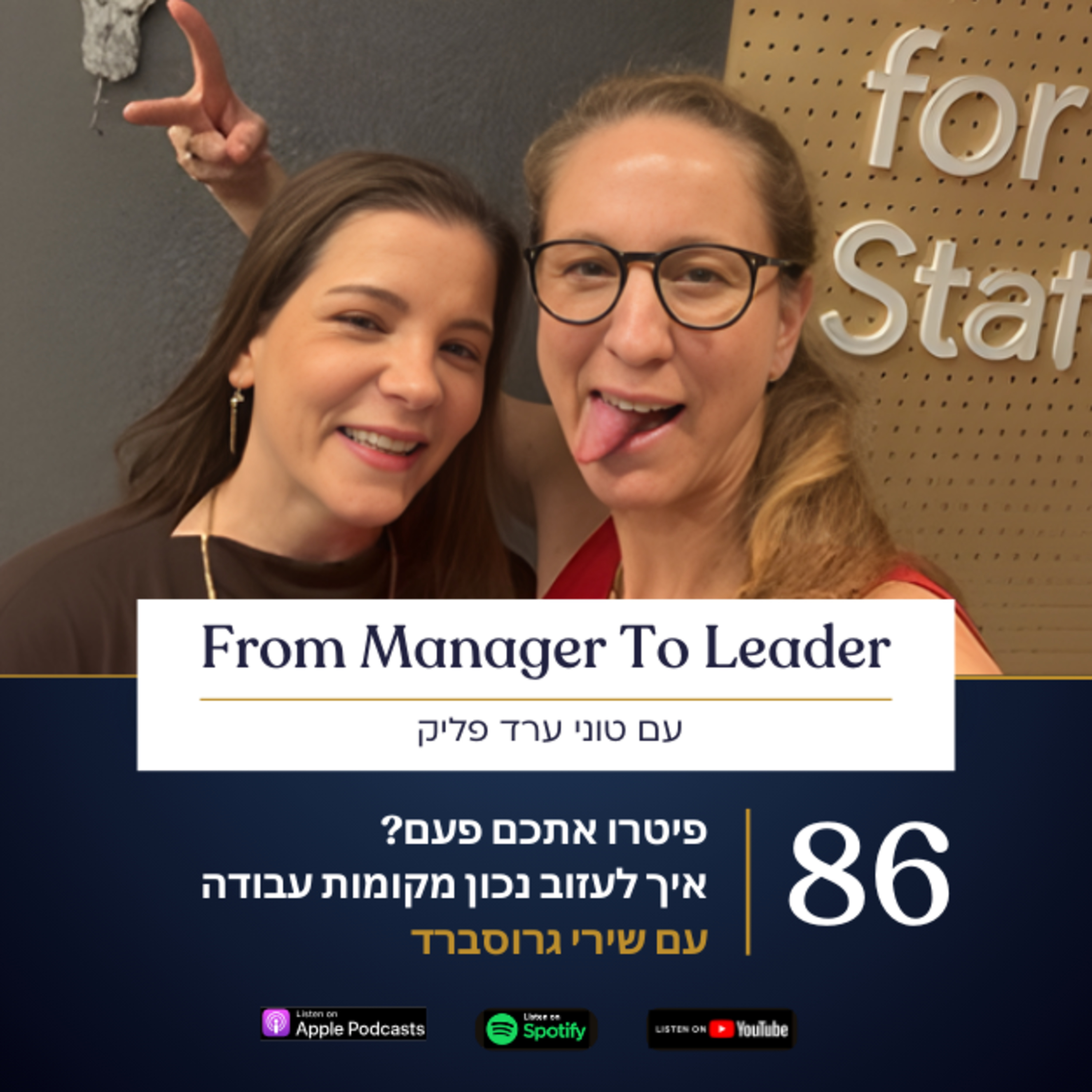
From Manager to Leader - עם טוני ערד פליק
פרק 86 - פיטרו אתכם פעם? | איך לעזוב נכון מקומות עבודה | עם שירי גרוסברד
00:44:49
Loading summary
Transcript85 lines
- [00:06]
A
היי, אתם מאזינים לפודקאסט From Manager to Leader, הפודקאסט למנהלים שרוצים לעשות את קפיצת המדרגה אל הובלת החיים, הקריירה והאנשים שלהם להצלחה והגשמה בעזרת כלים מעולמות הפיתוח, הפסיכולוגיה והתודעה. אני טוני ארד פליק, מנחת הפודקאסט הזה, מנטורית ומלווה מנהלים, מנהלת פיתוח בכירה, בהייטק מרצה ומנחת קבוצות של מכון אדלר, ובעיקר סקרנית ולמדנית נצחית. אם אתם מנהלים שרוצים להתקדם, להשפיע ולייצר הצלחות, וגם לחיות את החיים האלה בטוב, למצוא את האיזון וליהנות מהדרך, הגעתם למקום הנכון.
- [00:51]
היי מנהלים ומנהלות יקרות, אנחנו בפרק חדש של "For Manager to Leader". היום אנחנו זוכות להתארח ב-Google for Startups. באמת יש כאן אולפן מהמם, אז תודה על זה גוגל. ואיתי כאן היום שירי גרוסברד, ואנחנו נדבר על איך לעזוב נכון מקומות עבודה, גם איך אנחנו עוזבות מקומות עבודה נכון כעובדות, וגם מה אנחנו יכולות לעשות כמנהלות וכמנהלים כדי לעזור לעובדים שלנו לסיים בטוב. בסוף, בתוך השלולית הישראלית הקטנה, אז בטוב ותתפלאו, זה ממש אפשרי וזה לגמרי שלנו.
- [01:35]
אז שירי היא co-foundרת של Gcmo ואשת מיתוג מעסיק, ופעם אפילו עבדנו ביחד, עשינו איזה כיף חילוף של חודש וחצי או חודשיים באחד ממקומות העבודה, ושם נוצר... הסטארט-אפים המגניבים. שם נוצר הקשר הראשוני, ושירי, איזה כיף שאת פה איתי. תודה רבה על ההזמנה. תציגי את עצמך, תגידי כמה מילים.
- [01:57]
מציגה את עצמי כיזמת. בסוף אני חושבת שכולנו כותבות את הנרטיב של חיינו ושל הקריירה שלנו. עשיתי אותו אולי קצת אחרת, קודם הקמתי חברות, אחר כך הלכתי לעבוד בחברות קטנות, גדולות. בימים אלה מסיימת תפקיד של מיתוג מעסיק באמזון. שמחה על הזדמנות לעוד פרק.
- [02:18]
איזה כיף, איזה כיף. אז אני חושבת הפרק הזה התחיל מאיזו שיחה בינינו, אצלי זה נורא חשוב לעזוב נכון, ואני תמיד ניהלתי את התהליך הזה, ותמיד עזבתי עם mutual agreements, זאת אומרת, אף פעם לא פיטרו אותי פר אקסלאנס במובן של שימוע וכל התהליך הזה, ואני חושבת שאנחנו בעיתוי טוב בסך הכל לדבר על הדבר הזה. בדיוק בעיתוי, כן. כן, זה קורה ללא מעט אנשים היום, ונראה לי שאפשר רגע לפרק את זה ולהבין. שאפשר גם אחרת, לא חייבים לעזוב מקום עבודה בדמעות, בבכי, בייסורים, בתסכול, בפחד, חרדה ועצבים.
- [03:01]
אני אוסיף לזה, המון שנים ניהלתי סוכנות של השמה, אז יצא לי לשמוע הרבה מאוד סיפורים, נרטיבים, כי בסוף זה סיפור של אנשים שמספרים על איך הם עזבו, וזה תמיד כאב לי, כאב לי לראות אנשים, לשמוע אנשים שעשו חיל במשך שנים במקומות עבודה שלהם, מה שנקרא בפינישליין, בחודש-חודשיים האחרונים, כשזה כבר באמת בסיטואציה שהיא קשה. אין עוררין על כך, אבל לחרב את זה בסוף. ואני חושבת שכמו שדיברתי גם קודם קצת על זה שבסוף אנחנו היוצרים, אנחנו הכותבים והמחברים של הסיפור, אז גם בסיטואציה הזאתי, למרות שזה מרגיש לנו שזה לא ושאין לנו שליטה, בסוף... איך נספר את זה, איך נציג את זה, זה כן בשליטה שלנו, וזה הרבה תלוי באיך באמת ננהל ונתנהל בתוך הסיטואציה הזו. ואני אגיד גם עוד משהו אולי מעודד, שגם אנשים מאוד רמי מעלה ומנהלים מאוד מאוד בכירים, הרבה אנשים שוגים, מפשלים, נכשלים במקום הזה, ואני חושבת שאפשר לעשות אחרת, בא לי לתת ויזדם.
- [04:11]
בא לי באמת שיצאו מכאן עם כמה טיפים לאיך לנהל את זה אחרת. לגמרי, ואני חושבת שהפרק הזה הוא באמת הוכחה מאוד מאוד פרקטית לזה שאנחנו יוצרי המציאות של החיים שלנו ואנחנו קמים בבוקר על הסיפורים שאנחנו מספרים לעצמנו. וגם כשהסיפור הוא מורכב וקשה, וגם כשיש פגיעה, זו באמת סיטואציה קשה, אין כאן מכבסה של להגיד זה סבבה, זה לא סבבה, אבל בתוך זה יש לנו הרבה בחירה. ואני חושבת שזה איזה אלמנט שבתוך הטרללת של החיים שלנו, יש לנו נטייה לפעמים לשכוח, ואנחנו נותנים המון המון המון כוח לאנשים אחרים על התודעה שלנו, על המצב רוח שלנו, על החוויות שלנו, ואף אחד לא בא להציל אותנו, אלה באמת החיים שלנו. אז בואו נבין, אפילו בסיטואציה שהיא מורכבת מאוד רגשית, ויכולה להיות טראומטית אפילו, יכולה להיות באמת קשה מאוד.
- [05:05]
היא טראומטית מאוד. איך אנחנו יכולות להתנהל בתוך הדבר הזה. אז בואי שנייה נפרק את הרגע הזה, בסדר? ונסביר למה הוא כל כך טעון. אז אני אגיד על זה רק שתי מילים ואז אני אתן לך...
- [05:19]
מקום העבודה שלנו והקריירה שלנו זה המקום שבו אנחנו מביאים את עצמנו לידי ביטוי בעולם. זה הפלייגראונד של החיים שלנו. שם אנחנו פוגשים למידה והתפתחות ונושאים. ואתגרים והזדמנויות והמון המון המון את המסוגלות שלנו ואת מה אנחנו מסוגלים לעשות בעולם וזה גם מקום לשתף פעולה וגם מקום ללמוד מאחרים ולקבל המון השראה ופימפמו לנו הרבה מאוד שנים שמשפחה היא עבודה, סליחה עבודה עם משפחה. איזה תמה נוראית.
- [05:51]
וזו תמה נוראית ומי שעוד לא התעורר מהדבר הזה אני ממש ממש ממש ממליצה לכם... פה יוצא לי המיתוג מעסיק ונבר, נבר לדבר בעולמות של עבודה והמקום הזה הוא כמו משפחה. לא, אין משפחה. אנחנו לא מפטרים את בני המשפחה שלנו. משפחה זה בבית.
- [06:07]
משפחה זה בבית, זה לא בעבודה. גם במקומות שיש בהם חדרי כושר פדיקוריסטית וכל מה שיש, זה לא בית, חברים. הבית הוא בבית. נכון. אבל אני חושבת שההיקשרות הרגשית...
- [06:21]
היא מאוד מאוד אמיתית, כי שם היצירה שלנו, ושם היצירתיות והחדשנות, והמקום של הביטחון העצמי שלנו, ושם אנחנו מביאים את עצמנו לידי ביטוי. אז כשהחוויה הזאת מסתיימת והיא לא מתוך הבחירה שלנו, אז לא סתם אנחנו מרגישים ששמטו לנו את השטיח מתחת לרגליים. זה מקום אמנוציונלי מאוד קשה. בסוף באים ואומרים, שומעת כל מה שאת נותנת, אנחנו לא רוצים אותו. וכל החברים שלך.
- [06:48]
הם כבר לא חלק מהיום-יום שלך. וגם בחרנו בך, מכולם, להגיד לך ביי. בואי, איך שאנחנו לא מסתכלות על זה, זו סיטואציה קשה. והבעיה היא שבגלל שהיא סיטואציה כל כך קשה ואמוציונלית, אז אנחנו גם פועלות מתוך המקום הזה, וזה אולי אחד הרגעים שהכי הכי שווה לא לפעול. עכשיו, אני יודעת שאני מעלה פה איזשהו פרדוקס, כי אני מצד אחד אומרת, זה הכי הכי אמוציונלי וקשה, וזה בדיוק המקום שבו אסור.
- [07:15]
להיות במקומות האלה, אני כן אגיד שזה אפשרי. ואולי, את יודעת, את כבר כירוכנית, אבל המקום הכי הכי נכון זה רגע לנשום. רגע לנשום, והנה אני אקח אותנו 100 אלף רגל ואז אני אוריד אותנו, רגע לנשום ולדעת שפיטורין זה חלק מהחיים בעולם העבודה. אני לא מכירה, את מכירה מישהו שאף פעם לא פיטרו אותו? לא.
- [07:39]
אוקיי, אני לא מכירה, את מכירה מנהל שאף פעם לא יצא לו לפטר? לא. אוקיי, זה חלק מהעולם, אם זה לא קרה לכם עד עכשיו, אני מצטערת, היות זאתי שואלת אותך, זה גם יקרה לכם מתישהו. אז קודם כל רגע לנשום ולהגיד, אה, אוקיי, הנה החוויה הזאתי שעכשיו אני נפגשת איתה פעם ראשונה. כן, קצת לנרמל את זה, כי זה פשוט חלק מהחוויה.
- [07:58]
זה לא קצת, זה באמת לנרמל, כי כמו שאמרת, אנחנו שתינו מסתובבות בעולם הזה כבר הרבה שנים, זה קורה וזה יקרה, אז רגע לנשום ולהגיד, אוקיי. אז עכשיו זה קורה לי, איך אני לוקחת את אותו רגע אמוציונלי וקשה, הרבה אנשים גם מדברים על חוויה של השפלה. אז קודם כל אני אומרת, אפשר גם להוציא את המילים האלה מהנרטיב, מדובר בחוויה די בנאלית בעולם התעסוקה והקריירה, בכל יום אנשים מפוטרים, הנה, עכשיו זה גם פוגש אותך, בוא לא נכניס לזה את המילים הקשות האלה. הפרשנות הזאת, שהיא פרשנות שנורא מורידה אותנו בתוך הסיטואציה, היא נורא מסנדלת אותנו כשאני מספרת לעצמי שהשפילו אותי, הרי יש כל כך הרבה שיקולים וכל כך הרבה, בסוף יגידו לי זה לא אישי, אני לא מסכימה, אני חושבת שהכל אישי בעולם, הכל הכל הכל אישי בעולם, בסוף פיטרו אותי, אז זה אישי, בסדר? ועדיין יש לי בחירה, ועדיין אני לא חייבת לספר לעצמי סיפור של השפלה, יכול להיות שזה השיקולים הכלכליים, יכול להיות שהחברה עושה פיבוט, שאני רוקסטארית בו הוא קצת פחות רלוונטי ועושים פיווט לאזור אחר, כאילו קצת...
- [09:15]
אני רגע אראה ואגיד, נכון, וגם יכול להיות שזה כן את. וכאן זה המקום שבאמת מאוד מאוד קשה לאנשים. יכול להיות שזה באמת כרגע פיטורים של צמצומים, זה באמת קצת עניין אחר, מחליטים, לפעמים זה יכול להיות ממש איזשהו גרף כזה, ואת כן בחתך, לא בחתך, אבל גם יכול להיות שבאמת הביצועים שלך ביחס... למקום שבו את נמצאת כרגע. זה לא המקום שמציעים כרגע, לגמרי.
- [09:40]
וגם את זה צריך להגיד, וגם עם זה צריך להתמודד. אגב, להרבה אנשים נורא קשה דווקא, אפילו פחות עם עצמם, אלא בטלפון לאחרים, בכל הסדרות האמריקאיות, שהוא לא מספר לאשתו שהוא לא עובד כרגע, ויוצא כל יום לפארק וחוזר בזה, כי רק המקום הזה של שיחת טלפון של להגיד, שומעת, פיטרו אותי. גם אפשר להגיד, שומעת? קרה גם לי, אוקיי? מפטרים אותי, זה הסיטואציה כרגע.
- [10:05]
עכשיו אני רוצה שרגע נדבר באמת על... בסוף כאילו, תמיד יש בפודקאסטים מדברים כזה גבוהה-גבוהה, ואני רוצה רגע להוריד את זה ולהגיד, אוקיי, אתם היום נמצאים בסיטואציה הזו, יש כמה דברים מאוד מאוד פרקטיים שאפשר לעשות כבר עכשיו. יאללה. אחד, להגיד לעצמנו, אוקיי, זה פגש גם אותי, אני לא מכיר מישהו שזה לא קרה לו, רגע, תנשמו. מזל טוב, חוויה די בנאלית מגיעה אליכם.
- [10:30]
שתיים, יש משהו בחוק הישראלי שאנשים כמעט לא נותנים לו את הדעת בכל שימוע, שימוע שזה בעצם התהליך שבו יספרו לך מדוע בחרו לפטר רק אותך, השימוע זה המקום שבו שומעים אותי ואת הטענות שלי. אני אגיד, מעטים הם השימועים, או למעשה מעולם לא שמעתי על מישהו שאחרי שהשמיע את טענותיו, הארגון החליט שבעצם משאירים אותו, בטיפולי פוריות ולא ידעו על זה קודם, אבל זה באמת איזשהו קצת סוג של... משוכה טכנית. נכון, נכון, ויש משהו קטן שכתוב, מותר לך להביא את מי שאת רוצה למשוכה הטכנית הזו. כמה אנשים, את חושבת, מנצלים את העובדה הזו ומביאים איתה מישהו לאירוע הקשה הזה?
- [11:16]
אני חושבת שאף אחד לא יודע מזה. אז הנה, שלום, החוק אומר, מותר לך להביא מי שאת רוצה לשימוע שיהיה איתך. It could be an emotional support, it can be your husband, your sister, או עורך או עורכת דין שמתמחה בדברים האלה, שזה אגב ההמלצה שלי. אני כשחברה מתקשרת ואומרת, זה קורה? היא אומרת, אוקיי, בואי תתקשרי עכשיו לעורכת דין כזו וכזו.
- [11:38]
כי מה, מה תעזור לי עורך דין? קודם כל, כי היא לא emotionally invested בתוך הסיטואציה, אוקיי? את יושבת שם, כרגע החליטו להיפרד ממך. משלל סיבות, זה כואב. נכון.
- [11:50]
דיברנו קודם על החוויה הזאת, לה זה לא כואב, זה עבודה שלה, והיא יכולה ללוות אותך ולשמוע את הטיעונים, ואגב, להשיג לך חבילה יותר טובה ממה שחשבת. אנחנו כמעט לא חושבים על זה בסיטואציה הזאת, אבל יש כאן איזושהי סיטואציה שהיא עסקית, אוקיי? הולכים להיפרד ממך עכשיו, את יכולה לקבל A, ויכול להיות שאת יכולה לקבל אפילו 2 או 3. אז אני רוצה רגע לעצור בנקודה הזאת, כי אני חושבת שמעט מאוד אנשים מתייחסים לסיטואציה הזאת בכלל כסיטואציה עסקית. וזה נולד בדיוק מהמקום של העבודה עם משפחה, ואנחנו פה ביחד, וכאילו זה, ואז מצד אחד את אומרת, הם פיטרו אותי, ומצד שני, אני לא אתנהג כמוהם, ואני אביא עכשיו עורכי דין, ואני אכנס בהם.
- [12:30]
אז זה לא ממקום של להיכנס בהם. זה לא כדי להיכנס. בדיוק אני רוצה להגיד את זה. זה לא כדי להיכנס באף אחד, ואנחנו לא הולכות כדי לריב עם אף אחד, זה לא הסיפור פה. הסיפור כאן הוא ש...
- [12:41]
זה מעמד חוזי, זה ממש ממש מעמד של סיום יחסים ואפשר לסיים את זה בצורה שהיא יותר מיטיבה עבורי וכשאני מביאה איתי עורכת דין זה לא אומר שבאתי לריב, בסדר? אני גם... טוני, כשאת מקבלת את הצעת העבודה, את לא שולחת אותה לחברה שלך שהיא עורכת דין שתעבור עליה? אני ספציפית לא. אבל רוב האנשים כן.
- [13:04]
באמת? כן. וכשאת חותמת על בית וכשאת חותמת על דברים... אני, העצה שלי, כל אחד צריך לעשות את מה שהוא יודע לעשות, אבל כן, מישהי שמבינה, אוקיי, אז לא עורכת דין, אז אותה חברה שלך שהיא HR, היא מבינה בזה, תשלחי לה את החוזה, תגידי לה, בואי, תגידי לי מה אני רואה פה. את צודקת לגמרי, זאת בדיוק הסיטואציה להיעזר באנשי מקצוע.
- [13:24]
וגם, זה מנטרל קצת את האמוציות. היא שם כדי לנהל עבורך את השיח הזה, כי כרגע קשה לך. ואני רוצה רגע לעשות משהו, let's work backwards for a second. מה את יכולה להוציא מהדבר הזה? אני אפילו לא נכנסת כרגע להטבות או לפיצויים שאת יכולה לקבל.
- [13:45]
אני רגע מדברת על הסיפור. אמרתי לך קודם שבסוף אנחנו בונות את הסיפור שלנו, זה הקריירה בעצם. זה יעזור לך לספר סיפור יותר נכון, יותר מהודק, יותר טוב, להלאה. וכאן מלא מלא אנשים נופלים. אני אגבירי.
- [14:02]
אז אוקיי, אז כל מגייסת תשאל אותך למה עזבת את מקום העבודה הקודם שלך, אני ממליצה לא לשקר, אנחנו נמצאים פה במדינה מאוד מאוד קטנה וזה באמת, מדברים על 6 degrees of separation ופה בישראל זה באמת זה אחד. אני ממש ממליצה לא לשקר באופן כללי, אבל כן. נכון, אבל תצטרכי להגיד שפוטרת, ועכשיו היא תשאל אותך למה. וכאן לאנשים מאוד מאוד מאוד קשה, מה אנחנו בדרך כלל עושים? אנחנו בדרך כלל עושים את הדבר הכי גרוע, וזה להסביר כמה הסביבה הייתה נוראית, כמה החברה הייתה נוראית וטוקסיק, וללרלר על מקום העבודה הקודם.
- [14:39]
אז הנה טיפ מספר אחד, never ever תחת שום סיטואציה, ואני אגב מאמינה לכם, שזה היה מקום עבודה נורא, יכול להיות שזה היה המקום הכי טוקסיק בעולם. אף מגייסת לא רוצה לשמוע. על כמה מקום העבודה היה נוראי, אוקיי? כי מה שהיא חושבת לעצמה בראש זה עוד שנה, שנתיים, שלוש, אם נרצה להיפרד ממך, לא משנה מה הקונסטלציה, ככה תדברי עלינו. אז בשום סיטואציה אני לא ממליצה ללכלך על מקום העבודה הקודם, אבל זה מאוד קשה, המקום הזה פיטר אותך, אותך.
- [15:12]
אז מה שאני אומרת, ההזדמנות הזאת של שימוע או של כל הדבר הזה, ולספר אותו אחר כך. אגב, זה גם פודקאסטים למנהלים, אז נורא חשוב לי להגיד גם למנהל, זה גם ההזדמנות שלך כמנהלת לעזור לאותו עובד, ואני באמת לא מאמינה שיש מנהל או מנהלת שנהנה מהמעמד הזה של לפטר. ממש לא, סיום. היינו שם, זה גם אולי משהו שצריך לדעת. כן, עוד מעט נדבר על זה.
- [15:41]
כן, אבל כשאנחנו מפוטרים באותו רגע, יש גם איזושהי הזדמנות להוציא... יותר ממה שאתה חושב, כי גם הצד השני נמצא במקום נורא פגיע כרגע. אתם חושבים שזה ההיילט של היום שלו לבוא ולפטר אתכם? למעשה זה אחד הדברים באמת כמנהל. תשאלו מנהלים מה הדבר הכי נורא בניהול, לדעתי זה מספר אחת, לפחות בטופ 3, אוקיי?
- [16:03]
אז דווקא יש פה הזדמנות לעשות איזושהי עבודה. אני כמנהלת, אני חושבת שאמרתי את זה בכל השימועים שעשיתי, לא היו לי כל כך הרבה לשמחתי, אבל... כשהייתי במעמד הזה, אמרתי, אוקיי, את כרגע נמצאת במקום מאוד מאוד פגיע, ואני מבינה את זה. מה שחשוב לי זה, שכשאת מחליטה מה יהיה הסיפור שאת הולכת לספר אחר כך בחוץ, בואי תשתפי אותי כשאני אוכל לעזור לך בו. או אולי, אם את בדרגה נפשית מספיק גבוהה לנהל את השיח הזה כרגע, אז בואי נחליט, בואי נחליט מה הכי נכון להגיד בחוץ, ללמה הסתיים הסיפור הזה.
- [16:40]
ואני אתן איזשהו אומדן או בחינה או איך לדעת שבאמת סיימת בטוב. אני אגיד על עצמי, אני אשוויץ רגע, אוקיי? אני יכולה לבקש מכל מנהל או מנהלת שעבדתי איתו לתת עליי המלצה. ואל תיתממו, זה לא שתמיד סיימתי בכזה עקור טוב, אבל ידעתי לנהל את זה בצורה שגם אם, ולא היה, איך אומרים, אנחנו לרוב עוזבים מנהלים ולא ארגונים, עדיין אני יכולה לבקש מאותו מנהל המלצה ולהגיד, תראי, אסטרטגית לא החלטנו, We didn't see eye to eye, אבל הוא ימליץ עליהם מקצועית. זה הצלחה בעיניי של תהליך שניהלת אותו נכון.
- [17:20]
מדהים, אז בואי נדבר באמת על איך מנהלות את התהליך הזה נכון. אז דיברנו באמת על האפשרות להביא מישהו שיעזור לי בסיטואציה הזאת. הרבה אנשים גם מוותרים על הסיטואציה הזאת של השימוע. חבל מאוד, זה ממש הזדמנות. זה הזדמנות לצאת עם סיפור שיהיה לך נוח לספר, זה גם אגב הזדמנות לצאת עם פיצויים מוגדלים יותר ממה שחשבנו.
- [17:45]
אני חושבת שהשאיפה שלי תמיד זה אפילו לא להגיע לשם, להגיע ל-Mutual Separation Agreement. Mutual Separation Agreement זה אומר שזה לא צעד אחד החליט, זה החלטנו ביחד שמסתיימת התעסוקה שלי, עדיין תקבלו מכתב ותוכלו ללכת איתו ללשכת התעסוקה שזה נהדר, אבל זה סיפור אחר. אני חושבת שזה... הרבה יותר נעים לספר אותו. זה סיפור הרבה יותר מעצים.
- [18:08]
זה סיפור הרבה יותר מעצים מאשר זרקו אותי לכלבים, החלטנו להיפרד, זה סיפור אחר לקום איתו בבוקר למחרת. אני רוצה שוב להשטיח וללכת לטקטי. איך מתחילים שיחת שימוע נכונה? יאללה. קודם כל בתודה.
- [18:25]
עכשיו, זה הרגע שכאילו אתה אומר, וואט? אתם מפטרים אותי? כן. שיחת שימוע טובה בעיניי מתחילה בזה שאם אני העובדת, אני קודם כל אומרת תודה. תודה על השנה, שנתיים, על הדברים הטובים.
- [18:39]
ועל ההזדמנות שנתתם לי לעשות כאן את הדברים שעשיתי. כן למדתי, כן גדלתי, כן התחברתי לאנשים, כן וואטאבר, מה שהכן שלכם בתוך החוויה הזאת. אני חושבת שאנחנו פשוט לא מספיק מוענים. כי את במקום מאוד אמוציונלי. גם המקום הוא מאוד אמוציונלי, וגם בשגרה אנחנו לא כל כך רואים את הטוב, יותר רואים את הלא מספיק.
- [19:28]
וואו, איך את עם כל זה? וואו, להגיע לתוך הסיטואציה הזאת עם אמפתיה אל מי שמראיין... טוב, בגלל ש... היא הייתה בהלם. אני בטוחה שהיא הייתה בהלם, כי אני הייתי בצד השני של מי שהייתה צריכה לפטר, גם את היית שם, ברור.
- [19:42]
זו סיטואציה שמה שמאוד מאוד גיוון בתוכה, זה שאף אחד לא רואה אותי, כי it's not about me. Because you're the villain שמפטרת, אבל האישה הזאת היא גם אישה, ויש לה בעל, ויש לה ילדים, ויש לזה, וגם היא. אני בטוחה שזה אחד השבועות הכי מאפנים שלה בעבודה, כי היא הייתה צריכה לעשות את השיחה הזאתי, ספציפית לה זה היה שיחה 14 באותה שבוע. אז עצם זה שרגע עצרתי ואמרתי, איך את, זה בטח גם לך נורא נורא קשה בתוך הסיטואציה הזו, שיחה, לא יודעת כמה שאת מנהלת, אני חושבת שהיה לה הלם. כי את ראית אותה, וזה הצורך הפסיכולוגי הראשון של כולנו, רק שיראו אותנו, רק שישימו לב, שאנחנו לא פיקסל אחד בתוך טלוויזיית 100 האינטרנט.
- [20:24]
שוב, אם אני הולכת רגע לטקטיקה, לבוא רגע עם הוקרת תודה, לבוא עם לראות את המקום של מי שמולי הקשה, זה גם כל כך מן הפוך אל הפוך, זה כזה סוג של, מותר להגיד מיינדפאק בסשר, זה כזה מין מיינדפאק שלפעמים, באמת הצד השני, ברגע אחד הוצאת לו את כל ההרמונים מהאש, גם הם התכוננו לשיחה הזאתי ולבשו איזשהו שריון, ובאת ורגע... ראית גם אותם בתוך הסיטואציה ואת באה בטוב, את תשיגי דברים הרבה יותר טובים. זה ממש מוציא את כל העוקץ מהדרמה של האירוע. ואז כבר מתחילים את השיחה בטוב. מתחילים כבר את השיחה בגובה העיניים, הנה הגענו לשוויון ערך.
- [21:09]
את יכולה לומר שאמרתי שבעיניי מטרה טובה, המטרה אמיתית כי בואו כבר החליטו, אתם כבר בחוץ, השימוע הזה זה פסד אחד גדול. אתה כבר יודע שאתה בחוץ. עכשיו, הדבר היחיד שיש לך שליטה עליו, זה איך הנרטיב הזה ייראה. מה תוכלי לספר, ותוכלי לספר את זה בצורה שגם אם יתקשרו מחר למנהלת שלך, ואל תשכחו שאנחנו נמצאים במקום מאוד מאוד קטן, גם אם אתם לא תיתנו אותו כממליץ, כי זה המנהל שפיטר אתכם, יכול להיות שהוא מכיר את מי שאתם רוצים לעבוד בסבב הבא שלכם. וזה סיפור אחר, זה באמת, כאילו אם משנים רגע את המטרה ואומרים אוקיי ההחלטה כבר נלקחה והפור נפל, איך אני בכל זאת מוציאה מזה איזשהו סיפור שנוח לאיטו.
- [21:54]
ואני רוצה להגיד, את הסיפורים האלה קודם כל אנחנו מספרים לעצמנו, לפני שאנחנו מספרים לאחרים, וזה מכתיב את האנרגיה שאנחנו נבוא איתה לתוך התהליכים הבאים, ואת ההזדמנויות שאנחנו נראה, כי יש סביבנו כל הזמן מלא מלא דברים, מלא הזדמנויות שקורות, רואים אותם או לא רואים אותם, או איך אנחנו מתייחסים אליהם, זה כבר סיפור אחר לגמרי. אז זה איך לנהל את האנרגיה שלנו בתוך התהליך הזה, וזה ממש קריטי. יש לי גם כמה המלצות למנהלים, אוקיי? שוב, בסוף, אני נותנת את זה people to people. נכון שהמעמד של מישהו מפטר ומישהו מפוטר, זה בהגדרה נותן פה איזו סיטואציית כוח.
- [22:30]
אבל אם אתם נכנסים לחדר ואתם בהוקרת תודה, ואתם גם רואים את הצד האחר... זה קצת משטיח ועכשיו אנחנו בסוף שני אנשים. מה שהרבה מנהלים לא עושים, כי הסיטואציה היא גם קשה להם, אני מבינה את זה, אבל וואלה, שבועיים אחרי, אולי איזה וואטסאפ או איזו הודעה קטנה שרק שואלת, מה שלומך? את בסדר? עכשיו, למה הם לא עושים את זה?
- [22:52]
כי לא נעים להם. כי הם מפחדים גם שיתקיפו אותם. נכון. אבל אנחנו גם רוצים להיות אנושיים בתוך החוויה הזאתי, וכן יש לנו אחריות כמנהלים עם... אם הדבר הזה הולך להיות טראומה עבור אותו עובד, או אפילו, אתה יודע, לא אגיד חוויה מעצימה, אבל יודעת מה חוויה מלמדת?
- [23:10]
אם אנחנו חוזרים לנרמול ההתחלתי, שתעבור את זה מתישהו, אז אולי היא תעבור את זה בלי שזה יהיה שוב, כנראה שזה לא יהיה חוויה טובה, אבל היא גם לא חייבת להיות טראומה מטלטלת. את יודעת מה בא לי להשוות ולהעלות ולספר? באונבורדינג של כל אחד מהעובדים שלי לתפקידים שלהם. ישבתי איתם ואמרתי להם משהו שהם לא האמינו לו כמובן. אמרתי להם יום אחד אנחנו ניפרד.
- [23:38]
או ביוזמתי או ביוזמתך, יום אחד הדבר הזה יקרה. והעבודה המשותפת שלנו ביחד והזמן שאנחנו מבלים ביחד זה הזיכרון שיישאר לנו. ואני רוצה לבנות את הזמן שלנו ביחד בטוב. שאתה תיבנה אל עבר המטרות והיעדים והנקסט לבל שלך והערך שלך יעלה בעיני עצמך, בעיני השוק ואני רוצה להיות הממליצה הראשונה שלך וגם אם תוך כדי תנועה אתה פתאום מחליט, יש איזו הזדמנות, אתה מחפש עבודה, משהו כזה או מגיעה הזדמנות אליך או זה, אני מאתגרת אותך להאמין שאני אהיה לטובתך ואני אמליץ עליך וממליצה לך להשתמש בזה. והעובדים שלי באמת השתמשו בזה.
- [24:26]
אני חושבת שזה דורש מאיתנו לא להיות במקום של שליטה של We own our people, כי זה לא, זה לא המקום הזה. כאילו אנשים נורא עוסקים כל הזמן בנרטיב הזה של איך אני משמרת את העובדים שלי, משמרת את העובדים שלי, שהם לא יברחו לי וכל הדבר הזה, במקום לזכור שכל החוויה הזאת היא כל כך זמנית וכל כך... אמורפית, אז את מאוד חכמה ואסטרטגית שאת אומרת את זה כבר בהתחלה, אבל אני אומרת גם כמנהל או מנהלת בתהליך של פיטורים, להגיד, ממש להגיד, תקשיבי, אני יודעת שכרגע הכל כואב וקשה, אני רוצה שבאמת עוד שבוע, שבועיים, חודש, חודשיים אפילו, אולי נשב לקפה, מחוץ לכל הדבר הזה. אם תרצי נוכל לדבר לא בסיטואציה הזו. אגב, זה טיפ שאחותי, שהיא מנהלת משאבינו של המון שנים, היא יצאה לה לפטר לא מעט והיא תמיד נותנת את האפשרות הזאת.
- [25:22]
וואו, זה מדהים. מעט מאוד אנשים לוקחים אותה. נכון, אני יכולה להבין למה. מתוך המקום של המון כאב והמון פגיעות, ובאמת הסיפור הזה שהם מספרים לעצמם של השפלה, שהוא סיפור מאוד טבעי ונורא הגיוני בתוך הסיטואציה הזאת. אבל את יכולה להבין שמי שכן בוחר לקחת את האפשרות הזו מרוויח ובגדול?
- [25:42]
ענק, בענק. כי אחרי חודש, אחרי שכבר עברה אותה תחושת באמת הקביעה וכבר פחות צורף, לשבת ורגע לדבר, ושמנהלת תשאל אותי, אוקיי, אז מה את מספרת בחוץ? ואני שומעת את הסיפור, ואני אומרת, אוקיי, אז תדע שאתה יכול לתת אותי בתור ממליצה ואני אעדהד את הסיפור הזה. אבל אם חתכנו באותו רגע של היום של השימוע ואני עצבני ו... אני אפילו לא יודעת מה אתה הולך להגיד.
- [26:09]
נכון, ואז אין אליימנט, ואז כשהתקשרו אליי כממליצה, ובאמת השלולית פה היא כזאת פיצית, כולם פה מכירים את כולם, אם יש לכם איזושהי אשליה שלא ידעו, יש גם את הסיפור הזה שאנשים לא אומרים לאיזה מקומות עבודה הם עוזבים, וזה תעזבו, תעזבו, כולם יודעים. ידעו, ידעו, בסוף ידעו. כולם יודעים, הכל כאן קורה כל כך מהר, כאילו אין מה להתעסק בדבר הזה לדעתי. אני רוצה רגע לקפוץ רגע חודש או חודשיים וכבר לקחת אתכם לזה שעכשיו אנחנו מחפשים עבודה חדשה וצריך לדבר על המקום הזה. מי שבאמת מוכן לקחת אחריות והמיקוד שליטה פה באמת צריך להיות מאוד פנימי וגבוה, אבל יכול גם לספר, תראי בסוף, נכון יכול להיות שזה צמצומים, אבל יכול להיות שגם בחרו בך ומכל המחלקה החליטו ש...
- [26:54]
שנפטרים ממך, נפטרים, פיטורים, זה בכל זאת המילה, מסיבה מאוד ספציפית, ואם אתה יודע אותה, אתה יכול לעבוד עליה ולגדול. ולהכיר בזה ולהגיד, תראו, בתיעבד, אני מבין שפיטרו אותי בגלל כך וכך, והם צודקים, אולי הייתי כך וכך, והיום אני עובד על זה, ועכשיו אני ער לזה. אני יכולה להגיד לכם כמגייסת, זה כל כך נדיר לשמוע מישהו מדבר בכזו כנות, אבל ברגע שאנחנו נפגשות עם דבר כזה, זה כזה מכחש של זהב, זה מישהו שאת באמת, את לוקחת בשתי ידיים. מישהו שאומר, פיטרו אותי בגלל, והיום אני מבין שהם צדקו ועשיתי עבודה, או אני נכון לעשות עבודה במקום הזה? יצא לך לשמוע פעם אנשים מדברים ככה?
- [27:42]
זה כל כך נדיר. יצא לי מעט מאוד, ומאוד מאוד מאוד הערכתי את זה. אני חושבת שזה דורש הרבה תעצומות נפש, רגע באמת לשמוע את הדבר הזה שהוא מאוד מאוד כואב לנו, ואנחנו גם כל הזמן, אנחנו בעולם מאוד תחרותי ומאוד שיפוטי ומאוד בחוויה של להוכיח את עצמנו ואת המסוגלות שלנו וכמה אנחנו כן מתאימים וכן טובים, ואז לבוא דווקא מהמקום הפגיע הזה, אני חושבת שזה מקום שיש בו המון המון growth mindset. שזה אחד הדברים הראשונים שאני חיפשתי כמנהלת, רגע להבין מה רמת המודעות העצמית של האדם שנמצא מולי ואיך הוא, כמה הוא מסוגל לקבל פידבק אמיתי. אבל אם אנחנו נותנים לזה מקום, זה שירות אדיר בשבילנו.
- [28:29]
לגמרי. כי לרוב אנחנו לא נותנים, ואני אגיד לכם עוד משהו עצוב, כנראה שאת אותה סיבה שפיטרו אתכם במקום A, יש מצב שזה גם יקרה אחר כך עוד פעם ועוד פעם ועוד פעם. וכן, תהיו פתוחים לקבל את הביקורת הזו. יכול להיות שזה ישנה משהו בסיסי, זה עבודה, כן? זה לא, אה, זה הסיבה שפיטרו אותי, אז אני לא אעשה את זה יותר.
- [28:49]
לא, אבל כן יש מקום שאם תהיו מוכנים לתת לזה, לגדול מהמקום הזה ולעבוד שם, זה אפשרי. באותה נשימה אני רוצה לדבר בדיוק על הצד השני של המתרס, על איך נשמעת שיחה עם מגייסת או עם מנהל מגייס, שמדליקות את כל הנורות האדומות, האדומים, את כל ה... כל האכלו לי, שתו לי, כל הקורבנות, כל הסיפורים שתספרו על ההוא שהיה רעיל ועל האיש שלא נתנה לכם ועל ההוא שחסם אתכם וכל הדברים האלה, אף אחד לא חושב שזה לא נכון, אף אחד לא חושב שזה לא נכון, וגם אם אני לוקחת את הכל for granted וכאילו מאמינה לכל מילה שאתם אומרים, שימו את עצמכם רגע בצד המגייס. ותשאלו את עצמכם אם זה בן אדם שאתם הייתם רוצים לעבוד איתו. לרוב כששואלים בכלל את השאלה, יש לזה נוקשות, כאילו ממש ככה, את רואה את הבן אדם מתכווץ, מרגישים את זה, גם רואים את זה בשפת הגוף, ממש.
- [29:50]
בוודאי, בוודאי. ויש את תחושת קורבנות כזו, אוקיי? כאילו לא מה למדתי מהסיטואציה, לא זה, אלא מה עשו לי, ומה לקחו לי, וכמה הם לא היו בסדר. תקשיבו, אני אגיד לך, והמיקוד הוא בהם. נכון, וזה אף פעם לא עובד טוב.
- [30:07]
לא. גם אם זה נכון, ואגב, כמו שאמרת, אני מכירות גם מקומות שזה כנראה 100% נכון, זה היה מקום נוראי ובלה בלה בלה בלה, כמגייסת, זה לא מה שאני רוצה לשמוע. ובא לי להגיד, זה לא טיפול פסיכולוגי, בסדר? זה לא המקום לבוא ולספר על הילדות ועל הטריגרים ועל מה עשו ומה קרה וכל הדבר הזה. בשנות ה-80 ומכיר את הטלוויזיה של שנות ה-80, אז יש להיות חכם, לא להיות צודק.
- [30:39]
נכון. אז זה זה, זה להיות חכם, להתנהל בחוכמה בסיטואציה הזאת, ולחשוב מתוך נקודת המבט של הבן אדם השני ושל מה שנכון וחכם להגיד בסיטואציה הזאת, ולהשמיט את מה שפחות. אז יש מנהלים יותר בכירים. שהם באים לזה במין, אני קוראת לזה לכלוך במסווה של ביקורת, כאילו הדרך המתוחכמת כזה ללכלך על הארגון הקודם בלי, תקשיבו, פשוט לא. אם אפשר לנהל ראיון שלם בלי לומר מילה אחת רעה.
- [31:15]
אתה אומר, אז הכל עליי? כן. בסוף, המיקוד שליטה הזאת על מה אנחנו לוקחים אחריות, בעיניי זה הרבה יותר חשוב מכל דבר אחר. מה אני למדתי מהסיטואציה הזאתי? בדיעבד, איזה ביקורת אולי קיבלתי בפרפורמנס ריוויו שלי ואמרו לי אותה ולא הפנמתי אותה והיום אני מבינה את זה ואני עובדת על זה ואני נכונה לקבל אותה.
- [31:39]
הרעיון הזה של להראות שגם בסיטואציה הקשה הזו אני עדיין בשליטה, כי זה החיים שלך וזה הקריירה שלך וזה הנרטיב שאת כותבת, זה הרבה יותר אטרקטיבי, זה הופך אותך למועמדת הרבה יותר אטרקטיבית. גם אם הארגון אשם בהכל, ואני מאמינה לך שזה היה באמת ארגון מתחת לכל ביקורת, בלה בלה בלה בלה. תכלס, אין לזה מקום, תתמקדי תמיד בחלק שלך. אני אתן עוד איזה טיפ שלא אמרנו עליו כלום, וזה העניין של החפיפה ועל איך אני עוזבת. אוקיי, אם פגעו בי ולקחו לי ואז אני עכשיו אעזוב אותם, ואיך אומרים, ועכשיו, מה זה שיאמרו אותו?
- [32:20]
אני אתנקם בהם. אוקיי, בדיוק הפוך. אוקיי, זה בדיוק הפוך. בדיוק הפוך. ולספר אחר כך ולהגיד, ולמרות זאת, היה לי חשוב להשאיר את השולחן מסודר ולעשות את החפיפה מסודרת.
- [32:35]
ואני אגיד אפילו משהו עוד יותר קשה, יש את הדרך של הצדיקים ושל הפרושים, כאילו הלחי השנייה, אבל תנסו לעזוב את זה אפילו יותר טוב ממה שאתם מצאתם. ואז תוכלו להגיד את זה. עם כל הקושי והכאב, היה לי מאוד מאוד חשוב לעשות את החפיפה המסודרת. בעיניי זה מראה, קודם כל זה מראה שאתה דואג לצוות שלך, כאילו בסוף זה לא רק הארגון, היו שם גם עוד אנשים איתך, ואני בטוחה שלא כולם היו כאלה נוראים, וזה גם קונה, זה מוניטין של לידר, לידר זה לא שורף את הגשר והולך. אוקיי, אז זה בדיוק הסיפור, כי ה...
- [33:10]
הדרך שבה אנחנו מנהלות את האירוע הזה זה בדיוק המוניטין שלנו שאנחנו משאירות אחרינו. ואין אפס, אין אפס, בסוף זה מה שאנשים מרגישים, זה מה שהם יספרו לעצמם. אם אני שורפת את הגשרים וקמה מתוך הכאב שלי והאינטרס שלי עכשיו, או מה שהכי בא לי זה להכאיב לכולם ולהראות להם, אז בסוף...
- [34:03]
שאני אבוא לעשות, איזה תעצומות נפש. נכון. ואז את יכולה גם להתקשר ולהגיד, אני רוצה המלצה מהמנהל הזה. ושוב, אם הוא בן אדם, עזבת בטוב, זה יהיה הנרטיב. הנרטיב שלך יהיה בטוב.
- [34:18]
נכון, ועוד משהו שיכול לעזור לי בתוך הסיטואציה הזאת, שכל כך כואב לי, וכל כך קשה לי, וכל כך עשו לי, וכל הדבר הזה, אז שאלה שמאוד מאוד יכולה לעזור לי לצאת רגע מעצמי, לעלות רגע עשרת אלפים רגל למעלה, להסתכל על הסיטואציה, היא איך אני משאירה אחריי את האנשים שממשיכים את העבודה, ולמה הם זקוקים, איך אני יכולה לעזור להם? כי זה שהמנהל שלי פיטר אותי, יש קולדרל דמג' לדבר הזה, נכון? זאת אומרת, יש אנשים שצריכים עכשיו להמשיך את העבודה. למה הם זקוקים ממני ואיך אני יכולה לעזור להם כשאנחנו עוזרים למישהו אחר, אנחנו קודם כל קצת יוצאים מעצמנו, זה תמיד טוב, תמיד טוב קצת. גם נורא מפתיע, כי בסוף מה אנחנו מצפים?
- [35:06]
אנחנו מצפים מאותו עובד ממומר שייצא וזה וזה וזה, ואם הוא נותן לנו בדיוק הפוך. ומגיע לשיחת שימוע וקודם אומר תודה, ואז אומר אני רואה גם אותך במקום הזה, אני נורא רוצה לעזוב בטוב, מה אני יכולה לעשות כדי... זה כאילו, שוב, אנחנו כל כך רגילים שהסיטואציה היא אחרת, נכון, שזה אפילו ישיר, כזה רושם כביר, יכול להיות שאותו מנהל שלא הסתדרנו במשך כמה דקות, הוא זה שיסדר לנו את העבודה הבאה. כן, ופה אני רוצה להגיד עוד משהו, וזה העניין של הביצה הקטנה. גם יכול להיות ש...
- [35:38]
וזה למנהלים, אוקיי? היום את בעמדת הניהול ואת מפטרת את זה ואת זה, אבל יכול להיות שעוד שנה, שנתיים, שלוש, תצאי ללכת לעבוד בסטארט-אפ, ואותו עובד שפיטרת בבושת פנים, הוא היום עובד שמה, והוא ילך ויגיד, את זה? בחיים אל תיקחו אותו, אוקיי? איך אומרים, כשאנחנו מדברים על ה... דיברנו הרבה באמת על המקום שלנו בתוך זה, והנרטיב האישי ואיך זה, אבל אני אומרת אותו דבר גם על המנהלים.
- [36:07]
קודם כל להיות אנושי בסיטואציה הזו. עכשיו את מפטרת, אבל את יודעת בדיוק איך זה מרגיש להיות מפוטרת, וגם יכול להיות שמחר, לא לעולם חוסר. בזה תהיי את. קודם כל תהיי, באמת לא מסודרת בזה, אז תתחשבי לא יודעת על אחותך או על ההורים שלך או על... אני רוצה לחזק אותך בקטע הזה, כי יש כאן סיטואציה שהיא גם סיטואציה משפטית, בסדר?
- [36:31]
ואז יבואו כל הנשמות הטובות להדריך אותנו מה מותר לנו להגיד ומה אסור לנו להגיד, ואיך אנחנו צריכות לשמור על התחת שלנו בתוך הסיטואציה הזאת וכל הדבר הזה. ואני רוצה להגיד... בסוף הכל בני אדם ויחסים, יש כאן יחסים, היחסים היו טובים בזמן שעבדנו, עבדנו ביחד, יצרנו ביחד דברים, בילינו ביחד המון המון המון זמן לאורך איזושהי תקופה, חשוב נורא לסיים את הדבר הזה בטוב וחשוב לשלוח אנשים לדרך, גם עם צידה לדרך וגם עם ביטחון וגם עם המסוגלות שלהם להגיע אל מקום העבודה הבא שלהם, כמה שאפשר כן לעזור. בטח בסיטואציה כזאת שהיא כל כך רגשית והיא כל כך כואבת וקשה, זה המקום שלנו להושיט יד. אז במסגרת ההמלצות המשפטיות וכל הדבר הזה של מה שמותר ואסור, בואו ניקח את זה לקצה בקטע טוב.
- [37:25]
מותר להביע רגש, אוקיי? מותר. ומותר להביע רגש חיובי. וגם מותר להגיד, שוב, לא, אני מצטער שאנחנו מפטרים, אבל אני מצטער על הסיטואציה. לגמרי.
- [37:36]
זו סיטואציה לא נעימה, מותר להגיד את זה, יש לנו איזושהי תחושה כזו, נכניס לזה רגש בכלל, זה ילך לאיזה מקום. אנחנו נורא בשחור ולבן, ואז אני אומרת, אני לא רוצה בכלל כאילו להרגיש את מה שהוא מרגיש, כי גם ככה רע לי בתוך, כמנהלת, בתוך הסיטואציה, אבל זה לא כזה. את יודעת, להגיד כמנהלת משהו כמו, אני מבינה שזו סיטואציה ממש ממש קשה, וחוויתי אותה בעצמי, כי גם אמרנו קודם, זו חוויה מאוד אוניברסלית, בטח קרה גם לה, ואני רוצה להיות שם בשביליה. ואיך אני יכולה לעשות את זה? וואי, זה מקסים.
- [38:14]
עכשיו, זה נורא קשה, כי... ומצד אחד זה המנהל המפטר וזה, אבל גם את כמנהלת יכולה שוב להוציא את כל ההמונים מהאש עם פשוט משפט אמפתי כזה שאומר, אני יודעת שזה קשה, גם לי זה קרה, איך אני יכולה להקל עלייך בסיטואציה הזו? יש הרבה סיטואציות בחיים, וזאת ממש סיטואציה קלאסית, שגורמות לנו לשכוח שכולם... כולם, כולם, כולם הולכים לישון עם פיג'מה ועושים פיפי לפני שהם הולכים לישון. נכון.
- [38:40]
בסוף כולנו בני אדם. לא משנה, המנהלים הכי בכירים, אני עובדת עם מנכ"לים וסמנכ"לים באמת הכי בכירים בהייטק הישראלי, אנשים מצליחים ומדהימים שמשפיעים על אלפי אנשים. גם הם, יש להם חוסר ביטחון וימים טובים וימים לא טובים, וכל הדבר הזה הוא של כולנו, בסדר? כשאנחנו בסיטואציה הזאת, אם רגע אני אזכ... שבסוף יושבת מולי מנהלת, או יושב מולי מנהלת.
- [39:06]
בת אדם. בן אדם, שקשה לו נורא עכשיו בסיטואציה הזאת, כי גם הוא עכשיו בתוך כל המשפטי, לא משפטי, ורגשי, וכואב, וחרא, ומי עשה את העבודה, ואיך נעשה את זה, ואני גם משאירה אותו עם חוסר גדול, אז אני רגע אנהל את הסיטואציה מזווית אחרת לגמרי, מפרשנות אחרת לגמרי. בדיוק, וזה אולי המסר שאני חושבת שמנהלים יכולים לקחת מהפרק הזה, באמת, יש לי אחריות ענקית על הסיטואציה, וגם אני נמדדת ביכולות הניהוליות שלי פה. כמו שאמרנו קודם למפוטר, יש לך פה באמת הזדמנות לעשות עבודה, ולהביא, אם תצליח לצאת פה עם נר הטיב טוב ולהעביר אותו הלאה, גם יהיה לך יותר קל להעביר אותו הלאה. אבל אני אומרת אותו דבר גם על המנהל.
- [39:53]
אם אתה כמנהל יכול ללכת הביתה ולא להרגיש כל כך נורא, כאישו איזו סיטואציה קשה, אבל תגיד, בכל זאת, בתוך הסיטואציה הקשה הזו הייתי... הייתי אמפתי, עשיתי את זה בצורה שלא צילקה ועשתה טראומה, זה גם משהו, אוקיי? מה זה זה משהו? זה המון. זה המון.
- [40:11]
זה המון, זה לקחת סיטואציה שהיא באמת מורכבת ולעשות אותה הכי בטוב שאפשר. ובסוף כל מה שיש לנו בעולם הזה זה את הביטחון העצמי שלנו. אז אנחנו בטח לא נרסק למישהו אחר את הביטחון העצמי, בטח לא בסיטואציה כל כך רגישה. להפך, יש לנו כאן הזדמנות להגיד, זה לא מתאים כרגע פה, עכשיו, זאת הסיטואציה הזמנית הקטנה למסגרת דרגה לזמניות של הדבר הזה, אבל במקום אחר, בסיטואציה אחרת, בוא אני אגיד לך מה אני רואה בך ומה אני חושבת שיכול לעזור לך לפרוח ולהצליח במקום אחר. וגם מה אני אגיד כשיתקשרו אליי.
- [40:49]
לגמרי. ומה היה השיח ואיזה דברים היית רוצה שאני אדגיש, לעומת איזה דברים... פחות ובוא ננהל את השיח של הסיפור הזה של מה נגיד הלאה ואז זה הופך את זה למין, אין כזה שותפות גורל, אוקיי? כמו שלך נאחס שפיטרו אותך, גם למנהלת הזה נאחס לפטר אותך כרגע. אנחנו שתינו יחד בסירה הזאתי ועם כל הצער והכאב שהסיטואציה הזו מביאה על שתינו כרגע, איך בכל זאת אנחנו מוציאות פה משהו שגם הוציא אותי, אני יכולה לישון בלילה, גם הוציא אותי אותך בהלאה בקריירה שלך לא מצולקת לדבר הזה, ואולי מעל זה כל העננה שדיברנו על זה קודם, שאנחנו גם חיים במדינת ישראל וזה מקום נורא נורא קטן, ואת אותו מנהל או מנהלת ואת אותו עובד או עובדת שפיטרת או פוטר, אתה יכול לפגוש אחר כך.
- [41:37]
אז לייצר איזושהי סיטואציה אנושית, אני חושבת שזה ווין ווין. לגמרי, ובסוף באמת הכל אנשים ויחסים. וזה מה שמנהל את המציאות של החיים שלנו. אז כדאי לנו לשים על זה את האנרגיה שלנו, ואנחנו הולכים לישון בלילה עם הלב והמצפון של עצמנו. אז לא בא לי לריב עם אף אחד, לא כמנהלת שפיטרה מישהו ולא כמפוטרת עכשיו שעזבה מקום עבודה ושרפה את כל הגשרים ומה הם יגידו ומה היה.
- [42:05]
בשביל מה צריך את כל הדבר הזה? באמת אפשר לנהל את הסיטואציה הזאת? מתוך פרשנות מיטיבה, קודם כל עבור עצמנו וגם עבור מקום העבודה ועבור המוניטין שלנו בהמשך. אני רוצה לסיים עם עוד משהו כזה, כי אמרנו גם פרקטי וכאלה, אז כן יש פה גם הזדמנות, אם אני מפוטרת כרגע ואני גם מבינה שמי שמפטר אותי גם לא נעים לו בתוך הסיטואציה הזו ואני אתן איזושהי דוגמה מהחיים האישיים שלי. סיטואציה של צמצומים, הוחלט לצמצם אותי, מה שנקרא, כמה שבועות לפני הקצאת המניות הבאה.
- [42:45]
או סיטואציה של באמת, הבונוס הוא עוד חודש או עוד חודשיים. הרבה יותר נוח אם באתי בטוב ובאתי בהוקרת תודה וראיתי גם את הצד השני, אחר כך לבוא ולהגיד, שומעת? התאריך שנתתם לי הוא שבועיים לפני הקצאת המניות הבאה, או הייתי שמחה לקבל את העוד חודש לבונוס הזה, אתם תמצאו בצד השני מישהו הרבה יותר רספטיב בעניין לעזור לכם מאשר כשאתם באים, אוקיי? לגמרי. וזה המקום שגם קודם אמרתי שאפשר להפוך את אותו איקס לשלושה איקס, אם אתם באים בטוב, אתם גם באמת יכולים.
- [43:25]
יכולים להוציא מהסיטואציה הזו פיצויים מוגדלים, להוציא מכתב, להוציא דברים אחרים שאם את באה, את לא מייצרת את המוטיבציה בצד השני לתת לך אותו. אלף אחוז. שירי, מלא מלא מלא תודה. תודה על ההזדמנות. תודה על השיחה הזאת.
- [43:43]
לצערי אנחנו בתקופה שהיא כנראה רלוונטית להרבה מאוד אנשים. אז זה עוד הזדמנות להגיד משהו, אוקיי? קרמה, קרמה יכולה. יש באמת הרבה אנשים שעכשיו מחפשים עבודה, אתם עובדים כרגע, גם אם אין לכם כרגע משהו, וזה לראות גם את הבן אדם שנמצא כרגע בסיטואציה, יכול להיות שהכוס קפה הזו, החצי שעה שתקדישו לו בזום, זה עולם בשבילהם כרגע. לגמרי.
- [44:07]
אז באמת לקחת את ההזדמנות הזו, ולזכור שאנחנו תאים זה יכול להיות גם אנחנו, זה רק יביא טוב. אלף אחוז, להרבה טוב בעולם, זו משימה יומית. של כולנו. תודה רבה, רבה רבה, איזה כיף, תודה.
- [44:24]
תודה שהקדשתם את הזמן להזין לפרק הזה, אני אשמח לדעת מה חשבתם. מוזמנים לכתוב לי וליצור קשר בכל אחת מהמדיות בתיאור של הפודקאסט. ואם אהבתם, מוזמנים לשתף את מי שהפרק הזה יכול לעזור לה או לו להנהיג את החיים שלהם. להצלחה ולחיים טובים ומאוזנים יותר. נתראה בפרק הבא.