
Podcast
Fundamentals of Fundamentals
Hosted by Fundamentals · EN
Fundamentals explains his tweets and speaks his mind without character constraints
25episodes
Episodes
Newest firstAll episodes
HODL'ing Up w/ Scott Lindberg
Apr 1701:16:54Tap to summarizeTwitter: @scottlindberg93 LinkedIn: https://www.linkedin.com/in/stlindberg/Nostr: npub19jkuyl0wgrj8kccqzh2vnseeql9v98ptrx407ca9qjsrr4x5j9tsnxx0q6 Free Market Kids info:Site: https://www.freemarketkids.comTwitter: @freemarketkidsDiscount code "FUNDAMENTALS" for 10% apparel and games on our Free Market Kids' website is good through end of the month.Free Market Kids — Money Literacy Games & CoursesFun, family board games and courses that teach kids money literacy, Bitcoin, and free-market principles. Shop games or enroll in our MONEY course today.www.freemarketkids.comI open with a mea culpa about mislabeling my “first-ever guest,” set the record straight for Seth from Zapdot Coffee, and then welcome Scott Lindberg—best known as the “HODL Up” guy. We dig into why analog games and in‑person meetups matter in a screen‑saturated, AI‑mediated world, and how Scott designs first‑principles games that teach by doing. He shares the iteration behind HODL Up’s hot/cold storage mechanic, replayability without a dominant strategy, and the low‑time‑preference collector’s editions he builds each halving. We get into the gritty realities of manufacturing physical games, sourcing parts, and the opportunity cost in sats. From there we workshop new ideas: Scott’s upcoming fiat game “Fed Up,” his Lightning game “Channel Up,” and my UNO‑style modular arithmetic concept for kids. Scott offers practical prototyping and playtesting tips (including Gen Con’s designer room), thoughts on messaging for parents and homeschoolers, and a reminder that real connection—like we felt at Bitcoin Park’s Grassroots Meetup—can’t be faked by screens. It’s a conversation about learning, craft, and building culture around the table. Scott Lindberg (creator of HODL Up): https://www.hodlupgame.comHODL Up board game: https://www.hodlupgame.com/hodl-upChannel Up (Lightning-themed game) by Scott Lindberg: https://www.hodlupgame.com/channel-upFed Up (fiat-themed game) by Scott Lindberg: https://www.hodlupgame.com/fed-upSHAmory (Bitcoin kids’ game) by Scott & Mallory Sibley: https://www.shamory.comAnomia card game: https://www.anomiapress.comCashflow board games (Robert Kiyosaki): https://www.richdad.com/products/cashflow-board-gameTuttle Twins: https://www.tuttletwins.comGen Con (Indianapolis): https://www.gencon.comBitcoin Park (Grassroots Meetup host): https://www.bitcoinpark.coRock Paper Bitcoin (podcast referenced): https://rockpaperbitcoin.comMission Bitcoin (podcast/community referenced): https://missionbitcoin.org
Transcribe →2 Quants Finding God w/ Avi Burra
Apr 1301:26:20Tap to summarizeFirst-ever guest episode! I’m joined by novelist and Bitcoiner Avi Burra for a soul-to-soul conversation about art, risk, and what Bitcoin does to our lives and relationships. We unpack his fiction 24 and the sequel July 18 without spoilers—touching on grief, double lives, treasure hunts, OP_RETURN breadcrumbs, and a dash of magic realism inspired by hypnotherapy and Rudolf Steiner. Avi shares how leaving a Web3 job, grappling with the blocksize-era culture wars, and rediscovering craft led him from quant/engineer to writer and filmmaker. We talk frankly about “Bitcoin wrecks relationships,” the strain of mission-driven work on marriage, and how meaning, faith, and responsibility keep us moving forward. We also dig into building for builders vs. consumers, why I’m launching Magic Internet Math to raise pleb signal against quantum FUD and other hype, and why Avi is aiming his next book beyond the Bitcoin-maxi echo chamber. Along the way: mentors, product–market fit for culture, generational roles, compassion vs. performance, the power of story (Finding Forrester, Fripp/King Crimson, Phish), and Avi’s Bourdain-esque travel/food series Finding Home. It’s an honest, hopeful, first-principles chat about telling the truth, chiseling away illusion, and trusting the leap when the net isn’t yet visible.'24 — Avi Burra': https://www.casanostra.ink/book'July 18 — Avi Burra': https://www.ryefieldbooks.com/books/july-18/9798989580521'Finding Home — Episode (IndeeHub)': https://indeehub.studio/film/finding-home/season/1/episode/3'Rock Paper Bitcoin — Podcast': https://rockpaperbitcoin.fm/'Magic Internet Math — Project': https://magicinternetmath.com/'Rudolf Steiner Archive': https://rsarchive.org/'Robert Fripp — Biography': https://en.wikipedia.org/wiki/Robert_Fripp'King Crimson — Band': https://en.wikipedia.org/wiki/King_Crimson'Phish — Band': https://en.wikipedia.org/wiki/Phish'Finding Forrester — Film': https://en.wikipedia.org/wiki/Finding_Forrester'Bell Labs': https://en.wikipedia.org/wiki/Bell_Labs'OP_RETURN — Bitcoin Wiki': https://en.bitcoin.it/wiki/OP_RETURN'Atlas Shrugged — Penguin': https://www.penguin.co.uk/books/82962/atlas-shrugged/9780451191144'Dynamic Hedging — Open Library': https://openlibrary.org/books/OL3295027W'Ungovernable Misfits — Podcasts & Articles': https://www.ungovernablemisfits.com/'Avi Burra — Nostr Profile': https://nostr.com/npub1hqaz3dlyuhfqhktqchawke39l92jj9nt30dsgh2zvd9z7dv3j3gqpkt56s
Transcribe →Cooking with Zaps: Nostr Talk w/ Seth
Mar 2801:06:08Tap to summarizeIn this episode, I sit down with Seth, the builder behind Zap Cooking, to unpack how a simple idea—sharing recipes on Nostr—grew into a full-stack, food-first social experience with zaps, a built-in self-custody wallet, social feeds, AI cooking tools, and a peer‑to‑peer marketplace. We trace the project’s roots from early “Nostr Cooking” experiments to today’s Zap Cooking at zap.cooking, talk through why value-for-value matters, and how Bitcoin-native payments are changing what it means to “like” something online. We also explore onboarding and UX lessons from the wider Nostr ecosystem, wallet and zap UX (NIP‑57), and the realities of funding community projects without getting captured by ads or platforms. Along the way we touch on Primal, Damus, Alby, Breez SDK, and more; the role of meetups like Bitcoin Park; and why building sustainable businesses—memberships, marketplaces, and real products—matters if we want this new internet to last.'Zap Cooking': https://zap.cooking'NIP-57 (Zaps)': https://github.com/nostr-protocol/nips/blob/master/57.md'Damus (Nostr iOS client)': https://damus.io'Primal (Nostr client)': https://primal.net'Alby (Lightning wallet/extension)': https://getalby.com'Breez SDK': https://breez.technology/sdk/'GratefulDay (gratitude app by Seth)': https://gratefulday.space'SoberKey': https://soberkey.org'Magic Internet Math (host’s project)': https://magicinternetmath.com'Edward Bernays (background reading)': https://en.wikipedia.org/wiki/Edward_Bernays
Transcribe →Necessary but Not Sufficient: Bitcoin, Math, and Self‑Determination
Mar 1900:19:19Tap to summarizehttps://www.magicinternetmath.comIn this solo episode, I press on an uncomfortable but important gap in Bitcoin’s “don’t trust, verify” culture: the moment you actually buy. We obsess over self-custody, nodes, air‑gapped cold storage, Tor, and Lightning—but almost nobody verifies the asset at point of purchase. I explore why that blind spot exists, how escrow and multisig workflows could mitigate it, and why numeracy and disciplined validation belong at the foundation of your sovereignty stack.From there, I zoom out to the larger mission: building stronger, more self‑determined humans. For me, Bitcoin is necessary but not sufficient—habits, math study, and daily reps of personal responsibility are the other legs of the stool. I share why I believe steady practice (even ten minutes a day) in mathematics fortifies judgment, reduces your threat surface, and helps you become the kind of person who can truly benefit from holding Bitcoin over the long run.'Bitcoin (official site)': https://bitcoin.org'Bitcoin Core (run your own node)': https://bitcoincore.org'Lightning Network': https://lightning.network'Tor Project (for running services over Tor)': https://www.torproject.org'River (exchange/brokerage)': https://river.com'Strike (payments app)': https://strike.me'Hodl Hodl (peer‑to‑peer Bitcoin trading with multisig escrow)': https://hodlhodl.com'Cold Storage (concept overview)': https://en.bitcoin.it/wiki/Cold_storage
Transcribe →Why I Built Magic Internet Math (and Where It’s Going Next)
Mar 1600:43:32Tap to summarizeIn this solo “special” for Episode 5, I step back from our usual co-hosted format with Rob to share the why and how behind Magic Internet Math. I walk through what’s live today—100+ free courses, skill-building games, and several proof‑of‑concept video series—and explain the core idea driving it all: teaching math as a liberal art. I trace the project’s roots through my own journey from actuarial work to quant research, the textbooks and OCW lectures that shaped me, and how cryptography, Bitcoin, and daily study of abstract algebra inform the site’s design. I also preview what’s next: a subscriber-only Basic Algebra heroic‑epic course (with a substantial study guide), more original series and classes inspired by Euclid, Gauss, Steiner, and Satoshi, and a points system that will eventually gate advanced offerings. If you’re curious about the curriculum sources—Strang, Lang, Hungerford, Rosen, Euclid, Priestley, Atlas Shrugged, Satoshi’s forum posts, and more—I’ve linked canonical editions and archives below so you can explore exactly what’s influencing the build.'Magic Internet Math (site)': https://magicinternetmath.com/'MIT OpenCourseWare – 18.06SC Linear Algebra (Gilbert Strang)': https://ocw.mit.edu/courses/18-06sc-linear-algebra-fall-2011/'Gilbert Strang – Introduction to Linear Algebra (6th ed. sample/preface)': https://math.mit.edu/~gs/linearalgebra/ila6/ila6acr05.pdf'A First Course in Abstract Algebra (Fraleigh), 8th ed. – Pearson': https://www.pearson.com/en-us/subject-catalog/p/first-course-in-abstract-algebra-a/P200000006181/9780135859759'Elementary Number Theory (Kenneth H. Rosen), 7th ed. – Pearson': https://www.pearson.com/en-us/subject-catalog/p/elementary-number-theory/P200000007112/9780135696897'Algebra (Thomas W. Hungerford) – Springer GTM 73': https://link.springer.com/book/10.1007/978-1-4612-6101-8'Basic Mathematics (Serge Lang) – Springer': https://link.springer.com/book/9780387967875'Calculus: A Liberal Art (W. M. Priestley) – Springer UTM': https://link.springer.com/book/10.1007/978-1-4612-1658-2'Euclid’s Elements (English/Greek via MIT Classics & Perseus)': https://classics.mit.edu/Euclid/euc.html'Men of Mathematics (E. T. Bell) – Simon & Schuster (publisher page)': https://www.simonandschuster.com/books/Men-of-Mathematics/E-T-Bell/9780671628185'Atlas Shrugged (Ayn Rand) – Penguin Random House (publisher page)': https://www.penguinrandomhouse.com/books/296832/atlas-shrugged-centennial-ed-hc-by-ayn-rand/'Satoshi Nakamoto’s BitcoinTalk Posts (archived) – Nakamoto Institute': https://satoshi.nakamotoinstitute.org/posts/bitcointalk/'libsecp256k1 (secp256k1 C library) – Bitcoin Core GitHub': https://github.com/bitcoin-core/secp256k1'Mastering Bitcoin (Antonopoulos/Harding) – Official GitHub (3rd ed.)': https://github.com/bitcoinbook/bitcoinbook'Programming Bitcoin (Jimmy Song) – Official book page': https://jimmysong.org/books/programming-bitcoin/'Fountain (podcast/video platform hosting the series)': https://fountain.fm/'Waldorf Education – Association of Waldorf Schools of North America (AWSNA)': https://www.waldorfeducation.org/'Rudolf Steiner Press (publisher of Steiner’s works)': https://www.rudolfsteinerpress.com/'John Stillwell – University of San Francisco faculty profile': https://www.usfca.edu/arts-sciences/programs/undergraduate/mathematics/faculty
Transcribe →
The Real Cost of Guarantees—and Where Bitcoin’s Promise Ends
Mar 1000:22:40Tap to summarizehttps://www.magicinternetmath.comIn this solo “Fundamentals of Fundamentals” episode, I dig into the real economics of guarantees—what they are, why they always cost something, and how misunderstanding their boundaries breeds bad decisions. I walk through intuitive examples (from a 3 PM pickup promise to banks and letters of credit) and the institutional mechanics I used to run—hedging market exposure, volatility assumptions, rate sensitivity, and why delivering a financial guarantee shows up in someone’s P&L. Then I pivot to Bitcoin’s unique guarantee: protocol rules that don’t change and funds spendable with your private key—plus exactly where that guarantee ends and your responsibility begins. We explore layered defenses and service providers that strengthen Bitcoin’s practical guarantees (key management, K&R, MITM/clipboard protections), why private industry often moves faster than Bitcoin Core, and why the libsecp256k1 library is a critical, under‑appreciated pillar. I close with a call for sober, math‑first thinking, less rhetoric, and more building—pushing the rock uphill together with clearer expectations of what Bitcoin does promise, and what it doesn’t.Bitcoin (protocol): https://bitcoin.org/en/Bitcoin Core (software project): https://bitcoincore.org/libsecp256k1 (cryptography library): https://github.com/bitcoin-core/secp256k1Partially Signed Bitcoin Transactions (BIP-174): https://github.com/bitcoin/bips/blob/master/bip-0174.mediawikiAnchorWatch (Bitcoin custody + insurance): https://www.anchorwatch.com/Lloyd’s of London (insurance marketplace): https://www.lloyds.com/Zaprite (Bitcoin payments and invoicing): https://zaprite.com/COLDCARD hardware wallet (by Coinkite): https://coldcard.com/NVK (Rodolfo Novak) bio (Coinkite founder): https://opensats.org/about/nvkMagic Internet Math (podcast mentioned): https://podcasts.apple.com/us/podcast/magic-internet-math/id1868224151S&P 500 Index (reference benchmark): https://www.spglobal.com/spdji/en/indices/equity/sp-500/E-mini S&P 500 Futures (hedging example): https://www.cmegroup.com/markets/equities/sp/e-mini-sandp500.html“Wrench attack” (physical coercion risk): https://www.ledger.com/academy/glossary/wrench-attack
Transcribe →FF10: The Fundamentals of Pleb Slop and Purity Testing
Nov 600:31:57Tap to summarizeIn this solo rip, I unpack why the term “Plebslop” resonated so hard and use it to frame a bigger critique of purity tests in Bitcoin culture. I trace how the pleb meme drifted from useful humility to low-signal tribalism, how post-FTX call‑out dynamics hardened into gatekeeping, and why “protecting plebs” became a trap for engagement farming. From my own journey—years leading in woke circles, failing their ultimate purity tests, and breaking with that world over the vaccine—I argue that the only test that matters here is accountability to your best self and the signal you ship, not your faction, identity, or rhetoric.I lay out a standard for participation that rejects moral grandstanding and embraces ruthless accountability, rising standards, and real work. Bitcoin isn’t a moral credential; it’s concrete that must hold. So ditch the purity tournaments, stop consuming Plebslop, and surround yourself with people who will hold you to your word and help you clear the ever-rising bar. Episode one of “The Fundamentals of Plebslop” is a call to build culture that wins—by eliminating purity tests and choosing signal over slop.'Rock Paper Bitcoin' podcast (host’s show): https://podcasts.apple.com/us/podcast/rock-paper-bitcoin/id1686471174'The Bugle Weekly' : https://www.bugle.news/podcast/
Transcribe →FF9: FUNDAMENTALS OF ODELL DERANGEMENT SYNDROME
Sep 2000:18:00Tap to summarizeIn this emergency FoF, I address a mischaracterization sparked by a boost I left for my friends at The Bugle Weekly and their conversation with Matt Odell. I set the record straight: I don’t have “Odell Derangement Syndrome.” My criticism after last year’s Rabbit Hole Recap comedy event in Nashville wasn’t about jokes or stage chops—it was about the aftermath and the culture of fear I witnessed around offering honest feedback about influential people in our space. I explain why power dynamics matter, why OPSEC still isn’t funny, and why the response to an incident often tells you more than the incident itself.I also give Matt his due. His appearance with Rod and Dick was candid and gracious, and I respect what he’s built. I share the additional context I’ve heard from the free Samourai community, acknowledge how OpenSats decisions can shape perceptions, and urge greater awareness of the influence leaders wield. This episode is about accuracy, respect, and clearing the slate so we can move forward honestly.Rock Paper Bitcoin Episode 44: Opsec Isnt Funnyhttps://fountain.fm/episode/DMzVENSZI3Q5ONJB5vrXBitcoin for Institutions:Zeuspay: https://zeuspay.com/btc-for-institutionsFundamentals on Nostr: npub12eml5kmtrjmdt0h8shgg32gye5yqsf2jha6a70jrqt82q9d960sspky99gFundamentals on X: @Fundamentals21m
Transcribe →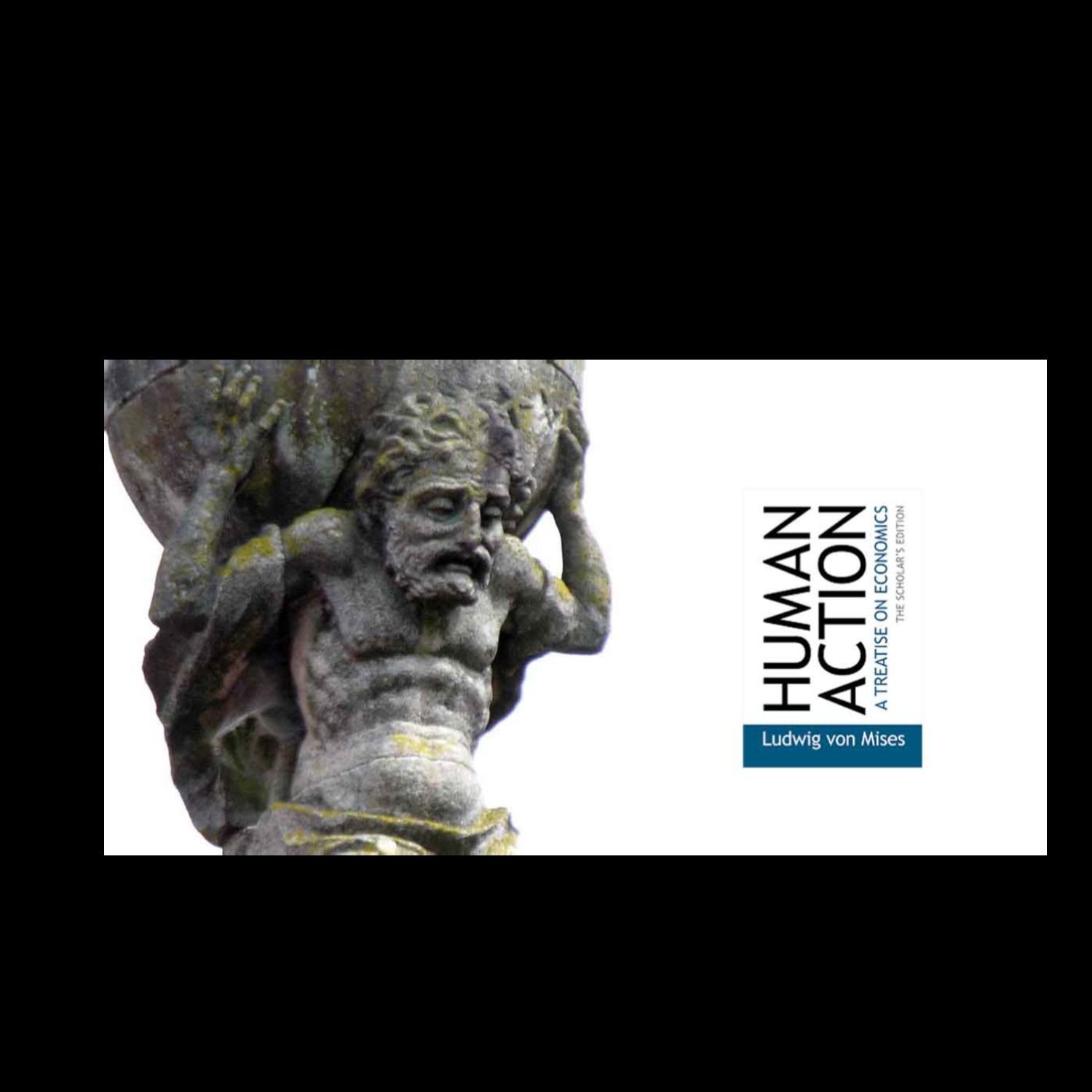
FF8: Blogread: HODL'ing is a Human Action
Oct 25, 202400:34:44Tap to summarizeSummary: This conversation explores the unique nature of hodling Bitcoin as a distinctly human action, contrasting it with the capabilities of artificial intelligence and the challenges faced by institutions in maintaining Bitcoin holdings. The discussion highlights the limitations of AI in predicting human behavior, the inherent pressures on institutions to sell, and the potential for governments to hold Bitcoin more effectively than companies or pensions. Ultimately, it concludes that hodling Bitcoin may become a defining characteristic of humanity in the digital age.Takeaways:Hodling Bitcoin is a uniquely human action.AI cannot accurately predict human actions.Institutions face significant pressure to sell Bitcoin.MicroStrategy exemplifies an institution that hodls effectively.Governments may have a lower time preference for Bitcoin than companies.Pensions are unlikely to hold Bitcoin long-term due to fiduciary pressures.Bitcoiners leave less digital footprint for AI to analyze.AI's predictive models will struggle with Bitcoiners' behavior.The pressure to sell Bitcoin is too great for most institutions.Hodling Bitcoin may become a way to prove humanity in the digital world.
Transcribe →
FF7: BlogRead: Everybody Has a Price (Even Satoshi)
Sep 17, 202400:08:11Tap to summarizerisk-fundamentals.ghost.io/everybody-has-a-price/summaryThis conversation explores the dynamics of power, reputation, and economic warfare in the context of revolutionary movements and the emergence of Bitcoin. It discusses how historical methods of suppressing dissent have evolved from overt violence to more insidious tactics like reputation smearing and co-optation. The discussion culminates in the introduction of Bitcoin as a means of fostering cooperation and challenging the status quo of fiat currency.takeawaysEverybody has a price, even Satoshi.The modern phase of fighting dissent includes reputation smearing.Buying off dissent is often more effective than violence.The state can easily buy cooperation with fiat money.Willful ignorance can be purchased at varying costs.Wealthy individuals are often targeted through reputation attacks.Bitcoin offers a new form of cooperation against fiat.The value of Bitcoin lies in its principles and community.Fiat money's influence is diminishing as its value debases.Satoshi's introduction of Bitcoin changes the economic landscape.
Transcribe →