
Podcast
Future IQ
Hosted by Videoschool Media · EN
It contains a nuanced and factual description and objective analysis of some of the most influential scientific, psychological, and philosophical principles that dictate an individual’s lifespan. Get ready to get your mind blown with this fact-based, conversation-style podcast show intended to inform and entertain you in equal parts.
29episodes
Episodes
Newest firstAll episodes
Why Bad News Sells More Than Good | Future IQ
May 100:12:09Tap to summarizeWhy does one bad comment ruin your whole day, while ten compliments barely register? The answer lies deep in human psychology, negative experiences carry more weight than positive ones. From news headlines to personal relationships, our minds are wired to notice, remember, and react more strongly to what goes wrong than what goes right.This imbalance shapes how we see the world, fueling fear driven media, amplifying criticism over praise, and even influencing trust, creativity, and decision making. But understanding this bias is powerful. Once you recognise it, you can start to rebalance your perspective by consciously noticing the good, strengthening positive experiences, and not letting a few negative moments define your reality.
Transcribe →
The Value of Branding is Changing | Future IQ
Apr 2400:17:04Tap to summarizeA brand is never just selling a product. The best brands sell a feeling, trust, status, belonging, aspiration, even identity. Sometimes through quality, sometimes through scarcity and sometimes through stories so powerful they make ordinary products feel extraordinary. This episode explores the hidden psychology behind branding, why limited availability can increase desire, how storytelling creates meaning, and why some brands become symbols people want to be associated with. From trust and game theory to costly signaling and luxury brands, this is a deeper look at what brands are really doing beneath the surface. Because once you see that brands often shape emotion more than choice, you start seeing the hidden messages everywhere in companies, careers, and even personal branding.
Transcribe →
Smart People Are Losing to AI (And Idiots Are Winning)
Apr 1700:27:51Tap to summarizeWhat if the world isn’t getting smarter but just better at pretending? For centuries, we relied on signals like degrees, resumes, polished writing, credentials to judge intelligence, trust, and capability. They worked because they were hard to fake. Now, AI has quietly broken that system. Today, anyone can generate perfect looking resumes, thoughtful essays, emotional messages, even “expert level” content without actually having the underlying skill. The signal is still there but the meaning behind it is gone. What used to separate the best from the rest is turning into noise. So what happens in a world where you can’t trust signals anymore? What replaces them? And who actually wins in this new game?
Transcribe →
Civilization Cannot Exist Without VIOLENCE | Future IQ
Apr 1000:31:19Tap to summarizeCivilization is built on violence, not despite it, but because of it. We often associate civilization with peace, freedom, and cooperation. But beneath all of it lies a more uncomfortable truth - none of these can exist without a system that controls and channels violence. From protecting a farmer’s harvest to enforcing laws, contracts, and property rights, it all depends on one core idea - the state decides who can use force, and when.This episode explores how this “monopoly on violence” became the foundation of stable societies, enabling markets, innovation, and even art to flourish. But it also raises a critical question - what happens when this power is misused or when it disappears completely? A simple yet powerful perspective that will change how you see civilization and the hidden force holding it together.
Transcribe →
Why Planning Fails? Future IQ
Apr 300:29:33Tap to summarizeWe often assume that better planning and greater standardization naturally lead to progress. However, history suggests that excessive control and rigid design can produce outcomes that are fragile, inefficient, and disconnected from real world needs.Highly planned systems whether in cities, economies, or resource management have frequently struggled because they rely on simplified assumptions and overlook local complexities. In contrast, unplanned and informal systems, though seemingly chaotic, tend to evolve organically. They adapt to ground realities, respond to changing conditions, and often demonstrate greater resilience over time.This raises an important question: Is the lack of order truly a failure, or does it play a functional role in keeping systems dynamic and sustainable?Perhaps the issue is not the absence of planning, but the imbalance between top down control and bottom up emergence. What appears as disorder may, in fact, be an essential feature of systems that continue to function, adapt, and endure.
Transcribe →
Agriculture Is The Worst Mistake Of Mankind
Mar 2700:31:11Tap to summarizeHow did agriculture change the world? We've all heard the advantages of agriculture, including it's evolution from into modern & sustainable agriculture. But if we are to look at how agriculture shaped the history of the world, the history of humankind, then we cannot leave out the disadvantages.War, disease, impoverishment are all direct results of humans establishing an agrarian society. How such societies led to the development of newer professions, militaries, expansion of power & economies - in this episode we understand the history of agriculture from both the perspectives of good & bad. Based on research, we investigate the reasons behind us humans, or rather the humans in power that chose to prioritise a life of farming over a life of hunting & gathering.💬 Join Our WhatsApp Community: http://tapthe.link/futureiqwaBooks referenced in this video:AGAINST THE GRAIN - JAMES C. SCOTT: https://www.amazon.in/dp/030024021X?tag=pondeal-21Do hit us up on Twitter:@ngkabra http://twitter.com/ngkabra@shrikant https://twitter.com/shrikantListen it on the podcast provider of your choice: https://tapthe.link/FutureIQRSSFollow FutureIQ on Instagram: https://www.instagram.com/thefutureiq/Source / References:https://slatestarcodex.com/2019/10/14/book-review-against-the-grain/https://web.cs.ucdavis.edu/~rogaway/classes/188/materials/Diamond-TheWorstMistakeInTheHistoryOfTheHumanRace.pdfhttps://en.wikipedia.org/wiki/Debate_between_sheep_and_grainChapters:00:00 Advantages of agriculture04:25 Poor health & disease06:40 Wars & womanhood10:35 Why did Agriculture prevail?16:40 Why is the Wheat the worst?24:10 How is modern agriculture comparatively?27:02 Critiques of the core argument
Transcribe →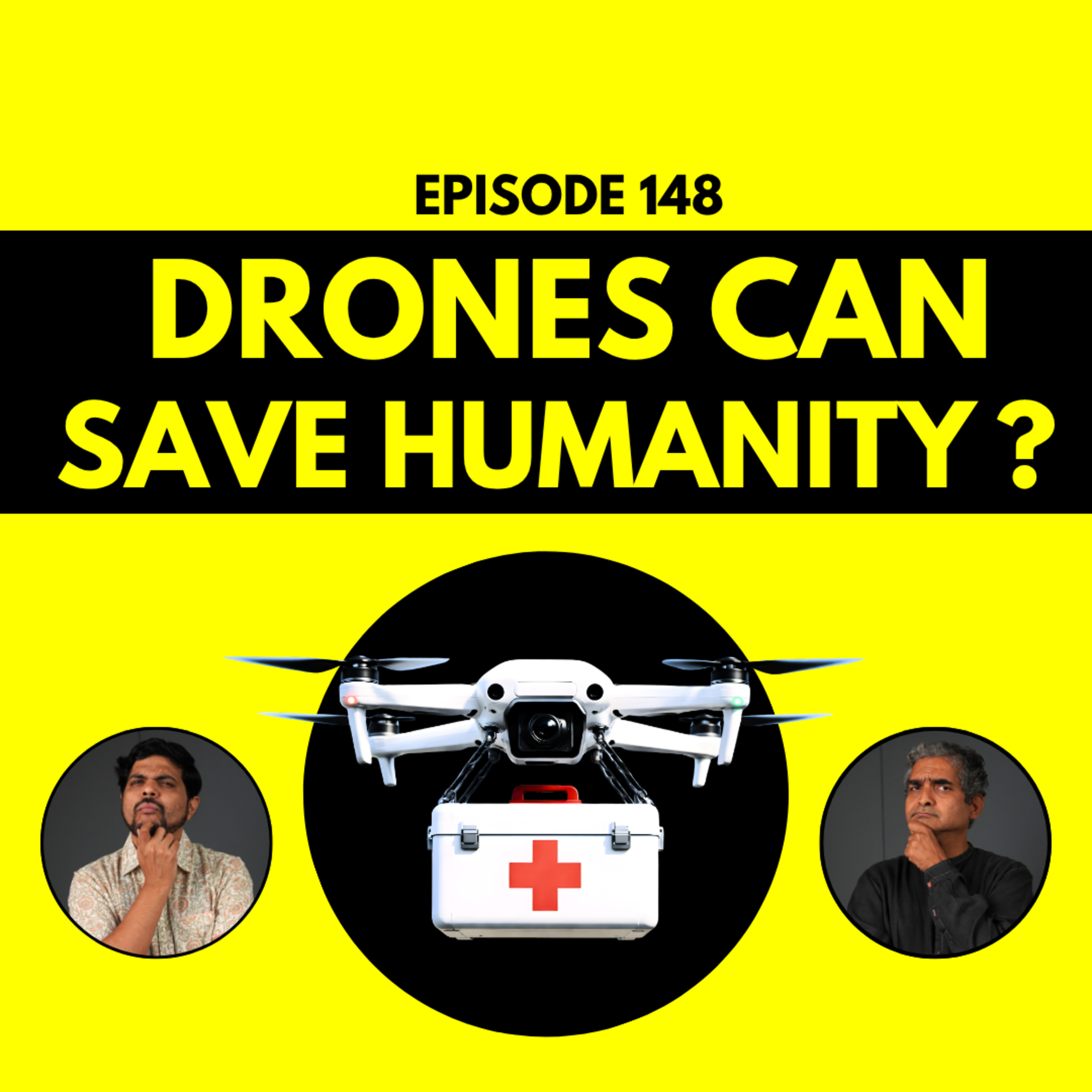
Drones will save Humanity! Future IQ
Mar 2000:16:35Tap to summarizeDrones are no longer limited to wedding shoots or aerial cinematography. Today, they have evolved into something far more powerful acting as soldiers on the battlefield, delivering critical supplies to disaster hit regions, and even transporting life saving organs within minutes. What was once seen as a hobbyist gadget is now becoming a technology that directly impacts human lives in meaningful ways.In this episode, we explore how drones are transforming into social helpers reaching remote areas with essential medicines, assisting in rescue operations during natural calamities, and supporting sectors like agriculture and infrastructure. This is not just about innovation, but about solving real world problems at scale.As new use cases continue to emerge, the positive impact of drones is growing rapidly. Their role in shaping a faster, more efficient, and more connected world is only going to expand from here. This episode dives into the real potential of drones and how this technology can be used for our collective benefit. Drones are not just the future they are already redefining the present.#futureiq
Transcribe →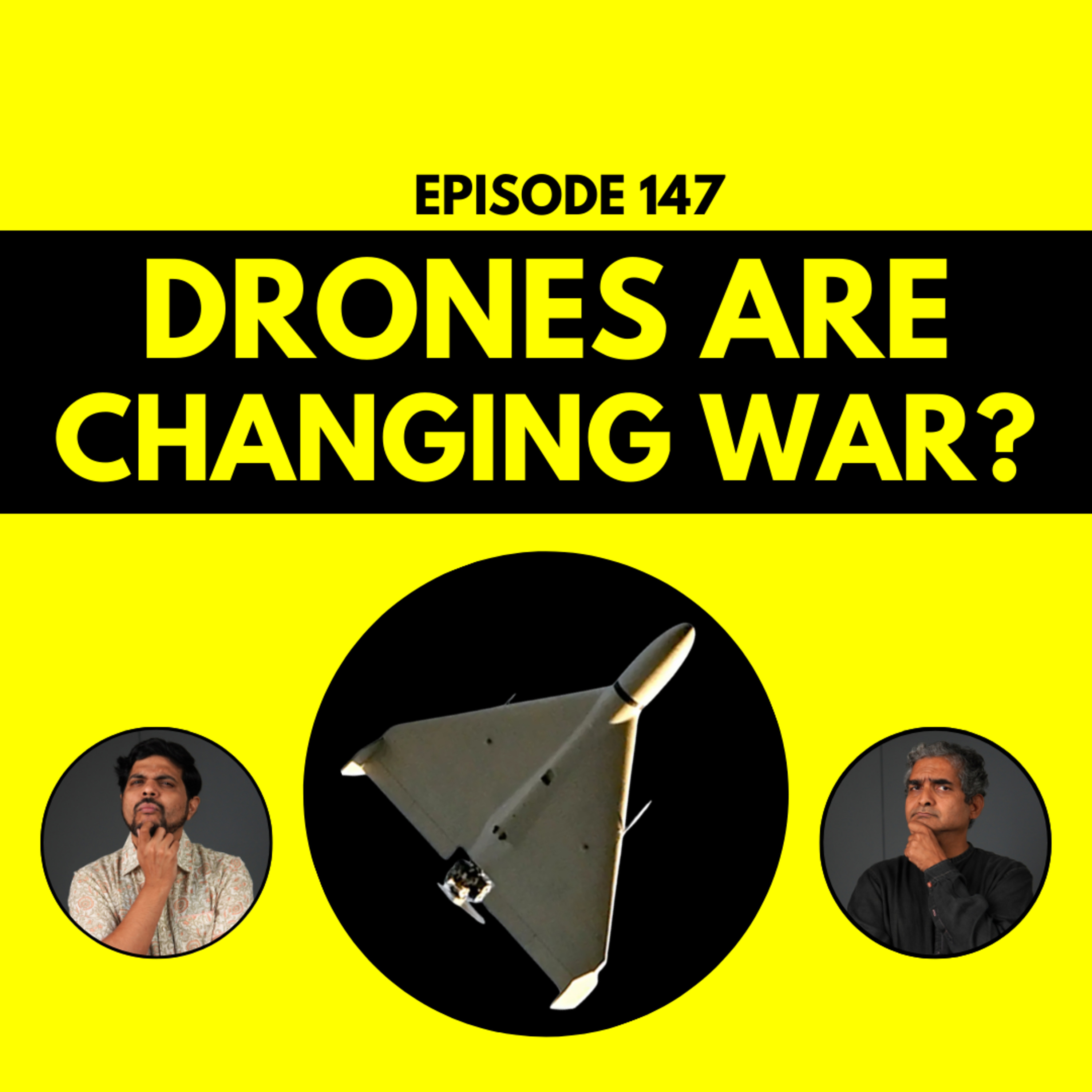
Drones are Changing War, Geopolitics and the World Order | Future IQ
Mar 1300:19:17Tap to summarizeWhat does drone warfare actually mean for the current world order? Will the use of drones and AI have a significant role to play in changing geopolitics? More importantly, will it truly determine the future of warfare as we know it now?In today’s episode, we tackle all these questions with head-on answers to each of them based on research. Tracing the history of warfare starting from the discovery of gunpowder, to the innovation of drone technology — we answer how this has directly impacted geopolitics across centuries.While the current affairs of the world may look pretty bleak and daunting, the advancement of drone technology has also resulted in an impressive amount of saving & reconstructing life & land — all of which we will cover in the next episode, so stay tuned for that!
Transcribe →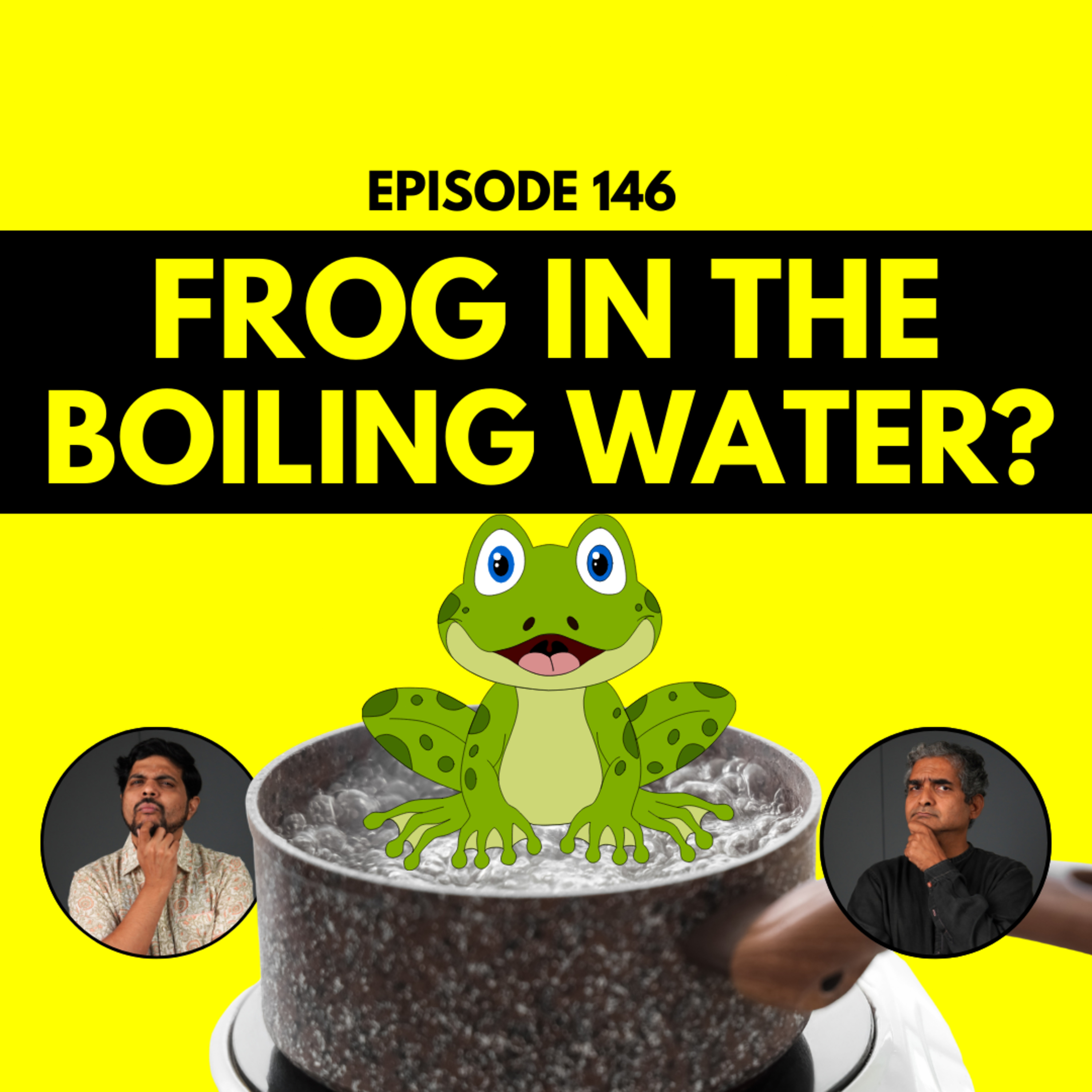
Don’t Be the Frog in Boiling Water | Future IQ
Mar 600:27:36Tap to summarizeThe “boiling frog” idea appears in many fields under different names but the core insight is the same when change happens slowly enough, we stop noticing it. What would have shocked us yesterday becomes normal today.If you look around, you can see this pattern everywhere. Many things that would have been completely unacceptable to the Indian middle class thirty years ago are now routine. Television news has slowly shifted from being serious and restrained to becoming a loud spectacle. Working 70 hour weeks for a salaried job is often treated as normal ambition. Apps like Zomato, Swiggy, and Blinkit gradually turned the gig economy from an oddity into something that feels like the default. Even major political movements, like Anna Hazare’s India Against Corruption, seemed unstoppable at one point yet slowly faded away.Across psychology, politics, economics, and business, this gradual change shows up again and again. Political scientists call it the Overton Window, organizations experience it as normalization of deviance, salespeople use it through the foot in the door technique, and behavioral economists study it through nudges. Different names, different contexts but the same underlying mechanism small shifts, repeated over time, quietly reshape what people accept as normal.But this idea isn’t only something that happens to us. It’s also something we can deliberately use. Instead of relying on dramatic New Year’s resolutions that collapse within weeks, real progress often comes from tiny improvements repeated consistently. Reduce the sugar in your tea a little every month. Wake up a few minutes earlier each week. Improve by just 1% at a time. Over months and years, these nearly invisible steps can quietly compound into massive change.In this episode of Future IQ, we explore how this “boiling frog” principle shapes society, organizations, and our daily habits and how the same framework can help you climb your own Mount Everest, one small step at a time.
Transcribe →
Why Do Poor People Love Loud Colours?
Feb 2700:18:15Tap to summarizeWhy do loud, bright colours feel “cheap” to some people… and full of life to others? And why does beige suddenly become sophisticated the moment wealth enters the room?It’s easy to turn this into a joke. The poor love shiny gold and bright pink. The rich debate between ivory, cream, eggshell and “not quite off white.” But beneath the humour lies something far more interesting because this isn’t really about colour at all. Children naturally gravitate toward bold, primary colours. No one trains them to do that. Yet as people grow older, something shifts. Preferences become subtler. Muted tones begin to feel elegant. What once seemed exciting starts to feel loud. What once looked plain starts to look refined. That shift isn’t random. The brain adapts to whatever it repeatedly experiences. The more time spent noticing subtle differences in colours, music, writing, wine, design, even chai, the sharper perception becomes. If someone lives in an environment where fine distinctions matter, the brain reorganizes itself to detect those distinctions. If not, those subtleties barely register. It’s not a moral difference. It’s training.But perception is only half the story.Taste also functions as a social signal. Groups unconsciously develop preferences that are difficult to imitate without effort. Subtlety becomes a marker of belonging. Loud becomes “unsophisticated.” Minimal becomes “classy.” And when subtlety becomes too extreme, it flips into “pretentious.” At any given point, people tend to see those slightly behind them as lacking taste, those slightly ahead as aspirational, and those far ahead as absurd. It’s a quiet status game rarely intentional, almost always subconscious. So when the question arises “Why do poor people like loud colours?” a deeper question sits underneath: what environments train people to appreciate subtlety, and what environments reward visibility? Because in the end, colour preference is rarely about colour. It’s about exposure, identity, belonging, and the invisible hierarchies shaping perception. And once that pattern is seen, it appears everywhere.
Transcribe →