Podcast
Future of Consumer Marketing
Hosted by The Global Talent Co. · EN
The future of consumer marketing is brought to you by The Global Talent Co.
18episodes
Episodes
Newest firstAll episodes

1 Million Downloads. Zero Ad Spend. Aja Beckett on Building the #1 GLP1 App From a Reddit Post.
Jun 300:25:06Tap to summarizeAja Beckett, CEO and founder of Shotsy, didn't set out to build a company. She got prescribed a GLP1 medication, found herself completely unsupported after leaving the doctor's office, and built the companion app she needed. Two years later, Shotsy is the #1 companion app for GLP1 users — 1 million+ downloads, 100,000+ paying subscribers, 25,000 five-star reviews, available in 185 territories across 18 languages, with zero paid advertising and no data sales. In this episode, Aja shares how a Reddit post became her launch strategy, why her 7th app was the one that finally worked, the business model that lets her answer only to her users, and why she has made a deliberate decision to keep AI entirely out of the Shotsy user experience — even as she uses it aggressively to ship faster on the development side. Topics Discussed Aja's background: iOS engineer, independent app developer with 6 prior apps before Shotsy Her personal GLP1 journey: prescribed medication, life-changing results, no support infrastructure left her on her own Building the companion app she needed — and discovering it was what everyone else needed too Shotsy's growth: #1 GLP1 companion app, 1M+ downloads, 100K+ paying subscribers, 25K 5-star App Store reviews Global reach: iOS and Android, 18 languages, paying customers in 185 territories The broader benefits of GLP1 medications beyond weight loss: blood pressure, cholesterol, sleep apnea, mental health, reductions in cravings for alcohol, cigarettes, compulsive behaviors Regulation and health data: brought in Chief Science Officer Eric Praxis, formerly Chief Science Officer for Informatics at the FDA Privacy-first business model: no ads, no data sales, freemium with premium subscriptions as the only revenue model Launch strategy: authentic Reddit community participation, beta tester recruitment, organic word-of-mouth from day one App Store expertise: keywords, screenshots, purchase screen, title — got it right on day one and didn't need to touch it Pre-seed venture capital raised in year one to resource growth and maintain the #1 position Team: 5 full-time + 4 contractors, 100% remote, US-based, no one in the same city AI in development: faster code reviews, quicker feature shipping, reduced bottlenecks for a small team AI deliberately kept OUT of user-facing experience: health context, privacy concerns, accuracy risk, no unsolicited medical-adjacent advice 2026 goals: maintain #1, expand pill support for oral GLP1s, more data charts and medication level curve visualization, community and social connection features
Transcribe →
30 People. 1,300 Stores. Every Sport Imaginable. Inside the Marketing Machine at Lids.
Jun 300:24:04Tap to summarizeAdam Herstig, SVP of Marketing & Partnerships at Lids, brings two decades of sports licensing experience to one of retail's most recognizable brands - nearly 1,300 stores globally, the NBA and NHL store operations, college bookstore businesses, and a growing lineup of categories from trading cards to in-store customization. In this episode, Adam breaks down what it actually means to market a brand that is simultaneously a licensed retailer, a destination experience, and a cultural institution in the sports world. He talks about when sports marketing sells itself (World Series, anyone?) and when it needs a real push, why media diversification is the only honest way to measure attribution, and how a team of just 30 people manages campaigns across dozens of leagues, hundreds of teams, and thousands of SKUs. He also gives his honest read on AI in consumer-facing marketing - cautious, deliberate, and smarter than most. Topics Discussed Adam's career arc: American Eagle, Reebok, Adidas, Mitchell & Ness, kids licensed apparel in Asia Pacific, Snipes, Foot Locker, and now Lids The full scope of Lids Inc: ~1,300 Lids stores, Lids Locker Rooms, NBA stores, NHL stores, college bookstore businesses Hot markets vs. new categories: when sport demand does the marketing for you, and when you need to actually push Customization as Lids' in-store superpower — patching, curving, embroidery, jewelry — and how it's been featured in every campaign Trading cards: a year and a half old at Lids, now a real and growing category Access Pass Premium loyalty program: $10/year, up to 20% off hats, birthday gifts, VIP perks at events HQ in Indianapolis, 5 days in office, small NYC office for branding/PR/collaborations Marketing team of 30 managing campaigns across leagues, teams, and thousands of SKUs The pace of Lids: testing, iterating, embracing the chaos — what makes the company culture remarkable Media diversification philosophy: TV, radio, out-of-home, coupons, bag filler — diversify to keep channels honest AI approach: backend efficiency yes, consumer-facing campaigns — baby steps only; copy and content versioning are the practical wins MLB as synonymous with hat culture; F1 growing; WWE entering the lineup; World Cup 2026 as a major test Experiential marketing at Super Bowls, All-Stars, Fanatics Fest — RIP to Rep trading card event International presence: Canada, Mexico, Australia; 2026 World Cup as an opportunity to capture new customers 2026 goals: drive store traffic, grow loyalty membership, acquire new customers via World Cup, nail holiday
Transcribe →
If You Can Take a Two-Week Vacation and Not Open Your Laptop, the Company Is Working
May 2000:31:35Tap to summarizePascal Hanle, Chief Operating Officer of Pets Deli, tells one of the more unusual origin stories in German DTC: a pet food company that went bankrupt, was bought out of insolvency, and was handed to its most tenacious early employee to rebuild from scratch — beginning with Pascal literally sawing frozen meat blocks with a bow saw in the office kitchen to test new suppliers. Now in his 10th year at the company, with 135 FTEs, a warehouse that grew from 3,000 to 11,000 square meters, B2B accounts at Rewe and Edeka, and a target of €100M by 2030, Pascal shares what it actually takes to build durable unit economics, why ownership is the only metric that matters beyond revenue, and why the real sign of a healthy company is whether its CEO can spend two weeks in Egypt without opening a laptop. Topics Discussed How Pascal joined Pets Deli 1, survived the insolvency, and became the first real employee of Pets Deli 2 after an asset deal The rebuild of 2017-2018: completely changed product portfolio, took over supply chain and logistics internally The bow saw moment: sourcing new meat suppliers and sawing frozen meat blocks in the office kitchen to test quality Why the original business model (frozen pet food, outsourced supply chain) had structurally terrible unit economics The core lesson: good margins don't come from economies of scale — they come from meticulous, unglamorous supplier renegotiations The Brexit overstock mistake: overpreparing for supply disruption led to €200-300K of dry food running into best-before dates The vacation health test: two weeks in Egypt, laptop never opened — that's when you know the company is working Current company: 135 FTEs across HQ (65-70), 5 physical stores, and a 45-person warehouse in Frankenberg Warehouse expansion: 3,000 sqm → 11,000 sqm, all logistics now fully in-house B2B growth: Rewe, Edeka as major retail partners; ~1,000 Rewe POS locations; targeting 50%+ B2B revenue growth D2C vs. B2B operational challenge: D2C has predictable repeat behavior for forecasting; B2B is erratic and fast-moving Ownership philosophy: real ownership requires letting people make decisions — even the wrong ones — or ownership dies The 4:30am warehouse story: shift lead showed up independently to recount audit items; now manages half the warehouse From startup to company: the first 20 employees are gone; processes replaced personal relationships; culture requires deliberate maintenance 2030 goal: €100M revenue; expanding German footprint and potentially entering new markets
Transcribe →
You're Paying People to Buy Your Product. Here's How Rita Zahir Found Out
Apr 2700:23:50Tap to summarizeRita Zahir, VP of Marketing and E-Commerce at Unique Vintage, delivers a data-dense masterclass on the one metric most e-commerce brands are still getting wrong: the difference between revenue and profit. With 20 years across Shoes.com, Famous Footwear, Polaris, and now a female-owned vintage-inspired brand, Rita breaks down why "let the algorithm handle it" is the most dangerous phrase in modern performance marketing — and how a combination of custom behavioral segmentation and contribution-margin-level analytics helped her team beat Meta Advantage+ ROAS by 30% during the most volatile periods of the calendar. This is a rare, practitioner-level conversation about the infrastructure behind profitable e-commerce growth. Topics Discussed Rita's 20-year e-commerce career: Shoes.com, Famous Footwear, luxury fashion, software, Polaris (Trans American Auto Parts), early-stage startups Current role: VP of Marketing and E-Commerce at Unique Vintage (2 years), plus concurrent consulting for luxury accessory startups Marketing philosophy: structured metrics (LTV:CAC, contribution margin) as the foundation for moving fast with brand equity intact The shift from ROAS and blended MER to profit on ad spend (POAS) and contribution margin as the real performance north star The algorithm's blind spots: contribution margins, inventory turns, return rates, and products that lose money after ad costs Dynamic product ads on Meta, Google Shopping, Pinterest, and Reddit — and why surrendering your data feed to the algorithm is a profitability trap Meta's Andromeda/Advantage+: why "feed it everything and let the algorithm decide" misses your highest-LTV customer segments Partner Genius AI: behavioral modeling and customer segmentation layering third-party data for years Partner Barkai: contribution margin per view/impression — a tool that calculates actual profit generated per ad exposure and flags products where every sale loses money Custom segmentation beating Meta Advantage+ ROAS by 30% during high-volatility periods One of five companies globally selected for Meta's Voice AI Beta "Bestsellers" that are secretly unprofitable when fully loaded with ad costs, conversion rates, and return handling Team building philosophy: "coach of the A team" — hire and develop people you're actively learning from Scaled a brand from under $5M to $16M revenue in under two years Hybrid work as the preferred model; global talent outsourcing for lean e-commerce teams 2026 goal: profitable, repeatable scale — a growth engine that can be systematized and replicated
Transcribe →
Less Mustache, More Grown Up: How Lyft Rebranded Without Losing Its Soul
Apr 2000:26:51Tap to summarizeCass Zawadowski, Executive Creative Director at Lyft, takes us inside the most significant transformation in Lyft's 14-year history — a year-long rebrand that touched everything from color palette and logo to photography, brand strategy, and brand archetype. She walks through what it actually takes to evolve a beloved brand without losing the soul that made it iconic, how Lyft launched its first major brand campaign post-rebrand targeting young working adults in New York and San Francisco, and how an entire marketing org moved from AI skepticism to daily creative practice through a CMO-led "ground zero" approach. From the three pillars of brand longevity to the tension between cultural creativity and boardroom-measurable impact, this is a rare behind-the-scenes view of creative leadership at one of North America's most recognized consumer platforms. Topics Discussed Lyft as a global mobility platform: rideshare, Citi Bike (NYC), Divvy (Chicago), scooters, and the FreeNow acquisition expanding into Europe Cass's career arc: ad school in Toronto, agency work in Toronto, New York, Germany, and Seoul, then the move to brand-side The year-long Lyft rebrand (2024): "evolution not revolution" — new color palette, logo, photography, and brand strategy Brand purpose: "serve and connect"; value proposition: "expect more from every journey" New brand archetype and the shift from "less mustache to more grown up" Design agency partner: Koto (New York) for visual identity First post-rebrand brand campaign: Q4, young working adults (mid-20s to mid-30s), NYC and SF, "you have options — you're not on autopilot" The three pillars of brand longevity: stable purpose, flexible expression, evolving with culture Levi's as the benchmark example of brand longevity done right Hybrid work structure: Mon/Wed/Thu in office; offices in San Francisco (HQ), New York, Toronto, Montreal, Mexico City, and Europe Toronto as a fast-growing hub — new headquarters opening August 2026 Lyft Urban Solutions (LUST) team in Montreal: bikes and scooters division CMO Brian Irving's org-wide AI adoption: "ground zero, start fresh together" Driver AI tool: input available hours and earning goals → AI generates optimized daily route Creative Studio AI sprint (10-12 weeks, October): brainstorming, rapid prototyping, concept pressure-testing, A/B testing AI tool chaining workflow: Weavy → Figma → Google Docs 2026 goals: brand strength tied to business impact; scaling creative excellence across the entire marketing org
Transcribe →
Wait, This Is Made From Chicken Breast?
Apr 1600:18:48Tap to summarizeCarmen Fadel, VP of Marketing at WILDE, takes us inside one of the most unusual products in the CPG snack aisle — a 100% all-natural chicken breast chip that is growing 50% year over year and landing on shelves at Whole Foods, Costco, Target, and beyond. She breaks down the brand's "chips and lips" obsession with driving trial, the "shock and disbelief" campaign strategy that turns first reactions into word-of-mouth, and how she used a mixed media modeling platform to turn top-of-funnel brand spend into a board-ready, data-backed argument. From a NASCAR partnership to AI-powered competitive tracking, Carmen offers a candid, practical look at what it takes to build a brand-new snack category from scratch. Topics Discussed WILDE's origin story: how founder Jason Wright created a 100% chicken breast chip with proprietary manufacturing 50% year-over-year growth and the surging consumer protein trend "Chips and lips" — the single-minded mission to drive product trial above all else "Shock and disbelief" — the campaign philosophy built around the "wait, this is made from chicken breast?" reaction Omnichannel strategy: TikTok Shop, CTV (Hulu), OOH, digital ads, and the Critical Mass approach WILDE vs. Quest and other protein chips — natural protein from chicken vs. added whey or pea protein The NASCAR partnership and what precision motorsport has in common with a chicken chip Life Time Fitness sponsorship and community-building through health and fitness events AI as a new SEO channel — why WILDE needs to show up when someone asks an AI for a high-protein snack Using Claude and AI tools for competitive tracking, ideation, and automation Mixed media modeling via Keen — connecting marketing spend to top-of-funnel sales data Carmen's non-linear career: stay-at-home mom of four, side agency, return to CPG, rise to VP of Marketing // Sponsors: Front Lines — We help B2B tech companies launch, manage, and grow podcasts that drive demand, awareness, and thought leadership. www.FrontLines.io The Global Talent Co. — We help tech startups find, vet, hire, pay, and retain amazing marketing talent that costs 50-70% less than the US & Europe. www.GlobalTalent.co // Don't Miss: New Podcast Series — How I Hire Senior GTM leaders share the tactical hiring frameworks they use to build winning revenue teams. Hosted by Andy Mowat, who scaled 4 unicorns from $10M to $100M+ ARR and launched Whispered to help executives find their next role. Subscribe here: https://open.spotify.com/show/53yCHlPfLSMFimtv0riPyM
Transcribe →
We Sell Smokeless Fire Pits. But Really We Sell Togetherness
Apr 1000:24:46Tap to summarizeLiz Vanzura has spent her career turning around and launching iconic consumer brands — the New Beetle at Volkswagen, the civilian Hummer, Truly Spiked & Sparkling at Boston Beer, and three-plus years at Fanatics. Now she's CMO of Solo Brands, the platform behind Solo Stove, and she came in as a board member first during a company turnaround. In this episode, Liz shares the national loneliness study that became Solo Stove's core brand insight ('we sell togetherness, not fire pits'), how the Snoop Dogg campaign went viral and what it took to build something that actually sustained, and how 'Squash the Beef' at the Super Bowl Players' Tailgate introduced the new steel fire griddle to a massive audience. She also unpacks Solo Stove's AI roadmap — a media mix model, AI-personalized landing pages, and a digital AI assistant named Ember — and shares the Klarna cautionary tale about what happens when you push AI too far, too fast. Topics Discussed Liz's career arc: CMO at Volkswagen (New Beetle relaunch, 'Drivers Wanted'), Hummer (civilian launch), Cadillac, Boston Beer (Truly Spiked & Sparkling launch), and Fanatics Joining Solo Brands as board member during a turnaround — then staying on as CMO Solo Stove's pivot from 'world's #1 smokeless fire pit' to owning the entire backyard experience: griddle, pizza oven, misting cooler, and more The loneliness epidemic study that became Solo Stove's core brand insight: disconnection, parents texting kids to dinner, and the backyard as the perfect low-cost solution Three standout campaigns: Snoop Dogg 'Going Smokeless,' Grand Central Station National Family Day activation (Good Morning America), and Super Bowl 'Squash the Beef' griddle launch Sister brands in the Solo platform: ORU (inflatable kayaks), Isle (paddleboards), Chubbies (men's apparel), Cheekies (women's swimwear) AI roadmap: media mix model (MMM) with AI, personalized landing pages, and Ember — Solo Stove's AI-powered digital customer assistant The Klarna cautionary tale: what happens when a company replaces customer service with AI agents and has to rehire // Sponsors: Front Lines — We help B2B tech companies launch, manage, and grow podcasts that drive demand, awareness, and thought leadership. www.FrontLines.io The Global Talent Co. — We help tech startups find, vet, hire, pay, and retain amazing marketing talent that costs 50-70% less than the US & Europe. www.GlobalTalent.co // Don't Miss: New Podcast Series — How I Hire Senior GTM leaders share the tactical hiring frameworks they use to build winning revenue teams. Hosted by Andy Mowat, who scaled 4 unicorns from $10M to $100M+ ARR and launched Whispered to help executives find their next role. Subscribe here: https://open.spotify.com/show/53yCHlPfLSMFimtv0riPyM
Transcribe →
From Farmer's Market to 16,000 Stores: Malk Organics' No-Filler Growth Story
Apr 100:22:12Tap to summarizeMalk Organics started at a farmer's market 11 years ago. When Jason Bronstad joined as CEO in 2020, the brand was in 1,200 stores. Today it's in more than 16,000 — across all 50 US states, in most major chains — with 17 SKUs, a new line of coconut creamers, and shelf-stable Tetra products built entirely on three ingredients: water, organic almonds, and salt. In this episode, Jason walks through the data discipline that turns shelf space into profitability, the counterintuitive decision to cut back to three SKUs before scaling to 17, and why 'liquid to lips' is still the most powerful marketing move in CPG — and why events, not in-store demos, are where that has to happen now. He also shares how AI is being used to measure the gap between the message delivered and the message received, and why dream culture is the key to keeping a remote team of 40 aligned across 14 states. Topics Discussed Malk Organics' founding story: from farmer's market 11 years ago to 16,000+ US retail doors under Jason's leadership since 2020 The data playbook for retail success: delivering profitability for shelf space and using consumer data to drive SKU decisions The counterintuitive scale-back: cutting to 3 core SKUs on joining before expanding to 17+ items across bases, seasonal, and shelf-stable formats New coconut creamer launch: listening to consumers who want to whiten their coffee and discontinuing a brown creamer that wasn't solving that need Why Malk is staying US-focused: 16,000 of 67,000 available US doors — a massive runway before going international 'Liquid to lips wins consumers' — and how event-based sampling at Expo West and Miami Food and Wine Festival replaced declining in-store demo traffic AI for leadership communication: using transcripts to audit the gap between message delivered and message received with retail partners and internal teams Dream culture: a Slack channel called 'dreams wins' where team members celebrate personal milestones, and how it keeps a 40-person remote team connected across 14 states
Transcribe →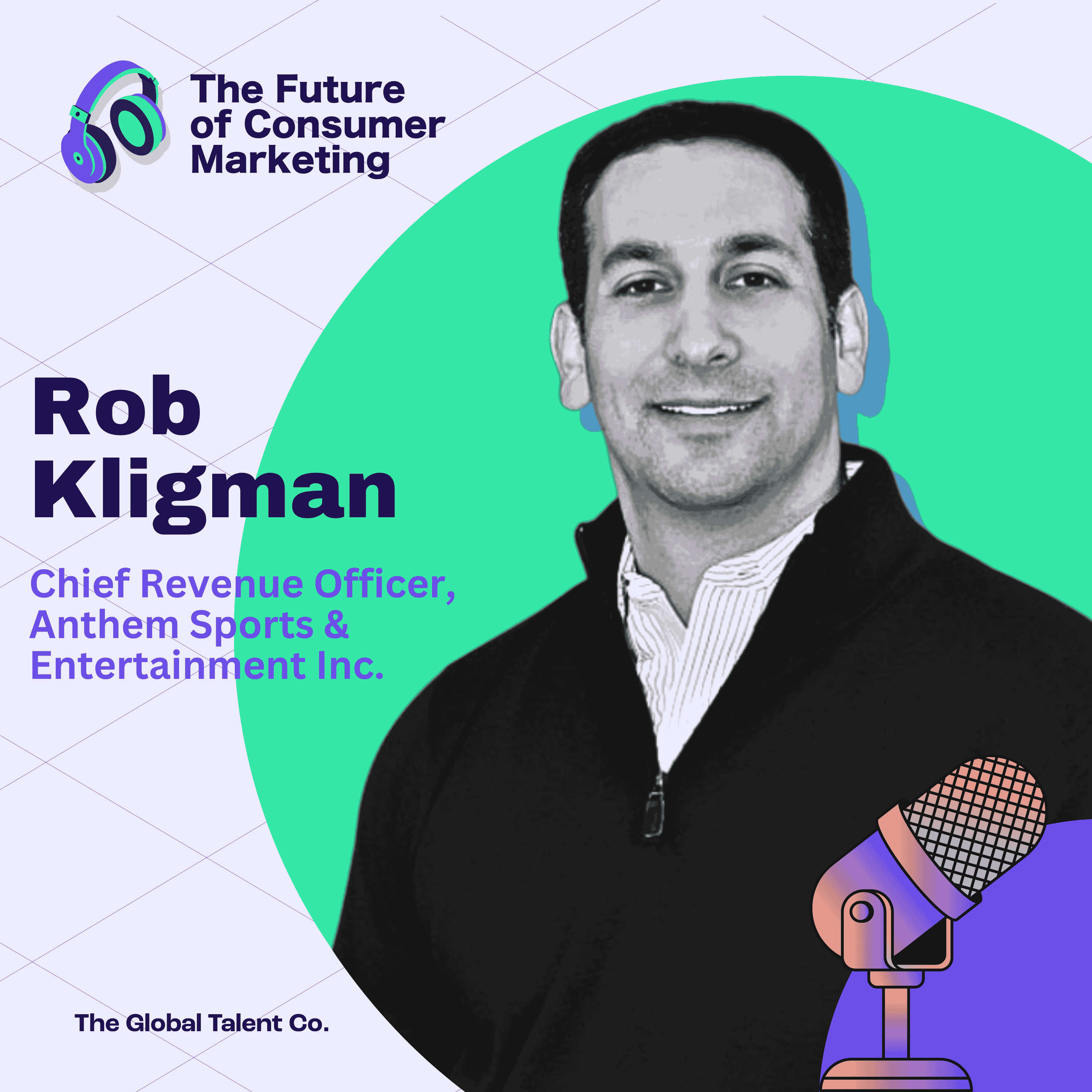
From WWE to Trading Cards: Building the Low-Fee Marketplace Collectors Deserve
Mar 2300:26:37Tap to summarizeRob Kligman is the Chief Revenue Officer of Anthem Sports & Entertainment Inc. and the founder of Collectible Lane — a low-fee, AI-powered collectibles marketplace built to give collectors back control. In this episode, Rob draws on 30 years of advertising and sponsorship experience to break down how he built an authoritative brand voice before the app ever launched, why storytelling and FOMO are the only marketing engines that work in collectibles, and why his 6-to-9-month goal isn't to beat eBay — it's to earn the loyalty of 1% of the market. Topics Discussed Rob's 30-year career in advertising and sponsorship at MTV Networks, WWE, and Fortune 500 brand campaigns The founding insight behind Collectible Lane: inflated prices caused by seller fees pushing buyers to overpay Passion-point lane structure — dedicated ecosystems for trading cards, video games, comic books, and more 'Behind the Lane' branded entertainment arm: using storytelling to create FOMO around collectible items Pre-launch content strategy: 6 months of snackable 15–20 second videos on YouTube, Instagram, and Facebook AI-powered listing in under 10 seconds: how the platform pivoted to remove the biggest friction for sellers PSA and CGC grading partnerships as an anti-fraud and confidence-building mechanism for buyers Remote-first team of ~5 people across the US and India building toward a US-only Phase 1 launch
Transcribe →
AppLovin, AI Bowls, and the Measurement Stack Running Ollie’s Growth
Mar 2300:25:49Tap to summarizeOllie’s subscription model doesn’t just deliver fresh dog food — it runs machine learning models on photos of your dog’s teeth, tracks body condition and stool health, and feeds all of it into a wellbeing score that adjusts portions over time. Kalina Fridrich, VP of Growth and Retention at Ollie, joins The Future of Consumer Marketing to break down how a direct-to-consumer pet wellness brand is building a full-stack growth engine on top of that data. She covers the launch of “Feed the Obsession,” Ollie’s new brand campaign hitting TV for the first time; why AppLovin has emerged as a breakout performance channel for a health-app-native audience; the AI-generated dog bowl ad that went so viral on Meta they manufactured it and added it to the member experience; and the three-layer measurement stack — media mix modeling, multi-touch attribution, and direct customer surveys — that Ollie uses to make weekly channel decisions across a rapidly evolving media mix. TOPICS DISCUSSED Ollie’s product model: algorithm-powered fresh dog food subscription, personalized portions based on app health data collected from vet tech–trained machine learning models In-app AI: visual models analyze dog teeth photos; a wellbeing score aggregates body condition, stool health, and teeth data into a single interpretable metric for dog parents The “Feed the Obsession” brand campaign: new brand refresh with TV spots, merging brand awareness investment with a performance marketing engine for the first time Performance channel breakdown: Meta remains core for the primary demo (women dog owners, higher household income); AppLovin emerging as a breakout channel for app-native, health-data-engaged audiences AI in performance marketing: AI-generated heart-shaped dog bowl ad on Meta drove social engagement — Ollie then manufactured it as a real product and used it as a member gift Brand partnerships as acquisition and awareness levers: Van Leeuwen (dog ice cream in retail), Embark (dog DNA kit), Fi (dog GPS wearable) Media measurement stack: media mix modeling + multi-touch attribution + first-party customer surveys (how did you hear about us?), triangulated weekly for channel optimization 2026 goals: scaling reach and awareness, TV investment, GEO/SEO growth, pairing brand investment with a disciplined performance engine while maintaining PNL health
Transcribe →