← Future of Life Institute Podcast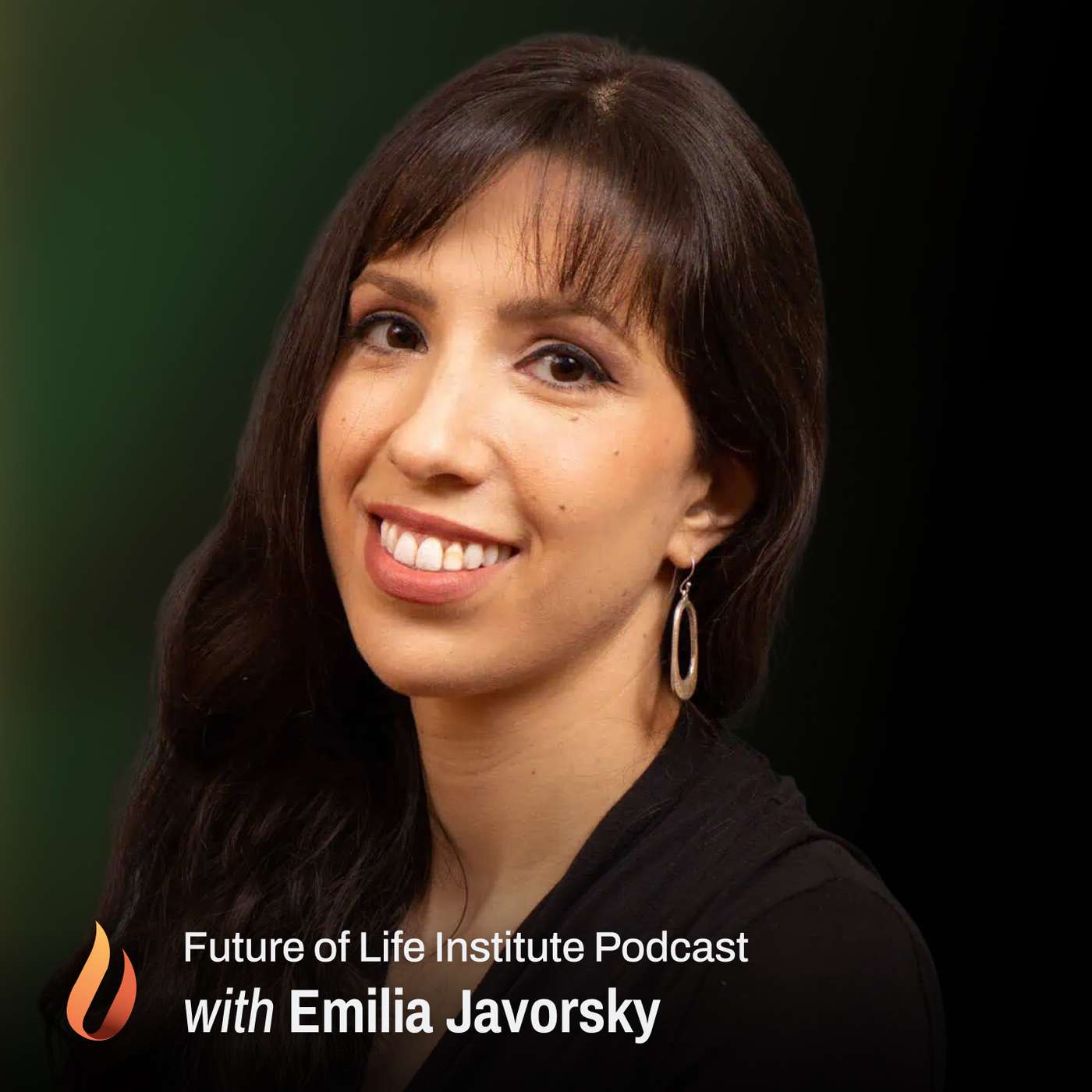
Future of Life Institute Podcast
What AI Companies Get Wrong About Curing Cancer (with Emilia Javorsky)
01:12:10
Loading summary
Transcript43 lines
- [00:00]
A
Flagship promise across tech companies that are developing artificial general intelligence, or superintelligence, has been cure cancer. Don't we want to cure cancer? How could you be against the development of this technology? You're holding up cancer treatments. Think of the children here. On a deep human level. That's not a promise that you throw around lightly or flippantly, given how deep of a problem this is and how deeply this affects everyone's lives in general. Grand challenges just don't tend to be so of intelligence limited problems. There are problems around data, they're problems around incentives, they're problems around coordination. At the basic science level, there's actually very little data that is in a format or accessible to being trained by AI. Superintelligence cannot model something that does not have first principles and does not have data. We have a system that fundamentally rewards incremental thinking and not necessarily rewards out of the box thinking. So, like, step one is like, how can we actually use AI systems to encourage out of the box ideas just as much as the inside of the box ones to get more of those going?
- [01:10]
B
Welcome to the Future of Life Institute podcast. My name is Gus Stocker and I'm here with my colleague Emilia Jvorski. Emilia, welcome to the show.
- [01:18]
A
Thank you so much for having me, Gus.
- [01:21]
B
Great. You have a new essay called AI vs Cancer that's a long walkthrough of everything we know about what AI can and can't help with when it comes to cancer. Maybe we want to start with you and your background and credentials and then talk a little bit about the problem of cancer and before we get into the meat of the essay.
- [01:46]
A
Absolutely. Thank you, Gus. My background, I am a physician and scientist by training. Before I went to medical school, school, had a former career in public health. And so throughout my career I've touched a lot of different aspects of the healthcare and discovery ecosystem, from the macro public health side of things down to being a postdoc and doing bench research, to being in the clinic, to co founding a startup. So I've actually had the opportunity to see each of those phases of development of a new therapy and gets sort of the insight into how the sausage is made and like what is the narrative of how these things happen and then what's actually happening in the field and on the ground of how these things happen and by sort of a series of events as life is. I originally was involved in sort of biosecurity about 10 years ago and became interested in the intersection of that at that time, the emerging idea of AI that was coming onto the scene and, and have been involved since then in the AI conversation for the better part of nine, 10 years. And for a long time, these two lives I had were very disconnected. Talking about AI policy and the quest for superintelligence and then doing science in the lab and thinking about how to actually get new therapies to patients. And those kind of collided in recent years with this promise that's coming out of a lot of the big tech companies, that this technology, in fact, will deliver cancer cures, which has kind of been one of their flagship promises. So I decided to say, hey, like, we should break that down. And I've been pretty surprised how unexamined that promise has gone in sort of popular culture and throughout narratives and media and news that it's kind of accepted at face value that, oh, this technology will do this thing that is being claimed. And so I kind of felt, seeing the disconnect between where the state of that technology is and how that problem's being approached from the AI side and, and knowing what's actually happening on the ground on the biotech and medical side, highlighting where that Delta is and where technology can and can't move the needle.
- [04:01]
B
Yeah, great. So maybe let's start with that promise. Maybe. Describe to me what does that promise look like from the AI companies? What do they believe about how AI will cure cancer?
- [04:14]
A
Yes. So this has been remarkably conserved flagship promise across tech companies that are developing artificial general intelligence or superintelligence, that this technology is necessary for xyz. And flagship promise has been cure cancer. Don't we want to cure cancer? This will cure cancer. How could you be against the development of this technology? You're holding up cancer treatments. Think of the children here. And I think that that hit me both as a professional coming from the medical world, but also personally, because my father passed away of cancer. And I think everyone knows a family member or someone they've. That has passed away from cancer or whose life has been ever forever changed by cancer. And so to me, on a. On a deep human level, that's not a promise that you throw around lightly or flippantly, given how deep of a problem this is and how deeply this affects everyone's lives. So that was also a motivation to really break this down. And something I noted in accompanying these promises was being quite light on specifics of actually how the technology will solve this. And I don't know if you've seen many years ago, the south park episode of the Underpants Gnomes, and this is kind of okay, this Is how I kind of see the superintelligence cancer curing promises. And that is a sketch where they're going to learn about corporate development and corporate takeovers. And they encounter these underpants gnomes, and they have three phases to their development process, which is phase one is to collect underpants. Phase two, nobody knows in the whole group. Phase three is profit. Right. And that's kind of how I see the superintelligence argument. It's like, phase one, develop superintelligence. Phase two, shrug. Nobody knows something's going to happen. Phase three, cure cancer, solve climate change, universal education. And so a big part of this is actually breaking down. What would phase two actually look like if we were serious about that? How do we bridge this promise with reality?
- [06:30]
B
Yeah, I guess the underlying assumption, if I'm sort of naively sketching it out here, it looks something like with sufficient intelligence, we could cure cancer. And so we need to develop superintelligence, and that will allow us somehow to cure cancer. We don't know how because we are not smart enough, but a superintelligence would be smart enough. Now, that is an assumption you question throughout the essay. Tell us about whether intelligence is the actual bottleneck to cureing cancer.
- [07:02]
A
Yes. So there's many reasons I don't believe intelligence is the key bottleneck to curing cancer. But I would start with the fact that we have a lot of sort of counterfactual examples already of we have a lot more intelligence now than when we did start tackling cancer in modern medicine in the 1950s. When that quest started, the doubling rate of medical knowledge was about 50 years. Now it's down to 73 days. Right. So we've greatly accelerated our ability to get knowledge about biology and what's happening. And remarkably, with a few exceptions here and there, for certain types of blood cancers and other cancers, mortality hasn't really moved all that much. And we haven't seen that exponential growth and understanding of biology corresponding on to new therapies being approved. The number of FDA drugs we've seen approved is pretty flat, actually, over the decades. And we also know that we hear about geniuses in a data center. We have an oversupply of human geniuses in biology. So there's actually far more scientists that are trained than we have available resourced environments and materials for them actually to run experiments and to learn things. We also know that there's drugs that showed really promising therapeutic benefit potentially for cancers across the pipeline that just never made it through the fda. Right. There are therapies we have that show promise for cancer that never made it for different business reasons, for different intellectual property reasons. And so this idea that the growth of knowledge, the growth of understanding has an equal sign to actually cures, getting to patients, just has not been proven out by the knowledge gains that we have gotten so far from medicine. And I think in general, grand challenges just don't tend to be data sort of intelligence limited problems. Right. They're problems around data, they're problems around incentives, they're problems around coordination. And I think AI getting smarter and smarter is going to have tremendous gains in fields that are first principles based. So we look at the gains that increasing intelligence is having in math, in physics, in these areas where we understand the fundamental rules of the game and applying more and more intelligence to that can unlock breakthroughs that we couldn't imagine or we haven't thought of yet. But for biology, it doesn't have first principles. Right. It's a series of emergent properties across scales. And we haven't actually measured biology enough to have a data set that we could actually train this intelligence for future intelligence on. So I do think that is another fallacy that comes up is saying AI is going to accelerate. Science and medicine and physics and math are all put in the same bucket. I think we need to disentangle that a little bit, is where there's first principles and increasing AI capabilities are going to have increasing gains. But when there's not, that feedback loop breaks down.
- [10:14]
B
So one thing you often hear is that there's a bunch of data in biology and data is exactly what we need to train models to actually solve problems. So is it the case that we're sort of drowning in data? And does this mean that there's an untapped potential here like there was with language models where we had all this Internet data and we could suddenly sort of having them mimic a human language and thought, is there a lot of biological data?
- [10:42]
A
Yeah. So that I think is one of the biggest misconceptions around biology. I think people see that there's all of these journals, there's all of this work happening. So therefore we must have tons of biological data that would be great to train this model with. We get medical records, our doctors take all these notes. Isn't there the data out there to train what we need and get feed it to the AI to help deliver insights. Now there's a number of problems with that starting sort of at the basic level and moving up. So at the basic science level, there's actually very little data that is in a format or accessible to being trained by AI. So most lab experiments that are done, that data is never actually brought into the public commons or into any sort of standardized, even private database. Right? It's siloed in academic institutions or within pharmaceutical companies, if it is captured electronically at all. There's still many actual leading academic institutions that still have paper lab notebooks and don't actually have mandatory electronic capture of experiments and data. Second, when you're capturing experiment experimental data, you're not capturing all the tacit knowledge and everything that's being observed. You're. You're capturing actually a very small portion of what is that you're measuring. Secondly, even if we were capturing all of that data, that data isn't necessarily comparable. Right? We actually need to understand how do we measure a protein level in one experiment is different actually than a protein level in another experiment because of the different conditions that were used, formulas that were used, types of reagents that were used. So even if we have the data, it's not necessarily comparable data. The next piece of this is even if we don't have the data, we have the literature. That's what people say. We can train it off the literature and the insights. Well, we know actually that likely 60 to 70% of the literature is wrong. And we know this from the reproducibility crisis. When scientists try and replicate the findings of a paper and most of the time they're actually not able to do that. It's a bit like the marketing phrase, which is half of it works. We don't know what half that is the same for the medical literature. Half of it probably works. We don't know much half. Then we get up to the humans, right? There's a lot of data, maybe at the cellular level and maybe some mouse level data that is pretty ubiquitous. We do a terrible job of actually measuring human biology. And that data just does not exist really anywhere. People say, well, we have medical records, the medical records and the lab tests we've gotten that that will actually help unlock that. What people don't know is medical records are not actually designed to be data capture systems that reflect your clinical reality and your health. What they were designed for is to optimize and facilitate billing for medical institutions. And so the data they care about is the data that is relevant for issuing claims to insurance companies. And so as a result of that, there is a systematic bias in all of the data to make you look a little bit more sick than you do in order to increase revenue. And we saw this Fail with the original IBM Watson experiment. So this was the original AI that played Jeopardy. Everyone loved it. It was probably the first AI that entered the public zeitgeist. And they it went into a bunch of partnerships with the different medical institutions, Mayo Clinic, X, Y and Z. And those partnerships ultimately failed for this reason. Right. Training on electronic medical record data actually does not help in terms of predicting performance in the clinic and being generalizable to the clinic. The lab tests that we have, those are great, but those are very coarse measurements of biology. You know, you think about going to the doctor, you get your annual exam, you get back like 35 blood tests. Right. Or somewhere between that, maybe if you're doing like the full battery and going deep and you're paying for some sort of personalized medicine service, you get to 1:35. And that's just a very, very coarse measurement of everything that is happening with inside human physiology. And we do have new measurement modalities coming online that are much more precise, like proteomics, metabolomics, that can measure thousands of things in one's blood and imaging and full body MRIs that's not being really integrated into routine care or being captured at scale in any meaningful way. And so we end up effectively with this kind of data desert, both from the basic biology standpoint all the way up to clinical biology. And I think that's a travesty because we do have other examples of what happens when we do have good data with AI. And the example I lean into here quite heavily is what happened with AlphaFold. An AlphaFold is, for those who don't know, is a system that was developed by DeepMind to solve the protein folding problem. This was a problem that stumped scientists for decades. And this was incredible medical breakthrough for being able to design new drugs and understand how to unlock new targets that we weren't able to before because we didn't have full understanding of protein structures. This even won the Nobel Prize. And I think very often this gets held up is an example of AI advances. But from my perspective, as much as it's an AI story, it's also a data story. And what protein folding had was this database called the Protein Data Bank. And it was over decades, scientists collectively around the world put in these X ray crystallography structures, or basically the data of the known structures of the proteins that we've been able to capture and measure into a standardized database. So when we wanted to go tackle this problem of how do we solve protein folding, There was actually a data set of here are all the structures of proteins that we know that is curated and scientifically validated. And so to me that's kind of the counterfactual of if we want to start unlocking AI progress, we probably should start repopulating this data desert because if we do, we've seen that it can do really great things.
- [17:16]
B
And so we don't have anything of comparable sort of complexity and size in terms of data sets when it comes to, to cancer. We don't have anything like the database we use to solve protein folding.
- [17:30]
A
We do have certain cancer registries and there are definitely efforts in this regard from the National Cancer Institute and others and those need to sort of be radically scaled up of like tumor profiles and how do we compare different tumor profiles and patient outcomes. And I would say of the medical specialties, cancer is probably the most outcome front on this in trying to actually tackle this problem. But at a systemic level we really don't have that. It's a, it's a fraction of patients that actually make it into those data sets. And those data sets are also quite focused. Right. It's what is the tumor biology, it's not what's the whole patient story and context around this. Right. I think the data set that is probably one of the more interesting ones that starts to solve this is the work that has been done with the UK Biobank. So this was an effort that was started decades ago by the UK government to basically follow 500,000 people over decades and use every state of the art measurement technique that came online, the imaging, the proteomics, the everything and see what their health outcomes look like and just measure the population over time. Those are probably the examples, the patients within that data set that went on to develop cancer of where we have like the best longitudinal data and pictures of patients. So there are efforts to try and close this gap, but they are woefully sort of small and under resourced and insufficient relative to the problem at hand.
- [19:04]
B
Yeah, yeah. I think it's worth spending a little time on just the complexity of cancer. It's almost misleading to talk about cancer as one discussion disease as you, you might tell us why that is. So, yeah, tell us, tell us about how complex cancer is and perhaps tell us about elephants, naked mole rats and bowhead whales or bowhead whales.
- [19:27]
A
Yes, these are all wonderful, amazing creatures and what they have in common is they very much have inspired scientists of are there examples in nature of mammals that live a decently long time and don't get cancer? Right. And they all fall into this bucket and in fact, nature has solved this problem, right? Nature has solved biology in saying, what are ways we can engineer biology that confer a degree of cancer resilience? And so the idea here was like, oh, this is so great. We have these examples in nature. We'll go study them, and they will reveal to us the way that we become cancer resistant and what that mechanism is. And then what scientists actually found is instead of giving us this panacea or this sort of universal cancer resilience mechanism, they kind of all developed cancer resilience through totally independent and distinct genetic pathways and had very different resilience phenotypes. So basically, the way that they had their cancer resilience was entirely different between each species. And so that kind of doused our hopes that, like, all right, there's not a universal mechanism here. And the way we get here is through a whole bunch of different strategies that were very much tailored to the biology and evolutionary processes of that particular organism. But in terms of human complexity, I think the best example of this is. I highly recommend that everyone read Siddhartha Mukherjee's book, the Emperor of All Maladies. This is a great book that really leans into this. It's called a Biography of Cancer and leans into, like, the complexity of this and the fact that cancer is not a single disease, but it's actually like an evolutionary shadow of ourselves, right? It is a dynamic evolutionary process. I think in terms of the medical literature, the best summation of this has been this series of papers called the Hallmarks of Cancer. And so this started in the year 2000, where scientists put together, like, what is cancer? What are the hallmarks of things that we see in the disease processes that could be things we target to actually stop cancer or cure cancer. It started with six original hallmarks, and then there was a revision in 2011, and then again in 2022. And what has happened is, as we've learned more about biology, and we realized, oh, it's not just the tumor, it's also the immune system. It's the environment around the tumor. It's the fact that it's very adaptive and heterogeneous. Okay, we have these microbes that live with us. They actually play a role in this as well. And the story of understanding cancer has just revealed an ever growing layers of complexity and ever growing layers of individuality and how those pathways go wrong. So the same way in our naked mole rats and our elephants, right? We have different pathways of how things go right? Even between individuals, we have different ways that things go wrong, and we See this in the evolution of how we treat cancer. We started treating cancer based on organs. You had breast cancer, you had colon cancer, and you would remove the tumor and you do some chemotherapy and radiation, which is carpet bombs the body. And that was the way of thinking of treating it. And then we started to understand the mutations in each tumor. Right. This was a big sort of finding in the late 90s and genomics coming online. And then we started to say, well, can we target different mutations in those cancers? And so instead of treating cancers by sort of their area their tumor is located, now drugs are getting approved based on, well, what are the mutations within that cancer that we want to target? And the story has been ever and ever more individualized biology in terms of like, what pathways are going wrong. And that's to the level that even within an individual tumor in someone's body, there's different mutations in different cancer cells. And it's called like tumor heterogeneity. So even within one tumor, different biological pathways are going wrong in different parts of the tumor. So it really is something that's not just like a static disease process or a single mechanism that needs to be treated. It is a series of many mechanisms and mechanisms that are adaptive and evolving and pushing back.
- [23:56]
B
And so you have the complexity of the biology itself, and then you have the complexity of the medical system that's trying to intervene on that biology. So maybe tell us about what happened in South Korea with the thyroid screening program.
- [24:09]
A
Yeah, so one of the attempting thing to say, it's like, well, we know if we catch cancer early, it has a better treatment prognosis. So why don't we just catch all cancers really early and like, figure out how we detect every cancer cell that goes wrong in the body. And there's a problem with this because many of us are, we make sort of proto cancers every day in our body, right. We always have cells that are making mutations that could be potentially come cancerous, but our other biological sort of homeostatic mechanisms keep that in check and keep that from happening. There's also many people that die with cancer, but not from cancer. Right. Where there's cancerous tumors that come up in our body, but it grows into a small tumor and it's never going to spread and it's actually never going to kill you. There was this really interesting screening study that was done in South Korea which was looking at ultrasounds of the thyroid to basically say, can we detect thyroid cancer? When they implemented a screening program nationwide, they had about a 15 fold increase in the diagnosis of thyroid cancer, yet you actually didn't see really many any changes in the mortality of thyroid cancer. Right. And so what you ended up doing was detecting a lot of cancers that were small tumors that were actually unlikely to cause problems. And from a public health perspective, you're putting patients through treatment with risks to it and side effects to it without necessarily any benefit. And so there is this paradox that, like, early detection is maybe not always the best way to find a good risk benefit ratio in the long run. And so it's more of a question of, like, how do we identify the cancers that cause problems? Not necessarily, like, how do we define all, like, find all cancers. And this is coming really into focus with new efforts that are like the same sort of multi cancer early detection, which is blood tests for cancer, right? Can I have a blood test that detects some cancer DNA? And so we're really trying to figure out, and there's large scale clinical trials ongoing to understand is that on the right side of things, where we actually are going to pick up things early and be able to treat them and prevent deaths, or are we going to actually end up in the South Korea case where we're mostly picking up things that aren't going to cause problems and people end up getting treatments that they don't need. So even the idea, like, it's seductive to think, oh, we should just catch everything, but catching everything might not always be the best thing to do.
- [26:45]
B
So what we're describing here is cancer as a massively complex problem. I think we could. One response here could be, well, if it's so complex, doesn't that strengthen the case for us needing superintelligence to solve it? Isn't it the case then that we are not smart enough, we can't process enough data to actually sort of understand this problem and solve it?
- [27:11]
A
Yes, I think that is a seductive idea. I think we start with the problem. Problem number one is the super intelligence cannot model something that does not have first principles and does not have data, right? So even if we were to have superintelligence, tomorrow we hit up against this problem and I think it's really worth breaking down, like why that's actually a problem and like why biology is different than physics. So like, okay, super intelligence, it's so smart, right? It's so good at computing. Let's compute human biology and figure this all out. And I think it's worth breaking that down that like human bodies, we have 30 trillion cells, right? And each of these cells have an immense amount of intercellular Machinery physics X, Y and Z. So if you really wanted to say let's take physics and how do we go from physics to actually computing biology? I have done sort of a cosmology consult on this one to actually figure out what that means in terms of compute and basically simulating just a single week of one human being's biology. If we covered our whole Earth, all of the earth in GPUs, we're running them at their thermodynamic limit, how much time are we going to need to compute that biology? That's going to look like something like the age of the universe. And that's starting from classical physics and not quantum physics. So the idea here is like the idea we can compute biology from physics is just computationally infeasible. Even if we had quantum computers, if it like it doesn't matter how much in order to power that super intelligence brain to do this activity, we just. It's an impossible task. And so when you don't have physics available to you, you kind of need to turn to the data piece of things right there is before we get to the data.
- [29:08]
B
So there's sort of the limit case where what we would need to simulate is the entirety of the biology of a functioning human for one week. What about simulating one cell? What about simulating something, something much smaller or something that. Where we're making simplifications all over the place. Isn't that an interesting project? Isn't that a project that might give us something useful at least?
- [29:32]
A
Yes. So I am super bullish on the idea of virtual cells. I think those are going to be really amazing for biology and they're going to be really amazing for figuring out how can we screen a bunch of hypotheses at once in a cellular environment and look at cellular perturbations and see what happens. The problem with and so that I don't want to demean that effort because that is going to be transformative for biology. And our ability to hypothesis test at scale within the in vitro environment that doesn't necessarily have predictive value for humans. So there are lots of things we know work in cells, treatments for cancer, they work in cells, they even cure mice. Right as we go off the thing. Like if you are a mouse, we know how to cure your cancer at it is a very good time to be a mouse. I often joke about that that like, maybe we are in the Hitchhiker's Guide to the Galaxy because any disease you have, we can pretty much cure it in a mouse at this Point, but that has a very low predictive value for humans. So like a 97% or 90% higher of those things that work in cells and work in mice ultimately fail to move the needle in humans. And so understanding the cell a lot better is going to help us get a lot more leads to bring into the process. But we still need to figure out how do we actually bridge that process and get a better predictive value, better connect what happens in the cell to understanding how that relates and predicts whether or not something's actually going to treat a human. For those that are, like, interested in this topic, I highly recommend reading Stephen Wolfram's writings on biology and his sort of theory of computational irreducibility. And he's someone that has really been doing lot of work in understanding, you know, there are some systems that you just have to model. Right. You actually can't get there from first principles. And how could we actually start tackling that in biology to start figuring out some of these rules? So that is something I really, you know, recommend folks read, if that, like, deep diving into that is of interest. I think the other piece of where the cell problem goes wrong is just the fundamental emergent properties across scales. Right. So what's happening at the cell layer is different than what's happening at the tissue layer, than at the organ layer, than at the systems layer, than at the whole body layer. And each of those layers of biology have emergent properties that are not necessarily accessible to the layers above or below them readily. And so what happens there is until we can start to understand the emergent properties across scale. So the virtual cell is one, but then, like, how do we stimulate, simulate the interactions between multiple cells that form tissues, that form organs, that form humans? That will be the work that we need to do in order to really better bridge that gap between cell, human, and the predictive value between the two.
- [32:32]
B
Yeah. And so if we can't solve, or if AI cannot solve the problem of cancer by finding the first principles of biology, because those perhaps do not exist, then there's. There's the alternative path of having enough data. Now, we've discussed some of some problems with getting enough data. Data. But do you want to say more about whether we will get there when. How long it might take for us to have enough data to really sort of begin to be able to model cancer?
- [33:02]
A
Yes. So I think, think the conversation around data in biology and in the clinic starts with the conversation around measurement. I think those two go hand in hand. So there's the data, which Is the product of the measurement interacting with this thing you would like to measure? Right. And I think there has been a ton of progress that has been made in our ability to measure biology and innovating in our ability to measure biology, from looking at sort of what's happening within a single cell to even at the clinical level, being able to now take a blood sample and know what's happening in thousands of proteins at once, to be able to do whole body imaging and have high resolution of the structural components of the human body, to be able to measure the microbe diversity that's in our bodies and interact with disease, to be able to measure the heterogeneity of the immune system and the thousands of components there that regulate and sort of translate in between the systems that we have. The work that's happening to map the brain. Right. And the connectome. And so there are these efforts that are sort of nascent efforts to better measure sort of human biology at all scales. They're just massively under resourced because it's sort of the problem of the public commons, right? Like, everybody wants the data, but actually investing in how we develop new measurement techniques and apply those measurement techniques to generate the data sets we need, it's just, it doesn't have a. It's not commercially viable. There's not a lot of interest in that. And then there's also the piece of motivating people to be involved in that. And I think there's a step before the, like, how do we model cancer to like, what is cancer anyway? Right. And this bigger question of, like, what is health, what is disease? Is something we don't have an answer to because we've never really truly measured individual variation in biology. Like, what is a healthy amount of individual variation that's in spec and what is things that are out of spec and start to cause disease. Right. That also gets to the problem of like, like, what tumors cause problems, what tumors don't. Right. And so until we have an understanding of like, what does health look like, that is also how we need to get to what does disease look like? And we have classifications of disease that we use, but relative to what we're talking about with AI and data sets, like, those are coarse words that just describe a set of observations and feelings and symptoms that, that probably actually mean a thousand different things. So Alzheimer's disease is probably used as a bucket term to describe the observation of what is a whole bunch of distinct pathways. And we don't know how many, we don't know what those look like, because we haven't really looked, right? And so we're so indoctrinated into the way we thought about classifying disease and taking that as truth instead of saying, well, let's like that was the 1950s, right, when we were using words to describe things. How do we actually start describing things in terms of individual biology and the measurement of that biology? That's a kind of phase transition that needs to happen if we're going to get that data from real humans in the clinic, in everyday life, at scale. At scale is what you really need to be able to move the needle on AI modeling of it.
- [36:38]
B
And I guess our values also begin to intrude into this conversation about what health is just because there are various trade offs you can make. So, so for example, there's a trade off between longevity and size, if I understand things correctly. So if you, if you become really bulky, if you become very muscular, maybe you don't live as long. And so what do you, what do you want out of life? What, what does it mean to be healthy? There's a trade off again, as I understand it, between fertility and sort of vitality. If you, if you understand me correctly, that's not a medical term. But like, again, you can take certain drugs that, that make you bigger but perhaps causes you to be not as fertile. And so there are, there are values and trade offs in the conversation about what health is, I think completely, and
- [37:27]
A
I think you're hitting on something really important here, which is biology is a homeostatic system, right? And I joke that, like, there's no free lunch in biology. And that's something many scientists say, because when you perturb biology, you're fundamentally perturbing a whole bunch of pathways and it's unforeseen sort of what else is going to happen? At the most basic level, this is why medications have side effects, right? We design the medication to intervene in this disease process or to hit this target and whoops, we had all these unforeseen things happen, and this is why we still need clinical trials, is we actually cannot predict at scale what are all those other things that can start happening in terms of the trade offs that you're making. And this is a fundamental cultural difference, I think, between the way that big tech and AI scientists think and the way that clinicians and biologists think. So the culture of Silicon Valley and big tech has been one where narrow optimization leads to success. And so you pick a metric, you drive that metric really, really hard, you achieve scale, you achieve escape velocity. And you make change happen and you bring something new into the world. In biology you cannot do that. Right? And I'll take, give you the example of like lipids in your blood. So lipids in your blood. Well, if you drove that down to zero, your brain wouldn't work. And if you drove that all the way up, your arteries would start clogging. Right? And so like everything exists in these sort of narrow homeostatic windows. And I think the question is we don't even know what those windows are. And that comes, comes down to the question of like, what is health and what is disease? Is understanding like in all of us human beings and all of our individual biologies, what is that window that is truly representative of homeostasis? And then what is that window where you start to get out of bounds and that's actually going to cause some sort of disease? So, so I think that is like a key piece here too, of realizing that biology is just fundamentally a homeostatic balanced process. And pulling one lever is going to trigger other levers that you might not even perhaps know about. And that's a process of the fact that this is an evil, like an evolved system and not an engineered one. Right. Like evolution has built in a tremendous amount of redundancy into the systems. It actually actively resists rapid change. Right. And so like cancer is actually an example of what rapid change looks like. And I've seen this narrow optimization to your point of like longer lived animals and thing in like the longevity world. So longevity world, okay, how do we live longer? How do we actually like increase the number of healthy years we have? I think there's a lot we can make happen in that area of saying, like, okay, where are there fundamental mechanisms to all these age related diseases? Can we treat those? Can we develop therapies for those? But then there's other folks who approach it and say, no, no, no, we're going to get radical life extension. And the way we're going to do that is by turning back the clock and we're going to just, there's a clock and our ability to age and we're just going to turn that back and then it's going to stay at that new set point and we're going to live forever. The problem with that, again, asterisks, is that all of our cells are on different clocks, right? We know like for example, in women in biology, the ovaries age at a much higher accelerated rate than other tissues in the body. All of our cells are on different, different clocks. And so when you start turning back a clock, you start getting cells that can divide more and proliferate more. And actually, if you go too far, that's what cancer looks like. Right. And it's quite funny of how these two things collide, because one of the number one shortcomings to all of the efforts to date that have tried to turn back the clock is you end up with tumor formation. And actually cancer cell looks a lot like a de aged cell. Right. And. And so it is kind of an interesting thing in biology that, like, any time you start really trying to do radical interventions, you tend to end up with radical side effects. And so we have not yet figured out how to do kind of one without the other.
- [41:42]
B
Yeah, yeah. So we've laid out the complexity of biology and we've laid out how intelligence is not necessarily the main bottleneck here and how there are many other bottle bottlenecks. Now, as an insider in this system, how would you say AI fits into the drug development pipeline? Where does it help us and where doesn't it help us?
- [42:04]
A
Yeah, so this is one of the areas that I am super kind of excited about is like, AI throughout the drug development pipeline. And like, what does that actually mean in being able to remove friction and accelerate things? And, and sort of my vision of like, where do we go is, can we actually compress the time it takes to TR to test a drug to be equal with that of the duration of the biological process we're trying to understand? And so, like, if a disease takes five years to actually have an endpoint, how do we collapse that? So our whole process is down to like the five years or close to asymptotic to that actual biological logical process. And AI is making a lot of gains here. And I think this is a point that goes really overshadowed by the ASI story. I think there's a lot of oxygen in the room kind of being taken out by ASI and sort of folks claiming, like, the builders of frontier AI are the builders in the room and we are the people that are going to solve the problem. And it obscures the fact that there's so many AI scientists, entrepreneurs, folks in pharma that have already developed AI tools and are actually unlocking the benefits that AI has to offer. And, like, doing that hard work to actually use AI to solve health and disease. Like, that's actually already happening. We don't need to wait for the future. It's like going on in the here and now. And I think we're seeing that, like, just to name a few Modalities like in being able to identify better drug targets with AI, in being able to do things called computational toxicology, which is basically you use look at the molecule and use AI to predict how likely is this going to be toxic based on the toxicity profiles we know of all other drugs that are out there. How is it going to enable us to discover new biomarkers? Right. Like what are things we can look at, Right. In for example, a disease like Alzheimer's disease that takes 10 years, 12 years to actually get to a result, what are things we could look at that are in the blood or indicative of maybe if something's working earlier on or moving the needle on the disease state. Right. So AI is being applied at that level. It's helping us, you know, better designed clinical trials and like, who are the right patients for the trial? Do we actually still need a control group or can we just do a synthetic data control group? Right. Where we simulate what the null outcome would be and then compare the results to that. So there's so much happening here with AI and like actually accelerating and removing friction from the drug development process to try and compress it. And this is happening in big Pharma. There's all AI teams there that are actually developing all in models to use in house. This is happening in startups, this is even happening in academia. And so I think that is like a really important story to celebrate is like the role that AI is actually already playing in making this process go better, faster and unlocking what it actually has to offer.
- [45:07]
B
I often hear stories from medical researchers about how much time they feel like they have to spend on sort of processes, on interacting with bureaucracy, on filling out paperwork and so on. So there's how AI might be able to help on the actual biology. And then you tell me, is there also a story of how AI might help us speed up some of these processes so we can spend the valuable time of the scientists on solving the actual problems?
- [45:36]
A
Yeah. So I see tremendous potential again in the here and now sitting on the shelf that we're actually not pursuing or developing for AI to help with both the removal of bureaucracy in the scientific process as well as the removal of bureaucracy within the healthcare delivery process. Right. Because a drug is only actually good if it is approved and gets to a patient. Right. And actually saves that patient's life or makes that patient better. And we know that our process of going from insight in a lab to delivered to a patient is a deeply bureaucratic process at each step of the way in terms of the amount of paperwork that's required, but also in terms of like navigating gatekeepers at each set each step of the way, and navigating misaligned incentives each step of the way. So I think, at least how I think about it is in the scientific process, sort of the first gatekeeper you encounter is in academia, which is like, what is the Overton Window of thought? Like, what are our fundamental assumptions about how biology works or doesn't work, or how diseases work or doesn't work. And if your idea is within that box, you're likely to get an NIH grant or you're likely to get supported. Right? If your idea is out of that box, you're really going to struggle for resources. Right? And so we have a system that fundamentally rewards incremental thinking and not necessarily rewards out of the box thinking. So, like, step one is like, how can we actually use AI system to encourage reward change, peer review processes, think about alternate ways we can evaluate ideas to value the out of the box ideas just as much as the inside of the box ones to get more of those going. Then you have sort of the next gatekeeper which you encounter. Okay, you have an idea, you tested it in your cells, in your lab, your mouse, he looks good. You want to take that to the fda because you want to say, like, okay, does this work in humans at this point? Well, you just don't need the research. You need the research done in a way that's compliant with all the laws and all the paperwork and all of that regulatory filings. Like, that's an easy job for AI. Like, AI can just automate all that and make that happen and bring the cost of that down and allow smaller companies and academic institutions to actually go see the fda. Then you need to go back to the fda, because each step in the clinical trials, you have to go talk to them until you like, get your approval. And even in that place, the data capture of clinical trials, designing clinical trials, decentralized clinical trials, AI can really help with all of that and expedite that, take the bureaucracy out. Okay, great, we got our FDA approved drug. Now we're ready to go. Actually, we're not. We have a few more gatekeepers that we need to encounter. The next one is payers, right? And like, who's going to pay for this? Our insurance company is going to cover this new drug. How do you navigate those, those conversations with the insurance company? That is going to be something that I think AI is going to be great at. AI is going to be really good at figuring out like, how do I get this new drug approved for this patient and covered for this patient? And like, empowering patients to actually be able to interact in a meaningful way with these insurance companies that have been super cost prohibitive and kind of a radical outside the box piece of bureaucracy. Do we actually even need insurance companies that have human beings there? Right. This is all formulaic work. Could we have an AI native insurance company that can cover a lot more care for patients at a fraction of the cost because it doesn't have the overhead of employees? Right. Then we get to the doctor, right? Is the doctor next gatekeeper? Is he gonna prescribe this for you or not? I think there's other ways that AI is fundamentally changing the asymmetries of information, empowering patients to learn what's available for them to go in there. And not this doctor knows best attitude, but actually have be empowered and be able to access like, what is the state of the art, right. This person, I mean, love clinicians, but, like, your medical knowledge is not happening at the rate of clinical progress. Right. Like, what you learned in medical school and in your training is very outdated relative to how fast things are moving within biomedical progress. And so it is much more of a collaborative environment now than a doctor knows best environment. So I do think across all levels there, like, there is tremendous potential we already have to make healthcare cheaper, bureaucracy leaner, and get treatments to patients faster.
- [50:14]
B
How would you sort of summarize the history of the fda? Because it seems to me that at one point the FDA was really necessary to sort of fit fix the wild west situation that was going on in medicine. And perhaps then at some point lessons were learned and perhaps overlearned, and now we have a system that is not flexible enough. In one section in your piece, you write about how there are certain drugs, Viagra, glp, ones that couldn't really be approved today. Tell us about that.
- [50:47]
A
Yeah. So the fda in its original embodiment was there to deal with this wild west that existed, as you allude to beforehand, where people are like, peddling cures for cancer that are some radioactive compound or some toxic compound.
- [51:04]
B
Right, Literal snake oil.
- [51:06]
A
Right, Literal snake oil. Quite literally. Like, I think people don't realize that, like, the term snake oil was a literal, actual thing. People sold snake oil as a, as a potential treatment for everything. Right. It was one of those panaceas back in the day. This is good for everything. And so in order to make sense of this, because people were dying because there were toxic ingredients in these things, people said we need to Understand the safety of these products, like what is the safety of that? And the first sort of iteration of the FDA was in terms of safety. Then over the years it became, well, we need safety and efficacy, right? Because we can't actually understand safety and isolation unless we actually understand how effective it is because there's always side effects. And over the years there sort of became more and more requirements of what you had to demonstrate. And from the perspective of wanting to make sure something is safe and effective, that is understandable as to why that regulatory process sort of unfolded. What I think is not seen is the cost of taking that process. And again, like, as an agency whose job it is to sort of weigh risks and benefits, we also have to like do a meta weighing of the risks and benefits of like what has happened from those regulatory decisions. And what we've ended up with is a system that mandates, sort of mandates under a level of understanding that is not actually what medicine or science can have to offer. Right. So we have, you can only have a drug approved if it meets a certain disease category. Well, these disease categories were established decades ago, right. And now we understand that like some of those disease categories are too broad, some are too narrow. Right. And like you might actually have a clinical trial where you do study. And in that disease category, 30% of patients do amazing and 70% of patients don't actually get any benefit. Well, you look at that and you start to understand, well, these 30% of people who did really well were of a specific subtype type. Right. And that was what was driving. They're doing well, that drug is actually may not make it through the FDA because the clinical endpoint was just developed for everybody. And it doesn't acknowledge that like there's going to be different groups that do well or less well within it. You know, we think of the FDA's understanding of rational drug design, where you have to go to them and tell them, like, this drug has this target, this mechanism to treat this disease. And it is a very like one to one process, us like one target, one mechanism, one disease. That's really not our understanding of biology anymore. That's a very outdated understanding. And as we think about, you know, the individualization of biology and like, if we truly want personalized medicine, we're going to have to be able to figure out not just the one thing that works in someone, but what are the multiple, like the group, the cocktail of things that can work in someone. And the beauty of cocktails is something we saw in the HIV case. Right. We knew it Wasn't one drug that was able to help bring in hiv, it was a triple therapy, right? You needed three things together to make that happen. That is probably true of many diseases that if you actually put one plus one, you get three for that particular individual or that particular sort of disease subclass. But right now that's not something you can really have the flexibility to kind of take to the FDA and mixing and matching and figuring out what does that do to help someone and then understanding the mechanism. So the point you laid out there is things like viagra, lithium, the GLP1s. What we've actually found is some of these drugs are kind of grandfathered in before the days where it was mandated that we have this very rational one to one like target mechanism, disease kind of framework where we actually don't know how lithium works, right? We're still using it today. And if you ask like, what's the mechanism of action? Valproic acid is another one that like, we don't know. We just don't know. We know it's effective, but we actually do not know what the specific target is, what the specific mechanism there. We look at things like Viagra, right? One of the most best selling drugs of all time, Rogaine for hair growth is another one. Both of those drugs were blood pressure medications. And in the during the clinical trial, based on observed side effects, like, oh my God, this works so much better for other things, right? Like let's pivot it and like let's follow that indication that was a scientific observation tells you like, I don't know the mechanism here, but I know that it's working. And interestingly, like even the GLP1 drugs, which is like the most recent craze when these drugs were being developed, the original thought was like, oh, this is going to work through delayed gastric emptying, which is the idea that it's going to take more time for your stomach to empty and therefore you'll eat less and things. And then we actually discovered, well, yes, it does that, but probably the main mechanism is acting on the brain, right? And that's why it's becoming a therapy for even things we didn't think of, like addiction, right, that are moving beyond food and into other categories. So all of those ideas and observations just happen to make it through loopholes or happen to be grandfathered in, but are actually not readily accessible in the existing system. So there's a whole bunch of combination therapies, clinical observation based therapies even. How do we start studying whether foods work, whether supplements Work whether these other ideas work, work. Well, you can't because of the bureaucracy involved in the FDA process is expensive and there's no commercial model to do that. So I do think there is a need to kind of rethink this, the structure of the FDA to bring it kind of up to 21st century science. To their credit, they're trying that. Like, there's a lot of FDA modernization efforts that are happening. It's just hard, right, when you have a system that entrenched and also a system where there are sincere questions about, like, how much of changing regulation or deregulating or opening up investigation is actually to benefit corporate interests as opposed to patient interests. So, like, how do you actually have that modernization discussion in a way that builds trusts and makes people feel like this is really to better advance science and not just to better advance corporate interests.
- [57:49]
B
You mentioned speeding up clinical trials or compressing the time it takes takes to conduct a clinical trial. And I guess the limit case there is something like the trials for approving the COVID 19 vaccines. Those were, as I understand, much faster than previous vaccine trials, like an order of magnitude faster. Is that, is that. Can we get to that place when it comes to approving potential treatments for cancer?
- [58:15]
A
Yeah. So the COVID vaccine is become kind of the poster child of like, like, how quick can we get a drug approved. But I think again, like, asterisks, there's. You really need to break down what actually happened with COVID And so we know that, okay, it was approved in something like 10, 11 months. Isn't that amazing? Can't we get drug approvals down to that? What that story neglected to tell was Moderna was founded in 2010. Right. Like, there was already over a decade of like, work on this fundamental scientific platform of generating the preclinical data, the safety data, the like, basic proof of concept of the safety of this approach and the scientific validity of the approach that kind of had already been done so that like, first 10 years of homework had already been done by the time that Covid. Covid hit. What's interesting about COVID is Covid is a really easy clinical trial to run when you have a pandemic sweeping through your population that pretty much anyone who engages in society is going to get. It is not hard to recruit clinical trial participants. Right. Like, I'm going to run a trial, I need to find people who are going to want to participate. Recruiting for Covid is just a highly motivated general population. It's not, I have a rare cancer and there's Only a thousand of us on the planet or I have a disease and I don't. That I'm going to get in 10 years and don't even know that I have it is a much, much more difficult thing to potentially recruit for. The third part of it is that the time between clinical trial enrollment and outcome is very easy. When you're in the midst of a pandemic and with an infectious disease, right? Like in an infectious disease you're dealing with a time to event that goes between infection and when you are able to detect the virus or you detect symptoms. And that for Covid was like five to 10 days, right? So within five to 10 days you pretty much knew like, did this person have the. Is this vaccine protective or not? It's a very quick study to run. There were even folks that were. And this was something that was totally ethically defensible during the COVID pandemic that wanted to do challenge trials, which is this idea that like I'm going to get infected anyway being in the population. Why don't I just go into a clinical study, get the vaccine and then intentionally try and infect me and, and see whether or not that the vaccine works. So that compresses it really. Again, that idea of like, how do we get clinical trial processes down to the biological limits? Like that biological limit is in like the five to ten day area. Now that is totally different than talking about something like Alzheimer's disease, right? Where your time to end point, your time to get a result, the time to know if something's working is 10, 11 years, right? In some of these cases, five to 10 years. And we see this quite a bit in cancer. And this is something that's really worth highlighting is a lot of the cancer therapies that we see approved are for late stage cancers. Now part of that is because it's more ethically sort of defensible to experiment in later stage cancers when people have failed treatments. But it's also like cynically easier trial to run because your time to end point which is does this extend life is much is short. That is very different than where we actually need to be testing cancer therapies. Which does this work in early stage disease or does this prevent disease? And so when you start getting to those questions, your timelines become so much longer, right. In prevention studies or in early stage studies. And that's something that's just as of right now is not fundamentally compressible. And so I think there's a little bit of intellectual dishonesty in saying that, that the COVID example is reflective of what's available to all chronic and complex diseases. The last piece of it is the resourcing of it. Like, there were unprecedented amount of resources that went into getting the COVID vaccine done from the government, from the regulators that were on board of like, how can we make this go as quickly as possible? That doesn't exist for chronic diseases. Like. Like cancer is killing 600,000 people in America every year, and it commanded kind of nothing close to the amount of resources that we invested in Covid. So, like, dollars do make it go faster. And it's a question of, like, how do we actually want to allot those resources? And in cancer, we do a lot resources, but it's still a fraction of healthcare expenditures and a fraction of what we invested in Covid.
- [62:58]
B
Yeah. I want to end with us talking about what we can do if we. We don't sort of hang our hopes on us developing superintelligence and that somehow curing cancer, what is it then we can do? And we've begun to describe this regulatory reform different places in the drug development pipeline where AI might be able to help. And I want you to tell us about the overall picture here. What does current cancer actually look like if it doesn't look like superintelligence, just sort of.
- [63:29]
A
Of
- [63:31]
B
emerging and then suddenly solving the problem?
- [63:35]
A
Yeah. So I would, I would say there's a few ways to think about this. I would say step one in AI and curing cancer, or just curing cancer, period. Right. Without thinking about the role of AI, step one is doubling down on these AI tools that can reduce friction in the process, increase predictive value, make things go faster. There are numerous ones across every dimension, from identifying new drugs to AI in proteomics, AI in genomics, AI in clinical trial designs, AI to better select therapies for patients in the clinic. All of that we need to be doubling down on and amplifying and celebrating like those companies and work should be celebrated at the same level as we are our sort of big tech friends developing their. Their LLMs and resourced. Right. And I think the resourcing is a really important piece here. And this is where the ASI promise does actually have costs beyond the narrative costs and beyond the staking our hopes on the future, which is it's consuming an unprecedented amount of capital. Right. It is sucking up all the capital in the room because it is very expensive to train these models in an, like, in an unprecedented way. And in a world where there is a finite amount of private DOL available for investment and a finite amount of dollars in VC funds. Fundamentally that's money that is being diverted away from these AI tool companies, biotech research, cancer companies and into asi. And we know that there's not, you know, it's a reasonable assumption. But you can look at the correlation of the amount of money going into AI and the fact that biotech is at a 10 year low in its investment cycles and companies are really competing to actually get capital to resource some of these breakthrough ide as tools and technologies. So how do we get them more money to do the good work that they're doing on the AI side? Also how do we get more money, attention, resources to all of these promising areas in oncology, right? Like the bread and butter of biomedical research. Like there are areas we know have a lot of promise and just need more resources, more engagement to be able to push them across the finish line. So that's kind of the second piece is like, like how do we celebrate resource promising areas within oncology? And then the last piece is we've been talking about is how do we restructure incentives, how do we restructure institutions to make all of this current efforts and future efforts go better and faster and reward the right things? So there's the data piece of this which we've talked about data and measurement. How do we get serious about new models to enable the creation of large scale data sets? Now this could look like the NIH moving away from investing in individual researchers to saying like the NIH is going to devote a whole bunch of dollars to actually developing big bold data sets that we need. We think about the role philanthropy has played in this. This is something that was part of the UK Biobank story. Was philanthropy coming back in like the same way that we have naming rights for buildings on academic institutions? Can we do that for data? Right? Can we have philanthropists buy and name a particular data set that is needed in the community and forever gets quoted in the scientific literature under their name? Right? So getting creative about ways that we can better sort of resource data collection. How can we also change the conversation around better measuring patients and collecting that data from patients? And that's both a piece to of regulatory reform to allow us to use these new state of the art measurement modalities to measure patients and work with them to figure out how that actually could integrate into clinical care. It's also a matter of empowering people to know that these things exist and getting them down to price points. Very much like capital with consumer genomics. Where like the original genome, super expensive, like now it was down to a price point that actually consumers could afford. How do we do that across areas of novel biological measurement so that's accessible? I would say the other piece is what data, what sort of research do we fund and reward? How do we move from this incremental model to a high risk, high reward model? This is kind of of the field of meta science that I highly recommend. Folks, look at that. This is something Derek Thompson's written about in his book Abundance and Other Essays. But how do we translate more to a sort of arpa? H I think is the good example within the government. This is the health version of darpa which is basically like how do we make big bold bets on high risk, high reward research? Like let's resource that, let's do more of that. Let's figure out how we can get more high risk research funded and those outside of the box ideas funded. I think there's simple fixes like let's just mandate anything that's federally funded gets electronic data capture. Right. Like the stuff we're already doing. Let's make sure we write it down and get it into a format that can actually be used. On the data side, I think on the more institutional side of things and an underappreciated piece of where the combination of collecting data and AI can be really transformative is this idea of outcomes linked reimbursement and moving from a system that basically pays this fee for service idea like the more healthcare you deliver, the more things you do for a patient, the more you keep them chronically sick, the more money you make. Right, Right. And it says let's try a new system. And this has been talked about for a very long time, but I think we're getting to the moment where the technology tools exist to actually make it happen, which is an outcomes based model. You get paid based on whether a person's healthy or not. Right. Whether a person gets better or not. And we haven't yet had the data to actually make that determination. Right. And switch to that kind of model of payment. I think think that the combination of data and AI will really be able to kind of make that happen.
- [70:04]
B
So what I'm hearing from you is that we need to make concrete progress on a bunch of different domains and this is in a position to sort of staking our hopes on one technology swooping in and solving everything again in a sort of ambiguous way.
- [70:20]
A
Yeah, I mean this is an all hands on deck, every sort of piece of the biomedical infrastructure. How do we make it go better? How do we identify the bottlenecks, solutions to those bottlenecks, and get those implemented with the kind of urgency that we actually need to get those implemented with? And I would say there is the China element here and the China counterfactual. So an interesting example of what it looks like to go all in on AI tools throughout the both the drug discovery process, development process and clinical process is very much. We can look at what's happening in China right now. So China has taken very much an AI tools first approach to deploying AI in society. And it's been quite interesting to see the amount of progress China has made within biotechnology and within the biomedical world. So they used to be thought of as like, oh, China is where, you know, knockoff drugs happen and where you go to develop, you know, develop things quickly or test things out. Right. That is a very outdated hypothesis. And I think AI has had a quite a big role in this where now a lot of the early stage new molecules and big pharma deals are actually coming out of China and original research that is being done there. And I think that's in no small, small part to the acceleration they've experienced because of the implementation of AI tools and actually really working with that on the application layer.
- [71:58]
B
Great. It's been great chatting with you, Emilia. And for listeners who are interested in this conversation, I will link the essay in the description of this podcast.
- [72:08]
A
Thank you.