Podcast
Future of Marketing
Hosted by Mada Seghete · EN
Future of Marketing explores how B2B marketing teams are actually using AI at work.
Each episode features honest conversations with CMOs, growth leaders, and operators about real workflows, real decisions, and the trade-offs involved in AI adoption across GTM, content, SEO, analytics, and revenue teams.
This isn't about tools or perfect answers. It's about how marketing actually gets done when AI enters the system: what works, what breaks, and where teams are still experimenting.
Live uncertainty is allowed. Concrete examples are required.
If you're responsible for growth, pipeline, or brand and trying to turn AI into something genuinely useful, this show is for you.
thefutureofmarketing.substack.com
thefutureofmarketing.substack.com
20episodes
Episodes
Newest firstAll episodes
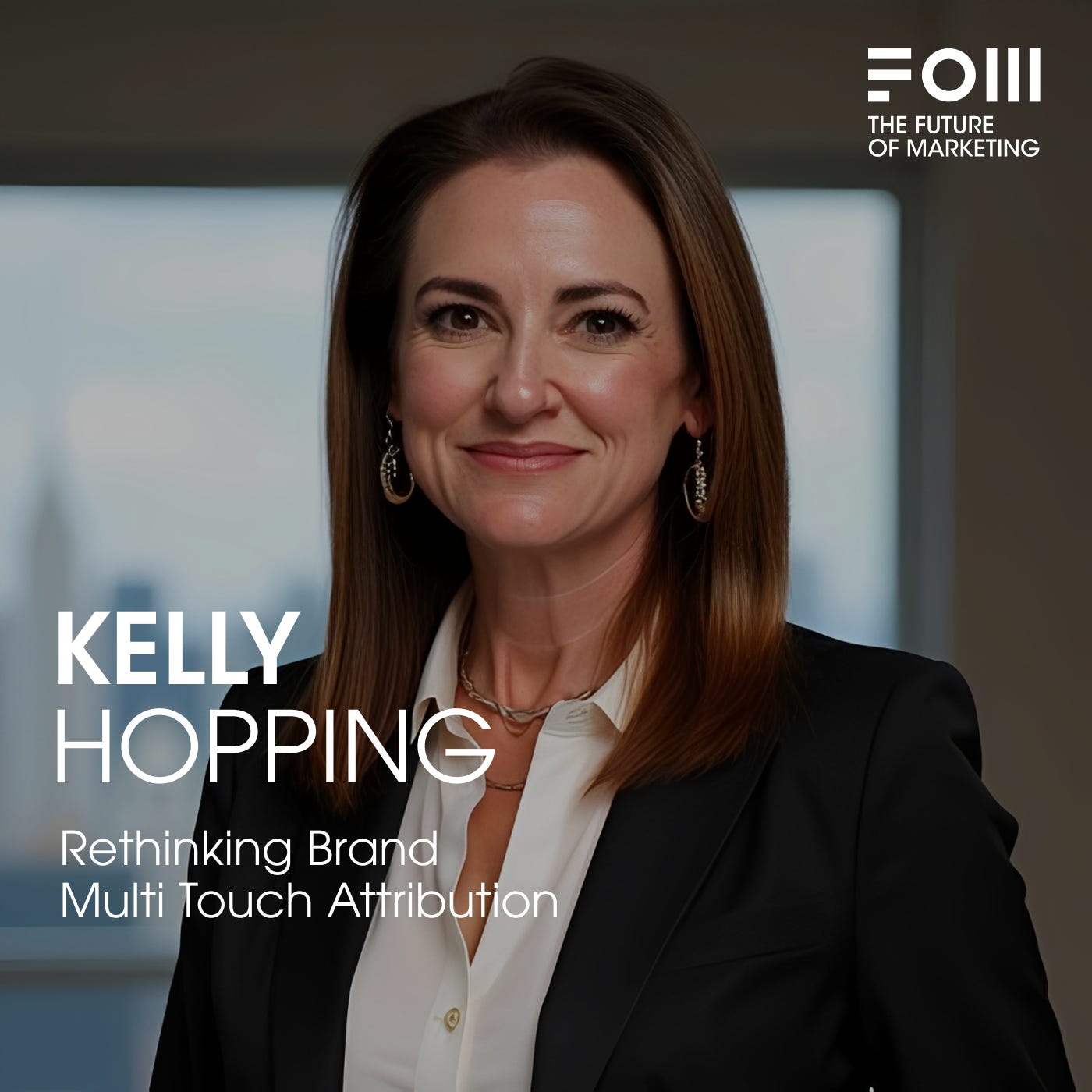
Rethinking Brand Multi-touch Attribution and Entry Level Marketing Careers in the AI Era with Kelly Hopping of 6sense
2w ago00:42:12Tap to summarizeIn this episode of Future of Marketing, hosts Mada Seghete and Ethan Smith sit down with Kelly Hopping, CMO at 6sense, to unpack how AI is changing the way marketing teams are built, measured, and managed. Kelly explains why she no longer backfills roles one-for-one, how agents are shifting manual execution work, and why modern marketing teams need more senior strategic thinkers, editors, prompt engineers, and customer journey owners. She also shares how 6sense uses BDRs, AI email, event follow-up, multi-touch attribution, paid social, owned communities, and intent data to understand which accounts are in market, how buyers are forming shortlists, and where marketing should invest.We discuss:* How AI is changing marketing org design, hiring philosophy, spans, layers, and backfill decisions* Why Kelly now aligns her team more closely to the customer journey and KPIs* Why junior marketers can still build strong careers through events, BDR roles, field marketing, marketing ops, and product marketing* Why Kelly believes BDRs are still critical, especially for enterprise and strategic accounts* How 6sense uses AI email, automated follow-up, scheduling, routing, Clay, Nooks, and event sequences to support BDR workflows* Why BDRs drive 64% of 6sense’s pipeline, and why humans still matter in higher-value sales motions* Why trade show booths alone rarely create pipeline, and why ancillary events, executive meetings, VIP dinners, and owned experiences often perform better* How multi-touch attribution helps reveal the value of paid search, webinars, events, and brand activity across long enterprise buying journeys* Why last-touch attribution can make teams cut channels that are actually influencing deals earlier in the journey* How 6sense uses revenue intelligence, intent data, predictive modeling, APIs, and integrations to feed smarter GTM decisions across the tech stack* Why LLM visibility is pushing marketers back toward brand, owned content, press releases, research, communities, podcasts, and thought leadership* Why Kelly believes marketing needs to focus more on the 95% of the ICP that is not in market yet* How 6sense’s CMO Coffee Talk built brand loyalty strong enough to influence competitive buying decisions* Why paid social works better when it is focused on target accounts and intent signals instead of broad awarenessWhere to find Kelly Hopping:LinkedIn: https://www.linkedin.com/in/kellyhopping/Future of Marketing is brought to you buy the Upside AI Revenue Intelligence and Attribution platform, Graphite Growth Research-Driven SEO & AEO Agency and XYZ Venture Capital and is handcrafted by our friends over at: fame.so This is a public episode. If you would like to discuss this with other subscribers or get access to bonus episodes, visit thefutureofmarketing.substack.com
Transcribe →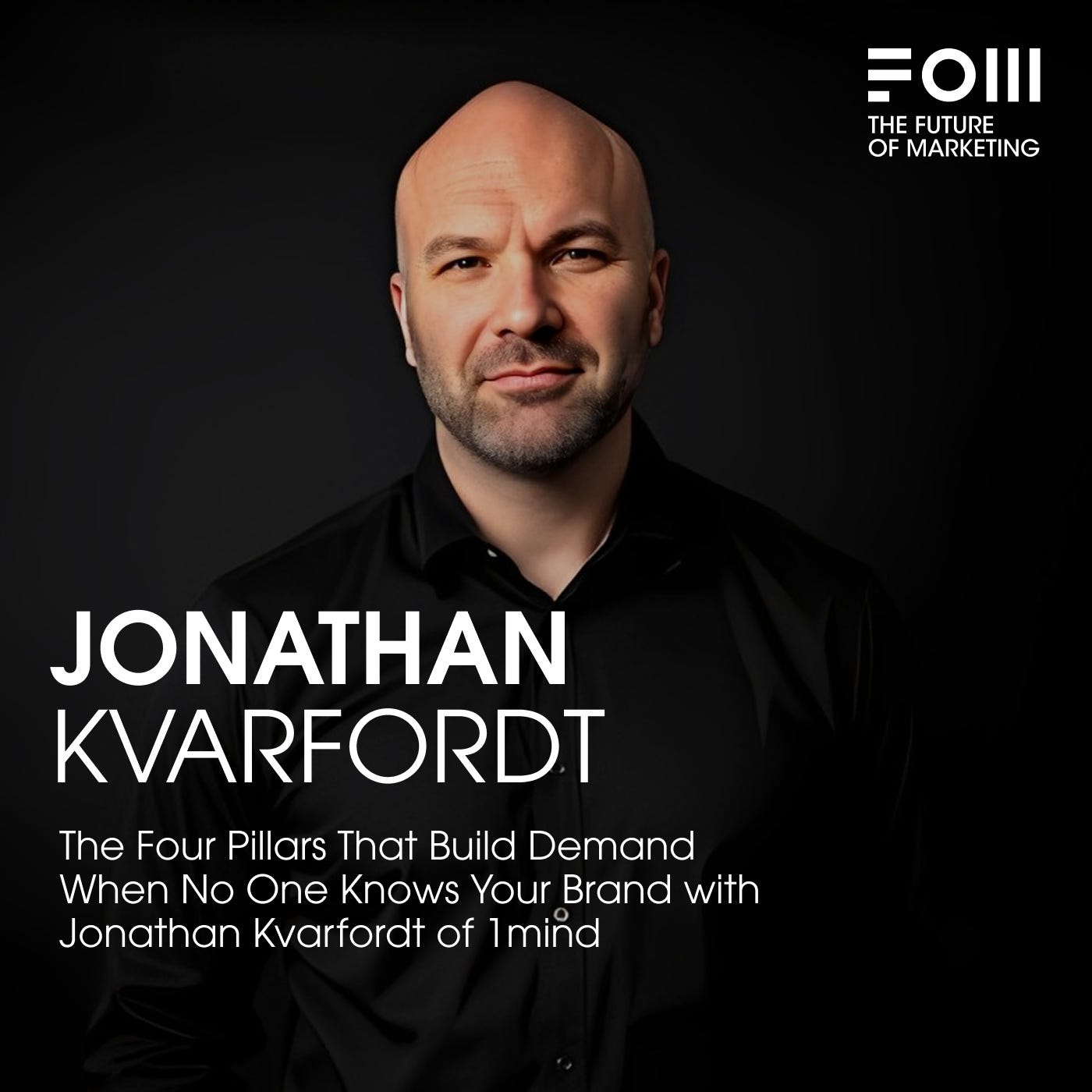
The four pillars that build demand when no one knows your brand with Jonathan Kvarfordt of 1mind
4w ago00:39:50Tap to summarizeIn this episode of Future of Marketing, hosts Mada Seghete and Ethan Smith sit down with Jonathan Kvarfordt, VP of Marketing at 1mind, to unpack how AI is changing pipeline generation, buyer coverage, and the structure of GTM teams. Jonathan argues that most teams are using AI too narrowly by trying to make old workflows faster, cheaper, and easier, especially around meeting booking. Instead, he makes the case for using AI to create better buyer experiences, answer deeper product questions, support solutioning, and move buyers further through the decision process before a human gets involved. He also shares how human effort, customer amplification, trusted communities, valuable content, AEO, and AI-powered analysis shaped his GTM approach at Momentum and now at 1mind.We discuss:* Why Jonathan believes most teams are asking too little of AI when they only use it to book meetings* How 1mind thinks about AI as closer to a solutions engineer than a traditional SDR* Why buyers should be able to ask pricing questions, get product guidance, and explore demos before speaking to a human* How AI can create more buyer coverage without removing the human moments that still matter* How Jonathan used four GTM pillars at Momentum: customer amplification, trusted communities, valuable content, and surround-sound visibility* How partnerships with trusted communities and thought leaders can create more leverage than chasing every buyer one by one* Why a 200-prompt GTM library became Momentum’s strongest lead magnet* How AI can analyze thousands of sales conversations and turn unstructured buyer data into strategic insight* Why human-to-AI conversations can produce cleaner signals, fewer filler words, and more direct buyer intent* Why GTM engineers need to connect workflows to business outcomes, not just build impressive automations* How company-level memory and intelligence layers could reshape how marketing organizations operate* Why human ingenuity remains the moat when everyone has access to the same AI toolsWhere to find Jonathan Kvarfordt:LinkedIn: https://www.linkedin.com/in/jmkmba/Future of Marketing is brought to you buy the Upside AI Revenue Intelligence and Attribution platform, Graphite Growth Research-Driven SEO & AEO Agency and XYZ Venture Capital and is handcrafted by our friends over at: fame.so This is a public episode. If you would like to discuss this with other subscribers or get access to bonus episodes, visit thefutureofmarketing.substack.com
Transcribe →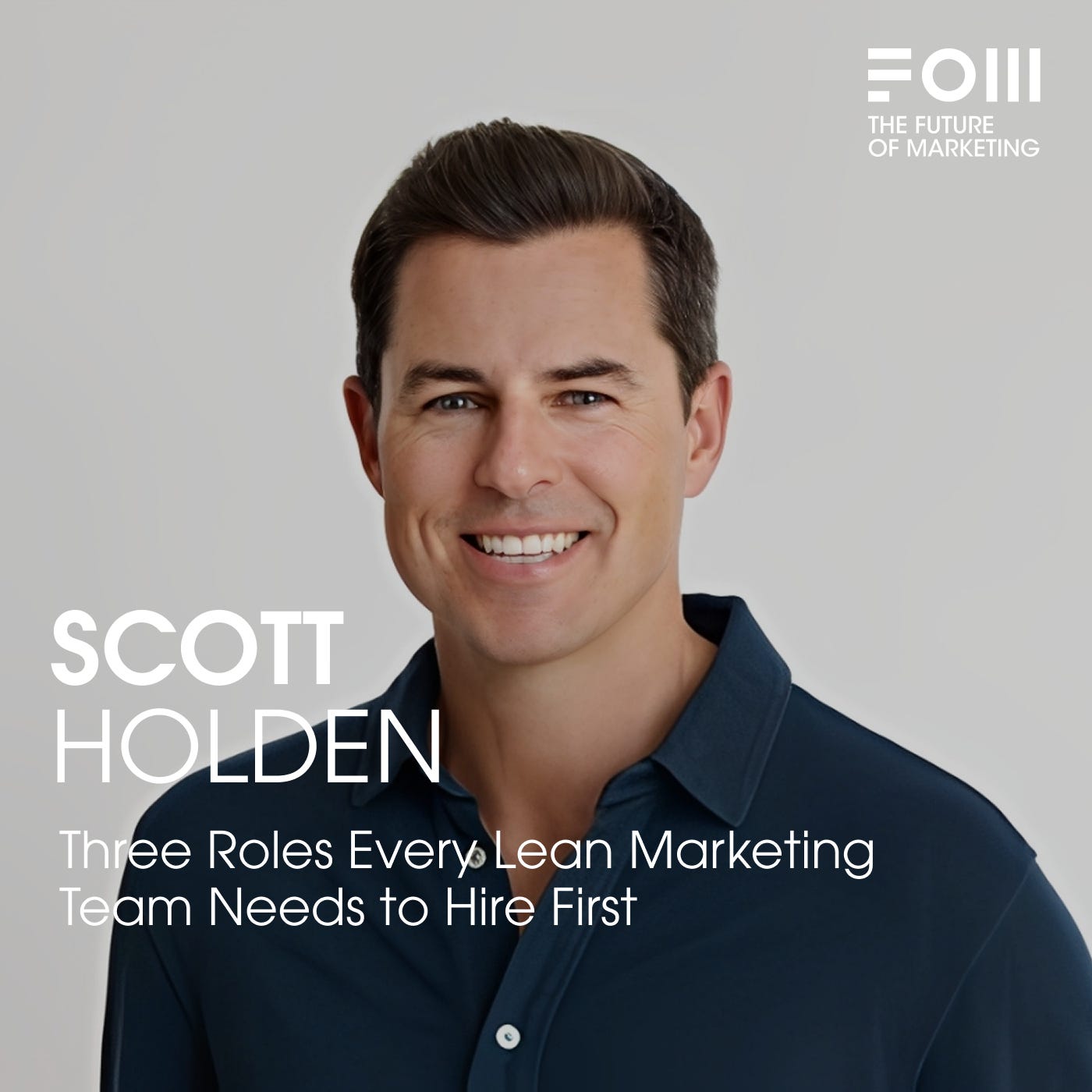
The Three Roles Every Lean Marketing Team Needs to Hire First with Scott Holden of Vanta
Jul 100:54:11Tap to summarizeIn this episode of Future of Marketing, hosts Mada Seghete and Ethan Smith sit down with Scott Holden, CMO at Vanta, to unpack how marketing changes when AI accelerates output, weakens old playbooks, and makes authenticity harder to fake. Scott shares why he believes “expertise is dead,” how Vanta is moving upmarket from SOC 2 into broader compliance, risk, trust centers, vendor questionnaires, and privacy, and why the company’s “compliance” campaign used buyer pain, humor, AEO, LinkedIn, and AI-mined Gong insights to reach senior CISOs. He also explains why brand can act like performance spend, how AEO requires repeated message consensus across trusted sources, and why the modern marketing team needs product marketers, systems architects, and creator-style operators.We discuss:* Why Scott believes marketing is moving toward human authenticity as AI-generated content floods every channel* Why relying on old CMO playbooks is no longer enough, and why reinvention now needs to happen weekly or daily* Why category creation is less effective when competitors can copy category language quickly* How Vanta balances technical category language with emotionally resonant messaging around audit stress and compliance fatigue* How Vanta is using humor, risk messaging, thought leadership, social, out-of-home, and executive content to keep a theme fresh* Why brand spend can behave like performance spend when the product solves an urgent, transactional pain* What Scott learned at Brex when pausing out-of-home and top-of-funnel brand activity caused search, SEO, LinkedIn, and other metrics to drop* How Vanta used AI to mine hundreds of Gong calls and identify “audit hell” as the emotional insight behind its enterprise compliance campaign* How Scott thinks about AEO as a strategic discipline, especially when AI tools understate enterprise capabilities or product differentiation* Why AI can help draft executive content, but human editing is still required to preserve personality, taste, and credibility* Why Scott would build a 10-person marketing team around three profiles: product marketer, systems architect, and influencer-style creator* How messy GTM systems become even messier with AI, and why shared workflows, company-level memory, and systems thinking are the next advantageWhere to find Scott Holden:LinkedIn: https://www.linkedin.com/in/scottiholden/Future of Marketing is brought to you buy the Upside AI Revenue Intelligence and Attribution platform, Graphite Growth Research-Driven SEO & AEO Agency and XYZ Venture Capital and is handcrafted by our friends over at: fame.so This is a public episode. If you would like to discuss this with other subscribers or get access to bonus episodes, visit thefutureofmarketing.substack.com
Transcribe →
The AI Native CMO Playbook with Morgane Palomares of Braintrust
Jun 1700:46:41Tap to summarizeIn this episode of Future of Marketing, hosts Camille Ricketts and Mada Seghete sit down with Morgane Palomares, VP of Marketing at Braintrust, to unpack how marketing leaders can build credibility, speed, and leverage inside technical companies. Morgane shares how she used Reddit scraping, Gong calls, AI transcript analysis, and monthly executive readouts to shape her first 90 days at Braintrust. She also breaks down why Braintrust prioritized brand before education, how AI agents are changing PMM and field marketing workflows, and why developer marketing teams should move fast without lowering the quality bar.We discuss:* Why the first 90 days as a marketing leader should start during the interview process* How Morgane used Reddit feedback, Gong calls, and AI transcript analysis to diagnose Braintrust’s market and customer reality faster* Why monthly executive readouts helped build trust by making observations, gaps, and tradeoffs explicit* How to decide whether a technical company needs education, brand visibility, demand creation, or executive-level messaging first* How San Francisco transit shelters, bus wraps, posters, a 500-person user conference, a Series B announcement, a new brand, and a new website worked together as one market signal* Why product marketing may become one of the highest-leverage AI-enabled functions in technical B2B companies* How to earn credibility with engineering teams by shaping technical insight without slowing down product launches* Why dev tool companies may not need marketing early if users cannot already experience product value on their own* How senior marketing leaders can use AI to move faster without outsourcing their judgment, taste, or point of viewWhere to find Morgane Palomares:Linkedin: https://www.linkedin.com/in/morganepalomares/ Future of Marketing is brought to you by the Upside AI Revenue Intelligence and Attribution platform, Graphite Growth Research-Driven SEO & AEO Agency and XYZ Venture Capital and is handcrafted by our friends over at: fame.so This is a public episode. If you would like to discuss this with other subscribers or get access to bonus episodes, visit thefutureofmarketing.substack.com
Transcribe →
Building Radical Empathy at Scale with Vanessa Thompson of Twilio
Jun 900:52:43Tap to summarizeIn this episode of Future of Marketing, hosts Mada Seghete and Ethan Smith sit down with Vanessa Thompson, a senior marketing leader who helped scale Twilio from a developer tool into a $5B revenue company, to unpack how AI changes the operating model for marketing. Vanessa argues that the future of marketing is radical empathy at scale: using data, AI agents, and customer signals to help buyers succeed in the moments where they are actually stuck. She shares how Twilio runs PLG and sales-assisted motions in parallel, why brand has to serve developers, solopreneurs, and enterprise CEOs at once, and how experimentation, usage data, LLM visibility, Reddit, video, and AI-powered workflows are reshaping modern GTM.We discuss:* Why Vanessa believes the future of marketing is “radical empathy at scale”* How AI can remove the repetitive work that makes marketers less human and create more room for creativity, taste, discernment, and customer understanding* Why the old model of forms, nurtures, lifecycle emails, and one-size-fits-all journeys is giving way to more personalized buyer support* How marketers can use customer signals, usage data, product errors, search behavior, and drop-off points to improve the experience* Why Twilio runs PLG and sales-assisted motions in parallel with one marketing team* How brand has to do more work when the same company serves enterprise CEOs, solopreneurs, developers, and API-driven teams* How Twilio built a test-and-learn culture where teams own budgets, run two-week experiments, and reallocate spend based on what works* How Twilio uses AI agents across 100% of signups and inbound sales requests to help prospects get started, qualify intent, and route the right people to sales* Why gated thought leadership is no longer the high-performing lead engine it used to be* How Twilio approaches LLM visibility through structured developer documentation, video, Reddit, AMAs, and community participation* How internal hackathons, team-built tools, and experimentation OKRs help create the cultural conditions for AI adoptionWhere to find Vanessa Thompson:LinkedIn: https://www.linkedin.com/in/vanessathomps/Future of Marketing is brought to you by the Upside AI Revenue Intelligence and Attribution platform, Graphite Growth Research-Driven SEO & AEO Agency and XYZ Venture Capital and is handcrafted by our friends over at: fame.so This is a public episode. If you would like to discuss this with other subscribers or get access to bonus episodes, visit thefutureofmarketing.substack.com
Transcribe →
How to Build a Brand That Stands Out in the Age of AI with Anthony Kennada of Goldenhour
Jun 200:46:41Tap to summarizeIn this episode of Future of Marketing, hosts Camille Ricketts and Mada Seghete sit down with Anthony Kennada, Founder and CEO of Goldenhour to examine what happens when AI automates the mechanics of marketing. Anthony argues that the old B2B playbook, gated content, nurture sequences, demo requests, and attribution fights, is breaking down because buyers have learned to avoid it. He shares why distribution is now the central challenge for AI-era companies, how Gainsight built the Customer Success category around audience pain instead of product features, and why the “human last mile” of brand strategy still depends on taste, judgment, and wisdom.We discuss:* Why the marketing automation era trained teams to optimize for traffic, forms, nurture, and attribution instead of buyer experience* How AI exposes existing weaknesses in B2B marketing rather than creating them from scratch* Why distribution becomes the harder problem when products are easier to build with AI* How brands can stand out through authenticity, emotion, founder presence, community, events, and belonging* Why Anthony believes people will still shape enterprise buying decisions, even as agents influence shortlists and recommendations* How CMOs should rethink paid distribution and consider more direct, experiential, event-led motions* How the 95-5 rule changes audience strategy by forcing marketers to serve people who are watching but not ready to buy* Why over-engineering measurement can reduce the creative impact of brand campaigns* How GTM engineering requires both technical orchestration and real understanding of revenue, sales, and pipeline* Why owned media is powerful but difficult for small B2B teams without strong content, distribution, conversion, and audience-building capability* How Goldenhour uses AI-enabled brand systems and activation agents while keeping human operators at the center* Why the final 10% of brand work still requires human judgment: asking better questions, knowing what to cut, and reading the roomKey Takeaways→ AI is not killing marketing. It is exposing the parts of marketing that were already broken: gated content loops, lead spam, attribution fights, and metrics that optimized activity over buyer experience.→ As products become easier to build with AI, distribution becomes the harder problem. Anthony’s view: marketing is now responsible for helping companies stand out when features are easier to copy and categories are more crowded.→ The work that becomes more valuable is the work AI cannot fully own: authenticity, emotional storytelling, founder presence, community, events, and brand trust.The End of the Old Playbook→ Anthony argues that the marketing automation era trained B2B teams to send traffic to owned properties, convert it with an offer, then email people until they booked a demo or unsubscribed.→ That system is breaking because buyers understand the exchange. They know what happens after they fill out the form.→ AI may automate parts of that machinery, but the strategic opportunity is not more volume. It is creating stronger human experiences.Brand and Distribution→ In an AI-shaped market, the existential question is not just “Can we build the product?” It is “How do we get seen?”→ Anthony believes the best brands will be built around trust, familiarity, emotion, community, and belonging.→ That is why events and experiential strategies matter more, not less. In-person connection is becoming a counterweight to digital noise and AI-generated sameness.Positioning and Category Creation→ At Gainsight, Anthony learned that positioning around customer pain can be more powerful than positioning around platform capability.→ Instead of leading with features, Gainsight built around the customer success manager: a persona with limited budget, support, technology, and internal recognition.→ The lesson for founders and CMOs: move upstream from product functionality and tell the story of the customer, the problem, and the market shift.Audience-First Marketing→ Anthony pushes past the narrow definition of ICP. The 5% of buyers in the market today matter, but the other 95% are still watching, learning, and forming opinions.→ Audience-first marketing means leading a conversation before buyers are ready to buy.→ That conversation could be a manifesto, a strategic narrative, a category point of view, or a content system that helps the market understand what is changing.The Human Last Mile→ AI can accelerate brand and positioning work by gathering context, synthesizing inputs, and producing drafts.→ But Anthony believes the final 10% remains human: asking sharper questions, knowing what to cut, reading the room, and applying wisdom built from experience.Where to find Anthony Kennada:LinkedIn: https://www.linkedin.com/in/akennada/Future of Marketing is brought to you by the Upside AI Revenue Intelligence and Attribution platform, Graphite Growth Research-Driven SEO & AEO Agency and XYZ Venture Capital and is handcrafted by our friends over at: fame.so This is a public episode. If you would like to discuss this with other subscribers or get access to bonus episodes, visit thefutureofmarketing.substack.com
Transcribe →
From 22 Marketers to 2: Automating 80% of Marketing at Chili Piper with Alina Vandenberghe
May 1900:38:37Tap to summarizeAlina Vandenberghe is the Co-Founder and Co-CEO of Chili Piper, a demand conversion platform used by companies like ClickUp, Gong, Cursor, Verizon, and Upside that turns inbound leads into booked meetings via agentic workflows. She founded the company in 2016 with her husband Nicolas and bootstrapped past $3M ARR before raising funding. With a background in computer science, she previously built mobile products used by millions at Thomson Reuters, Bloomberg, and Pearson, some featured on stage by Steve Jobs. Alina grew up in Romania, started working at age eight, held three jobs to pay for school, and moved to the US in 2007. She took over as acting CMO at Chili Piper in 2023 and led the company’s shift toward agentic marketing operations.We discuss:* How Alina built a 65-task automation backlog scored by revenue impact and engineering effort* Why almost 80% of routine marketing work at Chili Piper was automatable through internal agents* How invisible operational fixes like a spam email checker prevented 195,000 junk meetings from cluttering sales calendars* Why Qualified Held Meetings, not opportunities, became the intermediary metric for measuring automation outcomes* How chaining agents together enables full-funnel measurement from pipeline to NRR* Why qualified booked meetings alone can hide churn risk and a leaky bucket* How analyzing 3,000 account characteristics rebuilt ICP and dropped CAC dramatically* Why Chili Piper documents every major decision asynchronously and uses the log as a proprietary LLM input* Why LLMs average creative output and where sharp opinions and storytelling still win* How a return-to-office parody campaign drove 800,000 impressions for the corporate account* Why 50% of Chili Piper’s open pipeline overlapped with engagement on Alina’s LinkedIn posts* How Alina spends only three hours a week on LinkedIn, posts three times a week, and writes everything on her phone* What a lean marketing team actually requires: one deeply technical operator and one creative generalist* Why the durable advantage in an AI-first world is human taste and contrarian creative judgment* Advice on co-founding and co-leading a company with a spouseWhere to find Alina Vandenberghe:* LinkedInFuture of Marketing is brought to you by the Upside AI Revenue Intelligence and Attribution platform, Graphite Growth Research-Driven SEO & AEO Agency and XYZ Venture Capital and is handcrafted by our friends over at: fame.so This is a public episode. If you would like to discuss this with other subscribers or get access to bonus episodes, visit thefutureofmarketing.substack.com
Transcribe →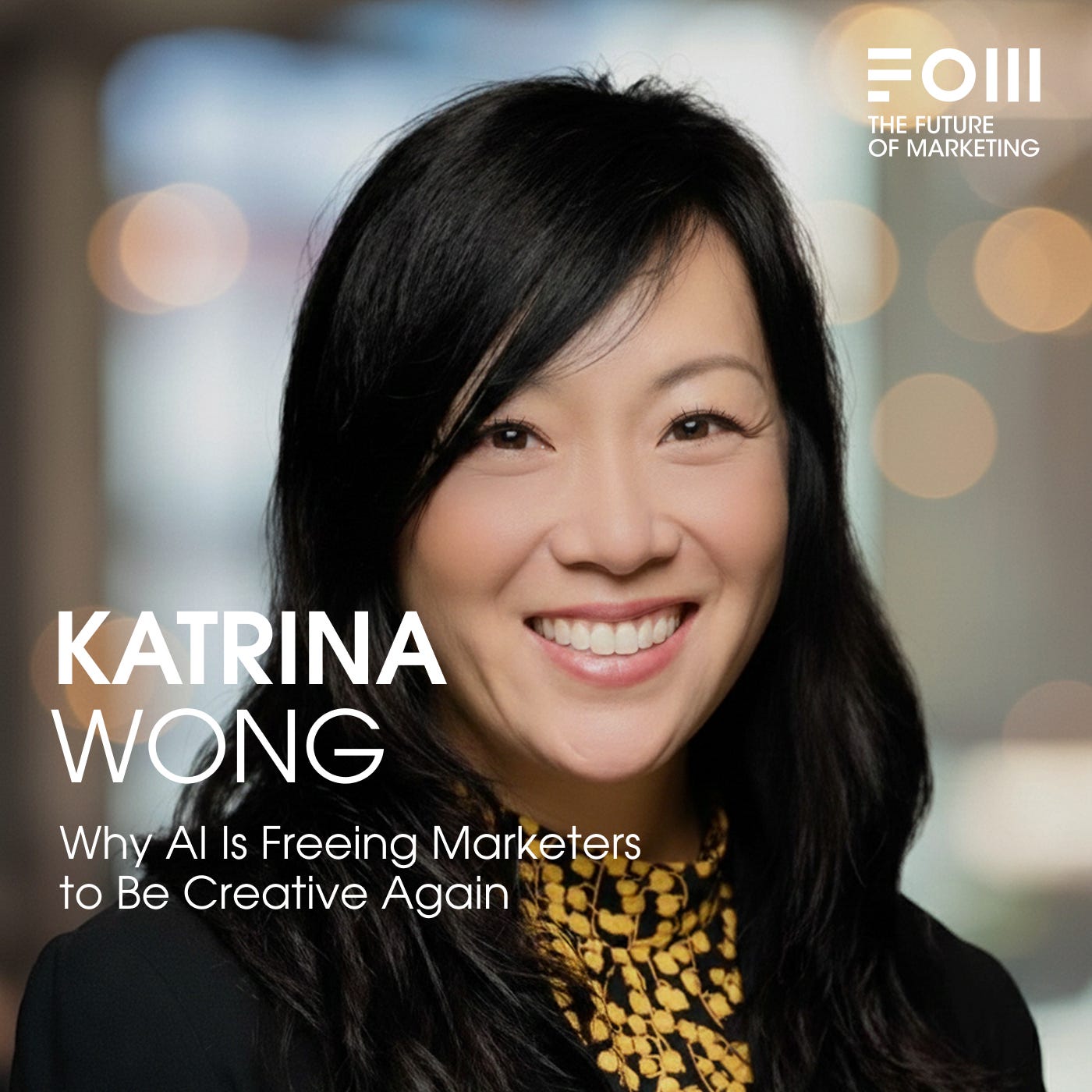
Why AI Is Freeing Marketers to Be Creative Again with Katrina Wong of New Relic
May 1200:46:45Tap to summarizeKatrina Wong is the Chief Marketing Officer of New Relic, a $1 billion revenue observability platform that went private in a $6 billion deal in late 2023. She joined in May 2024 as the company’s first CMO, responsible for brand evolution, demand generation, and market expansion. She previously held marketing leadership roles at Segment and Salesforce and has been part of seven successful company exits across her career. She studied environmental toxicology before moving into tech, and applies a scientific approach to hypothesis testing and measurement in marketing.We discuss:* Why stretch goals, not achievable targets, create the conditions to overachieve pipeline* How New Relic moved from 3x to 5x pipeline goals with the same budget and eventually eliminated the lower goal* How sprint-based demand gen works: setting numeric goals Monday, checking trajectory Wednesday, hitting targets by Friday* Why the sprint facilitator’s role is to probe the how, not just receive status updates* When database growth plateaus, how distribution through partnerships, communities, and influencers unlocks pipeline within weeks* How defining ICP through compelling events in top deals, not firmographic patterns, enables targeted lookalike motions* How Katrina uses customer advisory boards and co-innovation sessions to identify emerging problems before they surface broadly* How New Relic moved from claiming “intelligent observability” to naming a specific pain point: engineers troubleshooting AI-generated code at 3AM, at a scale that can’t be solved by humans alone* Why AI reduces the manual work of marketing and restores space for creativity, storytelling, and brand building* How Katrina rolled out AI adoption bottoms-up through a monthly marketing showcase, then layered in top-down governance* Why the CMO role means wearing the company hat, not just the marketing hatWhere to find Katrina Wong:* LinkedInFuture of Marketing is brought to you by the Upside AI Revenue Intelligence and Attribution platform, Graphite Growth Research-Driven SEO & AEO Agency and XYZ Venture Capital and is handcrafted by our friends over at: fame.so This is a public episode. If you would like to discuss this with other subscribers or get access to bonus episodes, visit thefutureofmarketing.substack.com
Transcribe →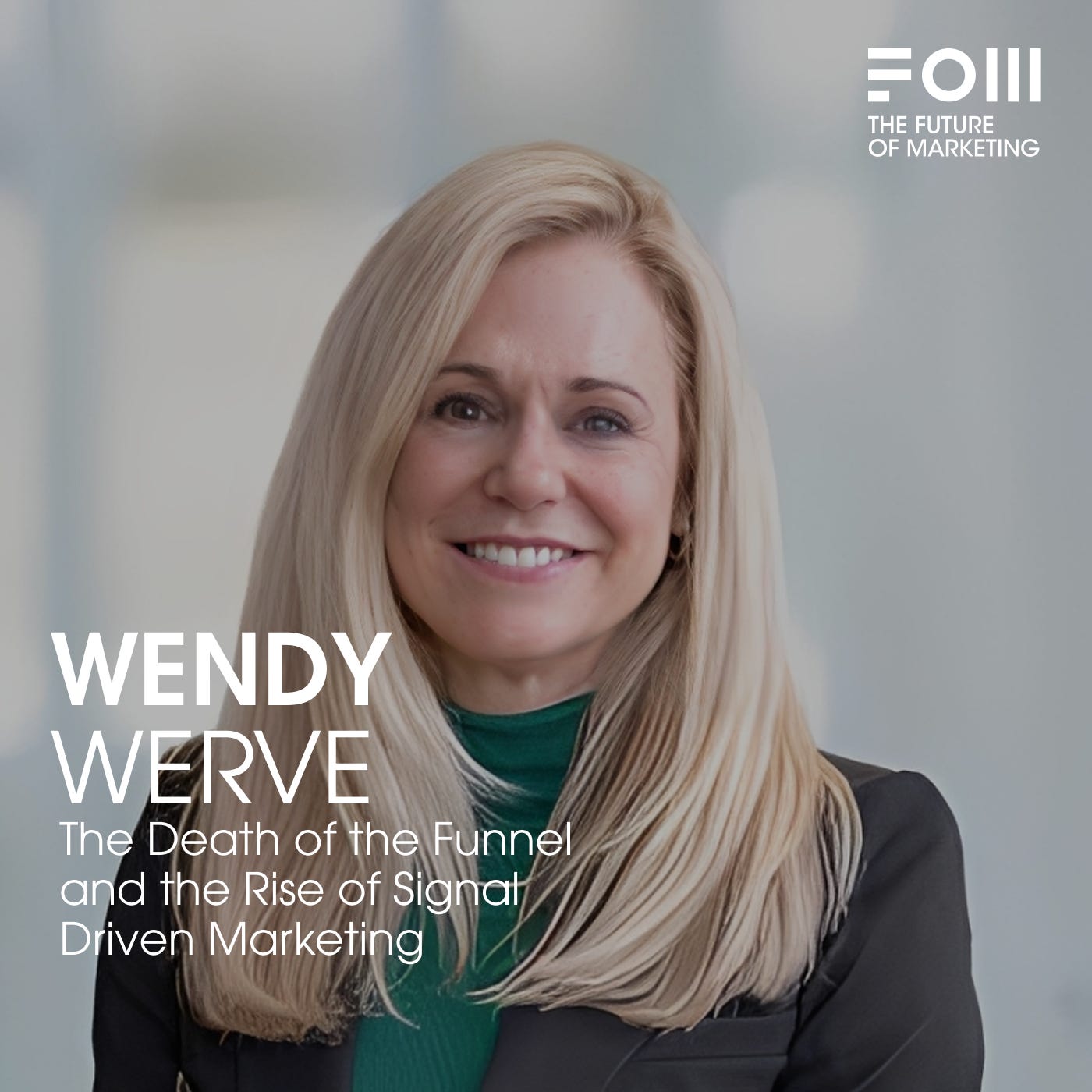
The Death of the Funnel and the Rise of Signal Driven Marketing with Wendy Werve of Comply
May 500:45:12Tap to summarizeIn this episode of Future of Marketing, hosts Camille Ricketts and Mada Seghete sit down with Wendy Werve, Chief Market Officer at Comply, to challenge one of marketing’s most foundational concepts: the funnel. Wendy shares why traditional funnels and MQLs no longer reflect how buyers behave, how AI enables real-time, signal-driven marketing, and what it takes to build trust and drive revenue in complex, high-stakes markets. This is a public episode. If you would like to discuss this with other subscribers or get access to bonus episodes, visit thefutureofmarketing.substack.com
Transcribe →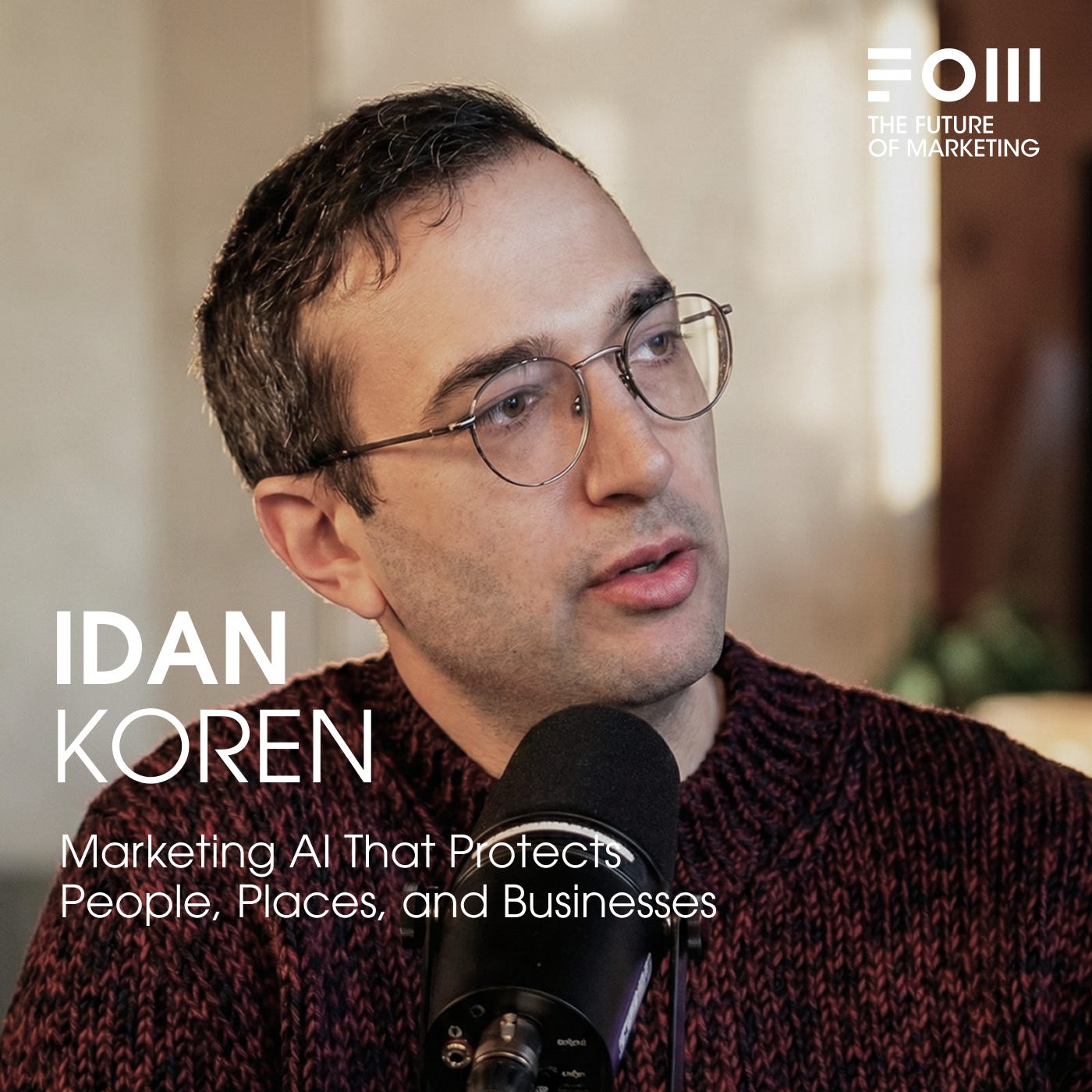
Marketing AI That Protects People, Places, and Businesses
Apr 2800:46:15Tap to summarizeIn this episode of Future of Marketing, hosts Ethan Smith and Camille Ricketts sit down with Idan Koren, CMO of Verkada, to explore what it actually takes to build a technical marketing organization in the AI era. From structuring a high-performing MDR function to using first-party data for real personalization, Idan explains why the biggest gains don’t come from flashy AI demos but from building better systems, infrastructure, and decision frameworks. This is a public episode. If you would like to discuss this with other subscribers or get access to bonus episodes, visit thefutureofmarketing.substack.com
Transcribe →