
Podcast
Futurism Tech Brief By HackerNoon
Hosted by HackerNoon · EN
Learn the latest futurism updates in the tech world.
29episodes
Episodes
Newest firstAll episodes
EigenQ and Intel Partner to Harden Deployed Xeon Systems Against Quantum Threats
3w ago00:04:18Tap to summarizeThis story was originally published on HackerNoon at: https://hackernoon.com/eigenq-and-intel-partner-to-harden-deployed-xeon-systems-against-quantum-threats. Quantum technology company EigenQ has announced a major strategic security integration with Intel Corporation to enable scalable post-quantum cryptography. Check more stories related to futurism at: https://hackernoon.com/c/futurism. You can also check exclusive content about #quantum-computing, #intel, #post-quantum-security, #eigenq-intel-partnership, #post-quantum-cryptography, #quantum-safe-security, #intel-xeon-security, #pqc-integration, and more. This story was written by: @meric. Learn more about this writer by checking @meric's about page, and for more stories, please visit hackernoon.com. Quantum technology company EigenQ has announced a major strategic security integration with Intel Corporation to enable scalable post-quantum cryptography.
Transcribe →
The Open Chip Revolution Has Reached the Real World
4w ago00:45:06Tap to summarizeThis story was originally published on HackerNoon at: https://hackernoon.com/the-open-chip-revolution-has-reached-the-real-world. Open source CPU/GPU/AI chips? A standard governed in Switzerland, extensible by anyone, embargoable by no one. How real are they in 2026? Check more stories related to futurism at: https://hackernoon.com/c/futurism. You can also check exclusive content about #futurism, #open-source, #open-source-technology, #open-source-ai, #open-source-hardware, #risc-v, #hardware, #hackernoon-top-story, and more. This story was written by: @zbruceli. Learn more about this writer by checking @zbruceli's about page, and for more stories, please visit hackernoon.com. Open source CPU/GPU/AI chips? A standard governed in Switzerland, extensible by anyone, embargoable by no one. How real are they in 2026?
Transcribe →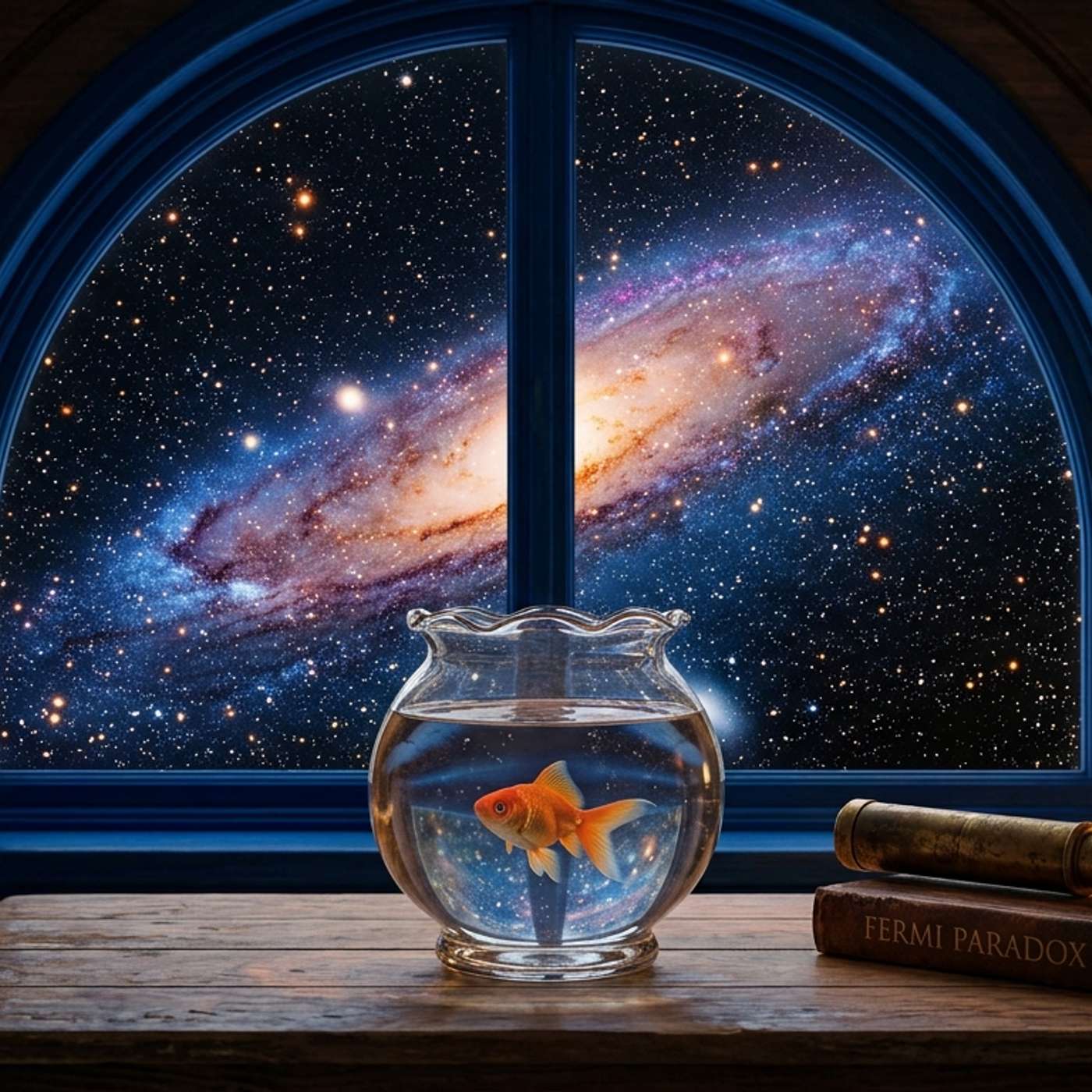
What If the Fermi Paradox Is Asking the Wrong Question?
4w ago00:04:37Tap to summarizeThis story was originally published on HackerNoon at: https://hackernoon.com/what-if-the-fermi-paradox-is-asking-the-wrong-question. Are we alone, or just fish in a bowl? Explore three philosophical arguments that try to explain the silence of the universe and challenge the Fermi Paradox. Check more stories related to futurism at: https://hackernoon.com/c/futurism. You can also check exclusive content about #fermi-paradox, #alien-civilizations, #space-exploration, #astrobiology, #speculative-science, #the-golden-horizon, #drake-equation, #seti, and more. This story was written by: @blessy. Learn more about this writer by checking @blessy's about page, and for more stories, please visit hackernoon.com. Claiming aliens don't exist just because we haven't met them is like a goldfish in a bowl claiming oceans don't exist. The silence of the universe isn't absolute proof we are alone, but could instead be a deliberate protective barrier of cosmic isolation and mismatched timelines. Ultimately, our technology might just be an accident of human biology, meaning other civilizations may have evolved in ways that are completely unfathomable to us.
Transcribe →
How to Automate Social Media Posts From Canva Designs With an API
Jul 300:07:17Tap to summarizeThis story was originally published on HackerNoon at: https://hackernoon.com/how-to-automate-social-media-posts-from-canva-designs-with-an-api. Learn to turn a Canva design into a parameterized template, render variants with one API call, and publish to social. Includes code and a Make/n8n path. Check more stories related to futurism at: https://hackernoon.com/c/futurism. You can also check exclusive content about #automation, #api, #social-media-marketing, #canva-automation, #social-post-automation, #image-rendering-api, #automated-publishing, #good-company, and more. This story was written by: @orshot. Learn more about this writer by checking @orshot's about page, and for more stories, please visit hackernoon.com. Brand teams tend to design something once in Canva and then lose hours re-exporting that same layout into a dozen variants for every platform, market, and campaign. In this walkthrough I will show you how to turn a Canva design into a parameterized template, render variations with a single API call, and publish them straight to your social accounts. There is code for engineers and a no-code path through Make and n8n for everyone else.
Transcribe →
Robotics - The Wave After AI
Jun 3000:09:25Tap to summarizeThis story was originally published on HackerNoon at: https://hackernoon.com/robotics-the-wave-after-ai. Robotics VC hit a record $16.3B in Q1 2026 as physical AI emerges as crypto and AI’s next wave — here’s the investment case, risks, and IPO pipeline. Check more stories related to futurism at: https://hackernoon.com/c/futurism. You can also check exclusive content about #robotics, #tech-industry, #physical-ai-investing, #humanoid-robotics-ipo-2026, #robotics-venture-capital, #agility-robotics-aglt, #ai-supply-chain-investment, #ndfeb-magnet-supply-chain, and more. This story was written by: @quinnhillerich. Learn more about this writer by checking @quinnhillerich's about page, and for more stories, please visit hackernoon.com. Robotics and physical AI investment hit a record $16.3 billion across 492 deals in Q1 2026, building on years of overlap with existing AI infrastructure in chips, sensing, and power. Agility Robotics’ SPAC merger and Unitree’s Shanghai IPO mark the start of a public-market pipeline for humanoid robotics, while upstream suppliers and Big Tech remain the most accessible exposure today. Real risks persist — dexterity, capital intensity, China’s manufacturing lead, and valuation discipline among them — but 2026 and 2027 are shaping up as the validation window for physical AI’s transition from prototype to platform.
Transcribe →
Building a Visual Guide to PQC Handshakes
Jun 2600:05:56Tap to summarizeThis story was originally published on HackerNoon at: https://hackernoon.com/building-a-visual-guide-to-pqc-handshakes. Think quantum-proofing your applications requires a Ph.D. in advanced lattice mathematics? Think again. Check more stories related to futurism at: https://hackernoon.com/c/futurism. You can also check exclusive content about #quantum-computing, #pqc-handshake, #post-quantum-crypto, #ml-kem, #quantum-security, #quantum-safe-apps, #javascript-crypto, #quantum-threat, and more. This story was written by: @damianwgriggs. Learn more about this writer by checking @damianwgriggs's about page, and for more stories, please visit hackernoon.com. Think quantum-proofing your applications requires a Ph.D. in advanced lattice mathematics? Think again.
Transcribe →
Augmented Reality and Web3 - The Infrastructure Waiting for Its Moment
Jun 2600:12:37Tap to summarizeThis story was originally published on HackerNoon at: https://hackernoon.com/augmented-reality-and-web3-the-infrastructure-waiting-for-its-moment. Why AR-Web3's first wave failed on execution, not vision — and why the infrastructure now exists for a successful second attempt. Check more stories related to futurism at: https://hackernoon.com/c/futurism. You can also check exclusive content about #augmented-reality, #web3, #web3-businesses, #blockchain-ar, #metaverse-infrastructure, #ar-web3-project, #decentralized-internet, #hackernoon-top-story, and more. This story was written by: @quinnhillerich. Learn more about this writer by checking @quinnhillerich's about page, and for more stories, please visit hackernoon.com. The first wave of decentralized AR companies (2021–2022) largely failed — but not because the idea was wrong. OVR survived by rewarding users for real contribution (map2earn); Cult1vate collapsed because its mint math required constant price appreciation to make sense. Since then, the infrastructure has matured: Apple Vision Pro and Meta Ray-Ban brought AR hardware to consumers, Layer 2 networks cut gas fees from hundreds of dollars to cents, Niantic's SDK lowered the development floor, and DePIN models replaced speculation with contribution. Mass adoption still hasn't arrived, but the conditions that made 2021 premature are gone. The next generation of AR-Web3 projects needs utility before tokens, interoperability by default, and real onboarding — but the window to build is open now.
Transcribe →
New Quantum Research Is Accelerating the Timeline for Post-Quantum Migration
Jun 2400:07:25Tap to summarizeThis story was originally published on HackerNoon at: https://hackernoon.com/new-quantum-research-is-accelerating-the-timeline-for-post-quantum-migration. Three papers in 12 months cut the qubit count to break secp256k1 from 20M to 500K. Here's what that means for ECC, TLS, ZK-SNARKs, and Web3's migration window. Check more stories related to futurism at: https://hackernoon.com/c/futurism. You can also check exclusive content about #quantum-computing, #post-quantum-cryptography, #blockchain-technology, #shor's-algorithm, #secp256k1, #harvest-now-decrypt-later, #quantum-safe-cryptography, #zk-snarks, and more. This story was written by: @vitaliiyatskiv. Learn more about this writer by checking @vitaliiyatskiv's about page, and for more stories, please visit hackernoon.com. Quantum mechanics took 27 years (1900–1927) to produce the hardware civilization. The same physics now threatens its cryptographic layer. Three papers published between May 2025 and March 2026 compressed the qubit estimate to break ECDSA/secp256k1 from 20 million to 500,000 — a 20x drop in under a year. NIST finalized post-quantum standards (ML-KEM, ML-DSA, SLH-DSA) in August 2024, but migration in Web3 is architecturally harder than in traditional systems: private keys don't rotate, deployed smart contracts don't auto-upgrade, and roughly 25–30% of Bitcoin's supply already has public keys exposed on-chain. The harvest-now, decrypt-later attack pattern means the threat isn't purely future — state actors are already collecting encrypted data for retroactive decryption. The question is how much of the migration window has already passed.
Transcribe →
Portaterra
Jun 2300:07:50Tap to summarizeThis story was originally published on HackerNoon at: https://hackernoon.com/portaterra. Left alone on a lethal planet after a catastrophic training mission, a young space cadet risks everything on a blind portal jump into the unknown. Check more stories related to futurism at: https://hackernoon.com/c/futurism. You can also check exclusive content about #scifi, #science-fiction, #storytelling, #fiction, #survival, #space-exploration, #adventure, #short-story, and more. This story was written by: @huffhimself. Learn more about this writer by checking @huffhimself's about page, and for more stories, please visit hackernoon.com. TL;DR: > * The Setup: A routine Space Corp training mission completely disintegrates due to incompetent leadership. The Stakes: 15 cadets are dead; the sole survivor is stuck on a toxic world with a failing emergency portal. The Pivot: He takes a blind, final gamble on an unknown planet called Portaterra. The Payoff: A spacer raised entirely inside artificial domes experiences wind, dirt, and rain for the first time in his life.
Transcribe →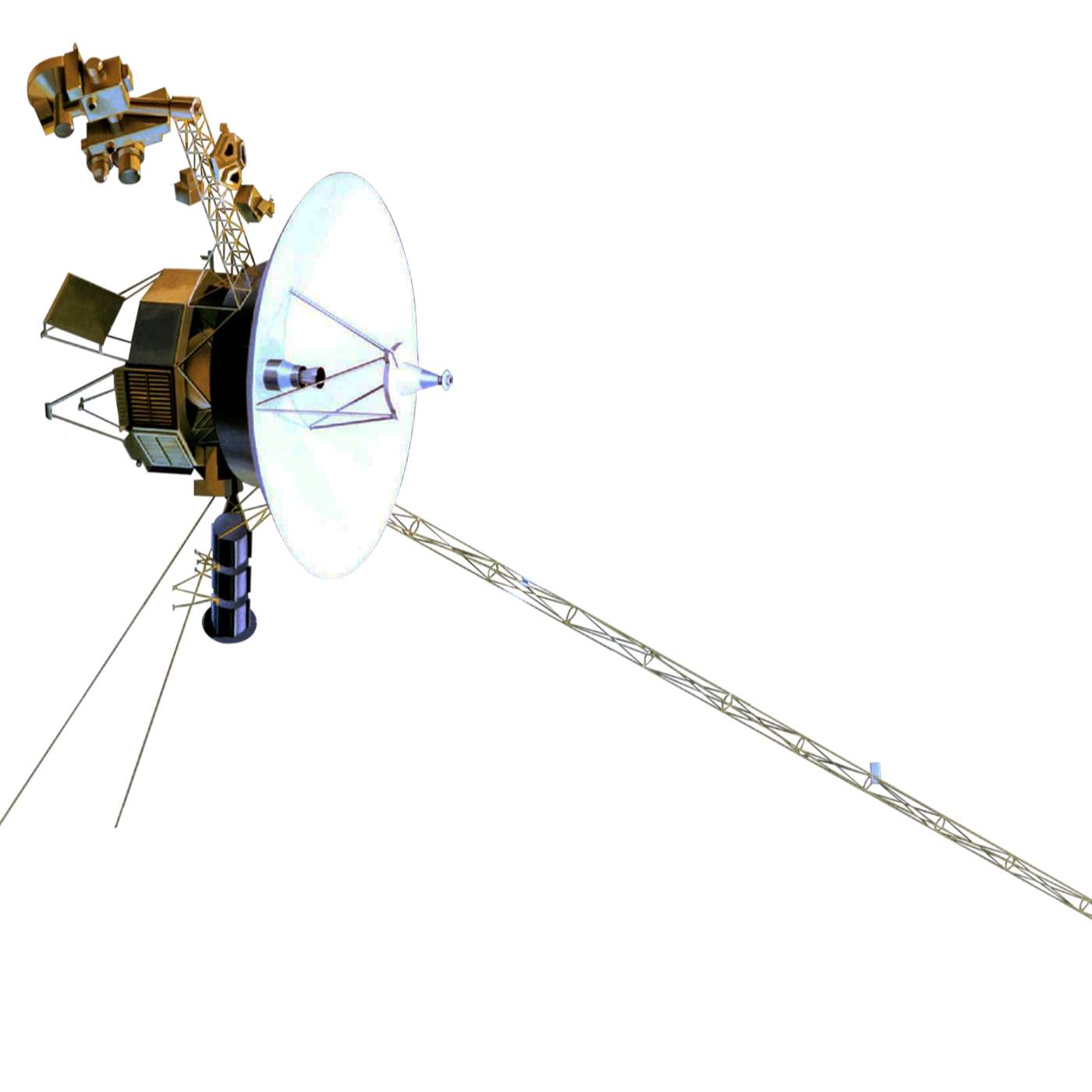
The 49-Year-Old Spacecraft Still Talking From Deep Space
Jun 2300:33:39Tap to summarizeThis story was originally published on HackerNoon at: https://hackernoon.com/the-49-year-old-spacecraft-still-talking-from-deep-space. Voyager 1 was built for four years. Nearly 50 years later, it is still talking from interstellar space through brilliant engineering and repair. Check more stories related to futurism at: https://hackernoon.com/c/futurism. You can also check exclusive content about #futurism, #space, #engineering, #space-exploration, #deep-space, #nasa, #reliability, #hackernoon-top-story, and more. This story was written by: @zbruceli. Learn more about this writer by checking @zbruceli's about page, and for more stories, please visit hackernoon.com. Voyager 1 was built for four years. Nearly 50 years later, it is still talking from interstellar space through brilliant engineering and repair.
Transcribe →