
Podcast
Geospatial FM
Hosted by Wilfred Waters · EN
Obsessed with geospatial foundation models, broadcasting in geospatial and compounding via publicly listed geospatial equities.
19episodes
Episodes
Newest firstAll episodes

GE0500 Weekly Wrap and Starting a New Quant Agri Portfolio
2w ago00:10:14Tap to summarizeWeekly wrap for 7 days to 7/26/2026 and promo for Quant Agri (https://quantagri.substack.com/) with Ryan Kmetz (https://www.linkedin.com/in/ryankmetz/). I will be incorporating Quant Agri GEOINT-based commodity trading performance going forward, based on a $1,000 starting position.
Transcribe →
marimo
2w ago01:00:57Tap to summarizemarimo is the fastest growing Python project with 22,000 Github stars. Fantastic episode today, covering:0:00 - Intro0:54 - Favorite keyboard2:35 - What Coreweave's GPUs mean for marimo, such as solving the Travelling Salesman Problem8:13 - What is the one thing Jupyter Notebooks always gets wrong, but marimo doesn't?17:43 - UI elements in marimo library like sliders, cascading updates across cells and marimo notebooks as web apps20:08 - What marimo means for different modern data team personas 24:39 - Remote storage connections and example of data analyst work27:15 - How marimo is used by various scientific disciplines and using Anywidget in marimo31:45 - Use of marimo in an enterprise context for GPU compute, roadmap comments and creative freedom the tool enables35:37 - Using marimo to defeat the Esri monopoly in geospatial: if you are David, play a different game than Goliath, again the point that marimo/molab offers creative freedom to sponaneously poke around in the data42:27 - How to use GPUs in marimo, limitations of this47:55 - Using AI to control marimo 50:30 - Call to action - marimo competition to make coolest notebook from an academic paper51:20 - Vincent's summary: this is marimo, go and be David, fight Goliath, most of all - creative freedom. [We are trying] to figure out a way for you to be more creatively free.51:35 - Dice kit55:48 - More on keyboards.57:25 - I try pairing Claude and marimo myself.A huge privilege to have Vincent on to tell us all about it. Here are some links to items discussed:marimo joining Coreweave: https://marimo.io/blog/joining-coreweavemarimo repo: https://github.com/marimo-team/marimomarimo pair - for helping pair with an AGI: https://github.com/marimo-team/marimo-pairA related blog post: https://marimo.io/blog/claude-codeEvidence marimo uses Leafmap: https://docs.marimo.io/api/plotting/?h=map#other-plotting-librariesAnywidget: https://anywidget.dev/ and its dev: https://github.com/manztNotebooks in Wherobots: https://wherobots.com/blog/wherobots-notebook-environment-getting-started-with-wherobots-cloud-sedonadb-part-2/Vincent's Wiggly Stuff: https://koaning.github.io/wigglystuff/marimo recently ended competition: https://marimo.io/pages/events/notebook-competition-2We are now discussing the next one and adding a geospatial theme to it!
Transcribe →
Mine Tailings Dams with John Metzger of Asset Assurance Monitoring
Jun 2300:46:52Tap to summarizeGuest: John Metzger (LinkedIn), Founder of Asset Assurance Monitoring (Website)."I don't know how, but I recognized it was one of my children. My friend rescued Nicolas, and I thought: Oh my God, at least I managed to catch one."These were the words of a father fleeing the 2015 Bento Rodrigues (Mariana) dam disaster in Brazil (O Globo, 08/11/2015). Five days later, his daughter Emanuele was found dead. The collapse killed 19 people and sent a torrent of toxic mine waste 670km down the Doce River to the Atlantic Ocean. It was Brazil’s worst environmental disaster.Four years later, just 70km west, it happened again. The 2019 Brumadinho dam collapse killed 272 people—including an entire family of five and an unborn child—becoming Brazil’s worst industrial disaster. Both mines were owned by corporate giant Vale.When raw ore is extracted, the toxic, liquid byproduct is stored behind massive earthen structures called tailings dams. Globally, there are an estimated 29,000 to 35,000 active, inactive, or abandoned tailings storage facilities (TSFs) holding 223 billion tonnes of waste (World Mine Tailings Failures). Active sites account for 85% of all failures. The risk is ongoing: as of late 2025, Brazil alone has 916 dams, with 74 at high risk of collapse and 91 on alert, concentrated heavily in the mining hub of Minas Gerais.When these structures are poorly designed or neglected, they fail. When they fail, the wall of mud obliterates everything in its path.Our guest today, John Metzger, is an expert on the advanced monitoring systems designed to prevent these catastrophes. Having led an incredible, multi-country career, John joins us to explain how real-time data, geotechnical instrumentation, and rigorous telemetry save lives.There were fatal systemic flaws of recent disasters—including why Brumadinho’s emergency warning alarms failed to sound, echoing previous conversations on the show with Floodmapp’s Juliette Murphy on the desperate need for strict flood-alarm regulations (YouTube Link). Also corporate failures: reports that Vale knew of automated sensor malfunctions two days before the Brumadinho collapse (Mining.com Report) and allegations that safety inspectors felt corporate pressure to sign off on unstable structures.Despite these failures, there are rays of hope. First, the recent establishment of the UN-backed Global Tailings Management Institute (GTMI), a new international watchdog tasked with ending corporate negligence in tailings management. Second, I want to honor the legacy of Lindsay Newland Bowker, the actuary behind the vital World Mine Tailings Failures database, who passed away in May 2026. To ensure her work is not lost to time, I have an upcoming conversation with Ankur Shah of PlanetSapling to discuss the future of open-source risk mapping.
Transcribe →GEO500 Weekly Wrap + Japan Focus
Jun 1300:37:23Tap to summarizeI am joined by Robert Cheatham of Japan Earth Observer (https://www.japanearthobserver.com/) for a GEO500 Weekly Wrap. Provisionally, also the PhysicalAI Weekly Wrap. I'll think about it. GEO500 weekly roundup sheet: https://docs.google.com/spreadsheets/d/1AVbN5pQ9kiRmC0Iw2H8stoPJUngrqntA5DRU3Wll2aE/edit?usp=sharingTacticAI: Google's AI system that can help simulate field scenarios and predict open play dynamics up to 8 seconds in advance. ⚽ https://www.linkedin.com/feed/update/urn:li:share:7470859786159370240/Google Earth infrastructure layers: https://x.com/googleearth/status/2064752086386930152Oracle's disastrous quarter: https://www.tradingview.com/news/zacks:a8c6c958c094b:0-oracle-shares-tank-despite-q4-earnings-beat-hold-the-stock-now/CAD/BIM vertical destruction:Claude Fable 5 has solved CAD: https://x.com/aaronli/status/2064876123109089742?s=46Nvidia is coming for Autodesk: https://x.com/nvidiartxspark/status/2061825397868630454?s=46Claud Fable 5 makes 3D/FPS video games in minutes: https://x.com/chrissgpt/status/2065193150222663959?s=46SpaceX jobs: https://www.spacex.com/careers/jobs
Transcribe →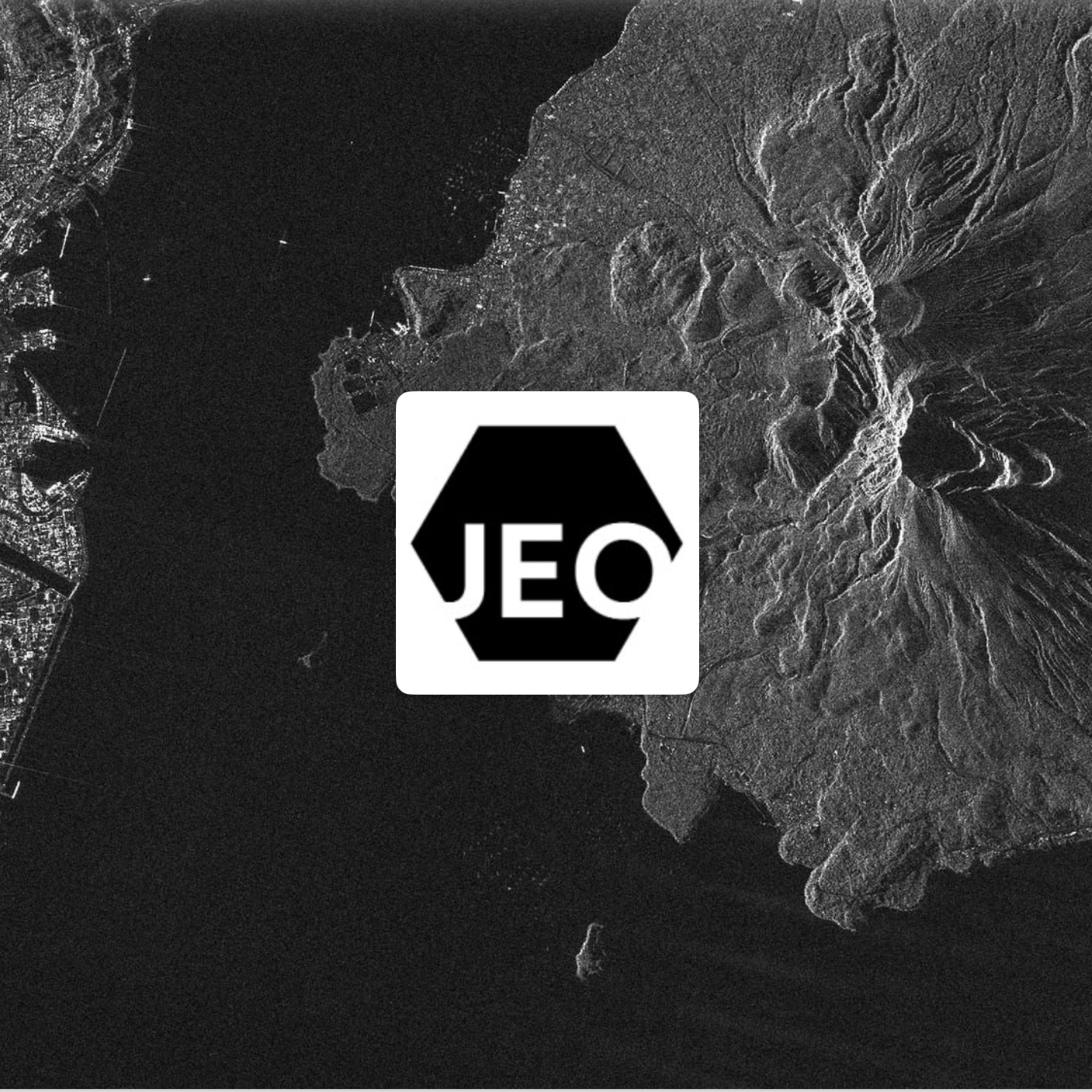
Japan Earth Observer
Jun 800:40:23Tap to summarizeToday's guest is Robert Cheatham https://www.linkedin.com/in/rcheetham/ and we are talking about Japan Earth Observer, https://www.japanearthobserver.com/. This is a newsletter on the space, Earth observation, and geospatial industry in Japan. It is based on a fantastic effort by Robert to systematically collate every last company in the space and earth observation supply chain in that country. Naturally I was drawn to it due to my efforts to do this not only for Japan but every country in the world as the GEO500. We got in touch and exchanged our lists which led to the discussion recorded here today.The GEO500 has 56 Japanese companies since inception. 7 of them are delisted. So the index contains 49 live positions for this country. All GEO500 positions start with $100. The entire Japanese part of the GEO500 stands at $AUD13,000. This is because the 56 have compounded at 8% annually since inception. In the case of this country, starting as a position in Fujitsu in 2000. The top three performers in terms of capital growth rate are Terra Drone (125% annually), Synspective (71%) and QPS (59%). The top 3 in terms of value are Sony ($1100 - bear in mind the $100 starting position, equating to a 20% annual growth rate since entering the index in 2013), NEC ($960, 10%) and Raito Kogyo ($760, 11%). Note that the 3 fastest growers are all earth observation companies, and 2 of those are synthetic aperture radar satellite constellations. This is an exciting part of our industry to watch and I have recorded a couple of great episodes on the power of it. For example, - Jamon Van Den Hoek's work as an academic partnering with some of the world's largest media organisations to monitor building destruction in warzones and after fires: https://open.spotify.com/episode/0RQNjzDtTQTNqv8IiMy2SU- Umbra, a pioneering American SAR satellite manufacturer, they also operate their own constellation: https://open.spotify.com/episode/2QM3OeglXI1naiSgrKod17- Iceye, the equivalent from Finland: https://open.spotify.com/episode/04S3fsdL4cus2tOEbq4KBN- Ursa Space Systems, a commodity intelligence firm that uses SAR to monitor everything from iron ore stockpiles at ports to oil farm tank lids around the world: https://open.spotify.com/episode/3ltO0Bv8Mtq7dgnLhXWGxO- SeerAI, another analytical platform where I coaxed the guest to use SAR as a way to detect surface change on the NEOM excavation, the world's largest (now abandoned) building site: https://www.geospatial.fm/p/seerai-responds-to-johnny-harrisBut this wasn't just about current companies. We were privileged in this episode to be given a history of Japan's trading houses since the 1860s to today. This led to several insights around the longevity, for example, of the social groups that comprise such firms and how they can persist even through a trust busting effort by the winning country after a world war. Another insight was the benefit to society of trust busting and how it unleashed a wave of new companies and from that household names such as Honda and Sony. Honda recently launched a rocket that was able to land itself. This has relevance to possible future earth observation constellation launches. Sony released LiDAR solution in 2013 and also sells other geospatial products like a GNSS chip. We have come full circle.A final note about Robert himself. We are presented here with a cultivated and successful entrepreneur. He grew a geospatial software development firm to 50 people then sold it. He has learnt a foreign language well enough to spontaneously translate things for me during a podcast recording without warning. He also is able to offer a comprehensive historical view on the emergence, development, setbacks and modern day expression of several dominant companies in a vibrant foreign economy, Japan. He shows us the way, then, on multiple fronts. I am grateful for the chance to put an inspiring industry figure in front of you today. Thanks Robert.
Transcribe →
Listening for Whales with NV5 Geospatial
May 2900:43:25Tap to summarizeMark Baumgartner is a senior scientist at Woods Hole Oceanographic Institution. Back in 2011 he and Sarah Mussoline published a paper on how to use computer science to classify whales from sound recordings. This episode is about an evolution of that software by Atle Borsholm from NV5 Geospatial (https://www.nv5geospatialsoftware.com). At the beginning of the episode you will hear a sound recording. Take a listen and attempt to classify the whale making the calls in it. In my comments at the end of this I’ll tell you what whale that was. It was an easy one to process - the recording was just 7 seconds long and a whale sound was present immediately. Consider if I instead gave you another one lasting a day and most of it was just ocean noise. This leads to the challenge discussed in today’s episode. Imagine I have 100 microphones under the ocean. These are called hydrophones. These hydrophones record for 24 days. The scientists managing them will say they now have 2400 days of data to process. Well, that is nowhere near how big of a challenge this episode is about. The National Oceanic and Atmospheric Administration had 217,197 days of hydrophone recordings going back 20 years. Whilst Mark’s software was available, it needed to be made more efficient to process all this data. It was worth the effort. It turned out that only 24,000, or 11%, of those days involved a whale being detected. All of it is shown on NOAA’s Passive Acoustic Cetacean Map. Atle starts by discussing a web application, Mark’s Robots4Whales website, in our episode today. Links for further reading:NV5 article on Harnessing Data Science for Marine Conservation: https://www.nv5geospatialsoftware.com/Learn/Case-Studies/Case-Studies-Detail/harnessing-data-science-for-marine-conservationNV5 article on IDL® Software Extract Meaningful Visualizations From Complex Numerical Data: https://www.nv5geospatialsoftware.com/Products/IDLSlocum glider from Teledyne Marine: https://www.teledynemarine.com/brands/webb-research/slocum-gliderWoods Hole article on whale sound detection and classification: https://www.fisheries.noaa.gov/science-blog/listening-sounds-gulf The whale at the start? It was a humpback whale. Only Gemini managed to classify it correctly. Claude and ChatGPT got it wrong.
Transcribe →
Rebel Strategy Lab
May 2200:29:22Tap to summarizeKarolina Sarna is founder of the wonderfully named Rebel Strategy Lab. She also writes and codes. On that basis alone I would want to record an episode. Even better though, she is an alumnus of the European Space Agency and Iceye, meaning she has a huge amount to contribute on the subject of earth observation. Iceye, by the way, have already come on the show.So, we covered:- How her background created an appetite for demand side thinking.- The defence pivot in commercial EO — why it's happening, what it's costing the climate/humanitarian side, and whether there's a structural way back.- Why "strong technology" keeps getting cited as the reason companies don't scale, and why that's usually wrong.- Her views on the Geoawesome Top 100.There was some issues with the internet, please forgive us for the occasional bad sound.So, my main reflection here is that it is possible to pivot out of industry into strategy consulting. Karolina had a great sense of humor and used this to deliver sensible points about the need for a constant focus on current problems in the industry you want to serve. Your product needs to help customers with those problems to make progress. She accompanied this message with another constant - stop focusing on the amazing technology involved in launching a satellite. This does not automatically mean you are solving someone’s problem. Earth observation satellites in fact deliver mostly noise. She reinforced this idea to the end, with a straightforward message about the limits of industry awards. Instead of the Geoawesome Top 100, we should instead focus on other industries identifying something great about a geospatial product. Then wait for that industry outside geospatial give an award to the company that makes this useful product.
Transcribe →
GIS at a Nigerian Power Utility and Earth Observation at Proforce Galaxies
May 1100:57:00Tap to summarizeAbdulfatai Sanusi is a geospatial developer at Proforce Galaxies. He tells us the story of an MS Azure to Esri Enterprise migration at a power utility that covers several states in Nigeria. He then moves on to the next phase of his career at Proforce. They are an earth observation satellite design and data pipeline company. He described being a member of a talented team that also develops software. For example they have their own mobile data collection app and we discussed how this could actually be used in a utility context as part of the System of Monitoring. Overall it was a very eye opening discussion and showed us that the geospatial industry is alive an well in Nigeria! I was inspired, and went fishing in the Nigerian Stock Exchange for geospatial stocks to add to the GEO500. I found 3: Julius BergerCaverton OffshoreMTN NigeriaSo it was a fruitful exercise on all fronts, thank you Abdulfatai and please remember me for the Proforce IPO!
Transcribe →
QuantAgri - predictive agricultural insights
Apr 2800:36:56Tap to summarizeRyan Kmetz is back to talk with us about https://quantagri.substack.com/. This initiative began in January 2026. It is about analyzing satellite data to predict the monthly World Agricultural Supply and Demand Estimates (WASDE) reports. Ryan proposes a novel approach and shares some eye raising stats about lead times and profitability. This episode is inspiration for how we are all equipped to process the world using free data and AI. What can you do with your geospatial basic training?Links to items discussed:SatYield https://www.satyield.com/Sentinel ESA https://sentinels.copernicus.eu/web/sentinel/copernicus/sentinel-2Google Earth Engine https://developers.google.com/earth-engine/datasets/catalog/COPERNICUS_S2_SR_HARMONIZED#descriptionLandsat NASA https://science.nasa.gov/mission/landsat/Google Earth Engine https://developers.google.com/earth-engine/datasets/catalog/landsatTaylor Geospatial Engine field boundariesBackground https://taylorgeospatial.org/agricultural-field-boundaries-mapped-globally-for-the-first-time/Web app https://fieldsofthe.world/Field boundaries from Planet https://docs.planet.com/data/planetary-variables/field-boundaries/‘As the world turns’ Blackrock geospatial podcast https://www.blackrock.com/us/individual/podcasts/the-bid/geospatial-dataNovi https://www.geospatial.fm/p/novi-and-a-new-venture-geospatial
Transcribe →
Openclaw for Geospatial Monitoring Dashboards and Behavioral Investing
Mar 1001:05:55Tap to summarizeThis was quite the episode! We return for Round 2 with Nelson Roque. He is Assistant Professor of Human Development and Family Studies at Penn State. He walked us through OpenClaw. Nelson is an incredibly useful guest because he is able to cover both podcasts I have run - The Behavioral Investor and this one, Geospatial FM. A significant message from The Behavioral Investor was the effect of delay discounting or hyperbolic discounting. This is the decay in appeal of even fantastic outcomes when there is a significant delay until they happen. A formula is available here and here. Applying the formula shows that receiving a billion dollars in 3 generations, 108 years from now, only feels like $10,000 right now. The feeling decays with delay.There are a couple of ways to defeat hyperbolic discounting. One is episodic future thinking. This is a way to juice the dopamine reward system by a multimodal, multisensory imagining of what one might see, hear, smell, think, touch and feel upon achieving a financial goal. Turns out that, of course, AI has been applied to help here. Another that I came up with is instant, constant feedback about the reduction in amount of money one can pass to the next generation with each spending decision you make. What do I mean?Let's work with the $600 you might splurge on a smartwatch. The US market has compounded at 7% annually, adjusted for inflation and including dividends, the past 150 years. Imagine you are 42 and have a life expectancy of 72. You've therefore got 30 years of compounding $600 at 7% annually. This becomes $4,500 if you invest it in a low cost US market index fund with a 0.05% fee. So, you could enjoy the $600 watch or consider that in splurging on it you are effectively saying to your child you don't want to give them $4,500 when you die. So what I'm proposing is an app to make the effect of long time periods on investing outcomes visible. Please watch the episode as Nelson walks through producing this live with an AGI agent orchestrator called OpenClaw. He also profiles some geospatial situation monitoring apps (e.g. here). These were inspired by the incredible Bilawal Sidhu. He was able to give a geospatial data replay of the Iran strikes: here and here. It is amazing how far we've come since Nelson's sceptical comments in the first episode with Nelson 9 months ago about whether or not we have AGI. Let's check back on his opinion of AGI in another 9 months.
Transcribe →