
Podcast
Get Paid with Manny Medina
Hosted by Manny Medina · EN
Welcome to the world of AI agents – where digital workers are reshaping everything from monetization strategies to GTM plays.https://podcast.paid.ai
27episodes
Episodes
Newest firstAll episodes

Greatest Hits: AI-Native Go-To-Market Platform Replacing Sales Tech Stack, Sales Enablement & CRM
4w ago00:42:37Tap to summarize In this greatest hits episode of the Get Paid podcast, host Manny Medina is joined by Jason Eubanks, Co-founder and CEO of Aurasell AI, to tell the story of how a restless operator turned into a founder taking on the biggest dragon in go-to-market tech: the CRM.What You’ll Learn:Why the 22-tool sales stack is brokenWhy Jason’s sellers were only spending 28% of their time with customersHow to land wall-to-wall adoptionWhy founders must raise large seed rounds to build true platformsJason Eubanks is Co-founder and CEO of Aurasell AI, an AI-native go-to-market platform revolutionizing how sales teams operate. With over 20 years of experience as a sales leader at industry-leading companies, including BMC, Twilio, Cisco Meraki, and Harness, Jason brings deep operational expertise to solving critical productivity challenges in sales.Episode Resources:Jason Eubanks on LinkedInAurasell AI WebsiteManny Medina on LinkedInPaid Website Get Paid with Manny Medina is handcrafted by our friends over at: fame.soPrevious guests include: Dharmesh Shah of HubSpot, Amjad Masad of Replit, Wade Foster of Zapier, Eric Simons of Bolt.new, Nick Mehta of Gainsight, Flo Crivello of Lindy AI, and Karan Parekh of Clay.Check out our three most downloaded episodes:From “Tinder for Co-founders” to $7M ARR: Maximus Greenwald’s Wild Ride Building WarmlyWhy Clay Cut Its Own Revenue to Prove a Point About SaaS Pricing | Karan Parekh | Get Paid with Manny MedinaHow Intercom’s CFO Bet the Business on Outcome-Based Pricing
Transcribe →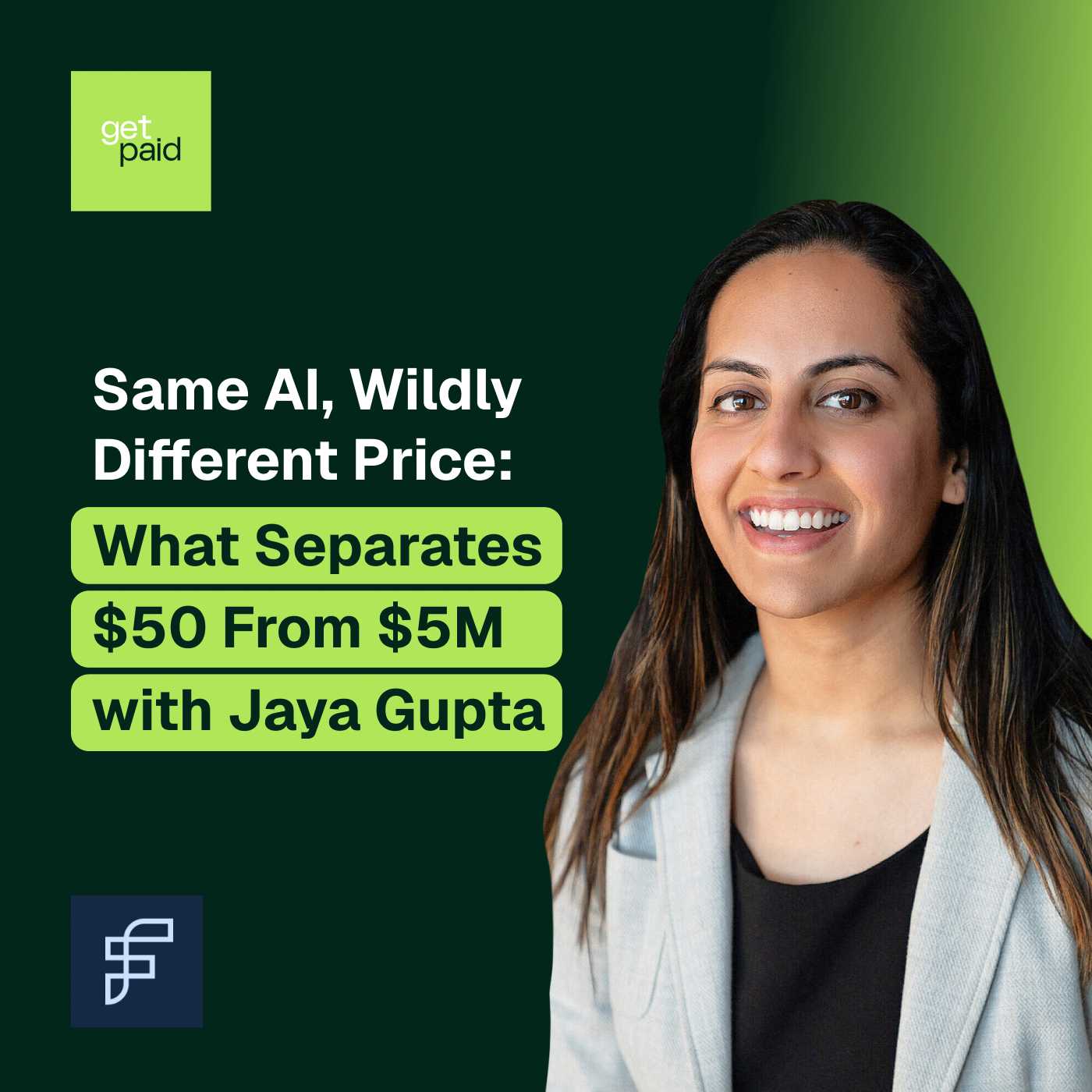
Same AI, Wildly Different Price: What Separates $50 From $5M with Jaya Gupta
Jul 900:37:35Tap to summarize On this episode 57 of the Get Paid podcast, host Manny Medina sits down with Jaya Gupta, Partner at Foundation Capital, to discuss AI startups, context graphs, token maxing, and outcome-based pricing. Together, they unpack what’s really working six months after her viral paper reached 5 million views and was retweeted by Satya Nadella. What You’ll Learn:How to reframe context graphs as a people problemWhy token maxing ended the AI party sooner than expectedHow startups are scrambling to prove real outcomes instead of burning through inference costsWhy the entire go-to-market playbook is being rewrittenThe anti-context graph insight you need to act on nowJaya Gupta is a Venture Capitalist and Partner at Foundation Capital, renowned for her thought leadership in AI infrastructure and enterprise transformation. With vast expertise in context graphs, decision trace technology, and AI monetization strategy, Jaya has become a recognized voice in the AI startup ecosystem, with her seminal piece on context graphs reaching 5 million views and earning recognition from industry leaders, like Satya Nadella.If you enjoyed this episode, make sure to subscribe, rate, and review it on Apple Podcasts, Spotify, and YouTube Podcasts. Instructions on how to do this are here.Episode Resources:Jaya Gupta on LinkedInFoundation Capital WebsiteManny Medina on LinkedInPaid Website Get Paid with Manny Medina is handcrafted by our friends over at: fame.soPrevious guests include: Dharmesh Shah of HubSpot, Amjad Masad of Replit, Wade Foster of Zapier, Eric Simons of Bolt.new, Nick Mehta of Gainsight, Flo Crivello of Lindy AI, and Karan Parekh of Clay.Check out our three most downloaded episodes:From “Tinder for Co-founders” to $7M ARR: Maximus Greenwald’s Wild Ride Building WarmlyWhy Clay Cut Its Own Revenue to Prove a Point About SaaS Pricing | Karan Parekh | Get Paid with Manny MedinaHow Intercom’s CFO Bet the Business on Outcome-Based Pricing
Transcribe →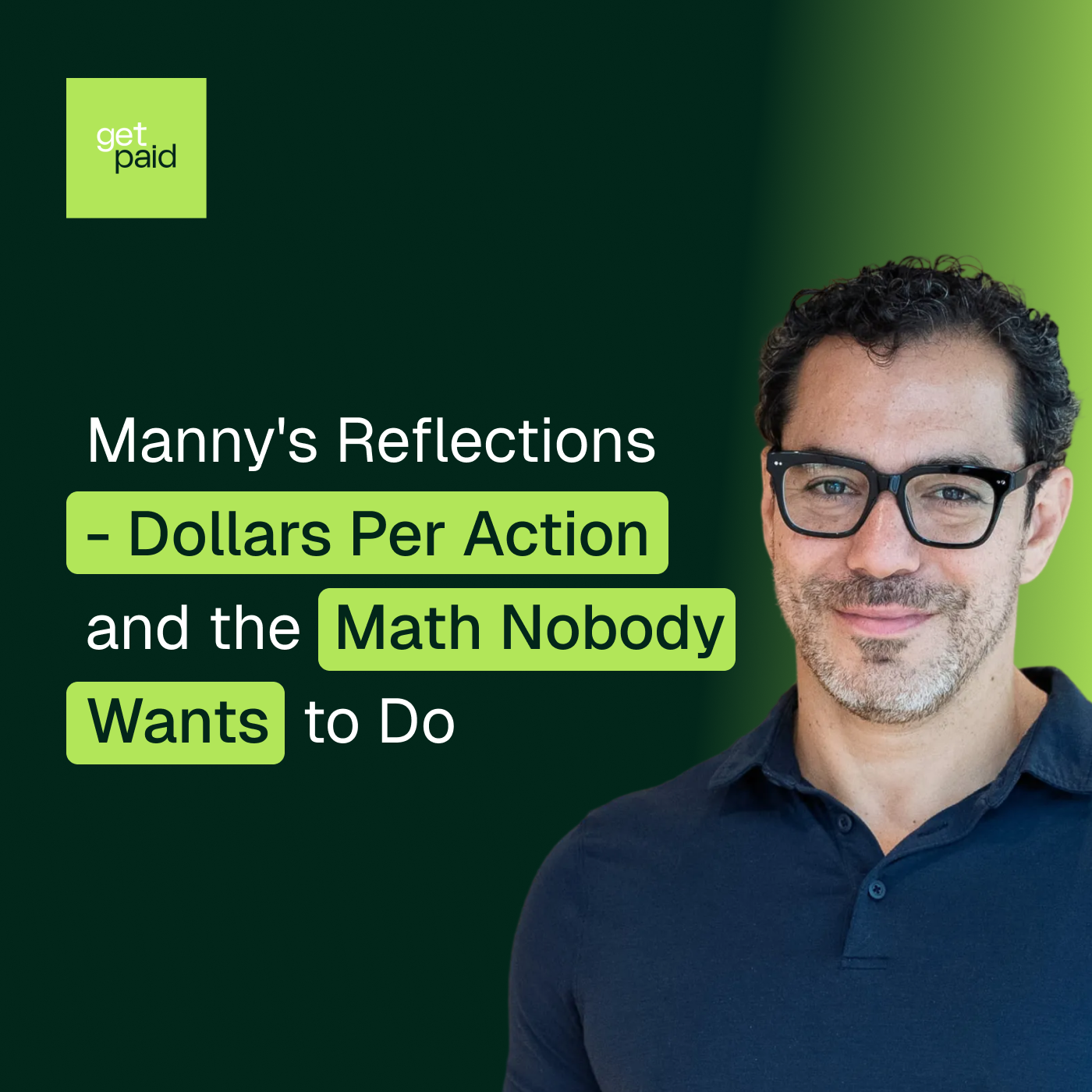
Manny's Reflections - Dollars Per Action and the Math Nobody Wants to Do
Jul 200:11:06Tap to summarizeIn this solo “Manny’s Reflections” episode of the Get Paid podcast, host Manny Medina dives into one of the most consequential shifts in the AI market right now: the reversal from tokenmaxxing to rigorous cost optimization. He also spotlights a LinkedIn post from Shriram Sridharan, CTO and Co-Founder of Rox, who shared a framework around measuring Dollars Per Action (DOPA) and demonstrated a 10x reduction in token spend even while scaling usage.What You’ll Learn:The great reversal from tokenmaxxing to “what am I actually getting for this AI spend”Shriram Sridharan's Dollars Per Action framework and why it didn't get the attention it deservedWhy cost per action can be decomposed into two leversInfrastructure bottlenecks: NVIDIA chip supply constraints, data center permitting backlash across US towns and counties, and the aging power gridHow companies like Coinbase are using smart model routing to manage costsManny Medina is the Co-Founder and CEO of Paid, a platform that helps AI agent builders price, monetize, and manage the economics of their agentic products. Before Paid, Manny founded Outreach, the sales engagement platform he scaled from zero to $250M+ in ARR and a $4.4 billion valuation, with 800 employees, before stepping down as CEO.If you enjoyed this episode, make sure to subscribe, rate, and review it on Apple Podcasts, Spotify, and YouTube. Instructions on how to do this are here.Episode Resources:Manny Medina on LinkedInPaid WebsiteShriram Sridharan’s PostGet Paid with Manny Medina is handcrafted by our friends over at: fame.soPrevious guests include: Dharmesh Shah of HubSpot, Amjad Masad of Replit, Wade Foster of Zapier, Eric Simons of Bolt.new, Nick Mehta of Gainsight, Flo Crivello of Lindy AI, and Karan Parekh of Clay.Check out our three most downloaded episodes:From “Tinder for Co-founders” to $7M ARR: Maximus Greenwald’s Wild Ride Building WarmlyWhy Clay Cut Its Own Revenue to Prove a Point About SaaS Pricing | Karan Parekh | Get Paid with Manny MedinaHow Intercom’s CFO Bet the Business on Outcome-Based Pricing
Transcribe →
Greatest Hits: From “Tinder for Co-founders” to $7M ARR: Maximus Greenwald’s Wild Ride Building Warmly
Jun 2600:42:26Tap to summarizeIn this greatest hits episode of the Get Paid podcast, host Manny Medina is joined by Maximus Greenwald, Co-founder and CEO of Warmly, to discuss how AI-powered revenue agents are transforming sales orchestration and why outcome-based pricing is the future of SaaS.What You’ll Learn:How to navigate six product pivots and land on a $7M ARR businessThe future of SDRs in the age of AI agentsCredit-based pricing models vs. outcome-based pricingWho in the competitive landscape might be desperate enough to burn the ships firstMaximus Greenwald is the Co-founder and CEO of Warmly, an autonomous orchestration system for revenue agents, where he has scaled the company from zero to $7M ARR in three years. With a background at Google and a Princeton education, Maximus brings deep expertise in AI-driven sales automation, product-market fit, and B2B SaaS scaling.Episode Resources:Maximus Greenwald on LinkedInWarmly WebsiteManny Medina on LinkedInPaid WebsiteGet Paid with Manny Medina is handcrafted by our friends over at: fame.soPrevious guests include: Dharmesh Shah of HubSpot, Amjad Masad of Replit, Wade Foster of Zapier, Eric Simons of Bolt.new, Nick Mehta of Gainsight, Flo Crivello of Lindy AI, and Karan Parekh of Clay.Check out our three most downloaded episodes:From “Tinder for Co-founders” to $7M ARR: Maximus Greenwald’s Wild Ride Building WarmlyWhy Clay Cut Its Own Revenue to Prove a Point About SaaS Pricing | Karan Parekh | Get Paid with Manny MedinaHow Intercom’s CFO Bet the Business on Outcome-Based Pricing
Transcribe →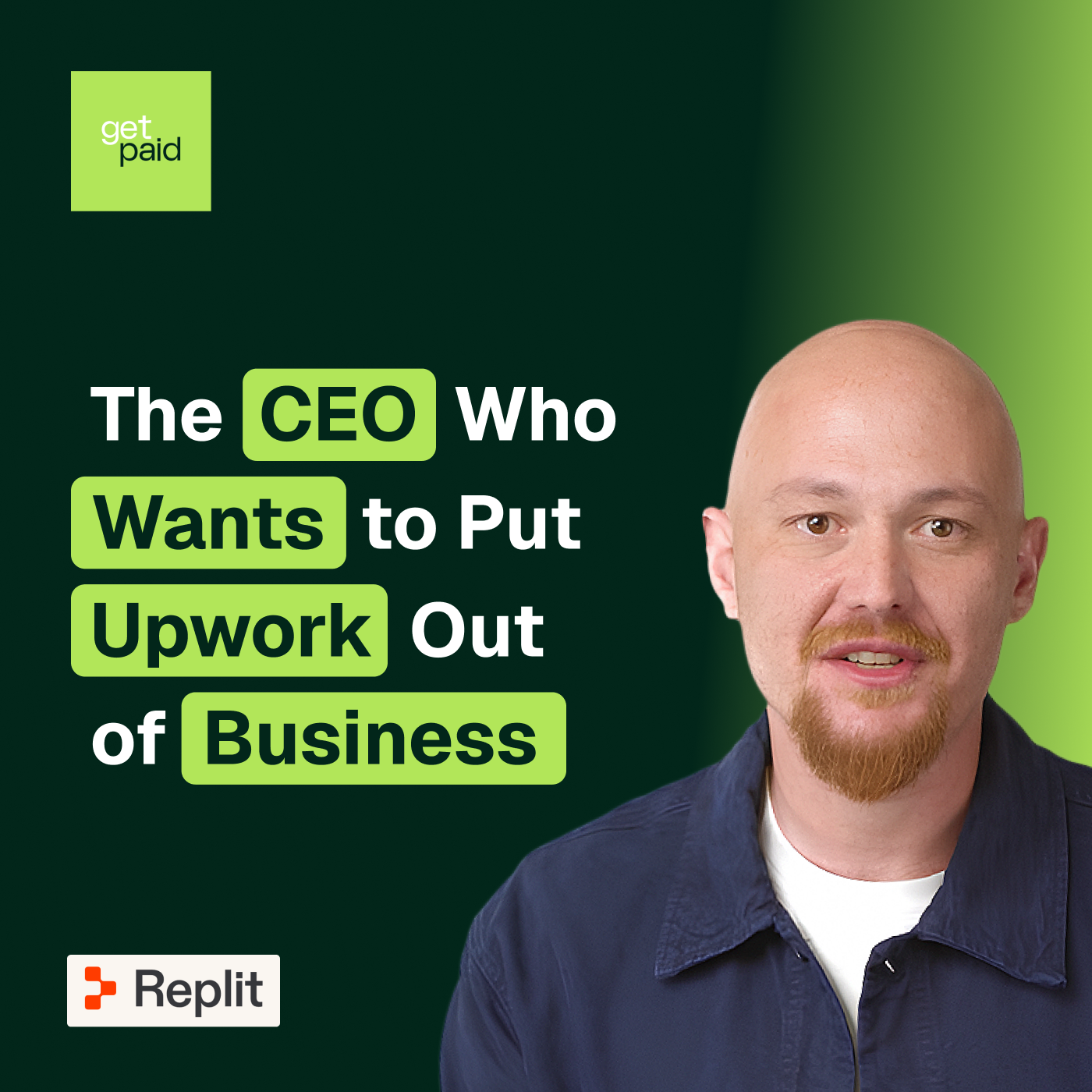
The CEO Who Wants to Put Upwork Out of Business (Greatest Hits)
Jun 1900:43:02Tap to summarizeAgentic coding, the death of one-size-fits-all SaaS, and what it really means to build a company people can grow old at. In this episode of the Get Paid podcast, host Manny Medina sits down with Amjad Masad, Founder and CEO of Replit, to discuss how Replit is turning everyone into a programmer, and what that means for the future of SaaS, entrepreneurship, and the corporate world as we know it.What You’ll Learn:Replit's unique end-to-end approach versus competitors like Cursor and LovableWhy the company thinks in terms of hiring software rather than buying itHow to think about AI agents as employees rather than softwareWhy the next wave of millionaires won't come from Silicon ValleyHow to reframe your business model from consumption-based to outcome-based pricingAmjad Masad is the Founder and CEO of Replit, a platform democratizing software development through AI-powered agents. With a vision to make programming accessible to everyone regardless of coding background, Amjad has pioneered end-to-end agentic development, from code generation to deployment and production management. His work has transformed how non-technical professionals build custom software solutions, fundamentally challenging traditional SaaS models and enabling a new generation of micro-entrepreneurs and small business owners to scale without hiring developers.If you enjoyed this episode, make sure to subscribe, rate, and review it on Apple Podcasts, Spotify, and YouTube Podcasts. Instructions on how to do this are here.Episode Resources:Amjad Masad on LinkedInReplit WebsiteManny Medina on LinkedInPaid WebsiteExplore more conversations on AI, GTM, and the future of business: https://getpaid.ai/Get Paid with Manny Medina is handcrafted by our friends over at: fame.soPrevious guests include: Dharmesh Shah of HubSpot, Amjad Masad of Replit, Wade Foster of Zapier, Eric Simons of Bolt.new, Nick Mehta of Gainsight, Flo Crivello of Lindy AI, and Karan Parekh of Clay.Check out our three most downloaded episodes:From “Tinder for Co-founders” to $7M ARR: Maximus Greenwald’s Wild Ride Building WarmlyWhy Clay Cut Its Own Revenue to Prove a Point About SaaS Pricing | Karan Parekh | Get Paid with Manny MedinaHow Intercom’s CFO Bet the Business on Outcome-Based Pricing
Transcribe →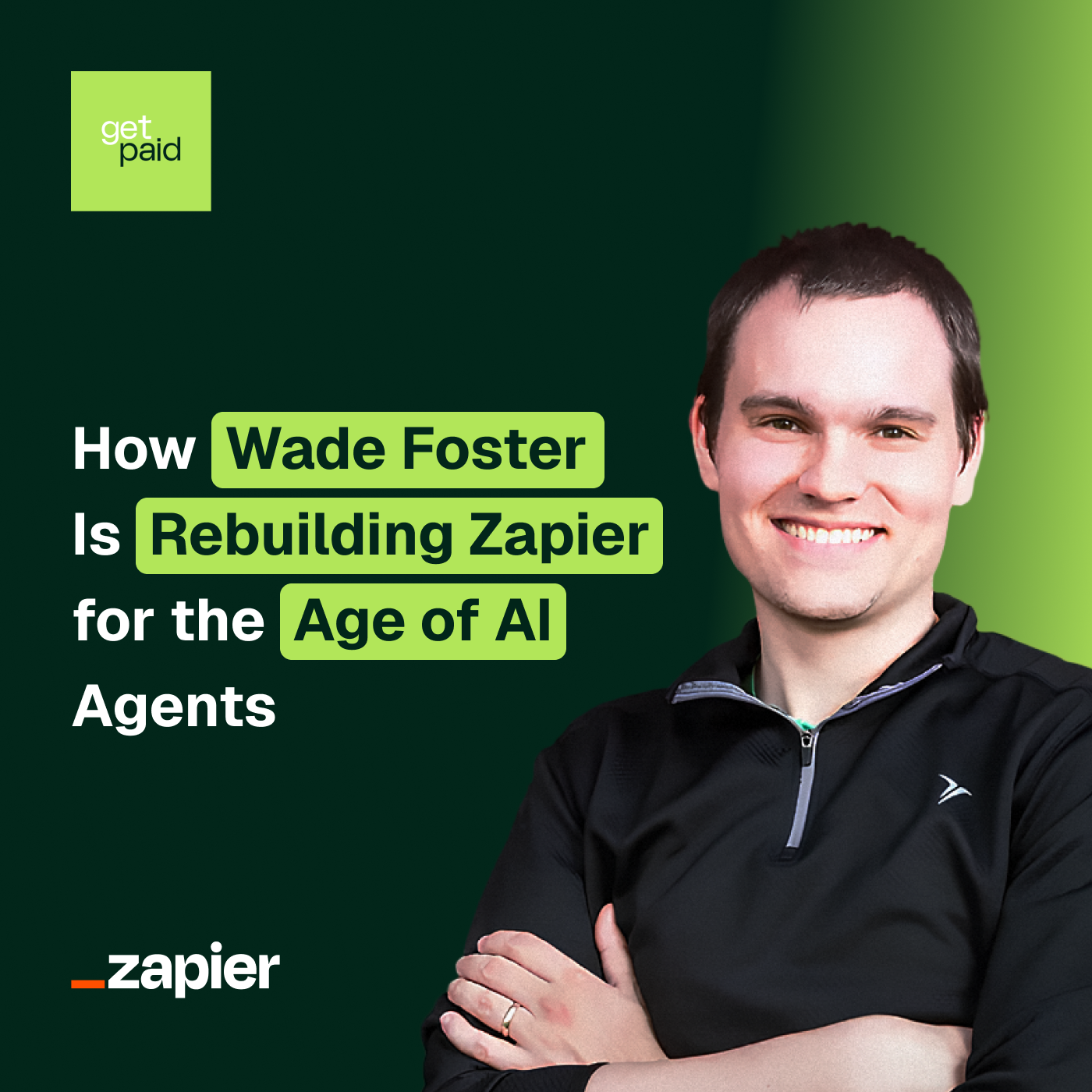
How Wade Foster Is Rebuilding Zapier for the Age of AI Agents
Jun 1200:40:38Tap to summarize In this episode 53 of Get Paid, Manny Medina welcomes Wade Foster, co-founder and CEO of Zapier, to explore what it takes to build an AI-native organization. Wade explains how companies can move beyond individual AI productivity toward institutional transformation, redesign operations around AI agents, hire for learning velocity, and balance innovation with execution to stay competitive in an increasingly automated future. What You’ll Learn:How to build an AI fluency framework that identifies where each employee stands on AI Why the shift from individual AI to institutional AI is the real unlockThe "Game One, Game Two" operating modelHow to apply first-principles thinking to organizational structureWhy curiosity and learning velocity now matter more than domain expertiseThe case for bootstrapping and capital efficiencyHow to maintain brand relevance in a crowded competitive landscapeWade Foster is the co-founder and CEO of Zapier, the automation platform that has connected millions of users to thousands of applications over the past 15 years. Known for his bootstrapping philosophy and customer-obsessed approach, Wade has grown Zapier to over $500 million in revenue while raising only $1.8 million in initial funding.If you enjoyed this episode, make sure to subscribe, rate, and review it on Apple Podcasts, Spotify, and YouTube Podcasts. Instructions on how to do this are here.Episode Resources:Wade Foster on LinkedInZapier Website Manny Medina on LinkedInPaid Website Get Paid with Manny Medina is handcrafted by our friends over at: fame.soPrevious guests include: Dharmesh Shah of HubSpot, Amjad Masad of Replit, Wade Foster of Zapier, Eric Simons of Bolt.new, Nick Mehta of Gainsight, Flo Crivello of Lindy AI, and Karan Parekh of Clay.Check out our three most downloaded episodes:From “Tinder for Co-founders” to $7M ARR: Maximus Greenwald’s Wild Ride Building WarmlyWhy Clay Cut Its Own Revenue to Prove a Point About SaaS Pricing | Karan Parekh | Get Paid with Manny MedinaHow Intercom’s CFO Bet the Business on Outcome-Based Pricing
Transcribe →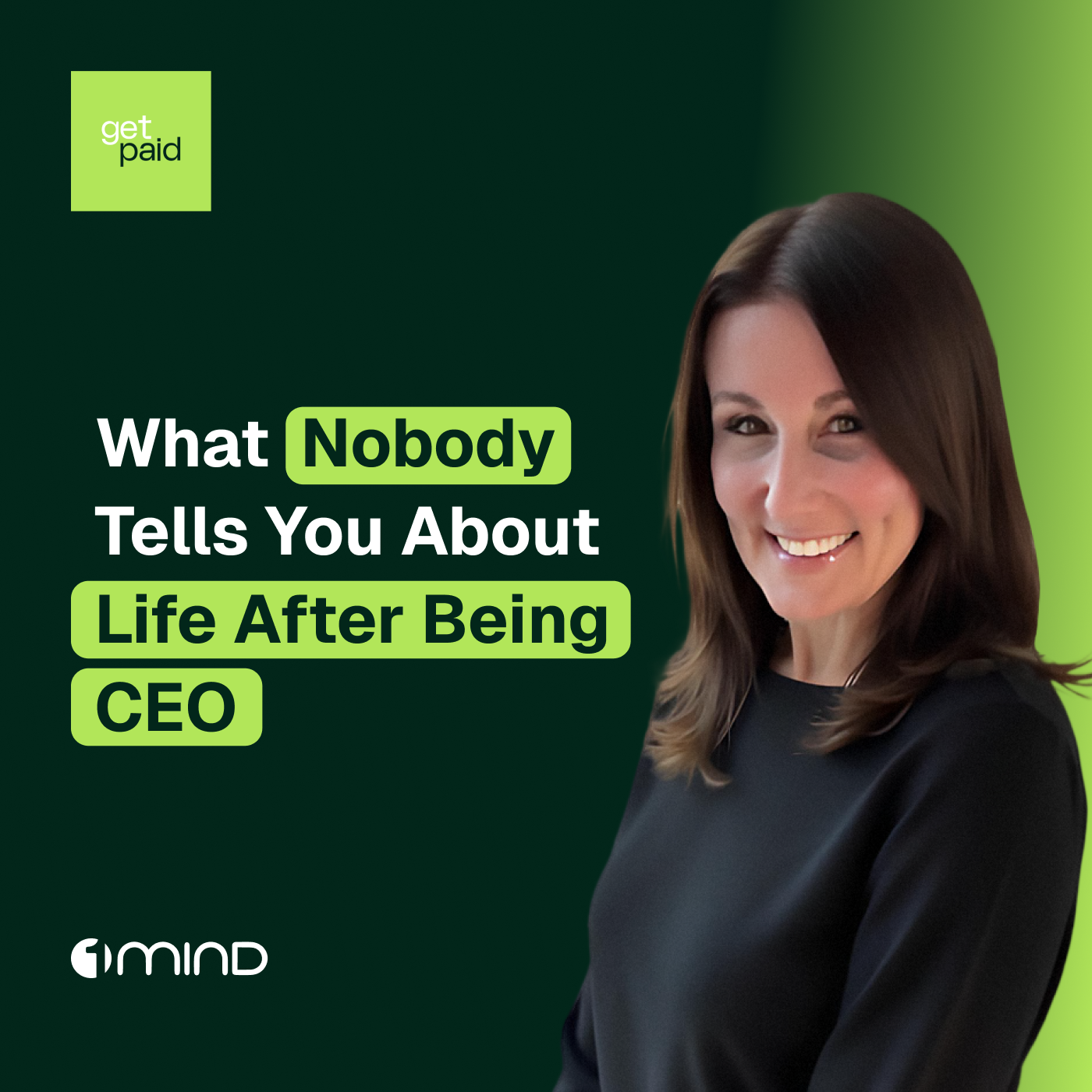
What Nobody Tells You About Life After Being CEO
Jun 500:42:40Tap to summarizeAI sales, founder identity, and the emotional reality of building a second startup. In this episode 52 of the Get Paid podcast, host Manny Medina sits down with Amanda Kahlow, Human CEO and Founder of 1mind, to share what happens after you step away from the company you built and what it takes to come back and do it all over again. From painting bold portraits of women during her time on the bench to convincing a team building a Snowflake competitor to join her, Amanda shares the raw, unfiltered journey of building two venture-backed companies.What You’ll Learn:How to transition from founder obsession to balanced leadershipWhy rejecting market feedback is sometimes the right moveThe emotional toll of losing relevance overnightWhy Amanda believes the right startup idea has to find youHow motherhood, meditation, and hard self-reflection reshaped Amanda into a different kind of founder the second time aroundAmanda Kahlow is a serial Founder and CEO known for pioneering category-defining AI and data intelligence platforms. With 16 years of leading a data consulting services business before founding 6sense, she brings deep expertise in transforming complex technical capabilities into scalable products. Now CEO of 1mind, Amanda is building the future of AI-powered sales engagement through conversational AI agents that handle the full customer lifecycle. Her work has helped enterprise teams modernize go-to-market strategies while improving customer experiences, making this conversation essential for SaaS leaders navigating AI transformation and organizational evolution.If you enjoyed this episode, make sure to subscribe, rate, and review it on Apple Podcasts, Spotify, and YouTube Podcasts. Instructions on how to do this are here.Episode Resources:Amanda Kahlow on LinkedIn1mind WebsiteManny Medina on LinkedInPaid Website Get Paid with Manny Medina is handcrafted by our friends over at: fame.soPrevious guests include: Dharmesh Shah of HubSpot, Amjad Masad of Replit, Wade Foster of Zapier, Eric Simons of Bolt.new, Nick Mehta of Gainsight, Flo Crivello of Lindy AI, and Karan Parekh of Clay.Check out our three most downloaded episodes:From “Tinder for Co-founders” to $7M ARR: Maximus Greenwald’s Wild Ride Building WarmlyWhy Clay Cut Its Own Revenue to Prove a Point About SaaS Pricing | Karan Parekh | Get Paid with Manny MedinaHow Intercom’s CFO Bet the Business on Outcome-Based Pricing
Transcribe →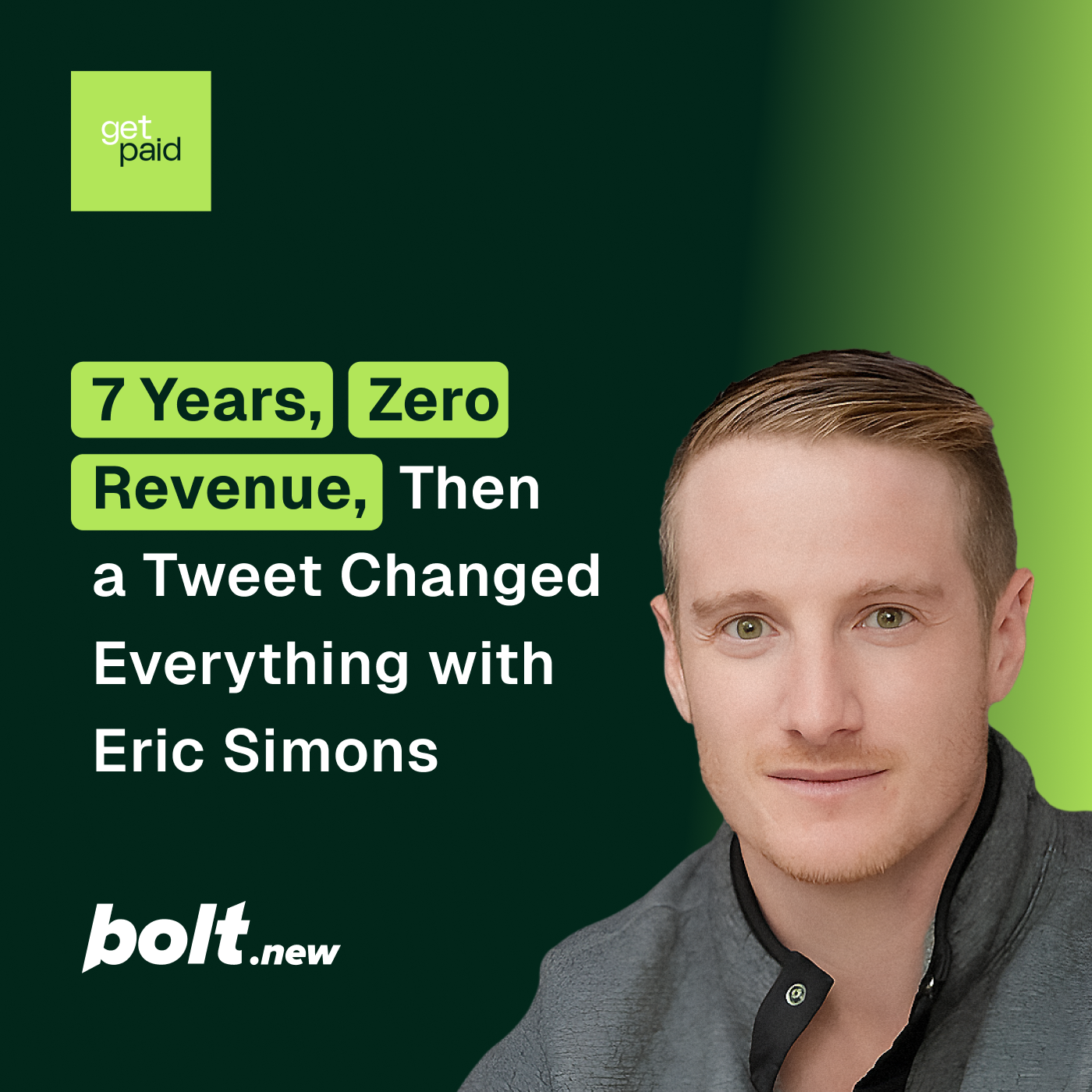
7 Years, Zero Revenue, Then a Tweet Changed Everything with Eric Simons
May 2900:43:49Tap to summarizeIn this episode 51 of the Get Paid podcast, host Manny Medina sits down with Eric Simons, CEO and Founder of bolt.new, to discuss how a seven-year-old cloud IDE company with millions of users but zero revenue pivoted to AI-powered vibe coding and achieved explosive growth, adding $20M in ARR in just six months.What You’ll Learn:Why spending months building products without customer feedback is a startup killerHow to retain and motivate teams through failure and massive pivotsThe community and hackathon strategy for product-led growthWhy Product Managers are the killer customer segment for AI coding toolsHow to stay ahead in a competitive market by integrating best-in-class infrastructureEric Simons is the CEO and Founder of bolt.new, a revolutionary AI-powered vibe coding platform. With 15 years of startup experience and a deep background in cloud development infrastructure, Eric transformed his company from a struggling seven-year-old cloud IDE business with zero revenue into a breakout success, generating $20M in ARR within six months.If you enjoyed this episode, make sure to subscribe, rate, and review it on Apple Podcasts, Spotify, and YouTube Podcasts. Instructions on how to do this are here.Episode Resources:Eric Simons on LinkedInbolt.new WebsiteManny Medina on LinkedInPaid WebsiteGet Paid with Manny Medina is handcrafted by our friends over at: fame.soPrevious guests include: Dharmesh Shah of HubSpot, Amjad Masad of Replit, Wade Foster of Zapier, Eric Simons of Bolt.new, Nick Mehta of Gainsight, Flo Crivello of Lindy AI, and Karan Parekh of Clay.Check out our three most downloaded episodes:From “Tinder for Co-founders” to $7M ARR: Maximus Greenwald’s Wild Ride Building WarmlyWhy Clay Cut Its Own Revenue to Prove a Point About SaaS Pricing | Karan Parekh | Get Paid with Manny MedinaHow Intercom’s CFO Bet the Business on Outcome-Based Pricing
Transcribe →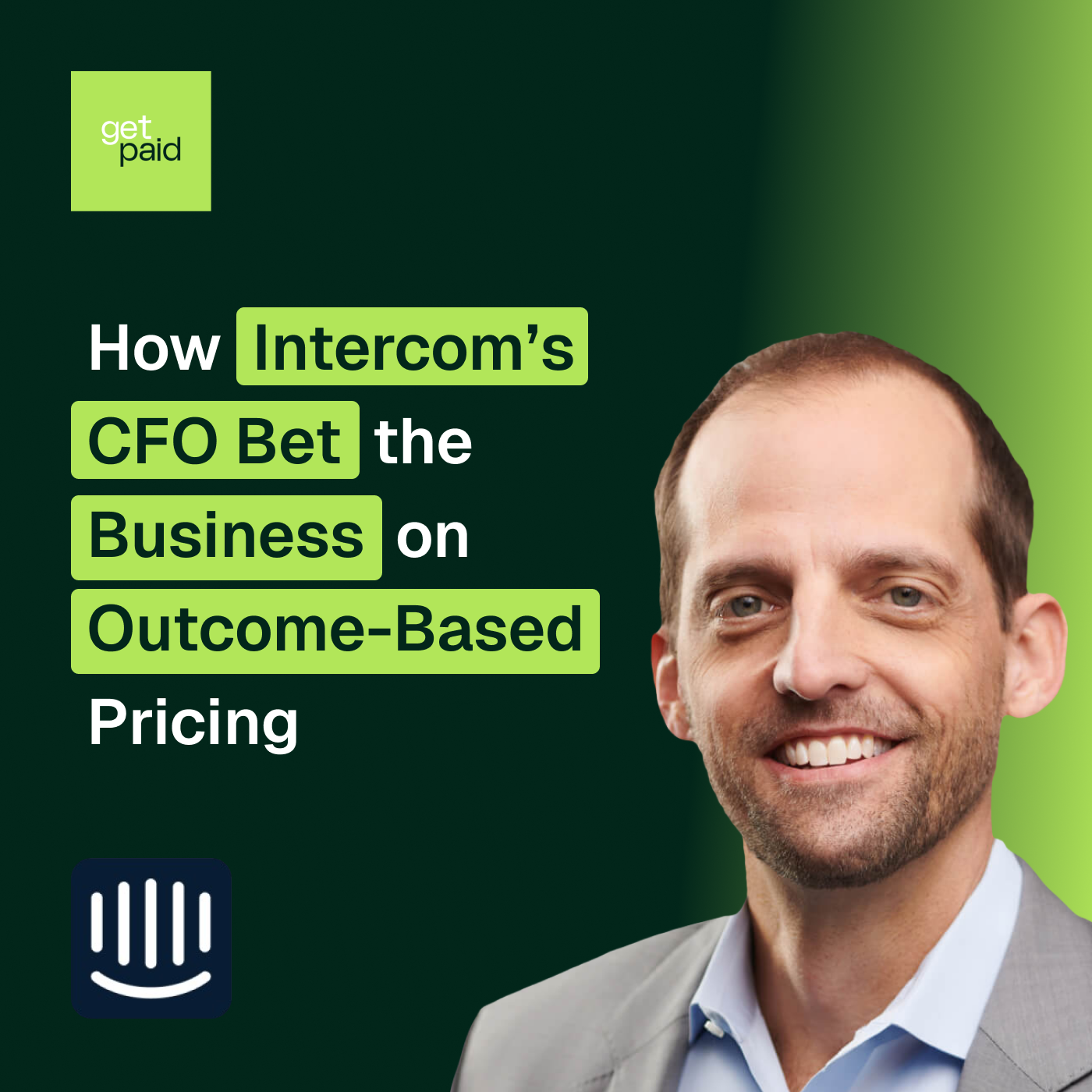
How Intercom’s CFO Bet the Business on Outcome-Based Pricing
May 2200:48:39Tap to summarizeIn this episode 50 of the Get Paid podcast, host Manny Medina sits down with Dan Griggs, Chief Financial Officer at Intercom, to explore how outcome-based pricing transforms AI agent economics, why simplicity in pricing matters more than complexity, and the strategic decisions that shaped a generational shift in how SaaS companies monetize AI-powered work.What You’ll Learn:How to transition from perpetual licensing to subscription models while managing debt covenantsWhy outcome-based pricing is the only sustainable model for AI agentsHow to manage the tension between AI model sophistication and unit economicsThe principle of leading with principles in uncharted marketsHow to design seller compensation to drive strategic transformation without destroying marginsDan Griggs is Chief Financial Officer at Intercom, a leader in customer communication platforms. With a background spanning electrical engineering, finance rotations at Fortune 500 companies (AT&T, Nestlé), and scaling roles at high-growth tech firms including Rocket Fuel (pre-IPO to $400M+ revenue) and Sitecore (managing complex SaaS transformation under private equity), Dan brings deep expertise in financial strategy, business model transitions, and monetization innovation. At Intercom, he pioneered outcome-based pricing for AI agents, a model now being studied across industries as the template for monetizing AI-driven value creation. His work has fundamentally shaped how companies think about pricing products that deliver measurable business outcomes rather than consumption metrics.If you enjoyed this episode, make sure to subscribe, rate, and review it on Apple Podcasts, Spotify, and YouTube Podcasts. Instructions on how to do this are here.Episode Resources:Dan Griggs on LinkedInIntercom WebsiteManny Medina on LinkedInPaid WebsiteGet Paid with Manny Medina is handcrafted by our friends over at: fame.soPrevious guests include: Dharmesh Shah of HubSpot, Amjad Masad of Replit, Wade Foster of Zapier, Eric Simons of Bolt.new, Nick Mehta of Gainsight, Flo Crivello of Lindy AI, and Karan Parekh of Clay.Check out our three most downloaded episodes:From “Tinder for Co-founders” to $7M ARR: Maximus Greenwald’s Wild Ride Building WarmlyWhy Clay Cut Its Own Revenue to Prove a Point About SaaS Pricing | Karan Parekh | Get Paid with Manny MedinaHow Intercom’s CFO Bet the Business on Outcome-Based Pricing
Transcribe →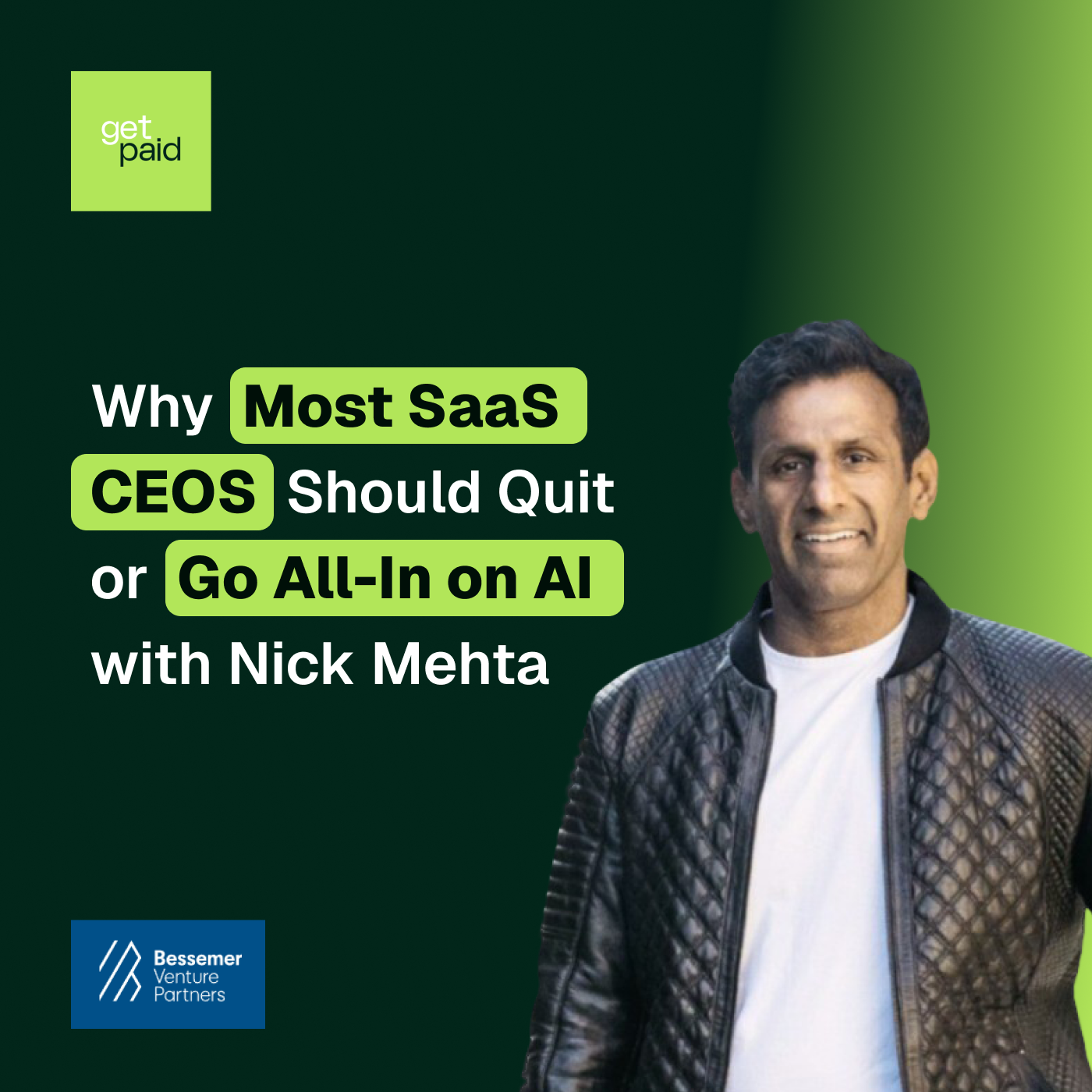
Why Most SaaS CEOS Should Quit or Go All-In on AI with Nick Mehta
May 1401:05:09Tap to summarize In this episode 49 of the Get Paid podcast, host Manny Medina sits down with Nick Mehta, former CEO of Gainsight, to discuss why traditional SaaS metrics no longer predict success, how AI is rewriting competitive moats, and the hard truths about which businesses will thrive in an agentic world.What You’ll Learn:How to identify which SaaS companies have genuine moats versus those destined for extinctionWhy “crushing traction” metrics that worked five years ago are now table stakesDeciding whether to pivot your SaaS company into an AI-native businessHow to read the real financial health of legacy SaaS companiesNick Mehta is the former CEO of Gainsight, where he spent 13 years helping create the Customer Success category and led the company to a $1.1 billion acquisition by Vista Equity Partners. A Harvard alum, he previously ran LiveOffice (acquired by Symantec) and co-authored two books on customer success. He serves on the boards of F5 and PubMatic. Since stepping down as CEO in August 2025, he's been advising VC firms, co-founding a nonprofit called Clarity to help young people find work in the AI age, and exploring his next venture.Episode Resources:Nick Mehta on LinkedInManny Medina on LinkedInPaid WebsiteGet Paid with Manny Medina is handcrafted by our friends over at: fame.soPrevious guests include: Dharmesh Shah of HubSpot, Amjad Masad of Replit, Wade Foster of Zapier, Eric Simons of Bolt.new, Nick Mehta of Gainsight, Flo Crivello of Lindy AI, and Karan Parekh of Clay.Check out our three most downloaded episodes:From “Tinder for Co-founders” to $7M ARR: Maximus Greenwald’s Wild Ride Building WarmlyWhy Clay Cut Its Own Revenue to Prove a Point About SaaS Pricing | Karan Parekh | Get Paid with Manny MedinaHow Intercom’s CFO Bet the Business on Outcome-Based Pricing
Transcribe →