
Podcast
Get Paid with Manny Medina
Hosted by Manny Medina · EN
Welcome to the world of AI agents – where digital workers are reshaping everything from monetization strategies to GTM plays.https://podcast.paid.ai
27episodes
Episodes
Newest firstAll episodes
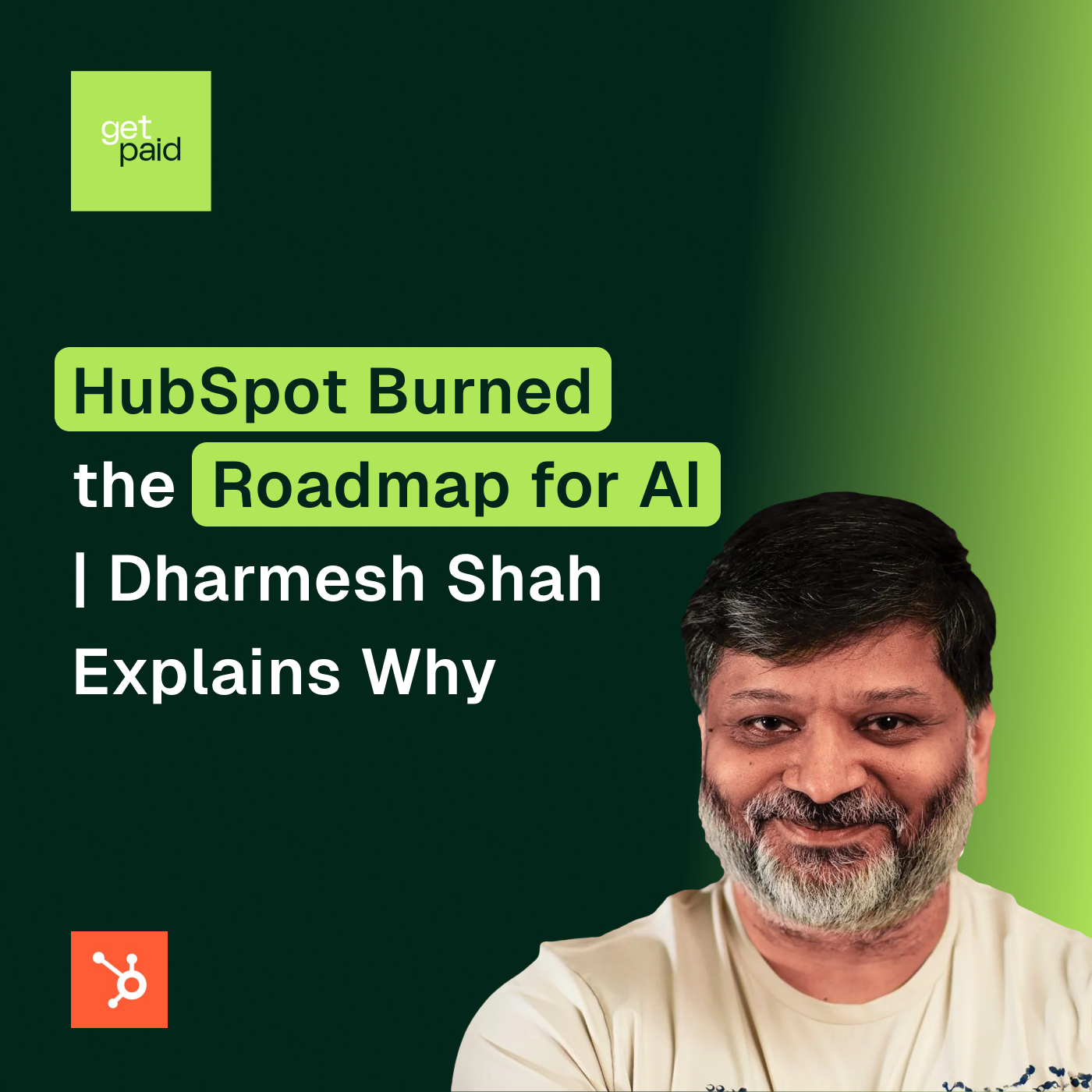
HubSpot Burned the Roadmap for AI | Dharmesh Shah Explains Why
May 700:45:51Tap to summarizeIn this episode 48 of the Get Paid podcast, host Manny Medina sits down with Dharmesh Shah, Co-Founder and CTO of HubSpot, for a wide-ranging conversation about the AI transformation reshaping SaaS from the inside out, from the early days of GPT-2 access to HubSpot’s bold decision to burn the product roadmap and go all-in on AI.What You’ll Learn:HubSpot's internal “startup within a startup” modelWhy vibe coding won't replace software companiesHow HubSpot landed on a hybrid seats-plus-credits pricing modelWhat it really takes to break through passive resistance when an entire organization needs to change directionDharmesh Shah is the Co-Founder and CTO of HubSpot, a leading AI-native customer platform serving over 270,000 customers globally. With 30+ years of experience in software development and entrepreneurship, Dharmesh has been instrumental in HubSpot's evolution from a marketing automation pioneer to a comprehensive CRM powerhouse. His strategic vision on AI reasoning models, agentic software, and the future of SaaS monetization directly shapes how enterprises build products in the AI era.Episode Resources:Dharmesh Shah on LinkedInHubSpot WebsiteManny Medina on LinkedInPaid WebsiteGet Paid with Manny Medina is handcrafted by our friends over at: fame.soPrevious guests include: Dharmesh Shah of HubSpot, Amjad Masad of Replit, Wade Foster of Zapier, Eric Simons of Bolt.new, Nick Mehta of Gainsight, Flo Crivello of Lindy AI, and Karan Parekh of Clay.Check out our three most downloaded episodes:From “Tinder for Co-founders” to $7M ARR: Maximus Greenwald’s Wild Ride Building WarmlyWhy Clay Cut Its Own Revenue to Prove a Point About SaaS Pricing | Karan Parekh | Get Paid with Manny MedinaHow Intercom’s CFO Bet the Business on Outcome-Based Pricing
Transcribe →
From “Tinder for Co-founders” to $7M ARR: Maximus Greenwald’s Wild Ride Building Warmly
Apr 3000:42:26Tap to summarize In this episode 48 of the Get Paid podcast, host Manny Medina is joined by Maximus Greenwald, Co-founder and CEO of Warmly, to discuss how AI-powered revenue agents are transforming sales orchestration and why outcome-based pricing is the future of SaaS.What You’ll Learn:How to navigate six product pivots and land on a $7M ARR businessThe future of SDRs in the age of AI agentsCredit-based pricing models vs. outcome-based pricingWho in the competitive landscape might be desperate enough to burn the ships firstMaximus Greenwald is the Co-founder and CEO of Warmly, an autonomous orchestration system for revenue agents, where he has scaled the company from zero to $7M ARR in three years. With a background at Google and a Princeton education, Maximus brings deep expertise in AI-driven sales automation, product-market fit, and B2B SaaS scaling.Episode Resources:Maximus Greenwald on LinkedInWarmly WebsiteManny Medina on LinkedInPaid Website Get Paid with Manny Medina is handcrafted by our friends over at: fame.soPrevious guests include: Dharmesh Shah of HubSpot, Amjad Masad of Replit, Wade Foster of Zapier, Eric Simons of Bolt.new, Nick Mehta of Gainsight, Flo Crivello of Lindy AI, and Karan Parekh of Clay.Check out our three most downloaded episodes:From “Tinder for Co-founders” to $7M ARR: Maximus Greenwald’s Wild Ride Building WarmlyWhy Clay Cut Its Own Revenue to Prove a Point About SaaS Pricing | Karan Parekh | Get Paid with Manny MedinaHow Intercom’s CFO Bet the Business on Outcome-Based Pricing
Transcribe →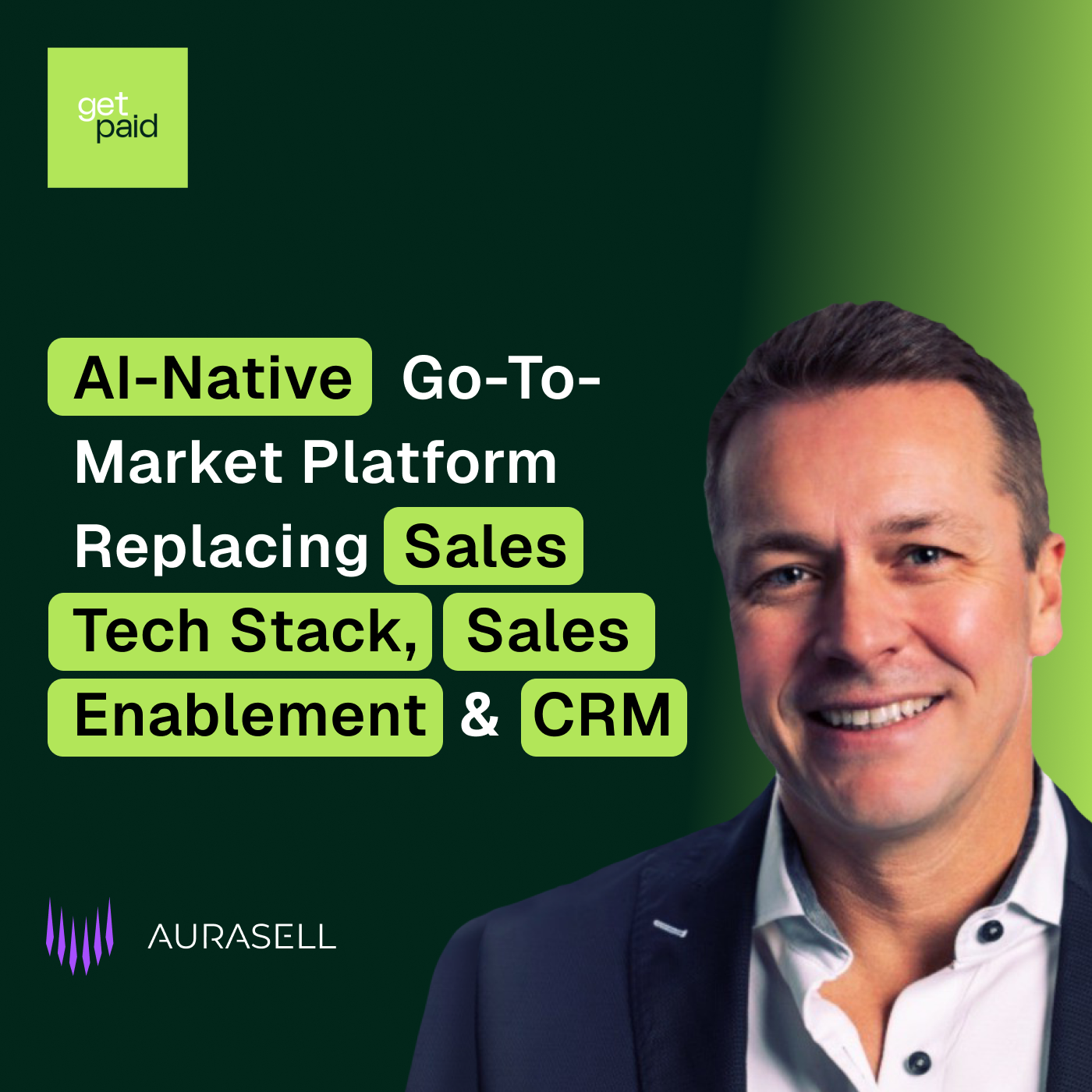
AI-Native Go-To-Market Platform Replacing Sales Tech Stack, Sales Enablement & CRM
Apr 2300:42:37Tap to summarizeIn this episode 47 of the Get Paid podcast, host Manny Medina is joined by Jason Eubanks, Co-founder and CEO of Aurasell AI, to tell the story of how a restless operator turned into a founder taking on the biggest dragon in go-to-market tech: the CRM.What You’ll Learn:Why the 22-tool sales stack is brokenWhy Jason’s sellers were only spending 28% of their time with customersHow to land wall-to-wall adoptionWhy founders must raise large seed rounds to build true platformsJason Eubanks is Co-founder and CEO of Aurasell AI, an AI-native go-to-market platform revolutionizing how sales teams operate. With over 20 years of experience as a sales leader at industry-leading companies, including BMC, Twilio, Cisco Meraki, and Harness, Jason brings deep operational expertise to solving critical productivity challenges in sales.Episode Resources:Jason Eubanks on LinkedInAurasell AI WebsiteManny Medina on LinkedInPaid WebsiteGet Paid with Manny Medina is handcrafted by our friends over at: fame.soPrevious guests include: Dharmesh Shah of HubSpot, Amjad Masad of Replit, Wade Foster of Zapier, Eric Simons of Bolt.new, Nick Mehta of Gainsight, Flo Crivello of Lindy AI, and Karan Parekh of Clay.Check out our three most downloaded episodes:From “Tinder for Co-founders” to $7M ARR: Maximus Greenwald’s Wild Ride Building WarmlyWhy Clay Cut Its Own Revenue to Prove a Point About SaaS Pricing | Karan Parekh | Get Paid with Manny MedinaHow Intercom’s CFO Bet the Business on Outcome-Based Pricing
Transcribe →
The Future of B2B Sales Is AI Agents, Not SaaS (Here’s What Comes Next) with Doug Landis
Apr 1600:49:04Tap to summarizeIn this episode 46 of the Get Paid podcast, host Manny Medina is joined by Doug Landis, Co-founder and CRO at StoryPath.ai, to unpack what’s really changing in B2B as SaaS gives way to agentic services.What You’ll Learn:Why storytelling is a teachable skill How to transition from seat-based to outcome-based pricingWhy the “crisis of sameness” is destroying traditional go-to-market strategiesWhy demoing your product early in the sales process masks discovery failures and kills deal momentumThe storytelling skill stack required to compete in agentic servicesDoug Landis is Co-founder and CRO at StoryPath.ai, an AI-first platform designed to empower enterprise sales teams through narrative-driven selling. With over seven and a half years of experience in venture capital at Emergence Capital and a deep background in sales enablement and go-to-market strategy, Doug brings a unique perspective on how storytelling serves as the ultimate competitive differentiator in an increasingly commoditized market.Episode Resources:Doug Landis on LinkedInStoryPath.ai WebsiteManny Medina on LinkedInPaid WebsiteGet Paid with Manny Medina is handcrafted by our friends over at: fame.soPrevious guests include: Dharmesh Shah of HubSpot, Amjad Masad of Replit, Wade Foster of Zapier, Eric Simons of Bolt.new, Nick Mehta of Gainsight, Flo Crivello of Lindy AI, and Karan Parekh of Clay.Check out our three most downloaded episodes:From “Tinder for Co-founders” to $7M ARR: Maximus Greenwald’s Wild Ride Building WarmlyWhy Clay Cut Its Own Revenue to Prove a Point About SaaS Pricing | Karan Parekh | Get Paid with Manny MedinaHow Intercom’s CFO Bet the Business on Outcome-Based Pricing
Transcribe →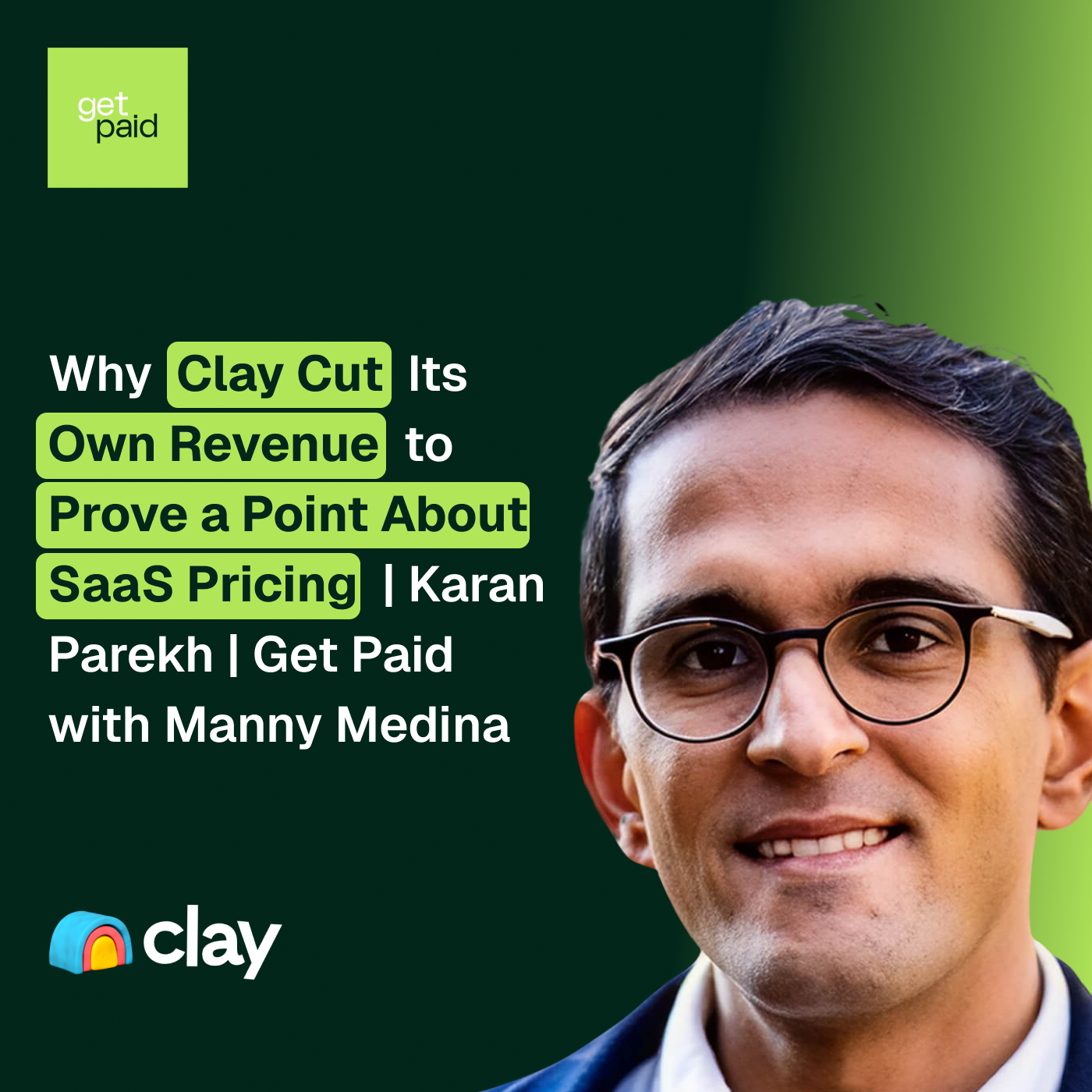
Why Clay Cut Its Own Revenue to Prove a Point About SaaS Pricing | Karan Parekh | Get Paid with Manny Medina
Apr 900:49:56Tap to summarizeClay’s pricing change sent shockwaves through the go-to-market tech world. The company voluntarily separated data credits from workflow credits, published its internal memo for anyone to read, and openly acknowledged the move would cost them revenue in the short term.It was a bet that aligning price to value would reshape how their customers and, eventually, the entire industry think about SaaS pricing.In this episode of the Get Paid podcast, host Manny Medina sits down with Karan Parekh, Head of Finance at Clay, and one of the architects behind that decision, to walk us through the full arc of how it happened.Why Clay Changed Its Pricing While WinningA couple of years ago, Clay was primarily a data business. Customer enriched profiles across 150 aggregated vendors, exported the results, and moved on. Data credits made sense.But the product evolved. The real value shifted to orchestration, qualifying inbound leads in real-time, routing prospects before they finished submitting a form, and automating research at enterprise scale. Customers started asking a reasonable question: why is data getting more expensive if what I’m actually paying for is the workflow on top of it?“Why should data become twice as expensive if Clay got five times better?”Clay spent a year talking to over a hundred customers and agency partners, benchmarking against orchestration platforms, and testing pricing models before making the split. They cut data costs by more than half and introduced a separate credit for platform activity, the action that actually creates business outcomes.The short-term bet was explicit: revenue would decline. The long-term thesis was that if customers could find five or ten things to do inside Clay instead of one, the math would overwhelmingly favor the new model.“The way we lose is if people come into Clay and just buy data. The way we win is if they find ten things to do.”Two Credits, Not OneThe team debated collapsing everything into a single credit type. Customers found it confusing. If a credit represents data, why is it also paying for orchestration? Splitting into data credits and action credits created transparency. Data credits function like a wallet with generous rollover. Action credits function like a capacity ceiling, refreshing monthly.“Even if it can drive a little bit more buying uncertainty because now you have two beaters to think about, you now have way more transparency on what Clay is charging you, where we make money, and where you are saving.”Selling Usage-Based Pricing to Enterprise CFOsA year ago, Clay was mostly PLG. Today, the business is approaching an even split between PLG and enterprise. Enterprise buyers want predictability, and Karan’s team delivers it through tight scoping: defining the use case, approximating credit consumption, and giving the buyer a concrete number.The first use case lands, works better than expected, and the expansion motion becomes consultative: hackathons, on-site sessions, introductions to other customers.“People get promoted when they use Clay.”The Cloud Pricing AnalogyKaran sees AI-era SaaS pricing converging toward cloud infrastructure economics. Storage is a low-margin commodity. You cover costs, but that’s not where you build a business. The value layer sits on top.Today, most AI companies price tokens because they have to cover input costs. But tokens don’t represent value. Some workflows consume a few tokens and generate massive outcomes. Others burn through compute and produce nothing differentiated. The industry will eventually need two vectors: one for covering fixed costs and one for capturing value created.“You eventually have to price the value you're bringing to a customer, not what it costs you to serve that product.”System of Action, Not System of RecordClay’s ambition isn’t to replace the CRM. Clay wants to be the system of action. Wherever your data lives, Clay pulls it in and helps you do something exceptional with it. Karan argues that Clay actually makes CRM data stickier by keeping it fresh and useful, rather than threatening the platforms that store it.“Owning the data ourselves doesn't make the platform more powerful.”The Printing Press and the Future of Go-to-MarketKaran pushes back on the narrative that AI will flatten go-to-market into pure automation. Before the printing press, the hard part was manufacturing books. Once manufacturing became trivial, the hard part shifted to having something worth saying.AI will do the same to go-to-market: volume will explode, but the things that stand out will be driven by genuine creative insight with an increasingly short half-life.“Your job will always be on the efficient frontier of what's coming next.”Companies MentionedClaySalesforceSnowflakeOpenAIAnthropicGongGet Paid with Manny Medina is handcrafted by our friends over at: fame.so
Transcribe →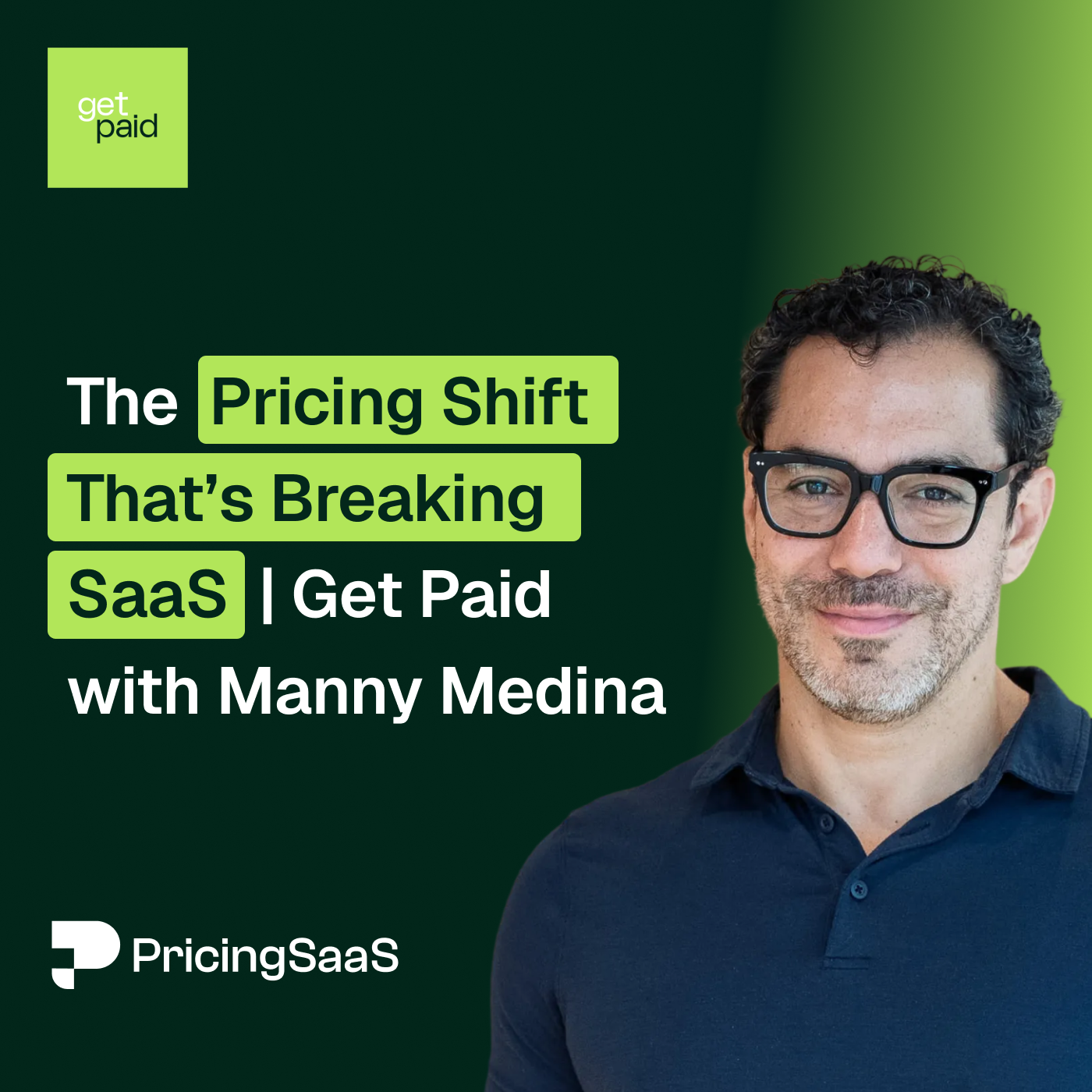
The Pricing Shift That’s Breaking SaaS | Get Paid with Manny Medina
Apr 200:49:26Tap to summarizeAs companies introduce credit systems tied to compute and AI functionality, customers push back, questioning why they should pay more for what feels like an extension of existing products.In this episode of the Get Paid podcast, host Manny Medina and Rob Litterst from PricingSaaS speak to real operators in the field to unpack one of the toughest challenges in modern SaaS: transitioning from seat-based pricing to AI-driven, usage-based models.They dive into the psychology behind pricing resistance, the risks of poor transparency, and a practical two-step strategy to introduce credits without breaking trust or losing revenue.The Pricing Shift That’s Breaking SaaSSaaS pricing used to be simple: charge per seat, scale with users, grow predictably.That model is breaking.As AI features become embedded into products, companies are being forced into a new reality: usage-based pricing tied to compute, tokens, or credits. And customers are not happy about it.“We're already giving you hundreds of thousands to use the software as it is. Why should we pay more for this?”That question sits at the center of the transition. And most companies don’t have a good answer.Why Customers Push BackFrom the customer’s perspective, the frustration is rational.They were sold a product. They’re already paying a significant amount. Now, suddenly, core functionality is being repackaged as an add-on.However, the resistance goes deeper than just price.There are three hidden concerns:Loss of predictability: Usage-based pricing is harder to forecast.Lack of transparency: Unclear what credits actually deliver.Perceived double-charging: Paying again for something that feels included.“Credits create this potential limited liability or consumption. It's hard to forecast.”This becomes a trust problem.The Real Issue: Change ManagementMost companies approach this transition as a pricing update.That’s the mistake.This is fundamentally a change management problem. You’re not just changing how you charge; you’re changing how customers understand value.“The main one is the change management at the point of the customer.”Customers need time to:Understand the new model.Experience the value.Reframe what they’re paying for.Without that, every pricing conversation turns into friction.The Two-Step Transition StrategyInstead of forcing customers into a new model overnight, the smarter approach is gradual.Step 1: Introduce Credits Without Charging for ThemBundle a set number of credits into the existing plan.Position it as:A reward for loyaltyEarly access to innovationA way to experience new value“It’s gonna be included in your seat. We normally charge for this, but for you…”This removes risk from the customer side while creating exposure to the new model.Step 2: Monetize After Value Is ProvenOnce customers have used the feature and seen results, the conversation changes.Now it’s no longer, “Why should I pay more?”It becomes, “How much is this worth to me?”“And once the three months expire, then we're gonna talk about pricing and packaging that makes sense for your business.”This flips the dynamic from resistance to negotiation.Why Transparency Is Non-NegotiableOne of the biggest failures in usage-based pricing is opacity.Customers don’t understand:What a credit actually does.How usage translates into value.Why costs vary.“The majority of the solutions out there being sold on tokens or credits or any variable usage have very little transparency as to what you're getting from those tokens and credits and usage.”If users feel like they’re being charged for something invisible, trust erodes fast.The companies that win will:Clearly map credits to outcomes.Show real-time usage.Tie pricing directly to value delivered.The Real QuestionThe challenge isn’t, “How do we charge more?”It’s, “How do we help customers understand why this is worth more?”Because in the end, pricing is about perceived value, trust, and timing.And if you get those right, the transition doesn’t feel like a price increase.It feels like an upgrade.Companies MentionedOpenAIAnthropicGitHubMonday.comServiceNowAmazon Web ServicesSnowflakeTwilioSendGridStripeDatadogVercelReplitGet Paid with Manny Medina is handcrafted by our friends over at: fame.so
Transcribe →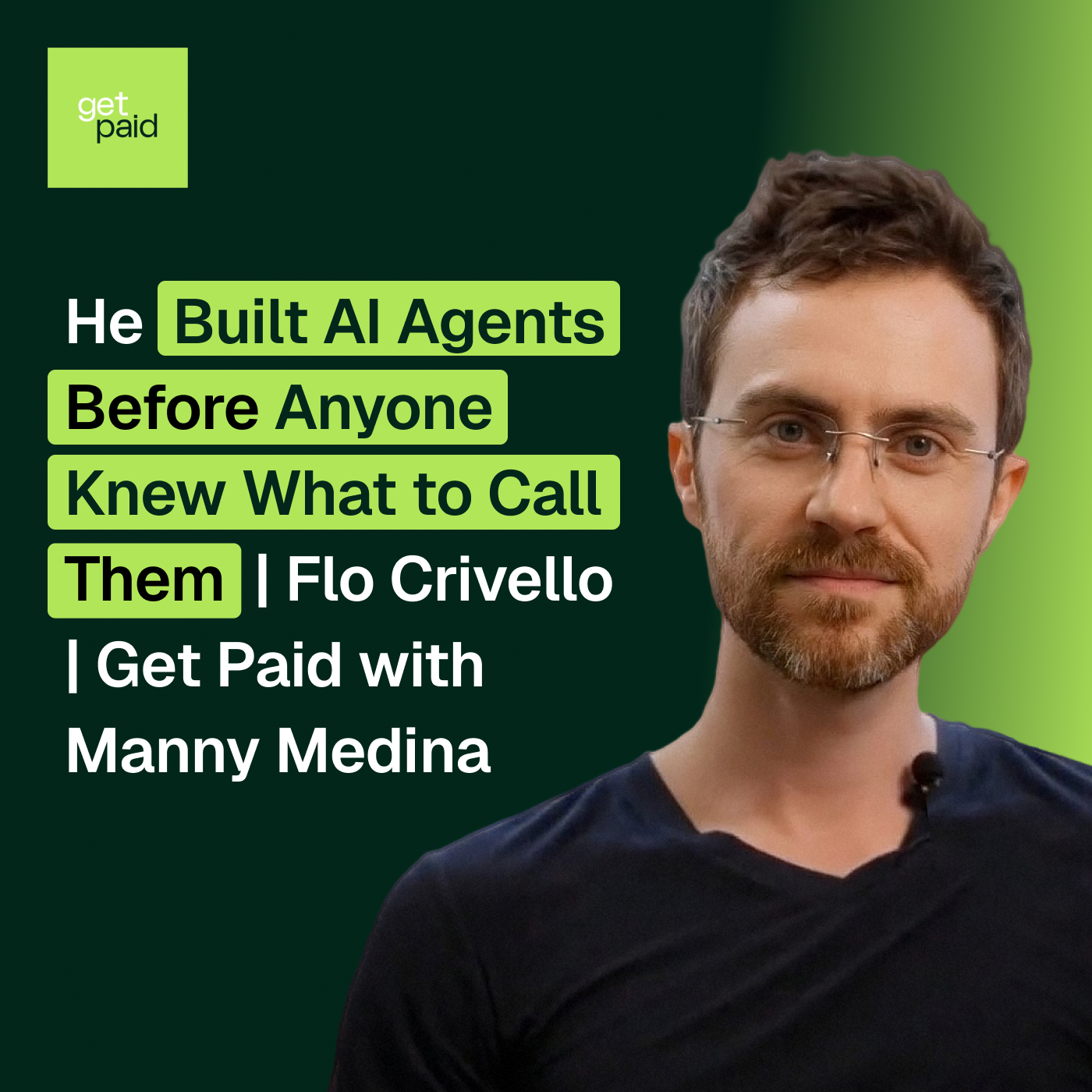
He Built AI Agents Before Anyone Knew What to Call Them | Flo Crivello | Get Paid with Manny Medina
Mar 2600:44:18Tap to summarizeIn this episode of the Get Paid with Manny Medina, Flo Crivello, Founder and CEO of Lindy, shares the full origin story of one of the most ambitious AI products being built today: a proactive executive assistant that manages your inbox, prepares you for every meeting, and takes action on your behalf before you even ask.Flo traces the journey from a 2022 meeting recorder to a no-code agent builder to the AI chief of staff executives are now replacing their human assistants with. Along the way, he opens up about losing talent through pivots, the dangerous middle ground between product and platform, and the model release that made him realize the guardrails he’d built were now the ceiling holding Lindy back.Starting Before the Language ExistedFlo began working on AI agents in mid-2022. GPT-4 didn’t exist yet. LangChain didn’t exist. The word ‘agents’ wasn’t part of the industry vocabulary.The insight came from experimenting with the GPT-3 API while building a meeting recorder. The team realized the model wasn’t just good at generating language; it could take actions.“The GDP is not made of copywriters. It’s made of work.”While the rest of the market rushed to build AI writing tools, Flo was quietly trying to build software that could actually do things.The Leash Was the ProductEarly agentic AI was far too unreliable to ship as a freeform system. Hallucination rates were unworkable. Function calling didn’t exist. The team resorted to having models write raw code to hit APIs, a fragile, error-prone approach.Lindy’s solution was a structured canvas, similar to Zapier, where humans defined every step in a workflow and the agent filled in the blanks. It was rigid. But it worked.“We called it keeping the agent on a leash. It buys you reliability, but it takes away flexibility.”The model proved itself quickly. Within weeks of building on Rails, Lindy was automating complex workflows for a prominent VC firm that had doubted it was possible. Shortly after, a YouTube creator named MattVidPro discovered the product, and the inbound exploded, with most companies spending heavily to manufacture, and arrived for free.The Platform TrapAs the agent builder grew, a harder problem emerged. Lindy had drifted into the space between a product and a platform, too opinionated for developers, too technical for end users.Flo’s analogy is sharp: telling someone you’ve built the world’s easiest way to make their own cheeseburger at home doesn’t land, because people who want a cheeseburger want McDonald's.“Don't be in the middle. Pick a lane.”The realization forced a real decision: go hard toward developers and compete in the infrastructure space, or go hard toward end users and build something genuinely magical for people who are too busy to configure anything.Lindy chose the latter. That choice sent them back to the original vision.The Moment the Leash Became a CeilingThroughout all the pivots, Flo had been running Lindy as his own personal AI assistant, swapping in each new model as it was released and watching the experience slowly improve. When Claude 3.5 arrived, something changed.End-to-end agents, fully autonomous loops with no human-defined steps, had always been the weakest part of the product. Suddenly, they worked. The structured workflows that had made Lindy reliable were now limiting what the agent could do on its own.“Take me off the leash. I know what to do. I can do so much more for you.”Lindy rebuilt around the vision Flo had been carrying since 2022.What Lindy Actually IsLindy connects to your email and calendar, learns your context continuously, and acts before you ask. There’s no setup wizard. No flow to configure. It starts delivering value within minutes of connecting your accounts.During a recent engineering interview, a candidate mentioned a referral. By the time the meeting ended, Lindy had found the LinkedIn profile, drafted a personalized outreach email, and sent Flo a text asking if he wanted it sent.“I did not have to change much before sending it.”The breakthrough surface turned out to be iMessage. What started as a feature became the core of the product, a text interface that lets busy executives give and receive information in the same seconds they’re glancing at their phone between back-to-back meetings.“All I check is this. I check my phone.”Where the Opportunity IsFor founders building now, Flo’s advice centers on a constituency most people are still underestimating: agents themselves.Agents are becoming buyers. They need compute, billing infrastructure, memory, and tooling designed for non-human operators. The founders building that layer, not for developers, not for end users, but specifically for agents, are sitting on a wide-open opportunity.“There are going to be infinitely more agents in the future. Focus on that constituency.”Companies MentionedLindyUberRipplingFigmaIntercomClaudeChatGPTLangChainE2BStripeSuperhumanCopy.aiJasperGet Paid with Manny Medina is handcrafted by our friends over at: fame.so
Transcribe →
The Pricing Change That Increased Revenue 60% | Sofiia Shvets | Get Paid with Manny Medina
Mar 1900:44:23Tap to summarizeIn this episode of the Get Paid podcast, Sofiia Shvets, CEO and Co-founder of Claid, explains why her company replaced traditional SaaS pricing with a credit-based model.Sofiia shares the challenges of migrating customers, the benefits of usage-based monetization for AI products, and how the switch ultimately increased revenue per account by 50-60%.The conversation also explores AI infrastructure costs, enterprise adoption challenges, and the future of agent-driven generative media.When Subscription Pricing BreaksClaid originally launched with a simple SaaS subscription model where users paid a monthly fee for access to generative media tools.However, as the product expanded from three tools to more than twenty, pricing complexity exploded.Different tools had different computational costs. Some customers only needed one feature. Enterprise clients needed flexibility to expand usage quickly.“It was a monstrosity of the process.”Hard limits across tiers made the product harder to use and harder to sell.Why Credits Simplified EverythingClaid replaced subscription tiers with a credit-based pricing system.Each operation now consumes credits based on its cost and complexity.For enterprise buyers, this made pricing dramatically easier to understand. Customers could forecast usage, run experiments, and expand their workflows without renegotiating contracts.“Here's the whole list of operations. They cost two, three, or five credits. The price of the credit is, I don't know, $1 or whatever. $5. Super easy. Easy math.”Credits also allowed Claid to launch new tools without changing pricing plans.The Short-Term Pain of Changing PricingMigrating to credits was not painless.Existing customers initially complained about the introduction of limits where none existed before.“We got a bunch of complaints from users.”Some churn followed, but far less than expected.New users, however, adapted immediately because credit pricing had already become common across AI tools.The Result: 50–60% Revenue Growth per AccountWithin three months of the transition, Claid saw a major shift.Revenue per account increased by 50-60%.The reason: the old pricing model had been limiting usage.Customers could now scale their usage freely and purchase additional credit bundles when needed.“It got more expensive, but it was more fair use.”The new model aligned pricing with real product usage.The Hidden Complexity of AI MonetizationUnlike traditional SaaS products, AI tools have real-time infrastructure costs.Every request consumes GPU resources, and processing times vary depending on load and model complexity.Claid operates a hybrid system:Some models are hosted internally, others run through external APIs.This makes margin forecasting far more complex than traditional SaaS.“It’s hard to calculate, especially when you host models yourself.”Advice to AI FoundersSofiia’s biggest advice to founders building AI products:Don’t obsess over getting monetization perfect on day one.First, validate that users are willing to pay.“Try to sell it in any way.”Pricing can always evolve once product value is proven.Companies MentionedClaidGoogleBlack Forest LabsAmazoneBayOLXLovableGet Paid with Manny Medina is handcrafted by our friends over at: fame.so
Transcribe →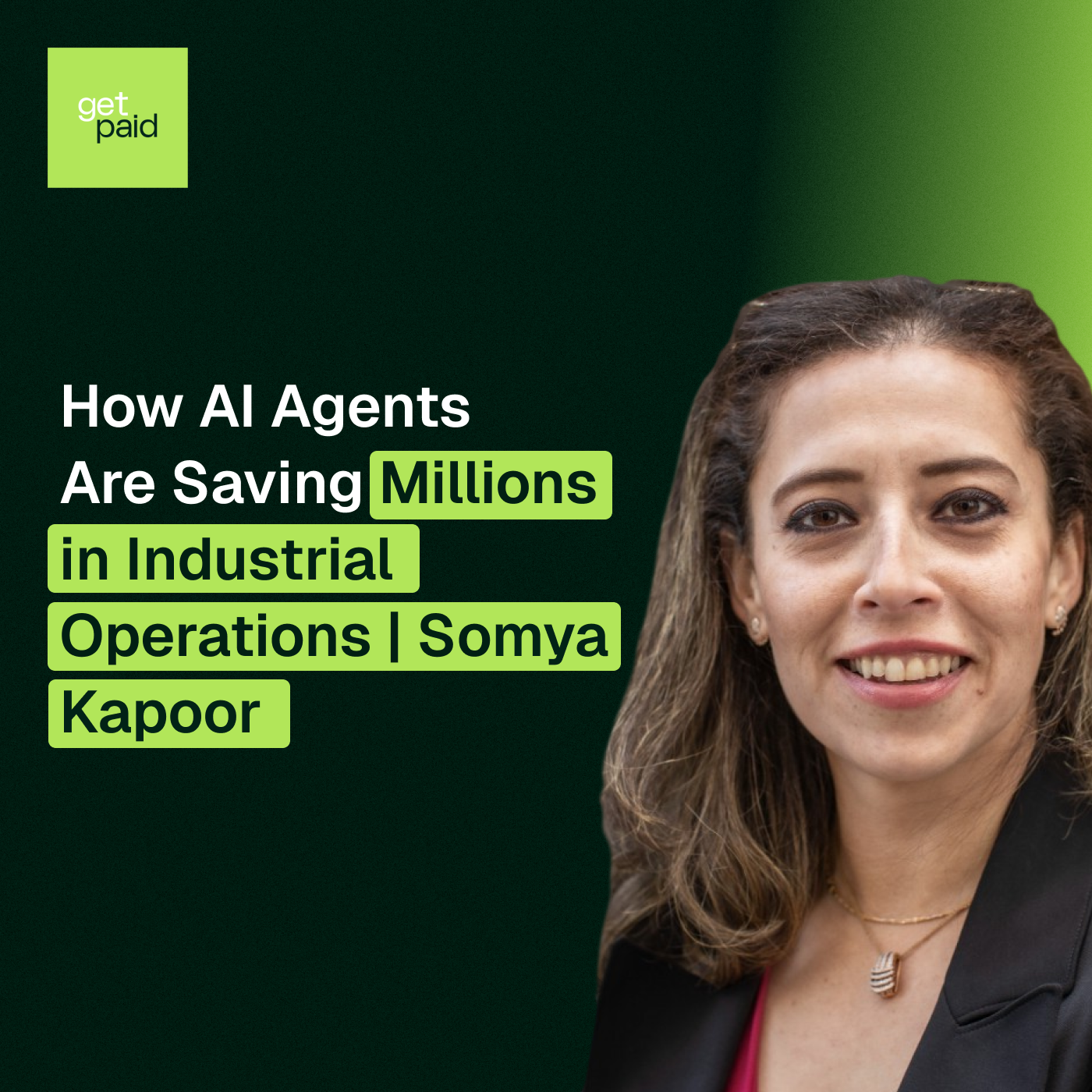
How AI Agents Are Saving Millions in Industrial Operations | Somya Kapoor
Mar 1200:41:10Tap to summarizeThe Real Challenge of AI AgentsThe industry often focuses on building AI agents. But building them is the easy part.What enterprises actually struggle with is adoption.Agents need to integrate with real workflows. They need to be able to handle edge cases and operate within strict operational constraints. In industrial environments, an incorrect output isn’t just inconvenient; it can disrupt operations or create risk.That’s why the future is far different from building general-purpose agents. It’s deploying domain-specific digital workers that understand business processes.Digital Workers and Real ROIThe promise of AI agents becomes powerful when they connect directly to operational workflows.In manufacturing and industrial supply chains, routine decisions like inventory replenishment or purchase order generation consume thousands of hours every year.By deploying AI-powered digital workers into these processes, companies can automate operational decisions. While keeping humans in control of the overall system.In one case, an oil and gas company implemented a digital worker to manage inventory replenishment and supplier orders.The result? 90,000 hours saved annually, which is equivalent to $3 million in cost savings.The End of RPAFor years, companies have relied on Robotic Process Automation (RPA) to automate repetitive workflows. But RPA was built for rigid systems.It required developers, constant maintenance, and long deployment cycles.Agentic AI changes that equation. Instead of automating individual steps, agents can reason across systems, adapt to context, and make decisions based on real-time data.As Somya explains, the future of enterprise AI adoption is autonomous digital workers.How Founders Should Think About AI StartupsFor AI founders entering enterprise markets, Somya offers a simple rule: Don’t try to replace the entire system.Instead, identify one business process where AI can deliver measurable value quickly. Land with that workflow.Prove ROI. Then expand.In industrial companies, especially, adoption happens when leaders can show clear operational improvements within a quarter. Once that value is proven, organizations are eager to deploy more industrial AI automation across other processes.Why Industrial AI Is DifferentDeploying AI agents in industrial environments is fundamentally different from deploying them in traditional SaaS workflows.In support or marketing systems, an AI output that is “mostly correct” can still be useful. Speed often matters more than perfect accuracy. But industrial systems operate under a different standard.When an agent creates a purchase order, schedules maintenance, or assigns work to a technician, the output must be deterministic and reliable. A wrong output doesn’t just create inconvenience; it can delay operations, introduce safety risks, or disrupt critical infrastructure. That’s why enterprise AI in industrial environments requires structured workflows, strong guardrails, and deep domain expertise.The Rise of Outcome-Based PricingTraditional SaaS pricing was built around seats. More users meant more revenue.But AI agents change that equation.When a digital worker processes purchase orders, manages inventory replenishment, or automates work orders, the value it creates isn’t tied to how many people log into the system.It’s tied to what work gets done.That’s why Somya is increasingly seeing enterprise deals structured around business outcomes like the number of orders processed, workflows completed, or operational hours saved.This model aligns pricing directly with the ROI the technology creates. And for enterprise buyers, it makes the decision easier.Companies MentionedIFSSAPServiceNowTheLoopsMicrosoftIndustrialXGet Paid with Manny Medina is handcrafted by our friends over at: fame.so
Transcribe →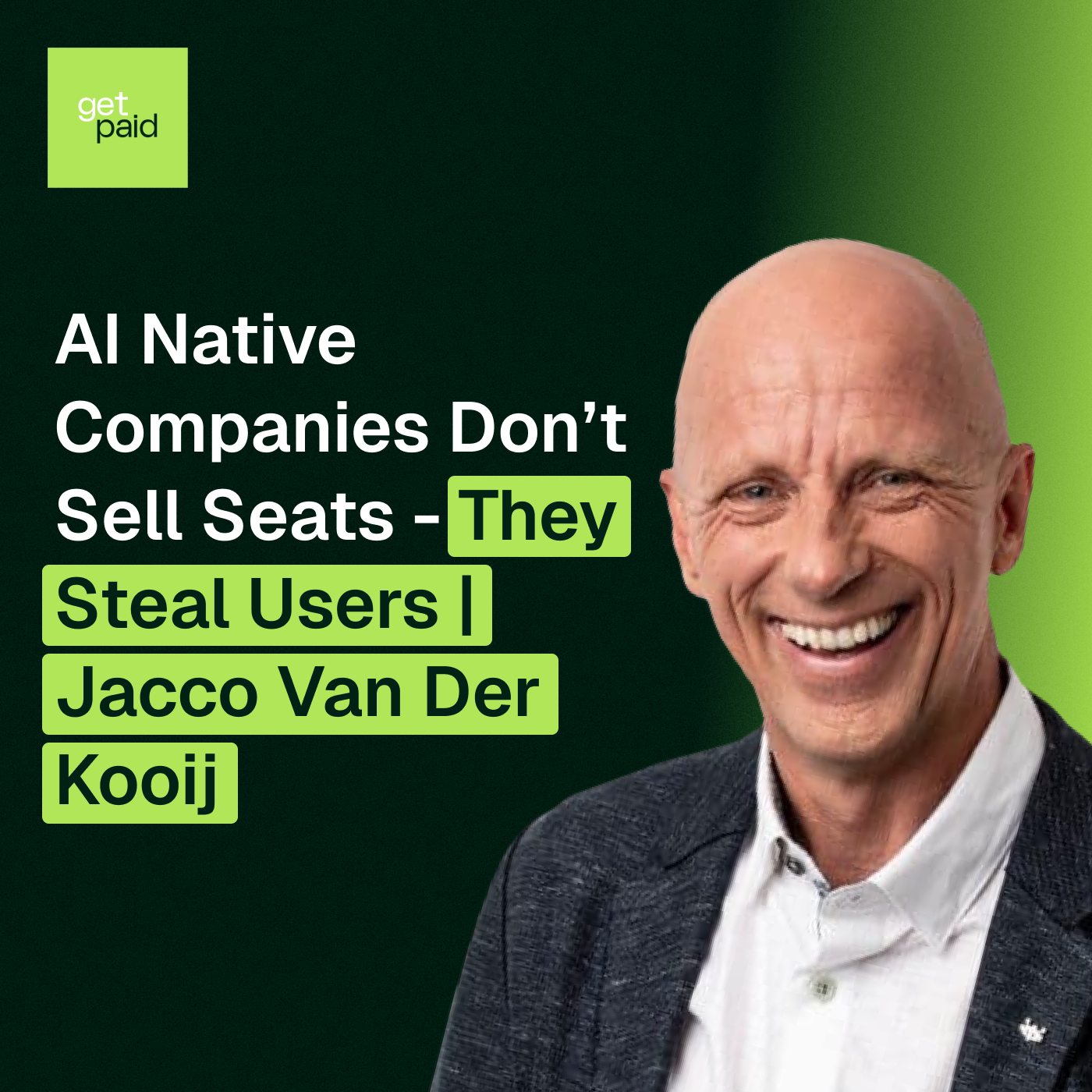
AI Native Companies Don’t Sell Seats - They Steal Users | Jacco Van Der Kooij
Mar 600:40:53Tap to summarizeIf you’re building or leading a SaaS company, this conversation explores how the AI SaaS playbook is changing traditional go-to-market models. Jacco, Founder of Winning by Design, explains why product-led growth, real-time systems, and growth loops vs. funnels are becoming the dominant approach to B2B growth in the AI era.Together, Jacco and Manny discuss why the traditional SaaS funnel is losing effectiveness and how modern companies are building self-reinforcing growth engines instead. They explore the SaaS expansion strategy, the shift from logo acquisition to user adoption, and how AI-native organizations stack growth loops to maintain momentum.“There are no seat sales. That doesn’t exist. There’s user sales, and users have usage.”The Death of Logo WorshipFor years, SaaS companies optimized for winning logos.Get the company. Hang it on the wall. Put it on the deck.AI-native companies think differently. They optimize for users.“Logos don’t bring in new logos. Users bring in new users.”Jacco argues that disruption doesn’t start with logo churn. It starts with user migration. AI-native tools land with users first. Once usage consolidates, the logo follows.Funnels vs. Growth LoopsTraditional SaaS growth is an open-loop system. It requires constant external input: more leads, more SDRs, and more spend.AI-native growth is closed-loop. When growth creates more growth, the system compounds.Jacco explains that nearly every fast-growing company today operates on at least one growth loop:User-based loopsExpansion loopsCommunity loopsViral loopsIf you have to pay for every dollar of growth, you will eventually hit a ceiling.The S-Curve and Stacking GrowthAll growth follows an S-curve:Slow startExponential phasePlateauEvery S-curve eventually becomes a bell curve unless you stack another one.That’s why companies like Dropbox and DocuSign continuously launch adjacent products. When individual-user growth saturates (often around 200k–300k users in B2B), churn dampens the exponential curve.To sustain momentum, companies must stack new growth loops on top of old ones.Velocity Is the Real ShiftWhat’s different now isn’t growth theory, but speed.AI-native companies operate at a different clock speed. If win rates in Spain jump from 18% to 26%, a traditional SaaS company might respond next quarter. An AI-native company reacts in days.The difference lies in infrastructure, real-time systems, automated feedback loops, and humans designing systems rather than manually steering every move.“When things go this fast, humans are no longer the control stick. We design the system and let it run.”The 50,000 User Thought ExperimentConsider a $100M SaaS company with:$30k ACV3,000 customers50,000 usersIf just 1% of users per month generate an opportunity signal, that’s 500 quality signals per month. 6,000 per year. Instead of sending SDRs to cold outbound lists, Jacco proposes redeploying them toward users: Build advocacyCreate communityEnable propagationThe growth engine is already inside the customer base. You just need to activate it.AI Is Not Stealing Logos. It’s Stealing Users.The biggest misconception in SaaS today is that competition happens at the logo level.It doesn’t.AI-native tools enter at the user layer. They win individual adoption. They observe usage patterns in real time. They iterate faster. Then the logo shifts.If you’re SaaS-native, you are not doomed. But you must:Focus on the users, not seatsUnderstand your dominant growth loopUpgrade to real-time infrastructureDesign propagation into the productBecause in the AI era, velocity compresses the S-curve. And the companies that achieve irreversible time dominance don’t just win first. They become almost impossible to catch.Companies MentionedWinning by DesignCanvaDropboxDocuSignSuperhumanGrammarlyStarlinkSpaceXBoston DynamicsHubSpotCursorGet Paid with Manny Medina is handcrafted by our friends over at: fame.so
Transcribe →