
Podcast
Gino's Podcast
Hosted by Gino Raidy · EN
20episodes
Episodes
Newest firstAll episodes
Lebanon’s Deadlock Doctrine
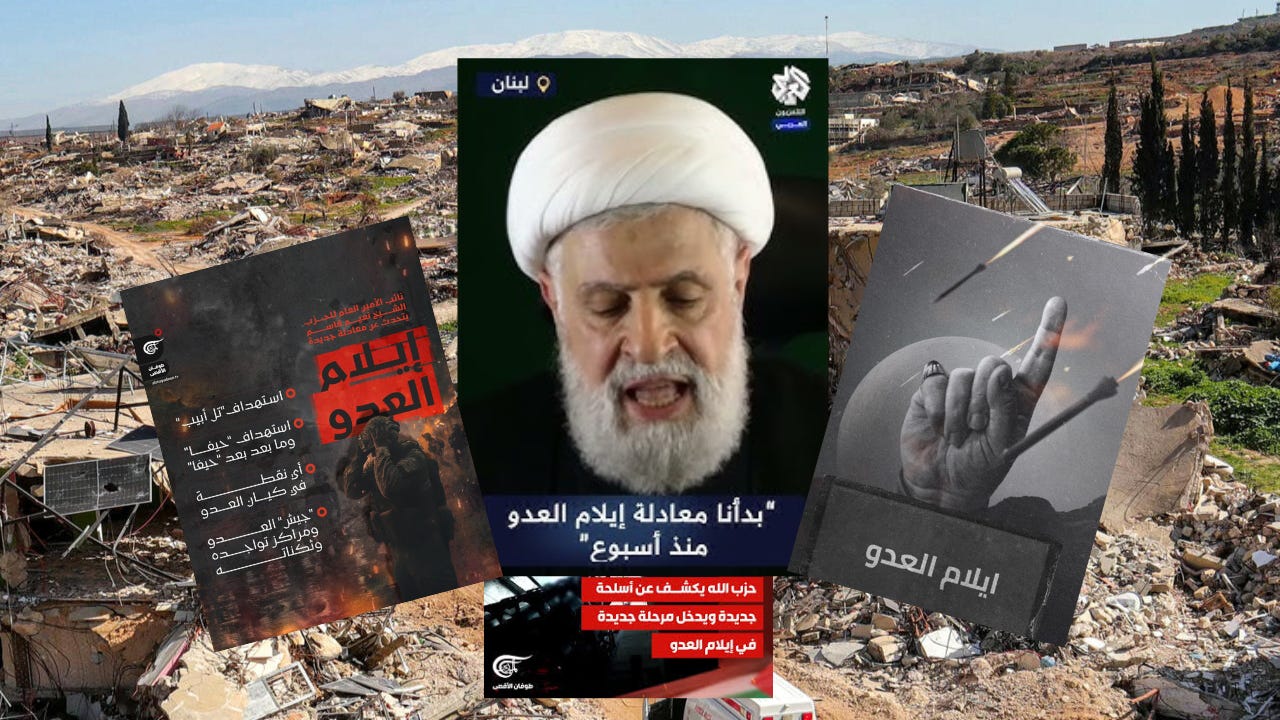
Feb 27, 202500:08:53Tap to summarizePower in Lebanon isn’t about track records, courageous leadership, or bold vision. It’s about leverage—the ability to obstruct, disrupt, or threaten effectively. If you can halt parliamentary sessions, shut down the airport, or flood the streets with armed supporters, you hold power. This dangerous metric rewards destruction over construction and has kept Lebanon in a perpetual state of crisis.As discussions about reconstruction take center stage, it’s crucial to examine this entrenched culture—not just in Lebanon but across the region. This is why the moment following our new government’s vote of confidence in parliament feels so significant. For the first time, obstruction seems nearly impossible, opening a rare opportunity to build and move forward rather than clinging stubbornly to failed tactics of the past.This isn’t just a Lebanese phenomenon—many fragile states and conflict-prone societies operate on similar rules. But in Lebanon, this logic has been deeply entrenched in the political, economic, and even social fabric of the country. The ability to wield disruption as a weapon has been systematized, legitimized, and even romanticized. Worse yet, it has made some completely live in denial, insisting they were victorious even after signing a surrender.The Power to Break, Not BuildAt the heart of this issue is a political class that has always seen governance as a zero-sum game. The goal isn’t to create a better system but to secure enough leverage to either force others into concessions or prevent them from advancing without consent. Hezbollah exemplifies this strategy perfectly. It has operated outside the state while holding veto power over its decisions, maintaining an armed force beyond the reach of Lebanon’s legal and political institutions. But that reality is fading, if not entirely gone. Even Naim Qassem, in a speech during Hassan Nasrallah’s funeral, admitted as much.When Michel Aoun’s bloc boycotted parliamentary sessions for two years to prevent a president from being elected, they were ultimately rewarded with the presidency. Even now, after 15 years in power with nothing to show for it, his son-in-law’s only real political agenda revolves around securing the “Christian share” of seats. When Hezbollah and its allies paralyzed government functions in 2011 by walking out, they successfully collapsed the cabinet.Even during the October 17 uprising, protesters realized that blocking roads and disrupting daily life were far more effective at pressuring the government than any traditional form of political participation—because those channels had already been rendered useless. The system is structured so that disruption becomes the only viable tool for change—an indictment of the system itself.A System Built for Permanent StalemateThe Lebanese system rewards veto power and obstruction, creating a political culture where compromise is seen as weakness. Other countries have opposition parties that challenge those in power through policy debates or electoral strategies. In Lebanon, opposition is expressed through threats: If you don’t give me what I want, I will shut everything down.This extends beyond politics into business and daily life. Economic monopolies are protected not by market forces but by the implicit threat of chaos if they are challenged. Entire industries operate on wasta, the unspoken understanding that power comes from being able to manipulate and exploit the system, not from contributing to it.The result is a country perpetually frozen, unable to move forward because every faction—political or otherwise—holds the power to bring everything to a halt but has no incentive to build something sustainable. After all, why put in the work when your entire platform is based on “the others are stealing, so we must take our share too”? And sadly, partisans buy into it. The focus is always on how to weaken the perceived existential enemy, never on how to strengthen ourselves to better withstand future crises.Hezbollah proudly flaunted its rockets but had no plan for the hundreds of thousands of Lebanese who would be displaced as a result. It was left to ordinary people—many of whom had suffered under Hezbollah’s rule—to take in the internally displaced, left stranded by Nasrallah’s unilateral decision to launch an all-out war against Israel.This culture of disruption as power extends beyond Lebanon. Take the Houthis, for example. Their entire identity revolves around their ability to cause chaos—whether it’s launching missiles at Saudi Arabia and the UAE or, more recently, reveling in their ability to disrupt maritime traffic in the Red Sea. They frame these acts as victories, yet they offer no real vision for governance, no strategy for economic development, and no plan to improve the lives of Yemenis. Their only currency is disruption—one that punishes not just their adversaries but the very Arab countries they claim to defend.And then there’s the Iranian regime, the patron of this entire ecosystem of destruction. Tehran loves to promise post-war reconstruction aid for Lebanon, Syria, and even Gaza, yet it can’t even keep the lights on at home. But when it comes to weapons? The regime always seems to find the money. While Iranian citizens struggle under economic collapse, their government spared no expense to prop up Bashar al-Assad’s slaughterhouses and ensure Hezbollah’s grip on Lebanon and Syria remained well-stocked. Before it all crumbled under the weight of its own corruption and decay, Hezbollah once fashioned itself as a "resistance movement." Today, it has fully morphed into a mercenary force, serving the highest bidder in whatever conflict Tehran deems beneficial for the negotiations it strives for with the West.The parallels are clear: whether it’s Hezbollah, the Houthis, or the Iranian regime itself, power is defined not by the ability to build, but by the capacity to destroy. And as long as this remains the measure of influence in the region, real progress will remain just out of reach.Breaking the CycleLebanon’s real crisis is not just economic or political—it is cultural. The idea that power is measured by one’s ability to obstruct rather than create has shaped the country’s trajectory for decades. And while Hezbollah’s role in this dynamic is undeniable, so is the complicity of every major political faction that has operated within the same logic. On brinksmanship, on freezing the status quo, even if it meant working with Riad Salameh to literally steal our deposits and savings from our bank accounts.Breaking this cycle requires a fundamental shift in how power is conceptualized. It requires a move away from transactional politics where concessions are only made under duress. It means abandoning the glorification of "strong leaders" who prove their strength by their ability to disrupt and threaten. It means rejecting the idea that chaos is the only available currency in Lebanese politics.The challenge is immense because the entire system—from its sectarian structures to its patronage networks—thrives on maintaining the status quo. But as Lebanon continues its freefall, the alternative is clear: either we redefine power, or we remain trapped in this cycle of self-inflicted paralysis.This is why Nawaf Salam and Joseph Aoun worked so hard to ensure there would be no clear “obstructing third”—yet another Lebanese political invention designed to paralyze governance. Without it, the cabinet has at least a fighting chance to begin the reconstitution of a Lebanese state—one that Hezbollah and its collaborators from the sectarian parties have meticulously dismantled over decades.In other words, let’s redefine strength and success as building ourselves up—our institutions, our economy, and our capabilities—rather than measuring them by how much “pain we inflict.” Especially when that pain is negligible compared to what we’ve endured: over 4,000 killed and $10 billion in damages.Let’s try building for once instead of destroying. We’ve seen where destruction leads—it has never served us. So why not choose a different path this time?Gino's Blog is a reader-supported publication. To receive new posts and support my work, consider becoming a free or paid subscriber. Get full access to Gino's Blog at ginoraidy.substack.com/subscribe
Transcribe →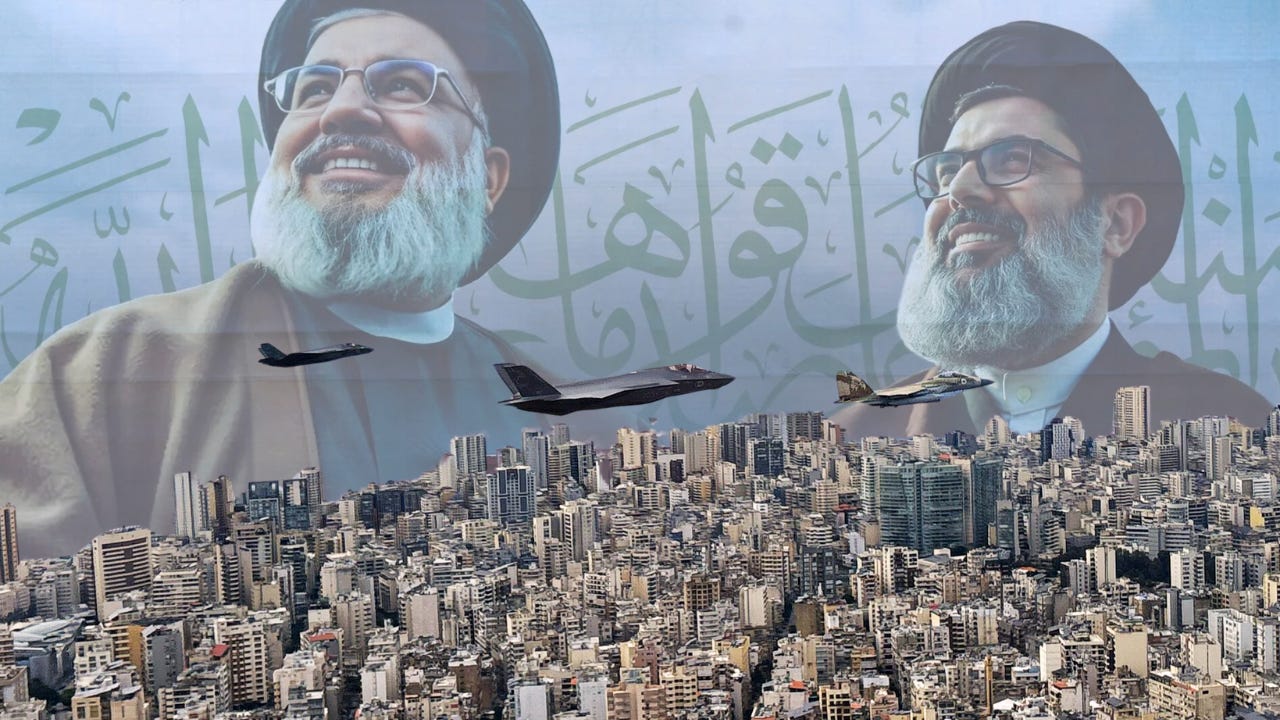
A Funeral, A Flyover, and a Shift in Power: Hezbollah's Fork in the Road
Feb 24, 202500:10:59Tap to summarizeLet’s start with the obvious: a lot of people attended Hassan Nasrallah’s funeral, nearly five months after he was killed in a massive Israeli airstrike on Dahieh. But the funeral was more than just a farewell—it was also an opportunity for a badly battered Hezbollah to demonstrate that it still had support.Now, we can debate whether the turnout was a referendum on Hezbollah or simply a reflection of the deep reverence many of its supporters had for their longtime secretary-general. But that’s not the focus of this Monday’s post. Instead, it’s about what happened before, during, and right after.Before we dive in, let me address those who felt deflated or concerned by the sight of a stadium packed with mourners, especially after sensing that Hezbollah’s presence had waned.ginoraidy.substack.com Get full access to Gino's Blog at ginoraidy.substack.com/subscribe
Transcribe →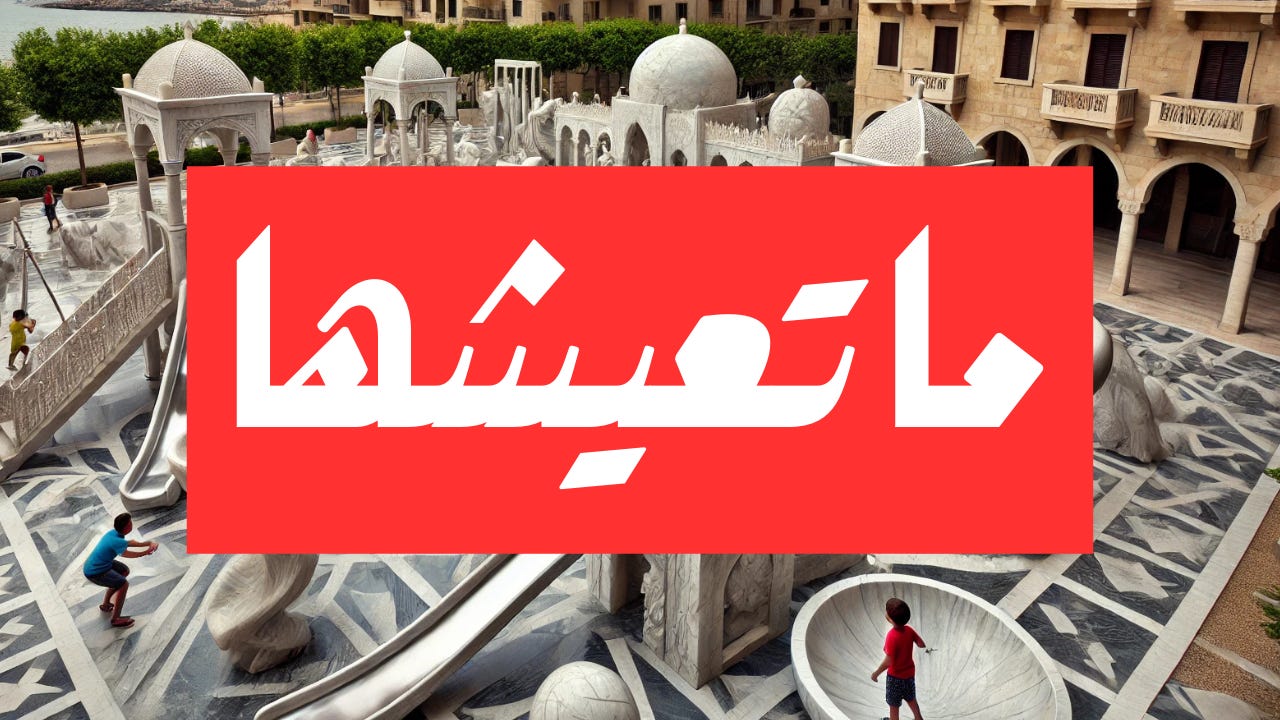
"Ma T3isha"
Feb 20, 202500:10:47Tap to summarizeMaybe you’re not exactly like me, but when I fall in love with something, I tend to get a little obsessed. Whether it’s a book, a movie, a series, a music genre, or a niche area of expertise, I want to know everything—the lore, the culture, the creators, the nuances—and figure out if and how it fits into my life or worldview.Growing up, I’d weave Tolkien into my life—my fashion, my interests—just like I did with Star Wars, Biology, Hip Hop, Trance, or whatever else my teenage brain fixated on for a few months at a time. As I got older, I toned it down—not because my passion for new things faded, not at all. It was because of a familiar phrase I’m sure most, if not all, of you have heard at some point in Lebanon: Ma t3isha. 3ayyoush. Or some variation of it.In today’s article, I want to unpack what this phrase really means and why it felt like hitting a brick wall when trying to express oneself—especially when that expression came in the form of passion or enthusiasm for something others around you, whether at school or in your neighborhood, didn’t share.The Social Policing of Passion in LebanonAt first glance, "ma t3isha" might seem like just another offhand remark—something friends say to tease each other or an older sibling throws out to shut down a younger one’s enthusiasm. But beneath its casual delivery is a powerful social cue: Don’t get too carried away. Don’t live in your own world too much.For many kids and teens growing up in Lebanon, it serves as an invisible boundary line, shaping how they engage with their passions. Whether you were obsessed with The Lord of the Rings, deep into obscure hip-hop subgenres, or fully committed to memorizing the entire lore of a video game, you might have found yourself hearing "ma t3isha" whenever your excitement became too extra for those around you.But why? What is it about deep enthusiasm that makes people react this way?Cultural Pragmatism and the Fear of "Wasting Time"Lebanon’s history of instability—wars, economic crises, and social upheaval—has shaped a collective mindset that prioritizes adaptability, resilience, and pragmatism. The expectation, whether stated outright or implied, is that you should invest your time and energy into things that matter—things that are useful, profitable, or socially acceptable.There’s a subconscious social filter at play:* Loving football? Cool, because it’s widely accepted and part of group identity.* Being into music? Fine, as long as it’s mainstream enough to be shared and understood.* Diving deep into an obscure fantasy world or niche electronic music scene? Eh… why?"Ma t3isha" often kicks in when someone’s interests or passion don’t neatly align with these practical or social norms. If what excites you doesn’t seem immediately useful or relatable, the reaction is to brush it off, sometimes even with a hint of concern: Why are you spending so much energy on this? What’s the point?For Lebanese teens growing up in a culture that values resourcefulness, passion for something "unconventional" can be seen as impractical or, worse, a distraction from real-life priorities. The phrase "ma t3isha" is a social nudge back to reality—a way of saying "Don’t get too lost in that. It’s not serious."A Tool for Social ConformityAnother reason "ma t3isha" holds so much weight is its role in maintaining social cohesion. Lebanon is, at its heart, a collectivist society, at least in public. Even though individualism exists (7arboo2), social belonging is highly valued, and that means there’s often an unspoken pressure to not stray too far from the pack.Expressing too much enthusiasm for something that others don’t share can make you stand out—and not always in a good way. Whether at school, in the neighborhood, or even among cousins at family gatherings, being too deeply into something niche can make others feel disconnected from you. "Ma t3isha" acts as a subtle way to steer people back toward what’s socially acceptable and shared.It’s why being a massive football fan or a die-hard Fairuz listener is totally fine—because these interests are widely recognized and collectively celebrated. But start talking about how you’re obsessed with medieval history or avant-garde cinema, and you might get a "ma t3isha" thrown your way. Sucks, I know.This isn’t necessarily about intentionally discouraging individuality, but rather a reflection of how Lebanese social circles function. If an interest can’t be easily shared or understood by the group, it’s often met with resistance.I can’t deny that some people simply enjoy taking the wind out of your sails, trying to put you down because they think it makes them look cool. For those people, I genuinely feel sorry—but they’re not worth much discussion.How It Impacts Passion and Self-DiscoveryFor those who hear "ma t3isha" enough times, the impact can be subtle but significant. Over time, it can lead to:* Self-censorship: You learn to downplay your enthusiasm, keeping certain interests private or only discussing them with select people.* Shifting passions: Instead of fully diving into what excites you, you might choose to invest in things that feel safer to talk about in social settings.* A delay in self-acceptance: Some people don’t fully embrace their unique interests until adulthood, when they’re in spaces that allow for deeper self-expression.But it’s not all negative. Many Lebanese teens eventually find their people—friends who share their passions, online communities that validate their interests, or even spaces abroad where they can fully embrace their identities without fear of dismissal. I count myself among the lucky ones. Today, when I get carried away in excitement, the people around me don’t shut it down—they share in it, ask questions, and sometimes even adopt the passions that have taken hold of me. And that feels f*****g amazing.The Unspoken Rule: Enthusiasm is CringeIf "ma t3isha" shaped how many Lebanese kids and teens expressed their passions, it didn’t stop there. As those kids grew up, the cultural pressure to not try too hard evolved into something even bigger—a generational attitude that mirrors broader Millennial and Gen X cynicism, where effort itself often becomes uncool.One of the defining traits of Millennial and Gen X humor—both in Lebanon and globally—is irony, sarcasm, and a general detachment from overt sincerity. Whether it’s through self-deprecating jokes, hyper-awareness of trends, or a reluctance to appear too invested in anything, there’s an underlying belief that trying too hard is embarrassing.This is where "ma t3isha" and generational cynicism intersect. If "ma t3isha" is about not getting too caught up in your own world, then the Millennial and Gen X equivalent is not looking like you care too much about anything at all.Think about the way passion is treated in certain social settings:* Being effortlessly good at something? Cool.* Being visibly excited about something? Cringe.* Showing too much sincerity? Even worse.Much like how "ma t3isha" discourages young people from diving too deep into their interests, the broader generational mindset of detachment—whether in pop culture, internet humor, or real-life social interactions—creates an environment where being deeply invested in anything can feel socially risky.Where Did This Attitude Come From?For Millennials, growing up in a world of economic instability, failed institutions, and an oversaturation of media meant that detachment became a coping mechanism. Trying too hard felt pointless when so many systems—whether political, financial, or social—were failing around them. Irony and self-awareness became survival skills, shaping the tone of everything from memes to workplace culture.For Gen X, their cynicism was rooted in rebellion against the high expectations and corporate optimism of their Baby Boomer predecessors. Rejecting traditional paths, embracing alternative subcultures, and treating mainstream enthusiasm with skepticism defined much of their cultural DNA.In Lebanon, these generational shifts blended with ma t3isha in a way that doubled down on the idea that sincerity is embarrassing, and effort should be effortless. If you were too into something—whether it was a fandom, a career aspiration, or even personal development—it was safer to play it cool, joke about it, or act like you didn’t care that much.Looking back, there’s a knot in my stomach when I think about how many years I spent living like that…How This Affects Creativity and AmbitionFor many people, especially creatives, this attitude can be stifling. Passion, by its nature, requires effort. Science, art, writing, music, activism—none of these things thrive in an environment where caring is met with skepticism. But when you’ve internalized the idea that being too enthusiastic is a social risk, you start to hold back.* Instead of fully committing to a creative project, you might downplay it with a “Yeah, I’m just messing around with it” attitude.* Instead of celebrating personal achievements, you self-deprecate to avoid seeming too pr...
Transcribe →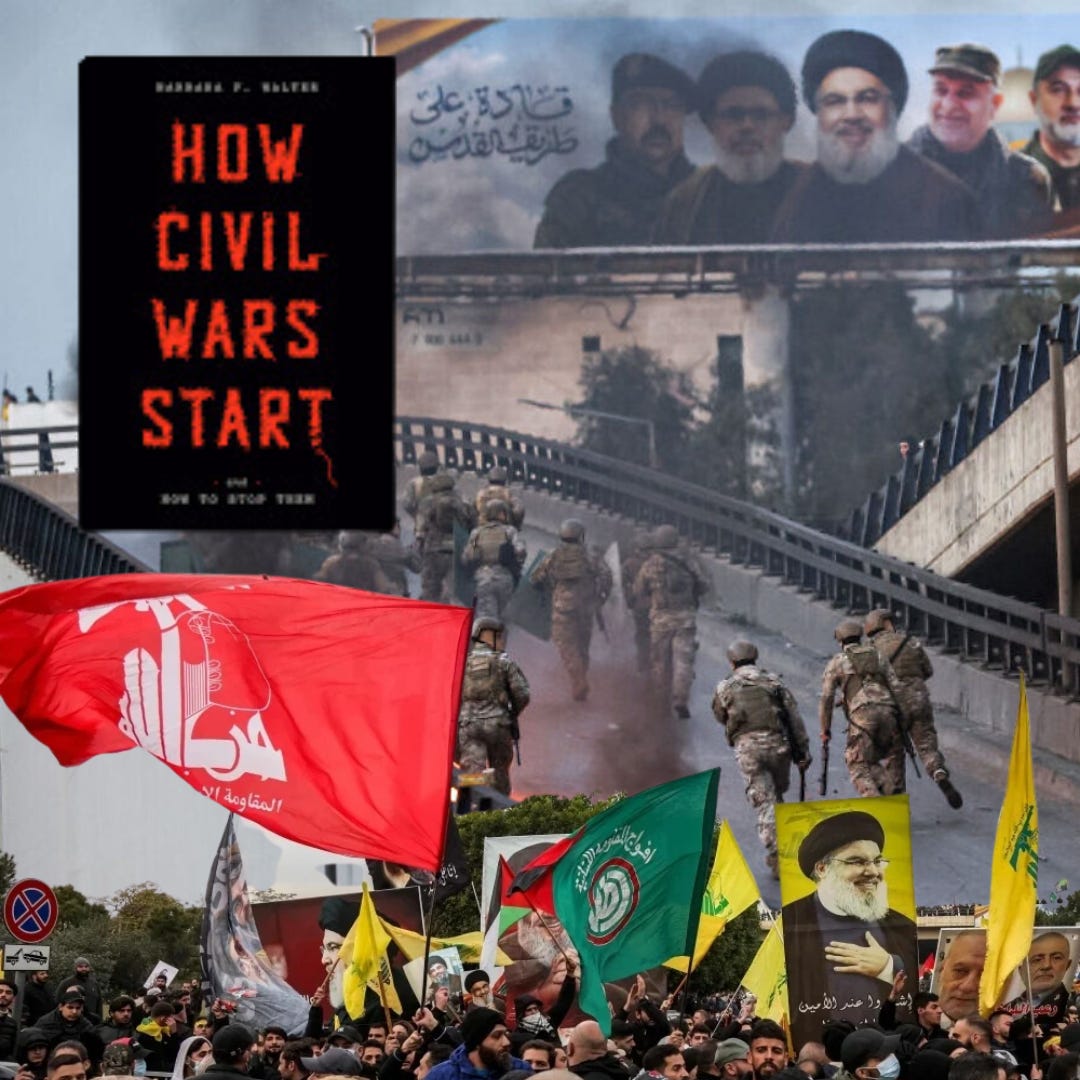
Checkmating the Bully: Lebanon’s Reckoning with Hezbollah’s Bluff
Feb 18, 202500:07:54Tap to summarizeOne of the most memorable books I read last year was Barbara F. Walter’s How Civil Wars Start. She identifies eight key factors that often trigger civil conflicts. Lately, I’ve noticed many of these factors surfacing in Lebanon—especially in the aftermath of Hezbollah’s humiliating defeat in its latest war with Israel and the collapse of the Assad regime next door. Once so dominant, Lebanon’s de facto rulers now seem to be scrambling for any desperate measure to regain relevance, even if it’s clear these attempts are doomed to fail.I don’t believe Lebanon is on the verge of another civil war, but Walter’s book is invaluable for understanding Hezbollah’s current mindset. That’s why I’ve decided to break down her insights here, in the hope of clarifying our best response strategy.A prime example is the ceasefire agreement that Hezbollah itself signed. It’s largely kept under wraps, yet it remains binding. Remarkably, Hezbollah waited until its cabinet was removed and replaced by Joseph Aoun and Nawaf Salam before it began symbolically opposing the same terms it forced along with Israel on the entire country, most of which did not want this failed “support” front disaster.With that backdrop, let’s look at Walter’s eight factors and how they map onto Lebanon today. Get full access to Gino's Blog at ginoraidy.substack.com/subscribe
Transcribe →
Nawaf Salam's First Interview as Prime Minister of Lebanon + Clips
Feb 12, 202501:39:26Tap to summarizeYou can watch the full 90+ minute interview above. I also cut a few clips that resonated with me the most—whether it’s his immediate promise to do everything possible to regain the trust of young Lebanese, most of whom want to leave Lebanon if they haven’t already (or were forced to leave, like me).He also spoke about missed opportunities, which really resonated with me, as I’ve written about that for years—using almost the same language as the person who is now our PM. You can read my 2020 article here: The 6 Disappointments That Led to October 17.And of course, the elephant in the room—Hezbollah, the implementation of the ceasefire deal, and UNSCR 1701. Questions like: Is it only south of the Litani River? (In other words, does that mean Hezbollah can keep its weapons to fight and invade other parts of Lebanon?) He was crystal clear: full implementation, across every last part of Lebanon—from the Kabir River in Akkar to Naqoura on the border with Palestine & Israel.Overall, it was incredibly refreshing to hear—especially considering the absolute garbage leaders who came before him, like Michel Aoun, Najib Mikati, and Hassan Diab. Michel Aoun hysterically yelled and insulted the Lebanese people and told young ones to emigrate if they “didn’t like him.” Najib Mikati shed crocodile tears about how he couldn’t dine in fancy restaurants because citizens would confront him over his blatant and shameless corruption. Absurd stuff.Watching this interview gave me a sense of relief. I also felt that the judge in him really came through, especially when discussing precedents from the Fouad Chehab era—such as the formation of an extra-parliamentary cabinet, where ministers are neither MPs nor future candidates in an election they are overseeing. He used this to explain that while his methodolgy of selecting ministers isn’t explicitly outlined in the constitution or the Taif Agreement, it has precedent in what is arguably the most successful presidency in Lebanon’s history. Get full access to Gino's Blog at ginoraidy.substack.com/subscribe
Transcribe →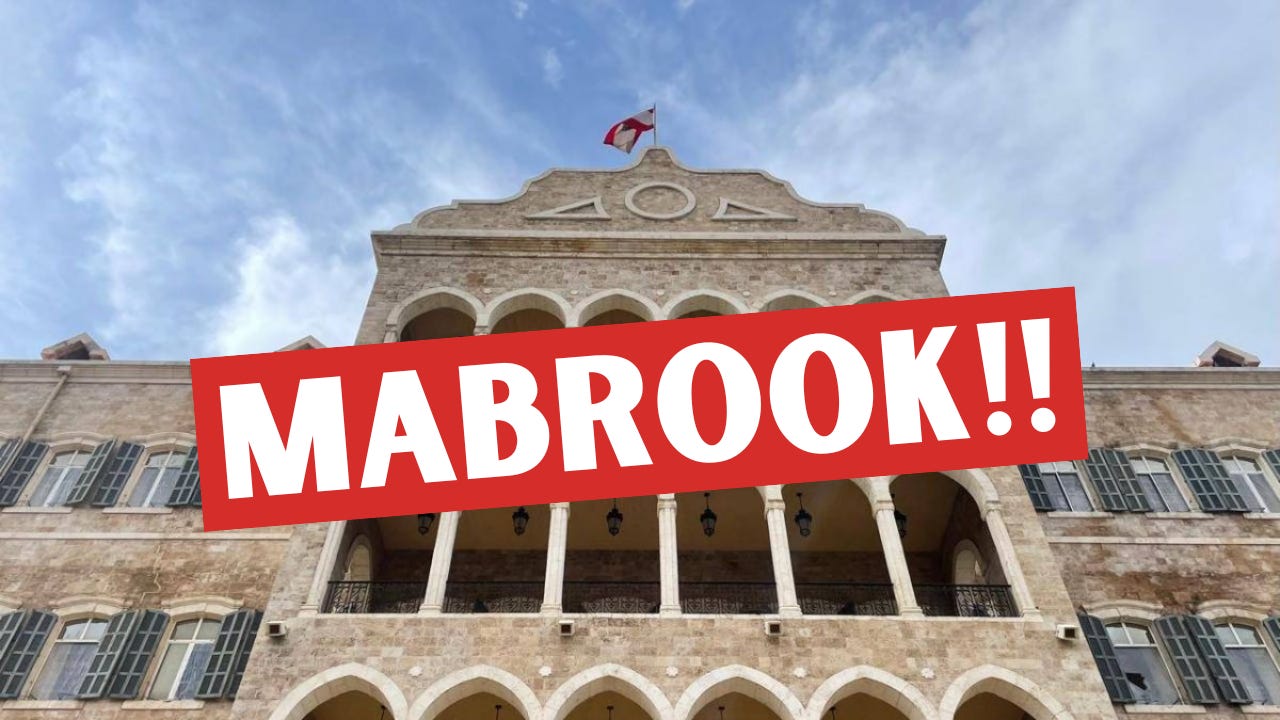
Lebanon's New Government: A Deep Dive
Feb 9, 202500:25:24Tap to summarizeMabrook! I want to start today’s article and episode by thanking everyone who has worked tirelessly over the past six weeks to achieve what many Lebanese thought was impossible: a president, a prime minister, and a cabinet made up—mostly—of the right men and women, in the right positions, at the right time.I know many of you are here because of Yassin Jaber, so let’s start with that. Yes, he was one of the four ministers approved by Nabih Berri. Yes, he’s not a new face. And yes, he is now the finance minister—an unwritten third pillar in Lebanon’s deeply flawed sectarian power-sharing system, a less-than-ideal version of democracy.Read in full on ginoraidy.substack.com! Get full access to Gino's Blog at ginoraidy.substack.com/subscribe
Transcribe →
The Backroom Deals Behind Lebanon’s Cabinet Formation
Feb 5, 202500:08:41Tap to summarizeI had to jump on here and share some insights about the cabinet formation, as many of you seem to be buying into the widespread campaigns from nearly every side against Nawaf Salam—the easiest target for the mafia and militia omertà in power.What’s Happening Behind the ScenesNegotiations. That’s how politics work when it’s not just one man forcing everyone else to fall in line, like before. I’m going to say something many of you won’t like, but you’re adults—you can handle it. The Finance Ministry was never going to someone anti-Hezbollah. Not even remotely. And everyone involved in forming the cabinet knew this from the start—whether it was the Lebanese Forces, the banking clans, or any of the other sectarian and corrupt leaders.Why was that ministry always going to stay within Hezbollah’s acceptable sphere? Simple: because the other players wanted to secure their own interests. Notice how they all tied the Finance Ministry to whichever ministry they wanted in return. Never once did they accept the idea that if Finance was off the table, so was everything else for everyone else.Now, imagine being the gruesome twosome—after losing almost everything, including a PM and President they vetoed but still couldn’t stop—do you think they’d hand that ministry to someone the LF favors? It was the hill they were ready to die (or rather, kill) on.As for the rest of the parties involved, they all agreed on the Finance Ministry’s fate. Yet publicly, their smears conveniently single out Nawaf Salam, as if the decision was his alone—not the result of their own collusion. They postured, raising the bar, pretending Finance was off the table for Hezbollah, but only until the LF secured Foreign Affairs, Energy, and two other ministries. Initially, they were getting less—and without the FM position. Same story with the other parties. The PSP walked away with Public Works and Agriculture. The FPM? Unclear if they’ll even join, but they’re maneuvering for better odds in exchange for agreeing to a finance minister like Yassin Jaber—so long as they get something in return.Why Is Nawaf Salam Putting Up With This?Because, like it or not, the MPs who will grant confidence to the new government are the same ones negotiating for their portfolios. In an ideal world, his cabinet would be filled with his and Joseph Aoun’s picks—free from career politicians and future parliamentary candidates. But that’s not the reality. I don’t envy him. He has a tough job, not just building a functional government but ensuring no one can derail it as easily as they did before.The Key Ministries: Interior, Defense, and JusticeNow, here’s where things get interesting. The Interior, Defense, and Justice ministries are going to people from the new President and Prime Minister’s trusted circle—the three ministries most critical for jumpstarting reforms and ensuring free and fair elections. That could have never been possible before. Four other ministries too, are as far away as possible from the sectarian political parties’ circles. Most of the ministers are going to be great, and even the not-so-great ones, are exponentially better than anything we would have gotten with Najib Mikati. Did Everyone Get What They Wanted?No. But most walked away with more than they had right after Salam was appointed. Is it ideal? Of course not. But does it allow Nawaf and Joseph to hit the ground running without more wasted time? Yes.What frustrates me is how obvious the political maneuvering was—brinkmanship at its finest. The second they got their cut, they agreed to let go of the Finance Ministry and then flipped on Salam, dumping the weight of their own compromises onto him. What frustrates me even more is how many people fell for it. Instead of recognizing the game, they were quick to turn on Salam, eager to find any excuse to give up—when the real question should be: how do we make sure that in the next parliamentary elections, we have the biggest bloc, so we don’t have to go through this exhausting cycle just to get moving while everything else around us keeps changing?It’s time to stop treating every battle like the final one. This is going to take a lot of work, with ups and downs along the way. What matters is that we keep pushing forward, knowing there will be obstacles to overcome. If you want to give up, that’s your right—and it’s completely understandable.But if you have nothing constructive to add, don’t lend your voice to the obvious smear campaigns designed to strengthen someone else’s negotiating position. You should know better. And if you’re angry about Yassin Jaber, direct that anger at those who approved him in exchange for their own gains—not at the wrong person.Gino's Blog is a reader-supported publication. To receive new posts and support my work, consider becoming a free or paid subscriber. Get full access to Gino's Blog at ginoraidy.substack.com/subscribe
Transcribe →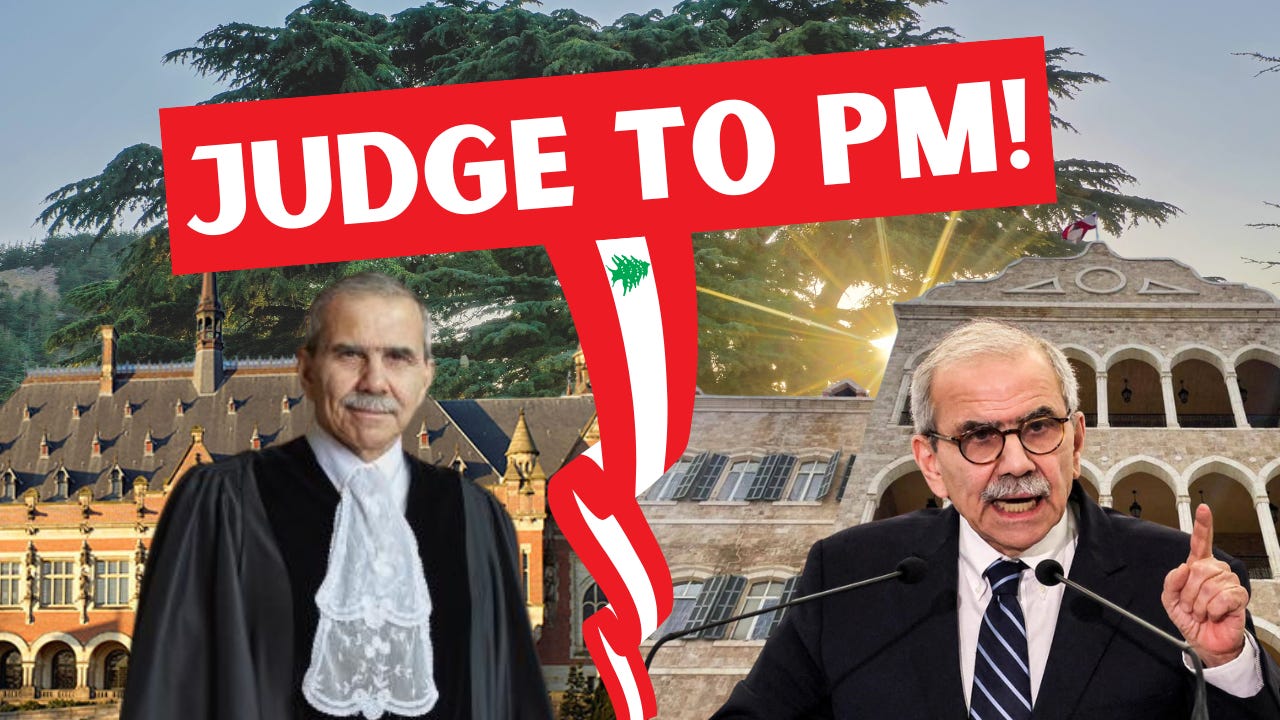
3 Tips for Nawaf Salam: A Clean Judge in a Dirty Political Arena
Feb 4, 202500:08:59Tap to summarizeWhat a wild three weeks—it’s been nonstop, and not just for Lebanon. My take on the cabinet formation hasn’t changed, but there’s a clear disconnect between Nawaf Salam’s approach and the expectations of many who backed his appointment as a step toward real change. In this Monday’s episode, I’ll break down why we feel stuck, why it doesn’t have to be this way, and what Nawaf Salam and Joseph Aoun could do in the days leading up to the ceasefire extension deadline, Saad Hariri’s return, and Hassan Nasrallah’s long-delayed funeral.The short version? Nawaf Salam is still acting like a judge. As a former president of the International Court of Justice (ICJ), his instincts are procedural—working behind closed doors, speaking rarely, and prioritizing due process over public engagement. But he’s not a judge anymore; he’s Lebanon’s PM-designate. And while his legal expertise is exactly why so many wanted him in this role—especially in a system dominated by a mafia-militia nexus of Hezbollah, banking elites, and everyone clinging to their corrupt spoils—his approach needs to shift. An interim communications and crisis team, similar to the one Joseph Aoun assembled, could help cut through the disinformation blitz designed to protect this entrenched coalition.Because if Salam continues to operate in silence, his opponents will fill the void.Judicial vs. Political Approach and the Current ChallengesA judge doesn’t weigh in on a case before a verdict. They don’t engage with lobbyists, political operatives, the press, or even advisors while making and justifying a decision. That restraint is a hallmark of a good, principled judge. But it’s also why judges don’t always transition smoothly into politics—especially not overnight. What’s off-limits for a judge is often essential for a politician. Take communication: keeping people informed, pushing back against smear campaigns, and responding to a volatile public mood—even when it’s not explicitly written into the rules and procedures that keep institutions running.It’s no secret why Hezbollah fears a successful Nawaf Salam and Joseph Aoun era. It would be the political embodiment of their latest failure and the formalization of a new reality—one where Nasrallah, acting under the orders of Khamenei and Assad, no longer exclusively dictates the course of the country.It’s just as clear why the traditional sectarian parties fear a successful Salam. Their power never came from bold ideas or popular policies but from an entrenched system of Ottoman-era corruption—one that turned citizens into commodities, bought and sold through “wastas” paid for with their own taxes. And as 2019 confirmed, even their personal savings weren’t off-limits in this unsustainable political Ponzi scheme.What’s less obvious is why mouthpieces for Lebanon’s banking elite—like the Ghanem brothers on Sar El Wa2et—suddenly flipped from celebrating Nawaf Salam’s appointment to launching a frantic smear campaign. Their rhetoric feels like a rerun of their shameless fearmongering when the Thawra broke out, with George practically going on air daily to defend the banks, spinning the justified demands of citizens—who just want their stolen money back—into a supposed “plan for civil war.” It’s not even subtle propaganda. It’s the banking clan panicking, terrified that under Joseph Aoun and Nawaf Salam, they might finally be held accountable for what they did to all of us.With such a relentless and self-serving elite—one that has zero regard for national interests or the rule of law—I still believe we can overcome this. But it won’t happen on its own. We have to put in the work and refuse to back down at the first sign of resistance from a ruling class that, for the first time, truly fears its time is up. And this time, Nasrallah isn’t there to shield them with invasions and assassinations, as he has done for decades against both Lebanese and Syrians who dared to demand a better future.So, here are some practical tips for Nawaf Salam and those in his inner circle—several of whom, I know, read these posts and won’t take issue with a little public advice.1- Break the Silence and Own the NarrativeThe spread of disinformation and the grip of sectarian and corrupt networks pose major challenges. Salam’s meticulous, process-driven approach risks being seen as slow or disconnected in an environment where bad actors thrive on brinkmanship, betting on last-minute foreign intervention to bail them out.But with shifting geopolitical dynamics, that safety net is no longer guaranteed—leaving the outcome uncertain for everyone. But also, makes change possible in a world busy with bigger problems than little old Lebanon.Hire a communications and crisis management team—let them handle the messaging while you focus on what you do best: upholding the law without twisting it, as has been the norm for the past 40 years. A strong example is the team of advisors and communications experts Joseph Aoun assembled—an approach that can easily be adapted to fit your style and vision. And there’s no shortage of capable, willing Lebanese ready to step up and support this effort.2- Urgency and Bold MovesWith the ceasefire expiring and the political climate heating up, there's little time for prolonged deliberation. A bold move could be the formation of a temporary crisis management team, allowing for quick, decisive action to address immediate concerns while maintaining a focus on long-term reforms.The timing couldn’t be more critical. Saad Hariri is eyeing yet another comeback ahead of February 14, the anniversary of his father’s assassination by Hezbollah—fully aware that he, too, could be held accountable like the rest. Meanwhile, Nasrallah’s funeral on February 23 looms, and the ceasefire is set to expire just days before unless renewed. In this high-stakes moment, a cautious, judge-like approach won’t cut it. What’s needed now is a bold move by a prime minister with massive popular support.3- A True Partnership between President and Prime MinisterPresident Joseph Aoun can play a crucial role in bridging the gap between Salam’s judicial mindset and Lebanon’s political realities. By promoting transparency and fostering collaboration, he can help Salam build the alliances needed to navigate this moment. This also marks a significant shift—unlike previous eras where the president and prime minister were often at odds or both subservient to Hezbollah. Together, Aoun and Salam represent something different: leaders with a proven track record of putting Lebanon’s interests first, rather than serving foreign patrons or sectarian zaims.In these crazy times, a blend of judicial integrity and political agility is essential. Salam’s challenge is to navigate this transition effectively, and with the right support from all of us and the right strategies, he can guide Lebanon toward a more stable future.Do it Mr. Salam, don’t let us down!Gino's Blog is a reader-supported publication. To receive new posts and support my work, consider becoming a free or paid subscriber. Get full access to Gino's Blog at ginoraidy.substack.com/subscribe
Transcribe →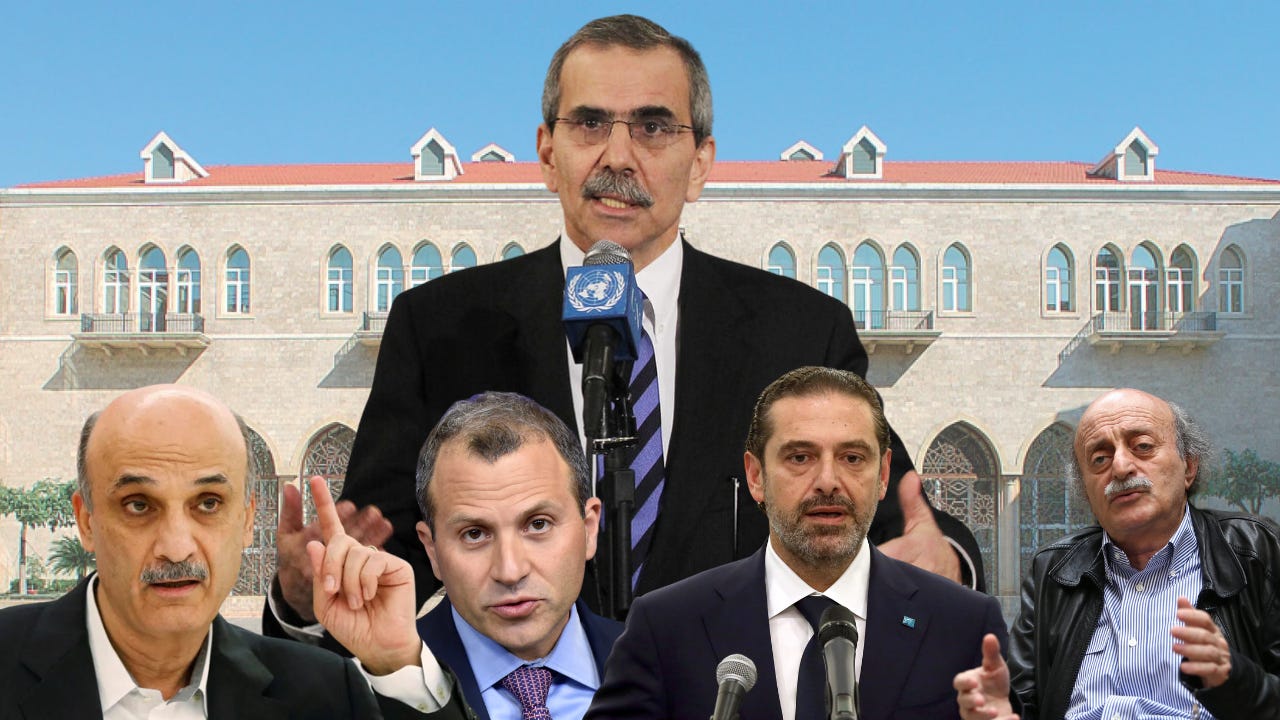
Beyond Hezbollah: The Need for Broader Accountability in Lebanese Politics
Jan 29, 202500:08:42Tap to summarizeI’m a staunch critic of Hezbollah—one of the many reasons I was forced out of Lebanon. In the lead-up to Joseph Aoun’s election as president and Nawaf Salam’s appointment as prime minister, I resumed my activism and campaigning at full force. Both were my top picks, and I’m extremely happy about the outcome. But while it’s a massive step forward, it’s just one step on a long and difficult road.My opposition to Hezbollah intensified when they intervened in Syria, though I never supported them before that. The Mar Mikhael agreement with the Free Patriotic Movement was one of the reasons I left the FPM as a young, idealistic teenager that thought they were progressive and different from the rest. But after witnessing Hezbollah’s actions in Syria, I became certain: as long as they control our fate, Lebanon will see nothing but pain, suffering, death, and humiliation.Being so strongly anti-Hezbollah, it’s easy to focus on their overwhelming influence in Lebanon and overlook the rest. But to truly address Lebanon’s challenges, we must also scrutinize the roles of other major political parties. While they may not be equally culpable, they have all benefited from and contributed to the status quo. It’s time to hold everyone accountable.In today’s piece, I’ll carefully call out the rest of Lebanon’s political establishment while avoiding the trap of false equivalence. You know the one—where the moment you criticize a party, someone jumps in with, “Yeah! They’re all the same, so just lump them together!” But they’re not all the same, and pretending they are only lets the worst actors off the hook. And that’s something I will never do.Why Now?Before diving into each party, let me explain why I’m addressing this now. In the past few weeks, disinformation about the cabinet formation has been spreading at breakneck speed, disillusioning many—including friends of mine. And who can blame them? After a lifetime of business as usual, it’s hard to expect a different outcome, even when the variables have changed and the opportunity for real change is finally within reach—if we seize it.This wave of disinformation isn’t just coming from Hezbollah, Amal, and their mouthpieces. Groups like the Lebanese Forces and Free Patriotic Movement are just as guilty. You can spot their game when they say things like, “Oh! If Hezbollah gets the Finance Ministry” (which Nawaf has repeatedly denied), “then I want X, Y, and Z ministries.”That kind of opportunism makes me livid. Hezbollah is finally being forced to reckon with the reality they created, yet their former partners and lackeys are trying to reposition themselves—acting like saints who were merely bystanders instead of active participants in the destruction of an entire generation’s future, all under Hezbollah’s boot. Not under my watch!The Role of the Lebanese ForcesGeagea has positioned himself as the de facto leader of the anti-Hezbollah camp—and with one of the largest parliamentary blocs, who can blame him? But no matter how much the Lebanese Forces want you to forget, they were partners with Hezbollah in the disastrous election of Michel Aoun in 2016. That decision not only accelerated Lebanon’s collapse but also enabled the weaponization of the judiciary in ways that would make Bashar al-Assad proud.As much as they try to sell it as a move made for Lebanon’s sake, the reality was far more self-serving—Gebran Bassil promised Samir Geagea a deal to divide public positions between them in a classic scratch my back, I’ll scratch yours arrangement. But, of course, Bassil being Bassil, that promise was never kept.In a way, it was poetic karma. The LF thought selling Lebanon to Hezbollah was a fair trade as long as they got their share of ministries and forest guardian posts to hand out to their followers. Turns out, when you make a deal with the devil, you don’t get to negotiate the terms.So today, when we say Hezbollah can’t have the ministry it wants, that doesn’t mean the LF should either. Yet the so-called “pragmatic” leadership of the party seems to have conveniently forgotten its own accountability. Just as Hezbollah doesn’t get to pick and choose exactly what it wants, the LF’s letter to Santa shouldn’t be a guarantee either.After all, they stood alongside Hezbollah in forcing Michel Aoun—and his son-in-law—down Lebanon’s throat. That betrayal isn’t erased. They are not redeemed yet. So maybe it’s time they started acting like it.The Free Patriotic MovementThese guys are among the worst culprits—second only, perhaps, to the Amal Movement. Michel Aoun’s complicity in Hezbollah’s brutality will never be forgotten, nor forgiven. For the sake of a few illicit paydays and the reckless squandering of public funds, the FPM paved the way for Lebanon’s collapse. They didn’t just enable the downfall—they ensured, as Aoun himself put it, that we would “go to hell.”I won’t waste much time on them—I’ve already spent enough of my life fighting them. Their shameful, Assad-style crackdown on me has earned them a permanent spot on my blacklist.But now, we’re seeing “leaked info” suggesting that Gebran Bassil is getting five ministries, despite his bloc crumbling. It’s nothing more than a pathetic disinformation stunt from his camp—an attempt to inflate his relevance and manipulate public opinion into believing he still holds real power. Five ministries? Please.Gebran’s dreams of the presidency evaporated the moment he chose Hassan Nasrallah over his own people. And if there’s one thing I’m most proud of—despite the cost—it’s making sure he will never be president.So if Hezbollah doesn’t get to pick and choose, neither do you, Gebran. Shame on you for even dreaming of it at this point—when you’ve done nothing to even begin undoing the damage you inflicted as Nasrallah’s lapdog.The Future MovementI will never understand how, after the Special Tribunal for Lebanon found Hezbollah guilty of assassinating his own father, Rafik Hariri, Saad Hariri still chose to remain a useful tool in Nasrallah’s belt. I’ll never forget him standing before the STL, still insisting he wanted to work with Hezbollah.Then again, money speaks louder than honor—even louder than justice for his own father’s murder. As long as his trusted contractors got their cut alongside Berri’s and Bassil’s networks, all was well. Now, even though Future and Hariri have been significantly weakened, they still cling to relevance as part of the so-called anti-Hezbollah camp—when in reality, they were partners in corruption, collaborators against the Lebanese people.So if Hezbollah isn’t getting the Finance Ministry, you sure as hell aren’t getting the Interior—or whatever else you had your eyes on.The Progressive Socialist PartyI know you’re expecting a joke about Walid Jumblatt’s legendary flip-flopping, but I’m not that funny. The truth is, Jumblatt has mastered the art of sensing which way the wind is blowing and adjusting his sails accordingly. Despite not being a major force, he has perfected the role of kingmaker in Lebanon’s tightly divided political landscape—always managing to secure a share far larger than he deserves.But not this time. The PSP’s consistent support and collaboration with Hezbollah mean that if Hezbollah doesn’t get everything it dreams of, neither does the PSP.ConclusionI’m not gonna go into the rest, because these are the ones that matter most right now.So, while Hezbollah's role is the major one, we must hold all political parties accountable. Killon Ya3ne Killon.Each has played a part in our current reality, and each must contribute to our future. True progress requires collective responsibility and shared sacrifice.If Hezbollah isn’t getting the ministry they want the most, the rest, who have all worked under and with Hezbollah, also cannot get what they want and must defer to Nawaf Salam and Joseph Aoun in this transition period.So, stop spreading WhatsApp broadcasts, we all know you were Hezbollah assets, and now that Hezbollah is reduced to a husk, you don’t get to pretend like nothing happened. You need to pay back some of what you cost us. So, for once, do the right thing and don’t stand in the way of progress.Gino's Blog is a reader-supported publication. To receive new posts and support my work, consider becoming a free or paid subscriber. Get full access to Gino's Blog at ginoraidy.substack.com/subscribe
Transcribe →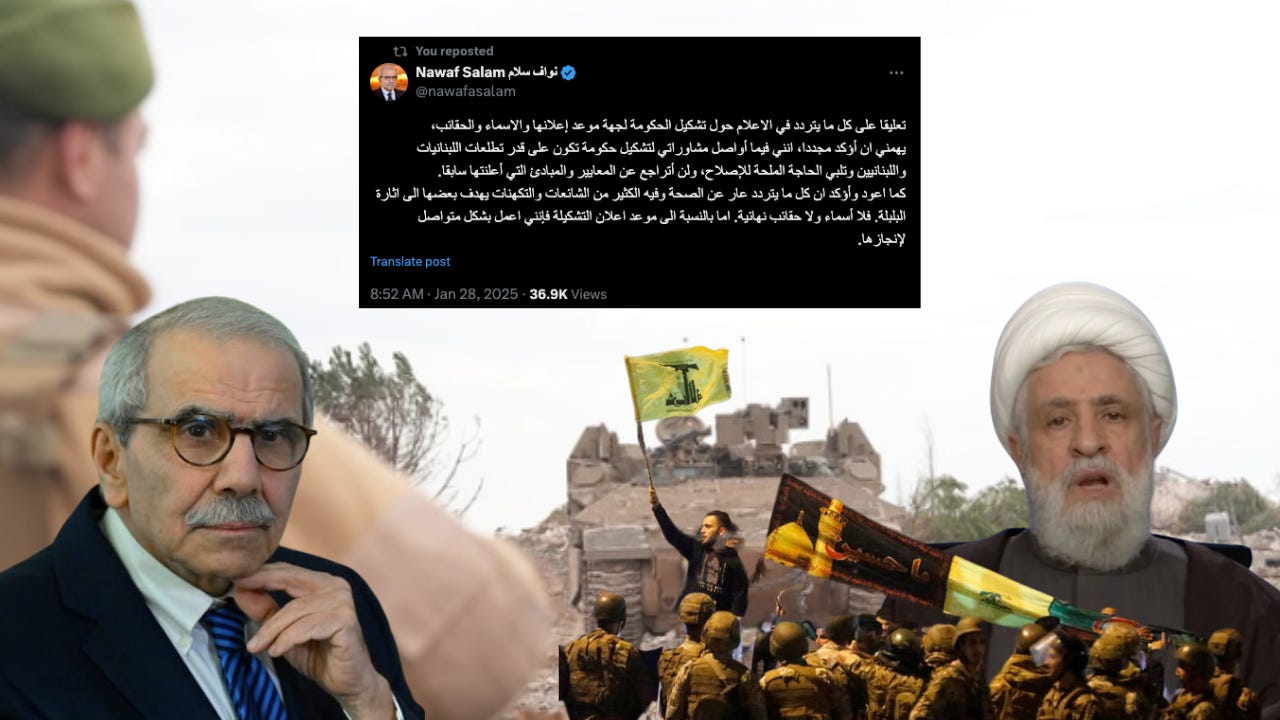
Nawaf Salam: Steadfast in the Face of Hezbollah’s Faltering Attacks
Jan 28, 202500:09:47Tap to summarizeThanks for reading Gino's Blog! This post is public so feel free to share it.It’s been a tumultuous week for Lebanon. As Israel claimed the lives of 22 Lebanese civilians returning to their towns, areas previously under occupation were liberated with the support of the Lebanese Army. Notably absent during these events was Hezbollah, which remained silent as civilians and soldiers fell to Israeli gunfire. When Hezbollah operatives did finally emerge, it was under the cover of night—armed and chanting sectarian slogans—not at the frontlines, but in predominantly Christian and Sunni neighborhoods of Beirut, far from the reach of Israeli strikes. The usual, laughable "show of force," aimed at intimidating the Lebanese and invoking memories of Hezbollah’s past invasions—brutal displays meant to impose their will on everyone else through sheer aggression.For those not paying close attention, it might seem like we’re back to square one—that despite everything Hezbollah has done, they’re still calling the shots. But those paying closer attention would have noticed the militia’s new leader, Naim Qassem, delivering a pre-recorded video in which he defiantly claimed they would never accept an extension to the ceasefire. The irony? The extension had already been agreed upon and is now set to last until February 18, 2025. It was a humiliating blunder that exposed two things: first, Qassem’s apparent fear of going live on air, and second, that Hezbollah’s influence over the ceasefire was nonexistent. The statement, clearly crafted for the gullible within their base, carried no weight for the rest of the country or the world. What an embarrassment. Whether they were genuinely unaware of the extension or deliberately lied, the laziness and incompetence of it all highlighted how weakened they’ve become—reduced to having someone as ineffectual as Naim Qassem at the helm.Hezbollah’s Desparate Mindset and Tired PlaybookImagine being Wafik Safa. Most of your colleagues have been killed, your organization is riddled with informants, and you’re so deeply infiltrated by Mossad that paranoia and desperation have become your constant companions. To make matters worse, your key ally, Assad, is holed up in a Moscow apartment, and the multi-billion-dollar Captagon trade you once relied on with him has evaporated. Meanwhile, Iran—your primary benefactor—is struggling to keep its own lights on. After pouring immense resources into Assad and Hezbollah, only to watch it all unravel in a matter of weeks, Hezbollah finds itself with few allies and an even more precarious cash flow.This leaves Hezbollah with few options to salvage the unchecked power they once wielded over Lebanon—the very power that plunged the country so deeply into its current abyss. One of their tried-and-true tactics, which has often worked in the past, is intimidation—betting that the rest of Lebanon will be scared into compliance without the need for full-scale escalation. This playbook echoes their actions on May 7, 2008, and their attempted invasion of Tayyouneh to eliminate the judge investigating their stockpile of ammonium nitrate, which devastated Beirut on August 4, 2020. That attempt, however, was thwarted by the Lebanese Army under the command of now-President Joseph Aoun, marking a rare moment of resistance to their bullying tactics.Just as they tried to mislead the public after failing to block Joseph Aoun’s election, and repeated the same playbook after their inability to stop Nawaf Salam’s appointment, Hezbollah is once again resorting to disinformation. Through their WhatsApp “news” groups, they’re spreading baseless rumors that they’ve secured concessions from Salam, claiming control over the finance ministry and a dominant share of five other ministries. This morning, Nawaf Salam swiftly debunked these claims on his Twitter account, just as he did last week before the Saudi Foreign Minister’s visit. Their strategy is clear: flood the narrative with lies, hoping to deflate people like you and me into despair, believing that public hopelessness will force leaders like Salam and Aoun to bend to their will.But it hasn’t worked, and I know it won’t. They can no longer tighten their grip around Lebanon’s windpipe—not when their secretary general is so disconnected that he didn’t even realize Lebanon had already agreed to extend the ceasefire in the war Hezbollah recklessly instigated.What Should We Do?Hold the line. Don’t let Hezbollah’s worn-out playbook weaken your resolve for change and hope. Who would have thought we’d reach a point where they are forced to bow to our collective will for the first time—accepting a president and prime minister who are not their puppets? Their incompetence and prioritization of Iran’s agenda over Lebanon’s best interests have led to disastrous consequences, including the re-occupation of Lebanese land by Israel.Take a moment to reflect: Naim Qassem either had no clue or pathetically denied the extension of the ceasefire. Meanwhile, unarmed civilians, supported by the Lebanese Army, managed to liberate more territory than Hezbollah ever could. Their so-called “elite” forces were squandered in a failed attempt to prop up the butcher Assad and his slaughterhouse regime in Homs—abandoning their own occupied towns in the process.The sight of villagers and soldiers reclaiming territory—achieving what Hezbollah failed to do—clearly unnerved them. This is why they resorted to the same tired tactics, sending out the agitators who once beat women and children during the October 17, 2019 uprising. These armed, provocative sectarian thugs spoiled the powerful images of civilians and soldiers taking back towns and villages, all in a desperate bid to hold onto control of the finance ministry. Their aim? To continue siphoning public funds into their pockets—and into those of Nabih Berri and his wife. Don’t let them succeed. Change is within reach.Have Faith and Do the WorkAfter weeks of radio silence, particularly following the fall of the Assad regime, Hezbollah’s influencers and electronic militias are back in full force. They celebrate when journalists—any not affiliated with Al Manar—are attacked, and deploy fake accounts to report, harass, and flood the comments of anyone who dares to express their desire for change or an end to Hezbollah’s hegemony.Nawaf Salam and Joseph Aoun did not leave their distinguished careers to become mere concierges for Naim Qassem, who hides away producing outdated videos from his bunker. It’s crucial that we support them, reject Hezbollah’s pathetic disinformation campaigns, and continue holding them accountable for the devastation they’ve brought upon us. While they were busy killing Syrian civilians and manufacturing Captagon, they neglected their so-called resistance, leaving us to bear the consequences of their failure.The tide has turned. Hezbollah may struggle to accept it, but we shouldn’t. This isn’t about a single moment of victory—it’s about the accumulation of wins. Their inability to force Lebanon to cede the Finance Ministry to them is one such win, and we cannot let their bullying tactics erase it. They are weak. They are desperate. Rewarding their desperation by caving to them would only compound the damage they’ve already inflicted—from Nasrallah’s laughable “Agricultural Jihad” to their disastrous “Support Front” for Gaza.There is no going back. Hezbollah has two choices: return to its proper size, hand over its weapons to the Lebanese Army, and abide by the rule of law like the rest of us—or remain a diminished terrorist group, resorting to car bombs and assassinations. But this time, they will face Joseph Aoun and a Lebanese Army battle-tested against extremist groups.Hezbollah, you have no allies left. You have no money left. It’s time to do the right thing. Stop being a bully and join the rest of us in rebuilding this country. Hold yourselves accountable—or we will.Gino's Blog is a reader-supported publication. To receive new posts and support my work, consider becoming a free or paid subscriber. Get full access to Gino's Blog at ginoraidy.substack.com/subscribe
Transcribe →