
Podcast
Global Health Unfiltered
Hosted by Global Health Unfiltered! · EN
A podcast about the unspoken realities of global health in Africa and the world
11episodes
Episodes
Newest firstAll episodes

Facing the Bundibugyo Ebola Outbreak with Aimé Mbonda
Jun 2200:36:04Tap to summarizeSend us Fan MailIn Bunia, in the Democratic Republic of Congo's Ituri Province, an Ebola outbreak is unfolding without the tools the world usually relies on to stop one. There's no vaccine. No approved treatment. And the strain behind it — Bundibugyo virus — doesn't even present the way Ebola usually does, making it harder for health workers to recognize and harder for communities to believe.In this episode, Desmond sits down with Dr. Aimé Gilbert Mbonda Noula, a public health and emergency coordinator with the International Federation of Red Cross and Red Crescent Societies (IFRC), deployed in Bunia to support the response. Dr. Mbonda takes us inside what daily life looks like under an active outbreak layered on top of armed conflict — the door-to-door conversations correcting rumors, the safe and dignified burial teams working to stop transmission through the dead, and the moment in early June when a burial team was violently attacked after a community rumor spiraled out of control.In this episode:What daily life looks like in Bunia under an active Ebola outbreakWhy the Bundibugyo strain is uniquely difficult to detect, treat, and communicate aboutInside the Red Cross's safe and dignified burial processWhat happened when a burial team was attacked — and how the response changed afterwardWhy misinformation is, in Dr. Mbonda's words, an outbreak of its ownWhat international donors and policymakers need to understand right nowTo support us, consider becoming a paid subscriber on Patreon or making a one-time donation via PayPal.Subscribe to our weekly newsletter: globalhealthunfiltered.comFollow us on X (@unfiltered_gh), LinkedIn, Instagram, and TikTok.
Transcribe →
Putting communities first in HIV Research with Yvette Raphael
Mar 1300:47:21Tap to summarizeSend us Fan MailWhen Yvette Raphael walked into a stakeholder meeting in Kigali in 2019 and asked Gilead's lead researcher, "What are you going to do differently?", she was doing her job. As co-founder of Advocacy for Prevention of HIV in Africa and chair of the Global Community Advisory Board for the PURPOSE 1 trial, Yvette has spent decades ensuring that women most affected by HIV are not just research subjects, but architects of the science designed to protect them.In this episode, she tells the inside story of lenacapavir, Science magazine's 2024 Breakthrough of the Year, from the community trust-building that made the PURPOSE trials possible, to the moment at AIDS 2024 when results showing 100% efficacy brought a room of scientists to their feet.But Yvette is clear: a breakthrough is only a breakthrough if it reaches the people who need it. With PEPFAR funding under threat and rollout decisions being made without community voices, she pulls no punches on what accountability from science, pharma, and governments must actually look like.To support us, consider becoming a paid subscriber on Patreon or making a one-time donation via PayPal.Subscribe to our weekly newsletter: globalhealthunfiltered.comFollow us on X (@unfiltered_gh), LinkedIn, Instagram, and TikTok.
Transcribe →
Paying more and Owning less with Nelson Aghogho Evaborhene
Feb 2800:49:11Tap to summarizeSend us Fan MailThe America First Global Health Strategy promises something African health advocates have demanded for decades: ownership. Through time-bound bilateral compacts, countries co-finance health programs with the US, gradually taking over as American funding tapers. By year five, they're supposed to own and sustain these systems themselves.But what if ownership without authority is just dependency with a new face?In this episode, we sit down with Nelson Aghogho Evaborhene, PhD fellow in Global Health Governance at Roskilde University, to unpack how these compacts actually work. Nelson has written several major analyses of the AFGH, and his conclusion is stark: these agreements transfer responsibility to African governments without transferring commensurate control over technology, data, procurement, or even the political conditions under which funding continues.We explore Nigeria's $3 billion compact and its religious conditionalities, the South Africa precedent where funding was cut for political reasons despite strong performance, how bilateralism fragments the continental institutions Africa has been building, and why—even with full domestic financing—health systems remain vulnerable to collapse if they can't produce what they need.Reading: Nelson's articlesRebalancing Risk and Responsibility Under the America First Global Health StrategyThe America First Global Health Strategy and the Dilemma of Pan-AfricanismAmerica First and the Fragmentation of Global Health: How Africa can Reimagine Its AgencyProtecting global health in the era of the America First StrategyTo support us, consider becoming a paid subscriber on Patreon or making a one-time donation via PayPal.Subscribe to our weekly newsletter: globalhealthunfiltered.comFollow us on X (@unfiltered_gh), LinkedIn, Instagram, and TikTok.
Transcribe →
Unmasking Global Health: Reflections on 2025
Dec 2700:39:34Tap to summarizeSend us Fan Mail2025 was the year the comfortable illusions of global health shattered. The U.S. withdrawal from WHO, the dismantling of USAID, and controversial bilateral agreements exposed uncomfortable truths about power, dependency, and who really benefits from "global health partnerships."In this special year-end episode, we hear from global health leaders across the world reflecting on what 2025 revealed and where we're heading in 2026.Featuring perspectives from:Dr. Luchuo Bain on why this is "the end of global health as we knew it—and the opening we needed."Dr. Seye Abimbola on being "surprised by how surprised people have been" about global health as foreign policyDr. Boghuma Titanji on reimagining sustainable health financing after devastating aid cutsDr. Madhu Pai on why we can't save global health without saving democracyDr. Mohamed Aburawi on moving from intention to infrastructureSitawa Wafula on AI's unregulated role in mental health careWe examine the human toll of USAID cuts, the sovereignty concerns around bilateral agreements, and the glimmers of agency emerging as countries like Nigeria and South Africa step up with domestic funding.This isn't just a year in review; it's a reckoning with what global health has been and what it must become.To support us, consider becoming a paid subscriber on Patreon or making a one-time donation via PayPal.Subscribe to our weekly newsletter: globalhealthunfiltered.comFollow us on X (@unfiltered_gh), LinkedIn, Instagram, and TikTok.
Transcribe →
Unpacking the Anatomy of Aid Dependency with Emilie Koum Besson (Pt 2)
Dec 601:05:48Tap to summarizeSend us Fan MailThis is a continuation of our previous episode with Emilie Koum Besson discussing the various forms of aid dependency. In this episode, we focus on the relationship between aid and dependency as well as pragmatic solutions. To support us, consider becoming a paid subscriber on Patreon or making a one-time donation via PayPal.Subscribe to our weekly newsletter: globalhealthunfiltered.comFollow us on X (@unfiltered_gh), LinkedIn, Instagram, and TikTok.
Transcribe →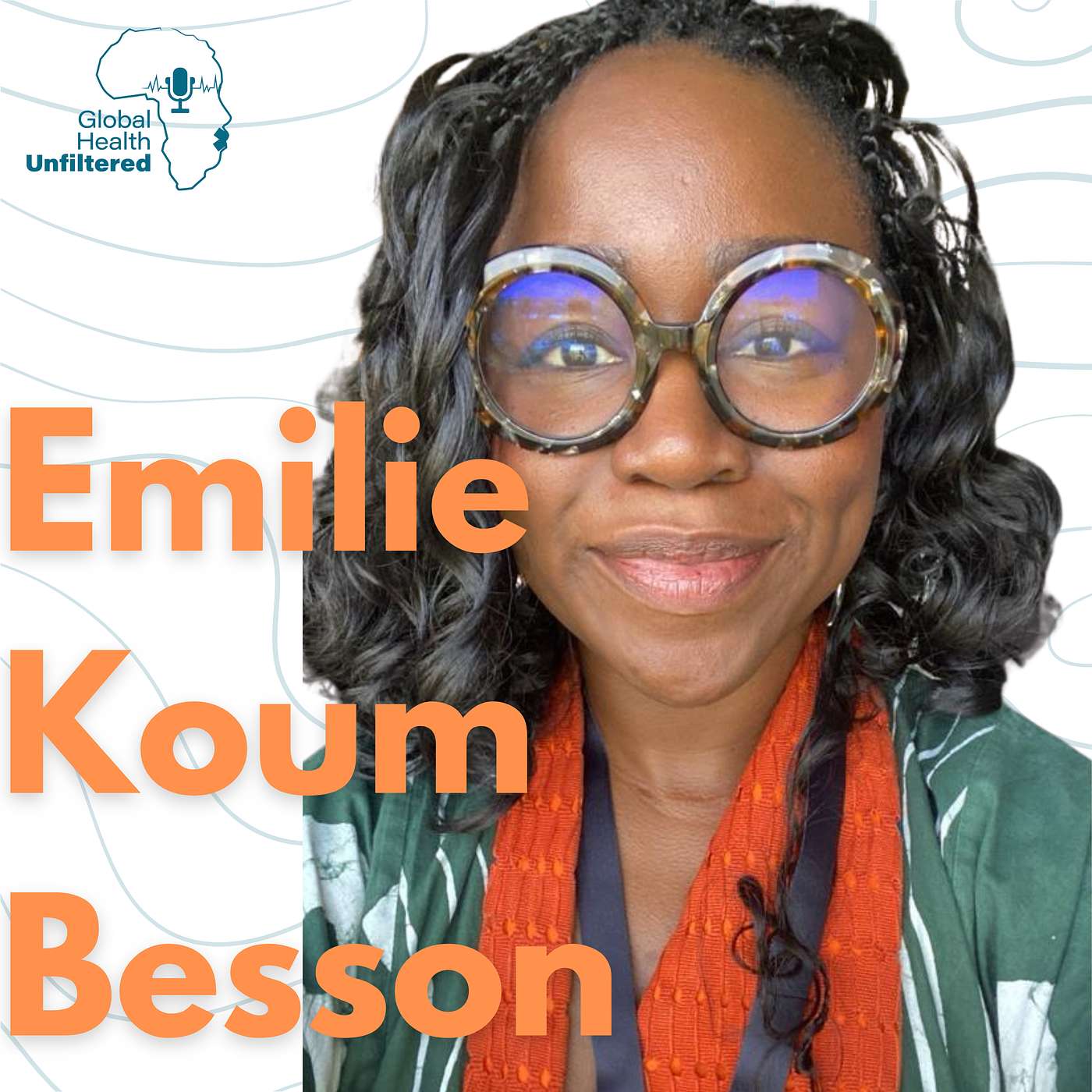
Unpacking the Anatomy of Aid Dependency with Emilie Koum Besson (Pt 1)
Nov 2200:59:58Tap to summarizeSend us Fan MailFor decades, global health has treated aid dependency as a neutral, technical condition, something to measure and manage. But what if dependency is actually a feature of the system, not a bug? Emilie Koum Besson introduces a "Matrix of Dependency Dimensions," revealing eight distinct forms, ranging from historical and epistemic to what she calls "hidden co-dependency," in which elites in both the North and the South benefit from the status quo. She challenges the sustainability-versus-dependency binary, explains when aid shifts from catalytic to excessive, and argues that 2025's rhetorical shift toward sovereignty won't matter without dismantling the actual architecture of global health financing.To support us, consider becoming a paid subscriber on Patreon or making a one-time donation via PayPal.Subscribe to our weekly newsletter: globalhealthunfiltered.comFollow us on X (@unfiltered_gh), LinkedIn, Instagram, and TikTok.
Transcribe →
Shaping Public Health Leadership with Amb. John Nkengasong
Oct 1000:53:28Tap to summarizeSend us Fan MailIn this conversation, Dr. John Nkengasong of the Mastercard Foundation and former PEPFAR and Africa CDC lead, discusses the evolution of public health in Africa, highlighting Rwanda's leadership in health financing and his own journey through various roles in public health. He emphasizes the need for a new public health order in Africa, focusing on domestic financing, the importance of political will, and the role of young people in shaping the future of health on the continent. The discussion also addresses the challenges facing global health financing and the interconnectedness of health, economics, and security.Support Dr. Amoako's Pediatric Cancer Project in Ghana: https://www.gofundme.com/f/help-ghanaian-children-fight-cancer-close-to-homeTo support us, consider becoming a paid subscriber on Patreon or making a one-time donation via PayPal.Subscribe to our weekly newsletter: globalhealthunfiltered.comFollow us on X (@unfiltered_gh), LinkedIn, Instagram, and TikTok.
Transcribe →
Introducing Africa Health Weekly Podcast
Sep 600:05:21Tap to summarizeSend us Fan MailExciting News! We're launching a new Podcast! We’re excited to introduce our new podcast: Africa Health Weekly — your primary source for the latest health news, innovations, and stories shaping healthcare across the continent. Each week, host Beverly Ndifoin provides timely updates on disease outbreaks, vaccine rollouts, health workforce challenges, policy changes, medical innovations, infrastructure development, and stories of accountability, resilience, and impact.Our goal is to showcase Africa’s health stories, one week at a time.📢 The first episodes are already live! Tune in now and subscribe on Spotify, Apple Podcasts, or wherever you listenGot a story worth sharing? Email us at editor@globalhealthunfiltered.com.To support us, consider becoming a paid subscriber on Patreon or making a one-time donation via PayPal.Subscribe to our weekly newsletter: globalhealthunfiltered.comFollow us on X (@unfiltered_gh), LinkedIn, Instagram, and TikTok.
Transcribe →
Fighting Childhood Cancers in Ghana with Ella Amoako
Aug 3100:49:58Tap to summarizeSend us Fan MailDr. Emmanuela Amoako discusses her journey as a pediatric oncologist and her innovative COMPASS project, which aims to improve childhood cancer detection in Ghana. She emphasizes the importance of empowering caregivers and the challenges faced by children with cancer in low-income countries. The conversation also covers the need for expanded pediatric oncology units, the African Cancer Atlas initiative, and the role of bioethics in healthcare. Dr. Amoako calls for community support and crowdfunding to build a sustainable pediatric oncology center, highlighting the importance of local funding for cancer research in Africa.Support Dr. Amoako's Pediatric Cancer Project in Ghana: https://www.gofundme.com/f/help-ghanaian-children-fight-cancer-close-to-homeTo support us, consider becoming a paid subscriber on Patreon or making a one-time donation via PayPal.Subscribe to our weekly newsletter: globalhealthunfiltered.comFollow us on X (@unfiltered_gh), LinkedIn, Instagram, and TikTok.
Transcribe →
Achieving African Health Sovereignty with Victor Bampoe and Ngozi Erondu
Aug 2301:05:14Tap to summarizeSend us Fan MailIn this episode of Global Health Unfiltered, hosts Desmond Jumbam and Ulrick Sidney Kanmounye discuss the Africa Health Sovereignty Summit held in Accra, Ghana. They are joined by Dr. Victor Bampoe and Dr. Ngozi Erondu, who share insights on the summit's key outcomes, including the Sustain Initiative aimed at enhancing African health governance and financing. The conversation explores Ghana's health financing strategies, the importance of leadership in health sovereignty, and the risks associated with donor-driven systems. The episode emphasizes the need for data sovereignty, collaboration among African nations, and the role of civil society in ensuring accountability and effective health systems.Support Dr. Amoako's Pediatric Cancer Project in Ghana: https://www.gofundme.com/f/help-ghanaian-children-fight-cancer-close-to-homeTo support us, consider becoming a paid subscriber on Patreon or making a one-time donation via PayPal.Subscribe to our weekly newsletter: globalhealthunfiltered.comFollow us on X (@unfiltered_gh), LinkedIn, Instagram, and TikTok.
Transcribe →