Podcast
Gnostic Reformation, Clear and Simple
Hosted by Cyd Charise Ropp · EN
Most of the gnosis presented here comes from the Tripartite Tractate of the Nag Hammadi codices. My retelling of the mythos is just good news for modern man. It is not hermetic; it is not a translation of wisdom from an Egyptian God. It is not New Age. This Gnostic Gospel is simply the story of who we are and where we come from.
The gnosis I am sharing here honors God the Father and, as you begin to remember this inherent truth, you will experience a more joyful life. When we use our free will to remember our true inheritance, the god of this fallen universe loses its power to control us. When we turn our eyes upward to the Father--the God Above All Gods--we are freed from the burdens of this world.
Once you begin to remember that you are truly loved by our heavenly Father, you will suffer less. When you begin to walk with virtue rather than embracing vice, you will be happier; you will be joyful. Not all of the time. Bad things do happen. But suffering as a response to life’s challenges is unnecessary. We are living in a fallen world, and that, I suppose, is another gnostic heresy. For some reason, modern Christians want to insist that this world is blessed by God and is blessedly perfect. But we all know this world we live in isn’t perfect and when you deny that fact you become unduly frustrated and sad, even to the point of depression. Pharmaceuticals are not the solution--gnosis is.
Gnosis means knowing. This sort of knowing is not related to book learning. Gnosis refers to remembering what you already know. The point of spiritual study is not to learn new things but to mine what you already possess deep inside of you. When you study new ideas, you must continually weigh the information you are taking in against your own discernment. The purpose of this podcast is not so much to teach you about Gnosticism; the purpose is to stimulate your own innate gnosis. And there is really only one gnosis that matters in the end—remembering the Father, your cosmic origin, and the purpose of being alive.
cydropp.substack.com
cydropp.substack.com
28episodes
Episodes
Newest firstAll episodes

Peace, Love, and Happiness
Mar 2100:24:25Tap to summarizeA lot of people are stuck in the muck. There are so many cravings and attachments down here. Cravings for sex, drugs, social media, whatever the thing is. Even popular culture is something that people get stuck in. You have to conform. You have to dress just so. Your hair has to be just so. These are all attempts at happiness, right?I mean, most people want to be happy. And generally you feel that if only you got your point across, if people understood what you understand, then the world would be a better place. Then you could be happy because we’d all get along. Say, wouldn’t it be nice if, for example, the utopian vision was coming true here in our world? Wouldn’t it be oh so nice if we all were taken care of by the government, like our big mama, and that she’s going to wrap her arms around us. And they’re going to come and they’re going to give us free food. They’re going to make sure that we’re housed in nice places we like. They’re going to give us walking around money. And then everything will be nice and we’ll all get along. But this isn’t going to happen, folks. It can’t happen in this world because this is a fallen world.The governments aren’t here to serve us. Ideally, they’re supposed to be here to serve us. You know, we’re the boss. They work for us. But no, because the people that go into this sort of political service are there to serve themselves primarily. They’re in there for power and control. I would think that most of them could care less about you and your happiness, seriously. But they want the world to be just so. And they think if the world were only here and like this and like this and like this and like this and we’ll make them do this and we’ll put them in this box and we’ll make them do that, then everything would be all right and we could all live happily ever after.But it’s never going to happen through politics, folks. Jason Mraz is a singer I like a lot. And in his first album, he had a song that said, “in the order of the primates, all our politics are too late,” which means that we primate type of animals, we humans, can’t be controlled by the politics. So religions that say, Oh, yeah, politics may not be able to do it, but the religion can. Look, all you have to do is follow our rules, read our books, believe exactly what we believe, and march in time and sing with the choir, that then you’ll be happy. And then at least those in our religion will be the happy ones.But it usually doesn’t work out there either, does it? Because of the same thing. People who are in control, people who crave power, are corrupted by power. For people who crave control, control becomes the end, not the means. And we can’t be controlled. The Demiurge learned this. You know, the Demiurge doesn’t like us. The Demiurge doesn’t love us.So you can’t look to politics to save you. You can’t look to the government to take care of you. You can’t look to your religious authority, that particular human-led hierarchical control mechanism, to bring you the love and joy and peace and happiness. Because there’s a lot of miserable people sitting in church. Because it’s our culture, which is our collective meme structure, that influences more than anything else, unless you are plugged into the Father above. Unless you are redeemed by the Christ who came to redeem you. Unless you prefer virtue to vice.So our goal, as we progress through this life and we mature, if we want to be happier, if we want to be more loving, if we want to become enlightened, you have to drop the earthly memes that come from the Demiurge and the culture, and you have to actually hold onto and believe in and put to use the godly memes that come from above, those being the virtues. This is a public episode. If you'd like to discuss this with other subscribers or get access to bonus episodes, visit cydropp.substack.com/subscribe
Transcribe →
Children of the Fullness: A Gnostic Myth
Mar 1400:16:02Tap to summarizeI had the children’s book converted into an animation, set to my narration of a previous episode. Here’s the audio only link of that previous episode. Same material. The animation is alright, but I bet that within a few months AI will have developed to the point where the animation would be quite a bit more polished. We did the best we could with the tools at hand. I hope you enjoy this experiment and find the overall effect to be pleasant and educational.This animation of the book is not aimed at children, but pitched to your adult level of understanding. I removed the simple text bubbles that appear in the book so you only see the underlying cosmology. This is a public episode. If you'd like to discuss this with other subscribers or get access to bonus episodes, visit cydropp.substack.com/subscribe
Transcribe →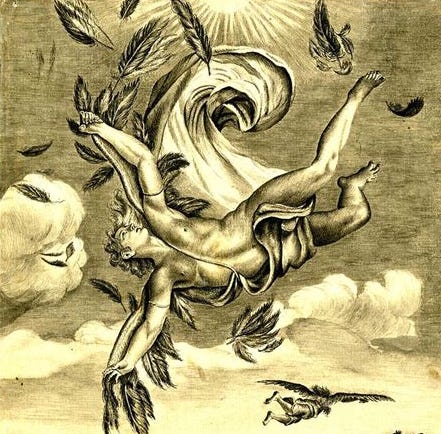
Reforming the Demiurge
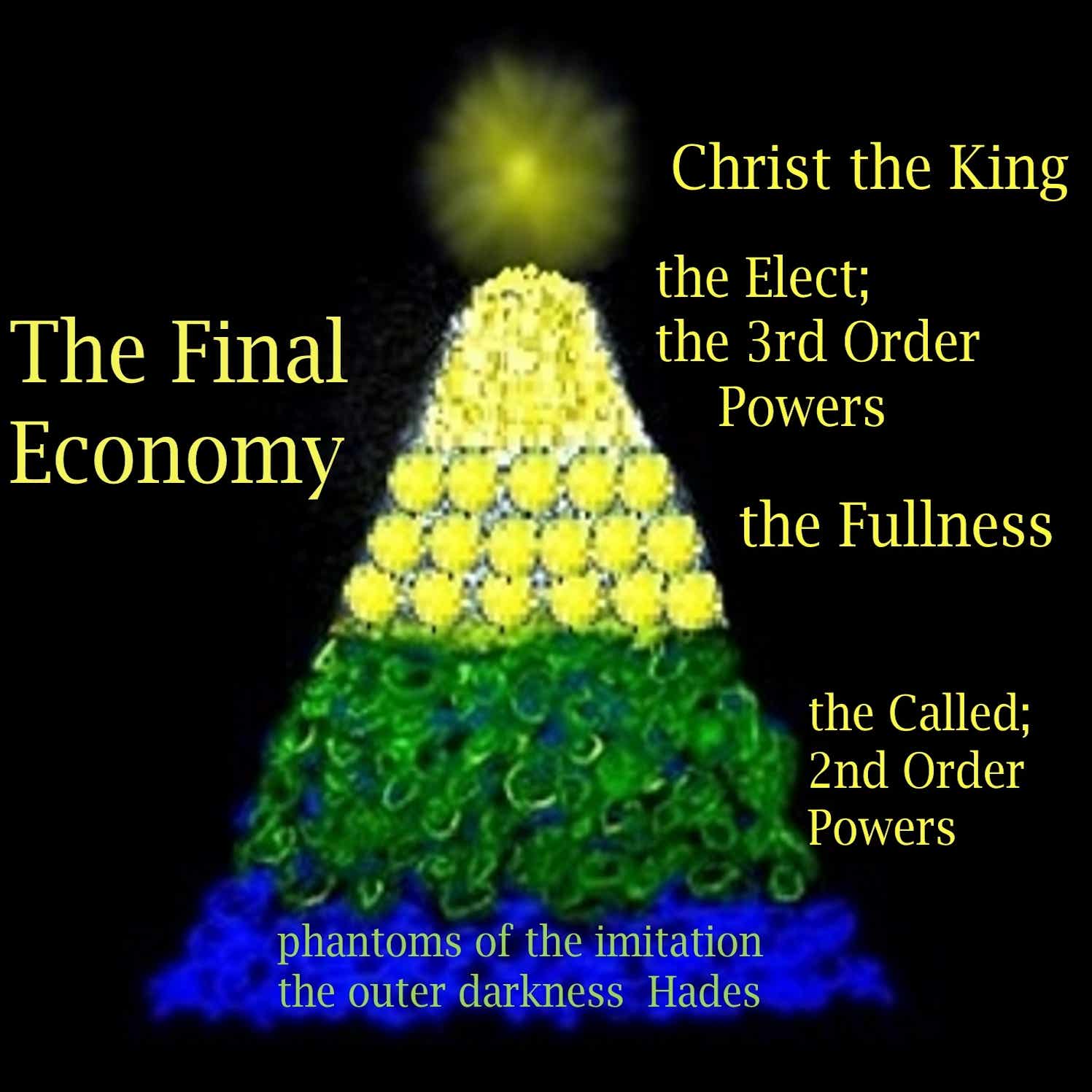
Mar 700:21:06Tap to summarizeWelcome back to Gnostic Insights and to the Gnostic Reformation on Substack.First I have to tell you, what was lost has been found. I went back to White City VA yesterday and had an acupuncture treatment. And on my way out of the building, I saw a maintenance man, a custodian at his cart with his broom. I thought to myself, well, if anybody should be able to find something, it would be this guy. I told him I lost a book two weeks ago, somewhere between 201 and 209 in a lady’s room on a windowsill.And he says, “Well, what was the name of the book?” And I said, “Culpability.” And indeed, the recognition went across his face. He said, “I have seen that book. I have dusted that book every day for two weeks.” And I said, “Why didn’t you turn it into lost and found?” He goes, “Well, it’s not my book. It belongs to somebody. So I just left it there.”So then we had to look for the restroom that he had found it in, because he cleans a lot of ladies rooms in that big span of buildings. I told him it was on the second floor, that it was somewhere between 201 and on my way to the chiropractor in building 209. And so we went upstairs together and he took me right to the bathroom. And there was the book where I had laid it down.I was absolutely overjoyed. I thanked him profusely for his assistance. And I asked him if I could give him a hug. And he said, yeah, sure. So I gave him a big hug and it was wonderful. It was just wonderful. We went back downstairs together. I proceeded out the door and he proceeded with his cart down the hall. I was ecstatic. I should mention that his name was Lester. That way we can all give a blessing for Lester. Thank you, Lester!*****************************Now, the past couple of weeks, we’ve talked about this Gnostic Reformation here at Gnostic Insights. My Gnosticism that I’m sharing with you is not different than classical Gnosticism, but it is a further refinement. It’s a proceeding onward. We don’t go back into history. We go forward into the future.Today, we’re going to talk about the Demiurge and how this view of the Demiurge that I have is slightly different than the view that a lot of people have. See, most people think of the Demiurge as malicious, as an evil being. And when I first was studying Gnosticism, I was pretty much along those lines as well. I thought that the Demiurge was a very bad guy. But over the past few years, I’ve come to see that the Demiurge isn’t a bad guy. That he’s doing his best. He is the, as I like to say, he is the god of this world. So he’s done a pretty darn good job. He’s done better than you and I could do building a world.But how did he do that? Why is he thought to be malicious? I mean, I often speak of him—and again, I say him, but it’s really an it. Because first off, let’s remember, the Demiurge is not a stand-alone entity. The Demiurge is the separated ego or identity—the presenting face of the Aeon known as Logos, the Aeon who fell. And when Logos fell because he overreached, his ego overreached and thought it could become plugged back into the Father the way the Son is plugged into the Father. Logos mistook himself for the Son, you could say. You could also say he mistook himself for the Fullness.Because there he is sitting right there at the very tippy top of the hierarchy of the Fullness of God–the very top. He was the final Aeon to be produced by the commingling of all of the Aeons giving glory to the Father and the Son.So Logos was sitting way up there at the tippy top. He didn’t have any neighbors to his left and right because he was the capstone. He didn’t have anybody over above him other than the Father. And the rest of the Pleroma was down there beneath him because he’s sitting as a capstone on the hierarchy of the Fullness of God, which looks like a pyramid. So I think that Logos simply mistook himself for the Son or mistook that he could go ahead and plug in to the Father. He’s right there. He’s so close.You know, we have echoes of that same Fall in the story of the Tower of Babel where the humans built this incredibly tall tower reaching to the heavens, reaching to God. And God, [and in this case it was probably Jehovah, probably the Demiurge because we’re downstream here in the cosmos], thought that was not a good idea. And so he cast them into confusion by a proliferation of languages that they couldn’t understand each other and they stopped building and the tower fell.Italian humanist manuscript late 15th centuryIt’s also the story of Icarus where he made wings and he flew too close to the sun, S-U-N in that case. And when he flew too close to the sun, it melted the wax that was holding his wings together and Icarus fell. These are other examples of falling.18th century engraving by Bernard PicartSo in this case with Logos, Logos wanted to go up to the Father with his Pleroma, which was perfect because the Pleroma of Logos is a fractal of the Fullness of God. It’s a fractal copy of the entire hierarchy. Logos had within its Pleroma a fractal, one level down, of all of the other Aeons. He had a full and complete Pleroma. He had the entire plans. He knew everything to put together paradise, to put together the cosmos.But that wasn’t his job and so he overreached. His ego got out of control and it was his ego that impelled him to overreach, which caused the Fall. The Father couldn’t allow Logos to plug back into him because, well, that space is taken by the Son. But not only that, the Father is too immense, is too illimitable, is too powerful for a lowly Aeon to be able to plug directly in. No one can control that much power. No one can hold that much energy except the Son. So Logos was repelled by the Father to save him from becoming cinders in the light of his immensity.And he fell and he broke apart down here outside of the Pleroma of the Fullness. And it was his broken bits that became the quantum foam of this cosmos. Logos couldn’t get it back together. He couldn’t stuff it all back in. He couldn’t contain the chaos that erupted from him once his ego took over.And I hope, as I talk about the Demiurge, that you can hear the parallels to our egos when our own egos get out of control. That’s when all hell breaks loose.The Aeons were designed to stay in the glory beam of the Father and the Son. They each had their position, place, duty, name in the hierarchy. And Logos overreached his position, place, duty, name. His ego took over. That’s why he fell. And then it was nothing but ego down here. The best part of Logos, it says in the Tripartite Tractate, was horrified. And it abandoned the chaos below and returned to the Aeons in the Fullness. But he was broken. He left half of himself behind.So let’s look at this Demiurge that was left behind. The Demiurge is not a character that stands alone. The Demiurge is the shadow of the Fallen Aeon. The Demiurge is the shadow of Logos. Because when his ego took over and separated, all that was left was the shadows. So the Pleroma of the Demiurge is a shadow of the Pleroma of Logos.We know that the Pleroma of Logos is a fractal level down from the hierarchy of the Fullness. What does it mean to be the shadow of that Pleroma? That’s what makes up the body and energy of the Demiurge. So there’s two questions that Gnostics have often wrestled with over the years, particularly the Sethians and then the Platonists in the Greek strain of thought. And these were the questions. How can the Demiurge be ignorant without being evil? And how can the cosmos be orderly yet spiritually deficient?This is answered by thinking of the Demiurge as the shadow of the Fallen Aeon. This means that the Demiurge is not malicious; he’s not autonomous either. He is not the source of being. The Demiurge is a distorted reflection of the higher principle that was Logos. When we think of the Demiurge this way, we can preserve the goodness of the Father and the integrity of the Son and the cooperative nature of the Aeons. Evil didn’t fall from the Father. Evil is nothing but another word for chaos and shadow—lack of goodness.So falling out of the pleroma of the hierarchy of the Fullness created our material cosmos as a shadow place. There is a cosmic deficiency hard-baked into this material universe. And that is, by definition, separation from the Father and the hierarchy of the Fullness of God. Ignorance is a shadow. It’s not a substance. It’s a lack. Again, ignorance is part of the shadow. It’s the ignorance of not knowing God. It’s the ignorance of not remembering where you came from.My Gnostic insight is that the role of the Demiurge is to bring order to chaos, bring order to the quantum foam that was bubbling in and out in and out of existence down here. This is a way different place than the ethereal space. And in order to impose control upon the quantum foam, the Demiurge imposes strict physical laws like a puppet master. He controls physics through laws of physics. Strictly, there can be no ...
Transcribe →
Reforming Gnosticism
Feb 2800:23:59Tap to summarizeLast week, I started talking about the nature of this Gnostic Reformation that I’m describing here. It turns out that the approach to Gnosticism that I am sharing with you here at Gnostic Insights is a reformation of what is understood to be Gnosticism. If you haven’t listened to last week’s episode yet, it would be really good for you to start there. Go back and listen to or read the episode called, This Gnostic Reformation.I didn’t read any books about Gnosticism; I actually read the Nag Hammadi itself. I used my own method of discernment, my own model building method called the Simple Explanation to understand what I was reading. We all do that. We all have internal structures that help us to interpret what we understand about the world around us, what we understand about the nature of anything, whether it’s God or people or oneself.I had already previously come up with a very coherent system for understanding the things around me. That’s what I call A Simple Explanation of Absolutely Everything. That book is available. You can check it out. I’ll put the link here in the transcript.When people say, “My goodness, your Gnosticism is so different than what I have come to understand Gnosticism to be,” that’s because I didn’t take it from secondary sources. I took it from the original sources. Then of course, Valentinian Gnosticism is an early form of what has come to be called Christianity. Christianity diverged immensely from the original message around the 300’s and on up, when the gnostic books were taken out of Orthodoxy. Those folks that are called heresiologists are the people that went around slapping heresy labels on the early Christianity—the early Valentinian Gnosticism. They weeded it out of the official sacred texts that made their way into the New Testament.The main book of the Nag Hammadi that I relate to is called the Tripartite Tractate. I believe it to be the purest form of gnosis. It has very little in the way of mythologies, of extraneous characters, of the names of things and the numbers of things and the astrology of it all.Valentinian Gnosticism from the Tripartite Tractate is unique in that the fallen Aeon is not called Sophia, a female character. In the Sethian mythology, the female character—and by the way, that presupposes that there’s genders among the Aeons in the Fullness of God, but that really doesn’t make much sense because there’s no sex. That is not the way that Aeons procreate. Aeons procreate by giving glory to the Father in various combinations, and it’s those various combinations of giving glory that produce amalgamations of those combinations. It’s a logarithmic progression of Aeons. It keeps growing as various Aeons recombine with one another and give glory to the Father and the Son—upstream, as I like to call it. That has nothing to do with gender. It has to do with giving glory to God with your friends and neighbors.See, we have gender because it has to do with procreation, and this is what is causing all the gender confusion going around now. Differences among us—what we typically call masculine or feminine—these are personality traits. They don’t have to have anything to do with your sex. So the idea that you have to change your physical sex to reconceive of your gender or reconceive of who you are or your personality—this is a false teaching. You are who you are. You are a combination of various Aeons. You are the fruit of those Aeons, and it really has nothing to do with gender.The Father is not a male figure. Barbelo is not the mother. These are gendered identifications, but they are not truly gender because they’re not sexed. Does that make any sense?So last week we talked about the first emanation. In Sethianism, it’s Barbelo, the mother figure, the womb of all, the matrix of divine life. In Valentinian Gnosticism, that first figure is the Son, and in most of the Valentinian texts, the Son is conflated with the Christ.Oh, by the way, Christians get very bent out of shape about calling Christ the Christ. They say, if anybody—and I heard this from a radio preacher not long ago—“If anyone says ‘the’ Christ, you know right off they’re not saved. You know right off they’re not Christians, because ‘the’ Christ is a made-up figure, whereas Jesus is Christ, and Jesus is the Son of God.” Well, Jesus is a human being, so we know that Jesus is not the originating Son of God, which an ethereal figure. The Son, in Valentinian Christianity, was the immediate self-expression of the Father. The Father emanated the Son, and the Son entirely represents the Father. Jesus is way downstream here, along with the rest of us humans.He was called the perfect human because he expressed the Father and the Son in his human personality. Jesus came to be well downstream, along with the rest of us humans.In Sethianism, the Barbelo, the first expression, isn’t the Savior. She’s the source of the Savior. She’s the mother of Autogenes, whom they call the Christ.In Valentinianism, the Son is the immediate self-expression of the Father. There’s no Barbelo figure, and the Son is the primary mediator of divine knowledge. The Son is fully expressive and representative of the Father, and he stays plugged into the Father—or it stays. It’s difficult when speaking English not to use gendered pronouns, because that’s the way our grammar works. So, forgive me for saying “he” when I speak of the Son or the Father, but “it” just seems so impersonal. And the Son is personal to us. The Son is our Father, our Abba.In Sethianism, Christ, also known as Autogenes, is not the initial revelation of the Father. He’s the restorative agent who repairs the damage caused by the fall of the Aeon. And in Sethianism, the Aeon who fell was a female figure, Sophia. Christ is often paired with Seth, and Seth is a character out of the mythology of Sethianism that is the heavenly archetype of the Gnostic race.Sethianism has distinctions amongst humans. There are the elect and there are those who are not elect. There are those who are called hylic-only, which is material only. And so, if you’re a Sethian Gnostic, you don’t believe that all of the people that you see around here are carriers of divinity. You believe that only Gnostics are carriers of divinity, much like Christians only believe that those who have come forward and professed belief in Jesus Christ are the elect, and they’re the only ones who are saved. Gnostics have the same type of distinction, only they think only the Sethians are those who are saved. And that really doesn’t have to do with Jesus. It has to do with Christ and Seth—that Christ’s role is to descend and rescue the elect, and the elect would be Sethians. Now, in Valentinian Christianity, you don’t have that kind of distinction. Christ is the direct image of the Father.Most of the books of the Nag Hammadi, the Valentinian as well as the Sethian, still identify Sophia as the fallen Aeon; they still have a gendered pleroma of the Fullness of God. This is one of the big, big differences between the Gnosticism that I share with you and these more ancient Gnostic strains of thought. I do not think that Aeons are gendered. It’s an unnecessary step of confusion, the idea of syzygies and marriages and pair bonds. No, that’s not necessary. At least in the Tripartite Tractate, if you read it, nowhere is anything like that mentioned. There’s no gender identification mentioned at all.In Valentinian Christology, which is what it’s called when you study Christ, outside of the Tripartite Tractate the rest of the books that talk about Christ say that Christ is the direct image of the Father. His incarnation is intentional, therapeutic, and as a teacher, and he brings knowledge of the Father, not me...
Transcribe →
This Gnostic Reformation
Feb 2100:20:54Tap to summarizeI occasionally get comments from people that the Gnosticism I’m sharing with you here at Gnostic Insights is different than the Gnosticism they’re accustomed to or the Gnosticism they see elsewhere on the internet. And that is very true, and that is why the Substack is called the Gnostic Reformation.This Gnosticism that I’m sharing with you—yes, it comes out of my own personal gnosis. It is a compilation of both Valentinian Gnosticism, primarily from the Tripartite Tractate of the Nag Hammadi, but also I’ve combined it with my own Theory of Everything called A Simple Explanation of Absolutely Everything, the blog which has been up there at Blogspot for over 15 years by now. It is a true Theory of Everything that lets you examine any philosophical model or any social model or scientific model.It’s a way of examining model structures and how they fit together, particularly our universe and particularly psychology, sociology, and theology. So when I ran across the Nag Hammadi and began to study it many years later, I was able to interpret it through this lens of A Simple Explanation that I had already developed. For example, the Simple Golden Rule comes directly out of my model, and that is a reformulation of what all religions around the world talk about as an ethical model of behavior.And it’s this: It begins with the concept of units of consciousness—and I use the term units of consciousness because this applies not only to human beings, but to plants and animals and bacteria, cells in your body; in a way, it applies to the atoms and molecules and the elements as well–and in the Simple Explanation, I used to give them consciousness. But since coming to my gnosis, I believe that what the physical parts—the elemental parts—of our universe actually are, is the imitation of the way things go together in the Fullness. And it’s an imitation because it’s down here in this so-called material world. It’s the Demiurge’s best effort to reconstruct Paradise.So now I don’t think that the molecules and atoms and subatomic particles are actually conscious the way I used to. The consciousness resides in the Demiurge, and the Demiurge is controlling them because the Demiurge is the god of this universe, and he can control down to the smallest subatomic particle, all of the elemental parts of our universe. But when it comes up to the living parts of our universe, that is where the life, consciousness, love, wisdom, all of that comes in through the Father, through the Son, through the Aeons, through Logos, into our otherwise fallen and amnesiac universe.So the actual consciousness of the Aeons, and upstream from that, of course, the Son and the Father, that is where the consciousness comes into the living things in our universe. That’s what makes the difference between the hard and rocky places and the wet and meaty places, because there’s definitely a difference.Anyway, I was talking about the Simple Golden Rule, and that is where units of consciousness, so that could be anything from a cell in your body all the way up through all creatures, although, not the viruses—the viruses are not alive, they are molecular machines controlled by the Demiurge—but up through the bacteria, which are different than viruses, bacteria are little living creatures—on up through all the plants and the animals, and then into us. Those are the units of consciousness.I am a unit of consciousness. You are a unit of consciousness. We say units because consciousness actually is the ground state of our matrix. Consciousness is the mind of God, and we are units of that. So my Simple Golden Rule has always said, even before I came to the gnosis, the Simple Golden Rule says,Units of consciousness reach out to others like themselves at their own level of complexity. So cells reach out to other cells, people reach out to other people, etc. Units of consciousness reach out to others and hold hands to join together to build the next level up. They join on a project. So like your family, let’s say, the people in your family hold hands with one another and level up to the family structure. Each thing that is at the same level reaches up to the next level to build something together that none of them could do on their own.So if we take the cells in your body, your skin cells reach out to other skin cells and level up to the organ called skin. The other organs reach out in the same way. The heart cells reach out to other heart cells, make the heart. Lung cells reach out to other lung cells, make lungs, etc. And all of the organs reach out to each other to create an organism.Everything builds up in the same way at the molecular level. The Demiurge’s copy of this process is subatomic particles reaching out to other subatomic particles to make particles. Particles reach out to make atoms. Atoms reach out to make molecules. Molecules reach out to make elements. Elements reach out to make minerals. Minerals become the rocks and stones and the hard rocky places that we see. But it is not conscious, and that’s the difference, other than the nature of the consciousness of the Demiurge that controls it.Whereas each of the living parts of our universe, from the cells on up, is conscious, does have thoughts, is a direct part of the consciousness of God.That is different. You don’t see that in the Nag Hammadi. That’s because I have brought that part of it in from the Simple Explanation.I admit that my reading of the Nag Hammadi is filtered through my personal interpretive system, but that’s what we’re all called to do. You have your own personal interpretive systems, or it’s fine with me if you adapt mine. But you have to come to this understanding, this gnosis yourself. The bottom line of the gnosis, by the way, is this. It all boils down to one sentence:We come from above and we will return to above.That is the nugget of Gnosticism. All of the rest of it is explanations that people have offered of the system of how it goes together. How is it that we come from above? How is it that we return to above? And how do we interact with the above space, that is the pleroma of the Fullness of God, when we’re down here trapped in this material world?That was the query that actually kicked off most of my own personal gnosis, even before I read any of the Gnostic books. I used to wonder, as I played with my dogs down by the river and I stood barefoot in the mud of the river, how does the consciousness of God flow through me and the mud surrounding the river make up my body and how do they connect? That’s the beginning of the Simple Explanation.So I’ve been doing some research in this time off I’ve had and I can answer exactly now in a philosophical way how it is that this Gnosticism that I am sharing with you differs from what people who consider themselves to be Gnostic teachers generally teach.Most Gnostics, by the way, are thinking of themselves as what are called Sethians. They believe that they are offspring from the prototypical human Seth and there’s a lot of mythology built around that system. The Nag Hammadi books are mostly Sethian. That’s why you have so much mythology in there. That’s why you have the names of angels and the counting of positions. You have the laying out of the hierarchy and all of these elect systems within it and how they have to be.But keep in mind, the people that wrote those books are really no different than I am or than you are. They’re people writing their interpretations of the system of how God can inhabit matter and where we are in that process and do we belong here or do we belong somewhere else. And if we belong somewhere else, how do we get out of here? That’s where such words as the trap come from—that this material world is a trap. Some Sethians go so far as to believe that the way teachers have shared with us to escape the trap is itself a trap. Have you heard this? “Don’t go into the light. The tunnel and the light, they’re just the trap.”That is someone’s interpretation of the system. That’s all that it is. You need to commune in silence with the Father yourself to discover what is true and what is not true. You can’t believe teachers, even Gnostic teachers, especially out there on the internet, who claim to have the truth and want to share it with you as if they were prophets. They are not prophets any more than I am a prophet. Everyone filters truth and reality through their own lens of discrimination. And your background, including your past lives and the memes that you bring forward into this life, all influence what you interpret of what you see going on around you, the words you use, the structu...
Transcribe →
Lost in the Hallways
Feb 1400:15:06Tap to summarizeLost in a liminal space This is a public episode. If you'd like to discuss this with other subscribers or get access to bonus episodes, visit cydropp.substack.com/subscribe
Transcribe →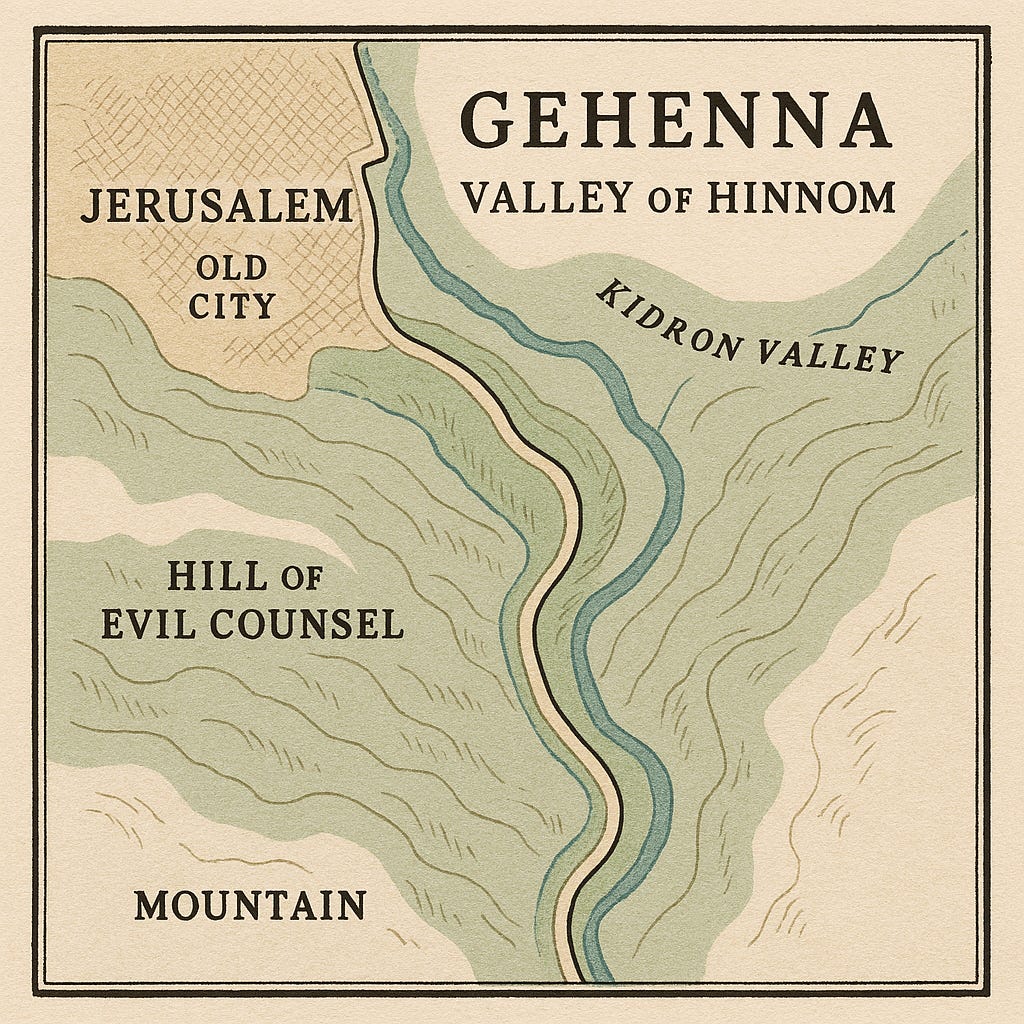
The Radiant Answer
Feb 700:34:56Tap to summarizeWelcome back to Gnostic Insights. I’m going to do my best to wrap up this review of David Bentley Hart’s book, That All Shall Be Saved, Heaven, Hell, and Universal Salvation. And I hope you understand, particularly those of you who are Christians that are listening to this, that I do all of this in the name of the Father. It’s not to tear down Christianity. It’s to uphold the mission of the Messiah, which has been lost over the past several hundred years of Christianity.And so this talk of universal salvation is a necessary component of believing in the glory of God. Because universal salvation of all souls, not only all humans, but the dogs, the cats, the birds, the grasses, all living things, have to return to the Father, or else the Anointed loses power. The Father loses parts of himself.Okay, let’s get back to David Bentley Hart. So we’re going to run through these four meditations that are the body of his book. The first meditation is, Who is God? He says,The New Testament, to a great degree, consists in the eschatological interpretation of Hebrew Scripture’s story of creation, finding in Christ as eternal Logos and risen Lord, the unifying term of beginning and end.There’s no more magnificent meditation on this vision than Gregory of Nyssa’s description of the progress of all persons towards union with God in the one pleroma, the one fullness of the whole Christ. All spiritual wills moving, to use this loving image, from outside the temple walls to the temple precincts, and finally beyond the ages into the very sanctuary of the glory as one.Okay, let me jump in here to say, do you notice that the New Testament words, when you use the correct translations, are the same as the translations in our Tripartite Tractate of the Nag Hammadi? Logos is the eternal spirit of humanity and the risen Lord. The Fullness is the one pleroma, the whole Christ. And in this statement, it’s saying that all that is spiritual, which includes the spirits that reside within each of us, will all move as one into the pleroma of the Christ. That’s who Christ is to us. He’s the head of our pleroma. And when I speak of pleromas, I always picture that pyramidal shape, that hierarchical shape, and the capstone is the head. We 2nd order powers are children of the 1st order powers. The 3rd order powers are the Army of Christ that have come to redeem us.When Paul spoke of this, he was applying it literally to the temple in Jerusalem, where there were the walls of the temple, and most of the people were outside of the walls, and some of the people were in the temple precincts. And finally, the very sanctuary of the glory, where only the priests were allowed. These are the three parts that were mentioned, and these are archetypal of the movement of humanity, Hart is saying, from the outside of the pleroma of the Christ, into the pleroma of the Christ, and then into the very glory of God through the Christ.On page 90, Hart says,If one truly believes that traditional Christian language about God’s goodness and the theological grammar to which it belongs are not empty, then the God of eternal retribution and pure sovereignty proclaimed by so much of Christian tradition is not and cannot possibly be the God of self-outpouring love revealed in Christ. If God is the good creator of all, he must also be the savior of all without fail, who brings to himself all he has made, including all rational wills, and only thus returns to himself in all that goes forth from him.And that’s the end of the chapter, Who is God? And that pretty much states my basic belief on why everyone is going to heaven, because we all come from the Father, and therefore we all must return to the Father because the Father cannot be diminished in any way. And if he lost us, he’d be diminished. Do you see?The second meditation is, What is Judgment? And the subtitle is A Reflection on Biblical Eschatology. And eschatology, that’s one of those big theological words that just means the end times, the end of time. On page 93, Hart says,There’s a general sense among most Christians that the notion of an eternal hell is explicitly and unremittingly advanced in the New Testament. And yet, when we go looking for it in the actual pages of the text, it proves remarkably elusive. The whole idea is, for instance, entirely absent from the Pauline corpus as even the thinnest shadow of a hint, nor is it anywhere patently present in any of the other epistolary texts.There is one verse in the Gospels, Matthew 25-46 that, traditionally understood, offers what seems the strongest evidence for the idea, but then now Hart’s going to explain how that can’t be true. And then he says there are also perhaps a couple of verses from Revelation, and he says nothing’s clear in Revelation, so he’s not going to go there. But,What in fact the New Testament provides us with are a number of fragmentary and fantastic images that can be taken in any number of ways, arranged according to our prejudices and expectations, and declared literal or figural or hyperbolic as our desires dictate.It’s why people can make the case for eternal damnation, but you can also make the case for not eternal damnation, because it’s so metaphorical. On page 94, Hart says,Nowhere is there any description of a kingdom of perpetual cruelty presided over by Satan, as though he were some kind of Chthonian god. On the other hand, however, there are a remarkable number of passages in the New Testament, several of them from Paul’s writings, that appear instead to promise a final salvation of all persons and all things, and in the most unqualified terms.How did some images become mere images in the general Christian imagination, while others became exact documentary portraits of some final reality? If one can be swayed simply by the brute force of arithmetic, it seems worth noting that, among the apparently most explicit statements on the last things, the universalist statements are by far the more numerous.And then he lists a number of verses from the New Testament that speak of universal salvation, over 20 of them at least, and I’ll give you just a couple.Romans 5.18 says, So then, just as through one transgression came condemnation for all human beings, so also through one act of righteousness came a rectification of life for all human beings.And jumping in from the Gnostic sense, he doesn’t say the fall of one human, he doesn’t say through Adam, he says one transgression—and we would call that one transgression the Fall of Logos, the fall of the Aeon, which is a higher order being than we are.Or Corinthians 15.22 says, For just as in Adam all die, so also in the anointed Christ all will be given life.I would say where it says for just as in Adam all die, it’s not because Adam ate the apple, it’s that we humans who are outside of the Christ, we’re outside of the walls of the temple, we are in the pleroma of Adam—we are in the pleroma of human beings. When you accept the anointed, then you move into the pleroma, or you nest up higher into the pleroma of the Christ. That would be the Gnostic way of saying that.Second Corinthians 5.14 says, For the love of the anointed constrains us, having reached this judgment, that one died on behalf of all, all then have died.And of course that one is the Anointed, and He died on behalf of everyone.Or even Romans 11:32, For God shut up everyone in obstinacy, so that he might show mercy to everyone.And there’s a long discussion in the chapter about how God’s chosen—the original elect, that being the Hebrew nation—has been obstinate about accepting Jesus of Nazareth as the Anointed. And so he’s saying that everyone is shut up in obstinacy, that’s the Hebrews, so that he might show mercy to everyone. And that is, they’re temporarily set up in obstinacy so that the message of the Anointed can be preached far and wide, before death and after death, we Gnostics would say, and not be just constrained to only the Hebrews. That’s why the Hebrews are set aside for the moment, so that those outside the temple walls can also come to Christ.And then there are 19 more verses after this, and he lists them all between pages 96 and page 102. And if you are a theological scholar or a concerned Christian that wants to know if this is heresy or not, I really suggest you buy the book, That All Shall Be Saved, by David Bentley Hart, and read it carefully from cover to cover. Jumping to page 116, Hart says,There are those metaphors used by Jesus that seem to imply that the punishment of the world to come will be of only limited duration. For example, “if remanded to prison, you shall most certainly not emerge until you pay the very last pittance.” Or, “the unmerciful slave is delivered to the torturers until he should repay everything he owes.” And Hart says it seems as if this until should be taken with some seriousness.Some wicked slaves, moreover, “will be beaten with many blows, while others will be beaten with few blows.”Hart says, of course, everyone will be “salted with fire.” This fire is explicitly that of the Gehenna. But salting here is an image of purification and preservation, for salt is good. Gehenna is the Valley of Hinnom from the Old Testament, and that is where, outside of the city of Jerusalem, the refuse was burned, and even carrion and bodies were burned. And that is why it is considered to be a hellish place. And it has become a metaphor in the time of Jesus for the purging fire, the Aeonian chastening for the good.Hart says we might even find some support for the purgatorial view of the Gehenna from the Greek of Matthew 25:46, which is the supposedly conclus...
Transcribe →
Evil is the Shadow of Good
Jan 2800:25:08Tap to summarizeWelcome back to Gnostic Insights. Today is part three of my book report on David Bentley Hart’s book called That All Shall Be Saved, Heaven, Hell, and Universal Salvation. The past two weeks we covered the beginning of his book, the Introduction.I’m going to begin this section by reading out of his final remarks, because he does a good job of simplifying his arguments here at the end of the book. So we’ll start with that. Hart says on page 201,It may offend against our egalitarian principles today, but it was commonly assumed among the very educated of the early church that the better part of humanity was something of a hapless rabble who could be made to behave responsibly only by the most terrifying coercions of their imaginations.Belief in universal salvation may have been far more widespread in the first four or five centuries of Christian history than it was in all the centuries that followed, but it was never, as a rule, encouraged in any general way by those in authority in the church. Maybe there are great many among us who can be convinced to be good only through the threat of endless torture at the hands of an indefatigably vindictive god. Even so much as hint that the purifying flames of the age to come will at last be extinguished, and perhaps a good number of us will begin to think like the mafioso who refuses to turn state’s evidence because he is sure he can do the time.Bravado is, after all, the chief virtue of the incorrigibly stupid. He goes on to say, I have never had much respect for the notion of the blind leap of faith, even when that leap is made in the direction of something beautiful and ennobling. I certainly cannot respect it when it is made in the direction of something intrinsically loathsome and degrading. And I believe that this is precisely what the Infernalist position, no matter what form it takes, necessarily involves.And to remind you, if you didn’t hear the past two episodes, Infernalist refers to the notion that there is an unending hell of pain and torture for the unregenerate or the unrepentant. Further down page 202, Hart says,I honestly, perhaps guilelessly, believe that the doctrine of eternal hell is prima facie nonsensical for the simple reason that it cannot even be stated in Christian theological terms without a descent into equivocity, [which is equivocation], so precipitous and total that nothing but edifying gibberish remains.To say that, on the one hand, God is infinitely good, perfectly just, and inexhaustibly loving, and that, on the other, he has created a world under such terms as oblige him either to impose or to permit the imposition of eternal misery on finite rational beings is simply to embrace a complete contradiction. All becomes mystery, but only in the sense that it requires a very mysterious ability to believe impossible things.[Jumping down the page, he says,] Can we imagine logically, I mean not merely intuitively, that someone still in torment after a trillion ages, or then a trillion trillion, or then a trillion vigintillion, is in any meaningful sense the same agent who contracted some measurable quantity of personal guilt in that tiny, ever more vanishingly insubstantial gleam of an instant that constituted his or her terrestrial life? And can we do this even while realizing that, at that point, his or her sufferings have, in a sense, only just begun, and, in fact, will always have only just begun? What extraordinary violence we must do both to our reason and to our moral intelligence, not to mention simple good taste, to make this horrid notion seem palatable to ourselves.And all because we have somehow, foolishly, allowed ourselves to be convinced that this is what we must believe. Really, could we truly believe it all apart from either profound personal fear or profound personal cruelty? Which is why, again, I do not believe that most Christians truly believe what they believe they believe.So, what he’s saying here, what I’ve been talking to you about, is the idea that God, the God Above All Gods, what we call the Father in Gnosticism, would condemn people to everlasting torment, everlasting torment, with no other goal than to punish, because they’re never going to get out of it. That’s what everlasting means. And so it’s just punishment for the sake of punishment, and that that great, unlimitable God would impose this punishment on little, limited, finite beings who only lived a brief millisecond of time in the great span of time of God. That God would create these people for the purpose, basically, of condemning them to everlasting torment.You see, that is not even rational. It doesn’t make any sense. Not if you believe God is good. It’s impossible. Now, if you think that God is evil, well, then that’s not God, is it? By definition, if you believe that God is cruel and vindictive and unreasonable, well, that’s not the God Above All Gods. And this should come as relief to those of you who think you can’t believe in God, because God is so cruel and vindictive.Perhaps you were raised in an extremely cruel household with extremely vindictive parents, or schoolteachers, or somebody got to you and, in the name of God, inflicted cruelty upon you. Then you have come to accidentally transpose their human cruelty onto God, because they told you to. But that’s not God, by definition, you see? And when I say, by definition, that means, like, cold is not hot, by definition. Cold is cold. And if you’re going to start arguing, oh no, cold is hot, well, then you’re not talking about cold, you’re talking about hot. Do you see what I mean? And if you have been rejecting God, the God Above All Gods, because you have this view of God as merciless and vindictive, cruel, illogical, unfair, unjust, take comfort, because that’s not God you’re talking about.Now, it may be the small g god of this world. It could be the guy whose best friend is Satan, because remember, that is a small g god of confusion. And its main job is to cause you to forget that you come from transcendent goodness, that you come from above, from the God Above All Gods, and that you do have freedom. You do have free will. You are meant to inherit joy. You are meant to do good works, and to be happy, and to be in love, and to love everybody else.Don’t let some evil archon, or evil Demiurge, or evil human, redefine God in such a way that you reject God, because that’s the mistake. That’s a categorical error. And that’s why I say, take comfort, have joy, receive the love that was meant for you.Okay, back to the book. On page 205, Hart says,It was not always thus. Let me at least shamelessly idealize the distant past for a moment. In its dawn, the gospel was a proclamation principally of a divine victory that had been won over death and sin, and over the spiritual powers of rebellion against the big G God that dwells on high, and here below, and under the earth. It announced itself truly as the good tidings of a campaign of divine rescue on the part of a loving God, who by the sending of his Son into the world, and even into the kingdom of death, had liberated his creatures from slavery to a false and merciless master, and had opened a way into the kingdom of heaven, in which all of creation would be glorified by the direct presence of big G God, [or the Father, as we call him in Gnosticism].And by the way, this paragraph that I just read about early Christianity, that entirely is consistent with this Valentinian Christianity that I share with you here. That is the entire purpose of we second-order creatures being sent down here below, to bring the good tidings of life and love and liberty to the fallen Demiurge, and now subsequently to all of the people who have been hoodwinked by the Demiurge and Satan into believing in the false god that does not incorporate love. Hart goes on to say,It was above all a joyous proclamation and a call to a lost people to find their true home at last, in their father’s house. It did not initially make its appeal to human hearts by forcing them to revert to some childish or bestial cruelty latent in their natures. Rather, it sought to awaken them to a new form of life, one whose premise was charity. Nor was it a religion offering only a psychological salve for individual anxieties regarding personal salvation. It was a summons to a new and corporate way of life, salvation by entry into a community of love. Nothing as yet was fixed except the certainty that Jesus was now Lord over all things and would ultimately yield all things up to the Father, so that God might be all in all.Now we’re going to go back into the earlier part of the book to explain some of these concepts in more depth. Hart has broken his book into four meditations, or four subjects we could call it.The first meditation is, who is God? The second meditation is, what is judgment? The third meditation is, what is a person? And the fourth meditation is, what is freedom? A reflection on the rational will. So in the first meditation, who is God? Hart explains to us that,The moral destiny of creation and the moral nature of God are absolutely inseparable. As the transcendent good beyond all things, God is also the transcendental end that makes every single action of any rational nature possible. Moreover, the end toward which He acts must be His own goodness, for He is Him...
Transcribe →