
Podcast
Grating the Nutmeg
Hosted by Connecticut Explored Magazine · EN
Connecticut is a small state with big stories. GTN episodes include top-flight historians, compelling first-person stories and new voices in Connecticut history. Executive Producers Mary Donohue, Walt Woodward, and Natalie Belanger look at the people and places that have made a difference in CT history. New episodes every two weeks. A joint production of Connecticut Explored magazine and the CT State Historian Emeritus.
32episodes
Episodes
Newest firstAll episodes

224. Scholar, Activist, Trailblazer: The Enduring Legacy of Dr. Lorenzo Greene
Jan 3000:27:45Tap to summarizeConnecticut is a small state that has had a huge national impact. In this episode, we celebrate someone that we are proud to say was born in Connecticut and went on to be a pioneering historian in Black history. Dr. Lorenzo Johnston Greene received his BA in from Howard University in 1924, his MA from Columbia University in 1926 and his Ph.D. in 1942. He was born in Ansonia, Connecticut. We can learn more about his family from the 1900 federal census record. His father Willie was born in 1858 in Virginia before the end of slavery, and his mother was born in West Virginia in 1870. Both came to Connecticut and by the time Lorenzo was born in 1899, he had five older brothers and sisters. The census states that both of his parents can read and write and their children are in school. By the time of the 1920 census, Lorenz has two older brothers who work in a brass mill. What made Lorenzo want to go to college and become a historian? When did he work with Dr. Carter Woodson, the "Father of Black History" and what were Greene's own lasting contributions to the study of Black history? Our guest is Dr. Stacey Close, Associate Vice Provost and Vice President of Equity and Diversity at Eastern Connecticut State University. Dr. Close is a co-author of African American Connecticut Explored, published by Wesleyan University Press, and a noted authority on Hartford and the Great Migration. You can learn more about that in GTN episode: #181. Hartford and the Great Migration, 1914-1950. One last thing about Dr. Greene. In the 1930 federal census, he is 31 years old and working for Dr. Woodson as a field representative and research assistant. Greene lists his job as "Historical Investigating Officer" - he had such a strong sense of his mission even as a young man during the depths of the Great Depression. Thank you to Dr. Close. And thank you for listening! We'll be back in two weeks with another episode of Grating the Nutmeg. History matters - be part of it. --------------------------------------- This episode of Grating the Nutmeg was produced by Mary Donohue and engineered by Patrick O'Sullivan at highwattagemedia.com/ Follow GTN on our socials - Facebook, Instagram, Threads, and BlueSky. Follow executive producer Mary Donohue on Facebook and Instagram at West Hartford Town Historian. Join us in two weeks for our next episode of Grating the Nutmeg, the podcast of Connecticut history. Thank you for listening!
Transcribe →
223. The 'Great Temperance Times' in Nineteenth-Century Black Connecticut
Jan 1400:41:47Tap to summarizeAt first glance, alcohol and racial equality might seem unrelated—but for Black activists, the temperance movement was a powerful vehicle for social change. In this episode of Grating the Nutmeg, Natalie Belanger of the Connecticut Museum chats with Mackenzie Tor about her research into Black temperance activism in 1830s and 1840s Connecticut. Mackenzie talks about how people like Maria Stewart, James Pennington, and the Beman family used temperance as a strategy for civic inclusion. Through their words and organizing efforts, from newspaper columns to church halls, abstaining from the bottle became a radical tool for political belonging in the hands of Connecticut's Black communities. She also discusses the flip side of this – how accusations of intemperance could be wielded to bring down successful Black men, like New Haven's William Lanson, when their business and civic ventures threatened the power of white elites. Mackenzie, a PhD Candidate in History at the University of Missouri, did research for this project at the Connecticut Museum as part of the New England Regional Fellowship Consortium. Learn more about the Consortium and the support it provides for scholars here: masshist.org/fellowships/nerfc To find out how William Lanson changed the face of New Haven, see this CT Explored article by Stacey Close: ctexplored.org/william-lanson-an-artisan-who-built-beyond-structures/ You can read more about Stewart, Pennington, and the Bemans here: ctexplored.org/site-lines-black-abolitionists-speak/ Finally, here's a link to watch Mackenzie Tor give a more detailed look at the research she did at the Connecticut Museum of Culture and History's Waterman Research Center on this topic: youtube.com/watch?v=bYi9JAqouTE&t=2510s Caption image #1: The Colored American newspaper, 1841. Caption Image #2: The Tree of Temperance, Currier and Ives, 1872, Library of Congress. ---------------------------------------- Like Grating the Nutmeg? Want to support it? Make a donation! 100% of the funds from your donation go directly to the production and promotion of the show. Go to ctexplored.org to send your donation now. This episode of Grating the Nutmeg was produced by Natalie Belanger and engineered by Patrick O'Sullivan at highwattagemedia.com/ Follow GTN on our socials-Facebook, Instagram, Threads, and BlueSky. Follow executive producer Mary Donohue on Facebook and Instagram at West Hartford Town Historian. Join us in two weeks for our next episode of Grating the Nutmeg, the podcast of Connecticut history. Thank you for listening!
Transcribe →
222. Cabbage Patch Kids and West Hartford's Toymaker Coleco
Dec 100:22:23Tap to summarizeDuring this holiday season, it seems like the perfect time to bring you the story of one of the bestselling toys ever - Cabbage Patch Kids! Inducted into the Toy Hall of Fame in 2023, Cabbage Patch Kids set every toy industry sales record for three years running from 1983-86, and has become one of the longest-running doll franchises in the United States. How did a Connecticut company produce the hottest toy of the 1980s - and then go broke? The license to produce Cabbage Patch Kids has gone through a record 7 toy companies. This episode is on the Coleco years - the toymaker with their headquarters in West Hartford. Host Mary Donohue will share her experience buying the dolls and Natalie Belanger, Grating the Nutmeg producer from the Connecticut Museum of Culture & History, her own childhood experience playing with the Cabbage Patch Kids. It's hard to believe after such a successful toy, but Coleco Industries were bankrupt by 1989. The Hartford Courant published numerous full-page stories about what had gone wrong. The Courant reported that "With its revenues dropping and its debt mounting, Coleco faced some critical decisions. Toy industry analysts said the company should have slowed its spending, cut expenses and waited for sales to improve. Instead, Coleco chose to borrow more and spend more, trying to develop a product to rival Cabbage Patch Kids. But the new toys it introduced-Rambo action figures, Furskins stuffed bears, a talking Cabbage Patch doll and Starcom space toys for boys sold only moderately well." Find out more in this episode! ------------------------------------------ To subscribe to Connecticut Explored, the magazine of Connecticut history, visit simplecirc.com/subscribe/connecticut-explored To watch Connecticut's Hidden Gems on YouTube, visit ctpublic.org/watch/local-programming/connecticut-hidden-gems We did it! Thanks to our listeners, Grating the Nutmeg is celebrating our 10th anniversary. With over 200,000 streams, over 200 episodes and heard in over 50 countries, Grating the Nutmeg brings CT's big stories to listeners around the world! We're planning our 2026 calendar now and need your support. Help us celebrate our 10th anniversary milestone by pledging $10 a month or making a $100 donation now on our website at ctexplored.org. History matters-be part of it! This episode of Grating the Nutmeg was produced by Mary Donohue and engineered by Patrick O'Sullivan at https://www.highwattagemedia.com/ Follow GTN on our socials-Facebook, Instagram, Threads, and BlueSky. Follow executive producer Mary Donohue on Facebook and Instagram at West Hartford Town Historian. Join us in two weeks for our next episode of Grating the Nutmeg, the podcast of Connecticut history. Thank you for listening!
Transcribe →
221. New Haven's Lt. Augusto Rodríguez, First Civil War Soldier from Puerto Rico
Nov 1400:25:12Tap to summarizeMore than twenty thousand Hispanic Americans served in the Civil War. When Cuban-born Loreta Velázquez's husband would not allow her to join him on the battlefield, she assumed the role of First Lieutenant Harry T. Buford to be near him. Philip Bazaar, born in Chile, was awarded the Medal of Honor for his courageous exploits during the assault of Fort Fisher. The spying efforts of Floridian Maria Dolores Sánchez and her two sisters led to a Union defeat at the Battle of Horse Landing. Delving into the lives of these individuals, historian A.J. Schenkman, author of Hispanic Americans of the Civil War, published by the History Press in 2025, uncovers this often-overlooked aspect of Civil War history. Hispanic soldiers came from different countries. Mexico had declared its independence from Spain in 1821 and later abolished slavery in 1837. Some soldiers and sailors traced their families to Cuba and Puerto Rico, which were still part of Spain. Or from Spain itself or its other colonies. In this episode, Schenkman uncovers a bombshell story about New Haven's Augusto Rodríguez, the first known Civil War soldier from Puerto Rico. When this story was published in the Summer 2025 issue of Connecticut Explored magazine, the phone started to ring off the hook. Television news channels and newspapers quickly picked up this remarkable story. Grating the Nutmeg has covered the courageous Puerto Rican men of the 65th regiment founded in 1899 when Puerto Rico became a United States territory in episode #184 but not someone this early in our military history. A. J. Schenkman is a New York-based writer. He is a social studies teacher in Ulster County, New York, and a former municipal historian. Schenkman is also author of several books about local, regional, and national history. He currently writes for Litchfield and Dutchess Magazines, as well as the Shawangunk Journal. To contact A.J. Schenkman, visit his website at https://www.ajschenkman.com/ To subscribe to Connecticut Explored, the magazine of Connecticut history, visit https://simplecirc.com/subscribe/connecticut-explored To watch Connecticut's Hidden Gems on YouTube, visit https://www.ctpublic.org/watch/local-programming/connecticut-hidden-gems ------------------------------------- This episode of Grating the Nutmeg was produced by Mary Donohue and engineered by Patrick O'Sullivan at highwattagemedia.com/ Follow GTN on our socials-Facebook, Instagram, Threads, and BlueSky. Follow executive producer Mary Donohue on Facebook and Instagram at West Hartford Town Historian. Join us in two weeks for our next episode of Grating the Nutmeg, the podcast of Connecticut history. Thank you for listening!
Transcribe →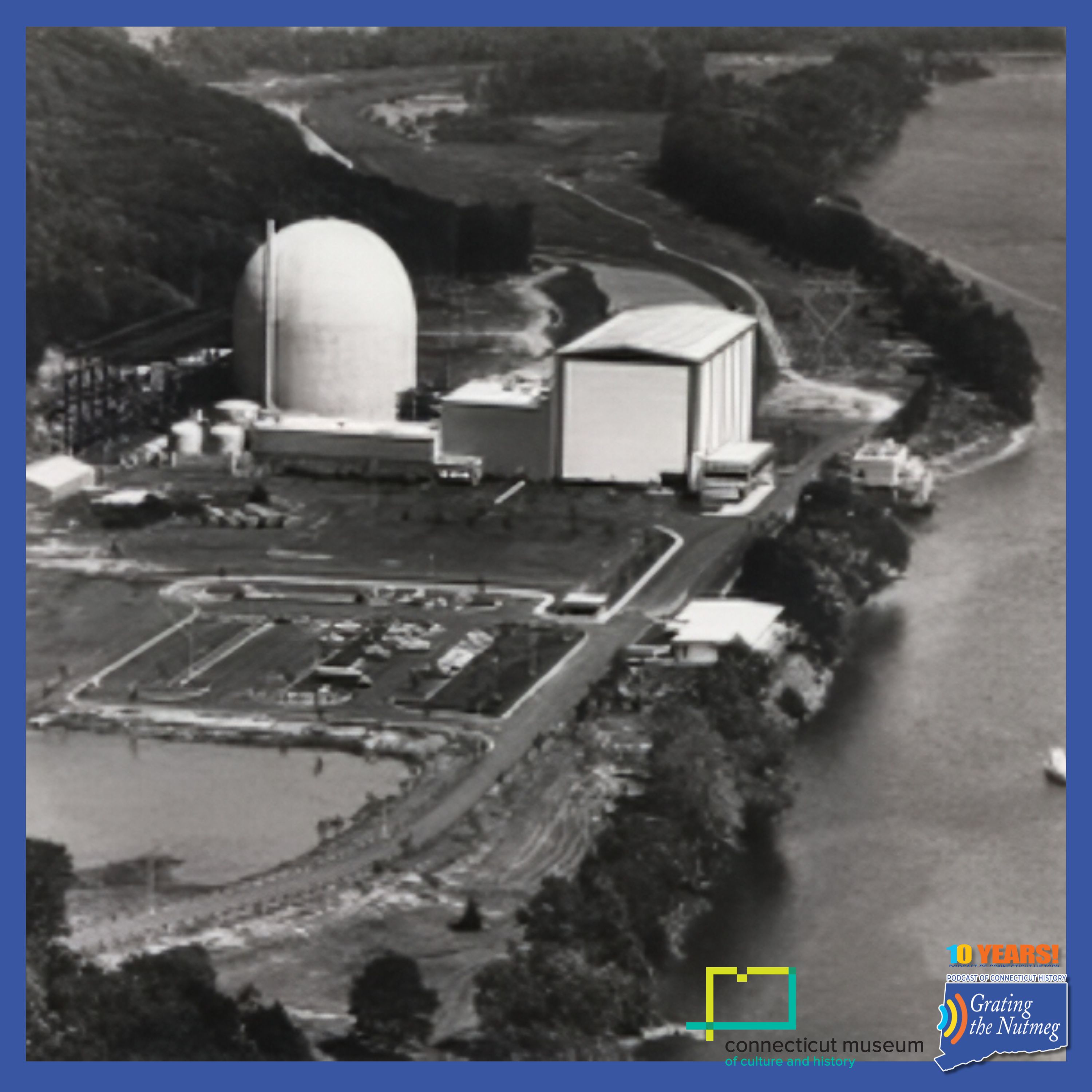
220. Connecticut Yankee Atomic Power Plant: The Promise and Peril of Nuclear Energy
Oct 3100:29:18Tap to summarizeThe Connecticut Yankee atomic power plant was one of the earliest commercial nuclear reactors in New England. Though it was dismantled at the turn of the 21st century, its legacy remains, both for the landscape of the Connecticut River Valley where it once stood, and for contemporary debates about energy today. This episode explores the plant's life and afterlife, the activists who opposed it, and the promises and perils of nuclear power in the 1960s and today, through the reminiscences of Paul Gionfriddo, a former state legislator and longtime president of People's Action for Clean Energy, a group that has advocated for conservation and renewable energy in Connecticut since the early 1970s. This episode is presented by Dr. Amrys Williams and Jon Kozak. Williams is a historian of science, technology,and the environment who serves as the Executive Director of the Connecticut League of Museums. Her recent research projects have focused on anti-nuclear activism, radioecology, and the public interpretation of nuclear places. Kozak is a graduate student in Public History at Central Connecticut State University and the Communications Manager for the Connecticut League of Museums. His recent research has focused on energy landscapes and the Connecticut Yankee plant. Their guest is Paul Gionfriddo is a former state representative and mayor of Middletown, a graduate of Wesleyan University, and a retired nonprofit professional. He has advocated for mental health and renewable energy, and served as President of People's Action for Clean Energy from 1975 until 1999. For more information, visit these sites: -Connecticut Yankee website: connyankee.com/ -People's Action for Clean Energy website: pacecleanenergy.org/ -1960s film of the construction of the Connecticut Yankee Nuclear Power Plant: youtube.com/watch?v=AiCYVMboju8 -The Atom and Eve, 1960s film promoting CT Yankee plant and atomic power in New England: footagefarm.com/reel-details/communications/telephone/1966---colour-atomic-energy-usa--atom-and-eve ; https://catalog.archives.gov/id/88095 -US Department of Energy Flickr Photo Stream, with many images of the Haddam Neck Plant before and during its operating lifetime: flickr.com/photos/departmentofenergy/10822396434/in/photostream/ -Connecticut Yankee Atomic Power Company, Haddam Neck Plant Records at the University of Connecticut Archives and Special Collections: archivessearch.lib.uconn.edu/repositories/2/resources/335 -Wesleyan Anti-Nuclear Protests Collection, Wesleyan University Archives and Special Collections: archives.wesleyan.edu/repositories/ua/resources/wesleyan_university_anti-nuclear_protests_collecti -Connecticut Collections: ctcollections.org/ Production notes -Projector sound effect: cine-projector SFX.wav by Rollo145 -- https://freesound.org/s/220348/ -- License: Attribution NonCommercial 3.0 -Archival audio from: -Gene Starbecker, The Atom and Eve (Bay State Film Production Inc., 1966). -Construction of Connecticut Yankee Atomic Power Plant, produced for Connecticut Yankee by Kevin Donovan Films, Glastonbury, CT, ca. 1968. Photo Credit Photo of CY when it was in operation from the Department of Energy. Connecticut League of Museums: ctleague.org/ This episode of Grating the Nutmeg was produced by Amyrs Williams and Jon Kozak. GTN podcast engineer is Patrick O'Sullivan at highwattagemedia.com/ Follow GTN on our socials-Facebook, Instagram, Threads, and BlueSky. Follow executive producer Mary Donohue on Facebook and Instagram at West Hartford Town Historian. Join us in two weeks for our next episode of Grating the Nutmeg, the podcast of Connecticut history.
Transcribe →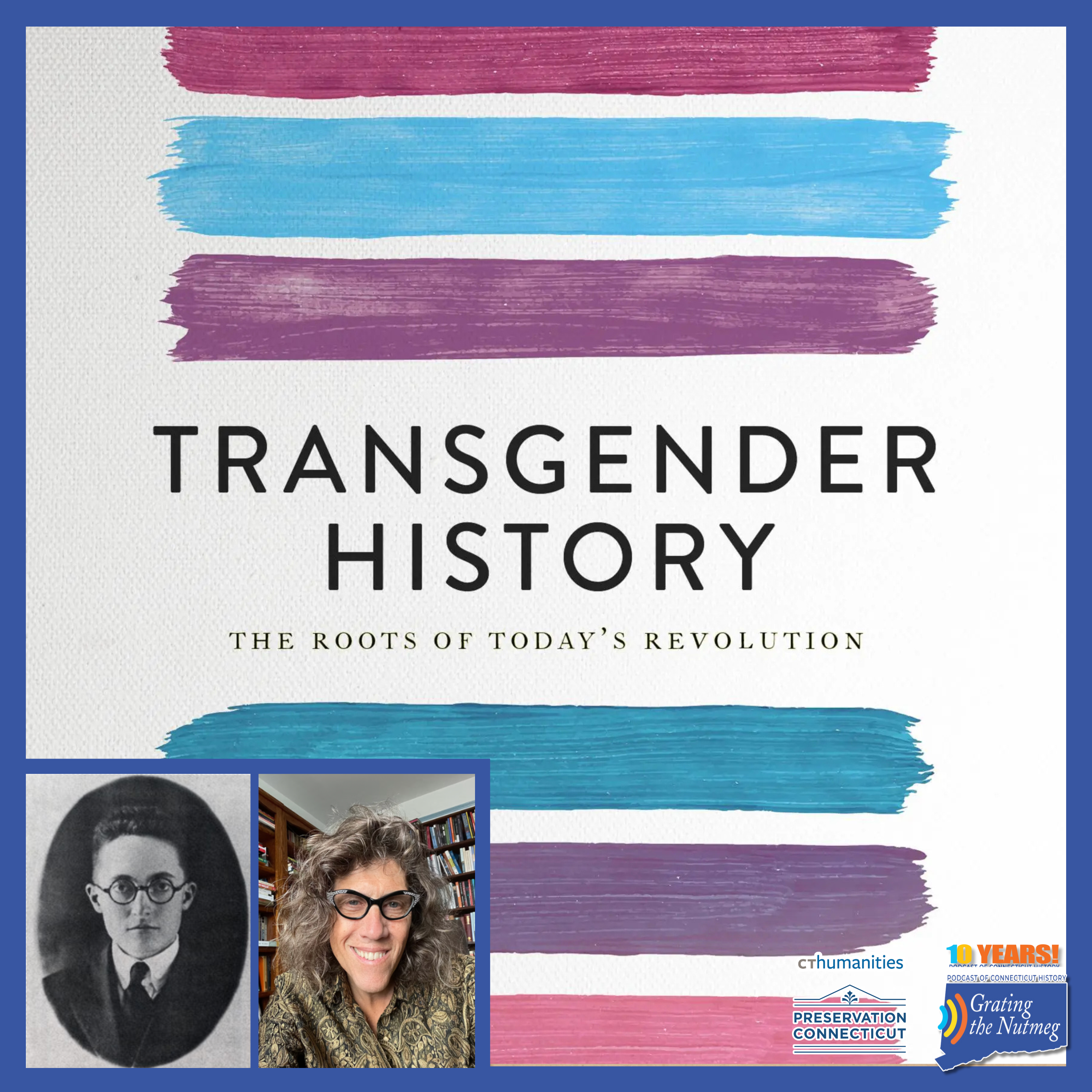
219. Transgender History and Connecticut Transgender Pioneer Dr. Alan L. Hart
Oct 1500:55:27Tap to summarizeThe transgender community has struggled to receive recognition and equality. In this episode, we explore the history of the transgender community over the last 100 years with Dr. Susan Stryker and the life of Dr. Alan L. Hart, a transgender medical doctor working on the forefront of an urgent public health crisis, tuberculosis, in Connecticut. Hart, Director of Connecticut's Office of TB Rehabilitation, is credited with saving countless lives. My guest is Dr. Susan Stryker, author of Transgender History, the Root of Today's Revolution, published in 2017. Transgender History, Third Edition: A Resource for Today's Struggle-and Tomorrow's will be published in Febuary, 2026. Dr. Susan Stryker holds a distinguished visiting appointment at Stanford's Michelle R. Clayman Institute for Gender Research at Stanford University, and is Professor Emerita of Gender, Women's and Sexuality Studies at the University of Arizona, where she directed the Institute for LGBT Studies for many years. She is the author or editor of numerous articles, books and anthologies. A collection of previously published short works, When Monsters Speak: A Susan Stryker Reader, was published by Duke University Press in 2024. She is also an Emmy-winning documentary filmmaker for Screaming Queens: The Riot at Compton's Cafeteria. In the documentary, you'll meet Dr. Stryker and some of the transgender women and drag queens who fought police harassment at Compton's Cafeteria in San Francisco's Tenderloin in 1966 three years before the famous riot at Stonewall Inn bar in New York City. You'll find the documentary on Amazon Prime. To contact Dr. Stryker, visit her website at www.susanstryker.net/about For more information on Dr. Alan L. Hart, go to these resources: https://www.scientificamerican.com/article/trailblazing-transgender-doctor-saved-countless-lives/ https://pmc.ncbi.nlm.nih.gov/articles/PMC12328259/ https://www.researchgate.net/publication/272831386_Manifesting_Manhood_Dr_Alan_Hart's_Transformation_and_the_Embodiment_of_Sex_in_Early_Twentieth-Century_Sexology https://college.lclark.edu/live/news/43320-from-the-archives-dr-alan-hart West Hartford Pride West Hartford Pride supports, celebrates, and uplifts the LGBTQAI+ Community by providing resources, events, education, and social justice initiatives. Find out more about visiting their website at westhartfordpride.org Preservatlon Connecticut LGBTQ+ Historic Sites Survey Preservation Connecticut, in partnership with scholars and activists, has embarked on documenting Connecticut's LGBTQ+ sites. Interwoven through these places are stories of resilience, innovation, and the pursuit of equality that transcend the traditional boundaries of class, race, ethnicity, and religion. If you're interested in learning more or contributing to this survey project, please visit www.preservationct.org/lgbtq. Grating the Nutmeg Three-part LGBTQ+ Series 2025 Connecticut Explored magazine and our podcast, Grating the Nutmeg, have featured many of the heritage trails that mark the important histories and sites of Connecticut's people. Preservation Connecticut has undertaken a survey of LGBTQ+ heritage sites across the state. Now, Grating the Nutmeg and Preservation Connecticut have teamed up to bring you a three-episode podcast series that pairs new research on LGBTQ+ identity and activism with accounts of the Connecticut places where history was made. The episodes include a thriving vegetarian cafe-bookstore run by lesbian feminists in a working-class former factory town, Episode 212, a transgender medical researcher working on an urgent public health issue in the center of Connecticut politics, Episode 219, and a gay, Jewish, best-selling children's book author in affluent Fairfield County, Episode 215. Connecticut Humanites The 2025 LGBTQ+ Three-part series received grant support from CT Humanities, connecting people to the humanities through grants, partnerships, and public programs. Visit our website to learn about our funding opportunities and capacity building grants. https://cthumanities.org/ ------------------------------------------ Like Grating the Nutmeg? Want to support it? Make a donation! 100% of the funds from your donation go directly to the production and promotion of the show. Go to ctexplored.org to send your donation now. secure.qgiv.com/for/gratingthenutmeg This episode of Grating the Nutmeg was produced by Mary Donohue and engineered by Patrick O'Sullivan at www.highwattagemedia.com/ Follow GTN on our socials-Facebook, Instagram, Threads, and BlueSky. Follow executive producer Mary Donohue on Facebook and Instagram at West Hartford Town Historian. Join us in two weeks for our next episode of Grating the Nutmeg, the podcast of Connecticut history. Thank you for listening!
Transcribe →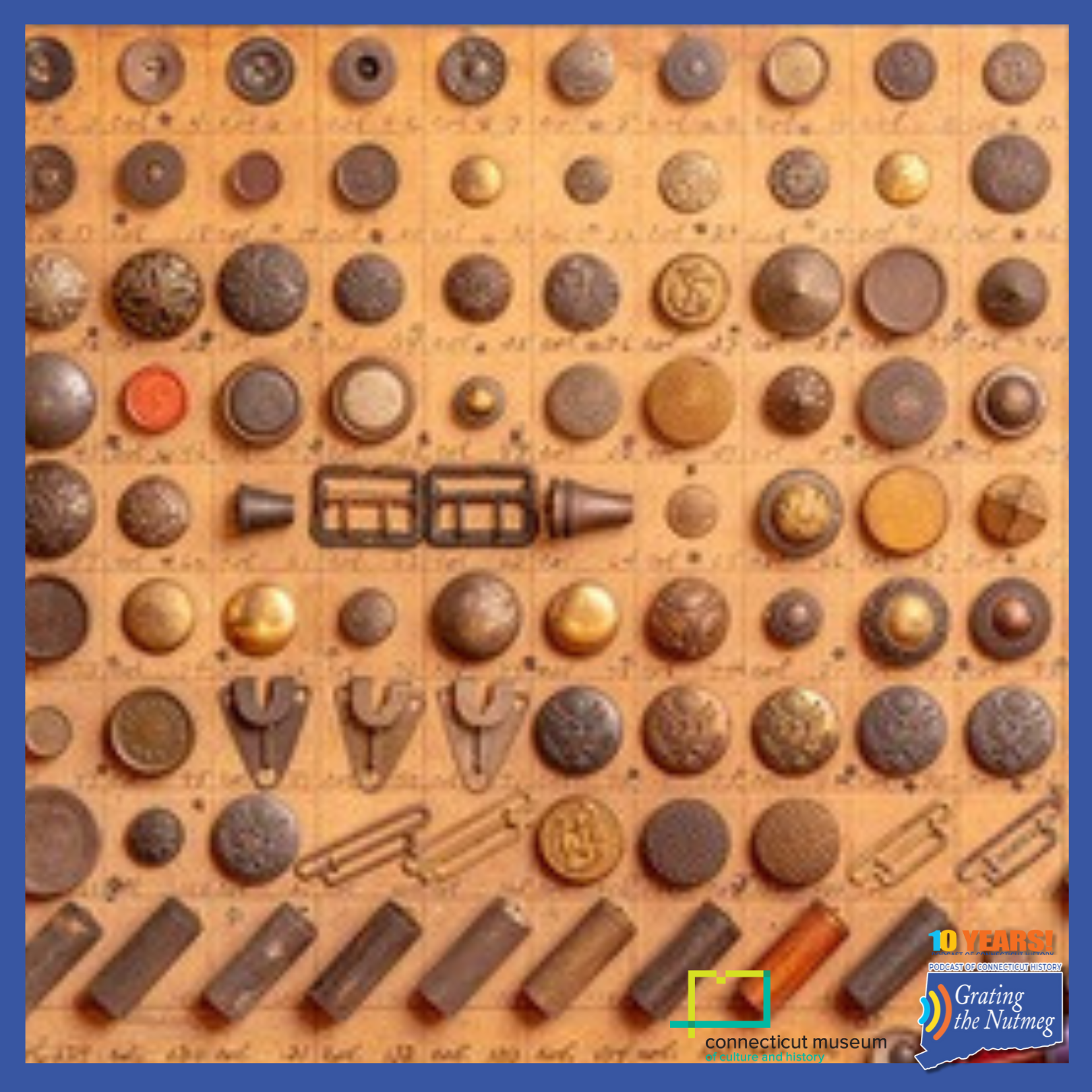
218. Connecticut in the Industrial Revolution: Making Buttons in Cheshire
Oct 100:42:46Tap to summarizeA button sounds like a very ordinary thing. But button production in Cheshire was part of Connecticut's pioneering role in the precision manufacturing revolution of the nineteenth century. According to connecticuthistory.org, button production began with pewter buttons in the mid-eighteenth century but quickly turned to brass in the early nineteenth century. By 1860s, machines in the Scovill Brass factory in Waterbury produced 216,000 buttons per day. This type of industrial production volume for an everyday necessity such as buttons propelled investors and entrepreneurs to establish companies such as the Ball & Socket Manufacturing Company. But what were the benefits and costs of Cheshire's industrial development during Connecticut's Industrial Revolution? Cheshire's Ball & Socket factory has been transformed into a community arts center as we discovered in Grating the Nutmeg episode 167. New Lives for Old Factories. But its industrial past has not been forgotten-new research by noted historian Elizabeth Fox has been shared with the public in outdoor signage and a feature story in the Fall 2024 issue of Connecticut Explored. Fellow historian Agnes Wnuk has been researching the history of the factory and its effect on Cheshire. My guests Elizabeth Fox and Agnes Wnuk today will share what they've uncovered so far! Elizabeth "Betsy" Fox is a retired museum consultant. She lives in Cheshire and has been involved with Ball & Socket Arts as a volunteer for over ten years. She has also written some great articles for Connecticut Explored magazine. Historian Agnes Wnuk has been involved in preservation work at museums and libraries. Ball & Socket Arts will present a public program on the oral history project and button production at 6:30pm on Nov. 13th, 2025 at the Cheshire Public Library. Get more information here: ballandsocket.org/events/2025/11/13/pushing-buttons-collecting-oral-histories-about-ball-socket-manufacturing Did you know Waterbury, CT has been a hub of button-making for over 200 years? Buttons aren't just functional; they're miniature works of art! Opening October 12, Beau McCall: Buttons On! is the first-ever retrospective of the renowned textile artist known as "The Button Man," showcasing his striking wearable and visual art created entirely with buttons. The exhibition is complemented by the Mattatuck Museum's impressive Button Gallery, home to over 20,000 buttons, offering a unique blend of creativity and history through January 4. Get more information here: https://www.mattmuseum.org/exhibition/beau-mccall-buttons-on/ ------------------------------------------ If you love Connecticut history, be sure to support Grating the Nutmeg by bidding on some fabulous one-of-a-kind experiences in our online benefit auction! History matters! Get more information here: www.ctexplored.org/2nd-grating-the-nutmeg-auction/ To listen to our episode on Ball & Socket Art's transformation, stream free here: https://gratingthenutmeg.libsyn.com/167-new-lives-for-old-factories-cheshires-ball-socket-arts This episode of Grating the Nutmeg was produced by Mary Donohue and engineered by Patrick O'Sullivan at https://www.highwattagemedia.com/ Follow GTN on our socials-Facebook, Instagram, Threads, and BlueSky. Follow executive producer Mary Donohue on Facebook and Instagram at West Hartford Town Historian. Join us in two weeks for our next episode of Grating the Nutmeg, the podcast of Connecticut history. Thank you for listening!
Transcribe →
217. The Smith Family of Glastonbury: Hannah and Her Daughters
Sep 1400:33:45Tap to summarizeIn this episode of Grating the Nutmeg, Natalie Belanger tells us about how two journals kept by a Revolutionary War-era girl in the Connecticut Museum of Culture and History's collection have inspired an original work of music. Several years ago, Leonard Raybon (Associate Professor of Music at Tulane University) encountered two journals and other writings by Hannah Hadassah Hickok, held at the Connecticut Museum. Hannah was the matriarch of the non-conformist Smith Family of Glastonbury. Her daughters would go on to became nationally famous for protesting their lack of voting rights in the 1870s by refusing to pay their taxes — an act that resulted in the town of Glastonbury confiscating their property, including their beloved cows. Inspired by the young Hannah's unique voice, Leonard composed an original mini-musical based on her writings. You'll hear Natalie and Leonard's conversation about what moved him to compose the piece and how it fits into his larger project of producing "Ameri-musicals" that use song to get us to think about the past. Professor Raybon, the Connecticut Museum, and the Glastonbury Historical Society are partnering to present this work to the public in a one-time performance on November 8th, 2025 at 7:30 pm at First Church of Glastonbury at 2183 Main Street, Glastonbury. First Church was the Smith family's congregation, so it's a fitting place to host this unique musical experience! You can visit the CT Museum's website to learn more about the concert. For more information on the Smith family, visit the CT Women's Hall of Fame, or read this excellent blog from the Library of Congress. -------------------------------------- Like Grating the Nutmeg? Want to support it? Make a donation! 100% of the funds from your donation go directly to the production and promotion of the show. Go to ctexplored.org to send your donation now. This episode of Grating the Nutmeg was produced by Natalie Belanger and engineered by Patrick O'Sullivan at www.highwattagemedia.com/ Follow GTN on our socials-Facebook, Instagram, Threads, and BlueSky. Follow executive producer Mary Donohue on Facebook and Instagram at West Hartford Town Historian. Join us in two weeks for our next episode of Grating the Nutmeg, the podcast of Connecticut history. Thank you for listening!
Transcribe →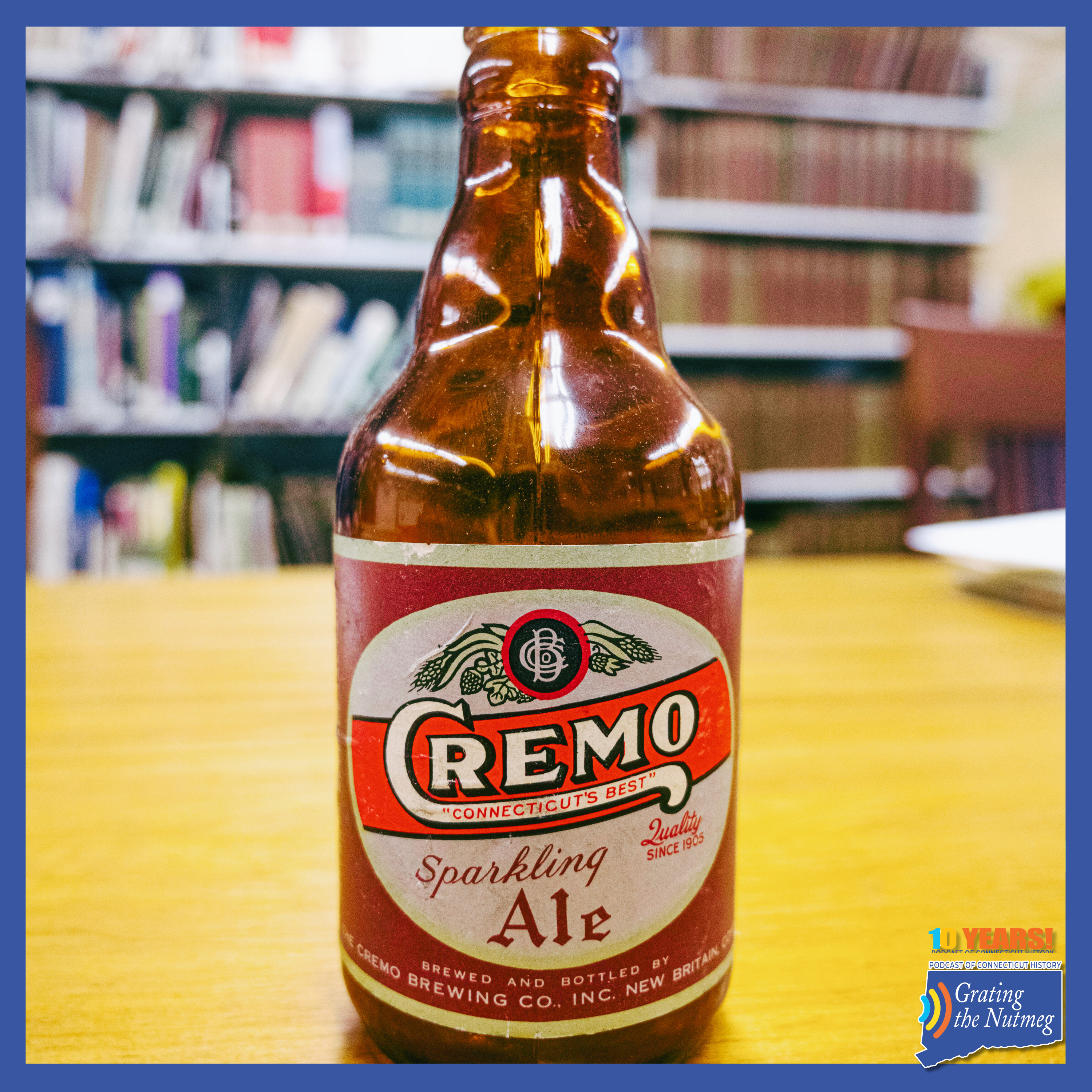
216. Brewing Community: Labor, Alcohol, and Unrest in Industrial New Britain
Sep 100:28:53Tap to summarizeImmigrants from Lithuania who made their way to New Britain, Connecticut at the beginning of the twentieth century found work in the city's factories turning out tools and hardware. Their weekly routine included work, church and socializing at neighborhood saloons. But major upheavals in American society were happening at the time that affected their lives including the rise of organized labor, the temperance movement, anti-immigrant sentiment, and labor strikes. In this episode, we have two new voices in public history, Central Connecticut State University students Jon Kozak and Nathaniel Smith. They produced the episode as a class project under Dr. Leah Glazier at Central Connecticut State University. This episode reminds us that some of the most interesting history can be found all around you in your own community. A big thanks to Jon Kosak and Nathaniel Smith for their hard work in producing this episode. I also want to thank Dr. Glazier, professor of public history for her help. Contact Jon Kosak at: j.kozak@my.ccsu.edu Contact Dr. Leah Glazier at: glaserles@ccsu.edu Jon and Nathaniel used a wide variety of local history materials including oral histories and the New Britain Herald newspaper. Museum Collections: The New Britain Public Library Local History Room, The New Britain Industrial Museum, Connecticut State Library, and the Elihu Burritt Library at Central Connecticut State University, specifically their special collections and archive of the New Britain Herald newspaper. Oral Histories: John Skritulsky, had been interviewed by the Federal Writers Project in 1938, by a writer in the FWP's New Britain office by the name of Albert Kayeski. Being Lithuanian himself, Kayeski understood the importance of this ethnic community in telling the story of an industrialized New Britain. Several of his other profiles bear mention of taverns, be it Skritulsky's or others as places to gather. Use of New Britain directories from the turn of the twentieth century reinforced the prevalence and importance of these institutions. It must be noted that for the clarity of our story, the character of Jonas, whose story was found in a FWP profile by Kayeski, History of a Lithuanian Immigrant, was originally listed with the name John, and was given no last name. We changed his name to Jonas, the Lithuanian translation of John, to avoid confusion with John Skritulsky in the narrative. No other names were altered from the original source material. Manuscript reference: Portrait of Occupations, Investments, and Businesses of Lithuanian Immigrants in New Britain Connecticut by the Reverend William Wolkovich-Valkavicius from 1979, Local History Room, New Britain Public Library. Song Credit: This version, by the musical group Ugniavijas, recorded in 2014 is a centuries-old Lithuanian folk song whose title roughly translates to "Sweet Beer of the Oats. The original lyrics with an English translation can be found here. It is a song that remains important to the people of Lithuania and is still sung today, often by schoolchildren. ----------------------------------------------------- Connecticut Landmarks Event Join Connecticut Landmarks at East Haddam's Palmer-Warner House for our second annual Summer Pipes & Cider! Sip barrel-aged cider and whiskey from Yankee Cider Company. Enjoy a bagpipe performance by the Portland & District Pipers, accompanied by a scenic trail walk. Plus, bring your friends for a round of pub trivia with prizes for the top two teams. Are you a fan of the TV series, Outlander? Come wearing your best Outlander attire and test your knowledge during trivia! Extend your experience with a tour of the Palmer-Warner House, which previous owner Frederic Palmer called Dunstaffnage as a nod to his Scottish heritage. Raise a glass, embrace the music, and celebrate the magic of Scotland! Event and tour tickets are available at ctlandmarks.org/pipesandcider. We hope to see you at 1 pm on Saturday, September 13 for Summer Pipes & Cider! Support GTN! We need your financial support now more than ever. Grating the Nutmeg talks to historians, researchers, and community members to bring you compelling stories about your state that you haven't heard before. Make a donation! 100% of the funds from your donation go directly to the production and promotion of the show. Go to ctexplored.org to send your donation now. And don't forget that our Second Annual Online Benefit Auction is coming up in September. This episode of Grating the Nutmeg was produced by Mary Donohue and engineered by Patrick O'Sullivan at https://www.highwattagemedia.com/ Follow GTN on our socials-Facebook, Instagram, Threads, and BlueSky. Follow executive producer Mary Donohue on Facebook and Instagram at West Hartford Town Historian. Join us in two weeks for our next episode of Grating the Nutmeg, the podcast of Connecticut history. Thank you for listening!
Transcribe →
208. Saving Connecticut’s Mid-Century Modern Homes
May 1, 202500:40:34Tap to summarizeWe’re celebrating May, Historic Preservation Month, with an episode on the Modern houses of the 1950s and 1960s. Could you live in a glass house? New Canaan, Connecticut’s Mid-Century Modern homes designed after the Second War are world famous. In addition to Philip Johnson’s Glass House, now a museum, New Canaan has homes designed by Marcel Breuer, Eliot Noyes, Frank Lloyd Wright and Edward Durell Stone. Each one is a part of architectural history and is a masterwork of the era’s most talented architects. But by the 1990s, people began to demolish these relatively small homes sited on large lots. People in New Canaan began to band together to save these artworks-”machines for living”. Towns across Connecticut have at least one or two good Mid-Century Modern homes worth saving and celebrating. Host Mary Donohue discusses what a homeowners and community members can do to help save these modern homes. Her guests are Gwen North Reiss, historian and author of New Canaan Modern: A Preservation History published by the New Canaan Museum and Historical Society in 2024 and Mary Dunne, Deputy State Historic Preservation Officer for the Dept of Economic and Community Development and homeowner of an architect-designed, Mid-Century Modern home. For more information on New Canaan’s Modern houses, order your copy of Gwen North Reiss’s book New Canaan Modern: A Preservation History from the New Canaan Historical Society. It has really tremendous photography-a joy if you are a fan of this era! To buy the book, contact the New Canaan Historical Society at info@nchistory.org To learn more about Modernism in New Canaan, go to: https://nchistory.org/modern-new-canaan/ To visit the Glass House, go to: https://theglasshouse.org/ You can find the link to the New Canaan Modern House Survey on the website of the Glass House Museum here: https://theglasshouse.org/learn/modern-homes-survey/ To read more about Mary Dunne’s mid-century modern home and furniture designer Jens Risom, go to: https://www.ctexplored.org/the-answer-is-risom/ https://www.ctexplored.org/the-modern-style-in-manchester/ photo: Michael Biondo ---------------------------------------------------------------- Visit Connecticut’s four state museums operated by the State Historic Preservation Office including the Eric Sloane Museum in Kent, with the artist’s studio; the Henry Whitfield House in Guilford, the state’s oldest house built in 1639, , Old New-Gate Prison & Copper Mine in East Granby, the Nation’s first chartered copper mine and state prison; and the Prudence Crandall Museum in Canterbury, the first school for young black women. Learn more here: https://portal.ct.gov/decd/services/historic-preservation/state-museums Like Grating the Nutmeg? Want to support it? Make a donation! 100% of the funds from your donation go directly to the production and promotion of the show. Go to ctexplored.org to send your donation now. Get your copy of Connecticut Explored magazine, in print and digital editions now so you don’t miss the Summer issue! Each issue offers a photo essay, feature-length stories you can sink your teeth into, and shorter stories you can breeze through—plus lots of beautiful, large historic images. We include oral histories, stunning museum objects, must-see destinations, and more. From Colonial history to pop-culture, you’ll find it all in this magazine. Subscribe to get your copy today in your mailbox or your inbox at ctexplored.org This episode of Grating the Nutmeg was produced by Mary Donohue and engineered by Patrick O’Sullivan at www.highwattagemedia.com/ Follow GTN on our socials-Facebook, Instagram, Threads, and BlueSky. Follow executive producer Mary Donohue on Facebook and Instagram at WeHa Sidewalk Historian. Join us in two weeks for our next episode of Grating the Nutmeg, the podcast of Connecticut history. Thank you for listening!
Transcribe →