
Podcast
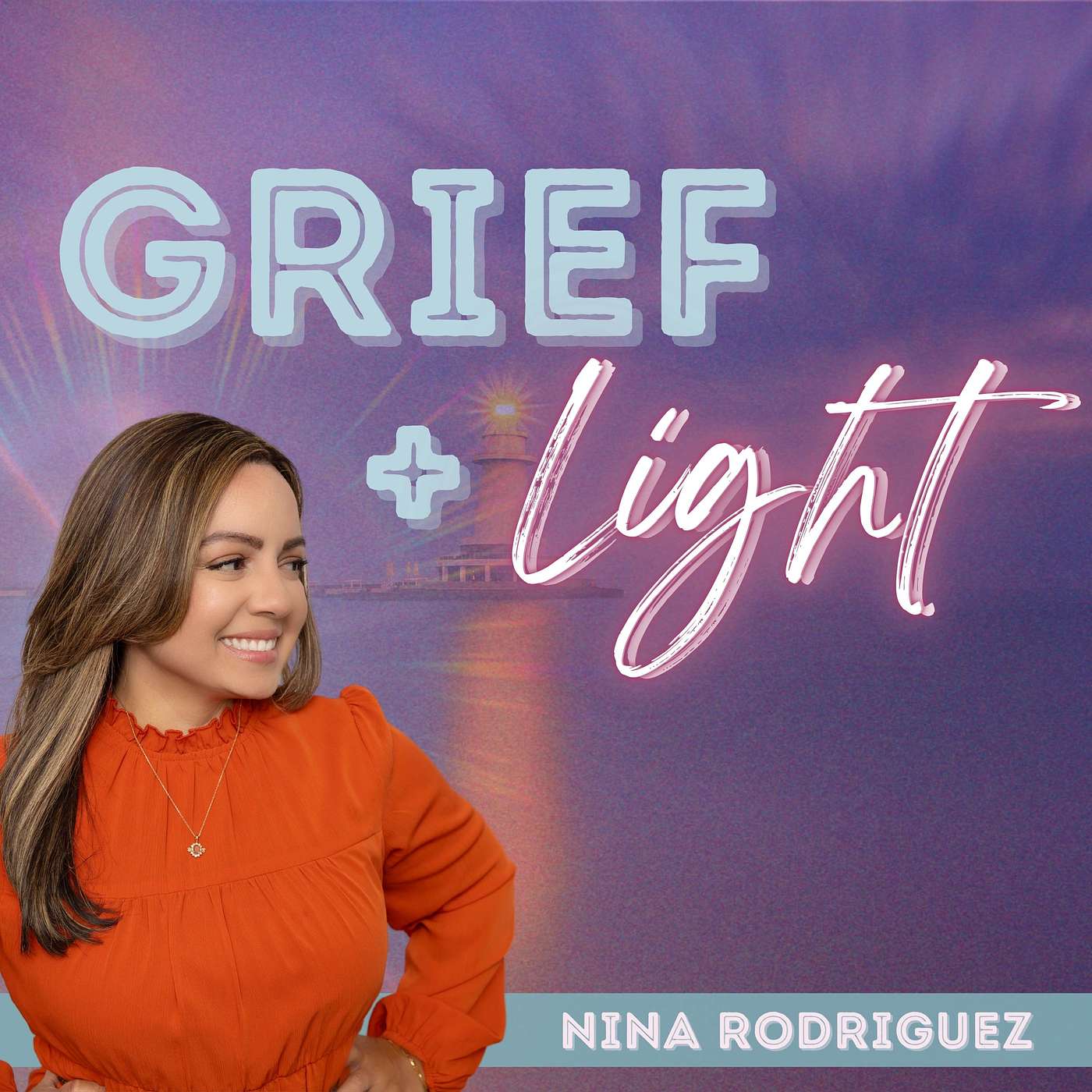
Grief and Light™
Hosted by Nina Rodriguez · EN
This space was created for you by someone who gets it – your grief, your foundation-shattering reality, and the question of what the heck do we do with the shattered pieces of life and loss around us.
It’s also for the listener who wants to better understand their grieving person, and perhaps wants to learn how to help.
Now in its fourth season, the Grief and Light™ podcast features both solo episodes and interviews with first-hand experiencers, authors, and professionals, who shine a light on the spectrum of experiences, feelings, secondary losses, and takeaways.
As a bereaved sister, I share my personal story of the sudden loss of my younger brother, only sibling, one day after we celebrated his 32nd birthday. I also delve into how that loss, trauma, and grief catapulted me into a truth-seeking journey, which ultimately led me to answer "the calling" of creating this space I now call Grief and Light.
Since launching the first episode on March 30, 2023, the Grief and Light podcast and social platforms have evolved into a powerful resource for grief-informed support, including one-on-one grief guidance, monthly grief circles, community, and much more.
With each episode, you can expect open and authentic conversations sharing our truth, and explorations of how to transmute the grief experience into meaning, and even joy.
My hope is to make you feel less alone, and to be a beacon of light and source of information for anyone embarking on this journey.
"We're all just walking each other HOME." - Ram Dass
Thank you for being here.
We're in this together.
Nina, Yosef's Sister
--
For more information, visit: griefandlight.com
31episodes
Episodes
Newest firstAll episodes
Hope is a Verb: Staying Human in Uncertain Times
Jan 2400:14:15Tap to summarizeIn this solo episode of Grief and Light, Nina Rodriguez reflects on the ambient grief many of us are carrying in response to global, political, and collective uncertainty.After taking a pause to tend to her own nervous system and grief, Nina shares a reflection rooted in presence rather than answers, exploring what it means to keep creating, caring, and staying human when the world feels overwhelming and dissonant.Drawing on grief literacy, nervous system awareness, and the story behind Claude Monet’s Water Lilies, this episode gently reframes hope not as a feeling, but as an action, something we practice in small, everyday ways, even when clarity feels out of reach.This is an episode for anyone feeling frozen, disconnected, or unsure how to move forward without turning away from reality.Referenced in This Episode:Essay: The Grief of Uncertainty in Unprecedented TimesPodcast EpisodeThis Episode ExploresAmbient and collective grief in times of global and political disruptionNervous system overwhelm, freeze responses, and grief fatigueThe dissonance of daily life continuing during crisisHope as a verb rather than something we wait forArt, creation, and meaning-making during times of war and uncertaintyClaude Monet’s Water Lilies as a historical response to personal and collective traumaStaying engaged without becoming consumedChoosing presence, care, and humanity in small, ordinary waysThis Episode Is ForThose feeling overwhelmed by world events and political realitiesGrievers navigating uncertainty without clear answersCreators questioning the role of art, work, or expression during crisisAnyone feeling disconnected, frozen, or unsure how to “show up” right nowListeners seeking grief-literate reflection rather than solutionsGrieving hearts seeking messages of hopeConnect with Nina Rodriguez:griefandlight.com@griefandlightResting Grief Face on SubstackSend us Fan MailSupport the showConnect with Nina Rodriguez:griefandlight.com@griefandlightResting Grief Face on SubstackGrief and Light is an award-winning, independent podcast exploring the honest, messy, and deeply human experience of loss. New episodes wherever you watch or listen.Thank you for listening! If this conversation resonated with you:✅ Share this episode with someone who needs it✅ Follow Grief and Light so you never miss a conversation✅ Leave a review! It helps this podcast reach more heartsDisclaimer: griefandlight.com/safetyanddisclaimers
Transcribe →
Curating Grief: Charlene Lam on Choosing What to Keep vs Release After Loss
Dec 2301:01:43Tap to summarizeHow do we decide what to keep after a loved one dies? In this insightful episode, Nina Rodriguez is joined by grief coach, curator of The Grief Gallery™, and author, Charlene Lam, for a deeply human conversation about curating grief: the tender, often overwhelming process of choosing what to keep after loss.***Video version available here.***After the sudden death of her mother in 2013, Charlene found herself alone with the responsibility of sorting through her mom’s belongings. That experience became the foundation for her work, including the 10 Object Method, a reflective practice that invites grievers to select a small number of meaningful items as a way of honoring relationships, reclaiming narrative, and maintaining continuing bonds.Together, Nina and Charlene explore the emotional weight of everyday objects, the cultural and personal lenses that shape grief, and the evolving nature of our connection to those who have died. This conversation reminds us that grief is not something to complete or solve, it is something we live with, curate, and carry forward in ways that are deeply personal and uniquely our own.Whether you’re facing a house full of belongings, grieving a loss beyond death, or simply wondering how memory and meaning intertwine, this episode offers language, permission, and companionship.Key TakeawaysCurating grief is about choosing what holds meaning, not following rules.The 10 Object Method offers a gentle framework for honoring relationships after loss.Belongings can feel emotionally overwhelming, especially when time and resources are limited.Objects often serve as anchors for memory, identity, and continuing bonds.Grief is not static; our relationship with those we’ve lost evolves over time.Everyday items can carry deep symbolic and emotional weight.Grief extends beyond death and includes many forms of loss.Curating memories helps us reclaim our personal narratives.Cultural perspectives shape how grief is experienced and expressed.Sharing stories keeps connection alive and helps reduce isolation.Guest: Charlene LamAuthor, Speaker, Grief Coach & Curator@curating_griefcuratinggrief.com[BOOK] Curating Grief: A Creative Guide to Choosing What to Keep After a Loved One DiesHosted by: Nina Rodriguezgriefandlight.com@griefandlightReSend us Fan MailSupport the showConnect with Nina Rodriguez:griefandlight.com@griefandlightResting Grief Face on SubstackGrief and Light is an award-winning, independent podcast exploring the honest, messy, and deeply human experience of loss. New episodes wherever you watch or listen.Thank you for listening! If this conversation resonated with you:✅ Share this episode with someone who needs it✅ Follow Grief and Light so you never miss a conversation✅ Leave a review! It helps this podcast reach more heartsDisclaimer: griefandlight.com/safetyanddisclaimers
Transcribe →
100 Episodes of Leaning Into Grief — Navigating Life Shifts with Matt & Nina
Dec 1701:05:50Tap to summarizeEpisode 100 of Grief and Light marks a meaningful milestone shaped not only by consistency and care, but by the relationships formed along the way. Nina Rodriguez chose to honor this moment with a feed swap: a deeply personal episode originally recorded for The Life Shift Podcast, hosted by fellow podcaster and friend Matt Gilhooly.***Read: Grief and Light Podcast: Exploring Grief & Lighting the Way to Hope by Frank Racioppi, EAR WORTHY***This episode reflects one of the most unexpected and beautiful ripple effects of saying yes to grief work: the genuine connections that emerge when we choose to stay in honest conversation over time. In this role-reversed dialogue, Matt interviews Nina about the sudden loss of her brother and the life-altering moment that reshaped everything that followed.Nina reflects on the spontaneous decision to visit her brother on his birthday, followed by the shock, surrealism, and disorientation of receiving the news of his unexpected death. She speaks openly about his long-term sobriety, the hope and plans they held for his future, and the complexity of grieving someone whose life carried both struggle and profound love.Nina and Matt explore the unpredictable nature of life, the emotional disconnection that often accompanies sudden loss, and the quiet ways grief changes how we move through the world. What emerges is a story of learning how to live with grief.Nina shares how creating Grief and Light became a way to stay in relationship with her grief, transforming pain into presence, isolation into connection, and making meaning.This episode is a meditation on human connection, the power of curiosity in times of loss, and the possibility of honoring grief without needing to resolve it.Key Takeaways:One of the beautiful ripple effects of this journey is the meaningful connections it has forged.About 5% of podcasts make it past the 100th episode.You don’t need answers or clarity to be present with grief.Meaning-making after loss is not linear or prescriptive; it unfolds in its own time.Grief can change how we relate to ourselves, our relationships, and our sense of the future.Curiosity can be a gentler companion than certainty when navigating loss.Honoring someone’s full story (including struggle, hope, and love) matters in grief.Human connection is one of the most sustaining forces during times of loss.Joy and sorrow are not opposites; they can coexist.Staying in relationship with grief can transform isolation into connection.Connect with Matt Gilhooly:thelifeshiftpodcast.com@thelifeshiftpodcastConnect with Nina Rodriguez:Send a textSupport the showThank you for listening! Connect with Nina Rodriguez: griefandlight.com @griefandlight Resting Grief Face on Substack If this conversation resonated with you: ✅ Share this episode with someone who needs it✅ Follow Grief and Light so you never miss a conversation✅ Leave a review! It helps this podcast reach more hearts Disclaimer: griefandlight.com/safetyanddisclaimers
Transcribe →
Women Who Podcast: Kathy Barron on Grief, Creativity, and Building Community
Dec 1600:56:37Tap to summarizeAn honest exploration of grief, creativity, and community with the visionary behind Women Who Podcast magazine—covering storytelling, anticipatory grief, and the movement to amplify women’s voices in podcasting.In this conversation, Nina Rodriguez sits down with Kathy Barron, founder and Editor-in-Chief of Women Who Podcast Magazine, to explore the power of women’s voices, the complexity of grief, and the courage it takes to tell honest stories.***Video available here***Kathy shares the origin story behind the magazine: a space born from her desire to see women not just represented in podcasting, but truly celebrated. As the conversation unfolds, Kathy opens up about her own relationship to loss, including the quiet, complicated ache of anticipatory grief as she navigates her mother’s aging, as well as moments of soul-level connection she feels with farming communities and Mexican culture.Nina and Kathy explore how grief shapes identity, creativity, and the way we move through the world. They talk about the tension between what we hold privately and what we offer publicly, the healing potential of artistic expression, and the moments of clarity that come from living inside “the dash”—the space between birth and death.Kathy also reflects on the evolving landscape of podcasting, from the pressures of imposter syndrome to the new possibilities—and challenges—posed by AI. She offers grounded, generous advice for aspiring women podcasters seeking connection, mentorship, and confidence in a space that hasn’t always made room for them.This episode is a reminder that storytelling is community-building, grief is deeply personal but never solitary, and women’s voices deserve to take up space—loudly, boldly, and without apology.Key TakeawaysWomen Who Podcast magazine amplifies and uplifts women’s voices across the industry.Community is essential for creative collaboration, support, and sustainability.Grief manifests differently for everyone, shaped by personal and generational experiences.Artistic expression—writing, podcasting, humor—can deepen connection and understanding.Anticipatory grief involves mourning who someone once was while caring for who they are now.Hard conversations about mortality, aging, and loss are uncomfortable—but necessary.Sarcasm can be a tool for truth-telling and authenticity in storytelling.Aspiring podcasters benefit from mentorship, collaboration, and supportive networks.Critical thinking is more important than ever in a rapidly shifting tech landscape.Reclaiming creativity in the age of AI matters for podcasters, writers, and artists alike.Guest: Kathy BarronFounder & Editor-in-Chief@womenwhopodcastmagazineSend a textSupport the showThank you for listening! Connect with Nina Rodriguez: griefandlight.com @griefandlight Resting Grief Face on Substack If this conversation resonated with you: ✅ Share this episode with someone who needs it✅ Follow Grief and Light so you never miss a conversation✅ Leave a review! It helps this podcast reach more hearts Disclaimer: griefandlight.com/safetyanddisclaimers
Transcribe →
How solo travel helped this Latina find herself again with Bianca Alba
Dec 900:50:40Tap to summarizeSometimes, healing begins in motion. In this episode, Nina Rodriguez sits down with Bianca Alba, founder of This Latina Travels, to explore how grief, identity, and travel intertwine. What starts as a conversation about exploring the world becomes a deeper story about returning to yourself.***Video available here***Her story begins in a single-parent household where vacations felt like something other people did, faraway dreams that didn’t belong to families like hers. Today, Bianca has traveled to six continents and uses her platform to show women of color what’s possible when you give yourself permission to go. Her work reminds us that representation isn’t just inspiring, it’s necessary.Nina and Bianca also reflect on the power of community, having recently shared virtual space as speakers at the Latinas in Podcasting Summit 2025. The conversation moves through grief, identity, purpose, and the courage it takes to keep expanding your life after loss.Bianca opens up about the Lola Challenge, a three-day running event in Puerto Rico that connects her to her body, her resilience, and the island she now calls home. She recounts a deeply emotional moment on a beach in the Virgin Islands that reminded her how grief meets us wherever we are.They also explore the complexities of traveling during political and social turbulence, including recent US disruptions affecting travelers. Bianca speaks honestly about the privilege and guilt of being a travel content creator during difficult times, and how she balances joy with responsibility, visibility, and awareness.Her love for Puerto Rico weaves through the conversation—its beauty, its challenges, and the hope she carries for change. Bianca shares her vision for future retreats on the island: spaces rooted in culture, learning, healing, and community. Places where women can breathe, honor their grief, and rediscover parts of themselves that got lost along the way.This episode is an invitation to rethink how movement, land, and connection can hold us through grief. A reminder that healing isn’t linear; it’s lived, mile by mile, moment by moment.Key Takeaways:Travel can be a companion to grief, offering new ways to process loss.Representation matters—It can be life-changing for women of color to see themselves in spaces historically closed to them.Grief and joy often coexist, and choosing adventure after loss isn’t forgetting—it's honoring the fullness of being alive.Community heals—from podcast summits to shared stories, connection lights the way forward.Travel during turbulent times is complex, and it’s okay to hold both gratitude and discomfort as you navigate privilege and responsibility.Puerto Rico holds deep lessons about resilience, culture, and what it means to belong to land and community.Guest: Bianca AlbaBlogger & PodcasterSend a textSupport the showThank you for listening! Connect with Nina Rodriguez: griefandlight.com @griefandlight Resting Grief Face on Substack If this conversation resonated with you: ✅ Share this episode with someone who needs it✅ Follow Grief and Light so you never miss a conversation✅ Leave a review! It helps this podcast reach more hearts Disclaimer: griefandlight.com/safetyanddisclaimers
Transcribe →
Get Griefy With Us: A Grief Week Roundtable on How Loss Shakes Up Family and Community
Dec 301:15:54Tap to summarizeWhat happens when you gather a circle of grievers, creators, and grief-literacy leaders around one table and ask them to tell the truth about how loss has reshaped their families, and their lives?In this special Grief Week episode of Grief and Light, we find out.*** Watch the video here. ***This episode is an offering for anyone navigating family changes after loss, for anyone bracing for the holidays, and for anyone who needs to hear that their grief makes sense, that their story matters, and that connection is still possible even in the midst of heartbreak.Each year, the first week of December marks Grief Week—a global invitation to slow down, raise awareness, open conversations, and build a more grief-informed world. In honor of this mission, Nina Rodriguez brings together members of the Get Griefy Small Business Collective for a roundtable conversation that feels equal parts honest, tender, and unexpectedly uplifting.From the moment the mic turns on, the episode unfolds like a shared living room, where stories overlap, tears sit beside laughter, and the complexity of grief is met with curiosity instead of fear. Together, Nina and her guests explore how loss ripples through families: the shifting dynamics, the roles we grow into (or out of), the unspoken tensions, and the surprising places where connection begins to mend what grief has fractured.What emerges is not just a conversation, but a reminder:Grief may isolate, but community brings us home to ourselves.Through creativity, storytelling, mutual witnessing, and the simple act of speaking honestly, this group shows what’s possible when we don’t grieve alone.Connect with our guests & their offerings:AMANDA MCKOY FLANAGAN: amandamckoyflanagan.comANGIE HANSON: butterfliesandhalos.comCHARLENE LAM: curatinggrief.comKERA SANCHEZ: getgriefymagazine.comLIZ QUINN: @lizquinnhealsHosted by: Nina RodriguezCreator of Grief and Light, Grief Guidegriefandlight.com@griefandlightResting Grief Face on SubstackGrief Support Resources for the Road:Grief Tending ToolkitSend a textSupport the showThank you for listening! Connect with Nina Rodriguez: griefandlight.com @griefandlight Resting Grief Face on Substack If this conversation resonated with you: ✅ Share this episode with someone who needs it✅ Follow Grief and Light so you never miss a conversation✅ Leave a review! It helps this podcast reach more hearts Disclaimer: griefandlight.com/safetyanddisclaimers
Transcribe →
Evolving and Growing with Grief: A Grief Awareness Week Roundtable with 3 Grief-focused Podcasters
Dec 101:02:45Tap to summarizeWhat happens when three grief podcasters sit down to talk about the happiest–saddest time of the year?In this special Grief Awareness Week episode, three grief storytellers and space-holders — Nina Rodriguez (Grief and Light), Liz Quinn (Healing Hearts Podcast), and Tara Accardo (Life with Grief podcast) — come together for a conversation that’s equal parts honest, tender, and deeply human.***The video version is available here.***What unfolds is a spacious, story-rich dialogue about the many faces of grief: the way it evolves over time, the way it reshapes who we are, and the way the holidays often magnify both the ache and the sweetness. Together, the three share how their losses — Nina’s 32-year-old brother, Liz’s newborn daughter and both parents, and Tara’s parents and beloved 19-year-old dog — continue to ripple through their lives in ways that are both painful and illuminating.They explore the early fog of grief, the physicality of sorrow, the rituals and traditions that tether us to our people, and the power of setting boundaries when the world expects more than we can give. They reflect on identity, envy, unexpected joy, and the healing that happens when we speak our stories out loud and are met with understanding instead of silence.This episode feels like sitting with friends who get it. Three women navigating grief personally and professionally, carving out space for truth, connection, and the radical permission to feel it all.It will air on all three podcasts.Key TakeawaysGrief evolves constantly, shifting shape over time but never disappearing.Storytelling creates connection, offering validation, healing, and community.The first year of loss is disorienting, full of numbness and overwhelm.Rituals and traditions can honor loved ones, especially during the holidays.Clear boundaries are essential — it’s okay to opt out, slow down, or protect your energy.Grief impacts the body, not just the heart and mind.Community support softens the edges, reminding us we’re not alone.Every grief journey is unique, and there’s no one “right” way to move through it.Joy can coexist with grief, even when it feels fragile or unexpected.All emotions are valid, especially during tender seasons like the holidays.The Grief and Light podcast is hosted by: Nina RodriguezCreator of Grief and Light, Grief Guidegriefandlight.com@griefandlightResting Grief Face on SubstackGrief Support Resources for the Road:Grief Tending ToolkitAccess our online communitySend us a textSupport the showThank you for listening! Please share with someone who may need to hear this.Disclaimer: griefandlight.com/safetyanddisclaimers
Transcribe →
The Light That Shines Through Me: Tiriq Rashad on Grief, Family, and Spoken Word
Nov 2600:52:17Tap to summarizeSome stories are written in ink. Others are written in loss, love, and everything that comes after. Today’s guest is Tiriq Rashad, spoken word artist, whose life has been shaped by the grief of losing his daughter, brother, and mother, and by the courage to transform that pain into poetry, music, and meaning. Through his books Shine Through Our Shade and A Diamond in God’s Dirt, and now his new album Kiss My Art, Tiriq invites us into the alchemy of survival where art becomes a way home to ourselves.***Watch video version here***Together, Nina and Tiriq explore the unpolished, raw realities of grieving: the trauma that lingers, the relief of finally speaking your truth, the grounding power of therapy, and the courage it takes to show up vulnerable. Tiriq shares how grief propelled him toward expression, how strength can emerge through vulnerability, and how poetry, music, and storytelling became a space where love and pain coexist.This conversation reminds us that grief doesn’t need to be fixed, it needs to be witnessed. Through Tiriq’s story, we’re invited to lean into connection, share what hurts, and trust that creative expression can guide us back to ourselves, one honest moment at a time.Key TakeawaysArt becomes a way to return to ourselves and rediscover meaning after loss.Vulnerability is essential in expressing and navigating grief.Every loss carries a distinct trauma and teaches us something different.Honoring loved ones through creativity can be deeply healing.Therapy provides tools, grounding, and perspective during the grieving process.Acceptance isn’t passive. It’s an active part of moving forward with grief.People “wear” grief differently; there is no right way to grieve.Connection and community are crucial in the healing journey.Sharing our stories can inspire courage and connection in others.Self-tending is necessary to sustain ourselves through grief.Guest: Tiriq RashadGramy Considered Spoken Word Artisttiriqrashad.comWatch Tiriq's TEDx Talk@tiriq_rashadHosted by: Nina RodriguezCreator of Grief and Light, Grief Guidegriefandlight.com@griefandlightResting Grief Face on SubstackGrief Support Resources for the Road:Grief Tending ToolkitAccess our online communitySend us a textSupport the showThank you for listening! Please share with someone who may need to hear this.Disclaimer: griefandlight.com/safetyanddisclaimers
Transcribe →
How Digital Data Is Rewriting Suicide Prevention with Kim Burditt Barlett
Nov 2501:01:42Tap to summarizeGrief doesn’t just reshape us, it can redirect the entire course of our lives in ways we never saw coming. ***Video available here***For Kim Burditt Barlett, that redirection began the day her brother Jon, a U.S. Marine Corps veteran, died by suicide in 2010. What followed was a profound transformation that eventually led her into suicide prevention work and, ultimately, to her role at Stop Soldier Suicide.In this episode, Kim sits down with Nina to explore the layered reality of suicide loss—the silence, the stigma, the unanswered questions, and the way it can feel both isolating and overwhelming, even in a room full of support. Kim speaks to the particular complexities faced by military families, where grief is often compounded by systemic gaps, cultural expectations, and a lack of adequate support.They also dive into the Black Box Project, a groundbreaking effort at Stop Soldier Suicide that analyzes digital behavior from voluntarily donated devices to better understand risk and, hopefully, save lives. Kim discusses the powerful act of families choosing to share their loved one's digital footprint, transforming loss into a legacy of prevention and protection for others.Kim also introduces Sibling Strong Retreats, the adventure-based healing community she co-founded for sibling loss survivors.Throughout the conversation, Kim reminds us that grief may break us open, but what grows from that fracture can be meaningful, connective, and deeply human. And with compassion, courage, and a willingness to stay present to our pain, post-traumatic growth is possible.Key TakeawaysMeaning-making is a natural and powerful response to grief.Life can redirect entirely after a significant loss, sometimes toward unexpected purpose.Peer support is crucial, especially for suicide loss survivors.Post-traumatic growth can coexist with grief.Being honest with children about loss builds trust and emotional resilience.Sibling loss carries unique secondary losses and identity shifts.Many mental health professionals lack adequate suicide prevention training.Military families often face systemic gaps in grief and mental health support.Sharing details of a loss is a personal choice; no one owes their story.Community-driven approaches are essential in addressing the suicide crisis.Choosing how to respond to grief can be empowering and transformative.Guest: Kim Burditt-Barlett, MSWSibling loss survivor of USMC veteran Jon D.S. Hoffmanstopsoldiersuicide.org/BlackBoxProject@stopsoldiersuicidesiblingstrongretreats.comHosted by: Nina RodriguezCreator of Grief and Light, Grief Guidegriefandlight.com@griefandlightResting Grief Face on SubstackGrief Support Resources for the Road:Grief Tending ToolkitSend us a textSupport the showThank you for listening! Please share with someone who may need to hear this.Disclaimer: griefandlight.com/safetyanddisclaimers
Transcribe →
Sibling Loss and Disenfranchised Grief with Dr. Angela Dean
Nov 1200:54:45Tap to summarizeHow does life shift when you lose the only person who shared your beginnings — your earliest memories, your inside jokes, your sense of home?In this tender and illuminating conversation, host Nina Rodriguez sits down with Dr. Angela Dean, a licensed psychologist, thanatologist, and founder of The Broken Pack™—an organization and podcast created to validate and support adults grieving the loss of a sibling.***Video is available here.***After the unexpected death of her brother, Tony, Dr. Dean channeled her grief into advocacy, research, and community-building for those whose pain is often unseen. Together, Nina and Angela explore the unique nature of sibling loss, including how it impacts family dynamics, identity, and belonging, and why it remains one of the most overlooked forms of grief.Angela shares the story behind The Broken Pack™, drawing parallels between the way wolves mourn a lost member and how humans experience the reorganization of their “pack” after a sibling’s death. The conversation moves through topics like grief expression, communication styles within families, the evolution of grief theory, and the power of enfranchising what has long been disenfranchised.This episode invites listeners to reflect on the bonds that continue after loss, the healing potential of language and connection, and the importance of community in tending to sibling grief.Key TakeawaysSibling loss is one of the most underrecognized yet identity-shaping forms of grief.After a sibling dies, family systems shift; roles, dynamics, and unspoken bonds all reorganize.Grieving styles differ, even within the same family; compassion and communication can help bridge those differences.The metaphor of The Broken Pack™ reminds us that when one member of the “pack” dies, the structure changes forever, but connection endures.Disenfranchised grief (grief that society doesn’t fully acknowledge) can deepen isolation; naming it helps restore dignity and belonging.Theories of grief are evolving, from linear “stages” to models that honor ongoing bonds, meaning-making, and the coexistence of love and loss.Community and conversation are vital to healing; grief needs witnesses, not fixes.The conversation closes with a reminder that even when our “pack” is broken, love continues to ripple outward through story, memory, and connection.Guest: Angela Dean, PsyD, FT Licensed psychologist, thanatologist, podcaster, sibling grief specialistCreator of The Broken Pack™thebrokenpack.comIG: @thebrokenpack | FacebookHosted by: Nina RodriguezCreator of Grief and Light, Grief Guidegriefandlight.com@griefandlightResting Grief Face on SubstackGrief Support Resources for the Road:Grief Tending ToolkitSend us a textSupport the showThank you for listening! Please share with someone who may need to hear this.Disclaimer: griefandlight.com/safetyanddisclaimers
Transcribe →