← GrowLeader Podcast with Chris Hodges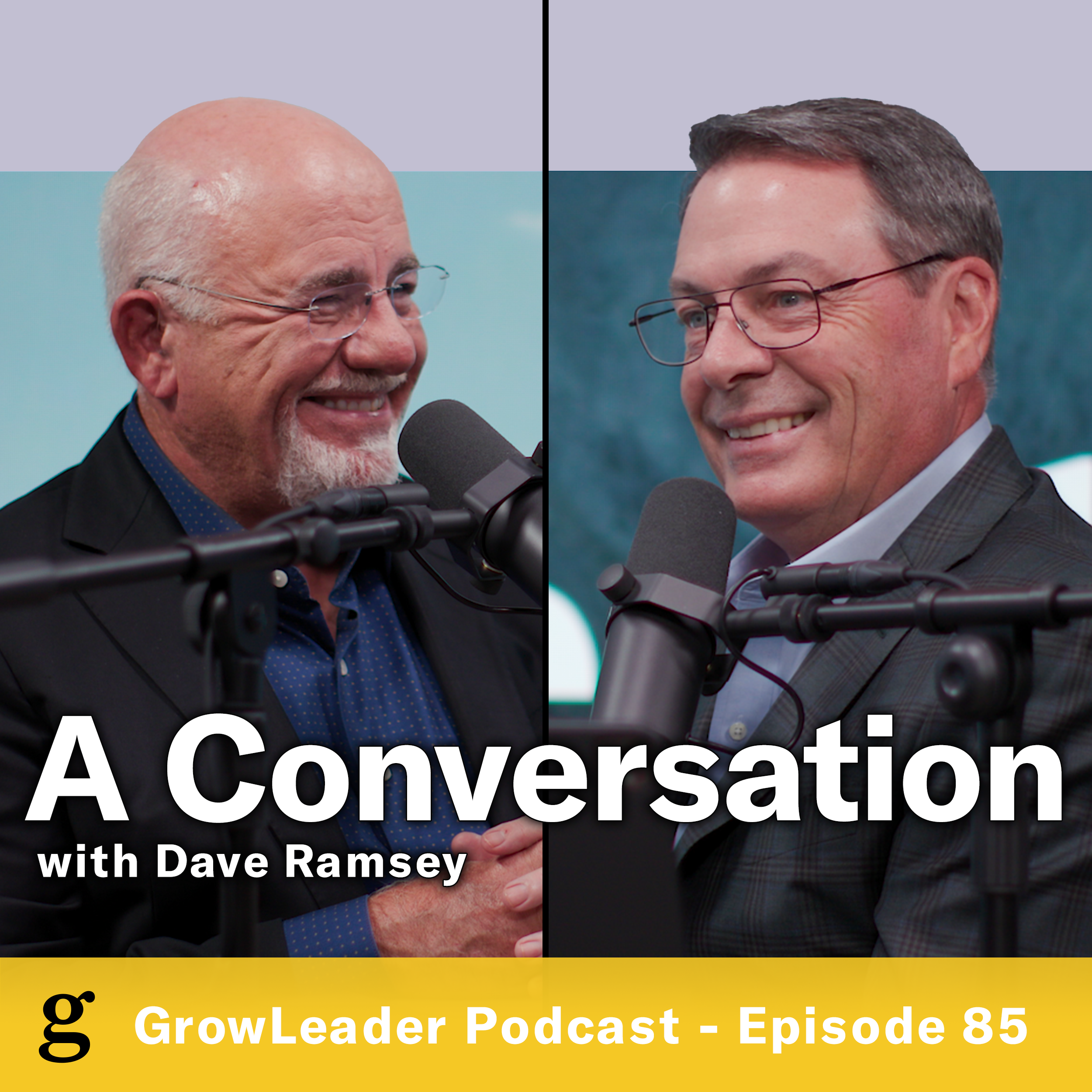
Loading summary
Transcript76 lines
- [00:01]
A
Hey, leaders. You know this from leading churches, and we know this from the data. Most churches and ministries that fail don't fail because they didn't love God or they didn't love people. They fail overwhelmingly because of financial stress. And if we're honest, it's not just churches. It's the same stress that people in our congregations are feeling as well. And here's the hard truth. Money issues don't just hurt our wallets, organizationally or individually. They limit our ability to follow God's will with freedom and with boldness. That's exactly what we're talking about today here on the Grow Leader Podcast Podcast. So glad to have you with us today on the Grow Leader podcast, where we grow leaders that grow churches by helping them reach their full potential. My name is Matt, sitting alongside the chancellor of Highlands College. You look very chancellorly.
- [00:44]
B
You know, I'm trying to, you know, I really am. Yeah, I love it. Pastor Chris Hodges, thank you very much. It's good to be here, and I'm having the time of my life today. You're having fun because today is. Is one of the things that we do a couple times a semester here at Highlands College. And that is what we call our professor in Residence day, where we bring in the industry leaders in the church world and in the finance world and leadership world. And we've had, of course, people like CC Winans and Chris Tomlin and Louis Giglio and Craig Groeschel and many, many others. But I have been waiting forever, honestly, for this amazing day that I've been planning, he would probably say, for about nine months. In my mind, I'd have it about two years ago, where I wanted to get America's most trusted voice on money and business. The nine time number one national bestselling author, host of the Dave Ramsey show, reaching 20 million listeners. His podcast, eat tires for lunch, Matt.
- [01:37]
A
Teach us your ways.
- [01:38]
B
Exactly. But I'm so excited today. Someone who I've admired for a long time, used the materials forever like most people, but has become a dear friend that I've absolutely enjoy playing golf with, having meals with. And now you get to add another title to your resume, sir. You get to call yourself Professor. Because today, all day long at Highlands College, I've had my dear friend, Dave Ramsey. Welcome to the Grow Leader Podcast.
- [02:03]
C
Well, thank you, brother. It's been a blast today. This place is incredible. These young people are the top drawer, man. They're amazing. Their poise, their attentiveness, they're something else. This is a great place. You guys are building. You know, as leaders we get to walk into organizations quite often and do something like I'm doing a day talk and whatever. And you know this cause you do it like I do is you can feel in the air if things are right or if things aren't right. And the air is really thick here with good stuff. That's awesome. You just smell the spirit of God and you see a forward facing vision. It just comes out in everything in the place. It's been a great day. Thank you for having me.
- [02:50]
B
Well, thank you. It really means the world for you guys. Wondering what an in residence day looks like. He's. Dave's been teaching since early this morning, 8am he had a class and then went straight to a convocation, a bi weekly chapel convocation that we have with all the student body faculty and staff where he brought one of the best messages I've ever heard. And as you were giving it, by the way, I thought our listeners on the podcast, pastors need to hear what you taught. We're gonna dive into that in just a second. And then he went to another class and then we had a. I don't know if you know this Matt, but we had a lunch today with 10 students who had to write an essay to be able to attend this private lunch with Dave Ramsey. 48 students wrote essays to try to get into that lunch. Ten made the cut. And we had this beautiful lunch with these amazing students who got to eat lunch in a fine dining lunch experience by the way, and were able to ask Dave questions. And then he went to another class and here we are on the podcast.
- [03:50]
C
Now they're asking questions with wisdom like a 30 year old or a 40 year old, not like a 21 year, 19 year old. These, I mean they're amazing. It's an, it's an interesting. Of course, you know, they wow. It's pretty cool.
- [04:03]
B
Well, as you know, I mean I'm very serious about what we're trying to build here at Highlands College and to raise up, you know, some exceptional Christian leaders and to be able to put these leaders in full time ministry. So thank you very much. It means the world to me. I always, I always tell people when they make comments about our school or our buildings or anything that we do here, that we work very hard for people to say that. Working very, very hard for people to have that wow. Experience. And you brought a lesson today at chapel that honestly I've never heard you teach. It's particularly important, I think. And you knew what you were doing by bringing this to young people, because you were talking about the power of momentum. You were actually debating between the two forces that people think you have to choose one or the other. Am I praying for God to help me or, or is this all my effort? And you brought that balance between the two of how important both of them are. But then you brought this equation that I would love for you to break down that first part of that equation, because as you were talking about focused intensity over time, I'll let you give them the whole spiel. But this focused intensity over time, that's just not something that people are willing to do much anymore when it comes to their leadership, and especially in growing great churches. They want it now. We have a now culture that doesn't really think through focused intensity. But give them the. You gave a 35 minute talk, 40 minute talk. Give us the couple minute version, the Cliff Note version, and then let's unpack that for pastors.
- [05:31]
C
Well, I mean, like everyone else, as I've increased my walk with the Lord over 40 years now, I've struggled like everybody else. How much of this depends on me? Because I got to be excellent. I got to be of effort. Bible's real clear. If I want corn, I need to plant some corn. As you sow, so shall you reap. You know, I got to go, I got to get up and go to work. I got to get my work done. And if I sow sparingly, I'm going to reap sparingly. If I sow abundantly, I'm going to reap abundantly. I mean, I've got these principles in front of me, the diligent prosper. So I need to be diligent. I need to be doing excellence in the ordinary over time. And that's what diligence is. And I need to be doing those things. And. And yet I also know God's in charge. And I also know he's sovereign, and I also know he's providential. He's the great. I am the alpha and the omega. I understand that. I understand that the farmer plants the corn, but God brings the sun, God brings the rain. I understand that. But I vacillate between. I'm gonna sit over here and wait on God or I'm gonna go leave the cave, kill something, drag it home. If I want some duck, I probably ought to shoot one and pluck it and cook it. Don't wait on it to fly into my oven and say, God did that. Cause he doesn't do that. Usually that's known as A mir. Cause it's a seldom occurrence. So what part do I play in this? And to communicate to our team years ago. Cause we had some momentum. Where it came from, it didn't come from my hard work, and it didn't come exclusively from God's blessings. It came from this wonderful, mysterious interaction between the two. And so we came up with a theorem. We called it the momentum theorem. And it's fi over T multiplied by large G equals unstoppable momentum. And FI is focused intensity, which most people can be focused for a little while or they can be intense for a little while, but they need to be focused and intense over time over T. And that's the part that I play. I'm responsible for the discipline of focus. I'm responsible for passion and bringing it and caring about it, driving for excellence organizationally, individually, everything. And I gotta keep that up over a long period of time. There is no such thing. I mean, you and I are from the south, right? There is no such thing as good microwave barbecue. This is known as an oxymoron, right? All barbecue. That's good. Smokes over the weekend. And the neighbor's dog's howling, right? Because he wants some. My mouth's watering right now. So crock pots are the business that God's in. He's cooking it over a long period of time. And you gotta be up there dialing the thing and stirring the soup. Hello. And that's my job. So then multiplied by G is God. So we're dependent on God. We understand that, we acknowledge that. But we do our part and we plant the corn. And the good news about a math equation is whatever happens on one side of the equation, the resulting on the other side of the equal sign is the result of that. And anytime in a calculus equation, you multiply something by something infinite, the answer on the other side is infinite. So if you want infinite unstoppable momentum, you take your efforts focused intensity over time and you multiply it with God's blessings. Yeah, you get it. You figure out what God's doing, you get in on it, and we're going to touch his people. We're going to love his people. We're going to feed his sheep. Very clear directive to do that. I understand they bite, sheep bite. But we're still going to feed them. And this is what we do. We're going to do it over a long period of time. And sometimes it's thankless, sometimes it's dark, sometimes there's a storm, sometimes there's a sunshine. And you're the hero, but never are you any one of those things all the time. And so focused intensity over time multiplied by God equals unstoppable momentum.
- [09:13]
B
Talk a little bit about that first word, focus, because that's in the talk. You dealt with all the different aspects of that equation. But the one that I thought was very, very important was your illustration about focus. You talked about a wide receiver in focus. But when I thought about it, I immediately thought about the enormous amount of distractions that are not only available to young people, but honestly, it's true for everybody, and especially pastors. They have to wear all these mini hats and do so many things. And the ones that I work with, Dave, it seems as though that this might be one of the qualities that's lacking, is the ability to really lock your eyes and your heart and your prayers and your efforts all onto one thing, and then to stay on it long enough for it actually to accomplish something. Talk about focus a little bit.
- [10:04]
C
Well, as technology access and utilization has increased, the attention span of the average American has gone down exponentially. The ability to finish anything, a plate of food, to finish a show that you're listening or podcast, that kind of. I mean, the ability to finish anything. We have the attention span of a gnat. I mean, we're ridiculous. The average person checks their phone 2,000, 568 times a day. My goodness, that's pretty codependent. I mean, there's a problem here. It's pretty addictive behavior, and it's rewiring the brain to where we can't do deep thought. We can't do extended study. We can't shut down everything and go way down in something and intellectually, spiritually wallow in it and get the good stuff. And because our brains are being rewired by this, it's just out of control. And so it is an exercise to break that and to say, okay, the phones are down. I want to spend more life, work, balance with my children, then lay your stinking phone down, put it in a basket when you get home. Don't pick it up again till they're in bed, and maybe don't pick it up till morning. The world is not gonna burn down, and if it did, it didn't burn you, so leave it alone. You know, you got stuff to do. It's just crazy, y'. All. I mean, we're out of control with this thing. And so the interesting thing is, though, in a culture where no one can focus, if you learn to, you have a huge competitive advantage.
- [11:40]
B
Let's go.
- [11:41]
C
Your ministry will explode, your business will explode, your marriage will get better. In a culture where they're falling apart because they're arguing with each other across the table by text, that's just how nuts are we? So focus, focus, focus, focus, focus. And the wide receiver. I was doing an NFL rookie camp and one of the veteran hall of Fame wide receivers was leaning against the back wall. We got done. He said, what you're doing is right. And I said, hey, I gotta ask you something about football. How is it that you've been in the league all these years? You get paid $10 million a year for the last 20 years of your life. You're a wide receiver. High school, college, everybody knows your name. How is it you know how to do one thing and somebody throws a football and hits you right in the numbers and you drop it? That frustrates us that are fans. He goes, you think it frustrates you, you ought to be me. And I said, don't kill me. You're larger than me, but I really want to know. He said, oh, two things. Cause you lose focus. Fear and greed.
- [12:33]
B
Fear and greed.
- [12:34]
C
Fear and greed.
- [12:35]
B
Wow.
- [12:36]
C
I said, okay, now I think that'll preach. You're going to have to tell me what you're talking about. And he said, well, when the announcer says he heard footsteps, and he said that's not a metaphor. We hear footsteps. This is a guy the size of a Kia getting ready to try to break me in half. He's 375 pounds, he's running a four something 40 and he's going to put me in an ice bath for the next three days. My mind can process all of that in a nanosecond while the ball is in the air coming at me because I can hear him coming at me. And he said, that's fear. And forgive me if I lost my concentration in the middle of that. Okay, I'll give you a little grace. And I said, what's the greed? And he goes, have you ever seen a guy on the five yard line trip over the line and fall? Cause he starts doing the touchdown dance before he gets there, before the ball has even gotten to him. He's wide open. They know they're gonna throw it, he knows he's gonna catch it. And he's already playing his future success that has not yet occurred and he's not done the work to earn yet. That's greed. And so the ball comes and his mind is somewhere else because it's already living in a future state of Celebration and it hits him in the numbers and he drops the ball. Fear and greed causes the loss of focus.
- [13:50]
B
So apply that to pastors, and especially pastors that are frustrated with their church growth and they're not getting there and they're losing focus. And just do what you do, man. Just apply that metaphor to. You've worked with pastors for a long time and you're so generous to pastors, by the way.
- [14:05]
C
And so pastors are some of my favorite people on the planet.
- [14:08]
B
I love pastors. Apply this to them and help them.
- [14:12]
C
I think the greed side would just be this need to keep up with Craig Groeschel or this need to keep up with Pastor Chris. You're not going to. They're already so far ahead you ain't catching them. So just get over yourself, okay? Go do what you're supposed to do. This is your field. You need to work this field. That's their field. You need to work that field. So quit comparing yourself. Comparison is the thief of joy. And it leads to this greed. It's a type of greed. It leads you to, oh, I'm. And then you take your cause, you're looking over there at someone else's highlight reel that they've worked 30 years to get there, and you're 30 whole months in and you're comparing yourself to the wrong people. That's great. And fear is, I'm afraid if I try something, someone won't like it 100% chance, someone's not gonna like it 100%. And in church, they feel obliged to tell you in a three page email that they don't like it. They feel obliged to give you all of their wisdom for free just because they've been there for 30 minutes and the music was too loud. The new program or the new schedule or the new whatever, somebody's not gonna like it. If somebody's not unhappy, you're not doing anything. So if you're fear of man and you need the affirmation of every single goober in your congregation, you're not going to do nothing. Because some of those people are goobers. I mean, God's got some interesting children and some of them need church, but they don't need to be giving you direction as a leader.
- [15:47]
B
You're so good at that, by the way. Let me just say you're confident. You can tell that you're not swayed by the opinion of others. Although I know it affects you in some way, it does for all of us. But what would. What do you say to a pastor who's like, man, I do struggle with that. I hate getting those emails. I feel I live in fear. Minister to them a little bit, my friend. Just do.
- [16:06]
C
Yeah, well, one thing I do is I just wouldn't. They wouldn't have my email. Okay? I. I just. You don't have that. You don't have access to me if you're going to spread hate.
- [16:15]
B
Yeah.
- [16:16]
C
If someone walked up to me and said some of the things that they say about me on the Internet, you know, I grew up in Tennessee. You might get your nose broke. I mean, I really wouldn't do that. But, you know, no one would have that kind of courage in person. But they got digital courage. And they're just. And, you know, I think we need to remember 90% of what's in their email is on them. 10% might be truth. And I don't need to glean that much bones just to get a little piece of meat. Let somebody else do it or I'm not reading it. They don't need my personal email. You just don't need it. It's that simple. I'm not. I don't read the comments. After everything in Ramsey, if you read comments after your broadcasts, you understand why some species eat their young. I mean, it's just people have digital courage and they say things they would never, ever say.
- [17:04]
B
So you just made a principal decision.
- [17:05]
C
I'm not going to you. You don't get input. Right. You're not. How we decide this, the way we decide this is with cogent, wise input. And then you get to decide if you want to come to church here. And as a good friend of ours says, often it's like, you know, I think that church over there probably could help you. And I think you should go over there, and I think you'll enjoy it. I think they probably need you. And when you reach that point, because you realize you're not gonna please everyone and you need to please Jesus, and that is push this whole initiative forward. And the good of the initiative growing and scaling for all the people that it touches is not superseded by one person who has daddy issues and wants to take them out on the pastor.
- [17:56]
A
That's good.
- [17:57]
B
So let me talk about another area that I know pastors have some fear in, and this moves into your obvious area of expertise, and that is there's a boatload of pastors that have a hard time talking about money, raising money, preaching about money. And you've done so many people don't know this about you. They might, but they might not know about you that you've hosted many pastors gatherings at your place in Nashville, and you're so generous with your materials and your coaching and your teaching to the church world. But what are you saying to pastors who are like man. And it's probably about because of their experience, maybe when they were an associate pastor on another staff where maybe a pastor overdid it or was just had a bad mindset about it. But what are you telling pastors that need to get over the fear of talking about money, raising money and things like that?
- [18:47]
C
My experience is that fear is caused by two things primarily. I'm sure there's a third one, but I can't think of it right now. Fear number one is I'm not perfect at handling money. I'm not a financial genius, so who am I to preach about it, right? Well, last time I noticed your kids wasn't perfect either, but you preach about them. And your marriage isn't perfect, but you preach about that. And oh, by the way, you're a sinner, but you preach about that. So why is this one different? But there's something about the shame around money that the devil has got a really good narrative in your ear that says you're not worthy. Well, Pastor, it's the word of God, you're not worthy. It is worthy. So preach the word of God unashamedly. And there's plenty of stuff in there on financial. Plenty of stuff. And it's not hard. And just say, I'm not perfect, but the word of God says I'm not a perfect husband. But the word of God says about marriage, submit yourselves one to another. So men, women, this is what that means. And here's what we're going to do with leadership. I'm not the perfect leader, but I do know what one looks like. His name's Jesus. And so I'm going to preach Jesus. And so I don't know what it is, but there's something about the spiritual narrative in the spiritual realm, spiritual warfare realm around money that adds a different flavor of shame that keeps people out. Instead of saying, this is what the word of God says, this is all it says. I'm not perfect, but I'm a sinner. But this is what the word of God says, divert your eyes. When she comes in wearing that, we can talk about that unashamedly, but somehow we can't talk about divert your eyes from the BMW. So it's weird. The second reason is that not only do they not feel competent, but they don't want to be One of those churches, icky money churches where all they're doing is gabbing the money and you know, you're a prosperity preacher. They don't want to get labeled. They don't want to get labeled like, oh, that church. All they do is talk about money over there. And I don't want that to be an impediment for someone meeting Jesus. And so I just not going to talk about it because I don't know how to do it in a way that doesn't feel like I'm one of those churches.
- [21:07]
A
Well, I think there are, I know friends that they want us to pray extra for them when they're preaching about money that weekend. You've been kind enough to give us some time and come in. Spoke on a Sunday, just a while back and we'll actually link that message in the show notes today. Then we're here last night for a Wednesday night service. If you're, if you're. There's a, there's a pastor listening right now who's maybe a little bit scared to talk about money. Where should they start? Well, what would you have them lean in on the most as far as the scriptures they should highlight to their people?
- [21:37]
C
Well, number one, if you read proverbs over and over again, you got a master's degree in finance. It's in there. And so. But start with just some basics. Okay, let's talk about. Is planning Biblical Jesus said, don't build a tower without first counting the cost, lest you get halfway up and you're unable to finish. And all who see you begin to mock you and say, this man began to build and was unable to finish. The mind of man plans his way, but the Lord directs his staffs. How many times can we just. Where there is no vision, the people perish. And that's not a. We're getting ready to do a fundraiser. It's about vision. Right. Okay. So planning. So we need to do a budget, boys and girls. I mean, we need to be responsible. Don't handle God's money improperly and disorganized and chaotic and then ask him to bless you. It's incongruent.
- [22:24]
B
Exactly.
- [22:24]
C
If you drive poorly, your dad doesn't give you a new Corvette, you'll kill yourself. And so you need to demonstrate competency, boys and girls, and that's your sermon. So there's one budgeting debt. We could go all day on debt with Dave Ramsey. Right? I mean, borrower is slave to the lender. The number one cause of divorce in North America today is Money fights and money problems brought on by stress, brought on by debt. The car payment. Average car payment in America now is over 780 bucks. So get people free from slavery on debt. Number three, how about learning to save money and build wealth? Let's talk about what wealth is and what it isn't in the Christian world. Well, number one, it's not mine. None of it, 100% belongs to him. The earth is the Lord's and the fullness thereof. And so God owns all, all your stuff. You don't own it. Your job, boys and girls in the congregation, is to manage it for him and his glory, his ways. So how are we going to unpack that? And it's easy to pull together a sermon like that. They're all over the place. But just talk about really rudimentary primitive ideas. But they're so revolutionary because no one does them.
- [23:33]
B
Exactly. You know, when we first. Well, long before you and I became friends, I got ahold of your materials and I was coming to some of your pastors events, but really before we, you know, got to know each other like we do now and we started implementing the resources and the tools that I don't even know if a bunch of our pastors, Matt, even know that these things are available for their churches and for their small groups. But when we got ahold of, you know, the financial Peace University and many other materials, it shifted something in my mind where I wasn't thinking so much. Why don't these people give to why don't I help these people find freedom? I came to the realization that people weren't stingy, they were strapped.
- [24:13]
C
Oh, absolutely.
- [24:14]
B
So they really actually always wanted to give. They didn't have the ability to. And then I made a conscious decision that I was going to change the number of messages that were about, hey, why don't you be more generous to, hey, let me help you find more freedom in this particular area. And honestly, Dave, it changed how I approached it. And Highlands has had tremendously blessed by the generosity of our people. But I think. Because we've been intentional about setting them free. Exactly. And so I want you to talk a little bit about that. I mean, we had students all day long. You would testify to this all day long. That said to you, I mean, there was dozens and dozens walked up and said, my parents got ahold of your materials in a church, small group, or in some type of setting, and they got out of debt. And it changed the trajectory of my family. Thank you, thank you, thank you. Talk about what's Available. I mean, let's help some pastors today, bro. If you're not, and say it plain, I mean, not that you ever have to be encouraged not to do that, but if you are a pastor, just flat out say, man, you have to get this. This will help you. And talk about you gave the percentage before we actually started recording the number, the increase in giving when we help people in these areas, just go ahead and promote it all, please.
- [25:26]
C
Well, it's not a matter of promoting. It's the word of God does not return void. And what you discovered in that ratio there was simple. It's that you can beat a brick with a stick and it won't bleed. You can whip people with tithing lessons to no end until they're just down on their knees in shame and condemnation. They ain't gonna give. They're gonna pay their light bill and feed their kids. There's just something about them they understand inherently that I need to take care of my own household first or I'm worse than an unbeliever. And the church is down the list on that. And certainly offerings above the tithe, even we can separate that discussion.
- [26:05]
B
Exactly.
- [26:06]
C
But aside from that nuanced discussion, the idea that you voice there is absolute wisdom. Because if you can get people on a budget, husband and wife agreed and out of debt, and they got money set aside for an emergency, and they're coming to your church every Sunday, there's 100% chance they're going to start tithing. I mean, they're going to tithe because the only thing holding them back was they didn't have a plan. Because when they wrote the tithe check, they couldn't tell if they just spent the electric bill money or the grocery money.
- [26:41]
B
Exactly.
- [26:42]
C
But when you got a budget and you go, there's the tithe money, there's the grocery money, there's the electric bill, or okay to put the tithe check in. We're okay to make the deposit, direct, online, whatever we're doing.
- [26:53]
A
All right?
- [26:53]
C
But we're still. We're okay. The family is not in jeopardy. But you only know that if you got a plan, a budget, and you only know that. And the margins only there. If you don't have 63 kinds of debt built into your budget from a student loan that's been around so long, you think it's a pet to $780 car payments to, you know, we financed last year's couch at rooms. There they went. And all this garbage. I mean, you know, it's just nuts. Right. The stuff, the consumption that leads to easy payments. Never EAS easy. They're never easy. But then they just look down, they go, we don't have room to give, Pastor. I don't care how much you bark at us or how convincing you are or how much you cry while you're doing the sermon and how much your heart really is. For them to learn the power of generosity and what it'll unleash in their lives, that's all positive, but there's a practical, mathematical thing that just simply doesn't allow it. So we found that when a majority of the congregation learns the biblical principles from Ramsey or anybody else and starts applying them. So we're going to live on less than we make, we're going to save money, we're going to get out of debt, we're going to be on a budget, real rudimentary things. Again, when the majority of the congregation is doing that, giving goes up. It's a natural byproduct. You don't even have to say a word about it. They already know. They already know because we're made in God's image, in our very DNA is that of a giver. He gave his only son.
- [28:11]
B
Exactly.
- [28:12]
C
So our spirit knows to give. We don't even have to be taught to give. It's a natural byproduct of somebody who's filled with God's spirit and they're gonna give once we mathematically set them free tithely. The organization tithely did a study that when we get the majority of the congregation to go through biblical principles, Ramsey or otherwise, we're the primary player out there these days. But in the old days, it was Larry Burkett or Ron Blue or whatever. But if we can get the majority of the congregation to go through and learn these biblical principles and get out of debt and be on a plan and be in agreement with their spouse, those three things we do that, that they. The. The following year, giving goes up 13, the following year, another 20%. And so these numbers change back and forth, but that's the last one I saw. I may be quoting that a little off, but forgive me, give me a little grace. But it, the. The natural result is what we all knew it would be.
- [29:02]
B
Exactly.
- [29:02]
C
It's like, oh, well, the survey says. Well, we knew.
- [29:04]
A
Yeah, well, that's the wisdom to the individual. And I and I told you this as we walked on today. I mean, my wife and I, Heather and I had one of the biggest fights we've ever had in our lives over envelopes And I was not a fan, Dave. I just want you to know that. And so, and I was paying stupid tax, but I can, I can remember all the sayings that you've helped so many people.
- [29:20]
B
So for people who don't know what.
- [29:21]
A
You'Re talking about, yeah, we went through.
- [29:24]
B
That'S way old school, financial peace.
- [29:26]
A
And there's a thing called cash. You can go to your bank, they'll get, it's your money, they'll give it to you. And so we put our cash in an envelope and say, and I had, I was like, this is the money. I'm the spender in the relationship. This is the money I could spend this week. It changed our lives. We haven't had a car payment in a long time because of how you've helped us help the organization. There's a lot of ministries and church leaders that are listening to us right now that it's not even, man, I can't get my people to give. If you can't get your people to give. And as an organization, you're strapped and you really want to have some vision and go to a place, help the leader that's leading an organization that's hurting financially right now.
- [30:03]
C
Well, my experience is the stereotypical pastor is a lot like me in that they're not a detail person. Now I'm a task driven person is why I'm not detailed. But most pastors are people people, and they spend most of their calorie burn on relationships, not on details, processes and systems. When you say that, their eyes roll back in their head. I kind of do too, but for different reasons. Right. But organizations that grow, our friend Craig Groeschel tells us that all the time. Always have processes and systems that reflect the values of the organization. And so I always ask individuals, and it could apply to a pastor or a pastoral team or a board of elders, deacons, whatever. If you were managing money, if your job at a company was to manage money for that company and you manage money for that company like you manage money for that organization now, would you fire you? The answer is usually yes.
- [31:12]
B
Exactly.
- [31:12]
C
We're disorganized, we're chaotic, we're impulsive. We don't have systems and processes. We build a budget, but we don't stick to it. So we live in a lot of fear and angst and anxiety around all of those negative things. Instead of, this is the system. It is a godly thing to have a plan and to stick to it, with rare exceptions that God leads you on. But God can't lead you every 30 seconds to violate the thing you put in place. That's not God. That's you being impulsive. And he who is impulsive exalts folly. And folly is the verb of a fool in action. And so if you didn't, would you fire you? And then you can't ask God to bless something that you're being incompetent at because you're not being faithful in the little things. So he's not gonna give you more to manage. It's all in scripture.
- [31:59]
B
Absolutely.
- [32:00]
C
And so it forces me to make sure that the details are done, even though I don't like to do them personally. I'm going to hire people to make sure it's done, and then I'm going to look over their shoulder and see the resulting product. And I, as the leader, I'm going to make sure we organizationally stick to these processes, systems, and budgets that we lay in place. And the interesting thing is when you're strapped, when you're starting and everything's short, the better the plan is, the more thorough the plan is, the more margin there is.
- [32:29]
B
That's right.
- [32:30]
C
Chaos and disorganization steals all your margin y. And does in your personal life, too. When I sit down with people, individuals and they do a budget, they say, dave, I felt like I got a raise.
- [32:40]
B
That's right.
- [32:41]
A
And we'll put in. Make sure you guys know. We'll put in the show notes. Check them out. But the Kingdom Builders Virtual Intensive Ramsey Solutions. There are resources to help you with all of this.
- [32:49]
B
Yeah. So what book would you recommend if. Pastor, I don't know what planet they've been on to not know about your materials and what's available. But if you pointed them to one resource to get them trained in some of this language and some of these practices and biblical principles. Which one?
- [33:05]
C
Well, for organizational management, it would be in our leadership materials, Entree leadership. And the latest book I did is called building a business you love. Those are the two books. But the entree leadership, we coach about 10,000 small businesses and we give them the exact same book.
- [33:19]
B
Exactly.
- [33:19]
C
It's the exact same thing.
- [33:20]
B
It is the exact same thing. No chance. And if they want to do the. The small group getting it into the church. What's the best form?
- [33:27]
C
Financial Peace University, utilizing the new EveryDollar app, which helps dramatically with that over the old days. You don't have to do envelopes anymore.
- [33:36]
A
Heather, I hope you heard that. I don't have to do an envelope.
- [33:38]
C
I didn't say you didn't I didn't say you couldn't. I just said you don't have to. And then, you know the book that did all that was the Baby Steps on Steroids, which is total Money Makeover.
- [33:48]
B
So I want to close today by telling you that my dad is. Went to be with the Lord in 2010, was with the first administrator of our church, brilliant financial mind. Had me on an envelope system at 8 years old. We went on a vacation. Dad would give us money in an envelope. He said, don't ask me, don't ask me if you want an ice cream. He says, if you, if there's money in your envelope, buy yourself one. And he taught me budgeting early on and. But my dad, till the day he died, did a financial peace university here at Church of the Highlands.
- [34:17]
C
Wow.
- [34:18]
B
And he kept as a trophy on his desk a fishbowl full of cut up credit cards. And it was the thousands of couples and families that he had helped. And so when I look back and think about how Highlands, God has blessed Highlands. He did it because we were diligent in the small things into raising up leaders like my dad who would lead small groups like that. I want to personally thank you and I want to encourage every pastor who's listening and business leader. You need to do this same thing to your children. You need to teach them. We need to get this into our churches. And it's that whole focused intensity over time, plus God's blessings and power and principles will equal momentum not just in churches, but also in our personal lives. So anyway, what a blessing we could. I feel like we could go for hours, but we all want to thank you for your day here at Highlands College. It's been transformative and. And what. And what a blessing you are to the body of Christ too. We appreciate your investment into the church world and all that you do. So, Matt, close this out, my friend.
- [35:16]
A
Appreciate you, Dave. Thank you so much.
- [35:18]
C
Thank you guys.
- [35:18]
A
Thank you for listening to the Grow Leader podcast. We'll see you next time. Be sure and go check out growleader.com grow leader is not a podcast. We're an organization that has a podcast. So we can help you be all that God wants you to be. We'll see you next time on the podcast.