← GrowLeader Podcast with Chris Hodges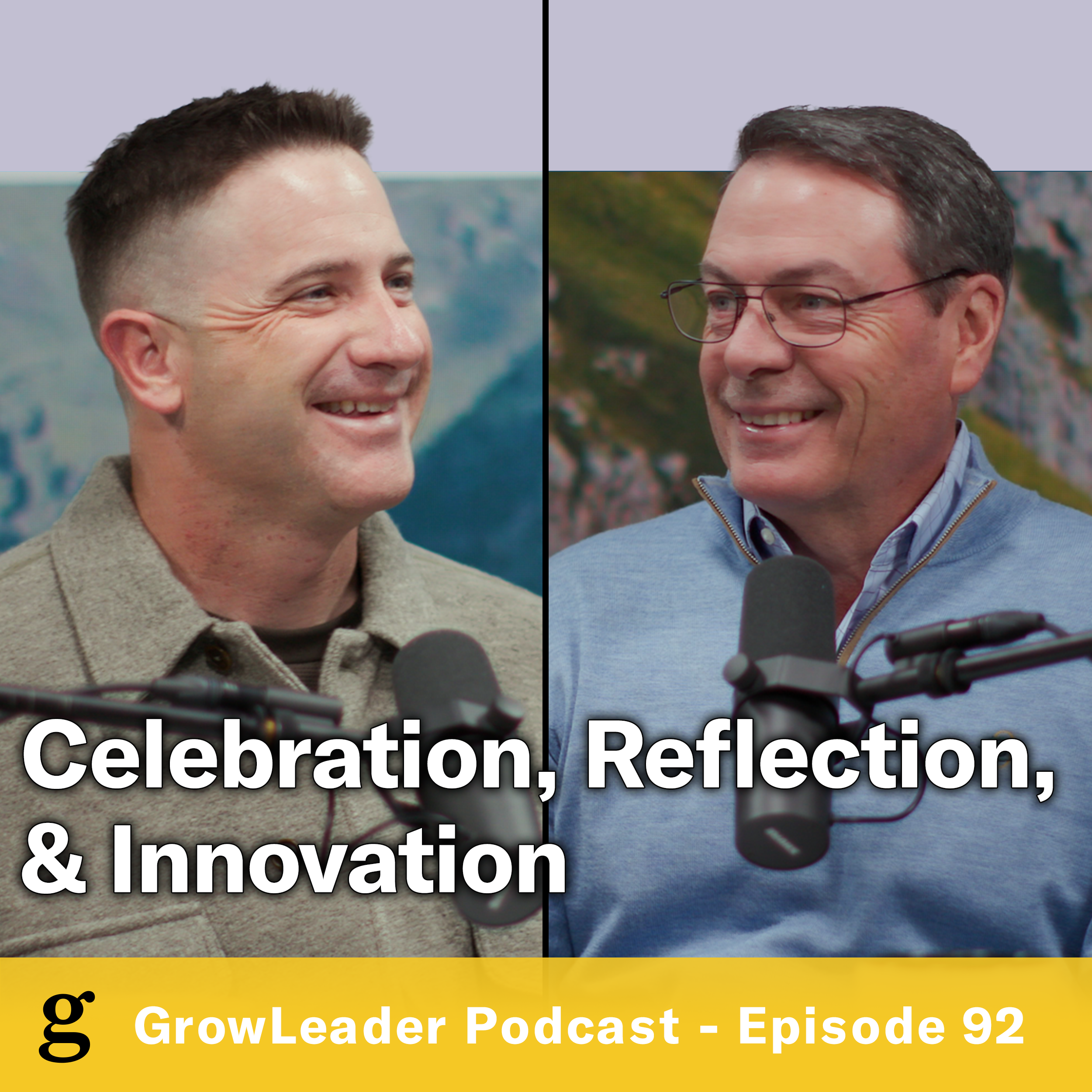
GrowLeader Podcast with Chris Hodges
92 | Mark Pettus - Celebration, Reflection, & Innovation - Chris Hodges
00:36:18
Loading summary
Transcript154 lines
- [00:01]
A
Hey, everybody, and welcome to episode 92 of the Grow Leader podcast. It is 92 episodes. We're getting close to 100. We have to do something special. Going big. 400 episodes. Hey, we're so glad you're here. The whole purpose of the podcast is to grow leaders that grow churches by helping you reach your full potential. So excited to be here with you today with Pastor Chris Hodges, PC. How are we doing? How's Chancellor life?
- [00:22]
B
I'm doing pretty well. I want to talk about it a little bit today. I've got a. Yeah, we have a.
- [00:27]
A
Guest that's not a guest.
- [00:28]
B
Right?
- [00:28]
A
The lead pastor. Church of the Highlands Pastor. Pastor Mark Pettis.
- [00:31]
C
So honored to be here. And I can't wait to talk about Chancellor life because we're also going to talk about lead pastor.
- [00:35]
A
Okay, great. That's awesome. So good.
- [00:36]
C
We did change.
- [00:37]
A
If you're watching my video, we changed the background. We put Mount Chihaul on the background today.
- [00:42]
B
Not quite sure that's it.
- [00:44]
A
It's not. Mount Chi hall is the highest point.
- [00:46]
C
I say one thing in my heart that is mountain.
- [00:47]
A
That's right. Mount Chi hall is the highest point in the state of Alabama. I think it's 2,200ft above sea level.
- [00:53]
C
Giant Mountain.
- [00:54]
A
That's Giant Mountain. Hey, so glad you're here. We're coming off, I mean, honestly, a season of celebration, but celebrating 25 years.
- [01:02]
B
Of church, especially this Wednesday is 25 years. That's the actual date. February 4th, 2001. But of course, yesterday we had an amazing celebration at Church of the Highlands and Dream Team party on Friday night. And it's been all things celebration, and it's been one year since the announcement of the transition of roles where basically you and I swapped roles. You had the college and I had the church. And we've kind of. We're a year into that now. And so we're gonna reflect on some of that today. Talk about celebrations, talk about the importance of celebrating and how to do it well. And then Pastor Mark did a teaching to our team, our all team meeting that closed out the year that I said we have to take some time because listen to me, guys that are watching or listening to the podcast today, you'll want to make sure you listen to the very end of this for that. These are. This is absolute gold, leadership gold we're going to hear today. So.
- [02:00]
A
So before we go there, I want to get nostalgic just for a minute. Yeah, we've kind of been there for a while. So first of all, a year In. But also one of the videos I got to see this weekend was of Pastor Mark Pettis on the set up a takedown team for hounds. Kids moving chairs around. And I was just thinking about you as you're watching that.
- [02:16]
C
I just got to say this. You know, PC, this church has changed my life. You've changed my life. And reflecting. So the reason that setup video happened is because I had a meeting with him, and there was some vision in my heart to plant a church. Meeting, a couple buddies. Pastor Chris invited us to be a part of what he was already planting, which is the best decision I've ever made to say no to that.
- [02:34]
A
Well, tell that story.
- [02:35]
C
It's actually important to say, you know, there's just times we have dreams in our heart, but what is the call.
- [02:39]
B
Of God on your life? What year was that?
- [02:40]
C
That was 2000. Would have been 2005 when that conversation happened.
- [02:44]
B
Yeah. At fish market in that corner table.
- [02:46]
A
Yep.
- [02:47]
B
And you and Blake and a couple other guys had said, we want to plant a church. Help us. And you mentioned Auburn. I said, well, just so you know.
- [02:56]
A
He said, I'm putting a campus in Auburn.
- [02:58]
C
We're saying, okay, no dream.
- [03:00]
A
We're with you. Yeah, that's great.
- [03:01]
B
That's exactly how it happened.
- [03:02]
C
But the cool thing after that, he said, here's what I want you to do. Start serving and serve so hard that if one day I hire you, everyone will already think you were on my team.
- [03:10]
B
That's absolutely what I've said to every single person I've hired.
- [03:13]
C
And it was such a great challenge to lay down. And we walked out of the fish market that day. And then you saw it on the videos to jump on setup team.
- [03:21]
B
Yeah.
- [03:21]
C
It's incredible.
- [03:22]
B
And the rest is history. Mark Sled, our student ministry, created the Motion Conference, which is one of the largest student conferences in the entire nation. Was the architect, basically, of Highlands College at its beginning. I had the vision, but he was at the drawing board. That's the absolute truth. And Mark, I mean, like, I never. I hardly went to hardly any architectural meetings, let you design even the academics side of it, and did a superb job, which. Which really I was just preparing him to be a builder, because one of the main functions of a lead pastor role is you've got to know how to build. And so long before he ever had the reins of Church of the Highlands, he'd already built two significant works, which actually confirmed inside of me that he was the man for the job. So.
- [04:04]
C
Well, great leadership lesson there, too. Is that vision you articulate vision so well with Clarity. And I think a lot of leaders sometimes wonder why the people around them aren't able to accomplish, you know, the idea or the vision. And Pastor Chris communicated the vision of Highlands college so clearly. Luke 10:2, this is the finish line. And then he empowered us to go build a pathway to that finish line.
- [04:23]
B
And that's the secret to clarity, by the way, is give people the measurable finish line.
- [04:27]
C
Yes.
- [04:28]
B
So we would always measure ourselves by how many students were placed in full time ministry and were successful at it. So your first goal isn't a four year degree or buildings. It's what would it take to be able to get, you know, boots on the ground, qualified, competent, full of character, men and women of God in full time ministry. And so. And then we reverse engineer it. But once that clarity is there of the absolute measurable finish line, then the rest, man, then people know how to build.
- [04:56]
C
Yeah. And I want to say something there that's actually profound for anyone listening is he did not come to us and say build a four year university. He said get, get graduates into vocational ministry. And I think that's just massive is that we weren't, we weren't working through an idea to a finish line. We were working towards and whatever it took to accomplish it is what we were going to do.
- [05:13]
B
Exactly. So great.
- [05:14]
A
I want to come back to the Clarity piece in a second because is that has been, I mean, I think every meeting anyone's ever had with you, whether it's all team or if it's three or four of us, it's hey, all right, what questions do you have? Because if you have questions, that's not good for me.
- [05:26]
B
Right.
- [05:27]
A
It's not good for us. I'm going to talk about Clar Clarity in just a second. I do want to hear, I want you to go into PC Papa Chris mode.
- [05:33]
B
Okay.
- [05:34]
A
For a second. 25 years of church of the Highlands and going from loading the six, the five tribes of Hodges up in a van and moving to the promised land. There's Alabama.
- [05:45]
B
Yeah.
- [05:45]
A
What's it like, I mean, looking at that?
- [05:47]
B
Yeah, it's very surreal, as I'm sure every church planner could say. My mind takes me back to that first Sunday where I was, half of me was at Disney World having the best time of my life. And the other half of me felt like I just jumped out of an airplane and really not sure if there was a parachute on my back. There was, it was such a leap of faith. It was such. And by the way, without Faith, it is impossible to please God. Yeah, he is not gonna hand this to you. You're gonna have to take a leap. He requires it. And so, and I felt that way but at the same time was having so much fun. And of course 400 people showed up in that very first service and we thought, you know, that was just absolutely amazing. And you know, and then honestly guys, I mean after that 25th year, I mean that 25 years ago after that first Sunday, there was just a lot of nose to the ground work that no one, in fact very few people remember. All they see is what it is today. In fact there was even one, one, one guy wrote a book about how to be successful in ministry and he was talking about how you have to have this grinding everyday, you know, work. He said, but there are some, and he likened it to football some that just throw a bomb on the first play. And they, I mean the first play like, and they, and they mentioned us. I called him, I said if you think that that's what this, what happened to us, that we just, I just dropped back and got lucky with a 80 yard pass and here we are today. You don't know the story and I wasn't offended but I like. But as we Cajun say, I had to explain it to him a little bit because I just, because it wasn't, wasn't true. I mean the stories that people don't know is the seven small groups I was leading in the first few years and you know, just the work, it just, I mean the first Highlands College was 20 interns that I was up at 6 o' clock in the morning working out with and then spending two hours in prayer with and then discipling and then. So no, it's a lot to it and honestly that's the rewarding part. To look back and to see the sacrifice of myself, my family, the dream teamers, you know, the first launch team and then amazing people like you and Mark that have been with us for, you know, in Mark's case, 21 years now, 22 years of that. And so it's just rewarding. It's very rewarding. And I'll tell you one fun little story. I cried my eyeballs out yesterday. I had a meeting with some of our students. I try to make room for our students to get an appointment with me and they go through a process but all of the students at Highlands College can actually have a one on one, sit down appointment with me. And one of our students who's a senior made an appointment with me. Just to tell me and Mark, this is gonna bless you too. That he says, you saved my life. And yet when he says that, you think, oh, okay, well, that's nice. He goes, no, no, no, you saved my life. I was like. I said, what do you mean? He says, I was at motion conference, invited by a friend already with a plan, at the date, the how, the when, everything about taking my life. A friend brought me to motion. I don't even remember saying this. He said, but at the end of my message that I said, if you're here and you didn't contemplate taking your life. And I went into a ministry moment around that. He changed his mind, gave his life to Jesus, is a senior at Highlands College now, praise God. And when he walked away, guys, I thought. And I told him this. If it was just for you.
- [09:06]
C
Yeah.
- [09:07]
B
I mean, think about all the fruit of this ministry and by the way, to God be all the glory. I'm just a voice. He's the healer of someone's soul. I can't do that. That. But, man, if it was just. If it was just for him. I said, bro, you're alive. You're not only alive, you're living your life for God now. And it just another. Another amazing motion moment, Mark.
- [09:28]
C
I mean, I mean, that's just. That's the power. The power of God. And just honestly, PC, though, I just honor you is just the consistency and just your dedication. All that hard work, all the stuff we're just talking about, but 25 years of just putting the plow to the ground and just love Jesus, love people, and let him do his work, and that's. That's a beautiful story.
- [09:44]
A
I think that's the encouragement for anybody listening, you know, for the person out there, that's that plan it a year ago in their church or they've been going after it for four or five years, or leading your family, whatever it is. We're in a dangerous spot when we undervalue the impact God can have every.
- [09:57]
B
Day with whoever we're leading and then do it every day. Just, you know, something that John Maxwell taught me is that you can't have this destination disease, he calls it, where you're just hoping this is going to turn out this way. You've got to ask yourself, what am I going to do today that compounds over time that will put you at that place one day. And it's really, really important. And I think it's also to note in this weekend, you know, it was on you this year, the intentionality and the effort put into celebrating. Yes. You know, and it's a missing ingredient in some cultures, in which, by the way, there's a theological truth of this. When the slaves were brought out of Egypt through Moses and now they're given the law. A lot of people don't know this. They think the law is just these 10 commandments. There were more than 400 different sets of instructions for how these former slaves would now live lives that they've never had control over their own life. They've always had a master telling them how to live. So they had to have dietary laws and sanitary laws. But one of the things that God left with them were celebrations that seven times a year you need to stop working and you need to celebrate. And all that to say is it needs to be an intentional part of how we lead churches and organizations. In fact, just yesterday I was. Tammy and I were watching Shark Tank and they were talking about the success of some of the Shark Tank businesses that the Sharks had taken on and which ones weren't. And they. They. And I wish I'd have wrote this down, but there was some correlation to the amount of fun these new business were having to the productivity of those businesses. And I think it was Barbara Corcoran who said, the more the. My most productive companies that I bought into on Shark Tank are the ones that know how to celebrate.
- [11:40]
C
Well, that's real.
- [11:41]
B
There's something to it. So.
- [11:42]
C
Well, that's something I know. And taking that. I love that Jewish construct, taking the intentional times and even the right times to celebrate, I think you got to know when to celebrate there. There's those kind of separation seasons we talk about where you're just working hard, but coming out of that for us, 21 days, Christmas, all of that to get the. Get the Dream Team together around our anniversary. So everyone's kind of remembering their own Highland story. But then we took on Friday night, an entire night just to celebrate and look them in the eye and tell them and laugh. And you were a big part of that. Did anybody ever tell you you're really funny?
- [12:11]
A
Well, praise God. I'm thankful to have a job on this team.
- [12:13]
B
I love it.
- [12:13]
C
But just celebrating that and, you know, just the high fives, the hugs, it's all about Jesus stories.
- [12:19]
B
But just.
- [12:19]
C
We just gotta stop because we're moving so fast. The world's moving fast and investing in that. Of course, on a practical level, PC, I mean, the number of Dream Teamers we have, there's no way we could ever do the ministry we do without the Dream team. You intentionally built it that way. Our staffing number, percentage wise, is very low. And so they're carrying so much weight, celebrating them as important. But. But you got to make time for.
- [12:40]
A
It, and you got to make it at every level of organization. So corporately, it's happening. You've both done an incredible job leading that. But every meeting that's happening, there's got to be some kind of win to celebrate.
- [12:49]
C
Yeah.
- [12:49]
A
To remind people, hey, you're doing a good job. We're not there yet. We reserve the right to get better, which is a phrase you use a lot.
- [12:54]
C
Yeah.
- [12:55]
B
Yeah.
- [12:55]
A
But we're going to celebrate at the same time.
- [12:57]
C
Yeah. And even, you know, in our meeting, starting with what we call PC, you know, mission in the middle. Just before we even get to the agenda. Let's take two minutes before. Even before we pray. We pray out of this. But just someone share testimony of what God did this week. And little moments like, it does not have to be big moments.
- [13:11]
B
Right. So, Mark, talk to us a little about. It's been exactly a year since your annual review, since the infamous Sunday where I broke the news. And of course, I. I kind of stayed involved for up till Easter because we wanted to kind of. I didn't know if the ship needed steadying, but we wanted to make sure that they knew I wasn't just leaving, you know, and so I. I preached quite a bit after the announcement and then preached all the way up to Easter. But then, I mean, totally gave you the keys. I mean, I'm off the boards. I have no control over the finances. I've really tried very hard to truly let you just lead how you see fit. I'd love to hear your reflections. After a year, what was different or what did you not know that you now know? What was harder than you thought, what was easier than you thought? Just reflect on that a little bit. I'm interested.
- [14:02]
C
Yeah. I think the grace. I'm going to be spiritual for a moment. Just so important for all of us. Who or doing something that we know beyond a shadow of a doubt is bigger than ourselves in every possible way. Just this year, Jill and I, for our entire family, the experience we've had with just the grace of God and that his mercies are new every morning. And there's moments where I would attempt to think about way too much, way too far out in the future. But just waking up every day recognizing his grace is new. He's sufficient for that day. And walking in, that has been the most powerful experience.
- [14:31]
B
And by the Way, guys, that's not a cliche, spiritual thing. He should say, you cannot do the jobs that God's called you to do without his grace on your life. And honestly, that was one of the indicators that let me know that it was time I was starting to lose that grace, while at the same time it was increasing in my vision and my passion for the college. So that's how you know you gotta be very, very careful of trying to do a job without the grace of God.
- [14:55]
A
So can I ask both of you a question about that?
- [14:57]
B
Yeah.
- [14:57]
A
What does it look like when you start to lose it and how do you know you're gaining it?
- [15:00]
B
By the way? I had someone describe it this way and it might help, is that you see things through rose colored glasses. So it's not beautiful, but to you it is. That's even like Birmingham is the greatest city in the world and it's not. But it is, it is to me. I love it here. I literally think it's the greatest place. I can't. There's not another place. Well, it's not though, but it is. Why? Because I'm looking through glasses that God gave me for this assignment. And so that's what it feels like to me. It's just, it's just, it's beautiful. It's not easy, but it's beautiful.
- [15:33]
A
So is there a weight of when frustration or maybe even passion starts to change, that's when you know there's a grace.
- [15:42]
B
You gotta be careful with that too because we're very emotional beings and you could just be having a bad day and you'd hate to make a life decision based off of, you know, you just, you're actually just a little sick or maybe you're tired, you need to rest, so you've gotta fast, pray, put some time on it, get counsel, all the same things. But yeah, no, this is, it's a, it's a huge deal.
- [16:01]
C
And on a practical level, I would say the blueprint we mentioned earlier, kind of the architect mindset, I would say that's something you'd always taught me and I definitely experienced on the other side of the transition was you are living in the reality of we're not there yet. And that's where a lot of the stress or anxiety or weight, we can talk about all those things. But in my heart, seeing the next five, 10, 15 years, a dream that God has put in there and a pathway to that, I think that's how he point blank asked me for some of that in the transition conversations because he Knew that if I didn't have that blueprint, it wasn't me.
- [16:29]
B
And that was the actual moment. And we've talked about this before, but I'll remind those who didn't hear that episode. The real moment for me was when he just wandered into my office one day, and I said, hey, how you doing? How's the college? Da, da, da, da. And he goes, oh, it's going great, but, man, every day I wake up with a new idea for the church. And it startled me, and I said, that's so interesting, Mark, because I love the church, but every day I'm waking up with a new idea for the school. And that's when we realized God was giving each of us a new assignment. And that was actually the moment that it happened. And I looked at Mark and said, well, all we've got to figure out now is timing and the process. And we took about almost two years to do that once that conversation took place.
- [17:11]
C
Yeah.
- [17:12]
A
So I interrupted the annual review. You giving us feedback about.
- [17:15]
C
Well, I mean, I've said this. I've said this on different platforms. I gotta say here, I had no idea Sundays come around that often. And so I think, you know, what have I learned this year? What am I really living into? I would frame it all with. Honestly, go back to the grace thing. I just want to say this for somebody who's listening. Go read Matthew 6. Jesus teaches it in the Sermon on the Mount. Is tomorrow has enough problems for itself. Knowing that I'm going to wake up and God's going to give me the sufficient grace to live into the moment I'm in. And so I can't control tomorrow. What I can do is wake up today and trust him for that. I think that really ties into what I've learned so much that he and I have talked constantly about. It's just my rhythm. Living into the study for a Sunday. It takes me about 20 hours right now. Maybe that's hard to believe.
- [17:54]
B
That's what it took me.
- [17:55]
C
Yeah. And so fitting that into your schedule. And then, of course, prioritizing my time with God, my family, and then. And then the team, you know, just looking at all those different pieces has been a learning process. And we've, We've. We have this phrase, we reserve the right to get better. That is really what, you know, the battle becomes. Am I going to live with that growth mindset and recognize that even when I miss it, which I have plenty of times this year, or don't get it right, or I'm in that learning process. Can I turn that into fuel instead of living into the, you know, the condemnation of a failure? I think that's the make or break this whole year.
- [18:24]
B
Has that been the biggest thing that you've learned through this? I mean, the.
- [18:27]
C
Yeah, I think, I think absolutely. The biggest thing I'm learning is really how to manage my own life, to position myself for success in every environment, from preaching to leading to my family, all those different, all those different areas. And I think on the, on the true skill set side is like, I have, I like the idea of a growth mindset, but if you don't live with that, you have no shot because you, you are continually facing things you've never done before. That's my entire.
- [18:52]
B
And the demand, the mouth that you're feeding, the meetings and speaking and it's just, it's so.
- [18:57]
C
I'd say this way, every day this year, I've woken up and done something I've never done before. And having to push yourself back into that environment, knowing it's going to require growth.
- [19:07]
A
But I'll say as a member of the team, your, your, your willingness to be candid about it is, is created an environment where it's safe to mess up for everybody. Like, it's, it's you saying, hey, guys, I'm figuring this out. It's. It's a safe place to try things and have the energy to go for it. And that's okay as long as everybody, as long as people aren't sitting on their hands, it's like, hey, let's go make a mistake.
- [19:29]
C
But we're going, yeah, we're doing this. Yeah. And it's been a great process and I think PC on a leadership skill right now. You know, we've talked a lot about this and you're, you are this. And, and I think our team has lived this way, but staying that authentic leader and just the power of people. I think now maybe more than ever in leadership, content is, is so important, but content's everywhere. It's that the, this epidemic of loneliness in America. And I think even for us as leaders, knowing that, that, that exists at every level of the organization and culture and just living in, in our common spaces, visiting every campus, just hearing the stories so well. It's been a massive.
- [20:03]
B
In fact, let me pause right here. Of course I said it all weekend, but let me say how proud I am of you and, and just am certain of the, of the decision. Not only the who, but the when and the how. And man, I'm proud of you doing well. You know, I mean, traditionally these transitions, especially from a founder, I mean there's, there's all kinds of different kinds of transitions of leadership, but when it's from the, the person who started it 25 years ago, man, just normally there is some decline and everything's up and to the right. There's growth, there's ideas, there's vision. So I just couldn't be prouder to.
- [20:39]
C
God be the glory. We're having a lot of fun. I will tell you this, waking up. This actually happened a few weeks back on Highway 280. And I wasn't feeling great that day. I think I had Covid, but I didn't test, I didn't know. But I was kind of driving down the road and just had this moment of physically I didn't feel good. There was no reason for this moment of just saying this is what I was born to do. I'm doing the thing I was made to do. That's where that grace is. And, and I'm just grateful for the opportunity PC to stand, to stand on your shoulders and the healthy foundation.
- [21:04]
A
I want to get into the content just like I do want to get just a little bit from you though, on first year as a chancellor of a university college. Like, what are you learning? Where's God growing?
- [21:12]
B
Well, I told you guys before we even started recording today that I was in a meeting yesterday that I felt like my brain was going to explode because I'm learning so many new things. There's so many new things as far as academics goes, just the organizational side of 1000 people living on a campus. So this is not a church where they come once a week. They're here every single day. You gotta feed em three times a day. You know, there's all of the ministry opportunities that scaling it is something I'm trying to wrap my brain around. Cause I was good at giving you a shot to lead a prayer or, you know, and so I could train an individual, but can I do it a thousand times over? Are there even enough opportunities to do that? And there are, by the way, and we're figuring out some of those things out. And then one of the biggest one is on the fundraising side. I mean, because we're in a season, about a three to six year season where we're doing some things financially that we're only have to do once and that is build these buildings that are very, very expensive. And what's interesting, I mean it's for another podcast perhaps, but I've even had to relearn that because in the church world, you know, first of all, God built in this beautiful thing called the tithe, right? So there was an automatic. People were already, you know, in scripture, giving regularly without an appeal. That was already between them and God and their local church. But, but even in the church world, they came to me 52 times a year. And you have none of that. You know, you have to go, you know, create events and opportunities, spend time with the people who are investing in the dream. And so I'm having fun with it, but it's been a massive learning curve. And like Mark says, I think probably the biggest takeaway from both of us to everybody listening, is if you're not growing and if you're not learning, you're. You're actually losing ground 100. You have to stay ahead and all of that and ask a lot of questions, meet a lot of people, and learn in every way that you can. That's what I'm at. 60, almost 63 years old. I'm still doing that.
- [23:08]
A
Well, great time to remind you guys, anytime you're a part of anything but grow leader, that there's a fee associated with. You're a part of building Highlands College.
- [23:15]
B
Yeah. Thank you. Investing in scholarships, and so it means a lot to me. I say thank you to everybody who's even, you know, giving, given in any way to Highlands College. Please, please, please come see this place. And I'm not ready to share the full vision of this yet, but in the next few years, we are going to, we are going to try to scale this to other churches so they can build their own colleges and universities, and I want to play a role in that. I think we need a hundred of these all across America to meet the need. Here's the vision. I'm unveiling it. 30,000 new Christian leaders in the next 20 years.
- [23:46]
C
It's going to happen, is going to.
- [23:47]
B
Happen in Jesus name.
- [23:48]
A
So, so good. All right, so content. We want to get into the content from all team meeting. And you had places you want to go to go in this.
- [23:53]
C
Okay.
- [23:54]
B
So this was cool because I'm sitting as a participant, by the way, I work for Pastor Mark now. Okay. So I'm still on staff at the church. I, I, I, I get paid to lead this college.
- [24:04]
A
True story. The other day I texted you and said, hey, is there any way you could push the podcast time to, to, you know, to this time? And you said, whatever Pastor Mark wants. And I was like, I did say.
- [24:13]
B
This is fun because he actually, because, because especially this past weekend, his Schedule was a lot busier than mine. I get to, I get to sit in, sit in church this weekend and all of that type of thing, you know, so. So I'm trying to be very sensitive to that and I do, I serve at the pleasure of our pastor, you know, and he's. Of course I do know who I am, you know, so I, I'm very.
- [24:35]
C
Clear on who he is. Yeah, but, but the humility in that and honestly the. I think it's kind of shocked everybody how we're doing this together and in such a. Such a beautiful way.
- [24:44]
B
And that's been one of the most fun parts is because I think people thought different things were going on than what it actually is.
- [24:51]
A
It's been a ton of fun to be a team member, to see it all happen.
- [24:54]
B
So I was sitting in the all team meeting that we do to end every year and as a participant listening to our pastor reflect on the past year and give vision for the new year. And he brought content. And I want to take. I know our time is. We may go a little bit longer today because it's just too good. And there's so much to what he shared. But there was this whole part, Mark, that I wanted you to hit on with the team when you were talking about how to execute, develop and innovate. And we just unpack that and Matt and I'll pull out the nuggets that we know are gold for the listeners too.
- [25:28]
C
So kind of tying back even to maybe better practical handles. What I was sharing earlier around what I've learned this year is just, you know, leading an organization of this size, leading a large team kind of, okay, what is my everyday? What am I doing in the office? And the language I put around it is number one, alignment or clarity. Number two, entrustment is 80% of kind of what I see is the first 10% man. Align it next 80%. What do I need to do to serve the organization to make sure they have what they need, which is where this content came from. And then the last 10% is accountability. And honestly looking at the accountability of a growing organization, and this is something we've been working on for 25 years and you never stop working on is how can you make sure that you are. That the entire team is pointed the right direction and actually that we're accomplishing what we set out to do. And so I had a conversation with one of our trustees and I was just asking him for, for wisdom. He. And he was just sharing a business thought that was so relevant. To this reality. And it's really since COVID that we're seeing this massive decline in production per unit. Not. It's a weird way to say it, but per person in businesses, churches. Because of distraction.
- [26:29]
B
Exactly.
- [26:30]
C
Because of a lack of focus. They're saying now three hours a day PC, that people are, whether it be phone or whatever it might be, they're.
- [26:37]
B
Getting paid, they're at the office.
- [26:38]
C
Three hours of the eight hour workday is a distracted environment. And how that's with zero productivity. Yeah. And so of course we're wrestling with AI, all those other things, but man, that's a great place to start. So how do we bring accountability at a higher level? We know our people have the right heart, Their conviction is clear. But how do we help them accomplish the mission, which is where this teaching came from, is like, what does it look like to help put some structure around a work week so that we can. Hey, if we even took that three hours down to two hours a day, I mean, think of the number of man hours per year that we can now really.
- [27:07]
B
Well, yeah, it's 360,000 hours here at Highlands.
- [27:10]
C
Yeah. For just our team.
- [27:11]
B
Just for our team.
- [27:12]
C
If we just get a little better.
- [27:13]
B
That we got back. If we only did 50% better.
- [27:15]
C
Yeah.
- [27:16]
B
And that's what I loved about it. Because what I think was genius in the talk, Mark, is that you, you knew that this younger generation that grew up, basically the first ones that have had the phone since they were a baby.
- [27:26]
C
Yeah.
- [27:26]
B
And now have gone through Covid and all the other things that has made us so crazy dependent on our phones. And now you add in the whole ideal, it's just, it's just nonstop that you train them in how to spend their time and unpack that in the statement that we have.
- [27:41]
C
Yes. So three things. And we're actually in February at our all team. We're going to continue to walk this out with some workshops. This is our strategic objective for this year for our team. The first one is putting some even percentage timeframe around it. 70% of the workweek here at Highlands for our teammates is expected to be executing the vision. This is the clear mandate. You can think about it this way. It's what they already have on their job description. It's what they got hired to do that we believe. Focusing them on that clearly. But PC, this is one of the things and even some surveys we found out is even though they have the job description and even though they're really, in this case, we can get better. But really well, led. There still was a lack of clarity of how to know that on a Friday, when they kind of walk out of the office, did I actually accomplish what I was hired to do? And so PC, we're adding for every teammate here, a rule of five. Taking that job description down to, hey, every week you can walk out of the office, which we're never really in ministry. You're always on. But the heart of this is. And what a blessing to them, honestly, to say, you know what? I can look at my rule of five that they're gonna help us create so that it's a collaborative environment. But be able to say, I did it this week, and think about the lift of that, just the emotional lift, but also for me, knowing that the entire organization's accountable to that is massive.
- [28:50]
B
Yeah, that's the. For those who don't know what the rule of five is, that's a John Maxwellism, where he says, if you can identify five activities that if they're done every day, and it's not even just in the activity, but in the consistency. Consistency of their done every single day, that he likened it to, you know, chopping a tree, that if you do that event, ultimately the tree's gonna fall. But it's really. It's. It's. It's. I'm using my new language. Is. Is signal versus noise.
- [29:15]
C
Yeah.
- [29:15]
B
What are the activities that we're gonna do that. That. That literally move the needle in the organization? And the coolest part is it gives you so much fulfillment knowing when you go home on a Friday or, you know, and we're using that metaphorically, whenever you, Whenever you're not working, you're stepping away. You can look back and say, I move. I did something this week that actually accomplished the mission.
- [29:38]
C
It's massive. And I think it's on every. On every level, but it doesn't stop there. You may be listening, thinking, well, that's 70% I hired them to do. That's their job. We actually think if we're going to get to where God is taking us, that that 70% number is intentional because there's more to have work week that we want to build in. And the second, and this is what.
- [29:55]
B
Was revolutionary to me, because you would think. You don't. All right, now give me 100% of this. And you came along and said, no, no, no, give me 70%. That's moving the needle. That is signal activities. Rule of five activities. But you had two other areas that I thought, why in the world hadn't I thought about that sooner of how we're going to get people's productivity at the highest level. So unpack those other things.
- [30:16]
C
So 10% of the work week is on development, personal development. Now, there's a few reasons for this. We did this study with obviously as a church and nonprofit, we will never compete with salaries and many other benefits you can get other places. But we do compete with the mission. There's no greater mission than what we' so just recognizing that especially Gen Z and Gen Alpha, they're getting a lot of this. There's a lot of pressure out in the world to go be successful. And a lot of times that's attached to money. But we offer something better. How do we capture that? And of course, a missional life. I think the culture of relationships here at Highlands are huge. But one of the main things people are looking for is a place where they can be developed. One of the greatest benefits we have is saying to a teammate, you come work here. We're going to take good care of you, all those things, but you can grow here for the rest of your life. And so we're actually that 10% to put weight behind it. We're building an entire department here. We've already stood it up called team success. A part of that is a learning management system which by the way, right now media, you can go, there's third party ones. We're building one. But basically it is full of resources for development and our teammates can develop themselves in any area. So if they're wanting to grow in the financial area, that has nothing to do with their job necessarily. But we're going to put and we're actually going to calculate the hours so that we know every single week they're developing themselves and that's that next 10%.
- [31:31]
B
And by the way, for you guys that are coming to the grow leader conference this July, I'm going to have Pastor Mark unveil this because we'll already have about seven months of a track record to see how it's going. But every church in America needs to be adding value to their employees and helping them grow. Honestly, you don't even know what's in your house. I mean, look at you.
- [31:49]
C
It's solid gold. It's a gold mine. And I think the more we mine that and again, that creates great retention. You're looking for retention, create environment that was missional clarity, relationally connected and development rich.
- [32:00]
B
But there's 20% left in the few minutes that we have left. And this one was cool too.
- [32:05]
C
Honestly, these are all Values that you've taught us, and we've said it different ways over the years, but that last 20% or that focus there is all about innovating. The strategy, the expectation that we're not just going to do what's on paper, we're going to grow ourselves, but we're also called. And this is really where, you know, missiology or this thought of man. This is the moment God has called us to in culture. And we've got to meet and do everything we can to reach the world as it is today. Which means we gotta learn, we gotta grow and we gotta continually. As you've always said, the values don't change, but the methods are always changing. And we've gotta stay on top of that. And actually building man hours towards that every week has been an incredible culture.
- [32:42]
B
Moment, enriching culture, and especially now because innovation is happening so fast, so fast. And so if you're not keeping up with it, you're, you're, you're, you're going to get behind very quickly. Innovation.
- [32:52]
A
I think sometimes we think innovation and think, what's the new thing we've never done Innovation, for us, this year has been one of the things we're doing that we don't need to do or could be done better. And so this whole idea of asking your team, hey, where are the irritants? Like, where are the parts of your world, of your week, every week that are kind of. You feel like you're in your way.
- [33:11]
B
Because it's natural after 25 years that you just start stacking policies and irritants.
- [33:16]
A
Well, my team telling me, hey, that Wednesday meeting is really in the way. We've got some other stuff we need.
- [33:20]
C
To be doing, but leaders have to open the door to that. And I think that's the key, and even at our size and scale is creating surveys. All the things you've seen, we're surveying every. Even in Altium last week, after it's finished, what can we do better? What can we learn from what we did? Where was the value? What did we miss? And then what are we going to do with that? And continually working that. Innovation is not the crazy I used to think it was the crazy big idea. It's just one step or tinkering, as we used to talk about. You're just always tinkering with it. What one little thing. Irritant's a good word. Problems are intimidating. Irritant's a mosquito, man. If I just squat a mosquito every day, one thing gets better. That is innovation.
- [33:51]
B
Exactly.
- [33:52]
C
Because now we've replaced it with, you know, more clarity or a better idea, and you're just moving one step at.
- [33:56]
B
A time and then be pragmatic with it. The goal isn't just to come up with a new idea, to be innovative. It's gotta work. At the end of the day, it always comes back to the mission. Are people getting saved or people being pastured, people being discipled or remobilizing the church? At the end of the day, the Great Commission is our touchdown line. Absolutely. And we just want to stay relevant to culture without ever, ever, ever losing that mission and measuring it against that vision.
- [34:23]
C
Just practical example of innovations happening. Where we stayed in the value, we stayed on mission. So Highlands is built on values. They're not changing. How we accomplish them has always been changing. It will continue.
- [34:31]
B
Exactly.
- [34:32]
C
So I just finished, you know, as, you know, re recording Growth Track. We launched it on Sunday night. The same heartbeat of every one of our steps is still there, but we added a level of community and connection that meets culture where it is right now. We learned that from an irritant. People were coming. They loved the content, they were even joining the church. But we missed the opportunity to give them a personal relationship at Growth Track. And now PC, we're calling them table hosts. But really now they have a concierge to go through the growth track with them who's checking on them all three of those weeks and just making sure on the other side of it, they're connected directly. And it's kind of like a success coach at Highlands College.
- [35:04]
B
Exactly.
- [35:04]
C
And that was just. We learned that as an irritant. So we didn't change it dramatically. We just added a level to it and we innovated something that was working. Now it works better.
- [35:10]
B
Test it. We'll test it and measure it. And if it is as successful as we think it's going to be, we'll share it with the grow leader.
- [35:17]
A
We will not share it with you until we know it works. But. But it will. If it works, you're going to know about it and you'll have access to it. Wrote this down on that. All team just said this. If someone on my team followed my calendar for a month, would it reflect execution, development, innovation, or just constant reaction to things?
- [35:34]
B
That's so good.
- [35:35]
C
It's great.
- [35:35]
A
And I found a lot of reaction to things in my calendar and we can all grow in that area. We got to do this again. There's way more to unpack. To get into honor. It really is what you need. A consistent Pastor Mark presence.
- [35:48]
C
Hey, keep mounting the wall. And I'm here.
- [35:50]
B
Okay.
- [35:52]
A
Hey. So excited about the season. We're getting ready to go into. If you're in Pennsylvania, we are coming, coming to you. Go to growleader.com to be a part of our, our regional that's happening in that area. So glad to have you with us on the Grow Leader podcast. If this was helpful, like it, share it. We'd love to get the word out and help other leaders that, you know. We appreciate you. We'll see you next time on the Growleader podcast.