Podcast
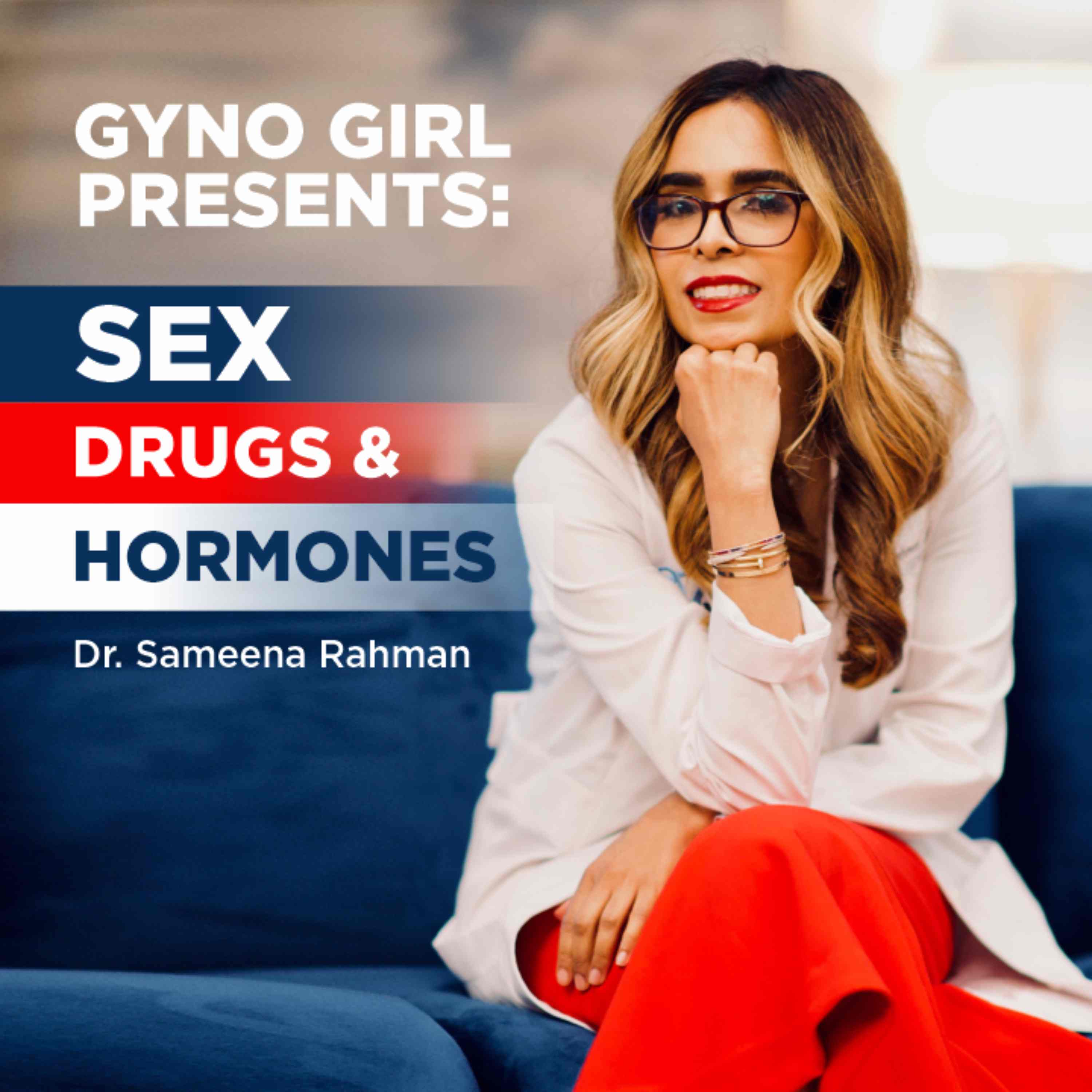
Gyno Girl Presents: Sex, Drugs & Hormones
Hosted by Dr. Sameena Rahman · EN
As a fierce champion for women empowering women (and the people that love them), GynoGirl provides the knowledge and education to help you advocate for yourself so that you can live your best life!
Dr. Sameena Rahman curates a space for exploring hormonal changes, sexual health, and pelvic wellness, while also emphasizing self-love and life improvement. Through collaborations with leading experts and the personal stories of patients, she provides a platform for knowledge-sharing while also addressing healthcare issues that have impaired women’s quality of life.
A board-certified, South-Asian Muslim-American gynecologist who specializes in sex medicine and menopause, Dr. Rahman highlights the influence of religion, culture, racial bias, and societal factors on sexual health experiences.
42episodes
Episodes
Newest firstAll episodes
Why Women Get Dismissed in Healthcare and What We Can Do About It | Dr. Sameena Rahman
4d ago00:27:12Tap to summarizeAfter more than two decades as a board certified OBGYN and over a decade as a specialist in sexual medicine and menopause, I have come to believe that one of the biggest obstacles in women's healthcare is not the absence of treatments or research. It is dismissal.This is not just something I see in my patients. I have lived it too. I share a story from my own birth experience that I have not talked about much publicly, and it changed how I think about what it means to navigate a system that was not built to listen to women. If it happened to me, someone who worked inside that system every day, I think about what it means for women who do not have the same access or the same voice.That is also what led me to write Brown Girls' Disease. The women who struggle most in this system are almost always the ones who have been told the longest that nothing is wrong, and I wrote this book for them. We talk about what is in it, who it is for, and why the title means so much more than it might seem at first.My mission has always been simple. I want women to feel seen, heard, and believed. This episode is about why that still matters so much.Highlights: Dismissal is one of the biggest obstacles in women's healthcare today.Why siloed medicine means women fall through the cracks.The story behind the phrase brown girls' disease.Why naming a condition can be part of patients healing.The movement to end dismissal in women's health.About the Book:Brown Girls' Disease: A Guide to Sexual Health and Empowerment Through a South Asian Lens by Dr. Sameena Rahman is available for pre-order now on Amazon, releasing October 6th.The book covers foundations of sexual health, the intersection of culture, religion, and colonization with sexual dysfunction, medical bias and implicit bias, trauma and mental health, and conditions including vaginismus, persistent genital arousal disorder, libido and arousal concerns, vulvodynia, perimenopause, menopause, and postpartum sexual health.Get in Touch with Me:WebsiteInstagramYoutubeSubstackPre-Order My Book
Transcribe →Obesity Is Not a Willpower Problem: GLP-1s, Myths, and Menopause with Dr. Angela Fitch
2w ago01:02:33Tap to summarizeObesity may be the most misunderstood chronic disease in medicine. For decades we told people to eat less and move more, but the science says our weight is regulated by biology we don't control, in the same brain region that runs our reproductive cycles. Dr. Angela Fitch, past president of the Obesity Medicine Association and one of the country's leading experts in obesity medicine, joins me to separate what's real from what's myth in the world of GLP-1s.Angela's fascination with metabolism started back in her chemical engineering days and carried her through residency, ten years of primary care, and eventually board certification in obesity medicine, where she's spent the past fifteen years building non-stigmatizing, comprehensive care for patients, including her current clinic, Knownwell.We start with the question I hear constantly: why does obesity carry so much stigma when we treat it as a chronic disease like diabetes or hypertension? Angela traces it all the way back to Hippocrates prescribing treatment for "gluttony and sloth," through insurance systems that carved out obesity treatment as cosmetic, to the willpower myth that still shapes how patients are treated in exam rooms today.The science behind why weight loss is so hard is more interesting than most people realize, and Angela is one of the few people in this field who can explain it without making you feel like you're being lectured. We get into how these medications work, what they do in your brain, and why the conversation around them has become so loud. We also answer the questions that come up most frequently in my office and online, around muscle loss, microdosing, and whether compounded versions are safe, and Angela is refreshingly direct about all of it.For the women in perimenopause and menopause who feel like their bodies stopped responding to everything that used to work, this episode puts language to what you're experiencing and gives you something real to bring to your next appointment.Highlights:Obesity is a chronic disease, not a willpower problem.Why your body actively fights weight loss.What GLP-1s actually do and how they evolved.The truth about muscle loss on these medications.Compounded GLP-1s: what you need to know.Why access and coverage still fall short.Get in Touch with Dr. Fitch:WebsiteInstagramLinkedInGet in Touch with Me:WebsiteInstagramYoutubeSubstack
Transcribe →Seven Gynecologists Refused Her Before She Got Help | Mathilde Olstad on Vulvovaginal Pain
3w ago00:51:11Tap to summarizeAt 25, Mathilde Olstad's life was on track: a new relationship, a finance degree nearly finished, a career about to launch. Then pain during sex appeared out of nowhere, Then pain during sex appeared out of nowhere, and it didn't go away. What followed was years of dismissal, dead ends, expensive alternative treatments, and being refused by seven gynecologists before she could access specialized care. Instead of staying silent, she turned her experience into The World's Tightest Community, a podcast reaching thousands of women living with vulvovaginal pain.In this episode, Dr. Sameena Rahman sits down with Mathilde Olstad, creator and host of The World's Tightest Community, a podcast dedicated to vulvovaginal health, chronic pelvic pain, and breaking the silence around conditions like vulvodynia, vestibulodynia, and vaginismus.Mathilde shares her story from the beginning: the sudden onset of burning vestibular pain at 25, a GP who told her everything looked fine, a year and a half of waiting, and the excruciating speculum exam where the shock on her providers' faces told her everything about how unprepared the system was for patients like her. She describes the desperate search that followed, from mainstream treatments to $1,500 herbal prescriptions, and the profound loneliness of never seeing anyone else who had walked this road.The conversation goes global: why the latest research in vulvovaginal pain isn't crossing the Atlantic, what it took for Mathilde to access Norway's public vulvar clinic after seven gynecologists refused to take her on, and why so many complex pain patients become what clinicians call "heartsink patients." Dr. Rahman and Mathilde also dig into the visual language of these conditions, why "you are not alone" rings hollow when you can't see a single face, and how a Reddit community became the spark for a podcast that now reaches patients and clinicians around the world.Mathilde shares her story from the beginning: the sudden onset of burning when having sex she went to her GP who told her everything looked fine, a year and a half of waiting, and the excruciating speculum exam where the shock on her providers' faces told her everything about how unprepared the system was for patients like her. She describes the desperate search that followed, from mainstream treatments to $1,500 herbal prescriptions, and the profound loneliness of never seeing anyone else who had walked this road.Our conversation goes global: why the latest research in vulvovaginal pain isn't crossing the Atlantic, what it took for Mathilde to access Norway's public vulvar clinic, and why so many complex pain patients become what clinicians call "heartsink patients." We also dig into the visual language of these conditions, why "you are not alone" rings hollow when you can't see a single face, and how a Reddit community became the spark for a podcast that now reaches patients and clinicians around the world.It takes courage to keep telling a story like this one. Every time a woman does, it reaches someone who thought she was the only one. If you know someone dealing with this, please share it!I also want the clinicians listening to hear this with an open mind, not shame. So many of us were never taught about these conditions. But not having the answer is never a reason to make a patient feel like she's the problem. What she needs from us is empathy, curiosity, and honesty about what we don't know.Highlights:Vulvovaginal pain conditions like vulvodynia, vestibulodynia, and vaginismus are common, with estimates ranging from 8 to 28 percent of women experiencing them in their lifetime, yet they remain under-researched and widely dismissed.Sudden-onset pain with sex is not "just anxiety" and should prompt a real diagnostic workup, including a vulvar exam, vestibular assessment, and pelvic floor evaluation.A diagnosis label like vulvodynia is only a starting point; without a differential assessment of drivers (hormonal, inflammatory, neuroproliferative, muscular), patients are left with trial and error.Pelvic floor involvement is nearly universal in vestibular pain, because anticipating pain leads to clenching and hypertonicity that outlasts the original trigger.The knowledge gap between North America and Europe in sexual medicine is real: patients abroad often can't access treatments, and some specialists are unfamiliar with current concepts in the field.Recovery is rarely one breakthrough; for Mathilde it was cumulative, including pelvic floor physical therapy, osteopathic work on diaphragm tension, and most recently pelvic floor Botox.Social media has forced real change in women's health, from IUD pain management to mainstream conversations about menopause, but vulvovaginal pain still lags behind.By the time a woman with these conditions reaches a new clinician, she has almost always been dismissed before; believing the pain is the first intervention.Resources-ISSWSHGet in Touch with Mathilde:WebsiteInstagramPodcastGet in Touch with Me:WebsiteInstagramYoutubeSubstack
Transcribe →The SSRI Side Effect Hurting Women's Sex Lives | Dr. Laurie Mintz & Dr. Suzette Johnson
4w ago00:42:35Tap to summarizeMillions of women take SSRIs for anxiety and depression and many times no one tells about the sexual side effects, let alone that there's a solution. When it happened to a sex therapist and an OB-GYN themselves, they refused to accept "just add Wellbutrin" as the only answer. Dr. Laurie Mintz and Dr. Suzette Johnson join Dr. Rahman to share the deeply personal stories behind their new venture and why no woman should have to choose between her mental health and her sexual health.What started as a friendship between "sisters from another mother" became a mission after both women personally experienced SSRI-induced orgasm dysfunction and discovered how well a compounded topical cream made with sildenafil and L-arginine worked for them. Now, in partnership with Mojo, they've launched something no one else is offering: the cream plus a short course covering the biological and psychological sides of orgasm dysfunction mindfulness, vibrators, erotica, and the science of why your body responds the way it does.The conversation also dives deep into the orgasm gap: why women orgasm 22–33% less often than men in heterosexual encounters, what the research on bisexual women reveals about whose "fault" that really is (hint: it's not women's bodies), and the brand-new concept of the orgasm pursuit gap why women need to start actively pursuing their own pleasure without pressure.This is midlife reinvention, medical advocacy, and orgasm equality all in one conversation.Highlights:SSRIs are essential medication for many women but sexual side effects like muted or absent orgasm are real, common, and rarely disclosed at the time of prescribing.Most prescribers' only answer is "add Wellbutrin"—few know that a compounded topical cream (sildenafil + L-arginine) can restore blood flow, sensation, and orgasm for many women.New research identifies an orgasm pursuit gap heterosexual women largely don't pursue their own orgasm or expect their partners to.Pursuit is not pressure: women can actively seek the clitoral stimulation they need without turning orgasm into a performance demand.Sexuality does not expirewomen can and should stay sexually active at every age if they want to be.Remember: I'm here to educate so you can advocate for yourself. This podcast is for education, not medical advice please see your own doctor or clinician for your individual care.Please make sure to share this episode with women who would find it helpful. Most of this information is still new to many women and the more it gets shared the more women we are helping!Get in Touch with Dr. Mintz & Dr. Johnson::Dr. Mintz- WebsiteDr. Johnson:Mojo Get in Touch with Dr. Rahman:WebsiteInstagramYoutubeSubstack
Transcribe →Why Your Gut Changes During Menopause (And What To Do About It) | Cynthia Thurlow
Jul 300:46:21Tap to summarizeOne of the things that hasn't gotten a lot of attention in the menopause space is the gut. It's one of those symptoms that you may have not even thought was related to this stage in life. You may find that you have diarrhea, constipation, and less tolerance with certain foods. Or like my guest Cynthia Thurlow, one bout of food poisoning can turn your gut upside down and have lasting effects for years.Cynthia is a nurse practitioner and metabolic health expert who explains why the gut matters in midlife and also gives us education on what is actually going on. How estrogen and progesterone directly impact your gut bacteria, motility, and inflammation. And while there are many modalities to treating it, some with good intentions moving from pharmaceutical drugs to vitamins isn't really giving the relief that many women are looking for.We get into the gut-brain connection, why fiber might be causing bloating, and how to start with the basics to getting your gut health on a good path.HighlightsThe gut microbiome contains 40 trillion bacteria, viruses, fungi, and protozoa. There are actually more cells in your microbiome than in your entire body.Most of the communication on the gut-brain axis goes from gut to brain, not the other way around. What happens in your gut directly affects your brain and mood.Ninety-five percent of patients don't eat enough protein. That's problem number one before worrying about fiber or any other intervention.Sitting down to eat and taking four to five deep breaths before meals shifts you out of sympathetic and into parasympathetic mode. This alone can improve digestion.There's a direct connection between gut microbiome health and vaginal microbiome health. They're not separate systems.Screening for adverse childhood events and trauma changes how you approach treatment because it rewires the autonomic nervous system and affects gut health.If you're experiencing digestive changes during perimenopause or menopause, this episode is for you. Understanding your gut is the first step to feeling better. If you found this helpful, please subscribe so you don't miss future conversations about what real midlife health looks like.Note: We experienced some audio technical difficulties during this recording. We've worked to enhance the sound quality as much as possible. Thank you for your patience and for listening.Get in tough with Cynthia:WebsiteBookInstagramFacebookTwitter/XYoutubePodcastSubstackGet in Touch with Me:WebsiteInstagramYoutubeSubstack
Transcribe →Perimenopause: Anger, Anxiety, Sleep Issues, and the Invisible Symptoms with Dr. Amy Jean Voedisch
Jun 2601:02:47Tap to summarizePerimenopause is typically attributed to the hallmark symptoms—hot flashes and irregular bleeding. But that represents only a fraction of the clinical picture. The reality encompasses a range of symptoms that often emerge gradually and go unrecognized as perimenopausal.Dr. Amy Jean Voedisch is a gynecologist whose clinical approach mirrors mine. We practice evidence-based medicine through extended patient visits that allow for precision diagnosis and individualized treatment plans.Sleep is one of the foundational pillars Amy emphasizes. It's become central to her practice, and addressing sleep disturbance often requires specialty consultation with a sleep medicine specialist.We also discuss hormone therapy. While it can be an effective therapeutic tool, it's not a panacea and won't serve as a singular solution for all perimenopausal symptoms. This conversation is about what real perimenopause treatment looks like.Episode HighlightsThe same symptoms may react different to treatment in each patient.Menopause education could have a larger role in medical school training.Birth control might be part of a patient's treatment plan, not just contraception.Reframing expectations about your body and grieving what you had before.The role of life circumstances and stress colliding with perimenopause.Understanding responsive desire in relationships.If you're in your 40s and something feels off, this episode is for you. Perimenopause is something you just have to tolerate and there are doctors who care and want to help. Make sure to subscribe so you don't miss future conversations about what real women's health care looks like.Get in Touch with Dr. Voedisch:WebsiteInstagramGet in Touch with Me:WebsiteInstagramYoutubeSubstack
Transcribe →From Commands to Purpose: How Gen Z Needs to Be Led | Calle Foster
Jun 1900:46:16Tap to summarizeGen Z gets a bad rap for being lazy, but they're actually the most entrepreneurial generation we've ever had. Calle Foster, a leadership coach who spent 12 years in corporate learning and development, explains why that stereotype is costing you as a leader.The real issue? It's how we're leading them. Gen Z was raised in a very different world than previous generations, and that context shaped how they show up at work. When leaders come at them with command and control, they shut down. They internalize it as their fault. They need guides, not controllers.Calle talks about what Gen Z actually responds to: psychological safety, questions instead of orders, and understanding the why behind the work. She also addresses generational trauma—how silence about bodies, fertility, and mental health gets passed down through families and how we can break that cycle.We also dig into how this applies to medicine and residency training, parenting Gen Z kids, and building teams where multiple generations actually respect each other instead of denigrating one another.Highlights:Gen Z shuts down under command and control. Telling is yelling.Gen Z expects emotional availability from leaders because that's how they were parented by Gen X.Vulnerability from leaders creates safety for everyone on the team.Generational silence about bodies and fertility gets passed down.Gen Z has emotional language that's a strength, not a weakness.If women aren't building AI algorithms, we're automating bias into healthcare.If you're a parent, a manager, or an attending working with Gen Z, this episode is for you. The way you lead and communicate shapes how the next generation shows up. My goal is to give you tools to understand your body, your hormones, your relationships—and how to build teams and families where people feel safe enough to actually speak.If you've found this conversation helpful, please subscribe so you don't miss future episodes. And if you're in a leadership position, consider where you might shift from command and control to coaching.Get in touch with Calle:WebsiteInstagramGet in Touch with Me:WebsiteInstagramYoutubeSubstack
Transcribe →Why AI is Medicine's Future (Not Its Replacement) | Dr. Ami Bhatt
Jun 1200:54:00Tap to summarizeAI is making people in medicine nervous. Doctors worry it's going to replace them. But Dr. Ami Bhatt, Chief Innovation Officer at the American College of Cardiology and Chair of the FDA Digital Health Advisory Committee, has a different take.She explains what collaborative intelligence actually means and why clinicians shouldn't be scared. We talk about how wearables are giving women the data they need to advocate for themselves when doctors dismiss them. We also get into the bias that's built into AI algorithms and what it means when the technology learns your preferences.Women are adopting AI faster than men. Data is validating symptoms doctors ignore. And understanding how AI works is becoming essential to being a good clinician. This episode is about how technology and medicine can actually work together.Dr. Bhatt and I discuss what the reality of what clinicians face: in 20 minutes with a patient, you're trying to absorb electronic health records, current guidelines, recent research, their life circumstances, and now wearable data. It's impossible for one brain to hold all of that. That's where collaborative intelligence comes in. AI organizes the information so you can use your judgment. It's not thinking for you, it's giving you back time.On the patient side, wearables aren't just gadgets. They're validation. When you feel something is wrong and your data backs it up, that's power. Especially important for women who get dismissed or told it's anxiety when it's actually a real health issue. But there's a catch: algorithms have bias built into them. They learn from your search history, your preferences, what you've looked at before. Understanding those limits is what makes the difference between using AI well and being led in the wrong direction.HighlightsThe freezer analogy: AI is like understanding why your freezer gets ice on food. You have to know how to adjust it or it doesn't work for you.Dr. Rahman's son used ChatGPT to prepare for a doctor appointment and had a whole conversation without her input because he felt validated and knew what to say.Women should be believed, but data gives you evidence when doctors dismiss you.Sleep is the next frontier in wearable tracking, especially during perimenopause and menopause.Good AI governance is infrastructure with guardrails, not over-regulation or no regulation.Health literacy is everything. Patients and clinicians need to understand what technologies actually do and don't do.I hope this episode helps you understand that AI isn't coming to replace your doctor or your nursing team. It's a tool to help them help you better. If you're a clinician listening, don't be afraid to understand how technology works. If you're a patient, trust your body and use the data you have to advocate for yourself.If you've found this episode helpful, please subscribe so you don't miss future conversations about technology, health, and what it means to take care of yourself.Get in Touch with Dr. Bhatt:WebsiteInstagramLinkedInXGet in Touch with Me:WebsiteInstagramYoutubeSubstack
Transcribe →Women's Sexual Health Innovation with Sabrina Johnson, CEO of Dari Bioscience
Jun 500:52:49Tap to summarizeFor decades, men had Viagra. Women were told to relax and have a glass of wine. That imbalance in pharmaceutical innovation is finally changing, but it hasn't been easy.In this episode, I talk with Sabrina Johnson, the founder and CEO of Dare Bioscience the only publicly traded pharmaceutical company focused entirely on women's healthcare. We discuss why the pharmaceutical industry has historically avoided investing in women's sexual health, the stigma and sexism that surrounds female arousal and pleasure, and what it actually takes to develop and bring products to market.Sabrina walks us through the development of Dare to Play, a topical cream for sexual arousal that's coming soon, the science behind how it works, and the extensive clinical trials required to prove safety and efficacy. We also discuss other products in development a probiotic for vaginal health and a once-a-month vaginal ring for menopause with estradiol and progesterone. This is about changing what's possible for women's health.From regulatory hurdles to cultural stigma, the barriers to innovating in women's sexual health are real. In this conversation, we explore how companies can create real world solutions that actually work for women's lives, the importance of rigorous clinical testing, and why investing in women's health matters. We dive into the science, the business side, and how you can support this work.Highlights:Only 1% of private investment in pharmaceutical development goes to companies innovating solely for women which is why there's so little funding and so many gaps.The stigma is real: one NPR station refused to air an interview because Sabrina said the word "vagina" too many times.Dare to Play increases blood flow to genital tissue for sensation and lubrication the same mechanism as Viagra, but in cream form. The major innovation was developing specialized delivery technology to get sildenafil through skin and manufacturing at pharmaceutical grade standards rather than compounding standards.Dare worked with the SEC and NASDAQ to create a direct public offering so anyone can invest with just $250, not just institutional investors.I hope this episode inspires you to think differently about women's health innovation and what's possible when we demand better. If you believe in the work DARE is doing, you can support it. You don't have to donate you can become an investor with as little as $250. All the information on how to do that will be below.Get in touch with Sabrina:WebsiteBecome an InvestorInstagramLinkedInTikTokGet in Touch with Me:WebsiteInstagramYoutubeSubstack
Transcribe →Anxiety, OCD, and ADHD in Kids with Dr. John Parkhurst
May 2900:59:02Tap to summarizeKids' mental health looks different now than it did a decade ago. More kids are struggling with anxiety, OCD, and ADHD, and parents are often unsure whether what they're seeing is normal or something that needs professional help.In this episode, Dr. John Parkhurst, a child psychologist at Northwestern, helps us understand what's really happening with kids right now. He explains why anxiety spikes during puberty, how to recognize the difference between typical worry and an anxiety disorder, and what sets anxiety apart from OCD. We also talk about ADHD, executive function, and the treatment options that actually work from therapy to medication to combined approaches.As a child psychologist with expertise in anxiety disorders, he's worked in this field for over a decade and conducts research on how to help primary care physicians better identify and treat mental health challenges in kids. In this episode, we get into the specifics of what anxiety actually looks like, how it differs from OCD, and why the distinction matters for treatment. We also discuss ADHD, the role of hormones during puberty, and what the research shows about which treatments work best.HighlightsAnxiety in kids shows up differently than you might think. It can look like avoidance, freezing, or kids getting reactive and emotional, not just saying they're worried.The difference between anxiety and OCD matters for treatment. Anxiety is a global worry response, while OCD is specific intrusive thoughts paired with compulsions.Anxiety spikes during puberty, with generalized anxiety disorders commonly emerging around ages 8-12.Cognitive behavioral therapy and medication are both effective treatments for anxiety and OCD. Combined treatment often works better than either approach alone.ADHD is harder to treat with therapy alone. Medication is typically more effective, but environmental structure and parenting strategies also matter.If you're seeing signs of anxiety, OCD, or ADHD in your child, remember that these are treatable conditions. Cognitive behavioral therapy and medication are evidence-based options that work. Talk to your pediatrician or seek out a child psychologist who can help you figure out the right approach for your child.Understanding what your child is experiencing is the first step. If you've found this episode helpful, please subscribe so you don't miss upcoming conversations that matter to you and your family.Get in Touch with John:LuriesNorthwesternGet in Touch with Me:WebsiteInstagramYoutubeSubstack
Transcribe →