← Hasan Minhaj Doesn't Know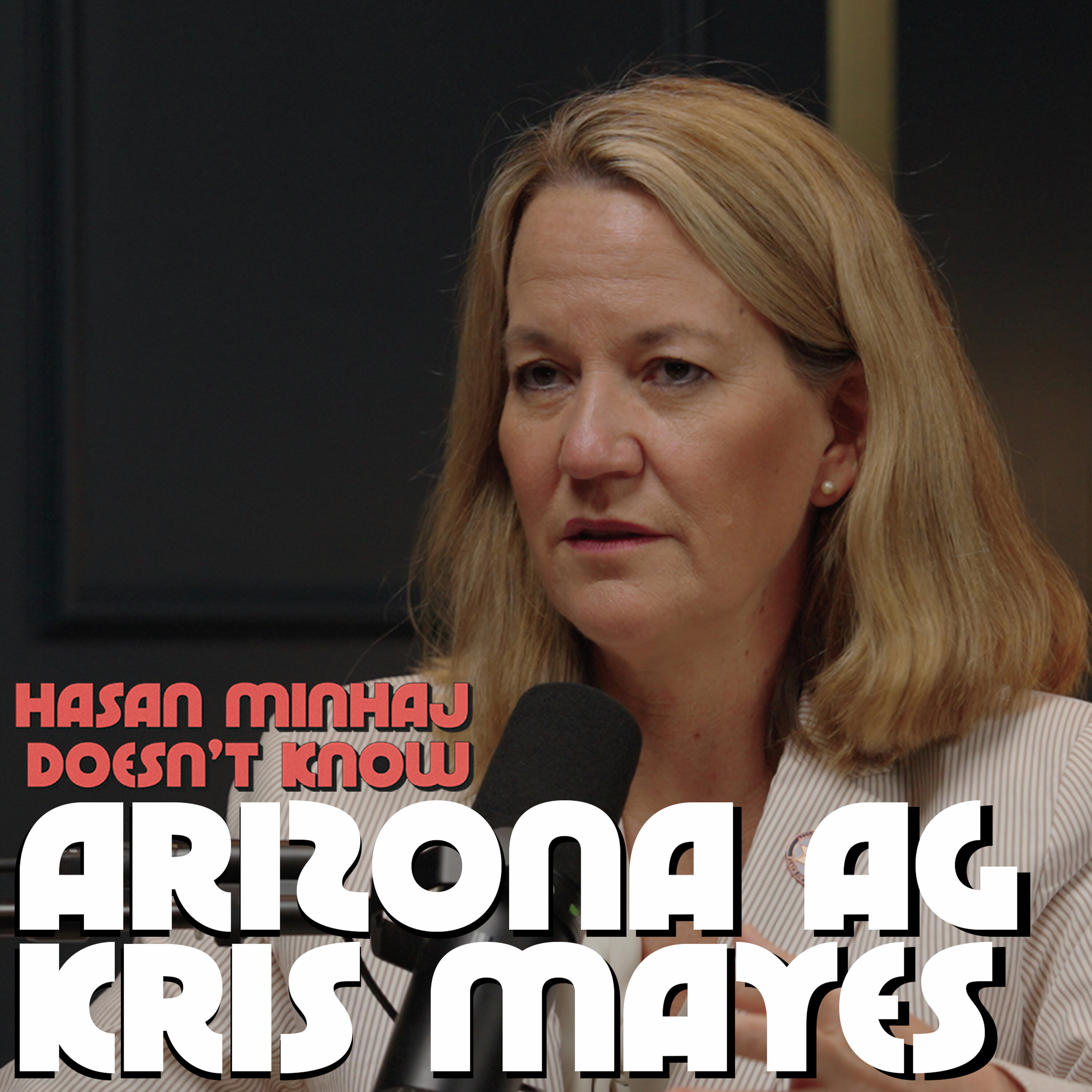
Loading summary
Transcript185 lines
- [00:02]
Hasan Piker
Lemonade. I'll come in with a bunch of investment bakers on the 7:40am train into the city. And they are wired on Adderall, perks, Zanny Percocet, Miley Cyrus.
- [00:18]
Chris Mays
Being serious.
- [00:19]
Hasan Piker
Dead serious.
- [00:20]
Chris Mays
Wow. Okay.
- [00:21]
Hasan Piker
Then they come in, get to Grand Central, then they go to their job on Wall street to blow up our economy in the next two to four years. So they are literally bringing in drugs and participating in crime. Yeah, we don't frame them that way. Arizona Attorney General Chris Mays won her 2022 election by just 280 votes, which actually kind of makes sense because her state has strong political forces pulling it both right and left. It is the Jean Claude Van Damme doing the splits between two 18 wheelers of state. On the one hand, Arizona currently has a Democratic governor, two Democratic senators, and an openly gay Attorney General, Chris Mays. But on the other hand, it's Arizona. What are we talking about here? It is a state full of people who both own a gun and a bumper sticker threatening to use it. And that right left conflict has even played itself out in Chris Mays herself when she switched from Republican to Democrat in 2019, becoming the only person in Arizona history to be elected statewide in both parties. So I sat down with the general to learn more about why she changed teams, what she thinks about the growing threat of violence toward politicians, and what her answer is to the central question behind every immigration debate. How many did we let in?
- [01:43]
Chris Mays
Hurry right away. No. Delays are back.
- [01:50]
Hasan Piker
Here's what I know about Arizona. Number one, John McCain was a senator there.
- [01:53]
Chris Mays
Yep.
- [01:54]
Hasan Piker
Okay. Number two, Mark Kelly, the astronaut took his place. I'm aware of that. And then number three, the Twitter account @AZ GOP is completely unhinged.
- [02:07]
Chris Mays
Yes, true.
- [02:09]
Hasan Piker
Here is a tweet from 2022. This is @ Azgop, they tweeted the mainstream media is domestic terrorists. Only 54 retweets. Now, a couple things that I'm noticing here is I think it's the mainstream media are domestic terrorists.
- [02:24]
Chris Mays
That's one good point. Grammar. Grammar might not be their strong right.
- [02:28]
Hasan Piker
You obviously passed the bar. You went to law school. Now, do you capitalize domestic terrorists like they're ISIS?
- [02:35]
Chris Mays
No. I would say no.
- [02:36]
Hasan Piker
You go. Lowercase DT.
- [02:37]
Chris Mays
I'd say go. Yeah, exactly.
- [02:39]
Hasan Piker
In 2020, they asked supporters if they were willing to die to help fight to overturn the election results. Let's take a look at that.
- [02:45]
Chris Mays
Wow.
- [02:45]
Hasan Piker
Ali goes. I am willing to give my life for this fight.
- [02:49]
Chris Mays
Yes.
- [02:50]
Hasan Piker
At Azgop, he is Are you?
- [02:54]
Chris Mays
Wow.
- [02:55]
Hasan Piker
What's going on there?
- [02:56]
Chris Mays
Yeah. Well. And I'll tell you, I. I don't know if you know, I used to be a Republican, so I served at the same time that John McCain did. I knew John McCain. And this is not John McCain's Republican Party anymore. And it's not Chris Maze's Republican Party anymore either. It's why I left. What's going on there. It has been completely hijacked by MAGA and by the right wing and by what feels very cultish to me, to be honest with you. And it's why I left in 2019.
- [03:27]
Hasan Piker
Here's an Arizona story that I think connects in a very interesting way to our Politics Today in 2011. Gabby Giffords. There was an assassination attempt on her, that she was shot in that this sparked a national conversation. The United States of America. I remember I had recently graduated from college, but there was this big discourse about the idea of, hey, all this violent political rhetoric. We got to tone it down.
- [03:50]
Chris Mays
Yep.
- [03:51]
Hasan Piker
Okay. 14 years later, do you feel like this sort of violent political rhetoric has now become the norm at White House? The Twitter account is essentially now at Azgop, if not crazier.
- [04:05]
Chris Mays
Yeah, no, I think it has become the norm, and that's really sad. And I don't think it has left let up at all. And, you know, all of that. You could even draw a line. I think it's onto January 6th and what happened on January 6th. Right. And I was in Arizona when Gabby was shot. She's a friend of mine. I served with her. I was a corporation commissioner, public utility commissioner, worked with her on solar energy issues. That was a crushing day for my state, for her. And so you look at that. That language, and it still. It still is in. It still is in our politics, primarily on the other side, unfortunately.
- [04:49]
Hasan Piker
I mean, Donald Trump said something about Liz Cheney at a rally in your state, Arizona, that many people interpreted as a death threat.
- [04:58]
Chris Mays
Yeah.
- [04:58]
Hasan Piker
Let's take a look.
- [05:00]
Chris Mays
She's a radical warhawk. Let's put her with a rifle, standing there with nine barrels shooting at her. Okay. Let's see how she feels about it, you know, when the guns are trained on her face.
- [05:11]
Hasan Piker
Okay. You went on to then launch an investigation to find out if you could prosecute that as a death threat. How'd that go?
- [05:22]
Chris Mays
I did. And I. And I was criticized for that, for saying that I thought that we should at least look at it as a death threat. Because you look at what he just said.
- [05:32]
Hasan Piker
Right.
- [05:33]
Chris Mays
Which was extremely violent. And at a minimum, Horrific. Horrific for any political leader to use that kind of language. And remember, as you know, that was right before the election.
- [05:46]
Hasan Piker
Right right before the November 2024 election.
- [05:49]
Chris Mays
Right before the November 2024 election, Liz Cheney was out there talking about the need to preserve democracy, supporting Kamala Harris. And he comes to Arizona and says those things as if he doesn't know what he's saying. And so I said, yeah, I think that I asked my criminal division chief to take a look at whether that constituted a death threat or a violation of any statute in Arizona, because one of the things that, as the Attorney General of Arizona, I have said is we are not going to tolerate death threats against any elected official, any elections official. Because that has been a problem in my state and in other states where people are essentially threatening elections officials. So much so that some of our elections officials, two thirds of our elections directors or a top election official in our counties, Hasan, in the last election cycle resigned. Resigned. We lost them because they didn't want to put up with that kind of thing. I mean, if you're an average person and you're an election director and we have fantastic elections directors, why are you going to put up with that? We had one county election director who had her dog poisoned to death in Arizona. Correct. Just because she stood up for the rule of law.
- [07:13]
Hasan Piker
What is the critique that you're getting when people say, why are you trying to prosecute the president? What's the critique? What is their core argument here?
- [07:21]
Chris Mays
I mean, the core argument. And I actually had this conversation with a gentleman recently in Yuma who came out to one of my town halls. I've now had 11 town halls on the litigation that we're doing. And he was maga, you know, and I, I let anyone come to our town halls. Maga, people who support. It's a town hall.
- [07:40]
Hasan Piker
Anyone can come.
- [07:41]
Chris Mays
The Republicans don't, by the way. They check people's voter registration cards, believe it or not.
- [07:45]
Hasan Piker
Oh, I didn't know that.
- [07:46]
Chris Mays
Yeah. They. They will not let you in if you're a Democrat. But so I had this conversation, and, you know, his. His point was that Donald Trump won the election in Arizona. He did. He. You know, we don't deny that.
- [08:03]
Hasan Piker
Yeah. No. The state voted for Donald Trump.
- [08:05]
Chris Mays
The state voted for Donald Trump. I don't think they actually voted for this insanity that we're seeing now. They didn't vote for Donald Trump to shred the Constitution, which is happening over and over again, but they did vote for him. So his point was, Chris Mays, you should not be suing him because he, we voted for him and this is what we voted for. My response to that, Hasan, is I'm the top law enforcement officer of the state of Arizona. It's my job. I took an oath of office to uphold the Constitution and the laws of this country. And when the president, whoever that is, if that's a Democrat or a Republican, I am going to file a lawsuit to try to stop him or her from violating the Constitution.
- [08:52]
Hasan Piker
How do you convince those people that you're not being needlessly punitive over petty grievances?
- [08:59]
Chris Mays
So I think there's two ways that you deal with that. Number one, I have not joined every single lawsuit. So if I don't, if I don't believe that, that you know, the state, that there's damage to the state of Arizona, or if I don't believe that it's the right lawsuit for, for Arizona, I don't join it. And there's been three that I haven't joined. And then secondarily, this is not all I'm doing. I mean, it, sometimes it feels like it because this, you know, we talk about these lawsuits and we are in an existential moment. And I have been very forward leaning in my language. I have called this a coup, an attempted coup on our country by Donald Trump. When you have a president who violates a federal court order on multiple occasions, including in our cases, that is an attempted coup because it's never happened in our country before. Where a president, you saw it yesterday from the White House where the president's spokesperson started attacking judges again. What is that? Absolutely no respect for the three branches of government. But what you do is you also do the other work of the Attorney General's office. It is critical work, you know, fighting the fentanyl crisis, protecting consumers, protecting our elderly, etc.
- [10:19]
Hasan Piker
What do you say to someone like me who just feels the current judicial system is so analog in nature and Donald Trump is so digitally insane that the analog nature of the judicial process will never catch him. He's never going to get perp walked. He will exit the office, maybe run for a third time or like most presidents, start a podcast or get into painting. But there is no perp walk. There is no, you know, you were saying you have a 12 year old. I bet there's, they are begging for the day, they see the golden handcuffs and he gets Puff Daddy perk walked out of a New York hotel. It's never happening to a president.
- [11:00]
Chris Mays
Yeah.
- [11:01]
Hasan Piker
What do you say to that? Part of me that says that.
- [11:03]
Chris Mays
That says that.
- [11:03]
Hasan Piker
Because I really feel that you obviously passed the bar. I never went to law school. Can you tell me how this is possible or not possible?
- [11:11]
Chris Mays
Well, first of all, I would say we would be very fortunate if Donald Trump ended up painting or doing a podcast. I would prefer that over the constant violations of Constitution. We had a very terrible thing happen, as you know, when the United States Supreme Court passed its decision that essentially gave him immunity for all official acts. And then we had a situation prior to the election where he obviously was not held accountable or, you know, he had the convictions against him here in New York, but then it was too late for there to be any accountability or even any sentence levied there. I don't know. I don't know how to answer that question, except that I'm focused on getting. Upholding the rule of law now while he's in office and making sure that we protect Arizona consumers, protect Arizonans and uphold the Constitution.
- [12:12]
Hasan Piker
I, I want to kind of connect the dots here because we were talking about. You're obviously about a coup of the government. We obviously had January 6th. We've mentioned your colleague Gabby Giffords.
- [12:23]
Chris Mays
Yeah.
- [12:24]
Hasan Piker
And most recently the attempted assassination attempt on Donald Trump himself.
- [12:29]
Chris Mays
Yeah.
- [12:30]
Hasan Piker
Do you feel in 2025 that we're on a razor's edge to almost feeling the way America felt in 1968 with the assassination of RFK, the assassination of Martin Luther King Jr. Where kind of political violence became the norm?
- [12:45]
Chris Mays
Yeah, I worry about that candidly. And I know that my colleagues, Democratic AGs worry about that as well. It feels very unstable right now. One of the reasons that we're doing these town halls, and I've done so many of them and actually the ags have done them together, so we've done them together in Minnesota, in Oregon, in Arizona and in New York here, Tish James did one and in New England is that we feel it's really important to get out there and talk to people and hear from people directly about this, including Republicans. I think we have to. We have to be talking to each other and we have to come back together around core concepts and commonly agreed upon concepts like our Constitution and the three branches of government in. And I think that's why so many people have been coming out to these town halls. And then you see what's going on with the protests. You know, I think the American public is way ahead of politicians right now on this issue. And there's so much frustration out there right now about what's happening in Washington, D.C. both out of the White House, but also sort of a feeling of inaction by Congress as well, to protect its own prerogatives. I mean, why is it that the democratic AGs are the one filing all these lawsuits? To protect the separation of powers, to enforce the separation of powers. Why are we the ones fighting against the tariffs when Congress is the one that should step up and can step up and tell the president, no, you don't have the authority to crush our entire economy by using ieepa, a statute that was never meant for tariffs.
- [14:42]
Hasan Piker
So what do you think their calculation behind the political cowardice is then, in that sense?
- [14:46]
Chris Mays
I think there are far too many consultants whispering in their ears saying, just don't do anything right now.
- [14:54]
Hasan Piker
So Arizona is now a purple swing state.
- [15:00]
Chris Mays
Yes.
- [15:00]
Hasan Piker
But that's a recent thing.
- [15:02]
Chris Mays
Yes.
- [15:03]
Hasan Piker
Usually the state votes for a Republican president, but has also had a Democratic governor, two Democrat senators. What do you think? Democratic AG and a Democratic ag. What do you think caused that shift? Do you think it was Donald Trump?
- [15:19]
Chris Mays
Gosh, that is a great question. I think that Arizona. No, I actually think that it has more. Well, two things. Number one, we are seeing incredible migration into Arizona from California, from New York, from a lot of the Rust belts states. And that migration is very diverse. I mean, politically very diverse. And we're getting. So it's turning us purple. Same thing happened in Colorado, Nevada, you know, New Mexico. It's even going to happen in Texas eventually.
- [15:53]
Hasan Piker
Oh, interesting.
- [15:54]
Chris Mays
Yeah. So this migration, these migration patterns down into the Southwest where people actually want to live.
- [16:00]
Hasan Piker
You keep saying migration. This is going to terrify people on Fox News. You understand the way you're saying it, like a weather pattern. No, no, no, no. Already what you're implying is it's very.
- [16:09]
Chris Mays
Scary for them, for that'll scare them.
- [16:11]
Hasan Piker
Well, what's interesting is that you are you, General.
- [16:14]
Chris Mays
Yes.
- [16:15]
Hasan Piker
You are a human swing state.
- [16:17]
Chris Mays
Yeah.
- [16:17]
Hasan Piker
I mean, you.
- [16:18]
Chris Mays
I am personification of that.
- [16:20]
Hasan Piker
You won a statewide election in Arizona as a Republican and then later as a Democrat.
- [16:24]
Chris Mays
Yes. I think I'm the only person in Arizona history who's one statewide office as both a Republican and a Democrat.
- [16:32]
Hasan Piker
And but for you personally, General, was it Donald Trump that shifted you?
- [16:36]
Chris Mays
Yeah.
- [16:36]
Hasan Piker
Okay.
- [16:37]
Chris Mays
He did. And I literally can remember the place that I was when I decided to switch parties and what I was doing. So it was when he started putting kids in cages down on the border during Trump 1.0. And that was it. I couldn't do it anymore. And then, of course, January 6th happened, and that's when I decided to run for office because I believed that our democracy was at risk. And then of course, DOBBS overturned Roe vs. Wade. And you know, but the other thing I would say on Arizona going purple is that it's the change in demographics, but also to some degree, the Republicans are putting up insane candidates Hasan, like nutto, nutto, nutter candidates. Right? Kerry Lake, the guy I ran against, Abe Hamadeh, Mark Finchem. These guys are just not who moderate Republicans and independent voters want to see. And I believe that those same moderate voters do not believe that what Donald Trump is doing right now is for them. They don't like chaos. They believe in the rule of law. They don't like tariffs. They don't like their small businesses being demolished by tariffs. And so I think we're gonna have a pretty good year in 2026.
- [18:08]
Hasan Piker
I mean, well, in 2022, just to throw this out there, you only won your election by 280 votes.
- [18:15]
Chris Mays
They don't call me landslide maze for nothing. Okay, that's true. Closest state, right, Race in Arizona.
- [18:21]
Hasan Piker
All I'm saying is we're having this meeting in a, in a building in Manhattan. There's more than 280 people in this building. So are you sure you don't want to switch back?
- [18:31]
Chris Mays
No, I, I'm happy where I am. And I, and I, and I love that, that. I actually love that it was a narrow margin and quite frankly, it's emblematic of how I think elections in a lot of state swing states like Arizona are going to continue to be. We're a 50, 50 state.
- [18:49]
Hasan Piker
Did you guys hear that X is suing the New York City Attorney General? Elon apparently wants to challenge the Stop Hiding Hate act because it will require X to disclose how much they moderate sensitive speech claiming it would violate the First Amendment. Now, at hmdk, we just started using a platform called Ground News, which shows a breakdown of publications reporting on a story in which way they tend to lean politically, right, left or center. Now, this isn't about eliminating bias. We've all got biases. It's just trying to make you aware of potential biases of different publications so that you can factor that into your own analysis of the issue. For example, with that story about X, I was able to scroll between some of the 43 publications reporting on that lawsuit and I noticed a right leaning one included a photo of Elon Musk looking like a Business Class Seal Team 6, while the left and center chose photos that make him look like he's about to fire unicef. Huh? So you should use the link in the description or go to groundnews.com Hasan H A S A N to get 40% off their vantage plan, the same one that I use here at HMBK that breaks down to just five bucks a month. For unlimited access, visit groundnews.com husun and subscribe today.
- [20:13]
C
Hey Julia, Louis Dreyfuss here. If you listen to me on my Wiser Than Me podcast, you probably already know that I'm an investor and an evangelist for the mill food recycling. There are a lot of reasons to love mill, but for me it's all about the impact. Keeping food out of the garbage is one of the most powerful things we can do to help the planet every single day. We're talking banana peels, carrot tops, old takeout. When that stuff heads to the landfill, it becomes a huge driver of climate change. If you already compost, great. But of course there's the smell, the flies, the running to the curb every day with a little leaking compost bag made of cornstarch. That's where mill comes in. It makes keeping food out of the trash as easy as dropping it in. It can handle nearly anything from a turkey carcass to like 20 avocado pits. It works automatically while you sleep. You can keep filling it for weeks and it never ever smells. Mill makes dry, nutrient rich grounds that you can use in your garden, add to your compost, feed to your chickens. Or mill can get them back to a small farm for you, but you kind of have to live with mill to really get it. And that's why they offer a risk free trial. Go to mill.com wiser for an exclusive offer.
- [21:27]
Hasan Piker
That transitions us to the next big topic, which you have incredible insight on, which is the topic of immigration. One issue that puts Arizona at the center of all national discourse, it's immigration. And Arizona perception on the national stage when it comes to immigration laws is that it notoriously has very tough immigration laws.
- [21:50]
Chris Mays
Yes.
- [21:51]
Hasan Piker
But at the same time, this current administration at the presidential level is being very tough when it comes to immigration law. Do you think the United States of America is just becoming one big Arizona?
- [22:05]
Chris Mays
I think that so here's what I would say about our law enforcement in Arizona is that number one, we did have, and I think to a lesser degree now, because it's coming under control. We had an immigration crisis and Joe Biden toward the end of his tenure had started to get it under control. And then the A grade that I would give to Donald Trump is that he continued that and is clamping down on immigration flow across the border. And here's why. That immigration flow, if it's uncontrolled, is really terrible. It's because, yes, we don't know exactly what's, you know, who is coming across the border when you have that kind of uncontrolled immigration. And number two, our border patrol are then sidelined from doing their real job, which is going after the fentanyl crisis. So we want to catch the drugs that are killing Americans from coming across the border. And so now hopefully Border Patrol will be focused on that. It doesn't seem like that's where this administration is going, unfortunately. It seems like they're more focused on kicking people out who aren't actually criminals. I'm fine with them kicking people out and deporting people who are criminals. Great, fine. I think we all agree on that. But now it seems like they want to distract local law enforcement and immigration from, or border Patrol from dealing with our federal crisis. And they wanted to just put everybody on immigration enforcement and especially deportations.
- [23:48]
Hasan Piker
So this sounds really interesting, General Mays. There's a fissure between what you feel your, your position on immigration is and what is happening at the federal level.
- [23:58]
Chris Mays
Yeah. Here's the thing a little bit.
- [24:00]
Hasan Piker
There's, there's. I'd love your analysis on what the Delta is here. Your governor Katie Hobbs recently vetoed a Republican backed bill that would have required Arizona police to cooperate with ice.
- [24:09]
Chris Mays
Yep.
- [24:10]
Hasan Piker
Can you expand on what happened there and how much Delta is there between what Hobbs position was and what the Trump administration's position is on this issue in regards to cooperating with ice?
- [24:21]
Chris Mays
Yeah, So I think what she did kind of gets to what I was saying, which is. And when you talk privately with local law enforcement, they do not want to be forced to cooperate with ice. Why? Because they're already slammed with the job that they are tasked with doing, which is fighting crime. You know, they already don't have enough police officers, Hasan they already are dealing with violent crimes and that is what Arizonans want them focused on. And now they're being asked by the federal government and some legislators in states to divert their attention from crime, fighting crime and fighting the fentanyl crisis. Now they've got to go out and arrest some 18 year old kid on a college campus who you know is here on a visa. Really? I mean, when you ask local law enforcement whether they want to be doing that, they will privately and sometimes publicly say no, no, thank you.
- [25:29]
Hasan Piker
Are you talking about the Khalil Mahmoud case over here in Columbia?
- [25:31]
Chris Mays
That One or in Arizona, we have. We have kids who've been kicked out on their visas. We have people who are being arrested outside of courts after they came to the court because they were following procedure, and then they're just sort of deported. And that's the kind of stuff that they want to divert law enforcement to go do more of. And I don't think law enforcement wants to. To do that. I think law enforcement wants to be law enforcement. And that's what I'm worried about is this encroaching attempt, this attempt by the Trump administration to federalize local law enforcement. And I think that when that happens, we're going to have a problem.
- [26:19]
Hasan Piker
So how should Democrats reframe this conversation around immigration?
- [26:23]
Chris Mays
Look, what we should be saying is that right now, our number one crisis in this country is fighting the Mexican drug cartels, fighting the fentanyl crisis. We mostly have gotten the immigration crisis under control, and it's about fighting the Mexican drug cartels. That is why I passed a bill, along with Republicans, to give our local sheriffs and law enforcements the ability, law enforcement agencies, the ability to shoot Mexican drug cartel drones out of the sky, which is something we need to be able to do on the border, because literally, they are flying drones upwards of 30 and 40 miles inside of Arizona, dropping their fentanyl payload into our state. Those are the kinds of things that we do need to be focused on. So we passed a bill to let them shoot them out of the sky or take them down with droid and jammers.
- [27:22]
Hasan Piker
You know what's interesting for me as a voter? I've always felt when it comes to immigration, both parties kind of have the same position. Because when I watch Republican candidates, they'll put on the cap and the flak jacket and they'll go down to the southern border, and they're like, I'm here. It'll be like a Robert Rodriguez movie. They're like, I'm here to catch bad guys on horseback and people that are crossing the Rio Grande, and they got drugs and they got weapons, and I'm here to fight them. It feels like both parties are articulating that same point. We need to stop the fentanyl and we need to stop the drugs from coming in. But it just sounds like the Democratic Party just says it nicer.
- [27:59]
Chris Mays
It's possible. Yeah, right.
- [28:01]
Hasan Piker
Because. Because the Republicans, they have kids in cages. But then a Democrat will just go, they're just children in cubicles. Yeah, I suppose we give them blankets. But this is all. And you know this as someone who's an attorney. This is all just word semantics.
- [28:15]
Chris Mays
Yeah. Although I will. I will say, you know, this, the separation policies, those are. I think those are real differences between the parties.
- [28:24]
Hasan Piker
Can you be specific? Yeah. Tell me, what are those specific things that are beyond just semantics?
- [28:28]
Chris Mays
Well, I mean, you know, again, separating parents from their kids, that's something Trump did in his first administration and maybe doing now. We're not really sure what's going on. Some of this they've gotten smarter about because they're essentially, you know, doing it.
- [28:46]
Hasan Piker
And the Biden administration did not do this. The Obama administration did not do this.
- [28:50]
Chris Mays
Obama deported a lot of people. Actually, I believe Obama's deportation numbers might have been higher than Trump's, interestingly enough, but yet did not separate families. And I think that's the kind of cruelty that all Americans don't want to see. And the other thing that I think is interesting that we're starting to see is, you know, the Trump administration is starting to grab people who've been in communities and deport them who've been in communities for 20 years. So, you know, the soccer mom in the Deep south who is being deported and the community, I can't remember what state it was, but the community is just deeply upset because they all know her, and she has been in the community, and she has been a fruitful part of the community for many, many years. The same kinds of things are happening in Arizona. I think the other thing hasan that people are bothered by increasingly, is the weird way that Trump is going about this with the having the ICE people with their ski masks on up to here and unmarked gear. None of my officers, none of my law enforcement officers ever go out looking like that.
- [30:05]
Hasan Piker
Oh, you're talking about kind of like vigilante style.
- [30:07]
Chris Mays
Yeah, it's super weird.
- [30:09]
Hasan Piker
It's carjacking.
- [30:10]
Chris Mays
Yeah. Yeah, exactly. It's super weird for law enforcement. Law enforcement doesn't do that. And yet they've got ICE folks. And sometimes I wonder how they feel about that, but it's really weird. It's not real law enforcement. I mean, when you talk and I work with law enforcement every day, and when you talk to law enforcement, they're like, that's just weird.
- [30:34]
Hasan Piker
But what particularly is weird about it?
- [30:36]
Chris Mays
I mean, not identifying yourself.
- [30:37]
Hasan Piker
Okay.
- [30:38]
Chris Mays
Okay. If you're not willing, if you're wearing a stuff. Ski mask. Nobody wears ski masks. If you're not wearing, you know, identification, you know, our identification is attorney general, attorney general office, or, you know, dea, DEA agents. You know, unless you're undercover.
- [30:58]
Hasan Piker
Yeah. Yeah. Unless you're undercover or like a TV show. FBI. You can clearly see it.
- [31:02]
Chris Mays
Correct.
- [31:02]
Hasan Piker
It's on the back of the jacket and on the bulletin.
- [31:04]
Chris Mays
Kind of proud of it.
- [31:05]
Hasan Piker
Okay, got it.
- [31:06]
Chris Mays
Kind of proud of it.
- [31:07]
Hasan Piker
And that's important because why?
- [31:08]
Chris Mays
Because I think it goes to people's trust. It goes to trust and it goes to a sense that we are living in a different kind of country.
- [31:18]
Hasan Piker
You were describing the soccer mom, and then a little bit earlier you're talking about the drones bringing in fentanyl. It seems like there's two stories when it comes to immigration. One is a humanistic story. Hey, these are members of our community. These are people that are contributing to our GDP and our economy. This is literally a soccer mom.
- [31:38]
Chris Mays
Yeah.
- [31:40]
Hasan Piker
And then the other frames immigration as this anti criminal enterprise. How should immigration be framed? Because it's somehow being mixed as these two things.
- [31:55]
Chris Mays
Yeah, I don't know. It's a great, it's a great question. And I think it kind of goes to. Well, you know, then you can go to dreamers. Right. I mean, one of the things that I've said is, you know, we are not going to put up with Donald Trump or anybody, you know, deporting dreamers. I have dreamers who work for me. They have been here most of their lives. Most Americans agree on that concept. But I just think that, look, it's. I think you have to be able to kind of look at it in this sort of dual tracked way. Do we want. We must, we must have secure borders. And that is because when you don't have a secure border, you don't know what's coming across the border. And that increasingly, with the Mexican drug cartels operating in northern Mexico, in some cases having operational control, that is dangerous and they are bringing dangerous drugs into our country.
- [32:58]
Hasan Piker
But doesn't border security just that term, and Democrats use that often, doesn't that already imply that immigrants are kind of dangerous?
- [33:05]
Chris Mays
It's almost like, I don't know, it's interesting.
- [33:08]
Hasan Piker
Boston racist. It's those two. Inner city crime. Like you. You've seen this before. Yeah, Already it, It's saying the quiet part. I don't know, it's letting you say the quiet part in your head. You're setting it up that way.
- [33:21]
Chris Mays
Say it again. Say it one more time. What did you just say?
- [33:25]
Hasan Piker
When a politician says there's a lot of crime in the inner city, people are already painting the picture on what they see.
- [33:32]
Chris Mays
Yeah.
- [33:33]
Hasan Piker
It creates an implicit bias. Whereas if you see immigration fundamentally as a bureaucratic Process. It's. Upload your PDF, go through the process. You know, when I see a Bengali guy land at jfk, I go, this guy may want to go work at Amazon Cloud Services. And it, yeah, this isn't an existential threat on American democracy or safety or someone crossing the southern border, coming in as a dreamer. They want to go work at Kroger's.
- [34:05]
Chris Mays
They do, yeah.
- [34:06]
Hasan Piker
This person wants to work at Kroger's.
- [34:07]
Chris Mays
Let me take this into Arizona. So when you talk to our resort industry, when you talk to our farmers, when you talk to many businesses in Arizona, they would tell you, without immigrant labor, we will not survive as a state. We will have a literal labor shortage. So if Donald Trump actually does try to deport 15 million people from this country, it is going to, along with the tariffs, crater our economy, especially in states like Arizona, where immigrant labor is incredibly important. So I think from that standpoint, it is. We do have to find a way to talk about this, you know, in two different ways. Do I think that we have a problem with the drug cartels bringing fentanyl into the United States? Yes. Do I think that when you have uncontrolled immigration, it diverts attention away from our ability to go after the drug cartels? I also think that is true. So these things can be both true.
- [35:16]
Hasan Piker
You know, what's interesting is the way this is framed. We will see the way politicians and public officials use rhetoric to shape an immigration policy that's going to happen over the next few years.
- [35:29]
Chris Mays
Yeah.
- [35:29]
Hasan Piker
But I think what's really interesting, General Mays, and I'd love you to articulate this, these are all symptoms of a larger question, which is how many do we let in?
- [35:38]
Chris Mays
Yeah.
- [35:38]
Hasan Piker
The United States of America is one of the world's most popular nightclubs. It's like Tao in Vegas when it just opened up. And there's going to be everybody there. Pitbull's gonna be there. Some dudes you went to college are gonna be there. For sure. A US Senator will be there. But the question remains the same as you enter the door. How many do you let in? General Mayes? How many do you let in?
- [35:57]
Chris Mays
Boy, I wish I could answer that question, because I'm sort of. Immigration policy is not necessarily my forte, but it is something that the country, Congress probably needs to get a handle on. We need to make a decision about that. We need to make a decision about visas, you know, and the visas that we are going to support or aren't going to support. But that's sort of, I think A decision at a federal level.
- [36:28]
Hasan Piker
One of the things that you've talked about repeatedly in this chat is the idea that, hey, we need to stop the cartels from bringing drugs in. How bad is that? And what type of drugs are we talking about here?
- [36:37]
Chris Mays
It's really bad, and it's making its way here. So, you know, we have traced. I'll give you an example of this. We have traced the drugs that are coming across our border. And it's interesting, but more than 50 in the last three years. More than 50% of all the fentanyl seized in the United States was seized in Arizona in the last three years. And that's just what we were able to seize. But it is then making its way all the way across the country to here, right here in New York City. In fact, I have seen through the various investigative tools that we have, we have watched the drugs being transported all the way across the country to a drop point in New York City on multiple occasions, and Connecticut, you know, and it's. And it is both fentanyl and meth now.
- [37:30]
Hasan Piker
Well, what's interesting is that I'm. I'm not trying to brag, but I do take the MTA north, and I do pay for the peak price for MTA north, and I'll come in with a bunch of investment bakers on the 7:40am train into the city, and they are wired on Adderall, perks, Zanny, Percocet, Miley Cyrus.
- [37:50]
Chris Mays
Being serious.
- [37:51]
Hasan Piker
Dead serious.
- [37:52]
Chris Mays
Wow. Okay.
- [37:54]
Hasan Piker
Then they come in, get to Grand Central, then they go to their job on Wall street to blow up our economy in the next two to four years. So they are literally bringing in drugs and participating in crime. Yeah, we don't frame them that way.
- [38:08]
Chris Mays
No, it's interesting. We don't. Although we do fight those kinds of drugs. I mean, like, you're talking about Xanax and Percocet and some of these other things that are probably that may or may not be prescription might be illegal. More and more of the Xanax, for instance, being trafficked into the United States and often, too often laced with fentanyl.
- [38:30]
Hasan Piker
I mean. Well, General Mays, I'll tell you this. When you asked, are they really on it? The way some of these guys look at me without blinking, they're on something.
- [38:39]
Chris Mays
Okay. It's interesting, and you're right. It's a disparity in the way we frame it and probably the way we enforce it.
- [38:48]
Hasan Piker
Final question for you as a parent. What do you set your thermostat at 73. Really?
- [38:54]
Chris Mays
Yes.
- [38:55]
Hasan Piker
Oh, wow.
- [38:55]
Chris Mays
As a parent, I mean, I. You know, that's just where I'm comfortable. How about you?
- [38:59]
Hasan Piker
You know, my dad. I mean, he shuts it completely off, and he's like, do not touch it.
- [39:04]
Chris Mays
Oh, my gosh.
- [39:04]
Hasan Piker
Yeah.
- [39:05]
Chris Mays
Here. Well, here. Well, air conditioning here.
- [39:07]
Hasan Piker
I grew up in Sacramento, which is. Which is Phoenix Light.
- [39:10]
Chris Mays
It is fair.
- [39:12]
Hasan Piker
But his whole thing was. I am not paying.
- [39:19]
Chris Mays
For this.
- [39:21]
Hasan Piker
Don't you dare touch this. He made me think that the thermostat. Yeah, that was his Oppenheimer. Those were his nuclear codes. You touch this, bad things will happen.
- [39:34]
Chris Mays
Not that strict in my house.
- [39:36]
Hasan Piker
So we would, you know, double up on the fleeces in the winter.
- [39:39]
Chris Mays
Yes.
- [39:39]
Hasan Piker
And then just Hanes tank tops and basketball shorts in the summer.
- [39:44]
Chris Mays
No, we're. We're very. We're very loose with our AC in Arizona because you got to be. It's hot outside.
- [39:52]
Hasan Piker
So now I do just. I just do 68 or 69 out of spite.
- [39:57]
Chris Mays
Okay, that's. That's a little cold. See? Really out of spite, because you're. You're. You're reacting to your childhood.
- [40:04]
Hasan Piker
I'm. I am responding to childhood trauma, you know?
- [40:06]
Chris Mays
Yeah, I gotcha. Fair.
- [40:09]
Hasan Piker
Listen, General Maze, this was a lot of fun. Thank you so much for being part.
- [40:12]
Chris Mays
Thanks for having me. Appreciate you right away. No delays. Make your daddy.
- [40:21]
Hasan Piker
If you haven't subscribed to Lemonada Premium yet, now's the perfect time. Because guess what? You can listen completely ad free, plus you'll unlock exclusive bonus content like Halle Berry on how to be a good partner during menopause or Mehdi Husson on the dumbing down of media clips you won't hear anywhere else. Just tap that subscribe button on Apple Podcasts or head to lemonadapremium.com to subscribe on any other app. That's lemonadapremium.
- [40:49]
Chris Mays
Com.
- [40:50]
Hasan Piker
Don't miss out.