← Hasan Minhaj Doesn't Know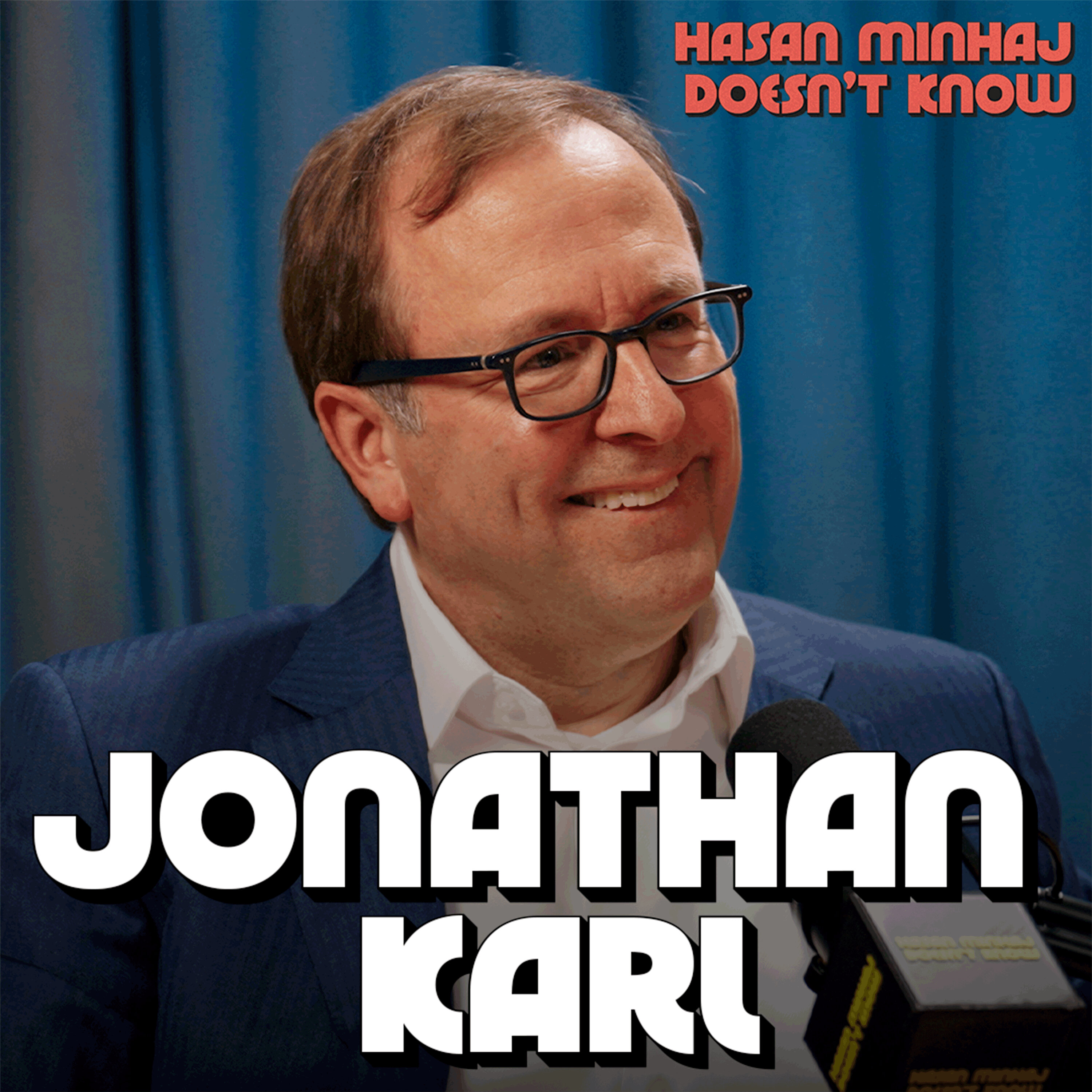
Hasan Minhaj Doesn't Know
Why Donald Trump Has a Personal File on Hasan - with ABC's Jonathan Karl
00:56:45
Loading summary
Transcript244 lines
- [00:00]
Host
ICE recently admitted to detaining immigrant children longer than the recommended limit. This past August to September, ice held about 400 children for over 20 days. Advocates reported conditions such as contaminated food, lack of medical care, and insufficient legal counsel. I read about this nightmare on Ground News, which is today's sponsor. Ground News shows a breakdown of publications reporting on a story, including a factuality score in which way each publisher tends to lean politically. It is not about completely eliminating bias here, folks. It's about trying to make you aware of the potential biases of different publications so you can consider them as you analyze an event or the issue. I was at least glad to see that 98% of the 69 publications reporting on this story were rated high factuality because the last thing we need is more misinformation on this issue. Use the link in the description or go to groundnews.com huston to get 40% off the ground News Vantage plan, the same one that we use right here on HMDK. My discount makes it just 5 bucks a month for unlimited access. Let's cut through the noise together@groundnews.com Huston it's the new year so of course it's time to get unspeakably hot and really really healthy. My cheat code for wellness is going to Whole Foods looking for lean protein. I love grabbing the wild caught sockeye salmon at Whole Foods. All their proteins are always antibiotic and hormone free. Doing dry January. Cool. Get on my level you fools. I am dry every month of the year and I love going to Whole Foods for something fun to sip on. They have so many options like Kombucha or probiotic sodas. We can have a little fun and meet our health goals. Okay, we all know this. The best part of Whole Foods is that I can trust their pre made food. Whether it's the hot bar, the 365 ready to eat salad kits or ready to heat rice and beans to pair with my aforementioned lean proteins. Nothing is better for my wellness than having quick and easy options with trusted ingredients. Plus at Whole Foods they have big sales on supplements and vitamins. They have also got high quality protein powders and herbs. I don't know any other spot that does that. Shop all things wellness at Whole Foods Market.
- [01:58]
Jonathan Karl
Lemonade.
- [02:02]
Host
That is one of the most powerful people in the world that you have in your iPhone contacts. I'm not trying to brag I have some pretty semi relatively famous people. But if you call Donald Trump right now, I'll call John Mulaney right now.
- [02:14]
Jonathan Karl
That's pretty good. That would be a good conversation. I like that.
- [02:17]
Host
We could put on speaker and have them talk to each other. It is the one year anniversary of Donald Trump's second inauguration. There's no way we could just cover that entire year in just one episode. I mean, it would take an hour just to list the Trump news. Yeah, the tariffs, Zelensky, Gaza ice raids, that weird birthday military parade, calling in the National Guard. No kings protests, one big beautiful bill. Iran, Venezuela, Greenland for some reason. And he literally demolished an entire chunk of the White House. And then there's all the crazy he said. I mean, Tyler, just cut to what he said.
- [02:50]
Donald Trump (quoted)
We're gonna go the wrong way. If we keep taking in garbage into our country. The US will take over the Gaza Strip and we will do a job with it too. Don't take Tylenol. Don't take it. We're going to have all brand new beautiful grass. You know, like everything else, grass has a life. Do you know that? So I was not a fan of.
- [03:07]
Jonathan Karl
Rob Reiner at all.
- [03:09]
Host
Quiet, quiet.
- [03:10]
Donald Trump (quoted)
The windmills are driving the whales crazy. Obviously I'm really good at this stuff. Your countries are going to hell.
- [03:18]
Host
So for a 2025 Trump debrief, I wanted to sit down with the one reporter who might understand him better than anyone else. I'm talking about ABC News chief Washington correspondent Jonathan Karl. He has writt four best selling books about Donald Trump and his latest book is called Donald Trump and the Campaign that Changed America. We talked about his relationship with the President. Are you in an abusive relationship with Donald Trump? The conversation he had in the Oval Office with Donald Trump about me.
- [03:48]
Jonathan Karl
So what do you do with this.
- [03:49]
Host
Guy Hasan Minhaj and how Donald Trump essentially sees foreign policy as a real estate venture?
- [03:55]
Jonathan Karl
Well, he literally has his real estate buddy as his envoy to the world.
- [03:59]
Host
Let's be honest, America has always kind of been a real estate venture. I mean, just ask indigenous people or Mexicans or Hawaiians or Puerto Ricans or Panamanians or Filipinos or Haitians or Vietnamese or Palestinians or Afghanis or Iraqis or Syrians or Libyans. I'm just giving 13 different examples. It's not like this is a pattern or anything. So what do I mean? The show's called awesome Enough, doesn't matter. I want to start with a quote from your 2021 book, the Final act of the Trump Show. Jonathan.
- [04:27]
Jonathan Karl
Yeah.
- [04:27]
Host
It's true that you were president of the White House Correspondence association, also known as the whca.
- [04:33]
Jonathan Karl
Yeah, yeah. The Trump presidency. The first One.
- [04:36]
Host
Now, is it true that I was asked to help host your annual dinner in 2020 along with my fellow colleague and comedian Kenan Thompson?
- [04:43]
Jonathan Karl
It's true that I asked you to do that and you graciously said yes.
- [04:47]
Host
March 4, 2020. In your book, you said you had, quote, one of your strangest meetings ever with the President. Let's take a look at this quote. As with previous meetings with Trump, we were told to take a seat and wait for the President to arrive. As the three of us sat there alone in the Oval Office, noticed a sheet of paper on the President's desk with the words all caps Hassan Minhaj in big print on the top of the page. Was the President gonna kill me?
- [05:16]
Jonathan Karl
I didn't know what he had in mind, but I also didn't know if this was a test. Cuz I'm alone in the Oval Office, I mean, with two of my colleagues from the whca. Are they taping us? I mean, are they. Do you want to see? And I mean, you have to look at what's on the desk. Right. But you can't, you can't go over and touch it.
- [05:36]
Host
So, so you, you keep elaborating.
- [05:40]
Jonathan Karl
Yeah.
- [05:40]
Host
And I'd love for you, for our audience.
- [05:42]
Jonathan Karl
Yeah.
- [05:43]
Host
To narrate this.
- [05:44]
Jonathan Karl
Okay, so what do you do with this guy, Hassan Minaj is how he said it. I remember how he, like he put some emphasis, mispronouncing, but some emphasis on your name. The President asked me holding the piece of paper that was placed on his desk. He was very nasty about Trump. He said, referring to himself in the third person, so what are we gonna do?
- [06:03]
Host
Do about this guy?
- [06:06]
Jonathan Karl
What are we gonna do? Do you know what I said?
- [06:09]
Host
What did you say?
- [06:10]
Jonathan Karl
Nothing. Cause he kept on talking. I never got a chance to really answer it. When he finally stopped talking, I just talked about how great you are. I said, you're gonna like him. He's really smart, he's funny, he's gonna do a great job. The whole purpose of this, I, we were asked to come into the Oval Office. The press secretary sent me a note saying the President wanted to talk to me about the White House Correspondents Dinner and about appearing at the White House Correspondents Dinner. I hadn't invited him yet.
- [06:39]
Host
So this preempted the whole thing.
- [06:41]
Jonathan Karl
I hadn't invited him yet. There's a little bit of history here. I mean, he had called the press the enemy of the people. He had boycotted the three previous White House Correspondents Dinner. Two of them he had banned Anybody who worked for him from going. So I wasn't. You know, on one hand, you always invite the President of the United States. I mean, we've been doing it since Warren Harding. But on the other hand, I just wasn't sure, and I certainly wasn't gonna beg him. And, you know, he wanted to talk to me about it. And I guess they had done a little bit of research on you. Yeah. Kenan Thompson, I think he thought was fine. He didn't raise any questions about Kenan Thompson, but apparently said you had been kind of nasty about Trump.
- [07:23]
Host
So what does the dossier look like? Is it on me? Is it like an NBA Jam sort of thing of, like, speed height?
- [07:29]
Jonathan Karl
Yeah. I couldn't get. I couldn't get close enough to actually read it. And here's the thing. I was not going to negotiate with him. So if they thought that they were going to say, hey, you get rid of this guy Hassan Minhaj, the president's gonna come and do the dinner, and you're gonna be a big star, you know? No, I'm not doing that. I hadn't even decided to invite him. Once he brought me in, I repeated a line to him, and I repeated this, I think, three times during the course of this. The meeting went on for a while. Yeah, it wasn't all about you, but it went on for a while. But he said to me, it would be a very big deal for you, Jonathan, if I did the dinner. Be a very big deal for you. And my response to him was, Mr. President, if you would like to come to the dinner, that's great. If you decide you don't want to come to the dinner, we will completely respect that decision, too.
- [08:29]
Host
You have known the president for a very long time, and you have covered the president for a very long time. I mean, you talk about it. We're talking about this. Obviously, the pull quote we talked about was from this book, Betrayal.
- [08:41]
Jonathan Karl
Yep.
- [08:41]
Host
Okay. The final act of the Trump show. And then, of course, we have the new book, Retribution. In the book, you talk about calling the president at all hours because he doesn't sleep.
- [08:53]
Jonathan Karl
Right.
- [08:54]
Host
So Donald Trump does not sleep.
- [08:58]
Jonathan Karl
I can't figure out when he does. I mean, I think he sleeps a few hours a night. You just look at his Truth social feed and look at the stuff he's putting out. Two in the morning, three in the morning, and then first thing in the morning, I found. I mean, a little. This is a secret from the campaign, and it's probably changed a little bit into the White House, but I Found during the course of the campaign that the time that I could call him and he would almost always answer the phone. I mean, I had a much higher percentage chance of Donald Trump picking up the phone than the deputy assistant press secretary of the Kamala Harris campaign picking up the phone on any given phone call. I mean, the phone. But my. I found 7 o' clock in the morning or even before 7, very early or after 9, 10 o' clock at night. And I wouldn't call much beyond then, but I.
- [09:48]
Host
You could, but you have his number.
- [09:50]
Jonathan Karl
Yeah. Should we call? No. It's probably not a good idea.
- [09:54]
Host
You could, but you could.
- [09:55]
Jonathan Karl
Yeah, yeah, yeah.
- [09:57]
Host
No, not, not to name drop, but that is one of the most powerful people in the world that you have in your iPhone contacts. I'm not trying to brag, I have some pretty semi, relatively famous people. But if you call Donald Trump right now, I'll call John Mulaney right now.
- [10:12]
Jonathan Karl
That's pretty good. That would be a good conversation. I like that.
- [10:15]
Host
We could put mic on speaker and have them talk to each other.
- [10:19]
Jonathan Karl
You could talk about horse in the hospital or something. It'd be great.
- [10:22]
Host
How do you navigate that? When do you know when to call him?
- [10:25]
Jonathan Karl
First of all, I called him a lot more during the campaign because it felt a little less weird to call a candidate. Still strange. I never called a major party nominee during the course of the heat of the campaign. But he clearly likes to be on the phone. Calling a president is. So I call him much less frequently now. And it's when there's a really important thing. So I'll give you a couple of examples of when I've spoken to him since he's been president. The morning after the Iran strikes, I called him before 7am it was before Good Morning America. I remember because we go on at 7 and all we knew was that the US there were reports of explosions in Iran. We knew that something had happened. We didn't know all the details.
- [11:12]
Host
So you're wondering, are we at war?
- [11:13]
Jonathan Karl
Is the United States basically, yeah. What's happening? And he picked up the phone and it wasn't a long conversation, but he says, you know, we did it. It was great. It was, you know, he gives some, you know, you know, talks about how amazing the, the military was and, you know, and, and we took out their, you know, nuclear program, whatever, and then he's got to go. Another time I called him was right after Charlie Kirk was, was murdered.
- [11:46]
Host
And what did he say?
- [11:48]
Jonathan Karl
And that was, you know, I called him and what I Said is, I wasn't so much calling to get his, like, reaction. I was. I was calling him as a human being to say, you know, I'm sorry. Cause I knew that he. Charlie Crook's somebody he was actually quite close with.
- [12:05]
Host
Oh, interesting.
- [12:06]
Jonathan Karl
And I said, I'm really sorry about what happened to Charlie. And he said to me, yeah, I'm sure you're really upset about that. And I. Which sounds like it could have been, like, sarcastic, but it wasn't. It actually wasn't. Because then he said to me, he said, charlie actually liked you. And he added, I don't know why, but he did. He liked you. And I don't think he was, like, making a joke. I think he was just saying really what was on his mind. And I think you're one of the.
- [12:46]
Host
Few people that can actually make sense of this cognitive dissonance. I mean, this is why this is really important.
- [12:50]
Donald Trump (quoted)
So.
- [12:52]
Host
Who Donald Trump is in the streets and in the tweets is quite different than who he is in the sheets and on the phone. Help me make sense of this, because we also interviewed one of your colleagues, Kaitlan Collins, who also is able to get in touch with him and for sure. And I. I've been trying to, for the life of me, make sense of this, because in this, in the streets and in the tweets and on truth social, he stands, on business, he will put it in all caps. I hate you. I hate Rosie o'. Donnell. I hate the press. And then on the phone, he can be magnanimous to you or even pick up your phone. I mean, if there's someone you dislike within your family, there are cousins. You won't pick up their call.
- [13:39]
Jonathan Karl
Yeah.
- [13:41]
Host
You have said in the book that Trump goes back and forth between being, quote, savagely ruthless and, quote, exceedingly generous and complimentary. Who is he?
- [13:52]
Jonathan Karl
I mean, what's the name of the show again? Doesn't know. So I don't know that I know the answer to that question. But my sense of him, and I have, by the way, I've known him since 1994. I was a reporter for the New York Post, and as a whole, so I dealt with him. He was somebody. I could get him. I didn't have his. Well, we didn't have cell phones. I don't think back then. But I could get him on the phone, and he was always ready with a quote. If it was slow news day, he'd call up Donald Trump. So I've known him for a long time. I think he's always in the moment. I do think my very first book on him, which I wrote after three years into his first presidency, was front row at the Trump show, which I refer to the Trump show because I think that he really did see the presidency and does. I think he's got a slightly different view now, but certainly in his first term, he saw it as the world's greatest reality show, and he was always programming for it. And you have heroes, you have villains, you've got friends who turn on you, you've got enemies who you flip. I mean, it's so. I.
- [15:07]
Host
Very wwe. Very.
- [15:08]
Jonathan Karl
No, it's entirely wwe. I mean, he. And don't forget, he is a member of the WWE hall of Fame.
- [15:14]
Host
Totally. But his head was shaved by Vince McMahon.
- [15:18]
Jonathan Karl
I mean, he is. He is. I mean, literally, Vince Mann's.
- [15:21]
Host
Or he shaved. Sorry, I want to be actually accurate. He shaved Vince McMahon's head.
- [15:26]
Jonathan Karl
Yes.
- [15:27]
Host
In the ring.
- [15:29]
Jonathan Karl
And Vince McMahon's wife is in his Cabinet, Correct. Yes. So he is wwe. He also. Empathy is not a really big thing with Trump. I mean, if he may say something just cuttingly nasty about you and not really process what that actually means.
- [15:49]
Host
I mean, he is savage. Here's a clip of him being savage to quite a talented journalist. Let's take a look.
- [15:57]
Donald Trump (quoted)
The reason I won that lawsuit was because you were dishonest. You were proven to be dishonest. And so you can't sit back and just say, oh, well, what do you think? You know, like, you're some wonderful person. You're not a wonderful person, frankly. You're a terrible reporter. You know it, and so do I.
- [16:13]
Host
Jonathan, I just want to ask you.
- [16:16]
Jonathan Karl
Yeah.
- [16:18]
Host
Are you in an abusive relationship with Donald Trump?
- [16:25]
Jonathan Karl
Look, I don't think it matters what he calls me. And.
- [16:30]
Host
No, no, because I'm asking you as a friend.
- [16:31]
Jonathan Karl
Yeah.
- [16:32]
Host
Bina and I, we do have an extra guest room when my mom isn't staying there. It is yours.
- [16:36]
Jonathan Karl
Yeah. I mean, look, he does that kind of stuff, and then it's actually interesting, you know, what happened after that. So the, you know, it's in the Oval Office. I'm part of the press pool. That exchange happens. He takes, like, one or two more questions, I believe, and then it's over. And we're asked to leave. The press is asked to leave. As we're headed out, he motions me to walk, come over to the Resolute desk.
- [17:01]
Host
Okay.
- [17:02]
Jonathan Karl
And he does. He makes this gesture to say, like, we're okay here. We're okay here. And then. And then I said to Him. But I said, that was pretty. That was pretty tough. And he starts laughing. He says, no, no, you were tough. You were tough. And I just go out. I'm walking now because they're really pushing the press out. And I'm walking out and I hear him from behind say, thank you, Jonathan. Thank you, John. As we're headed out. I mean, it was like he saw it as like a little performance. So that's why you just. I mean, I don't sit there and take offense and be like, well, how could you say I'm not a wonderful person? Dammit, I am a wonderful person. I mean, you would never do that. My colleague Mary Bruce had an incident after that one where he really went after her. And you just watch her. She just continues to ask the question as I was trying to do. He was kind of talking over me. But you just continue to keep focused on what your job is. Trump early on said that the media was the opposition party. You're the real opposition party. So that's not true. I mean, it's not true in the case of me and my colleagues. And I don't want to do anything that makes it look that way. So I'm just gonna focus on what matters. Him insulting me is irrelevant, or insulting my colleagues. You know, I'll get a bunch of nasty tweets, I might get some threats, but whatever.
- [18:31]
Host
How do you feel about the ABC settlement for $15 million? I mean, I don't wanna mess up your bag. You have healthcare. I'm on YouTube. You have health insurance and retirement plan. So just communicate how you feel about it through your face and we'll just hold on you for 10 seconds.
- [18:48]
Jonathan Karl
Look, I really have nothing to say about that, but I mean, look at the one thing. It was a settlement. I think it was just to do away with it. You know, there was no admission of any. He says that you were found guilty. I mean, none of that happened. Obviously.
- [19:08]
Host
In chapter seven of the book, you talk about post assassination vibes.
- [19:11]
Jonathan Karl
Yeah.
- [19:12]
Host
That there was this stark shift in who he was after the assassination attempt. Let's take a look at the quote. Thank you, everyone for your thoughts and prayers yesterday, as it was God alone who prevented the unthinkable from happening in this moment. It is more important than ever that we stand united and show our true character as Americans, remaining strong and determined and not allowing evil to win. I mean, this level of sincerity, when I read it, I was like, is this Donald J. Trump or Lin Manuel Miranda?
- [19:42]
Jonathan Karl
And by the way, it's important to think about what was happening in the world at that moment? Cuz there was seething raw anger by Trump supporters, rightfully so. Everywhere. The guy was shot at, somebody tried to kill him. And one of the people that responded before that was J.D. vance, who had not yet been chosen as his running mate, but who basically said that it was the Democrats who did this. After you impeach and you lie, you did it, this is what happens. So he was like stoking the anger. Not just that, it was a crazy guy on a rooftop who tried to shoot him, but it was Democratic elected officials who were responsible for this. And Trump didn't do that. And I thought in that moment, I was actually in Milwaukee, cuz the convention, remember it was Saturday night, the convention was opening on Monday. We were out there, we were doing our show. We planned to do the show Sunday from Milwaukee. I was out there when that happened and I could just sense the tension. Sure. And my colleagues who were there in Butler were. I mean, they went out and immediately tried to report on what was going on, get eyewitness accounts, and some people in the crowd were taking it out on them. The hell with you, you did this, you're responsible. Even some worse things that were said to my colleagues that were out there. So look, it was a real moment of tension. So Donald Trump's statement there was incredibly important. It wasn't just a lot different from what you've seen everywhere else. It actually, I think, helped turn the temperature down in the country at an incredibly dangerous moment. Now he cranked the temperature up not long after that.
- [21:24]
Host
Yeah.
- [21:24]
Jonathan Karl
But the moment had changed.
- [21:27]
Host
What do you think wins out here? Because is it growth and humility that he's showing in that truth social post?
- [21:33]
Jonathan Karl
Yeah.
- [21:34]
Host
Or is it pettiness and anger because just recently he's touched down dancing on Rob Reiner's grave.
- [21:40]
Jonathan Karl
Yeah.
- [21:40]
Host
So do you just see it as something that vacillates or is there a true person that he is?
- [21:49]
Jonathan Karl
I mean, that was a unique moment for him. That was actually the first phone conversation I had with him too, because I called him the Monday morning after the Saturday night assassination attempt. I had had his phone number, but I hadn't like used it. That was the first time I had directly called him and I didn't think he would pick up. He didn't pick up. I left a voicemail message. I'm really sorry about what happened. He called me back Monday as the convention was opening up. He had just picked J.D. vance. I was sitting at the ABC News booth in Milwaukee next to David Muir, our anchor. And we're about to go on the air and my phone rings and by the way, there's no, you think like you block caller ID or something. It says Donald Trump when he calls. And I'm like, David, I gotta, you know. And I was on the phone with him that time for about 12, 12, 15 minutes. And he did sound like different than I had ever heard him. Very much the tone of that statement you just read, you know, kind of amazed that, that he had survived. You know, he'd kind of. Because he had seen. Do you remember the photograph that Doug Mills took? Sure. New York Times reported the bullet. No, the one, the one with the bullet going by and you could see like. Oh yeah, the bullet going by. Yeah, yeah, yeah. So anyway, I, you know, but look, far more frequent is what you see with Rob Reiner.
- [23:13]
Host
But you sensed a guy in that moment, an older gentleman in his late.
- [23:18]
Jonathan Karl
70S who said, who had gone through an experience that shocked him and had an impact on him. Now it did not last. I mean he, you know, I mean the convention was a totally different convention than it would have been. I mean they really didn't do a lot of the hellfire and brimstone speeches that you, that you would normally. I mean you had all the WWE thing going on. But it wasn't like, you know, Biden wasn't like mentioned all that much. I think he said the word Biden once in his speech after telling everybody he wouldn't do it once, but he did it once. But it was not. It was very different. It was very different. But he was right back at it within days.
- [23:59]
Host
Much like stand up comedy, health issues don't follow a 9 to 5 schedule. Like throwing your back out. Teaching our kids to somersault. They want to be secret agents for some reason. Burning yourself while cooking. Microwaving is cooking. Okay. Or giving yourself a migraine from doom scrolling until 3am I'm an adult, I can do what I want. Thankfully, with ZocDoc, you can find and book a provider 24 hours a day, seven days a week. There's no catch. ZocDoc is a free app and website that helps you find and book high quality and network doctors. They've got virtual appointments, in person options and most importantly, verified inpatient reviews so you know what you're signing up for. Appointments made through Zocdoc happen fast, typically within just 24 to 72 hours of booking. Here's what I love most. You can even score same day appointments. Your boy is not known for his patience. Stop putting off those doctor's appointments and go to Zocdoc.com Hussin to find and instantly book a top rated doctor today. That is Z O C-O C.comHUSN this message is sponsored by Zocdoc. It's the new year so of course it's time to get unspeakably hot and really really healthy. My cheat code for wellness is going to Whole Foods looking for lean protein. I love grabbing the wild caught sockeye salmon at Whole Foods. All their proteins are always antibiotic and hormone free. Doing Dry January. Cool. Get on my level you fools. I am dry every month of the year and I love going to Whole Foods for something fun to sip on. They have so many options like kombucha or probiotic sodas. We can have a little fun and meet our health goals. Okay, we all know this. The best part of Whole Foods is that I can trust their pre made food. Whether it's the hot bar, the 300 ready to eat salad kits or ready to heat rice and beans to pair with my aforementioned lean proteins. Nothing is better for my wellness than having quick and easy options with trusted ingredients. Plus, at Whole Foods they have big sales on supplements and vitamins. They have also got high quality protein powders and herbs. I don't know any other spot that does that. Shop all things Wellness at Whole Foods Market this episode of HMDK is brought to you by booking.com I love to travel, but I can't say that it's easy. My family has never been described is low maintenance. We all have different ideas of relaxing. What is fun for my 70 year old parents is the opposite of what is fun for my younger cousins. Thankfully, booking.com offers a wide array of hotels and vacation rentals across the United States. So there is something for everyone. Even those who are impossible to please. I'm talking about you dad. Whether you're booking for yourself or your picky parents or da boys group chat, you can find exactly what you are booking for. For example, my number one request at a hotel or a rental is a sauna. Now I will settle for a steam room but I gotta sweat out my demons. Speaking of, my kids appreciate a touch of whimsy. A cute window seat to read on. A water slide in the pool. A massive pile of construction dirt next door. They're not picky. Dare I say if we can find our Perfect stay on booking.com, anyone can find exactly what you are booking for@booking.com booking yeah. Book today on the site or in the app. What I'd like to do is this episode is going to come out.
- [26:57]
Jonathan Karl
Yeah.
- [26:57]
Host
In a couple weeks. And I think that January 20, 2025 to January 20, 2026, that year in review.
- [27:07]
Jonathan Karl
Yeah.
- [27:08]
Host
I'd call it the Year of Retribution. Just like your book.
- [27:10]
Jonathan Karl
Yeah.
- [27:10]
Host
I want to go over the highlight reel.
- [27:12]
Jonathan Karl
Sure.
- [27:12]
Host
Okay, let's take a look at this. Retribution 2025. Prosecutors involved in the January 6th case were fired. James Comey in New York. Attorney General Letitia James were indicted. John Bolton had his house searched by the FBI. Stephen Colbert was canceled, and Rosie o' Donnell moved to Ireland. What's the stat line with Donald J. Trump going after his personal and political opponents in the Year of retribution? In your opinion, who are the winners and who are the losers?
- [27:39]
Jonathan Karl
Look, he said during the campaign, I am your retribution. The line, the full line was in 2016. I said, I am your voice now. I say to you, I am your retribution. And his first campaign rally was at Waco, Texas, which had been a place that had become a symbol to the far right back then, 1995, of the overreaching, abusive, out of control, secret, deep state federal government, atf, FBI, they're coming for you. Black helicopters. I actually wrote a book about that. Much shorter book, but I wrote a book about that. So this was, I could see that this was his theme. I mean, he had other themes he talked about during the campaign. But running through it all was these people tried to and are still trying to put me in prison. These people came after me. And if I come back into power, I am going to bury them. I am going to go after them. And not the performative Trump show stuff. I'm really going to go after these people. So January 20th, a year ago yesterday, when this is for us, January 20th, 2025, he pardons every single pardons or commutes the sentence of every single individual that was in part of the attack on the Capitol, including those that beat up police officers. And at the Justice Department, there's a guy named Emil Bovey, who I write about pretty extensively, who is basically the, like, king of the Justice Department, because the attorney general nominee, you know, it's going to take a while until she's sworn in. Pam Bondi, Todd Blanche, who's gonna be the deputy. It's gonna take a while for him to be sworn in. This guy in the number three position doesn't need to be confirmed by the Senate, by the way. All three of them had one thing in common. They had all worked as Donald Trump's defense attorney at one point or another got understood. But Bovey goes through, and you mentioned the firing of prosecutors. It was more than that. I mean, it was a hollowing out of everybody at the FBI, everybody and at the Justice Department who had been part of any of the cases against Donald Trump or any of the January 6th cases. I mean, these are senior career national security prosecutors and investigators who are gone immediately.
- [30:20]
Host
Were you shocked at the level of efficacy, the fact that it happened? I mean, again, like we talked about in the streets and in the tweets, but. But the actual efficacy from a political perspective of like, oh, these are real results.
- [30:32]
Jonathan Karl
I was already writing this book and I was already deciding that I was gonna call it retribution. So I knew that this was the plan. But, yes, the swiftness and the totality of it was actually shocking, even if it wasn't surprising. So he goes through and does all of this, you know, the pardoning. Just take that for a second. 1500 people, all of them pardoned. In the days before he gets sworn in. There's a. Everybody's wondering, who's he gonna pardon? He's promised the J.6 hostages, he's gonna take care of them, all that. But he's really not gonna pardon, like, the guys that beat up police officers, is he? So J.D. vance goes on, I believe it was the Fox Sunday show, and is asked, so who's he gonna pardon? How far the pardons gonna go? And Vance says, well, you know, we're not gonna pardon people that beat up police officers, but, you know, it's gonna be. We're gonna take a look at everybody and case by case basis. So even JD Vance didn't think it was gonna go this far. And it's like basically the first act he does. I mean, a couple other things. He's got some executive orders he signs at his first rally, but the first real major thing he does is total blanket sardin force.
- [31:47]
Host
Did you take that as this is the signal on day one that if you are loyal to me, I got you from the most minor of infractions all the way to essentially murder. If you are disloyal to me, hell hath no fury.
- [32:02]
Jonathan Karl
Yeah, yeah. And, you know, some of the steps he would then take later on in the year, I mean, were really pushing the limit, beyond which, look, there's nobody, like, at the White House now telling Donald Trump, look, sir, we really shouldn't do this. It's, you know, I mean, people are. I mean, people advise him, but it's like he's Got the people around him who are going to carry out the orders. But when he decides to prosecute James Comey, I mean, I remember when he wanted Bill Barr to prosecute Comey, his Attorney general, at the end of his first presidency. And, you know, and Barr just wouldn't. He's like, there's no case. What are you talking about here? And this time around, the career people once again said, there's no case here. The prosecutor that he had named to the Eastern District of Virginia, which had the jurisdiction over this, said, there's no case, gets fired, replaced by. So he was willing to go to almost any extreme to get after the people that he saw as his enemies.
- [33:13]
Host
At any point, did you feel in fear of your safety and what you've done?
- [33:17]
Jonathan Karl
Well, he. The same day as what you showed in the Oval Office. Earlier in the day, he had arrived back at the White House on Marine One. I was out there on the South Lawn with the other reporters asking some questions. And Pam Bondi, the Attorney General, had said that the Justice Department was now going to look into prosecuting hate speech. The context is all the anger after what happened to Charlie Kirk. And she was saying, we're going to go after people because it's dangerous hate speech, meaning people criticizing people in Trump's movement. But a lot of the Trump supporters out there thought that was a terrible idea, because they know that if you're going after hate speech, eventually they're gonna go after them as well. And it's like, hate speech is free speech. So I just asked Trump a very simple question. Your Attorney General said that she's gonna go after hate speech. Some of your supporters say hate speech is free speech. What do you think of it? Just a very basic. Where do you stand on this? Yeah, yeah. And his first answer, he says to me, well, maybe she'll go after people like you. You have a lot of hate in your heart. And that was a shocking moment, not because of me personally, but the. And you have a lot of hate in your heart, and you haven't been fair. So the idea that the President of the United States is suggesting that the power of the Department of Justice could be brought to bear against journalists who the President of the United States doesn't believe are fair. That's a very interesting reading of the First Amendment.
- [35:08]
Host
Right. Let's talk about Trump and the military.
- [35:10]
Jonathan Karl
Yeah.
- [35:11]
Host
National Guard troops are being pulled right now from Chicago, Portland, Los Angeles. It was a Supreme Court decision. Yeah, but will they return, in your opinion, is Donald Trump waiting for black teenagers to set off fireworks inside of a Walmart parking lot, and he will incite the insurrection.
- [35:27]
Jonathan Karl
Okay, so the one of the backdrop of why he pulled back the National Guard in the cities, it came after the Supreme Court ruled that he couldn't send the National Guard against the wishes of the local leaders. But there was a aspect of that decision that said that if the president's going to. I'm bastardizing this, so please look at the actual decision, but basically said that he would have more authority to send in the active duty military than to send in the National Guard. Now, that runs into other issues. Posse Comitatus and there's other issues about whether or not you can use the military against, you know, on the streets without inciting, without calling the Insurrection act and all that. But I think that if he goes back again, it's, you know, potentially at a much higher level. And it's not National Guard, it's active duty military.
- [36:20]
Host
We're having this conversation shortly after an ICE agent was caught on video.
- [36:27]
Sponsor/Advertisement Voice
Straight.
- [36:27]
Host
Up murdering an American citizen. So people are angry about it and they may possibly protest by the time this episode is live. Do you think Donald Trump would use protests or something similar to protest as an excuse to invoke the Insurrection Act?
- [36:46]
Jonathan Karl
I mean, he certainly wanted to do that last time. He largely didn't because his Attorney General and his Secretary of Defense not only advised him against it, but also kind of like, distracted him a little bit so he wouldn't go through with it. I mean, I. This isn't my. This isn't betrayal. I recount a scene where the Defense secretary at the time starts mobilizing active duty military. The 82nd Airborne, I think it was to. To Washington, D.C. outside the city. He has these guys coming into Fort Belvoir, which is like, you know, an hour outside of Washington, so that the stories are, oh, my God, the military is mobilizing the active duty. He wasn't doing it because he wanted to, like, send the troops into the city. He liked the story that was criticizing him because it made Trump think there's something going on, that there really wasn't so much. Those people are gone now. You have Pete Hegseth and you have Pam Bondi. So the limits are much less. So the question is, if protests really got out of control, remember what we saw in 2020? We saw a police station in Minneapolis set ablaze. I mean, if you really saw protests get out of control, I don't think that he would hesitate to do that. With confrontations between protesters and ICE agents in Minneapolis Showing no signs of slowing down, President Trump is threatening to send in the military, posting on social media that he may invoke the Insurrection act to stop what he claims are professional agitators and insurrectionists.
- [38:25]
Host
Let's talk about retribution towards immigrants. Immigration. Here's a stat line for 2025. There were reportedly over 600,000 deportations, 1.9 million, quote, self deportations, an expanded Muslim ban, an attempt to end birthright citizenship. The Supreme Court decision on that, by the way, is tbd. ICE agents are cosplaying Grand Theft Auto right now. But I want to talk to you about this tweet by Homeland security America after 100 million deportations. Taking a look at this. Do a majority of Americans share this vision of our country looking like a Calvin Harris mixtape cover?
- [39:00]
Jonathan Karl
I mean, I, I certainly, I don't, I don't believe so. But I, you know, I mean, this is, this is really. And this, this is, this is a, this is an official federal government statement.
- [39:15]
Host
This is up there, in my opinion, with the Roses are red, violets are blue. If you are illegal, we will deport you. Which they have also tweeted. I don't know if it's HSgov, but it was.
- [39:23]
Jonathan Karl
But obviously you're not talking about just deporting people that are here illegally. 100 million deportations. You're going far beyond people that have come in without documentation.
- [39:37]
Host
What do you make of these tweets? What's being signaled here? That's a third of the country. 100 million people is approximately about 28 to 33% of this country. It's like, it's.
- [39:49]
Jonathan Karl
I mean, it's mind blowing. I mean, you know, look, a lot of what.
- [39:54]
Host
And then how do you cover this at abc? You're like, what do I do with this?
- [39:57]
Jonathan Karl
Yeah. I mean, a lot of what they do is, you know, they want people to be, they want the people that don't like them already to be outraged. And they, you know, they want Rosie o' Donnell to decide she's. Ireland's not far enough. I mean, they, you know, they're trying to get a rise out of people. I can't really explain it. And how do you cover it? You know, first of all, the tonnage is. There's so much. There's just, there's so much. And you're left to try to. When I, What I've tried to do since the day he got in the first time is let's pay less attention to what he says, to what he actually does.
- [40:39]
Host
Yeah, let's Follow what he's doing.
- [40:41]
Jonathan Karl
But when you're the President, United States, what you say matters too. So it's not. It's not that simple. It's not that simple.
- [40:46]
Host
Well, let's give this a case study because I'd love your analysis on this. And this is a bit of both policy analysis and then media analysis. We're having this Convo, top of 2026. Happy New Year to you, Jonathan Karl, and Happy New Year to Venezuela. Now, usually when we invade a sovereign nation, like we did In Haiti in 2004, we generally just kidnap their president, but we don't make it public. Definitely not in grid, maybe in stories, but it's kind of hush hush. This time Maduro was on his way to Planet Fitness, full Nike, tech, fleece. We kidnapped the dude. What is Donald Trump's strategy here? Why the live tweeting?
- [41:22]
Jonathan Karl
I mean, if we go back to what we said earlier, the presidency is the world's greatest reality show. This is a hell of an episode.
- [41:29]
Host
Okay. And so he's like, this is my time to take the intercept out of business. Break news. I'll drop the jpegs. I'm gonna do it.
- [41:39]
Jonathan Karl
Yeah, yeah. And look, it was an unbelievable military operation. I mean, it's kind of mind boggling what they did. Now, I used to cover the Pentagon. I know that the people that were part of that operation would have much rather not had live tweeting of this stuff and all this out there.
- [42:02]
Host
You had a story about Trump and Venezuela in 2018.
- [42:05]
Jonathan Karl
Yeah, yeah. I mean, yeah. Cause first of all, I mean, it is a little bit. You have to kind of step back and say, wait a minute, we just effectively invaded Venezuela, sovereign country. I mean, what, what, what's going on? Right. But yeah, what I found out when as I was writing my, my very first book was there was an incident in 2018 where Donald Trump was getting briefed by his national security team in the Oval Office and his national security advisor was going through and mentioned Venezuela. You know, there were protests and there was an effort to key up sanctions against Maduro back then. Yeah. And Trump said, what are the military options? What are the military options for Venezuela? And the national security adviser, HR McMaster, was who it was. So, sir, we don't have to worry. There's a lot of other tools that we have and we've got diplomatic pressure, economic pressure. No, what are my military options? And then he once again says, well, we've got other things we can do. And Trump loses it on his national security advisor. The meeting Ends. And he says, as it ends, he's saying, damn it, I want the military options. So HR McMaster says, okay, sir, I will reach out to the Pentagon, and I will get those options for you. He goes down the hallway. John Kelly, who was the Chief of staff at the time, follows him down the hallway and says, what are you doing? He says, well, I'm going to call the Pentagon, and I'm going to do what the commander in Chief just said. And John Kelly, who didn't say a word about this while the meeting was going on, by the way, said, don't do that. You can't do that. Don't do that. Just pretend that didn't happen. And he didn't call and get the military options. And Trump was off to other things. But when I was first told about this, I had a single source tell me about it. I was like, that can't be true. The President's not talking about war with Venezuela. Come on, what are you telling me? And my source was like, no, no. Somebody that was at the meeting. This really happened. So I ended up talking to two other people that were in the meeting.
- [44:05]
Host
Yeah.
- [44:05]
Jonathan Karl
I talked to HR McMaster about it, and it was. It was.
- [44:09]
Host
And they confirmed this.
- [44:10]
Jonathan Karl
100% true.
- [44:11]
Host
Does this terrify you? That. I mean, this is an important story that you're telling? Because that's Trump 1.0, which. Basically, what you're saying, when there were.
- [44:18]
Jonathan Karl
People that were kind of random.
- [44:19]
Host
Exactly. Guardrails, which is. Hey, dad didn't mean that.
- [44:21]
Jonathan Karl
Yep, yep.
- [44:22]
Host
We're actually not.
- [44:23]
Jonathan Karl
And there were two kinds of guardrails there. Yeah. There was one. H.R. mcMaster, who, to his face, is telling him it's not a good idea, and we don't need to do that. And then there's the other guardrails. John Kelly, who is not confronting him, but is gonna undermine him behind his back. Sure. Yeah.
- [44:38]
Host
Yeah.
- [44:38]
Jonathan Karl
And those things are both gone, the.
- [44:42]
Host
Guardrails and the adults in the room to say, let's talk about this offline.
- [44:45]
Jonathan Karl
Yeah.
- [44:46]
Host
They close the zoom meeting and then just disregard.
- [44:48]
Jonathan Karl
What he meant was, you know, not really.
- [44:51]
Host
Every time the United States invades another country, I find when I'm watching it live. So let's talk about what's happening in Venezuela right now. It feels like when I'm watching the news, the press frames it as an exciting adventure.
- [45:03]
Jonathan Karl
Yeah.
- [45:04]
Host
Feels very Indiana Jones. Dun, dun, dun, dun, dun.
- [45:07]
Jonathan Karl
Well, I mean, you've got all the material that's been put out by the White House and the.
- [45:10]
Host
The New York Times. Triples the font size. ABC graphics packages going nuts.
- [45:15]
Jonathan Karl
Yeah, yeah. You know, you got the low light photography. It's. It's all, you know, is there anything.
- [45:19]
Host
That'S going to be different about it this time, where there's perhaps proceeding with caution. We don't know what's going on. I don't know if you followed this, but Sean Stockman, one of the lead singers of Boyz II Men, was also breaking this story and then had to pull back on Instagram and say, my bad, I don't fully have all the facts and details, but my serious question, and I'd love your analysis on this, is why won't the majority of the mainstream press use the word kidnap? They'll use words like captured or seized, when in fact it is an invasion of a sovereign country. And you are quite literally kidnapping a leader of a sovereign country.
- [45:58]
Jonathan Karl
I mean, I don't know. I mean, I don't think that's. I think you can allow people to kind of make up their mind how they see it and you can describe what actually happened, which is him capturing it. If you consider it a kidnap or if you consider it the removal of an illegitimate president. I mean, look, Maduro did absolutely steal the election. I mean, this was an actual stolen election. I mean, not like a pretend stolen election. This was a real stolen election.
- [46:22]
Host
Yes.
- [46:24]
Jonathan Karl
Done horrible things to any opposition figure in that country. You know, kidnaps. A pretty loaded term.
- [46:32]
Host
Yeah, it's a loaded term because it's loaded with the truth.
- [46:37]
Sponsor/Advertisement Voice
This podcast is brought to you by wise, the app for international people using money around the globe. With WISE, you can send, spend and receive up to 40 currencies with only a few simple taps. Whether you're buying souvenirs with pesos in Puerto Vallarta or sending Euros to a loved one in Paris, you know you're getting a fair exchange rate with no extra markups. That's what makes WISE the fast, affordable way to use your money around the globe. WISE offers 24.7live support and runs over 7 million daily checks to catch and prevent fraud. So you know your money is where it's supposed to be. Be Smart. Join the 15 million customers who choose WISE. Download the WISE app today or visit WISE.com Learn more by visiting WISE.com US/compare Ts and Cs. Apply.
- [47:37]
Host
Trump has talked about taking over Greenland, the Panama Canal. He said Gaza should be turned into a resort after all the Palestinians leave. He basically thinks of, in my opinion, foreign policy as a real estate venture.
- [47:49]
Jonathan Karl
Well, he literally has his Real estate buddy as his envoy to the world.
- [47:52]
Host
Okay.
- [47:53]
Jonathan Karl
I mean, Steve Witkoff is a real estate guy, and he's in many ways performing the duties of the Secretary of State. Marco Rubio is the national Security Advisor. He spends most of the time at the White House.
- [48:05]
Host
Right.
- [48:06]
Jonathan Karl
Witkoff is the most significant, I think, presidential envoy.
- [48:12]
Host
And just for our audience, give some perspective on who Witkoff is.
- [48:15]
Jonathan Karl
I mean, Witkoff is a real estate guy, business guy, who's been friends with Trump for a long time. A golfing buddy of Trump's. He was actually golfing with Trump at the time of the second assassination attempt. Witkoff was in his foursome when the Secret Service spotted the guy in the bushes. So he's not a guy that has any foreign policy experience, not a government guy, but, I mean, he's. Look, he represents Trump very well, and he seems to be a rather tireless dude. And he goes out there and he's Trump's envoy. So Trump does look at the world, I think a bit like a series of real estate transactions. What I think is, what I'm trying to come to terms with is the use of military in all of this because Trump was very reluctant to use military force in the first term.
- [49:16]
Host
I mean, he talked about even before he ran in Trump 1.0, how much he detested it.
- [49:21]
Jonathan Karl
Yes, yes. And if you think about that, there was an incident where the Iranians, in the first term took out an American drone that was in international airspace, and the military wanted to strike Iran in retaliation. And Trump looked at all the options and pulled back and did not do it. He did take out Soleimani, the leader of the Iranian Quds Force, in January of 2020. So that was one point where he did. He did respond to Syria after they used chemical weapons. But at that point, he was given three different options, kind of big, medium, and small. And he took small, took the least possible option. And now look what he's done. Just in the first. You know, just in the first couple of weeks of this year, last week of last year, first week of this year, he bombed more boats in the Caribbean. He went after ISIS in Nigeria, he went after ISIS in Syria, and he invaded Crocus and captured. Whatever word you want to use.
- [50:31]
Host
I'm going to say kidnap, okay?
- [50:34]
Jonathan Karl
The president of that. That was all in the space of like, 14 days. So it seems like he's discovered something, a power that maybe he didn't fully appreciate that he had. I think when that Iranian operation took place, right. And those B2s and they do and then they fly for 30 some hours and they got the air to air refueling and they go there and they. And they hit. Exactly. They go to. I mean, you've heard him talk about it 100 times. I mean, that was like wild. He's in the situation room, he gets to see it. And then. And then a little while later, Heg Seth's showing them how they can go after these boats. Look at this. There it is. Watch, watch.
- [51:12]
Host
Boom.
- [51:12]
Jonathan Karl
It's like a video game. Yeah, yeah.
- [51:14]
Host
It's like Battleship, but in real life.
- [51:16]
Jonathan Karl
Yeah. And so I, you know, that's a whole different thing. And again, while I'm still trying to come to terms together, I don't think he still has any appetite for, like, wholesale invading a country and sending 100,000 troops to occupy. I think that, you know, he's been very reluctant to have much involvement in Gaza, for instance. So, you know, but this is a different thing. This is different.
- [51:41]
Host
A lot of people are horrified by how upfront Donald Trump will be about, specifically the real estate project that is the United States of America.
- [51:52]
Jonathan Karl
The transactional nature of it all.
- [51:54]
Host
But I was thinking about this, and tell me what you think about this. Hasn't the United States always been a real estate venture? I wrote this down. 1953, the invasion of Iran over oil. 1954, Guatemala. That was bananas. 1983, Grenada 1 airstrip. 1991, Iraq, oil. 2003, Iraq, oil. 2011, Libya, oil. 2015, Syria, oil. 2026, Venezuela, oil. Alaska. The purchase of Alaska from Russia. Talk about the ultimate real estate venture. 1867, Hawaii was just taken in. 1898, Moana was just dancing. It was a sovereign collection of islands.
- [52:32]
Jonathan Karl
And Louisiana Purchase, which we got from Napoleon, who I think he kind of got from his brother, Right. Who he put as the.
- [52:39]
Host
So just riffing this kind of pearl, clutching that. How could they? Is this really about land? Hasn't it always been about land?
- [52:46]
Jonathan Karl
Well, we've always.
- [52:47]
Host
And now it's just in all caps.
- [52:48]
Jonathan Karl
You know, you had Woodrow Wilson talk about making the world safe for democracy. You had, you know, Ronald Reagan talk about, you know, bringing down the evil empire. You had George W. Bush talk about how we're gonna make the world, you know, safer democracy. We're gonna, we're gonna, you know, we're going to. His phrase was we're going to end tyranny in the world. That's what George W. Bush said in his second inaugural address in January of 2005. So there has always been Jimmy Carter and the crusade for human Rights. There's always been the notion, at least rhetorically, from our leaders that we are about being a force for good in the world. Now you've come with a series of examples. I think you can argue that America has in many instances been a very much a force for good in the world. You look at what George W. Bush. You had Iraq. Yes. You also had pepfar. And how many lives were saved with George W. Bush saying, we are going to end the AIDS epidemic in Africa. By the way, a program that's been gutted and decimated us and the money that us. So the money that USAID has spent, a program created by John F. Kennedy to spread goodwill for America.
- [54:09]
Host
Now the Chinese Atul Gawande, who's a guest that we had on the show, what was great about what Atul was laying out, A non military option, by the way.
- [54:16]
Jonathan Karl
Yes.
- [54:16]
Host
A non military form of diplomacy.
- [54:19]
Jonathan Karl
Yep. And that whole notion of soft power. So, yes, it's goodwill and we're helping people, but it's helping the United States. Correct. Because we are gaining goodwill and influence around the world. And Trump doesn't. He's not part of that at all.
- [54:34]
Host
I mean, I mean, my fear with him, with his fascination with B2 bombers and it going from real estate to more military is can't we get him obsessed with something else? Because you've talked about this. He'll get obsessed with stuff. I have a five year old who's obsessed with dinosaurs. I can't get him to put his clothes on and go to school. Cause he's like, why would I put my clothes on when there's a raptor called the Utah raptor. We found him in Utah. Why do you want me to go to school when there's a.
- [54:59]
Jonathan Karl
That's pretty cool. It's pretty cool. Yeah.
- [55:01]
Host
And it blows his mind. And I have a 75 year old father and it blows his mind too.
- [55:06]
Jonathan Karl
Well, did you see what Trump was doing down while he was in Mar a Lago over the holidays? He also went out shopping for marble.
- [55:13]
Host
Okay.
- [55:14]
Jonathan Karl
You know, so there is something that he is very much putting a lot of effort into.
- [55:18]
Host
Is Trump obsessed with interior decoration?
- [55:20]
Jonathan Karl
He really is. And exterior decoration? I mean, he, I mean, he is putting a lot. You go and see him. People go to see him now. He loves showing off what they're doing. I mean, you see every day there's more gold. You can't really put any more gold yet inside the Oval Office because it's almost all covered that way. But you see what he's Done to the colonnade, which was just that kind of. You remember the photos of John Kennedy and Robert F. Kennedy during the Cuban Missile Crisis, alone in anguish, you know, thinking big thoughts in the colonnade, that little pathway right next to the Rose Garden. Well, now that's all like, filled with gold and portraits and all kinds of stuff. You know, the Rose Garden itself has got those paving tiles. So you can. I mean, he's into music. He's into being a dj.
- [56:11]
Host
What?
- [56:11]
Jonathan Karl
Yeah, yeah, yeah. So wait, what? Yeah, he would play dj@mar a Lago during.
- [56:17]
Host
He's on the serato. Like, he's literally dj like sypha sounds.
- [56:20]
Jonathan Karl
He's, he's. I mean, know his technique, but he, he, he is. The White House reporters will tell you that the middle of the day, sometimes you will hear really loud music, and it's emanating from the other side of the briefing room. You know, the briefing room. The wall to the briefing room. Okay. When you're facing the podium, the left. That left wall. Yeah. On the other side of it is the colonnade and the Rose Garden. So that's where he does his DJing. So you could hear it. And he plays it loud. He's into it. Playlist is a little bit.
- [56:51]
Host
I think what we have to do is get him into hgtv, which is essentially the Home Garden Network, which is.
- [56:58]
Jonathan Karl
It's reality tv.
- [56:59]
Host
Yeah, reality tv. Redecorating and redesigning it is super interesting and fascinating to watch. It's very life affirming.
- [57:05]
Jonathan Karl
Yeah. Wow.
- [57:06]
Host
We have high agency and we can change and rebuild homes. Dinosaurs would be another. And yeah, maybe we tap into his DJ skills.
- [57:16]
Jonathan Karl
I mean, they're doing stuff at the Kennedy Center. Yeah.
- [57:19]
Host
Because left to his own other vices, things can get really, really bad. I have two final questions for you before we get out of here. You have been covering politics for a long time. 3 plus decades. Do approval ratings matter? Because when I read them on the news, it's always hovering. Right now, the President's approval rating is at 36%. It's at 38%, 44%. The lowest ever. Like, do they matter or are they just kind of there?
- [57:50]
Jonathan Karl
Well, theoretically, he's never running for reelection again, and I think he really isn't. So it doesn't matter in that sense. But historically, the popularity or unpopularity of the President is a major indicator to how his party is gonna do in the midterm elections. So when you see a presidential approval rating hovering just above 35% or so, that is total Danger zone historically. Now, look, we've been breaking a lot of historic trends, so I wouldn't take anything to the bank, but in that sense it does matter.
- [58:21]
Host
Let's talk 2026.
- [58:22]
Jonathan Karl
Yeah.
- [58:24]
Host
Later this year. We've obviously done the year in review, but the midterms are coming up and people are going to talk about mobilizing the youth. Where is the youth?
- [58:32]
Jonathan Karl
Yeah.
- [58:33]
Host
Let's take a look at some analysis from a dude who was tapped into youth culture in 1996. I believe his name was either Jerry or Jonathan Karl.
- [58:41]
Jonathan Karl
Young people, I think in a large part do have their priorities straight. They don't turn to Washington in as large numbers as the rest of us, as the rest of the age cohorts, because they believe that Washington is less relevant to their lives. It's not only the presidency, Rich, it's also Congress. Young people are very active, very engaged, more so than previous generations at this age, but they're looking in their own backyards because the time of turning to Washington and thinking that Washington's where my problems are going to either be created or solved is a time of the past for a lot of young people. They say, look, you know, whatever the President says, whatever the congressional leaders say, you know, just doesn't have as much relevance to my life as what's going on in my own town or my own school. Where did you find that? My God.
- [59:29]
Host
Two things. Number one, I love the hair. Don't let anyone tell you otherwise.
- [59:37]
Jonathan Karl
There was more of it back then, but.
- [59:38]
Host
Yeah, but in all seriousness, congratulations on a 30 plus year career, but I want to piggyback off that.
- [59:43]
Jonathan Karl
Yeah.
- [59:44]
Host
That was in 1996.
- [59:45]
Jonathan Karl
Yeah.
- [59:46]
Host
Windows 95 was blowing people's mind. People were obsessed with solitaire.
- [59:53]
Jonathan Karl
Yeah.
- [59:54]
Host
But now that you look back on that clip.
- [59:57]
Jonathan Karl
Yeah.
- [59:59]
Host
How much have young people's orientation towards politics changed since that young Jonathan Karl was in politics?
- [60:09]
Jonathan Karl
What I was saying there is, even as I was talking about the involvement and the energy of young people, I was saying that they weren't looking to Washington because they didn't think that Washington was going to solve their problems. But I also said, or create their problems, I'm going to more focus on my backyard, my own community, my friends, my. You know, I think that now young people are paying much more attention to what's happening in Washington and concerned about what it means for their lives. I mean, I think that's, you know, there was. Remember Charles Krauthammer? Charles Krauthammer was a great columnist. Did a column for years at Time magazine. It was the back page of Time magazine. And around that time, probably a little before, a lot of the commentary about young people was real concerns about that they weren't voting. Voter turnout among young people was going way down with each successive election. And Krauthammer's the headline on this thing is in praise of low voter turnout. And his point is he wanted to live in a society where young people didn't feel like their livelihood and their well being was going to matter by who is in office. It's kind of an interesting way of looking at it, but, you know, I.
- [61:28]
Host
Think that they would be okay, that therefore they don't have to worry about it.
- [61:30]
Jonathan Karl
Yeah, yeah, yeah, yeah, yeah.
- [61:31]
Host
Got it. So it was an optimistic thing.
- [61:33]
Jonathan Karl
It was an optimistic thing. So if people, like, feel. They all feel like they've got a vote.
- [61:36]
Host
That exploit was so good.
- [61:37]
Jonathan Karl
Yeah, yeah. It's like, whatever, who cares who it is? And I've got my own thing on and I'm not gonna. I'm not worried about it. But I think that people are, you know, young people are actually truly heavily engaged now. And unlike what I was talking about there, they're, you know, concerned about what's happening in Washington.
- [61:54]
Host
Ladies and gentlemen, that was Jonathan Karl. Thank you so much for giving us the recap in the Year in Retribution. The book is out now. This is the fourth Jonathan Carl book. Jonathan, thank you so much.
- [62:05]
Jonathan Karl
Thank you.
- [62:06]
Host
Yeah, Madison.
- [62:09]
Jonathan Karl
Thank you. Hurry right away. No delays are.
- [62:15]
Host
Have you subscribed to Lemonada Premium yet? You can listen completely ad free and get access to exclusive bonus content you won't hear anywhere else. Like my discussion with Malala on how therapy changed her life. Or my convo with Mel Robbins on how her let them theory applies to parenting. Tap subscribe on Apple Podcasts or head to lemonadapremium.com to sign up on any app that's lemonadapremium.com.