Loading summary
Transcript231 lines
- [00:00]
Hassan
Wicked. Getting rave reviews. The championship champagne is probably still in your eyes. It's got a 96% on rotten tomatoes.
- [00:09]
John M. Chu
Let's fucking go crazy.
- [00:13]
Hassan
But it also has a few critics. Yes, 4% of the people don't like it, apparently.
- [00:17]
John M. Chu
What are you gonna do?
- [00:18]
Hassan
These people are insane and they are wrong. Okay? Some of these people, they don't even have complaints about the movie itself. And they still gave you a bad review. Andrea writes, quote, the movie was good. The theater was cold and it made it hard to enjoy it. 1.5 stars.
- [00:35]
John M. Chu
Come on, theaters, you gotta turn up that temperature.
- [00:38]
Hassan
Macy M. It's good. But small children kept talking and making noise. It made it hard for me to watch. The little girl behind me kept talking and smacking her hand on the arm of her seat to the music. Her mom wouldn't stop her. I left before the end of the movie. 1.5 stars.
- [00:55]
John M. Chu
The end is the best part. Just wait till the end. Come on.
- [00:58]
Hassan
Thomas was sick, could not go to the show. 0.5 stars.
- [01:02]
John M. Chu
Fucking Covid.
- [01:03]
Hassan
Do you have any response to.
- [01:05]
John M. Chu
No, I just think how great, how lucky are we to be able to make art and that people get to take it and own it and whatever.
- [01:11]
Hassan
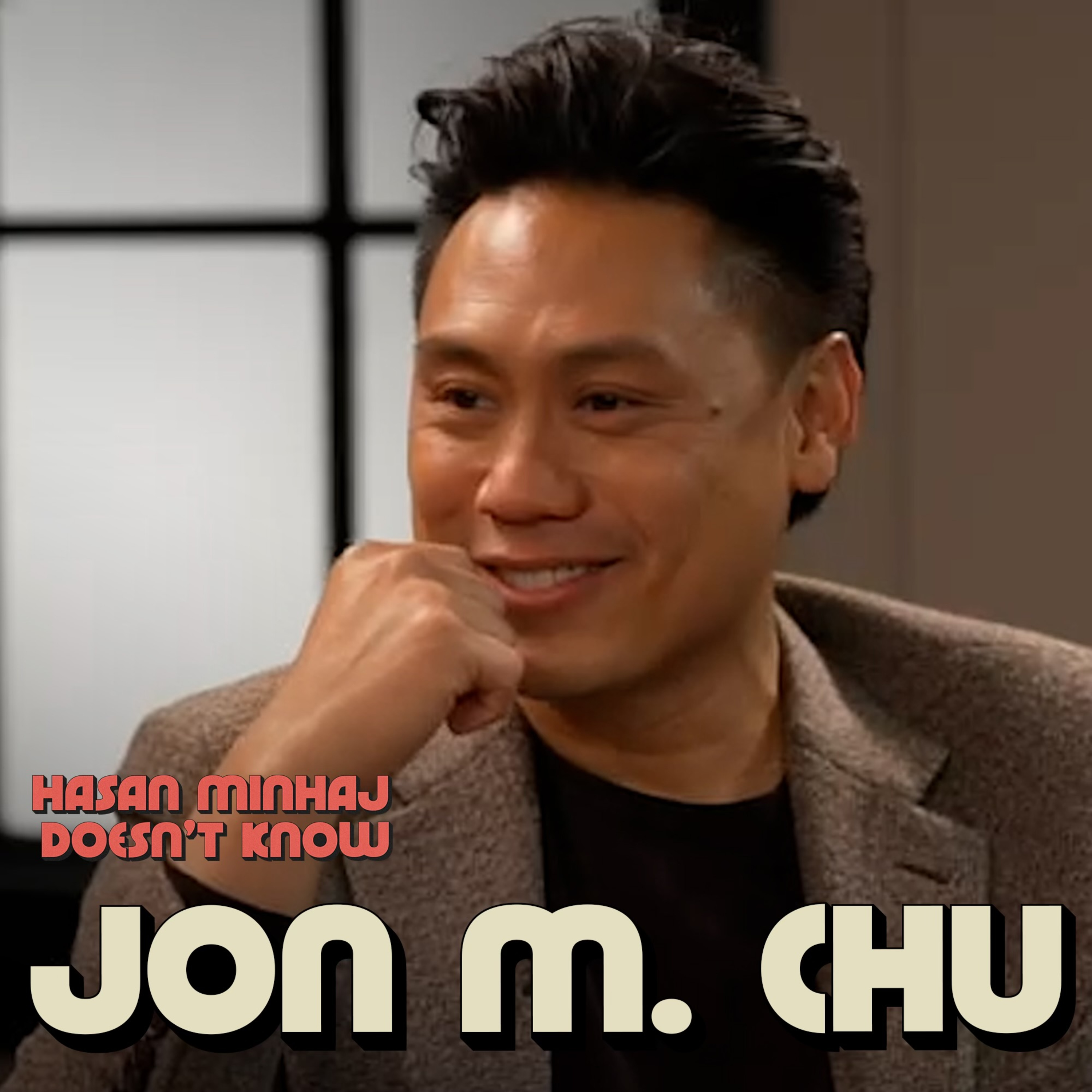
Ah, you're too nice. All right, let me just address this on behalf of you. Okay? Let's talk to Andrea. Andrea, John M. Chu doesn't control the thermostat. That's AMC's problem. Macy M. Kids, go to the mov. Thomas, take some NyQuil and grow the fuck up. 2016, Jon M. Chu had a choice. Crazy Rich Asians was on the cusp of a theatrical release with Warner Brothers. And an all Asian cast was about to be on the big screen for the first time in more than two decades. But suddenly, Netflix showed up and offered John a dump truck full of money to release the film on streaming instead of theaters. Incredibly, John turned Netflix down. He took less money and bet his reputation on the culture. And boy, oh, boy, did that bet pay off. Crazy Rich Asians became a box office hit and changed everything for Asian Americans in Hollywood. John Chu talks about this story in his new memoir, Viewfinder, which you probably haven't read and never will because you're on YouTube, where literacy goes to die. Don't forget to like and subscribe. I'm personally obsessed with this book. So after leaving John a bunch of voice memos and quoting it back to him like a pure psycho, he agreed to take time out of his busy schedule to talk big picture stuff outside of Wicked. His life, his career, and his Perspective on technology and how it's impacting Hollywood. I also gave him his flowers for Wicked. Literally. It got intense. That was really solid. Cool. Should we start? Okay. Okay. Ladies and gentlemen, John M. 2. You're very comfortable and calm right now.
- [03:04]
John M. Chu
Do we generally. A few. Thank God. Thank God.
- [03:08]
Hassan
Before we get to the episode, let's take care of some business. This episode is sponsored by ZipRecruiter. Try it for free at ZipRecruiter.com hasn't ZipRecruiter the smartest way to hire? No. I have read this book three times. It is marked up. It's the real thing.
- [03:27]
John M. Chu
Love it.
- [03:28]
Hassan
I've done something UTA hasn't done. I've read your work. Okay. I mean, we're talking about, literally, the pile. I'm writing notes to myself.
- [03:38]
John M. Chu
I mean, you were sending me voice messages and things from the book itself.
- [03:45]
Hassan
Yeah. And I don't know if you were in.
- [03:46]
John M. Chu
My wife hasn't even read it that closely. For sure.
- [03:48]
Hassan
Christian hasn't read it.
- [03:49]
John M. Chu
I know she's read it, but she does, like, hey, in this part of the book. No.
- [03:52]
Hassan
Well, you know why I did this, right? People don't read.
- [03:55]
John M. Chu
Yes.
- [03:56]
Hassan
Like, I'm telling you, YouTube Book Reviews is gonna be the whole thing. Try getting your partner to watch TV without being on a phone.
- [04:03]
John M. Chu
I agree.
- [04:03]
Hassan
They'll act like you reinstated the mask mandate. They'll be like, this is not a dictatorship. Let me just dual watch season three of Colossa. Let me scroll.
- [04:14]
John M. Chu
Let me scroll.
- [04:15]
Hassan
I want to go back to a very critical moment in your life. And again, this goes back to the book. Had this moment gone another way, I think you'd be a very different person. When you were in your twenties, you met your idol, Steve Jobs.
- [04:27]
John M. Chu
Yeah.
- [04:27]
Hassan
Yes. Okay. I have a photo of this. This is in the book. All right. You walk up to Steve Jobs looking like Rufio in the movie Hook.
- [04:37]
John M. Chu
It's true. It's true.
- [04:39]
Hassan
And you recite the think different ad to Steve Jobs.
- [04:44]
John M. Chu
Yep.
- [04:45]
Hassan
And what does he do?
- [04:47]
John M. Chu
So I start saying it, and he leans in his ear like he wants me to keep going. So I'm like, okay. So I keep going. And as I'm going, he then joins in.
- [04:58]
Hassan
He harmonizes with you.
- [05:00]
John M. Chu
Yeah. It was crazy.
- [05:02]
Hassan
This is why you are one of the most optimistic, joyous people in the world. This is why you make such sweet films.
- [05:10]
John M. Chu
Thank you.
- [05:10]
Hassan
Because your dreams actually come true.
- [05:13]
John M. Chu
I don't know how. I don't know how that. Because he should have told me, like, okay, great. Thanks, kid. I'm talking with Bob Iger. Why are you. Why are you disrupting this conversation?
- [05:21]
Hassan
Steve Jobs, obviously. Walter Isaacson's book. He's somewhat of a psycho. Had he heard this from you and, you know, decided to walk away. You don't become John Chu. You become Wes Craven.
- [05:35]
John M. Chu
Yeah. Could have been.
- [05:37]
Hassan
That's the equivalent of me walking up to Michael Jordan and singing I Believe I Can Fly. And then he starts singing it back to me.
- [05:45]
John M. Chu
Nuts. That's. That shows how much he actually believed in that, in that campaign, in what they were doing. He's the greatest storyteller ever. Ever. Because you really think so? I do think so.
- [05:57]
Hassan
Wow.
- [05:58]
John M. Chu
Because he didn't just tell a story on a screen. He told a story and made it real life. And the way he doesn't sell something to you, he's like, hey, I have this thing in my pocket. You want me to show you? Because I had this problem with my photos and I couldn't figure it out, but I think I figured it out. You want to see that? And you were just, like, drawn like, Yeah, I had that same problem, and I need that. And to me, so clear, so authentic. Which I know that's an overused word, but, like, there's nothing more true than him. He's not polished. All right. Just say that.
- [06:27]
Hassan
Let's just quiz you. Do you know the Think different ad?
- [06:29]
John M. Chu
I do know it. Say it. I do know it. Here's to the crazy ones. The misfits, the rebels, the troublemakers, the round pegs and the square holes. The ones who see things different, they're not fond of rules, and they have no respect for the status quo. You can quote them, disagree with them, glorify or vilify them. About the only thing you can't do is ignore them. Because they change things. They push the human race. You have to pause there. Forward. And while some may see them as the crazy ones, we see genius. Because the people who are crazy enough to think that they can change the world are. Are the ones he do.
- [07:06]
Hassan
He nailed it. Okay, let's do State Farm.
- [07:12]
John M. Chu
I don't know the State Farm, unfortunately. Go ahead.
- [07:14]
Hassan
Like a good neighbor.
- [07:16]
John M. Chu
State Farm is there.
- [07:18]
Hassan
There we go.
- [07:18]
John M. Chu
There you go.
- [07:19]
Hassan
Let's do AutoZone. Get in the zone. AutoZone. There we go.
- [07:24]
John M. Chu
Yep. Yep. I like farmers.
- [07:26]
Hassan
What's farmers?
- [07:27]
John M. Chu
We are farmers.
- [07:29]
Hassan
Yeah, there we go.
- [07:30]
John M. Chu
Yeah. Me and my kids do that all the time.
- [07:32]
Hassan
This book is called A Memoir of Seeing and Being Seen. What does the viewfinder represent to you? Because you really describe it. Very powerfully. In the prologue.
- [07:45]
John M. Chu
For me, it's my own silent space. I remember looking in for the first time, and when you look into that viewfinder, everything goes quiet. But actually, people are aware that there's a camera there, and they are very happy to see you. People love a camera and they are very inviting. I could go sit at any table, I could be in any group, and it was like, oh, they're paying attention to me. And so in a weird way, at first it was this sort of access to people, but also I could sit there and people would forget it after a while. And I could capture these thoughts even though I'm not saying anything. I could just show people what I was observing. And that was very powerful to me. And when I learned how to edit and take those little miniature moments and put it together, it was like finding a pen and a paper.
- [08:33]
Hassan
You also talked about a way to drown out the noise.
- [08:35]
John M. Chu
Yeah.
- [08:36]
Hassan
So when you pull it out and you're adjusting the lens, it's your way of problem solving.
- [08:41]
John M. Chu
It's a way of seeing the world for the first time again. It is like when we're on set, there's a lot of things, okay, are there dancers there? Are the set pieces ready? Is the lighting ready? Are we good? Okay, so. And maybe I've already blocked them a little bit.
- [08:55]
Hassan
Okay.
- [08:55]
John M. Chu
You're walking here and sitting there. But when I get that lens in, it shifts. It puts you in movie world. And so, yes, it all quiets out. And now this is the only thing the audience can experience. What you're seeing in that is what the person in the dark a year and a half later is going to experience. It's the thinnest barrier between you and your audience. And so whatever lens you use, longer lens or whatever it is, it changes the feeling of that.
- [09:22]
Hassan
To me, the book is just a testament to courage and guts and facing uncertainty and facing fear. And when I give advice to younger people or even to younger, aspiring creatives, just adult life is about what's your stomach for uncertainty and what's your stomach for fear?
- [09:40]
John M. Chu
Yeah. To me, fear is like the death of creativity. So if we're in the creative business, any sense of fear is killing your creativity. What did they say? Worry and stress is a misuse of imagination. Like, we have big imaginations and we can put that energy into a lot of things, including stress, working out. Oh, my gosh, if it goes this way, all these things are going to happen, and you're using your amazing imagination on something else than the actual work. But, yeah, I mean, the fear is there, no doubt. And I'm struggling with it every day. What I find is when I look at my heroes is really important because I look at them and what they have to go through. And watching, I mean, Apple's another sort of silly example, but watching an apple in 1998 go from, like, about to shut down to one of the most influential companies and the biggest company of all time, that gives you a sense of, whoa. There are no rules in this life, okay? So anything is possible.
- [10:40]
Hassan
This episode is brought to you by ZipRecruiter. ZipRecruiter's powerful matching technology identifies top talent for your roles quickly and starts showing you qualified people as soon as you post your job. And with all that time, I save on hiring, I can spend time on my true passion, looking up celebrities, ages and net worth online. Whoa. The guy from the bear's 47. I could have sworn he looks 46. Try it for free at this exclusive web address, ziprecruiter.com Hasn't ZipRecruiter the smartest way to hire? I'm busy. 2016 was a critical year for you.
- [11:20]
John M. Chu
Yeah.
- [11:20]
Hassan
I'm going to ask you a series of yes or no questions.
- [11:23]
John M. Chu
Okay.
- [11:23]
Hassan
This is about you facing fear and uncertainty, walking through it. You're going to answer yes or no to them just because this is laid out in the book beautifully. Please buy the book. John's agents, please read the book.
- [11:38]
John M. Chu
Read it just once.
- [11:39]
Hassan
It's your job to read. It's a PDF.
- [11:41]
John M. Chu
You're in it. You're in it. Look up their name.
- [11:44]
Hassan
You commissioned it.
- [11:45]
John M. Chu
It's true.
- [11:46]
Hassan
These are yes or no questions. In 2016, when you were trying to sell crazy rich agents to studios, Netflix offered to make the movie plus two sequels.
- [12:01]
John M. Chu
Yes.
- [12:02]
Hassan
So three movies.
- [12:03]
John M. Chu
Yes.
- [12:05]
Hassan
Then Warner Brothers, when you called back, offered you less money and no sequels.
- [12:10]
John M. Chu
Correct? Yes.
- [12:12]
Hassan
So the general consensus was probably to go with Netflix.
- [12:15]
John M. Chu
Yes.
- [12:17]
Hassan
And you could see how by going with Netflix and having a three picture deal, you've essentially guaranteed yourself a franchise.
- [12:26]
John M. Chu
Yes. And a lot of eyeballs all around the world.
- [12:29]
Hassan
But you decided to go with Warner Brothers.
- [12:32]
John M. Chu
Yes.
- [12:33]
Hassan
Why the fuck would you do this?
- [12:37]
John M. Chu
That's exactly what my agent said.
- [12:39]
Hassan
But what gave you the guts and the courage we're talking about? How did you calculate this? Because you didn't have a lot of time.
- [12:44]
John M. Chu
We didn't have a lot of time.
- [12:45]
Hassan
Everybody turned to you.
- [12:46]
John M. Chu
Yes. They're looking at me and we actually talked out loud. We said, hey, why don't we get all this money we're about to get, and we could take a percentage and donate that to Asian American causes and media.
- [12:55]
Hassan
Sure, sure. Great.
- [12:56]
John M. Chu
Now everybody wins. And I go, what's the point of giving money to Asian Americans in media? Oh, so that someone can make a decision that we are at right now. And you're like, oh, because there is value in putting something on the screen. It's like getting. We can go to the. We get to go to the block party. But who gets to go into the museum and get framed and have a light on it and have promotion in all the subways and all the public transportation and say, come see the most beautiful thing you could ever see? The mechanism of a company to do that, to tell the world that storytelling was nothing, that. That we had never had that opportunity, the ritual. Yeah.
- [13:33]
Hassan
Well, what is it? It's a testament to what you talk about, and it's a philosophical idea of commitment. Page 230. I mean, you lay this idea of commitment out on page 230. You said, it bothered me. You go, it bothered me that Netflix asked for no commitment from the people who watched its movies. I mean, that's the whole point of a subscription service with auto renewal, to make you forget that you've committed to anything at all. You say commitment again. According to one of the few metrics that Netflix is willing to share, watching a movie for just two minutes counted as a view. Two minutes you spend longer in a drive through. God damn, you emptied the fucking clip.
- [14:11]
John M. Chu
Let me tell you, I love Netflix. I love them. I want to work there someday at some point, but it's not really for what I do in terms of. I grew up loving movies. Turning off your phone, sitting in the dark with strangers.
- [14:24]
Hassan
Is there a world where you would ever, as a filmmaker, make a film for streaming, or do you think it's antithetical to what film is?
- [14:33]
John M. Chu
I think there's a world where that could happen. I just think I need to be somehow motivated because the money's not motivating, no matter what it is. I make movies because it is a fulfilling. It's a process that I need to do. It's how I breathe. I've done it since I was 10 years old. And so the adrenaline of. Is the audience going to show up? What are they going to get from this? I'm asking them to come into the dark to hear me for two hours. Like, to me, that is the game. That is what I love.
- [15:06]
Hassan
And that spoke to me as a live performer.
- [15:08]
John M. Chu
Yeah.
- [15:08]
Hassan
There is literally a commitment by putting Your shoes on, getting in the car, getting in the theater, having to put your phone on airplane mode and be like, okay, for better or for worse, I am here to submit to what is about to happen for the next two hours.
- [15:22]
John M. Chu
When you have a streaming movie, it alleviates a lot of stress. You're like, oh, reviewers don't matter. Oh, the numbers, they don't even give. So you get to make your thing and you get to move on with your life. That's not fulfilling to me. That's not me getting better. That's not me playing in the game of storytelling. That's me just making something and, like, giving it to the algorithm to go figure out what to do with it, Literally.
- [15:43]
Hassan
You're a Silicon Valley kid, Los Altos, who's now very successful in Hollywood, but you write this like, it really stuck with me. The relationship between my old home, Silicon Valley, and my new one, Hollywood, has gone from mutual benefit to something more like a demolition derby. Holy. I mean, bro, you are a very nice guy. You are spitting hot fire in this. Why has this been such a car crash, in your opinion?
- [16:11]
John M. Chu
I think that the intention changed. I think that when the intention for story goes to data collection and clicks, that is a very different intention than to present a piece of a story through someone's perspective and to have people receive that cleanly. It. It makes it about provoking something out of people so that they continue to click. That's when it becomes content. To me, I think content is like the dirtiest word.
- [16:43]
Hassan
You hate that word. I mean, you're just like, it's the worst thing.
- [16:46]
John M. Chu
It's terrible. I don't even know what that means. Like, the contents of this. I don't know. This box. What is that? Yes. Story is something much deeper. It literally, it's a reflection of culture. It is a horizon for culture. It is so many things, and we've seen it time and time again, how it can change. And so when we distill it to, hey, if you have this title, it's going to cause people to click on it. If you have an accident and we actually dig into this in Wicked, actually, like, how far will the storyteller go? If the wizard is the ultimate storyteller, he may not be a bad person, but when people want violence, that'll keep them more entertained. Okay, then you add violence. They need a villain. Then you add the villain, and then you add the. And how far will you go? You can't stop yourself at a time.
- [17:31]
Hassan
You're talking about the Jake, Paul, Mike Tyson, Fight. I mean, it really.
- [17:36]
John M. Chu
Is that the gladiator.
- [17:38]
Hassan
Literally the gladiator church. I mean, we're watching a 28 year old beat up a 58 year old. So, you know, it's like, hey, we'll watch elder abuse.
- [17:44]
John M. Chu
Yeah. How far can you make fake things to get that? And, oh, yeah, it's just a joke. But 90% of the people who are watching this don't think it's a joke. So what's your responsibility to that?
- [17:56]
Hassan
Yeah. When you call everything content, it flattens. Wicked in a four hour podcast to being the same thing.
- [18:04]
John M. Chu
Yeah. It's just different mediums.
- [18:05]
Hassan
Yeah. You see them as different mediums.
- [18:08]
John M. Chu
I do see them as different mediums. And I do see. Listen, I don't think all content online is bad. I mean, I'm dead scrolling all the time. But when you actually think about. Especially when, you know the tools behind.
- [18:19]
Hassan
You know, I went to your YouTube channel, by the way. It's still up.
- [18:22]
John M. Chu
I haven't gone there in a long time.
- [18:22]
Hassan
You haven't scrumpted, but, man, it is. It is a. It has documented your journey.
- [18:30]
John M. Chu
Yeah.
- [18:30]
Hassan
Through everything.
- [18:31]
John M. Chu
Yeah. It's funny.
- [18:32]
Hassan
You're literally like, you know, on a. On a ring light. You posted silent beats 18 years ago.
- [18:37]
John M. Chu
Yeah.
- [18:38]
Hassan
You know, your MTV spec, it's there. You know what I mean? It's like, hey, I want to direct a commercial for mtv and there's a kid doing the Harlem shake. And you're, you know, that's crazy. You're using change clothes. The Pharrell beats.
- [18:49]
John M. Chu
That's right.
- [18:49]
Hassan
Yeah.
- [18:50]
John M. Chu
You really did. Yeah.
- [18:51]
Hassan
Then you're. Hey, hey, LXD fans. Yeah, hey, step up. Like, it's crazy. It's. So how do you.
- [18:57]
John M. Chu
I think I was there during this time. So it was, you know, really early 20, I don't know, whatever. 2006, 2007. So I saw before it was an industry, I saw when it was just distribution of videos.
- [19:10]
Hassan
Yes.
- [19:10]
John M. Chu
And I thought I saw when it was Ebaum's world. And you're like, oh, my gosh. And it was ours. It was like, look at this crazy video. Look at this guy who's lip syncing. And it was really fun. And I saw when we started doing videos and we did this dance battle with Miley Cyrus.
- [19:23]
Hassan
Miley Cyrus. And then she responds and she responds.
- [19:25]
John M. Chu
And there's all these celebrities and you're getting. Suddenly all the old media is paying attention to that. And you were getting on TV shows because of it. But it wasn't about influencers and it wasn't about money exchanged yet, it was just about this platform. And that was pure and beautiful. And there were creators that never had an opportunity, that were given opportunities. And that's still the case in certain areas. The moment I saw is when there started to be sponsorship questions and things like that. And they built this ecosystem which has driven a huge economy. And that's a great thing in its own world. And people without voices before get those voices. But I saw the change of like, well, you only, you only get rewarded when you do something provocative or you do something that the thumbnail will drive clicks to. And that's just a dangerous motivation instead of the other way around.
- [20:16]
Hassan
You say the Internet makes insatiable demands and you can lose your mind if you end up doing that. At any point when you were in development hell or going through that, was there anything tugging you back towards that YouTube channel?
- [20:30]
John M. Chu
Well, I think the YouTube channel was a savior for me because I hadn't touched a camera myself and edited myself for like five years. And I did it all growing up. So becoming a professional movie maker, I felt like, oh, I don't have to make those videos anymore. And in this break between movie one and movie two for Step Up, I picked up the camera because there's YouTube. And I just found the joy again, got it getting my friends together. And so it really saved me. And then it became not destructive, but it came very distracting because the more audience you get, and I know this is, you know, with new creators, they will go through this process, every single one of them will. Then you feel like you have to feed the monster again because if you don't feed the monster, it goes away. And so you keep filling the monster and then your life gets consumed about making this pattern of stuff and you get exhausted because everywhere you look you're thinking of content. That's a content moment, that's a content I got to do this and that, that, that's great and all, but what are you actually doing? You're just running a treadmill this whole time. And maybe that will give you money to live your life, but that's a choice that I think people don't know they're making. And when they feel exhausted, they may not have people to go to. Maybe now there's more self help of that, but they don't know who to go to to explain this because not many people had gone through that at that time.
- [21:49]
Hassan
Chapter two opens with this really great question, where's your growth? And I think what you're talking about is we keep insatiable growth.
- [21:55]
John M. Chu
Yeah.
- [21:56]
Hassan
It's a worldview. It says that a plan intended only to preserve what you've already got that doesn't lead to significant growth is pretty much a waste of time. The only survival lies in expansion and conquest and bigger or more. What changed your approach on this? Because what's interesting is the book ends with you kind of agreeing with what your dad did. Hey, I own one Chef Choose. And I don't need to expand it. We don't need to be in Dubai. We don't need to have chains or a mobile app.
- [22:28]
John M. Chu
Yeah.
- [22:29]
Hassan
And you kind of come around to that.
- [22:32]
John M. Chu
Yeah.
- [22:34]
Hassan
Was there a particular moment in your life that gave you that level of clarity? Because in 2024, I feel like a lot of people don't have that.
- [22:40]
John M. Chu
Yeah. I mean, it's a weird thing because it's embedded in our culture to be number one, to continue to get bigger. And if you're. And I always told my dad, like, oh, make this place more fresh, more cool. And he was always resistant for it. Well, they want to come back to a home, a place that they recognize. And so the fact that we've come back around, I don't know if I had a moment of that, because I still struggle with it, because of course we want more. I think family, though, does help that, because I look back and I'm like, oh, all I need to do is protect their lives right now. And, yes, I have this thing that I do, and I want them to see what I do because I want them to know the possibilities. When you can imagine something out of thin air and make it real life, and then suddenly it's a toy and a thing and people are singing about it and talking about it. But that really helps me because no matter what. And maybe, as my parents said, you have the biggest advantage of anybody. He's like, you may not know anyone in Hollywood. You may feel like you don't belong, but actually, we have a restaurant, so you're never going to go hungry. And we have a house. You're never going to go homeless.
- [23:43]
Hassan
Right.
- [23:44]
John M. Chu
So you're more free than anybody out there. So make every choice the right choice.
- [23:49]
Hassan
It's amazing, man. You have an amazing family. You're the youngest of five kids, and it's a really beautiful thing. And your family truly, truly is incredible.
- [23:57]
John M. Chu
They're also crazy, but they're also.
- [23:59]
Hassan
I mean, all of them are. So we're here, we're having this convo. Biggest month of your life, or one of the biggest months of Your life.
- [24:06]
John M. Chu
Yeah.
- [24:07]
Hassan
But I want to talk to you about one of the lowest points in your career and something you talk about in the book. Yeah, and, man, like this. This chapter in the book, really, I had to reread it and process it, and then I had to go revisit some of what you talk about. So almost 10 years ago, 2015, you direct this movie gem and the holograms, based on this beloved animated show from the 80s that you and your sister, you guys were huge fans of.
- [24:29]
John M. Chu
Yes.
- [24:31]
Hassan
It hit theaters. It unfortunately tanked. The morning that you find out about the box office numbers, you have to go give the speech at the Film Independent Forum to a room full of aspiring film directors.
- [24:49]
John M. Chu
So this is a bit awkward. I'm supposed to be here this morning talking about how great it is to be in the movie business, but currently, I don't know if you've looked at box office numbers this morning specifically, it hasn't been the greatest. So you might get some real shit today.
- [25:09]
Hassan
Oh, no, the speech is still up on YouTube. And when I watch that first two minutes, man, my heart breaks. I know what that feeling is like. But what were you feeling as you went through that?
- [25:21]
John M. Chu
Well, I knew I got the email, like, late night the night before, and so I didn't sleep through the night. And by like three in the morning, I'm like, I can't do this speech. I'm gonna cancel. And so I had my finger on the button to cancel. And then I was like, they need to know the truth. If these are, like, aspiring filmmakers, like, this is the time. And so I just wrote down whatever at that moment, I don't even remember. I just remember sitting at that couch and the sun wasn't even up yet. And I just started writing stuff and then. And then showing up was very, very hard. It's like, in a weird way, it's like heartbreak where your heart feels physically gone.
- [26:00]
Hassan
Yeah.
- [26:01]
John M. Chu
And you almost. Your posture changes. But looking at a group of people who wanted this, it was really healing for me to just open up and say, I want you to have this too. But you have to know you're going to have to survive some things.
- [26:18]
Hassan
And man, the guts to do that, though, to stand in that moment of humiliation and stand in front of your peers. It's a really very, very gutsy thing to do.
- [26:33]
John M. Chu
Thanks. It was sort of out of desperation, too. I just didn't know what else to do. I didn't know what else to do. It wasn't just the lowest, like, hey, this bombed. It was like the lowest box office number of any movie ever.
- [26:47]
Hassan
And you write at the end of the chapter, you look out to Kristen, who's now your wife and the beautiful mother of your five children. You say, she was bawling. I've reread that four or five times. I've read it with different people on my team. Was she crying? What was that in reference to? The pain you guys were going through. What you had to endure in that moment by having to give that 50 plus minute speech. Like, I still don't know. I just wanted to ask.
- [27:15]
John M. Chu
I think she knew what I had been going through the night before. I think she saw me on the couch. I think she saw me, like, stare at myself in the reflection of the window as I banged my head on it. I think she knew how much I was hurting at that moment. And I think to. I think to just be up there sharing that. I don't know. I don't know why she was crying, but she was right there with me the whole time. So it gave me in a weird way, looking out. It gave me, no matter what, it's going to be okay. Like, you're okay, dude.
- [27:51]
Hassan
Yeah, man. It's. It's something that I have gone back to revisit because I look at it, you know, this is like professional sports. If you're a quarterback, you're going to get your head taken off and you're going to wake up, you're going to get up and be like, I feel like I just got blitzed.
- [28:08]
John M. Chu
Yeah.
- [28:09]
Hassan
Some of the comments are still up at Naokisan 07.
- [28:13]
John M. Chu
Yes.
- [28:14]
Hassan
I hope you have learned your lesson. Never mess up with fans of a product you want to pay homage to ever in your life. Chew. Okay. What gave you the stones to then direct Wicked. Wicked fans are like Beyonce fans on 4 Loko.
- [28:31]
John M. Chu
Yeah. Yeah.
- [28:32]
Hassan
How do you overcome that level of doubt of like I am doubling back?
- [28:37]
John M. Chu
Yeah.
- [28:37]
Hassan
I'm actually not running away from this concept at all.
- [28:41]
John M. Chu
I'm okay to hear those things. I want people to know that those all hurt. It's not like I'm some warrior that's like, it doesn't hurt. I just. I think what I'm able to do is I'm here, I'm making movies. I'm gonna make somebody a lot of money. I'm gonna tell stories the rest of my life. It may not be with a studio. It may not. I might be doing wedding videos for someone and that actually is okay with me. I like love making movies. I love capturing moments. I love sharing Those moments, I love people taking that and owning it and sharing others. Like, look, this is our picture on the bridge. I'll do that any time of the day. And that's what scratches the itch for me. So when it comes to bigger dreams of the studio, I'm like, listen, this is what I have to offer. And I'm here and I'm gonna give as much as you're willing to let me give. And I think that mentality or that story that I tell myself is like, whatever happens, like, there's another chapter and I'm gonna keep going. So if you guys aren't along for the thing, that's fine.
- [29:44]
Hassan
I think why it's also so resonant, man. And I want you to know this. Why it meant a lot to me is because so much of living a creative life is about being reduced down to a number.
- [30:01]
John M. Chu
Yeah.
- [30:02]
Hassan
It's scary for you as a director, your opening box office number as a performer. Now everything has become part of the algorithm. So you find out what your number is very quickly. And also corporate America has this now, hey, we're downsizing 12%. You've been reduced down to a number. And it got me thinking about one of the most powerful lines in Crazy Rich Asians. You will never be enough. Because the biggest fear anyone has pursuing their life or their job is, will I be enough? Will I make the number?
- [30:32]
John M. Chu
Yeah.
- [30:32]
Hassan
How do you let or not let a number affect your self worth? Because, yeah, it's all numbers.
- [30:39]
John M. Chu
Yeah, well, numbers is a part of my job as a director. I do have a responsibility to, as we balance the budget and figure out how do we do this for this price that is a part of the job. I do think creativity is the magical bridge for all of that. That sometimes it forces us to be more creative and make different decisions based off of that. I don't know. I feel like I remember I sent you a message.
- [31:08]
Hassan
I was like, I'm about to put out this project. There's gonna be numbers on it. How do I. What's the right. The cognitive behavioral therapy tool that I need to sing, perform, do whatever it is that you do. To walk through that and not think about or care about that number.
- [31:26]
John M. Chu
Well, my job is to propose this idea at a scale that I think will make it successful. It is the studio's job to then take that and say, we agree with you or 10% off of that is what we agree, and we'll make this bet together. And so when the movie comes out and they decide how much marketing they're gonna spend on it. I have to stay focused on my responsibilities to make that movie. The most potent movie it can be to. To say this thing that I told them I was going to say and even sometimes save the studio from themselves about making a great something that will resonate. It can't be my responsibility to know what the audience, how much marketing they spend and what's going to hit the audience. It's not my job. And so I try to focus on that. And I do think that I have. It takes a while. It takes a few movies. And I feel very lucky that I've done many movies in this business to adjust my thinking. And it does take probably practice. But at its purest form, my job is just make the movie that I have in my head. And if it doesn't work, then they shouldn't have bet on me. And if they weren't gonna bet on me, I would have found something else that I would have wanted to tell.
- [32:33]
Hassan
Right.
- [32:34]
John M. Chu
So that's how I try to balance it. I mean, even with Wicked, I prepared myself for whatever result. I mean, it was not a sure thing in any sort of way.
- [32:42]
Hassan
Not at all.
- [32:42]
John M. Chu
I mean, it's a huge, huge bet. But there was nothing that I could do to assure anything except make a compelling movie.
- [32:54]
Hassan
We've gone through a lot, but I haven't taken a moment here to talk about Wicked. Can I take a minute to gush?
- [33:01]
John M. Chu
Sure. Please. Are you gonna read comments from somebody in Wicked?
- [33:05]
Hassan
No, no, no. I wanna give you your flowers. Thank you. I just wanna say I love the singing.
- [33:16]
John M. Chu
Thank you. Thank you, thank you.
- [33:17]
Hassan
I loved Cynthia and Ariana.
- [33:20]
John M. Chu
Come on.
- [33:20]
Hassan
They were a tour de force and truly a breath of oxygen. Michelle Yeoh, as always, amazing. The dance numbers, utterly spectacular.
- [33:28]
John M. Chu
Christopher Scott. Yes. Thank you.
- [33:30]
Hassan
You had this thing where it was like a turbine and it didn't chop anyone's head off. You did a whole Vanity Fair thing on that. The fact that people came out, not beheaded, it was truly spectacular.
- [33:38]
John M. Chu
Thank you. Thank you.
- [33:39]
Hassan
I love your cinematographer and the fact that you guys continue to work together.
- [33:42]
John M. Chu
Alice Brooks here is the best. Thank you.
- [33:45]
Hassan
There were so many practical effects and it wasn't just cgi. Thank you for making a movie.
- [33:48]
John M. Chu
Thank you. Thank you.
- [33:49]
Hassan
Real and practical.
- [33:50]
John M. Chu
There's still a lot of cg, but, yeah, it's great.
- [33:52]
Hassan
I thought that the goat that was a professor was super adorable.
- [33:55]
John M. Chu
Yes.
- [33:55]
Hassan
Peter Dinklage, CGI Goats can be very terrifying. If you watch the Little Mermaid, it's fucking awful. I love that. It was homage to the original work, but you added all these creative new elements.
- [34:07]
John M. Chu
Thank you. Kristen. Idina.
- [34:08]
Hassan
I think it's a deeply political movie. I think you really some of the messaging about people turning on the animals, I think it was a middle finger in subtext to the Trump administration and the comments they made about the Haitian community. You don't have to answer that, but thank you so much.
- [34:25]
John M. Chu
Thank you.
- [34:26]
Hassan
And I also loved that you paved the way for future people to make musicals and potentially a Bollywood dance move.
- [34:34]
John M. Chu
Thank you. I'll accept these tulips.
- [34:37]
Hassan
I have some more to actually give you.
- [34:38]
John M. Chu
Oh, wow.
- [34:40]
Hassan
And I just wanted to say thank you, man, for always being a great friend. Appreciate you, a mentor and a colleague.
- [34:46]
John M. Chu
Thank you. Thank you. Wow, this is amazing.
- [34:50]
Hassan
Sorry, there's more flowers.
- [34:51]
John M. Chu
Oh, wow.
- [34:51]
Hassan
There's more flowers.
- [34:52]
John M. Chu
Okay, cool.
- [34:55]
Hassan
Thanks. We keep listening to soundtrack and we just can't stop. And we've actually been listening to that soundtrack more than the original soundtrack. Even though I love Adina and the original.
- [35:05]
John M. Chu
I love that too. I didn't chat with but what you.
- [35:07]
Hassan
Guys did was truly amazing. Thank you. And I just wanted to give you flowers. Thank you so much for going on Twitter and just saying, hey, turn the volume to 7, not 6.4.
- [35:16]
John M. Chu
It's true. Why are they turning? Why are they doing it? The reference is seven.
- [35:20]
Hassan
Andrea. He's trying to make the theater experience as possible.
- [35:24]
John M. Chu
We mix at a seven, just put it at a seven, then we do as intended.
- [35:29]
Hassan
John Chu, ladies and gentlemen, thank you so much. For real. For real, man. This was like truly incredible. Thank you, man.
- [35:36]
John M. Chu
Thank you. You're welcome.
- [35:47]
Hassan
Are you hiring? What type of position do you need to fill? Well, whether you need to hire a civil engineer in New York, a nurse in Nebraska, an attorney in Colorado, or even a mascot in Michigan, you need ZipRecruiter. ZipRecruiter finds qualified candidates fast for all kinds of roles. And right now you can try it for free@ziprecruiter.com Huston ZipRecruiter lets you connect with top candidates quickly and you can even use their pre written invite to apply message to personally reach out to your favorite candidates and encourage them to apply sooner. Now, personally, I also like to reach out to my least favorite candidate and invite them to go to hell. Hey, Scott. Go to hell. Love, Hassan. From accounting to zoologists, ZipRecruiter makes hiring faster and easier. Four out of five employers who post on ZipRecruiter get a quality candidate within the first day. Try it for free at this exclusive web ziprecruiter.com Husson again, that's ziprecruiter.com/ hasn't ziprecruiter the smartest way to hire I'm busy, Scott, and I told you to go to hell. I'm personally obsessed with this book, so after leaving John several voice memories, we'll just take it, take it from the book. Don't forget to license like oh fuck me, I'm a Hooper. Ding ding ding boom ding ding ding. I'm personally obsessed with this book, so after leaving John several voice memos, pick it up from the.