Podcast
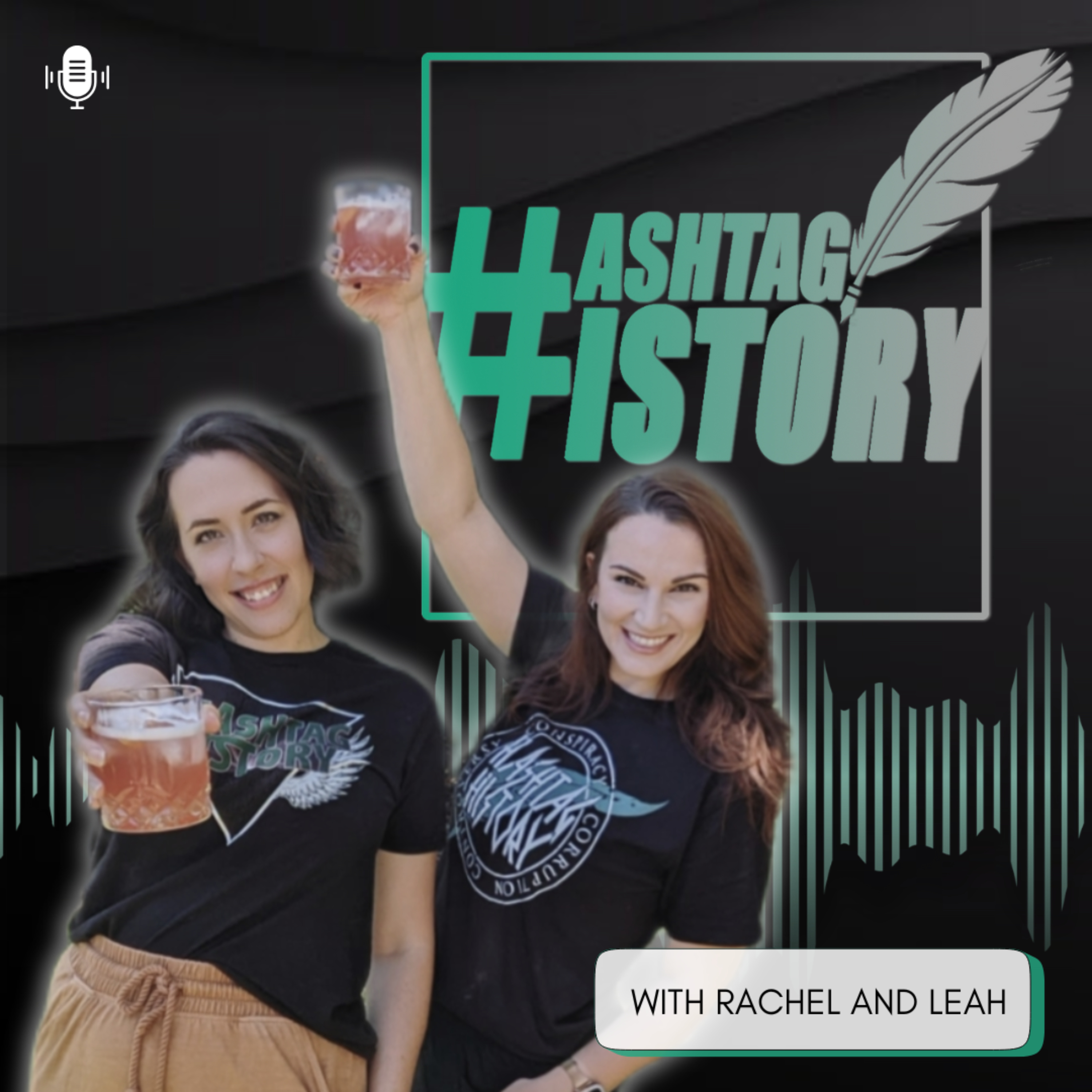
Hashtag History
Hosted by Hashtag History · EN
The ultimate History podcast for History Nerds and History Haters alike! Here at Hashtag History, we dive into History's greatest stories of controversy, conspiracy, and corruption.
16episodes
Episodes
Newest firstAll episodes
EP 170: Thy Will Be Done and George Washington's Legacy of Slavery (with Special Guest, John Garrison Marks)
Jun 3000:59:20Tap to summarizeThis week on Hashtag History for our Season Seventeen Finale, we are joined author and historian John Garrison Marks as he tells us all about his latest book, Thy Will Be Done: George Washington's Legacy with Slavery and the Fight for American Legacy. We had a great conversation about Americans’ struggle to come to terms with Washington’s legacy of slavery and how we navigate those complexities as we move forward.Follow Hashtag History on Instagram @hashtaghistory_podcast for all of the pictures mentioned in this episode.Citations for all sources can be located on our website at www.HashtagHistory-Pod.com. You can also check out our website for super cute merch!You can now sponsor a cocktail and get a shout-out on air! Just head to www.buymeacoffee.com/hashtaghistory or head to the Support tab on our website!You can locate us on www.Patreon.com/hashtaghistory where you can donate $1 a month to our Books and Booze Supply. All of your support goes a long ways and we are endlessly grateful! To show our gratitude, all Patreon Supporters receive an automatic 15% OFF all merchandise in our merchandise store, a shoutout on social media, and stickers!THANKS FOR LISTENING!- Rachel and LeahEditor: Alex PerezCopyright: The Hashtag History Podcast
Transcribe →EP 169: The Attempted Assassination of Ronald Reagan
Jun 1600:52:07Tap to summarizeThis week on Hashtag History, we will be discussing the attempted assassination of Ronald Reagan. On March 30, 1981, President of the United States Ronald Reagan was shot outside of the Washington Hilton in Washington, DC, as he was leaving a speaking engagement. He was shot by a man named John Hinckley, Jr., a twenty-five year old man who had fallen in love with actress Jodie Foster after seeing her in the movie, Taxi Driver (which she starred in when she was twelve-years-old), and believed that if he successfully killed the President, that she would be impressed.Reagan was actually seriously injured during this attempt. When he was thrown into his limousine by his servicemen, they originally thought he had just broken a rib or something and that’s why he was experiencing chest pain. But they discovered after he reached the hospital – where he collapsed – that Hinckley had successfully hit him with a bullet that had come within an inch of his heart. He miraculously recovered and was released a few weeks later.As for his would-be assassin, he was found Not Guilty by Reason of Insanity and was sent to a psychiatric hospital…that he was actually released from in 2021…so yes, he is out and about…so that’s great.I don’t want to spend this whole episode talking about just Reagan and Hinckley though because, one of the major pieces of this story that so many people neglect to tell, is that several of Reagan’s staffers and local policemen were also wounded during the assassination attempt including White House press secretary James Brady who was hit in the head and, as a result, suffered from brain damage for the rest of his life. It’s actually because of Brady and his wife that we have the Brady Law (or, the Brady Handgun Violence Prevention Act of 1993) which established federal background checks on firearms and a five-day waiting period for handgun purchases.Follow Hashtag History on Instagram @hashtaghistory_podcast for all of the pictures mentioned in this episode.Citations for all sources can be located on our website at www.HashtagHistory-Pod.com. You can also check out our website for super cute merch!You can now sponsor a cocktail and get a shout-out on air! Just head to www.buymeacoffee.com/hashtaghistory or head to the Support tab on our website!You can locate us on www.Patreon.com/hashtaghistory where you can donate $1 a month to our Books and Booze Supply. All of your support goes a long ways and we are endlessly grateful! To show our gratitude, all Patreon Supporters receive an automatic 15% OFF all merchandise in our merchandise store, a shoutout on social media, and stickers!THANKS FOR LISTENING!- Rachel and LeahEditor: Alex PerezCopyright: The Hashtag History Podcast
Transcribe →EP 168: The Watergate Scandal (Part Two)
Jun 200:50:54Tap to summarizeThis week on Hashtag History, we will be discussing the second part of the Watergate Scandal. In last week's episode, we left off with the White House Plumbers that Nixon had recruited to serve as his secret task force to stop any potential leaks—not actual plumbing leaks, but leaks like the 7,000 pages of Pentagon Papers that exposed just how much the US Government had been lying to the American people about our involvement in the Vietnam War. Where we left off with last week’s episode was Nixon getting increasingly paranoid about being exposed, about perhaps not getting re-elected to the presidency, and about damaging his reputation. And so he became hell-bent and willing to go to extreme lengths to ensure that did not happen.In this week’s episode, we are officially going to be discussing Watergate: the details of the actual operation to wiretap the Democratic National Committee’s headquarters, the investigative journalism that exposed this all, the cover up, the federal investigations, the Supreme Court’s involvement, and then, of course, talks of impeachment and Nixon’s official resignation…the only president in American history to ever resign….because you can do that.Follow Hashtag History on Instagram @hashtaghistory_podcast for all of the pictures mentioned in this episode.Citations for all sources can be located on our website at www.HashtagHistory-Pod.com. You can also check out our website for super cute merch!You can now sponsor a cocktail and get a shout-out on air! Just head to www.buymeacoffee.com/hashtaghistory or head to the Support tab on our website!You can locate us on www.Patreon.com/hashtaghistory where you can donate $1 a month to our Books and Booze Supply. All of your support goes a long ways and we are endlessly grateful! To show our gratitude, all Patreon Supporters receive an automatic 15% OFF all merchandise in our merchandise store, a shoutout on social media, and stickers!THANKS FOR LISTENING!- Rachel and LeahEditor: Alex PerezCopyright: The Hashtag History Podcast
Transcribe →EP 167: The Watergate Scandal (Part One)
May 1900:38:03Tap to summarizeThis week on Hashtag History, we will be discussing the Watergate Scandal. This was an absolutely explosive political scandal that – sadly, pales in comparison to modern-day political scandals – but was truly monumental at the time, and continues to be to this day. That is because this was a political scandal that went all the way up to the top, proving that the President of the United States, Richard Nixon, had people on his team breaking into their opponent’s office – the headquarters of the Democratic National Committee in Washington DC, called the Watergate complex – in order to plant listening devices so that they could overhear their political strategies.It was all exposed by investigative journalists Bob Woodward and Carl Bernstein of The Washington Post. But even still, Nixon was able to skirt responsibility for a period of time, even winning re-election in 1972. That was before the Senate investigation into Watergate took place, however, which exposed that Nixon was not only involved in the scandal from the onset but that he had also destroyed evidence and fired people that may have implicated him otherwise. Given this unlawful conduct and abuse of presidential power, talks of impeachment began. But before that could happen, Nixon became the first and only president in American history to resign He was succeeded by his Vice President, Gerald Ford, who ultimately – in an extremely controversial move – ended up pardoning Nixon for his actions.Watergate had significant consequences, leading to 69 people — including two cabinet members – charged with crimes associated with the scandal, it led to massive losses for the Republican party in future elections, and – perhaps one of the greatest legacies in terms of cultural memory and vernacular – it was the scandal that led to us adding “-gate” as a suffix to other scandals throughout history. Follow Hashtag History on Instagram @hashtaghistory_podcast for all of the pictures mentioned in this episode.Citations for all sources can be located on our website at www.HashtagHistory-Pod.com. You can also check out our website for super cute merch!You can now sponsor a cocktail and get a shout-out on air! Just head to www.buymeacoffee.com/hashtaghistory or head to the Support tab on our website!You can locate us on www.Patreon.com/hashtaghistory where you can donate $1 a month to our Books and Booze Supply. All of your support goes a long ways and we are endlessly grateful! To show our gratitude, all Patreon Supporters receive an automatic 15% OFF all merchandise in our merchandise store, a shoutout on social media, and stickers!THANKS FOR LISTENING!- Rachel and LeahEditor: Alex PerezCopyright: The Hashtag History Podcast
Transcribe →EP 166: Shirley Chisholm
May 500:33:44Tap to summarizeThis week on Hashtag History, we will be discussing Shirley Chisholm. She was the first Black woman to be elected to the US Congress, she was the first Black candidate for a major-party when she ran for the Democratic Party’s presidential nomination, and was a major supporter and advocate for women’s rights, social services, and racial justice.I think Shirley Chisholm is a very recognizable face but, unless you are a hardcore feminist and/or a history nerd, you may not know very much about her. And that’s what I hope to resolve with this week’s episode. I think we are all going to walk away from this week’s episode with a lot of admiration and hope and pride. And even for those that are not super familiar with Shirley Chisholm, I am confident you will recognize this famous quote of hers – a quote that I genuinely live my life by. I really think it is my motto – and that is: “If they don’t give you a seat at the table, bring a folding chair.”Follow Hashtag History on Instagram @hashtaghistory_podcast for all of the pictures mentioned in this episode.Citations for all sources can be located on our website at www.HashtagHistory-Pod.com. You can also check out our website for super cute merch!You can now sponsor a cocktail and get a shout-out on air! Just head to www.buymeacoffee.com/hashtaghistory or head to the Support tab on our website!You can locate us on www.Patreon.com/hashtaghistory where you can donate $1 a month to our Books and Booze Supply. All of your support goes a long ways and we are endlessly grateful! To show our gratitude, all Patreon Supporters receive an automatic 15% OFF all merchandise in our merchandise store, a shoutout on social media, and stickers!THANKS FOR LISTENING!- Rachel and LeahEditor: Alex PerezCopyright: The Hashtag History Podcast
Transcribe →EP 165: The Annexation of Hawaii
Apr 2100:43:14Tap to summarizeThis week on Hashtag History, we will be discussing the annexation of Hawaii…otherwise known as the overthrow of the Hawaiian Kingdom. Because, when Hawaii was annexed to the United States, becoming the fiftieth state to join the union, it was done so via a coup de tat that overthrew the sovereignty of the Hawaiian people, something the vast majority of them were largely against. The US’s motivations were obvious: they had major economic interests in Hawaii from the goods available there (like sugar and pineapple) but also the access to a naval base in the Pacific at Pearl Harbor. Tourism wasn’t much of a thing at the time when this happened in the 1890s, but we know in the long run that the annexation of Hawaii, though not motivated by tourism back in the 1890s, certainly has played a large role in the US’s continued interest in it. Nearly 10 million people visit Hawaii every year, with 7 to 7.5 million of those tourists being from the Mainland.The US’s annexation of Hawaii was so bad that Congress formally apologized for it in 1993 (the 100th anniversary of the overthrow of the Hawaiian monarchy), acknowledging that what they had done was morally unethical and that the Hawaiian people had never formally relinquished their lands and sovereignty to the US.Follow Hashtag History on Instagram @hashtaghistory_podcast for all of the pictures mentioned in this episode.Citations for all sources can be located on our website at www.HashtagHistory-Pod.com. You can also check out our website for super cute merch!You can now sponsor a cocktail and get a shout-out on air! Just head to www.buymeacoffee.com/hashtaghistory or head to the Support tab on our website!You can locate us on www.Patreon.com/hashtaghistory where you can donate $1 a month to our Books and Booze Supply. All of your support goes a long ways and we are endlessly grateful! To show our gratitude, all Patreon Supporters receive an automatic 15% OFF all merchandise in our merchandise store, a shoutout on social media, and stickers!THANKS FOR LISTENING!- Rachel and LeahEditor: Alex PerezCopyright: The Hashtag History Podcast
Transcribe →EP 164: The Chinese Exclusion Act
Apr 700:40:27Tap to summarizeThis week on Hashtag History, we will be discussing the Chinese Exclusion Act of 1882. The Chinese Exclusion Act was the very first major US law restricting immigration to the United States of a specific national group. This act made it so that Chinese people could not immigrate to the United States for, initially, ten years. But then, it was renewed, made permanent, and then not officially repealed until…you ready for this? 1943. So, essentially, the Chinese Exclusion Act was in effect for more than six decades! Even when the Chinese Exclusion Repeal Act passed, it still only allowed 105 Chinese immigrants to come to the US each year. So even though the Exclusion Act was repealed in 1943, racist immigration laws were not officially dropped until the 50s and 60s.Not only did the Act make it so that Chinese people could not immigrate to the United States—it also made it so that Chinese residents already in the United States could not become citizens. We’ll get into a specific case of this later in this episode but, even Chinese American citizens, when they traveled in and out of the country, were often denied re-entry into the country because they were told that they were not American citizens…even though they were.And again, we’ll of course get into more detail about this in this episode, but…do you have any guesses why the US would finally, officially repeal this Act in 1943? The US was in the midst of World War II during 1943 and, well, we needed China as allies against Japan. As we were actively detaining Japanese Americans in detainment centers here on American soil, we dropped part of our racist laws against the Chinese so that we could get them on our side and help us work against our other enemies.Follow Hashtag History on Instagram @hashtaghistory_podcast for all of the pictures mentioned in this episode.Citations for all sources can be located on our website at www.HashtagHistory-Pod.com. You can also check out our website for super cute merch!You can now sponsor a cocktail and get a shout-out on air! Just head to www.buymeacoffee.com/hashtaghistory or head to the Support tab on our website!You can locate us on www.Patreon.com/hashtaghistory where you can donate $1 a month to our Books and Booze Supply. All of your support goes a long ways and we are endlessly grateful! To show our gratitude, all Patreon Supporters receive an automatic 15% OFF all merchandise in our merchandise store, a shoutout on social media, and stickers!THANKS FOR LISTENING!- Rachel and LeahEditor: Alex PerezCopyright: The Hashtag History Podcast
Transcribe →EP 163: The Assassination of James Garfield
Mar 2400:55:41Tap to summarizeThis week on Hashtag History, we will be discussing the assassination of 20th President of the United States James A. Garfield, an assassination that occurred in the summer of 1881. And the reason I give a more vague date of “the summer of 1881” as opposed to a specific date is because, although Garfield was shot on July 2nd of that year, he did not die until September 19th…a very slow and very painful death, largely attributed to the horrific lack of medical sanitation at the time.Garfield’s assassination is a particularly fascinating one but one that goes forgotten amongst other presidential assassinations such as Abraham Lincoln’s and John F. Kennedy’s. There are many reasons for this (many of which we will dive into later on in the episode).Despite Garfield’s short tenure, we will also be discussing who he was as a person and his goals and dreams from the presidency -- outside of his assassination -- because he was also a pretty remarkable person.Follow Hashtag History on Instagram @hashtaghistory_podcast for all of the pictures mentioned in this episode.Citations for all sources can be located on our website at www.HashtagHistory-Pod.com. You can also check out our website for super cute merch!You can now sponsor a cocktail and get a shout-out on air! Just head to www.buymeacoffee.com/hashtaghistory or head to the Support tab on our website!You can locate us on www.Patreon.com/hashtaghistory where you can donate $1 a month to our Books and Booze Supply. All of your support goes a long ways and we are endlessly grateful! To show our gratitude, all Patreon Supporters receive an automatic 15% OFF all merchandise in our merchandise store, a shoutout on social media, and stickers!THANKS FOR LISTENING!- Rachel and LeahEditor: Alex PerezCopyright: The Hashtag History Podcast
Transcribe →EP 162: The American Presidents 101 (Part Two)
Mar 1001:33:10Tap to summarizeNOTE: THIS EPISODE WAS RELEASED IN MID-MARCH 2026 BUT WAS RECORDED IN EARLY-JANUARY 2026.This week on Hashtag History, we will be wrapping up our discussion of the American Presidents which we first brought to you in Episode 159 with Part One. We will be picking up with the twenty-sixth President of the United States and going to present day, sharing quick tidbits about their accomplishments, their downfalls, and how they shaped American history...but also, the juicy details.This goes without saying that there is some bias that comes into play with putting together an episode like this, right? That is the nature of historiography; it is at the discretion of the historian what they personally believe to be interesting or noteworthy enough to include in their research. And so that’s certainly the case here as well and not something I’ll shy away from. The few facts and details I am going to share about each of the presidents were selected by me personally which means these are the things that I personally felt it most important (or, in some case, just the most interesting or juicy) to include.Follow Hashtag History on Instagram @hashtaghistory_podcast for all of the pictures mentioned in this episode.Citations for all sources can be located on our website at www.HashtagHistory-Pod.com. You can also check out our website for super cute merch!You can now sponsor a cocktail and get a shout-out on air! Just head to www.buymeacoffee.com/hashtaghistory or head to the Support tab on our website!You can locate us on www.Patreon.com/hashtaghistory where you can donate $1 a month to our Books and Booze Supply. All of your support goes a long ways and we are endlessly grateful! To show our gratitude, all Patreon Supporters receive an automatic 15% OFF all merchandise in our merchandise store, a shoutout on social media, and stickers!THANKS FOR LISTENING!- Rachel and LeahEditor: Alex PerezCopyright: The Hashtag History Podcast
Transcribe →EP 161: The Newsboys Strike of 1899
Feb 2400:48:39Tap to summarizeWELCOME BACK FOR SEASON SEVENTEEN AND A LEAH TAKEOVER EPISODE!This week on Hashtag History, we will be discussing the 1899 Newsboy Strike. In the summer of 1899, New York City newsboys (or newsies) organized a strike against two major newspaper publishers after a price increase for papers cut into their earnings. The strike disrupted newspaper distribution across the city and became a highly visible example of child labor organizing at the turn of the 20th century. Follow Hashtag History on Instagram @hashtaghistory_podcast for all of the pictures mentioned in this episode.Citations for all sources can be located on our website at www.HashtagHistory-Pod.com. You can also check out our website for super cute merch!You can now sponsor a cocktail and get a shout-out on air! Just head to www.buymeacoffee.com/hashtaghistory or head to the Support tab on our website!You can locate us on www.Patreon.com/hashtaghistory where you can donate $1 a month to our Books and Booze Supply. All of your support goes a long ways and we are endlessly grateful! To show our gratitude, all Patreon Supporters receive an automatic 15% OFF all merchandise in our merchandise store, a shoutout on social media, and stickers!THANKS FOR LISTENING!- Rachel and LeahEditor: Alex PerezCopyright: The Hashtag History Podcast
Transcribe →