← Healing + Human Potential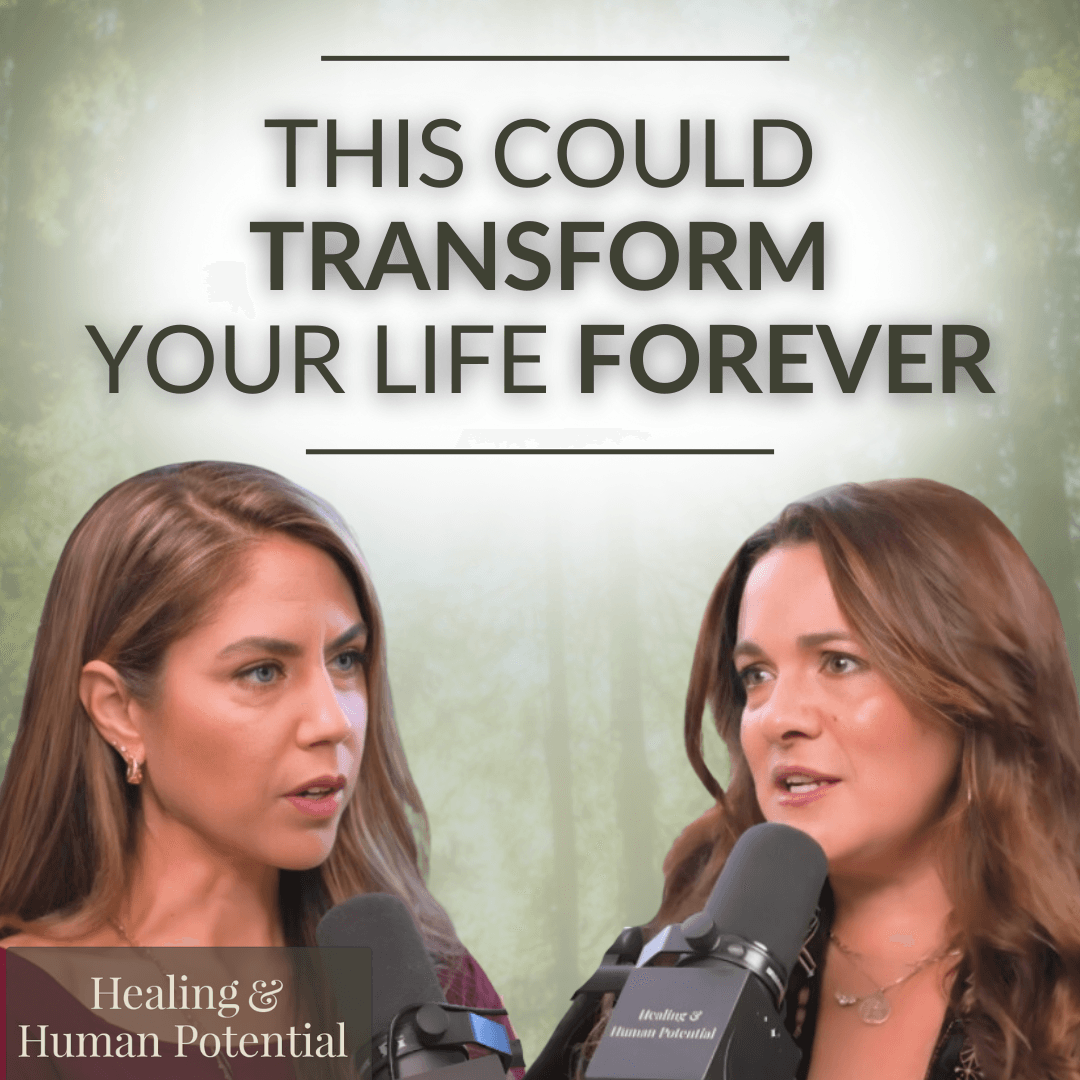
Healing + Human Potential
Are You Living in Alignment with Your Feminine Energy? - with Sarah Jenks | EP 73
01:08:34
What if reconnecting with ancient wisdom could unlock your personal power + help you live more authentically? In this episode of The Healing & Human Potential Podcast, I talk with Sarah Jenks about the sacred feminine's connection to...
Loading summary
Transcript246 lines
- [00:00]
Sarah Jenks
As women, we have been trained to always be judging ourselves off of the other people in the room, in the community, in our family. Historically, this is what has kept us safe, because if we did rock the boat, we didn't have rights to protect our livelihood. It's very normal to be afraid of outshining someone or making somebody mad because we just got the right to have our own credit card. In, like, was it 1974? If we did rock the boat, we could be kicked out of our marriage and not have any rights to be able to support ourselves. The first question to ask is, am I walking my path or am I walking somebody else's path? Am I constantly trying to avoid upsetting my male partner? Am I constantly worried about outshining my friends? Anytime we are judging ourselves off of what other people are going to think, think of us in a negative way. It is almost always grounded in internalized patriarchy.
- [01:02]
Alyssa Nobriga
I know that trust is a big theme for people, and we have a lot of healing work to do around trusting ourselves, trusting governments, or trusting something outside of ourselves. What is some of the work that you have found to be helpful to rebuild that trust?
- [01:16]
Sarah Jenks
We've been working on this a lot this year, and the thing that we've been doing the most is.
- [01:22]
Alyssa Nobriga
Welcome back to the Healing and Human Potential podcast, where today we're going to dive into the power of the Sacred Feminine. How reconnecting with this part of ourselves can lead to deeper self worth, stronger relationships, and a more authentic life. We're also going to uncover why the sacred Feminine was erased from history and how intergenerational trauma impacts our ability to embrace it, and what practical rituals we can use to reclaim our true power. Our guest today, Sarah Jenks, is a transformational leader and a priestess, and she's going to be sharing actionable steps to live more courageously and authentically. So if you're ready to challenge societal norms and step into your essence, this episode is for you. Sarah, I'm so happy that you're here.
- [02:04]
Sarah Jenks
Thanks for having me.
- [02:05]
Alyssa Nobriga
Oh, my goodness.
- [02:05]
Sarah Jenks
It's such a joy.
- [02:06]
Alyssa Nobriga
Yeah. And there's so much I want to dive into in your world. I know a big part of your work is around the Sacred Feminine, and that wasn't necessarily mainstream growing up or with role models. And so for people that are like, what is the Sacred Feminine? Why is this important? Talk to us a bit. We'll start there.
- [02:23]
Sarah Jenks
Yeah. So most of us, if we grew up with any sort of organized religion, we know the sacred masculine really well. And some of us know the toxic masculine pretty well also. And I was raised in the Christian faith. I come from a very traditional New England preppy family.
- [02:45]
Alyssa Nobriga
Yeah.
- [02:46]
Sarah Jenks
And what happened for me was I got really interested in spirituality, but it was like Eastern spirituality, transcendental meditation. It still didn't feel feminine, but I. I didn't even know to look for it, really. And what happened for me was I actually was going to therapy, and I stumbled into my therapist's living room, and she had forgotten to clean up from a ceremony the night before. And I had this full body remembrance. I erupted in goosebumps all over my body. I started to cry. And she just looked at me like, what is happening to her? Because I'm in a polo shirt and pearls and patent leather pumps. You know, I'm in, like, full normie yeah mode at this point in my life. And I just looked her and I said, what's happening here? And she said, well, I'll tell you when you're ready. And I was like, I want in on the secret club big time.
- [03:49]
Alyssa Nobriga
I'm ready now.
- [03:49]
Sarah Jenks
I'm ready now. And when I went to my first ceremony, we did it in the archetype of the Great Mother. And I just remember having this experience of this energy of a mother figure that I couldn't see, but I could feel in the room. And I had this experience of, oh, this is what God is supposed to feel like. This is what I want to feel when I connect with the sacred. This is what I've been looking for on my quest in personal development and in meditation and going to workshops. I found it in this sacred feminine ceremony. And I wanted to really understand why wasn't everyone doing this, and why did I all of the sudden feel like I couldn't tell anybody what I was doing? So if we think about the sacred masculine, like, from a traditional Christian perspective, we have been taught that he's a father God in the sky, and we all have men in our lives. And if we just think about the most loving grandfather figure, we can sort of feel the sacred masculine feeling. And if we also feel this unconditional love, a grandmother or a mother figure, we can all sort of feel that energy in our bodies. But we didn't grow up knowing that that energy is also divine and it's something we can lean on. And I really went down the rabbit hole of the sacred feminine, because what happened for me was, at the time, I was feeling super anxious. I was feeling super lost. I was a new mom, and I was really trying so hard to understand why was it that I was going to therapy every week. I was in the personal development industry. I was going to, like, Tony Robbins and all these personal development workshops. Why was it that I just spent, you know, 90 minutes in a ceremony and had the same level of transformation that I had had in all the years before combined? And I wanted to understand the impact of that. And I also wanted to understand why wasn't everybody doing this? And I went deep into sacred feminine learning around the cycles. So the sacred feminine is also reflected in the seasons of the earth and in the cycles of the moon, which are also reflected in our menstrual cycle. And we can use that cycle to track our transformation. We also see the cycle in the tarot and in the elements and in the cycles of life. And it's actually this whole map and language and the same cycle is overlaid in the zone zodiac and everything we know from astrology. It's all actually the same. And you can see it across cultures all over the world from a super ancient perspective. And they weren't even talking to each other at the time. So I went and dug into the history of the sacred feminine and realized that this was the primary way that humans worshiped for actually 97% of. Of what we have documented as the history of humans communing with the divine. And it's only been in the past 1500 years, which is really just like 3% of the history of humans having a religion that we don't have the sacred feminine at the center of our spiritual practice. And I was like, what the fuck?
- [07:32]
Alyssa Nobriga
Mm. So the sacred feminine, though, in your eyes, is. Is what? How do I define that?
- [07:38]
Sarah Jenks
So I define it as really, I define it as range.
- [07:42]
Alyssa Nobriga
Yeah.
- [07:42]
Sarah Jenks
And cycles.
- [07:43]
Alyssa Nobriga
Okay.
- [07:44]
Sarah Jenks
And creation. So if the sacred masculine is like a container, the sacred feminine is the creation or the energy that happens inside of that container. If the sacred masculine is linear, point A to point B directional, the sacred feminine is a spiral.
- [08:02]
Alyssa Nobriga
And so the importance really is to hold it in balance. I know for me, on my spiritual journey, I had a lot of male teachers. And there was a point where I knew it was important to also have spiritual teachers that were women.
- [08:12]
Sarah Jenks
Yeah.
- [08:13]
Alyssa Nobriga
And I know masculine and feminine is within all of us, but there was something that I needed embodied in both the heart and this embrace, but also the clear knowing of what I am mentally, emotionally, spiritually, Just on all levels.
- [08:26]
Sarah Jenks
Absolutely.
- [08:26]
Alyssa Nobriga
Head, heart, and gut.
- [08:27]
Sarah Jenks
Yeah.
- [08:28]
Alyssa Nobriga
And then that. Then we can really develop our full range to be able to respond to the moment how it's asking us to Respond rather than what we're just typed, you know, leaning too hard. Yeah, but you were talking about just. I know you talk about that some of this was erased from history. You're saying that the last 1500 years. Educate us.
- [08:46]
Sarah Jenks
Yeah.
- [08:46]
Alyssa Nobriga
What happened? Why?
- [08:48]
Sarah Jenks
So I think the thing that's super important to understand is that if you go back to like 30,000 BC, some of the first archaeological finds that people have found are actually pictures of a feminine God. You see this in the Venus of Willendorf, which is, if anyone Googles it, you'll probably recognize it. And all of the temples were often shaped like women's bodies. And you walked in through a yoni portal into the temple. So our bodies were a reflection of the Divine from 30,000 BC. And then in different regions all over the world, the sacred feminine started to be villainized and erased. Because when you're in a matriarchy, it's about balance, it's about care for all. And there were people emerging on the planet that wanted to have power over.
- [09:51]
Alyssa Nobriga
Yeah.
- [09:51]
Sarah Jenks
Instead of power for all. And one of the places when I was going through history to try to understand where did the sacred feminine go. The place that I focused a lot of my attention that seemed to really jump out at me glaringly was during the Crusades or in the Dark Ages, you know, started around the year 1300, where the Catholic Church decided to take over all of Europe and also spread into Asia and then enslaved people in Africa. And that was actually the same movement that colonized Turtle island, which we now know as North America, in the United States. So the thing that I realized was when the crusaders came into a village, the first thing they did was burn the sacred feminine temple and kill the leaders, the spiritual leaders of the community that were mostly women. And this also led to the burning times, which we know is, you know, the witch hunts and the witch burnings. And what they did was they used Christianity and Jesus's supposed word, which we most of us now know was not what he meant, to take over large groups of people to get the masses really fearful for their lives, for their well being and to, you know, anytime we're scared, we look to the person in power. Y and I just thought it was so interesting that the tool they used was to erase sacred feminine spirituality in order to take the power away from the people. And so when I learned that, I really asked myself, well, what would happen if we put it back? How could we actually really change the way women saw themselves and saw their own power if we just put in this Practice. Because they must have been onto something on some level if that was the primary thing that they were after.
- [12:00]
Alyssa Nobriga
Yeah. And I think of this even as you're talking about, like, how do you take over anything? Or how do you brainwash people? You take away the power, you confuse them. Yeah. And you outsource it. And I think one of the most important things you do is as. And part of what we'll talk about is how to really insource our own authority and our own truth.
- [12:20]
Sarah Jenks
Yeah.
- [12:20]
Alyssa Nobriga
But before we get there, this happened, and it definitely reflects in society. I think there's a lot of women who are afraid to take space, to own their voice. What is some of the societal conditioning that you've seen for little girls or how that's how women have adopted this in current times now?
- [12:36]
Sarah Jenks
So I love that you use the word brainwashing, because I use that phrase and that context a lot to explain to women, like, what's happening in us. Because humans have evolved to learn through metaphor and story. It is actually how our brains develop belief systems. And if you take away the metaphor of powerful sovereign women in religious stories, in talking about folklore around the fire, and you replace it with only a virgin, pious mother and a. Then we grow up. If we live in a, you know, a predominantly Christian society, even if we aren't grown up Christian, these archetypes, these metaphors are really baked into our culture. Then we only have two archetypes to see ourselves in. And what can happen is that naturally, I believe as women, we have the magic in us. You know, we were all super wild when we were little girls, but we've been taught to be afraid of that wildness, of being ourselves, of that authenticity, because we've been living in a culture, and I do believe that it's changing where we were going to be made fun of for being different, where, you know, we would maybe be shamed for being different. Where we wouldn't be able to, like, fit in to the culture, to fit into school, to fit into a traditional job. And that's the best case scenario.
- [14:18]
Alyssa Nobriga
Yeah.
- [14:19]
Sarah Jenks
And that comes with a lot of privilege and a lot of people in different societies around the world. And also in this country, if they are different, their lives are at stake and their thriving is at stake. Stake. And so there's really a range of internalized conditioning. Externalized conditioning. And. But I really see it all going back to this brainwashing and this culturalization about what it means to be a woman and what's considered appropriate.
- [14:48]
Alyssa Nobriga
Yeah. And I think the more we pay attention to history and how we got to where we are, the less unconscious we can go. Moving forward.
- [14:55]
Sarah Jenks
Totally.
- [14:56]
Alyssa Nobriga
And so what would you hope to see as. As we just as, you know, women are starting and people are starting to really claim their own sacred feminine. What would you love to see in the world?
- [15:07]
Sarah Jenks
Well, when I go back and I look at history before this happened, it's been really fun for me to study what they believe was happening inside of priestess temples, inside of matriarchal societies where women were leaders.
- [15:21]
Alyssa Nobriga
I'm like, tell me all they were.
- [15:23]
Sarah Jenks
Leaders, where they were the healers, where they were who were coming together in counsel, making really massive decisions for huge areas of land, you know, both large and small communities. And when we go and look at that in history, we can remember, oh, I'm capable of that. Because since so much of that history has been deliberately erased from what we know and mostly rewritten to be in the narrative that men have been in charge the whole time, we don't know what's possible for us. So that's why I think it's so important for women to like, learn about and understand about matriarchal communities and, you know, what it meant to be a magical woman and what it meant to be sovereign, what it meant to be in our wildness and back in a time when everything was. When we were celebrated for being authentic. And of course, it wasn't never. It's never been perfect, you know, And I believe that we can borrow from a lot of these stories in order to think about, you know, how to give ourselves permission to rock the boat, to color outside the lines, to forge our own path and not just default to what our belief systems are telling us we can do.
- [16:38]
Alyssa Nobriga
I forgot about this until you started talking. So I was raised at 14 in a shamanic circle that my dad was a part of. And I remember learning around the time that I got my period for the first time that that was a really. You were more intuitive. And it's a sacred time. And women back in these earth honoring communities would bleed together on rocks, come together to. To really tune into the intuition of what was best for the community at that time.
- [17:02]
Sarah Jenks
Exactly.
- [17:03]
Alyssa Nobriga
So tell us if there are any stories like that that we can start to hear about and open our perspective and come back to a more remembrance.
- [17:12]
Sarah Jenks
Yeah. So one story I love talking about is back when we were hunter gatherers. They. We know this from archaeologists looking at cave drawings where the female shamans of the community would go into deep meditation and the goddess would tell them where the animals were and they would talk to the animals, they would attune to the animals, they do a ceremony for the animals and they would send out the hunters and the hunters would know exactly where the herds were. And then of course, they would only take what they needed. They would, you know, kill the animals in ceremony. And I just love this team of like divine direction with embodied action out in the world in order to create, you know, thriving for communities.
- [18:02]
Alyssa Nobriga
I mean, this is one of my intentions personally and then to have that reflected in my team. But I feel like hearing stories like this and how other cultures and other times we've already lived in harmony with nature and utilizing the wisdom of the collective. Yeah, it does help put that front and center. So it's like, oh, that's possible. And this is some ways that it could look, I think we're so relational that we need examples and stories like that.
- [18:27]
Sarah Jenks
Totally. And the other thing that I really love talking about is, you know, when priestesses would run a temple. So in some societies, mostly in Europe, like if you look at the temple of Avalon, which is current day Glastonbury, England, a lot of what is said and remembered about this time is that there was a circle of priestesses that held the temple and they sat in a circle as equals and they would come into deep meditation, deep relationship with the goddess to really understand what was best for the community. And so we actually orient our team this way in my company because the way it used to be was like I was, you know, normal is like a triangle, hierarchical. A hierarchical where the CEO is at the top and everybody else supports the CEO. But now how we orient is the mission is at the center of the circle and we all sit on our pillars around the mission and we each have a different responsibility in order to support the mission. And I trust the members on my team to really hold their pillar of expertise and know better than me about what's needed, you know, for our mission.
- [19:49]
Alyssa Nobriga
I used to think that's how governments were when I was a kid. I was like, we would just elect the best teacher, the best doctor, like the best.
- [19:56]
Sarah Jenks
Wouldn't that be great?
- [19:57]
Alyssa Nobriga
And then, you know, yeah, there's a lot of upgrades that we are going to make that I'm holding that. And I think part of what you're doing is retelling these stories that got lost. Yeah. In support of all of us waking up to a more balanced and integrated conscious way of living. Do you want new tools and powerful group exercises to help you deeply and profoundly change your Life. Maybe you feel overwhelmed with the idea of starting or scaling your business and wish you had the strategy, the community and the support to really help you shortcut the learning curve. If so, I want to make sure that you know that our most popular event of the year is back by demand and it's absolutely so. This is my five day Confidence and Clients bootcamp and it's coming up for new and seasoned coaches, therapists and healers, but it's also for anybody that's wanting to uplevel themselves from the inside out and really start the year off strong. So each day I'm going to lead you through a live transformational group process. I'm going to share with you behind the scenes coaching demos, pulling people up to coach, and I'll give you daily prizes and tools that you can use on yourself and with your clients right away. So you're going to discover the real reason people don't create change so that you can more easily step into your goals. I'll show you how you can create the income that you desire and practical strategies for where to create clients today for free as well as heart centered sales. You can fall in love with sales with this approach and I'm going to teach you my manifestation packs as well so that you have everything that you need to embody a deeper sense of competence. And then lastly, I will share with you, not only tell you, but also show you the power of embodiment work so that you can specifically use it to transform your relationship with money and attract real abundance so that you're really set up to scale with ease in all the ways that you're called to. I cannot wait to share this with you again. It's absolutely free, it's transformational and it's going to be so good. And research shows that we grow so much faster in community. So send this to a friend that you want to do this with and help hold yourself accountable Again, it's free. So join us before it's too late. All you have to do is go to Alyssa nobriga.com forward/bootcamp and reserve your space now. So I know we all have internalized patriarchy whether we're aware of it or not. What are some ways that you see that play out so that people can start becoming more aware.
- [22:18]
Sarah Jenks
So this was such an interesting process for me because I was really a die hard feminist for so long and super independent, very much in equality with my husband. And then I had a baby and all of a sudden I was like cleaning the house all day. And wanting to put dinner on the table at night and feeling all of this pressure to be the perfect mother and to not have the baby crying when Jonathan came home from work. And also, I was the primary breadwinner also during this time. So I knew that it wasn't some sort of, like, I was taking more responsibility for the home. You know, he was being the primary breadwinner. It was. I was in a situation where I could take that out of the mix. And I just remember looking at myself thinking, what am I doing? Why do I feel this way? I have spent my whole adult life being pretty outspoken and pretty independent. Why am I all of a sudden acting like a 1950s housewife? It was wild. And then I started really getting into the study of internalized patriarchy. And I think something. It happens for people at all different phases. When I look back, I can definitely see how when I was a teenager and growing up, that I felt a ton of pressure to fit in, that I felt a ton of pressure to make my parents proud, that I felt a ton of pressure to really follow the traditional path of success, to follow the path that was laid out for me by my family, to fall in line with the people that I went to college with. And this is a really clear way to know if you have internalized patriarchy is. I mean, we all do. And it comes up in, like, lots of ways. So, so many different ways. But I think the first question to ask is, am I walking my path or am I walking somebody else's path? Am I primarily concerned with how people see me? Am I always thinking about or worried about making someone mad? Am I constantly trying to avoid upsetting my male partner? Am I constantly worried about outshining my friends? Am I worried about being too big or being too loud or being too visible? Am I worried that people are going to think that I'm weird for being spiritual? So anytime we are judging ourselves off of what other people are going to think of us in a negative way, it is almost always grounded in internalized patriarchy.
- [25:03]
Alyssa Nobriga
I think one of the core narratives of the human psyche is unworthiness. This is like a core wound. And it shows up in two ways. One is, I'm not good enough, and the other is I'm too much.
- [25:13]
Sarah Jenks
Right.
- [25:13]
Alyssa Nobriga
And it's the same wound showing, same with a different pendulum. And so how do you then begin to support people? Yes. First seeing some of these things. How do you support people after they start waking up to it?
- [25:27]
Sarah Jenks
Yeah.
- [25:27]
Alyssa Nobriga
To integrate so that they do have a voice they can Be true to themselves and pave a new way and. And take. Yes, take space. Especially as a woman.
- [25:35]
Sarah Jenks
Yes. So as women, we have been trained to always be judging ourselves off of the other people in the room, in the community, in our family. And historically, this is what has kept us safe. Because if we did rock the boat, we didn't have rights to protect our livelihood. And so it's very normal to be afraid of outshining someone or making somebody mad because we just got the right to have our own credit card in, like, was it 1974? And so if we did rock the boat, we could be kicked out of our marriage and not have any rights to be able to support ourselves. So it's important to understand that if we have this feeling, feeling like we're gonna die, that is epigenetics, and can be stored in our genes. And when we do sacred work, which is so cool, it actually reprograms our genetic makeup to see ourselves differently.
- [26:30]
Alyssa Nobriga
Are you saying that there's, like, muscle memory, so if we go back to those truths, it's already alive and awake within us that it's easier to reclaim?
- [26:38]
Sarah Jenks
Yes, exactly.
- [26:38]
Alyssa Nobriga
Beautiful.
- [26:39]
Sarah Jenks
And there are things that we can do somatically with our body that we have evolved to use as humans, like drumming, like singing, like sitting in circle, like being in certain energetic frequencies that help us to remember the truth of our safety as opposed to being always attuned to, like, our remembered fear of being unsafe.
- [27:04]
Alyssa Nobriga
Compassionately, of course, we didn't have a voice. We couldn't take space because we'd be ostracized and not live. So, survivally speaking, it was great that we did that. Now we're evolving beyond that. And I think a lot of the time, women have learned from, you know, the seven, where it's like, you know, be more like a man. And we've evolved.
- [27:21]
Sarah Jenks
Yeah.
- [27:22]
Alyssa Nobriga
But now we're starting to see what's our truth. And having certain ceremonies or communities that remind us of that then will help keep that awake within us. But the core is the safety.
- [27:33]
Sarah Jenks
The core is the safety. And the thing that I always try to tell women is to remember that you aren't dying. You're just uncomfortable. And because we can really feel like we're going to die if we tell our group of friends that we're going to go to a ceremony or that we're quitting our job or we tell our parents that, actually, I'm not going to walk this path that I thought I was going to, that you also walked. I'm Going to take my own path. And we can feel like we're going to die, but we're actually just uncomfortable. So the piece that I think is important in what I teach women to do is that instead of judging ourselves based on the people around us, we actually come into ceremony, we learn who our soul is and we get information around the fullest expression of our soul. And we begin to judge ourselves based off of our potential, based off of what it feels like to be in our fullest expression. And we can then see, oh, like I am a very specific puzzle piece on this planet right now. And so how can I be the most me, the most unique puzzle piece? And when we do that, when we're trying to come, when we come into our center, into our soul, we then realize that everybody has a role and that there isn't competition. And then we can create situations where and groups of friends and communities and family systems where our differences are celebrated instead of having safety be grounded in sameness.
- [29:08]
Alyssa Nobriga
Yeah. And the safety, I think is the most important part because when there's safety at the foundation, then it's easier to be ourselves, be authentic, to collaborate. And when we are hyper vigilantly looking at other people to try to find our own safety, that's when we are going to feel anxious because we can't control anything outside of us. But to have that awareness and to insource that safety so that that part of us feels safe within us. And as we do that, then we can start expressing more authentically in community.
- [29:35]
Sarah Jenks
Exactly.
- [29:36]
Alyssa Nobriga
Yeah. I, I love that. And I'm just thinking about the courage it takes to speak our truth.
- [29:43]
Sarah Jenks
Yeah.
- [29:44]
Alyssa Nobriga
And so learning the tools to really integrate somatically that fear. I love you and you're not dying, you're just uncomfortable.
- [29:50]
Sarah Jenks
Yeah.
- [29:51]
Alyssa Nobriga
Like knowing that and then to breathe into it. Because oftentimes what I find is people are trying to avoid feeling something.
- [29:56]
Sarah Jenks
Yes.
- [29:56]
Alyssa Nobriga
By staying in their mind, thinking about it, by controlling or thinking about how other people are navigating something. So, and I'm curious about a matriarchal society. I'm curious about that. And whether it's matriarchal or patriarchal. I think the ideal is to have our own internal authority.
- [30:15]
Sarah Jenks
Absolutely.
- [30:15]
Alyssa Nobriga
To have our own spiritual authority to really tune into ourselves. And any good teacher or guide is going to bring us back into ourselves. And that is better than any, you know, hierarchical. I do think we need some leadership positions, but it doesn't mean that we are better than, or that our worth is anywhere, are tied up in that.
- [30:36]
Sarah Jenks
Yeah.
- [30:36]
Alyssa Nobriga
So just out of curiosity, for a matriarchal society, is there an example of.
- [30:43]
Sarah Jenks
Well, we don't have a ton of examples on the planet right now. But the thing that I, I always like to look to nature to really understand how we can set up society and culture and the indigenous cultures that are alive and well. Like if you go deep into the Amazon, there are matriarchal societies. And I think it really touches on what you just said, which is when we tap in to our own authentic power, it is clear what our role is in the community. And just like if you go to a forest, the trees have a role, the mushrooms have a role, the bees have a role, the flowers have a role, the pol, you know, the pollen has a role, the bugs have a role. And everyone works together in order to create an ecosystem.
- [31:28]
Alyssa Nobriga
Flower's not better than the flowers, not.
- [31:30]
Sarah Jenks
Better than the tree, that's not better than the mushrooms, it's not better than the bugs. It's an, an ecosystem. And so I think if we can just start with our families, start with your partner, you know, start with your friends, start in your workplace and really try to get to know people. What makes people different, what makes people interesting? What's their special blueprint, special talent? It's usually the thing that people are hiding. It's usually the thing that they don't want people to know. And so when you get in there and you find that special sauce and you celebrate it and you amplify it, I really believe that you can create systems of care that are much more sustainable and in service to all thriving.
- [32:24]
Alyssa Nobriga
Yeah. Which feels more harm in living in harmony and balance. Yeah. And having some of the matriarchy support the patient. Like it's got to be both, it's got to be integrated totally.
- [32:32]
Sarah Jenks
And when I say matriarchy, what I really am talking about is not women being in charge.
- [32:36]
Alyssa Nobriga
Right.
- [32:36]
Sarah Jenks
But not this system of ecosystem of non hierarchical community building. It's a circle.
- [32:43]
Alyssa Nobriga
Yeah, yeah, yeah. And I think that the circle in the line, I am hearing the spiral. So that's beautiful. That's where it's really in harmony. I know that trust is a big theme for people and we have a lot of healing work to do around trusting ourselves, trusting governments, or trusting something outside of ourselves. What is some of the work that you have found to be helpful to rebuild that trust? Trust, yeah.
- [33:07]
Sarah Jenks
So we've been working on this a lot this year. And the thing that we've been doing the most is really working on women's inner masculine. And because I think that we can exercise sort of toxic masculine traits as women where we're just like, we're pushing really hard and we're hustling, but that's different than connecting with your inner protector. And so I've been really asking women to, in ceremony, to close their eyes and to find the part in them that is their protector, that will stand up for themselves, for. For their inner warrior. And then who is the part of them that feels clear about the direction that they're going in and isn't afraid to tell people, I'm busy because I have something that I'm working on, you know, that isn't afraid to put ourselves first and to hold a boundary for who we are. Because I think that we outsource that really often to the men in our lives. And then we bring in the sacred feminine. What is the part of you that wants to create something? What's the part of you that's connected to the divine? And how can we bring your inner protector and your inner creator into a partnership with each other? Right in here? And this has been such an important thing for me because I realized that there were so many things that I just wanted Jonathan to do for me and that I was outsourcing the creation of a lot of my dreams. And I had to really sit with myself and say, if these are my dreams, I have to know how to bring them into fruition by myself. I have to be willing to do that. And when I did, you know, of course he joined me with his own medicine and magic. And I couldn't just be the one to have the vision and then say, go for it, dude. You know what I mean? Yeah. And when I did that, I realized that there were so many. I'm the one who knows myself at the end of the day. There are so many more boundaries I had to have with my time inside of work and with my friends, with my family and with my husband, that I am the one who had to protect my time. And what I knew was important. And I find that if and then follow through with the things that I said I was going to do for myself, and that's how we really build trust with other people, is first learning how to build trust with ourselves. And I find that doing that inner masculine, inner feminine partnership work within us is the place to start.
- [36:01]
Alyssa Nobriga
That's right. It's always a mirror. Life is a mirror. So doing that within us. Yeah, it's interesting because as you're talking, I'm on the opposite spectrum. I call myself a completionist because I will complete something and will really show up for it. But sometimes inside, it's not true anymore. And so needing to build my own trust with being able to change my mind or knowing how to, I've built something now pass it off so that it's being held with the care that I would offer to free me up, to honor a new calling and a different line of service in the world.
- [36:33]
Sarah Jenks
Wow, that's beautiful.
- [36:34]
Alyssa Nobriga
And so the trust, it's something that you just. There's so many layers that it can go deeper. But you're right, it always comes back to trusting ourselves and honoring each part of us and knowing how to say yes to it, but also, like, when to allow it to happen versus when to make it happen.
- [36:52]
Sarah Jenks
Totally.
- [36:53]
Alyssa Nobriga
And so, like this, the masculine and feminine, we all have a different template for what's our authentic truth and where we lean on that spectrum. And just being able to hear a podcast like this to reflect on, am I living in alignment with my truth? Whether it's on one side or the other more, or is it really in balance? You know, some periods of time in our lives is going to be different as well.
- [37:14]
Sarah Jenks
Yeah, I love that. And I think the thing that I really use, I think we all have a physical tell when we are meant to be in allowing or we are in this invitation to be a sacred warrior. I am always in this dance of, like, am I meant to really go for it right now, or am I meant to have it just arrive?
- [37:38]
Alyssa Nobriga
Yeah.
- [37:39]
Sarah Jenks
And for me, I'm touching my throat because when I'm pushing too hard and I'm not supposed to, I get a. I get anxiety in my throat and I start to have fantasies of being liked by other people. I know it's because, like, that's my core wound. Like, we all have a core wound. Mine is I want to be liked in order to be safe. So whatever our thing is, is, like, I want people to see me as smart. I want people to love me. I want people to think that I'm funny. I want people to think that I care about them. Like, my whole thing is, like, I want to be liked. And so when I'm, like, unconsciously fantasizing that the thing that I'm going after means I'm going to be more liked by other people, I know I'm on the wrong path.
- [38:27]
Alyssa Nobriga
That is such great tracking.
- [38:29]
Sarah Jenks
Yeah.
- [38:29]
Alyssa Nobriga
I'm just wondering if thyroid, like having a hypothyroid or thyroid condition is that.
- [38:35]
Sarah Jenks
And I've been on a journey with my thyroid for sure, yeah.
- [38:39]
Alyssa Nobriga
And I notice when I push too hard, it acts up.
- [38:42]
Sarah Jenks
Interesting.
- [38:43]
Alyssa Nobriga
And so there's similarities. And I'm just wondering, you know, I'd love to hear from people in the comments just, like, does this resonate if you have a thyroid condition? Is it because you're pushing too hard? Do you notice it gets activated? And is it. Is it around also wanting to be liked versus what's my authentic truth?
- [39:00]
Sarah Jenks
Right.
- [39:01]
Alyssa Nobriga
And I do find for me, growing up more in the shamanic circle from 14 to 20, a lot of that time was just spent in silence. And that space of just looking at an altar, a mesa and just listening deeply supported more of an authority within myself. Yeah, I didn't. I was 14. So I wanted some mental understanding and I went and did a spiritual psychology program. But I do find taking that space, having those no's, I think when you get older, to claim that space.
- [39:31]
Sarah Jenks
Yeah.
- [39:31]
Alyssa Nobriga
To really develop the muscle and the trust within our own authority is important.
- [39:36]
Sarah Jenks
Yeah. And I think the important piece around that is that the divine, to me, the divine is super real. Like, the Goddess is my best friend, she is my lover, she is my mother. Like, she is like really number one in my life. And she talks to me because I take a lot of space to listen and to ask her questions and. And it's something that we can all develop a relationship with and have a direct experience of. Like, I was just walking down the street an hour ago and I was just thinking about this, like, next chapter in this next year and how I want to show up differently. And it hasn't been super clear to me. Like, I have some blank spaces and I was feeling sort of frustrated with myself. And all of a sudden I looked up and I realized I was walking on Rows Avenue and then, which I didn't think much of. And then I just turned back towards the sidewalk and there's a woman wearing a sweatshirt that just said Avalon, which is where I got ordained, which is where the. One of the last standing priestess temples were. And the lineage that I am a part of, they believe was originated in Avalon. And then like one block later, there was a fence with a triple goddess, you know, with like the crescent moon and the full moon, the other crescent moon, which is the sign of the goddess, and then a solar cross, which is the sign of the priestess. And I was like, hi, thank you for just saying I'm here. You know, magic is really real. And I know for me, as someone who always looked outside of myself for validation to. Instead of trusting my inner knowing for Me connecting with the divine and then having the divine speak to me in symbols, in signs, in knowings, in my head, in visions has been so important for me. Cultivating trust.
- [41:28]
Alyssa Nobriga
And you have to be present to be able to see or hear super.
- [41:32]
Sarah Jenks
Feedback and like in your body.
- [41:34]
Alyssa Nobriga
Yeah.
- [41:35]
Sarah Jenks
And just with your eyes up, not on your phone, you know, just in the mind, you know, you just have to be waiting for it.
- [41:43]
Alyssa Nobriga
Yeah. It's like it's never not here. It's just, are. Are we awake to it?
- [41:47]
Sarah Jenks
Exactly.
- [41:47]
Alyssa Nobriga
And having. I imagine practices or rituals support keeping the aperture open, staying more present. I know for me it's meditation and questioning everything. That's always been my path.
- [41:57]
Sarah Jenks
That's so good.
- [41:58]
Alyssa Nobriga
I'm curious, are there practices or rituals that you love and recommend so that people can really cultivate a connection within themselves?
- [42:05]
Sarah Jenks
Yeah. So I have like a tiered system in my life. So I do a sacred start every morning. And that is just a simple like drop in pulling cards, imagining my perfect day. And I will. And then I also talk to trees. So I will sit with my trees almost every day outside.
- [42:28]
Alyssa Nobriga
Outside in the grass. Yeah.
- [42:30]
Sarah Jenks
Even when it's freezing. Because, you know, I live outside of Boston, so it's like a lot. And so I talk to the land. And I also have a practice of emptying out. So like really feeling other people's energy that is maybe stuck in my body, the things that I'm worried about, the things I've just like picked up throughout my life, just really feeling it all empty out, being an empty vessel. And then asking the goddess, is there anything you want to tell me? And so I'm really doing those sort of touch points all day. You know, I'm a professional priestess, so that's maybe like more than most people need to do. This is my job. Just like if a lawyer is going over paperwork all day, it is my job to talk to the trees. And so, so that's my daily practice. And then I do new moon ceremony, every new moon with my community. So that's like a 90 minute ceremony that we do. And then I believe in having larger, you know, three day week long ceremonial touch points, like once or twice a year. Because that way we can have like the deepest experience. And then when we're in our sacred start in the morning, we can draw on that we can remember. We have a somatic remembrance of what it feels like to be our soul instead of just our normal human self. Because it feels different. It's a different vibration when we're leading with our Soul self than when we're leading with our human self.
- [44:02]
Alyssa Nobriga
Yeah. And we all resonate with something different.
- [44:04]
Sarah Jenks
Well, that's the thing. Yeah.
- [44:05]
Alyssa Nobriga
And that's the. That's part of.
- [44:06]
Sarah Jenks
That's what's so cool. Like, and people have to, like, find their medicine.
- [44:09]
Alyssa Nobriga
You gotta try different things.
- [44:10]
Sarah Jenks
You gotta try different things. And what was so, so cool for me is, like, when I discovered my lineage was the thirteen moon lineage. When we do ceremonies, you know, we are, like, all dressed up in the same color. The altars are really beautiful. There's, like, crystals and flowers everywhere. It's deeply cathartic and really magical. And you see, you know, and you feel like you're on a spaceship to another realm. And it's very active and very beautiful. And it's done in community. And so for me, I was like, yes, this is exactly what I need. It's just, like, so juicy, and parts are fun and parts are really hard. And I just. I love the medicine. Yeah.
- [44:57]
Alyssa Nobriga
And I think it's good for people to try things on, to find out what their truth is and not try to force something.
- [45:01]
Sarah Jenks
Oh, my gosh. No.
- [45:02]
Alyssa Nobriga
I loved growing up in this. This shamanic circle. And at the end of the day, it wasn't my work.
- [45:08]
Sarah Jenks
Right.
- [45:08]
Alyssa Nobriga
And I have so much deep reverence and gratitude for that. Yeah. And yet I started finding spiritual teachers that would later. Somebody was like, oh, that's non dual. So I was like, great. There's a term for this. I like certain teachers. I was like, oh, this is my thing.
- [45:21]
Sarah Jenks
Yeah.
- [45:22]
Alyssa Nobriga
And so we all just whatever that is, that tuning fork that wakes us back up to prioritize us.
- [45:27]
Sarah Jenks
Yeah. And there's not one way because we're all different. Yeah.
- [45:30]
Alyssa Nobriga
When you say priestess, goddess, shaman.
- [45:33]
Sarah Jenks
Yeah.
- [45:34]
Alyssa Nobriga
Like, how do you define some of these terms?
- [45:37]
Sarah Jenks
Yeah. So the way that. The way I define the goddess is all that is. It is the. The great unknown, what many of us grew up calling God.
- [45:49]
Alyssa Nobriga
Okay.
- [45:50]
Sarah Jenks
I just see her as a woman. I also commune with God as, like, a sacred, masculine, divine presence. I have learned in my teachings that shamans are really connected to the earth elements.
- [46:00]
Alyssa Nobriga
Earth honoring.
- [46:01]
Sarah Jenks
And as a priestess in my lineage, what we are doing is we are channeling archetypal frequency. So what I'm actually doing is vibrational frequency work. It's basically like astrophysics. And so what I'm learning how to do is hold a certain frequency in my body and in the temple space. So it's like I become the tuning fork.
- [46:27]
Alyssa Nobriga
You are the medicine.
- [46:28]
Sarah Jenks
I am the medicine. Not me. Sarah.
- [46:30]
Alyssa Nobriga
Right.
- [46:31]
Sarah Jenks
But the archetype that I'm trained to hold in my body as a vibration that you actually, if you brought in the right tools, you could measure in the room. You know, just like we're all vibrating all the time. We're all electromagnetic field. Sound has a certain vibration, color has a certain vibration. Which is why when I lead temple, I've been trained to have one color saturation. Because, like, burgundy has the same frequency as the feeling of the great mother. Blue has the same frequency as the archetype of the priestess. You know, green has the same frequency as sovereignty. And you can feel it in your body when you walk into a room, and it's all bathed in one color, and everyone's wearing the same color. And then there are certain sacred geometry that we can use that holds that frequency, certain tools, certain metaphors, certain ways of doing things, certain music. And so if you create this immersive experience in a certain vibration, we take in that vibration in our cells, and then we can learn how to harmonize with it. It. Which I think is why, like a coherence. It's a coherence, yes. And that's the tool that I've been trained in, how to create in a room with a group of people. And so when you can feel. When people come in, they're nervous, they're in their human selves. They're in some sort of vibration that they picked up at the grocery store. And then my job is to get everyone into this coherent field in this one frequency. And then the work that we can do in it is, like, really impactful.
- [48:12]
Alyssa Nobriga
I mean, that is also more of the feminine. That makes sense because it's communal. It's like getting in coherence with the whole group and adding a different frequency together. Whereas shamanism and how I understand it. Yes, Earth honoring. But also one person is accessing clarity to help remove some of the hoojah, some of the.
- [48:34]
Sarah Jenks
Right.
- [48:35]
Alyssa Nobriga
The shadow work.
- [48:36]
Sarah Jenks
Right.
- [48:37]
Alyssa Nobriga
So it's helpful to hear different perspectives and get some nuances about that, because I've always heard these terms, and I'm like, I wonder how people differentiate. Yeah, I do think it's helpful, and.
- [48:46]
Sarah Jenks
It'S great because I can set the vibrational frequency in a space, and we can have, you know, 10 people in there. We can have 150 people in there. And then you. It's. Those two experiences are really different. When we have 150 people in one temple, it's off the hook. It's so cool what happens.
- [49:06]
Alyssa Nobriga
Yeah, yeah. Things definitely get Magnetized in community. When we're really intentional.
- [49:11]
Sarah Jenks
Right.
- [49:11]
Alyssa Nobriga
Yeah.
- [49:11]
Sarah Jenks
And. And, like, super present. It's all about presence.
- [49:14]
Alyssa Nobriga
That's right.
- [49:15]
Sarah Jenks
Yeah.
- [49:15]
Alyssa Nobriga
Yeah. I'm wondering, you know, I know part of your work, you talk. This is, like, deeper than our own personal childhoods. This is much more collective.
- [49:22]
Sarah Jenks
Yeah.
- [49:23]
Alyssa Nobriga
What do you say with people that are interested in healing intergenerational trauma?
- [49:27]
Sarah Jenks
Yeah, that's a really good question. You know, I think the work of epigenetics is a really valuable thing to understand and study. And I think the thing that's really helpful for people. We so often will just, like, blame our parents, but they're swimming in the same soup that we are.
- [49:48]
Alyssa Nobriga
Thank you.
- [49:49]
Sarah Jenks
They are also victims of this culture, and they had it way worse. Worse than we did. Way, way worse. And so I say look for the places that they healed and really honor them for their specific assignment and then really dive into what's yours. What's yours to heal. How can you take the baton and say, thank you so much for doing your part? I've got it now.
- [50:18]
Alyssa Nobriga
Beautiful.
- [50:19]
Sarah Jenks
Yeah.
- [50:19]
Alyssa Nobriga
I love that. Because, yes, it's okay to have your anger, but don't live there. You know, let it be expressed. And how did they evolve your lineage? And then what's yours? That's beautiful.
- [50:29]
Sarah Jenks
Yeah. Because I think you just have to go. You have to go back. You know, like, keep. Go back as far as you can so that you can really see and understand the oppression that has been just systematized into our family systems. Yeah. And I think also for me, it's so beautiful for people to look at. Where were my parents actually trying to protect me? You know, within the society, the way that they understood it to work. How can we reframe different patterns as protection? And it's not always true. I mean, you know, everyone has a wide range of what our experience was growing up, but I think that's a good place to start.
- [51:20]
Alyssa Nobriga
Yeah. Becoming more aware. Yeah. Yeah. But this. This compassionate awareness, I think, is really key. Yeah. And as we start to come more into harmony and balance some of these masculine and feminine ways of being and wake up to the sacred feminine within us.
- [51:36]
Sarah Jenks
Yeah.
- [51:37]
Alyssa Nobriga
That's going to elevate every area of our life, including money.
- [51:40]
Sarah Jenks
Yes.
- [51:41]
Alyssa Nobriga
And so I would love to hear your perspective on how. What's the work you found helpful to support people in feeling more empowered and conf. With money?
- [51:49]
Sarah Jenks
Yeah. That's a great question. You know, I really feel that the first part for people to go is to ask themselves, if I had all the Money I wanted. What am I afraid would happen? Am I afraid that someone wouldn't like me anymore? Am I afraid that people would say xyz? And it's just such a good way to point at where our internalized patriarchy is still alive and well and to really handle those shadows and to be able to withstand those fears. Because a lot of those fears are valid and will probably happen. You know, as I have become more expressed and more myself, I have lost so many friends. I've had a lot of people misunderstand my intentions. I've had a lot of people who've been really excited to take me down when I up because of course I do. And I have to know that I'm actually willing to stand in that fire. And so I find that, that the path of holding abundance is really just the path of self expression and being visible. And then I think the other piece that's really important is that there are so many people who are great at their work and it doesn't always mean that they're going to make money doing it. I really wish it were true. And so with that, I think it's so important for people to understand that the wisdom and the magic of like how to run a company can be super fun to figure out, but to do it in a way that lights you up and to have it be part of your purpose and to get in there with it and to not be afraid of it. And you know, women have been brainwashed to be told that we're not great with money. It's like fifth grade math most of the time, not all the time, but just get out your calculator, do some budgets, do some math, get excited about what you want to create. Really understand how much things are going to cost, really understand how much if you want to be an entrepreneur. Exactly how to run your company. And notice along the way. It's that self awareness piece. Where are you telling yourself that you can't or you don't want to, or you're not good at it. It's actually if you just take some time to teach yourself how to do it. It's not that hard to figure out.
- [54:35]
Alyssa Nobriga
I just am realizing that this whole conversation has been about power.
- [54:38]
Sarah Jenks
Yes.
- [54:39]
Alyssa Nobriga
It's really. And money is one reflection of that.
- [54:41]
Sarah Jenks
Exactly.
- [54:41]
Alyssa Nobriga
And what, what was I inherited? What did I witness from mom and dad or whoever my primary caretaker was and what's my truth? And am I willing to be true to myself even if I other people don't like it?
- [54:53]
Sarah Jenks
Totally.
- [54:54]
Alyssa Nobriga
Because I, I know I mean, I love teaching people about money and feeling empowered and using business as a personal development path. That's the only way it makes sense. It's got to be more than just making money. It's got to be about service impact.
- [55:06]
Sarah Jenks
I mean, there's. It is. There's so many other better ways to make money besides being an entrepreneur. I just, like. Let me be the first person to say that. And I want to go. I actually want to correct something that I said because I actually don't want to paint a picture that having your own business is easy. I find that it is actually really difficult and not everyone is actually wired to do it. And I don't think it is. Is the path that everybody needs to take.
- [55:30]
Alyssa Nobriga
Yeah. Some people really want security and safety, and that's beautiful. Yeah. The way that I teach it is that using your own fears to insource that safety rather than outsource it.
- [55:40]
Sarah Jenks
Yeah.
- [55:41]
Alyssa Nobriga
It may be more challenging for those people if they're not willing to do the work.
- [55:44]
Sarah Jenks
Totally.
- [55:45]
Alyssa Nobriga
But if they do the work to wake up from fear and integrate and feel the thing they're afraid of, actually their entire life gets freer and easier as a result.
- [55:53]
Sarah Jenks
That's beautiful.
- [55:54]
Alyssa Nobriga
Yeah.
- [55:54]
Sarah Jenks
Yeah. I mean, it has to be the path of awakening every day. If you're going every day, I know.
- [55:59]
Alyssa Nobriga
You and I are going. This is what it's about.
- [56:01]
Sarah Jenks
If you're going to choose it. Because, you know, the thing that I experience a lot are projections. Because so much of. Especially if you are wanting to build a company. Companies like we have, like, we're very visible as people. And people project onto me all the time. And I just have to know that that's actually part of my job.
- [56:25]
Alyssa Nobriga
Yep.
- [56:26]
Sarah Jenks
Is to be a mirror for other people. And the only way that I can move through that and stand in that is that if I'm in incredible integrity in my own life. So a lot of what I pay attention to, and I really do use this in relationship with making money, is I really prioritize what is happening when no one is looking. Those are the pieces, like my innermost thoughts about myself. The way that I am running my company, the way that I'm in relationship with people, the way that I am leading behind closed doors, the way I am in my friendships. I need to be in full integrity all the time. Because when those projections come, I need to either know that there's.
- [57:11]
Alyssa Nobriga
There's.
- [57:11]
Sarah Jenks
They're really not true and I am good with me, or I have to love myself enough to be like oh, yeah, I'm totally doing that. You're totally right. And I'm gonna be humble and clean that up.
- [57:24]
Alyssa Nobriga
Yeah.
- [57:25]
Sarah Jenks
And be better. And you kind of like have that.
- [57:29]
Alyssa Nobriga
Flexibility in that dance without the personal development. It's just hard. And with using it as a path for awakening.
- [57:35]
Sarah Jenks
Yeah.
- [57:36]
Alyssa Nobriga
It. It children, money, relationships, everything gets to be so much easier because you're willing to feel the thing that you were avoiding. Totally. And you're willing to wake up out of the identity of who you thought you were trying to pretend to be. And then it just is freer. It's like, oh, yeah, I could see where I was like that. Or oh, that. You know, being holding that sacred mirror. To know that that's their authority issues getting projected because you're the boss or because you are seen a certain way online. I know for. It's just this as we're talking, I'm just seeing power over, power under, you know. And I really just recently been looking at what I was influenced around power from my mom and dad. My dad being an eight, a challenger in the Enneagram, my mom being a peacemaker, a nine.
- [58:17]
Sarah Jenks
Yeah.
- [58:18]
Alyssa Nobriga
I was like, that's a fun dynamic. And. And also looking at the lens of men and women through my younger misunderstandings of like, this is what it looks like. And so, you know, one time I was talking to Emilio, my husband, where I was asking him about investing in a mastermind. It was a week long mastermind, it was very expensive. And I was asking him about doing it and I'm like, why am I asking him? And he's such a beautiful human and very clean about money. And he's usually just very encouraging, which helped me just wake up from. Also, if he were challenging, I'd probably be mad at him and still use it as a personal development path.
- [58:57]
Sarah Jenks
Totally.
- [58:58]
Alyssa Nobriga
Yeah. But I was still like, why am I asking him? And I was like, oh, because I saw my mom. Mom as my dad.
- [59:02]
Sarah Jenks
Right.
- [59:03]
Alyssa Nobriga
And so that was my own inheritance that I bought into. I was like, no, I know how to make money and spend money. And so it's just these slower, like being more mindful to wake up to, having compassion and being like, oh, I get to do it differently. Even if it's uncomfortable, it's a lot more freeing.
- [59:18]
Sarah Jenks
Yep. And I think there's always this. And it's like all women everywhere have been doing that, you know, for over the past few thousand years. So we just have like, that is the soup that we are swimming in. And we have an amazing opportunity to learn how to do it differently. And it is just like, it's all those opportunities just right in our own partnerships, I believe is the perfect place to start to look at. Where are you holding hierarchy in your marriage if you're married? Like, really start there. Because if you are holding hierarchy in your marriage and you are putting your male partner over you, you will never be able to step into leadership in your own life.
- [60:05]
Alyssa Nobriga
Yeah.
- [60:06]
Sarah Jenks
Literally ever.
- [60:06]
Alyssa Nobriga
And sometimes on a sales conversation, when I train people around sales is asking, are you asking for support or permission?
- [60:12]
Sarah Jenks
Right.
- [60:12]
Alyssa Nobriga
And so that it's. It's a coaching opportunity to help somebody stand in their power. And I would celebrate and have celebrated a no. If it's a clear no.
- [60:20]
Sarah Jenks
Yeah.
- [60:20]
Alyssa Nobriga
If it's a I want to, but I don't think I'm capable or I want to, or I can't afford it, then there's an opportunity to help them step into their power.
- [60:26]
Sarah Jenks
Yeah.
- [60:26]
Alyssa Nobriga
That's what it's really about.
- [60:28]
Sarah Jenks
Totally.
- [60:28]
Alyssa Nobriga
And so for me, I had to look at. Oh, I saw my dad making money. My parents had an agreement that my mom would raise the kids. And I thought that was weak. I thought it was. She wasn't as strong because she raised the kids. And I feel embarrassed to even say that. And that was the conditioning that I had until I had kids. And I was like, I am so sorry. Called my mom. I had no idea what I bought into. But my younger self still, I needed to clear and clean house around patriarchal conditioning or thinking that money was better or I'd be more empowered and had nothing to do with that.
- [61:03]
Sarah Jenks
I know.
- [61:03]
Alyssa Nobriga
And so really cleaning that up was important for me and having compassion for what I bought into from society. And also just making amends with my mom and being like, I see your strength.
- [61:14]
Sarah Jenks
That's really beautiful.
- [61:16]
Alyssa Nobriga
That was important for me to go back to see her in her power at a time where I didn't see her in her power because that supported me in coming into right relationship with my own feminine. That's so beautiful. And there's more. There's more work for all of us around. Around this work. But I want to come back to Ceremony because you've said ceremony quite a few times. Talk to us about what ceremony is in your world and how it can support us in connecting with the divine.
- [61:40]
Sarah Jenks
Yeah. So I just. I could be in Ceremony all day, every day. It is my absolute favorite thing. It's like taking a bath in the cosmos, you know, it's just so yummy. And we do. We don't do plant Medicine there's first of all, there's so many different types of ceremony. You can do plant medicine, ceremonies, you can do ceremonies, many different lineages. So the one, the type of ceremony that I lead, the way I do it is it's a mix of my lineage, which is the 13 moon lineage, and a mix of my own medicine that I've brought in. So the way that we do it, it's very ritualistic. And first of all, like I'm setting that vibrational frequency in a temple space. So the temple is bathed in a color. There are certain symbols in the temple, it's filled with flowers, there's sense, it's very sensorial. The way that we do ceremony. And the first thing people do is they come in through a gate. And it's always me and the other priestess, like my assistant priestesses that come and we hold gates. And we have embodied the archetype already of the ceremony that we're using the archetypal frequency for. And when someone comes to the gate, they look us in the eye and we ask them a question. And the question that we have for the Great Mother ceremony, just an example, is I am the gate of empty presence. What do you need to lay down, beloved, so that you can enter this temple fully empty? And they have to answer out loud. But what happens like 90% of the time is people come to the gate and they look me in the eye and they just start to cry because I am being the Great Mother. And it's just that first experience of the vibration because we remember it's in our cells. And then we come into temple and we sit down and we do a drop in. And then we do this really cool thing where we open our eyes, we do an open eyed meditation so everyone has eyes with another woman in the room. And it's again, it's that presence, it's that heart opened love. And so then we're activating the love and connection with each other. And then people start seeing stuff and it's so cool. And then we name what we are aware of. And there's animals in the space and colors in the space and deities and beings that come in and women who never have identified as being spiritual, you know, think this is the weirdest thing in the world are like what the is happening? This is wild. And so that's why I love it. Because you can come in at any sort of phase. You don't have to practice. You can just come in and be in the space if you're willing to be present. It's just incredible. And then we do the work of what's needed, you know, whatever the ceremony is around. You know, I do. I do a lot of ceremonies around discovering your soul's purpose. And so I'll bring women through a process that will help them really discover why they came to planet Earth. Over the course of a couple days. You know, I do ceremonies that are around, like, touching the edges of our aliveness and of our joy. You know, I do ceremonies around leaving the path that we thought we were meant to take and coming onto the path of our soul. You know, we do a lot of work around releasing heaviness of meeting our shadows, of surrendering of, you know, deep remembrance of our gifts and the tools that we came into. And then we just get to, like, dance and be the magic of everything. And then a lot of what I'm doing is I'm listening to the goddess and I'm feeling for what's real in the space. And I'm trained to feel where someone needs to speak, where there's a wobble. And what's cool is that it's. It's, you know, it's an electrical field. So if there's one circuit that's off, the electricity isn't running through the whole group. So I can feel when a circuit is off. And I just will go over there and, like, touch it or tweak it or invite her to say something or ask her to, like, soften her shoulders. And you can tell she comes into more presence. She comes into our. Her authentic self. And then you can just feel like the. In the whole circle and something just goes. And then I can tell. Okay, now we can move on to the next sort of piece that we need to do. So it's this real, like, symphony of energy and transformation that happens. And it's just so fun.
- [66:07]
Alyssa Nobriga
You're like a conductor.
- [66:09]
Sarah Jenks
Sort of like a conductor.
- [66:10]
Alyssa Nobriga
And that's shamanic as well.
- [66:12]
Sarah Jenks
Yes.
- [66:12]
Alyssa Nobriga
And I. I experienced that with breath work where I, like, I move over and I'll put my hand. Hands or I'll shift the energy. But essentially you're just moving energy in the field to support greater freedom.
- [66:23]
Sarah Jenks
Exactly.
- [66:24]
Alyssa Nobriga
That's beautiful.
- [66:25]
Sarah Jenks
It's really. It's such a fun process. And, you know, and I've been studying how to do this for 10 years.
- [66:29]
Alyssa Nobriga
Yeah. Wow.
- [66:30]
Sarah Jenks
So it's just really. It's my art, and I love it.
- [66:34]
Alyssa Nobriga
I'm. I love that you're doing this in the world, and I'm so grateful that you exist, and I love you so much.
- [66:39]
Sarah Jenks
Thanks, Alyssa.
- [66:40]
Alyssa Nobriga
And I know my audience is going to want to stay connected. Talk, talk to us about where they stay connected.
- [66:45]
Sarah Jenks
Well, Instagram is the best place. I'm Sarah Jenks on Instagram and my, my membership is probably the best place to start, which is called Holy Woman and that's where we do new moon ceremonies every month. And it's just a great way to.
- [67:02]
Alyssa Nobriga
Like taste test, taste test and feel.
- [67:05]
Sarah Jenks
It and it's super affordable and it's a great way to just like see what's up in there and then there are deeper ways to work with me as well.
- [67:13]
Alyssa Nobriga
Yeah. Okay, great. We'll put all in the notes in the show notes.
- [67:16]
Sarah Jenks
Thank you so much for having me.
- [67:17]
Alyssa Nobriga
Oh, so good.
- [67:18]
Sarah Jenks
Yeah, so good.
- [67:19]
Alyssa Nobriga
Thank you so much for doing this work that changes the world, starting with yourself. It truly does make a difference. And if you're finding value in this podcast, a cost free way to support us is by leaving an up to five star review. It does mean the world to to us. And as a thank you gift, we're going to send you one of the most powerful tools that you will ever discover. You're going to get behind the scenes access, showing you how to live into your full potential without letting fear hold you back from stepping into your dreams. Just head over to Apple Podcast or Spotify and leave a review. Now you can take a screenshot before hitting submit and then go to Alyssa nobriga.com podcast to upload it. And make sure to have your automatic downloads turned on wherever you listen so you don't miss any of the upcoming episodes. I have so much magic I can't wait to share with you. And you can find all this information in the show notes below. But lastly, if you're on Instagram, I love connecting and hearing from you. So come on over and say, hello, I'm Alyssa Nobriga. Thank you again for being here. I cannot wait to share more with you. Sa.