
Podcast
Healthcare for Humans
Hosted by Kumara Raja Sundar · EN
This show provides actionable skills in cultural humility, culturally responsive care, and health equity so clinicians, leaders, and neighbors can serve every community better.
Hosted by family physician and healthcare leader Dr. Raj Sundar, each episode explores cultural humility, culturally responsive care, and health equity through the voices of patients, clinicians, and system designers who live the work every day.
WHAT YOU’LL HEAR
Practical ways to deliver culturally competent & culturally responsive care, language-concordant, and trauma-informed care.
Strategies for tackling social determinants of health at both the clinic and policy levels.
Real stories showing how culture, history, and environment shape health outcomes—and how clinicians can respond.
Design ideas for health-care leaders building inclusive, patient-centered systems.
Community insights that help all of us become better neighbors and advocates.
WHO IT’S FOR
Frontline clinicians, public-health and hospital leaders, medical educators, and anyone curious about making cross-cultural care the norm.
WHEN
. Follow now to keep cultural humility—and culturally responsive care—at the center of your practice and healthcare system
24episodes
Episodes
Newest firstAll episodes

88 I You Can't Care for a Community You Don't Listen To
Jul 1300:39:55Tap to summarizeCorrection: In this episode I refer to INSPIRE's roadmap as created by Community Catalyst. In fact, Community Catalyst is one of five organizations in the INSPIRE coalition, which—along with six parents with lived experience—collectively authored the report. You can see the full list of contributors.For reference, INSPIRE's organization and lived experience parents are all listed here: A roadmap for effective community engagement in healthcare: Final report from INSPIRE Phase 1 - Camden Coalition Overview: We explore the difference between superficial and real community engagement in healthcare with guests Rebecca and Stephanie, both experienced patient advocates who share their personal stories of navigating complex health systems and channeling their experiences into advocacy work. We discuss the importance of authentic partnership, meaningful compensation for lived experience, and the nine dimensions of effective engagement outlined by the Inspire project—trust-based, asset-based, inclusive, integrated, mutually beneficial, resourced and compensated, transformational, and restorative approaches. We highlight practical strategies for organizations to operationalize engagement, the power of trust as a currency, and the need for diverse and relentless voices to drive change. Concrete examples of patient-centered initiatives and the challenges of balancing systemic change with individual needs round out our conversation on making healthcare more responsive and equitable for all. Three Takeaways: 1. Engagement Must Be Real, Not Performative Rebecca Esparza specifically calls out that patient engagement needs to go “beyond tokenism”—it’s not just holding a party, sending a survey, or checking a box. Instead, authentic engagement involves patients as true partners in decision-making, not just as a gesture for appearance. 2. Compensation for Lived Experience is Crucial Stephanie highlights that organizations often struggle to fairly compensate people for sharing their lived experience. She stresses that asking for “time, treasure and trauma” without compensation is unacceptable, as patients relive difficult moments for the benefit of the system 3) Mutual Benefit and Impact Must Be Evident Stephanie refuses to participate in projects without tangible impact, emphasizing that engagement is only worthwhile if it leads to real change. She looks for clear evidence—such as organizations reporting back how patient feedback resulted in concrete action References:INSPIRE Report: A Roadmap to Authentic Community Engagement — PFCCpartners Next Step: Visit our website, Healthcare for Humans, and join our community to enjoy exclusive benefits at https://www.healthcareforhumans.org/support/ Support Our Mission: Non-clinicians, explore exclusive content and contribute to our collective journey. Be an Active Participant: Go beyond listening. Shape our narrative by co-creating episodes with us. Be part of our community by visiting https://www.healthcareforhumans.org/support/. Follow us on Instagram @healthcareforhumanspodcast
Transcribe →
87 I Who Gets to Be Well? Dr. Evans on Pandemics, Poverty, and Politics.
Jun 1500:40:39Tap to summarizeOverview: We sit down with Dr. Evans, CEO, Chief Medical Officer, and co-founder of the Wellness Equity Alliance, to explore how trust is built with historically marginalized communities in healthcare. We trace his journey from international humanitarian crises to leading vaccine distribution and street medicine initiatives in the U.S., digging into the intersections of operational efficiency, health equity, and the imperative for wellness—not just disease prevention. Together, we discuss the importance of understanding patients' full social histories, culturally responsive practices, and the role of branding in building institutional trust. We challenge the politicization of public health, examine the roots of distrust and trauma in marginalized communities, and call for clinicians to think creatively, form cross-sector partnerships, and unite in the face of systemic challenges to rebuild equitable systems of care. Three Takeaways: 1. Building Trust Requires Concrete, Ongoing Actions Trust in healthcare, especially with historically marginalized communities, isn’t achieved by grand gestures but through small, consistent acts—like greeting patients in their native language, deep dives into their social histories, and intentionally leaving the white coat behind to signal approachability. These deliberate choices help disarm skepticism and make patients feel seen and respected 2. Talking about health equity isn’t enough. Real progress demands operational systems that prioritize efficiency while centering equity. Relying solely on passion or “feel-good” projects fails marginalized populations; instead, balancing efficiency with access and sustainability is critical for lasting impact 3) Rebuilding Healthcare Will Require Broad, Cross-Sectoral Collaboration A radical rebuild of public health and healthcare systems can’t rely on clinicians alone. Collaboration across tech, finance, pharma, and beyond is necessary to imagine and operationalize scalable, sustainable models that serve everyone—especially those currently left behind. Learning from global best practices can help reimagine what’s possibl Book: Pandemics, Poverty and Politics Next Step: Visit our website, Healthcare for Humans, and join our community to enjoy exclusive benefits at https://www.healthcareforhumans.org/support/ Support Our Mission: Non-clinicians, explore exclusive content and contribute to our collective journey. Be an Active Participant: Go beyond listening. Shape our narrative by co-creating episodes with us. Be part of our community by visiting https://www.healthcareforhumans.org/support/. Follow us on Instagram @healthcareforhumanspodcast
Transcribe →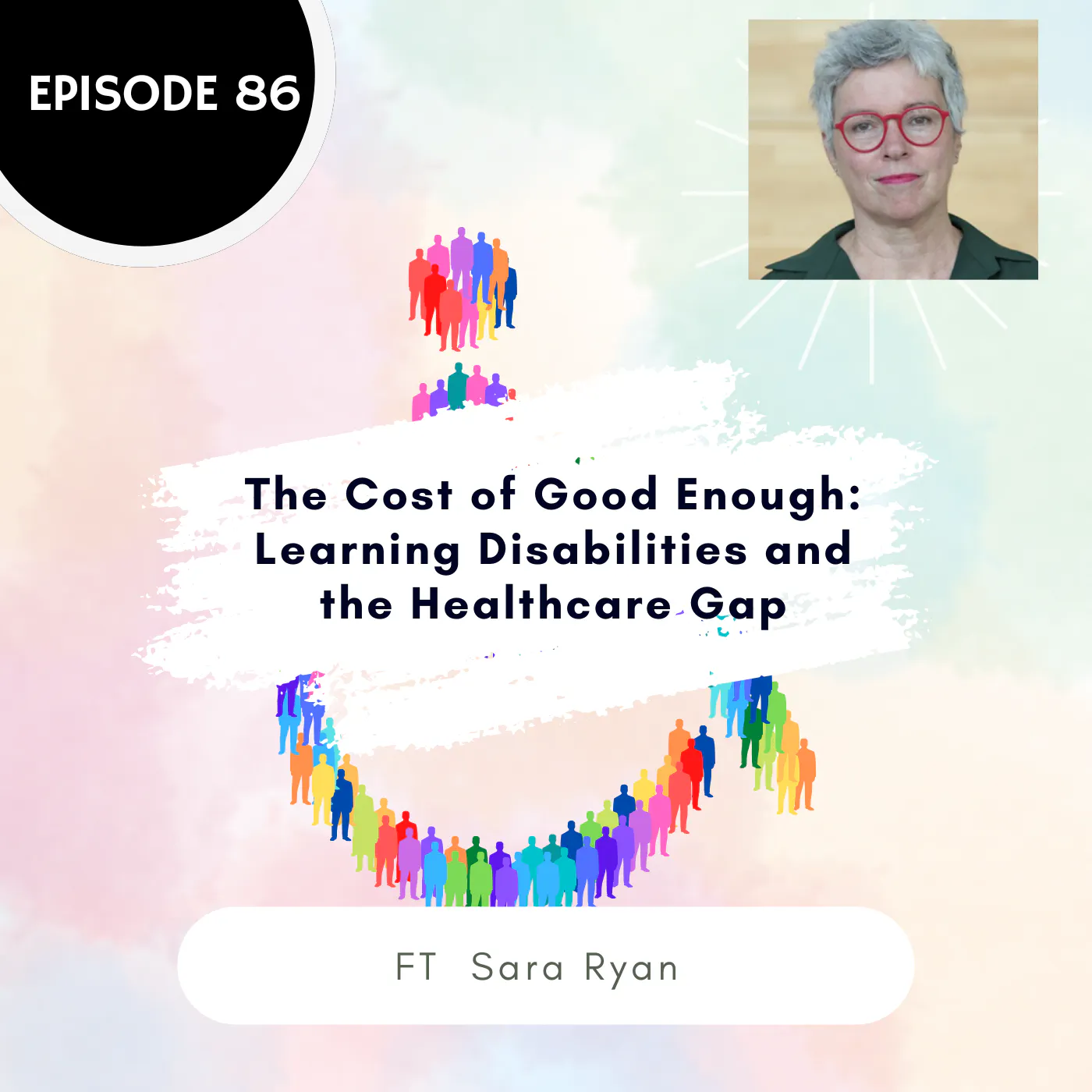
86 I The Cost of Good Enough: Learning Disabilities and the Healthcare Gap (Dr. Sara Ryan)
Apr 2700:35:17Tap to summarizeOverview: We explore the realities of caring for people with learning disabilities through a powerful conversation with Dr. Sara Ryan, whose lived experience and research shed light on the stigma, systemic failures, and everyday barriers faced by this community. We hear about the devastating concept of "social murder," where systems knowingly allow preventable harm, and discuss why individuals with learning disabilities often receive substandard healthcare. Drawing on personal stories and research, we reflect on actionable steps clinicians and caregivers can take, emphasizing the importance of narrative humility, thoughtful interactions, and recognizing the unique humanity of each patient. We also examine the limitations of training and research, highlight moments of everyday brilliance in care, and talk about the role of advocacy, allies, and collective change in creating a more inclusive healthcare environment. Three Takeaways: The Label of Learning Disability Transforms Lives—But Not the Person Dr. Sara Ryan describes how receiving a diagnosis of learning disability abruptly changes how individuals are treated, despite them remaining the same person inside. The label often overshadows their identity and triggers systemic shifts that lead to substandard care and premature death, Stigma and Isolation are Intensified in Certain Communities The episode underlines that while stigma around learning disabilities is pervasive, it is especially acute in some cultural communities. Dr. Sara Ryan recounts how, due to extreme stigmatization, research with ethnically minoritized groups is nearly impossible and families remain so isolated they lack basic support, as in the example of the woman uncertain how to wash her brother's hair at 08:01. Systemic Neglect is Not Invisibility—It’s Social Murder Dr. Sara Ryan introduces the concept of "social murder," which is when a system knowingly allows the conditions for harm and early death among people with learning disabilities, yet does nothing to intervene—a reality persistently documented but rarely addressed, as explored Book: Critical Health and Learning Disabilities: An Exploration of Erasure a Next Step: Visit our website, Healthcare for Humans, and join our community to enjoy exclusive benefits at https://www.healthcareforhumans.org/support/ Support Our Mission: Non-clinicians, explore exclusive content and contribute to our collective journey. Be an Active Participant: Go beyond listening. Shape our narrative by co-creating episodes with us. Be part of our community by visiting https://www.healthcareforhumans.org/support/. Follow us on Instagram @healthcareforhumanspodcast
Transcribe →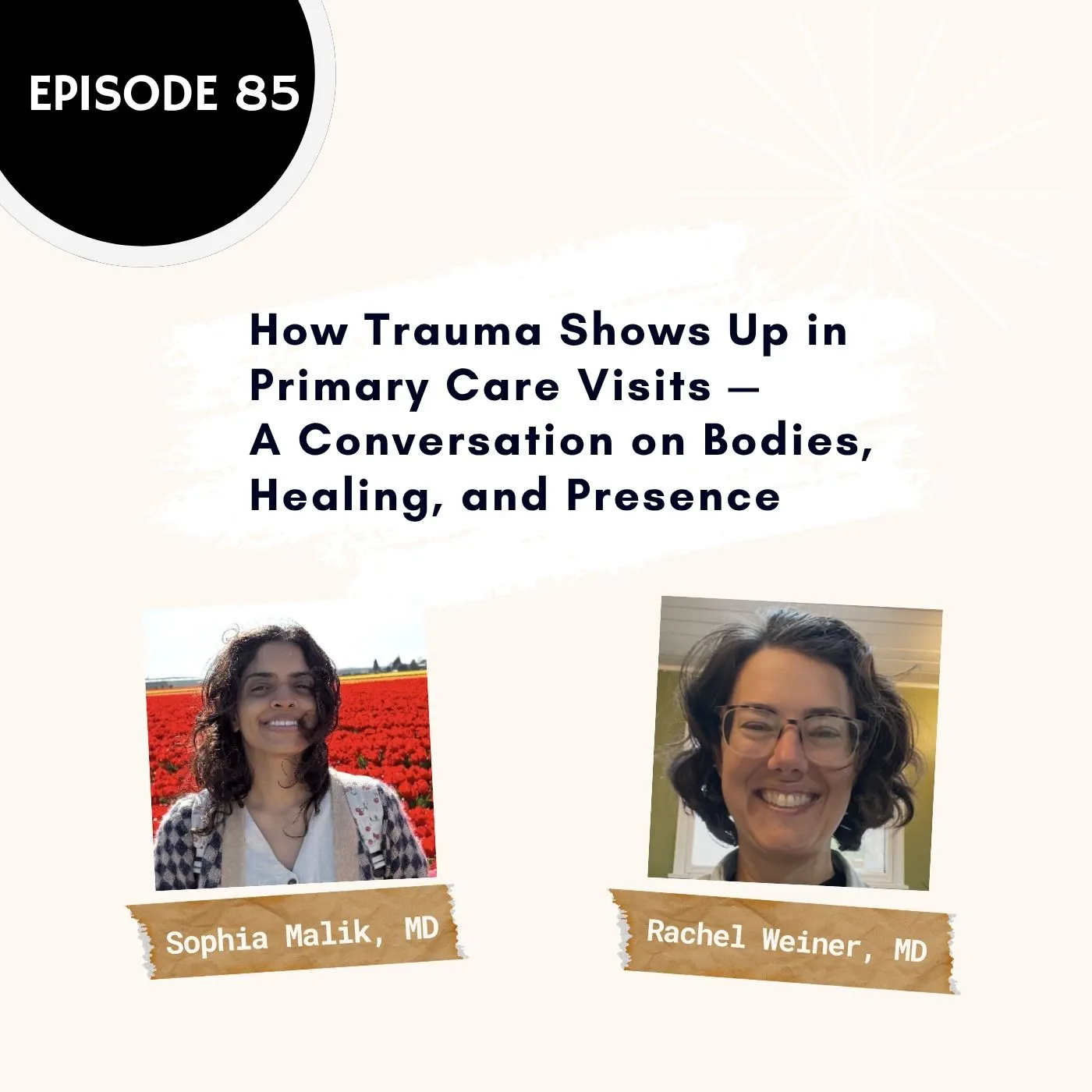
85 I How Trauma Shows Up in Primary Care Visits — A Conversation on Bodies, Healing, and Presence
Mar 3101:26:58Tap to summarizeWhat happens when three family physicians sit down and get honest about what's missing in the care we provide? In this conversation, I'm joined by Dr. Rachel Weiner and Dr. Sophia Malik to explore why so many of our patients are carrying unprocessed trauma in their bodies — and why most of us were never given the tools to address it. We talk about Somatic Experiencing® (SE™), Compassionate Inquiry®, the nervous system, and what it actually looks like to bring body-based awareness into a 15-minute primary care visit. We also get personal about our own journeys with embodiment, dissociation, therapy, and the uncomfortable question of why we became physicians in the first place. This conversation is for any clinician who has ever sat with a patient and felt like something deeper was going on, but didn't know what to do next. Resources mentioned: Somatic Experiencing® (SE™) -https://traumahealing.org/ -https://www.somaticexperiencing.com/ Compassionate Inquiry® (CI) -https://compassionateinquiry.com/en/ -https://drgabormate.com/ The Wheel of Consent® -https://www.schoolofconsent.org/https://www.wheelofconsent.org/thebook Books -The Anticipatory Corpse: https://undpress.nd.edu/9780268022273... -Writings for a Liberation Psychology: https://www.hup.harvard.edu/books/978... -Fatal Invention: https://thenewpress.org/books/fatal-i... -Nurturing Resilience: https://www.northatlanticbooks.com/sh... -The Myth of Normal by Gabor Mate: https://www.penguinrandomhouse.com/bo... -Healing Trauma by Peter Levine: https://us.macmillan.com/books/978159... -My Grandmother’s Hands by Resmaa Menakem: https://centralrecoverypress.com/prod... Connect: -Healthcare for Humans podcast: https://www.healthcareforhumans.org/
Transcribe →
84 I Healing Through Meals: Culturally Responsive Food at South Park Senior Citizens
Mar 1000:42:12Tap to summarizeOverview: We explore how South Park Senior Citizens transformed from an institutional, siloed resource hub into a vibrant cultural community, using food as a powerful tool for healing and connection. We dig into the intentional redesign of their dining experience, creating a welcoming space where elders from diverse backgrounds gather around beautifully set tables to share meals, stories, and traditions. Through immersive cultural programming, farm-to-table partnerships, and a dedicated team who speak the languages and share the lived experiences of their community, we show how addressing food insecurity is deeply tied to combating social isolation, honoring elders, and fostering meaningful cross-cultural relationships. The conversation is a rich reminder that culturally responsive care is less about big budgets and more about intentionality, dignity, and truly seeing those we serve Three Takeaways: Food as Medicine—Beyond Nutrition: Both Raj Sundar and Katherine Jordan highlight the idea that “food as medicine” doesn’t just mean what’s on the plate, but also how it’s eaten: in community, slowly, and with care ([00:03:11 - 00:03:24]). The very act of sharing meals, learning new cuisines, and eating together combats social isolation and boosts emotional health, especially for seniors carrying trauma from displacement and war. Intentional Cultural Immersion: The “Culture Focus” program is a standout takeaway—seven months dedicated to immersing seniors in each other's traditions through meals, dance, music, language, and field trips ([00:10:11 - 00:11:23]). This intentional approach doesn’t just celebrate diversity; it actively reduces silos and builds cross-cultural empathy, showing how fun and meaningful cultural exploration can become a foundation for community-building. Staff Reflecting the Community: A powerful point is the staff’s demographic alignment with the seniors they serve. Katherine Jordan mentions that the social services team are immigrants themselves and speak the languages of the seniors ([00:28:13 - 00:29:18]). This shared lived experience enhances trust, breaks down barriers, and helps seniors feel “seen” and understood—a critical step in providing truly responsive care. Local Food Sourcing and Farmer Connection: The relationship between the center and local farmers is another unique insight. Produce comes directly from local farms, and seniors—and even farmers—are able to see the impact of their labor ([00:22:23 - 00:23:50]). Bringing a farm-to-table experience to an often overlooked population, plated beautifully and shared in community, connects everyone involved in the food chain and elevates the dining experience. Next Step: Visit our website, Healthcare for Humans, and join our community to enjoy exclusive benefits at https://www.healthcareforhumans.org/support/ Support Our Mission: Non-clinicians, explore exclusive content and contribute to our collective journey. Be an Active Participant: Go beyond listening. Shape our narrative by co-creating episodes with us. Be part of our community by visiting https://www.healthcareforhumans.org/support/. Follow us on Instagram @healthcareforhumanspodcast
Transcribe →
83 I When "Fine" Means Lonely: Mental Health Care for Aging Parents Across Cultures ft. Neelam Brar
Feb 900:24:17Tap to summarizeOverview: We explore intersection of aging, mental health, and technology with Neelam, founder of Total Life, to explore how we can better support seniors through innovative care models and AI-powered tools. We hear how a personal family experience inspired Neelam to address the lack of mental health support in elder care, and learn about Total Life’s approach to integrating therapy into seniors’ primary care visits and reducing barriers to access, such as long wait times and lack of culturally competent providers. We discuss the stigma around therapy in older populations, the challenges and opportunities of providing virtual care, and how AI assistant “Lily” is being piloted to enhance adherence and engagement without replacing human clinicians. Three Takeaways: Mental Health in Elderly Care Is Critically UnderservedThrough a personal story about her mother's post-surgery depression during COVID, Neelam emphasizes that mental health for seniors is rarely integrated into discharge plans or standard care. She points out the shocking statistic that less than 6% of seniors get timely mental health interventions, underscoring a systemic issue in resource allocation. Cultural and Linguistic Barriers Compound Access IssuesThe episode tackles the unique cultural challenges seniors face in accessing therapy, especially when language and cultural concordance are needed. Neelam discusses their efforts to build a diverse roster of therapists, including different ages, religions, and languages—an element crucial for genuine engagement and effectiveness. AI’s Role as a Clinical Ally, Not a ReplacementIntroducing “Lilly,” an AI-based care coordinator, Neelam makes it clear that while AI can enhance engagement and adherence in care plans, it is not meant to replace human clinicians. The episode explores how older adults are surprisingly receptive to technology when it’s framed as helpful and personable, and how AI can fill gaps between therapy sessions. Next Step: Visit our website, Healthcare for Humans, and join our community to enjoy exclusive benefits at https://www.healthcareforhumans.org/support/ Support Our Mission: Non-clinicians, explore exclusive content and contribute to our collective journey. Be an Active Participant: Go beyond listening. Shape our narrative by co-creating episodes with us. Be part of our community by visiting https://www.healthcareforhumans.org/support/. Follow us on Instagram @healthcareforhumanspodcast
Transcribe →
82 I Community Health Centers: Co-Designing Technology With the Communities Left Behind w/ Luis Padilla
Jan 2700:17:29Tap to summarizeOverview: We discuss what culturally responsive care really means for underserved communities and how technology, especially AI, can create more equitable solutions in healthcare. We reflect on the challenge of finding tools that expand care teams and deepen patient trust without losing the essential personal touch of community health centers. We talk candidly about the intersection of technology, ROI, and ethics—asking what true success looks like when serving vulnerable populations. Co-design and collaboration with communities are at the heart of our conversation, as we discuss ways tech can scale privilege and raise the quality of care, like improving language access through AI-driven translation services. We also confront the limits of technology and the need for policy change, sharing practical examples from our work and finding hope in partnerships that lead to meaningful innovation Three Takeaways: The Power of Co-Design in Tech SolutionsWe repeatedly highlight that truly useful technology in healthcare—especially for marginalized communities—must be co-designed with input from those very communities. Instead of developing products in isolation and then trying to “retrofit” trust or usability, starting collaborative design from the beginning is critical to both trust and effectiveness. ROI Isn’t Just Financial—It’s Community HealthInstead of boiling everything down to monetary return, Luis Padilla reframes ROI as the improvement in health, trust, and culturally appropriate care for disenfranchised patients. For community health centers, “margin” is reinvested in service, not profit—a strong counter-narrative to typical business language in healthcare tech. Language Access Technology Has Equity Potential The episode brings forward concrete examples—like live multilingual translation at Asian Health Services—showing how technology (AI-powered live voice translation, multiple language EMR interpretation) can “raise the floor” for accessibility. These innovations move beyond privilege and begin to level the playing field for communities historically left behind. Next Step: Visit our website, Healthcare for Humans, and join our community to enjoy exclusive benefits at https://www.healthcareforhumans.org/support/ Support Our Mission: Non-clinicians, explore exclusive content and contribute to our collective journey. Be an Active Participant: Go beyond listening. Shape our narrative by co-creating episodes with us. Be part of our community by visiting https://www.healthcareforhumans.org/support/. Follow us on Instagram @healthcareforhumanspodcast
Transcribe →
81 I The $50 Billion Question for Rural America - United States of Care
Jan 500:44:57Tap to summarizeOverview: We explore the intersection of rural health and culturally responsive care, highlighting how geography shapes healthcare experiences for the 65 million Americans living in rural areas. We dive into the transformative potential of the $50 billion Rural Health Transformation Fund, discussing how states are listening to diverse communities—including tribal populations—to design context-specific solutions. Through conversations with policy leaders from United States of Care, we examine the importance of turning community voices into actionable policy, break down the practical opportunities for clinicians to advocate and engage, and spotlight how coordinated change at every level—from exam room care to state legislation—can make healthcare more person-centered, affordable, and equitable. Three Takeaways: Listening and Closing the Feedback Loop Builds TrustOne powerful insight is the importance of not only listening to community members but also circling back to show how their input influenced decisions. Rural Health Solutions Can’t Be One-Size-Fits-AllThroughout the episode, guests reinforce that rural health challenges (and solutions) vary widely between places like Alaska, Kansas, and Washington. Kelsey shares how states are actively asking communities to help define what “rural” means locally and to articulate their specific needs, such as maternity care deserts or mental health access. Language Matters When Talking About ChangeThe conversation reveals a fascinating finding from United States of Care’s research: terms like “value-based care” don’t resonate with real people—in fact, “value” can sound cheap or dismissive, like a bargain bin. Instead, terms like “patient-first care” and “whole person care” feel authentic and inviting, making it easier to connect policy to patient priorities. Next Step: Visit our website, Healthcare for Humans, and join our community to enjoy exclusive benefits at https://www.healthcareforhumans.org/support/ Support Our Mission: Non-clinicians, explore exclusive content and contribute to our collective journey. Be an Active Participant: Go beyond listening. Shape our narrative by co-creating episodes with us. Be part of our community by visiting https://www.healthcareforhumans.org/support/. Follow us on Instagram @healthcareforhumanspodcast
Transcribe →
80 I The $91 Million Nobody Measured: eConsults and Specialty Access (HLTH)
Dec 1500:23:34Tap to summarizeOverview: We dive into the journey of Jomo, whose three decades in healthcare have been dedicated to improving access, with a special focus on LA County’s transformative eConsult system. We explore how this tool slashes specialist wait times from months to days for underserved populations, discuss the concept of “return on value” as a fuller measure of healthcare innovation, and reflect on the tension between profit, impact, and equity. Our conversation highlights the ways technology can lift the baseline for vulnerable patients, outlines the collaborative benefits for specialists and PCPs, and considers how public health systems can better articulate their true value—beyond just financial ROI. We wrap with excitement about new data showing $91 million in annual value generated and a call to drive broader recognition of health tech’s role in democratizing care. Three Takeaways: Addressing Access Inequities in Both Urban and Rural PopulationsThe conversation highlighted that healthcare access barriers aren’t just a rural problem; even in resource-rich settings like downtown LA, low-income patients face immense hurdles. The solution doesn't just serve rural North Dakota, but also the urban poor—demonstrating the shared structural challenges across geographies. Shifting Specialist Engagement through TechnologyJomo underscored the win-win value proposition for specialists: eConsults remove the loser-incumbent dynamic often present in tech rollouts. Specialists are able to respond to more cases efficiently, get compensated for asynchronous consults, and expand their reach, sometimes across state lines due to loosening regulations. The Moral Tension between Profit and Mission in Healthcare InnovationBoth Raj Sundar and Jomo tackled the discomfort around profit-driven healthcare startups—recognizing both justified suspicion of profiteering at the expense of the vulnerable, and the reality that profit and altruism can co-exist if properly harnessed. They advocate for embracing mission-aligned entrepreneurship instead of rejecting all profit. Next Step: Visit our website, Healthcare for Humans, and join our community to enjoy exclusive benefits at https://www.healthcareforhumans.org/support/ Support Our Mission: Non-clinicians, explore exclusive content and contribute to our collective journey. Be an Active Participant: Go beyond listening. Shape our narrative by co-creating episodes with us. Be part of our community by visiting https://www.healthcareforhumans.org/support/. Follow us on Instagram @healthcareforhumanspodcast
Transcribe →
79 I It's Not Capability, It's Design: Digital Health Equity (HLTH)
Dec 900:24:18Tap to summarizeOverview: We dive into the inspiring stories of Dr. Fernandez and Dr. Gigi Magan family medicine physicians and co-founders of Alma First. We explore the challenges they observed during the pandemic with digital health disparities in underserved communities and how those moments sparked their mission to promote digital health equity. Together, we discuss the importance of digital health navigators, training pre-health students through equity-centered curricula, and practical ways they introduce technology—like continuous glucose monitors and patient portals—to communities often overlooked by innovation. We also reflect on the need for culturally sensitive, accessible healthcare tech, the impact of provider engagement, and how we can keep evolving our patient education to truly meet people where they are. Three Takeaways: Pre-Health Students as Equity ChampionsBoth founders emphasized how involving pre-health students in tech conferences and training them in equity-focused digital health prepares a new cohort of clinicians to challenge assumptions and advocate for inclusivity. They describe how students bring critical questions to tech companies about accessibility for people with disabilities and non-English speakers, shaping future innovations. Barriers to Patient Portal Usage Are Often Systemic, Not PersonalMany Spanish-speaking patients reported not using digital portals simply because they never received the access codes, not due to a lack of interest or skill. This points to systemic communication and support failures more than patient limitations—an insight that reframes “adoption problems” as fixable gaps in process. Top-Down Tech Solutions Risk Leaving Communities BehindBoth guests highlighted the disconnect between innovations showcased at conferences and real-world community needs. Tools often get developed in isolation from those who will use them. Next Step: Visit our website, Healthcare for Humans, and join our community to enjoy exclusive benefits at https://www.healthcareforhumans.org/support/ Support Our Mission: Non-clinicians, explore exclusive content and contribute to our collective journey. Be an Active Participant: Go beyond listening. Shape our narrative by co-creating episodes with us. Be part of our community by visiting https://www.healthcareforhumans.org/support/. Follow us on Instagram @healthcareforhumanspodcast
Transcribe →