Podcast
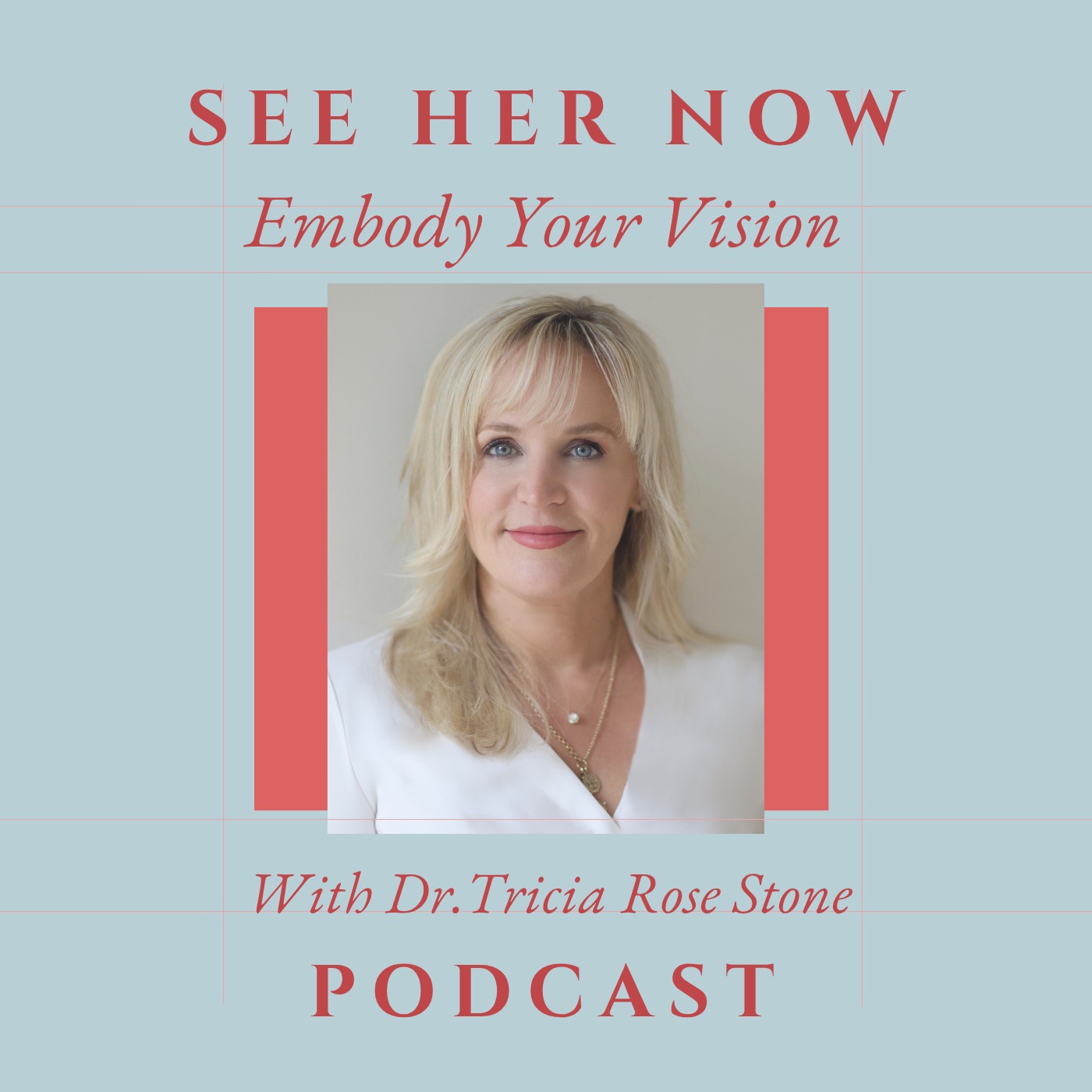
See Her Now with Dr. Tricia Rose Stone
Hosted by Dr. Tricia Rose Stone · EN
"We don't see things as they are. We see them as we are." — Anaïs Nin
Dr. Tricia Rose Stone spent 20 years as an optometrist correcting how people see the world, then she realized the most important lenses we wear aren't in front of our eyes. They're the beliefs, stories, and identities we've been looking through for a lifetime. And there comes a moment, for many women, it arrives in midlife, when the prescription simply stops working.
What if the woman you're becoming isn't somewhere in the future?
What if she's already within you, waiting to be seen?
See Her Now is a podcast for women who are ready to stop second-guessing themselves and start living in alignment with the life they truly desire. Through inspiring conversations, personal stories, and practical wisdom, host Tricia Rose Stone helps listeners shift their perspective, reconnect with their truth, and embody their vision.
Whether you're navigating a transition, healing from heartbreak, pursuing a dream, seeking a deeper purpose, or calling in a new chapter of love and life, each episode offers a fresh way to see yourself and what's possible.
Drawing on her experience as a life coach, former optometrist, and creator of The True Lens Method™, Tricia explores the powerful connection between perception and transformation—because when you change the way you see, everything begins to change.
The future version of you is already waiting.
Can you see her now?
35episodes
Episodes
Newest firstAll episodes
Now That You See Her
Jul 1000:18:36Tap to summarizeIn the final episode of the Empowered Vision season of See Her Now, the host reframes vision as a present-day lens rather than a future destination, emphasizing that imagining beyond current circumstances is a “superpower” that opens possibility. She recaps key season themes: examining inherited lenses from family that limit belief, understanding self-image and identity as the container for the future, addressing “upper limits” and the inner thermostat that drives self-sabotage, and taking action before clarity arrives. She shares her own relationship vision process—pausing dating, creating a vision book, holding the feelings while releasing details—and meeting her husband within eight months. Favorite episodes highlighted include Brigitta Dao on creativity accessing possibility and Brigid Kennedy on writing for healing and new outcomes. The season closes by inviting reflection and previewing the next season on authentic integration.00:00 Vision as a Lens01:26 Season Recap and Purpose02:23 Dream Beyond Circumstances04:10 Inherited Lenses and Limits05:39 Identity and Worthiness09:20 Raising Your Upper Limit10:36 Move Before Clarity11:46 Relationship Vision Story13:28 Creativity and Writing Forward15:53 Vision as Mirror and Next Season16:59 Closing Questions and Thanks
Transcribe →Beyond What You Can See
Jun 2900:25:42Tap to summarizeHost Tricia Rose Stone introduces See Her Now’s focus on “empowered vision” and interviews violinist and author Brigid Kennedy, who says she was awakened at 2:00 AM by a vivid visitation from her deceased grandmother instructing her to “Write our story.” Brigid began documenting her family history of a great-grandfather who went to Peru seeking Inca gold and never returned, then pushed beyond the family’s long-standing grief to “write the chapter” they never had, which she describes as a process of reclamation and healing that also reunited relatives she hadn’t seen in decades. She shares her ability to become very still and hear quiet guidance, suggests voicing buried pain through writing, speaking, drawing, movement, meditation, or a connection to nature, and reflects on discovering unexpected joy in writing after a childhood marked by illness and a life centered on music.Learn more about Brigid Kennedy here.00:00 Empowered Vision Intro01:07 Grandmother’s Midnight Message04:39 Stillness and Inner Hearing06:59 Ocean Signs and Synchronicity09:15 Writing the Missing Chapter11:30 Healing Family Pain Through Story16:14 Opening Creativity for Anyone20:46 What Writing Revealed24:27 Closing Reflections and Next Steps
Transcribe →The Vision Your Hands Already Know
Jun 1900:30:45Tap to summarizeCreativity, Movement, and Reiki: Reconnecting with Intuition with Brigitta DauHost Tricia Rose Stone welcomes life coach, Reiki master, Pilates instructor, author, and creativity guide Brigitta Dau to discuss how creativity and movement can help women reconnect with intuition and self-trust. Brigitta describes creativity—through doodling, coloring, simple art prompts, or noticing color palettes—as a daily practice for becoming more comfortable with uncertainty and quieting the inner critic. She explains how movement practices like Pilates, walking without earbuds, yoga, or Tai Chi ground people in the present and can help them access inner wisdom, using imagery-based cues to engage the body differently. Brigitta also shares how Reiki and guided visualization strengthen awareness of sensations and inner knowing, offering a practical example of a “river” visualization as a tool for navigating different emotional days. She suggests honoring younger parts of oneself (inspired by IFS) to move through transitions such as loneliness or relationship blocks, and shares her offerings, including Synergistic Saturdays and Sundays on Zoom and her book, "Landing on Your North Star."Learn more about Brigitta Dau here.00:00 Welcome and Guest Intro01:10 Creativity as Intuition02:20 Getting Comfortable Unknown05:26 Aging and Inner Parts07:32 Creativity Heals Brain09:37 Pilates Imagery Cues10:42 Movement for Intuition14:00 Reiki Meets Creativity16:45 River Visualization Wisdom19:23 Advice for Relationship Blocks23:08 Easy At Home Creativity26:01 Find Brigitta and Book29:33 Closing Takeaways
Transcribe →From Grief to Power: How Self-Love Helped Chanoa Inez Reclaim Her Life
Jun 1200:30:12Tap to summarizeOn Her New Lens, host Dr. Tricia Rose Stone interviews author and traveler Chanoa Inez about losing her 41-year-old boyfriend, Boro, who died unexpectedly in his sleep from a clot the morning after what she called the most perfect day of her life in Montenegro. Chanoa describes the shock, choosing to stay in Europe for Orthodox grieving traditions, and years of unprocessed grief that coincided with chronic health issues, food sensitivities, and tendonitis. Through modalities including yoga, retreats, EFT tapping, and especially Dr. Joe Dispenza meditations and a 2023 Denver retreat, she recognized long-standing victim mindset patterns, low self-love reflected in toxic relationships, and how “shoulds” and martyrdom kept her stuck. She shares tips such as recognizing exhausting situations, advocating for one’s inner child, and reframing self-love as refusing to give away power. Listeners can find her book Dream On at ChanoaInez.com.00:00 Welcome and Guest Intro01:17 Perfect Day Turns Tragic03:14 Shock and Calling for Help04:38 Staying in Europe to Grieve05:36 Health Crashes and Healing Quest07:47 Victim Mindset Revealed11:29 Breaking Toxic Relationship Patterns15:27 Self Love and Deep Meditation Tools19:29 Healing Results and Body Signals20:57 Self Love vs Victim Identity25:10 Practical Tips and Inner Child Work28:17 Where to Find the Book28:57 Final Takeaways and Call to Share
Transcribe →One Pearl at a Time: How Daily Habits Create a Beautiful Life
Jun 400:20:18Tap to summarizeIn episode eight of Her New Lens: Empowered Vision, Tricia Stone explains that vision and self-image don’t sustain themselves without a consistent daily practice to counter the ego’s loud narrative, sharing a recent moment in which a small disappointment triggered an old story about being behind. Using ideas from James Clear’s Atomic Habits—especially that “every action is a vote for the person you want to become,” plus habit stacking and the two-minute rule—she outlines three simple touchpoints to keep vision alive: morning visualization, a small creative art practice (plus taking an inspiring photo during the day), and printing images to add to a collage/vision board or digital board. She emphasizes scheduling these practices in Google Calendar for accountability and closes by recapping the season’s earlier episodes and inviting listeners to design three touchpoints, stack them onto existing habits, and add them to the calendar.00:00 Season Recap Setup00:28 Why Vision Slips01:00 Ego Story Spiral02:48 Atomic Habits Framework05:31 Three Daily Touchpoints06:00 Morning Visualization06:48 Creative Art And Photos08:35 Vision Board Collage11:34 Habit Stacking Two Minutes12:32 Calendar Accountability16:34 Your Weekly Challenge18:03 Season Wrap And Goodbye
Transcribe →Stop Waiting for Clarity — Move Anyway
May 2800:20:57Tap to summarizeStop Waiting and Move Anyway: From Measurement to PossibilityIn episode eight of the Empowered Vision season, host Tricia Rose Stone confesses she began Her New Lens with no audio experience, audience, or plan, and nearly listened to an inner voice urging her to wait until she was ready. Drawing on Rosamund and Benjamin Zander’s The Art of Possibility and Ben Zander’s nursing-home story, she argues that clarity and frameworks often appear only after taking action. She contrasts the “world of measurement” (comparison, scarcity, fear, and waiting for proof) with the “universe of possibility” (openness, contribution, and willingness). Tricia shares personal examples—starting the podcast, envisioning a relationship after an eight-month dating pause, and building a Boston practice—showing how committing to a vision and moving step by step creates momentum and invites outcomes that couldn’t be measured in advance.00:00 Confession And Vision02:08 Book That Shifts Thinking02:52 Nursing Home Lesson04:21 Invented Limitations06:01 Move Before Clarity08:01 Two Worlds Explained09:41 Rock Bottom To Vision12:49 Be A Contribution14:12 You Are The Board16:41 Frameworks Through Movement17:35 Personal Proof And Practice19:28 Final Call To Move
Transcribe →The Relationship You Desire Begins as a Vision
May 1900:30:54Tap to summarizeBuild the Vision for Love: Naming the Old Pattern and Creating a New Felt SenseIn episode six of the Empowered Vision season of Her New Lens, Tricia Rose Stone shares how she once feared love after repeated dysfunctional relationships that left her feeling unvalued, and how a rock-bottom relationship forced her to confront the “vision” of love she had unconsciously been recreating. She explains that relationship lenses are inherited from early family dynamics and cultural narratives, shaping a self-image that repeats patterns like abandonment, drama, or unworthiness. Tricia describes her own childhood imprint with an alcoholic, unavailable father, and a later emotional breakdown that led her to stop dating and focus on healing, nervous system awareness, and deliberate creation. She outlines building a new relationship vision from the inside out—prioritizing desired feelings like safety, security, and being valued—using journaling, reminders, gratitude, creative visioning, and identity work, then letting go with trust; eight months later, she met her husband, whom she has been with for nine years.00:00 Fear of Love01:53 Inherited Relationship Lenses04:26 Patterns and Self Image06:54 My Father and Abandonment08:27 Name the Old Vision09:38 Rock Bottom Clarity11:45 My Rock Bottom Story17:09 Building a New Vision22:23 Daily Practices to Align26:40 Letting Go and Trust28:48 Weekly Takeaways and Close
Transcribe →The Moment You Can No Longer Abandon Yourself
May 1200:40:14Tap to summarizeThis episode of Her New Lens focuses on “empowered vision,” defined as seeing truthfully when old identities no longer fit, and features guest Kim Korven, who shares her recent decision to end her second marriage after 15 years due to boundarylessness and feeling like her husband’s emotional support person. Kim describes recognizing patterns rooted in childhood programming around earning love, choosing to end relationships without making the other person the enemy, and recalling earlier reinventions, including peacefully divorcing her first husband, raising children, and returning to law school with unexpected support and scholarships after “jumping off the cliff” in faith. She discusses how tension in a home harms kids, practices that build self-love (breathwork, Miracle Morning SAVERS, and alphabet-based gratitude), and her work helping families navigate divorce peacefully and strategically with resources like journal prompts, scripts, and educational modules.00:00 Empowered Vision Intro01:29 Meet Kim Korven02:28 Choosing Yourself Again04:07 Peaceful Divorce Mindset06:27 Law School Leap of Faith09:25 Reframing and Being Caught11:47 Seeing Your Growth Clearly14:14 The Guitar Boundary Wakeup18:40 Ending Without Making Enemies19:44 April Fourth Reveal20:01 Trusting The Leap20:53 Proof From Past23:06 Morning Practices26:27 Alphabet Gratitude28:33 Advice For Mothers34:13 Courage To Stay Or Go35:42 Helping Families Divorce38:38 New Lens Closing
Transcribe →The Stories Blocking Your Vision
May 600:27:36Tap to summarizeIn episode four of the Empowered Vision season of Her New Lens, Tricia Rose Stone explores self-sabotage through Gay Hendricks’ “upper limit problem” from The Big Leap: an unconscious “internal thermostat” that pulls us back when success, love, joy, or abundance exceed what we believe we can allow. She shares two personal upper limits—fear that visible success will lead to isolation and fear she can’t balance success with wellness, relationships, travel, and interests—then describes common upper-limit behaviors like picking fights, worrying, blame and criticism, procrastination, and mindless scrolling, often appearing right after breakthroughs. She outlines Hendricks’ four underlying barriers (feeling fundamentally flawed; disloyalty/abandonment; burden; capacity) and connects the pattern to staying in the “zone of excellence” instead of the “zone of genius.” She offers steps to dismantle it: name the barrier, catch the pattern in real time, complete the vision (especially for capacity fears), and question isolation fears, including learning from “expanders,” and closes with a weekly challenge and a teaser for next week’s guest episode.00:00 Season Recap Setup01:05 Personal Upper Limits02:21 Inner Thermostat Explained06:21 Upper Limit Behaviors13:04 Four Hidden Barriers17:25 Zone of Genius21:46 Dismantle The Ceiling24:52 Weekly Challenge Wrap25:43 Closing Next Week
Transcribe →The Art of Seeing It First
Apr 2700:32:15Tap to summarizeTricia Rose Stone presents episode three of the Empowered Vision Series, focusing on visualization as a deliberate, trainable, science-backed skill rather than wishful thinking. Inspired by Maya Raichoora’s book Visualize and supported by ideas she cites from Joe Dispenza, she explains that the predictive brain can’t easily distinguish vividly imagined experiences from real ones, making anxiety a form of unconscious negative visualization, and that deliberate visualization can create new mental patterns. She shares personal examples of manifesting her husband after 7 months of focused visualization, and of manifesting an optometry practice in Boston after recognizing the city and finding a practice one block from a park she’d stayed near. She outlines outcome, process, and creative visualization, recommends a daily “ideal day” rehearsal, emphasizes small, consistent practice, self-belief, and writing down bold visions.00:00 Series Setup01:06 Why Visualization Works02:42 Brain Prediction Patterns05:32 Anxiety as Visualization07:30 Athletes Proven Rehearsal08:32 Manifesting True Love13:25 Three Visualization Types18:56 Boston Practice Manifestation24:09 Daily Ideal Day Routine27:34 Self-Belief Matters29:53 Weekly Takeaways Outro
Transcribe →