Podcast
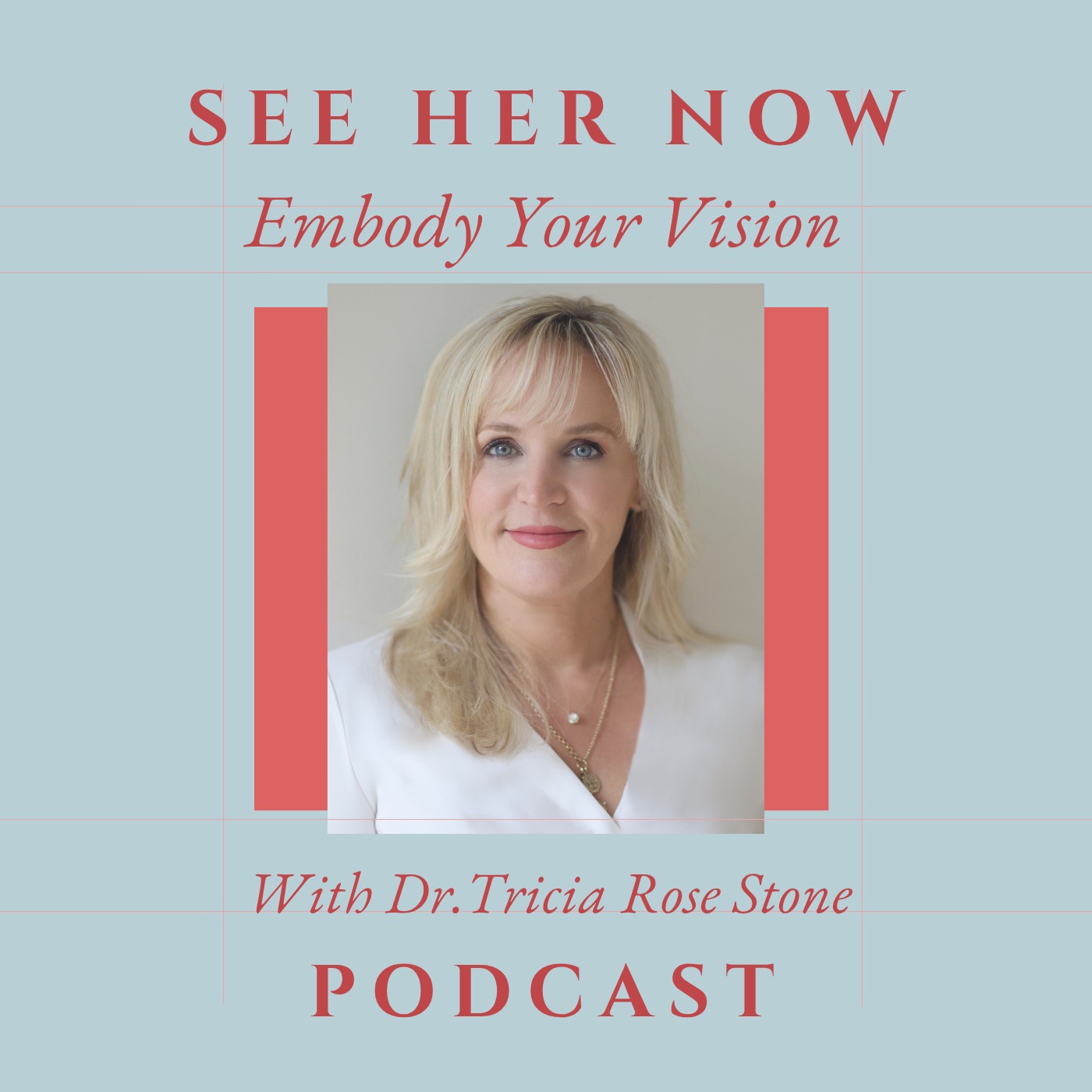
See Her Now with Dr. Tricia Rose Stone
Hosted by Dr. Tricia Rose Stone · EN
"We don't see things as they are. We see them as we are." — Anaïs Nin
Dr. Tricia Rose Stone spent 20 years as an optometrist correcting how people see the world, then she realized the most important lenses we wear aren't in front of our eyes. They're the beliefs, stories, and identities we've been looking through for a lifetime. And there comes a moment, for many women, it arrives in midlife, when the prescription simply stops working.
What if the woman you're becoming isn't somewhere in the future?
What if she's already within you, waiting to be seen?
See Her Now is a podcast for women who are ready to stop second-guessing themselves and start living in alignment with the life they truly desire. Through inspiring conversations, personal stories, and practical wisdom, host Tricia Rose Stone helps listeners shift their perspective, reconnect with their truth, and embody their vision.
Whether you're navigating a transition, healing from heartbreak, pursuing a dream, seeking a deeper purpose, or calling in a new chapter of love and life, each episode offers a fresh way to see yourself and what's possible.
Drawing on her experience as a life coach, former optometrist, and creator of The True Lens Method™, Tricia explores the powerful connection between perception and transformation—because when you change the way you see, everything begins to change.
The future version of you is already waiting.
Can you see her now?
36episodes
Episodes
Newest firstAll episodes
The Art of Seeing It First
Apr 2700:32:15Tap to summarizeTricia Rose Stone presents episode three of the Empowered Vision Series, focusing on visualization as a deliberate, trainable, science-backed skill rather than wishful thinking. Inspired by Maya Raichoora’s book Visualize and supported by ideas she cites from Joe Dispenza, she explains that the predictive brain can’t easily distinguish vividly imagined experiences from real ones, making anxiety a form of unconscious negative visualization, and that deliberate visualization can create new mental patterns. She shares personal examples of manifesting her husband after 7 months of focused visualization, and of manifesting an optometry practice in Boston after recognizing the city and finding a practice one block from a park she’d stayed near. She outlines outcome, process, and creative visualization, recommends a daily “ideal day” rehearsal, emphasizes small, consistent practice, self-belief, and writing down bold visions.00:00 Series Setup01:06 Why Visualization Works02:42 Brain Prediction Patterns05:32 Anxiety as Visualization07:30 Athletes Proven Rehearsal08:32 Manifesting True Love13:25 Three Visualization Types18:56 Boston Practice Manifestation24:09 Daily Ideal Day Routine27:34 Self-Belief Matters29:53 Weekly Takeaways Outro
Transcribe →Into Me See: The Art of True Intimacy with Xanet Pailet
Apr 2100:37:19Tap to summarizeOn “Her New Lens,” Tricia interviews Xanet, a sex and intimacy educator, coach, and author (and former healthcare lawyer/executive) who spent 26 years in a sexless marriage, left at 50, and then began a 15-year career helping individuals and couples rebuild connection.They discuss how emotional safety underpins desire—especially for women—and how lack of safety, trauma, shame, and disconnection from the body can shut down libido, while men may feel emotionally safe after sex, creating a common mismatch.Xanet explains what safety feels like (being heard without judgment or fixing), emphasizes that intimacy and sex are learnable skills, and highlights conflict repair as key to long-term relationships.They address menopause and libido myths, noting bad or performative sex and “obligation sex,” and describe how new relationship energy can revive desire at any age.Xanet shares guidance for singles on examining patterns and red flags, and introduces her books, “The Sex and Intimacy Repair Kit” and “Living an Orgasmic Life,” offering lenses of pleasure and vulnerability.00:00 Welcome and Setup00:28 Meet Xanet02:13 Her Turning Point06:08 Safety Drives Desire09:03 Men vs Women Safety11:16 What Safety Feels Like13:28 Intimacy Skills Learned16:38 Menopause Desire Myths17:15 Bad Sex and Obligation19:06 Long Term Connection20:21 Attunement Equals Safety21:15 Attachment Wounds Explained22:09 Preparing for New Love25:09 Patterns and Red Flags27:37 Relationships as Healing28:39 Pressure to Pick Right30:15 Healing Takes Time31:43 Inside the New Book34:06 Two Lenses to Try36:37 Final Reflections
Transcribe →Before the Vision Board — There Is You
Apr 1400:37:39Tap to summarizeTricia Rose Stone introduces season three of “Her New Lens,” titled “Empowered Vision,” and explains that the work begins before goals or vision boards with updating self-image—what you believe you deserve and what’s possible for a woman like you—drawing on Maxwell Maltz’s “Psycho-Cybernetics.” She contrasts “I’ll believe it when I see it” with Wayne Dyer’s “you’ll see it when you believe it,” arguing that proof follows an inner decision and that circumstances can’t outpace self-image, illustrated with examples from La La Land, Love Actually, and lottery winners. Stone shares her own journey from divorce and single motherhood to meeting her husband at 44 after years of visualization and identity work, and outlines three practices: an identity audit of inherited beliefs, a future-self letter, and seven days of daily mental rehearsal, drawing on neuroscience that shows vividly imagined experiences shape the nervous system.00:00 Season Premiere Setup00:38 Vision Before Goals03:41 Believe Then See07:15 Movie Proof Lala Land09:32 Self Image Creates Life11:22 Maxwell Maltz Explained12:47 Why We Can't Hold It15:17 Deposits Into Identity17:10 Visualization Neuroscience19:14 Inherited Beliefs Lens21:51 Self Image Changes23:53 Her Story: Divorce To Love27:24 Decide To See Beyond31:12 No Permission Needed32:02 Three Practical Exercises36:03 Wrap Up And Next Week
Transcribe →The Lens You Choose Now
Mar 2400:19:11Tap to summarizeAs this season comes to a close, there is a question quietly waiting beneath everything we’ve explored:What lens will you choose now?Throughout this season of Her New Lens, we’ve looked at the beliefs we inherit, the patterns we repeat, and the ways our past experiences shape how we see love, identity, success, and possibility.But awareness alone is not the transformation.Transformation begins the moment you realize that the lens you’ve been looking through is not fixed — and that a different way of seeing has always been available to you.In this season finale, we step back and gather the deeper thread connecting these conversations:how perception shapes emotional experience…how identity shifts when we question old prescriptions…and how choosing a new lens can quietly change the direction of a life.We explore:• why many of the lenses we live through were never consciously chosen• how attachment patterns, past experiences, and unconscious beliefs influence what feels possible• why clarity often arrives gradually, not dramatically• how small internal shifts create meaningful external change• what it means to begin seeing yourself — and your life — through a lens of possibility rather than limitationYou may find that nothing outside of you has changed — and yet everything feels different.Because the moment the lens shifts, the landscape does too.If this season has resonated, this episode offers a space to reflect, integrate, and choose how you want to move forward.The lens you choose now becomes the life you begin to live.
Transcribe →The Prescription You Inherited: Seeing Yourself Through a New Lens
Mar 1700:17:59Tap to summarizeThe script uses an optometry exam as a metaphor for how people live with “inherited” psychological lenses—beliefs about worth, relationships, and desire formed early in life from the emotional climate of the home and cultural expectations. Drawing on attachment theory (internal working models; Bowlby and Ainsworth), it explains that these prescriptions were absorbed before we could question them and become the default way we interpret life. The speaker shares her own lens shaped by parental addiction, abandonment, fear, instability, and feeling responsible for others’ emotions, and describes how her divorce revealed long-held expectations about marriage. She outlines emotional effects of wrong prescriptions (self-doubt, people-pleasing, fear of visibility, imposter syndrome) and introduces the “New Lens method” to identify beliefs, trace origins, test usefulness, and write a truer lens, ending with five reflection questions.00:00 The Lens Clicks In01:13 The Prescription You Inherited02:04 Where Our Lenses Come From03:33 The Science Behind It05:09 My Inherited Blueprint09:09 When My Lens Broke11:48 Symptoms of Wrong Lenses13:54 The New Lens Method15:52 Five Reflection Questions16:45 Seeing Life Clearly Again17:18 Closing and Next Steps
Transcribe →What If It Was Never Personal?
Mar 1000:33:38Tap to summarizeIf you’ve ever wondered why some relationships feel easy while others feel confusing, tense, or emotionally draining, this conversation may change how you see them entirely.In this episode of Her New Lens, we explore how misunderstanding — not incompatibility — often sits at the heart of relationship tension. Together, we look at difference through a softer lens, moving beyond labels and into deeper awareness, compassion, and connection.We talk about why we so quickly make meaning out of behavior, how easily we take things personally, and what begins to shift when we understand how differently people move through the world. Because often what feels like resistance is simply a misunderstanding.This conversation with Marita Littauer offers a calmer, more spacious way to understand conflict — not by changing others, but by changing how we see.If you take one thing from this episode, let it be this:👉 The people in your life are not difficult. They are different.Learn about Marita Littauer here.00:00 Origins of Personality Work02:05 Identity and Baggage03:38 Finding Your True Self05:23 Types and Color Wheel06:48 Words and Definitions08:23 Using Type for Growth12:01 Strengths Not Excuses14:02 Marriage and Opposites18:53 Reading People Without Tests24:23 Do Personalities Change25:28 Applying Your Type Today28:20 A New Lens for Peace32:21 Closing Takeaway
Transcribe →Why Secure Love Can Feel Boring: Attachment, Intensity, and a New Lens on Connection
Mar 300:20:32Tap to summarizeTricia Rose Stone discusses a viral video of Punch, an abandoned baby monkey clinging to a stuffed animal, to explore how humans seek secure attachment rather than just love. She explains why secure love can feel unfamiliar or “boring” to people conditioned to equate love with emotional intensity, noting that nervous systems may associate uncertainty and stress with attraction. Drawing on attachment theory research by John Bowlby and Mary Ainsworth’s “Strange Situation,” she outlines secure, anxious, and avoidant patterns and how early bonding becomes a lifelong blueprint. She contrasts dopamine-driven romantic highs with oxytocin-based bonding in secure relationships, describes markers of secure attachment (safety, consistency, curiosity, repair), shares her own history of avoidant partners and family alcoholism, and emphasizes that neuroplasticity and inner work can shift attachment toward security.00:00 Punch and Attachment01:42 Why Secure Feels Boring04:17 Familiarity and Nervous System05:54 Attachment Theory Basics09:23 Stress Mistaken for Love11:37 Signs of Secure Attachment13:21 Tricia Personal Story16:00 Healing and Neuroplasticity17:17 Reflection Questions19:19 Closing New Lens
Transcribe →Love, Karma, and the Lens We Choose: June Edward on Soul Lessons in Relationships
Feb 2500:22:39Tap to summarizeHost Tricia Rose Stone welcomes June Edward, a bestselling author, psychic medium, and creator of the Relationship Mastery Program, to discuss how shifting inner perception influences relationships. June explains that relationships are chosen before birth for soul lessons and can be romantic or non-romantic, with patterns repeating until the lesson is understood. She describes energy as vibration and says people attract partners on the same “frequency,” advising singles not to chase relationships but to raise their vibration to attract healthier connections. Drawing on her near-death experience, June emphasizes that fear blocks connection to the soul and states that love is the highest vibration and never dies. She outlines how karma and love intersect, describing karmic relationships as uncomfortable and lesson-driven and soulmate relationships as supportive and not necessarily ending once lessons are learned; people can have multiple karmic and soulmate relationships simultaneously, including within family. June recommends proper meditation (20 minutes, three times a day) to connect to intuition and offers instructions via email. She also shares a couples tip from her program: during conflict, avoid triggering questions and instead mirror the partner and use open-ended statements. The episode closes with a suggested “lens of happiness,” noting that happiness and laughter raise vibration, and directs listeners to juneedward.com and triciarosestone.com for further resources.00:00 Welcome to Her New Lens01:12 Meet June Edward01:39 Relationships Are Chosen03:15 Stop Repeating Patterns04:41 Attract Dont Chase05:43 Heal Your Vibration07:18 Near Death Insights08:25 Love Karma Explained10:38 Karmic vs Soulmate12:28 Meditation For Intuition13:37 Dream Visits From Beyond14:20 Relationship Mastery Tools16:01 Mastery And Self Power17:18 Love Never Dies20:01 Lens Of Happiness21:07 Closing And Next Steps
Transcribe →The Lens of Heart-Led Transformation: Tao Te Ching, Verse One
Feb 1700:18:24Tap to summarizeHost Tricia Rose Stone introduces her podcast, Her New Lens, and shares how reading verse one of the Tao Te Ching began her shift from striving and control to trust and allowing. She describes a period in her mid-thirties as a single mom marked by survival mode, constant pressure, and jaw tension from trying to force outcomes. After encountering Wayne Dyer at a Hay House conference in New York and later reading his book Change Your Thoughts, Change Your Life, she found the first verse soothing and began exploring its core teaching: the difference between desire-driven forcing and spacious, trust-based allowing. The episode frames this as the first pillar of her New Lens Method—Heart-Led Transformation—moving from head to heart by releasing control, calming the nervous system, and opening to clarity, peace, synchronicity, and alignment. She offers self-inquiry questions about where listeners may be forcing rather than allowing, gives examples related to relationships and the timing of life events, references Byron Katie’s idea that “Reality is always kinder than the stories we tell ourselves about it,” and invites listeners to explore more resources and coaching at triciarosestone.com.00:00 Welcome to Her New Lens: The Power of Perception00:31 From Striving to Allowing: Discovering Heart-Led Transformation01:20 Life in Survival Mode: Single Mom Pressure & the Need to Control03:39 A Serendipitous Introduction to the Tao (Wayne Dyer & Hay House)05:08 Verse One of the Tao Te Ching: Reading the Passage06:36 Desire vs. Allowing: The Two Sides of the Coin08:51 The Mystery as the Doorway: Synchronicities & Trust10:27 Pillar One of the New Lens Method: Releasing Control to Find Alignment12:35 Applying Allowing in Real Life: Relationships, Timing, and Micro-Planning14:31 Self-Inquiry Prompts: Where Are You Forcing Instead of Allowing?15:30 Why This Teaching Works: Balancing Action with Surrender16:59 Closing Reflection & Next Steps: Let Life Align
Transcribe →Navigating Love: Insights from a Global Matchmaker
Feb 1100:25:45Tap to summarizeIn this episode of 'Her New Lens,' host Tricia engages in a thought-provoking conversation with Alla Fine, a global matchmaker with decades of experience. They discuss the barriers to finding meaningful relationships, such as unrealistic expectations and a readiness that holds in theory but not in practice. Alla shares her journey, starting from matchmaking as a hobby at 18, and the challenges she observed, including the importance of being emotionally and energetically prepared for a connection. The episode dives into the patterns that hamper love, the need for authentic self-awareness, and the importance of vulnerability in relationships. It also covers the unique dynamics for high-powered women seeking love and the differences in how men and women approach relationships. This conversation aims to provide valuable insights for anyone navigating dating, considering a matchmaker, or reflecting on their relationship patterns.See complete show notes here: https://triciarosestone.com/podcast/finding-love-through-a-new-lens-a-conversation-with-global-matchmaker-alla-fine/00:00 Introduction to the Episode00:13 Meet Alla Fine: A Global Matchmaker01:10 The Journey of Matchmaking02:38 Common Challenges in Modern Dating05:06 The Role of Vulnerability in Relationships07:29 Empowering Women in the Dating Scene10:45 The Importance of Communication14:22 Preparing for Connection21:56 Final Thoughts and Takeaways
Transcribe →