Podcast
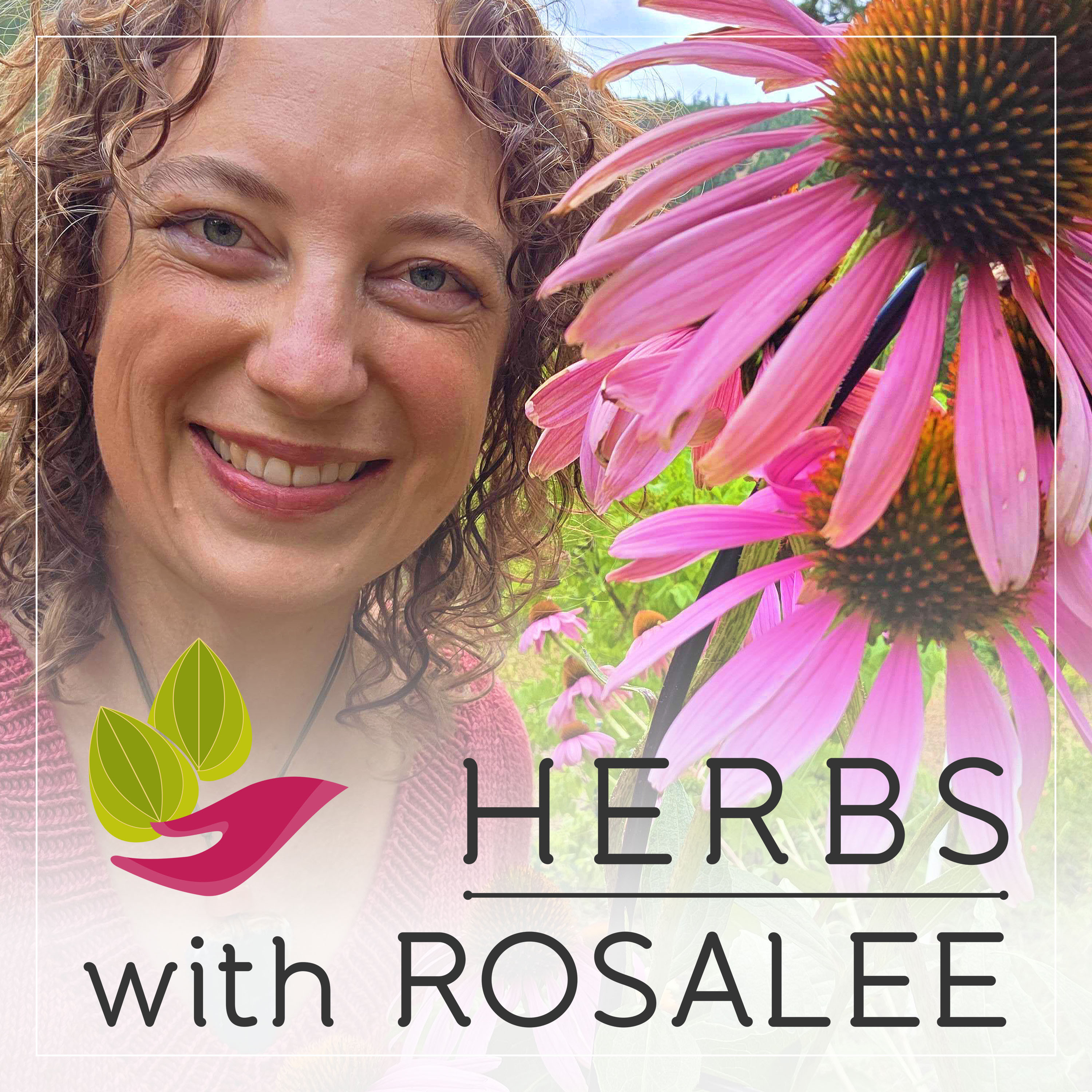
Herbs with Rosalee
Hosted by Rosalee de la Forêt · EN
Curious about the healing nature of plants? You're in the right place. I’m Rosalee de la Forêt and I'm passionate about helping people discover the world of herbalism and natural health.
On this podcast, we explore the many ways plants heal, as food, as medicine, and through nature connection. Each week, I focus on a single seasonal plant and share trusted herbal knowledge so that you can get the best results when using herbs for your health.
My goal is that you’ll walk away from each episode feeling empowered, knowledgeable, and inspired to start working with herbs in your everyday life.
Sometimes you’ll sit down with just me and other times I may have special guests join the conversation. We’ll hear what their favorite herb and recipe is for the season.
All you have to do right now is make sure you’re subscribed to this podcast in your favorite podcast player so you don’t miss a thing.
38episodes
Episodes
Newest firstAll episodes
Herbs for Wildfire Smoke: Supporting the Lungs, Heart, and Nervous System
2w ago00:03:14Tap to summarizeWhen wildfire smoke fills the air, supporting the lungs is only part of the picture.Here, I share the three-part strategy I use when formulating an herbal tea for smoky days.► Support the lungs. Learn why I turn to plantain, a soothing demulcent herb, to help calm irritated respiratory tissues and why recent clinical research supports its traditional use.► Support the heart. Wildfire smoke has been linked to increased risks of cardiovascular problems through inflammation and oxidative stress. I explain why herbs like hawthorn and linden are part of my approach.► Support the nervous system. The smoke isn't the only challenge. The worry and fear that accompany wildfire season deserve care too, which is why calming herbs are an important part of the blend.I also share the herbal tea I formulated with hawthorn, hibiscus, plantain, linden, and holy basil to support all three systems together. You can get the recipe here.Important note: No herbal tea is protective against hazardous air quality. During severe smoke events, reducing your exposure and using clean indoor air remain the most effective ways to protect your health.
Transcribe →Kava for Anxiety, Tension, and Winding Down Without the Fog - with Rachelle Robinett
2w ago00:53:18Tap to summarizeKava has been praised, feared, celebrated, and misunderstood. So what's the real story behind this remarkable plant?Kava (Piper methysticum) has a reputation that's hard to ignore. Some people swear by it for easing tension and helping them unwind, while others know it only through headlines about safety concerns and controversy. In this episode, herbalist and author Rachelle Robinett joins me to separate fact from fiction and explore why this traditional Pacific Island herb has remained such a beloved ally for thousands of years.Together, we dive into kava's remarkable ability to relax the body while keeping the mind surprisingly clear, unpack where the concerns about liver toxicity actually came from, and explore thoughtful questions about responsible herbalism, sustainability, and what it really means to work with sacred plants. Along the way, Rachelle reveals how herbalism can become so much more than "an herb for a symptom"—it can fundamentally change how we relate to the natural world.Rachelle also shares her recipe for Kava “Old-Fashioned” Mocktail, a sophisticated herbal drink that’s perfect for winding down at the end of the day. You can download your beautifully illustrated recipe card here.By the end of this episode, you’ll know:► Why kava has earned a permanent place in Rachelle's travel bag, evening routine, and herbal toolkit► The controversy behind kava use—and the real story behind claims of toxicity and rarity► Why traditional preparation methods for kava matter more than most people realize► What makes kava such a great herbal ally for people reducing or avoiding alcohol► One remarkable botanical fact that has shaped kava’s relationship with humans for thousands of years► and so much more…For those of you who don’t know her, Rachelle Robinett, RH (AHG), is a writer, herbalist, and lifelong naturalist devoted to the art and science of real health. Founder of multidisciplinary wellness companies, she combines traditional medicine, modern insight, and behavior change to help people live more naturally. Her work encourages a return—to self, to nature, and to independent thinking—often challenging the life we’ve been taught to want. Called “a philosophical voice at the vanguard of natural living,” she is based in New York and Costa Rica and is the author of Naturally: the Herbalist’s Guide to Health and Transformation.This conversation with Rachelle is an invitation to look beyond headlines and assumptions, and instead meet kava—and herbalism itself—with greater curiosity, discernment, and wonder.----Get full show notes, transcript, and more information at: herbswithrosaleepodcast.comWould you prefer watching this episode? If so, click here for the video.You can find Rachelle at RachelleRobinett.com.For more behind-the-scenes of this podcast, follow @rosaleedelaforet on Instagram!Working successfully with herbs requires three essential skills. Get introduced to them by taking my free herbal jumpstart course when you sign up for my newsletter.If you enjoy the Herbs with Rosalee podcast, we could use your support! Please consider leaving a 5-star rating and review and sharing the show with someone who needs to hear it!On the podcast, we explore the many ways plants heal, as food, as medicine, and through nature connection. Each week, I focus on a single seasonal plant and share trusted herbal knowledge so that you can get the best results when using herbs for your health.Learn more about Herbs with Rosalee at herbswithrosalee.com.----Rosalee is an herbalist and author of the bestselling book Alchemy of Herbs: Transform Everyday Ingredients Into Foods & Remedies That Heal and co-author of the bestselling book Wild Remedies: How to Forage Healing Foods and Craft Your Own Herbal Medicine. She's a registered herbalist with the American Herbalists Guild and teaches many popular online courses. Read about how Rosalee went from having a terminal illness to being a bestselling author in her full story here.
Transcribe →Orange Peel for Digestion, Lung Health, and a Rosehip Citrus Jam with Heather Luna
3w ago00:39:26Tap to summarizeCould the secret to better digestion be hiding in your compost bin?In this episode, clinical herbalist Heather Luna makes the case for an herb that most of us literally throw away. She reveals why orange peel (Citrus x sinensis) has become one of her favorite everyday herbs—and why it deserves a place in your kitchen instead of your compost.During our conversation, Heather explores many of the overlooked medicinal gifts of orange peel, from supporting digestion and nutrient absorption to nourishing the lungs, cardiovascular system, and microbiome. Along the way, she shares why she believes herbs belong alongside our food, not separated from it, and how simple daily practices can create the biggest changes in our health.Want an easy (and delicious!) way to start using orange peel every day? Download the beautifully illustrated recipe card for Heather's Rosehip Citrus Jam here, and discover why this simple preparation has become a favorite in her clinic.By the end of this episode, you’ll know:► The surprising reason Heather puts orange peel into almost every digestive tea she makes► How orange peel behaves differently from many other bitter herbs—and why that matters► What's hiding inside the bitter white pith that most food recipes tell you to avoid► Seven delicious ways to use orange peel as food and medicine (and one clever way to use up any leftovers!)► Why slowing down to brew a daily cup of tea may be one of the most powerful herbal practices of all► and so much more…For those of you who don’t know her, Heather Luna is a clinical herbalist and nutritionist, practicing in vitalist therapeutics. She is director of the Acorn School of Herbal Medicine where she hosts an online community learning platform for foundational, advanced, and clinical herbalism programs. She has been an instructor of Western herbalism since 2006 and has facilitated a free clinic since 2017.Heather's work emphasizes a vitalist approach to the application of herbs, nutrition, and holistic lifestyle. She is a mother, gardener, and a forever student of nature. Heather carries a lineage in the vitalist tradition with a mission to pass it on.This episode is a beautiful reminder that herbalism doesn't have to be complicated. Sometimes the most profound medicine begins with slowing down, paying attention, and making good use of what we've already been given.----Get full show notes, transcript, and more information at: herbswithrosaleepodcast.comWould you prefer watching this episode? If so, click here for the video.You can find Heather at AcornHerbSchool.com.For more behind-the-scenes of this podcast, follow @rosaleedelaforet on Instagram!Working successfully with herbs requires three essential skills. Get introduced to them by taking my free herbal jumpstart course when you sign up for my newsletter.If you enjoy the Herbs with Rosalee podcast, we could use your support! Please consider leaving a 5-star rating and review and sharing the show with someone who needs to hear it!On the podcast, we explore the many ways plants heal, as food, as medicine, and through nature connection. Each week, I focus on a single seasonal plant and share trusted herbal knowledge so that you can get the best results when using herbs for your health.Learn more about Herbs with Rosalee at herbswithrosalee.com.----Rosalee is an herbalist and author of the bestselling book Alchemy of Herbs: Transform Everyday Ingredients Into Foods & Remedies That Heal and co-author of the bestselling book Wild Remedies: How to Forage Healing Foods and Craft Your Own Herbal Medicine. She's a registered herbalist with the American Herbalists Guild and teaches many popular online courses. Read about how Rosalee went from having a terminal illness to being a bestselling author in her full story here.
Transcribe →Pleurisy Root: Healing Land, Monarchs & Lungs with Linda Shanahan
Jul 1500:47:16Tap to summarizeWhat if one medicinal herb could change the way you think about healing—not just in the body, but across entire ecosystems?Pleurisy root (Asclepias tuberosa), also called butterfly weed, is often thought of as a lung herb. But as this conversation with herbalist, farmer, and nurse Linda Shanahan reveals, this brilliant orange wildflower has a much bigger story to tell—one that stretches from monarch butterflies to microbiomes.In this episode, Linda shares the remarkable story of transforming a chemically treated sod farm into a thriving wildlife sanctuary where native plants, pollinators, birds, and beneficial insects returned together. Along the way, we explore pleurisy root's medicinal uses, why it's such an important plant for monarch butterflies, and how thinking like an herbalist invites us to see connections everywhere, from restoring habitats to supporting the microbiome within our own bodies.This episode’s “recipe” card is something a little different: a guide to creating your own Monarch Medicinal Mini Garden. You can learn how to create a beautiful habitat that nourishes monarch butterflies while incorporating native medicinal plants into your landscape—find your copy here.By the end of this episode, you’ll know:► The surprising scent of pleurisy root that strongly hints at who it’s meant to help► How pleurisy root can support specific respiratory conditions in ways that conventional Western medicine simply can’t► Special considerations for using pleurisy root medicinally► Practical tips for successfully growing milkweed from seed► Why planting milkweed alone isn’t enough—and what monarch butterflies really need to thrive► and so much more…For those of you who don’t know her, Linda Shanahan is an herbalist, registered nurse, and community health educator who co-owns an organic herb farm and farm-to-bottle apothecary in Doylestown, Pennsylvania with her husband, Eric. Together, they cultivate and craft herbal extracts rooted in ecological integrity and bioregional connection.Linda’s journey began over 25 years ago apprenticing with herbalists Howie Brounstein and Steven Yeager in Eugene, Oregon, where she first discovered the profound spiritual nourishment found in wildcrafting and the intimate dialogue between people, plants and place.This conversation with Linda is a beautiful reminder that every medicinal herb exists not in isolation, but within a web of relationships. I hope it inspires you to deepen your own connections—with the plants growing around you and the ecosystems that sustain us all.----Get full show notes, transcript, and more information at: herbswithrosaleepodcast.comWould you prefer watching this episode? If so, click here for the video.You can find Linda at BluestemBotanicals.com.For more behind-the-scenes of this podcast, follow @rosaleedelaforet on Instagram!Working successfully with herbs requires three essential skills. Get introduced to them by taking my free herbal jumpstart course when you sign up for my newsletter.If you enjoy the Herbs with Rosalee podcast, we could use your support! Please consider leaving a 5-star rating and review and sharing the show with someone who needs to hear it!On the podcast, we explore the many ways plants heal, as food, as medicine, and through nature connection. Each week, I focus on a single seasonal plant and share trusted herbal knowledge so that you can get the best results when using herbs for your health.Learn more about Herbs with Rosalee at herbswithrosalee.com.----Rosalee is an herbalist and author of the bestselling book Alchemy of Herbs: Transform Everyday Ingredients Into Foods & Remedies That Heal and co-author of the bestselling book Wild Remedies: How to Forage Healing Foods and Craft Your Own Herbal Medicine. She's a registered herbalist with the American Herbalists Guild and teaches many popular online courses. Read about how Rosalee went from having a terminal illness to being a bestselling author in her full story here.
Transcribe →The Medicinal Spice You Probably Underuse: Cardamom for Digestion, Mood, and More with Missy Rohs
Jul 800:51:15Tap to summarizeMost of us think of cardamom as a baking spice—but what if it's actually one of the most delightful herbal medicines in your apothecary?Many of us know cardamom (Elettaria cardamomum) as the spice that makes chai, pastries, and coffee taste extraordinary. But as Missy Rohs shares in this episode, cardamom is so much more than a delicious ingredient. Together, we explore its gifts as a digestive remedy, aromatic medicine, antimicrobial herb, and even what Unani Tibb medicine calls an exhilarant—an herb that gently lifts the spirit and helps us become more open to joy. As Missy beautifully puts it, cardamom "lets the sunshine in."Along the way, we swap favorite ways to work with cardamom—from coffee and bitters to savory dishes, tinctures, and even medicinal-strength infusions. We also take a delightful detour into saffron (because it’s hard to stay focused on just one of the many amazing herbs out there!), another treasured spice that pairs beautifully with cardamom and offers its own dose of wonder.Be sure to download your beautifully illustrated recipe card for Missy’s Delightful Persian Love Cake—a stunning celebration of cardamom, saffron, rose, and pistachios that’s sure to become a favorite. You’ll find your copy here.By the end of this episode, you’ll know:► Five herbal preparations for working with cardamom—and why using it in culinary preparations can be just as medicinal!► A simple trick for getting even more aroma and flavor from your cardamom► An unexpected savory pairing with cardamom that might just inspire your next meal► Tips for growing and harvesting your own saffron (hint: there’s a reason it’s so expensive to buy at the store!)► and so much more…For those of you who don’t know her, Missy Rohs has run the Arctos School of Herbal Studies in Portland, Oregon for two decades. Her classes focus on sustainability, accessibility, and land connection, with special attention to community care. In Missy's plant medicine practice, pragmatism is queen. Common weeds, native plants, kitchen remedies, and ephemeral fungi are all part of her repertoire.Cardamom may already live in your spice cabinet—but after this conversation with Missy, you may find yourself reaching for it much more often!----Get full show notes, transcript, and more information at: herbswithrosaleepodcast.comWould you prefer watching this episode? If so, click here for the video.You can find Missy at ArctosSchool.org.For more behind-the-scenes of this podcast, follow @rosaleedelaforet on Instagram!Working successfully with herbs requires three essential skills. Get introduced to them by taking my free herbal jumpstart course when you sign up for my newsletter.If you enjoy the Herbs with Rosalee podcast, we could use your support! Please consider leaving a 5-star rating and review and sharing the show with someone who needs to hear it!On the podcast, we explore the many ways plants heal, as food, as medicine, and through nature connection. Each week, I focus on a single seasonal plant and share trusted herbal knowledge so that you can get the best results when using herbs for your health.Learn more about Herbs with Rosalee at herbswithrosalee.com.----Rosalee is an herbalist and author of the bestselling book Alchemy of Herbs: Transform Everyday Ingredients Into Foods & Remedies That Heal and co-author of the bestselling book Wild Remedies: How to Forage Healing Foods and Craft Your Own Herbal Medicine. She's a registered herbalist with the American Herbalists Guild and teaches many popular online courses. Read about how Rosalee went from having a terminal illness to being a bestselling author in her full story here.
Transcribe →Linden Myths You Should Stop Believing
Jul 700:03:45Tap to summarizeLinden is one of my favorite tree medicines, but it's also surrounded by a few common misconceptions.Here, I unpack three myths that may be keeping you from getting the most out of this remarkable herb.► Why linden is much more than a calming bedtime tea ► Which parts of the tree are traditionally used beyond the flowers ► What research suggests about harvesting linden from urban areasIf you'd like to keep learning about linden, I'd love to share my free Linden Monograph, which also includes one of my favorite summer iced tea recipes featuring linden, lemon balm, and oat straw.And if you enjoy this way of studying herbs, you'll love my Herbal Energetics Course. It includes more than 60 detailed herb monographs, along with practical tools to help you understand herbs through the lens of energetics.Get the monograph and the recipe, and join the waitlist through here.
Transcribe →Violet: A Backyard Herb for Swollen Lymph Nodes and a Frazzled Nervous System with Lindsey Feldpausch
Jul 101:11:34Tap to summarizeCan one tiny flower soften dry skin, soothe swollen tissues, calm the heart, and even inspire a little everyday magic?Violets may be small, but they have an astonishing amount to offer. In this episode, I sit down with herbalist Lindsey Feldpausch to celebrate one of our shared favorite plants: violet (Viola spp.). Together, we explore why this humble spring flower deserves far more attention—not only for its beauty, but for its remarkable ability to soothe dry tissues, support the lymphatic system, nourish the body, and gently soften both physical and emotional tension.Along the way, Lindsey shares stories from her own herbal journey, explains the fascinating diversity within the Viola genus, and reveals why she considers violet a true kindred spirit. We also dive into the chemistry behind violet's elusive fragrance, explore surprising new research, and, of course, spend plenty of time delighting in the simple joy of getting down on the ground with a patch of blooming violets.During our conversation, Lindsey also shares all about her gorgeous Violet Elixir—a beautiful (and magically color-changing!) spring preparation that's every bit as enchanting as the flowers themselves. Be sure to download your beautifully illustrated recipe card here.By the end of this episode, you’ll know:► The fascinating reason violet's fragrance seems to disappear almost as quickly as you notice it► Why violet can be especially helpful for new mothers►The simple trick that can make all the difference in your violet salve► Exciting new scientific research that has herbalists paying even closer attention to this familiar plant► The hidden botanical secret that helps violets spread so beautifully in the garden► and so much more…For those of you who don’t know her, Lindsey Feldpausch, RH(AHG) is a clinical herbalist, educator, and Assistant Director at the Herbal Academy. With over 15 years of experience in the field of herbalism, Lindsey's work has been focused on herbal education and clinical herbal practice, teaching for online and in-person herb programs, as well as at a variety of conferences, while maintaining a private practice of her own.As an herbalist, Lindsey's goal is to connect plants with the humans who need them. She believes in our innate ability to engage with the power of plants, and one of her life’s intentions is to kindle this belief in others. Lindsey's herbal works have coalesced into her business, Plant Matters, where she offers herbal education, consulting, and handcrafted herbal products.After this episode, you may find yourself slowing down the next time you pass a patch of violets—and discovering just how extraordinary these tiny flowers really are.----Get full show notes, transcript, and more information at: herbswithrosaleepodcast.comWould you prefer watching this episode? If so, click here for the video.You can find Lindsey at PlantMatters.org.You can find Lindsey’s course, Holistic Approaches for Tick-Borne Diseases, here.For more behind-the-scenes of this podcast, follow @rosaleedelaforet on Instagram!Working successfully with herbs requires three essential skills. Get introduced to them by taking my free herbal jumpstart course when you sign up for my newsletter.If you enjoy the Herbs with Rosalee podcast, we could use your support! Please consider leaving a 5-star rating and review and sharing the show with someone who needs to hear it!On the podcast, we explore the many ways plants heal, as food, as medicine, and through nature connection. Each week, I focus on a single seasonal plant and share trusted herbal knowledge so that you can get the best results when using herbs for your health.Learn more about Herbs with Rosalee at herbswithrosalee.com.----Rosalee is an herbalist and author of the bestselling book Alchemy of Herbs: Transform Everyday Ingredients Into Foods & Remedies That Heal and co-author of the bestselling book Wild Remedies: How to Forage Healing Foods and Craft Your Own Herbal Medicine. She's a registered herbalist with the American Herbalists Guild and teaches many popular online courses. Read about how Rosalee went from having a terminal illness to being a bestselling author in her full story here.
Transcribe →Rabbit Tobacco for Lung Health, Respiratory Healing, and Everyday Medicine with Karen Lynn Burr
Jun 2400:56:24Tap to summarizeWhat if one of the most helpful herbs for the lungs is one you’ve never heard of?Rabbit tobacco (Pseudognaphalium obtusifolium) may not be the most well-known herb, but according to herbalist Karen Lynn Burr, it deserves a place in every herbal toolkit.In this episode, Karen shares how this native North American plant became one of her most trusted allies after a serious respiratory health crisis—so much that she credits it for saving her life! Along the way, we explore rabbit tobacco's long history of traditional use for supporting the lungs, soothing irritated tissues, and helping the body recover after illness.Karen also shares her broader philosophy of restorative herbalism, making connections between healthy ecosystems, healthy bodies, wild foods, and community care. From foraging and folk medicine to rewilding ourselves through plants, this conversation is packed with practical insights, inspiring stories, and contagious enthusiasm for the healing power of the natural world.Karen has also brought us her Respiratory Support Nebulizing Formula, an incredibly versatile herbal preparation that can be used to calm and soothe inflammation during or after a respiratory illness. You can download your beautifully illustrated recipe card here!By the end of this episode, you’ll know:► Why Karen is so passionate about wild foods (and how to harness their gifts to benefit your health!)► How rabbit tobacco can help to rebuild thinning tissues—from the lungs, to the skin, to vaginal tissues, and more► Plants that partner well with rabbit tobacco to support different health conditions► Five herbal preparations for rabbit tobacco► Tips for sourcing, harvesting, and drying rabbit tobacco to ensure you’re making the most potent medicine► What disturbed ecosystems can teach us about resilience and recovery► and so much more…For those of you who don’t know her, Karen Lynn Burr, owner and clinical herbalist at Materia Medica Restorative Herbalism Center, brings over 20 years of holistic health experience. Her training includes integrative nutrition, vitalist herbalism specializing in acute skin conditions, medical botany focused on hormonal aging, and clinical herbal formulations for internal and topical use. She also has deep knowledge of folk medicine, wild food education, and herbal remedies for autoimmune support and environmental toxins.In 2024, Karen founded the Restorative Herbalism Center to champion wild food and regenerative healing for mind, body, and spirit. Their mission is to restore health naturally, avoiding costly supplements and overused pharmaceuticals.From respiratory health to ecological restoration, rabbit tobacco reminds us that some of the most powerful allies are hiding in plain sight. I can't wait for you to meet this fascinating plant!----Get full show notes, transcript, and more information at: herbswithrosaleepodcast.comWould you prefer watching this episode? If so, click here for the video.You can find Karen at MM-RestorativeHerbalismCenter.com.For more behind-the-scenes of this podcast, follow @rosaleedelaforet on Instagram!Working successfully with herbs requires three essential skills. Get introduced to them by taking my free herbal jumpstart course when you sign up for my newsletter.If you enjoy the Herbs with Rosalee podcast, we could use your support! Please consider leaving a 5-star rating and review and sharing the show with someone who needs to hear it!On the podcast, we explore the many ways plants heal, as food, as medicine, and through nature connection. Each week, I focus on a single seasonal plant and share trusted herbal knowledge so that you can get the best results when using herbs for your health.Learn more about Herbs with Rosalee at herbswithrosalee.com.----Rosalee is an herbalist and author of the bestselling book Alchemy of Herbs: Transform Everyday Ingredients Into Foods & Remedies That Heal and co-author of the bestselling book Wild Remedies: How to Forage Healing Foods and Craft Your Own Herbal Medicine. She's a registered herbalist with the American Herbalists Guild and teaches many popular online courses. Read about how Rosalee went from having a terminal illness to being a bestselling author in her full story here.
Transcribe →Japanese Knotweed for Lyme, Inflammation, and Infections with Emily French
Jun 1700:59:58Tap to summarizeWhat happens when we stop looking at Japanese knotweed as a problem to solve and start looking at it as a teacher?Japanese knotweed (Reynoutria japonica) is often used as a go-to herb for Lyme disease, but in this fascinating conversation, herbalist Emily French invites us to see this remarkable plant through a much wider lens. From chronic inflammation and joint pain to menstrual stagnation, skin care, and beyond, Emily shares why knotweed has become one of her most trusted herbal allies—and why reducing it to a single use misses the bigger picture entirely.Along the way, we explore knotweed's role as a blood-moving herb, its powerful anti-inflammatory and antimicrobial properties, and the surprising ways it supports both ecological and personal healing. Emily also offers thoughtful reflections on knotweed's controversial reputation, revealing how this much-maligned plant may have more to teach us about cooperation, resilience, and reciprocity than many of us realize.Japanese knotweed also makes a delicious wild food! Emily has shared her recipe for Strawberry Rhubarb Knotweed Galette, a rustic dessert that transforms young knotweed shoots into a memorable seasonal treat. You can download your copy here.By the end of this episode, you’ll know:► Over fifteen medicinal benefits of knotweed (far beyond just being a “Lyme herb”!)► Three tips for harvesting knotweed roots► The fascinating ways that knotweed helps prevent Lyme-causing bacteria from taking hold► When to use the roots of knotweed—and when the leaves and stems are best► What makes this plant such an amazing ally for burns, bruises, and sprains► and so much more…For those of you who don’t know her, Emily French is a clinical and traditional herbalist who works 1:1 with clients and also teaches about herbalism online and in her 3 year herbal apprenticeship. Her work revolves around her love for reconnecting people with the sophisticated art and science of plant-based healing that we've all known, somewhere in our bones, for thousands of years. She is a passionate and intuitive herbalist, educator, wildcrafter, farmer, medicine maker, and mama. With over 20 years of clinical experience, Emily has a broad understanding of both acute and chronic health issues, and of working with the healing plants to help people move toward balance and vitality.Emily's passion for Japanese knotweed is contagious! By the end of this episode, you may find yourself seeing this controversial plant in an entirely new light.----Get full show notes, transcript, and more information at: herbswithrosaleepodcast.comWould you prefer watching this episode? If so, click here for the video.You can find Emily at Emily-French.com.For more behind-the-scenes of this podcast, follow @rosaleedelaforet on Instagram!Working successfully with herbs requires three essential skills. Get introduced to them by taking my free herbal jumpstart course when you sign up for my newsletter.If you enjoy the Herbs with Rosalee podcast, we could use your support! Please consider leaving a 5-star rating and review and sharing the show with someone who needs to hear it!On the podcast, we explore the many ways plants heal, as food, as medicine, and through nature connection. Each week, I focus on a single seasonal plant and share trusted herbal knowledge so that you can get the best results when using herbs for your health.Learn more about Herbs with Rosalee at herbswithrosalee.com.----Rosalee is an herbalist and author of the bestselling book Alchemy of Herbs: Transform Everyday Ingredients Into Foods & Remedies That Heal and co-author of the bestselling book Wild Remedies: How to Forage Healing Foods and Craft Your Own Herbal Medicine. She's a registered herbalist with the American Herbalists Guild and teaches many popular online courses. Read about how Rosalee went from having a terminal illness to being a bestselling author in her full story here.
Transcribe →Balsam Fir: Lung Support, Wound Healing, and the Medicine Right Outside Your Door with Erica Macrum
Jun 1000:42:14Tap to summarizeCould the tree outside your window become one of your greatest herbal teachers?Living at the edge of the boreal forest, Erica Macrum is surrounded by balsam fir (Abies balsamea), and over the years this fragrant conifer has become one of her closest plant allies. But rather than relying on books, Erica has learned much of what she knows about balsam fir through observation, experimentation, and simply spending time with the tree itself.In this episode, Erica shares her favorite ways to work with balsam fir's resin, needles, and bark, as well as the unexpected lessons she's gathered from years of companionship with this remarkable tree. Together, we explore its gifts for healing, the role of curiosity in herbal practice, and the wisdom that can emerge when we spend time getting to know the plants growing around us.Erica also shared her recipe for Spring Forest Herbal Salt, a delicious way to add a taste of the forest to your own kitchen. Be sure to download your copy here!By the end of this episode, you’ll know:► How balsam fir resin naturally protects the tree—and how you can harness that healing power► The surprising differences between working with the resin, bark, and needles► How Erica uses balsam fir to support respiratory health► Why "playing" with a plant can be an important part of herbal learning► What plants can teach us about compassion, patience, and meeting people where they are► and so much more…For those of you who don’t know her, Erica Macrum is the owner of Sweet Fern Apothecary and has a deep passion for the healing arts. The ancient wisdom of Earth-based energetic modalities keeps Erica engaged and continuously learning. As a clinical herbalist, she loves sharing about the healing properties and energetics of plant medicine and strongly encourages the people around her to hold healing in their hands.Erica has been studying and practicing Chinese medicine for over 20 years. She is a graduate of the East West School of Planetary Herbology, where she helped facilitate and teach the case studies class with her mentor Susan Kremer. When she is not working with herbs, you will find Erica in the garden, walking in the woods, or spending time with her family.Whether balsam fir grows outside your door or hundreds of miles away, I hope this conversation inspires you to spend a little more time with the plants around you—and who knows, you just might find yourself looking at those familiar plants in a whole new way!----Get full show notes, transcript, and more information at: herbswithrosaleepodcast.comWould you prefer watching this episode? If so, click here for the video.You can find Erica at SweetFernApothecary.com.For more behind-the-scenes of this podcast, follow @rosaleedelaforet on Instagram!Working successfully with herbs requires three essential skills. Get introduced to them by taking my free herbal jumpstart course when you sign up for my newsletter.If you enjoy the Herbs with Rosalee podcast, we could use your support! Please consider leaving a 5-star rating and review and sharing the show with someone who needs to hear it!On the podcast, we explore the many ways plants heal, as food, as medicine, and through nature connection. Each week, I focus on a single seasonal plant and share trusted herbal knowledge so that you can get the best results when using herbs for your health.Learn more about Herbs with Rosalee at herbswithrosalee.com.----Rosalee is an herbalist and author of the bestselling book Alchemy of Herbs: Transform Everyday Ingredients Into Foods & Remedies That Heal and co-author of the bestselling book Wild Remedies: How to Forage Healing Foods and Craft Your Own Herbal Medicine. She's a registered herbalist with the American Herbalists Guild and teaches many popular online courses. Read about how Rosalee went from having a terminal illness to being a bestselling author in her full story here.
Transcribe →