← The Preamble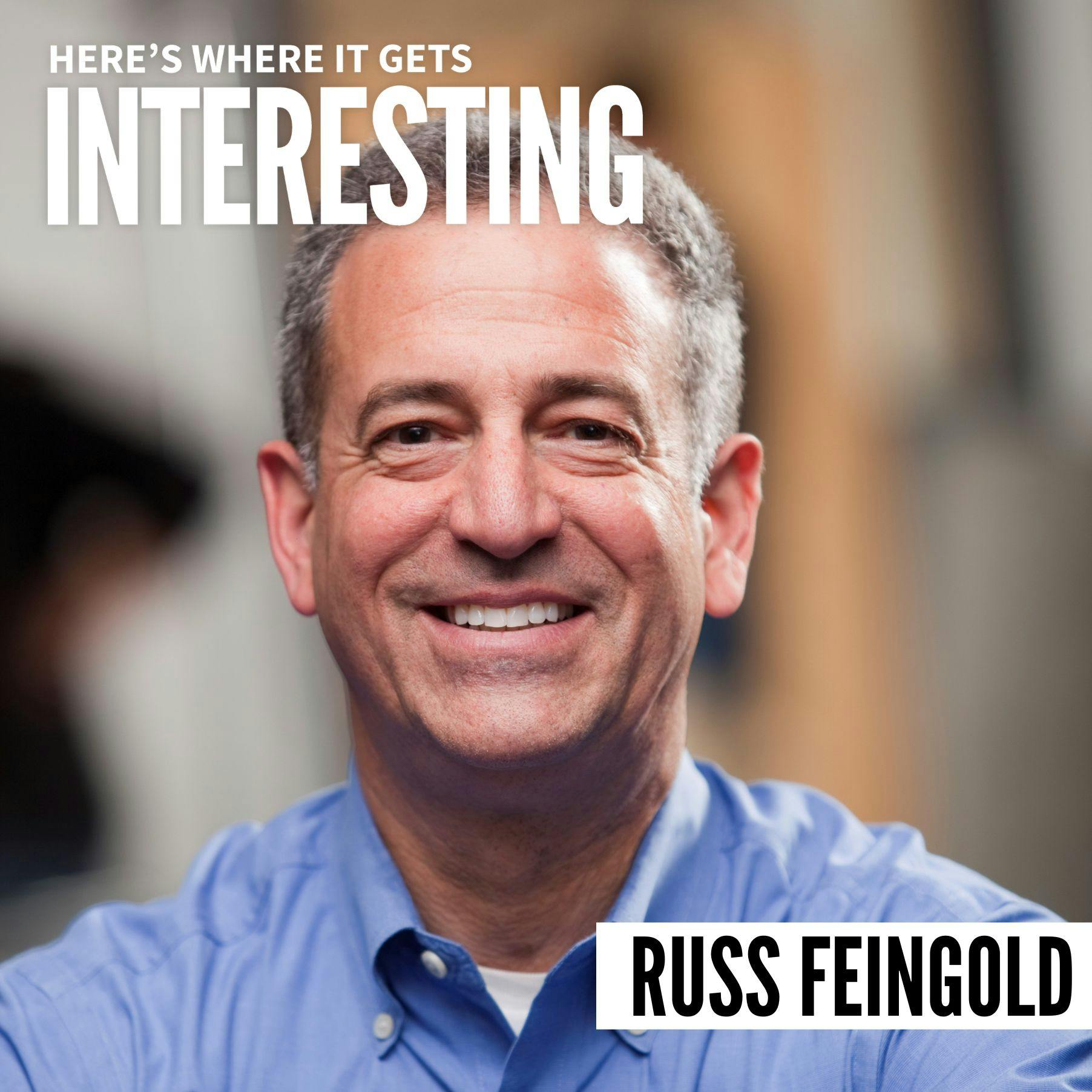
The Preamble
Amending the Constitution with Russ Feingold
00:46:27
Sharon sits down with former Wisconsin Senator Russ Feingold to examine how the Constitution could be changed, and whether a Constitutional Convention could fix our democracy or fatally undermine it.
Loading summary
Transcript71 lines
- [00:01]
Sharon McMahon
Bitcoin might sound complicated, but the Gemini credit card makes it so simple. Use it like any credit card. Buy lunch, gas or your weekly groceries and you'll earn up to 4% back instantly in Bitcoin or one of over 50 other cryptos. Straight to your account, no annual fee. And right now you can grab a $200 bitcoin intro bonus. It's the easiest way to start building your Bitcoin stash. Go to gemini.com card to learn more. Issued by Webmark.
- [00:34]
Russ Feingold
To Qualify for the $200 crypto intro bonus, you must spend $3,000 in your first 90 days. Some exclusions to instant rewards apply. This is not investment advice and trading. Crypto involves risk. Check Gemini's website for more details on rates and fees.
- [00:43]
Sharon McMahon
Refreshing a wardrobe for summer doesn't have to mean spending hours shopping or guessing what works. Daily look makes it simple, stylish and stress free. DailyLook is the number one highest rated premium personal styling service for women, offering a truly personalized experience. Each customer is matched with a dedicated personal stylist, a real person, not an algorithm who selects up to 12 premium pieces based on body shape, personal style and lifestyle. The curated box is delivered straight to your door so everything can be tried on in the comfort of your own home. You keep what you love, you return the rest and and shipping is free both ways with flexible delivery options. You can choose to receive a box every 30, 60 or 90 days. There's no pressure, no commitment to buy. It's a great way to explore new looks, to stay current with seasonal trends and build a wardrobe that actually works. Elevate your style by signing up@dailylook.com today. Take your style quiz@dailylook.com and get 50% off your first styling fee with the code Interesting. That's DailyLook.com code Interesting. Hey friends, welcome. Delighted that you're here. My guest today is a three term Senator, Russ Feingold. If you're from Wisconsin, you definitely remember who he is and he has a new book out called the Constitution in Jeopardy. And it might not be what you think it's about, so let's dive in for a really fascinating conversation. I'm Sharon McMahon and here's where it gets interesting. I am very excited to be joined today by my neighbor, Russ Feingold. Thank you for being here.
- [02:33]
Russ Feingold
My pleasure.
- [02:34]
Sharon McMahon
And when I say neighbor, I mean he lives in a neighboring state, the neighboring state of Wisconsin, which of course if I were a Vikings fan I would have to get a dig in about the Packers.
- [02:44]
Russ Feingold
But I'm not.
- [02:45]
Sharon McMahon
I don't care about football. So you can go ahead.
- [02:47]
Russ Feingold
Okay, good.
- [02:47]
Sharon McMahon
Go ahead and have your packers fandom.
- [02:50]
Russ Feingold
If that's because it can get kind of rough.
- [02:51]
Sharon McMahon
It can. Can. That cross border rivalry could be a little rampageous. I'm really grateful for your time today, and I'm so excited to talk about an issue that people who listen to this podcast and people who follow me care a lot about, which is about the Constitution. So, first of all, tell us a little bit about your background for people who don't know the name. Russ Feingold, who. Who are you?
- [03:16]
Russ Feingold
Well, Sharon, thank you for having me on your podcast. And we do share that some people call it a lake, but it's really an ocean Lake Superior. So it's a pleasure to be with a fellow Midwesterner. So, you know, my family came here over a hundred years ago to Janesville, Wisconsin, from the East Coast. And I was brought up in the public schools in Janesville. I went to the University of Wisconsin, Madison. Yes. I'm a badger, not a gopher. And then I got a couple law degrees. Most of my career, I was an elected official legislator. Ten years as a state senator in the Wisconsin State senate, and then 18 years as a United States senator representing the state of Wisconsin until 2010. And since then, I've mostly been teaching law, but I also was a envoy to Africa on peace negotiations for President Obama. And now I am the president of something called the American Constitution Society, which is an organization that's trying to stand up for democracy and the rule of law, law, especially against the threats that are coming from the far right in the United States. So this question of what kind of a constitutional change we might have is of great importance to me, but also to our organization and to our country.
- [04:27]
Sharon McMahon
I have a lot of thoughts about the beloved Constitution. There's a lot to love about it. Obviously, I'm not somebody who's like, just throw the whole thing up, scrap it. That's not my perspective. I think there's a lot that we should keep. But I do think that there are absolutely some situations that are occurring today that there was absolutely no way for the framers to anticipate. There was no way for people in a room in Philadelphia in 1787 to be like, someday algorithms will do the following things. Someday we might have considerable threat from A, B, and C. So in their wisdom, they put multiple ways to change the Constitution should it ever be needed. They inserted multiple ways to change it, thinking to themselves, well, one way isn't enough. Because what if things go awry with the one main way that we're thinking about the Constitution being amended? What if things go awry with, with Congress? We might need a fail safe. We might need an additional way to be able to change the Constitution because we are not smart enough to predict hundreds of years into the future and no humans are. So for anybody who is new to this type of conversation, fill us in if you wouldn't mind, on the different ways that the Framers envisioned us being able to change the Constitution if the situation ever arose.
- [06:05]
Russ Feingold
Well, Sharon, you said that all just perfectly. You maybe have a better joke about the Framers than I do. The one I like to say is that they were really no good or very effective when it came to climate change. They just, you know, they just didn't get it. But I like the algorithm thing. And you know, it's funny, you said the thing about a hundred years from now, almost exactly the way that George Washington said at the Constitutional Convention, he had this draft of the Constitution and he said basically what you said, which is we can't imagine that we are smarter or more effective or able to understand things in future generations. So the only reason I'm going to support this thing is so there's a mechanism to change the Constitution and that is what is embodied in Article 5 of the Constitution. A lot of people know about Article 1, which is where Congress's powers are. Article 2 is where the President's powers are. Article 3 is where the judiciary is created. But very few people are aware of Article 5. And yes, they did come down in the end on a compromise. There are two ways to change the Constitution. The one that most of us know about hasn't happened that often, but it's with Congress starting it. Two thirds of both houses have to pass the identical proposal, then they send it to the states and then 3/4 of the states have to ratify it. That's how we've gotten to the 27, or some would say 28amendments that we already have. The other mechanism though allows for two third of the states to basically petition the Congress saying we want a Constitutional Convention. We want a chance to kind of look at this whole thing or do this or do that. Not on just one topic necessarily, but just we want a convention. And the way that my co author and I of our book Constitution and Jeopardy. Peter Prindle and I read this is that the Framers intended no limit at all on what might come up at that convention. So that's one of the questions and one of the dangers. But this way of doing it, as you well know, has never happened. They've come close, like one state short, two states short, but we've never had that convention. And one of the reasons is there are no rules for it in the Constitution. We have no idea how would delegates be selected, what triggers, how you count the petitions, how would the convention work? And so this is why Peter Prindle and I wrote this book, because we were very worried that without those rules, this could lead to danger. And there is a great danger. And particularly on the right, there's a group led by something called the Convention of the States. We're trying sort of an end run approach to calling a convention that could gut the Constitution and take it to a very far right version of what we have now. I'm with you. I don't want to just throw at the Constitution. There are things that need to be fixed, definitely. But the idea of throwing it out for some very, very small group of people in the country dominating our system of government is a frightening prospect.
- [09:05]
Sharon McMahon
Totally. And these are some of the questions that I get asked a lot when people say, do you think we should have a constitutional convention? My answer is almost always yes, but yes, but I am concerned about the rules. I'm concerned about who would get to attend. I'm not necessarily concerned about some of the issues we could address. I feel like there could be a lot of very positive change that could potentially come out of it. But how the delegates would be selected, that is top of mind for me. I'm personally not in favor of sending state legislatures as the delegates to this proposed Constitutional convention because so many state legislatures are wildly gerrymandered to the point where they are not actually representative of the views of the people of that state. They're representative of the political goals that the gerrymander district wanted to achieve, but they're not representative of the people of Wisconsin at large or the people of Minnesota at large. They're representative of just this. Like our desired goal is a legislature that is tilted in favor of one party or another.
- [10:17]
Russ Feingold
Absolutely. That is the problem here. So when you say yes, but actually what we would say is not until Article 5 of the Constitution has changed. So we think a constitutional amendment has to be made to change the way this is done. Because what you just said is the key, the way the Convention of the States is set up is they are going to use these gerrymandered legislatures. They're already training state legislators where they have like a hundred state legislators from every state who Come and they're trained in trying to figure out how to do a convention like this. And the way they do it is by, as you say, having very far right representatives. So, yes, Wisconsin is a mixed state. We have a Democratic governor, Democratic attorney general, Democratic lieutenant Governor. Now, there's a progressive majority in the Wisconsin Supreme Court, but our legislature is far to the right. And why is that? Because they've used gerrymandering to take away the right of the people of the state to have fair representation. But they are the ones under the current effort that's being made who would run this convention. The governor doesn't get to have any say in it. The Supreme Court doesn't get to have any say in it. And this is being replicated all over. So we know what they're going to try to do. Sharon they had this mock convention in 2016 and they said, this is the way we're going to vote. It's not even going to be all the delegates vote one vote per state. So Montana gets the same vote as New York. And we know what that means. It's like the electoral College. It's incredibly malapportioned. And then when it comes time to actually vote, they showed us what they want to do. And their favorite thing. Sharon and this is where it gets back to your point about malaportion. Legislatures dominate. They want a thing, I like to call it the John C. Calhoun rule, which is, goes back to, you know, the idea of some of the south thought that if one state didn't like a law, a federal law, they could just ignore or they can nullify. They say that if 30 state legislators don't like anything Congress does or anything the administrative agencies does, they can overrule it. So they'd be eviscerating the federal government and the majority of the states, again, it was one state at a time, voted that way. So we know what they want to do. These are their big priorities, really taking away the very thing that led to the Constitutional Convention in the first place. The Articles of Confederation were a complete bust. The country couldn't even be governed a number of years. And so this is why we have a Constitution. They want us to take us back to this thing where we couldn't have cooperation between 50 states. And that's not going to work in a country this big.
- [12:52]
Sharon McMahon
That's a great point that we quickly abandoned the Articles of Confederation. They were like, you know what? This does not work. We all need to get to Philadelphia so we can redo these. They knew that some people were Going to be like, no, we. We can't throw them out. Let's just amend. Let's just change. So in cases, people were lured to Philadelphia thinking, we're just going to fix them up. And when they got there, they were like, they got to go. The whole thing. Scrap it all. We cannot run a country with a confederation of states. This confederation of states is not a country that cannot be governed in the way that it's set up right now. For example, under the Articles of Confederation, there was no Bill of Rights. Nobody wants to go back to that. But that is exactly what going back to a confederation of states where the states have all the power and the federal government basically does nothing, except, I mean, Lord only knows what. Welcome, foreign dignitaries, have a parade. I don't know. I don't know what exactly what they would do. But it didn't work before, and there's absolutely no reason to believe it would work now.
- [14:03]
Russ Feingold
That's right. And think about it. It's like, not only would it not work back then, it did work back then when we were sort of protected by these oceans and people couldn't mess with us. Now they can mess with us in a half a second. And to not have that kind of coordination is insanity. One of the problems with it, of course, was that the Articles of Confederation required that every single state agree to any change, any amendment. So there never was an amendment, because apparently Rhode island voted no on all the things, so it couldn't be fixed.
- [14:35]
Sharon McMahon
They were not feeling it. They were like, we're also not going here. Constitutional Convention. We're not going to that either. We're not doing any of these things. Yeah. The idea that one state could hold up any amount of progress for the entire rest of the country, that's not democratic.
- [14:51]
Russ Feingold
No, in fact, that's a really good point, because you were saying, the thing that really matters is they're trying to do the state control. The first thing that they put in that constitution were not the words, we the states. They said, we the people. And so this was a document, as you said, where the people as a whole, not just through their legislatures, could create it or change it, and not just by state legislatures.
- [15:20]
Sharon McMahon
This episode of here's Where It Gets Interesting is brought to you by Alloy. Women's health. Aging can be, let's be real. It can be crappy. You can have problems sleeping and you can have weight gain and brain fog and hot flashes. Menopause is inevitable, but it's also treatable. I recently learned that almost half of women went three plus years before seeking relief from menopause or perimenopausal symptoms. Why do people do that to themselves? That's because 43% of women reported that their doctors just never mentioned menopause hormones therapy as an option for treatment and 40% more don't even know where to go for a solution. Aloe is fast accessible and their treatments actually work. From full body relief to radiant skin alloy. Solutions are available by prescription, so you'll need to complete a short medical questionnaire and patient verification and then you will design your treatment plan with a physician. You'll work with an expert to finalize a personalized plan tailored to your specific nutrition needs and then once approved, aloe ships your prescription directly to your door with automatic refills. Join the 95% of women who tried aloe and saw relief in the first two weeks. Head to myalloy.com interesting and tell them all about your symptoms and you'll get a fully customized treatment plan and you'll get $20 off your first order. Today head to my a l l o y.com interesting and enter code interesting to get $20 off your first order.
- [16:56]
Russ Feingold
Hey there cats and kittens. It's Brian from the commercial break. The mediocre comedy podcast where my best friend Chrissy and I attempt to make sense of the world. We talk about the absurd, the ridiculous and the stuff no one asked for like Internet weirdos, pickup artists and why everyone is obsessed with crystals and colonics. It's all gotta stop. The show is free, it's frequent and it's probably not for everyone. You can go to tcbpodcast.com, subscribe subscribe@YouTube.com thecommercialbreak or check out the show wherever you listen to podcasts. We'll see you on the next commercial break. And best to you, there's nothing more.
- [17:27]
Sharon McMahon
Important than setting our kids up for success. And let's be honest, every kid learns a little differently. That's why I was so interested to learn about K12 powered schools. They're helping families support their kids learning in ways that actually work for them. K12 powered schools are tuition free online accredited public schools for kindergarten through 12th grade. That means your child can learn at their own pace, in their own space with a curriculum that supports their learning style. And this isn't homeschooling where you have to be the teacher. K12 powered schools have state certified teachers who specialize in online education. They use interactive hands on tech to really engage students. Plus there are even social events and extracurriculars so your child won't miss out on those connections. With over 25 years of experience, K12 knows how to help students build real skills for their future. And they're here to support you every step of the way. Join the more than 3 million families who have been served by K12 and empower your student to reach their full potential. Now go to k12.com Interesting today to find a tuition free K12 powered school near you and enroll. Now that's the letter k the number12.com Interesting k12.com Interesting if you had your druthers, Russ and we could get together a real constitutional convention with like real rules that were legit, that we were all like, yeah, I feel good about this. What topics would you like to tackle? What would you like to see adjusted?
- [19:06]
Russ Feingold
Well, the first thing is I wouldn't take a chance at doing it under the current rules. As I said, I want to be clear about that. But if we were able to change the rules and we have in the book some ideas about how you could do that and make it more democratic. I've been looking at this topic for almost 10 years, even before Peter and I decided to write the book. And several things seem to me to be clearly flaws in the Constitution that probably need a constitutional amendment. One is the Electoral College is really a joke. We've ended up with two presidents who didn't have the majority votes. And we need to get to a popular vote mechanism. And that could be done by a constitutional amendment that could be done at a convention or by Congress. Secondly, there is no actual right to vote in the Constitution. I think we need a provision that makes it very clear that any attempt to try to diminish somebody's right to vote is wrong. That needs to be in the founding document. Third, we kind of alluded to this earlier. Almost every modern country, they've got some kind of a right to a clean environment and we don't have that kind of a provision in our Constitution. And so those are three things. There are many others, I think, but those are the kinds of things either Congress could do this or if there was a legitimate new way to amend the Constitution, we should do it. And we need to do it because, yes, I'm worried about a convention. But Sharon, our Constitution is the hardest Constitution in the world to amend. It's only been amended 17 times since the Bill of Rights. And that's because it's so hard to do. And so what you have now is this sort of backlog of things that really should have been fixed a long time ago, but it's so darn hard, especially in a partisan environment. But it's like in Ulysses, Scylla and Charybdis. I mean, if you go to the convention instead, you're going to end up with something that's even worse. So that's why we need new rules. And that's a hard thing to do. We've got to get somehow get a consensus, a bipartisan agreement that something has to be done or this Constitution is just going to dive its own weight. Constitutions need to be amended and fixed.
- [21:07]
Sharon McMahon
One of the things that I think needs to be changed about the Constitution is the entire election process. Just all of it, all the aspects of it. The system that we currently use is not even a tiny resemblance of what the Framers intended. Again, that's assuming that what the framers intended is the ultimate arbiter for us. Like even if we say yes, what they wanted goes, some people feel like, who cares what they wanted? You know, like we should have what we want. Who cares what they want? That's one view. But assuming your view is okay, let's stick to the ultimate intent of the Framers. There is no way that you can make a case that our current system of electing a president resembles what the Framers intended. There were not massively powerful political parties in 1787. There were not huge money front raising systems where each candidate spends over $1 billion, each, over $2 billion trying to win the presidency. The Framers never foresaw that. They didn't foresee a scenario in which people would campaign for president for 18 to 24 months. That is also absurd. And the process by which we elect presidents has become, in my view, so exhausting, so demoralizing, so demeaning to candidates, so demeaning to candidates families, that number one, it scares away really, really good people from running for office. Because we have created the conditions under which almost nobody is willing to put themselves in harm's way. In that way, I couldn't be the subject of a 24 hour news channel. I don't want to watch myself get hated on 247 for years. Most people don't have that kind of desire, right? So there are good people with smart people, with good ideas, good moral character, people who really have a lot to offer, who avoid throwing their hat in the ring because of those conditions. Secondly, it makes the average citizen so exhausted by the process that they completely unplug from engaging in democracy because they just cannot handle two years of the level of vitriol and the level of sustained attention that it requires. To many people it just seems like it's not even worth it. I'm not even going to try. We are the only democracy in the world with this kind of process. The rest of these democracies are like, listen, I'm gonna give you guys six weeks. You got six weeks to make your case and then we're going to have an election. So to me, those are some of my really big issues that I think the current election system actually decreases democracy in the United States, which I don't think the framers would have approved of. The system we have now.
- [24:13]
Russ Feingold
That's right. I mean, actually the framers, particularly James Madison and the people that created the Senate, didn't believe in political parties and they wanted to Senate the way it was so that it wouldn't involve political parties. I don't think political parties are wrong, but I think your description of what has happened is right to the point where people are just grossed out by this.
- [24:35]
Sharon McMahon
Yes.
- [24:36]
Russ Feingold
And the people that are left to play are power hungry people who are willing to lie and accept nonsense that they know to be nonsense for power and power's sake rather than for their fellow men and fellow women. And you know, I gotta be honest with you, I hate saying this because I want a lot of young people to run for office. I know me very well. I don't know that I would have wanted to go into this business if it was like this because you know, I had a wonderful career. Ten years in the state Senate, 18 years in the U.S. senate. I was had my privacy. Nobody ever did anything to my kids or threaten them or, or made me feel particularly threatened. I did 1200 listening sessions around Wisconsin and every county every year, total of 1272 counties. And I felt so good about it. It was direct democracy. I think people would have to think twice about exposing themselves to that kind of a situation now. And it's a great tragedy because as you say, good people, sort of well rounded people, people that would see this as part of their life but not their whole life and which care about their friends and family, they're going to be very discouraged from doing this. So it makes me feel really bad at this point in my life because I work in the American Constitution Society with all these wonderful young people who are still interested in running for office, but I'm so worried about what it means for them personally. So, you know, actually under the current Constitution, there are a lot of ways to change the election process. Yes, it's Left up to the state legislature is how the elections are run. Unless Congress acts, it says so. That's an interesting one where Congress can make election rules uniform. Without serious reform of the unbelievable amount of secret money in politics, it's going to be hard to get away from the situation that you just so well described.
- [26:29]
Sharon McMahon
80% of Americans, no matter your political persuasion, do not think billionaires should control politics in the United States. And probably the other 20% is like, I'm not sure you know what I mean?
- [26:41]
Russ Feingold
And they're on both sides, to be fair.
- [26:43]
Sharon McMahon
Totally.
- [26:43]
Russ Feingold
You know, people, a lot of us on the progressive side talk about the right wing ones. Hey, there's left wing ones too. There are people that have so much money, maybe they're well intentioned, but they should not have that kind of overwhelming influence. They used to say, one man, one vote. It should be one person, one vote, not $1, one vote. And it ends up being $1 or billion dollars. A billion votes, the way this thing is set up.
- [27:06]
Sharon McMahon
I know that when you were in the Senate you worked on a bill, the McCain Feingold act, with John McCain, obviously, when he was still alive, that worked to limit some of the ways and manners in which campaign money could be spent. And that led to a Supreme Court case. And the Supreme Court in Citizens United States felt like corporations are people and that money is speech. And so because corporations are people and money is speech, any attempts to limit the money that corporations spend is a limitation of their First Amendment rights. And I'm curious, as somebody who teaches law, is educated in the law, works with the Constitution extensively, what is your view on that issue, on the issue of our corporations people? Is money speech? I'd love to hear your take on that.
- [28:01]
Russ Feingold
I mean, you're dead right again. I mean, no, I don't think corporations are people in the sense that most of us would understand it. In fact, one of the questions I've never gotten a good answer to is, well, who do you think allows corporations to exist? Governments. If governments don't create a corporate mechanism, then it can't exist. So it's not like a human being. It's something that's a creature of the state. And the idea that somehow corporations are the same as people when it comes to political speech is a total end run and abuse of the First Amendment. That was an awful decision. It was not about McCain Feingold. It was actually about a 1907 law signed by Teddy Roosevelt, sponsored by a Wisconsin senator fighting Bob La Follette, that said, look, the corporations already control our Economy, you know, the robber Barron, Standard Oil and all that. Now they're trying to buy our elections. We're not going to let corporations dominate elections. So that law is the one that they gutted in Citizens United and nobody had even questioned it for 100 years. It was a 5 to 4 decision. It was a lousy decision, lawless decision. But, you know, it set the stage for what's happened in the last 10 to 12 years, which is this huge amount of hidden money by both sides that is corrupting the political process. And exactly the way you said so we have to put the genie back in the bottle. There are ways through public financing. There are ways through enforcement of laws. The myth of this thing is that people think that there's no coordination between these corporations and the politicians. Of course there is, and it's supposed to be a federal crime, but there's no real enforcement. So that law needs to be strengthened because that's the whole basis of it. Well, it's okay if they do it. If they don't coordinate with politicians, the coordination is grotesque and it has to be stopped.
- [29:51]
Sharon McMahon
I'm a fan of the idea of public financing and that everybody who is qualified can get in this pool of money. And that is going to go a very long way to eliminate politicians being beholden to billionaires or corporations to enact some sort of or advocate for some sort of policy if that is removed as a motivator from the political system.
- [30:17]
Russ Feingold
You are right. I mean, it's working in places like Seattle and New York City and Maine. They have shown that you can do this and it really improves the political process and it brings in all kinds of people, you know, teachers, firefighters, farmers. You know, first of all, who has the money to leave their normal job? What are you going to do? Ruin your business? Ruin your family's livelihood? Shouldn't be like that.
- [30:37]
Sharon McMahon
Yeah, exactly. You're just going to quit your job and fund your campaign how exactly? This idea that it takes over a year to get elected now to federal office, it means that the average person can't do it, like financially.
- [30:52]
Russ Feingold
Yeah. Sets it up for rich people or people that are going to be backed by exceedingly rich people. Who will control them. We here in the Midwest, you and I know there's no such thing as a free lunch. There's also no such thing as a free multimillion dollar campaign cut.
- [31:08]
Sharon McMahon
True enough, true enough. Out here, it's not only the amazing views, but the way time stretches out a little longer and how the breeze hits just right at the summit With Alltrails you can discover nature's best with over 450,000 trails around the world. Download the free app today. Hi, I'm Kristen Bell and if you know my husband Dax, then you also know he loves shopping for a car. Selling a car, not so much.
- [31:34]
Russ Feingold
We're really doing this, huh?
- [31:35]
Sharon McMahon
Thankfully Carvana makes it easy. Answer a few questions, put in your van or license and done. We sold ours in minutes this morning and they'll come pick it up and pay us this afternoon.
- [31:46]
Russ Feingold
Bye bye Truckee.
- [31:48]
Sharon McMahon
Of course we kept the favorite.
- [31:51]
Russ Feingold
Hello other Truckee.
- [31:53]
Sharon McMahon
Sell your car with Carvana today. Terms and conditions apply. The Jack Welch Management Institute at Strayer University helps you go from I know the way to I've arrived with our top 10 ranked online MBA. Gain skills you can learn today and apply tomorrow.
- [32:10]
Russ Feingold
Get ready to go from make it.
- [32:12]
Sharon McMahon
Happen to made it happen and keep striving. Visit strayer.edu Jack WelchMBA to learn more. Strayer University is certified to operate in Virginia by chevin as many campuses, including at 2121 15th Street north in Arlington, Virginia. I think everybody listening to this is going to be like, yep, that is a problem. That's a big problem. I agree with it. I don't like it. What can we do? Russ, you talk about in your book ideas of exactly the types of things that we can and potentially should be doing to address these constitutional crises, plural, that are facing us and that really must be addressed. Otherwise we are running very quickly towards even more and greater types of crises the likes of which will be difficult to recover from. What can we do? People who are listening to this, I can promise you care and want to do something. So tell us what it is.
- [33:09]
Russ Feingold
Well, we think that the way to do it is to make it more the we the people way to change the Constitution. And so you would change the way you amend. Were going to have a Constitutional convention. Let's say that the only way that something would get ratified and become a part of the Constitution is if a majority of the states, 26 of the states have a popular vote in the state. Minnesota, Wisconsin. The majority of people in those states say I want this. And then there would be a national referendum where a majority of the people would have to vote for it. So it wouldn't just be state by state, although state by state would have a popular element to it, but there would be a national referendum on it. If all of those things happened, then you would have a constitutional map. I think we would get rid of the electoral college if we had that approach quite easily. It sounds boring because it's the procedure, but the procedure is everything. And if we can't introduce the will of the people as opposed to, as you said, the will of some gerrymandered legislators, then we can't go down this road. So we have to change the system in order to get the changes that are. You are right. They are needed. We need changes.
- [34:17]
Sharon McMahon
Yeah. I have said something similar and a little bit of a different idea to what you're saying. You're proposing allowing states to ratify an amendment by having a statewide referendum on that thing. And there's no districts, so there's no gerrymandering. It's a statewide popular vote. I've said something similar, which is I would only support a constitutional convention if the attendees could be elected via statewide popular vote. No districts.
- [34:47]
Russ Feingold
That is part of our proposal too. And that is dead right. You can't just have these legislators doing it. There should be a slate of people where the public gets to weigh in. I think that's a very important idea.
- [34:58]
Sharon McMahon
I've heard one person suggest that in addition to these statewide popular vote contests, there should also be some people chosen to attend who are selected at random. Like jury duty, where somebody's like, listen, Chris, you're going. And Chris is like me. Like, maybe Chris didn't throw his hat in the ring. But we're like, listen, we got to have a broad cross section of ordinary Americans. Not power hungry people, not people looking for 15 minutes of fame. You're going too. And I can see how there are downsides to that. What if you accidentally call up five Nazis from one state? Chances that are small, but I can understand the potential, you know, Like, I don't know. But I can also understand how that might even make the system seem like more of a representation of the real America. If some people are chosen at random.
- [35:51]
Russ Feingold
There are people that are experimenting with this kind of an idea. You're ahead of the curve here. When I was teaching at Stanford, there's a guy there who wanted to experiment with this professor, and he did it in Mongolia, where he got a whole bunch of people sort of randomly together and they took them to a hotel and they got him food and they just had him propose stuff after a few days. And it went really well. So people are trying to experiment with citizen gatherings, things like that. And I, you know, I think that should be a part of this where there are public gatherings, public discussions, and maybe they pass resolutions saying, we want this or we want that. Maybe they would be binding Maybe they wouldn't. Maybe they're just advisory. But once a politician hears an advisory thing like that, they tend to pay attention. So I think that's right. Not only a popular element, but maybe just some random people too. I'm not sure I'm going to endorse it here on your show, but I kind of liked it.
- [36:46]
Sharon McMahon
Worth exploring? It's worth exploring. I don't know If I'm like 100 behind it either, but I'm like, you know what? That's an idea I would explore. I can understand some of the rationale behind it, and I think the idea too, that people who are elected by popular vote, but who are not currently politicians, people are not waiting. They're not going to vote a certain way so that their corporate special interests give them a stamp of approval. They're not voting a certain way so that they can get reelected later. They don't have that power. Motivation of I need to obtain and consolidate power for myself.
- [37:21]
Russ Feingold
Well, this is what happened recently in Chile, where they were trying to get rid of the old constitution under Pinochet. It didn't work out in the end, but when they asked the people of the country to vote for delegates, they only voted for people that weren't from either of the political parties. They voted for teachers, indigenous people and other people. So the delegates were just like you described. They were not seen as politicians, but as people that were going to do this. This is what they would do. They'd go back to what they do. I think that would help its credibility too.
- [37:49]
Sharon McMahon
Totally. People of the upper Midwest, like, where we're from, they tend to not be ostentatious people. They tend to be people who want to work hard. They want opportunities for their family, and they want opportunities for other people's families. It's not about the showing off of, like, you know, I have 18 $5 million cars parked in my driveway. You know, exactly the kind of people that I'm talking about here. So to have a broad cross section of people from all walks of life, maybe you're an iron worker, maybe you're a teacher, maybe you're a police officer. I feel like that would let people of the individual states, and each state is a little different, right? Highly agricultural states. Maybe you'd have some agricultural workers, maybe you'd have somebody who works in mines. Like, people would really feel like, these are the people from my state. This is what the country itself wants. Not just some people who raised $1 billion and ran a bunch of attack ads who got elected right I agree. Okay, how do we change the rules, though? Because that's the sticky wicket, right?
- [38:51]
Russ Feingold
Well, we have to change the rules the way I said, in terms of how it's voted on. But also you might want to have a lower percentage requirement in the House and the Senate to have the Congress propose an amendment instead of 2/3 of both houses, maybe 60%. And then if you wanted to, you could leave in place the 3/4 of the states still have to ratify it, but hopefully by popular vote. Those are the main things. The other thing is we got to make it so that there can be some agreement about what's going to be brought up. Maybe they do want a whole new Constitution people vote for. That's fine. But there has to be some mechanism so that people can say, all right, we're going to take up these 10 things and that's it, so that people can be have the confidence of knowing that it's not going to be what's called a runaway convention, where all of a sudden it starts doing all kinds of things that you don't want to do. So again, I think there should be the ability to have a whole new Constitution, but you also should have the ability to say, we agree. We're only going to talk about these 10 things that would make it easier for people to agree to a convention because they wouldn't be scared of what else might come up. So that might be a rule to allow as well.
- [39:57]
Sharon McMahon
And in your mind, as somebody who has served in Congress, how would an ordinary citizen like me, not an elected official, how would I go about lobbying Congress to change these rules? What can the ordinary citizens do?
- [40:13]
Russ Feingold
Well, I'll tell you. I was in 28 years as an elected representative. I paid attention when people came up to me and said, you need to do this, you need to do that. So what I think you should say to somebody running for Congress or the state legislature is you got to do something to make it easier to change the Constitution in a good way, but not in a crazy way. You got to change those rules. And the thing is, they can say yes to that without saying what's their position on abortion, what's their position on guns? It's just like, could you just go and change the way this is done? And for a lot of them, it's going to be a free one. Because they'll say, well, you know, maybe you're right. That's the thing right there, Sharon. You got to hear it from people. If they don't hear it from people, they're going to assume that people don't care and aren't interested. And the truth is, I mean, who the heck was even talking about this a few years ago? I certainly wasn't. I'm not like an expert on it. I didn't know anything about it eight, nine years ago. And so we all have to be part of the process of learning what it takes to fix our Constitution without ruining. And for the average citizen to go up to elected officials or candidates and say, you need to do something about this, that can have an impact.
- [41:17]
Sharon McMahon
I also think people reading your book, it'll help them really understand the issues in much more in depth than we have time to go into today. You'll have a much fuller picture of, like, here is what we're facing. And it will also give you ideas of, like, here is what we need to do to address these issues. These are not issues without solutions. There are solutions to these problems. It's not just like, ooh, tough. One can't think of any ideas. No, no, we know what we need to do to fix it. Not saying that that actually is an easy thing to achieve, but the solutions exist. And so reading your book will also help people internalize what those solutions are.
- [41:59]
Russ Feingold
Well, this is exactly why we wrote the book, and this is really the proof of it being on your podcast. Because Peter and I said, well, you know, people don't know what this is, and it's kind of technical. We need to put it in a way that the general public will get interested. This was our goal, that there being a conversation about it. You already have ideas about how this might work. A lot of people would have ideas about it. The country, it's we the people. The people should be deciding this. And so the only way is that they know what's going on. So you're doing us a real favor by making sure your folks that listen to your podcast learn a little bit about this, and maybe they'll get some interesting action on it.
- [42:38]
Sharon McMahon
These are conversations we should be having. I think that's one of the ideas that talking to you is underscored for me. It's not that I have all the right ideas. It's not that you have all the right ideas. It's that we the people get to decide what the right ideas are and that we cannot make those decisions if we are not even willing to entertain the conversation.
- [43:02]
Russ Feingold
Amen to that one.
- [43:04]
Sharon McMahon
If there is one thing that you would recommend that the average citizen can do to help protect and strengthen democracy in the United States, because a lot of People, myself included, have concerns, have concerns about the direction things are headed. But it is not too late. It's not too far gone. There are things we can do. If you had a piece of advice from somebody who has studied the law and also has worked, had a long career as an elected official, what piece of advice would you give to somebody listening today?
- [43:41]
Russ Feingold
I would tell everybody when they see a candidate, whether it's at a church dinner, whether it's at a political speech or whatever, to go up to that politician, be polite, maybe grab their ear. Now, don't hurt them too much, but just grab their and say, listen, I'm going to vote for you this time, but in two years, if you can't come back and tell me who from the other party you worked with and what you got done, I'm not going to vote for you yet. In other words, citizen actions demanding cooperation and bipartisanship. Right now there's people out there saying, don't you dare work with those Democrats. Don't you dare work with those Republicans. We need to get back to the kind of response people in Wisconsin had when they heard I was working with John McCain. I said, you don't even know what the bill is and you're cheering. That's because they knew it was Republican and a Democrat. And we got to get back to that. And the only way to get back to that is people demanding the politicians work together.
- [44:36]
Sharon McMahon
That's right, because we need more than one political party. More than one political party is healthy for democracy. One political party is not a democracy. Right. Even if your preferred party, you're strongly on the left or the right, one party is bad for America. We need more than one healthy, functional political party. And in order to get anything done, the system is designed so that they have to work together.
- [45:02]
Russ Feingold
Absolutely.
- [45:03]
Sharon McMahon
I love that. Thank you so much for being here today. I loved this conversation. I loved reading your book. Thank you for your work and hopefully this will not be the last time we meet anytime.
- [45:13]
Russ Feingold
Sharon, we're thrilled to be on here and let us know you can find.
- [45:18]
Sharon McMahon
Russ Feingold's book the Constitution in Jeopardy, wherever you buy your books. Thanks for being here today. Thank you so much for listening to. Here's where it gets interesting. If you enjoyed today's episode, would you consider sharing, sharing or subscribing to this show that helps podcasters out so much? I'm your host and executive producer, Sharon McMahon. Our supervising producer is Melanie Buck Parks and our audio producer is Craig Thompson. We'll see you soon. AI Loves pr Is a new podcast from the PR Council that features agency leaders and innovators candidly discussing how they're adopting AI, what's working in the real world, and where earned media fits in.
- [46:07]
Russ Feingold
An AI powered digital ecosystem.
- [46:10]
Sharon McMahon
Tune in to AI LoveSpr and go to prcouncil.net for more key insights and learnings.