← Hidden Brain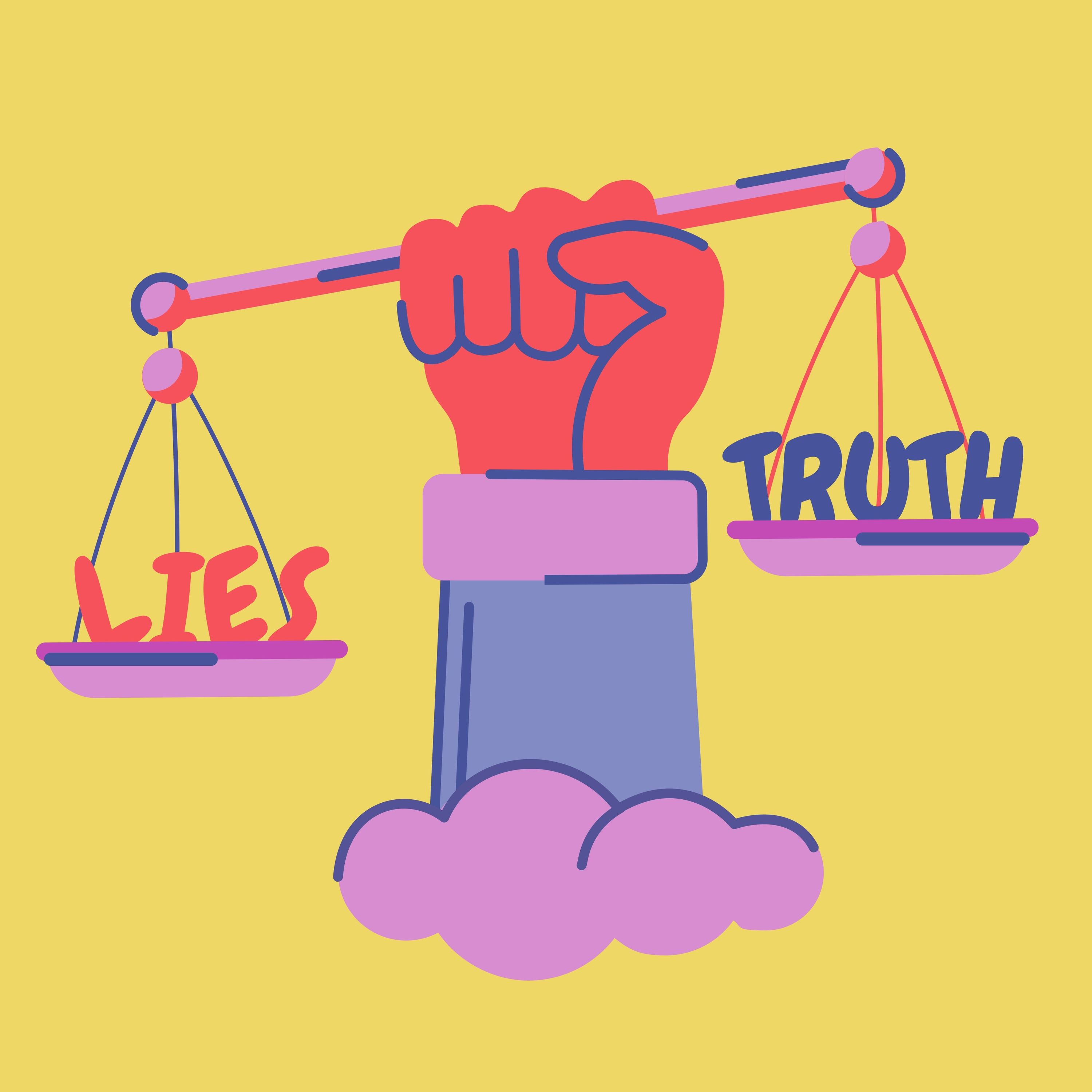
Hidden Brain
When It's Okay to Lie
00:51:48
Should you tell a harsh truth if it will only cause pain? Or is it sometimes kinder to keep someone in the dark? Psychologist Emma Levine explores the unwritten rules that guide when people feel it’s acceptable to lie — and what those choices reveal about trust, harm, and our deepest moral values.
Loading summary
Transcript109 lines
- [00:00]
A
This is Hidden Brain. I'm Shankar Vedanta. It's a story that is familiar to every American. A young George Washington chops down his father's prized cherry tree. When his father confronts him about the deed, young George doesn't hide. He doesn't deflect. He doesn't minimize. I cannot tell a lie, he says. I did cut it. Instead of scolding him, George's father and embraces him. He declares that his son's honesty is worth more than a thousand trees. This tale, first popularized in the early 19th century, is one of America's most cherished moral parables. Washington's birthday and the truthful he of the cherry tree would look down on me and frown. It celebrates honesty and the courage that often accompanies it. Yet the story's enduring power rests on a deep irony. The parable is almost certainly a fabrication, a lie invented to teach the importance of telling the truth. The myth makers behind the story believed that fiction could serve a higher truth, that people might be inspired to be truthful by the story of a hero who who could not tell a lie. The story of George Washington and the cherry tree reminds us that the motivations behind honesty and deception are rarely straightforward. Lies can sometimes uphold moral ideals, and truths can sometimes be wielded to wound. Today on the show and in a companion episode on Hidden Brain plus, can engaging in deception ever be the right thing to do? The Psychology of Good Lies this week on Hidden Brain. Support for Hidden Brain comes from Claude. We make thousands of decisions shaped by forces we cannot see. Biases, intuitions, patterns we don't know we're following. Claude is the AI thinking partner, built for people who want to understand what drives those choices and anthropic committed to not running ads in Claude. So when you're thinking through something complex, nothing's pulling you somewhere else. Try Claude for free at claude.AI hiddenbrain. Support for Hidden Brain comes from Whole Foods Market. Whole Foods Market has great sales on flavors inspired by read across the world, including favorite brands like Siete de Checo, Rao's and San Pellegrino. The prepared foods department at Whole Foods Market makes dinner time easy with empanadas, burritos, soups and more. Expand your dessert horizons with tres leches cake and guava pastries from the bakery department. Save on regional flavors at Whole Foods Market. Support for Hidden Brain comes from Progressive, where drivers who save by switching save nearly $750 on average. PL Auto customers qualify for an average of 7 discounts. Quote now@progressive.com to see if you could save. Progressive Casualty Insurance Company and affiliates. National average 12 month savings of $744 by new customers surveyed who saved with Progressive between June 2022 and May 2023. Potential savings will vary. Discounts not available in all states and situations. We grew up learning that honesty is a virtue, that good people tell the truth, and that liars are bad people. But life has a way of complicating simple lessons. A husband hides his elderly wife's dementia diagnosis in order to spare her needless worry. A friend says, you look great knowing it isn't true. A parent tells her child that everything will be okay when it might not be. These moments leave us wondering, when is telling the truth cruel? And when do lies become an act of love? At the University of Chicago, Emma Levine studies the psychology of truth telling and deception. Emma Levine, welcome to Hidden Brain.
- [04:38]
B
Thank you so much for having me. It's great to be here.
- [04:43]
A
Emma, a few years ago, you were planning your wedding and you faced a dilemma regarding the guest list. I understand it involved your grandfather and his friends.
- [04:52]
B
Yes, my wonderful grandfather, who loves me very, very much, wanted to celebrate my big day with all of his friends. The only problem was we had run out of invitations and space at our venue.
- [05:12]
A
I'm imagining this must have caused some stress for the bride to be.
- [05:17]
B
Yeah, I was pretty stressed. Not only because I was planning the wedding and had to deal with, right. This tension between, you know, hurting his feelings and telling him his friends couldn't come, or telling the truth. But I was also studying for my qualifying exams, my first year of graduate school.
- [05:34]
A
Wow. How did you address this dilemma, Emma? What did you do?
- [05:39]
B
Well, my mother was actually an integral part of all this. She was helping me plan my hometown wedding in Milwaukee, Wisconsin, where she. She lived and still lives. And she basically took over. She said, you know what? I'm gonna take care of this. I won't let my dad, who was my grandfather, bring his friends to the wedding. I don't want you to sweat it. I don't want you to worry about at all.
- [06:04]
A
Great.
- [06:06]
B
Yeah, it was great. I was very relieved. I was very grateful. The wedding was amazing. Best day of my life. Nothing was problematic at all. But a few days after the wedding, I started receiving a few gifts from people I never heard of. And I did some digging, right? So I get these strange gifts, looking up the names online and the return addresses, and I realized, oh, hmm, they're coming from this place near where my grandfather lives. And I asked my mom, who is this what's happening? And it turns out these people were invited to my wedding.
- [06:45]
A
Wow.
- [06:45]
B
My mother photocopied my wedding invitations to send to them.
- [06:51]
A
Wow.
- [06:52]
B
Yeah. And I think what's funny is it all kind of worked out quite perfectly.
- [07:05]
A
So your mom actually lied to you. She told you that your grandfather's friends were not going to be invited when she herself actually invited them?
- [07:12]
B
Exactly. Yes.
- [07:17]
A
What if these friends had shown up at the wedding, Emma? You would have been horrified.
- [07:21]
B
Yeah, I would have been horrified. It would have been awful. But they didn't. And she said at the time, once I discovered her lie, that she knew. She knew in her heart that they were not going to come. They were elderly and from out of state. There was no way they were going to travel to this wedding. And so she took a bet and she took care of it and she lied to me along the way.
- [07:50]
A
How did you feel about the lie?
- [07:52]
B
I was impressed. I was impressed by it. I mean, it's not only a good story, but. And I could imagine it would have turned out very differently, right, as you said, if they had showed up. But they didn't. And because they didn't, it just seemed like, wow, that was bold, but also the right decision. I wasn't troubled. I studied for my qualifying exams. I didn't give it a second thought, ended up doing great. My wedding was perfect, and no one was worse for the wear.
- [08:30]
A
I want to play you a clip from a TV show that presents a similar situation. It features the characters Jerry and Elaine from the sitcom Seinfeld. And this is just after they have visited friends who've had a baby. Was it me, or was that the ugliest baby you have?
- [08:50]
B
Oh, I couldn't look. It was like a Pekingese
- [08:56]
A
boy. A little too much chlorine in that gene pool. And, you know, the thing is, they'll never know. No one's ever gonna tell em.
- [09:03]
B
Oh, you have to lie.
- [09:04]
A
Oh, it's a must lie situation.
- [09:06]
B
Yes, it's a must lie situation.
- [09:08]
A
A must lie situation. Jerry's saying there is no option but to lie now. I suppose there is an option, but, Emma, can you imagine visiting friends and telling them that their baby looks ghastly?
- [09:20]
B
No, I don't think you can do that. I think Jerry's right. As one of my favorite psychologists, I'd agree that this is a must lie situation.
- [09:34]
A
You argue that besides good lies, there could also be bad truths. What are bad truths, Emma?
- [09:43]
B
Bad truths are truths that cause unnecessary harm so they might cause emotional pain and suffering and not lead to learning and growth and understanding. And so this seems like a bad truth, right? Knowing your baby is offensively ugly, he's hurtful, and there's really not much you can do about it. You're not going to get a facelift on an infant. Right. So this is unnecessary harm. What do I need to know? What you think about my baby? That I think is beautiful, that I'm not gonna change.
- [10:23]
A
So we've been talking about social situations where we need to shade the truth. But this might also be true of large scale political and international situations. In October 1962, the United States discovered that the Soviet Union was building nuclear military installations in Cuba just 90 miles from Florida. Once completed, Soviet warheads could hit the continental United States within minutes. The John F. Kennedy administration faced a choice. They could tell the American public what was going on, or they could lie. What did they do, Emma?
- [10:56]
B
They certainly didn't tell the public everything. For about a week after this discovery, the White House kept the information secret. And Kennedy meanwhile, assembled a group of top advisors to deliberate about this and what to do in private. And so then they secretly also back channeled with the Soviet Union through trusted intermediaries, and then eventually announced to the nation that there would be this US response of a quarantine.
- [11:23]
A
I'm imagining that if they had come clean on day one, before they even knew what was going on, before they had a plan, it could have triggered mass panic.
- [11:32]
B
Right. And that was part of the trade off. Right. Do we inform the public fully and risk a panic and a premature military response, an escalation? Or do we engage in some form of deception for at least some time?
- [11:47]
A
Now, is this also a case in which deception had both costs and benefits? So the lies that were told by the Kennedy administration might have helped avert panic. It might have even helped avert a potential war between nuclear powers. But it might have also contributed to the long term and very consequential undermining of the American public's trust and what their leaders were telling them.
- [12:10]
B
Absolutely. And I think this is the tension that comes with lying. We could argue that this was the right lie to tell, that it successfully promoted the U.S. interests and avoided a lot of harm. But it's never without some long term cost. And in this case, the cost is trust. Trust in what your leaders are telling you.
- [12:37]
A
We've been told that we should always tell the truth. And we tell others, like our employees and our students and our kids, that they ought to do the same. But do we really live by this rule? Should we when we come back, the unwritten rules that govern when it's okay to lie. You're listening to Hidden Brain. I'm Shankar Vedanta. Support for Hidden Brain comes from Claude. We make thousands of decisions shaped by forces we cannot see. Biases, intuitions, patterns we don't know we're following. Claude is the AI thinking partner, built for people who want to understand what drives those choices. And anthropic. Committed to not running ads in Claude. So when you're thinking through something complex, nothing's pulling you somewhere else. Try Claud for free at Claude AI hiddenbrain. Support for Hidden Brain comes from Liquid iv. Long days require superior hydration from start to finish. On those start early and end late days. Liquid Ivy helps keep you hydrated. Powered by LIV hydroscience. An optimized ratio of electrolytes, essential vitamins and clinically tested nutrients that turn ordinary water into extraordinary hydration. Eight essential vitamins and always non gmo, vegan, gluten free, dairy free and soy free. Rehydrate with Liquid Ivy's hydration multiplier. Sugar free tear pour live more. Go to liquidiv.com and get 20% off your first order with code Brain at checkout. That's 20% off your first order with Code Brain@liquidiv.com. This is Hidden Brain. I'm Shankar Vedanta. Psychological research finds that people lie in about 20% of their social interactions. We may say that honesty is the best policy, but it's not a policy that many of us follow to the letter. Instead, we obey an unspoken code, a set of rules about when lying is acceptable. Psychologist Emma Levine has studied those unwritten rules. She says there is a hidden logic behind our deceptions. Emma, the idea that we should always tell the truth is a bedrock principle of many faiths and cultures. What are some of the traditions in which this command is emphasized?
- [15:21]
B
Well, I think it's emphasized everywhere. Children growing up with religion often learn about the ten Commandments that emphasize rules about avoiding deception. Parents tell this to their children. Corporate codes of conduct frequently emphasize integrity and honesty. So we see this everywhere, particularly in the US where we think a lot about the freedom of speech, which in part, right. Promotes honesty, that we should always be engaging in truthful discourse and speech.
- [15:53]
A
Hmm, you say that this presents us with something of a puzzle, which is even as we lie, even as Jerry Seinfeld says, there are must lie situations, we instruct our kids, our colleagues and our students to always tell the truth. That's a paradox.
- [16:09]
B
It is a paradox and it's very confusing. And this is kind of the nuance that we have to figure out every day of our lives from a very young age. Right. You tell your children, never lie, and then they hear you telling their sibling to tell their grandmother they love this gift that they hate, and we're just puzzling and fumbling our way through. When in reality, they're very clear situations underlying the exceptions, we just don't say them out loud. That's.
- [16:45]
A
So your research has identified these situations in which people generally agree that it's morally acceptable to lie. You've identified a number of these situations in which dishonesty is seen as acceptable and perhaps even preferable to honesty. One of these is when the target of the lie is incapacitated in some way. So in one study, you presented volunteers with a scenario in which an employee has just turned in a report to a manager, even as the employee struggles with a difficult personal situation.
- [17:16]
B
We've run a lot of these studies in which we're trying to manipulate and think about what changes our fundamental judgment of lying. And so in this particular situation, we're trying to play with the fragility of the target. So, as you stated, right. The employee has turned in a report. The manager doesn't think it has been done. Well, if you just ask, right. Should the manager tell the employee the truth? Most people say yes. 97% of participants say yes, the right thing to do is to tell the truth. Only 3% say you should lie. But if you ask a separate sample of participants what they should do in a very similar situation in which the employee's father was just hospitalized, now suddenly, a lot more people think you should lie. So almost 20% of participants think you should lie, and only 80% say you should tell. And we find these same results when you actually ask people what they would want to be told as the employee. People want to be lied to in this moment of fragility. And so that's doing a lot of work here.
- [18:25]
A
The state of being vulnerable includes people who might be distracted from an important goal if they were told the truth. One student described a scenario that played out in her own life involving a friend who was about to take a difficult exam. What happened, and how did this young woman handle the situation?
- [18:43]
B
Yeah, people think about fragility and distraction as kind of these temporary states that merit deception. So in this one particular instance, a participant writes about this time that she withheld the truth from her friend, the truth being that a boy wasn't interested in her and she didn't tell her friend, because the friend was studying for an exam, she didn't want to throw her off her study patterns and risk undermining her exam performance. So she withheld the truth and told her later. That's not all that different from what my mother did when I was studying for my qualifying exams. She waited.
- [19:21]
A
Another situation in which people seem to think it's okay to lie is if the target of the lie is unable to understand the truth. So, in other words, should you tell someone who is in very frail health about a death in the family? You presented volunteers with the story of a man named Jeff. What was the story, Emma?
- [19:38]
B
Participants imagine being the caregiver for an elderly man named Jeff, and they learn that Jeff's estranged daughter has passed away. So that's the setup that everybody learns. And then we randomly assign participants to a condition which Jeff is either not cognitively compromised or is cognitively compromised. So in the control condition, you know that Jeff is in good physical and mental health despite being quite elderly. And in that situation, almost everyone believes that you should tell the truth. Only about 7% of participants, 7.7%, believe it is ethically to lie to Jeff about the death of his daughter. But in another condition, we tell participants that although Jeff is in good physical health, he suffers from severe dementia. Right. Implying that he cannot necessarily make sense of reality and he's easily confused. And now almost a third of participants believe the right thing to do is to lie. So this isn't because Jeff is in compromised physical health. It's his mental health. It's his cognitive state. Right. The degree to which we think he can understand and cope with this difficult truth.
- [20:54]
A
I actually have a friend who's going through a very similar situation. Her dad is suffering from dementia, and her mother, her dad's wife passed away some time ago, and she's hesitated to tell her dad, who is in a nursing facility, about the death of his wife. And I think part of her concern is also, if I told my dad what was happening, he would be very upset. But it's possible that he might actually forget about what happened by the next time I come back. And then if I tell him again, he's gonna suffer the grief over and over and over again.
- [21:29]
B
Right. And that's a terribly difficult situation. It's not that this is easy to handle and it's obvious, but there is a logic to it. Right? A lot of people and health care ethicists have written about this. A lot of people would say, why should we cause this emotional pain to someone who can't truly cope and grieve with it. There's no necessary value in the information.
- [22:04]
A
So the social work researchers Diane beach and Betty Kramer call this therapeutic fibbing. What is therapeutic fibbing?
- [22:12]
B
Emma Therapeutic fibbing is, I think, a different name for pro social lying, Right. In this type of situation in the healthcare setting, right. It's providing false statements and creating false beliefs with the purpose of therapy, emotional therapy, reducing distress, agitation or suffering. And it's commonly used in dementia care.
- [22:44]
A
Another occasion in which community standards call on us to lie is when the target of the deception is near the end of his or her own life. You've presented volunteers with different versions of a vignette involving a cheating spouse. What are these vignettes?
- [23:02]
B
So imagine that your spouse or partner is very, very ill and in the hospital and you've cheated on them in the past. So this is the situation we present to participants. Should you tell them that you cheated on them? This is kind of the basic question, but we randomized some details of this vignette. In one situation, you know that your partner is very likely to recover. So in this case, about 30% of participants think it's the right thing to do to lie. So actually a substantial amount, even if your partner is likely to recover, think it's acceptable to lie to them about cheating. But this number goes up. It almost doubles when you know your partner is about to pass away. If your partner's about to pass away. In our particular vignette, we say they're likely to die within the next 24 hours. Now, about 64% of participants believe the right thing to do is to lie. And again, what's the value of this information? Maybe it unburdens you as the communicator. You want to get it off your chest at the last moment that you have with this person. But for them, this is just something that causes emotional harm and there's no relationship in which they can learn from this anymore.
- [24:24]
A
In some ways, these scenarios remind me of the 2019 movie the Farewell. It was inspired by the real life experience of filmmaker Lulu Wang. After her grandmother was diagnosed with stage four lung cancer and given three months to live, the family wanted to say goodbye without letting her know that she was dying. They felt that that would needlessly distress her. The filmmaker first told the story on the public radio show this American Life. I want to play you a clip from that story in which Lulu is talking with her father about what the family decided to do.
- [24:55]
B
My dad had an idea, so I
- [24:58]
A
said, all right,
- [25:01]
B
your uncle Maybe we can just, you know, stage your son's wedding early, one year early. Are you proud that you came up with this idea? Well, you know, I'm the old, I'm the. Everybody considered me is the smartest, you
- [25:19]
A
know, in the family.
- [25:21]
B
So I mean, there's true. I mean, this was our plan. A giant goodbye party disguised as a giant wedding banquet.
- [25:31]
A
This is the lie that everybody agreed to lie. What do you hear in that story, Emma?
- [25:37]
B
I think it really highlights the complexity of truth telling at the end of life, but it also highlights the enormous cross cultural variation we have in beliefs about truth telling. So this, you know, the story, the farewell, takes place in China and particularly within the medical domain. There's a lot more emphasis in China than in the US on hope and protection. And so it will feel maybe like an obligation among family members to protect their elders from negativity and despair, which comes from a cancer diagnosis. And that's, you know, something you hear that Wang's father is proud of, proud of honoring that value. And in the US we don't really hear that. Right. In the US there's much greater moral emphasis on autonomy, the duty to inform others above the duty to provide hope. And so I think you just see this come out in different ways where we have different moral attitudes towards honesty, particularly at this end of life situation.
- [26:43]
A
I can imagine in an individualistic country like the United States, people might say if someone has three months left to live, you absolutely should tell them because that allows them to get their affairs in order, it allows them to say goodbye, it allows them to leave on their own terms. And there's just as much an argument to be made for that as to say they're going to die anyway in three months time. Why burden them with this knowledge in addition to whatever else they're going through?
- [27:08]
B
Right. I think either argument and either set of values is totally reasonable. I think part of what's interesting is that they're culturally defined. And so it's recognizing the value of prioritizing the moral imperative that matches the context in the person.
- [27:35]
A
I can imagine then that in cross cultural contexts where people from different cultures are coming into contact with each other, this can create problems. Because of course, someone from, let's say, China might say it is a humane and kind and generous thing to do to lie. And somebody from the United States might say, no, it's the most cruel thing you can do to lie. That must happen all the time.
- [27:58]
B
Yeah, I think it's incredibly complicated. I actually recently ran a set of studies looking at physicians predictions of patient preferences in the U.S. and in China and in the U.S. also looking at their prediction of white patients preferences versus Chinese American patient preferences. And there it's quite interesting in that in China the patients do prefer more false hope than in the US and Chinese doctors get that somewhat accurate. But in the US the US doctors think that Chinese American patients also prefer false hopes similar to the native Chinese patients, and they don't. They look a lot more like white American preferences, closer to preferring honesty. And so there's just a lot of room for complicated misunderstandings when we try to accommodate these differences.
- [29:01]
A
So far we've been talking about situations in which the person to whom we might lie is vulnerable or incapacitated. When we come back, we look at another category of lies that most people feel are acceptable, lies that are shaped by the nature of the information itself. You're listening to Hidden Brain. Hello everyone, I'm Shankar Vedanta. Support for Hidden Brain comes from Instagram. We know parents want to feel confident as their teens are navigating social media. With Instagram teen accounts, teens get automatic protections by default. Teens between the ages of 13 and 17 are automatically put into a protective experience. That means they get built in content settings for what they see, contact limits on who can contact them, and time management tools like daily time limit reminders, as well as Sleep mode, which mutes notifications from 10pm to 7am plus. Teens under 16 need a parent's permission to change any of these settings to be less strict. Instagram continues to work on building new safety features to help create age appropriate experiences for teens. Learn more about teen accounts and Instagram's ongoing work to help protect teens online@instagram.com teenaccounts. Support for Hidden brain comes from Hotels.com, make your next trip work for you. Hotels.com's new save your Way feature lets you choose between Instant Savings now or Banking Rewards for later. It's a flexible rewards program that puts you in control with no confusing math or blackout dates. Book now at hotels.com Save youe Way is available to loyalty members in the US and UK on hotels with member prices. Other terms apply. See site for details. This is Hidden Brain. I'm Shankar Vedanta. Have you had situations in your life where you feel you had to lie or situations where you had to shade the truth? If you'd be willing to share your story with the Hidden Brain audience, please record a voice memo on your phone and email it to us@feedbackiddenbrain.org use the subject line lies. That email address again is feedbackiddenbrain.org psychologist Emma Levine studies truth telling and deception. Her research suggests that the clear and simple line we often seek to draw always tell the truth, is more complicated in practice. There are harmful truths and there are selfless lies. Emma, you find that many people think it's okay to lie about things that involve subjective judgment. You once came up with a vignette involving a silk scarf worn by a co worker. Describe that story. Describe that scenario for me.
- [32:13]
B
Sure. So imagine you have a co worker who is wearing a scarf that they love but you think is quite hideous. Should you tell them your opinion about the scarf? Right. This is the basic scenario. And if you just set it up like that, then about 40% of participants think you should lie and pretend you like the scarf. So already a substantial amount. But now imagine, you know for sure that you're the only one who thinks this and everyone else really likes the scarf. Then should you tell them? Now most people, 71% of people say no. Now you should definitely lie. And so, right. This is hitting this idea of subjectivity. If everyone thinks your scarf is ugly, or it might be the case that everyone thinks your scarf is ugly, then perhaps someone should tell you because you could change and not offend everyone in your office. But if you know, right, this is just your idiosyncratic preference, it's a totally subjective judgment, then why do you think, Right, it should be shared? That's what's going on here.
- [33:29]
A
A similar situation, when people agree it's okay to lie, is when the information involved is trivial. You ran an experiment where you described a dinner party where people didn't like the food.
- [33:42]
B
Yeah. So in that scenario, and I ran a lot of scenarios in which people have negative opinions of someone else. In this particular scenario, you are asked to imagine that you go to a dinner party and the soup is salty. So the soup is salty. And what we vary across conditions with our participants is whether the host of this dinner party is a professional chef or, right, just a novice cooking for fun. So if the host is a professional chef, the information about the quality of their soup is not trivial. It's kind of important because this is what they do for a living. So in that situation, only about 20% of participants, actually only 18 to be exact, think that the right thing to do is to lie. But if you know that the person is a novice chef just having fun in their kitchen, now a lot more people think you should lie, 37.8%. And this is because the information about the quality of their soup becomes trivial. It's not important or material for any reason.
- [34:56]
A
So it's interesting. It's the same information in both cases. But in one situation, the information carries weight. It matters to a professional chef to know that something is wrong with his or her cooking, but the same information to a novice chef, you're just hurting the person's feelings.
- [35:11]
B
Exactly. And of course, it carries some information either way. And that's why there's not a huge agreement that you should lie, even for the novice chef. But we're varying the degree to which that information is meaningful and valuable.
- [35:31]
A
So sometimes we encounter situations in which another person cannot do anything to control or change what has happened. You came up with one scenario involving the case of an intern who stuttered. What was this example and how did the experiment unfold? Emma?
- [35:49]
B
In this experiment, participants are imagining that summer intern gives an end of summer presentation, something I had to do in my life as an intern way back when. So they're giving a presentation and they stutter during it, making the presentation a bit hard to listen to. You learn that either this stutter was driven by nerves, that this intern was nervous, but they can likely overcome this stutter with more practice, or. Or you learn that this person has a stutter that they cannot control. In this study, that influences the endorsement of deception. So 18.8% of participants say you should lie when the person can improve their ability to speak without a stutter, when it was just nerves. But now the majority start thinking it's ethical to lie, 64.54% when the person cannot control their stutter. So the degree to which the information is something you can learn from and that can lead to change seems to be what's driving that difference.
- [36:58]
A
What's so interesting is, as you're painting these scenarios, I can see my own feelings and opinions change. I mean, if you tell me that the intern cannot control their stutter, of course it changes whether you tell them the truth or not, right?
- [37:11]
B
And I think that's what's so interesting. And one thing I love about this body of research, it's that none of these are actually all that surprising. You tell them to people and everyone's like, yeah, duh. But then why don't we say this out loud? Why don't we teach our children? Why don't we talk about these rules? They're actually quite obvious upon reflection.
- [37:41]
A
Another situation involves a manager who has to give some bad news to his employees and has to decide whether to share this bad news. With one employee who is about to have a very special weekend. Paint a picture of this scenario for me.
- [37:57]
B
Sure. So this is a scenario about layoffs. The manager knows layoffs are coming. We have to tell the employees. And one of the employees drops by on a Friday afternoon, says, hey, what's going on? About to head out for the weekend. And this is the opportunity for the manager to tell the employee about the layoffs. So in the control condition, that's about all the information that we give participants. And in that case, most people think you should tell the truth. And only about 20 to 23% of participants think the right thing to do is to lie. Now, in another condition, participants learn that the employee swings by on a Friday before leaving for their wedding, which is on Saturday.
- [38:37]
A
Oh, wow.
- [38:38]
B
Right. That changes how we think about this. Now, 52% of participants think that you should lie. So a significant amount more, because why would you spoil this person's wedding? You could just tell them right the next week. And this is actually, you know, something that comes up in different religions and different texts that you really shouldn't spoil sacred events in. In Judaism, a book called the Talmud, they debate kind of some of these situations. They say you should always tell a bride she's beautiful on her wedding day, because why would you spoil that special time, no matter what you really think?
- [39:20]
A
So when we look at all these varied reasons that people say that lying is okay, there is at least one powerful through line. Is the lie the product of selfish intentions or benevolent intentions? Explain this difference, Emma.
- [39:36]
B
So all of these situations, what they're doing is they're mapping this logic of unnecessary harm. You tell the lie. And we think that lying is the right thing to do because it's sparing the listener from unnecessary harm. It's protecting their feelings when there's nothing they could learn or do with this information. And that's what we think is benevolent. That really promotes, or people believe that it promotes the target's best interest to protect them from that unnecessary harm.
- [40:08]
A
So in other words, instead of saying don't tell lies, is what we really mean to say don't tell selfish lies?
- [40:16]
B
We certainly mean don't tell selfish lies. I think it's still quite complicated. In some ways, we really do mean don't tell lies because we're afraid of the risk of allowing people to tell some lies. So these situations are really robust. We reflect on them. We think in this given situation, when a person can't change or the information is trivial, we should lie. At the same time, we think if we tell people they can lie sometimes, they're also going to get it wrong sometimes and they're going to end up telling selfish lies or telling well meaning lies that actually do harm. And we're very, very worried about that error. And so we'd rather live in a world where people tell truths in the wrong circumstances instead of lies in the wrong circumstances. So it's complicated.
- [41:13]
A
So you found that when people tell these selfless falsehoods, these pro social lies, that actually these pro social lies increase trust in the liar.
- [41:26]
B
They can, they can increase trust. So in these types of situations, when both parties recognize that telling the lie prevents unnecessary harm, the listener will increase in their belief that the communicator has their best interest in mind. And so that's a certain form of trust. I'm now willing to be emotionally vulnerable to you, to seek you out for support. I trust you as someone who is benevolent towards me. And that's really important in some relationships, like going back to the opening example, the relationship I have with my mother. But the double edged sword is it still does reduce integrity based trust in that despite believing this is someone who I can count on to protect me and care for me and be compassionate, I also recognize that I can't always count on the veracity of their words. And so it increases one type of trust, benevolence based trust, while still undermining integrity based trust.
- [42:41]
A
You know, in some ways, I think many of us simultaneously want two things that are at odds with one another. We admire people who spare others from needless pain, but we also admire people who say what they think, no matter what. You know, I had a friend in college who always said whatever he thought and he was like a bull in a china shop and, and he caused a lot of hurt. But over time, people also came to trust when he told them anything positive because they knew that he was telling the truth.
- [43:07]
B
Right. And I think this again speaks to the tension and what errors we're comfortable with. So people who are brutal truth tellers have a hard time making friends, but they right, come to be trusted for their words. And often we'd rather be that person than the person whose words erode in value over time. But these are two very different types of trust. Nonetheless.
- [43:42]
A
Can you also talk about the idea that benevolent lies sound benevolent, but I'm wondering if there is a thin line sometimes between benevolent lies and selfish lies. Can't we tell lies for selfish reasons and convince ourselves that we have in fact done so for benevolent reasons?
- [43:59]
B
Absolutely. And this again is Another danger in accepting that some lies are good is that we can convince ourselves that we're in these situations of unnecessary harm when we're really not. So going back to the idea of fragility, in some cases both parties, communicators and listeners will recognize that the listener is temporarily fragile. They're going through something, therefore temporary deception is appropriate, acceptable. And then telling them the truth at a later time is what a communicator should do. But once we know that, it's easy to see others as fragile. Right. I could believe that women in the workplace are fragile. I shouldn't tell them negative feedback. And that might be really to avoid conflict. So that's selfish. It might be based on some stereotype, so it's inaccurate despite not necessarily being selfish. And, and it just opens us up to all of these mistakes, selfish and otherwise.
- [45:02]
A
I mean, I'm thinking about the cheating spouse who is not telling her partner that she had the affair. And she says, okay, the partner is 24 hours away from dying. And so I don't want to burden him with this information. But what if your partner is now a week away from dying? What if your partner is a month away from dying? What if your partner is a year away from dying? At what point is the line between fragility and non fragility?
- [45:26]
B
Right. It's almost impossible to know without asking someone their preferences directly and having their insight into what they want. Otherwise we're just making this subjective judgment about where the line is. The line exists, but whether we can predict it a priori is unclear.
- [45:48]
A
What do you make of the people who are basically sticking to the honesty is the best policy? So in the many examples that you've given me, it's true and surprising that significant numbers of people endorse deception at some level. And depending on how you tweak the scenarios, more people endorse deception. But it's also the case clearly in your studies that even in situations where someone is very vulnerable or about to have a wedding or dealing with an important test, there are some people who say always tell the truth. Your mandate is in fact to follow thou shalt not lie.
- [46:24]
B
Yeah, I think there are individual differences on this. I mean, so far we've tapped into the cross cultural difference, us versus China. But there's also individual differences. Some people want to know the truth at all times and tell the truth at all times. And some people are more comfortable with these trade offs or actually believe that comfort and social harmony sometimes reign supreme.
- [46:55]
A
What you just said makes me think is the distinction between these two groups of people, how much they actually are embedded in their communities and how much they're actually connected to other people. Because I think a very individualistic point of view would say I always want to be told the truth and I always want to want to be telling other people the truth. But the more community minded you are, the more you're embedded in social systems, the more you value those social systems, the more you try and take into account social harmony and how other people are feeling and not just am I telling the truth or am I being lied to?
- [47:31]
B
I think that's partly right. It's an intuition I certainly had before heading into some cross cultural research on this topic, which actually proved a bit more complicated than the story you've laid. So it's easy to make a prediction that in China, where there's more collectivism versus the US that they'll value social harmony and be more accepting of deception than in the US and now we see that in the medical context, but that seems to be a function of the belief and importance of hope and things we think about at the end of life and the role of luck. Right. So knowing that you have cancer, saying out loud, kind of creates bad luck, but this actually doesn't carry over into a lot of other situations. So we ran studies looking at beliefs about and preferences for just critical feedback in the US and China. And actually we see a greater preference for critical feedback in China than in the US and that's for a different reason also related to communities, which is people feel more responsible for each other and their development and their adherence to norms. Right. So if I think we're all part of a community that values working hard, I'm going to tell you when I think you're not working hard. That's part of being a good community member is valuing your growth. Whereas in the US it's like you do you, you know, you don't want to work hard, but I do. I'm not responsible for your individual choices. And so you see that playing out quite differently.
- [49:15]
A
You had an experience of being lied to during the COVID pandemic. Describe for me what happened, Emma.
- [49:22]
B
So I was pregnant during the beginning of the pandemic. So I was very, very focused on knowing all of the risks and what was going on and protecting me and, you know, my now born child. So one thing that happened was my parents were supposed to come to town to help me prepare and set up as I was awaiting the birth of my daughter. And they were under strict instruction that they were not to socialize. They should not socialize with anyone. They should not see anyone. There was no way I was going to let even single germ into my household. Right in the days before my daughter was born. And we had a Zoom call shortly before they were supposed to come. And they're talking to my aunt kind of casually, but I'm there and they're mentioning that they had their friends over for pizza. And I had been assured that there was no socializing. And it turns out, well, there had been socializing. There was a bit of a deception. And, you know, I talked to my mother about this and, and she said, I didn't. I didn't want to burden you. I didn't want to worry you. We were outside. We didn't even come in contact with each other. We were on the deck. We stayed socially distanced. I'm confident there's absolutely no risk to you. So I just didn't think it was necessary to know.
- [50:54]
A
So this is not actually unlike what she did during your wedding. Was your reaction the same?
- [50:59]
B
No, it was different. And this again points to some of the risks of trying to get this trade off right. So here I was very upset. I actually didn't let them come. I made them wait a whole week and get tested. I was, yes, very, very concerned about all of this, but I was. I was upset. And it's not because her motivations were different. I think the motivations were the same. They were benevolent. She didn't want to stress me out in a situation that she didn't think provided necessary information, right along the logic that I've outlined before. But in this situation, I did feel the information was necessary. We had different beliefs, and so the lie felt very paternalistic and unfair, not pro social as it had before.
- [51:58]
A
I'm wondering if you've had a conversation with your mom, Emma, laying out when and how she's allowed to tell you benevolent lies and when she's not.
- [52:08]
B
I probably should. I haven't done it. Which is now that you ask, a bit strange because I do give the advice to other people and in my papers that one way to avoid this risk. Risk is to have conversations about this, right? To have explicit kind of social contracts. What type of feedback do you like? In what situations Doctors can do this with patients. How much do you want to know everything and every risk, or do you want to just focus on each next step in the plan moving forward? So there are ways to have these conversations so that you can be sure you're airing on the side of benevolence when it's really benevolent, when it aligns with the listener's interests. We haven't had that conversation, and perhaps we should.
- [53:03]
A
In our companion story to this episode, exclusively on Hidden Brain plus, we explore ways to bridge the gap between the many lies we condone in practice and the lying we claim to abhor. Instead of exalting the truth while telling lies, what would happen if we told the truth about our lying ways? If you're a subscriber to Hidden Brain plus, that episode is available in your podcast feed right now. It's titled Telling the Truth About Lies. If you're not yet a subscriber, please visit support.hiddenbrain.org or apple.co Again, that's support.hiddenbrain.org if you're using an Apple device, go to Apple Co HiddenBrain. Emma Levine is a psychologist at the University of Chicago's Booth School of Business. Emma, thank you so much for joining me today on Hidden Brain.
- [54:00]
B
Thanks for having me. It's been a blast.
- [54:09]
A
Have you had situations in your life where you feel you had to tell a benevolent lie but later came to regret it? If you have a personal story you'd be willing to share with the Hidden Brain audience, or a question or comment about this episode, please find a very quiet room and record a voice memo on your phone. Two or three minutes is plenty. Email the file to us@feedbackiddenbrain.org Use the subject line lies. Again, that email address is feedbackiddenbrain.org Hidden Brain is produced by Hidden Brain Media. Our audio production team includes Annie Murphy, Paul, Kristen Wong, Laura Kwerel, Ryan Katz, Autumn Barnes, Andrew Chadwick and Nick Woodbury. Tara Boyle is our Executive producer. I'm Hidden Brain's Executive Editor. Thank you to Loom by Atlassian for sponsoring the Hidden Brain Perceptions Tour. While on tour, audience members shared the best piece of advice they've ever received. Here's a piece of advice that a listener named Suzanne shared at our tour stop in Baltimore.
- [55:19]
B
I'm Suzanne from D.C. and my best advice came from my Pyongyang born mother who loved to speak in Confucian proverbs. She often said to us, never spit in the well because you never know when you have to drink the water. And she told this so many times as children and I was like, what is she talking about? But I really understood it as an adult and I realized it really meant how important to maintain relationships with people. So thank you.
- [55:50]
A
Thank you. Wonderful. Thank you. Thanks to Suzanne for sharing this bit of advice. And thanks again to Loom for sponsoring the Perceptions Tour. Loom is AI first powered video communication that moves teams forward. Whether you're sharing feedback, obtaining approvals, or setting context, reduce unnecessary meetings and make the ones that matter more effective. Unstuck your teams today. That's L-O-O-M dot com. It's a team changer. I'm Shankar Vedantam. See you soon. Hey everybody, Ted Danson here to tell you about my podcast with my longtime friend and sometimes co host Woody Harrelson. It's called where everybody knows your name and we're back for another season. I'm so excited to be joined this season by friends like John Mulaney, David Spade, Sarah Silverman, Ed Helms, and many more. You don't want to miss it. Listen to Everybody knows your name with me, Ted Danson and Woody Harrelson. Sometimes, wherever you get your podcasts. Why have I asked my electrician I found on Angie.com to bury my pet
- [57:06]
B
hamster Nibbles in our yard for me?
- [57:08]
A
Because I was so moved by how carefully he buried my electrical wires, I knew I could trust him to bury my sweet Nibbles after his untimely end.
- [57:16]
B
Huh, Nibbles gone too soon.
- [57:18]
A
May he scurry in peace. Hey, sorry about your pet, but I just wire stuff. Nibbles would have loved you like a brother. Connecting homeowners with skilled Pros for over 30 years, Angie, the one you trust to find the ones you trust. Find pros for all your home projects@angie.