
Podcast
High Performance Health
Hosted by Angela Foster · EN
The High-Performance Health Podcast is all about optimising your body, mind and lifestyle for high performance.
Packed full of actionable insights, strategies, bio hacks, lifestyle hacks, mindset strategies and expert performance advice, Angela Foster is on a mission to optimise your human potential. Featuring interviews with some of the top experts on the planet in the fields of health, performance and business, this show aims to inspire, educate and empower you to live an energetic, healthful and limitless life.
61episodes
Episodes
Newest firstAll episodes
The New Science of Healthy Aging: 5 Biomarkers That Predict How Well You'll Age | Florence Comite
Yesterday00:45:31Tap to summarizeLongevity expert Dr Florence Comite joins me to explain why testosterone, not estrogen, drives body composition and ageing in midlife women. Decline isn't inevitable - it's programmable. She unpacks why testosterone (which women carry in larger amounts than estrogen) drives muscle, visceral fat and brain fog from your 30s on, why only a third of us should fast, and the five biomarkers - fasting glucose, HbA1c, fasting insulin, cholesterol risk ratio and free testosterone - that predict where your healthspan is headed and how to change it. WHAT YOU'LL LEARN Why women carry more circulating testosterone than estrogen, and what its decline does to muscle, visceral fat and cognition from your 30s What "I don't feel like myself anymore" is actually signalling beneath the surface How cortisol quietly drives the anxiety-out-of-nowhere, the 2am wake-ups and the stubborn weight around your middle Why only a third of women should fast, and the 3-hour glucose test that tells you which third you're in What the five non-negotiable biomarkers reveal about where your healthspan is headed TIMESTAMPS 00:00 Intro: Why You Don't Feel Like Yourself After 35 - Peak Health, Testosterone Decline & the 30s Shift 05:52 - Perimenopause, Cortisol & Anxiety Out of Nowhere: Belly Fat, Sleep and the Caregiver Load 13:28 - Wearables, CGM & the Fasting Third/Third/Third: Measuring How Your Body Really Ages 20:11 - Who Should Actually Fast: The 3-Hour Glucose Test, Protein at Every Meal & the Oatmeal Trap 27:00 - Testosterone for Body Composition & Energy: UK Access, the 2024 Study & Protein for Muscle 33:46 - The 5 Biomarkers That Predict How You Age - Plus the 7 Patterns of Health Decline 39:37 - Decade by Decade for Women vs Men: Bone Loss, Osteoporosis, Andropause & Owning Your Healthspan VALUABLE RESOURCES - Invincible (Dr Comite's new book): https://www.penguin.co.uk/books/475986/invincible-by-comite-florence/9781529977066 - Dr Florence Comite's website: https://www.comitemd.com/ - Follow Dr Comite on Instagram: https://www.instagram.com/drflorencecomite/ AlgaeCal Plus*‡: Science-backed supplements designed to support healthy aging👉 http://algaecal.info/angela-foster *These statements have not been evaluated by the Food and Drug Administration. This product is not intended to diagnose, treat, cure, or prevent any disease. ‡Results consistent with clinical trials. Individual results vs clinical results may vary. ABOUT THE GUEST Dr Florence Comite is a clinician-scientist, endocrinologist and global authority on healthy longevity, and founder of the Comite Center for Precision Medicine & Healthy Longevity in New York, Palo Alto and Miami Beach. Known for her Nof1™ precision approach, built on hormones, metabolism and wearable data, she helps patients detect, predict and reverse biological ageing. She's a New York Times bestselling author, most recently of Invincible: Defy Your Genetic Destiny to Live Better, Longer. Want to go deeper? Start here: Take the BioSyncing Quiz to help you understand what’s actually happening in your body — and how to fix it. 👉 https://biosyncing.scoreapp.com 🌸Reset your hormones, restore your energy, and reconnect with your body in just 21 days. 👉 https://www.highperformance-health.com 💌 Fresh Start Sundays Newsletter Your weekly 3-minute guide to creating the healthiest, most vibrant version of you. Each Monday, get one simple habit to boost energy, balance hormones, and enhance longevity - joined by 25,000+ women worldwide. 👉 https://angelafosterperformance.com/ 🥗 The Ultimate Guide to Creatine for Women 👉 https://academy.angelafosterperformance.com/creatine-guide ⚡ 10 Habits That Helped Me Reverse My Biological Age by 25 Years During Perimenopause 👉 https://academy.angelafosterperformance.com/10-habits-optin-page 👩💼 About Angela Foster Angela Foster is a corporate lawyer turned health and performance coach, keynote speaker, and creator of the BioSyncing® Method. She is the host of the High Performance Health Podcast, featuring over 500 conversations with world-leading experts in longevity, hormones, neuroscience, nutrition, and female performance. Angela's mission is to help one million ambitious women optimise their hormones, energy, cognitive performance, and longevity, so they never have to choose between success and their health. If you enjoyed this episode, please subscribe, leave a review, and share it with someone who would benefit from it. Follow me for daily health and performance tips: Instagram: https://www.instagram.com/angelasfoster/ Facebook: https://www.facebook.com/AngelaFosterPerformance #AngelaFoster #HighPerformanceHealth #Longevity #HealthyAgeing
Transcribe →Five Diet Changes to Lower High Cholesterol in Perimenopause
4d ago00:07:28Tap to summarizeLowering ApoB and non-HDL cholesterol starts with improving how your body clears cholesterol. Michelle recommends reducing saturated fat, replacing it with healthy unsaturated fats, gradually increasing soluble fibre, staying well hydrated, and supporting gut health. As oestrogen declines in perimenopause, maintaining nitric oxide production and healthy blood vessels also becomes increasingly important. KEY TAKEAWAYS Reduce saturated fat intake. Replace with omega-3-rich and other unsaturated fats. Increase fibre gradually to avoid bloating. Prioritise soluble fibre (oats, raspberries, chia seeds). Stay hydrated to support cholesterol excretion. Support nitric oxide production with foods like beets and leafy greens. Maintain gut health to support both heart health and fibre tolerance. Want to go deeper? Start here: Fresh Start Sundays Newsletter Your weekly 3-minute guide to creating the healthiest, most vibrant version of you. Each Monday, get one simple habit to boost energy, balance hormones, and enhance longevity - joined by 25,000+ women worldwide. https://angelafosterperformance.com/ The 21-Day Hormone Reset Doing everything right but still don't feel like yourself? The 21-Day Hormone Reset helps you understand your hormones, restore your energy, and start working with your body instead of against it. https://www.highperformance-health.com/ The Ultimate Guide to Creatine for Women https://academy.angelafosterperformance.com/ 10 Habits That Helped Me Reverse My Biological Age by 25 Years During Perimenopause https://academy.angelafosterperformance.com/ About Angela Foster Angela Foster is a corporate lawyer turned health and performance coach, keynote speaker, and creator of the BioSyncing® Method. She is the host of the High Performance Health Podcast, featuring over 500 conversations with world-leading experts in longevity, hormones, neuroscience, nutrition, and female performance. Angela's mission is to help one million ambitious women optimise their hormones, energy, cognitive performance, and longevity—so they never have to choose between success and their health. If you enjoyed this episode, please subscribe, leave a review, and share it with someone who would benefit from it. Follow Angela for daily health and performance tips: Instagram: @angelasfoster Facebook: @AngelaFosterPerformance
Transcribe →
The New Science of Healthy Aging: The Longevity Tests You Actually Need
1w ago00:47:25Tap to summarizeOlympic medalist turned health-tech founder Andrew Steele says the problem isn't you: it's that "normal" and "optimal" are two different things. In this episode, he breaks down how DNA, microbiome, and blood testing expose what's really behind your fatigue, brain fog, and bloating. And why one test, one time, will never tell you the full story. WHAT YOU'LL LEARN - Why small, consistent daily habits move the needle on longevity more than big lifestyle overhauls - How the ACTN3 gene explains why "average" training and health advice doesn't work for everyone - What DNA methylation is, and why taking more B vitamins can backfire if you have an MTHFR variant - Why "normal" bloodwork isn't the same as optimal health - How the PhenoAge biological age test measures how fast you're really aging - Why bloating and brain fog in midlife women are often linked to the estrobolome and gut bacteria - Why microbiome and blood testing needs to be repeated over time, not done once - The best way to prepare for accurate blood and microbiome test results - The three biomarkers Andrew recommends testing first: methylation, gut-brain axis, and ApoB - Why wearables alone can't give you the full picture of your health - How Stride is integrating oral microbiome testing and wearable data - Why data and dashboards alone don't change behavior without human coaching - What's inside Stride's ST01 liposomal multivitamin and why it's formulated around methylation TIMESTAMPS 00:00 Small Daily Habits, Genetics And The ACTN3 Gene Story 09:35 DNA Methylation, MTHFR And Why More B Vitamins Isn't Always The Fix 13:15 Why "Normal" Bloodwork Isn't Optimal, And The Biological Age Test 20:45 The Gut-Hormone Link In Midlife Women, And Why You Need To Retest 31:00 How To Get Accurate Results, And The 3 Biomarkers Worth Testing 36:45 The Future Of Health Tracking: Wearables, Oral Microbiome And Multiomics 40:30 Stride Membership Availability And Discount Code 43:45 Why Data Alone Won't Change Your Health Without Human Coaching 46:30 Inside Stride's ST01 Supplement, And Final Thoughts On Aging Well VALUABLE RESOURCES A BIG thank you to our sponsor who make the show possible: • Stride - Find out your biological age and how your daily habits are influencing it with DNA, bloodwork and microbiome testing with a Stride One membership https://www.getstride.com/angela/ for 10% off - Follow Andrew on Instagram: https://www.instagram.com/andrewsteele/ ABOUT THE GUEST Andrew Steele is a former Olympic medalist sprinter turned genomics entrepreneur. He co-founded DNAFit in 2013 and has spent over a decade building consumer genomics, microbiome, and blood-testing products. He is now the founder of Stride, a multi-omic health platform combining DNA, microbiome, and blood testing with in-house practitioner consultations to help people move from "normal" to optimal health. Want to go deeper? Start here: 💌 Fresh Start Sundays NewsletterYour weekly 3-minute guide to creating the healthiest, most vibrant version of you. Each Monday, get one simple habit to boost energy, balance hormones, and enhance longevity - joined by 25,000+ women worldwide. 👉 https://angelafosterperformance.com/ 🌸 The 21-Day Hormone ResetDoing everything right but still don't feel like yourself? The 21-Day Hormone Reset helps you understand your hormones, restore your energy, and start working with your body instead of against it. 👉 https://www.highperformance-health.com/ 🥗 The Ultimate Guide to Creatine for Women👉 https://academy.angelafosterperformance.com/ ⚡ 10 Habits That Helped Me Reverse My Biological Age by 25 Years During Perimenopause👉 https://academy.angelafosterperformance.com/ 👩💼 About Angela Foster Angela Foster is a corporate lawyer turned health and performance coach, keynote speaker, and creator of the BioSyncing® Method. She is the host of the High Performance Health Podcast, featuring over 500 conversations with world-leading experts in longevity, hormones, neuroscience, nutrition, and female performance. Angela's mission is to help one million ambitious women optimise their hormones, energy, cognitive performance, and longevity—so they never have to choose between success and their health. If you enjoyed this episode, please subscribe, leave a review, and share it with someone who would benefit from it. Follow Angela for daily health and performance tips: Instagram: @angelasfoster Facebook: @AngelaFosterPerformance #AngelaFoster #HighPerformanceHealth #Women'sHealth #Menopause #Perimenopause #StrengthTraining #Longevity #MuscleBuilding #HealthyAgeing
Transcribe →Stronger Glutes, Sharper Brain - How to Increase BDNF in Your 40s
2w ago00:15:46Tap to summarizeFeeling like your brain just isn't running at 100% anymore? You're not imagining it and it's not a discipline problem. In this video, I break down the real science behind why focus, memory, and mental sharpness decline in your 40s and beyond and the exact protocol I use to get it back. You'll learn about a critical brain molecule that starts declining with age, why women are especially affected by it, and the 4 most common mistakes that are quietly keeping your brain performance low (yes, even if you're already "doing everything right"). Then I walk you through my complete 7-step protocol - covering exercise intensity, targeted supplementation, specific foods, cognitive pacing, meditation, heat therapy, and sleep, all backed by research, all things you can start doing today. In this video: Why brain fog and slower thinking happen after 40 The molecule behind focus, memory, and mood, and why it drops with age 4 mistakes that are silently lowering your brain performance My full 7-step protocol to rebuild focus, memory, and mental energy The exact exercise, nutrition, and recovery habits that move the needle fastest Want to go deeper? Start here: 💌 Fresh Start Sunday Newsletter Your weekly 3-minute guide to creating the healthiest, most vibrant version of you. Each Sunday, get one simple habit to boost energy, balance hormones, and enhance longevity - joined by 25,000+ women worldwide. 👉 https://angelafosterperformance.com/ 🥗The Ultimate Guide to Creatine for Women - 👉 https://academy.angelafosterperforman... ⚡️ 10 Habits that Helped me reverse my Biological Age by 25 years in Perimenopause - 👉 https://academy.angelafosterperforman... ▶️ Watch Next: Continue learning with these empowering conversations: Dr. Gabrielle Lyon on Women's Metabolism, Muscle and Midlife Health • How to Build Muscle and Boost Metabolism i... Dr. Darren Candow on Creatine, Muscles and Bone Health • Why Creatine Could Change Everything for W... 👩💼 About Me: Angela Foster is a corporate lawyer turned health and performance coach, keynote speaker, and creator of the BioSyncing:registered: Method. Host of the High Performance Health Podcast with 500+ episodes featuring world-leading experts in longevity, hormones, neuroscience, and female performance science. The most accomplished women have everything handled on the outside, but their hormones, energy, and nervous system are quietly paying the price. The old playbook stops working in midlife. This channel is designed to help high-performing women optimise energy, hormones, cognitive performance, and longevity using science-backed strategies built around female biology. Angela’s personal mission is to help 1 million ambitious women perform better, age slower, and never have to choose between success and their health. If you want to be part of that mission, make sure you subscribe and share the channel with a woman you care about. Follow me for daily health and performance tips: Instagram: @angelasfoster Facebook: @AngelaFosterPerformance
Transcribe →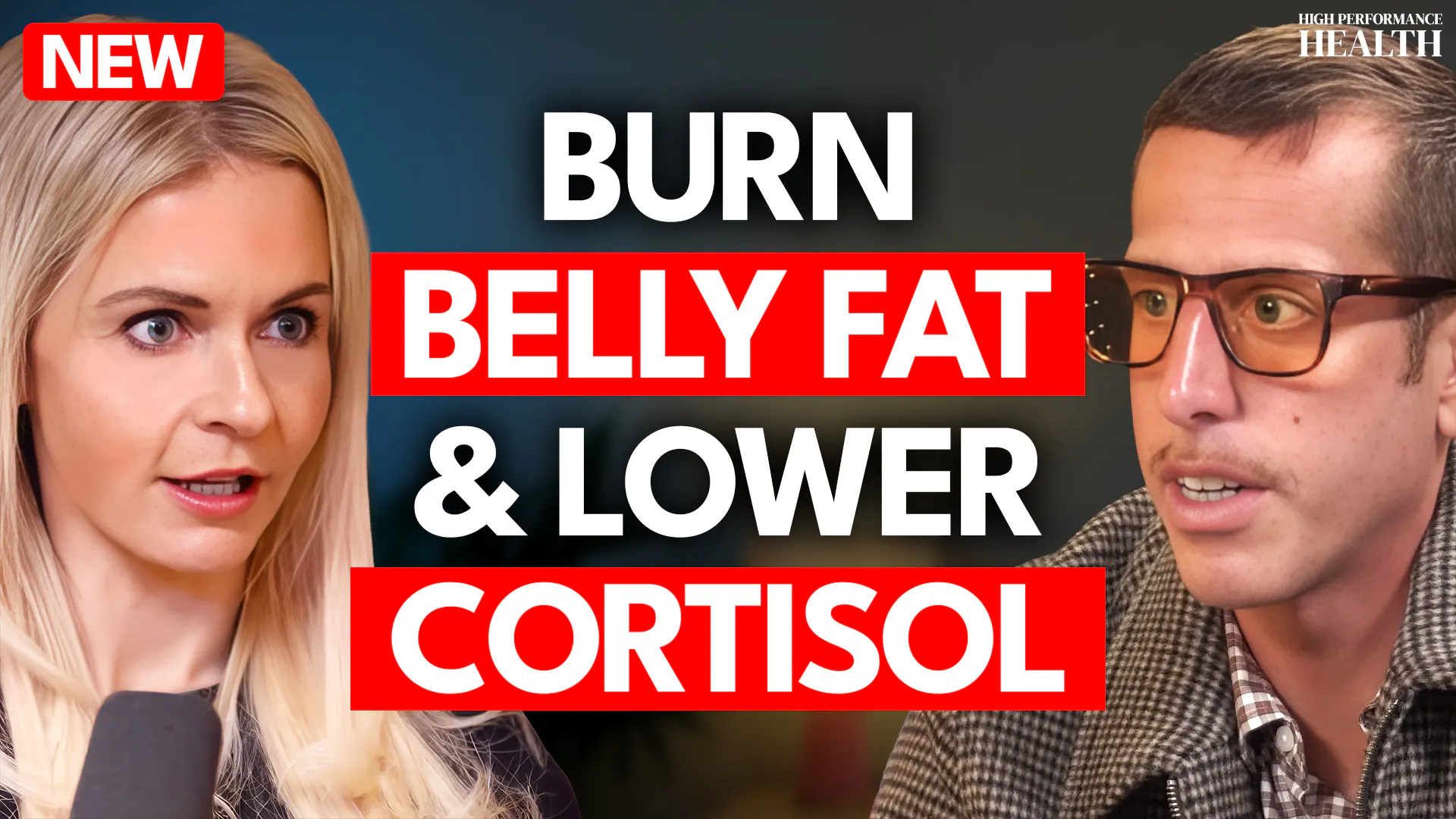
Stubborn Belly Fat & the Sleep Window That Burns it Faster Than Any Workout
2w ago00:31:07Tap to summarizeMetabolic flexibility expert Ben Azadi joins me to explain why cortisol, not diet alone, drives stubborn belly fat in midlife women. WHAT YOU'LL LEARN Why cortisol, not just diet, is the real driver of stubborn belly and visceral fat in women over 35 What role carbohydrates actually play in lowering cortisol load and supporting recovery Why the three hours before bed matter more for fat loss than your workout window How to time fasted workouts around your menstrual cycle for the best hormonal response Why sleep, steps and sunlight need to come before any diet or fasting protocol How increasing protein and building muscle mass changes your insulin sensitivity What's really causing your bloating, and why it may have nothing to do with your gut TIMESTAMPS 00:00 Metabolic Flexibility, Cortisol Belly Fat And The Overnight Fat-Burning Sleep Window 10:08 Fasted Training By Menstrual Cycle, Sleep Foundations And Building Muscle For Insulin Sensitivity 20:55 Why Stress Causes Bloating Plus Ben's Top Biohacks: Sauna, Red Light Therapy And Lymphatic Flow 27:00 Ben Azadi's Ketoflex Revised Book And Where To Connect With Him VALUABLE RESOURCES Ketoflex Revised (Ben's new book) https://ketoflexbook.com/ Ben Azadi's website https://benazadi.com/ Follow Ben on Instagram https://www.instagram.com/thebenazadi/ Timeline - Support your mitochondrial health: Timeline Mitopure delivers Urolithin A at the clinically studied dose to support cellular renewal and energy production, helping counter the natural decline in mitochondrial function that comes with age. 👉 Get 20% off Mitopure when you visit http://timeline.com/ANGELA and use code ANGELA. ABOUT THE GUEST Ben Azadi, FDN-P, is the founder of Keto Kamp and host of the award-winning Metabolic Freedom Podcast. After releasing 80 pounds and reversing his own metabolic dysfunction in 2008, he became known as "The Health Detective" for his root-cause approach to metabolic health. He's a NYT best-selling author on ketosis, fasting and metabolic flexibility, including his latest book, Ketoflex Revised. Want to go deeper? Start here: 💌 Fresh Start Sundays NewsletterYour weekly 3-minute guide to creating the healthiest, most vibrant version of you.Each Monday, get one simple habit to boost energy, balance hormones, and enhance longevity - joined by 25,000+ women worldwide.👉 https://angelafosterperformance.com/ 🌸 The 21-Day Hormone ResetDoing everything right but still don't feel like yourself? The 21-Day Hormone Reset helps you understand your hormones, restore your energy, and start working with your body instead of against it.👉 https://www.highperformance-health.com/ 🥗 The Ultimate Guide to Creatine for Women👉 https://academy.angelafosterperformance.com/ ⚡ 10 Habits That Helped Me Reverse My Biological Age by 25 Years During Perimenopause👉 https://academy.angelafosterperformance.com/ 👩💼 About Angela Foster Angela Foster is a corporate lawyer turned health and performance coach, keynote speaker, and creator of the BioSyncing® Method. She is the host of the High Performance Health Podcast, featuring over 500 conversations with world-leading experts in longevity, hormones, neuroscience, nutrition, and female performance. Angela's mission is to help one million ambitious women optimise their hormones, energy, cognitive performance, and longevity—so they never have to choose between success and their health. If you enjoyed this episode, please subscribe, leave a review, and share it with someone who would benefit from it. Follow Angela for daily health and performance tips: Instagram: @angelasfoster Facebook: @AngelaFosterPerformance #AngelaFoster #HighPerformanceHealth #Women'sHealth #Menopause #Perimenopause #StrengthTraining #Longevity #MuscleBuilding #HealthyAgeing #EricHelms
Transcribe →I Spent 5 Days at the World’s #1 Longevity Clinic—The Surprise It Revealed about My Health
3w ago00:11:05Tap to summarizeAt a leading longevity clinic, my nervous system testing showed 80% sympathetic dominance, yet my body composition, grip strength (30kg) and hormone panel, cortisol, testosterone, DHEA, IGF-1, told a different story: strong muscle mass, low visceral fat and balanced anabolic markers. I break down what sympathetic dominance really means, why muscle protects you through perimenopause, and how treatments like Watsu bodywork and breathwork helped my nervous system finally downshift. (485 chars)What you’ll learn:- What my 80% sympathetic dominance score actually means and why "coping well" can still mask a nervous system stuck in fight-or-flight- How my body composition and hormone panel told a completely different story than my nervous system data, and what that reveals about resilience- Why muscle mass becomes even more critical for metabolism, bone density, and cortisol regulation as estrogen declines in perimenopause- What my full hormone panel, including testosterone, DHEA, IGF-1, and morning cortisol, showed about whether my body was building or breaking down- How quickly my nervous system markers shifted once I gave it the right recovery inputs, and what changed in just 48 hours- Why grip strength is one of the strongest predictors of healthy aging, and how you can test it at home- What made Watsu bodywork the most unexpectedly profound treatment of my week, and what it revealed about the tension I'd been carrying without realizing itWant to go deeper? Start here: The 21-Day Hormone Reset Doing everything right, but still don't feel like you anymore? The 21-Day Hormone Reset fixes that — giving you the science, the strategy, and 21 days to teach you how start syncing with your body again https://www.highperformance-health.com/ Fresh Start Sunday NewsletterYour weekly 3-minute guide to creating the healthiest, most vibrant version of you.Each Sunday, get one simple habit to boost energy, balance hormones, and enhance longevity - joined by 25,000+ women worldwide. https://angelafosterperformance.com/The Ultimate Guide to Creatine for Women - https://academy.angelafosterperformance.com/creatine-guide️ 10 Habits that Helped me reverse my Biological Age by 25 years in Perimenopause - https://academy.angelafosterperformance.com/10-habits-optin-page
Transcribe →
Healthy on Paper: The Hidden Drivers of Cancer Risk in Midlife
3w ago01:04:09Tap to summarizeIntegrative oncologist Dr. Nina Fuller-Shavel joins me to explain why cancer rates are climbing in midlife women, even those who look healthy on paper. WHAT YOU'LL LEARN - Why cancer rates are rising even in midlife women who look and feel healthy - The gut-estrogen connection: how your microbiome affects hormone-driven cancer risk - The 3 simple interventions that cut cancer risk by 60% in a landmark trial - How strength training lowers inflammation and disease risk - Why lifetime estrogen exposure matters more than the estrogen drop in perimenopause - Why standard HRT dosing gets it wrong, and what blood levels to actually ask for - Why TSH alone can't tell the full thyroid story, and what a full panel should include - How chronic stress and trauma quietly drive long-term disease risk TIMESTAMPS 00:00 Why Cancer Rates Are Rising in Midlife Women 09:44 The Vitamin D, Omega-3 and Strength Training Protocol That Cut Cancer Risk by 60% 18:17 Perimenopause, Estrogen Exposure and Why HRT Dosing Alone Isn't the Answer to Cancer Risk 28:10 Hashimoto's, Thyroid Antibodies and Why TSH Alone Is Misleading You in Perimenopause 36:02 Inflammation, Cortisol and Chronic Stress: The Hidden Drivers of Disease Risk in Midlife 43:57 Trauma, Boundaries and Why Saying No Is a Non-Negotiable in Midlife Health 51:35 Full Body MRIs, Genetic Testing and Polygenic Risk Scores: What's Actually Worth Doing 59:03 Wearables, CGMs and the One Longevity Message Every High-Achieving Woman Needs to Hear . VALUABLE RESOURCES ● Synthesis Clinic (Dr. Nina's integrative oncology practice) 👉 https://www.synthesisclinic.co.uk/ ● Dr. Nina's personal site 👉 https://www.drninafullershavel.com/ ● Follow Dr. Nina on Instagram 👉 https://www.instagram.com/drninafullershavel/ ABOUT THE GUEST Dr. Nina Fuller-Shavel is a physician specializing in precision health and integrative oncology, and the founder of Synthesis Clinic, an award-winning integrative cancer care practice in the UK. She's also CEO of the National Centre for Integrative Oncology. Diagnosed with breast cancer at 33, she brings a deeply personal, root cause approach to hormone health, cancer risk, and women's longevity. Want to go deeper? Start here: 💌 Fresh Start Mondays NewsletterYour weekly 3-minute guide to creating the healthiest, most vibrant version of you. Each Monday, get one simple habit to boost energy, balance hormones, and enhance longevity—joined by 25,000+ women worldwide. 👉 https://angelafosterperformance.com/ 🌸 The 21-Day Hormone ResetDoing everything right but still don't feel like yourself? The 21-Day Hormone Reset helps you understand your hormones, restore your energy, and start working with your body instead of against it. 👉 https://www.highperformance-health.com/ 🥗 The Ultimate Guide to Creatine for Women👉 https://academy.angelafosterperformance.com/ ⚡ 10 Habits That Helped Me Reverse My Biological Age by 25 Years During Perimenopause👉 https://academy.angelafosterperformance.com/ 👩💼 About Angela Foster Angela Foster is a corporate lawyer turned health and performance coach, keynote speaker, and creator of the BioSyncing® Method. She is the host of the High Performance Health Podcast, featuring over 500 conversations with world-leading experts in longevity, hormones, neuroscience, nutrition, and female performance. Angela's mission is to help one million ambitious women optimise their hormones, energy, cognitive performance, and longevity—so they never have to choose between success and their health. If you enjoyed this episode, please subscribe, leave a review, and share it with someone who would benefit from it. Follow Angela for daily health and performance tips: Instagram: @angelasfoster Facebook: @AngelaFosterPerformance #AngelaFoster #HighPerformanceHealth #Women'sHealth #Menopause #Perimenopause #StrengthTraining #Longevity #MuscleBuilding #HealthyAgeing #EricHelms
Transcribe →The Real Causes of Perimenopause Brain Fog (A Neurologist Explains)
4w ago00:12:48Tap to summarizeIf you've been told that perimenopause and menopause inevitably lead to permanent cognitive decline and "brain fog," the neuroscience says otherwise. In this episode, neurologist and Neuroscience Academy founder Dr. Sarah McKay explains what actually drives cognitive changes during midlife and why temperature regulation, sleep disruption, and constant smartphone distractions matter far more than the catastrophized media narratives. Why "brain fog" isn't a true clinical term and how different life stages use it to describe general cognitive fatigue What a recent survey revealed about the surprising age group that actually worries the most about cognitive decline Why the hypothalamus and fluctuating estrogen levels trigger hot flashes and disrupt your critical sleep architecture How the sympathetic nervous system's response to body heat causes you to wake up feeling anxious, wired, and hypervigilant at 3 AM What really happens to your brain's ability to metabolize glucose for energy during perimenopause and why thinking can suddenly feel incredibly effortful Whether structural network changes in the midlife brain are a sign of decline or just a natural reorganization similar to puberty How constant smartphone usage and divided attention are destroying your ability to focus and remember basic tasks Why catastrophizing menopause and societal ageism are causing women to wrongly attribute simple, everyday forgetfulness to severe cognitive decline 03:48 Why sleep disruption and altered sleep architecture occur during perimenopause 06:45 How dropping estrogen levels affect the brain's energy and glucose metabolism 07:58 Why the brain structurally reorganizes its networks during midlife 10:33 The role of ageism and catastrophizing in the modern menopause narrative Want to go deeper? Start here: 💌 Fresh Start Mondays NewsletterYour weekly 3-minute guide to creating the healthiest, most vibrant version of you.Each Monday, get one simple habit to boost energy, balance hormones, and enhance longevity—joined by 25,000+ women worldwide.👉 https://angelafosterperformance.com/ 🌸 The 21-Day Hormone ResetDoing everything right but still don't feel like yourself? The 21-Day Hormone Reset helps you understand your hormones, restore your energy, and start working with your body instead of against it.👉 https://www.highperformance-health.com/ 🥗 The Ultimate Guide to Creatine for Women👉 https://academy.angelafosterperformance.com/ ⚡ 10 Habits That Helped Me Reverse My Biological Age by 25 Years During Perimenopause👉 https://academy.angelafosterperformance.com/ 👩💼 About Angela Foster Angela Foster is a corporate lawyer turned health and performance coach, keynote speaker, and creator of the BioSyncing® Method. She is the host of the High Performance Health Podcast, featuring over 500 conversations with world-leading experts in longevity, hormones, neuroscience, nutrition, and female performance. Angela's mission is to help one million ambitious women optimise their hormones, energy, cognitive performance, and longevity—so they never have to choose between success and their health. If you enjoyed this episode, please subscribe, leave a review, and share it with someone who would benefit from it. Follow Angela for daily health and performance tips: Instagram: @angelasfoster Facebook: @AngelaFosterPerformance WHAT YOU'LL LEARNTIMESTAMPS
Transcribe →
Dr. Eric Helms: Why You Don't Need to Lift Heavy to Build Muscle and Strong Bones After 40
4w ago01:02:40Tap to summarizeIf you've been told that menopause means muscle loss, weight gain, and declining strength are inevitable, the science says otherwise. In this episode, world-renowned strength scientist Dr. Eric Helms explains what actually drives body composition changes during perimenopause and menopause and why progressive strength training, good sleep, and consistent nutrition matter far more than chasing the latest social media trends. WHAT YOU'LL LEARN Why sleep disruption during perimenopause may be the biggest hidden driver of fat gain, poor recovery, and stalled progress Why progressive overload not lifting the heaviest weights possible is the key to building muscle and protecting bone health Whether women really need to train with heavy 5x5 programs or if moderate weights and higher reps work just as well How many sets, reps, and weekly training sessions are actually needed to build muscle after 40 Why muscle building should take priority over endless fat-loss cycles if you want to improve your shape and body composition The biggest myths about training timing, fasted workouts, cortisol, and "optimal" exercise routines How much cardio you really need for longevity, metabolic health, and body composition Whether women can build significant muscle in their 40s, 50s, and beyond even if they've never lifted weights before What the evidence actually says about menopause hormone therapy (HRT), testosterone therapy, muscle growth, and body composition How much protein you really need for muscle growth, fat loss, and healthy ageing and why total daily intake matters more than perfect meal timing Whether collagen supplements truly improve connective tissue and skin health according to the latest research TIMESTAMPS 00:00 Why body composition changes during perimenopause00:31 What's really happening physiologically during menopause01:10 Why sleep becomes the biggest factor affecting results03:25 How poor sleep impacts muscle gain and fat loss06:20 Bloating, water retention, and hormonal changes explained08:55 The biggest mistakes women make during menopause11:20 Why resistance training is the most important intervention16:50 Do women really need to lift heavy?22:30 How to build muscle and improve body shape after 4026:30 The ideal rep ranges, training intensity, and volume30:57 How much training is actually enough?37:56 Cardio for longevity, health, and body composition42:53 Can women still achieve incredible results in their 40s and 50s?49:00 The truth about hormone replacement therapy and testosterone54:35 Protein recommendations explained01:06:00 Does collagen actually work?01:09:18 Final takeaways A BIG thank you to our sponsors who make the show possible: 👉Timeline. Support your mitochondrial health with Urolithin A at the clinically studied dose to support cellular renewal and energy production, helping counter the natural decline in mitochondrial function that comes with age. 👉 Get 20% off Mitopure when you visit http://timeline.com/ANGELA and use code ANGELALA. VALUABLE RESOURCES • Follow Dr. Eric Helms on Instagram:👉 https://www.instagram.com/helms3dmj/ • MASS Research Review👉 https://massresearchreview.com/ • Muscle & Strength Pyramid Books👉 https://muscleandstrengthpyramids.com/ ABOUT THE GUEST Dr. Eric Helms is a coach, athlete, researcher, author, and educator specialising in strength training, muscle hypertrophy, body composition, and sports nutrition. He holds a PhD in strength and conditioning, is Chief Science Officer at 3DMJ, co-founder of MASS Research Review, and co-author of the internationally acclaimed Muscle & Strength Pyramid books. Widely regarded as one of the world's leading evidence-based voices in physique and performance science, Eric has spent more than two decades coaching athletes and translating research into practical strategies that help people build muscle, improve performance, and optimise long-term health. Want to go deeper? Start here: 💌 Fresh Start Mondays NewsletterYour weekly 3-minute guide to creating the healthiest, most vibrant version of you.Each Monday, get one simple habit to boost energy, balance hormones, and enhance longevity—joined by 25,000+ women worldwide.👉 https://angelafosterperformance.com/ 🌸 The 21-Day Hormone ResetDoing everything right but still don't feel like yourself? The 21-Day Hormone Reset helps you understand your hormones, restore your energy, and start working with your body instead of against it.👉 https://www.highperformance-health.com/ 🥗 The Ultimate Guide to Creatine for Women👉 https://academy.angelafosterperformance.com/ ⚡ 10 Habits That Helped Me Reverse My Biological Age by 25 Years During Perimenopause👉 https://academy.angelafosterperformance.com/ 👩💼 About Angela Foster Angela Foster is a corporate lawyer turned health and performance coach, keynote speaker, and creator of the BioSyncing® Method. She is the host of the High Performance Health Podcast, featuring over 500 conversations with world-leading experts in longevity, hormones, neuroscience, nutrition, and female performance. Angela's mission is to help one million ambitious women optimise their hormones, energy, cognitive performance, and longevity—so they never have to choose between success and their health. If you enjoyed this episode, please subscribe, leave a review, and share it with someone who would benefit from it. Follow Angela for daily health and performance tips: Instagram: @angelasfoster Facebook: @AngelaFosterPerformance
Transcribe →
Why Lifting Weights Alone Isn't Making You Lose Fat in Perimenopause (And What Actually Works)
Jul 200:11:05Tap to summarizeIn this Bitesize episode, we revisit a key conversation on why resistance training and fat loss need to be treated as two separate goals — and why blending them usually backfires. This short-form cut pulls together the core science on training for muscle/strength versus training for calorie burn, why "lifting to near failure" matters more than the weight on the bar, and a practical progression toward an unassisted pull-up. It also revisits the protein research: why menopausal women are commonly deficient, and how simply increasing protein intake can drive meaningful fat loss and lean mass gains — no calorie-cutting required. WHAT YOU'LL LEARN Why lifting heavy, moderate, or light doesn't matter for muscle growth — but matters enormously for building strength How to structure your resistance training if your goal is to build or maintain muscle versus increase strength Why treating your lifting sessions as a "calorie-burning workout" can undermine both your strength and muscle-building results A practical progression (band-assisted reps, then eccentric lowering) for working toward an unassisted pull-up Why menopausal-aged women are commonly deficient in protein, and what happens when protein intake alone is increased The optimal protein target (1.6g/kg or ~0.75g/lb of body weight per day) for maximizing lean mass and fat loss Where protein intake starts to hit diminishing returns KEY TAKEAWAYS Separate Your Training Goals: Muscle growth responds to sets taken near failure regardless of load; strength gains require heavier weights. Combining strength/muscle work with calorie-burning goals in the same session tends to produce lower-quality training on both fronts. Progression Over Perfection for Pull-Ups: Band-assisted reps followed by slow eccentric (lowering) practice is an effective, movement-specific path to an unassisted pull-up — though the strength requires ongoing maintenance to keep. Protein Is an Underused Lever: Many menopausal-aged women fall well below optimal protein intake (studies cite averages around 70g/day). Increasing protein alone — without cutting calories — has been shown to reduce body fat and increase lean mass. Diminishing Returns Above ~0.75g/lb: Protein benefits continue to accrue above the optimal threshold but with steadily smaller returns, so hitting "close enough" still delivers most of the benefit. BEST MOMENTS "Lifting heavy or light really doesn't matter if you're trying to build muscle... it does matter if you're trying to increase strength." "As soon as we start looking at our lifting programs as a way to burn more calories... that's when we start to say, 'I'm going to lift for two hours.' And those sets usually tend not to be very high quality." "The act of increasing protein resulted in a significant gain of lean mass and a significant loss of body fat." This episode is brought to you by Calocurb a natural appetite control supplement that helps you feel fuller, longer, without the jitters or crash of stimulant-based options. Head to calocurb.com/angela and use code ANGELA for 10% off your order. Follow Calocurb: Website: Calocurb.com Instagram: @calocurb YouTube: Calocurb LinkedIn: Calocurb
Transcribe →