Podcast
High Theory
Hosted by High Theory · EN
High Theory is a produced and edited by Kim Adams and Saronik Bosu, two tired academics trying to save critique from itself, along with two amazing collaborators, Júlia Irion Martins and Nathan Kim. In this podcast, we get high on the substance of theory, and we try to explain difficult ideas from the academy with irreverence. You can learn more about us on our website, or find us on Facebook, Instagram, and Twitter.
19episodes
Episodes
Newest firstAll episodes
Alcohol
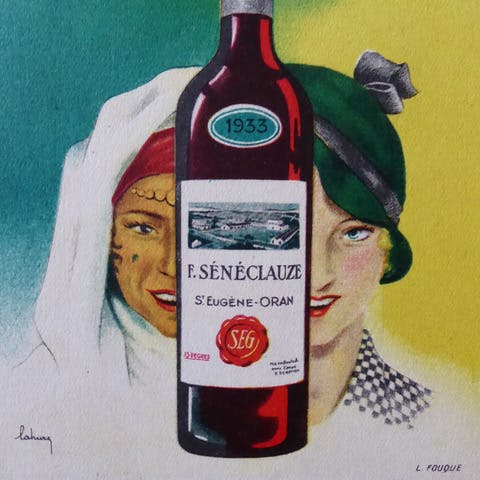
Mar 3, 202500:20:00Tap to summarizeIn this episode of High Theory, Nina Studer tells us about alcohol. The restrictions and prohibitions, medical and moral discourses surrounding alcohol reveal a great deal about a given society in a particular historical moment. Nina uses alcohol as a lens to analyze the history of French colonization in North Africa. Who consumed alcohol, in what places, how much, and what kinds, what was viewed as healthy and what was viewed as dangerous, even criminal, can help us approach larger questions of gender, class, and nation.If you want to learn more, check out her new book, Hour of Absinthe: A Cultural History of France's Most Notorious Drink (McGill-Queens University Press, 2024). The book explores how the mythologizing of one distilled alcohol led to the creation and fabrication of a vast modern folklore. Mystique and moralizing both arose from the spirit’s relationship with empire. Some claim that French soldiers were given daily absinthe rations during France’s military conquest of Algeria to protect them against heat, diseases, and contaminated water. In fact, the overenthusiastic adoption of the drink by these soldiers, and subsequently by French settlers, was perceived as a threat to France’s colonial ambitions - an anxiety that migrated into French medicine. At the height of its popularity in the late nineteenth century, absinthe reigned in the bars, cafés, and restaurants of France and its colonial empire. Yet by the time it was banned in 1915, the famous green fairy had become the green peril, feared for its connection with declining birth rates and its apparent capacity to induce degeneration, madness, and murderous rage in its consumers.Dr. Nina Studer is a historian working on the 19th and 20th century history of French colonies in North Africa and the Middle East. Her work focuses on the history of drinks, in particular tea, coffee, Fanta/Coca-Cola, Orangina, wine and absinthe. Her doctorate, published as The Hidden Patients: North African Women in French Colonial Psychiatry (Böhlau, 2015) is available via Open Access. Currently she works as an associate researcher at the Institut Éthique Histoire Humanités at the University of Geneva, part of Dr. Francesca Arena’s team looking into the medical history of wet dreams between the 18th and the 20th century. The SNSF-project has the title: “Nuits polluantes: masculinité et médecine en Suisse et en France (XVIII – XX siècles)”.The image for this episode is an advertisement for the Algerian wine "Sénéclauze" from 1933, from the personal collection of Nina S. Studer. Many thanks to Nina for sharing it with us. Learn more about your ad choices. Visit megaphone.fm/adchoices
Transcribe →
Poetry
Feb 20, 202500:22:49Tap to summarizeIn this episode of High Theory, Ryan Ruby talks to us about Poetry. Our standard definition of poetry today is an institutional one, much like contemporary art: if art is what artists and museums and collectors call art, poetry is what poets and professors and publishers say is poetry. Ruby argues that this indefinable thing humans have been doing well nigh forever is better understood as a medium than a form. Poetry is a way of storing and transmitting information, a mechanism of entertainment and authority, and a speech act that attends to changes of state.In the episode, Ryan references Eric Havelock, author of The Muse Learns to Write (Yale UP, 1986), who described the Homeric poems as the encyclopedia of Bronze age Greece. He also cites Marcel Detienne’s book The Masters of Truth in Archaic Greece (trans. Janet Lloyd, Zone Books, 1996) who describes poetry as a form of “magico-religious speech.”Ryan Ruby is a writer, most recently of the book length poem Context Collapse: A Poem Containing the History of Poetry (Seven Stories Press, 2024). It got reviewed in The New York Times. He has also written a novel, titled The Zero and the One (Twelve Books, 2017), and book reviews and essays for all the fancy places: The New Yorker, Harper’s, The New York Review of Books, The New York Times, Bookforum, New Left Review, etc. He is currently at work on a nonfiction narrative book about Berlin called Ringbahn for Farrar Straus, and Giroux.The image for this episode is a still from an animation of a supercomputer simulation of a pair of neutron stars colliding, merging and forming a black hole, created at the NASA Goddard Space Flight Center. Image courtesy of the NASA Goddard Photo and Video Flickr account. This image is in the public domain. Learn more about your ad choices. Visit megaphone.fm/adchoices
Transcribe →
Failed Passing
Feb 12, 202500:19:53Tap to summarizeIan Fleishman develops the concept of failed passing in his new book Flamboyant Fictions, which reimagines free will in queer lives as an accidental affirmation of identity despite efforts towards adherence to standards and norms. In this, he works with his predecessors in queer theory like Judith Butler, José Muñoz, Leo Barsani, Lee Edelman and others. In our conversation, Ian also gives us a glimpse of his readings of failed passing in widely varying texts such as the works of André Gide and Jean Genet and the films of Luchino Visconti, Rainer Werner Fassbinder, Werner Schroeter, Todd Haynes, François Ozon, and Xavier Dolan, to the music and public persona of Shawn Mendes and Troye Sivan.Ian Fleishman is the inaugural Chair of the Department of Cinema & Media Studies at the University of Pennsylvania and the author of Flamboyant Fictions: The Failed Art of Passing (Northwestern 2024). His previous books are An Aesthetics of Injury: The Narrative Wound from Baudelaire to Tarantino (Northwestern 2018) and Performative Opacity in the Work of Isabelle Hupert (Edinburgh 2023), co-edited with Iggy Cortez.Image: From the cover of Flamboyant Fictions, by Monograph / Matt Avery Learn more about your ad choices. Visit megaphone.fm/adchoices
Transcribe →
Chandigarh
Feb 4, 202500:19:47Tap to summarizeChandigarh is the shared capital city of the Indian states of Punjab and Haryana, built under the leadership of modernist and brutalist architect Le Corbusier, as an emblem of the postcolonial Indian nation state as visualized by the first Indian prime minister Jawaharlal Nehru. It was a repudiation of the imperialist architectural style, and for Le Corbusier a personal revenge project after his dissatisfactions with how he was treated during his planning for the United Nations building in New York. Vikramaditya Parakash says that it is a misconception that Chandigarh was built as a blueprint for a future utopia, when in fact it was built as a city where multiple ideas of futurity are put into play.Dr. Vikramaditya Prakash (B.Arch, MA, Phd) works on modernism, postcoloniality and global history. Recent books include One Continuous Line: Art, Architecture and Urbanism of Aditya Prakash and Le Corbusier’s Chandigarh Revisited: Preservation as Future Modernism. An ACSA Distinguished Professor, Vikram teaches at University of Washington, Seattle, is host of the ArchitectureTalk podcast, and co-design lead of O(U)R: Office of (Un)certainty Research.Image: © 2025 Saronik Bosu. An interpretation of the Gandhi Bhawan at Punjab University, Chandigarh. Learn more about your ad choices. Visit megaphone.fm/adchoices
Transcribe →Negative Life
Jan 8, 202500:22:09Tap to summarizeSteven Swarbrick and Jean-Thomas Tremblay talk about negative life, which names the misalignment of individual and species survival, as a condition of thought and film. In developing this concept, they shed light on the gaps within the rhetoric of entanglement, and push against ethics and politics that insist on the values of human and nonhuman relations. Negative life already inheres in existing social relationships because the world is already broken. Steven and Jean-Thomas critique much of ecocriticism’s romantic attachment to contingencies and solutions that would have us ignore this truth.Steven Swarbrick is Associate Professor of English at Baruch College, City University of New York. He is the author of two books: The Environmental Unconscious: Ecological Poetics from Spenser to Milton (University of Minnesota Press, 2023) and The Earth Is Evil (forthcoming from the University of Nebraska Press, “Provocations” series, 2025). He is a coauthor, with Jean-Thomas Tremblay, of Negative Life: The Cinema of Extinction (Northwestern University Press, 2024). He has been a guest at High Theory in the past, and his previous episode on ‘The Environmental Unconscious’ can be found here.Jean-Thomas Tremblay is Associate Professor of Environmental Humanities and Director of the Graduate Program in Social and Political Thought at York University, in Toronto. He is the author of Breathing Aesthetics (Duke University Press, 2022) and, with Steven Swarbrick, a coauthor of Negative Life: The Cinema of Extinction (Northwestern University Press, 2024). Excerpts from a book-in-progress on climate action, liberal sensemaking, and the "world" concept have appeared in Critical Inquiry and are forthcoming in Representations.Image: © 2025 Saronik Bosu. The silhouette of a forest and that of a cow floating above it, against an orange sky, and a general atmosphere of smoke and haze. Learn more about your ad choices. Visit megaphone.fm/adchoices
Transcribe →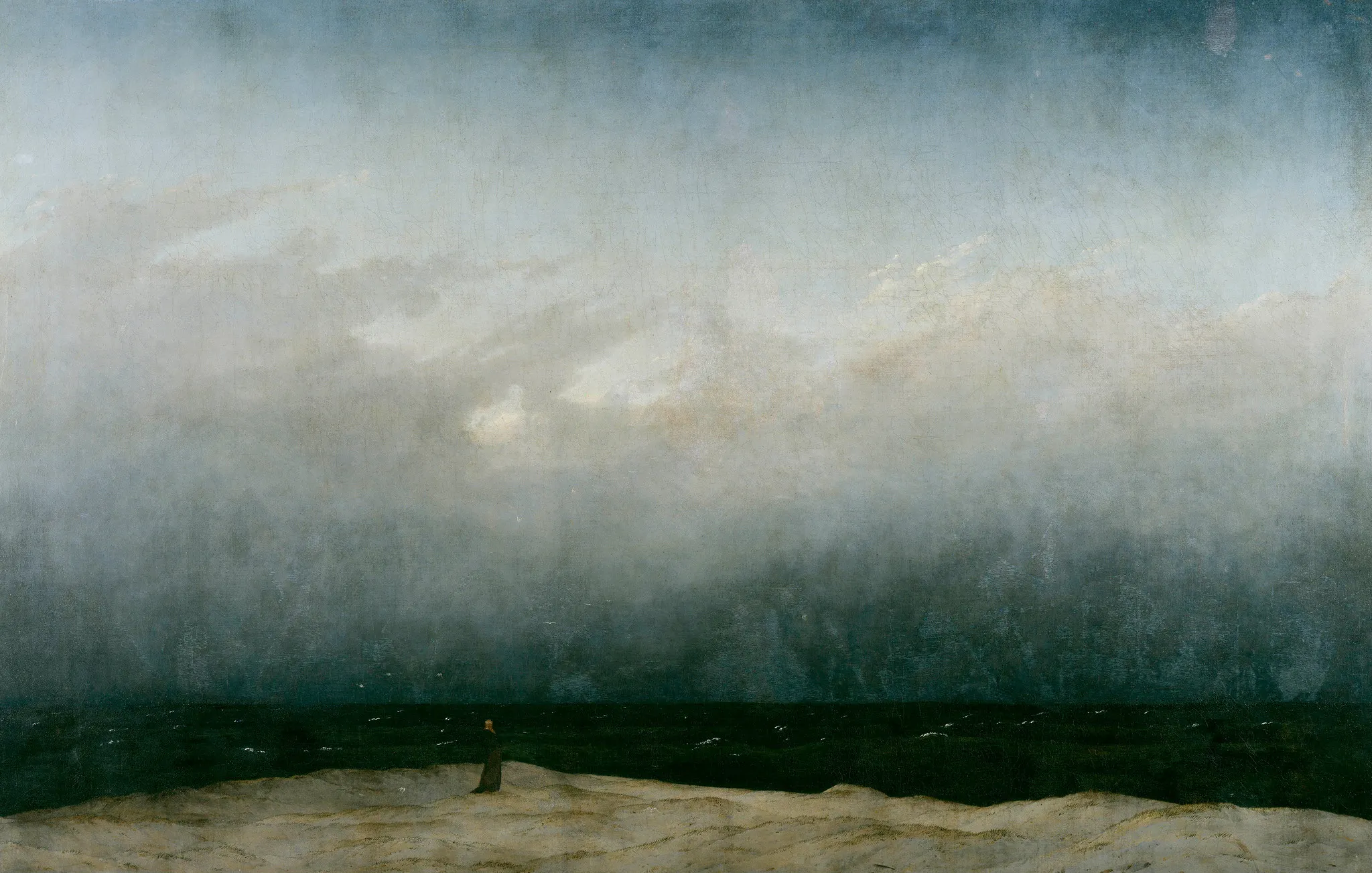
Loneliness
Dec 30, 202400:20:25Tap to summarizeLoneliness is what results when a person is cut off from the living world. Ecological loneliness, in particular, is reciprocal - what we mete out always comes back to trouble us. However, as Laura Marris demonstrates, loneliness can entail the shadow work for understanding how a society based on capital and on growth, can create profound isolation. She suggests that this work can look like ground truthing a place that has changed over time, that was once familiar to us, either as individuals or as collectives, but now appears alien.Laura Marris is an essayist, poet, and translator. Her writing has appeared or is forthcoming in The Believer, Harper’s, The New York Times, The Paris Review Daily, The Yale Review, Words Without Borders and elsewhere. She has received fellowships from MacDowell, a Katharine Bakeless Fellowship from the Bread Loaf Writer’s Conference, and a grant from the Robert B. Silvers Foundation. Her first solo-authored book, The Age of Loneliness, was published by Graywolf in August, 2024. She lives in Buffalo.Image: “The Monk by the Sea” by Caspar David Friedrich, now housed at the Alte Nationalgalerie in Berlin. The image is in the public domain. Learn more about your ad choices. Visit megaphone.fm/adchoices
Transcribe →
Aesthetic Conversions
Dec 16, 202400:21:10Tap to summarizePaloma Checa-Gismero talks about the many processes of re-evaluation, re-contextualization, and re-animation that designates an object as art. To illustrate this point, she calls our attention to the work of artists like Mierle Laderman Ukeles in the 1970s, or the 1989 exhibition titled Magiciens de la terre at the Centre Georges Pompidou in Paris. She develops the concept of aesthetic conversions in her new book about the histories and geographies of art biennials, which, in the post cold war world, converted subaltern aesthetic genealogies into forms that were legible to a nascent cosmopolitan global elite.Paloma Checa-Gismero is a historian of global contemporary art. She is Assistant Professor of Art History at Swarthmore College. Originally trained as an artist, she has been an active art critic since 2009. Her scholarship and criticism have been published in Afterall, FIELD, Third Text, The Journal of Modern Craft, among others. She is the author of Biennial Boom: Making Contemporary Art Global (Duke University Press, 2024).Image: © 2023 Saronik Bosu. It is a tilted and warped version of the capital letter B that spills out of the frame, its three parts in maroon, violet, and deep green, against a yellow ochre background. Learn more about your ad choices. Visit megaphone.fm/adchoices
Transcribe →
Non-literary Fiction
Nov 9, 2024Tap to summarizeIn this episode of High Theory, Esther Gabara talks with us about Non-Literary Fiction, that is, works of fiction that belong to the world of contemporary art, rather than the world of contemporary literature. She focuses on literary and narrative strategies used by Latin American and Indigenous American artists to make “non-objective” forms of visual art under the pressures of neoliberalism. To learn more, check out her book, Non-Literary Fiction: Art of the Americas under Neoliberalism (Chicago University Press, 2022).In our conversation, Esther gave us a theoretical bibliography of thinkers from Latin America who have shaped her work on non-literary fiction. Prominent among these figures are Ferreira Gullar in Brazil and Juan Acha in Mexico, who were the founding thinkers of the term “Non-Objectualism”-- a term that informs the fiction making practices Esther studies. We found this cool piece on Juan Acha that might be worth reading. She also named the philosopher Rodolfo Kusch and his work with indigenous storytellers. Kusch’s book on Indigenous and Popular Thinking in América was translated into English and published by Duke in 2010. And finally she named the indigenous artist and activist Manuel Quintín Lame, who collaborated with the Columbia artist Antonio Caro. Each of these figures features in her book as a theorist in their own right, in a context where art is a critical practice.Esther Gabara is a professor of Romance Studies at Duke University, where she works with modern and contemporary art, literature, and critical theory from the Americas. Her teaching in the departments of Romance Studies and Art, Art History & Visual Studies at Duke University covers visual studies, modernism, photography, Pop Art and popular culture, feminism, public art, and coloniality in contemporary art. Her prior publications include the bilingual exhibition catalogue, Pop América, 1965-1975 (Nasher Museum of Art/Duke University Press, 2018), for an exhibition she curated at the Nasher Museum of Art, and Errant Modernism: The Ethos of Photography in Mexico and Brazil (Duke University Press, 2008). Learn more about your ad choices. Visit megaphone.fm/adchoices
Transcribe →
Close Reading
Mar 2, 2024Tap to summarizeIn this episode of High Theory, Jonathan Kramnick talks about Close Reading. Contrary to the name, it is less a form of slow or focused reading than an immersive practice of writing. The classic methodology of New Criticism has become, in Kramnick’s estimation, the shared foundation of literary studies in the university.Our conversation was inspired by Jonathan’s new book, Criticism and Truth: On Method in Literary Studies (Chicago, 2023). In the book he aims to “present a view of literary criticism as it is practiced across the academy in order to defend its standing as a contribution to knowledge” (vii). His defense of this foundational critical method joins a slate of recent metacritical books on the discipline of literary study, and the state of the humanities today.Jonathan Kramnick is the Maynard Mack Professor of English at Yale University. His research and teaching are in eighteenth-century literature and philosophy, foundations of literary theory and criticism, and interdisciplinary approaches to the arts. His prior publications include Paper Minds: Literature and the Ecology of Consciousness (Chicago, 2018), Actions and Objects from Hobbes to Richardson (Stanford, 2010), and Making the English Canon: Print Capitalism and the Cultural Past, 1700-1770 (Cambridge, 1999). His current book project on Alexander Pope, William Cowper, and the poetics of designed environments is titled Earthworks: Two Before Romanticism. He is also director of the Lewis Walpole Library and the editor (with Steven Pincus) of the Lewis Walpole Series in Eighteenth-Century Culture and History for Yale University Press.The image accompanying this episode was drawn by Saronik Bosu in 2024. Learn more about your ad choices. Visit megaphone.fm/adchoices
Transcribe →