
Podcast
Highlands Current Audio Stories
Hosted by Highlands Current · EN
The Highlands Current is a nonprofit weekly newspaper and daily website that covers Beacon, Cold Spring, Garrison, Nelsonville and Philipstown, New York, in the Hudson Highlands. This podcast includes select stories read aloud.
60episodes
Episodes
Newest firstAll episodes

Howland Library Ponders Its Next Move
Apr 300:04:46Tap to summarizeCommunity, staff weigh options as building shows its age The Howland Public Library in Beacon is asking residents to weigh in on the future of its building, a beloved but aging former department store at 313 Main St. The library moved to Main Street in 1976, after outgrowing its original 1872 building, which became the Howland Cultural Center. But the library's director, Gillian Murphy, said at a charrette on March 25 that the 15,000-square-foot structure, built in 1949 as Fishman's department store, is badly in need of repair. The roof has been patched nearly a dozen times since Murphy was hired in 2023. The building lacks insulation, with haphazard heating and cooling systems struggling to keep patrons and staff comfortable. The brick exterior is crumbling, and the Main Street entrance is the only one that complies with the Americans with Disabilities Act. Inside, there are no fire sprinklers and almost no natural lighting. The children's room is too small, Murphy said, and a nook by the entrance that functions as a teen space is hardly spacious. Upgrades have been made from time to time, including last year, when interior walls were painted to brighten the place and the circulation desk was moved. But there's never been a comprehensive capital project. "People have sought me out since the day I came here," said Murphy, who was director of the Butterfield Library in Cold Spring for 21 years, until 2021. "It was obvious that they didn't find this space friendly." She said the staff and nine-member library board agreed and decided to ask the community: "This is what we have — where do we go from here?" Several options are on the table, but as architect Paul Mays told the audience of about 75 people on March 25, "pencil has not been put to paper on anything." Mays, who worked on additions and major renovations to libraries in Kingston and Saugerties, walked the audience through the possibilities. The first option, repairs and maintenance, would be the least expensive and disruptive, although a new roof will cost at least $1 million, Murphy said. More involved renovations would add cost but provide more opportunities for energy efficiency. Even more costly would be demolition and new construction, which would require the library to move to a temporary location; renovations of a building at another site; or new construction at another site. Funding for a capital project would come from outside sources (e.g., state grants) and/or a public referendum. Voters in the Beacon City School District, which includes parts of Fishkill and the Town of Wappinger, vote on the library budget each year, but the annual spending plan only covers operating expenses. Voters rejected a capital proposal in 2005, then voted down the operating budget for the next three years, but Murphy believes the support will be there this time. "It's a totally different community than it was 20 years ago," she said, noting that the library last year hired two new staff members to manage increased usership. The March 25 charrette was the first in a series. Many people have already said the library should stay on Main Street, Murphy said. But other considerations — ample parking and green space — are virtually impossible in the current location. There's no timeline for a decision, Mays said. The community-led process "isn't the fastest, but it's a deliberate and, I think, thorough one." If the library were renovated, its footprint is deceptively large. It also owns 311 Main St., where its board meetings are held; 309 Main, where the Friends of the Howland Public Library operate Beacon Reads, a secondhand bookstore; and 307 Main, which needs work and is used for storage. Another back-of-building storage area could also be converted. "I don't think people realize what a big space we have," Murphy said. "There are so many possibilities." Mays asked community members to consider a few questions: What features and programs offered by the library are most important to ...
Transcribe →
Food Program Ends Philipstown Stops
Apr 300:03:44Tap to summarizeProvider says federal government cut funding A program that provides free produce and other groceries to residents in Putnam and Westchester counties has stopped deliveries to three Philipstown locations, citing federal funding cuts. Until last month, Meals on Main Street stopped weekly at the Chestnut Ridge Apartments in Cold Spring, the Philipstown Friendship Center in Cold Spring and the Brookside Senior Citizen Co-op in Philipstown to distribute free food. Cornell Cooperative Extension Putnam County launched the program in May 2024 as part of a $2 million grant from the U.S. Department of Agriculture. CCE paid Meals on Main Street, based in Port Chester, $250,000 annually to deliver the food and expand services in Westchester and Putnam. The balance went to regional farmers for the meat and produce and to CCE for administration costs. On a day in April 2025, the mobile pantry served about 110 people at its three Philipstown stops, offering milk, onions, potatoes, beets, carrots, kale, radishes, apples, baked goods and frozen salmon. Jon Haseltine, executive director of Meals on Main Street, said the federal funding for the program ended in August and was not renewed. "We tried to absorb the cuts and not pull the plug, and did for some time, but the cuts have been a challenge," he said. "In March, with discretionary funds exhausted, we made the business decision to pull back some of the mobile pantry truck routes," including in Philipstown, which is about 50 miles from Port Chester. "We're not happy about it," he said. "We pulled back to ensure our viability and to make ends meet." The program continues to serve Putnam County residents in Patterson, Carmel, Putnam Valley, Kent and Mahopac, as well as in Westchester County, the Bronx and Fairfield, Connecticut. Philipstown residents have visited other Putnam stops, according to Haseltine. Kiko Lattu, coordinator of the Philipstown Food Pantry, said that for many local seniors, especially those with mobility or transportation barriers, the mobile pantry "filled a critical gap by providing food 'shopping' near their homes. Its suspension is a meaningful loss in a community where food resources for older adults are already limited." In March, Lattu noted, the Philipstown Food Pantry, which is open on Saturday mornings, provided groceries for 679 people, including 181 seniors. A United Way report in May 2025 concluded that 38 percent of Cold Spring and Philipstown (10516) households and 35 percent of Garrison (10524) households struggle to afford even a "survival budget," including food. In Beacon, it calculated that 42 percent of households are living on the edge. Haseltine said the office of Rep. Mike Lawler, a Republican whose district includes Philipstown, has been responsive to finding federal funds for the mobile pantry. Haseltine estimates it would require $75,000 to $100,000 annually to restore the Philipstown stops. "We've encouraged people to reach out to their local, state and federal representatives to voice their concerns and the need for the program," he said. "Every time a mobile pantry truck goes out, it carries up to 1,300 pounds of food, or the equivalent of about 1,000 meals. That's about 50,000 meals a year on just one route."
Transcribe →
Together for the First Time
Apr 300:03:39Tap to summarizeTom Messina Band to make debut It's not quite Bob Dylan plugging in at the 1965 Newport Folk Festival, but the musical direction of Beacon resident Tom Messina, who will introduce his newly formed band at Industrial Arts Brewing Co. on Saturday (April 4), represents a more radical and rollicking turnabout. Messina will headline Selwyn's Day, three acts assembled by Selwyn Camper, director of operations at The Selwyn Sound Co., based in Newburgh. Camper started off selling vinyl records and DJing, but is branching into other ventures, including a record label and publishing company. He is also booking acts and foresees Saturday's gig as the first in an annual gathering "to create community around a mutual love for music and beer." Camper also hosts Monday vinyl nights at Industrial Arts, encouraging people to bring in their own discs for a spin. Messina moved to Beacon five years ago and is shedding his sonic skin. Past recordings leaned on acoustic guitar, understated bass and limited percussion. The song "Greyfox" exudes a breezy Brazilian groove, and after whistling a few bars, he follows with a chill nylon-string guitar solo. "Hallmark" is another laid-back track with an unplugged sound and folksy vocals, which is why the screaming electric-guitar riff and power chord that opens his latest single, "Nothing Left to Lose," hits like a gut punch. "I was a hired gun for years doing cover tunes," he says. "Now it's time to dial up the energy and explore my own sound." The new track channels punky '90s power pop. On the surface, it's a hook-filled rocker, but a peek under the hood reveals a complex structure and roller-coaster dynamics. The last 30 seconds morph into a metal-style breakdown, ending with an unexpected melodic guitar riff. "I'm getting back to my roots with the guitar-driven emo stuff that I first fell in love with," Messina says. "I like experimenting with forms of songs and adding harmonic complexity. I studied jazz, listened to the jam bands and played in a Frank Zappa cover band in college, so my influences are all over the place." "Nothing Left to Lose" began as an acoustic sketch 10 years ago and blossomed into an angst-ridden track with a big sound, achieved in part by recording the guitars multiple times and layering the takes. Stuttering stops and starts keep the listener interested and suggest that the band — with John Haring (drums), Joe Mulhaupt (bass) and Cold Spring native Dan Ruiz (guitar) — is developing a tight bond. When Messina began tossing out what he calls "throwaway lyrics" for new material, he called collaborator Justin Babbino and said, "I'm phoning in these lines, please help me." He sings about boiling blood, reaching a breaking point and the difficulties of growing old, which "ain't easy," given he's 28. Juxtaposing the edgy and energetic new single with the Dylanesque acoustic guitar and vocal sketch, "This Place Ain't What It Used to Be," signals how far his sound has veered over the years. The "place" in the older song is metaphoric, he says. "It might apply to my musical direction — or it could be about Beacon." Industrial Arts Brewing is located at 511 Fishkill Ave. in Beacon. The music begins at 7 p.m.; Waylen Roche and Justin Cole will also perform. Tickets are $15 at dub.sh/selwyn-day or at the door.
Transcribe →
Cold Spring Eyes 3.7 Percent Tax Increase
Apr 300:03:14Tap to summarizeTentative budget matches state cap Cold Spring residents will see the village tax levy rise by 3.72 percent in the new fiscal year, an increase that matches the cap imposed by New York State. Mayor Kathleen Foley and village accountant Michelle Ascolillo outlined key areas of the tentative 2026-27 budget in an April 2 email. The mayor commented that in meeting the state tax cap, "We're mindful that everyone is stretched in this economy, and we have to be conservative in our expense and revenue predictions." While commonly portrayed as 2 percent, the tax cap is often greater due to other factors determined by the state, including an "allowable growth factor" calculated for each municipality. The village budget includes three major areas. The general fund is supported by the tax levy and pays for nearly all village services, from garbage, recycling and road maintenance to police and fire protection. The water and sewer systems are funded separately by flat rate and usage fees. The tentative 2026-27 budget proposes a tax levy of $2,057,465, an increase of $73,696 over the current fiscal year. It is estimated that the tax rate, which determines what individual owners pay in village property taxes, will be $12.65 per $1,000 of assessed value, an increase of 3.02 percent. The final rate will be set by Putnam County. The cost of water will go up by 6 percent for both usage and the flat rate. That amounts to increases of 21 cents per 1,000 gallons used and a $6 flat rate increase per quarter per unit. The sewer rate will rise 5 percent for both usage and flat fees, resulting in increases of 11 cents per 1,000 gallons of usage and $4.50 per quarter per unit, respectively. Foley said while the village optimizes state dollars for roadway and sidewalk repairs and upgrades, it is "an area where I wish we could make progress faster" adding, "We have a very small roadways and facilities crew and have to prioritize according to urgency and capacity." She said including plans for village-branded wayfinding signs and improved parking signage in the budget should help with visitor management, but that the $50,000 Cold Spring receives in Putnam County sales tax sharing can only be used for infrastructure needs and "doesn't really touch" visitor-related costs. "The costs of tourism get pushed down to the local level and that means we don't have as much [funding] available for use in other areas of village life," Foley said. "It's very challenging to balance tourism with quality of life and a locally relevant economy." A public hearing on the tentative budget is scheduled for Wednesday (April 8). The proposed spending plan is available at coldspringny.gov and is subject to change until the end of April, when the final budget will be adopted. The new fiscal year begins June 1.
Transcribe →
Can I Get a Witness?
Apr 300:03:26Tap to summarizeThe Soul Jam brings the party to Beacon One couple boogied in front of an $80,000 painting. Young people sang along to old songs. And last month, after bandleader Jake Vogel shouted, "This is not standing-room-only, this is dancing-room-only!" just before The Soul Jam's final song, 50 people began the Electric Slide inside the art gallery at Savage Wonder in Beacon. These folks know how to party — the tune lasted for 10 minutes. Along with the band, about 80 people ranging from teens to seniors showed up on a rainy, blustery Thursday evening. "All of the musicians and many of our followers are Jehovah's Witnesses," says Vogel, maestro and guitarist. "We're allowed to drink in moderation, dance and have fun, but we're discouraged from dating outside the faith." Based in Newburgh, The Soul Jam plays hits from yesteryear, along with some Vogel originals. He also leads the group Awkward Silence, which will play at Savage Wonder later this month. The latter iteration of musicians leans into original compositions and a wider array of cover material, from jazz to punk rock, he says. Members and instrumentation are subject to change. Lots of musicians rotate in and out, but the constants are Vogel and Rodney Williams on trumpet. At one point during The Soul Jam show, as Vogel kneeled, Williams and sax player Edwich Pierrelouis pummeled his head with sound. For the duration of the busy bass line in Stevie Wonder's "I Wish," Lovaughn Bryant watched his left hand closely while cycling through the fun, funky part. Keyboard player Raj Lachtman's vamps beefed up the tone and Don Placentia's drums accentuated the Latin feel of "Don't You Worry 'Bout a Thing" by adding more syncopation and slurping his hi-hat cymbals with gusto. The group that evening included two vocalists, and when they launched into "Chain of Fools," Jenae Petty owned the tune. When he's not singing, Anthony Lombard served as the hype man, shaking a percussive egg. At one point, as the horns soloed off each other, Vogel leaned against a pillar and smiled like a baseball manager enjoying a 1-2-3 inning. When he exhorted the crowd and launched into the final song of the night, "Get Up Off of That Thing," by James Brown, people let the rhythm hit 'em. As Vogel knelt to play his guitar, which he had placed flat on the floor, he appeared to be praying. It evoked the moment at the 1967 Monterey Pop Festival when Jimi Hendrix leaned over, drenched a six-string with lighter fluid and played with matches. Onstage, Vogel's style is frenetic. One solo screamed like heavy metal, and for 90 minutes, he jumped around a warm room wearing a suit and scarf. "I've always been energetic playing music," he says. "One of my favorite bands is the Red Hot Chili Peppers, and they really bring it live. I tried holding back a little, but I play so much better when I let it loose." Savage Wonder is located at 141 Main St. in Beacon. Soul Jam will perform at 8:30 p.m. on April 10 and Awkward Silence at 9 p.m. on April 18. Tickets are free at dub.sh/savage-wonder.
Transcribe →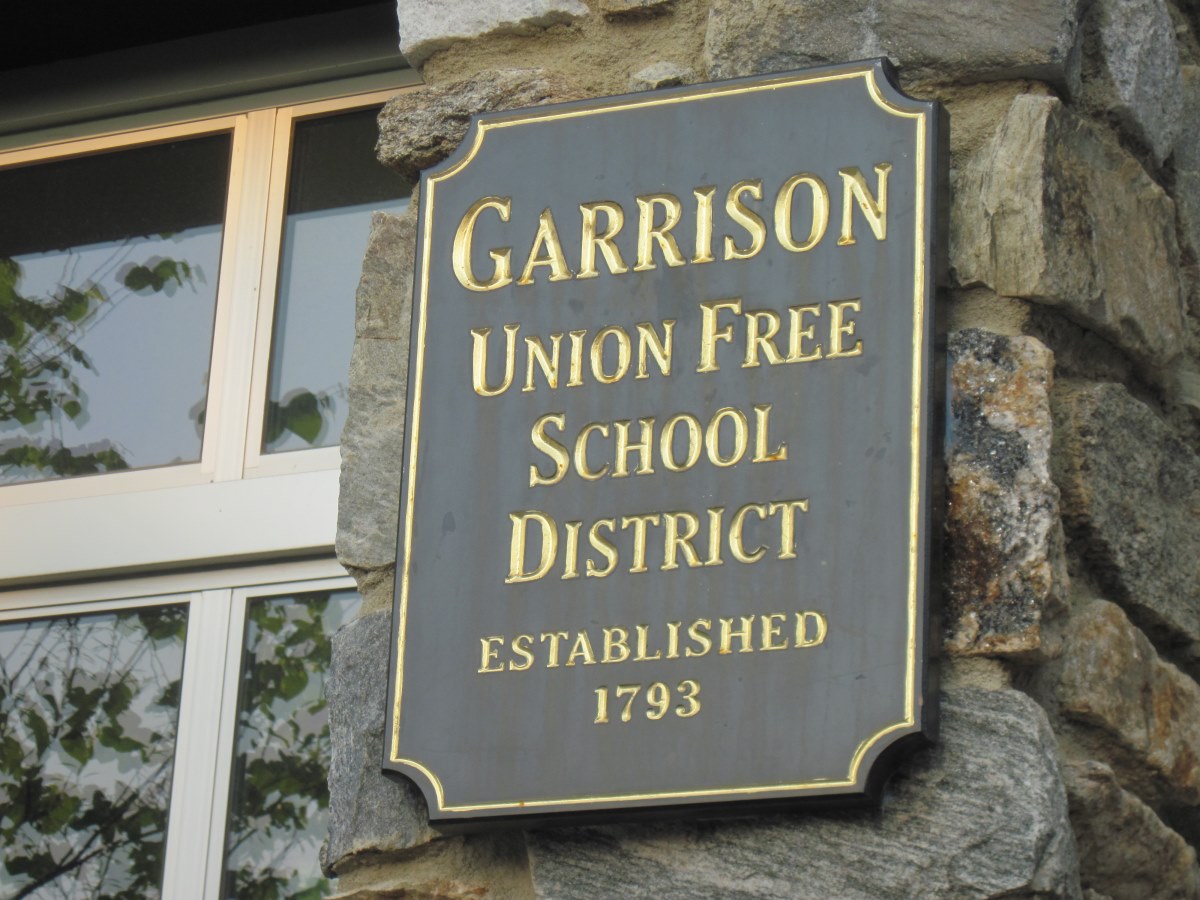
Garrison School Sues Over Heating System
Apr 100:05:02Tap to summarizeDistrict accuses engineer of 'malpractice' The Garrison school district has sued the firm it hired to design a nearly $3 million heating system that officials describe as so underperforming that children sometimes wear their coats in classrooms. In 2020, Garrison contracted with Tetra Tech Architects & Engineers to provide design services for $10 million in voter-approved upgrades, the most expensive of which was a $2.7 million heat-pump system to warm and cool the whole building. That system, according to a lawsuit filed March 25 in state court, fails to meet state standards requiring a minimum indoor temperature of 65 degrees from Sept. 15 to May 31 and the provision of outdoor air at all times. Tetra Tech has not yet responded to the lawsuit in court. The firm did not immediately respond to an emailed request for comment. The Garrison district said staff have had to "dedicate substantial administrative time" to monitoring and manually adjusting settings since the system became operational. On cold days, they have "to choose between maintaining adequate heat for students and staff or introducing the outdoor air necessary to satisfy ventilation requirements," according to the legal filing. Garrison officials said the pumps also blow cold air during the system's defrost cycle, when heat is temporarily redirected to melt frost from the coils of the outdoor units. They accuse Tetra Tech, whose long list of school-district clients includes Beacon, of architectural malpractice and professional negligence, negligent misrepresentation and breach of contract. Their lawsuit is seeking unspecified damages, "including costs to investigate, monitor, redesign, repair, replace, remediate and correct" the system. Tetra Tech's "defective HVAC design did not merely create a technical problem," according to Garrison officials. "It left children wearing coats in class and forced the district to divert administrative time and public resources to constant troubleshooting of a system that should have worked properly in the first place." Garrison officials chose the heat pumps over an alternative: a system in which water heated by the building's boilers would be distributed to the elementary and middle-school classrooms, while the remainder of the middle school, such as the gym and bathrooms, would continue to be heated using oil. When the board voted on July 1, 2019, for the heat pumps, then-President James Hoch said they offered a "unified" system. Before the vote, Garrett Hamlin, a Tetra Tech vice president, told the board that "we've had a lot of conversations about heating systems, but there are other areas of this project that are really critical," such as bathrooms, the phone system and security upgrades. "All of those things are really important parts of this project, and I don't want us to lose sight of that," said Hamlin. Seven years later, the focus is on the heating system. Garrison's lawsuit alleges several problems with its design and installation, beginning with the weather data used in Tetra Tech's calculations. The district says the company relied on reports from LaGuardia Airport "rather than more representative local data," according to court documents. Tetra Tech is also accused of failing to adequately consider how heat would transfer through the outer shell of its building, which is more than 100 years old, and "eliminated or omitted" Dedicated Outdoor Air System units, which condition outdoor air for indoor ventilation. It also designed a system that is not "adequately sized to temper required volumes of cold outdoor air while maintaining required indoor temperatures," according to the district. Notified of the problems, Tetra Tech "failed to provide an adequate cure that restored reliable, code-compliant heating and ventilation," according to court documents. The system is part of a menu of upgrades approved by district voters in September 2019 that included refurbished ceilings, floors, doors and cabinets, bathroom renov...
Transcribe →
D.A. Offers Plea Deal in 2008 Philipstown Killing
Mar 3100:04:45Tap to summarizeGrigoroff would be freed instead of facing third trial A plea deal offered by the Putnam County district attorney on Tuesday (March 31) would free a former Lake Peekskill man twice convicted in the 2008 killing of Philipstown resident John Marcinak. A state appeals court ruled in December that Anthony Grigoroff deserved a third trial after he had been convicted in 2010 and again in 2017 of shooting Marcinak at his business, Garrison Garage, on Route 9 on Dec. 31, 2008. Prosecutors and defense attorneys met privately on Tuesday with Judge Joseph Spofford, then returned to the courtroom to announce a deal in which Grigoroff would plead guilty to second-degree attempted burglary rather than be tried for a third time for second-degree murder. The maximum sentence for the burglary charge is seven years. Grigoroff, who has been imprisoned since 2010, would be sentenced to time served and released, said Bruce Barket, one of his attorneys. He said the defense team would consider the offer while he reviewed evidence recently shared by the DA's office. Spofford scheduled the next hearing for April 21. The offer came three months after a state appeals court concluded that Judge Edward McLoughlin deprived Grigoroff of a fair trial in 2017, when a jury convicted him of killing Marcinak at a retrial. The only evidence presented by the prosecution was a confession by Grigoroff following what defense attorneys said was a 12-hour interrogation. The appeals court found that McLoughlin, a Dutchess judge who had been assigned the case, erred by limiting testimony from an expert witness who determined that Grigoroff "is more vulnerable than the average person to falsely confessing." That expert wanted to cite research from the Innocence Project, which at the time found that 25 percent of people exonerated through DNA evidence had confessed, along with another study by the University of Michigan Law School on the prevalence of false confessions, particularly by people with intellectual disabilities or mental illnesses. But McLoughlin "improperly concluded that those studies were not relevant to the defendant and the interrogation" because the case did not involve DNA and despite Grigoroff having "an IQ lower than 93 percent of individuals in his age group," according to the decision. McLoughlin also allowed testimony from a prosecution witness that research on false confessions was "scant" and that studies of their nexus with "psychological vulnerabilities was a 'primitive subdiscipline.' " The defense expert testified in a video recording played in court because McLoughlin ordered the trial to begin when the expert could not appear, noted the appeals judges. Because "the sole evidence is the defendant's confession and the crux of the defense was the testimony of an expert in false confessions … the errors had the cumulative effect of depriving the defendant of his due process right to a fair trial," according to the decision. After the December ruling, the Putnam DA's office refiled second-degree murder and burglary charges against Grigoroff, who has been held at the county jail since being transferred from Sing Sing. Danielle Muscatello, another of Grigoroff's attorneys, said in January that two families have been victimized — the Marcinaks, "because I don't think they ever got the justice they deserved," and the Grigoroffs. At the 2010 trial, a jury found Grigoroff guilty of second-degree murder, criminal possession of a weapon and attempted burglary. Judge James Reitz sentenced him to 25 years to life in prison. In his statement to investigators, Grigoroff, then 19, said he drove to the Garrison Garage with his identical twin, Erick, and a friend, Byron Mountain, on Dec. 31, 2008, because the three men planned to rob the business to get a few hundred dollars to party in Manhattan on New Year's Eve. He insisted that it was Mountain who shot Marcinak while he waited in the car, and Erick served as a lookout. Grigoroff also alleges that inves...
Transcribe →
Putting a Price Tag on Pre-K
Mar 3100:08:34Tap to summarizeThis story originally appeared in New York Focus, a nonprofit news publication investigating power in New York. Sign up for its newsletter here. Last week, the state Legislature officially backed Gov. Kathy Hochul's plan to offer every 4-year-old in New York a free pre-K seat within the next three years. New York's public pre-K program served three-quarters of eligible 4-year-olds last school year. But thousands of children statewide still lack access because their districts have limited seats or don't offer it at all, New York Focus reported earlier this month. Last year, 49 districts opted out, many citing insufficient state funding, limited space, or staffing issues. The Beacon, Haldane and Garrison school districts each offer universal pre-K. Beacon began its program in 2023; it has 120 spots for 2026-27 (registration opened March 18; students must be 4 years old by Dec. 1). Haldane began its program in 2025-26 and has 18 spots, while Garrison launched its program in 2022-23 and has 18 spots. Haldane said it had three or four students on the waiting list last year but all made it into the class; Garrison said it has received 22 applications for 2026-27 and will hold a lottery. Hochul's proposal would nearly double the state's minimum reimbursement to $10,000 per student, but some district superintendents contend that amount would still not be enough to provide a seat to all applicants by the 2028–29 school year. At the heart of the tension is how the cost of the program should be divided between the state and school districts. State aid rarely covers the full cost of pre-K, leaving districts to make up the difference from their local — and, often, already strained — budgets. Some superintendents argue that the state should shoulder a larger share of the expense. Other officials think that the model, which is similar to how public K-12 is funded, should suffice. How does the program's funding model actually work, and can the governor's plan fix it? Here's what you need to know. How is universal pre-K funded, and what does it cover? Universal pre-K draws from multiple funding streams. To start, school districts receive state funding per child enrolled in public pre-K. The current rate is set at either half of what a district receives in Foundation Aid — the state's complex funding formula for K-12 education — or $5,400, whichever is higher. When a district joins the program, the state sets a target enrollment number, typically around 85 percent of the district's kindergarten enrollment, which it uses to calculate the maximum funding the district can receive each year. On top of that, many districts receive competitive grants that can boost per-pupil funding up to $10,000. A small grant program offers funding for a limited number of low-income preschoolers, and state funding is available for children with disabilities. The 2025 state budget included four separate funding streams for pre-K totaling $1.2 billion, according to a NYSED analysis that recommended consolidating the program funding to achieve universality. "It's an incredibly complicated set of funding streams," said Andrew Perry, director of fiscal research at the Fiscal Policy Institute. That money is primarily for 4-year-olds, but some districts get a separate allotment for 3-year-olds. They can use the money for a wide range of expenses, from employee salaries to classroom supplies to transportation services. Some school leaders and advocates say state funding covers only a fraction of the true cost of educating a 4-year-old. The National Institute for Early Education Research, for example, estimated that in 2023, the cost of high-quality full-day preschool in New York state exceeded $19,000 per child. How does the funding model differ from other public school funding? As with Foundation Aid, school districts often have to contribute local funds to operate a pre-K program. According to state Sen. James Skoufis, who has called for a pre-K mandate to kick in soo...
Transcribe →
A Guide to the State Budget Fight
Mar 3100:20:24Tap to summarizeThis story originally appeared in New York Focus, a nonprofit news publication investigating power in New York. Sign up for its newsletter here. The New York State Assembly wants to freeze your energy bills, the Senate wants to stop police from working with U.S. Immigration and Customs Enforcement (ICE), and the governor wants to slash auto insurance premiums. Albany's leaders will hash out these and hundreds of other policies as they craft the state budget and decide how to spend $260 billion — and then some, if the legislature gets its way. The deadline is officially Wednesday (April 1), although the work is never completed by then. Two weeks ago, the two legislative chambers released their counters to Gov. Kathy Hochul's executive budget. The biggest disagreement is on taxes; the Legislature is once again proposing hikes on wealthy people and corporations to fund expanded social programs. This year, they have a notable ally in their corner: New York City Mayor Zohran Mamdani, who has aggressively pushed for more state revenue to help close the city's budget gap. All eyes are on Hochul, who has so far resisted the idea. But there's much more to the battle than the headline numbers. Each of the three proposals are thousands of pages long, and they don't make for light reading. We've been working around the clock to break them down for you. In the chart below, you can see where each party stands on the highest-profile issues. Below that, you can find written descriptions using the drop-down menus. Happy budget season! FISCAL POLICY Where They're Split Tax the rich? Hochul and the Legislature are butting heads on whether to raise taxes in order to fund more programs and help cities plug their budget holes. The Senate and Assembly each proposed raising taxes statewide on wealthy individuals and corporations, as they have for the last few budget cycles. The Senate proposed increases of 0.5 points on individuals earning above $5 million and 1.75 points on corporations earning at least $5 million. The Assembly backed a 0.2-point increase on individuals above $5 million, bigger hikes on the highest income brackets, and a 2-point hike on corporations with at least $10 million in income. The Assembly also proposed cutting income taxes for filers earning below $323,000. Hochul did not propose new tax increases or income tax cuts, although she did propose extending a temporary increase on corporations through 2029. Where They're Close Total spending: The total sizes of the three budget proposals differ by about $10 billion, less than a 3 percent difference in a budget over $260 billion. Where They Agree Rainy day fund: The Senate, the Assembly and Hochul all want to keep $14.6 billion in the state's cash reserve. Building it to that level has been a significant accomplishment of Hochul's first term. SOCIAL SERVICES Where They're Split Medicaid: Hochul proposed $49.1 billion in state spending on Medicaid. The Senate proposal added $660 million in state-share Medicaid spending beyond Hochul's proposal, according to a spokesperson for the Senate Finance Committee chair. The Assembly's total proposed Medicaid spending was not immediately clear. Hochul proposed $1.56 billion in increased funding for hospitals, nursing homes and health clinics collectively. The Assembly proposed $862 million more than Hochul for the same providers. The governor's executive budget did not include a clear path forward for those who will be disenrolled this summer from the state's Essential Plan — and neither do the Senate's nor the Assembly's proposals. The Senate proposed a new commission to make a plan by July outlining paths forward for the state's health care system after cuts. The Assembly proposed a contingency fund to offset costs for a subset of Essential Plan enrollees that it is legally required to cover. That fund would not support the 470,000 individuals that the Fiscal Policy Institute estimates are set to lose coverage. Human services raises: T...
Transcribe →
'No Kings' Again Draws Crowds
Mar 2900:02:44Tap to summarizeRallies held in Beacon and across U.S. In "No Kings" rallies in Beacon, New York City and around the country on Saturday (March 28), crowds protested the war in Iran and President Donald Trump's policies and actions. In St. Paul, Minnesota, Bruce Springsteen and other speakers praised residents for taking to the streets in opposition to the tactics of U.S. Customs and Immigration Enforcement. Springsteen performed "Streets of Minneapolis," a song he wrote in response to the fatal shootings of Renee Good and Alex Pretti by federal agents. Before Springsteen took the stage, organizers played a video in which actor Robert DeNiro said he wakes up every morning depressed because of Trump but was happier Saturday because millions of people were protesting. The bill also included singer Joan Baez, actor Jane Fonda, U.S. Sen. Bernie Sanders (I-Vt.) and a long line of activists, labor leaders and elected officials. Organizers estimated that the first round of No Kings rallies, in June, drew more than 5 million people nationwide, followed by 7 million in October. This week they said they expected 9 million participants at more than 3,100 events. White House spokesperson Abigail Jackson characterized the rallies as the product of "leftist funding networks" with little real public support. The "only people who care about these Trump derangement therapy sessions are the reporters who are paid to cover them," she said in a statement. The National Republican Congressional Committee was also sharply critical. "These Hate America Rallies are where the far-left's most violent, deranged fantasies get a microphone," NRCC spokesperson Maureen O'Toole said. Beacon photos by Gary Ditlow Organizers said two-thirds of registrations for the rallies came from outside of major urban centers, including in communities in conservative-leaning states like Idaho, Wyoming, Montana, Utah, South Dakota and Louisiana, as well in electorally competitive suburbs in Pennsylvania, Georgia and Arizona. Beacon photos by William Flamholtz Demonstrations were also planned in more than a dozen other countries, according to Ezra Levin, a co-executive director of Indivisible, a group spearheading the events. In countries with constitutional monarchies, people call the protests "No Tyrants," he said. Todd Richmond and John Hanna contributed reporting.
Transcribe →