← History 102 with WhatifAltHist's Rudyard Lynch and Austin Padgett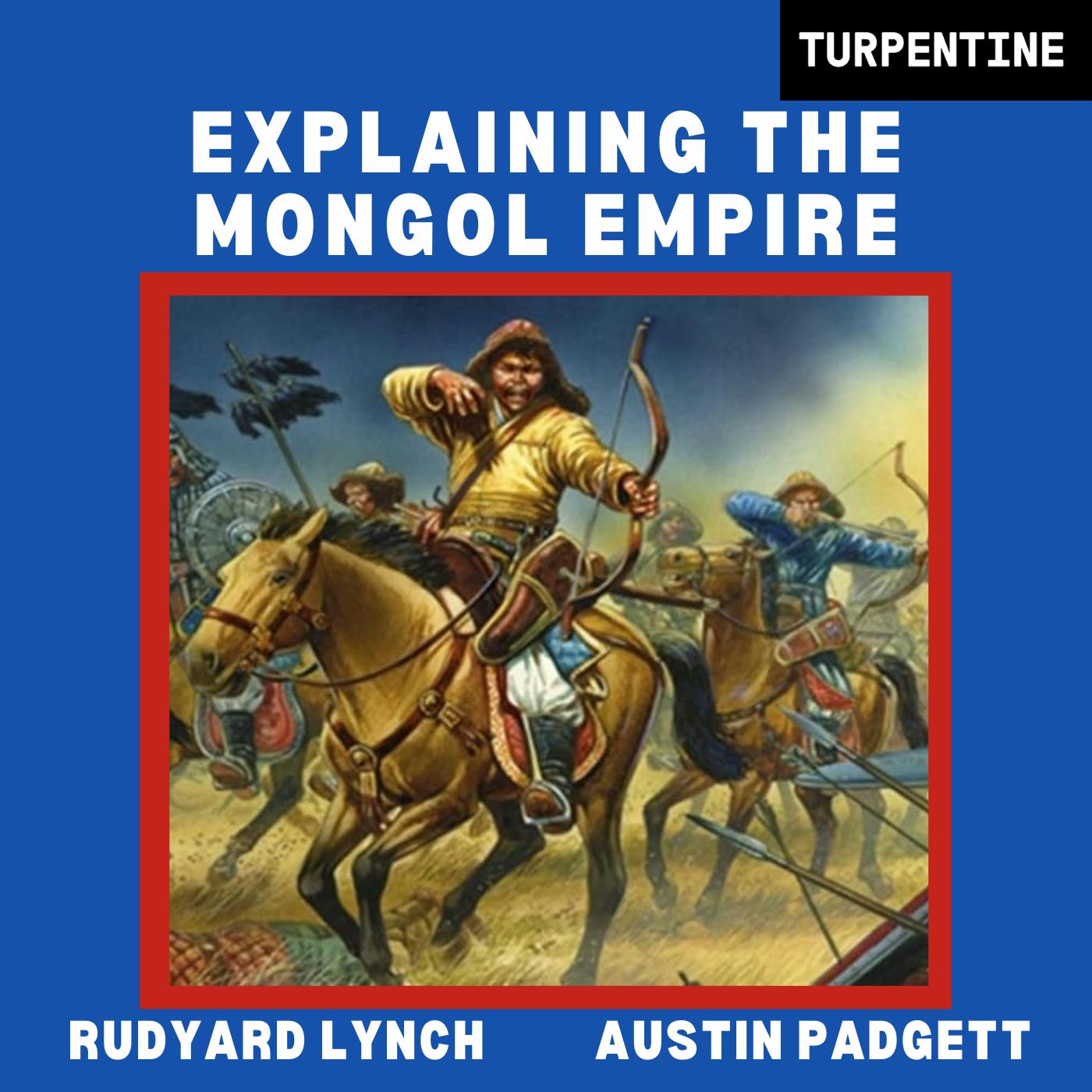
History 102 with WhatifAltHist's Rudyard Lynch and Austin Padgett
Explaining the Mongol Empire
02:12:39
Loading summary
Transcript216 lines
- [00:03]
Whatifalth
Welcome to History 102, where YouTube creator Whatifalth hist, Rudyard lynch and Austin Padgett dive into critical moments in history and tease out patterns to help us predict the future. Let's jump right in.
- [00:16]
Austin Padgett
Hi, everybody. Today's episode is the Mongol Empire, with Austin Padgett, our continuing host, and say hi. Hello. So the Mongol Empire is the largest contiguous empire ever in human history, and it's the second largest empire in any consistent metric and most metrics in every metric. The British Empire is the biggest, the Mongol Empire is always the second biggest, and then every other empire after that. It's a sort of competitive space where you could say the Spanish, the Arabs, some Chinese empires, the French Empire. And the Mongol Empire is kind of an inspirational story as empires go. Where Genghis Khan went from living as a homeless man on the Mongolian steppe to becoming the greatest conqueror ever in human history. Where Genghis Khan, unlike so many other conquerors, like Napoleon, who lost Hannibal, who lost Hitler, who lost Alexander, who won and went crazy, Genghis Khan actually succeeded and established a multi generational empire. And there's something inspirational in that. Where the Mongol Empire stretched from Wallachia or modern Romania in the west, out to Korea in the east, and from Pakistan along the Indus river up the Siberia in the north. And Mongol armies went even further, where the Mongols fought as far west as Croatia and Austria, and they fought out to Egypt with Ain Jalut, and they sailed out to attack Japan, and they even sailed out to Java. So starting out in this central locust in the Mongolian grassland, it was the supernova that just smashed across Eurasia.
- [02:18]
Rudyard Lynch
So they were the. Genghis Khan was the real Drake. He started at the bottom and hit the top.
- [02:29]
Austin Padgett
Oh, you mean. Oh, yeah, yeah, the black Jewish Toronto rapper.
- [02:32]
Rudyard Lynch
Exactly. And Drake, I don't think he's lost yet. He's. He's not looking as good as Genghis Khan. Late game, but he had that. Yeah, that's a. That's a really huge expansion. It's interesting to think of it going all the way out until to Java. And then you just think, like, the traditional thought in your head goes, well, if Genghis Khan live longer, but it'll be fun to get into, like, how did something go so hard so far with such resistance and then stop. That'll be fun to figure out.
- [03:03]
Austin Padgett
Yeah, it's because it was built off strength of the Mongolian men, and then once they got civilized, they no longer had it. The Mongols follow the polygamous imperial cycle where monogamous empires last 250 years for dynasties, and the Mongols last 120. Because what happens is that in polygamous societies, because the men have so many women, they have lots of sons. And as they have lots of sons, they jostle for authority. And so for each generation, you see this exponential increase in the guys fighting over the throne. So polygamous societies hit elite overproduction vastly sooner than monogamous societies do. And so this is why Ibn Khaldun, the great medieval Islamic historian, said that empires tend to survive 120 years because Islam is a polygamous civilization. Meanwhile, authors like Peter Turchin or Titler or these sorts of people, they say empires last 250 years because they're operating out of the European monogamous model. And it's widely known that Genghis Khan is the figure in history with the most descendants, where millions of people claim descent from him. I think it's 0.5% of the world's population have his Y chromosome. And that's partly due to Genghis Khan himself, who had enormous sexual opportunities, but his sons also did as well. So it's an exponential thing. And an interesting variable here is that we have 10 historic figures who have genetic effects comparable to Genghis Khan, and only two are in the historic record. Genghis Khan is one. The other is Nur Hockey, who is the founder of the Manchu dynasty that conquered China in the 17th century. The other eight are in the Bronze Age and the prehistoric period.
- [05:00]
Rudyard Lynch
And where do Genghis and the Chinese guy rank in the top 10?
- [05:04]
Austin Padgett
I don't know that.
- [05:06]
Rudyard Lynch
I'm not sure it's first. I think it might have been something like 6 and 8 or something surprisingly low. Yeah, I don't know that for sure. You'd have to check.
- [05:14]
Austin Padgett
I think you're right. I would never.
- [05:15]
Rudyard Lynch
Exactly. It makes you think about the past, guys, because we know how big Genghis impact was.
- [05:22]
Austin Padgett
Like Conan.
- [05:23]
Rudyard Lynch
Exactly.
- [05:25]
Austin Padgett
And most of the people are concentrated on the sort of edge between pastoral societies and farming societies during the Bronze Age. A lot of them are in the Middle east or Central Asia or Southeast Asia. We don't know who they are, but it suggests that there is a lot going on in prehistory we don't know about.
- [05:45]
Whatifalth
We'll get back to the conversation in a moment after a word from our sponsors. Freedom begins with privacy. Zcash protects your freedom. The right technology reshapes politics and culture in favor of a freer, wealthier society. Zcash has been called the machinery of freedom. Because of this, zcash is unstoppable private money that protects your freedom by using encryption. It's like bitcoin with its 21 million hard cap and fair token distribution, but offers privacy and soon planetary scale. Zcash has been said to be the last thousand x in crypto because unseen wealth is unseizable wealth. Try zcash out, download Zashi Wallet. You can post your shielded address on X and tag ENZCASH for encrypted welcome notes to get started, follow NZCASH to learn more.
- [06:31]
Sponsor
Being an entrepreneur, I can say from personal experience, can be an intimidating and at times lonely experience. There are so many jobs to be done and often nobody to turn to when things go wrong. That's just one of many reasons that founders absolutely must choose their technology platforms carefully. Pick the right one and the technology can play important roles for you. Pick the wrong one and you might find yourself fighting fires alone in the e commerce space. Of course, there's never been a better platform than Shopify. Shopify is the commerce platform behind millions of businesses around the world and 10% of all E commerce in the United States. From household names like Mattel and Gymshark to brands just getting started with hundreds of ready to use templates, Shopify helps you build a beautiful online store to match your brand's style, just as if you had your own design studio with helpful AI tools that write product descriptions, page headlines, and even enhance your product photography. It's like you have your own content team and with the ability to easily create email and social media campaigns, you can reach your customers wherever they're scrolling or strolling, just as if you had a full marketing department behind you. Best yet, Shopify is your commerce expert with world class expertise in everything from managing inventory to international shipping to processing returns and beyond. If you're ready to sell, you're ready for Shopify. Turn your big business idea into Cha Ching with Shopify on your side. Sign up for your $1 per month trial and start selling today at shopify.com cognitive visit shopify.com cognitive once more. That's shopify.com cognitive.
- [08:26]
Austin Padgett
But we actually from looking at his genetics, we know Genghis Khan's type. Genghis Khan did not sleep with very many Chinese women. His type were Central Asian and Mongolian women, and they tend to be concentrated among Uyghurs or Kazakhs or Tatars or Mongols.
- [08:42]
Rudyard Lynch
Well, he was a man of the people, right? He did what his soldiers did and lived like a Mongol and all that stuff so it makes sense that he would like Mongol women. And I wonder if the Mongols riding out ever laughed and made jokes, because they noticed that because they all had like five horses each and multiple wives. And then they noticed that the Europeans had one horse and one wife. I wonder if they made that connection.
- [09:08]
Austin Padgett
I'm sure they did. One of the things polytheistic cultures say about monotheistic cultures is they're like, you're so cheap. Why do you only have one God?
- [09:17]
Rudyard Lynch
One God, one horse, one wife.
- [09:19]
Austin Padgett
Exactly.
- [09:20]
Rudyard Lynch
That's all I need.
- [09:22]
Austin Padgett
So the Mongol Empire was built out of the abilities of a single man, that being Genghis Khan. And that's generally true for steppe empires. Step empires are charisma built, which is why after Attila's death, his empire fell apart. Genghis Khan, his empire survived a few generations after because he had a highly competent leadership among his descendants. And Genghis Khan is a truly Nietzschean figure. It's more useful to see him in line with totalitarian dictators like Stalin or Hitler than like most medieval monarchs, where in the 20th century you see these sorts of eras of cultural flux, where the medieval period is one of those time periods where the culture has the highest ratio of power versus the state. Where across Eurasia, the medieval period was a time when the church or the guilds or the. The nobility had a lot of power. The society versus the state. The society had a lot of power in the medieval period. And so in the medieval period, you never see totalitarian dictators, where in a totalitarian state, the government controls every single aspect of someone's life. I like to say in a totalitarian state, the government controls the economy, the family, and the religion. And in the medieval period, that was unheard of. And totalitarianism only developed in the modern period, where you saw the breakdown of social institutions due to the rapid changes of the industrial revolution. What was going on with Genghis Khan is that the steppe was a lightly formed land where the Steppe often had 100th the population of the neighboring areas. Mongolia had 100th China's population, or the area of Turkestan or Korea, modern Kazakhstan, that had 100th India's population. But Central Asia kept conquering India. So you have these dynamics where you have this very lightly populated grassland next to a larger urban population. But what occurred is that these 100th populations were very consistently able to conquer these great Asian civilizations, which had vastly more people, because over the course of millennia, the Asian civilizations had grown domesticated. One of Genghis Khan's Lines is upon his deathbed, he said, I. I did not conquer these lands because I was great. I conquered them because my enemies were stupid and weak.
- [11:53]
Rudyard Lynch
And it's interesting he admitted that. And we talked about that. Like with the Song dynasty, they had gone through their late stages of inflation and everything.
- [12:00]
Austin Padgett
When he rolled in, we have Genghis Khan's. We have his great. We have his final statements, actually. And this is from the secret Mongol History, which is from one of Genghis Khan's, like, court allies. And the thing with court histories is they're often not perfect, particularly trustworthy, because the way court politics work is everyone has a slant. If you're in a court, you're part of someone's faction, and everyone hates everyone else in court politics. So the secret history was this Mongol nobleman writing down this stuff. And he's like, keep this, store this, publish this after I die. And Genghis Khan's grave, it's never been found where it was crazy stuff. And you really see, you're going to see the theme that goes on. The Mongols had zero respect for human life, where Genghis Khan brought these guys to dig his grave, then he killed all of them so no one would see it. Mass shoved their bodies in, and then he had horses run over it so that no one would ever find it. And we still have no idea where his grave is. Interestingly, Tamerlane, the final of the greatest Mongol conquerors, who was part of a different trajectory because he was Uzbek in several hundred years later. His grave was found in the 40s, and there was a curse on Tamerlane's grave. Then. This is in Central Asia. Within a week of the Soviet archaeologist who found Tamerlane's grave, the Nazis invaded the Soviet Union, because that was said that any man who finds Tamerlane's grave, a curse will come upon him. Russian archaeologist, start of World War II.
- [13:33]
Rudyard Lynch
Wow, that's funny, because people compare the Mongols a lot to Hitler. I see him get compared a lot to Hitler and Napoleon. Napoleon, if they're trying to put a positive spin on it, Hitler a negative, because a lot of the Napoleon fans make a positive connection.
- [13:49]
Austin Padgett
So the Hitler thing stems from the Huns, where it was a common term in the world wars called the Germans the Huns. And I don't think that's fair. I think the Germans have as much claim to be a part of Western civilization as the English or the French. I read a lot of authors from that, the World wars period, and there was this attempt to sort of mark out the Germans as being culturally different from the French or the English or the Americans due to the war. And we forget that people genuinely were very anti German for the world war period in the countries to the west of Germany where that's why so many German, that's why the German American identity died to a great extent. Where you, why you don't see German restaurants in America even though German Americans are the second biggest, the second biggest white ethnic group in America. But the Germans were called the Huns because Kaiser Wilhelm in the the Boxer Rebellion when a German fleet went out to China, he said you must fight like the Huns to the Germans going at the China. The Allied forces catched on to this saying the Germans have the model themselves upon the Huns and they have their ferocity. Like the British were really good at PR in the world wars so they just ran with that and they made this media campaign which I don't think was really justified. Like I'm, I kind of, I'm kind of, I'm not opposed to the Kaiser. I think if the Kaiser won World War I, it would not be the worst thing in the world. The Nazis are a different story. But the Kaiser was fairly civilized. And the German atrocities In World War I, they were fairly tame by historic standards. But I'm not here to talk about Imperial Germany. And there's this sort of glorification of the Mongols for, for two distinct reasons where the first is the leftist group and the second is the military historian group. And there's been this attempt to rehabilitate the Mongols among leftist historians. Where the most popular book on the Mongols was Jack Weatherford's book on Genghis Khan which I've read written in the 70s. And Weatherford was part of this like hippie school of whoa man. Like we should study non Western cultures. And you guys know that like I am all against Eurocentric bias. I will bat against Eurocentric bias any day. I love, I'm an anthropologist, I love studying other cultures. But Jack Weatherford's book, the first half of it was very well written and then it devolved into propaganda where the first half was the story of Genghis Khan and the second half of the book was making the argument the Mongols were more humane and civilized than Medieval Europe, which is just utter madness. Where the bloodiest wars medieval Europe waged like The Crusades killed 3 million, most of which were Muslims against other Muslims. The Albigensian crusade killed like 800k. The hundred years war killed like I think 2 to 3 million. And so Medieval Europe actually had very bloodless wars, all things considered, because it was small nobilities fighting against each other with incredibly weak governments. The mongols killed over 80 million who for a frame of reference, when you study atrocities, the only two people in the top are communists and Mongols who both kill around in the 80s million range. And for an example the world like Napoleonic wars killed like 8 million total. The entire Atlantic slave trade which lasted for 300 plus years, that killed like 15 million people. So the world's population in the year 1250 was like 500 million. So to kill 80 million people when the total world's population is 500 million is just staggeringly evil. And this is one of the things people don't get out the Mongols where the left tried to hand wave the Mongols for a handful of reasons and past a certain threshold, the left just has incorrect opinions. They just have like there is common sense and they just pick the exact wrong opinion from common sense. And because they're an elaborate sociological shit test, they're trying to piss off the average western person where the, the leftist academia on the Mongols, they said stuff like the Mongols were more civilized than western European governments, they were more humane. And what they're really focusing on is that in an era of high religion across Eurasia, the Mongols were cynical about religion because they were coming from a shamanistic religious tradition tradition. And in shamanistic religions religion is heavily individualist, where a singular shaman goes to the edges of consciousness, he fights demons, he gains power, then he goes back to his people to heal them from spiritual sickness. And so due to this, the Mongols had a religion that naturally incorporated syncretic elements very easily, where Genghis Khan or his son's favorite wife were Nestorian Christians. And, and so the Mongols were highly tolerant of religion, they were highly tolerant of this different customs and they also just wanted the empire to run. They wanted to have taxes, they wanted to have just a functioning society. And we'll talk about the Pax Mongolica, where after they killed the 80 million people, the Mongol Empire established this era of international peace. So what the left does is they take this sort of veneer of Tacitus. Tacitus once has a phrase where he was a Roman author talking about the Roman conquest of Britain. And the Romans have this literary tradition of glorifying barbarians. I think it's a European cultural trait where Tacitus was puts words in the mouth of this Pictish chieftain from modern Scotland. The Romans destroy a land and call it peace. That's what the Mongols did. Sorry. The Romans turn A land into a desert and call it peace. So after the Mongols turned Eurasia into a desert, you have the Pax Mongolica. And the left has tried to construct the narrative that the Pax Mongolica shows that the Mongols were more morally enlightened than West Europeans. But that's missing the point to a degree. That's just insanity.
- [19:58]
Rudyard Lynch
Well, because they think they're more enlightened, so they see the. The feminist thing, but not the total war. Which is an interesting distinction because I listened to that Jack Weatherford. I listened to part of his podcast with Lex Friedman. He just went on there, and he talked about how the Mongol women did a lot of stuff, ran the economy within their country because pretty much all the men were required for war, which is an extreme example of levels of total war. I mean, similar to World War I, with, I guess, the women, you know, going in the factories. Yeah, that's an interesting comparison. And then, I mean, I guess they're.
- [20:39]
Austin Padgett
Yeah.
- [20:39]
Rudyard Lynch
Ignoring the unseens of what the 80 million people would do. And then they say there's no. They say there's peace. But like you said, the. A lot of the fighting was nobility instead of bringing their population into it. And then there's the part with the. They make a Rousseau in fantasy out of them. And then I thought of Napoleon, because the way that Jack talked about Genghis Khan reminded me exactly about how my progressive French teacher spoke about Napoleon as kind of a liberator. So just it hits all the standard leftist tropes. And it is like an interesting example of the most Rousseau in figure.
- [21:27]
Austin Padgett
Yeah, you said a bunch of people. You said something very interesting, sort of reading between the lines in your statements where the left likes the Mongols because the Mongols purposely fill their paradigm of shooting everyone they disagree with and then calling it a utopia, the left. Keep in mind the only other people in history who kill an equivalent amount of people to the Mongols is Marxists. Marxism has killed more people than every other ideology in religion and history combined. And the Mongols, I think, should be counted as number one for mass murderers, because there's a real difference between killing 80 million people when the world's population is 3 billion versus 500 million versus, I would guess the Red army in World War II had like 6 million people. Is that right, Merrick? Okay, thanks. Yeah, so the red army, like 6 million people. Genghis Khan's army was like several 10,000 at most. And I think none of the Mongol armies got past a hundred thousand. So if you're killing 30 million people in the Conquest of northern China under Genghis Khan with an army of like 40,000 men. That's a lot of head cutting. It's just not chill. It's not. That's not cool.
- [22:53]
Rudyard Lynch
And I killed a lot more different people. They spread out a lot farther than just their own population.
- [22:59]
Austin Padgett
There's two points I want to state, and I'm stating these so I don't forget. The first is there's a very interesting anthropological trait where in most anthropology charts, Mongolia is significantly culturally closer to Americans or West Europeans than, than they are too, than any other Asian population. The second thing is why military history buffs love the Mongols. And the thing with the Mongols being anthropologically really close to other to Europeans is because the Europeans are steppe nomad peoples as well. And so the Europeans from the Aryan conquests 4000 years ago keep all these steppe traits that the Mongols have. And the Mongols also, they never or they, until last few centuries, they didn't go through the normal process the great Asian civilizations did of domestication. Where India, China, the Middle East. They were these glorious civilizations a thousand plus years ago. But then as the tyranny of culture, family and state started to constrain them, their populations grew weaker so that the nomads could continually conquer them. So for most of the last thousand years, the great Asian civilizations of Islam, India and China have been ruled by nomads. And when they weren't ruled by nomads, they were ruled by Europeans, who are the descendants of nomads. And so Mongolia doesn't have that. But when you look at Mongolia, they have consistently been America's best ally in the region. Mongolia actually sent soldiers to fight in Afghanistan. After the fall of the Soviet Union, Mongolia built their constitution to be absolutely identical to the American constitution. They're a federalized democracy. And they're also known for being very freedom loving. They love guns, they love barbecue and horses. They've got a real cowboy culture. And they're known for being just, they're not being more individualistic than the other Asian peoples. They're known for being like more psychologically masculine. They're less dependent on tradition and that stuff. And when Americans go to Mongolia, they're very well received. And I have a term called the former Mongol Empire, which is a term I invented for these and this anthropological region of basically the Iron Curtain block. The former Mongol Empire, Russia, China, the Kazakhstan, Greater Iran, which is Greater Iran is a term I use for the Iran in every neighboring country. They've been consistently under Iranian governance for thousands of years, like Iraq, Azerbaijan, Armenia, Pakistan. And so the. The former Mongol Empire, it's where the exogamous clan region is. And the exogamous clan is highly correlated with communism because watch my family structure video. The exogamous clan is a clan where a father has complete authoritarian control over the entire extended family. So when in those societies, when the peasants take power, they turn their government into their family structure. So what they do is they, in those societies, the family shares everything. And I lived in one of these families in Peru. It was fun. They share everything with each other. They work into their family businesses. Their entire life is dictated from the family. And the pater familias can basically dictate their entire lives. And so what they do is this automatically segues to communism. The irony, though, is that in every single statistic for the former Mongol Empire, Mongolia is the exception. Where the former Mongol Empire scores high for authoritarianism, it scores high for collectivism. It doesn't really kind of views human life with contempt. They tend to have huge bureaucratic states. But in all of these stats, the Mongolians are the one faction who are not. Who do not statistically fit into these patterns. The reasoning for that is the former Mongol Empire has less to do with the Mongol. It's partly that it's not really the Mongols. It's the areas bordering the state steppe where the step is this area of flat grassland from Hungary and Romania stretching out to Mongolia and Manchuria, that spawned out these barbarians. And the Mongols are sort of the universal empire of the steppe peoples. And so these neighboring peoples, like Persia, Russia, China, they built up these highly authoritarian collectivist societies because you have to get all the guys with specific spears to fight off tigers, the nomadic peoples, like these huge tigers that just. That just consume. And the nomads could kill so many local infantry for every single horse archer that they had to like, put all of their cultural technologies into building out these enormous militaries which create collectivism and bureaucracy that leads to communism. And so the Mongols are the sort of end point of this process. But in the hurricane, in the tornado, sorry, in the hurricane, that was the Mongol Empire. Mongolia was the eye of the storm because everyone in the Mongol Empire were the. And the Mongolians were the fuckers. I'm sorry for being crass, but I think there's an actual philosophic point there.
- [28:27]
Rudyard Lynch
Yeah, it's just crazy to think of them having such a KD ratio on those technological levels because they're even better horse archers than the Apache, which was hard enough to deal with in the 1800s.
- [28:40]
Austin Padgett
Yes. So there's several Mongol battles and that really demonstrate that, that really show that the Mongols were just incredible. One of which was the Battle of the Badger's Mouth, which I just love that name. Where Genghis Khan was fighting against the Jin. Where the Jin were this dynasty that controlled the North Chinese plain. And they were ethnic Manchus that had conquered the region a century before, who had assimilated the Chinese culture. Where the Chinese, they didn't have cavalry, they had pike armies. And so the Chinese would have huge pike armies. And I believe at Badger's Mouth there were four Chinese for every Mongol. So a huge numeric discrepancy. And what Genghis Khan did is that there are these mountains between the Mongolian grasslands and Beijing in the North Chinese plain. And I've seen these mountains, they kind of look like the Appalachians, but it's like it's completely messed up, the pollution. When I was at the Great Wall of China, which was built to keep out the nomadic tribes, I took a selfie and around me was infinite smog. And I could not see further than 50ft through the smog. And it was industrial grade smog. And this is two hours outside Beijing. So this is a rural area. The industrial grade smog's that bad.
- [29:56]
Rudyard Lynch
But I could see a bit farther, but the sky was all white. So it gets worse and better on the day, but it's always fairly foggy. It's probably rare that you get a clear day.
- [30:08]
Austin Padgett
I didn't know you went to the Great Wall. That's dope.
- [30:10]
Rudyard Lynch
It's the most amazing man made thing I've ever seen.
- [30:13]
Austin Padgett
Yeah, it's awesome because it snakes over.
- [30:15]
Rudyard Lynch
Mountains, but it's not just a skinny wall. The wall is so wide and so tall, it feels like a large building.
- [30:21]
Austin Padgett
At the time of the Mongols, the Great Wall was in disarray. Where it was originally built under Chishi huang Di in 200 BC. And there were faces where it was built out and phases where it fell apart. At the time of Genghis Khan, the wall had kind of fallen apart. But the Jin had these fortification structures. But what the Mongols did is they were facing the Chinese pike armies on this mountain rage. Genghis Khan sent his special operations, climbed the mountains, killed the Chinese force, go over in secret, face the Chinese in the mountain pass. And then he slammed the Chinese park pike army across two sides, butchering them all, where he shoved them together at such a place where they couldn't even move their arms. The Chinese were so surrounded and they had no concept The Mongols could even cross these mountains. They literally. The Chinese were packed together like sardines and Genghis Khan just killed all of them. So that's my first example of the Mongols just wiping out armies vastly greater than theirs. And I have a few others, if you have any questions at badger's mouth.
- [31:35]
Rudyard Lynch
How does a horse archer army pin in a pike army just by harassing them with arrows?
- [31:41]
Austin Padgett
So one of the greatest Mongolian advantages was their mobility, where if you have an infantry army, it's kind of stationary, but a horse archer army, because its mobility is so much greater, they can be in multiple places at once. Because since they can move faster than the infantry, if the infantry goes here, then the horsemen can ride out here to counter them. So when your mobility is that much faster, because the Mongols were an entirely cavalry army until they conquered large civilized societies. And so because they were entirely cavalry, they had so much more rapid mobility that the land that the infantry armies had to cluster together sort of like, like a herd in order to not get picked out by the Mongols, constantly circling them. Because whenever the Mongols would fight, they would always try to circle their opponent, right?
- [32:33]
Rudyard Lynch
So they just. It's not that they're getting squished in like by a Roman, a Roman army style square. It's more that they're just squished in by the fact that they can't run out of the circle and then they can just get shot out forever.
- [32:47]
Austin Padgett
Another Mongol battle. They did really well. I forget the name of this, but this was against the Shwarezmid Shah or the Shwarezmids. They were this Turkish people who had conquered the Persian Sogdians, where at this time the Turks had not yet ethnically replaced the Persians out of Central Asia. So the area of Uzbekistan and Turkmenistan, it was still ethnically Sogdian, who was a variety of ironic people. And they were ruled by a Turkish dynasty. And the way they wiped out the Shwarez mid army was they harassed them. And we're going to get to this. There's several layers of irony in Genghis Khan's wars against the Suarez meds.
- [33:29]
Whatifalth
We'll get back to the conversation in a moment after a word from our sponsors. What does the future hold for business? Ask nine experts and you'll get 10 answers. It's a bull market. It's a bear market. Rates will rise or fall. Can someone invent a crystal ball? Until then, over 41,000 businesses have future proofed their business with Netsuite by Oracle, the number one cloud, erp, bringing Accounting, financial management, inventory, HR into fluid platform with one unified business management suite, there's one source of truth giving you the visibility and control you need to make quick decisions. With real time insights and forecasting, you're peering into the future with actionable data. When you're closing the books in days and not weeks, you're spending less time looking backwards and more time on what's next. If I had needed this product, it's what I'd use. Whether your company is earning millions or even hundreds of millions, NetSuite helps you respond to immediate challenges and sees your biggest opportunities. Speaking of opportunity, download the CFO's Guide to AI and Machine Learning at netsuite.com 102. The guide is free to you at netsuite.com 102 netsuite.com 102.
- [34:43]
Sponsor
Even if you think it's a bit overhyped, AI is suddenly everywhere from self driving cars to molecular medicine to business efficiency. If it's not in your industry yet, it's coming and fast. But AI needs a lot of speed and computing power, so how do you compete without costs spiraling out of control? Time to upgrade to the next generation of the cloud Oracle Cloud Infrastructure, or oci. OCI is a blazing, fast and secure platform for your infrastructure, database, application development, plus all of your AI and machine learning workloads. OCI costs 50% less for compute and 80% less for networking, so you're saving a pile of money. Thousands of businesses have already upgraded to oci, including Vodafone, Thomson Reuters and Suno AI. Right now, Oracle is offering to cut your current cloud bill in half if you move to OCI for new US customers with minimum financial commitment. Offer ends March 31st. See if your company qualifies for this Special offer@oracle.com cognitive that's oracle.com cognitive their.
- [35:50]
Austin Padgett
Shaw was an arrogant fool, but he started the war with Genghis Khan to prove his own greatness because he wanted an easy victory. He started the war with Genghis Khan unprompted. And we're going to get to the context because he wanted an easy victory over Genghis Khan, which is like, you know in video games you challenge like a level 500 battle mage. These are trying to boost your stats and then the guy just pulls out. He's like I have 10 spells. He just utterly destroys you. It's like, it's like einz ul gon in overlord.
- [36:19]
Rudyard Lynch
Pick on someone your own size, but the opposite direction.
- [36:22]
Austin Padgett
Exactly. Because Shwarism was this actually this was a time period when Central Asia was one of the wealthiest places in the world. So they thought, this Mongol upstart from the east, he can't be better than us. And he was known as a good commander in his context. But what Genghis Khan did was he fed into his ego and he pulled the Shwarezmid Khan into the desert. Then he cut himself off from new water supplies, pulling him further and further into the desert while he pulled this army out. And then the Mongols just slaughtered each part of the. The long baggage train snake as they were pulling them across the desert, so as the men couldn't drink, as they were uncoordinated, with the Mongols scrambling their strategic positions, and as they just did a variety of, as they just did a variety of other things, like Genghis Khan even was able to get the Shwarez Med elephants to panic and charge against their own men, where he used fire to get the elephants to panic, to stampede over their own men because they were getting elephants from India. And then he just slaughtered an army I believe three to four times his size.
- [37:27]
Rudyard Lynch
Yet again, it's a really amazing example of hubris. Right, because you're thinking from your own standards, where you have this army you're really proud of. You even have elephants, you're like, no one could beat me down now. Because I was thinking that's what I would need. And then you end up marching them out into the desert, like the Crusaders walking out into the desert with all their army. And it's just comical to see how these mighty elephants and their overestimation of themselves just falls apart. And then it's another interesting example, the theme of the Mongols mastery of the elements and how that gave them a huge advantage and how they were kind of like a force of nature themselves, the way that they, I mean, you could probably see like the effect on the grass from space, you know?
- [38:15]
Austin Padgett
Yes. No, we've actually, there's actually scientific evidence that the Mongols lessened the Earth's temperature by killing so many people.
- [38:24]
Rudyard Lynch
Right, right.
- [38:25]
Austin Padgett
And I, I don't know how much. I believe that because climate history is one of the most politically motivated fields of history. But, I mean, it's, it's plausible. I wouldn't be surprised.
- [38:36]
Rudyard Lynch
Or at least, you know, that means he had some X amount effect on the carbon. You can relate to that.
- [38:43]
Austin Padgett
The other thing is that. So the, the left kind of liked the Mongols, but then military historians also like the Mongols. And Matthew White, who wrote one of my favorite history books ever. It's an anthology of atrocities called Atrocities. It's ranking the top 100 bloodiest atrocities in history. It's one of the best introductions to history because it's not Eurocentric. It's not really biased. You'll go through wars in medieval China or like African civil wars. And Matthew White's a great author. He says that military historians like the Mongols because they combine cowboys with the blitzkrieg. Where the Mongols are a cowboy culture. They live out in the grassland with their herd animals and they have this sort of freedom to them where nomadic peoples have two settings, either anarchist freedom or totalitarian submission to the Khan. And so over the course of Genghis Khan's life, they went from one to the other, but. But they combined the blitzkrieg as well. Where the blitzkrieg was the Nazi tactics in World War II, where it was lightning warfare, where they'd seize all of Denmark in three hours. They'd seize the Netherlands in a day. So the Germans had really good mobile warfare where they use tanks to just crush their enemies and they'd strike their enemies before they even knew what was going on. The Mongols did that as well. And the Mongols really have like a factor of cool to them. Where a lot of my favorite music bands are Mongolian metal, Nine Treasures, my favorite Mongol metal band, the who is really good. Tengger Cavalry is good, Sold is good. Where the Mongols have got a really good aesthetic. And I think I like about Mongolian metal is it can go hard, but it's not nihilistic. Where most metal that goes hard is satanic and nihilistic. But the Mongols have a way of going hard where it feels like a natural force. Where if we compare say, the Communists to the Nazis to the Mongols, well, what I think the Mongols, it was objectively very morally wrong. However, the Mongols were not at an advanced enough level of development, just morally or civilizationally that. That you can expect things from them. Where for the Communists, the Nazis, they knew better. They had. They were these civilizations of hundreds of millions of people who had advanced literati who had gone through the Axial Age. But when Genghis Khan got the Mongols going, they were just so poor because Genghis Khan was. He was from the poorest part of the Eurasian steppe and the poorest region of Mongolia, where the western regions of the steppe, like Ukraine or Kazakhstan, they were wealthier, they were more advanced, they were more connected to civilizations because they. They were. Had a wetter climate. Mongolia produced these barbarian peoples because in the steppe the main currency was toughness. And over the course of the step Period where the Mongols were the universal empire of the step period. The universal empire is that in studies of citizen civilizations and watch my video on nomad civilization, you have these different distinct phases. The universal empire is the empire that unifies your entire civilization, sets it into mold, and then decay occurs. So the Romans were the, were the, the universal empire for classical civilization, the Americans for western civilization, the Han for the Chinese, the Maorians for India, the Abbasids for the Semites or the Arabs, the Umayyads and the Abbasids for the Semitic civilization, Assyria for Mesopotamia. And so you had this sort of nomadic culture that went back thousands of years to the Aryans, but over the course of it, the Aryans are the first major nomadic people. They were in Ukraine over the course of millennia. By the time you get to the Mongols, as the steppe became wealthier and more civilized, the locus of new invasions was in Mongolia, where from the period of the birth of Christ onwards, these Asian peoples attacked westward. And you saw the gradual genocide and ethnic replacement of the original European populations of Central Asia, where the first people in Kazakhstan were people who were ethnically European, same thing as western China. And as these Asian peoples moved west, the Turks were from Western Mongolia, and the Mongols were not even in all of Mongolia. They were in the area around Lake Baikal and they were called the Children of the Wolf, where they were the poorest people of the steppe. And Genghis Khan, he was, I believe he was from the Buryat region around Lake Baikal. So Genghis Khan, he was from the area up by modern Russia. And Lake Baikal is, I think it's the biggest. It's one of the biggest lakes in the world. It's huge. And there's a lot of like you can walk over it because it ices over because it's Siberia. And when Genghis Khan was growing up, the Mongols were, they were just very poor. Where you'll hear stories of Genghis Khan's battalions conquering other Mongol peoples because he had to work himself up to first being the Khan of the Mongols and then to be the, the, the. The lord of all of the entire step. And they'll like, the Mongols didn't know what silk was. They didn't know what cities were. They didn't know how to write.
- [44:48]
Rudyard Lynch
Embarrassing.
- [44:49]
Austin Padgett
Yeah.
- [44:49]
Rudyard Lynch
But I guess if you want to get civilized, the lesson is don't do it on the step.
- [44:54]
Austin Padgett
Yes.
- [44:54]
Rudyard Lynch
Where other step people will easily be able to trot on up.
- [44:59]
Austin Padgett
So you had Inner Mongolia and you had Outer Mongolia. Inner Mongolia is in Modern China. It's. It's. It's actually, there are more Mongolians in China than there are in Mongolia today. So Inner Mongolia, they had been in contact with the Chinese for millennia. They served as Chinese mercenaries. But Genghis Khan is from the outer edges of Outer Mongolia. So he was from, like, one of the most savage populations in Mongolia.
- [45:31]
Rudyard Lynch
Right. Which makes sense with the dynamic we're talking about. Yeah, the counterbalance to the civilized forces.
- [45:40]
Austin Padgett
I am.
- [45:41]
Rudyard Lynch
So he was in the Chinese part today. What would be the Chinese?
- [45:45]
Austin Padgett
Genghis Khan was in the area bordering modern Russia.
- [45:48]
Rudyard Lynch
So, okay, so north.
- [45:50]
Austin Padgett
Okay. He was in Outer Mongolia is the north. Inner Mongolia is up by China. And I'm going to run to the bathroom. I'll be back in a second.
- [45:57]
Rudyard Lynch
Excellent.
- [46:01]
Austin Padgett
Genghis Khan was born in the, I believe, the 1170s in northeastern Mongolia, up by the mountain region. And he was a son of minor nobility. And as a general rule, the way to produce a great conqueror is to take a barbarian or a semi civilized member of barbarian nobility and then put them through a traumatic childhood. That's how you get Genghis Khan, who was a Mongol. That's how you get Alexander, who was a Macedonian, Napoleon, who was Corsican. And that's, like the most consistent way to produce great conquerors. And Genghis Khan, he had a horrible childhood. He. He. So his father was killed in a tribal dispute, and so he was kicked out of his clan. And he and his mother were forced to live out on the grasslands together with his brother and, I believe, his sister. And they lived off eating groundhogs. And his mother said something really cold. I'm gonna get this wrong. But it was. You have to be made of iron to survive here. But you're my son. No, I got that too. Incorrect. You should look it up. His mother gave him a very cutting line. And he actually, in Mongol society, was highly controlled by clan and custom and those things at the time. And in the clan custom, his older brother should have been his superior, who could give him orders? However, his older brother insulted his honor and was disrespecting him. So he murdered his older brother. And his mom was horrified. Like, how do you. How can you do this? And Genghis Khan said. He was just like, don't fuck with me. But he worked himself up from that to first becoming a petty chieftain, where Genghis Khan was a slave, actually, which is something that the Mongol records don't talk about. But he lived in a horrible life. Destitution. He was a slave. He was Homeless. And he started being with various tribal peoples. He was a respected warrior and he worked himself up. And there were certain situations where he had a wife, for example, but his wife was stolen from a different tribe, and then the lord of the different tribe impregnated her. And Genghis Khan had a heroic event where he seized his wife back. But then a son was born later. And because of the way the birth lined up, it was unclear if it was born by Genghis or by his rival. And this became an issue because it was Genghis firstborn, Jochi. And Genghis was an alpha guy. He did not like the idea that his firstborn son was potentially a bastard or a cuck. And this is going to have ramifications later on in the Mongol Empire.
- [49:08]
Rudyard Lynch
Interesting. Yeah, that's when you really appreciate modernity and the ability to do a little blood test. Yeah, unless you're stopped by a modern court system as well.
- [49:17]
Austin Padgett
I mean, it's not like we're. I mean, we're more cucked now.
- [49:20]
Rudyard Lynch
Yeah, we can, but we don't. We got to get him on the Jerry Povich show.
- [49:25]
Austin Padgett
Yeah, get. So Genghis also, he made himself a warrior and he started unifying various people who were rejects from the Mongol system. Where Genghis was very much against the traditional Mongol society, which was controlled by clans and customs and taboos. And in this old structure, Genghis was at the bottom of the heap and all these old families controlled everything. He just said, fuck that. And he said, anyone who serves me will be determined by merit and their loyalty to me, not by the clan structures. And this was completely revolutionary in Mongol society. And as Genghis became the lord of all Mongols, which was a multi year process, he spent his 20s unifying the Mongol peoples. He completely destroyed their old clan structure, where in gang. Because the way the Mongols worked is all men had to have military service. And due to that, their tribal structure was inextricably linked to Genghis Khan's military. Because all Mongols had to fight. And the Mongols could really punch above their weight where they had 100th China's population. But because all men could fight, that 100th got evened out to like a one to four advantage, which was enough for the Mongols to win. But because everyone in the Mongol nation was congregated under Genghis banner to go to war, the men would fight and the women would follow the men to take care of them. Because Genghis rebuilt the Mongolian social structure under his own cult of loyalty and under These ordos, where the word horde is from, the Mongol ordos, which was the Genghis Khan structure, it completely reformulated Mongol society. And Genghis Khan was known as a genuinely meritocratic figure, where a lot of the men that Genghis Khan promoted were not his relatives, like Subutai, one of his favorite officers was just a young man who Genghis Khan saw promise in. And that's why I compare Genghis Khan to totalitarian dictators like Hitler or Stalin, because he was completely reformulating the entire society. And Genghis Khan is also a lawgiver. We have his aphorisms. And so he was. He was a father of his nation. Not just on a genetic basis, on a political basis, on a cultural, on an economic, on even like a clan.
- [52:05]
Rudyard Lynch
Basis, and I guess even a religious basis, simply on. From the perspective of freedom of religion or something, he was.
- [52:16]
Austin Padgett
Yes, he was a son of Tengri, where he declared himself Genghis Khan. His original name is Temujin, which is made of iron. And Genghis Khan was his title, which is Genghis Universal Khan, universal Lord. And in the Mongol worldview, it was their moral duty to subdue all nations because Tengri, their God, he declared the Mongols should conquer the earth. It was a very Nietzschean world.
- [52:44]
Rudyard Lynch
So he made him a classic, made himself a classically religiously divine monarch.
- [52:49]
Austin Padgett
Yes, he was ordained by God in their worldview.
- [52:52]
Rudyard Lynch
Right. A classic staple requirement.
- [52:54]
Austin Padgett
Tengri was sort of like the Native American concepts of God, where the Native Americans talk about the Great Spirit, where it's a vaguely polytheistic worldview, but there's this underlying, like, spirit of nature. And. And there's an interesting thing where Genghis Khan, one of his allies in the unification of the Mongol nation, was another chieftain where they were best friends, actually, and they unified the Mongols together. But then as they grew, they became deadly rivals. So Genghis Khan spent years fighting this former ally of his who they betrayed each other. This was a huge arc to Genghis life, which. It's just thing out of a storybook. And you see this a few times in history where former best friends turn on each other. And Genghis spent, I believe, most of his later twenties trying to kill this old rival who became the second greatest Mongol chieftain. Or the Mongols were disunited under these various clans like the Karaites and the Buryats. And there's a Tatar group which Genghis Khan, one of the Mongol tribes. He hated them so much that he had a policy that if anyone in this clan is taller than a wheel, I will kill them. And what that meant is that only a child is shorter than a wheel. We can bring the children in as slaves and then they'll grow up to one of our clan.
- [54:20]
Rudyard Lynch
Oh, right. So he's basically making a no adult rule.
- [54:23]
Austin Padgett
Yeah. And by the time I believe he was 30, Genghis Khan had unified the Mongols. He was the first leader to do so. And archaeology has found that part of the motivation for Genghis Khan was the Mongol grassland was drier than usual due to the Medieval Warm period, where the climate was warmer in the 12th century than it is today. And due to that, the Mongolian grassland was getting drier, which meant there were all of these excess Mongol men that had to go somewhere. In Western Europe, for example, the same trend actually made the land more fertile. But in Persia or in Mongolia, it radically hurt it, because the same trend that made England and France more fertile made Persia and Mongolia drier.
- [55:11]
Rudyard Lynch
It's really hard to know what to celebrate with the world being so complex. Wow, great couple year for the crops. Didn't know this was gonna happen. And I also wonder if there was like a short guy in that tribe who was just doomed to be shorter than the wheel. So he's alive, like with the kids. Like an old guy in a 90s movie in the elementary school class.
- [55:35]
Austin Padgett
Yeah.
- [55:35]
Rudyard Lynch
Adam Sandler movie.
- [55:37]
Austin Padgett
That's really funny. Then targeted northern China, where once you become Lord of the Eastern Step, China's the obvious place to go, because the barbarians and the civilized exist in this sort of critical tension where you actually need to have the big urban civilizations to have the nomads, because the nomads were dependent on tribute from them or slaves or even grain. The Mongols were dependent on food the Chinese made. And so part of the motivation for nomad peoples was because they were dependent on the civilized peoples, they had to attack them to get their stuff. Because if they're going to trade, trading involves giving others resources. If you raid, you just take. And the way the nomadic peoples worked is a lord would have to get treasure and get booty in order to be able to keep his coalition together, because his men deserved wanted spoils. And so once you unify the steppe, the only next step is to attack the local urban peoples to unify your coalition. It means steppe empires have this very storm like quality. They form under a cult of personality. They attack outwards, but then once they lose the ability to keep basically raping the local populations, they can't. But he's already Going after North China. And you get into the Badger's Mouth campaign. Oh, I want to add in here, actually, the Chinese were backing different factions in Mongolia so that. So that the Mongols would not get unified. So I believe the Chinese backed Genghis Khan when he was a weaker faction inside Mongolia, and they turned on him when he was a stronger faction. But the Jin were part the gym. The Jin, who were ruling Manchu family of North China, they had come in a century earlier and they had been growing weak. They had replaced the Keton, who were an earlier Manchurian. Wait, the Khitan were Manchus and the Jin were Mongols. So it's one group of Mongols fighting another group of Mongols, but just they were split up by a century, which is a historic irony. And the capital of the Jin dynasty was modern Beijing, and it had a different name then. And Genghis Khan, after winning the Battle of the Badger's Mouth, which we talked about, he went down on Beijing, which is a horrible siege, one of those difficult sieges in history where the Chinese really held out. And when it was done, Genghis Khan completely butchered the population of Beijing. And there's this historic event where the local Chinese women, where Confucian China prizes female virginity probably more than any civilization besides Hindu India. So these Chinese noblewomen, they would jump off the walls of the city to commit suicide rather than getting raped by the Mongols. Because in a lot of these Asian societies, if a woman gets raped, it's an insult to her family honor, so she should kill herself. That's why honor killings occur in India, in Afghanistan, and it's why the Chinese women are killing themselves. And Genghis Khan killed over 30 million people in the conquest of northern China. Lots of historians think Northern China lost 80% of its population during the Mongol conquest. It's one of those, like, what the fuck happened here? Historic moments, right? The. There was a demographic transfer from North China to South China, where North and South China are in the sort of critical tension where normally they have equivalent levels of power and economic might and population size. But the high medieval period saw this stark transfer of influence from north to South China because the Mongols just butchered North China. And when they conquered South China 70 years later, the Mongols had chilled out where they were just less rapacious. But North China was a wasteland because China's total population was 100 million. And the Mongols killed like 40 million of that. So it's nearly half the population dead. And there was. There's a story that's been become popular in Chinese History that there was a Chinese minister who went up to Genghis Khan and he said, you know, if you don't kill all the people, they're going to produce resources which is going to make you richer. And Genghis Khan was like, wait, I hadn't thought of that. Because his initial goal was to turn all of North China into a pasture land. And the Mongols saw the herder peoples like sheep. You can kill a sheep because they're a nomadic herder of people where you deal with all these sheep. And it gives the nomads this masculine leader, warrior quality because they have to keep the herds in a state of submission, which makes them very good leaders and very masculine, but it also makes them unimaginably brutal. But this Chinese official told Genghis Khan, the Chinese will make you vastly richer if you don't kill them. And so he kind of chilled out and didn't kill all of North China just a lot. And the Mongols were not good governors for most of this time period. They were completely haphazard, they were completely brutal. They had these very exploitive economic practices where they just take everything. And the conquest of China really did a number on China's self confidence as a civilization. It put China through this traumatizing event which influenced them for centuries afterwards in a way that's just not. It was very difficult for them.
- [61:24]
Rudyard Lynch
And well, this is highly relatable because it's exactly like trying to convince a leftist today to hey, you know, you lower the corporate tax rate, you actually get a little bit more money. Please don't take everything.
- [61:38]
Austin Padgett
Yeah, exactly, exactly. The two most rapacious populations ever. But the conquest of North China gave Genghis Khan this sort of grounding in a large empire that moved the Mongols from being a nomadic confederacy to one of the most powerful countries on earth. And the Mongols were significantly more brutal than the previous nomadic conquerors of China, like the Kin, the Khitan or the Jin. And the Mongols, before they conquered North China, they incorporated the Uyghurs of western China into the part of their confederacy. The Uyghurs, one of the few peoples that the Mongols said, hey guys, you're close enough to us culturally that you can just be a Mongol. As they fought with Genghis Khan, that's how they got West China and then the Shishia state in modern, in Gansu province, which is northwest China, it's the, it's northwest China of China proper. China proper is the place inhabited by the Han. Then you have China, total or legal China. And so the Uyghurs are the northwest boundary of legal China, and Gansu Province is the northwest boundary of China proper, where Gansu Province was controlled by these Tibetan peoples who went down from the mountains. The Tibetans briefly had empires in the early medieval period, and they were the first people Genghis Khan attacked at the start of his conquests. And he actually failed. His attempt to conquer the Tongut peoples is, I think, the only military campaign Genghis failed. And it was because he hadn't yet developed siege artillery. He went up against the Tangut walls and he couldn't take them. And so he hired all of these Chinese artisans to build trebuchets. And interestingly, the Chinese actually pioneered gunpowder warfare to fight the Mongols, which they didn't do effectively. Gunpowder normally counters nomads really well, but the Chinese didn't have guns. They just had fireworks and flamethrowers, which weren't as effective. The Chinese were really militarily complacent where it had been a saying in that time period where earlier on, 200 years before the Song dynasty was fighting the kittens, I love calling them, they're literally Khitan kittens, the kitten barbarians. Meow Meow Uwu. And when they did so, and keep in mind, the Chinese outnumbered the Khitan 100 to 1, and they still lost. They lost the North Chinese plain. The traditional Chinese Song dynasty migrated to South China, building out their position along the Yangtze River. And they said, we will not fund the military because good men do not go into the military in the same way that good iron does not go into nails. Where China's Confucian bureaucrat ruling class refused to fund the military because if they did so, the military become more powerful than the bureaucracy. So the bureaucrats would write poetry about how much they wanted to reconquer the north and then not funds the military.
- [64:50]
Rudyard Lynch
Right. That also sounds, well, kind of similar, at least make trying to make the military woke and push out certain people and threatened in that way. Although that's not quite as relevant.
- [65:02]
Austin Padgett
My hatred of the bureaucracy is widely known.
- [65:04]
Rudyard Lynch
Yeah, I always just try and make another comparison. It's interesting what you said about the Chinese turning China into grassland, because it's actually grassland kind of qualifiable land. It's just cut off from the main grassland through that mountain pass that you were talking about, probably. So it could have been turned back.
- [65:29]
Austin Padgett
The best way to understand China in this regard is to compare it to America, where the region Genghis Khan conquered is like the latitude from New York down to North Carolina. From North Carolina, wait, New York to the Carolinas, that's North China. The region that remained within the song dynasty for 60 years later was like the Carolinas to Havana, where Hangzhou, the capital of the Song dynasty, sets the latitude of New Orleans or Jacksonville or Houston. And then the south of China, like Guangzhou, that's the latitude of Cancun, Havana, the Florida Keys. And South China was wealthier even before, but the Mongols exacerbated that. The Sung dynasty really built out their military position along the Yangi. It took the Mongols decades to break through it, because that central geographic region of China has a climate like the American bayou, where the Yang Sea is this huge river, one of the longest in the world. And it's a bayou climate where the Song built some of the greatest fortresses in the world. The Europeans actually had a marked military advantage in fortress construction. The castles were better in the high medieval period than the Chinese forts, although by some metrics of civilization, the Chinese beat the Europeans. And the Mongols had trouble with forts because it didn't plant their cavalry. So the only way the Mongols could conquer south and Central China was by drafting these huge Chinese armies to act as cannon fodder and then building out a huge fleet, take out the Yangtze. So it took decades of basically building out their civilization tree for them to move from the grassland of North China down to the forests and the swamplands of south and central China. But the way to perceive the North Chinese plain, it's got a climate like Illinois, Missouri, Nebraska, where if you drive across Middle America, you see trees, but there's also grassland and it's flat. It's like Texas, Texas. You have trees somewhere, you have grassland somewhere, and that climate. And it's also the one of those dead flat regions in the world, which gave the Mongols a marked military advantage.
- [67:52]
Rudyard Lynch
Right. It was probably prime real estate they had been dreaming of for a while, and it took them a second to shift that mentality.
- [67:59]
Austin Padgett
Yeah, the Mongols took out Korea, which is one of the very few places that they just not. Did not completely rape. They invaded Korea. The Koreans actually fought back and beat the Mongols. And then the Mongols said, hey, guys, you know, if we're actually going to try to destroy you, you are going to lose. You're all going to die. And the Koreans said, sure, we'll be part of your empire. We're not going to put up a fight. Just don't kill all of us. And the Mongols respected that. The Mongols are historians. They like to say the Mongols were not just utter barbarians, they Used horror and terror strategically, and that is partly true, where when the Mongols would first go up to a city, they'd say, if you don't surrender immediately, we're going to kill all of you. And they did do that, but then they said, if you surrender now, we're going to save you. Sometimes they still kill you. The Mongols don't just kill you, but they want to, even if you follow the rules, because, I don't know, they wanted some entertainment.
- [68:57]
Rudyard Lynch
Interesting. Is that something they learned along the way of conquest, or is it something that was with them from the beginning, the principle of surrender and your cool fight and you all die, or did that take that they learn that along the way?
- [69:11]
Austin Padgett
I don't know.
- [69:12]
Rudyard Lynch
That'd be an interesting one to figure out.
- [69:16]
Austin Padgett
Then once Genghis secured control of the eastern grassland, the Shwarezmid Shah started fronting up against him, where he sent a delegation out to the west. Best to say hi to the Shwarez mid Shah. And the Shah, he wanted an easy victory. So he just had Genghis Khan's delegation murdered unprompted. And Genghis Khan said a delegation to say hi. The shot has had them all killed because he wanted a war.
- [69:47]
Rudyard Lynch
Right.
- [69:48]
Austin Padgett
And this was the wrong decision because in Mongolian culture, that was one of the highest moral evils because their culture valued hospitality. So Genghis brought his armies west and fought the Shah. And we talked about the campaign where he slaughtered the Shah's army out in the deserts of Central Asia. And the Mongols destroyed Central Asia to such a degree that it's, I think, probably the most devastating thing ever in human history. Because Central Asia was one of the wealthiest places in the world. If you read about the Islamic high Middle Ages, the greatest center of Islamic learning was ozone in Persia. When I say Shwarism, it's like one of the hardest spellings. It's like K, H, K. It's like a shit test spelling. And Shwarezm is an iteration of Khorasan. And Khorasan was the Persian name for Central Asia. And so Khorasan was one of the most intellectually advanced places in the world. It produced a bunch of Islamic scholars. It was one of the wealthiest places in the world. It was highly cosmopolitan cultured, where you have cities like Merv or Nishapur or Samarkand. And the Islamic Gold Ages had already hit. Sorry, the Islamic Dark Ages had already kicked in. So their height was in the 9th centuries, in the 10th centuries, where you saw cities of hundreds of thousands of people in the middle of the Iranian plateau that were Some of the biggest cities in the world. So they had been in decline, but they were not places to really ignore. But Genghis Khan has burnt all of it. And we have historic records of travelers going to Samarkand 40 years after Genghis Khan destroyed it, saying, this isn't a city, this is. There's no people here, it's just rubble. Same thing as the major cities where a big reason the Mongols killed so many people is in a lot of this area of the world, due to the desert climate, habitation is completely dependent on irrigation ditches where, because there's not enough water, you have irrigation ditches that feed people. But what the Mongols did that was unprecedented is they just destroyed the ditches. The earlier nomads thought if we, if we conquer these areas, we keep the ditches going so that we can exploit the population. For the Mongols, their thinking was just, fuck that, they're all going to die. And so you saw Central Asia go from this highly populous land to a complete wasteland, and Central Asia has never recovered since. And this was a huge blow to the Muslim world. People talk about the Crusades, which ravaged the Levant, but the real blow to the Muslim world was the Mongol strike against Persia and against Central Asia, where the Mongols literally, and this isn't a figure of speech, they would make piles of skulls. Because your position in the Mongol army was determined by how many heads you could cut off and bring your superior. So the Mongols compete over how many heads they'd cut off and they just butcher an entire city's population. They'd rape the women and then kill them. This is just an unprecedented level of historic brutality.
- [73:05]
Rudyard Lynch
Yeah, and they would get. I mean, the kill. Like you said, the armies are already fighting like 1 to 100 numbers and they're killing a ridiculous amount of people. So the per person kill count is so much further outside of the average that if there's. If there's a hell that's designed like a Dante's Inferno kind of thing on level seven or wherever the murderers are, there's just going to be a huge line of Mongols that are still, like, waiting to check out.
- [73:32]
Austin Padgett
Yeah, yeah. It's disgusting. It's. It's really repulsive.
- [73:37]
Rudyard Lynch
Crazy to think the Islamic world got attacked right at the same time from the other side as the Crusades. I don't know. I never put the Crusades and the Mongol attacks together, but it was.
- [73:47]
Austin Padgett
The high medieval period was really a traumatizing experience for Islam because they got hit by a quadruple whammy. The first hit was the Islamic Dark Ages, which were self inflicted. It's that they had moral degeneracy with the fall of the Abbasids. And that cut the region. Like Iran lost half of its population in the 10th century due to that. And Islam stopped being a unified empire and divided up into these different squabbling states. But in the year 1200, Islam was still. In the 12th century, Islam was still more advanced than Christendom. They still had cities, intellectualism, advancement, then the Crusades in the West. That was difficult for the Muslims, I would say more so because they lost the Mediterranean. And the loss of the Mediterranean really was a civilizational turning point because it gave the Christians just all the dynamism. And a lot of historians point to that as the tipping point. And also if you read Muslim historians from the medieval period, they would literally refer to the Franks or the Farangi, the West Europeans, they say they're like animals. The problem though is the Farangi kept on beating Muslim armies vastly greater than their size. And they held the core region of the Muslim world for 200 years. And so the Muslims had to destroy the entire Levant, kick the Crusaders out. And it forced the Muslims didn't acknowledge that the Christians were equal or superior to them until like the 18th century. It's an embarrassingly late point where the Christians had already just completely blown the Muslims out of the water, literally and symbolically.
- [75:32]
Rudyard Lynch
And so they're like, the water doesn't count. We're the next Rome. We're Rome. We have Ottoman Empire.
- [75:37]
Austin Padgett
Exactly. The Sultanate of Ra. And so you got the Islamic Dark Ages. You have the Crusaders in the west, then you have the Mongols in the east. And the Mongols didn't stop with Central Asia. They kept Genghis Khan conquered Persia as well. He did the same thing to Persia as he did to Khorasan. And Persia was the beating heart of the Muslim world. If the Muslims lost Persia, it would be like if the entire American west coast got nuked. And they did the same level of brutality. And the Genghis Khan's armies destroyed the, destroyed the fortress of Alamut. Alamut is in North Iran, which has a temperate rainforest climate, where this Shia messianistic cult called the Assassins, the word assassin is Hashishen, where they'd kidnap guys, feed them drugs, give them beautiful women, say they're in paradise, put them in a garden, take them away, then say, you will serve us unyieldingly because we can put you in paradise. And built this fanatical cult where everyone feared the assassins, including the Crusaders, were saladin who was the greatest Muslim leader of the medieval period, he had beef with the assassins. And then the assassins went into his tent, which was highly protected, dropped a knife at his pillow, and they said, if you mess with us again, this knife's going in your throat. So that's how good the assassins were.
- [77:07]
Rudyard Lynch
Well, that's like a cheesy movie.
- [77:09]
Austin Padgett
It is, yeah. It's one of those things where the writing for history is as insane as this fiction. And so Genghis Khan just killed all the assassins. Because the assassins, they had a lot of hubris from dominating their region. And Genghis Khan was like, bet. And he just killed all of them. They're just stopping assassins.
- [77:26]
Rudyard Lynch
Yeah, they didn't. It was like the David Goliath thing where they're interacting something outside of interacting with something outside of their usual game. There's no sneaking into the court or making friends, making connections or developing a network of spies is just.
- [77:41]
Austin Padgett
Yeah, it reminds me of the Overlord anime, which is. It's cringe to say, but like, I don't care if I'm cringe. Being cool is cringe. And the Overlord, I couldn't watch past season two because it's just like Ainz is too. The lead character is too op. It's just not fun past a certain series. It feels like it's a lot of Japanese people doing power fantasies because just Japan is like one of the most constrictive cultures ever. But it's about this hyper powered wizard where people just keep going up to him and insulting him and then he just destroys them. And that's what you go to Mongols, where it's this unassuming undead wizard shows up, someone insults him, he drops his stat level and just destroys them. And that's what Genghis Khan does. The Overlord soundtrack's amazing too. You should listen to it. It's one of the best anime soundtracks. But after taking out Iran, I was gonna say Ainz Ulgon. Genghis Khan went after Armenia and he also genocided Armenia. Again. Yes, the Armenians. So it saddens me the Armenians perform the role of genocided, persecuted middlemen minority nearly as much as the Jews, but they don't get any of the credit. The Armenians controlled the trade networks of Russia from Russia to India. So in 18th century India, the Armenians controlled the train networks and the science and the technical stuff. Same thing as Russia, same thing as Persia. No one gives the Armenians credit.
- [79:11]
Rudyard Lynch
Interesting.
- [79:12]
Austin Padgett
And so he genocided the Armenian cities.
- [79:14]
Rudyard Lynch
See why Dan Bilzerian is mad? Yeah. Go On.
- [79:17]
Austin Padgett
Yeah, yeah. There's this. There's this whole. I'm an anthropologist, I get to nerd out about this. Armenians have outsized power in California. There's a huge Middle Eastern community in California. So Dan Bilzerian's Armenian then Kim K. Is Armenian. There's a few more. One of Bagdasarian, he was big in the music industry. Bagdasarian made Alvin the Chipmunks. It's like there's a bunch of Albanians in the entertainment industry. Middlemen, minorities do this where they support their own people's interests and they'll take over certain sub industries like the Portuguese run all the Dunkin Donuts in Massachusetts. Is that.
- [79:53]
Rudyard Lynch
Yeah.
- [79:54]
Austin Padgett
Okay, thanks.
- [79:55]
Rudyard Lynch
So expertise gone.
- [79:58]
Austin Padgett
Armenia had this like higher level urban civilization and the Mongols were like, no, you're going to be peasants now. And this permanently destroyed Armenia's independence forever after. After. So final area Genghis Khan conquered is southern Russia. And he was barreling across the step. He was the first ruler ever who conquered the entire step. And so he. The western steppe fronts up against Russia. And Russia had earlier had a unified state under the Kievan Rus, who were Vikings. And then they had fallen apart into a series of independent substitutes states that I can never remember to draw. Like I draw a lot of medieval maps and I kind of just make up Kevin Rus because you have the state of Vladimir, the state of Suzdal, you have the state of Novgorod, Kiev more and like 10 different Russian states that were all squabbling. And in an example of how people can periodically suck, they did not unify against the Mongols. They were trying to use the Mongols in their internal differences and they did not unify. So the Mongols just butchered all of them. Or at the Battle of Khaka river, another example of great tactics. The Mongols caught these Russian night armies in the south Ukrainian grassland where the Russians had a lot of experience fighting other nomadic peoples of the Cumans and the Pechenegs, where the Russians won enough and they were periodically able to wipe out these nomadic confederacies. They got arrogant with the Mongols where the Mongols just butchered the flower of Russian youth and conquered. They weakened them. And then the next generation of Mongols launched this horrifying war against Russia where after Genghis Khan's death, I believe this was Subutai who rose up to become one of the top Mongol commanders. Although he wasn't one of Genghis Khan's relatives, which is really something to emphasize in that culture. The fact that Genghis Khan promoted his non relatives to the Highest levels of power. That was just incredibly forward thinking in that society. And they burned every major city in Russia down. And the Mongols were more brutal to Russia than anywhere in their empire. They also held Russia for over a century longer than anywhere else in their empire. The only Russian state that survived was Novgorod, where Alexander Nevsky, who is one of the most famous figures in Russian history, because he stopped the final Russian state from being conquered by the German crusaders. On this ice battle where one of the best battles in film history is the Battle of Lake. It's like, it's not like Pskov. It's next to Pskov, but it's not Pskov. It was made by Eisenstein, a World War II director, where you get these two Soviet. The Soviet films, they'd have entire battalions because there was no price control, because the government controls the film making. And so they have these battalions fight over the lake. And he was able to fight off the Germans because he had already submitted to the Mongols and gave them treaties. So the final Russian state that survived, it was actually a republic, which was a merchant republic. Old Novgorod, they only survived by submitting to the Mongols. But the Mongols utterly destroyed Russia. And Russia beforehand was a free society. They were freer than West Europe on an individual basis. They were as wealthy as West Europe. Most Russian states had parliaments, they had property rights. So on the current trajectory in the 12th century, Russia could have been America. It had all the preconditions. America had what the Mongols did, butcher these independent states. Moscow rose to dominance because they were. Moscow was one of the peripheral states that the Mongols were comfortable putting them in charge because they were not one of the dominant players. And Moscow was the tax collectors. So under the Mongol Empire, Moscow unified the Russian states and built out the current Russian government system, where the modern Russian military government and social structure all stem from Mongol precedence. Where it's very interesting that the modern Russian state was founded in opposition to the Mongols. Where Russia gained independence from the Mongols at the same time as Christopher Columbus, late 15th century, last place. And they built out their structure to fight the Mongols. But in the process, Russia bears the indelible marks of the Mongol Empire on them.
- [84:47]
Rudyard Lynch
Well, and other example of that, I think is Russia. The way Russia talks about religious freedom today within their federation.
- [84:55]
Austin Padgett
Yeah.
- [84:55]
Rudyard Lynch
Seems very similar in the way Putin talks about it. Like, yeah, I like Muslims and everybody. Yeah, everybody's cool. Seems very much like the. Their Mongol way of keeping the non Russian parts of their country inside of their country.
- [85:09]
Austin Padgett
Yeah, that's actually a highly discerning point you made. That's a very. That's a point historians make. And it's a point that only like the highest caliber of historians make, where when you look at czarist Russia, they had fairly high religious tolerance and czarist Russia had this sort of assimilationist vibe to it, where 20% of modern Russians genetics is of Finnish origin. Lots of it's from Tatar origin. Because we forget this, the Russians were so good at assimilating these local peoples that we just forget that they weren't Russian.
- [85:42]
Rudyard Lynch
That's what I was going to say. Did it turn the Mongol invasion, turn the culture from a Scandinavian culture, which was. Is very free and individualistic, to more of an authoritarian, despotic.
- [85:52]
Austin Padgett
Yes.
- [85:53]
Rudyard Lynch
Asian culture?
- [85:54]
Austin Padgett
There's a Polish civilizational writer called Konishki and the polls do have a bias here where if anyone has a right to hate the Russians, it's the Poles. And Koneshki calls Russia Tartarian civilization because they're sort of like civilizational mind. Stems from the Mongols, where although the Russians are ethnically European, they're religiously Christian, their government and sort of like way they operate in the international space scale is of Mongol origin. You look at the czarist state, the czars would demand absolute loyalty. Where the nobility in Russia were government appointments. They weren't people who had been in that town for generations who had these entrenched interests. There were government appointments. That was a Mongol thing. The Russian nobility would title letters to the tsar, your humble slave. That was a Mongol thing because Mongols demanded complete and utter loyalty. And they, the czars, would they draft men for their entire lives in the military because it's a serf society much. And Russian serfdom is a lot like American slavery. It's comparable levels of oppression. And if you're going to keep these guys as serfs for their entire life, they might as well be serfs in the military. And then in the 18th century, as a humanitarian measure, they shortened it to just 25 years of drafted service. So the Russians developed a sort of contempt for human life as a trait from the Mongols.
- [87:26]
Rudyard Lynch
Right. And they settled into kind of like you mentioned, there's the two versions of Mongol civilization. When they're going. When they have a large state and a small, small state.
- [87:38]
Austin Padgett
Yeah.
- [87:39]
Rudyard Lynch
And Russia kind of like has cycled between those versions of the Mongol expression. You could say to the czarist, to the. To the Communists.
- [87:49]
Austin Padgett
Yeah.
- [87:49]
Rudyard Lynch
It comes full circle in a really comedic way, referencing the British propaganda about the Germans being Huns because their allies The Soviets were actually in the governmental structure of the Mongols.
- [88:03]
Austin Padgett
Yeah. It's kind of unfair. We called the Germans the Huns because if any given people have fought the Huns the most, it's the Germans. The Germans have been the buffer against both. They've been the buffer against the literal Huns. They've been the buffer against Hungary, who are the sort of spiritual Huns. And then the Germans did fight the Mongols.
- [88:21]
Rudyard Lynch
It's a funny English thing and French thing to push the Germans out into Eastern Europe and kind of like classify them with the Slavs because they're like, okay, well, germ. Germany's all Germanic.
- [88:33]
Austin Padgett
Yeah.
- [88:34]
Rudyard Lynch
And we're. We're part Celtic, so that's why we're good. Even though we're. We have the German, we're still good because we're Celtic. But they're all bad because they're German. Even though England is like 2/3 German.
- [88:45]
Austin Padgett
Yeah. It's all rationalization. I was reading Gustav Gabon, who was one of my new favorite writers. He's a French writer from the World War I era. And I was just reading him, like, spiritually gooning at the service of the Frenchman in World War I, where he said he's talking like the savagery of the Germans. And I actually think his argument for the Germans is pretty good. I can see he's like a rational thinker. But he added this extra propaganda on to get it published because he was writing in the middle of the war. And then for the French, he was talking about, the war has unified the French nation and given us discipline and brought us together. And I'm like, dude, it's nice you believe that. You're in the middle of the war. No one expects objectivity out of you.
- [89:29]
Rudyard Lynch
Right? Say that to someone at Verdun.
- [89:32]
Austin Padgett
Yeah, that's what I'm saying. Where it's like. I mean, when you stare into the eyes that haven't slept in four days and you're like, this is the death of your civilization.
- [89:43]
Rudyard Lynch
Oh, yeah. They're still recovering from it.
- [89:46]
Austin Padgett
Yeah, it's.
- [89:46]
Rudyard Lynch
We are too.
- [89:48]
Austin Padgett
Yeah, yeah, yeah, man.
- [89:49]
Rudyard Lynch
Speaking of the effects of the Mongols and all the people killed, you know how that guy was like 40. He was in Baghdad 40 years after they had been through, and he's like, this place is a mess. Well, I went to Bagan a thousand years after the Mongols went through in Myanmar, and it is an empty landscape with 3,000 temples. Used to be a huge civilization. They killed them all. And there's that. It never came back. It's funny, because the Jack guy was talking about how it was kind of romantic, like, Mongolia is the same now as it was back then. If Genghis Khan came back, he would recognize stuff. It's like. It's the same for some of the places that he murdered.
- [90:30]
Austin Padgett
I hate to be a douche, but if your civilization hasn't recovered in a thousand years from a war, it's your fault.
- [90:36]
Rudyard Lynch
Yeah. Kind of on both fronts there.
- [90:38]
Austin Padgett
Yeah. And the Mongol Burma campaign is actually known by military historians. And it's mentioned because it's an example of a military operating in a terrain where they should not have an advantage. Where the Mongols are this horse cavalry, and they had to build out their military structure to first go into South China, cross the jungles and mountains that separate China to Burma, and then attack the Burmese plains. And it really doesn't reflect well on the Chinese because the Chinese themselves have tried that very same route and unilaterally failed every single time. The Chinese once invaded burma in the 18th century, outnumbered the locals four to one, and the locals butchered them. Because the Chinese militaries did not have conscription. They did not have. Sorry. They did not have drill. They did not have advanced supply chains. They did not have irregular troops. Where the Chinese. And there's a great book on. It's the History of Oriental Warfare by Rice, who's a white guy. It's funny when you're a white guy and making history of Asia, but your last name is Rice. And he goes to these Chinese military campaigns, and I feel pain reading them, where he talks about this campaign where the Chinese get armies of like, half a million men. China can field huge armies, march them over the Burmese jungle. They all get slaughtered by the Burmese in the jungle. And the Burmese aren't particularly good warriors either. And then you go to Mongolia, the Chinese do the same thing. And this is in the 15th century. They send an army of half a million men in the Mongolian grassland. The Mongols just cut off their water supply and kill all of them. So this has been a. This is why China has not expanded past the borders of China. Yeah. With Burma, they destroyed the Burmese civilization where there was the state of Ava. And then Aava unified the Irawadi Delta, and Ava grew into Bagan. And Bagan exists at the mouth of the Iroadi, right? Yeah.
- [92:40]
Rudyard Lynch
That's the river, not the Mekong.
- [92:42]
Austin Padgett
And they slaughtered them. And then Burma reformulated into the Tangu empire in the 16th century. And then the Tongu had a brief period. They conquered all the neighbors before falling apart, which caused Thailand's rise to dominance. I am so proud of myself. I know that. I have no reason to have known that.
- [93:02]
Rudyard Lynch
Yeah, that was pretty good.
- [93:03]
Austin Padgett
Thanks.
- [93:04]
Rudyard Lynch
No, everyone ignores Seth Asia, even in the history.
- [93:08]
Austin Padgett
Yeah, it's sad.
- [93:10]
Rudyard Lynch
No one Southeast Asia.
- [93:11]
Austin Padgett
One of my anthropological things is if I see a population of over 100 million I know nothing about, I'm going to read about it. It's why I study India. It's why study Southeast Asia. I got to get on a few other civilizations, but I have bigger problems in my life. So Genghis's death empire stretches from Ukraine to Korea. And now the next generation of mongol Empire Generation 2 is things are still held together under Genghis's children. So it's. The Mongol Empire is a unified thing. But what happens is that the cults of personality grow out among Genghis descendants who are still highly competent. And by the third generation, it splits up into different sub kingdoms. So it's functionally becoming independent between these different sub kingdoms. But it's still held together in a legal sense where in the Mongols with the way they don't have primogeniture inheritance. So in most societies, the first son naturally inherits. In Mongolian society, there is the lords of the Mongol nation come together and they have a party and then from that they elect who the next con is going to be. And this causes a lot of problems. If you're a society, you want to get primogeniture in place as soon as possible.
- [94:32]
Rudyard Lynch
I was gonna say that would be stressful.
- [94:34]
Austin Padgett
Yeah. It was a huge issue in Europe during the Dark Ages. And part of the shift from the dark Ages to the high medieval period was from we get to determine which son's most capable to primogeniture. Because the thing with primogeniture, which is the first son inherits, is even if the first son is not as competent as the others, the hassle of figuring it out opens up too many opportunities for civil war and discord. Where when you're a monarchy, you're basically stability maxing. So if you're a monarchy, you should stability max as much as possible. If you're a democracy or creativity maxing. If you're an oligarchy, you're oppression maxing.
- [95:14]
Rudyard Lynch
So which one was the European one where prima geniture. Which system does that match with?
- [95:20]
Austin Padgett
That's monarchy maxing. Okay, so I'm. This is too confusing. But Europe's governmental system was highly stable. And then that allowed the actual European society to be dynamic because there was this order from top. That's why Europe saw this development under monarchy. But then what happened when you switched over to socialism is that the chaos on top destroyed the dynamism beneath it. Reality doesn't owe you simplicity. Reality.
- [95:53]
Rudyard Lynch
Right. Because when the state gets that big, then monarchy is a different thing because it gets subsumed by the bureaucracy. That's how my parents governed because I had three brothers. So you had car seats. And my older brother always sat in the front and I was in the middle and etc. And we never fought over car seats. We never really fought at all.
- [96:13]
Austin Padgett
Yeah, I'm the only male heir. So different dynamic. And so of Genghis, Four sons, Tolui was in the East. I don't think he conquered that much. Chagatai was in the middle. Ogedai was in the Middle East. Then Jochi was in the West. Jochi is interesting because he was Genghis Khan's estranged, potentially bastard son. And as Jochi grew up, he started to exhibit more traits of the guy who raped his mother, who captured and raped his mother. And so there was this rift between Jochi and Genghis Khan where there was this drama of this guy is your firstborn son, but it is highly likely he is not biologically yours. And Genghis was a really alpha guy. And this caused issues. And it was one of those open secrets where to acknowledge it would be to acknowledge something that everyone did not want to notice. But as Genghis Khan grew older, it became an issue of, is this bastard going to inherit the throne? And Jochi just grew resentful of it. He built out his own army, went out to Russia, conquered his own principality in Russia by himself. And then Genghis Khan followed him and said, no. And this was out in the. This is in like the Ural area. It's a lightly populated area. Genghis spelled them out later, saying, no, you have to. You have responsibilities back at home. And so he pulled Jochi back into. Into the falls due to that. Which. It's family drama stuff where one of the best books on this topic is Kon Igolden's book. It's funny, his name is C O N N, which is an Irish name. It sounds like T H A N.
- [98:10]
Rudyard Lynch
Conan Rice writing about the Mongols and Chinese.
- [98:12]
Austin Padgett
And Con Igolden's book, it's fiction, but he's a. He cares about the historical accuracy. So it's one of the best ways to learn because he covers all this stuff and he's the best historical fiction author for Battlefield. It Feels like you're there with the battle. So I remember the battles from his books. He goes through the drama incredibly well and it's the best. Historical fiction is better than reading a nonfiction book because the extra layer of just complexity means that you can sort of see the way the characters live in a way where a straight up non fiction won't do that. But you have to trust the author a lot. But I was, I read through Conor Golden's bibliography, I read through his research method and I cross referenced it with my knowledge and I came to the conclusion, yeah, this guy's legit.
- [99:04]
Rudyard Lynch
That's a great point about if you including the complexity, even if the details are wrong, can give you a much better picture of what it was like.
- [99:16]
Austin Padgett
Yeah.
- [99:16]
Rudyard Lynch
Than the deduction of it. Because life is so complex. And it's the same thing today where you don't have the answers. Just like in history, you don't have the answers today. You don't have the answers to what's going on. So the only way to have an explanation that's theoretically plausible for telling everybody what's going on, lifting the veil on what's really going on. You'd have to make it fantasy.
- [99:40]
Austin Padgett
Yeah. I would say Cona golden is the best historic fiction author today. The only author who I'd say writes historic fiction in a way where it's as educational and as good is Graves I Claudius. That's like if you read that book, he's pulling on classical sources. You're going to understand the Julio Claudia line. But Jauci died before Genghis Death. It's unclear if this was court intrigue. It's unclear if it was national. At least that's what I remember. And Ogedai inherited the throne. And each of these descendants, they built out their own independent states by the third generation. But by the second generation, you saw the secondary wave of Mongol conquests between. Between the Mongols took out Iraq, where modern Baghdad was the center of the Abbasid Caliphate, which was originally like the Muslim version of the Roman Empire. It stretched from Tunisia to Pakistan. It was their universal empire. But the Abbasids were forced into this sort of like Pope like role for a while where they had been spiritual authorities. But then due to the chaos of the rise of the Mongols, the Abbasids actually reunified Iraq as political authorities. And then Genghis Khan showed up and just butchered Baghdad. There are stories of the Tigress and the Euphrates rivers going red with blood and going black because the Mongols burnt so many books that the Ink from the books turned the rivers black.
- [101:17]
Whatifalth
Wow.
- [101:17]
Austin Padgett
Because it's easy to forget the Muslim world in the 13th century, it was still incredibly advanced. You had these huge libraries, you had entire streets of booksellers in Baghdad and you had these huge laboratories, these huge. What are the places where you look at the stars?
- [101:37]
Rudyard Lynch
Oh, planetariums.
- [101:41]
Austin Padgett
Yeah, planetarium. I'm going to use that word. I don't think it's right. Yes, but thanks, Marek. Observatory. So he butchered Baghdad's population and this killed another 2 million people. On top of it, the Mongols kept going west and that was in her Hulagu area. The Mongols kept going west where they took out Syria, they burned down Syria, they got it to Damascus, they got out to Turkey through Anatolia. And this was one of those things where they got to the edges of the Mediterranean, they kind of stopped, they ran out of steam in Anatolia. They burnt a lot of stuff down, but they were never able to. They held Anatolia briefly, but they weren't really able to. To really solidify power there. And this was instrumental in the rise of the Ottoman Turks. The Ottoman Turks, who were in the northwest of Turkey, they used the Mongol destruction of central Turkey to fill a power vacuum among Anatolia. And the battle of Ain Jalut, which is a quite famous battle among military historians. The Mongols were striking through the Levant and Ain Jalut is in Israel, where the Mamelukes are, who were another nomad people who we talk about in the Crusades video. They had taken over Egypt as a slave military caste. So they were fighting comparably to the Mongols and they defeated the Mongol army at Ain Jalut, which stopped the Mongols from taking Egypt. And there's an interesting thing where there was a few Crusader states that were clustered around the coastline at Acre and Jaffa and those places. And they thought the Mongols were Christian because Genghis Khan's either his mother or Savit mistress, and then the Mongol leader at the time, his wife, were Nestorian Christians, because you had this Christian population that went out to the Orient who were a distinct form of Christian and also a fun fact. Genghis Khan had red hair. Where you have. You had a lot of European genetics in Central Asia at the time. And so the Europeans thought that the Mongols could potentially be Prester John because they had myths of this immortal wizard king who had an area the size of India, who lived out far in the east. And the Europeans later grew to fear the Mongols once they attacked Europe, which we'll see later, they called them Tatars or demons. From Tartarus or hell.
- [104:02]
Rudyard Lynch
So the Germans aren't like the Mongols. The Mongols were like the Germans.
- [104:06]
Austin Padgett
Whoa, man.
- [104:10]
Rudyard Lynch
Wow.
- [104:11]
Austin Padgett
Yeah. So they were stopped from taking Egypt and they ran out of energy in the Middle East. And then in Europe after taking Russia, the Mongols slammed into Hungary and there are several battles. They wiped out the Hungarians who are another nomad people who had solidified power there. And they crossed the Hungarian plain. I think they burned Budapest down. They weren't able to hold Hungary, but they devastated it. They made out to the Adriatic where the Italian city states were. Then they slammed into Germany where the Teutonic Knights and the Poles they had a battle. I forget it starts with an L. They had a battle in Silesia in a German speaking area of modern western Poland where the that there was a thought that the knights might be able to beat the Mongols because the Europeans had a highly distinct form type of warfare that normally conquered, that normally beat their opponents. But the Mongols were able to beat the knights because they had greater mobility. And, and so the Pope was on the verge of declaring a crusade against the Mongols because the Poles had been defeated. The Teutonic Knights, a lot of the German states where it appeared as if the Mongols were about to destroy Europe, where the Mongols wiped out every major European army and they were barreling towards Germany. And what then happened is the Mongol khan died. So when they were in out by Austria and Poland and Czechia, the Mongol had to turn back before destroying Europe due to this political crisis because the leader had to go back to Mongolia to argue why he should be the next khan. And this lucky historic event potentially saved Europe.
- [106:05]
Rudyard Lynch
Yeah. Because who knows the kind of impact it could have had similar to what happened in Russia.
- [106:11]
Austin Padgett
Yeah.
- [106:11]
Rudyard Lynch
It's interesting that knights, so you have horse archers and you get knights on horses and you think it maybe brings it to a man at arms versus all archer matchup with which the knights will do okay with. But there's just no way you can shield a horse or yourself on a horse. So something's going to get hit by an arrow. You can't walk up with a shield wall.
- [106:31]
Austin Padgett
Yeah. The knights did really well with direct warfare. But the Mongols also fought in a very different way. Only a handful of people bear to beat the Mongols and so the Mongols never really struck at a set struck out against Europe. And there's a long standing debate about would the Mongols have conquered Europe if they kept going? Some historians say yes, others say no. The big argument for it is the Mongols could consistently beat European field armies. The big battle against it was that Europe had thousands of castles and only Europe had castles. So if the Mongols were to conquer, let's say Germany or France, they would have to individually beseech siege about a thousand castles in Germany because the Europeans had so built out. Every small town in Europe had a castle. And that wasn't an issue in China or in the rest of the world which didn't have castles.
- [107:29]
Rudyard Lynch
So they would have had to basically invested everything in it for a possibility of success. And it wasn't the bang, best bang for their buck. Yeah, expansion.
- [107:38]
Austin Padgett
Also, Europe did not have the type of terrain or climate the Mongols liked because the Mongols liked grassland and open land and Europe was all forest. But I mean because Europe was the only major civilization which did not get completely destroyed by the Mongols, that gave the European significant advantages. And historians have remarked that at least part of the rise of the West's success was that the core of European civilization had not been destroyed by the.
- [108:07]
Rudyard Lynch
Mongols while everyone around them kind of had. Which probably helps a bit more.
- [108:13]
Austin Padgett
There is a brilliant fact I forgot here. So when the Mongols took up the shores meds in Central Asia, the son of the Shwezmid Khan was one of the greatest commanders and just leaders of medieval Muslim history. He was named Jalal Ad Din where he after losing the battle, he and his father fled alone across the desert. So the cast, after losing their entire country, his father died there as the Mongols went out against them, but his son fled away. He made it out to India, he raised a field army in India by himself. And then Genghis Khan went into Pakistan, slaughtered his field army at the banks of the Indus River. He then fled again, went to Iraq, became a mercenary commander and then built out his own principality out of his own type of charisma that took over the entire Levant including Jerusalem.
- [109:08]
Rudyard Lynch
Wow.
- [109:09]
Austin Padgett
Jalal Oddin, it was just this great man who happened to be paired against the greatest military commander ever.
- [109:16]
Rudyard Lynch
He's like one of those millionaire billionaire guys who's like start me at zero, I'll make it back, I could do it, do it again.
- [109:23]
Austin Padgett
And the Shwarezmids, because the Mongols took out the Shwarezmid, they had their own ripple migration. And so a lot of the most important military formations of the of the 13th century Crusades were Shrez Meds and we've covered most of the front lines. The Mongol Empire is basically at its largest geographic extent. It has parts of Anatolia, Armenia, Iraq, Iran, Pakistan, Tibet, China, Korea, Mongolia, parts of Siberia, Central Asia, parts of Russia, Ukraine and The Mongols, for example, they conquered Tibet and they were the first people ever to conquer Tibet because it's out in the mountains in this high plateau and they just killed Tibet's entire ruling class, where Tibet had this warrior nobility that conquered outwards beforehand, but the Mongols killed the warrior nobility. So the Buddhists took over Tibet, made it a theocracy that was very inward focused. Where when Amalri Duriankor went to Tibet in the 1950s, he told them, you guys know you're about to get conquered by the Communists, right? You're going to lose Buddhism. And the Buddhist elite said, no, earthly things do not matter. So it doesn't matter if the communists take over us. And so that was the outgrowth. And the Mongols invaded India a few times. They got fairly far into India and they just like taking the gold and the treasure and that stuff. But they never occupied India because I think just India's subtropical climate with the diseases was not good for the Mongols. It's comparable to the Mongol forays in Southeast Asia, where we talked about their attacks on Burma, we talked about their attacks on Vietnam. And now let's get to the Mongol conquest of South China, where by the third generation the Mongol Empire had split up. Where you had the Golden Horde based outside modern stall, outside Stalingrad, controlled Russia. In the western steppe. You had the Chagatai Khanate, was Central Asia, mostly unpopularities of Siberia. Then you had the Ilkhanate, which controlled the Middle east, based around Tabriz, Iran. And then you had the Yuan Dynasty based out of China. And of these four, the Yuan Dynasty was the greatest and the most populous and powerful. Where Kublai Khan was the great. He was a grandson of Genghis Khan, he was the great leader. And he launched a lengthy campaign to conquer south and central China, which was quite difficult for the reasons we articulated before. But he finally did. And the Mongols ruled all of China for I think like 70 years, from 1270 or 1260 until the 1340s. In Kublai, it was a golden age where by the time of the third generation, the Mongols had chilled out so that they could subdue this territory and China started to see economic and social growth. This was the Pax Mongolica, where it was widely said a beautiful woman could walk across all of Eurasia carrying a gold platter on her head and no one would try to mess with her. Where the Mongols. Yeah, exactly. The Mongols made a desert and called it peace. But this is a big year of the Silk Road, where Marco Polo is emblematic, where the, the Mongols liked foreigners because they, the foreigners were not invested in that area's independence. So the reason Marco Polo was allowed to go from Italy to China and became a famed government official in China was the Mongols were like, hey, you're Italian, you're not Chinese. You can help us keep the Chinese down. And so the Chinese would hire Persians in China, so the Mongols would hire Persians in China, they'd hire Chinese in Persia. So they would bring ethnic minorities across the empire to help subdue other parts of the empire. And there were some wars in the Mongol states, but there were general understandings of like, we have to work together to keep the public down. Like, the Kublai did fight the Chagatai and that stuff. But there was a Pax Mongolica, and Kublai, he launched a few other invasions where he attacked Japan several times, which all failed, partly because by this point, the Mongol armies were not mostly Mongols. They were Korean and Chinese conscripts who could not fight as well. And they were dependent on naval stuff, which was not the Mongols core strength. And so when he attacked Japan at least twice, the monsoon hit, destroying the Mongol fleet at a very timely point. And the Japanese call the typhoon, their version of the monsoon, because the monsoon goes from Kenya to Japan, the typhoon or the divine wind, because the Japanese saw it as the will of God that the Mongols. That the Mongols got wiped out by the weather patterns in Japan multiple times. But it's interesting, knights. On one side of the Mongol Empire, the knights fought the Mongols. On the other side, the samurai fought the Mongols. Where some Mongols did make it to Japan to fight the samurai, and the samurai generally did win fighting on the beachheads. And then Kublai launched an invasion of Java, which, for those that don't know, it's thousands of miles from China to Java because you had gotten embroiled in the local Indonesian politics by one faction or another. Where the Japanese sailed to Java, they got the details and the supplies wrong. They didn't really know what they were doing. Disease killed them off, and they didn't have a clear target. So the. The Mongol invasion of Java was a failure.
- [115:23]
Rudyard Lynch
Interesting. Even though they didn't get wiped out by the ocean in that one. Yeah, yeah, go ahead.
- [115:31]
Austin Padgett
So now the Mongols have done all their conquests, and the Mongol Empire did not last much longer than this. Where the Black Death was the thing that killed the Mongol Empire in most places. Mid 14th century, where the Black Death killed half of China's population and it killed more of the Mongols, the Black Death depopulated Central Asia's population More so than neighboring areas, which was a big civilizational turning point of moving influence from one part of moving influence towards the agrarian peoples, which resulted in the colonization of the steppe, which occurred in the early modern period of the Russians and the Chinese. And you saw a sort of social breakdown where the Mongols were still pretty brutal in the mid 14th century. But there was a group called the Yellow Turbans who I believe were either a. They were a Buddhist messianic group. And the war against The Mongols in 14th century China is, I think one of the top five bloodiest wars in history. It killed 30 million people. So many of the bloodiest wars ever are fought in China. And the founder of the Ming Dynasty, he was a Chinese Nationalist. He was actually a homeless vagrant first. And he rose from being a homeless vagrant to being emperor. And he pioneered gunpowder warfare against the Mongols, where there was a revolt and the Mongol Empire fell apart. Because the Mongols had grown a week from the comfort which was a consistent theme across the Mongol Empire. The Mongols could only hold down these huge populations when they had their step toughness. But the Mongol leaders would have harems of thousands of women. They would live in opulent palaces, like Coleridge's famous poem At Xanadu, which was not a real place, but Xanadu talks about the Pleasure Dome. Coleridge is a 19th century author who wrote poetry about Kublai's Pleasure Dome of Xanadu, which it's not technically true, but it's true to the vibe. And so once the sort of the bluff was called, the Mogul Empire fell apart, which resulted in these spiraling factions of civil wars where the guy who ended up winning, I believe his name was Yu Zhuang Zhang. He had this huge lake battle at Lake Poyang with these giant fleets in the Yangtze river, where he beat the other Chinese faction he was fighting. That war devolved into different Chinese rebels because the Mongols lost fairly quickly, pulled back to Mongolia and he founded the Ming Dynasty, which was this authoritarian reaction to the Mongols, where he built up the Great Wall to be the strongest it ever was in Chinese history to stop the Mongols. And the Mongols were a hassle to the Chinese for centuries afterwards. They fought each other. The Chinese tried to fight, go into Mongolia, where they were unilaterally slaughtered. In the 15th century, the Mongols nearly took Beijing. So the Mongols weren't out of the picture, but you saw the rise of this nationalistic, highly authoritarian China due to the trauma of the Mongols, that this will never happen again, although it did when the Manchus conquered China in the 17th century century. But you cannot hold people accountable for things that happened 300 years later. And so a huge historic shift no one talks about that occurred here is under the Ming dynasty, the examination system to find the bureaucracy for China moved from general knowledge to highly specific. Beforehand, they were assessing for polymaths and philosophers. So a lot of the leading Chinese bureaucrats were guys who knew six different disciplines. They made breakthroughs in intellectual fields. With the Ming dynasty, their assessment method was you have to write in specific stanzas with specific styles in a specific paper sheet. So they picked those boring people. And because that was China's ruling class, this caused a long term civilizational break. And it was other stuff like you had to have papers from the government to leave your hometown. The government regulated the entire economy, or as a state command economy, the government developed a secret police. So China made a hard authoritarian turn due to the Mongols, which basically caused stagnation, which meant they could never return to the dynamism they had before the Mongols.
- [120:01]
Rudyard Lynch
And why didn't the Mongols kind of keep dominating them if they failed to evolve? And they were in that terrible structure? I guess the Mongols were having their own decline.
- [120:13]
Austin Padgett
At the expense of being crass. The Mongols kind of blew their cultural load where Mongolia. Afterwards, they just became a completely different people. So by the time we get to the 17th century, Mongolia was no longer, okay, 18th century, the Qing dynasty had to win. Mongolia was no longer a warrior society. There was a point in the 18th century when a third of Mongolian men were Buddhist monks.
- [120:38]
Rudyard Lynch
Monks.
- [120:38]
Austin Padgett
Because what happened when the Manchu Qing dynasty conquered Mongolia, no warrior culture left, and they're part of this big empire is the Mongol men had nothing to do, so they joined religion. It's the same thing as Tibet. So Mongolia became this highly stultified, backwards, very pacifist society because they had exported all their men. It's one of the most stark and rapid cultural shifts ever in history.
- [121:07]
Rudyard Lynch
And by what do you mean by export? Their man isn't as in the warriors generally settled outside of the original territory of Mongolia. With the spread, all of the Mongol.
- [121:18]
Austin Padgett
Men of capability already took stuff. The ones who were left back in Mongolia.
- [121:23]
Rudyard Lynch
Right.
- [121:23]
Austin Padgett
The most pacifist and weak, just chilling on the grassland. And it's a normal thing historically. I mean, look at Britain, look at Scotland. Scotland exported all the people of capability. And so you go back there and it's just depressing. Macedonia after Alexander, it's common that imperial heartlands for great empires become worse off than even their local neighbors because they exported everyone of Capability.
- [121:49]
Rudyard Lynch
Wow, that's a really interesting analogy. Hopefully not too fatalistic. But then that makes me think also of the Mongol impact on Europe. Like, what would have happened? And just like China was much more centralized around these very different groups after the Mongols pushed through. It's similar Germany maybe would have centralized in the 1200s instead of when Napoleon came through. And that could have stopped a lot of European development, which was based on this interplay of these small states. And then that kind of gets into. So the comparison about to the US And British Empire, which kind of like quote, spread rights or whatever, or you could say negatively global homo. And also led to a lot of kind of centralized movements in response to their empire, like immune respect, the autoimmune aspect, forcing different groups to get together.
- [122:56]
Austin Padgett
I guess, much like the Mongol Empire. I am running out of energy.
- [123:00]
Rudyard Lynch
Yeah.
- [123:01]
Austin Padgett
So I'm gonna finish up Islamic. The Il Cons converted to Islam and they became good Persians. And they fell apart into this warring states period at the fall of the Ilcon in the mid 14th century, which was also a Black Death thing, which caused this period of chaos in Islam. That the Safavid Shia dynasty, who were everything except Iranian, they were partly Greek, they were partly Turkic, they were partly Armenian. They conquered Persia and made it Shia. The Ottomans also came out of that void. They fought the Safavids. And in the Muslim world were these dynasties of Mongolian ancestry who conquered out where Tamerlane was an Uzbek warlord who was a descendant of Genghis Khan. He was Muslim, but he was a Mongol. And he conquered an area stretching from his armies, got out to Moscow. They went out to Delhi. They went from Ankara and Turkey. And he was going to conquer China before he died. I was going to talk about Tamerlane in this video. The video is too long. And so I'm going to put him in. We're going to do a medieval Islam video in the next month. I got to read Al Muqaddimah first by Ibn Khaldun, who was a friend of Tamerlane, actually, strangely enough. And the Mughal Empire, the Mughals, who ruled India in the early modern period and almost all of it in the early 18th century. Mughal is a descendant from Mongol because Babur, their founder, was from Uzbekistan. Like, think he might have been a descendant of Tamerlane. And with the fall of the Mongol Empire, you saw the rise of these states that were directly or indirectly the descendants of the Mongols. Between the Russians, who we spoke about where they fought a war of independence over a century after the rest of the Mongol Empire, where Russia developed in opposition to the Mongols. The Ming dynasty developed in opposition to the Mongols. The Safavids and Tamerlan were descendants from the Mongols. And on the macro civilizational perspective, the biggest effect of the Mongol Empire was to move the center of world's dynamism from Khorasan to Western Europe. Where in the high medieval world of let's say a thousand A.D. eurasia was, Asia was much more advanced than Europe in a thousand. And Tamima Sari, the great Afghan historian, has a term called tilting the table. Over the medieval period, you start with the table being Asia centered. By the time you get the Black Death, Europe has overtaken Asia in almost every trade. And then it just gets more and more pronounced until the industrial revolution where Britain can destroy China while exerting almost no effort, although China is like 50 times the size of Britain. And what the Mongols did was they ravaged Asia so deeply that Asia did not recover. And the Asians who survived were the most conservative and the least creative. Where Europe kept innovating and kept changing. Where out of the great four civilizations, Europe was the only one that responded to the Black Death by becoming more creative. Islam saw the rise of an oppressive orthodoxy that demanded you only read the Quran. India saw the caste system in Hinduism become even more constrictive, and China saw the rise of complete state domination. So same event, that being the Black Death, Europe afterwards saw science, the age of discovery, the Reformation, the Renaissance and the rise of capitalism. So the late medieval period is this tipping point where Europe overtook Asia. And I can't help but imagine the Mongols are a big part of it.
- [126:49]
Rudyard Lynch
Yeah, I don't know how it relates to the Black Death, but obviously just taking out Europe and Asia, it's, it's crazy how those. It's hard to fully imagine the generational impact of trauma because it's not, it's not just the people they killed. And how long would it take the population to recover? It's like, oh yeah, there's opened up some trade. What about like 500, 1000, 2000 years of trauma and impact on how their societies are organized.
- [127:24]
Austin Padgett
The thing as well is that the Mongols and the Black Death are levels of trauma that are vastly more than the World Wars. You could make arguments that like the technological innovations and that stuff meant the World wars was as psychologically difficult. But I mean, the Black Death killed half of Eurasia's population. The World wars killed like 5% of most of the countries it was involved in. It's not even close.
- [127:50]
Rudyard Lynch
In the Black, there's more real. It's like storms in New York City versus the Philippines, where they'll kill a lot of people in the Philippines, but in New York, it does a lot more billions in real estate damage. Yeah, like World War II was just all these buildings destroyed. That's probably the most way it was different from.
- [128:07]
Austin Padgett
Yeah. And the other thing with World War II is that it happened to very naive societies. So the societies that went into World War II, they were very. They just thought progress would fix all of this. And that's one of the points the military historian John Keegan makes, that modernity is the psychological disbalance, where we make the home front as safe as possible, and then we make the wars insanely intense. And this creates this psychological divide where we project all of our anxieties onto war so that war can never happen. But then we grow incredibly weak on the home front. And the issue implicit in that is you can't reject war because chaos is part of the human condition. And so you develop these very neurotic people who can't relate to reality. You go back to the Middle Ages, the Mongols being the exception. You have, like, a warrior caste where this is what they like doing, and they're bred to do it, and they have the genetics for it. And then you have the general public, where the Middle Ages was a very rough and a very dirty society. So in medieval Europe, the barrier between war and peace was so thin you could barely notice it. And now the barrier of the nuclear war and helicopter parenting, helicopter karening, is so enormous that we can't psychologically reconcile it. But, I mean, I have to say this, too. The Black Death was a Mongol thing. It was one of the biggest Mongol consequences, where. This is one of the great points McNeil makes, that the Black Death started out in rodent populations in Yunnan, where there's multiple large rodent populations around the world. There's one in the Himalayan foothills, Yunnan, Nepal, Tibet. And these rodents had Yersinia pestis, or the Black Death. In the Burma Campaign, the Mongols picked it up, it got onto their horses or something like that. They brought it back to the rodent populations of Central Asia. It caught that trajectory, went across the steppe, started in China, went west. And because the medieval world is fairly interconnected, a lot of trade networks and stuff, and then it ended up in Europe because the Mongols were besieging, besieging the Italian colonies in Crimea and Ukraine, and they would lob corpses into the Italian cities. Then the fleas from those corpses caught the ships back to Italy. So The Black Death is an example of globalization in action as spurred by the Mongols.
- [130:41]
Rudyard Lynch
Right. Which is a crazy follow up.
- [130:43]
Austin Padgett
Yeah.
- [130:43]
Rudyard Lynch
In terms of death count.
- [130:46]
Austin Padgett
So that's all I have to say. Anything else?
- [130:49]
Rudyard Lynch
Yeah, I guess it's just a funny comparison because the European empires also brought smallpox kind of things. Yeah, death. But the Mongols killed everybody and brought the Black Death. We mostly just brought Black Death. Yeah.
- [131:03]
Austin Padgett
I was thinking that it's like a double whammy of trauma, because if the Mongols are just burning every city and destroying the irrigation ditches and it's the Black Death, it's just like total, total destruction. And the Black Death itself is pretty bad. It's a highly heavy metal ending. Next episode is Japanese History.
- [131:24]
Rudyard Lynch
Oh, awesome. That sounds really cool.
- [131:26]
Austin Padgett
Okay, well, good to see you, man.
- [131:27]
Rudyard Lynch
We'll start with the Mongols crashing on the shores.
- [131:31]
Austin Padgett
Maga facts.
- [131:33]
Rudyard Lynch
All right, bye bye. Peace.
- [131:36]
Whatifalth
History 102 by Rudyard lynch and Austin Padgett is a podcast from Turpentine, the network behind Moment of Zen live players and econ 102. If you like the episode, subscribe, follow on YouTube. Forward to a friend and let us know what else you want us to cover. Thank you for listening.