
Podcast
History Fix
Hosted by Shea LaFountaine · EN
In each episode of History Fix, I discuss lesser known stories from history that you won't be able to stop thinking about. Need your history fix? You've come to the right place.
Support the show at buymeacoffee.com/historyfix or Venmo @Shea-LaFountaine. Your donations make it possible for me to continue creating great episodes. Plus, I'll love you forever!
Find more at historyfixpodcast.com
41episodes
Episodes
Newest firstAll episodes
A Quick Announcment
2w ago00:01:18Tap to summarizeSubscribe to the Patreon here! You'll have access to 37 mini fix episodes, 3 History Fix Trivia episodes, plus a fun new segment I have up my sleeve! Otherwise, I'll catch you all in September! Shoot me a message! Support the show
Transcribe →
Mini Fix #37 Preview: Benedict Arnold
3w ago00:01:48Tap to summarizeListen to this full mini fix episode on Patreon! Benedict Arnold is remembered as a notorious turncoat, a traitor who secretly switched sides during the Revolutionary War. His legacy is one of betrayal, selfishness, and greed. But how did it happen? How did a man who once exclaimed “Good God, are the Americans all asleep and tamely giving up their glorious liberties?” upon hearing news of the Boston Massacre end up fighting alongside the enemy? Like with most villains from history, there has to be more to the story. Nathaniel Philbrick writes in a Smithsonian magazine article “Although it later became convenient to portray Arnold as a conniving Satan from the start, the truth is more complex and, ultimately, more disturbing. Without the discovery of his treason in the fall of 1780, the American people might never have been forced to realize that the real threat to their liberties came not from without, but from within.” Let’s fix that. Sources: Smithsonian Magazine “Why Benedict Arnold Turned Traitor Against the American Revolution”Mountvernon.org “Benedict Arnold”Shoot me a message! Support the show
Transcribe →
Ep. 164 James Armistead Lafayette: How an Enslaved Black Man Helped Win Freedom for White Americans
4w ago00:27:40Tap to summarizeEveryone knows about General George Washington and the British surrender at Yorktown, Virginia in 1781. But, very few people know the circumstances surrounding that surrender. Very few people know about the involvement of an enslaved Black man named James who worked as a double agent during the war, secretly passing information to the Americans while feeding the British false leads. Few people know the risks James took, risks that eventually led to an American victory, risks that stood to gain him nothing in return. Let's fix that. Support the show! Join the Patreon (patreon.com/historyfixpodcast)Buy some merchBuy Me a CoffeeVenmo @Shea-LaFountaineSources: American Battlefield Trust "James Armistead Lafayette"Library of Virginia "James Lafayette Petition for Freedom, 1786"United States Army National Museum "James Armistead Lafayette"Wikipedia "James Armistead Lafayette"Wikipedia "Benedict Arnold"Wikipedia "Marquis de Lafayette"Shoot me a message! Support the show
Transcribe →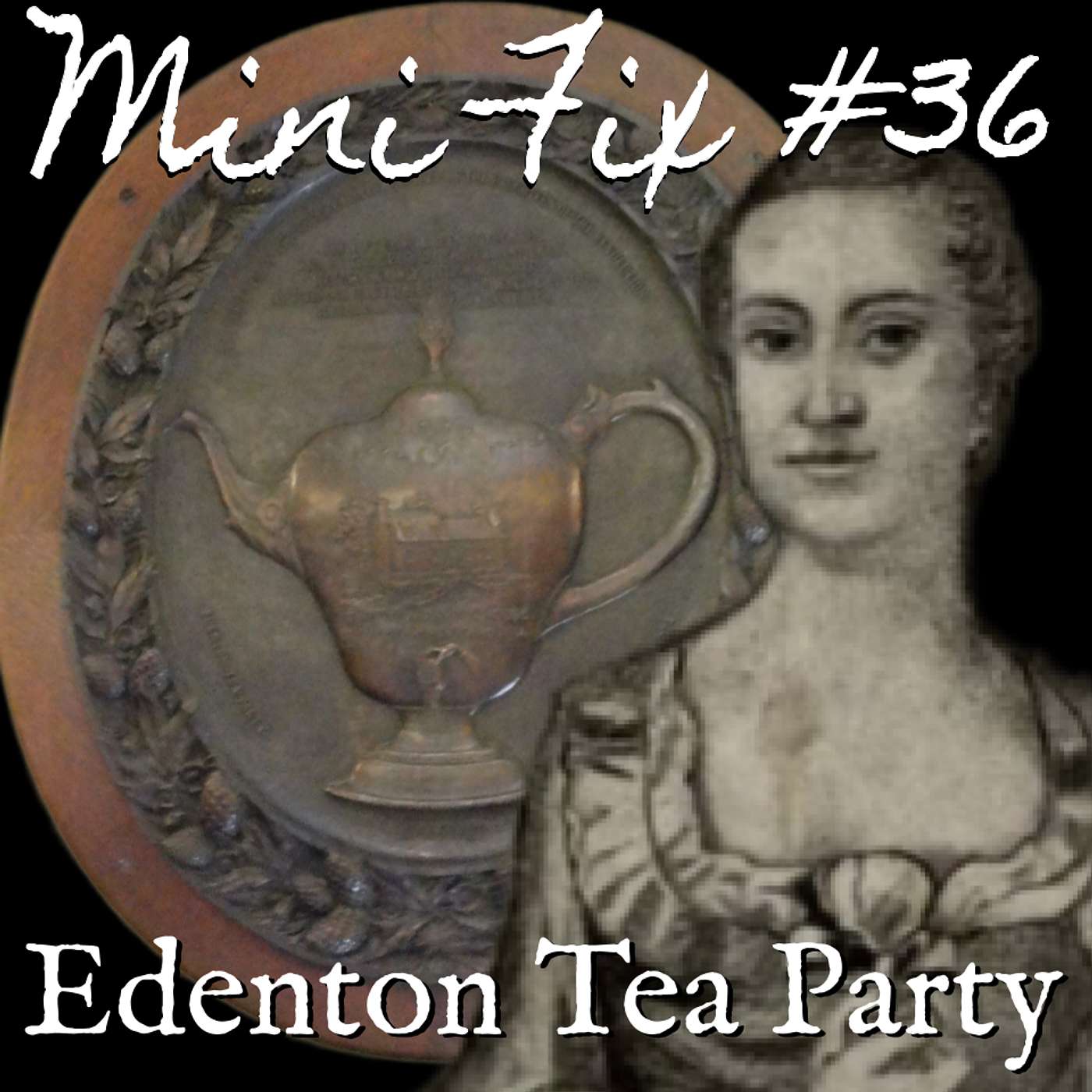
Mini Fix #36: The Edenton Tea Party
Jul 1200:20:45Tap to summarizeI've decided to release this mini fix episodes to the masses and I hope my Patreon subscribers won't mind sharing. This story has gone almost completely untold for far too long and the lessons it teaches are too important to ignore any longer. If you enjoy listening this week, I hope you'll consider subscribing to the Patreon where you'll find tons of other exclusive mini fix episodes plus other bonus content and regular episodes 2 days early and ad free. Now, let's dive into the world of Edenton, North Carolina, 1774, a world that appears to be run by an elite group of wealthy white men. When we take a closer look though, they aren't as in charge as they think they are. So who really runs the show? In this story, they'll finally step out of the shadows in a big way and sign their names to prove it. Support the show! Join the Patreon (patreon.com/historyfixpodcast)Buy some merchBuy Me a CoffeeVenmo @Shea-LaFountaineSources:North Carolina History Project "Edenton Tea Party"National Women's History Museum "Penelope Barker"Wikipedia "Edenton Tea Party"Shoot me a message! Support the show
Transcribe →
Ep. 163 Tea: How an Ancient Medicinal Drink Helped Brew a Revolution
Jul 500:41:56Tap to summarizeTea has a long and rich history dating back to ancient China. But, when you think about where in the world they drink the most tea now, one country in particular probably comes to mind. It does for me anyway: England, Great Britain, the United Kingdom, whatever you want to call it. Those guys. They really do love a cuppa tea. Tea is notably absent, for the most part, however, in the United States where coffee reigns supreme. I mean, we have some ice tea drinkers here in the south and you may have a cup of hot tea every now and then, especially in the winter time. But there is no arguing that tea is anywhere near as popular as coffee in the United States. Why? Well, to answer that question we have to go back over 250 years to a time when revolution was brewing and tea was not. Let’s fix that. Support the show! Join the Patreon (patreon.com/historyfixpodcast)Buy some merchBuy Me a CoffeeVenmo @Shea-LaFountaineSources: UK Tea and Infusions Association "History of Tea"UK Tea and Infusions Association "The Boston Tea Party"BBC "Spilling the tea on Brits' love of tea"American Battlefield Trust "Tea: Brewing a Revolution"Shoot me a message! Support the show
Transcribe →
Mini Fix #35 Preview: Historically Gay?
Jun 2800:03:26Tap to summarizeListen to this full mini fix episode on Patreon! In this whirlwind mini we’re going to talk about 7 historical figures who were at least probably gay. A few of these were definitely gay or at least bisexual. For some we’ll never know for sure, we can only speculate. But, you know, why does it matter? Some might be wondering. Why does the sexual orientation of long dead people even matter? Because in many of these examples, these are highly respected and revered historical figures and to be represented in history as impressive, capable, accomplished movers and shakers like this, to be recognized throughout history where they’ve always been hidden, is a big deal for LGBTQ+ advocacy and awareness and the ongoing fight for equality. And that’s what Pride Month is all about.SourcesWikipedia “Sappho”Wikipedia “Alexander the Great”Wikipedia “Leonardo da Vinci”Wikipedia “James VI and I”Wikipedia "Friedrich Wilhelm von Steuben”Wikipedia “Oscar Wilde”Wikipedia “Alan Turing”Shoot me a message! Support the show
Transcribe →
Ep. 162 Juneteenth: How a Day in Galveston, Texas Came to Symbolize the End of Slavery in the United States
Jun 1900:22:49Tap to summarizeSince 2021 Juneteenth National Independence Day has been a federal holiday in the United States. But what exactly is the significance of that date, June 19th? Is that when the Emancipation Proclamation was signed, freeing enslaved people in Confederate States? Is it when the 13th Amendment was ratified, abolishing slavery in all of the states? Nope. Let's get to the bottom of what happened on June 19, 1865 and why it led to a new national holiday some 150 years later. Support the show! Join the Patreon (patreon.com/historyfixpodcast)Buy some merchBuy Me a CoffeeVenmo @Shea-LaFountaineSources: University of South Florida at Saint Petersburg "Juneteenth: the complicated history, significance and celebration around the struggle for freedom"National Museum of African American History and Culture "The Historical Legacy of Juneteenth"History.com "What is Juneteenth?"Shoot me a message! Support the show
Transcribe →
Mini Fix #34 Preview: Metal Detector Finds
Jun 1400:01:38Tap to summarizeListen to this full mini fix episode on Patreon! After researching the Galloway Hoard last week, which was discovered by a metal detectorist in 2014, I found myself wondering what other treasures have been found this way. So this week I present to you 6 priceless historical treasures that were unearthed by amateur metal detector enthusiasts almost exclusively in the UK. We'll also discuss why that is... the UK thing!Sources:British Museum “Buried treasure: top 10 finds” United States Gold Bureau “10 Most Valuable Treasures Ever Found”Wikipedia “Grouville Hoard”The Guardian “Mystery of Jersey’s huge iron age hoard may have been solved”Shoot me a message! Support the show
Transcribe →
Ep. 161 The Galloway Hoard: How the Discovery of Viking Era Buried Treasure Raises More Questions Than Answers
Jun 700:38:47Tap to summarizeCome explore the Galloway Hoard with me, a Viking era treasure hoard found buried beneath a field in Galloway, Scotland back in 2014. Silver Viking arm bands, a rock crystal jar dating back to ancient Rome, a silver vessel from 4,000 miles away in present day Iran - these treasures hidden around the year 900 are incredible. But, upon closer inspection, they raise more questions than answers. Is this actually Viking treasure? Arm bands are very Viking. But then why do they have inscriptions on them written in Anglo-Saxon runes, a form of Old English? Why is there a Christian cross? Reference to a Bishop? And what does the mysterious inscription "DIS IS IIGNA F" mean? We'll uncover all of this and more to reveal a tumultuous time in an ever changing world. Support the show! Join the Patreon (patreon.com/historyfixpodcast)Buy some merchBuy Me a CoffeeVenmo @Shea-LaFountaineSources:National Museums Scotland "Discover the Galloway Hoard"Smithsonian Magazine "A Proposed Translation Hints at the Origins of the Mysterious Galloway Hoard"NorthLink Ferries "The Galloway Hoard - an interview with Martin Goldberg"Wikipedia "Galloway Hoard"Shoot me a message! Support the show
Transcribe →
Mini Fix #33 Preview: The Mayerling Incident
May 3100:03:00Tap to summarizeListen to this full mini fix episode on Patreon! In the early morning hours of January 30, 1889 Crown Prince Rudolf, the heir to the Austro-Hungarian throne, murdered his 17 year old mistress and then took his own life at his hunting lodge in Mayerling, Austria. The details of this apparent murder suicide were pretty straightforward. But, in the confusion that followed, much was done to cover up the details of what actually happened. Evidence was covered up, misinformation was spread, and medical records were falsified. In the end, a seemingly cut and dry murder suicide was twisted into a complete mystery. That is, until 2015 when a hand written letter was discovered inside of a brown leather folder in a safety deposit box in Vienna. Let’s fix that. Sources: The History Blog “Mary Vetsera’s Suicide Notes Found in Vienna Bank”Wikipedia “Mayerling Incident”Czech Center Houston Museum “The Mayerling Incident”Encyclopedia Britannica “Archduke Rudolf, Crown Prince of Austria”Wikimedia Commons “Mayerling Final Letter”Shoot me a message! Support the show
Transcribe →