← History That Doesn't Suck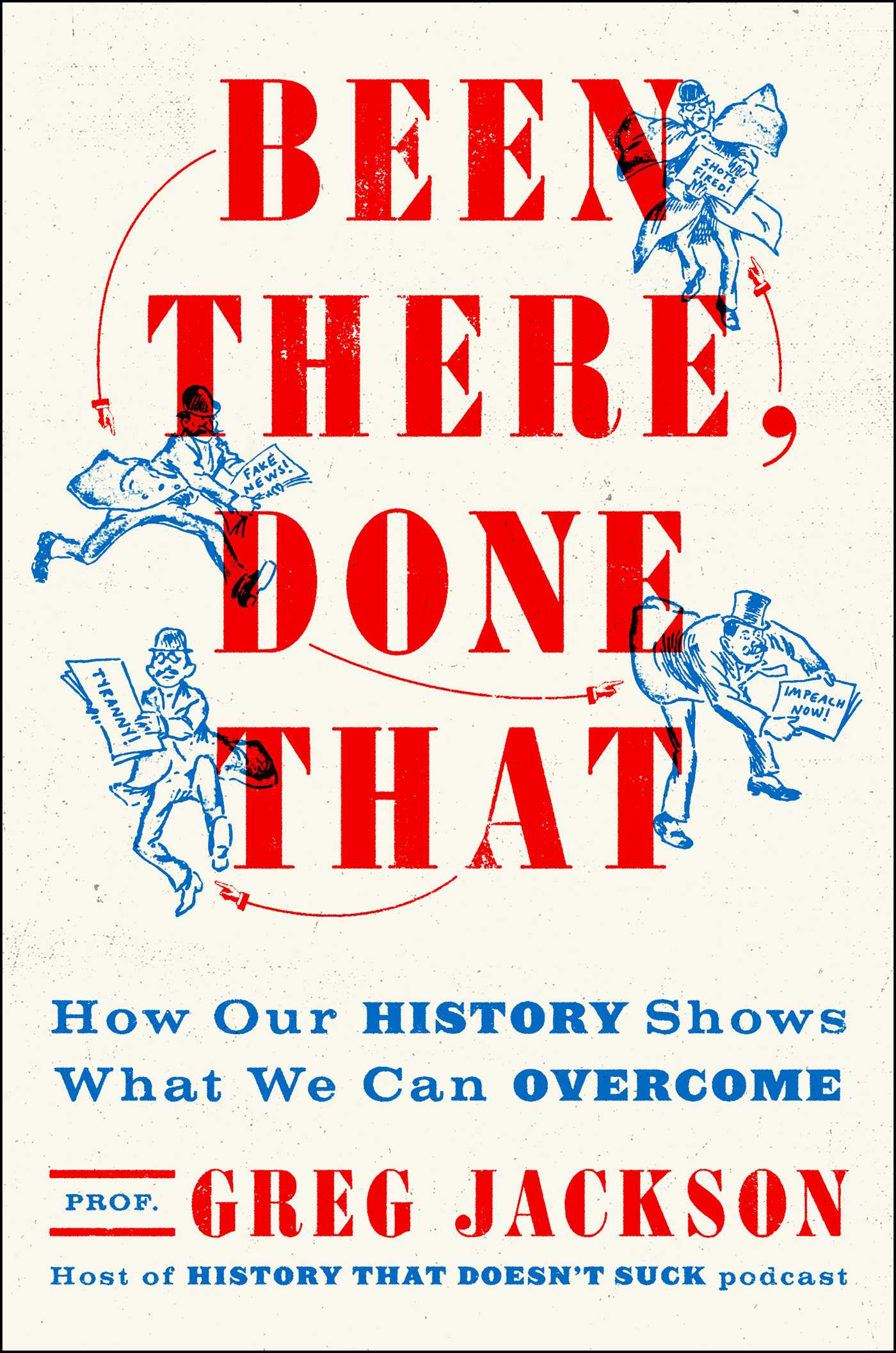
History That Doesn't Suck
Bonus: Prof. Greg Jackson interview on The Road to Now with Dr. Ben Sawyer
01:00:51
Loading summary
Transcript163 lines
- [00:01]
Greg Jackson
History that Doesn't Suck is supported by Ethos. Ethos makes getting life insurance fast and easy because it's 100% online.
- [00:09]
Ben Sawyer
You know, when you think about it,
- [00:11]
Greg Jackson
history is about the legacies people leave behind. But how often do we think about our own, Especially when it comes to the hard what if scenarios. I've seen firsthand how much stress a family goes through when a loved one passes without a plan in place. It's not just the grief, it's the sudden weight of financial uncertainty that follows. Ethos can help provide financial security for the people who matter most. You can get a life insurance quote in seconds and apply in as little as 10 minutes, often with same day coverage. One of the best parts is that there's no medical exam. You just answer a few health questions. Online, you can get up to $3 million in coverage, and some policies are even as low as $30 a month. Get your free quote@ethos.com htds that is ethos.com htds application. Times may vary, rates may vary.
- [01:04]
Ben Sawyer
History that doesn't suck is supported by
- [01:06]
Greg Jackson
Ring because with Ring, it's protected. I live in a cave. Well, not an actual cave, but a writing and recording cave, which is what my wife calls it. She works in an office and I work from home. Most days I spend a lot of time down in my home studio and am barely aware of what's going on outside. That's why I love having the Ring battery doorbell. I can keep track of deliveries and see exactly what's happening at my front door in real time without leaving my basement studio. And for the rest of my home, the outdoor cam plus gives a wide field view with super clear retinal 2K video. So even at night, I know my yard and everything in it is covered. You can even upgrade to 4K cameras with Ultra clear footage and the ability to zoom in without things getting blurry. For me, it's all about awareness right from my phone, whether I'm in my writing cave or actually away from home. The door, the yard, the home. It's everything I care about. And with Ring, it's protected shop cameras, doorbells and more right now at Ring Dot. Hello everyone, Professor Jackson here. As you know, we're in mid June 2026, a mere few weeks away from the 250th anniversary of the Declaration of Independence, the effective birthday of the United States. I trust I hardly need to explain how meaningful this is to me, and I expect it is for you as well. In the build up to early July I'm going to share some special episodes. Don't worry, our World War II narrative isn't going anywhere. But this moment is special. It's hallowed. It deserves reflection. And I want to do that reflecting with you. Perhaps especially because I know this anniversary comes with a mix of feelings. There's celebration, yet also a despondency on both sides of the aisle. Fear that we aren't what we were. I understand that fear, the view that these are unprecedented times, but I don't share it. My only real fear is that we will convince ourselves that the American experiment has passed, that we will talk ourselves into giving up. Like Abraham Lincoln, I believe that is our only real threat. To quote the gangly rail splitter who I can't help but read and hear in my own head in that nearly falsetto voice of his, if destruction be our lot, we must ourselves be its author and finisher. As a nation of free men, we must live through all time or die by suicide. I am so deeply concerned about this possible self fulfilling prophecy that I've poured my blood, sweat and tears into researching and writing a book that counters this narrative. Not a Pollyanna history assuring everyone everything will be okay, but a history that reminds us we have faced today's supposedly new challenges of fake news and contested elections and political violence from day one in this nation. That these are old demons. That we have beaten them before and we can beat them today. That the American people are stronger than all of this. I was recently interviewed by my colleague Dr. Ben Sawyer on his podcast the Road to Now about my book Been There, Done How Our History Shows what We Can Overcome. Ben pulled answers from me in ways only an old friend and fellow historian could, and I realized this conversation captured something I hadn't fully articulated anywhere else. That's why it belongs here with you. And before we dive in, the book is now out hardback and audio. Yes, the audio is read by me and available from all booksellers. You can also find a link at or catch me on the road during my book tour as well. Details@htdspodcast.com and it would mean the world
- [05:08]
Ben Sawyer
to me if you'd get a copy
- [05:09]
Greg Jackson
and let me know what you think. Look Forward to more America 250 specials this month, including the story of the second Continental Congress preparing that world changing declaration. And now please enjoy my conversation with my dear friend Professor Sawyer.
- [05:28]
Ben Sawyer
I'm Ben Sawyer and this is the Road to Now On a Boat. Please welcome to the stage my guest, my friend and yours, Dr. Greg Jackson Greg, how you feeling, man?
- [05:44]
I'm feeling good after your warm up back there. My goodness, I didn't know I could laugh that hard at 8am These guys are awesome.
- [05:51]
We're on a boat, by the way, for you guys who are listening, you don't know this. We're on a boat. We're on a cruise that doesn't suck. And it's living up to his name. It's awesome.
- [05:57]
We are having a good time, 100%.
- [05:59]
If you would have told me when I started a podcast 10 years ago that a history podcast would bring people onto a boat for, For, For. For five days and four nights of just sheer pleasure, I'm not sure I would have believed it, but here we are.
- [06:13]
I was having the same thought this whole week. This is not. I mean, you can relate to this. We got PhDs in history, were professors. This was not. They didn't put this forward as a option in grad school when they were talking about the career opportunities, they failed to mention podcaster and go out to sea.
- [06:33]
They. They did. And in fact, I was invited to do some things by colleagues this week, and I go, I can't. I'm going on a cruise. And they're like, oh, where's the cruise to? And I was like, I'm not even sure, but it's a history cruise. And they're like, you're going to like to do a history cruise? And I was like, yes, I'm going to be at work. This is delightful, man. And you've got this new book out, and we're here to talk about it, and I couldn't be more excited, man.
- [07:02]
Thank you, Greg.
- [07:03]
Up front, I'm going to say that I had the privilege of being one of the early readers on an earlier manuscript, and I took so many notes then. And since then, it's been revised. I've had. I've been lucky enough to read the book and in its final form, and somehow it got better. And I just want to. I want to start off by reading to you what I wrote originally after I finished the manuscript.
- [07:27]
I don't think I've heard this. Have at it, man.
- [07:28]
Yeah. And what I still think is true.
- [07:30]
Should I be nervous?
- [07:31]
And I don't normally read things that I've written down here. Now, you shouldn't be nervous at all. Everybody else should be nervous because they're going to try to sell their books and you got yours in the way. Jesus. Good. All right. So I wrote Greg's book speaks to the present with an element that's rare these days, wisdom. He finds what's universal. He shows you how people can violate their own dearly held convictions without seeing their own hypocrisy, how good people find their way to bad decisions. And he does it in a way that the reader can't help but contemplate their own place in the story. But he also shows us the way back and he gives us well grounded calls for optimism, even while staring straight into the eyes of our darkest moments. Greg, could you start off by telling about the project, the stories that you bring into this? And you know how this explained how these dark stories explain your enduring optimism about the American project?
- [08:24]
First, Ben, thank you. That's exactly what I was trying to do, so thank you. Yeah, I know it's counterintuitive in a way, right. When we talk about the bleakest moments in history, it's usually, well, just that we're focused on the shortcomings, the failures. Look, we're living through an era. I've heard it in the classroom, I've heard it on the road, as I've done the live show and we've done talkbacks afterward. So I'm meeting people across the country. I have these distinct memories burned into my mind. I even mentioned one or two of them in the book of people expressing just absolute despondency at where we are currently. And that is what drove me to need to interrogate. Well, basically the validity, the truthfulness of that statement or the lack thereof. Now, my gut was that, no, it's not. And in my mind, the Civil War. Easy right there.
- [09:25]
Right.
- [09:25]
It should be dispelled that this is clearly not the low point. Now that's, of course, a pretty sad place to have to go to if you have to point to the Civil War, to say it hasn't been worse. So this to me, became a project that deserved interrogation. And it brings a lot of what the podcast, what HTDS has, has filled my mind with. Right. For nearly nine years, I did feel perhaps uniquely capable to do this project. I don't think I could have done it without having done for as long as I have on top of the, the education. Right. But, you know, I feel like I stared into the abyss and I mean that truly stared into these ugly, dark moments of political violence, of contested elections, of biased or fake news. Actually, I'll say. And I get into some distinctions in the book as I really interrogate. What do we mean when we say fake news? And how does that differ, or rather overlap from right with. With hyper partisan news and what I came to was the realization of just how. How tough both the American people are and the system that we have is. And there's a combination between the two. That doesn't mean we will endure forever. But I would argue, and I do in this book, that we can. That this republic can endure forever if we, the people, continue to choose that. So in these dark, ugly, bleak moments is actually a blueprint to remind us that we can overcome, we can surmount anything and everything that we are facing at present.
- [11:06]
You start us off with the founders, which is a good place you bring us, you know, and you take. This book goes places. And I want to talk about this in a little bit. Stories that I didn't even know as someone who's been teaching us history for years. And I want to get to that. But you start off, and what I love about it is, you know, I think there is this idea that if you have faith right now or you're in any way optimistic about the American experiment, that somehow you're naive.
- [11:33]
Yeah.
- [11:34]
That somehow you must be blind. And you start off with the premise that the entire system itself is not rooted in some optimism about human beings, but it's actually rooted in a very, very, very skeptical view of humanity. And so did you go back and talk about James Madison, Federalist number 10, and how that kind of sets up the story?
- [11:53]
Yeah, yeah. So one of the things I did not. I conceived of this project. And I would say, like any good project, any good book, the author doesn't realize what they've signed up for. Right. I mean, you've felt that with research in your life, you think you know what you're getting into, and you have no clue what you have just bit off. I felt that so many times, and one of them was how deep this took me into political philosophy. And within that was James Madison. I did not expect to be citing Madison half as much as I did in this book. But in federalist number 10, he. He lays out this premise that. And I want to be clear on this, just because it's said by Madison, that does not make it true or right. So we come back to the Federalist Papers to. To things that Madison wrote, Hamilton wrote, you name it. Not because we're worshiping these men, or at least that's not why we should come back to it. We come back to it because at least in my experiences, I've interrogated these ideas they hold. They had ideas that were greater than themselves. That's where we get to federalist number 10 and Madison articulates a premise that I completely agree with as I have deeply thought about this for the last several years. And that is you cannot have liberty and at the same time not have to experience factionalism. That's the word he uses. But partisanship is the word we use today. So that isn't to say that all partisanship is good. I want to be clear on that. There are absolutely bad practices, but it is actually evidence that liberty exists. When you have partisanship, there's no utopia, there's no having this thing that we love. Right. Liberty is a word that we bat around in the United States and sometimes we can even get cynical about the word liberty or we, we will be two dimensional either way. Right. We either get cynical about it or we treat it like this overly worshiped, misconstrued concept. But there's a very real and meaningful idea to liberty in the American sense.
- [13:57]
Yeah, I mean, I think that, that people conflate liberty with what I want to do right now. Yes. Liberty is not yours, it's ours.
- [14:05]
Precisely. And that's where we get to social contract. Right. So within that important framework, Madison is saying, I completely agree with him. If you're going to have liberty where you can do a lot of the things you want, but within these spaces where we're also respecting the unalienable rights of others, that's true liberty. One, but two, you cannot have that without having to deal with partisanship constantly. That for me was a real aha moment and I feel like maybe it shouldn't be have had to have been, but it's, it's something where, you know, we, we kick around this idea that oh, they should agree, they should disagree better all the time that, that we shouldn't have to deal with these fights. Oh my gosh, Ben. Oh, the preceding generations were no better than us. And I just saw that time and time again. The violence, the vitriol, the, the cruel things said by the founding fathers, the ones who gave us our, our highest ideals. And yet this. While the ink is still drying on the Constitution, James Masten and Alexander Hamilton are writing the biggest burns about each other and publishing them under pseudonyms in the press.
- [15:13]
You know, Greg, this is, this gets your comments here. People have asked me what I think, you know, when the statues have come down of people.
- [15:22]
Yeah.
- [15:22]
You know, and what are my thoughts on it? And I say that my thoughts on it are probably the gonna irritate everybody.
- [15:31]
That means there are probably some interesting thoughts and worth interrogating.
- [15:34]
But I, if you gave me the Choice, I would tear down every statue of every human being that was ever put up. And that's because there we. When you turn people into stone, they cease to be flesh and blood. And you forget that they had the same blood in their veins that you've got.
- [15:47]
I can hear that.
- [15:48]
James Madison, though, I think the, the other reason to look to him is, I mean, he comes in with the Virginia plan, right?
- [15:54]
Yeah, yeah.
- [15:55]
So we, we live in a world that's not exactly. But it's like shaped by his thinking heavily, understanding how he builds that in that, that, that notion of what people are. And it's honesty, I think it still holds true. It's fundamental to understanding the way the division of the government was set up.
- [16:10]
Well, and that is where. And I, I get to this later in the book, as you know, but when we get to federalist number 51, right, he says that men are not angels. I'm not even paraphrasing. I'm quoting the guy. Men are not angels. So while the founders did. And you hear this sometimes when we lament our present situation, I've read, I read so many articles to this effect that, oh, public virtue is, is dying. And don't get, don't get me wrong, Public virtue. This is an idea of the founders about the need for education, for informed voters, for us participating. These things have to happen. I'm not dismissing that, but as important as that is, and as, as much as they push that, they also, I see this in federal 51. They also recognized that people suck.
- [17:00]
Right?
- [17:00]
Like that's what they were working with. They made that assumption. So, yes, we need public virtue, and at the same time, we're purposely building a structure that is ready to endure the worst of humanity.
- [17:13]
So talk about that, Greg, because one of the things I do love is that you, you explain, you know, the Constitution is a document that I feel like people talk about all the time and don't read.
- [17:24]
Yeah, completely agree with that, unfortunately.
- [17:26]
And I know that I teach, you know, I teach US History, and I see the education that people are coming out with. I mean, it has gotten worse and worse. And by the way, I want to be clear on this. When I tell you the story, I'm not in any way casting shade on my students. My students are good, who they've learned, what they're supposed to learn, many of them. I've got great students. Right. But they've clearly not even been taught the Constitution. I have them read it every semester, no matter what US History class. I teach. And I got this semester, like, three or four people saying, okay, you said, we have to read the Constitution. Do we have to read the articles? And I was like, that's like saying. So you said, we have to eat this cheeseburger. Do we have to eat that. That meat patty and the cheese in the bun? Yeah, it's like, I get. There's a preamble. That's the lettuce. But, you know, but they're like, oh, we've memorized the lettuce. We had to do that. We didn't know why, but we had to. So could you talk about that? The way that you put this. This balance of power and you kind of explain its origins, which everything makes more sense in a story. And you do this. Well, so could you talk about that?
- [18:31]
Yeah. So when we. Again, the premise, first of all, is that people are the worst. And we're building not just a republic, but with careful study, how to build a republic that can be bridged across a bunch of small republics.
- [18:50]
Right?
- [18:50]
That's what this union is. And very intentionally leaning into separation of powers and checks and balances. These are two separate ideas. We sometimes just throw them all together, right? It gets blurted out. And much like the word liberty, right? These terms that we don't think very much of, we just say them. So, you know, separation of powers, as Madison tells us in the Federalist Papers, it can't just be a separation on, and I'm quoting him, parchment. There has to be meaningful systems in place that force that separation. So that's where the checks and balances come into play to maintain that separation. So intentionally putting teeth into each of the branches so they're mostly separate, yet they do overlap slightly in. In as much as they're positioned to be lobsters in a bucket. Whenever one starts to climb up too much, the other branch can or will. It's incentivized to pull down. That doesn't mean that it will or that it will do it as fast as we want it to.
- [19:52]
Right?
- [19:52]
But the systems are in place to. To make it so that when one of those lobsters is getting too far up, eventually that. That's there, right? That. So one of them's gonna go, okay, no, no, no, no, no, no. You're getting too much power. I like my power, so I need you back down.
- [20:09]
Are you guys all imagining lobsters with, like, James Madison's head and George Washington's head just being like, no, I marked that line, by the way, that made me laugh out loud when I was reading the book. Thank you I was like. I was like, yes, this is it. I think it is great, too, because you get into this and you come at this from an angle of politics, which I think is interesting. I've always described the Constitution as a generational affair. There's this concept in history that all revolutions are a generational affair. And you have the first generation that lives it, and the second generation knows it because they were there, but they were kids. And by the third generation, the revolution's dead. And that's the Civil War generation, really, in America. But when you think about it this way, what I say to them is, my students anyway, that the American Revolution for these founders was a master class in every which way the government could abuse you. And when they sat down to write the Constitution, the original text is about trying to set up a system that cannot reproduce that. And then the Bill of Rights, you can read the Bill of Rights as everything that happened to them. I mean, it's absolutely. Literally, you go, that happened. That happened. You can't do this. And. And, yeah, I mean, some of the
- [21:19]
things, they're just so specific, Right? Yeah, it absolutely reads like a. If I may, it's like a divorcee listing all the things that they do not want in another partner. Right.
- [21:31]
Yep.
- [21:32]
I remember when he did that. So that's never happening again.
- [21:35]
And the government can only have our son every other weekend. Boom.
- [21:41]
And it makes sense, Right. Like, what are they going to think through? What. What are. They've seen these very specific abuses. And. And they're also very careful to say that this isn't. This isn't the limit. We're not putting a cap to call these the only rights that a citizen has, but there are some that we definitely know get abused by government. So we're going to list those right now.
- [22:02]
The Ninth Amendments, you know, all. You know, the way I always do it is up in my. I have hand signals to remember it. And I put up 10 fingers and I hide my thumb and I say, all right, you see, nine fingers doesn't mean the tenth isn't there. Right. Just because you don't see it doesn't mean it's not there. And I think when you consider it this way, you've tapped into the wisdom that these guys gained from it. But I think collectively, if you understand the story, what you really look at the Constitution is as a love letter from a past generation trying to do what all generations do, which is to prevent. They're the next generation from going through what they went through.
- [22:36]
Yeah.
- [22:37]
And you can't replace that. That's the thing to remember. We got lucky. The stories you tell. And you know, if there's any you want to go into, let me know. But the one that got me in this book was about The War of 1812, a war that we. That we just kind of gloss over. You know, we know anything about it. We're like tariffs or something. Andrew Jackson and. But you've told this story about what it looks like on the ground. And could you, could you tell a little bit about that story as a teaser for this book? Is that story had me really, like, upset as I was reading it.
- [23:08]
Sure. Yeah. So as we get to the War of 1812, I mean, I know this is really hard to wrap our heads around, Ben, but hear me out. We have two political parties. Two. Okay. And they are both convinced that they are the real patriots. Again, I realize this is very unfamiliar turf. They go so far as to think that the other party are actually filled with traitors to the nation. Again, inconceivable today. I realize this. And so as the Jeffersonian Republican dominated Congress, so this party is also called Republicans. And let's, let's, let's be careful and clear. This party will eventually collapse and then there will be another party started right in the 1850s. That, that's the GOP's origin point. But these early Republicans, these Jeffersonian Republicans control Congress. James Madison is a Republican. He's the founder of the party along with Jefferson. He just didn't get the credit. You know, you know how it is. Tommy's always like, hey, little Jimmy, go do this thing. He's like, sure. And then Tom's like, oh, it was a good thing. That's my credit right there.
- [24:16]
Actually. I think Thomas Jefferson was like, hey, Jimmy, go do that. Didn't he have like a really high. He was like 6 foot 2 and had a highest pitch voice. I love it.
- [24:23]
You know him, Lincoln, I guess that was a thing.
- [24:25]
You know, the taller you were, the more you lost, right?
- [24:29]
Yeah. So. But the Republicans, they control Congress. We have a declaration of war. Federalists are of course agass. That's the other party. And we have this gentleman, Alex, living in Baltimore. He is a hyper partisan federalist and he has a newspaper confusingly named the Federal Republican. Yeah, that's great. But in it he puts on blast the Republicans. I mean, he rips them apart for this declaration of war and basically calls them, you know, all, all traitors. You're the worst. James Madison is a puppet of Napoleon things to that effect. And the Republic. The Jeffersonian Republicans, you know, respond just the way you'd expect in a responsible republic. They literally level his office building. The building, the entire office building, they rip it down. As the mayor stands on the side saying please don't do that. Yeah. So Alex and his buddy Jacob, his co editor, they respond in the only way one would expect. They come out with another paper and when that one comes out, this is where things truly go off the rails. They have a new office building and they've defended. It's like Home Alone. Right. Like they have set up. It is booby trapped. It is ready for the attack. And there they are with the likes of Light horse, Harry Lee. He's a federalist, so he's in the house with them. General James Lincoln, another former Continental soldier officer. And it turns into a full on street battle. The Republicans respond. They come throwing stones, stones turn into musket fire. A cannon is brought out. And by the end of the night, to not give the whole story away, but to tell you where this goes, by the end of the night, these federalists are placed in the jail, both said for protective custody and as being under arrest. The narrative is two different sides. The Republicans break into the jail to kill them. And the night does not end with everyone alive. I will leave it, I will say that they are beaten with sticks. Axes and swords are swung at them. They are poked with pen knives. My absolute gut turning moment though of all the violence carried out against them. Again, this is partisanship driving it. Right. The Republicans to check if they're alive, hold their eyes open. Their fellow Americans hold their eyes open as they drip candle wax, burning candles, drip candle wax on their eyeballs to see if their body convulses reacts. Yeah. And as they do that, this being a very gendered era, this is the men doing this. Their wives are present screaming kill the Tories. And this is right out primary sources. Children are dancing and clapping around them as the Republicans call these federalists, quote unquote Tories, which anyone who knows the revolutionary history knows exactly what that means, basically traitors. So again, this is our allegedly enlightened early years. And this is where I just don't know what these enlightened years that we're supposedly trying to get back to are.
- [27:56]
Yes, the nostalgia. Yeah, right. We could just get back to. And it's like be careful where you stop when you go back.
- [28:04]
Exactly.
- [28:05]
You know, this is a point that I think that your book makes really well here. You show that making good policy and creating a country we want to Live in. We want policymakers who have great foresight. But I think your book makes the case that great leaders also need to have great hindsight.
- [28:27]
Yes, I would absolutely agree with that.
- [28:30]
I think we all should, too. Yeah. That story, the story of the War of 1812, it hit me because I thought about how many of the people that were involved had been part of the Founding.
- [28:42]
I mean, the moment in that chapter. I'll go ahead and share this one, too. The thing that hit me the most was General Lincoln's death. So General Lincoln, a Federalist when he was a young Continental. He was nearly killed by Hessians in New York in George Washington's campaign in 1776. Right.
- [29:04]
Greg Jackson
The year that tries men's souls.
- [29:08]
Ben Sawyer
Hessian bayonet rips through his chest. He's taken prisoner by the British. He's on a British prison ship, which is pretty much the most miserable experience any American could have in the American Revolution. It's a death sentence nine times out of ten. I may be making up that statistic, but you take my point.
- [29:24]
Got it.
- [29:25]
Okay. He's approached by the British. This is true. He's approached by the British. He's offered a commission as a British officer. Clearly speaks to his intelligence capability. And he's offered a huge signing bonus. Traditionally that number is reported as £10,000. We don't know how accurate that that is, though. But that's the reported number. That's a fortune. He says no, he believes in the revolution. Fast forward to 1812. He's a Federalist again, a patriot. He believes in this vision that aligns more with Hamilton's vision than James Madison and Thomas Jefferson. But in this hyper partisan moment, these Republicans are convinced that Federalists are traitors. So he has been abused, he's been physically beaten along with his fellow Federalists. They're in this jail yard in Baltimore. And there's a conversation actively happening between the various Republicans about what they're going to do to Lincoln. And as one of them calls him a Tory and a traitor because they know his past. Right? So there's this moment of cognitive dissonance where the mob mentality breaks just a little bit. And this realization, wait a minute, this guy has given a lot for this country and we're calling him a traitor. What are we going to do to him? And someone yells out something to the effect of, he might have been a patriot then, but he's a traitor now. Lincoln tears his shirt open and says, does this look as if I was a traitor? That that nasty, purplish hued skin on his chest where a hessian bayonet nearly ended his life. The crowd responds by hurling a stone that strikes him and knocks him over. It hits him right on the scar. And then the pen knives come out. The mob mentelli's there and they just fall on him. He's dead by morning. This hero of the revolution is killed by people who call themselves patriots.
- [31:21]
It's heartbreaking. That's why I said when I, when I read this chapter, I didn't know the story and I, you know, hurt and I think it's a good reminder though, and this gets into an issue that you talk about in the book, that we allow ourselves to be overwhelmed by stories that are, you know, that you're directed with, with clear evidence. Don't track.
- [31:44]
Yes.
- [31:45]
But your gut gets a hold of you instead of your mind.
- [31:48]
Yeah.
- [31:49]
And we see the worst things happening whenever you allow that to happen. You know, when you make these moves. This man who sacrificed a man who could, you know, could have. I mean, his last moments must have been thinking like, did I make the right decision? I mean, this is, this revolution is what he, he risked his life for and now it took the outcome, took his life. Yeah.
- [32:08]
Well, arguably he ultimately lived for and did die for that dream. Right. He, he is effectively our first documented death. And remember that this goes back to a fight over the press, Right. Over a newspaper saying things that the other party didn't like. You could arguably say that James Lincoln, general in a state militia is effectively our first documented death for the first amendment, for the freedom of the press.
- [32:37]
Greg Jackson
History that doesn't suck is supported by Instacart. One thing I've really been trying to protect this summer is my time, especially weekends. I don't want to spend it running errands. That's why I started using Instacart. I can order everything I need from my favorite stores without leaving the house. What I love is being able to customize everything. I get my preferences saved to make sure everything is just right. The household shopping list is pretty specific about brands and produce, so I know I'm getting the brands and quality I want every time. Whether it's snacks, drinks or ingredients for dinner, it just shows up the way I expect. And it's perfect for those last minute plans. If friends are coming over or I decide to cook instead of ordering in, I can quickly place an order and keep things moving. No extra stress, no extra trips. Instacart brings convenience, quality and ease right to your door. So you can focus on what matters Most download the Instacart app now and get groceries just how you like.
- [33:35]
Ben Sawyer
History that Doesn't Suck is supported by
- [33:37]
Greg Jackson
Ring because with Ring it's protected. I live in a cave. Well, not an actual cave, but a writing and recording cave, which is what my wife calls it. She works in an office and I work from home. Most days I spend a lot of time down in my home studio and am barely aware of what's going on outside. That's why I love having the Ring battery doorbell. I can keep track of deliveries and see exactly what's happening at my front door in real time without leaving my basement studio. And for the rest of my home, the outdoor cam plus gives a wide field view with super clear retinal 2K video. So even at night I know my yard and everything in it is covered. You can even upgrade to 4K cameras with Ultra clear footage and the ability to zoom in with without things getting blurry. For me, it's all about awareness right from my phone, whether I'm in my writing cave or actually away from home. The door, the yard, the home. It's everything I care about and with Ring it's protected. Shop cameras, doorbells and more. Right now@ring.com history that doesn't suck is supported by Bob's Discount Furniture. You know how stressful it is trying to find furniture that's actually affordable but still looks good. I feel like it's always one or the other. It probably won't surprise you that I like to do research. Historian that I am, I research and
- [34:58]
Ben Sawyer
read reviews before I buy anything, especially
- [35:00]
Greg Jackson
something as big as furniture. And Bob's Discount Furniture makes that easy because they've got thousands of products with verified five star reviews. So when I'm shopping for something trendy and high quality, I know Bob's delivers. Take their Elm dining set. It's basically the ultimate designer dupe with over 700 five star reviews. You get a real marble table and super comfy Bob o Pedic seating that'll seriously impress your guests. And the price? Just $999. Or if you're upgrading your sleep, Bob's best selling Copper Radiance Queen Extra Firm Mattress has over 400 five star reviews and is even recommended by Consumer Reports. It's got a copper infused cover, high density Bobo Pedic foam and a 20 year warranty for quality furniture and everyday low prices. Shop at Bob's. It's where America shops for furniture.
- [35:51]
Ben Sawyer
Now again, as I pointed out earlier on one of the things that you're really good at is you take us from just staring straight into the darkness.
- [35:59]
Yeah.
- [35:59]
And you pull us back out. And one of the things that you say that I like, you know, we can feel overwhelmed whenever we see all of it at once. And I get it. And you know your opening line, you say, it's never been worse. The refrain is common. And although I reject it, I get it. And this is what I love about your approach. You're not telling people they're wrong. You're saying, I get why you feel this way. But I want to walk you through a story that pulls you out and your simple solution. And I think this is why, in a weird way, this book can be called practical. It says to fix the big things. What you can do is you can, as an individual, begin to steel yourself against the worst impulses. So could you talk about that?
- [36:43]
Absolutely. And, you know, I'm grateful to my. To my editor. She pushed me on this. She. She's part of the reason why this. Why this book took more of that. That approach. To get back to where we started with this conversation in a way, again, the founders assumed, rightly, that the worst of human impulses would attack this republic. And so they built it ready and able to endure our worst. But for it to truly endure it also requires at least a core of us to give. To give it our best. So that's where this concept of public virtue. It's a phrase that the founders used. Right. Comes up now. What does that idea of public virtue mean to us today? That's where I ultimately go. By the time we get after we go through these stories, that I hope convinces all of us that. That we can get through our present because we've been through so much worse. But how do we continue on? This isn't just hope for hope's sake. That. That's a fairy tale. This is hope based in reality, which means we have things that we have to do. So that public virtue that comes to civic engagement, it comes down to perpetual learning. Right. Not just going to college to get a degree. And I think fewer people do that than sometimes is perceived. But, Ben, we both had those students where you're like, okay, you're definitely here to get a piece of paper, but so many others, I think anyone listening to this podcast, right. These are your people who want to learn. You want to better yourself constantly. We need that. And that's what sharpens our mind, to be able to discern and judge as we vote. And that brings us to civic engagement. Now, that can look like a lot of different Things at the high level. Sure, it means running for office, but I also want to remind those listening and those who read the book that running for office doesn't mean running for Congress. Your city needs someone on, on the library committee. Right. These appointed offices or volunteer positions. All those things need to be done. And that is how we carry this republic forward. It's, it's service, it's being educated, and, and we've, we've got to curate our own media consumption in order to do that.
- [39:12]
Yeah, the, the golden thing to me about history is that it is not a class and people think of it as a class. You know, my students go, I'm not good at history. I go, you're not good at anything that's happened before. Like, no, what you think is you're not good at memorizing names and dates outside of a context. You know, I always tell them, I'm like, how many of you guys have seen the Avengers movie? You know, a bunch of them raise their hand and I go, tell me about Iron Man. And they'll, okay, well, you know, he seems like he doesn't care, but he does, you know, and then going to all these end up stories. And I go, like, how many hours have you spent watching Avengers movie? And they're like, probably like eight or nine. And I'm like, but what if I just gave you a list of all those characters with traits listed underneath them and sent you home right now and said, in nine hours, come back. There's going to be a quiz on all these characters. Could you memorize, like 30 characters and their traits? No. Well, yeah, exactly. Because if you think of history as random dates and on a list and not a story, then you're going to fail. Because. Because you can't just. It doesn't matter, you know?
- [40:13]
No, it doesn't. You have to have stories. And I've been right, that this is, this is what informs our approach. History has to have the story in it. That's what makes us care. It's when you're invested in the characters that it comes to life. And I think it's perfectly appropriate to think of these historical figures. And sure. We approach it. I mean, on hd. Yes. I approach this with rigor. Primary and secondary sources, we never make anything up. But think of these past figures as characters and we're following their arc.
- [40:44]
Yeah. Everything you read in history is just a previous chapter to the one you were born into.
- [40:48]
Exactly.
- [40:49]
You're writing a chapter now, but you're not. You weren't born into nothing. You were born in a story that was always already being written. And if you don't know it, you're at a disadvantage.
- [40:56]
And Ben, this is where I understand why we can feel like today is so bad. Because you're on the blank page as it's being written. That's terrifying. It's always terrifying. It doesn't matter how. How bad those previous chapters were. You know that they end. Okay, because your chapter exists, right? So we can look at something as bleak as Antietam, the bloodiest single day in American history, and we can read about that. And it's not that we're dismissing the violence and death, the astounding figures of over 22,000Americans becoming casualties that day, but we read that and we know that the Republic endures, that those deaths weren't in vain, that it led to the American experiment continuing. And there is a calming piece to that. And even if the battle of Antietam so, so long ago, we're not looking at those sorts of casual casualty numbers here in 2026. But we don't know what comes tomorrow. And that makes our tomorrow more scary than this awful day a century and a half ago.
- [42:00]
But not scarier than their tomorrow.
- [42:03]
Correct.
- [42:03]
They had every bit the doubts and uncertainty about where things were going, like, you know, how it ends. They did not.
- [42:09]
And that's what I want the reader to get. And they not only saw that sort of harrowing moment, but they passed this Republic on to us, this Republic that we have continued. Two steps forward, one step back. And your politics will, will inform what you think were those steps forward and those steps back. But I think most of us would agree if we really pause and think about it, this is a better Republic today than it was 250 years ago. That's longer than the Constitution. But let me embrace that number as we, you know, live in this America 250 moment. Right? This started beautiful as the ideas were. This started as a limited republic that by and large, you had to be a property owning white man in order to have a vote in. We have expanded this for all of our concerns in the present. We have expanded this to truly being a republic where again, we can talk about policy issues. But the premise is that as an adult with citizenship in this nation, no sex nor creed, you name it, is denied the vote that you have that right. This is a wildly improved Republic. If they could overcome their challenges and they could deliver us something better today, how on earth can we say to ourselves that we are incapable of doing the same for the next Generation.
- [43:35]
This is why I think staring into the darkness is important. You know, there's two moments that I really, in my 20th century US history class, I say, you know, if you're looking at what's going on in Europe in the 40s, right, with the Nazi war machine, right. You can be. You could look at someone who could look at you and go, they're unstoppable. And you can understand why they would say that. But people didn't let that stop. And there are people who died on the beaches of Normandy to leave a world behind they never got to see.
- [44:04]
Yeah. And they don't know how the story ended.
- [44:06]
They don't.
- [44:07]
That's it.
- [44:07]
But they went in and they left this to us. When you look at the Freedom riders, you know, 1961, they go through the South. You look at that and you go, this isn't even a couple of years of a war machine. This is hundreds of years of white supremacy.
- [44:22]
And, Ben, can we just pause and think about the fact you're now naming a date? That there are listeners right now who have memories.
- [44:29]
Right.
- [44:30]
It is not that long ago when you really pause and think about it.
- [44:34]
Yeah. My father was born in 1945. And once we get past this, I constantly say, you know, okay, so the Freedom Riders faced this in 1961. My father was 16. Right. Roughly the same age as you guys are in this class right now. There's two ways that I always try to demonstrate to them, and this is why you got to stare into the darkness, because you got to say there were people up against things that when you look at, you say, how would they ever get out of that? And then they did.
- [45:04]
Greg Jackson
Bingo.
- [45:05]
Ben Sawyer
Because they didn't stop. They didn't let any. They didn't believe the other stories. They said, well, either it will endure, or I will go down trying to bring that to life.
- [45:14]
And, you know, Ben, we can even go right back to the founding for that. I am so glad that that founding generation had the spirit of 76, that they did not say, well, yeah, we have these concepts of liberty, but, you know, they'll just never happen. Look at the way King George III abuses us. Oh, well, we don't. We don't have the vote in Parliament.
- [45:33]
What are we going to do? Take on the world's greatest empire? We don't have a navy. Okay? Those are the two ways that I. That I try to drive this home to my students is I go, all right, you guys are all like, rah, rah. Democracy. Like 1776. Okay, let's just do this experiment. This is great. In a college classroom. I go, all right, white people, raise your hands. You know who you are, right? And they all raise their hands. And I go, all right, everybody put them down except for white men. And then you got hands. I go, okay, cool. Now keep your hands up if you own property. And then a couple of them have their hands up. I go, not if your dad owns property. If you own property. And then all their hands go down. And then I go, oh, just me. I love this democracy. Let's get to voting. And then I go now. And then I kind of laugh. And then I go, now put your hands up if you can vote now.
- [46:22]
See, that's beautiful, Ben.
- [46:23]
I go, that's the difference. And I also remind them that, you know, I can tell you this isn't even. This is even from 1776 to now. My father was born in 1945. In 1945 it was legal to segregate. Segregation was the practice of the day. My father was born in 1945 when segregation was endorsed by the federal government. When my son was born, we had a black president. That's a hell of a swing for three generations, that is. And it didn't happen because people gave up. Now I want, I want to interrogate something here. I want to. I want to bring something up here because I know that anytime you say responsibility ultimately starts with yourself. There's a lot of people who go, oh, you can't do that because people are too dumb. And you have a great point in here. And you say that if you don't trust ability, Americans ability to judge news sources and sort through this, then you really ultimately don't trust Americans ability to self govern. Yeah, and talk about this. Back this up.
- [47:20]
Yeah, Ben, I mean, writing this book, this project, it took me to places again that I just didn't expect, I didn't see coming. And I think our most profound moments often are the simplest.
- [47:38]
Right.
- [47:39]
You know, you're capturing something meaningful when as you see it, you had the thought, how did I not see that before? That seems just so painfully obvious. And yet it crystallizes for you, for us to say. And you know, this is built on. Keep in mind this. This book has been three years in the making. So I have now poured over the hyper partisan print wars of the 1790s, the fake news, fake news being defined. I use only the definition given by journalists and academics, which is that it's not only incorrect information, but it is intentionally so. That is a meaningful delineation.
- [48:18]
Right.
- [48:18]
That the reporter, him herself does not believe that it's true. They are trying to sow doubt. They're trying to obscure the truth. And we see that. I found it throughout the 19th century, but really coming to bear in a painful way in the yellow journalism of the late 19th century, seeing these intentional attempts to obfuscate, to lead Americans astray, seeing political violence on the level of hot wax being dripped on people's eyeballs. So just stick with that example. There are plenty of authors in the book. Right. And contested elections that led to, you know, candidates for the highest offices both insisting that they won. I'm looking at all of these moments and I see the American experiment enduring. And it is because our better angels refuse to give up. And that to me is government by the people, for the people hanging in there. I think for us to cynically say that we can't do it today, when the vote has never been more accessible, when we have never been more able to communicate, to only see the weaknesses of the ability of new technology to further sow seeds of doubt and not see the other side of that same sword which allows us to better get information out. That is to admit that we do not actually believe in the American experiment, that we do not trust the American people to read, to evaluate and to make decisions and to mess up. Absolutely. To cast votes that you will later regret. That is a part of the process. We don't get it right every single time. But. But in the long run, to believe that we will get to the right place, that we will keep this ship afloat. You cannot simultaneously reject the average American's ability to participate in the political process and state that you believe in the Republic. That really came to be clear for me as I watched, as I read through and saw Americans imperfectly, generation after generation, sort through all of these same challenges with the news, with electoral processes, with political violence that we see today.
- [50:36]
There's a line in here that I'm going to say right now and then it goes along with this. But I want to say this because I realize that there will probably be an army of thousands of people who do not like this line and immediately go to debunk you. And the line is that the, the 24 hour news cycle of the. That began in the 1980s was a, quote, small scale technological revolution. Not that big of a deal.
- [50:57]
Greg Jackson
Sure.
- [51:00]
Ben Sawyer
So go get the book right now and write something meaningful. Don't just argue with me. I just said it right. The book makes a good case. And if he's wrong, you need to read the book just to prove that I wonder. Greg, I want to pull outside the bounds of your book for a minute.
- [51:14]
Okay.
- [51:14]
And throw an idea at you that I have that I think might, might work well with those in terms of understanding it. And that is, you know, if we look at the founding generation, understand how their world shaped, you know, the decisions they made and how they saw the world, then it's worth contemplating where we are and where we might be. And I just want to lay out an idea for you. I have this. It's not a perfect kind of way to put about it, but that there's. There's really two things that happened to the United States that continue to shape us and our perspectives on governments. And the first thing is the end of the World War II moment.
- [51:52]
Yeah.
- [51:53]
I mean, I don't think Americans recognize, you know, when the rest of the world is destroyed, you come home having defeated some of the greatest war machines ever, ever created. You. You unlock the power of the atom.
- [52:07]
Yeah.
- [52:08]
You do all of that and you come back to a world that is major cities are destroyed. You've convinced the rest of the world to use your currency as their currency, backed up by gold. You then loan hundreds of millions, and I don't even know what the number is in today's terms to the rest of the world, and then they pay you back with interest. It's the Best Buy model.
- [52:28]
Right.
- [52:28]
That's the reason they always try to get you to the credit card, because the sale is sweet, but getting interest on it's even sweeter. And we had a 60% of the world's industrial capacity by the highest estimates, somewhere between 50 and 60%. And it happened in the Cold War at a time where we needed to tell the world that we were the best. And I think what happened is we started believing we were just special, that we're just special. That is not work. It's not something that somehow some higher power has made us great. And that all fell apart in the 70s because the rest of the world rebuilt and started catching up with us. And that occurs at the same time as. As the is the public confidence breakers, which is Vietnam, Watergate. I would throw Iran Contra in there, which often gets written out. Series of presidents from multiple parties. And between them, Jimmy Carter having the gall to tell Americans to buy less. Are you kidding me? You guys ever seen that jerk? He's up there all like, we have enough. Should we love our families and just have just be fine with this? And America's like, we're going to crucify you in 1980. But I think there's these two things which is this break in trust, the Cold War era belief that we're just special because of a momentary thing that happened. And I think that we are. The analogy I use is we're in mourning. And what's happened with our partisanship is that when Carter said to everybody, hey look, can't always, you can't have everything forever for, you know, infinitely the Democrats said nah, let's not do that again. And they've been locked in the denial phase of mourning. But the Republicans have advanced to the anger stage of mourning and that's the reason they're winning because they're more advanced. But I think that that's what shapes us is this kind of we don't want to acknowledge what's happened but that we need to really to be able to process all this, get to the acceptance phase. What do you think about this, Ben?
- [54:28]
I'm processing some of the what you've put before me here.
- [54:30]
Man, I wish Greg goes, nah, that was stupid.
- [54:32]
No, no, not at all. No, not at all. You know how slow, methodical and meticulous I am.
- [54:39]
Let me put it another way.
- [54:40]
No, no, no, no. I, I, I'm, I'm with you. I, I, I actually really think that this is, this is an interesting framework. My, my reaction to that is to say that I, I definitely believe and I believe it because of my studies not, not out of some gu American republic. The Constitution as conceived and the way that we have altered and amended those crucial concepts to what we are today continues to be imperfect, but a still more perfect union. It is special. I do believe it's special. That's not a special that allows you to stop working. And that is what gets to what you're pointing to. And that is the failure that I think we do grapple with in the present. Is the sense that supposed to because of the specialness of this framework just have special outcome all the time? Rather, you know, Uncle Sam, if we can personify the nation has to remember that being an elite athlete means continuing to train. You don't get to sit back and just call it a day just because you've got gold medals. If you want to keep winning gold, you have to stay sharp. And I suppose in a way we might say, well I'm begging Americans to do. What I'm pleading with Uncle Sam to do in this book is to remember that one you're complaining about a race today that is shorter and has a lower threshold in order to qualify than races. You have smoked in the past. Please remember that. And two, you know what? You are right that you can't qualify today if you're not going to train. And that is where I get back to this being a reality. Grounded hope. This is not a promise that everything's going to be great butterflies and, you know, ponies for everyone. No, this republic is something special and delivers something special. When the American people live up to the hard work that it is to have those gifts. And that hard work does include constant partisanship. It can be better than it is right now, I do believe. But you do have to accept that partisanship is a constant.
- [57:04]
Yeah, no, I like it. That's. That makes me happy. Because I think that in. This is the idea that sometimes we. Sometimes we. What we. What we have here is an inheritance. And that's what history is, is studying the inheritance that was left to you. And if you're not careful, you can squander it. But if you understand it was an inheritance that you didn't earn and study the people who passed you the inheritance, then you can be a good steward to it.
- [57:30]
This is an amazing trust. Don't blow it.
- [57:33]
Yes. Because I just think that if you believe that you're inherently special and things don't feel really great for you, you are prone to be duped by the worst people you know. Because mindfulness, Right. A mindfulness that this was passed to you when things go wrong. The smart question is, what happened? But the demagogues always say, who did this? And feeling like you're special means you're supposed to be special. It must be someone's fault whenever you don't feel good.
- [58:02]
Well, and that, Ben, that is why I do like holding to the idea that our ideas, our framework, that is special. I do not want to mistake myself for being special.
- [58:14]
Yes.
- [58:15]
What we have is special. It deserves my blood, sweat, and tears to hold it together. And I can't do that by myself. It is we, the people. We are in this together. And that means across the aisle, too. I need smart people who disagree with me to participate.
- [58:33]
That's. That's beautiful. I like that distinction because it's like we're not special, but we have something special. It's ours. That's beautiful. To conclude here, I want to. I want to ask you about something that's different about this book than your podcast.
- [58:48]
Okay.
- [58:49]
Your podcast is beloved, and I love it, too. Because, Greg, I just want to say this. You and I have become friends over the idea that at the starting point, from moment one with history, it belongs to all of us.
- [59:00]
Yes.
- [59:01]
And it never fits what you want it to fit. And, you know, when you tell the story honestly, no one gets exactly what they want.
- [59:08]
Amen.
- [59:09]
But you still got to tell the story to understand how it processed. And this is what I love about you, Greg. And this is why this book is important, and this is why this country needs you. And I'm honored to be here with you right now. But you do something different here, because in this book, you really engage with very recent history in a way that I think both your audience will find different. But also even us as historians sometimes hesitate to step outside the bounds of, you know, at least 25, 30 years ago.
- [59:34]
Yep.
- [59:35]
And this comes with your discussion of the election of 1876 and the parallels with the election of 2020. And I was wondering if you could talk about that and how you came to the decision to. To step into that when it is different than. Than what we've seen from you before.
- [59:51]
With my gut in a knot then, because I didn't want to, we get back to projects being bigger than ourselves, right. Where we end up in places we didn't foresee. And so many times, as I work through, whether it's getting to political philosophy, as I'm diving into Madison in a way I didn't expect, but, you know, that. That kind of feels a little bit better. I did not foresee. And upon reflection, I feel like I should have. I felt compelled as a historian. I had to. How could I write a book
- [60:29]
in
- [60:29]
which I engage with the election of 1876, which I selected because it's truly the most corrupt election. I stand by. That is the most corrupt election. Presidential election in American history. It is an election in which four states sent more than one set of electoral votes to Congress. Florida sent three. Yeah. Florida, of course.
- [60:58]
Well, Greg can also add, I'm from North Carolina, so I'm obligated to point out that South Carolina sent totals that were 101% of the population, thus proving my North Carolina claim that South Carolinians can't count. Anyway, go ahead.
- [61:11]
So, you know, I started there because this is such an egregious failure. Right. And South Carolina's 101%. And you talk about voter fraud. That's when it's obvious. That is when it's up. Even the humanities guy can look at that and go, something's wrong. Yeah, I can handle that math. But for all the talk of bribery, the actual murder. Right. Deaths at the hands of Paramilitary groups, the White League and so forth, killing black voters. What I did not appreciate, even though I lived through this, right, but the way it hits after I have torn through this election and the history of all the moments at which Congress had to sort through contested elections, the way that 1876 was so pivotal in what Vice President Mike Pence had to say that very day and what Senator Lindsey Graham said that night after January 6th, as the Senate reconvened, in my mind, to be the historian that I am, the historian that my audience knows, and beyond audience, this one I want to be. I have to follow the sources. That's what a historian does. It doesn't matter if it's uncomfortable. That discomfort is much easier to handle when it's 150 years ago. You know, even now, as HCS gets into World War II, it's still easier. But now I'm dealing with this discomfort right in my face in 2020, having not appreciated how into the present that assessing the election of 1876 was going to take me. One, I think doing this in a book gives me a space to be able to do this without broaching that on HTDS, right? But two, I did realize that January 6th, to serve the same sort of analysis that I brought to the Baltimore Rides of 1812, right? To try and tear through the sources and tell the story, as you said, Ben, without, you're not looking to make heroes. You're not looking to make villains. You're trying to let the sources do the talking. And it was an important component of showing how the election of 1876, this moment that broke us, or at least that's how Americans felt. Jeremiah Black, an attorney who represented the Democrats as the election turned into an absolute nightmare of a fight in Congress, he exclaimed that we will never have such a thing as an honest election again. He wasn't being hyperbolical. He was confident. He was sure that this election had broken America, that the presidential election of 1876 had ensured it. And for me to then tear through the, you know, this moment in 2020, this moment that to this day, it hurts for Americans of all of all sorts of political convictions to feel that same sort of sentiment, and for me to be able to look at Jeremiah, see that same despondency, right, to look into that abyss and see him there, see his face reflected back at mine, and then to be able to think that we've gotten to a place that this is such a forgotten election, that there's this vague recollection that something seedy happened, but that we could have these great highs, this golden era that followed, that we all now look back upon and romanticize. This was far before America's peak 20th century moments. If we could build to that and be in a place where. Where the senator from the state that cast 101% of their elect, you know, of their votes has to remind his colleagues on the Senate floor of that election and how it went, because even they don't remember the details. That tells me 2020 is not insurmountable. This republic is absolutely viable and that is where we get hope out of the darkness. And how could I not bring that to bear?
- [65:27]
I agree, Greg. And you guys should read the book, check it out for yourself. I couldn't recommend it more. This is a book that I feel like Americans need to read. And I feel like. I don't know how you guys feel, but I feel like we're finally getting tired of it. I feel like we're finally getting tired of being told that we shouldn't trust our brothers and sisters, that fellow Americans, that we shouldn't talk to them. And I think this book right here is a bridge that we need between that divide to hopefully eventually just close the chasm. Because it doesn't need to be there. The book has been there, done that. How our History Shows what We Can Overcome. Ladies and gentlemen, please join me in applauding for Dr. Greg Jackson.
- [66:20]
Greg Jackson
Htds is supported by fans at htds. Htbspodcast.com membership my gratitude, chief kind souls providing funding to help us keep going.
- [66:27]
Ben Sawyer
Thank you.
- [66:28]
Greg Jackson
And special thanks to our patrons whose monthly gift puts them at producer status. Adam goren, ahna chapman, amy and ross hinsman, andrew nissen, andrew sherwin, anna m. Hutta, bart lang, bob stimmon, bonnie brooks, brian gadigan, brian boyles, brian goodson, bruce hibbert, hayden howitz, charles clendenin, charles starkey, charlie man agus, christopher merchant, christopher leisel, christopher pullman, cindy rosenthal, colleen martin, colin fares pennington, connor hogan, craig burholt, dan
- [66:56]
Ben Sawyer
g, daniel beacham, daniel o', connie, darren
- [66:59]
Greg Jackson
chambers, david rifkin, dean heiser, durante spencer, donald moore, eli edwards, elizabeth chris jansen, ellen stewart, ernesto franco, ernie lomaster, ethan lowery, evan thompson, g2303 jeffrey nelson, george j. Sherwood, gareth griffin, gina johnson, gordon garwood, henry brunges, holly hamilton, jake gilbreth, james bledsoe, james blue, james schlender, jarrett zangora, jeffrey newtz, jennifer mingione, jennifer roof, jeremy wells, jessica poppett, joe dobas, john booby, john frugal, dougal, john huber, john messmer, john oliveros, john rudlevich, john schaefer, jonathan scheff, jordan corbett, joseph curry, joshua steiner, julian wright, justin may, carl and elizabeth saling, carl frieden, carl hindle, carl romer, ken culver, tim r. Kristen pratt, kyle decker, l. Paul goeringer, laura norman, lawrence neubauer, linda cunningham, mark ellis, marcia smith, mason glenn, matt siegel, michael sullivan, mick caprell, owen w. Sedlak, peter hugenroth,
- [68:01]
Ben Sawyer
philip may, randy keene, rich ruckel, richard rick brown, robert drazovich, rock gay, sam holtzman, sarah prescott, sarah traywood, scott hurst,
- [68:11]
Greg Jackson
shannon hoagland, sharon thiessen, shawn baines, sean collins, stacey ritter, steve williams, creepy girl, thomas churchill, thomas matthew edwards, thomas sabitt, tim and sarah turner, todd curran, tom bastofka, walter m. Ames, wesley mccage and zack jackson join me in two weeks
- [68:28]
Ben Sawyer
where I'd like to tell you a story.