Loading summary
Transcript37 lines
- [00:00]
Host
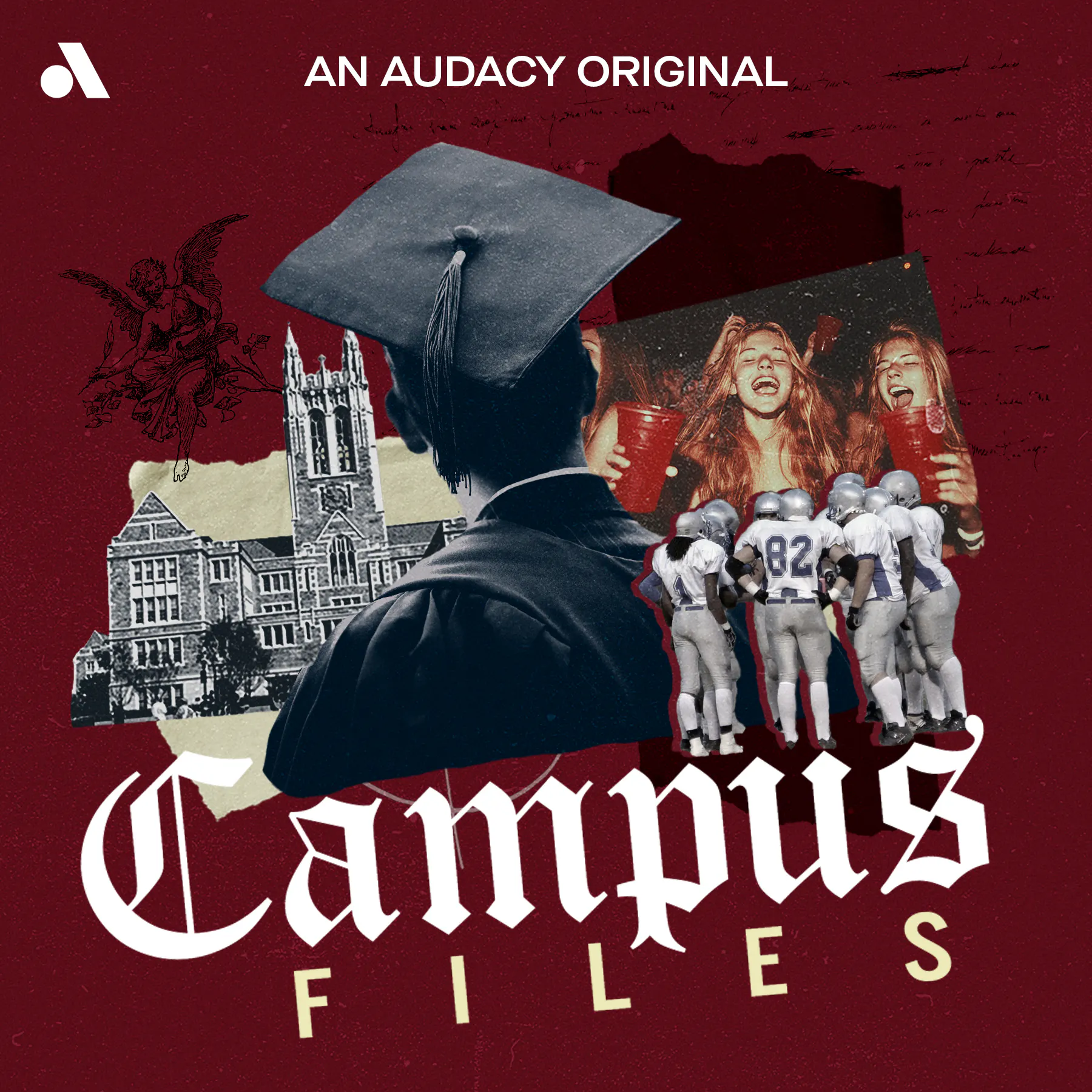
Hello, history this week, listeners. College, a beacon of excellence, a place where history often begins, has sometimes been a place where history is deliberately hidden. I'm here to share a preview of a new Odyssey original podcast, Campus Files. Each week on Campus Files, join as they dig into the archives to reveal the complicated, often overlooked reality of life across American colleges and universities. From admissions to sports to Greek life, each episode of Campus Files tells the origin story of a scandal that is ingrained in the institution's legacy. These are stories you won't hear on the campus tours. Enjoy this preview and be sure to check out Campus Files wherever you get your podcasts.
- [00:54]
George Wallace
I draw the line in the dust and toss the gauntlet before the feet of tyranny. And I say segregation now, segregation tomorrow, and segregation forever.
- [01:12]
Narrator
The University of Alabama is the site of one of the most famous moments in the history of the civil rights era. In 1963, Alabama Governor George Wallace defiantly stood in the doorway of the university auditorium. He was symbolically trying to block black students from desegregating the university.
- [01:32]
George Wallace
As governor and chief magistrate of the state of Alabama, I deem it to be my solemn obligation and duty to stand before you representing the rights and sovereignty of this state and its peoples.
- [01:45]
Narrator
Despite George Wallace's attempts, the black students ultimately enrolled and made history. Fast forward 50 years, and history was set to be made again at the University of Alabama, this time in the sorority system. Because at the start of 2013, during Abby's senior year, there was buzz around campus about a standout candidate for sorority recruitment. Her name was Kennedy and she was black. Abby says that Kennedy had everything. Sororities at Alabama typically looked for a 4.3 GPA salutatorian of her high school class. And her grandfather was a prominent Alabama judge who even served on the university board of trustees.
- [02:34]
Abby
Everyone's like this girl. She is well connected. She has these great grades. People in Tuscaloosa love her. She has a bunch of friends in the sororities.
- [02:44]
Narrator
The student paper, the Crimson White, was gearing up to write a story about Kennedy's acceptance.
- [02:51]
Abby
It was expected to be this, like, celebratory story. Everyone was like, this is going to be a big deal. She's going to be the girl that changes things.
- [02:59]
Narrator
The Crimson White even had a photographer ready to capture the moment. On bid day, the day when sororities extend invitations or bids to freshmen, Bid day is a big deal.
- [03:11]
Abby
All the families come out and everyone's cheering for the girls that are running to each house. And boys and fraternities are Handing them flowers. It's a community social thing to be celebrated.
- [03:27]
Narrator
But bid day 2013 didn't bring the anticipated celebration because Kennedy didn't get a bid from a single one of the 16 sororities.
- [03:38]
Abby
Everyone was just really surprised and people were whispering like, wow, something definitely happened.
- [03:46]
Narrator
Abby had since dropped out of her sorority, Alpha Gamma Delta, so she wasn't in the loop about what had happened. She started reaching out to a few old sorority sisters, but no one was willing to talk to the paper. Then she remembered a girl in the sorority named Melanie.
- [04:04]
Abby
She was one of the few out of state girls in our pledge class. She was from Texas. You don't think of Bastian, of liberal ideas Texas. But she grew up in a city. And so she came not caring about like the social do's and don'ts or the proper etiquette stuff. And I was like, well, if there was someone in that house who had something to say about it, it would have probably been her.
- [04:33]
Narrator
Abby was right. Melanie was willing to talk, and she shared everything that had gone down in Alpha Gamma Delta. She said the first round of rush had gone as usual. Two days of non stop conversations with freshmen. But then things got strange. The Alpha Gamma sisters were supposed to vote on which freshmen to invite back for the next round. But that's when they heard from their alumni that there would be no vote. The alumni had already decided who would be invited back. As odd as it may seem, it's not unusual for sorority alumni, often middle aged women, to have a say in which girls get bids. But in this case, the alumni had decided to eliminate Kennedy without the usual discussion and input from the current sorority members. Here's Melanie.
- [05:26]
Melanie
I'm a senior at this point. I don't like, we're very low involvement in the rush process, so I'm like very not involved. But I live in the house at this time. So I'm hanging out at the house and there's like girls crying and just like really upset. And this one girl I'm close with that's younger was like, did you hear? Like, you know, there's like this girl that everyone wants, this black girl and like they're not taking because she's black, like they're automatically nixing her. And everyone's like, isn't that crazy? And it's not going to be talked about. So I'm like getting fired up.
- [05:59]
Narrator
That evening, alumni held a meeting with the sorority members to discuss the next round of rush. At first, the conversation carefully sidestepped the elephant in the room.
- [06:10]
Melanie
They don't want this to be discussed. They just are kind of like moving things along and they're like, okay, and we're going to do this and this and, you know, this wraps up a great day. And I was like, are we not going to talk about the black girl that everyone has been talking about in the house all day?
- [06:29]
Narrator
The room fell silent until one of the alumni finally spoke up. She claimed that Kennedy had received a so called negative letter of recommendation, meaning.
- [06:41]
Melanie
That somebody wrote a letter saying, you know, this girl is not good for your sorority. She did something bad, she's in bad news, something like that, which is just like a lie. Or she wrote it, or someone wrote it because they didn't want a black woman in the sorority.
- [06:59]
Narrator
One by one, women in the sorority began advocating for Kennedy.
- [07:04]
Melanie
So then, like, all these girls start speaking up and, like, saying all these things, like, you know, we would love to be the first sorority to have a black woman. We would, like, stand up for her. You know, if fraternities didn't want to have parties with us, because that was always a big concern, you know, we wouldn't want to have parties with that fraternity anyways. But it just, it kept going and going, and it was going nowhere. And at the end of the day, like, the alumni, older women, were the ones that handle the paperwork and, like, send it in, so there's really nothing we could do.
- [07:39]
Narrator
When bid day came around, Melanie found out that Kennedy had been dropped from every other sorority as well. She says she wasn't necessarily shocked. Given the culture at Alabama.
- [07:51]
Melanie
There's just a general feel of, like, the old South. You would drive by some of the fraternity houses, they have a giant confederate flag hanging in a window, hear people actually say the N word in a way that isn't like, in a rap song or something. Like, it could be a very scary place for a black person. And I remember bringing a friend from high school that was black to visit, and I was like, honestly nervous for her to, like, come into the sorority because it was entirely white women and black women were the women that served food to us. And it's just like, I was just worried for how she would feel.
- [08:28]
Narrator
But there was still a part of Melanie that had wanted to believe the sorority system was above all that up until that moment.
- [08:37]
Melanie
I think that most people wanted to believe it wasn't because they were black, that they weren't getting in. It was just because, like, they didn't have a mother, great grandmother that went there. They didn't have close friends that were in the sorority like there were other reasons that they weren't getting in. But this particular situation, it was so black and white that it was because it was the color of her skin, because she had every other criteria to get in than that that it was, like, hard to shy away from at this point.
- [09:09]
Narrator
It turned out that what had happened in Alpha Gamma Delta wasn't unique. Through conversations with women in various sororities, Abby and her co writer learned that alumni in several chapters had similarly intervened to block Kennedy's admission. Some alumni even threatened to pull financial support if she were accepted. But in a few sororities, it was the undergraduate women who opposed admitting Kennedy. They worried that fraternities would stop socializing with them if they welcomed a black woman. Abby and her co writer weren't all that surprised by what they were hearing. But what did surprise them was that sorority members were actually willing to talk to the paper. Here's Abby.
- [09:57]
Abby
Media training is a part of being in a sorority. It's very frowned upon to talk about what happens on the inside of sororities and fraternities, and no one likes to be a squeaky wheel.
- [10:07]
Narrator
The Crimson white's previous articles about segregation in Greek life didn't have any inside sources, and the articles weren't taken seriously as a result.
- [10:18]
Abby
So many people had written stuff about Greek life, be it the racism, the hazing, all of that, but everything was able to be kind of chalked up. They're just jealous or, like, they don't know what it's like. But this story had people within the system calling it out to clarify.
- [10:40]
Narrator
These sorority members were speaking to the paper on the condition of anonymity. But it was still a historic first, and the story was almost guaranteed to attract attention as a result.
- [10:51]
Abby
I remember I talked to my dad, who was in a fraternity at Alabama. He was worried for me, like, genuinely worried. I'm pretty sure he made a joke about someone's gonna come burn you across in your front yard or something. But it was more just like pissing people off for messing things with how the way things were and putting campus in a bad spotlight.
- [11:14]
Narrator
The story was threatening enough that the night before publication, Abby and her co writer received a call from a fraternity member. He offered to pay them off to suppress the story. Name your price, he said. That same night, Abby got another unexpected message, this time from Melanie.
- [11:35]
Abby
I was keeping her updated on when it was going to publish, and the night before it published, I was like, it's going to publish tomorrow. And then she texted me back, put my name on that meaning Melanie was.
- [11:44]
Narrator
Willing to go on the record. She wanted her name included in the article.
- [11:50]
Abby
She was really brave for that.
- [11:55]
Host
For full episodes, follow Campus Files, an Odyssey original podcast on the free Odyssey app, or wherever you get your podcasts.