← HIT Like a Girl Pod: Empowering Women in Health IT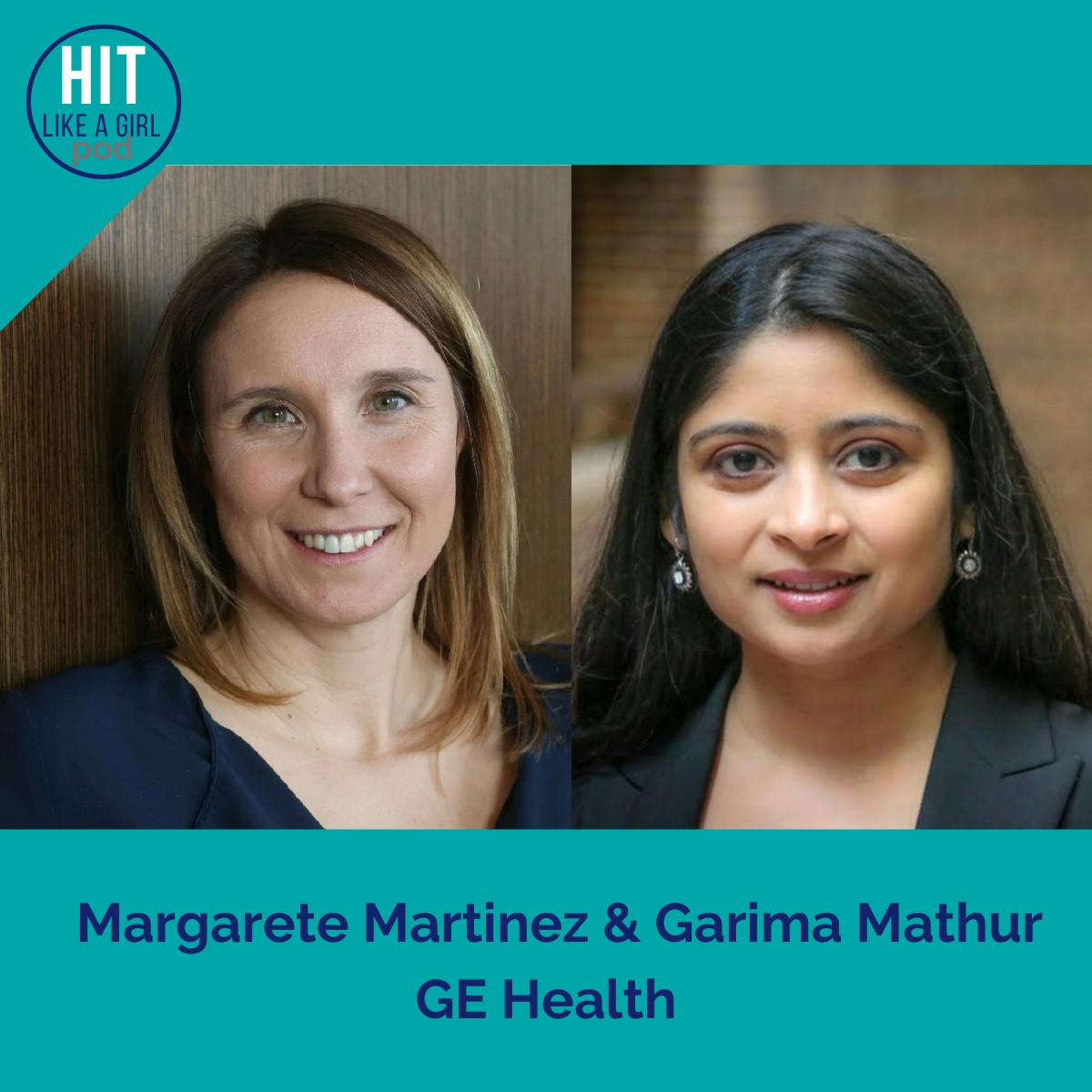
HIT Like a Girl Pod: Empowering Women in Health IT
Empowering HealthTech: Unleashing Insights with GE HealthCare
Loading summary
Transcript63 lines
- [00:09]
Joy Rios
Hello there and welcome to the hit Like a Girl podcast. My name is Joy Rios and I am the host of today's show. We are a podcast that amplifies and celebrates the women and their contributions in the healthcare and health IT space. I like to talk about the 30,000 piece puzzle that is the US and global health care system. And each one of guest brings their expertise and shares a piece of the healthcare puzzle. So today we have two guests. It was lovely and if you wouldn't mind, both of you taking a moment to introduce yourselves and Margaret, I'm going to start with you.
- [00:46]
Margaret Martinez
Hello Joy. Thank you. Thanks for inviting me here. My name is Margaret Martinez. I'm now a product owner for Viewpoint. It's an ultrasound reporting system in GE Healthcare.
- [00:57]
Garima Mathur
Hi, my name is Garima Mathur. Thank you for having me here. I work as director of Product management under the Edison Digital Health Plat.
- [01:04]
Joy Rios
Okay. What is included in that platform?
- [01:06]
Garima Mathur
Yes, everything.
- [01:07]
Joy Rios
Yeah.
- [01:08]
Garima Mathur
So well, we're looking to solve for a lot of challenges that the customers face and we are trying to bring a lot of digital capabilities to our customers that can help solve very critical challenges. Right. Efficiencies, getting the right information at the right time for better decision making. And we're trying to do this in a very cost efficient manner. Right. So it is easier to absorb a platform and it doesn't look like a humongous change. We're trying to make it very transparent in terms of what technologies are being used, what information is being transmitted and it's very interoperable.
- [01:47]
Joy Rios
All right, thank you for that, Margaret. You spend your time in Germany. So cute.
- [01:52]
Margaret Martinez
Correct.
- [01:53]
Joy Rios
You live there?
- [01:54]
Margaret Martinez
I live there now. I'm from Austria, but I live in Germany. I joined GE Healthcare Viewpoint three and a half years ago and before I was in actually other health IT areas.
- [02:05]
Joy Rios
Would you mind sharing a little bit more about your journey and how you got to where you are?
- [02:10]
Margaret Martinez
Actually the choice that I wanted to be in health, it was quite early already. After school I thought, oh, I don't want to be a doctor. But I really like the idea of helping others help people. So I signed up for university for IT and electrical engineering. And then at first I thought I can be a professor. So I did the journey in academia and during my PhD I found out now that's not for me. So I switched to industry and then right away was in a startup for radiotherapy. So yeah, this was radiotherapy. And then from there I went into a spin off for follow up care in oncology. After that I did the Typical baby pause, which you do in Germany. And I came back here to be now in ultrasound.
- [03:02]
Joy Rios
Okay, so how much work do you do globally? Is it. I mean, babies are born all over the world.
- [03:09]
Margaret Martinez
That's correct. That's very nice. What I really like about my job is that it has a very big impact all over the world. So Viewpoint is reporting system. We're really globally. So at the beginning it was focused on Germany and got spread in Europe mostly, but now we're a big player in the US we are in China, we're in India. So everywhere. And the other thing with Ocean Ultrasound, although our product first came from obstetrics, it's now used in many, many different departments. So cardiovascular disease, we heard of point of care, for example. So there are many, many new ideas, many, many influences.
- [03:47]
Joy Rios
Karima, I'd like to transition to you. Can you share with me a little bit about your journey and how you got to where you are?
- [03:54]
Garima Mathur
Yes. So I grew up in India. I came to us like, almost 20 years back, growing up. I think it was very typical growing up in a developing country. The only thing I feel very special about my upbringing was that my parents were very committed to the education of me and my sister. So we're two sisters. And I was influenced by my parents, how much they were committed, because when you're young, you don't know what success means to you. You look at your parents and you believe like, oh, wow, they actually want me to do this. Right. For whatever reason, and you just do it for that reason. I think very early on, I was almost like 12 years old when I got my first MRI scan. And I think, I believe truly at this point that my career really started there because I got very influenced by this really big system, which I didn't know what it meant. Right. But my parents were very curious to know what was the result of the scan. They were very worried for, like, three weeks of time. They were staying strong, whatever it was, right? And then I go very happily get my scan done. And I was intrigued by how what it was. So I think I kept talking a lot about the scan, right? I was like, some, in some ways, proud of getting, like, an MRI scan right at the moment. And I think when I grew up, I had the opportunity to select my field of study, and it kept guiding me or driving me to technology because I wanted to do something in technology, and my parents always supported it. So I grew up, I did my undergrad. I had an opportunity to apply to the US For Masters. So I did that. And I came to the us I literally was so naive at that time that I had to find out, what are you going to do if you wanted to work on a system like this, right? So there were a few options, right, to go for PhD in medical imaging or do a biomedical engineering. So I went for a biomedical engineering degree. So I think that's what my initial journey was. And then I think it was about that very first opportunity that came along that opened a lot of doors. And then I worked for Philips for like 10 years and then I moved to GD seven years back. And I've done a lot of very, you can say different challenging roles. But I think a key thing that has remained the same is just the feeling of how the technology really helps the lives of people, right? And how close it is, right, to everybody has been driving me to my different positions.
- [06:30]
Joy Rios
It sounds like it was a very personal experience that helped motivate you to get into the field. I mean, from where you started when you were 12 years old, getting an MRI to where you are now, how do you think that. How has your experience or understanding of the technology changed specifically to, you know, the area that you work in?
- [06:49]
Garima Mathur
This is what I personally feel, right? A lot of work that we now, as women need to do in terms of awareness, because I don't think when we are very young, at least in developing countries, right, we don't understand what it means to be in technology, right? Because you only, only talk about a lot of software engineering or developing engineering and sometimes it's also deemed as like very boring, right? Like there are a lot of names, right, for people who want to go in engineering. I don't think we really understand the elements, true elements of it, right. Until we grow up, right? So I think there's a lot of awareness, there is a lot of excitement that needs to be built, right? Like why you want to pursue this field. And I think like when, as I grew up, now when I see, when I look back, I don't think if there were like these influencers like my parents, right? Like the person who I spoke with for my application, right? How I actually got my very first job in Philips. I did a demo and somebody got interested in my research that I was doing at Masters. So all those little connections, all those people who actually trusted in me to give me a chance, helped me to be where I am.
- [08:01]
Joy Rios
I have an interesting question that I haven't prepped either of you for, but you both are coming from international countries and I'd like to know what you Wish we like people from the US should know about your country. What do you wish that we knew and what would be helpful for you, perspective wise? Because I'm sure that it's often either overlooked or misunderstood or just like not everybody has an opportunity to visit the places that you were born.
- [08:32]
Margaret Martinez
So I think the healthcare system, talking about health idea, right, it's really, really different in each country especially. So I was just shocked right now when I heard an ambulance car here. There is no doctor, you know, in Germany, of course, the ambulance staff is highly educated people. So the entire system is different, the entire workflows are different and also the reimbursing systems.
- [08:59]
Joy Rios
Time out. Did you say there's a doctor in every ambulance in Germany or at least.
- [09:04]
Margaret Martinez
A very well trained personnel? Yeah. Okay, both of them doctors. Yeah.
- [09:08]
Joy Rios
And I'm sure that's very different from India.
- [09:11]
Garima Mathur
Yes, for sure. We're probably talking two extremes here. No, I believe what I would have loved actually that I keep talking about a lot for people to know that the quality of healthcare like so you can. There are a lot of health care professionals in the, in India, right, And a lot of healthcare facilities, so to speak. But the quality of health care is not same. So the people that you come across, right, you don't have the same accountability, you don't have same facilities, you don't have same type of, you can say, appointment schedules, right? It's very, very different, Very massively different. So I think when we build our products, right, we are, and rightfully so, right, we are building for major markets because the consumption is so high. But if you flip the coin, right, the consumption is high for a small number of people because we want to maintain the quality. But the population outside the US huge in China and India, right, where the access of patient care is extremely low and the quality is low as well. So we need to somehow take this consideration when we are building our products.
- [10:23]
Joy Rios
Well, when you consider what technology is being introduced, and I'm sure the answer is different from both of you based on your countries would be the most impactful.
- [10:32]
Margaret Martinez
Well, for me, clearly it's now ultrasound, because this is the space. I know, and what you just said before, you know, we have all these different type of ultrasound devices now. So we have these really expert ones which you find in the best bait hospitals up to really mobile ones which you can go out to remote areas or to nursing homes and get a very fast scan at their place. That's just huge. And this technology is developing so fast. The resolution is getting better. We're getting better measurements, we are getting predictions. It's really, really interesting. It's exciting.
- [11:08]
Garima Mathur
So I think. So I'm biased, but I believe, I believe that when we talk about technologies, of course, right. You have to have medical imaging technology. That is. Right. Ultrasound, which can be made available at a mass level, a lower cost mass level, where it can be consumed easily, smaller footprint into major hospitals of developing countries. But on the flip side, there has to be enough education for people to read the images. So that's where AI plays a role, what we try to do. So if we can bring seamless solutions that actually can help where there is no radiologist, there is no you can say specialist available to read these images at the time when there is a need will be instrumental. Right. Because we can at least provide some information to the person who is making the decision based on some very quality product.
- [12:04]
Joy Rios
Now, the two of you have a working relationship. Can you speak about how you. Or do you.
- [12:09]
Margaret Martinez
No, actually we met yesterday for the first time.
- [12:13]
Joy Rios
Okay. So do your teams overlap or are there any collaborations?
- [12:16]
Garima Mathur
We're all one GEs, but we do like, you know, so I guess what I work with Edison platform that works across the modalities. Right. So we try to build applications and build features and products that can help any device to be successful work on AI. So ultrasound is definitely leading in one of the. A lot of different innovations. So we obviously like kind of work together somewhat on AI, but maybe not she and her.
- [12:44]
Margaret Martinez
That's right. And we are interested in all the platform topics. For example, authentication. It's constant topic. If you have like the ultrasound platform, what we have for reporting constantly you have the problem of authentication, for example, and that's what platform team is solving for. So we can just use this technology for anybody.
- [13:03]
Joy Rios
I love the advice question. And you guys both have different perspectives. So what advice would you give to anybody who is entering the healthcare or health IT space? Given what you know, if you're entering.
- [13:16]
Garima Mathur
Like you're entering as a student or you're even entering as a professional. Right. I believe the satisfaction that you get. Right. For. For being in tech and making an impact on a real problem.
- [13:29]
Margaret Martinez
Right.
- [13:29]
Garima Mathur
Because what I believe is all about your purpose and why. Right. Why you're trying to do something. And as women, we're very. It's just inherent to us to try to connect with purpose in everything we do. So as you're trying to enter to a space. Right. Which has so much to offer, there is literally like I don't. There is and I think Vishali was pointing this out, right. That there is just so much to offer. You can be doing project management, you can be doing engineering or you're doing software development. You can be in medical field. There is just, there is no bar, right? You can always grow and do better and it is very satisfying because it is not easy. So a product, right? All the, you can say research that we do, I would say if there is a research on 98% of things and we have solved the products related to that research is probably like only 30% available. Because taking a research, converting it into a real product and getting it out to the market where it can be consumed, consumed by a customer, by a patient and it can impact on life is a very challenging task to do. So you are always challenged, but you're very rewarded when something truly works out.
- [14:42]
Margaret Martinez
I would just stop on that. Find the place where you care about, find your passion, may it be engineering, maybe product development. Because when you burn for something, when you have this passion, I think you can achieve nearly everything and you will be happy to go to work. So test around, find your space and don't worry to ask questions. If you are the one person in the room who has this question, very probably there are more.
- [15:09]
Joy Rios
I like the idea that thinking of challenges, entering areas that are challenging and are wrought with problems, that actually gives you a lot to do. That's going to keep you busy and keep you focused on addressing those over a lifetime. Can you speak of it? You mentioned earlier about there are many challenges. Can you speak to some of the challenges that you have already faced and how you've overcome them within the areas of work that you're doing? And I'll start with you, Karima.
- [15:36]
Garima Mathur
Sure. There are challenges at personal level and professional level, right? It depends so where you are looking to solve for, right. So I would say, and I will give a little spin of coming from outside the US right? So when I entered in the US obviously I grew up in a small city in India. So I had a very funny accent to me and honest I was. My first job was customer training. So every single time I was training I was challenged that, oh my gosh, am I talking? Are people understanding me? Are they focusing on the content? Are they getting distracted by my accent? So after every class I will talk with the customers, right? Like hey, how did it go? I'm actually wanting to ask, right? Did you understood? Were you bothered by my accent? Right. But you don't want to say that, right? So one day I literally opened up and I Asked a woman in my class and she's like, Garima, I don't even notice, right like that you had an accent. You are the one who's noticing it most. So get over it. So there. So, you know, so there. That was a personal challenge the first time that I was so worried about it for an ear before I started speaking about. But I also believe at professional level, we always think what we don't have. Right. So we are always thinking, oh, I want to reach there, but I need to do X, Y, Z. But sometimes thinking that, okay, whatever you have may be actually enough for the job that you are going to be doing. Right. So understanding the gaps is very important. But trusting your strengths are also extremely important at that level.
- [17:08]
Joy Rios
I love that.
- [17:09]
Margaret Martinez
I loved it too.
- [17:10]
Garima Mathur
Yeah, I love that.
- [17:11]
Margaret Martinez
It was really nice. I was more thinking about a challenge we just had recently and which really interested me most. So my current project, I had to. Or I can provide a second interface to an existing product. And so I got the vision of where we should be in five years. But then I could sit down and get all the information from all the people, all the stakeholders, current users. What's the minimum thing we can start with? What makes our first customers happy? How can we get early feedback? And it is really nice to come up with this use case, this outcome. And then actually now marketing and other, you know, division is picking it up and we're getting it out to the right people and hopefully make the first users happy because we did the right functionality and designed it for them specifically.
- [18:02]
Joy Rios
And who were those folks? How small of a group was that? Is it five people? Is it 500 people? What does small mean to you?
- [18:09]
Margaret Martinez
You mean our final customer? Yeah, that's a very good question. Because first we targeted like saying, okay, we go only for 10 customers in the U.S. but now there's a higher demand. So we are trying to control it yet, but we get a lot of demand. But yeah, let's really start with those first important people to get to know that our product is stable, everything works as it should be before rolling it out.
- [18:37]
Joy Rios
And it sounds like their feedback and an open line of communication, very important. Being able to have a difficult conversation of saying this doesn't work for me is very important.
- [18:46]
Margaret Martinez
Very often it's my daily bread and butter, let's say I'm talking to people. So not only end users, but also, for example, our service people or our trainers. And they would come back to me like, okay, why did you put in this functionality and why in this way. Can you explain it? This is where I think trust is very important. If I would just not listen to them and say, no, we do it like this. This is not a way of how we can work with each other. So I try to be very transparent and very clear and explain why we do it this way and different. Then they understand, they accept it. But they also would give feedback to me and say, yes, if you do it this way, but we need to have it a little bit different. So it works for us as well. So, yeah, a lot of relationship.
- [19:30]
Joy Rios
That's great. And it's good to be able to welcome that, incorporate it in. And I'm sure that they're thinking of things that you haven't necessarily thought of. Right.
- [19:38]
Margaret Martinez
Yeah.
- [19:38]
Joy Rios
We do have a little bit of time, and it's a first opportunity for our podcast to be able to invite listener questions. Does anybody have any questions for these two listeners, ladies, guests? And we have a mic available, so.
- [19:51]
Listener
I've had the pleasure of getting to work with both of you. Well, I think one of the challenges of product management and product ownership is you're accountable for the success of the product, but you have to work across a bunch of teams that you don't manage directly. I've seen you both navigate this beautifully. But could you talk a little bit about how you approach having to drive teams, diverse teams, different function teams, towards a goal from the roles as product owners and product managers?
- [20:24]
Garima Mathur
Sure. You want to go ahead?
- [20:25]
Margaret Martinez
Yeah. Okay. So for me, the most important thing is transparency and communication. Everyone should understand why we are doing this. Like, really everyone, from a tester, an engineer, product management, everyone needs to get behind it, behind this idea and understand why, and then we find common solution, and then suddenly it's not so difficult anymore. Especially if you then hear if you have a close relationship with the people and they say, okay, we all want to solve for the same problem. We find common solutions. So, yeah, yeah.
- [20:58]
Garima Mathur
So I think I'll give an analogy. Right. It's like parenting. So you can learn a lot of product management stuff in books, Right. But when you do it, you're like, oh, so you know, it's always that moment. But I think so. But, you know, I believe there are several elements to it. Right. So it is difficult, of course, because there is a lot of us have even the same end goal of serving customers. We have very different objectives when we actually come together. And I believe it's multiple things. Right. So it's. Driving to a common goal is very important to be showing what the path towards is Carly was mentioning why. Right. Making why clear. Why do you want this in this time and why this particular dependency is important. But there is a strong element of support from your own teams, your own manager, somebody who trusts you, that even though you are going to have a difficult conversation, they know why and where you are coming from and you feel the confidence to drive that way. And I have been lucky, right. To. I think NG really does this very well. Right. So the team, I would say a little smaller at least. I've been lucky for that. Right. So a very close connection to people who work with me. And I know that if I'm given a task, my manager knows why I'm doing this. Right. So even though I'm going to come back with like a bad day, that it meant well and it will probably turn around in a few days. Right. So it's just the nature of the job.
- [22:29]
Joy Rios
Well, ladies, we are out of time. I want to thank you so much for your insights. If people want to follow you, work with you, or connect with you online, where would you send them?
- [22:39]
Margaret Martinez
Just looking at LinkedIn.
- [22:41]
Joy Rios
Okay.
- [22:41]
Margaret Martinez
Really?
- [22:42]
Garima Mathur
Yep. LinkedIn as well.
- [22:43]
Joy Rios
Wonderful. Have a wonderful day. Thank you very much for everything.
- [22:46]
Margaret Martinez
Thank you.
- [22:47]
Joy Rios
Thanks for listening. You can learn more about us or this guest by going to our website or visiting us on any of the socials with the handle Hit Like a Girl pod. Thanks again. See you soon again. Thank you so much for listening to the Hit Like a Girl podcast. I am truly grateful for you and I'm wondering if you could do me a quick favor. Would you be willing to follow or subscribe to this podcast? Or maybe leave us a rating or review? Or if you're feeling extra generous, would you share this episode on your Instagram stories or with a friend? All those things help us podcasters out so much. I'm the show's host, Joy Rios, and I'll see you next time.