
Podcast
Hometown History
Hosted by Shane Waters · EN
Discover forgotten stories from small-town America that never made it into history books. Hometown History is the podcast uncovering hidden American history—overlooked events, local mysteries, and untold tragedies from communities across the nation. Every week, meticulous research brings pre-2000 small-town stories to life in 20-minute episodes. From forgotten disasters to local legends, hidden chapters to pivotal moments, each episode explores a different town's overlooked history. Perfect for history enthusiasts seeking forgotten American stories, small-town history, and local history that shaped our nation. Respectful storytelling meets educational depth—history podcast content for curious minds who want to learn about America's hidden past without hour-long episodes.
25episodes
Episodes
Newest firstAll episodes
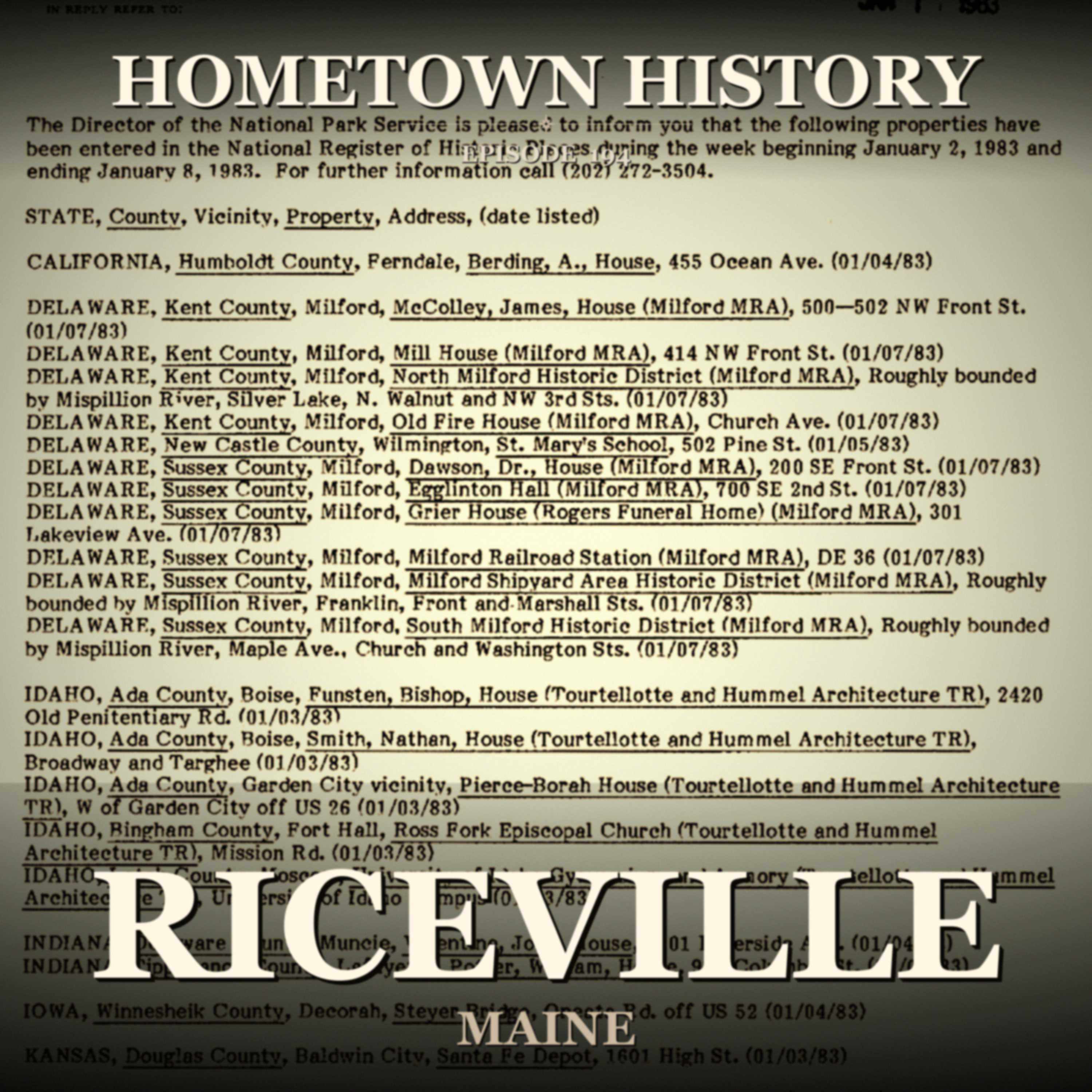
Riceville, Maine: The Ghost Town Whose Plague Never Happened
Mar 3100:16:06Tap to summarizeRiceville, Maine. Somewhere in the forest of eastern Maine, there's a town that no longer exists. It's a summer morning, sometime in the early 1900s. A traveler makes his way down a rutted logging road through dense strands of hemlock and spruce. He's headed for Riceville, a company town built around a tannery on Buffalo Stream. He knows the place. Maybe a hundred people live there. Workers, families, children who attend the schoolhouse at the north end of town. But when he arrives, something is wrong. TIMELINE 1880: census records show just 10 people living there. 1883: money, that's an almost incomprehensible sum. 1890: Riceville had exploded to 136 residents. 1898: James Rice and his brothers Francis X and John took full control, forming the Hancock Leather Company. WHY THIS MATTERS The story of Riceville is a reminder that the events that shaped America didn't always happen in the biggest cities. What unfolded here left marks on the community that are still visible today. The full story is more complicated, and more human, than the version most people know. Episode 194 | Hometown History | Hosted by Shane Waters Hometown History explores forgotten stories from small-town America. The overlooked events, hidden triumphs, and buried tragedies that shaped the country we live in. New episodes every Tuesday. Find every episode at mythsandmalice.com/hometown-historyAdvertising Inquiries: https://redcircle.com/brandsPrivacy & Opt-Out: https://redcircle.com/privacy
Transcribe →
Prudence Island: The Keeper Who Relit the Light After Losing Everything
Mar 2400:18:04Tap to summarizeIn a lighthouse keeper's cottage on Prudence Island, Rhode Island, six people huddle on the floor. It's September 21st, 1938. Outside, a wall of gray-green water is racing across Narragansett Bay, 16 feet of churning ocean pushed by winds exceeding 100 miles per hour. George Gustavus, the lighthouse keeper, stands with his wife Mabel, his 12-year-old son Edward, and three neighbors who came seeking shelter. They'd climbed upstairs when the water started rising. TIMELINE 1823: on Goat Island in Newport Harbor, it was dismantled and moved stone by stone to Prudence Island in 1851. 1933: 28 years he'd spent here. 1937: George Gustavus has finally arrived at his new posting. 1938: it's become a summer colony, though the year-round folks remain tight-knit. WHY THIS MATTERS The story of Prudence Island is a reminder that the events that shaped America didn't always happen in the biggest cities. What unfolded here left marks on the community that are still visible today. The full story is more complicated, and more human, than the version most people know. Episode 193 | Hometown History | Hosted by Shane Waters If you liked this: Episode 192 (Watch Hill, Rhode Island) Hometown History explores forgotten stories from small-town America. The overlooked events, hidden triumphs, and buried tragedies that shaped the country we live in. New episodes every Tuesday. Find every episode at mythsandmalice.com/hometown-historyAdvertising Inquiries: https://redcircle.com/brandsPrivacy & Opt-Out: https://redcircle.com/privacy
Transcribe →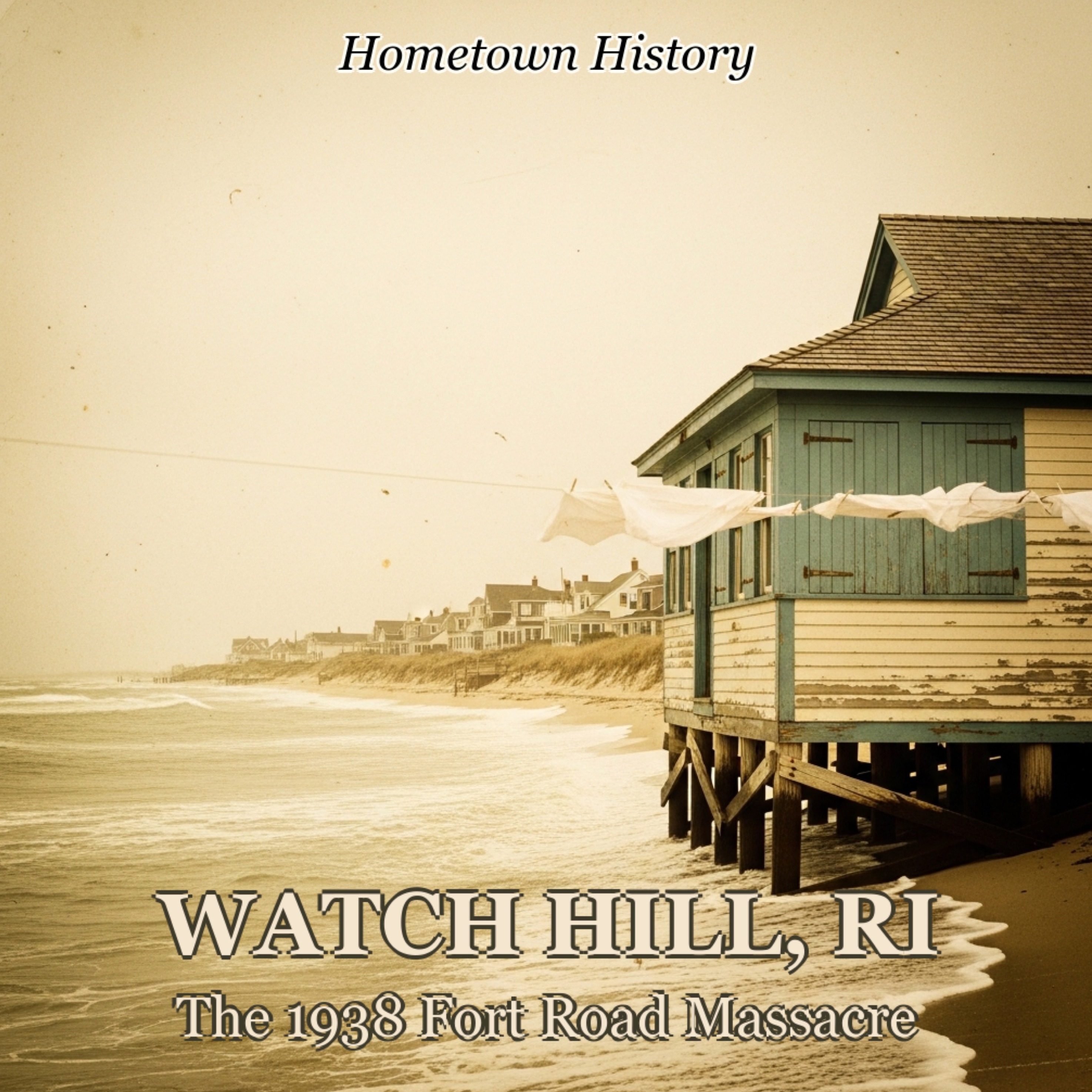
Watch Hill, Rhode Island: The Fort Road Massacre That Killed 15
Mar 1700:19:28Tap to summarizeEpisode SummaryOn September 21, 1938, a Category 3 hurricane racing northward at sixty miles an hour blindsided the wealthy summer colony of Watch Hill, Rhode Island. With no radar, satellites, or modern forecasting, residents had almost no warning before a wall of water--estimated at fifty feet high--rolled over Fort Road's exclusive Napatree Point peninsula. Forty-two people were trapped in their Victorian summer cottages. Fifteen didn't survive. Those who lived rode debris across Little Narragansett Bay, clinging to floating roof sections as waves crashed over them.The Fort Road Massacre, as locals would call it, wiped out an entire way of life in less than an hour. Thirty-nine cottages, the Yacht Club, the Beach Club, and a bathing pavilion--all destroyed. The families who had summered there for generations never rebuilt. Seven years later, in 1945, the Watch Hill Fire District purchased Napatree Point for ten thousand dollars and made a decision that still stands: the land would remain forever wild. Today, Napatree Point is an eighty-six-acre conservation area where piping plovers nest and visitors can walk where mansions once stood.Timeline of Key EventsSeptember 4, 1938: Hurricane forms near Cape Verde Islands off AfricaSeptember 19, 1938: Storm reaches Category 5 strength near BahamasSeptember 21, 1938 (10:00 AM): Washington Weather Bureau downgrades storm to tropical stormSeptember 21, 1938 (1:00 PM): Mrs. Camp's luncheon at Weekapaug; guests note "strange yellow light" over waterSeptember 21, 1938 (3:00-4:30 PM): Hurricane strikes Fort Road; storm surge devastates peninsulaSeptember 21, 1938 (6:00 PM): Winds die; Fort Road has ceased to exist1945: Watch Hill Fire District purchases Napatree Point; no rebuilding permittedHistorical SignificanceThe Great New England Hurricane of 1938 remains the most powerful and deadly to strike the region in recorded history, killing between six hundred and seven hundred people across Long Island and southern New England. Rhode Island suffered the worst casualties. The disaster exposed catastrophic gaps in the nation's weather forecasting infrastructure--a twenty-eight-year-old junior forecaster was the only meteorologist on duty when the storm made landfall because senior staff were at a conference.The tragedy led directly to massive improvements in hurricane tracking and warning systems that Americans take for granted today. Providence completed the Fox Point Hurricane Barrier in 1966. Coastal building codes were strengthened throughout New England. The decision to preserve Napatree Point as a wildlife refuge--made decades before such conservation efforts became common--stands as one of the first examples of managed retreat from a vulnerable coastal area. According to the Watch Hill Conservancy, the piping plover, a federally endangered species, now nests on the same barrier beach where Victorian mansions once stood.Sources: Watch Hill Conservancy, PBS American Experience "Wake of '38", National Weather Service, Rhode Island Historical SocietyAdvertising Inquiries: https://redcircle.com/brandsPrivacy & Opt-Out: https://redcircle.com/privacy
Transcribe →
Deal Beach, New Jersey: 240 Immigrants Drowned 150 Yards From Shore
Mar 1000:21:49Tap to summarizeThe Wreck of the New Era: A Maritime Disaster That Changed American RescueOn November 13, 1854, the residents of Deal Beach, New Jersey were awakened not by the gale-force winds rattling their windows, but by the desperate, unceasing clanging of a ship's bell cutting through the storm. Through the fog and driving rain, they saw what would become one of the most haunting sights in American maritime history: a massive three-masted clipper ship, stuck fast on a sandbar just 500 yards from shore, her full sails still set and her decks crowded with passengers crying for help.The New Era was a brand-new vessel, just completed at the Bath Shipyard in Maine and embarking on only the second leg of her maiden voyage. She carried 385 German immigrants—men, women, and children who had paid their life savings for passage to a new life in Pennsylvania. They had already endured 46 harrowing days at sea, during which cholera had swept through steerage quarters, claiming between 40 and 46 lives. Bodies wrapped in canvas were slipped overboard in darkness so as not to alarm the other passengers. The survivors were exhausted, weakened, and now tantalizingly close to safety—close enough that rescuers standing on the beach could see individual faces.As dawn broke that November morning, a series of gigantic waves lifted the New Era off the outer sandbar and deposited her just 150 yards from shore. Close enough to hit with a thrown stone. But the same waves spun the ship broadside to the beach, leaving her vulnerable to the heavy seas that would ultimately destroy her.Timeline of EventsSeptember 28, 1854: The New Era departs Bremerhaven, Germany with 385 German immigrants bound for New York City and ultimately Pennsylvania.Early October 1854: Within one week of departure, the ship springs serious leaks requiring passengers and crew to man pumps around the clock. Cholera breaks out in steerage.November 12, 1854: The ship encounters thick fog that develops into a full nor'easter by evening. Captain Thomas J. Henry retires to his cabin, leaving the second mate in charge.November 13, 1854, approximately 6:10 AM: Residents of Deal Beach spot the New Era grounded on the outer sandbar. The ship's bell rings continuously.Mid-morning, November 13: Waves move the ship to within 150 yards of shore. Rescue attempts begin but surf drives rescuers back repeatedly.Throughout the day: Captain Henry and crew members lower the ship's three lifeboats. Instead of loading passengers, they cut the lines and row themselves to shore, abandoning the immigrants. When passengers attempt to board the final lifeboat, crew members beat them back with oars.Overnight, November 13-14: With darkness falling and rescue impossible, Deal Beach residents build bonfires along the shore so those still clinging to the ship's rigging know they haven't been abandoned. The cries from the ship continue through the night.Early morning, November 14: After more than 26 hours since the grounding, the surf finally calms enough for rescue boats to launch. Only 132-135 survivors are recovered—almost all of them men.Historical SignificanceThe New Era disaster was not an isolated tragedy but part of a grim pattern along the New Jersey coast. Just seven months earlier, the immigrant ship Powhatan had gone down off the same coastline, killing all 250 aboard. The combined outrage over these disasters finally forced Congress to act.On December 15, 1854—exactly one month after the New Era wreck—Congress passed comprehensive lifesaving legislation. Yet characteristic of the era's bureaucratic delays, meaningful funding wouldn't arrive until 1857, and the United States Life-Saving Service wouldn't be formally established until 1878—a full 24 years after the disaster that provoked it.That service eventually merged with the Revenue Cutter Service in 1915 to become the United States Coast Guard. Every Coast Guard rescue today traces its lineage, in part, to the outrage this disaster provoked.What happened to Captain Thomas J. Henry? History records only that he survived, reaching shore in that final lifeboat while his passengers drowned. No record exists of any investigation, trial, or consequence for his actions.The unidentified German immigrants recovered from the wreck were buried in a mass grave behind the Old First Union Methodist Church in West Long Branch. According to a 2020 report, the cemetery is massively overgrown and the monument difficult to find despite its size.In one of history's strange coincidences, the cruise ship Morro Castle caught fire and came aground at nearly the exact same location 80 years later, in September 1934, killing 135 people. Two disasters, same stretch of beach, eight decades apart.Sources and Further ReadingThe most comprehensive historical account of the New Era disaster is Julius Friedrich Sachse's The Wreck of the Ship "New Era" upon the New Jersey Coast, November 13, 1854, published by the Pennsylvania German Society in 1907. Sachse researched the tragedy using both English and German sources, including survivor accounts.For broader context on New Jersey's maritime disasters, Robert F. Bennett's The Deadly Shipwrecks of the Powhattan & the New Era on the Jersey Shore (The History Press, 2015) provides detailed analysis of both tragedies and their role in establishing the Life-Saving Service.The New Era Anchor Historical Marker, erected in 2002, stands in front of a church in Allenhurst, New Jersey. The anchor was recovered from the wreck site in 1999.Advertising Inquiries: https://redcircle.com/brandsPrivacy & Opt-Out: https://redcircle.com/privacy
Transcribe →Hazardville, Connecticut: When Gunpowder Made—and Destroyed—a Town
Mar 300:16:42Tap to summarize190: Hazardville, Connecticut: When Gunpowder Made—and Destroyed—a TownAdvertising Inquiries: https://redcircle.com/brandsPrivacy & Opt-Out: https://redcircle.com/privacy
Transcribe →Ord, Nebraska: The Teenage Teacher Who Saved 13 Children in the 1888 Blizzard
Feb 2400:17:56Tap to summarizeOn January 12, 1888, nineteen-year-old Minnie Freeman stood in a one-room schoolhouse six miles south of Ord, Nebraska, teaching thirteen students their lessons on what seemed like an unusually warm winter morning. Forty degrees in January felt like spring, and her students had arrived without their heavy coats. By mid-afternoon, everything would change. An arctic front racing south from Canada at unprecedented speed—seven hundred and eighty miles in twelve hours—was about to transform ordinary classroom work into a desperate fight for survival.When the storm struck around 2:45 PM, the wind ripped the door off its hinges and began peeling away the tarpaper roof. As temperatures plummeted from forty degrees to well below zero and visibility dropped to nothing, Minnie remembered a ball of twine she had confiscated from student Frankie Gibben that very morning. In a moment of clarity that would save lives, she tied her thirteen students together, spacing the oldest along the line with the youngest protected in the middle, and led them blindly through the whiteout toward a farmhouse she could only navigate by memory.**Timeline of Events:**- **Morning, January 12, 1888:** Unusually warm day (40 degrees); students arrive at Midvale School without heavy coats- **Mid-morning:** Minnie confiscates ball of twine from student Frankie Gibben- **2:45 PM:** Blizzard strikes with hurricane-force winds; door ripped off, roof begins tearing away- **Late afternoon:** Minnie ties students together with twine and leads them approximately 80-100 yards to nearby farmhouse- **Evening:** All thirteen children survive; storm continues raging**Historical Significance:**The Schoolchildren’s Blizzard of 1888 claimed an estimated 235 lives across the Great Plains, with over 100 victims being children caught in schoolhouses or trying to walk home. Many teachers who kept students inside watched them freeze as fuel ran out; others who sent children home unknowingly condemned them to die in the whiteout. Minnie Freeman’s quick thinking and that confiscated ball of twine made the difference between life and death.Within weeks, she became a national celebrity—\"Nebraska’s Fearless Maid.\" A song written in her honor sold over a million copies of sheet music, and she received more than 80 marriage proposals from strangers. Today, a Venetian glass mural in the Nebraska State Capitol commemorates her heroism, showing a young woman leading a line of children through a blizzard, the twine connecting them visible in the artwork.**Sources:** Nebraska State Historical Society; David Laskin’s *The Children’s Blizzard*; contemporary newspaper accounts from January-March 1888.**Word Count:** 432 words---Advertising Inquiries: https://redcircle.com/brandsPrivacy & Opt-Out: https://redcircle.com/privacy
Transcribe →
Lewistown, Montana: When the Guide Became the Killer (1889)
Feb 1700:19:39Tap to summarizeIn 1889, the Montana frontier witnessed a cold-blooded betrayal when a trusted hunting guide turned killer. What began as an expedition into the wilderness ended in murder when greed overcame loyalty. The guide who was supposed to lead them to game instead led them to their graves. This is the story of trust broken, justice pursued, and the harsh realities of life in the untamed West.Advertising Inquiries: https://redcircle.com/brandsPrivacy & Opt-Out: https://redcircle.com/privacy
Transcribe →
Globe, Arizona: The Curse of Room 18—Two Miners, One Deadly Room
Feb 1000:20:28Tap to summarize187: Globe, Arizona: The Curse of Room 18—Two Miners, One Deadly RoomAdvertising Inquiries: https://redcircle.com/brandsPrivacy & Opt-Out: https://redcircle.com/privacy
Transcribe →
Taos, New Mexico: The Headless Body in the Fortress Mansion
Jan 2700:19:12Tap to summarizeOn July 3, 1929, U.S. Deputy Marshal Jim Martinez scaled the walls of a fortress-like mansion in the heart of Taos, New Mexico. What he found inside would spark one of the American Southwest's most enduring mysteries—a bloated, headless corpse dressed in the unmistakable clothing of Arthur Rochford Manby, the 70-year-old English con man whom locals considered the most hated person in town.The hastily convened coroner's jury reached a swift conclusion: natural causes. The severed head, they reasoned, was the work of Manby's starving German police dog. The body was buried that same afternoon in a shallow grave behind the mansion.Then the witnesses started coming forward. Within days, a dozen credible Taos residents—including prominent artists and businesspeople—reported seeing Arthur Manby alive on July 4th and 5th, a full day after his supposed death and burial. When authorities finally examined the remains more closely, they discovered the head had been severed by a sharp blade, not animal teeth.Was it murder? Or had the master swindler orchestrated his greatest con—faking his own death to escape decades of enemies and debt?Timeline of EventsThe Manby mystery spans four decades of fraud and violence in New Mexico Territory.1883—Twenty-four-year-old Arthur Rochford Manby arrives in New Mexico Territory from England, fleeing financial scandals.1894—Manby begins systematically acquiring interests in the Antonio Martinez Land Grant, a 61,000-acre Spanish colonial holding.1913—After nearly two decades of manipulation, Manby claims ownership of virtually the entire Martinez Grant.Late June 1929—Manby disappears from public view. Mail piles up.July 3, 1929—Deputy Marshal Jim Martinez discovers the headless body. Coroner's jury rules natural causes. Body buried same day.July 4-5, 1929—Multiple credible witnesses report seeing Manby alive in Taos.1933—Body exhumed for second examination; forensic experts confirm decapitation was by blade, not animal.Historical SignificanceThe Manby case embodies the lawlessness that defined New Mexico's territorial era and the exploitation of Hispanic land grant communities that resonates today. For thirty years, Manby operated within a system that allowed wealthy, connected men to systematically strip generational landowners of their property through legal manipulation. His connections to the "Santa Fe Ring"—a corrupt network of lawyers, judges, and politicians—enabled him to acquire enormous land holdings while avoiding consequences.Today, the Manby mansion site houses the Taos Center for the Arts. The communities he terrorized never received justice, regardless of whether Manby died in that fortress or escaped to live out his days elsewhere. New Mexico authorities have never officially closed the case.Sources: Frank Waters, To Possess the Land: A Biography of Arthur Rochford Manby (Swallow Press, 1973); James S. Peters, Headless in Taos; New Mexico State Records Center and Archives (59 folders of Manby case files); Taos News historical coverage.Advertising Inquiries: https://redcircle.com/brandsPrivacy & Opt-Out: https://redcircle.com/privacy
Transcribe →
East Montpelier, Vermont: The 14-Hour Marriage That Ended in Murder
Jan 2000:18:13Tap to summarizeOn September 5th, 1889, George Gould walked up the path to the Cutler farm in East Montpelier, Vermont, with his new wife Laura. They had been married for barely fourteen hours. By noon, George would be dead—shot in the face at point-blank range by a man who had waited twenty-two years for his chance.The murder of George Gould sparked one of the strangest legal cases in Vermont history. What began as a simple crime of passion became a decades-long tragedy involving a scandalous courtroom confession, a wedding performed through prison bars, and a woman who could never escape the name of her husband's killer.Timeline of Events:- 1867 – Sherman Caswell begins working at the Cutler farm after returning from Civil War service- September 4, 1889 – Laura Cutler and George Gould marry- September 5, 1889 – Sherman Caswell shoots George Gould from an upstairs window- March 1890 – Caswell convicted of second-degree murder, sentenced to life- April 1890 – Laura marries Caswell through prison bars- 1902 – Sherman Caswell pardoned after twelve years- April 2, 1911 – Laura dies; death certificate lists her name as Laura CaswellSources: The Argus and Patriot newspaper (Montpelier, VT), Vermont Historical Society, VTDigger "Then Again" column.Advertising Inquiries: https://redcircle.com/brandsPrivacy & Opt-Out: https://redcircle.com/privacy
Transcribe →