Loading summary
Transcript267 lines
- [00:00]
Matt Gibbard
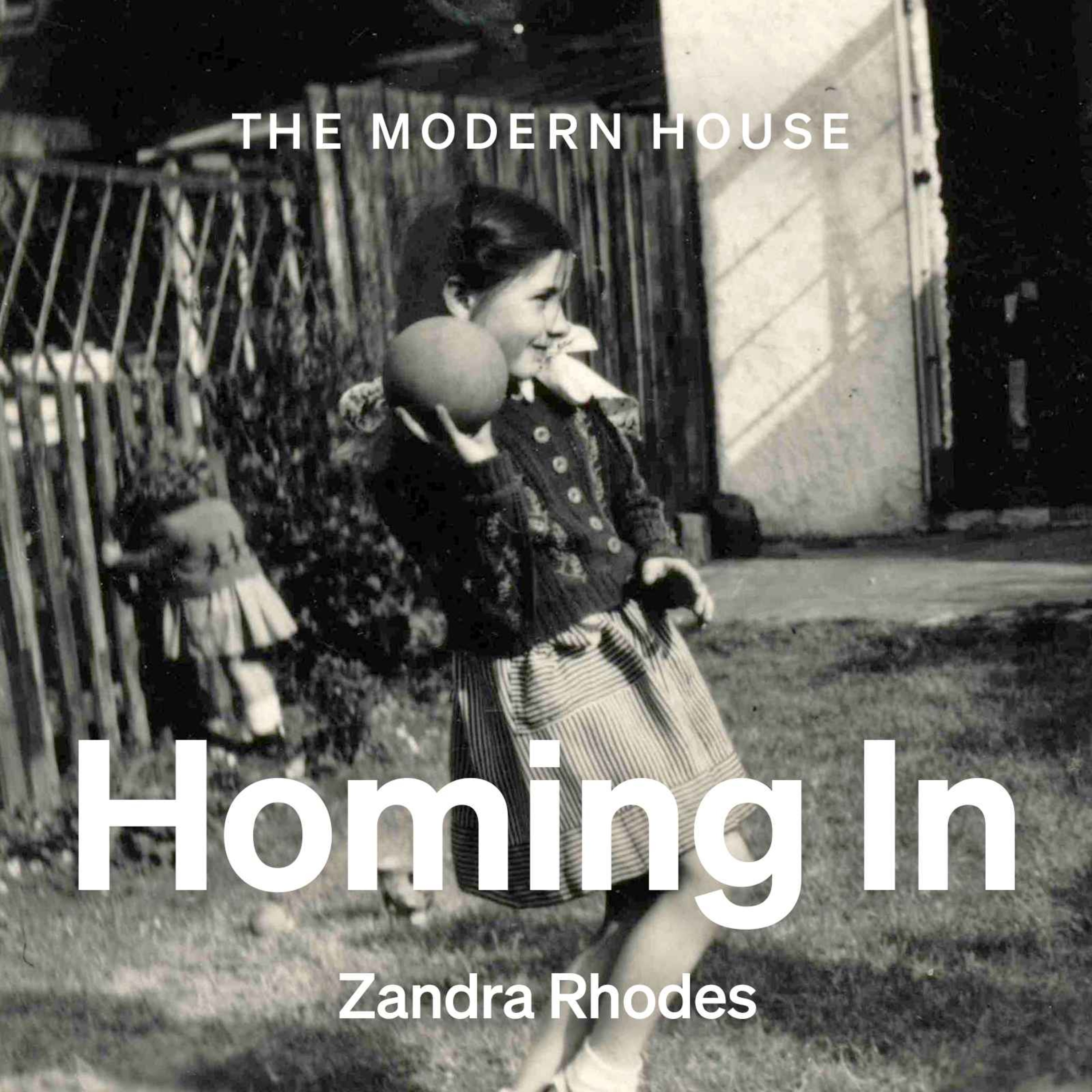
Foreign to homing in the podcast from the Modern House, I'm Matt Gibbard. Today's episode takes us to Bermondsey in southeast London to meet the irrepressible fashion and textile designer, Dame Zandra Rhodes. Zandra's home is definitely one of the most colourful and downright bonkers living spaces I think I've ever been in. We recorded this podcast just before Christmas, so there was an extra layer of sparkle on top of an already kaleidoscopic space. I must say, Zandra walked me through her incredible life story. So from being born during an air raid in 1940 to being discovered by American Vogue's fashion editor Diana Vreeland, and then dressing people like Freddie Mercury and having lunch with Salvador Dali and Andy Warhol, we discussed why she dyes her hair pink and wears such flamboyant clothing and. And why she's never seen herself in the mirror without makeup on, which is just so fascinating. She told me about her colorful family history, including a dad she was embarrassed by, a mum who seemed to channel all of her ambition into Zandra, and a grandmother who was murdered. Zandra is in her mid-80s now. A few years ago she was diagnosed with cancer and given only six months to live. So I must admit I wasn't quite sure what to expect when we turned up. But I found someone who's so incredibly full of life, who's working as hard as ever and just who's very, very optimistic about the future. So here it is. I really hope you enjoy it and happy listening. Zandra, welcome to homing in. What a joy. What? So happy to be here in your flat, your amazing flat here in southeast London. I want to start by asking you about your memoir called Iconic. Cause it begins with. My name is Zandra Rhodes and I am a self confessed hoarder. And I love that. That's a good opening line. But tell me about that. Have you always been like that since you were a child?
- [02:01]
Zandra Rhodes
I suppose I have. And I've still got all the things that were around me, even the sort of doll that I had then. And of course, as you can see, I have my hoard of stones that's all here. So I sort of like end up collecting things. And there always seems to be room for one more.
- [02:19]
Matt Gibbard
It looks like it. And what did you collect then, when you were young? What was your first collection?
- [02:26]
Zandra Rhodes
Well, when I started to do the book, I suppose one of the first things is that I've got my doll that I happened to have in a box, rather crumpled because she'd been jammed in with another doll, but she was still there, hidden away. And then bits of old shoe and things. And you think, why did I collect it? But on the other hand, I hadn't got the heart to throw them away. So it was quite interesting when I started to look at my background of myself and think of what was going to go in the book. It was very interesting from that point of view.
- [02:58]
Matt Gibbard
Yeah, yeah. So where was home for you? Where did you grow up?
- [03:02]
Zandra Rhodes
Home was Chatham, Kent. Then really a relatively small town, although it was considered a naval town. I mean, the ships were very small battleships that were in an estuary of the Thames. But it was sort of quite interesting from that point of view. Whereas poor old Medway towns now is quite. You know, it's really a backwater.
- [03:26]
Matt Gibbard
And what about the bricks and mortar of where you grew up? What was your house like?
- [03:31]
Zandra Rhodes
It was a block of 4 and we were in the middle of it. So it was four on. On the top of a big hill. And it had a parquet floor. Cause my parents were ballroom dancing champions, so they danced on the parquet floor for their rehearsing and everything. And it had a wonderful view of the Downs that you could see from out of the back windows. So it was really quite wonderful.
- [03:54]
Matt Gibbard
I love that. So is one of your early memories and the sound of dancing?
- [03:58]
Zandra Rhodes
I think my early memory is my mother always at the sewing machine and she did make wonderful frilly dresses, so she'd have been very good in those dancing films. And they were Kent champions at one point.
- [04:11]
Matt Gibbard
That's so cool. So tell us about how you came into the world. Cause it was a bit of an unusual arrival, wasn't.
- [04:18]
Zandra Rhodes
Was in the middle of the war. So I was born in 1940, in the middle of an air raid. And apparently my father took my mother down Chatham Hill to the hospital and she lost her shoes on the way. And they had to walk because there was no. You know, it was the middle of an air raid. And so they walked down to the hospital to have me. So it sounds a amazing adventure.
- [04:40]
Matt Gibbard
That's incredible, isn't it? Do you remember anything of the war? I mean, what. So you were 1940. So there was five years.
- [04:46]
Zandra Rhodes
I remember what's called the doodle bugs, when they made a funny sound and they went across the sky. And then if they stopped making that sound, it meant the bomb was going to drop. So my mother would hold me up to the sky and let me see that. Not that I can remember much more, but it's something I can always think. I remember, really.
- [05:06]
Matt Gibbard
Wow. A collective intake of breath as that's it. Yeah. Wow. So what do we need to know about Zandra the child. To understand who you've become in later life, do you think?
- [05:17]
Zandra Rhodes
Well, our house overlooked the North Downs. And so you had a wonderful view down into the. Into the countryside. And then there was even a road with gypsy caravans and things like that. It was very exciting to see all the gypsy caravans. And so it was semi country then. I don't think there's probably any countryside left now.
- [05:38]
Matt Gibbard
And what sort of character were you?
- [05:40]
Zandra Rhodes
I always think I was actually quite a boring child. I like working. My mother used to do my hair in plaits. And I had what were called knockers. Where they come up and you have big bows on either side of your head. And I liked school. And I didn't mind wearing school uniform. But in the weekend I loved dressing up in things that my mother had had in the school dress shows. So I'd go along in a pretty little. Sort of like a straw hat and flowers. And then I'd run through the park. Cause the children would throw stones at me. But apart from that.
- [06:15]
Matt Gibbard
So did you get picked on?
- [06:17]
Zandra Rhodes
I think I got slightly picked on. Just cause I looked different.
- [06:20]
Matt Gibbard
Yeah, yeah.
- [06:21]
Zandra Rhodes
But my mother would always say. Sticks and stones will break your bones, but names will never hurt you.
- [06:27]
Matt Gibbard
Yeah, yeah.
- [06:27]
Zandra Rhodes
So just kept going.
- [06:29]
Matt Gibbard
Were you okay with being different at that age?
- [06:32]
Zandra Rhodes
Well, when it came to coming to school and if there was school open day. Cause my mother was very exotic. And she'd come to open day and she'd wear green lizard skin platforms. And a wonderful exotic hat and all this makeup. And I say, mummy, please don't come looking different from all the other mothers. But she always did because she taught at the art college. And she looked wonderful and exotic.
- [06:56]
Matt Gibbard
Okay, what did you make of that then? That sounds like you were. You found it a bit much at times, but sort of also admired it.
- [07:02]
Zandra Rhodes
I grew to admire it later. She was sort of a very special person. And she was one of the most exotic people at the art college. But at the art college I pretended she wasn't my mother. Because I. I wanted to be sort of ordinary and getting on with my work.
- [07:19]
Matt Gibbard
I mean, she's obviously a huge influence on you, your mum. And in your memoir you wrote something that really stuck with me. You said I am an extension of her ambition. What does that mean?
- [07:31]
Zandra Rhodes
Well, when I think about it, my mother always encouraged me to get on with things. So I was Always allowed to just paint and draw and not told that I should go out and get a job or anything in the holidays, I could just sit and draw and in my room and my mother didn't mind that at all. And so I was always sort of allowed to get on with different projects. Whereas my sister was great. She went to canning factories and all sorts of places.
- [07:57]
Matt Gibbard
So what do you think that your mum's ambitions for you were?
- [08:00]
Zandra Rhodes
Well, when later on, I said, oh, Mummy, you'd have let me lay of school if I'd have wanted to. She said, I wouldn't really. So she was the sort of person who. I think she was good at handling the puppet and could maneuver and wanted me to go to college and everything like that. And I was really. I suppose it was her guidance that took me to an art college and encouraged me to draw. And then that was the art college that they did Saturday morning classes. So it was really my mother that guided me with hidden hands.
- [08:31]
Matt Gibbard
That's a nice expression. She was the main breadwinner in your household, wasn't she? Which was probably quite unusual.
- [08:36]
Zandra Rhodes
No, I think when I look, it must have been very difficult for my father, who was just a lorry driver and they'd met because he was very handsome and they did ballroom dancing and everything, but apart from that, they didn't have other things in common. So it must have been a very difficult time.
- [08:57]
Matt Gibbard
What was your father like then?
- [08:59]
Zandra Rhodes
My father was like Elf Garnet, a very rough diamond. And when you see films of Elf Garnet, that was what my father was like. Sort of always shouting around and everything. And I wouldn't have wanted this, you know, I think children are terrible snobs. I wouldn't have wanted to bring people back to meet him. But why not, when you think about it now?
- [09:20]
Matt Gibbard
So why wouldn't you have wanted to bring people back? Would you worry about what he would say or what would it be?
- [09:26]
Zandra Rhodes
Yes. If I'd knock at the front door with my friend Gillian. This was when I was probably about, oh, seven, and I'd say, can Gillian come to tea? No, she can't come to tea. She came last week, you know. How much could she have eaten? She could only have eaten probably few pieces of bread and maybe baked beans on toast. But anyway, I don't know why.
- [09:48]
Matt Gibbard
Yeah, yeah, okay. So your mother was very flamboyant. Getting back to her in the book that you say that she had out of body experiences which I found fascinating. Tell me about that.
- [09:59]
Zandra Rhodes
She said she could sometimes see herself as a Cucumber or something in a strange room. And all sorts of funny things like that she didn't like. But she said it happened to her quite often.
- [10:12]
Matt Gibbard
When you say, like doing it then, was that something that she sort of tried to.
- [10:15]
Zandra Rhodes
I think it came upon her. And of course, my mother's sister in law was actually a medium called Ina Twig. And right at the beginning of my career, a lot of Americans used to want to go and see my aunt who used to have seances and talk to people from somewhere else.
- [10:35]
Matt Gibbard
Okay, and have you inherited any of that?
- [10:38]
Zandra Rhodes
She came to my house once and she said, zandra, I can see flames going up the wall behind you. And I said, auntie, you're coming as my auntie. I don't want to know and I don't want to know anything about it.
- [10:51]
Matt Gibbard
Wow. Sure she wasn't just looking at your paint effects on the walls?
- [10:54]
Zandra Rhodes
She might have been. When I look at it now, I.
- [10:56]
Matt Gibbard
Can see a lot of flames coming out the back of me. And your grandmother was murdered, is that right?
- [11:03]
Zandra Rhodes
My grandmother on my father's side, but I mean, her husband, what would have been my grandfather was in the army somewhere. And they took in lodges and there were several lodgers. And she had an affair with both of them. And one of the lodgers killed her and severed her head, apparently. And that was in all the newspapers and in somewhere like Chatham. It was a very, very small town, so it was in the newspapers. But I never learned about that till my sister's granddaughter did, you know, looked it all up on ancestry.
- [11:39]
Matt Gibbard
So do you think was all that kind of stuff concealed from you then, do you think? Just wasn't spoken of.
- [11:44]
Zandra Rhodes
It wasn't spoken of. And because I admired my mother so much, I think my father really got probably a raw deal, really. I think he didn't get accepted for what he was, really. Cause I was always driven by my mother's ambition and, you know, of going forward and doing my work and being encouraged all the time. And my father was just in the background and didn't talk about it.
- [12:14]
Matt Gibbard
Okay, what do you think your mum wanted you to become, or what career does she want for you?
- [12:20]
Zandra Rhodes
I think she was very pleased that I went into art. And she was very pleased that I was usually the top of whatever I did. And I obviously like my work. And I think I'm probably the culmination of my mother's ambition more than anything else.
- [12:36]
Matt Gibbard
Yeah. What about your ambition, though?
- [12:38]
Zandra Rhodes
Well, I think it was mine or maybe it was my mother's hidden When I look at it. But, I mean, I can't complain. I'm very happy that I've been able to live through doing my work. And fell in love with doing textile design. And textile design led me to everything else.
- [12:57]
Matt Gibbard
Why do you think they called you Zandra? Cause it's quite an exotic name, isn't it, for a girl from Chatham?
- [13:01]
Zandra Rhodes
My mother was going to call me Zandra with an X. Like when you write Alexandra and it's an X.
- [13:07]
Matt Gibbard
Okay.
- [13:08]
Zandra Rhodes
My grandmother said no one will ever know how to say it. So she changed it to Z. Which I think is probably even more unusual. And then a few months ago. Someone came all the way from Australia. With a gift for me. And they said, we were in Australia when you were doing a big campaign. And my mother was at the dentist. She read the press about you. And I'm called Zandra, after you. And she came to see me all the way from Australia. So that was fabulous.
- [13:33]
Matt Gibbard
That's lovely, isn't it? So there can't be very many Zandras around.
- [13:36]
Zandra Rhodes
I'm sure they're increase. I hope they're increased.
- [13:39]
Matt Gibbard
I'm sure you've increased the numbers. And what about your sister? Did you get on well with her when you were young?
- [13:45]
Zandra Rhodes
I didn't get on with my sister as a child. And my sister's much more developed person. She's got four children and seven grandchildren. And really has helped all of their lives. And she says I'm known. I was known once as Sandra's sister. Then I was known as Dr. Hayden's wife. And then I was James Hayden, the motorbike racer's mother. So she said, I have all sorts of names, and she loves it.
- [14:14]
Matt Gibbard
And do you get on well with her now, though?
- [14:16]
Zandra Rhodes
Perfectly. In fact, I'm going to stay with her for Christmas, which would be wonderful.
- [14:20]
Matt Gibbard
Okay.
- [14:21]
Zandra Rhodes
And she puts up with me.
- [14:22]
Matt Gibbard
Yeah. And what about. So her kids must love you as well. You know, having you in their lives must be fascinating.
- [14:28]
Zandra Rhodes
Well, we actually think it's very funny. Because her eldest grandchild is training in menswear in London. And her second grandchild is doing interior design, I believe, in Brighton. So she said, why are none of them doctors?
- [14:46]
Matt Gibbard
Yeah, yeah, yeah. Exactly. Yeah. But it's interesting that, though, isn't it? My grandfather was a very successful architect. And I think sometimes you have a figure in a family. Who sort of shows the way for others. And so I'm sure you do do that. You must have done that for other members of your family. Without being conscious about it.
- [15:05]
Zandra Rhodes
I'm thrilled now to be an interesting auntie that they come and see. Yeah, it's fabulous.
- [15:10]
Matt Gibbard
Yeah, I bet they love coming, so.
- [15:12]
Zandra Rhodes
I hope they do.
- [15:14]
Matt Gibbard
I mean, incredible for a child. You mentioned textiles. Did you know you were gonna go to art school? Was that always the plan?
- [15:22]
Zandra Rhodes
I went to art school first for Saturday morning art classes because I was good at art and I thought I'd be a book illustrator. And then I came under the influence of wonderful woman called Barbara Brown, who was doing textiles for liberties and not liberties. Heels.
- [15:40]
Matt Gibbard
Yes.
- [15:41]
Zandra Rhodes
And I fell in love with doing textile print. And it's a wonderful medium of covering textiles with wonderful designs. Loved it. I left college with a first class honors degree and then couldn't sell my work. So Royal College, I was a first class honor student and they said, oh, we think Pucci might love your work. And he was appearing in Woollens, a big shop in London. They sent me, and I dressed up in my special gray suit that my mother had made, and I laid the work out and very grand Italian count came in and he looked at my work and he said, I think you should design in black and white and walked out. So I wasn't offered a job at Pucci. So then I decided that since no one was buying my prints, I got a great friend who trained as a librarian to show me how to make garments because I'd never thought I'd do that. And he showed me and I put a collection together, had a letter of introduction in America to Deanna Vreeland, the high priestess of fashion. Put together a collection. I printed it, made the caftans, took the whole collection to New York with a letter of introduction from English Vogue. And I showed her the clothes and she was this amazing woman with this amazing hook nose and her face shaded red all around the edge and dyed black hair. And she said, marvelous. They're incredible. We're going to feature them in Vogue. And she called in Natalie Wood, the film star. We're going to photograph them on Natalie Wood. And then I'm going to phone up the top boutique in New York and they should sell them for you. So I phoned up the top boutique in New York and went to see them, which was Henri Bendel. And for the next 20 years, I made clothes in London and took them over, sold them and showed the magazines and did tours all around America with my clothes.
- [17:40]
Matt Gibbard
Wow. Isn't that incredible?
- [17:40]
Zandra Rhodes
Which I printed myself in the factory.
- [17:43]
Matt Gibbard
That's just amazing. What did Diana Vreeland see that others didn't do? You reckon?
- [17:48]
Zandra Rhodes
I think the fact was, she didn't know that I was a textile designer making dresses. So she saw me with new eyes and she saw my clothes. And so really my career was first made in America and then came back to being here. So I dressed Lauren Bacall and Jackie Onassis. And so I did tours across America doing shows with my clothes.
- [18:13]
Matt Gibbard
Do you think in America they are a bit more accepting of newness or the avant garde, or is that. I hear it quite a lot that designers sometimes from here feel like they have to go over there to find a bit of a tailwind.
- [18:30]
Zandra Rhodes
I think it's really just to find your feet and be accepted. Then, of course, I was lucky enough that people accepted me here, so I then made clothes later for Freddie Merc.
- [18:41]
Matt Gibbard
Yeah, tell us about that, by the way.
- [18:43]
Zandra Rhodes
That was quite wonderful. I had my funny little studio in Bayswater, three floors up, and you'd stagger up the zigzaggy stairs to the top. And I get a phone call from Brian that they'd like to come and look at my work. And then I said, well, you'll have to come in the evening. Cause I didn't have a changing room. It was just an open room in a funny little building. And when I put the phone down, I had to say to my group, excuse me, what do they play? And they actually had at the time, but it was in the middle of the 70s. It wasn't when they'd done all of the wonderful things they do now. And they came round in the evening, clambered up all these rickety stairs, and then I picked a wonderful bridal top, a pleated top, and said to Freddy, try it on and see how you feel in front of the mirror. And that was when he had the one that you always see him in the pictures that were so lovely of him.
- [19:38]
Matt Gibbard
So that was a bridal piece.
- [19:39]
Zandra Rhodes
That was a bridal piece that he had.
- [19:41]
Matt Gibbard
That's so brilliant, isn't it? What was he like as a character?
- [19:45]
Zandra Rhodes
Very shy. He really just tried the things on and then performed in front of the mirror. I mean, I found a lot of people, you know, they're very natural when you're actually with them and trying things on. Lauren Bacall came around there and then stepped on a pin. I didn't know what to do. I was on the floor trying to get the pin out of a film star. Toad.
- [20:06]
Matt Gibbard
Oh, God. And you've had all sorts of fabulous dinners and lunches as well. So you had dinner with Salvador Dali at one point, didn't you?
- [20:16]
Zandra Rhodes
That was an amazing experience in New York, and his wife had. I thought it was a real tattoo and she had a tattooed moustache on. But it was, in fact, I think.
- [20:26]
Matt Gibbard
Drawn in homage to him.
- [20:28]
Zandra Rhodes
I think so, yes. So it was a very exotic luncheon at the pier in New York.
- [20:33]
Matt Gibbard
And then you also went to Andy Warhol's factory, didn't you?
- [20:36]
Zandra Rhodes
That was an amazing experience because there were all sorts of things happening and there was his office with all these exotic things, and then other people doing things in the background. I mean, the whole thing, one almost felt like you weren't even treading on the ground in New York in those days. Yeah, it's quite an amazing experience.
- [20:58]
Matt Gibbard
So you became known as the Princess of Punk, didn't you?
- [21:01]
Zandra Rhodes
I know, with my three eyebrows. But in fact, the funny thing is, I got known as the Princess of Punk, but I only did one punk collection with the beads and the safety pins, but it got known as that. And then, of course, after I'd done the collection with the beaded safety pins, 10 years later, Versace did his black dress that was worn by Elizabeth Hurley for the opening of the film that they went to, and it was quoted in the newspapers that I had done that 10 years before. And he banned Susie Menkes from his show for only two seasons, and then he asked her back again.
- [21:39]
Matt Gibbard
So interesting. So, I mean, it was all happening in the 1970s, wasn't it? You know, you were very much part of the avant garde. How do you look back on that period now? What do you sort of feel about it?
- [21:52]
Zandra Rhodes
I'm thrilled to have lived through it. I mean, I lived through that and into the 80s, it was all. I mean, my feet didn't touch the ground, I think, but funnily enough, I was always working, and then it was only in the evening when I'd shove the caftan on and look all right for the evening. And the rest of the time I was printing fabric and working in my factory in Hammersmith.
- [22:13]
Matt Gibbard
It sounds to me that you have this incredible work ethic. Is that fair to say?
- [22:18]
Zandra Rhodes
I'm lucky that I like designing, I like textile design. I think it's. It's wonderful that you can put a pattern on a fabric and all sorts of adventures can happen through the pattern on the fabric. So it's been quite wonderful like that.
- [22:33]
Matt Gibbard
Yeah, yeah. So to bring it back to the home for a moment, Zandre, your first flat, which I've read a bit about, sounds fascinating. So I think it was meant to be Kind of like a sort of 3D version of pop art. Right? Is that right?
- [22:48]
Zandra Rhodes
I just feel that if you're a designer, you should often live design as well. Because if someone comes to your house and says, well, what do you do? And they can't even see and they think, oh, this is very boring. You know, after all, I mean, I'm representing my work. And if I say to someone, you'd look lovely in a Zanderose dress, and then all they're looking at is a person in black with nothing else. How can they believe in a Zanderose dress? So I believe in my work and I love it when other people do.
- [23:21]
Matt Gibbard
Yeah, yeah. And that transpires as well in your living spaces. And it sounds like this place, your first flat, had artificial grass on the floor. Did it?
- [23:31]
Zandra Rhodes
Oh, we had artificial grass. I think it was round and under the television and round by a bar. And then we built the circular table. Cause I was teaching this one here, this circular table we built with the Black and Decker. And I felt that you had to represent what you were selling. And at the same time, I love having dinner parties. So I could invite people around to dinner and you can seat. Well, you can seat 20 people around this table easily.
- [24:01]
Matt Gibbard
Yeah, yeah, you say that, but you are absolutely, you know, synonymous with color. But you mentioned dinner parties there when it comes to cooking, right. You only cook beige things, don't you?
- [24:13]
Zandra Rhodes
I did only cook beige things then. I cook all sorts of things now. I might do. I could do trifle. I could do something upside down with flames on it. No, I could do all sorts of things. I've perfected myself from just beige dinners.
- [24:28]
Matt Gibbard
Have you?
- [24:29]
Zandra Rhodes
Oh, yes.
- [24:30]
Matt Gibbard
What was in your famous beige dinners then, back in those days?
- [24:32]
Zandra Rhodes
I think it was usually probably a beige soup followed by probably a pasta with cheese and things. I can't think what it might have been. Maybe I would have served ice cream. I can't remember in those days. It's so long ago.
- [24:45]
Matt Gibbard
Yeah, I remember we did an all black meal once. Albert, my business partner, and I had that.
- [24:51]
Zandra Rhodes
That would be difficult.
- [24:52]
Matt Gibbard
It was very good, actually. It was like. I mean, it sounds really pretentious now, but it was like squid ink risotto or something and black forest gateau and who knows what.
- [25:01]
Zandra Rhodes
That sounds extra exotic, that's extra intelligent. I mean, but I'm quite good on soup. Beet soup or lovely cold beet soup with cream on the top, you know, So, I mean, I can come to try different things. Yes.
- [25:16]
Matt Gibbard
So do you still?
- [25:16]
Zandra Rhodes
I mix different People at dinner parties, which is always fabulous.
- [25:20]
Matt Gibbard
And so what's a memorable dinner party that you'd have had in this place?
- [25:23]
Zandra Rhodes
Well, not in this place, but in my old house in Notting Hill, I had Larry Hagman and Divine and who else? Oh, and then Deanna Vreeland, the head of American Vogue, and I sat her next to Larry Hagman and she said, excuse me, what do you do? He said, well, I play the bad man in a cowboy series. But you probably knew my mother, Mary Martin, because Mary Martin played Peter Pan in New York for years. So it was very funny.
- [25:52]
Matt Gibbard
Just a quick interlude to tell you that this podcast is sponsored by vitsu. As many of you will know, VITSU produces The brilliant Universal 606 shelving system designed by the legendary German designer Dieter Ramsay. What's incredible about this shelving system is that it's been in continuous production since all the way back in 1960. On this podcast, of course, we get to hear about people's family homes from yesteryear. And it's safe to say that interior styles have changed a bit since the early 60s. But Vitsu has amazingly remained a complete constant throughout, unaffected by any trends or changes in lifestyle. And I think it's the very dictionary definition of a design classic. To find out more about this amazing shelving system, you can visit bit2.com that's V I T S O E dot com. Right back to the podcast. Okay, let's move on to your current home where we're sitting now. Just tell us the backstory of this place. How did you find it? What's the backstory of how we ended up here?
- [26:54]
Zandra Rhodes
Well, my career was sort of in a bit of a doldrum. People had got fed up for a while for my chiffon, so they came back to them again. But they got fed up for a while. And then my great friend Andrew Logan was living in this area and the shard hadn't been built. And he said, zandra, there's a cash and carry building going around the corner. Why don't you buy it and form your museum that you've been talking about? Because I'd saved. In fact, I've saved over 6,000 of my garments. And I said, what do you think I am, made of money? And then I found I could sell my house in Notting Hill Gate, and it paid for the cash and carry building. Course, I hadn't calculated that I wouldn't get a government grant and that I'd have to get it converted. So I lived in squalor. For about five years in the cash and carry building with their offices. And then my boyfriend, who he was in fact the president of Warner Brothers Cinemas, and he said, well, let's think constructively. If we build nine apartments on the top where pre sell some of them and that will pay for building it. So that's how we did it.
- [28:01]
Matt Gibbard
Okay.
- [28:01]
Zandra Rhodes
And now it's the fashion Textile museum on one side and my studio's on the other. And then I have one flat and then there are another nine flats at the back.
- [28:12]
Matt Gibbard
So anyone that's been down Bermondsey street in Southeast London will have seen this building because you can't miss it. Right?
- [28:18]
Zandra Rhodes
It's orange and pink and it's designed by Ricardo Liguretta, the top architect of Mexico. Sadly died now, and I flew him over first class on my mileage tickets.
- [28:31]
Matt Gibbard
Did you?
- [28:32]
Zandra Rhodes
And I said, this is an up and coming area. Of course there was nothing here. And I got top architect. But I knew if I chose a top one that did absolutely way out stuff like, say, Zaha Hadid, it would never get passed in Bermondsey. So he designed this lovely refit for my building in orange and pink. And it was his first building in Europe. And it was opened by Princess Michael of Kent. And we now have a fantastic exhibition of fashion from the. Of underground fashion from the 80s. It's gorgeous. So I'm proud of having founded that.
- [29:09]
Matt Gibbard
It's an amazing building and an amazing legacy. It's a great thing. I mean, for those that know about Mexican architecture, it feels very much like the legacy of Louis Barragan. It's those colors. It's the kind of hot pink and the orange.
- [29:21]
Zandra Rhodes
Oh, and the blue outside. My white hydrangeas and white hydrangeas in.
- [29:25]
Matt Gibbard
Front of the blue. I mean, it's so optimistic and it's so you in a building, isn't it? Do you feel it's very autobiographical?
- [29:34]
Zandra Rhodes
I hope so. I mean, I love it and I love Bermondsey. You've got the Shard now shining away. I think it's a sort of wonderful place to be and I'm very proud and love living here.
- [29:45]
Matt Gibbard
So tell me about color, because there aren't that many people that could live with this level of color. I mean, just behind you, I'm looking at yellow, orange, blue and green. How do you feel when you are in a room filled with intense color like that?
- [30:02]
Zandra Rhodes
It's awful to say one's immune to it. I mean, I just love color. I think if it was all white, I wouldn't like it. I love the color. I love it when the flowers are out in spring. And sometimes I do feel when I'm on the tube and I'm the only person in pink and bright orange. I think. I wonder what's happened to everyone else, but I keep thinking they're gonna get converted in the end.
- [30:26]
Matt Gibbard
Do you think that?
- [30:27]
Zandra Rhodes
Yes, but it's just color makes you feel happy. Color and plants and life. And I hope I don't tire of it. I don't think I will.
- [30:37]
Matt Gibbard
Yeah, well, you've been here a while now, haven't.
- [30:39]
Zandra Rhodes
And I'm green and black today, so that's pretty sober.
- [30:45]
Matt Gibbard
No one's ever said that about you, but we'll go with it. But if it was all white and it was quite pared back, would you hate it?
- [30:55]
Zandra Rhodes
I don't think I'd hate it if it was all white. As you can see, I have plants all around me, so you'd already have something green. At the moment, it's looking very red and green. Cause it's Christmas and so we have to decorate it all, you know. And then I've got all wonderful things around. Like in my book I've written about. Divine always loved Christmas. And he used to stay with me and he always gets. He'd go mad and buy things. And he bought me the lovely Christmas goat from Sweden, where he'd been doing an appearance. And then there's all different things that I've got left over from America that came back with me, like Christmas stockings and a stuffed Father Christmas. And I'd go out immediately after Christmas and buy them cheap. So my Father Christmas, who's three foot high, I bought in a sale immediately after Christmas, and he's lived with me ever since.
- [31:50]
Matt Gibbard
So essentially, it's just hugely autobiographical, isn't it? All these things have a story, and you've brought them in because of somewhere you've been or someone that you know. Is that.
- [31:59]
Zandra Rhodes
I mean, I think really, that's it. Like Andrew Logan doing ahead of me with pink mirrored hair that's also in the National Portrait Gallery. And he said, I'm going to do your hair now as you are, because I'm frightened your boyfriend's so conservative that you'll dye your hair brown and then it won't be there anymore. So everything's just one of life's adventures that's recorded and saved with me.
- [32:24]
Matt Gibbard
And tell us about your collection of stones here.
- [32:26]
Zandra Rhodes
Well, when I went to Australia in 1971, I did a huge campaign that was. I was a Household name and I did prints related to Uralu and a whole print collection for seka silk. And then when I left, they gave me this wonderful agate stone and that was the beginning of the collection. And now wherever I go or friends come and see me, they bring me a stone so I might in the end be weighed down with them.
- [32:57]
Matt Gibbard
It's quite a collection.
- [32:58]
Zandra Rhodes
I mean, it is a lovely collection, isn't it?
- [33:00]
Matt Gibbard
Pretty impressive. Yeah, I like that. So. But do you need all these things around you to be able to think creatively?
- [33:08]
Zandra Rhodes
Oh, I think that's true, yeah. You might come across a dead period in life and you think, what can I do? And it could be, oh, why not draw a stone? Or why not see where the adventure leads you? I mean, I love having plants around, love gardening. I planted 30 bulbs last night. At 9 o'clock at night I suddenly thought, better plant them or they won't be here in the spring.
- [33:30]
Matt Gibbard
That's really nice, isn't it?
- [33:31]
Zandra Rhodes
Tulips.
- [33:32]
Matt Gibbard
So you've got terraces that wrap her all the way around, don't you?
- [33:35]
Zandra Rhodes
Yes, one. One side is camellias. And in fact, my first camellia tree was given to me by Karl Lagerfeld. I had a trip to Paris and all the camellias were in bloom and he said, have a pot of camellias. And I had a wonderful camellia. And that's my camellia. That's like 70 years old now. It must have been about 20 when he gave it to me. So in the spring, the camellias are that side. And then later on, the peonies come out on the other side. And then there's the blue corridor, which is all white hydrangeas.
- [34:09]
Matt Gibbard
It's amazing. I wish we were seeing it in the spring.
- [34:12]
Zandra Rhodes
I know you'll have to come again in the spring.
- [34:14]
Matt Gibbard
Yeah, we couldn't be here on a more dull day, but I know, it's.
- [34:17]
Zandra Rhodes
A wonder there's enough light to do this filming.
- [34:20]
Matt Gibbard
Yeah, it's still singing, though. I mean, it's just incredible. And what else in here that is particularly important to you then of all these objects? I mean, there's so much here.
- [34:27]
Zandra Rhodes
Oh, well, I happen to have this. This is a fan that Karl Lagerfeld gave me at one of the Met balls.
- [34:33]
Matt Gibbard
Oh, wow.
- [34:34]
Zandra Rhodes
And I still happen to have kept it, Ms. Hoarder. I've kept it.
- [34:37]
Matt Gibbard
Well, you can't not keep that.
- [34:39]
Zandra Rhodes
You can't not keep that one, can you? And it's drawn by Antonio, who is absolutely one of the world's most amazing artists. And he drew me as well one time in Paris, and he made. He was just such dramatic. He'd. When he was drawing you, it was an experience in itself. It was wonderful.
- [34:58]
Matt Gibbard
Yeah. Yeah.
- [34:59]
Zandra Rhodes
Well, I happen to have some fly spray here. And one of the chapters in the book is particularly memorable because my mother had decided we'd go up to London Christmas shopping, and we were going to get what was called the workman's train. And the workman's train left at 6 in the morning. So we're rushing around at home and she sprayed her hair silver in this wonderful curl. And she sprays her hair. And then we're sitting on the bus down to the railway station and she said, my head does sting. My head does sting. And she sprayed her hair with fly spray and not setting lotion. So that was very funny all day.
- [35:38]
Matt Gibbard
That's great. And speaking about hair, your hair obviously has been through various iterations over the years. We're currently. Would you call it pink?
- [35:47]
Zandra Rhodes
It's pink.
- [35:47]
Matt Gibbard
Yes, it's pink. It's pink. In terms of your personal style, you know, you said that you're looking very demure and in green and black today. Just tell me about that. I mean, it's so much part of your identity. But how do you. How do you look on that? Is it a kind of. Is it an armor of sorts? I mean, what's it. What does it do for you, this. The way that you, you know, you. You appear and you dress?
- [36:08]
Zandra Rhodes
I suppose. I suppose my appearance is a sort of suit of armor. Well, first of all, I saw a program on Vidal Sassoon and he was making colored wigs. And I got a colored wig in green, put it on, and it pinched my head, and it was uncomfortable. And then I thought, just a minute. Why can't I dye it? So I then got in touch with Leonard, who was really at the beginning of the height of his career in London, and he used to experiment on me. So I had wonderful times and started with it green, but the green went like old, old yellow straw. And then eventually I went to China in 1979 and came back and I thought, red China. And I dyed my hair pink, and it was so easy to keep. It stayed pink forever after that.
- [36:54]
Matt Gibbard
I mean, it is fabulous. But how would you feel if it wasn't pink? If it was just natural color?
- [37:00]
Zandra Rhodes
Oh, it would be natural gray now, and I'd feel very boring. So I'm certainly not going to leave it gray.
- [37:06]
Matt Gibbard
Is that right? And what happens at night time? Do you take it. Does everything come off at night, time for bed or. No, no.
- [37:14]
Zandra Rhodes
I sleep fully in my makeup.
- [37:16]
Matt Gibbard
Do you?
- [37:17]
Zandra Rhodes
And take it off in the morning. If I'm late, I make up over the top of what's left.
- [37:22]
Matt Gibbard
Okay.
- [37:22]
Zandra Rhodes
And that's it.
- [37:23]
Matt Gibbard
So there's never a moment when you haven't got.
- [37:25]
Zandra Rhodes
Oh, I don't see myself without makeup ever.
- [37:28]
Matt Gibbard
Oh, really?
- [37:29]
Zandra Rhodes
That's worse. You see, if I went outside the building and I had no makeup on and I went downstairs and put the dustbins out, you could be sure there'd be someone with a camera. It's much better to look right for the part. Whatever I look like.
- [37:43]
Matt Gibbard
Well, exactly. But there's someone, you know, hiding around the corner and take the bins out. But there's also you. And you said that you wouldn't want to see yourself without the makeup. Exactly. Is that actually what it's about? Is it about you?
- [37:53]
Zandra Rhodes
Probably. I don't. I think I look more interesting with pink hair and makeup.
- [37:57]
Matt Gibbard
Yeah.
- [37:58]
Zandra Rhodes
So I stay that way.
- [37:59]
Matt Gibbard
Yeah. And do you think it actually is kind of quite anti aging as well?
- [38:04]
Zandra Rhodes
I might think it's anti aging, but if I look closely at pictures sometimes and see the wrinkles, the aging's just the same and it's still there. And I think if I started to get rid of that, I'd look probably older in a way that you can't stretch yourself. I think I've just got to hope that I make it have enough disguise.
- [38:25]
Matt Gibbard
I mean, it's such a fascinating thing that you have such a strong outward sense of style, I suppose. And I'm just wondering if that's because inside you are quite a shy person somehow, or. I don't know if that's the right word, but it's obviously a front for something, right? Cause we all do it. What's the concealing in your case, would you say?
- [38:50]
Zandra Rhodes
I like your logic.
- [38:51]
Matt Gibbard
Yeah.
- [38:52]
Zandra Rhodes
I mean, maybe it is a front. I mean, we all have different things that build us up. I don't mean I'm always really dressed up, but I always make sure I'm made up with jewellery and my hair done. So even if I'm in the most crappy old clothes and putting out the dustbins, I still represent myself in some manner or other.
- [39:16]
Matt Gibbard
You do look fabulous, I have to say.
- [39:18]
Zandra Rhodes
Oh, thank you so much.
- [39:20]
Matt Gibbard
Because you wear monochrome, though. Do you ever wear a black dress or something?
- [39:23]
Zandra Rhodes
I was given the project by the Daily Mail years and years ago to wear black for a week. And I felt Very boring.
- [39:31]
Matt Gibbard
Did you?
- [39:32]
Zandra Rhodes
I did Dolly it up with Andrew Logan jewels and I was fully made up, but I still felt boring.
- [39:40]
Matt Gibbard
It's interesting. So you mentioned your partner earlier. Do you have a partner now?
- [39:46]
Zandra Rhodes
No.
- [39:46]
Matt Gibbard
No.
- [39:47]
Zandra Rhodes
So do you live here on your own? He died in. I was with him for 30 years and he died in. Right at the beginning of COVID in 2019. We had a house in California. I'd already got here as well. So I just packed everything up and put it into storage. And then I tried to go back with my sister to actually load it for it to come back. And I wasn't allowed into America because I hadn't married him. So it was shipped separately. But it was. Everything came over here and I now live with that and his portraits all along the wall when he was 91. 92. Right up to 98.
- [40:29]
Matt Gibbard
98, wow.
- [40:30]
Zandra Rhodes
Got to 98.
- [40:31]
Matt Gibbard
So is he quite a bit older than you then?
- [40:33]
Zandra Rhodes
He was 18 years older than me, which wasn't. It's not very much when you're in your 60s.
- [40:38]
Matt Gibbard
Yeah, I guess. Yeah.
- [40:39]
Zandra Rhodes
You know, so we had wonderful time.
- [40:41]
Matt Gibbard
Together and he was, as you say, president of the Warner Brothers or whatever.
- [40:45]
Zandra Rhodes
When I met him, he was president of Warner Brothers, but he'd been president of several other companies in America. And he was a dynamic, self made man. And he was always working and he didn't notice that I was. It was fabulous. It was a great relationship.
- [41:02]
Matt Gibbard
That's interesting that though, isn't it? You hear that quite a lot that there are partnerships where it's a sort of unwritten rule that you can just do your own thing and you can work hard and that's great.
- [41:11]
Zandra Rhodes
If he was on a project, he'd be concentrating on that project, you know, I mean, I heard stories about when he was married with his first wife and she'd of course make dinner and she'd be waiting for him to come home and then he'd phone up and say, I'm still at a meeting, you know, so that. But it sort of was perfect.
- [41:32]
Matt Gibbard
And how's it been without him? It must have been tough for you.
- [41:35]
Zandra Rhodes
We were both workaholics. So I came back and transferred all the most wonderful things about him to here. Brought all the most wonderful things that we saved together, like collecting incredible English pottery. Or at least he allowed me to collect it on our behalf. And that all came back to London. Pictures of us. Andrew Logan made all the frames. So really it's his memories kept alive here as well.
- [42:05]
Matt Gibbard
Yeah.
- [42:05]
Zandra Rhodes
Which is fantastic.
- [42:07]
Matt Gibbard
Are you quite Comfortable living on your own, then? You quite like that?
- [42:10]
Zandra Rhodes
Well, technically, I don't particularly live on my own. I have one person, a lodger in one of the rooms and I'm at work seven days a week, so I haven't noticed it at all.
- [42:22]
Matt Gibbard
You never feel isolated, in other words, do you?
- [42:24]
Zandra Rhodes
No, I don't feel isolated at all. I mean, I've had the book which is keeping you busy, and now I'm working on another idea for a book and ideas for two new collections. So I did a collection for a fantastic Spanish company called Celia B. Which was all printed wonderful dresses last summer, and I'm working out what project I'm going to get on with next. And I've did a Tesco's bag, which I keep getting phone calls from all over the world thinking I'm in control of the Tesco's bag, but I'm thrilled that they're noticing.
- [42:59]
Matt Gibbard
Yeah.
- [42:59]
Zandra Rhodes
Which is amazing.
- [43:01]
Matt Gibbard
Yeah. Am I right in saying that you're someone that just looks forward? You seem like that to me.
- [43:08]
Zandra Rhodes
Well, I suppose I just look forward and think, what projects am I going to do next? I've got ideas for two or three books and I've still got to get my bathroom decorated downstairs with an Andrew Logan mirrored whole mirrored wall that I want done. And then I've got a trip to India coming up, so it's just very, very busy.
- [43:30]
Matt Gibbard
So for anyone that doesn't know Andrew Logan, just explain who he is and also who he is in your life as well.
- [43:36]
Zandra Rhodes
Andrew Logan's a great friend and artist who's also got a museum of his work in Wales. In fact, I'm wearing one of his jewels that he makes and he did the statues of me that are in the National Portrait Gallery and on my wall here, a wonderful portrait of Gandhi with a map of India. So I suppose we're inspirational travel partners and he inspired me to start on the museum. So, you know, we work together or we look at each other's work or enjoy what we're doing. So it's quite fabulous, really.
- [44:14]
Matt Gibbard
Yeah, it's brilliant, isn't it? So it's incredible to me that you're talking about another couple of books that you want to do and all these other projects when it was just a few years ago that you got cancer and you were given six months to live. Am I right about that?
- [44:29]
Zandra Rhodes
Yes. Right at the beginning. Right at the beginning of COVID that would be what, 2020, I believe, Covid. And he came back from a trip in India and he said he used to do yoga classes here in 6 o'clock in the evening and a whole class of people. And she said, sandra, you never do yoga. Come on, stop now and do a yoga class. And we laid on the floor and I was breathing deeply and my stomach was full and I hadn't eaten all day. And so for some reason I thought I better go and check it out with the doctor. And they discovered that I'd got a 13 centimeter growth. And they said, well, you've probably got six months. So I said, well, don't tell anyone or I won't have any work. And I founded the Sandra Rose foundation so that my work. And started to look after all the work that I'd done over the years that I'd gradually been storing in this building and working out what museums. So since then we've been sending work to Los Angeles County Museum, the Metropolitan. We're working with the V and A now where stuff's going. So I'm working out and this top floor is going to be the head of the Zanderose foundation, and I've got a fantastic guy called Piers Atkinson that's running it. So we've been really putting this all together since then. And then after that they said, well, the treatment's worked and you haven't. It's got. The growth has gone, so. Oh. And then I might have had to wear wigs. And my doctor said, sandra, you're worried you might have to. Your hair's gonna go. And I said, oh, I've got plenty of wigs. I could wear all sorts of colours. So I didn't have that to worry about.
- [46:17]
Matt Gibbard
How do you go from being given six months to being so full of life now? I mean, what treatment did you have?
- [46:24]
Zandra Rhodes
It was called immunotherapy. So every three weeks they put something in me that keeps me going.
- [46:32]
Matt Gibbard
So you still have that now?
- [46:34]
Zandra Rhodes
I have it now every six weeks.
- [46:36]
Matt Gibbard
What is it?
- [46:37]
Zandra Rhodes
I don't know.
- [46:38]
Matt Gibbard
No, don't ask too many questions.
- [46:39]
Zandra Rhodes
Like I say, it's called immunotherapy. And they put something in it and it comes in a black bag because it's light sensitive and I don't feel any different when I take it.
- [46:50]
Matt Gibbard
That's amazing, isn't it?
- [46:51]
Zandra Rhodes
So that's quite good. I mean, I don't breathe as well as I did and I couldn't run a marathon.
- [46:58]
Matt Gibbard
No, you are 84. He is 84.
- [47:01]
Zandra Rhodes
Yeah, 84. But I can still work.
- [47:03]
Matt Gibbard
Yeah, I think you're doing all right. That's amazing. Do you have any sort of key to longevity that you can share with us? What do you think? It seems to me you're just someone, as I say, that looks forward and has always got a project on and always got something to do. There's a lot to be said for that, isn't there?
- [47:23]
Zandra Rhodes
I happen to be lucky that I like work. I also like people. So I like to try and have people, a dinner party every weekend and mix different people together, which is fabulous, you know, and hear what other people are doing. My pink hair makes me feel less boring, you know, so I'm very lucky. And I've got a whole group of friends that also like their work.
- [47:48]
Matt Gibbard
Yeah. Thinking about this place, your home, could you summarize for me the importance of this building in your life? Cause you put a huge amount of love and effort into this place. What part does it play in your life now?
- [48:01]
Zandra Rhodes
Well, the museum is going to have some of my clothes that people can look at permanently, but that's separately run by Newham College of Further Education. But it means that other people can study fashion in different aspects. And, I mean, I hope to just continue designing and inspiring young people. We have young students come to work with me in my studio. So we continue to do different things like that all the time.
- [48:31]
Matt Gibbard
And if you didn't live here, where would you be?
- [48:34]
Zandra Rhodes
I can't imagine not living here. But, I mean, I have a wonderful friend. Rajiv Sethi, who was a great influence of India's, been a great influence on my work. And I first took Andrew to India, so we love trips to India. And he did the whole of Mumbai airport with all wonderful artworks, including Andrew's artworks in one part and mine in another part. So, I mean, I think I'd take trips to India as well, and maybe Australia that I adore.
- [49:09]
Matt Gibbard
Lovely. The warmth.
- [49:11]
Zandra Rhodes
Don't mind about the weather. The warmth helps.
- [49:14]
Matt Gibbard
But what is it about Australia you like?
- [49:17]
Zandra Rhodes
It's been a great influence on my work again with some of the designs that I've done modeled on the spinifix grass and the Uralu mountain. And they're now in the National Gallery of Victoria and in the Powerhouse in Sydney.
- [49:33]
Matt Gibbard
Yeah.
- [49:34]
Zandra Rhodes
So. And wonderful friends I can go and visit there.
- [49:37]
Matt Gibbard
So I'm just going to ask you to be a bit retrospective now.
- [49:41]
Zandra Rhodes
Oh, dear.
- [49:41]
Matt Gibbard
I know, I know.
- [49:42]
Zandra Rhodes
Have I got enough dirt? Can I remember that much? But we'll try.
- [49:45]
Matt Gibbard
Well, you've written it in a book, so you've done well.
- [49:48]
Zandra Rhodes
Right.
- [49:49]
Matt Gibbard
So when you look back over your life, I often ask this Question. But what gives you the most satisfaction? Do you think of all the things that you've done? I mean, you're 84 years old. You've achieved a massive amount. Just personally or professionally. What is it that you think is gonna be your great legacy?
- [50:06]
Zandra Rhodes
Oh, I hope my textiles will be my great legacy. I'm planning a lot to go to the Victoria and Albert Museum. And I'm working with the Cooper Hewitt in New York. That they will have the replicas of a lot of textiles that I've done over the years. So I'm trying to make sure that that gets remembered properly.
- [50:26]
Matt Gibbard
And on a personal level, do you think that you've lived up to what your mum wanted you to be?
- [50:34]
Zandra Rhodes
I wish she'd seen it. I wish she'd seen that I'm lucky enough to enjoy the career that she started me on. Yeah, but she knows anyway.
- [50:44]
Matt Gibbard
Yeah. When did she pass away then, your mum?
- [50:47]
Zandra Rhodes
Oh, she didn't even see my career begin. She saw me get first class honors degree at Royal. And then she died because she was unfortunately a chain smoker. And she had the worst chain. Worst smoker's cough I've ever heard in my life. And she died when I was only 23.
- [51:06]
Matt Gibbard
Okay. But do you feel like she's kind of still with you, as it were?
- [51:11]
Zandra Rhodes
Oh, yes. She'd know what's happened.
- [51:13]
Matt Gibbard
Yeah. Sandra, so lovely to talk to you. Thanks so much for hosting us here. It's very personal and it's fascinating. And one of the most incredible personal autobiographical spaces I've ever been in my life. So thank you.
- [51:28]
Zandra Rhodes
Well, thank you for reading the book and enjoying it.
- [51:30]
Matt Gibbard
I did.
- [51:31]
Zandra Rhodes
And coming to see me. Thank you.
- [51:33]
Matt Gibbard
Thank you. Thanks for listening, everyone. If you're intrigued to see some pictures of Zandra's home, do take a look on our website, themodernhouse.com if you go to Journal and then Podcast, we'll post up some images on there. It's well worth a look. Absolutely crackers. But in a really good way. As always, you can follow the Modern House on Instagram, hemodernhouse, or my own account, att, called Gibbord. And if you can find the time to give us a quick rating or review, we would, of course, really appreciate that. This episode was produced by Laconic Collective with music by Simeon Walker. Thanks all and talk to you on the next one. Bye for now.