Loading summary
Transcript152 lines
- [00:03]
A
Hello, this is Matt Gibbard with some news about the Modern House podcast. Firstly, regular listeners of Homing in will be pleased to know that we've been very busy recording lots of new episodes and I'm really excited about sharing those with you here very soon. Alongside the usual life stories, I'm also introducing some expert episodes which are more of a deep dive into the psychology of spaces. So looking at things like identity, safety and neurodivergence in relation to the home, that's all coming up in the autumn, so this space for that. And secondly, the Modern House is launching a brand new podcast called How My Garden Grows, hosted by the fantastic Francine Raymond. New episodes will come out with the seasons and the first one is here right now. Moving forward, these will be available on a new feed and you can find a link to that in the episode description. So do make sure you go and subscribe so that you get alerts when new episodes come out. So here it is, the first episode of How My Garden Grows. Very happy listening and talk to you soon.
- [01:13]
B
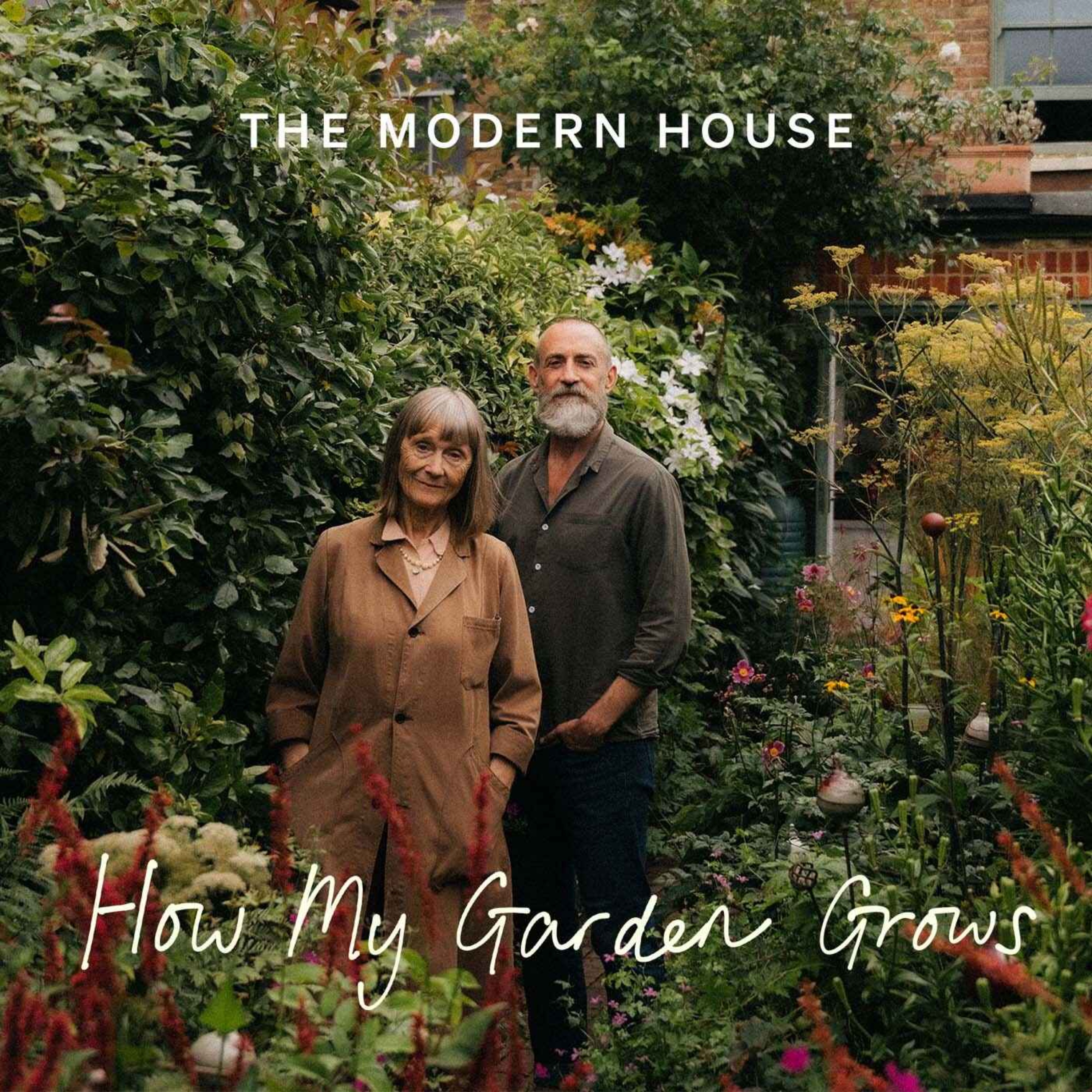
I'm Francine Raymond, a lifelong gardener and journalist. What excites me most about gardens is their atmosphere and the stories they tell. In this podcast, I want to explore real gardens going through the seasons, gardens that have been grown with passion and patience. In this first episode, we meet creative consultant Phil, who lives in a terraced house by the sea. It's August, so there will be rain and there will be hungry seagulls. Phil is going to walk us through the garden he has created with his husband, Tall Paul. It's a narrow plot packed with pots, climbers, colour and foliage. So let's find out how their garden grows. Here we are looking at what is a fairly typical terraced house. You find them all over England. They're lovely houses and this is a particularly fabulous one, especially because of its garden. And I wanted to start by looking at the front and it shows you just how narrow this house actually is. And this tiny little front garden is absolutely beautiful. The planting is mostly evergreen, not a lot of flowers, but it's a very windy corner, so obviously things don't survive here.
- [02:30]
C
That's right. It's a very busy corner, it's a very windy corner and the plants have to all cope with that.
- [02:38]
B
So what have we got here?
- [02:39]
C
We have olives, we have pittosporums, bay trees and eliagnus. And they all have this particular thing in common, which is that they can cope with pretty severe wind conditions. We're also south facing, so things get cooked and they get blasted by the wind here. We tried many different things. We tried sort of showier things and they were kind of ripped to shreds and it was a very depressing experience because it started off looking lovely and then it was leveled and flattened and shredded just. And that was typical. And it kept happening. So then we decided that we would have to sort of go.
- [03:17]
B
I love the view of the elderly cacti as well. I think they look very.
- [03:21]
C
They are elderly. I think the two big ones that you can see there, I think they're sort of 45, 50 years old, something like that. The rose is gorgeous. It's in the ground. So we got a drill and broke through the concrete and put the roots in the clay. All the other ones you can see are in pots. But that rose is called creme de la creme. And it's amazing because it's puts up with everything. It puts up with everything and it's. It's obviously very happy there. And I think we got lucky because I'm not sure if all roses would be as forgiving.
- [03:49]
B
Exactly.
- [03:50]
C
So the other thing about, because we're end of terrorists obviously is that we do get some flack from the neighbours because we have this sort of slightly.
- [03:58]
B
Unruly corrupt them as they go by or at least, you know, prick them with all the roses.
- [04:05]
C
And we did actually, you know, full disclosure, we did actually get a notice from the council.
- [04:10]
B
Oh, did you?
- [04:11]
C
We did. Saying can you please like, you know, shut it all back down?
- [04:14]
B
So beautiful.
- [04:16]
C
People seem to like it. But I think when, if you're going to push chair, I think people. I mean now you can see now.
- [04:21]
B
I walk about a lot. So in town and I do get very fed up with over enthusiastic hedges.
- [04:27]
C
But it's also partly because of the way, you know, there's no parking lots on the pavement. So I think there is a point to be said about how. How because of the parking is so difficult in whits you have all these vans, you have a lot of sort of like automobiles, cars. You have this sort of noise and then when you come through this gate, it was like you're going somewhere slightly different.
- [04:47]
B
So thank God we've had this rain because really we would have been looking at a few sort of dried up stalks.
- [04:54]
C
You'd have been looking at sticks basically. You know, it would have been sort of looking at, I don't know, straw essentially. I don't know about you, but my relationship to the rain has changed because now, even if it's unwelcome, it's welcome essentially because the spring was so dry, right? Yes, absolutely. And so I suppose, you know, the ratio is what we say, 80% plants, 20% humans in here. Do you think something like that?
- [05:23]
B
Well, yeah. And here, I mean mostly stuff are growing, is growing on the sides, isn't it?
- [05:30]
C
That's right.
- [05:31]
B
Of climbers and all the different plants somehow manage to survive despite having to really struggle, I would think. How many climbers have you got in here?
- [05:43]
C
I mean, to be honest with you, I don't know anymore because we've lost some and some have become very happy. But approximately, approximately, I think we've probably got about 20, maybe 15, 18 different types. We used to have thought more than that. Well, I think it's because some of them are very happy. So like the yellow jasmine, you know, looks like it's everywhere. We did silly thing really, for a small garden, we planted a golden, golden hop for the color and that's very, very vigorous. So in a small garden, if you can have climbers, you've got to get used to that thing that you are going to have to beat it back.
- [06:18]
B
Yeah.
- [06:19]
C
And that's part of.
- [06:21]
B
Yes, you're working on quite a small scale, aren't you? So you can afford to be particular. If this was a huge garden planted in this way, you'd be working full.
- [06:32]
C
You'D be working 24, 7. That's absolutely right. And there's something about the. The garden is actually a little bit lower than the road.
- [06:37]
B
Yeah.
- [06:38]
C
So you do get this sense that you're down and inside and slightly immersed and I mean the height is a lovely thing because in a narrow garden I think some people lament the fact that they've got these walls on either side, but what can you do?
- [06:53]
B
No, no. Well, you've done the right thing. And I love all these seed heads. It's important, I think not to cut things back the minute they flowered, which would be a temptation in a small garden, I would have thought.
- [07:06]
C
I think if you've got a small garden, I think what you're looking for are plants that have a long period of interest because otherwise you've got this kind of sad experience of kind of bulbs extinguishing quickly and then you're just left looking at nothing. So I mean we're looking now at sort of this big sort of parade of lilies and people are a bit funny about lilies because they feel like they're a bit of a one hit wonder, but they're up really early. They've got this lovely Star like foliage. And then they do their blousy tropical thing and then you smell. Yeah, yeah. And then you end up with these kind of seed pods that are a little bit like, I don't know, hot air balloons or inflatables or something. Right.
- [07:51]
B
And they go brown.
- [07:52]
C
Later on, they do the whole thing.
- [07:54]
B
And when do you finally chop them back?
- [07:57]
C
We probably level the garden, take all the skeletons down in February.
- [08:02]
B
February.
- [08:03]
C
Because we're always hoping for the hoar frost that we never get. Because you never get any frost in Whitstable. But I've got this sort of image of what this would look like if it was all encrusted with frost. But we never.
- [08:13]
B
You have to come out with a spray.
- [08:15]
C
We never get. It just works. We have thought about using some spray snow, but I'm not sure that's quite right. Really.
- [08:21]
B
The only way it really works is if you've got alum heads. Apparently, if you put a bit of spray paint on them, they still look from a distance. Okay.
- [08:30]
C
My husband and I, we went up to Gibraltar Point in Lincolnshire and there was this H. Frost. And the frost was like a centimeter thick. So every single skeleton, every seed head was gorgeous, you know, and so that's the kind of thing hoping for. But it's never going to happen here. Right.
- [08:48]
B
Because who knows sort of whether we get.
- [08:51]
C
Who knows.
- [08:52]
B
And you were saying, because Paul, your husband, is very tall. In fact, he's known as Tall Paul.
- [08:57]
C
He is known as Tall Paul.
- [08:58]
B
And here everything is tall, isn't it?
- [09:02]
C
Yes. I think there is something as well about small gardens where I think people sometimes are encouraged to have everything low, low in a kind of a sort of municipality way, because you're trying to sort of create space. But I don't know, I mean, if you're standing up to walk down this path, you're standing. You want things that I look like a. Where you would hang a picture.
- [09:22]
B
Yeah. And Paul also loves these much more exotic colors, doesn't he?
- [09:27]
C
He does. One of the sort of challenges, not in our marriage, but in the. In the garden, has always been how to sort of marry the planting that's at the hot end of the garden. And then, because basically we face northeast. Right. So you face northeast, which often makes people groan because it feels like there's not much that you can do, or that's a difficult aspect. Which just means that in the winter, the end of the garden nearest the house, nearest the kitchen, is very cold. It loses all of the light. So it's slow. So Things take a long time to sort of get started, but at the top end, that gets the sun first quickly. So. And Paul has always loved aeoniums. So aeoniums are those tall plants that sort of have these wonderful rosettes. And he's a. His favorite one is. I think it's called Schwarzkopf, which is black head, and it's sort of like a big, sort of rich, leathery sort of cabbage, almost. Cabbage.
- [10:28]
B
Yes. On the end of a.
- [10:29]
C
And it's got this very strong color. And it was always like, well, if we're gonna have this big, strong statement, aeonium in the garden, how can we make sense of that and pull it through some of the more, I don't know, colder, quieter, more demure plants at this end of the garden. So, yeah, we just used that purple foliage as a kind of a motif to pull all the way through. So that's why you see it popping up all over the place. Yes. And the thing with Paul, I think, is his mum is from St. Vincent, and so there's a little part of him I know that has a hankering for hotter, stronger tropical colors and sort of big leaves and sort of, I don't know, you know, tropical fruit and sort of melons and oranges. I mean, he's tried to grow melons in the greenhouse. We've got an orange tree which has currently got oranges on it, of which he's very proud. So there's those two things. We've got a sort of, like a cold end and we've got a hot.
- [11:24]
B
End, and so you're the cold end.
- [11:28]
C
Not sure how to take that. Yes.
- [11:32]
B
But you generally prefer sort of quieter colours, do you?
- [11:37]
C
I like foliage, so I. I'm a big fan of foliage and sometimes people just take the mickey out of me because, you know, I like leaves. With leaves, you get this. You get texture. You do you.
- [11:49]
B
And you get a lot of color.
- [11:51]
C
You get a lot of colour. And I think people are often. I don't know what you think about this, but people are often waiting for flowers. Like a plant is only doing its thing when it's in flower. But I think a plant that's doing its thing because its leaves are gorgeous or because it's producing these other effects, but I think you've got to get your eye in about it.
- [12:10]
B
Right? Yes, you have.
- [12:11]
C
I don't know. What's your view on foliage?
- [12:13]
B
No, I love foliage. I think green is a fabulous colour and it's the perfect backdrop for all the other colors. And, yeah, I agree Foliage in the garden is very important because it's the predominant thing.
- [12:25]
C
So do you think that people can be a bit. That people sort of like. What's the word? Marginalize foliage? They don't sort of. They don't rush to it. Because when you go to a garden centre, for example, what's on sale is always in flower.
- [12:38]
B
No, it's easy to be seduced by flowers, but they are very. Especially with the summers we have, they come into flower very quickly because they're under stress and then their main ambition is to set seed. So the seeds probably spend more time in your garden and the leaves than the flowers do.
- [12:57]
C
I think the thing with plants is that if you can get your eye in and you can sort of enjoy foliage and then sort of seed pods, you're in that position to enjoy much more that a plant has to offer for longer. Right.
- [13:08]
B
You're extending your season of interest, basically.
- [13:11]
C
I think sometimes plants get ignored when they're not in flower. It's like, oh, it's done its thing now. Now what do I do with it? You know, so in a small garden, you have to choose plants that are going to give you a lot of. Because you're looking. Because what you don't have the room to sort of. It's not like a massive garden where you can say, I'm going to go to the white garden now and turn my back on the urban, you know, so.
- [13:31]
B
And you're also. You seem to have an awful lot of snails. Look at them.
- [13:37]
C
This is true. So it's damp today. We've had sort of less sort of. And if you. If you look closely, you will see that there are snails abseiling up all of these. You know, the fennel. We're looking at a fennel here and they're having a high old time sort of climbing up there. And that's another thing about. If you're going to plant close and packed like we do, you are setting yourself up for sadness and tragedy if you. If you're choosing plants that snails love. So. And we've only figured this out through trial and error, but we've kind of got colonies of plants now that snails will slide about on, but they won't necessarily. Delphiniums, obviously, you know.
- [14:15]
B
So do you actually come out in the midnight?
- [14:18]
C
No.
- [14:19]
B
Give them glasses of beer?
- [14:20]
C
No, we don't do anything now because we did have some hostas back in the day and that was a hostage. That was so.
- [14:25]
B
Asking for trouble.
- [14:26]
C
It was asking for trouble. So we replaced the hostas with the grasses down there, which you know, all the Aruncus. So this kind of lovely. And this is Auruncus horatio, which has got this very nice kind of almost Acer style leaf. They don't go anywhere near that. They don't touch it. And geraniums, they don't touch veronicastrums, which are the big tall column ones. Ones here, they don't go anywhere near. And so people think, wow, you must be really good gardeners. I think the answer is that we just choose plants that snails don't eat. That would be a truthful answer to that. What's your relationship with snails, Francine?
- [15:04]
B
Hard to say really. I mean, when you're clearing out and you come across loads and loads of them, then I start to move them about a bit.
- [15:13]
C
Ok, that's not with a pair of scissors.
- [15:16]
B
But on the whole I try to ignore them and hope that I have some new chickens that seem to quite like when they're young, when the snails are little and when they're in egg form, they eat them.
- [15:31]
C
Next door has some hedgehogs. We hear them huffing and puffing.
- [15:34]
B
Excuse to chuck the snails up.
- [15:36]
C
Well, our plan is to do a little sort of get a jigsaw. A little jigsaw and just cut a little serving hatch and so let the hedgehogs come in here.
- [15:43]
B
Come in here and have a great time.
- [15:45]
C
Though, to be honest with you, some of these snails are up. So. Yeah, I'm not sure what the hedgehogs would do about that.
- [15:49]
B
They come down at night. That's a nice. Is that a morning glory over there?
- [15:54]
C
Yes. So that's Grandpa Otis and that's the morning glory. That's that very rich dark purple and it's just basically to look very snazzy against that yellow golden hop.
- [16:06]
B
Exactly. And they're a good August plant, aren't they? They're always something to look forward to and they are.
- [16:11]
C
So once they're started, I mean, they're growing in one of the driest bits of the garden. So that's all in rain shade, that. And so once they're established.
- [16:19]
B
The Perenn one.
- [16:20]
C
Yeah, yeah. So every morning you get like a dozen or so of those purple trumpets all the way along. Looks amazing.
- [16:32]
B
We were talking about all your ferns and that is a huge one, isn't it?
- [16:36]
C
Yeah, that is a porridge stichem of some description. Don't test me, Francine, don't test me because I'm not going to know anything.
- [16:42]
B
I wouldn't know if you were wrong.
- [16:44]
C
Or right then the one thing I want to say about this garden is that because we're end of terrace, we get a lot of traffic noises and we are often out here, Paul and I, and we're having our morning coffee. But there is something about having built this sort of plush, high, enclosed garden that means that even though you've kind of got the real world out there, you know, endless interruptions, sometimes you can hear the.
- [17:06]
B
Well, it must deaden the sounds. Like it.
- [17:08]
C
So it does. And it sort of makes it feel like you've got a secret that you're keeping. Yes, exactly. We do sometimes hear people walk past saying, that hedge. So the ferns. I'm a big fan of ferns because I sort of like foliage. Some people are funny about them. But when you look at these ones, because they're big, did we buy them big? No, these are actually the equivalent of teenagers now in our garden because they are sort of 16, 17 years old.
- [17:36]
B
Heavens. And they're in the ground.
- [17:38]
C
They're in the ground, yeah. That's an Osmunda regalis there. So that's the royal fern. It's got this gorgeous foliage and there's about 12 crowns. We couldn't even move it or separate it or divide it. We're not brave enough.
- [17:54]
B
Quite invasive. I mean, I'm surprised it hasn't taken over the whole garden, but presumably you dig bits of it up.
- [18:00]
C
To be honest with you, we haven't noticed that maybe because, you know, at this time of year you can't actually get behind there because the garden is so high and so plush. But if it is invasive, we haven't found. Figured that out yet.
- [18:12]
B
We hadn't noticed.
- [18:13]
C
I haven't noticed. Sometimes people say, well, do you do a lot of weeding? Or how much work do you have to do? But one of the joys of planting so closely is that if something is going wrong.
- [18:24]
B
So the weeds haven't really got a hope, have they?
- [18:26]
C
No, not at all. And visually you just can't see them. I think some people, some gardeners are sort of hag ridden by weeds because they can see them and then so they're sort of. They're sitting there on their deck chairs and suddenly they feel activated. They've got to go and do it.
- [18:39]
B
They must do it.
- [18:40]
C
But here, if they're a Ouija crop, we can't see them.
- [18:42]
B
So down in this part of the garden, actually, most of the plants are in pots, which gives them more height.
- [18:48]
C
It's also because some of those plants are better in pots because you can control what's happening in the pot? So there's a big regerzia there, which is sort of like a really lovely sort of, you know, big leafed, sort of tropical thing and that likes it to be sort of wetter than perhaps we could guarantee. So we sort of plug the pot to sort of produce the condition. So in a way you can play with pots. Right. I don't know what your view is.
- [19:10]
B
Yes, no, no.
- [19:11]
C
I think some people sort of. I think you can just introduce things into your garden that perhaps wouldn't normally prosper because you can control the conditions.
- [19:19]
B
Absolutely. So everything is very tall around you. I mean, is it practical for Paul? How tall is he?
- [19:27]
C
Well, Paul, as we've established, is known as Tall Paul in the town. And so he's 6 foot 2. I think he might be 6 foot 3. I should know. Shouldn't I have been married for sort of like nearly 20 years? But he's got some friends who come over from Germany and they despair at this garden because for them, a garden is where you get to lay out. It's kind of a space for sort of being in. And they come in and they will see this. Currently we are sitting around this table, we've got plants above our heads. We both love that, because it's like being in a space. I think some people would find it quite claustrophobic, wouldn't they? Because it's like, well, where can I lay out? Where's the deck chair? But there's something about creating an environment. Right. I think you've always said about this garden that it has an atmosphere.
- [20:14]
B
It does.
- [20:15]
C
So how would you. How would you characterise that atmosphere that you.
- [20:19]
B
Well, it's. It's charming and also enveloping and makes you feel secure. Does it? That.
- [20:28]
C
I love the idea of the. Of how immersive it is, because I always think that thing with gardens where people like to sort of survey the land and they like to feel the control of it, perhaps. I like here, where you are in it. You're everywhere you look, there's something to look at. There are layers as opposed to getting it all at once. Does that make sense?
- [20:50]
B
Yes, absolutely. Well, I don't think you could. Well, I expect you could stretch out here.
- [20:55]
C
Paul has managed. It has been known, because this is a very cool end of the garden on a very hot day. This is where you will find him lying down a tripping hazard.
- [21:05]
B
You have a washing line up there?
- [21:07]
C
Yes, well spotted. We have a washing line because you can actually, you know, wash two duvets. It's built so it goes on the diagonal and it will. And that we can. We can sort of dry our smalls all the way along the path, no problem. So it's not entirely impractical in this garden.
- [21:23]
B
It's very practical. And you have a greenhouse.
- [21:26]
C
We have a greenhouse in the sunny end of the garden. And maybe I can take you and have a look at it, though it's Paul's province, so I might get some of it wrong. But I'll let you into Paul's greenhouse. Let's go and have a look.
- [21:38]
B
Yeah. And would you start. Would Paul start his allotment stuff from seed in there?
- [21:51]
C
That's right. So Paul has a big allotment, which he loves. He's always up there. And this is where all kind of like the propagation happens and then they all sort of get carted up the hill to the allotment. But, you know, he also has the aubergines and the chilies and the peppers, which of course live in the greenhouse. So one year, Paul also attempted successfully to propagate and grow a Charente melon in there. He loves melon. And it did it. It grew, but it wasn't terribly sweet. So we were also looking at lemon trees and orange trees. Now they have to go into the greenhouse in November, in the winter.
- [22:25]
B
Yes.
- [22:25]
C
But they do stay out. And so we're actually looking. Look at that. That is. We're looking now at like a. That orange looks impressive, but again, it just won't be sweet. Completely sweet. And the thing that's perhaps more surprising is that we have a pomegranate tree in the garden. And right now we're just looking the first pomegranate flower. It's like a little tiny orange pod. And that orange pod will ultimately become this thing that is Almost like a 1970s swimming hat, this incredibly dated, elaborate orange flower. And we even get fruit as well.
- [23:04]
B
So is that edible?
- [23:06]
C
Well, the year that we got the fruit, we did that thing where, you know, we sprinkled it on our couscous, all very excitingly. They looked like these little pink pellets and they tasted of absolutely nothing.
- [23:16]
B
And all your succulents, do they go in in the winter?
- [23:19]
C
Some of them are hardy. But again, the aeoniums, Paul's favourites, they go into the greenhous. Use this old step ladder to push all of the succulents as high up into the sunshine as possible to prolong that season. Because at this end, this is where the sun, you get it in the evening. But as the days as we sort of move over the solstice, you're always fighting to keep your plants in the sun. I don't know if it's a similar struggle.
- [23:46]
B
Yep, absolutely. And does the aeonium go into the green?
- [23:50]
C
Yes.
- [23:50]
B
So this giant God had to suck.
- [23:52]
C
For Tim, that we call this plant the divorce maker, because in order to sort of, like, for Paul and I to wrestle it in, it does require quite a lot of patience and special gentle talking to lift it in. It's gone in and out of that greenhouse for, I know, the last 10 years. We're just not sure how many more times we can get it in and out without, because they're quite.
- [24:17]
B
They do break off.
- [24:18]
C
They do break, yeah. And then the funny thing, if they break, you can just literally, you wait for them to callous over, bung them in and bung them in and grow another one. We've grown many babies from this plant.
- [24:29]
B
So this is actually two plants, isn't it? The green and the.
- [24:33]
C
And the black. That's right. And they are, again, a bit like the cacti in the front room. They're sort of old, rugged, gnarly things, you know, not pretty, but interesting. And I think that that's where this garden's interesting, because you've got kind of sort of, you know, got all the leaves down there and up here you've got some of the curious things.
- [24:53]
B
And here you've got one of the most dangerous plants here to greet people as they arrive.
- [24:58]
C
Well, this is an Echeveria stricta, and essentially it looks like a Sputnik, a massive green Sputnik. And it looks dangerous because it's like porcupine quills. And it is dangerous because we bought it when it was the size of a tennis ball and it was like, oh, isn't it lovely?
- [25:15]
B
Yes, dear.
- [25:16]
C
And now it's sort of like a health and safety logistical nightmare. It used to live up on our flat roof. It doesn't anymore because, I mean, does.
- [25:25]
B
It have to go in in the winter?
- [25:27]
C
Yeah. So that goes in the greenhouse as well. So it has to be lifted. So I sort of have to hold it arm's length and waddle down the garden. Rather inelegantly, it has to be said, so.
- [25:37]
B
But it's just fabulous.
- [25:40]
C
It's another gorgeous thing.
- [25:41]
B
So, as one gardener to another, admit it, do you and Paul ever relax in this garden?
- [25:47]
C
That's a very difficult and pointed question, Francine. The truthful answer is yes. But I also think in terms of relaxation, this garden has A lot of sort of deadheading and sort of picking things off and sort of like moving things around. And I think it produces permission to procrastinate. And I think that is in of itself relaxing because you're able to sort of come out, you're doing a productive thing. But it's very, sort of like cognitively very low maintenance. You're not having to think too much. I think a garden that's busy and full is relaxing because there is always something to do. But you're not talking about digging, you're not talking about.
- [26:26]
B
There are things you quite enjoy doing.
- [26:27]
C
Yeah, it's sort of like. It's sort of doodling or fiddling or.
- [26:32]
B
And it's a contrast to what you do as a job.
- [26:35]
C
Absolutely. I spend a lot of my time on a computer. I spend a lot of my time on zoom calls. A lot of time sort of in conversation. And to come out on just a deadhead and not talk, but sort of make a small difference to me, that's relaxing.
- [26:49]
B
And of course, the minute you sit down, you see something you need to do. So up you get, off you go.
- [26:55]
C
That's absolutely right. So you think, I'll just take this gin and tonic with me into the garden. Paul and I will just sit there at the end of the day, just sit down. The ice cubes are clinking and they think, you know what? I'm just going to go over there and sort that out, because that's bothering me.
- [27:07]
B
That was really lovely. Thanks, Paul and Phil, for sharing the secrets of your garden. And thank you for listening to our first episode of How My Garden Garden Grows. In the next episode, I'll be welcoming you into my own garden. As we speed into autumn, I'll be sharing ideas for preserving fruits and saving seed heads. I'm looking forward to it. I hope you'll join us and I'll dash off to try and tidy my garden and pray for rain.